Which Krabi Island to Choose, and How to Combine Them
By Blaise Jaeger · Updated August 19, 2026
Krabi, Phi Phi, Lanta, Railay: Why This Choice Is Harder Than It Looks
Almost every article that compares these places asks the wrong question. It asks which one is best, as if you had to pick one and defend it. In practice, most people who fly into Krabi visit two or three of them in the same trip, and the decision that actually matters is not which but in what order, for how many nights each, and whether the boat you are counting on is even running at your dates.
That last point is the one nobody writes about, and it is the one that quietly ruins itineraries. Between May and October, several of the direct boat connections in this cluster simply stop. The operator that runs the Ao Nang–Koh Lanta ferry publishes the fact plainly on its own website, and announced the resumption of that route on 9 November 2025. If you are planning a July trip around a route that only exists in February, no amount of comparing beaches will help you.
So this page does four things in order: it puts the five places side by side on the criteria that actually separate them, it says which boats run when, it gives you a working order for a combined trip, and it hands you off to the detailed guide for whichever ones you choose. I spent four days crossing this cluster in February 2025 — Phuket to Koh Phi Phi to Koh Lanta to Ao Nang, with a day on Railay — and I made two planning mistakes doing it. Both are in here.
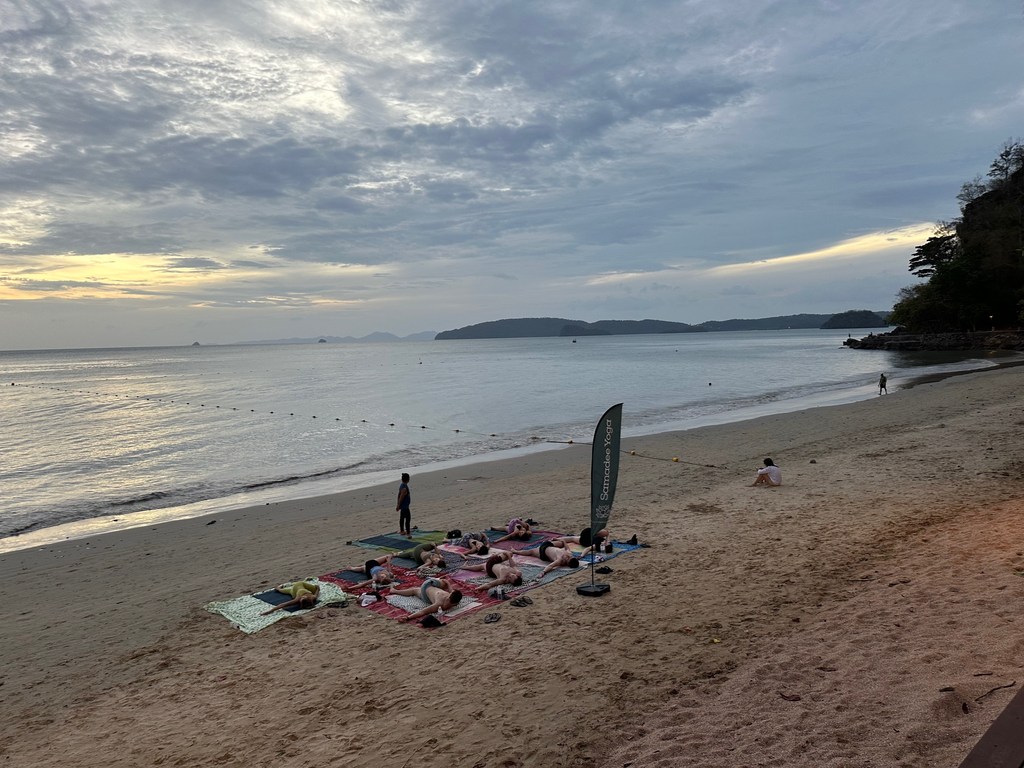
The Five Places Side by Side
Four islands and one mainland town. Ao Nang belongs in this table even though it is not an island, because it is where a large share of visitors actually sleep, and because leaving it out is what makes most comparisons unrealistic.
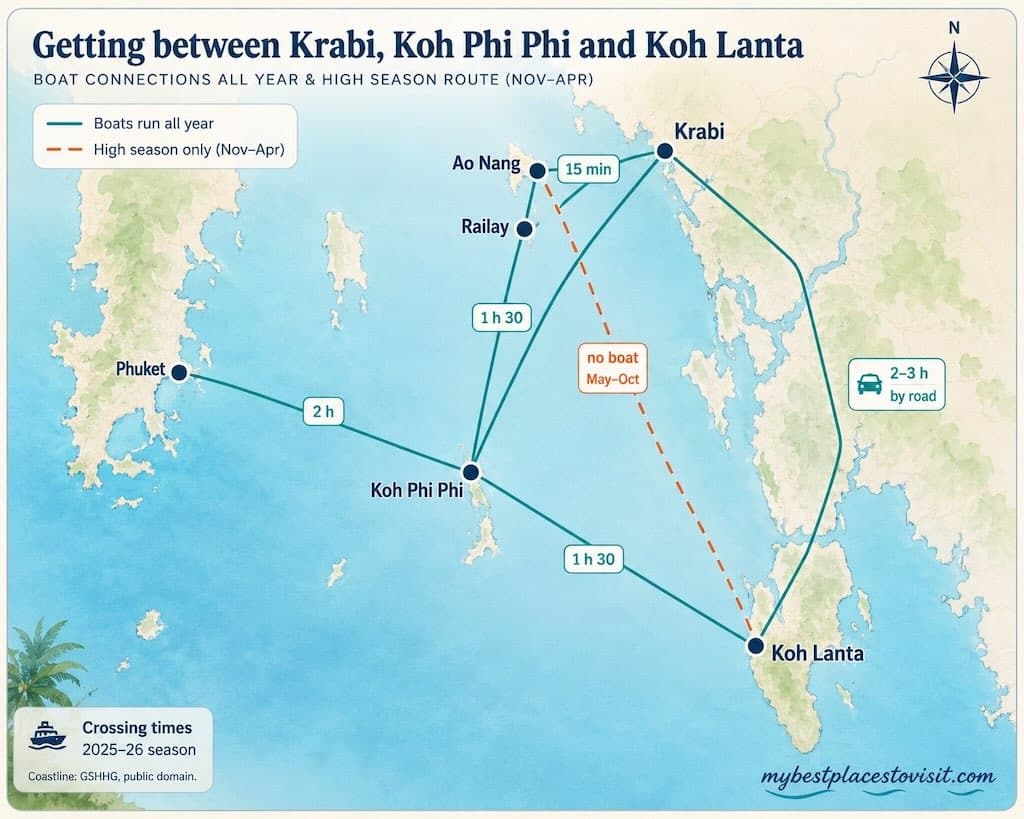
Positions on that map are geographically accurate, which is worth a moment: Railay is barely three kilometres from Ao Nang and unreachable from it by road, while Koh Lanta is forty kilometres away and you can drive there. Distance and difficulty are not the same thing here.
| Ao Nang | Railay | Koh Phi Phi | Koh Lanta | |
|---|---|---|---|---|
| Reachable by road? | Yes | No — boat only | No — boat only | Yes, via car ferry |
| Nights that make sense | 2–3 | 1–3 | 2–3 | 3–5 |
| Cars on site | Yes | None | None | Yes — you can drive |
| Nightlife | Bars, low key | Two or three bars | The loudest in the province | Beach bars, quiet |
| Best for | Logistics and day trips | Climbing, one perfect beach | Scenery, boat tours, going out | Slow days, driving, families |
| Weak point | The beach itself is a boat park by day | Expensive, small, tide-dependent | Crowded and loud around Tonsai | Nothing happens — which is the point |
| Getting there from Krabi airport | 45–60 min, 150 ฿ bus | Bus + 15 min longtail | Transfer + 1 h 30–2 h ferry | 2–3 h minivan, all year |
Read that table with one thing in mind: the first row is the one that decides trips. Railay and Koh Phi Phi have no road at all. If the sea is rough, if you are travelling with a pushchair and two suitcases, or if you simply do not like small boats, that row matters more than any beach ranking.
My Four Days Across the Cluster, and the Two Mistakes I Made
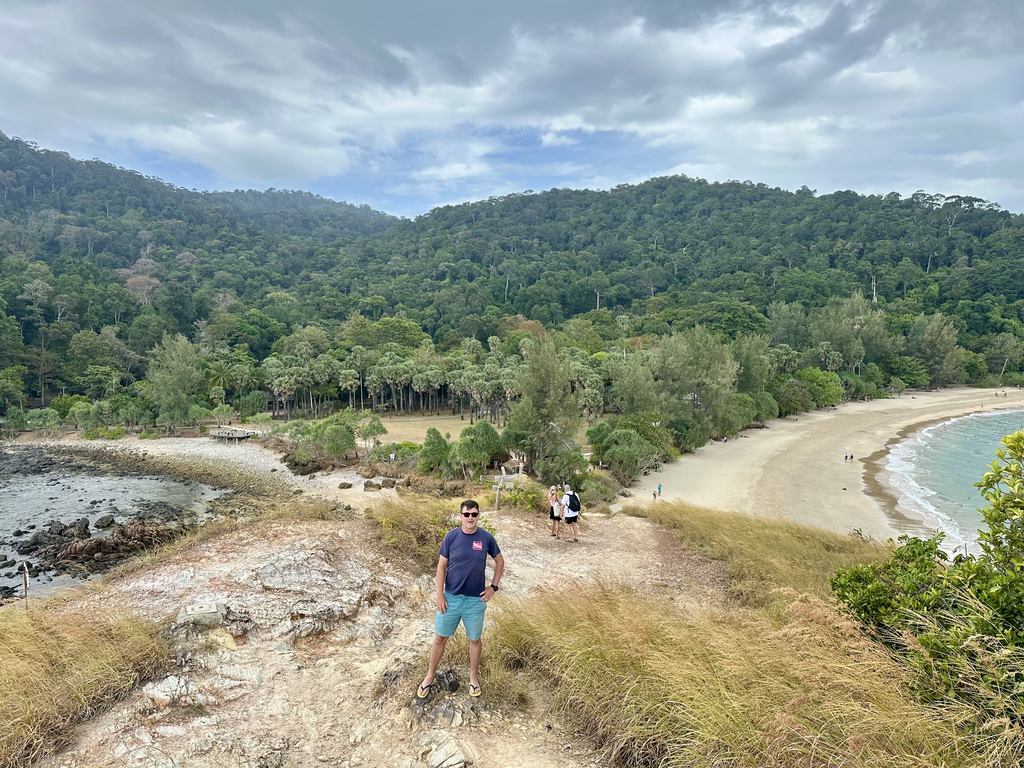
I crossed this cluster between 23 and 26 February 2025, in this order: morning ferry from Phuket to Koh Phi Phi, two nights there; boat to Koh Lanta, one night; up to Ao Nang, two nights, with a day trip across to Railay. Everything below is dated, and the photographs on this page and on the four detailed guides are mine, taken on those days.
The first mistake was on Koh Phi Phi. I booked a beautiful, remote bay — Phak Nam, on the quiet south coast — instead of somewhere near the pier. On an island with no roads, that decision is not a preference, it is a logistics commitment: every movement becomes a scheduled boat, and the last one leaves earlier than you think. The beach was lovely. I spent a meaningful share of two days waiting for transport.
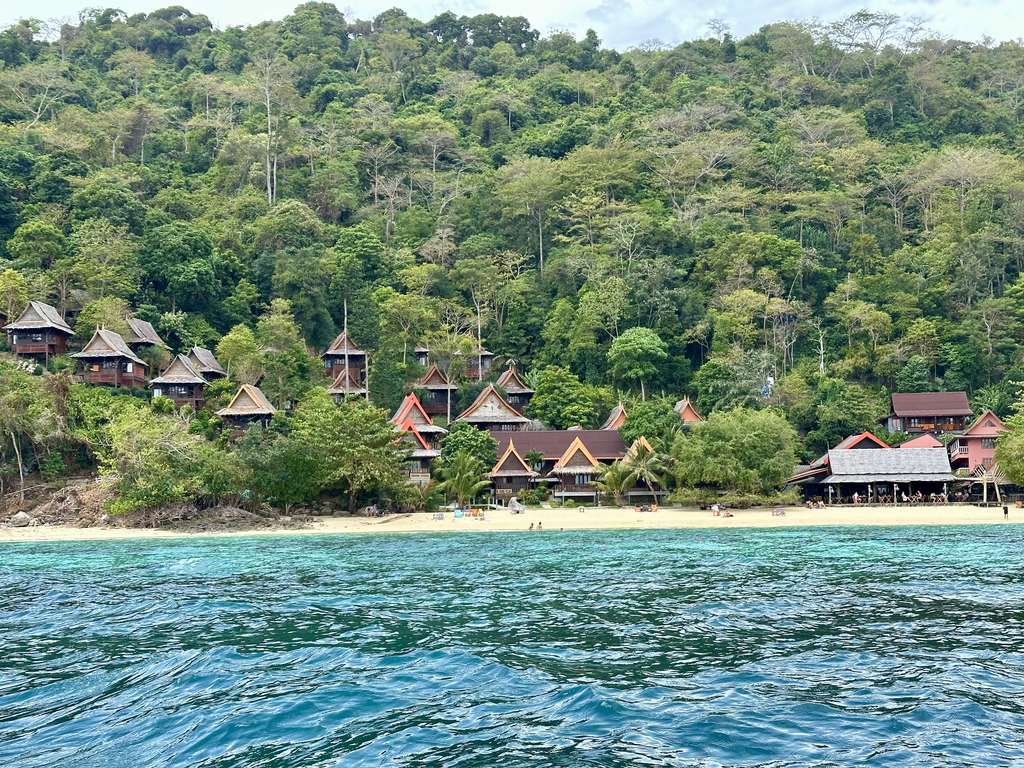
The second mistake was Koh Lanta. I gave it one night. I arrived in the late afternoon, went south the next morning to Mu Ko Lanta National Park at Laem Tanod, and left at three in the afternoon. Lanta is 20 km long, the good part is at the bottom of it, and the whole appeal of the island is that time passes slowly there. One night is not a visit, it is a sample — and I understood that within about two hours of arriving.
What I got right was Ao Nang. Two nights on the mainland with a longtail across to Railay for the day is a genuinely efficient way to see the most photogenic corner of the province without paying Railay’s room rates or being stuck there after dark. That day cost me 100 baht each way and about fifteen minutes of spray.
If I did the same four days again, I would do it in the opposite direction — Ao Nang and Railay first, then out to Phi Phi, then down to Lanta and stay there — for the reason set out further down: the cluster is much easier to travel outward from the mainland than back toward it, and Lanta is the only one of the four you can leave by road at any hour.

Krabi or Koh Phi Phi: Which One Should You Pick?
This is the most searched version of the question, and it is slightly mis-posed: “Krabi” is a province, an airport and a town, and what people usually mean is Ao Nang and Railay, its two beach bases. Framed properly, the answer is clear.
Choose the Krabi mainland if you want flexibility. You can change your mind daily, you can reach the airport in under an hour, restaurants are cheaper, and every boat tour in the province picks up from there. It is the right base for a first trip, for a short trip, and for anyone travelling with children or a lot of luggage.
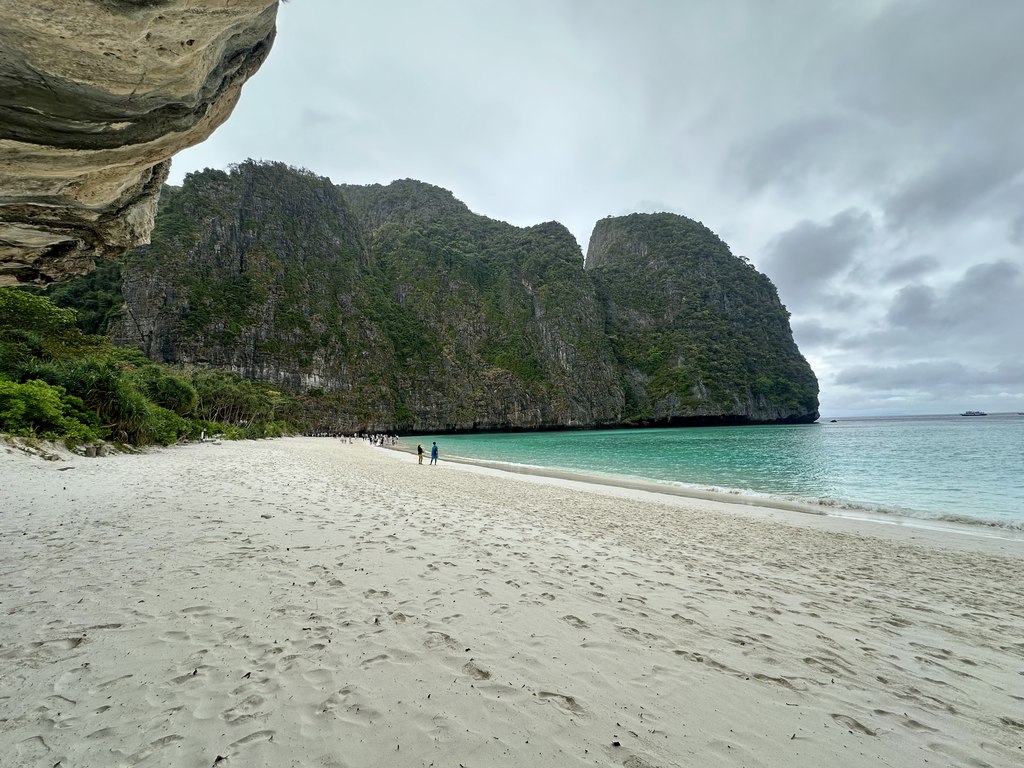
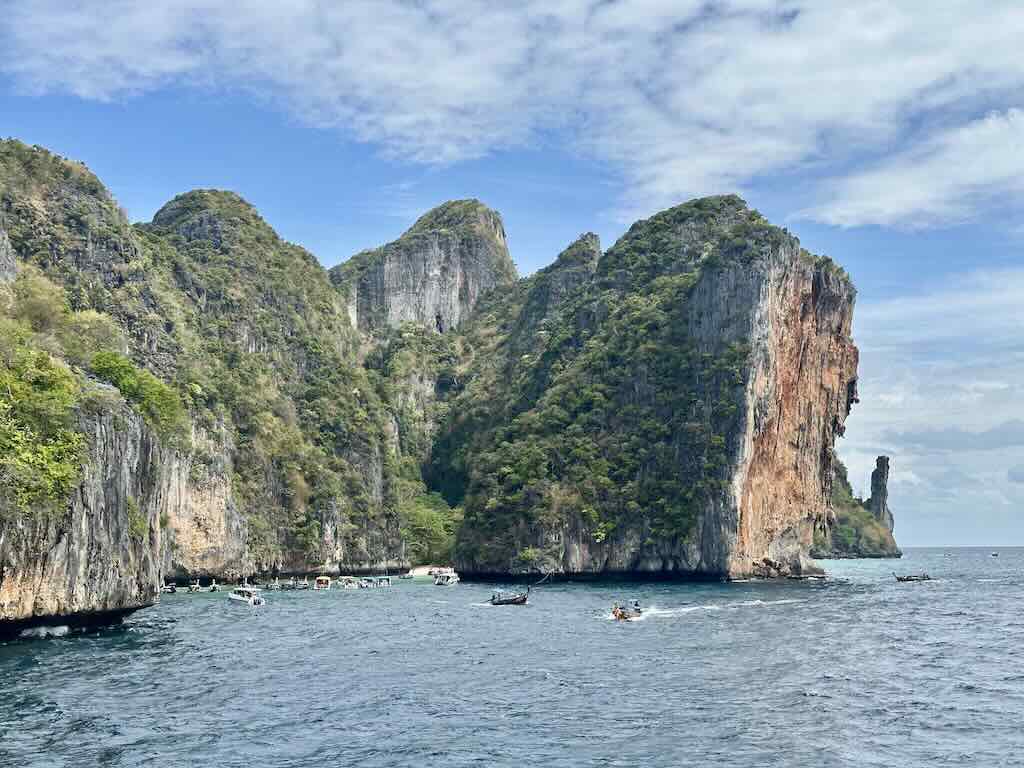
Choose Koh Phi Phi if the scenery is the point. Phi Phi Leh — Maya Bay, Pileh Lagoon, the sea caves — has no equivalent on the mainland, and seeing it at seven in the morning before the day boats arrive is a different experience from seeing it at noon, which is only possible if you sleep on the island. Phi Phi is also where the province goes out at night, for better and worse.
The honest answer for most trips is both, in that order: mainland first, then two nights on the island. And if you only have one day, you do not have to choose at all — the boat tours from Ao Nang and Krabi reach Phi Phi Leh and are back by evening.
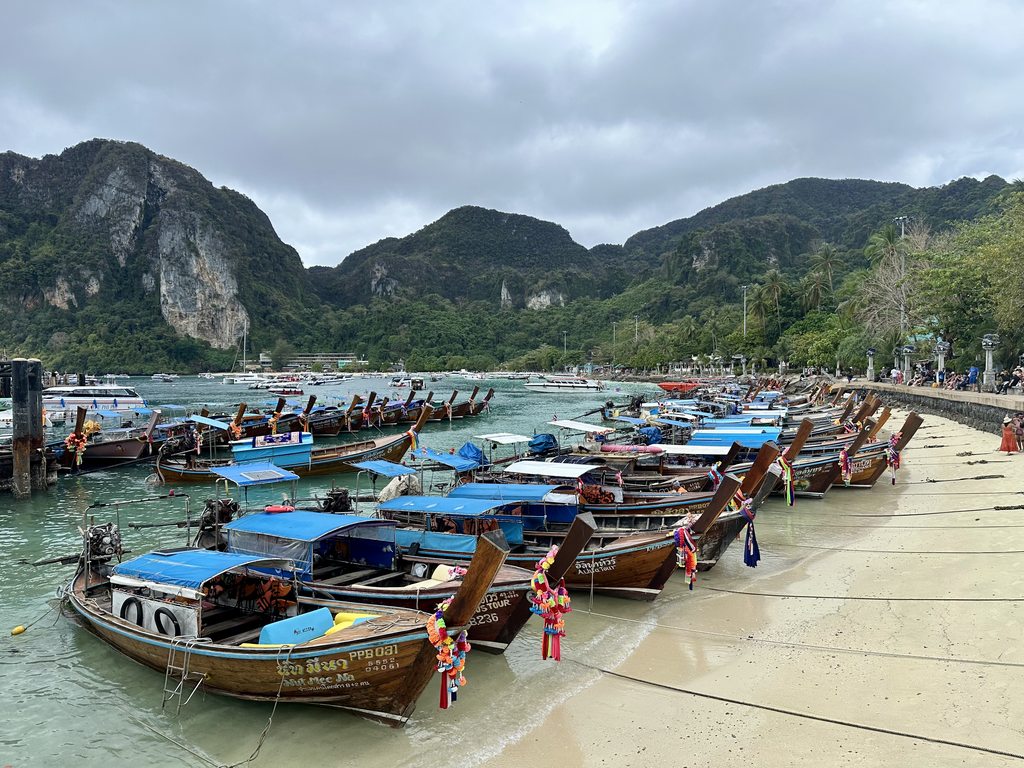
Full detail: the Koh Phi Phi guide and the Ao Nang guide.
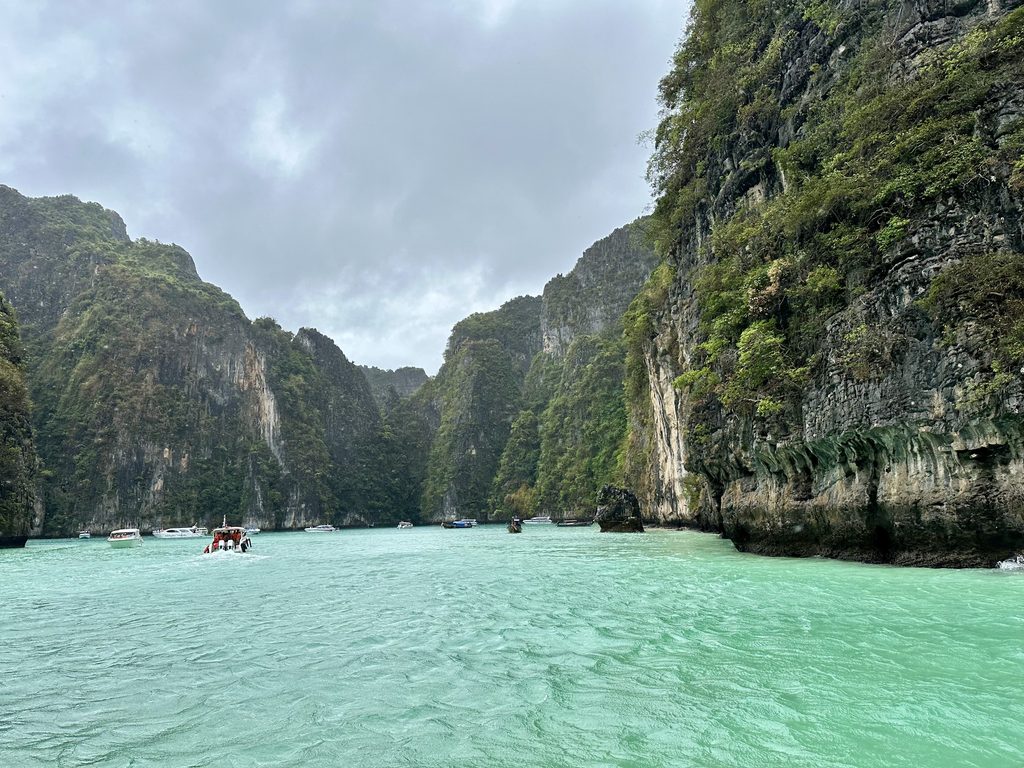
Koh Lanta or Koh Phi Phi: The Real Difference
Everyone writes that Phi Phi is busy and Lanta is calm. True, and not very useful. The difference that changes a holiday is structural: Koh Lanta has roads and Koh Phi Phi does not.
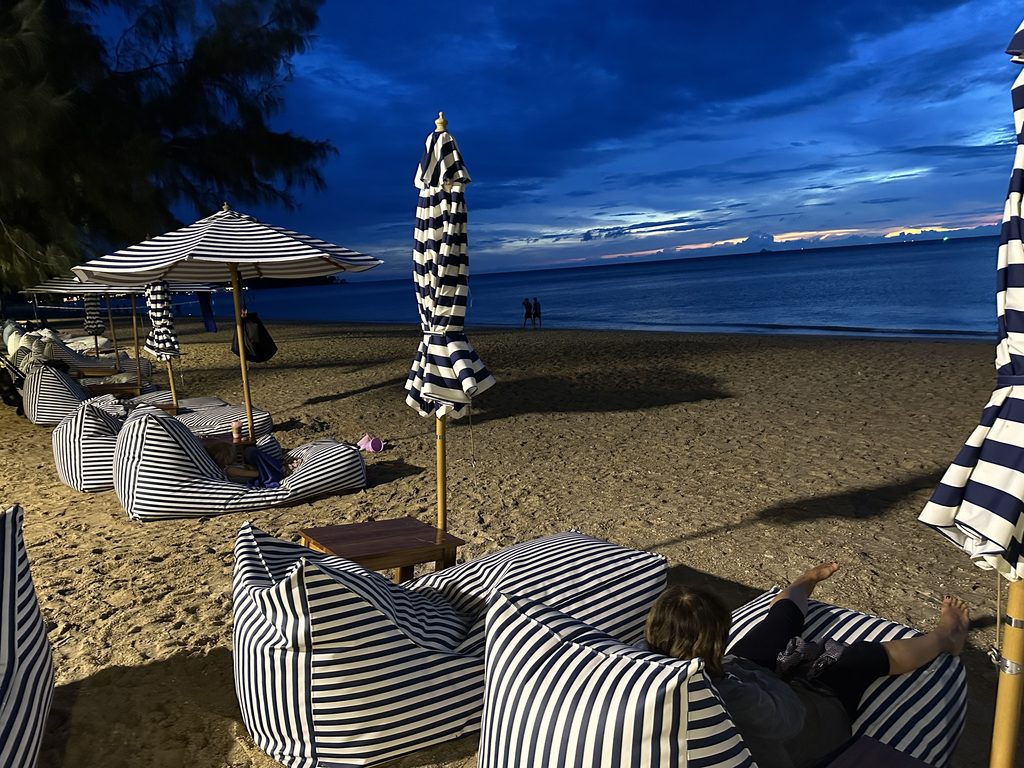
On Lanta you rent a scooter for 200–300 baht a day and the island opens up: a west coast road running the length of it, beaches getting smaller and emptier as you go south, a national park at the bottom. You decide in the morning what to do and you go. On Phi Phi there is no road, no car, no scooter. Every move beyond walking distance is a boat with a departure time, and often a price negotiated on the sand.
That single fact produces most of the other differences. Lanta feels slow because getting around is easy and nothing forces you into the same square kilometre as everyone else. Phi Phi feels intense because it concentrates every visitor into Tonsai, between two bays, on foot.
Practical consequence: Lanta rewards a longer stay, three to five nights, and punishes a short one — I know, I gave it one. Phi Phi rewards a short, well-placed stay: two nights near the pier, one early boat to Phi Phi Leh, and out.
Full detail: the Koh Lanta guide.

Railay or Ao Nang: The Fifteen-Minute Question
These two are 15 minutes apart by longtail, and people agonise over the choice far more than the geography warrants. Railay is a peninsula cut off from the road network by limestone, so it is reached by boat despite being on the mainland; Ao Nang is the town the boats leave from.
Sleep on Railay if you are climbing, if you want to be on Phra Nang Beach at seven in the morning, or if you want a couple of days where the only decision is which of four beaches to walk to. Expect to pay for it, and expect a limited choice of restaurants.
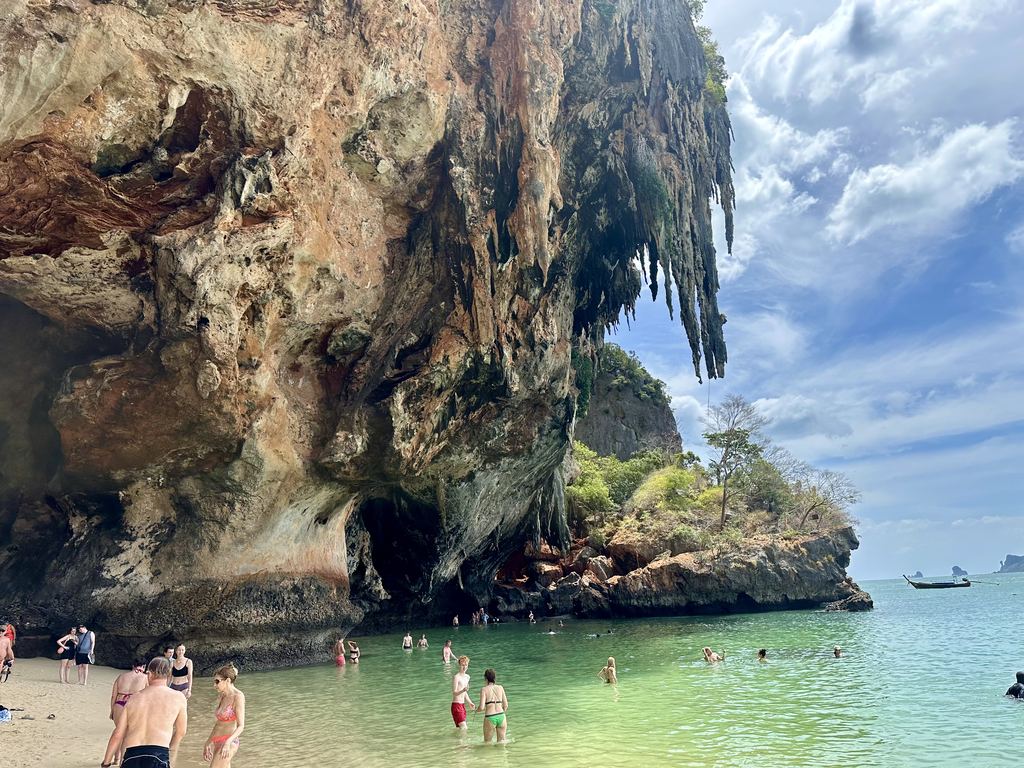
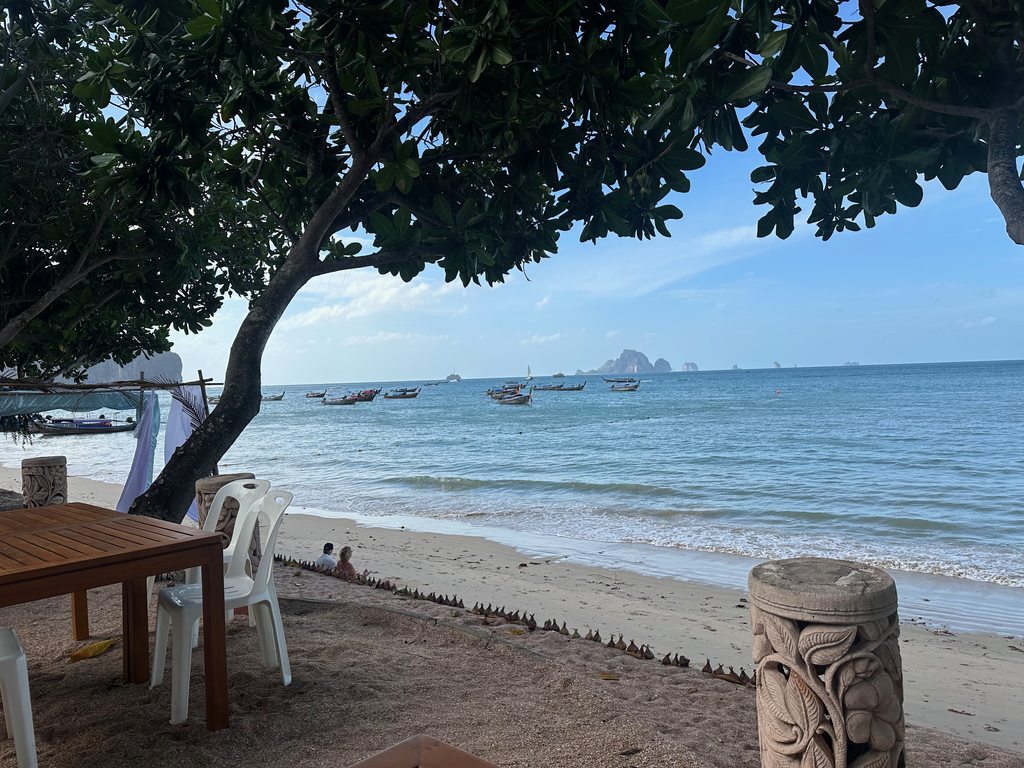
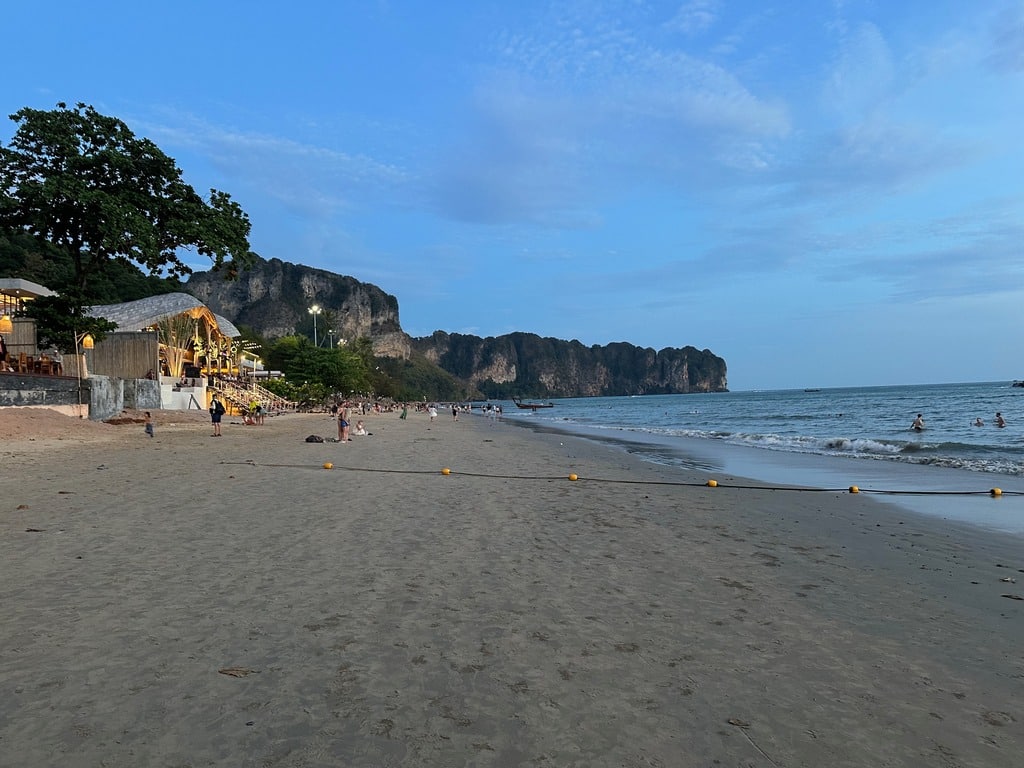
Sleep in Ao Nang if you want choice and the ability to leave. It has a hundred restaurants, hotels at every price, the bus to the airport and every boat tour in the province. Its own beach is honestly mediocre by day — it is a working boat park until about five o’clock — and then it turns, and the last hour of light over the offshore islands is the best thing in town.
For most trips: sleep in Ao Nang, spend a full day on Railay. The boats run from around 8 a.m. to 6 p.m. for 100 baht, later ones cost 150, and they leave when they have eight passengers rather than on a timetable.
Full detail: the Railay Beach guide.
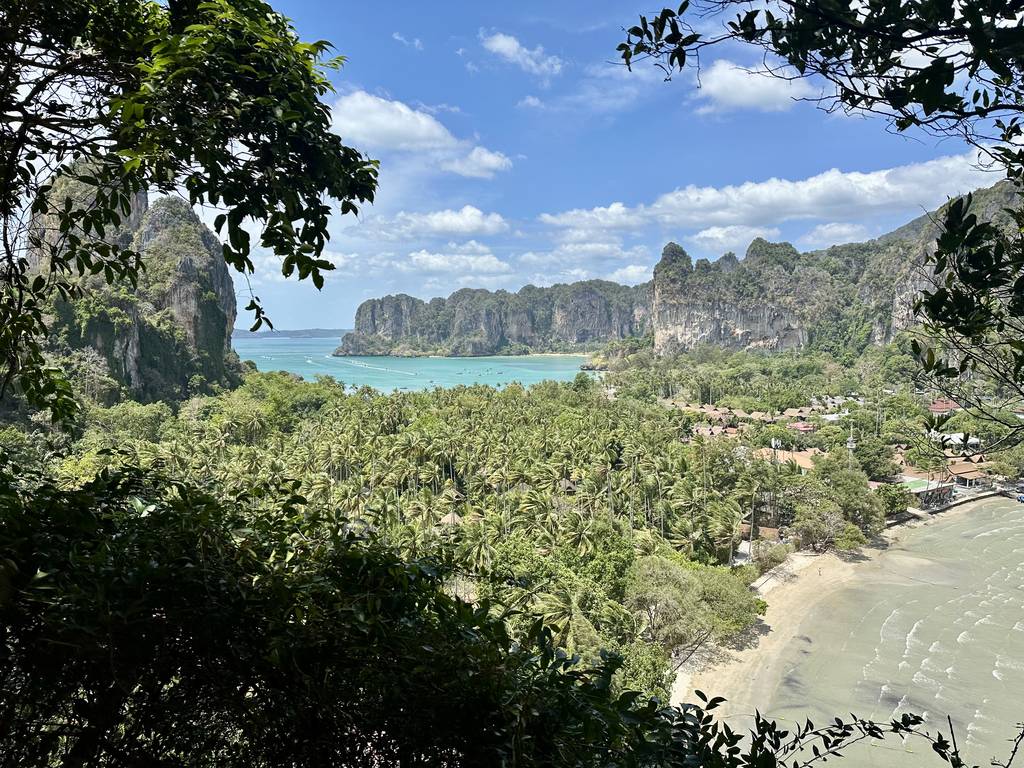
Which Boats Stop Running Between May and October
This is the section that no comparison article writes, and it is the one that decides whether an itinerary is possible. The Andaman monsoon runs roughly from May to October. Some connections in this cluster are unaffected. Others disappear entirely.
| Connection | May–October | What replaces it |
|---|---|---|
| Phuket ↔ Koh Phi Phi | Runs all year | Take the large ferry, not the speedboat |
| Krabi (Klong Jilad) ↔ Koh Phi Phi | Reduced, morning departure maintained | Afternoon sailings are high season only |
| Ao Nang ↔ Koh Phi Phi | Runs, but not every day | Go via Krabi town pier |
| Koh Phi Phi ↔ Koh Lanta | Slow ferry runs; most speedboats stop | The slow ferry, roughly 1 h 30 |
| Ao Nang / Railay ↔ Koh Lanta | Suspended | Minivan + car ferry, 2 h 30–3 h, all year |
| Krabi airport ↔ Koh Lanta by road | Runs all year | Nothing needed — this is the reliable one |
| Ao Nang ↔ Railay longtail | Runs all year | In rough weather use Ao Nam Mao pier on the east side |
The Ao Nang–Koh Lanta line is the one to watch, because it is the one people build itineraries around. The operator, Ao Nang Travel & Tour, states on its own site that the service closes on that route during the low season, and announced its resumption for 9 November 2025. In high season it leaves Nopparat Thara at 10:30 and reaches Koh Lanta at 12:45 for 700 baht, with a Railay pick-up at 10:45.
Two practical rules follow. First, between May and October, plan Koh Lanta by road and treat any boat as a bonus. Second, book the ferry, not the speedboat: speedboats are the first thing cancelled when the sea gets up, and the large ferries keep running.
Note also that Maya Bay closes to visitors every year from 1 August to 30 September, which removes the single biggest reason to be on Koh Phi Phi in those two months.
The One Island You Can Reach Without Getting on a Boat
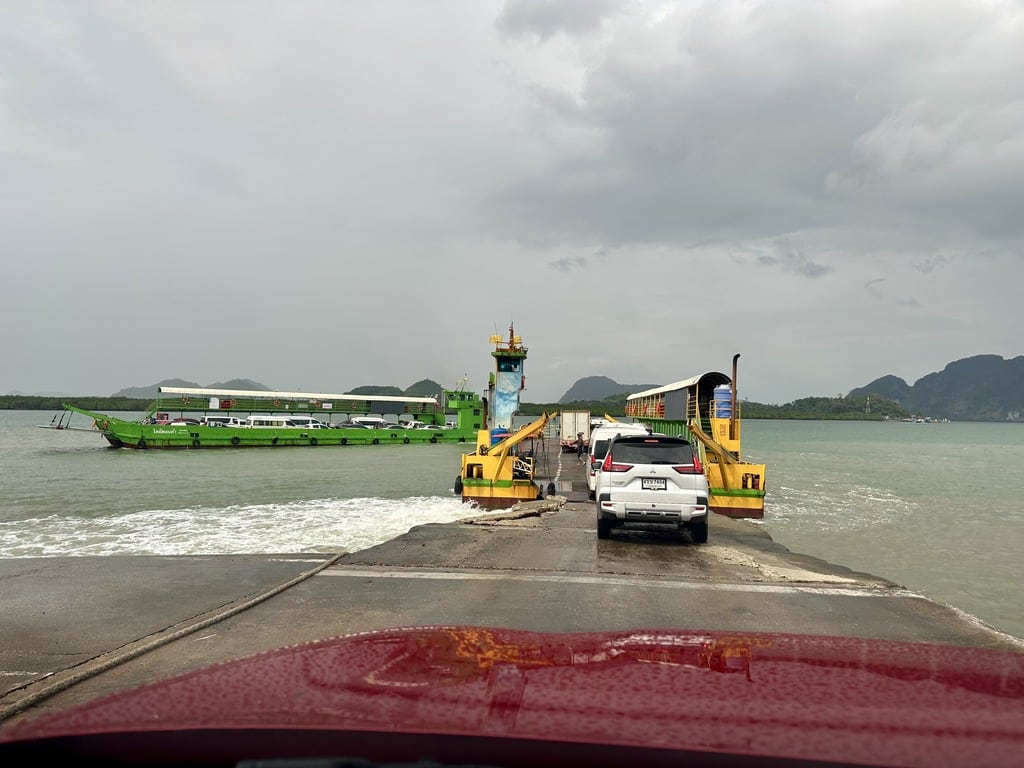
Koh Lanta is connected to the mainland by road, and this is the most underrated fact in the whole cluster. Koh Lanta Yai is joined to Koh Lanta Noi by the Siri Lanta Bridge, opened in 2016 — the only bridge in Thailand linking two islands — and Koh Lanta Noi is joined to the mainland by a short car ferry that runs from early morning until late at night.
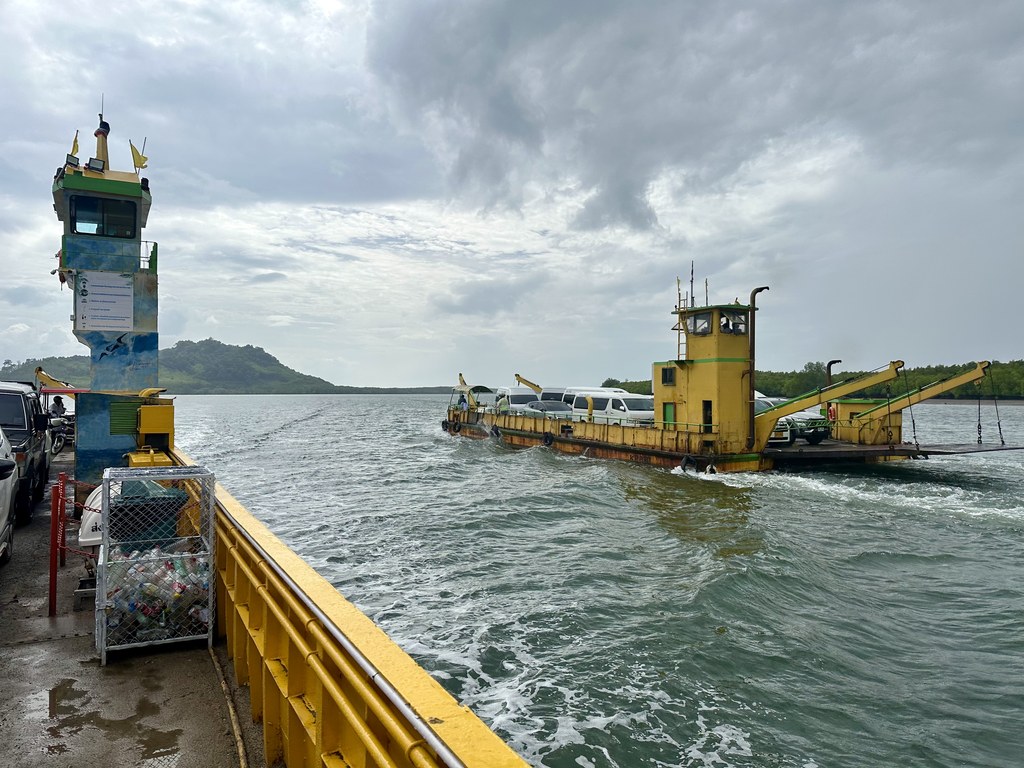
What this means in practice: you can leave Koh Lanta at any hour, in any weather, without depending on a boat timetable. You can arrive by minivan from Krabi airport in two to three hours for 300–400 baht in July as easily as in January. You can bring a hire car. Neither Railay nor Koh Phi Phi offers any of that.
The catch is the queue. At peak times the wait for the car ferry can run to well over an hour, and Thai media reported queues stretching for kilometres in late 2025. A second bridge, this one from the mainland to Koh Lanta Noi, has been budgeted at 1.8 billion baht and is over two kilometres long; piling work was announced for 2026 with completion expected around 2029. Until then, the ferry is it.
How Many Nights Each Place Actually Needs
The single most common planning error in this cluster is spreading a week across four places and spending two of the seven days on boats. Transfers here are not quick: allow half a day for any island-to-island move once you count checking out, getting to the pier, the crossing itself and getting to your room at the other end.
- Ao Nang — 2 to 3 nights. Enough for the town, an evening on the beach, a day on Railay and one boat tour. More than three and you will want to be elsewhere.
- Railay — 1 to 3 nights, or none. A day trip covers the beaches and the viewpoint. Sleep there only if you are climbing, or if a quiet morning on Phra Nang Beach is worth the room rate to you.
- Koh Phi Phi — 2 nights. One full day for Phi Phi Leh, one for the island itself. A single night is not worth the crossing; four is more than the island can hold unless you are diving.
- Koh Lanta — 3 to 5 nights. The one place here that needs time. Anything under three and you have paid for the transfer without getting what you came for.
A useful rule of thumb: no destination in this cluster is worth a transfer for fewer than two nights, except Railay, which is close enough to visit for the day.
The Best Order to Combine Them
Travel outward from the mainland, and finish on the island you can leave by road. That single principle solves most of the sequencing problems, because it puts the weather-dependent legs early — when you still have slack in the trip — and the reliable one at the end, next to your flight.
Five days
Ao Nang 2 nights, with a day on Railay · Koh Phi Phi 2 nights · back to Krabi for the flight. You see the mainland, the most dramatic beach in the province and the best scenery, without a single wasted transfer.
Seven to eight days
Ao Nang 2 nights, day on Railay · Koh Phi Phi 2 nights · Koh Lanta 3 nights · out by road to Krabi airport. This is the version I would book. It ends slowly, which is the right way round, and the final leg does not depend on the sea.
Ten days or more
Add two nights on Railay itself between Ao Nang and Phi Phi, and give Koh Lanta five. If you are diving, base the extra days on Lanta — Hin Daeng and Hin Muang are run from there, and the diving in Thailand guide covers the seasons.
Arriving from Phuket instead of Krabi
Reverse it: Phuket · Koh Phi Phi · Koh Lanta · Ao Nang and Railay · fly out of Krabi. This is the direction I travelled, and it works, but it puts your most weather-dependent crossing at the start and finishes you on the mainland at the end, which is the less pleasant way round. Practical detail on every route in the ferry guide to Koh Phi Phi, and on the island itself in the Phuket guide.
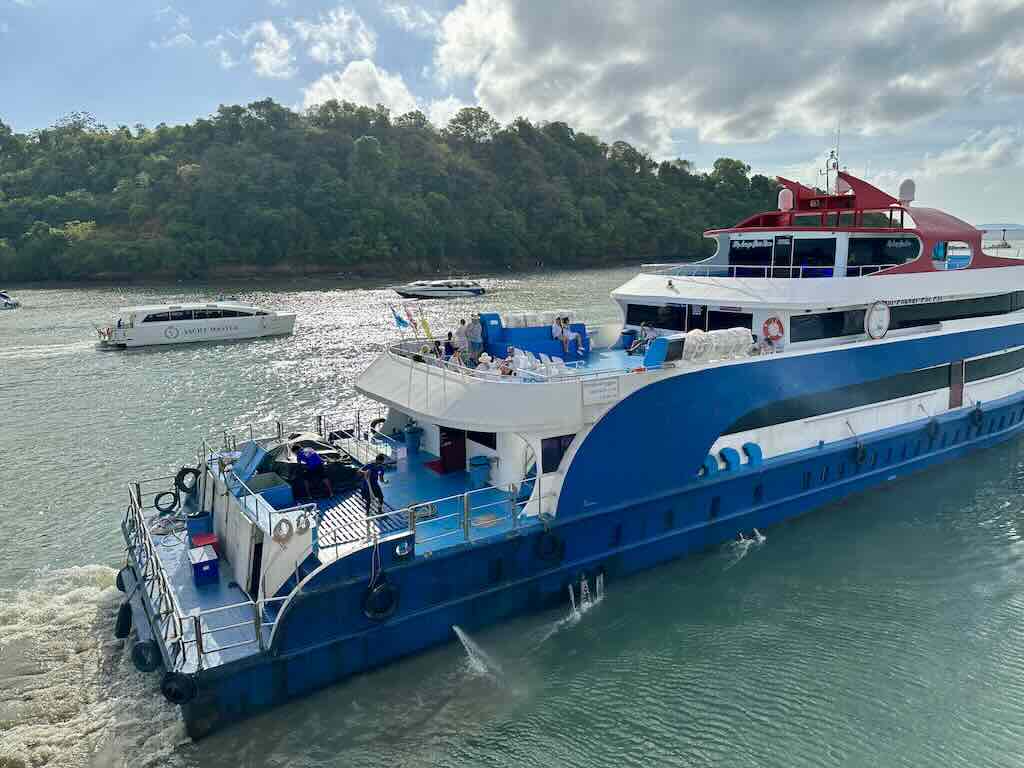
What the Transfers Actually Cost
Comparison articles quote daily budgets and never the cost of moving between the places they are comparing. On a one-week trip the transfers are a real line item, and they vary by a factor of three depending on the boat you pick.
| Leg | Time | Price per person |
|---|---|---|
| Krabi airport → Ao Nang, bus | 45–60 min | 150 ฿ |
| Krabi airport → Ao Nang, taxi | 25–30 min | 1 200–1 500 ฿ per car |
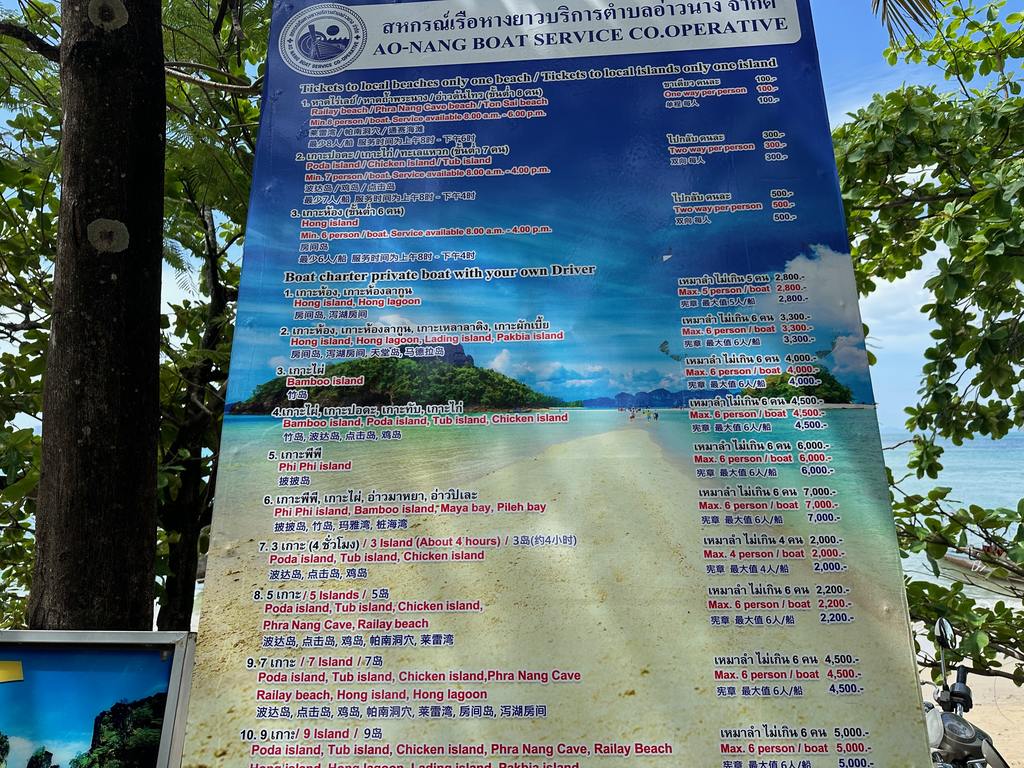
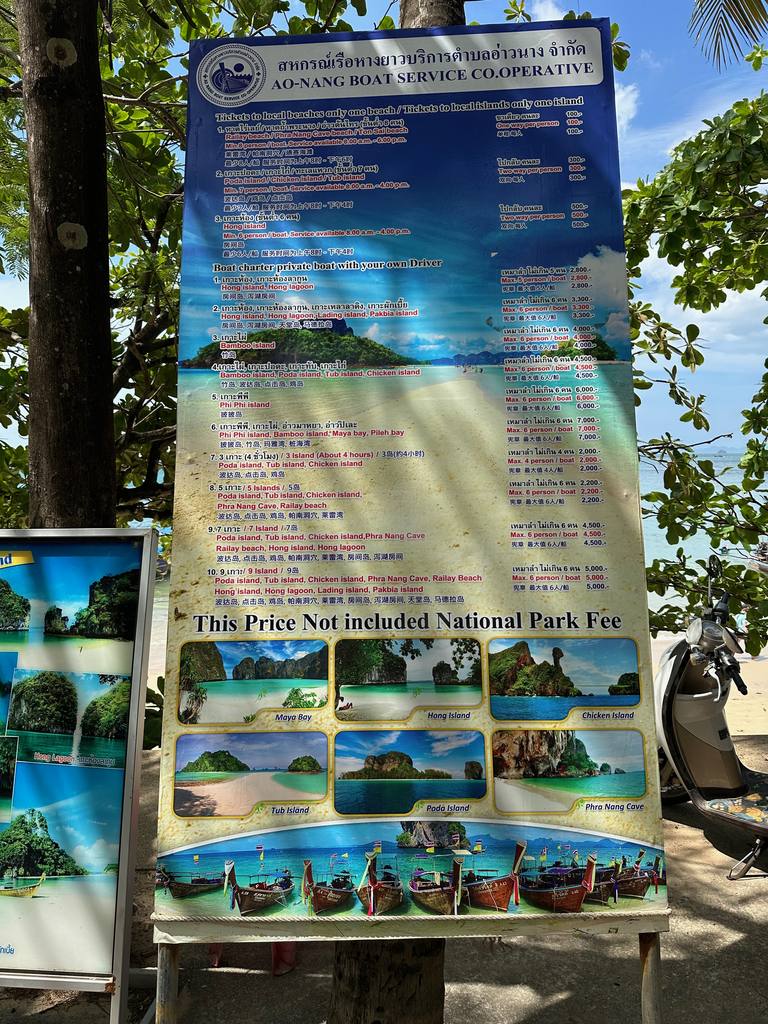
| Ao Nang → Railay, longtail | 15 min | 100 ฿ (150 ฿ after dark) |
| Ao Nang → Koh Phi Phi | 09:30 → 11:30 | 650 ฿ |
| Krabi town → Koh Phi Phi | 1 h 30–2 h | 430–800 ฿ |
| Phuket → Koh Phi Phi, ferry | ~2 h | 450–600 ฿ |
| Phuket → Koh Phi Phi, speedboat | 50 min | 700–900 ฿ |
| Koh Phi Phi → Koh Lanta, ferry | ~1 h 30 | 400–600 ฿ |
| Ao Nang → Koh Lanta, ferry (high season) | 10:30 → 12:45 | 700 ฿ |
| Krabi → Koh Lanta, minivan + car ferry | 2 h 30–3 h | 300–450 ฿ |
Prices are 2025–26 operator and agency listings and move with the season; check before you travel. Two things are never included and catch people out: hotel pick-up, which is a separate product even when it is sold on the same page, and the national park fee, which is collected in cash on arrival.
You can compare and book most of these routes in advance on 12Go, which is the only aggregator that reliably lists the small Thai operators — useful mostly for seeing which boats are actually sailing on your dates. The two legs worth checking in advance are Koh Phi Phi to Koh Lanta and Krabi to Koh Lanta, because those are the ones whose availability changes with the season.
Where to Sleep on Each
One reliable choice per base, to make the decision concrete. The full selections — by budget, by beach, with the trade-offs — are in the individual guides.
Ao Nang
Krabi Resort is where I stayed, and I picked it for a specific reason: it sits on the strip where Ao Nang Beach ends and the quieter Nopparat Thara Beach begins, so the town is a ten-minute walk one way and an empty national-park beach is two minutes the other. In a place where the beach is the weak point, that piece of geography is worth more than a star rating.
Railay
Sand Sea Resort Railay Beach sits on Railay West, on the sand, at the walkable end of the peninsula. Railay West is where you want to be: Railay East is a mangrove flat at low tide and the one place on the peninsula where nightclub noise carries.
Koh Phi Phi
Phitharom PP Resort is a short walk from Tonsai pier — which, after my own mistake, is the advice I would give anyone staying two nights. Walkable from the pier beats beautiful and remote, unless you are staying a week.
Koh Lanta
Lanta Klong Nin Beach Resort is on Klong Nin, the middle beach — far enough south to be quiet, far enough north that you are not driving forty minutes for dinner. Klong Nin is the compromise that works for most first visits.

Which One Is Right for You
Families with young children
Ao Nang, then Koh Lanta. Both are reachable by road, both have pharmacies and clinics, and neither requires you to lift a pushchair over the side of a longtail. Phi Phi is the hardest of the four with small children: no cars means you carry your luggage, or pay someone with a handcart, and every excursion is a boat.
Couples
Railay for two nights, Koh Lanta for the rest. Railay gives you the most spectacular setting in southern Thailand and very little to do, which is the point. Lanta gives you long empty beaches and sunsets over the water.
Divers
Koh Lanta. Hin Daeng and Hin Muang are run from Lanta and are the best dives in the province by a distance. Phi Phi has easy, pretty reef diving and is the better place to learn. Note that both add a national park surcharge on top of the dive price.
Travellers on a tight budget
Ao Nang and Koh Lanta. Both have genuinely cheap food and rooms. Railay has no budget tier worth the name, and on Phi Phi everything arrives by boat and the prices say so.
First trip to Thailand, one week
Ao Nang, Railay for a day, Koh Phi Phi for two nights. It is the version with the fewest moving parts and the highest ratio of scenery to logistics. Save Koh Lanta for a trip where you can give it four nights.
When to Go
High season runs from November to April, and December to February is the sweet spot: dry, less humid than March and April, and every boat running. This is when I went, and the sea was flat every day.
March and April are still dry but hot, and April is the hottest month of the Thai year. May to October is the monsoon: rain in bursts rather than all day, much cheaper rooms, green landscape — and the boat schedule set out above. September is generally the wettest month and the one to avoid if a boat-based itinerary matters to you.
If you are travelling in the monsoon, the cluster still works — you simply build it around Koh Lanta and the mainland, which are reachable by road, and treat Phi Phi as a day trip from Krabi on a large ferry rather than a base.
Things That Apply Everywhere in the Cluster
The national park fee
Most of what you will visit by boat lies inside Hat Noppharat Thara – Mu Ko Phi Phi National Park or Mu Ko Lanta National Park. Operators and dive centres in 2026 collect 400 baht per foreign adult and 200 per child, in cash, on arrival; some listings still show the older 200/100 figures. Carry 400 per person and you will not be caught out. Divers pay a further 200 baht.
The fee applies to the protected zones — Phi Phi Leh with Maya Bay and Pileh Lagoon, Bamboo Island, the Bida islets, the park at Laem Tanod — not to simply stepping off the ferry at Tonsai. It is almost never included in a boat ticket, whatever the ticket says.
Cash
Longtail fares, park fees and most small restaurants are cash only. ATMs exist on all four but charge a fixed foreign-card fee per withdrawal, so take out larger amounts less often. Railay has very few machines and they run dry.
Tides
Tides govern more here than anywhere else in Thailand. At low water Railay East is a mangrove flat, some longtails cannot land where they normally do, and swimming on parts of Lanta means a long walk out. Check the tide table for the day you plan a beach.
Boat tours and what they cover
The two standard trips are the Four Islands tour from Ao Nang and the Phi Phi Leh loop. Both can be booked on the beach the day before, or in advance — the range of Phi Phi Islands tours and of day trips from Krabi shows what is running on your dates, which is the useful part in shoulder season.
If you want to explore inland — the hot springs, the Emerald Pool, Tiger Cave Temple — you need a vehicle, and comparing hire cars at Krabi airport is worth doing before you arrive. It is also the cheapest way to reach Koh Lanta if there are three or four of you.
Read More

Railay Beach Guide
The four beaches, the viewpoint and lagoon hike, Phra Nang and its shrine, the climbing scene, and how to do it as a day trip from Ao Nang.
Koh Phi Phi Guide
Maya Bay and the rules that now apply there, Pileh Lagoon, the viewpoints, where to sleep relative to the pier, and how to see Phi Phi Leh before the crowds.

Koh Lanta Guide
Which beach to choose along the west coast, the national park at Laem Tanod, renting a scooter, and why this island rewards a longer stay.
Also on this coast: the Ao Nang guide, the Phang Nga Bay guide, the Koh Samui guide on the other coast, and the Bangkok guide for the trip in. Everything else is in the Thailand travel guide.
Frequently Asked Questions About Choosing Between the Krabi Islands
Is Krabi or Koh Phi Phi better?
The Krabi mainland is better as a base; Koh Phi Phi is better as scenery. Ao Nang gives you flexibility, cheaper food, a bus to the airport and every boat tour in the province. Koh Phi Phi gives you Maya Bay and Pileh Lagoon at seven in the morning, which you can only have if you sleep on the island. On a trip of five days or more, do both: mainland first, then two nights on Phi Phi.
Which is better, Koh Lanta or Koh Phi Phi?
Koh Lanta has roads and Koh Phi Phi does not, and that decides most of it. On Lanta you rent a scooter and explore a 20 km island at your own pace. On Phi Phi every movement is a boat with a timetable. Choose Lanta for three to five slow nights, Phi Phi for two well-placed ones near the pier.
Can I still reach Koh Lanta by boat in July or August?
Not from Ao Nang or Railay — that ferry is suspended during the low season, and the operator publishes the fact. The Koh Phi Phi to Koh Lanta slow ferry generally keeps running, and the road route from Krabi by minivan and car ferry runs all year in two and a half to three hours. In the monsoon, plan Lanta by road.
Can you get to Koh Lanta without taking a boat?
Almost. A bridge links Koh Lanta Yai to Koh Lanta Noi, and a ten-minute car ferry links Koh Lanta Noi to the mainland — so you can drive to within one short crossing of your hotel, at any time of year. A second bridge that would remove the ferry entirely is planned, with completion expected around 2029.
Krabi and Koh Lanta — which one first?
Krabi first, Koh Lanta last. Travel outward from the mainland so the weather-dependent boat legs happen early in the trip while you still have slack, and finish on the island you can leave by road at any hour — which puts the reliable transfer next to your flight home.
How many days do you need for Krabi, Phi Phi and Koh Lanta?
Seven to eight nights covers all three properly: two in Ao Nang with a day on Railay, two on Koh Phi Phi, three on Koh Lanta. Five nights covers two of them. Below five, pick one base and use day trips — the transfers eat too much of a short trip.
Should I stay in Ao Nang or Railay?
Ao Nang for most people, with a full day on Railay. Ao Nang has the choice of hotels and restaurants and the transport links; Railay has the better beach and very little else. Sleep on Railay only if you are climbing or if a quiet early morning on Phra Nang Beach is worth the room rate.
Which island is best with young children?
Ao Nang and Koh Lanta, because both are reachable by road. Koh Phi Phi is the hardest: no cars, so luggage is carried or pushed on a handcart, and every excursion is a boat. Railay is manageable for a day but the boarding is a wade into the sea, not a step onto a pier.
How much do the transfers between them cost?
Roughly 400 to 900 baht per person for each island crossing, 150 baht for the airport bus and 100 baht for the longtail to Railay. A one-week trip taking in all three destinations costs somewhere around 1 500 to 2 500 baht a head in transfers, before hotel pick-ups, which are always extra.
Do I have to pay the national park fee?
Yes, if you enter the protected areas — Phi Phi Leh, Bamboo Island, the Bida islets or the park at Laem Tanod. It is 400 baht per foreign adult and 200 per child in 2026, collected in cash on arrival, and it is not included in ferry or tour tickets. Simply landing at Tonsai village does not attract it.
Which is quietest at night?
Koh Lanta, comfortably — the beach bars close early and the south of the island is silent. Railay West is quiet; Railay East is not, because club music from across the water carries into the small hours. On Koh Phi Phi, anywhere within earshot of Tonsai is loud until late, and the remote bays are silent but hard to leave.
Is Koh Phi Phi still worth visiting?
Yes, with two conditions: sleep near the pier, and be on the water early. Phi Phi Leh at seven in the morning is one of the great sights of Thailand; the same place at noon is a car park of boats. Maya Bay closes to visitors from 1 August to 30 September each year, and swimming there is no longer permitted at any time.
Ciao! Bellissimo il tuo articolo. Posso chiederti un consiglio? Noi arriviamo da Koh lipe a Koh Lanta. Non sappiamo se ci convenga andare a Krabi o fermarci a Koh lanta. In entrambi in casi vorremmo poi fare delle escursioni.
Grazie!!
Ciao! 😊
Grazie mille, mi fa davvero piacere!
Dipende un po’ da che tipo di esperienza cercate:
Koh Lanta è più tranquilla e rilassata, perfetta se dopo Koh Lipe volete continuare con spiagge, tramonti e un ritmo slow. Da qui potete fare bellissime escursioni come le Koh Rok, Koh Haa o la Emerald Cave.
Krabi invece è più movimentata e scenografica (scogliere, punti panoramici), con tantissime escursioni facili da organizzare verso Railay Beach, le Phi Phi Islands o le Hong Islands.
👉 Se avete pochi giorni, io resterei a Koh Lanta.
👉 Se avete più tempo e volete un po’ più di varietà, potete fare Koh Lanta + Krabi.
In entrambi i casi, le escursioni non mancano!
Se vuoi, dimmi quanti giorni avete e cosa vi piace di più (mare, snorkeling, gite in barca, vita serale) e ti consiglio la soluzione ideale 😉