Koh Phi Phi Travel Guide: Best Beaches, Boat Tours & Travel Tips
By Blaise Jaeger · Updated August 18, 2026
Why Visit Koh Phi Phi?
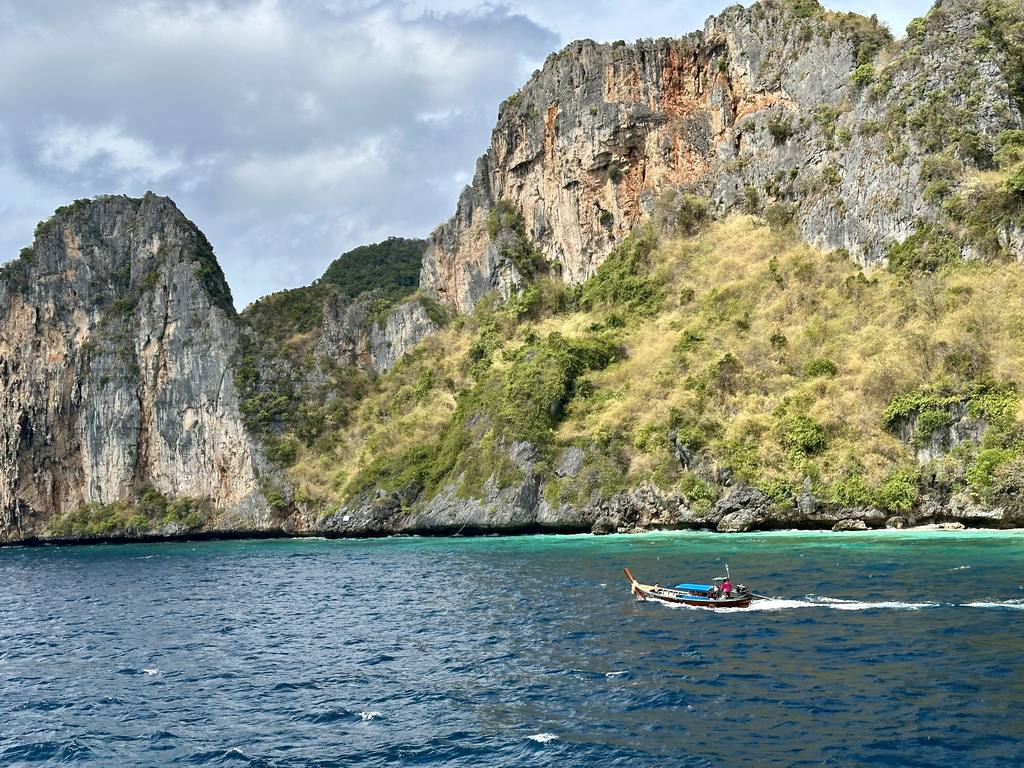
Koh Phi Phi is the most photographed archipelago in Thailand, and it earns that in the first ten minutes of the crossing. Long before the ferry reaches the pier, limestone walls come up out of the Andaman Sea on both sides of the boat — 300 metres of vertical grey rock streaked orange, undercut at the waterline, with jungle somehow holding on to the top. There are six islands in the group. Two matter to visitors: Phi Phi Don, the inhabited one where you sleep, and Phi Phi Leh, uninhabited and protected, where Maya Bay is.
Phi Phi Don has no roads and no cars. The whole island moves on foot, by bicycle, and by longtail boat, and the main village — Tonsai — is a dense grid of alleys between two bays that nearly meet. That layout is the island’s charm and its problem: everything and everyone funnels through the same few hundred metres.
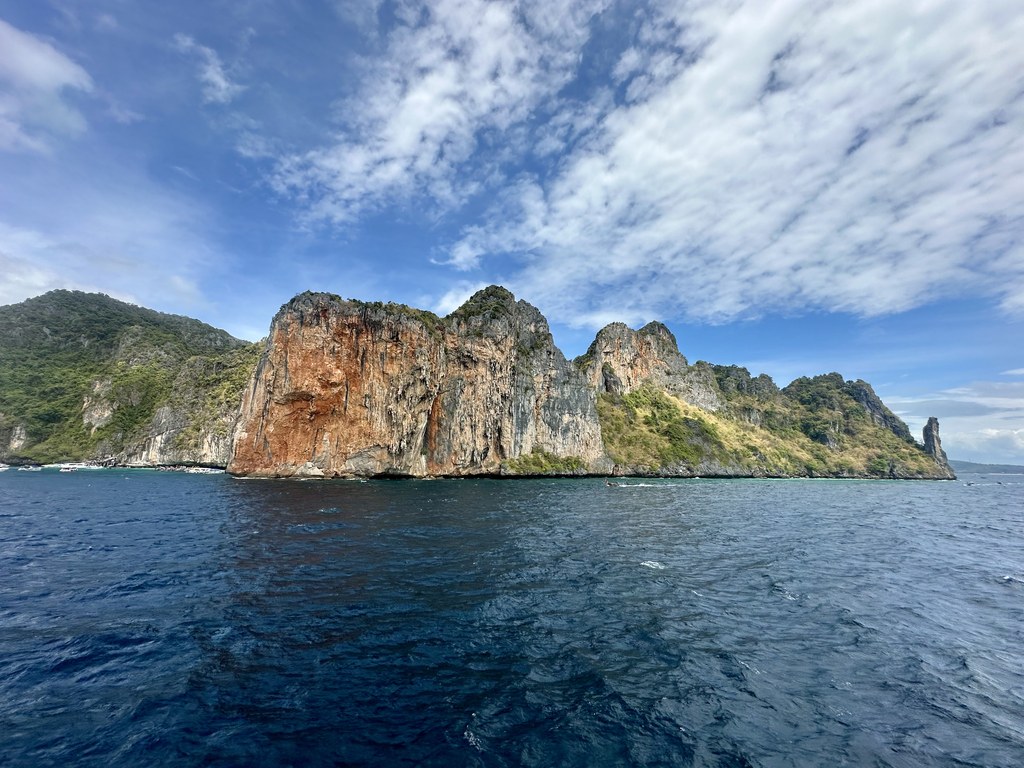
Koh Phi Phi is also the most contested destination in the Krabi Islands. It has been loved close to death, closed for restoration, and reopened under rules that did not exist a decade ago. This guide is written around those rules, because knowing them is now the difference between a good day here and a disappointing one.
Koh Phi Phi at a Glance
- Where: the Andaman Sea, between Phuket and Krabi, in Krabi Province
- The two islands that matter: Phi Phi Don (inhabited, where you stay) and Phi Phi Leh (uninhabited, protected, where Maya Bay is)
- Access: by boat only — no airport, no bridge. Ferries from Phuket, Krabi, Ao Nang, Railay and Koh Lanta
- Crossing time: 45 minutes to 2 hours depending on the route and the boat
- Vehicles: none. No cars, no motorbikes, no taxis — walking, bicycles and longtail boats
- National park fee: 400 THB for foreign adults, 200 THB for children, cash only
- 🔴 Maya Bay closes every year from 1 August to 30 September
- Swimming in Maya Bay: not allowed — wading to knee depth only
- Viewpoint: 50 THB for viewpoints 1 and 2, 70 THB including viewpoint 3
- Best time to visit: November to April
- Typical meal: 120–250 THB in Tonsai, considerably more at the remote resorts
- Cash: essential. ATMs exist in Tonsai but the park fee and most boats are cash only
My Two Days on Koh Phi Phi, and What I Got Wrong
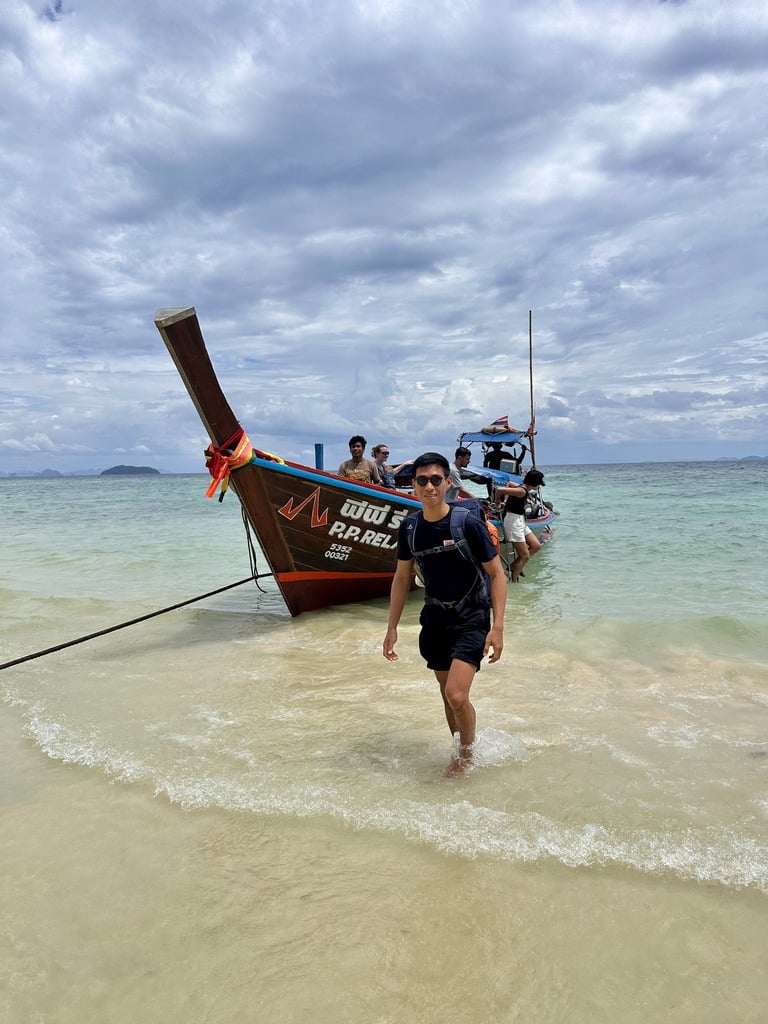
I was on Koh Phi Phi on 23 and 24 February 2025, arriving on the morning ferry from Phuket and staying at Phi Phi Relax Beach Resort on Phak Nam Beach, on the quiet south coast. I made one planning mistake there, and it is the mistake this island punishes most, so it is worth explaining properly.
The mistake: choosing a beautiful beach over the pier
Phak Nam is lovely. The deluxe bungalows look straight out over the water and there is essentially nobody there. But it has no pier and no road — the only way in or out is the resort’s own longtail shuttle. That sounds fine until you try to do anything that starts early.
I wanted to dive. Dive centres on Phi Phi leave Tonsai pier at around 7:00 AM. The resort’s first shuttle of the day leaves at 8:00 AM. That is not a hotel being unhelpful — it is a published timetable that simply does not overlap with the dive boats. I did not dive.
Then I booked a longtail tour through the resort and they cancelled it at the last minute for rough seas, without offering an alternative. I found a cheaper boat at Tonsai pier myself the next morning, which worked out — but only because I had already gone across for the day.
The lesson is simple and I would apply it again anywhere on this island. If you are here for two nights and you intend to do things — dive, take tours, leave early — stay within walking distance of Tonsai pier. If you are here for a week to lie on sand, take the remote beach and accept the shuttle timetable as the price of the view.
The morning that went right
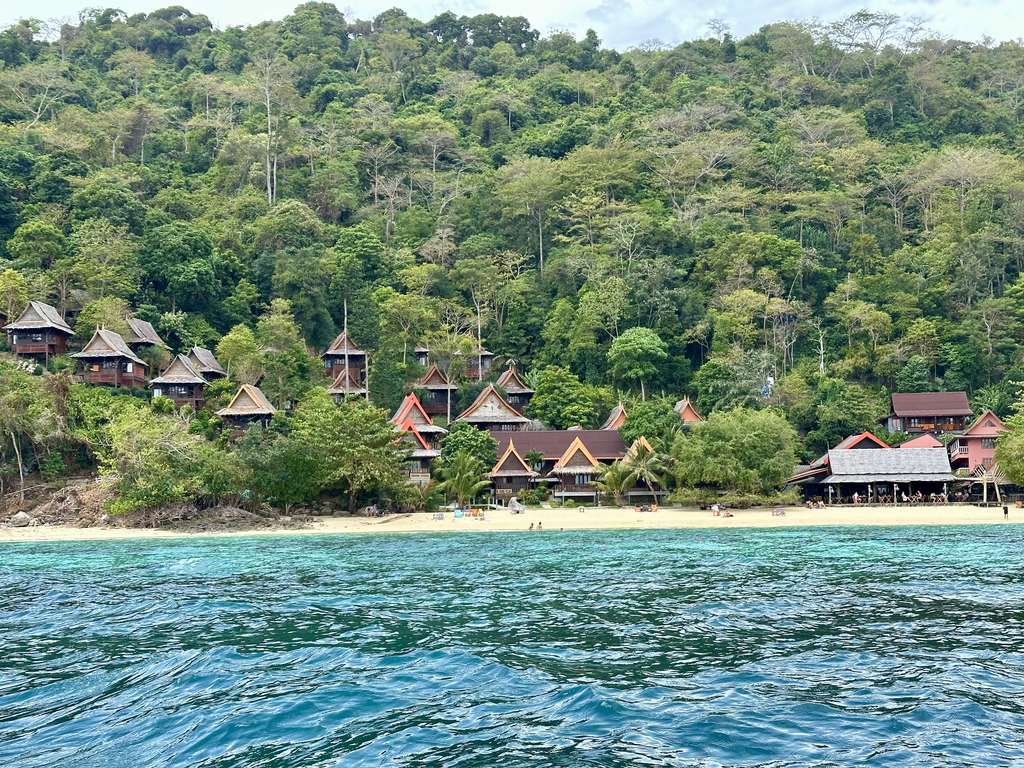
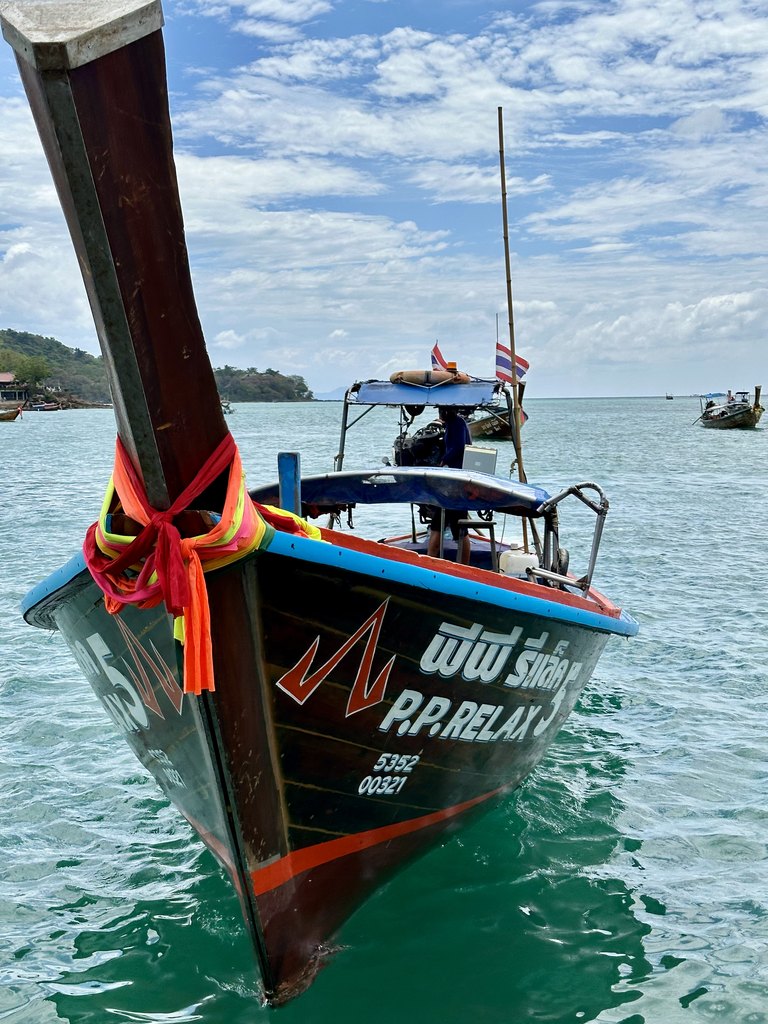
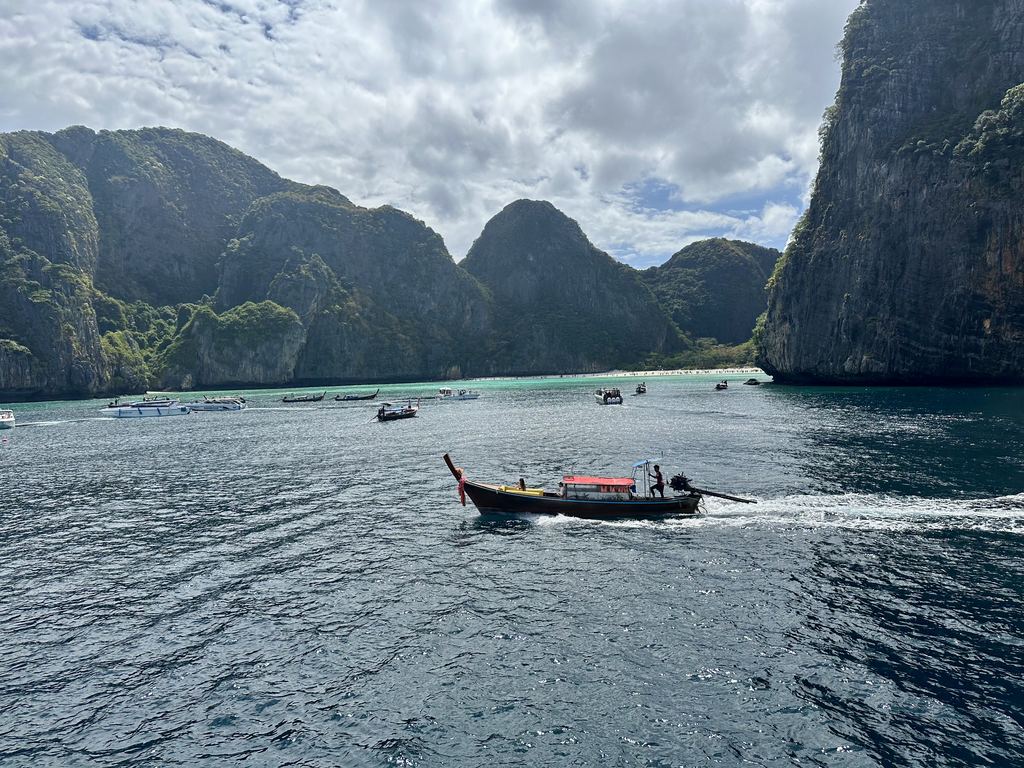
On 24 February I took a longtail out of Tonsai at 8:30 AM. We were at Maya Bay by 9:15 — which, it turns out, is the single most useful thing I can tell you about this island, because the bay reaches its visitor cap around 10:30 and the difference between those two arrival times is the difference between a beach and a queue.
Then Pileh Lagoon and Viking Cave around 10:15, Monkey Beach just before noon, and back at Tonsai by early afternoon. Somewhere in between I snorkelled off Phi Phi Leh near Viking Cave. We were told to look for baby blacktip reef sharks and found none — instead a school of small fish, a tiny octopus, and a very well-camouflaged stonefish that I am glad somebody pointed out. No fins were handed out, deliberately, to stop people kicking the coral. Twenty minutes in the water, and worth it.
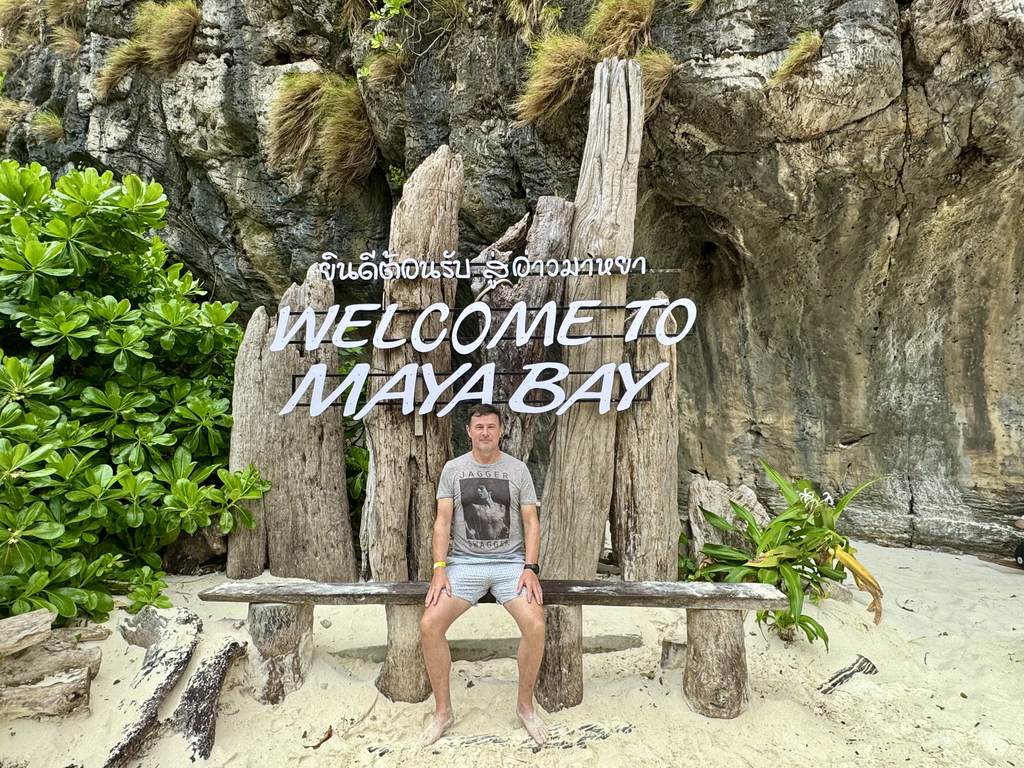
The moment I remember best is at Maya Bay, where a park guard patrols the shallows with a megaphone enforcing the no-swimming rule. Every time someone drifted a few metres too far out for a photo, the megaphone went: “Sexy lady, please get out of the water!” It is funny, and it is also the sound of a rule being enforced, which is exactly why the bay looks the way it does again.
Maya Bay: The Rules You Need to Know Before You Book
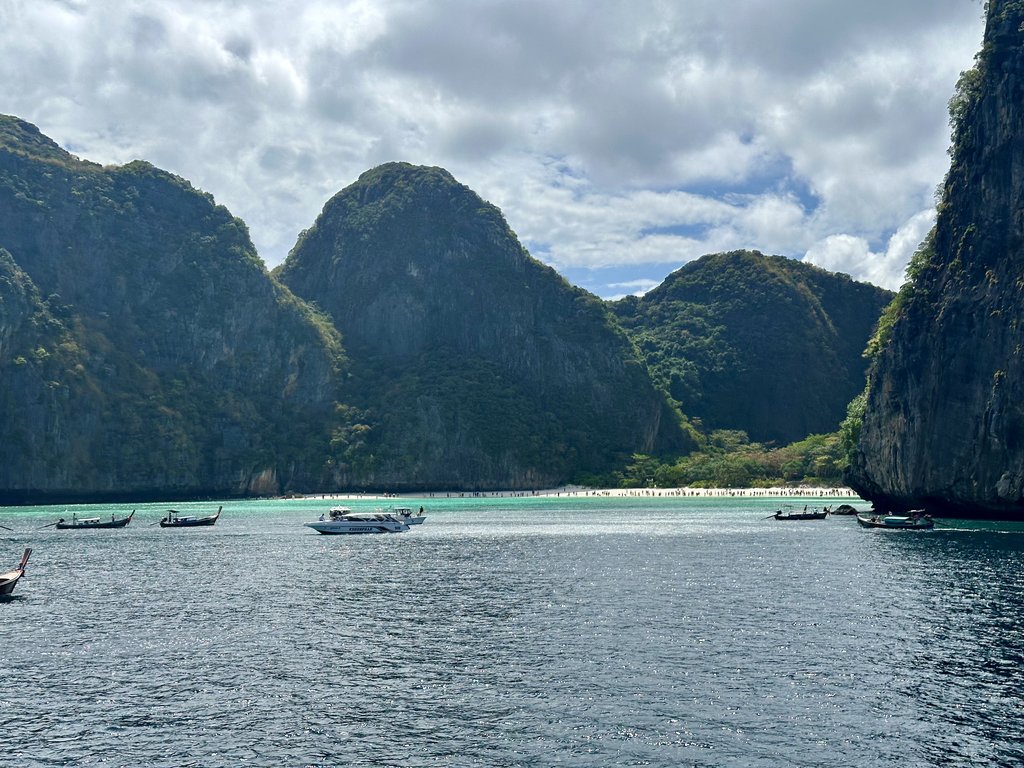
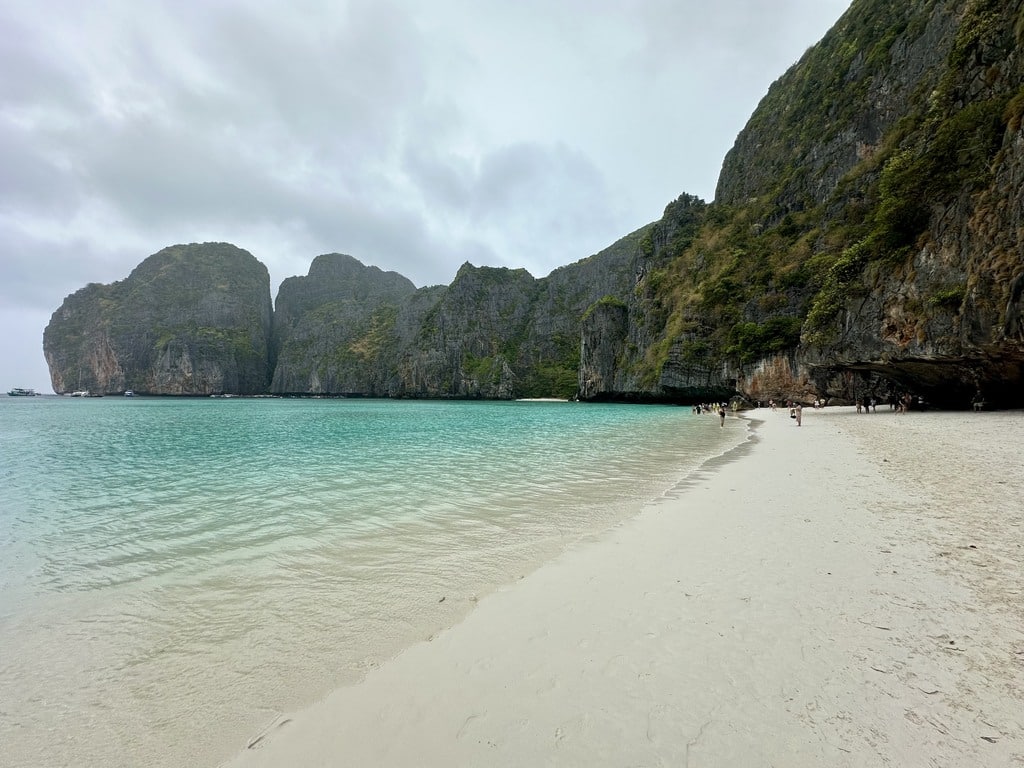
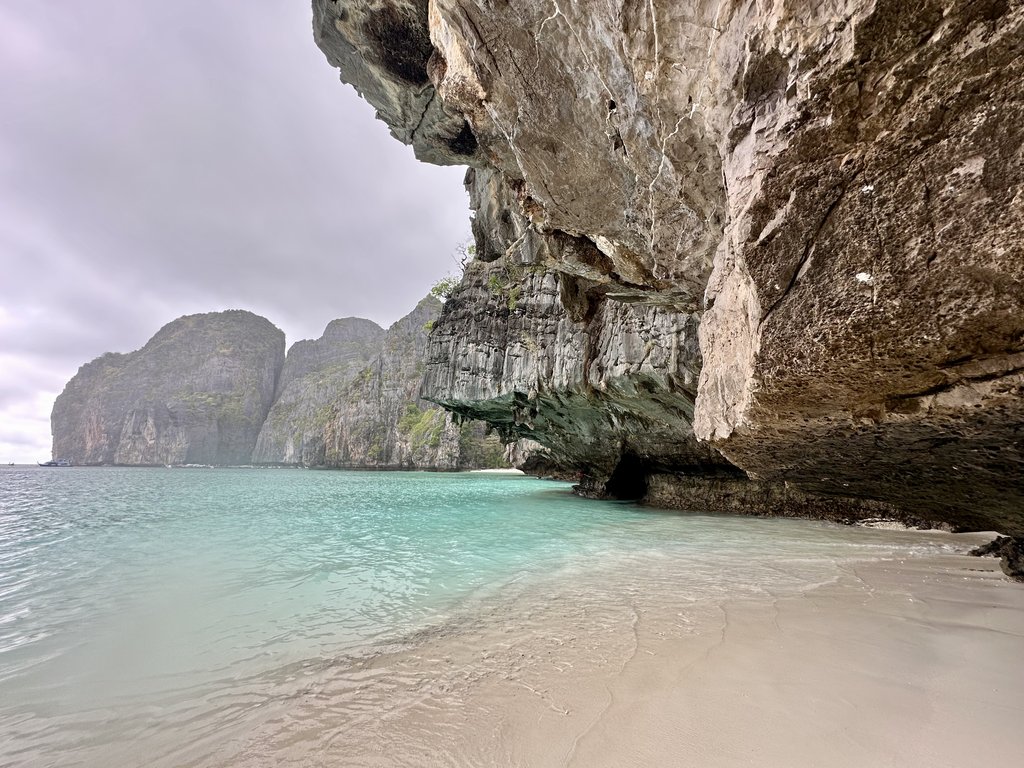
Maya Bay is a small cove on the west side of Phi Phi Leh, enclosed by cliffs on three sides, and it became famous when Danny Boyle filmed The Beach there in 1999. It was then visited to destruction — up to 5,000 people a day at its worst — and closed completely in June 2018 so the reef could recover. It reopened in 2022 under a completely different regime. Almost everything written about it online predates that change, so here is what actually applies now.
🔴 It closes for two months every year
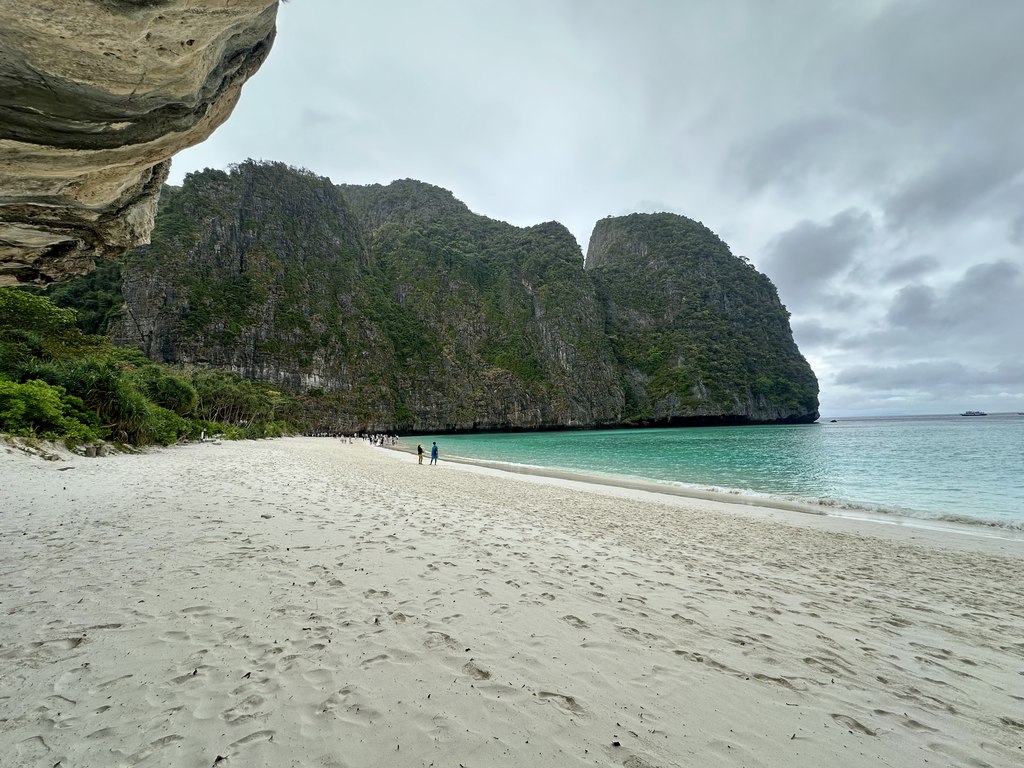
Maya Bay is closed to landings from 1 August to 30 September, every year, reopening on 1 October. This is an annual closure for reef and beach recovery during the southwest monsoon, not a one-off. Boat tours still run through those two months and still visit Pileh Lagoon, Viking Cave, Bamboo Island and the snorkelling stops — you simply cannot set foot on Maya Bay. If a tour offers you a landing during the closure, it is not authorised to.
You cannot swim there
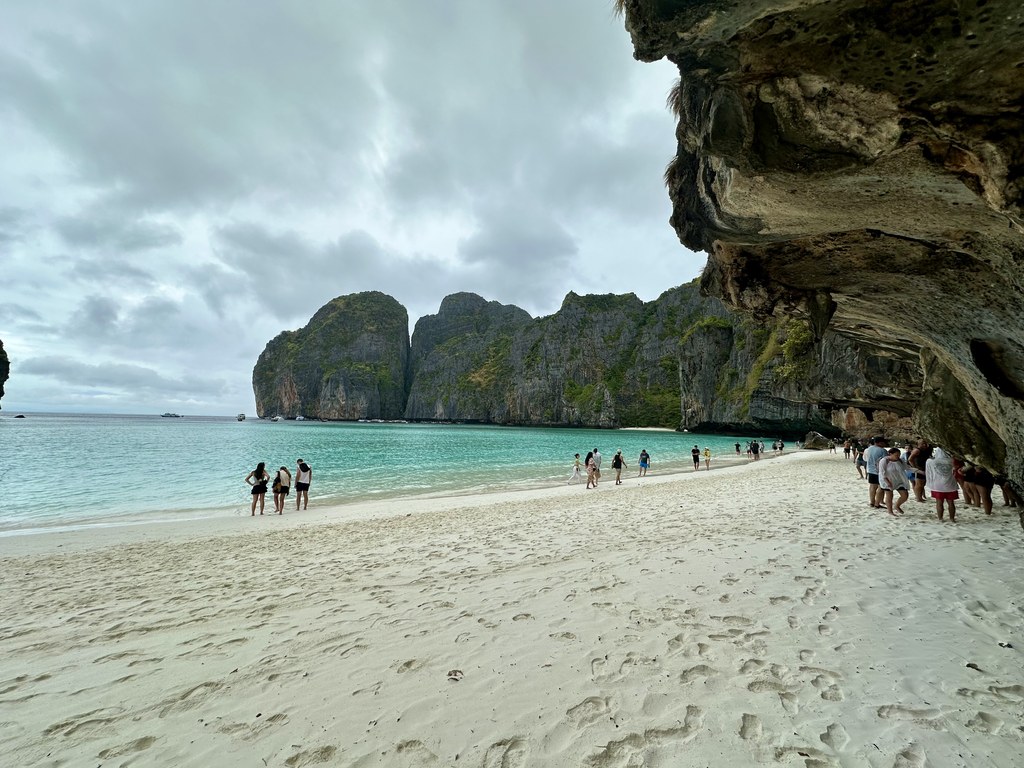
Swimming in Maya Bay is prohibited. You may wade to about knee depth and no further. The shallows are a nursery for blacktip reef sharks, which returned after the closure and are now breeding there again, and the restriction exists to protect them and the recovering coral. This is actively enforced — see the megaphone, above. Come expecting a beach to stand on and photograph, not a beach to swim at.
Boats do not enter the bay any more
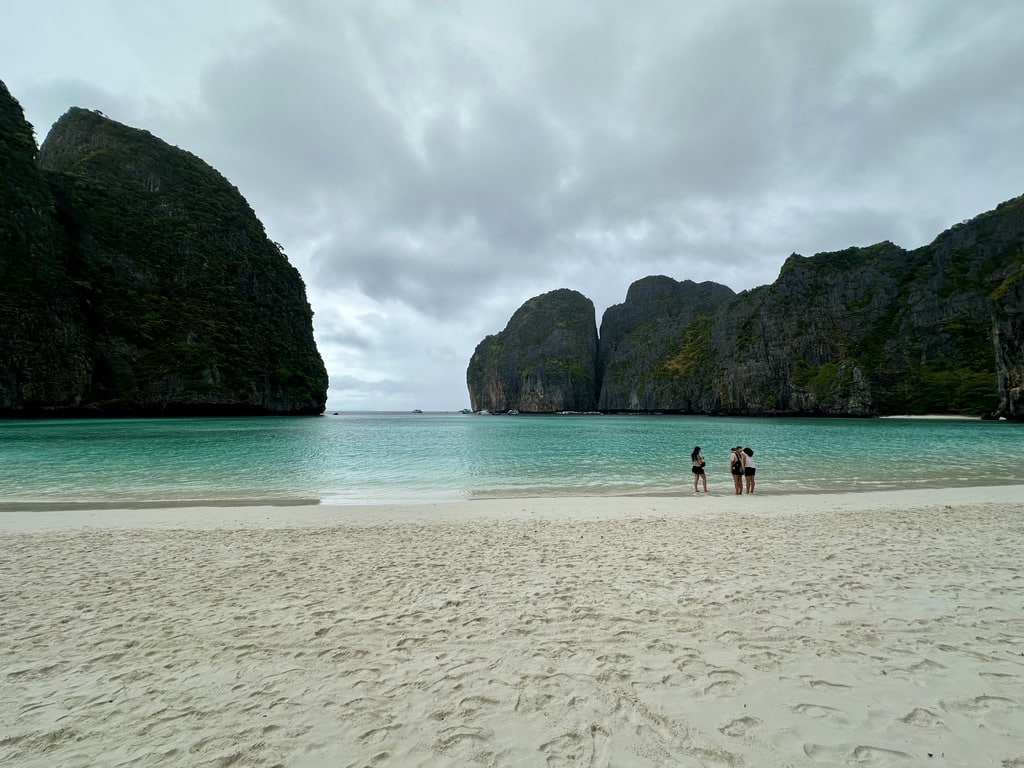
The old postcard image of longtails moored on the sand at Maya Bay is history. Boats now dock at a floating pier in Loh Samah Bay, on the opposite side of the headland, and visitors cross to Maya Bay on a wooden boardwalk through the trees — a five to ten minute walk. It is a small thing that changes the arrival completely: you come at the beach from behind, on foot, and it is quiet.
Numbers, times and the fee
Access is capped — roughly 380 visitors at a time, with tour operators allocated slots and a stay of about an hour ⚠️ (these figures circulate widely in operator material rather than in a published park schedule, so treat them as the shape of the system rather than exact law). What is firm is the practical consequence: the bay is at capacity by around 10:30 AM. Take the earliest boat you can get.
The Hat Noppharat Thara – Mu Ko Phi Phi National Park fee is 400 THB for foreign adults and 200 THB for children, cash only, collected by rangers. Divers pay an extra 200 THB on diving days. Some sites still quote the old 200/100 THB rate, which was doubled in 2022 — budget for 400. Many all-inclusive speedboat packages fold the fee into the ticket price; longtail tours booked on the beach usually do not, so ask.
Phi Phi Leh: Pileh Lagoon, Viking Cave and Loh Samah
Phi Phi Leh is uninhabited and entirely within the national park. Nobody sleeps there, nothing is built there, and every boat tour from Phi Phi Don, Krabi and Phuket circles it. It is the better half of the archipelago.
Pileh Lagoon
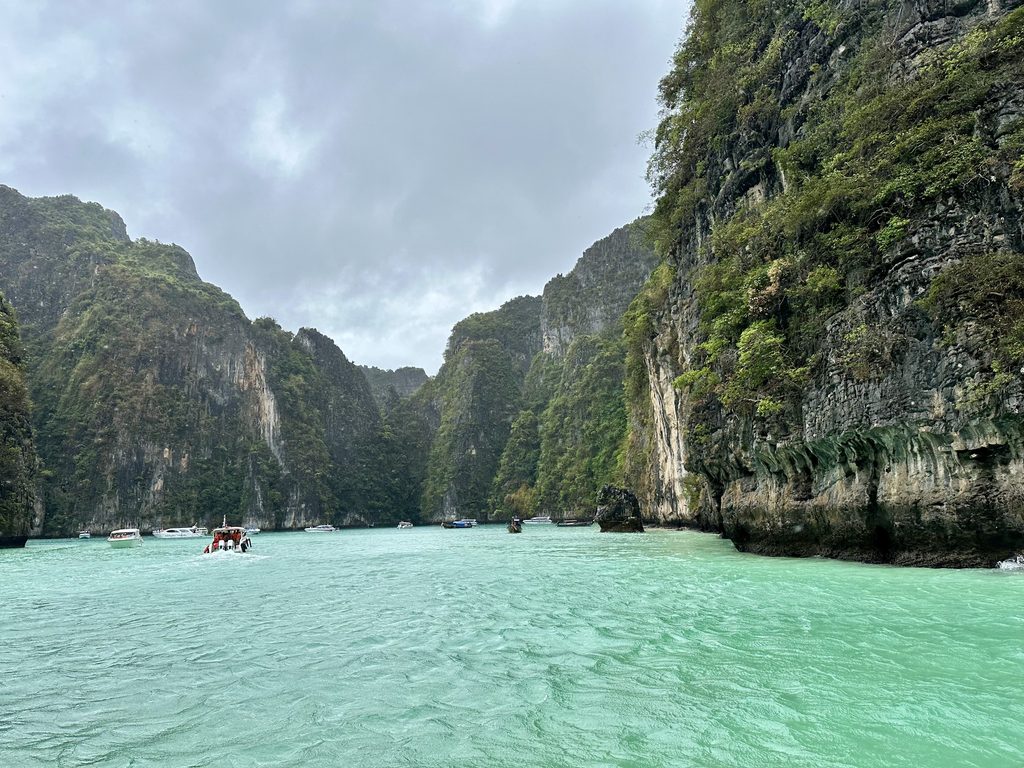
A near-enclosed inlet on the east side, walled by cliffs and floored with pale sand that turns the water an improbable emerald. Unlike Maya Bay, you can swim here, and most tours give you time in the water. Snorkelling is restricted to a marked area along one wall, boats must use the mooring buoys rather than anchor, and the whole thing is inside the same national park ticket. Early is better here too — by mid-morning the lagoon holds a lot of boats.
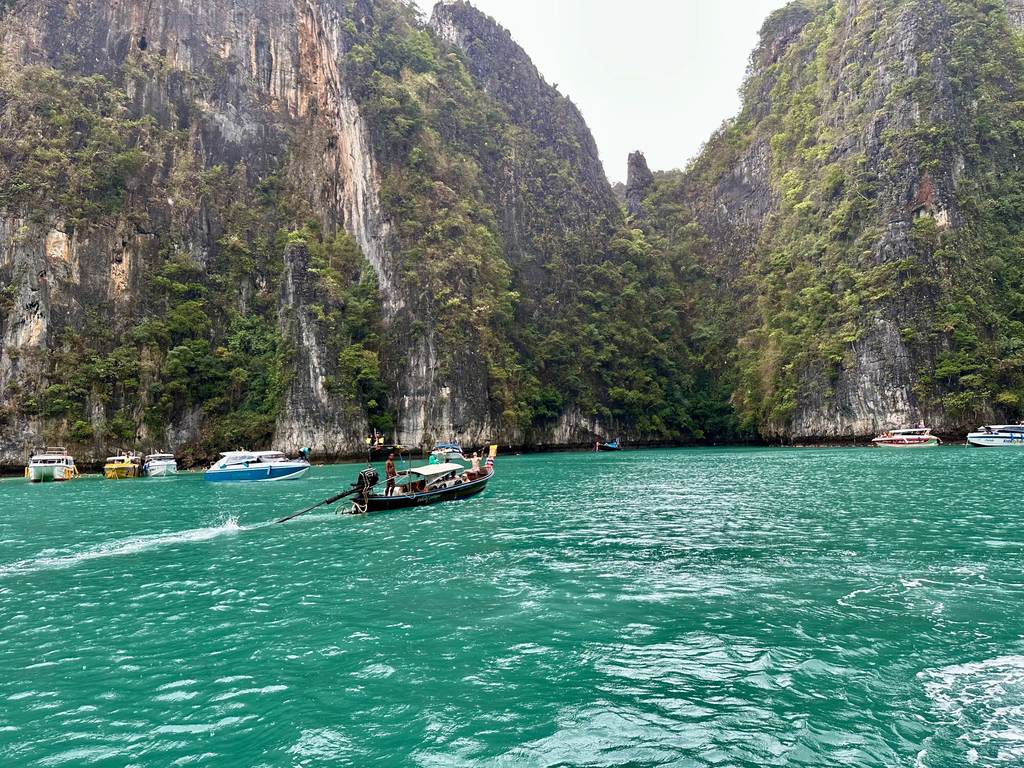
Viking Cave
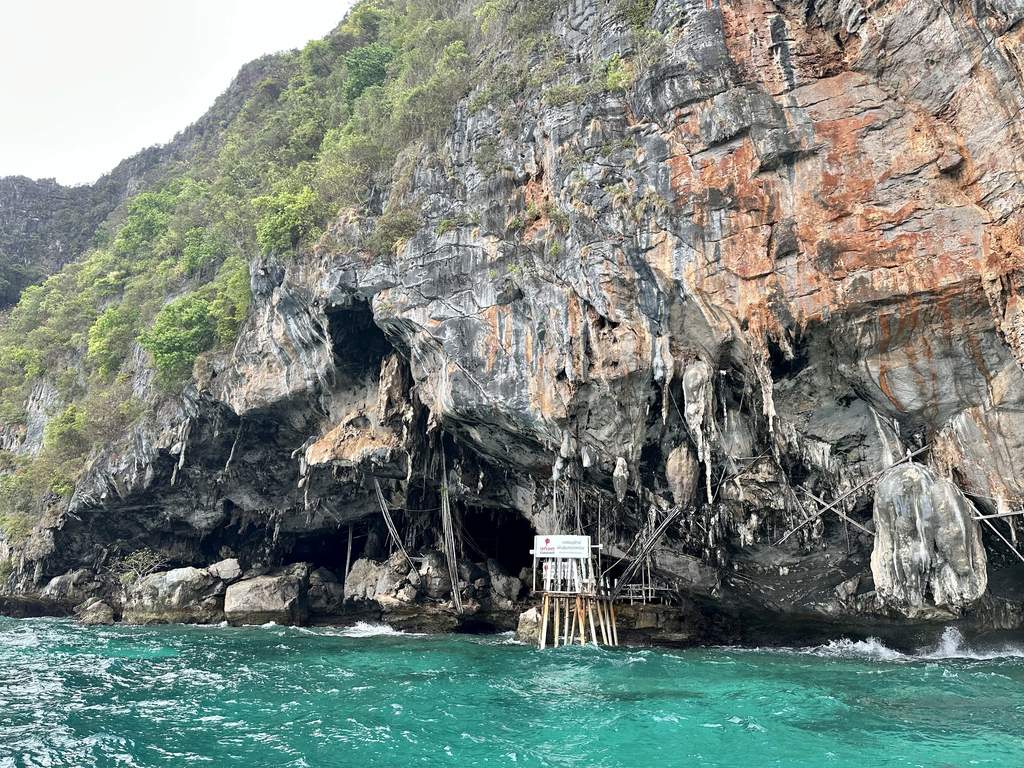
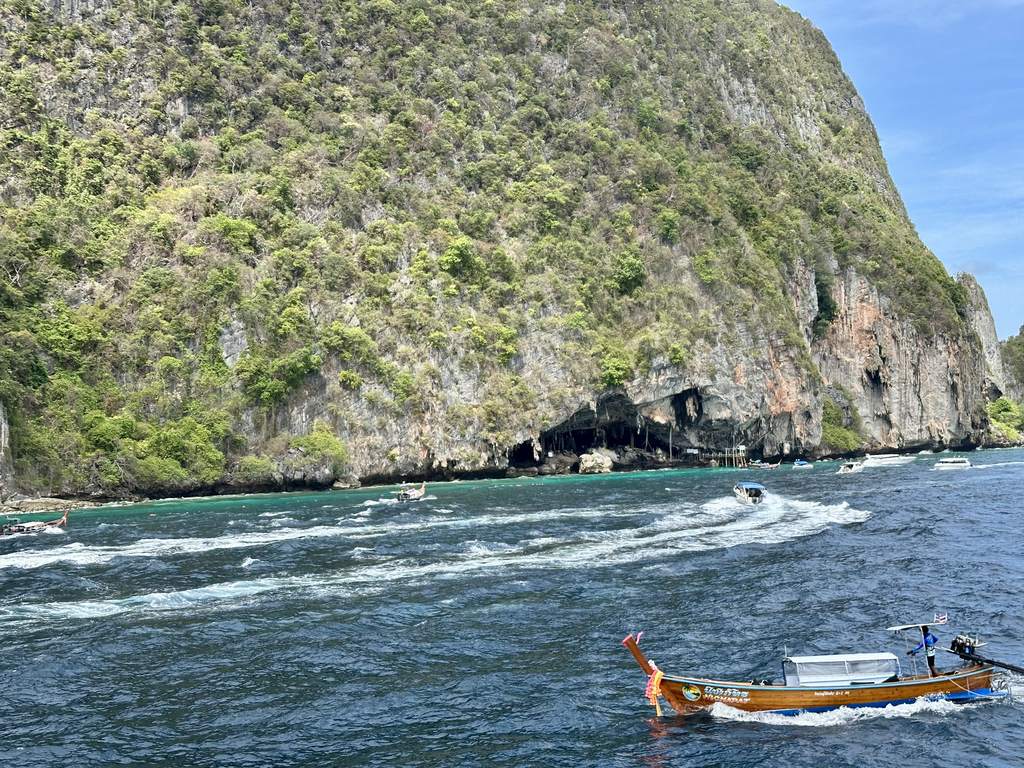
A large limestone cavern on the northeast side, around 170 metres deep, named for the ship figures painted on its walls — long assumed to resemble Viking longboats, though they were almost certainly drawn by Chinese or Malay sailors sheltering there.
You cannot land. Boats slow down and hold offshore, and that is as close as visitors get. The reason is visible from the water: the cave mouth is filled with an enormous lattice of bamboo scaffolding and rope ladders, built and climbed by licensed harvesters who collect edible swiftlet nests from the roof — the raw material of birds’ nest soup. It is a dangerous, tightly controlled concession, and the closure is about both safety and protecting the harvest. Watching the scaffolding go up into the dark is more interesting than the paintings you cannot see anyway.
Loh Samah Bay
Once a snorkelling stop in its own right, Loh Samah is now mainly known as the back door to Maya Bay — the floating pier and boardwalk start here. There is a small beach, mangroves, fish and sometimes small reef sharks in the shallows. Be honest with your expectations about the coral: reviewers consistently report it as degraded compared with what it was.
Monkey Beach — and a Warning Worth Reading
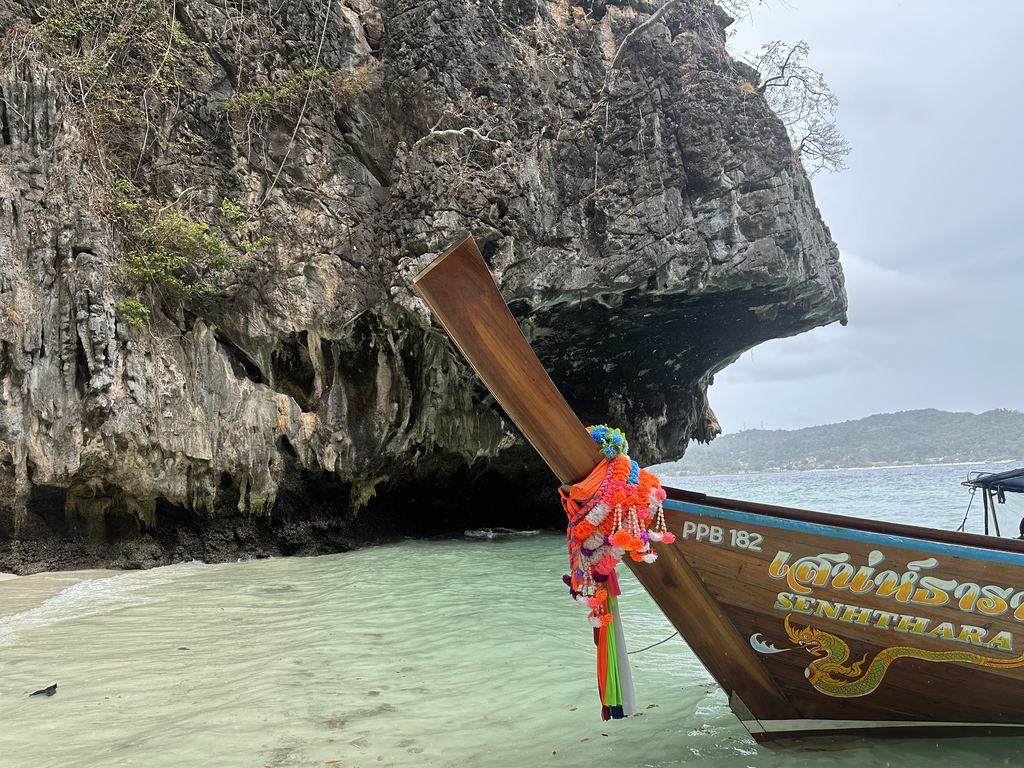
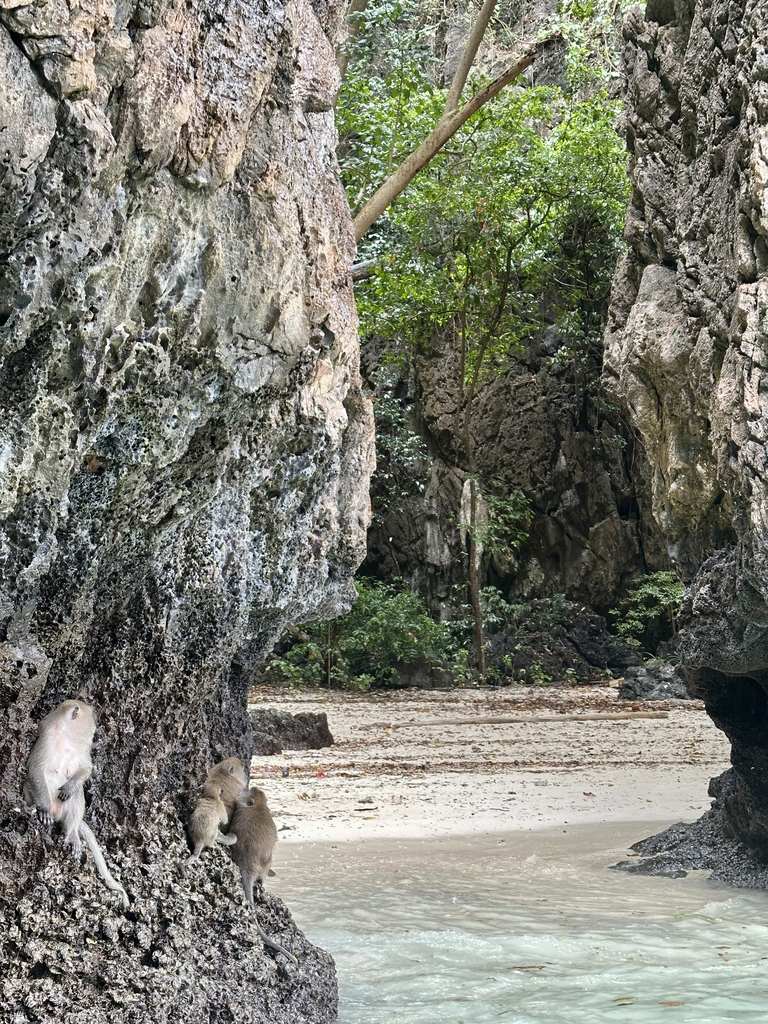
Monkey Beach sits on the southwest shore of Phi Phi Don, a short strip of sand below a limestone wall, reachable by longtail or kayak. It is on almost every tour itinerary because of the resident troop of long-tailed macaques, which come down onto the sand and are entirely unafraid of people.
🔴 This needs saying plainly, because most guides still treat it as a cute photo stop. Over the December 2025 to January 2026 holiday period, at least ten tourists were treated for monkey bites in Thailand, with Monkey Beach named among the main sites. Macaque bites and scratches carry a genuine rabies risk, and a clinic in Tonsai Village now advertises post-exposure vaccination specifically for animal bites — which tells you how routine the problem has become.
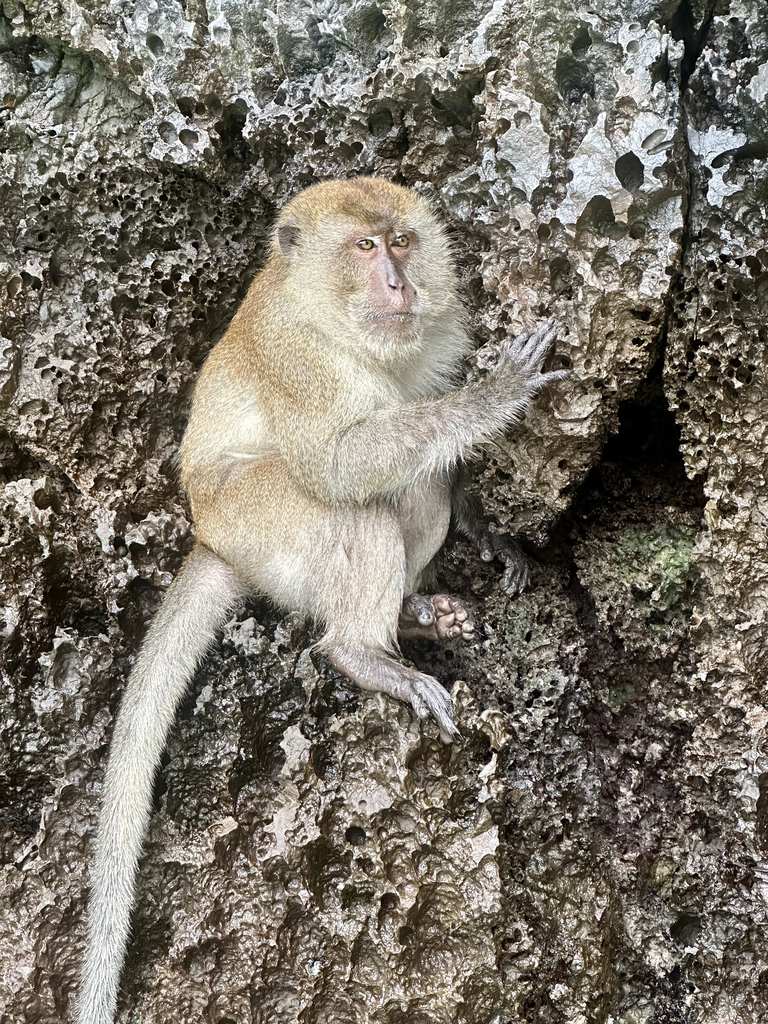
What that means in practice:
- Do not feed them. Feeding is what taught this troop to approach and grab in the first place.
- Carry nothing visible — no food, no open bags, no loose bottles. They will take sunglasses and phones.
- Do not pose with them, do not reach towards them, and never get between an adult and an infant.
- If you are bitten or scratched, even lightly: wash the wound immediately with soap and running water for several minutes, and get to a clinic the same day. Rabies post-exposure treatment works, but it is time-sensitive.
None of this means skip it. The macaques are genuinely worth seeing and the beach is beautiful. It means watch them from a few metres away with your hands empty, which is what you should be doing with wild animals anyway.
Best Beaches on Koh Phi Phi Don
Loh Dalum Beach
The crescent bay on the north side of the isthmus, directly behind Tonsai Village. Shallow, calm, pale sand, and the best sunset on the island. It empties dramatically at low tide, which catches people out. By night it becomes the centre of Phi Phi’s nightlife — fire shows, buckets, music until late. Beautiful by day, loud by night, and you should know which one you are booking into.
Tonsai Bay
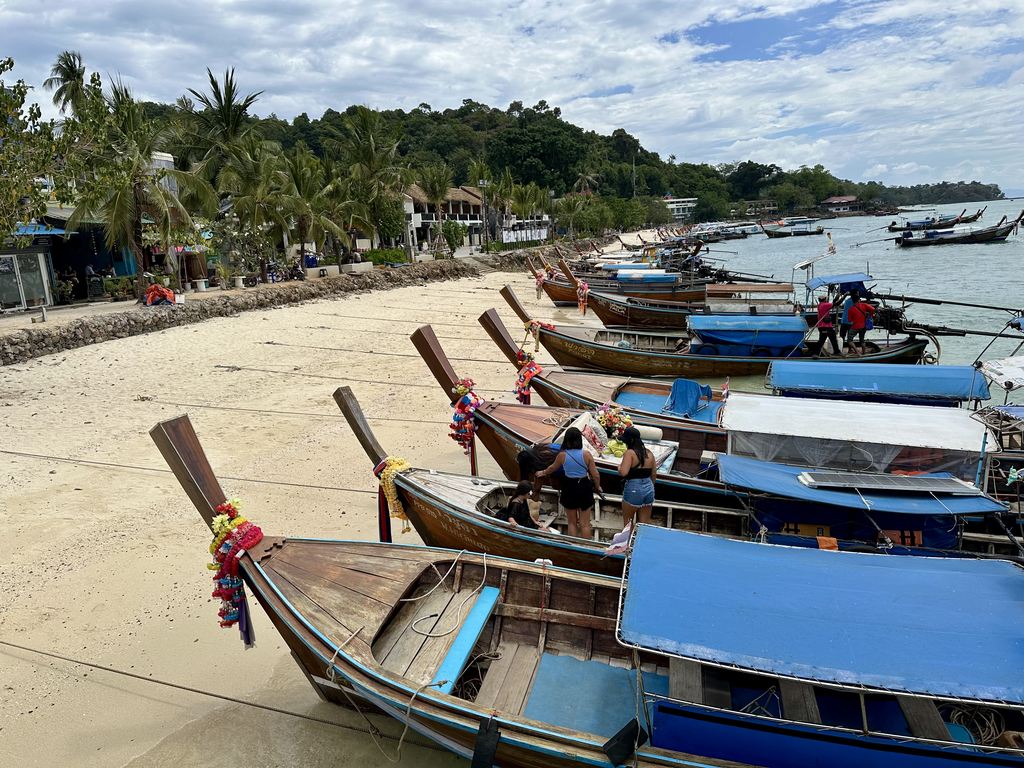
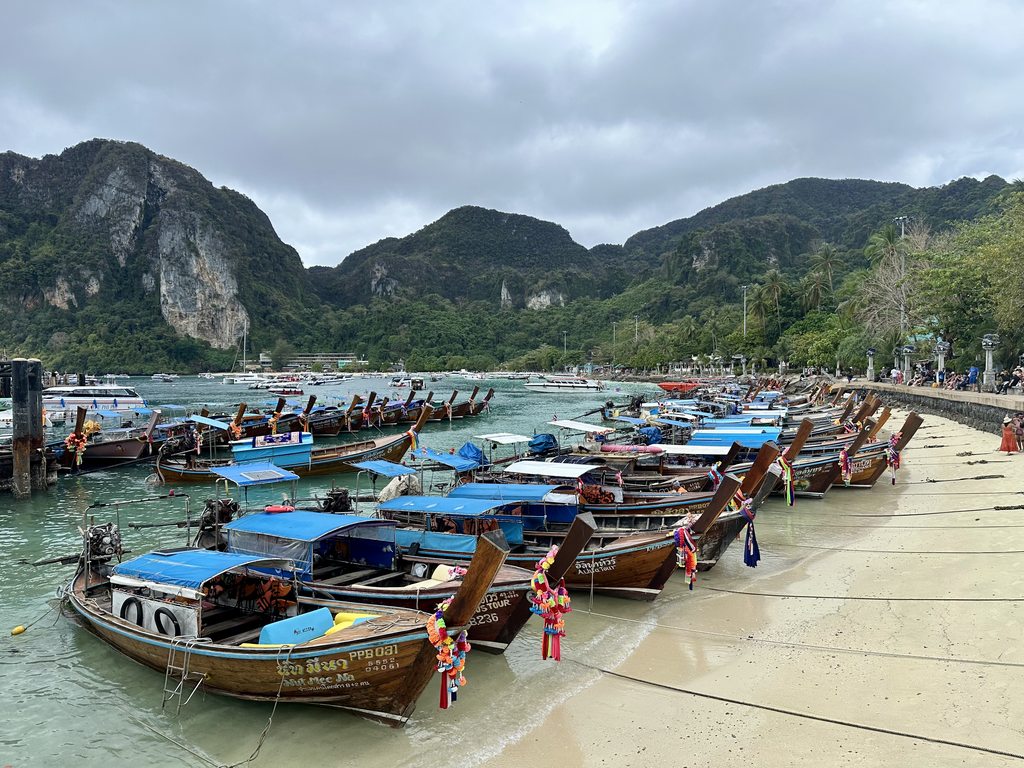
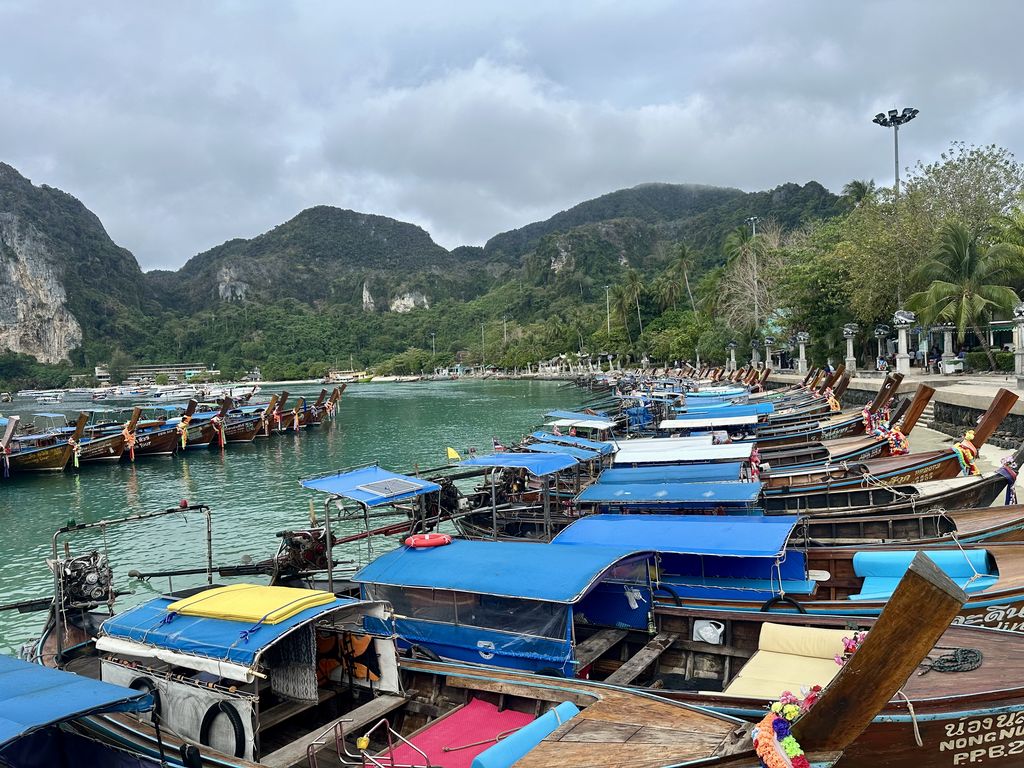
The working side: the pier, the ferries, the dive shops, the tour boats. Not a beach for lying on — it is where the island’s logistics happen — but it is where you want to be if your days start early.
Long Beach (Hat Yao)
A long stretch of proper swimming sand about twenty minutes south of Tonsai by longtail, or forty-five minutes on the coastal footpath at low tide. Quieter than Loh Dalum, with a handful of bungalow places and some of the best snorkelling reachable from shore on Phi Phi Don. The good compromise between scenery and access.
Laem Tong, Loh Bagao and Phak Nam
The remote north and southeast: quiet, scenic, and home to the upmarket resorts. These beaches are boat-access only and that is the whole story — read the Where to Stay section before you fall in love with a photograph.
The Phi Phi Viewpoint
The climb east out of Tonsai Village is the one thing on Phi Phi Don everybody should do, and it is cheap. There are three viewpoints on the same path, and a small charge at the gate: 50 THB for viewpoints 1 and 2, or 70 THB including viewpoint 3 — the extra twenty includes a bottle of water, which is not a joke by the time you get there.
- Viewpoint 1 — about 15 minutes up a long flight of concrete steps
- Viewpoint 2 — 20 to 30 minutes total, and the classic postcard shot of the twin bays
- Viewpoint 3 — 30 to 40 minutes total, fewer people, the best of the three at sunset
What you get from the top is the shape of the island explained in one image: two curved bays almost touching, the flat sandy neck of village between them, and karst rising at both ends. Allow an hour or two with photo stops, go early morning or late afternoon, and take more water than you think.
The path serves a second purpose that is worth knowing about. The high ground at the viewpoint is the island’s designated tsunami evacuation assembly point, and the white-and-blue evacuation signs you will notice all over Tonsai point up this way.
Boat Tours from Koh Phi Phi
Almost every tour visits the same places. What you are actually choosing between is the boat, the length, and the hour you leave — and that last one matters more than the other two.
Longtail or speedboat
A longtail is slower, open, noisy in a good way, and far more pleasant if the sea is calm. A speedboat covers more ground and shrugs off chop. The trade-off is real: longtail tours are the first to be cancelled when the sea gets up, which is exactly what happened to my booking. If your schedule has no slack, take the speedboat.
Half day or full day
A half day covers Maya Bay, Pileh Lagoon, Viking Cave, Monkey Beach and one snorkelling stop — that is the core, and for most people it is enough. A full day adds Shark Point and Bamboo Island, which is worth it if you want time actually in the water rather than moving between viewpoints.
Shared or private, and what it costs
Shared half-day trips run roughly 800 THB per person by longtail and around 1,200 THB by speedboat, with full days higher. Private longtail charters start around 3,500 THB for a half day and 5,000 THB for a full day for the whole boat, which becomes reasonable at four or more people and buys you the thing that matters most here — leaving at 8:00 AM instead of 10:00. Check whether the 400 THB park fee is included; on beach-booked longtails it usually is not.
If you would rather have it booked before you arrive, you can compare a private longtail to Maya Bay and Pileh Lagoon, a full-day seven-island longtail trip with sunset, or the sunset and bioluminescent plankton speedboat trip, which goes out when the day boats come back.
Snorkelling and Scuba Diving
Phi Phi is a serious dive destination with an unserious reputation, and the good sites are close — most are 15 to 30 minutes from shore, which is unusual.
The dive sites
Koh Bida Nok and Koh Bida Nai are the signature sites — two limestone pinnacles south of Phi Phi Leh with soft coral, sea fans, leopard sharks on the sand and blacktips in the shallows. Shark Point (Hin Bida) and Anemone Reef are usually paired on the same day trip, often with the King Cruiser wreck, a ferry that sank near Anemone Reef in 1997 and is now one of the best wreck dives in the Andaman.
One correction worth making, because it appears on a lot of pages: Hin Daeng and Hin Muang are not day trips from Phi Phi. They are around 90 kilometres south, roughly two and a half hours each way, and are reached by liveaboard or from Koh Lanta. February to April is the window there for manta rays and whale sharks.
Courses and prices
Two fun dives run roughly 2,400–2,800 THB, a Discover Scuba day 3,400–3,800 THB, and a PADI Open Water course anywhere between 10,900 and 15,000 THB depending on the shop and the season — that spread is real, so ask more than one. Add 200 THB per diving day for the national park supplement. The dive centres cluster within a few minutes of Tonsai pier, which is the practical reason to sleep nearby. You can also book a beginner two-dive day in advance if you would rather not arrange it on arrival.
Snorkelling
Most snorkelling here happens as a stop on a boat tour rather than off a beach, with Shark Point the name everyone quotes. Manage your expectations on coral health — a lot of it around the islands is visibly degraded — and treat any shark sighting as luck rather than the itinerary. Some operators deliberately do not issue fins to snorkellers to stop people kicking the reef. That is a good sign about an operator, not a cheapskate one.
Where to Stay in Koh Phi Phi
This is the decision that shapes your whole stay, and it is not really about the hotel. It is about whether you can leave it when you want to.
🔴 The shuttle boat question — read this first
Every remote-beach resort on Phi Phi Don is boat-access only, and each handles the crossing differently. Before you book anything outside walking distance of Tonsai, get answers to four questions:
- Is the shuttle free, and free on which booking channel? Some resorts include it only if you book direct on their own site — an OTA reservation may not qualify. This catches people out constantly.
- What time is the first boat off the beach? Typical first departures are around 8:00 AM. Dive boats leave the pier at 7:00. If diving matters to you, that single line settles where you sleep.
- What time is the last boat back? This decides whether an evening in Tonsai is possible at all.
- What does it cost if it is not included? 150–300 THB per person each way is the going rate, and it applies every single time you cross.
Near Tonsai pier — the practical choice
Walk everywhere, leave at any hour, no shuttle to plan around. This is what I would book on a short stay.
- Mama Beach Residence – Adults Only — about ten minutes’ walk from the pier, adults only, and the calmest option this close to the village.
- Phitharom PP Resort — on Loh Dalum Bay but only 500 metres from the pier, which is genuinely both worlds.
- Phi Phi Villa Resort — pool, mid-range, central.
Hostels and budget rooms in the village
Phi Phi has one of the better hostel clusters in southern Thailand, all within the same few hundred metres.
- Blue Flow Hostel — steps from the pier, consistently among the highest-rated on the island.
- Sweed Dee Love Hostel — the best guest scores of the budget cluster.
- The City Hostel — the cheapest reliable bed near the pier.
- The view Hostel — in the dive-shop cluster, which is convenient if you are diving.
Long Beach and the quieter south
Twenty minutes by longtail, or walkable at low tide — the best balance of quiet and access on the island.
- Phi Phi Long Beach Resort & Villa — beachfront on Hat Yao. Its shuttle is advertised as running constantly; guests report it thins out late at night. The 3.4 km footpath is your backup.
- Viking Nature Resort — rustic timber bungalows, and reachable on foot over the viewpoint trail in 45 to 60 minutes, which very few remote places are.
- Phi Phi Long Beach Bungalow ( Had Yao) — simple and cheap, ten minutes by boat from the pier.
Resorts on the remote beaches
Laem Tong and Loh Bagao, at the northern end. Beautiful, quiet, and entirely dependent on boats.
- OUTRIGGER Phi Phi Island Resort — the former Zeavola on Laem Tong, teak villas, the best-rated property on the island.
- SAii Phi Phi Island Village — a large resort on Loh Bagao Bay, recently renovated, reachable by resort speedboat direct from Phuket.
- Phi Phi Holiday Resort — on Laem Tong. Note it has dropped the Holiday Inn branding, so searching for that name will not find it.
- PP Erawan Palms Resort — Laem Tong, with a published shuttle timetable and a 300 THB per person each-way fare. At least you know before you book.
- Phi Phi Phu Chalet Resort — quieter and less brand-name than the big two, about 3 km from Tonsai.
Eating and Nightlife in Tonsai
Tonsai Village packs restaurants, bakeries, dive shops and bars into a few alleys, and it is cheap by island standards — 120 to 250 THB gets you a proper Thai meal, against considerably more at the remote resorts where you are a captive customer. That price gap is another argument for sleeping near the village.
Nightlife concentrates on Loh Dalum Beach: fire shows on the sand, buckets, and music that runs late. Phi Phi has a reputation for this and it is deserved — it is the loudest of the Krabi islands by a distance. It is also easily avoided by sleeping anywhere other than directly on Loh Dalum. Two sensible precautions apply here as anywhere with a party strip: keep your drink with you, and do not accept drinks from strangers.
Best Time to Visit Koh Phi Phi
November to April — the dry season
Calm seas, reliable crossings, clear water for diving. December to February is the peak of it and also the busiest and priciest. I was there at the end of February and the conditions were as good as they get. If you want manta rays and whale sharks on a liveaboard south of here, February to April is the window.
May to October — the green season
Cheaper, emptier, wetter. Rain tends to come in short heavy bursts rather than all day, but the sea is rougher and longtail tours get cancelled. And the headline constraint: Maya Bay is shut from 1 August to 30 September. If Maya Bay is the reason you are coming, those two months are the two months not to come.
The hour of day matters as much as the month
Day-trip boats from Phuket and Krabi land through the middle of the day and leave in the late afternoon. Everything on Phi Phi Leh is crowded between 10:30 AM and 3:00 PM and comparatively empty either side. Book the 8:00 AM boat, always.
Practical Tips for Koh Phi Phi
Getting there, and getting onward
Koh Phi Phi is reached only by boat, with ferries and speedboats from Phuket, Krabi, Ao Nang, Railay and Koh Lanta, taking anywhere from 45 minutes to two hours. Routes, schedules and current fares are covered in detail in my dedicated guide on how to get to Koh Phi Phi.
For the leg out of Phi Phi, book ahead in high season — boats fill. You can compare operators and times for Koh Phi Phi to Railay, Koh Phi Phi to Koh Lanta, Koh Phi Phi to Krabi and Koh Phi Phi to Phuket on 12Go.
Getting around the island
On foot in the village, by longtail everywhere else. There are no cars, no motorbikes and no taxis — luggage moves on handcarts, which is worth remembering when you pack. A longtail hop between beaches typically costs 100–300 THB per person depending on distance.
Money, water and the park fee
Bring cash. There are ATMs and exchange counters in Tonsai, but the 400 THB national park fee, beach-booked boats and small restaurants are cash only. Tap water is not drinkable — buy bottled, and refill where you can rather than buying small bottles all day. All non-Thai nationals must also file the free Thailand Digital Arrival Card online within three days before arriving in the country.
The tsunami, and the signs you will see
The 2004 Indian Ocean tsunami struck Koh Phi Phi with great force; the low sandy neck between Tonsai and Loh Dalum, where the village sits, was hit from both sides. A memorial park stands in Tonsai, a few minutes from the pier, with plaques and photographs, and a commemoration is held there each year on 26 December at 10:29 AM, the time the first wave arrived.
What a visitor needs to know is practical. White evacuation signs with blue arrows are posted throughout the village, at the pier and along the beaches, all pointing towards high ground; the viewpoint ridge is the designated assembly point. Note the nearest sign when you arrive. It takes a moment and it is the same thing residents do.
Sun, reefs and rubbish
Reef-safe sunscreen, a hat, and shoes you can walk the viewpoint in. Waste and wastewater have been a real problem on an island this small with this many visitors; a purpose-built treatment and wetland park was completed in 2024, which is progress. Carry your rubbish back to the village, and do not stand on coral.
Is Koh Phi Phi Still Worth Visiting?
This gets asked a lot, usually by people who have read that the island is ruined. The honest answer has two halves.
What is genuinely diminished: the coral around the main tour stops is visibly degraded, Tonsai in high season is crowded and noisy, and the version of Maya Bay you may have in your head — empty sand, a longtail pulled up on it, nobody around — is not available at any price. Anyone selling you that image is selling a 1999 film still.
What is genuinely still extraordinary: Phi Phi Leh is one of the most dramatic pieces of coastline in Southeast Asia and no amount of crowding changes the rock. The 2018–2022 closure worked — the sharks came back, and the rules that replaced the free-for-all are being enforced. The diving is close, cheap and better than the island’s party reputation suggests. And an island with no cars is a rarer thing every year.
So: yes, if you go early, sleep somewhere that lets you leave at 8:00 AM, and come for the sea and the rock rather than for a film location. And no, if you want a quiet, unspoiled island — for that, on this coast, go to Koh Lanta instead.
Read More
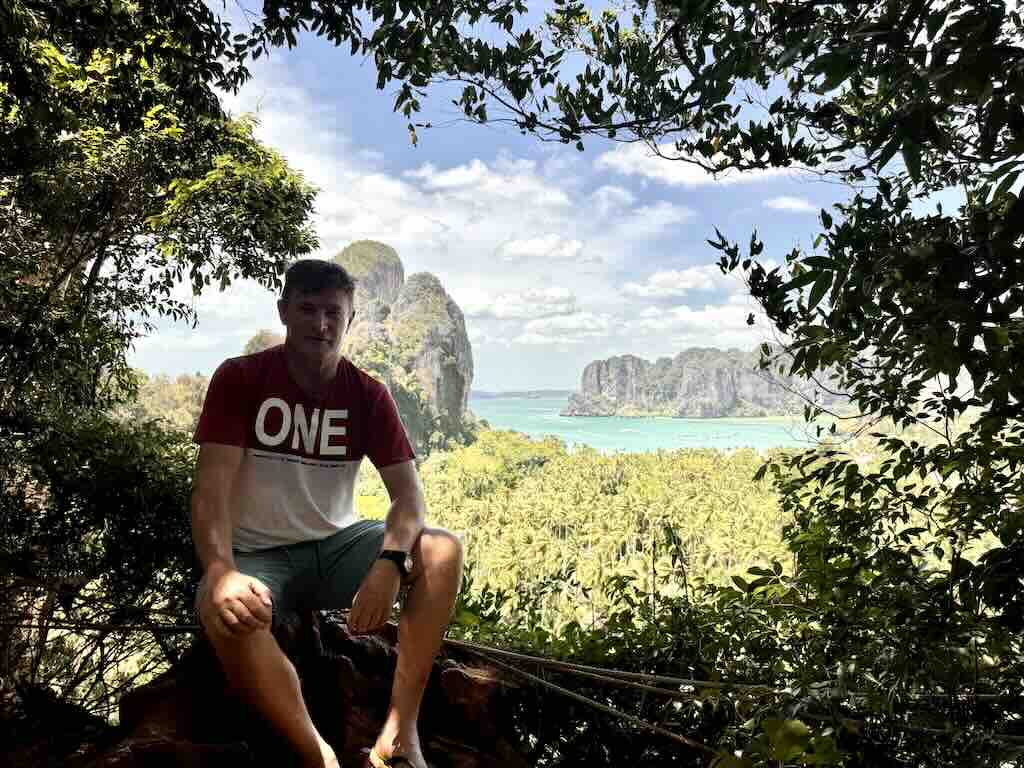
Railay Beach
The cliff-locked peninsula you can only reach by boat: Phra Nang Beach, the viewpoint hike, and world-class rock climbing. Read more
Koh Lanta
The quiet one: long west-coast beaches, a national park at the southern tip, and the best diving in the Andaman. Read more
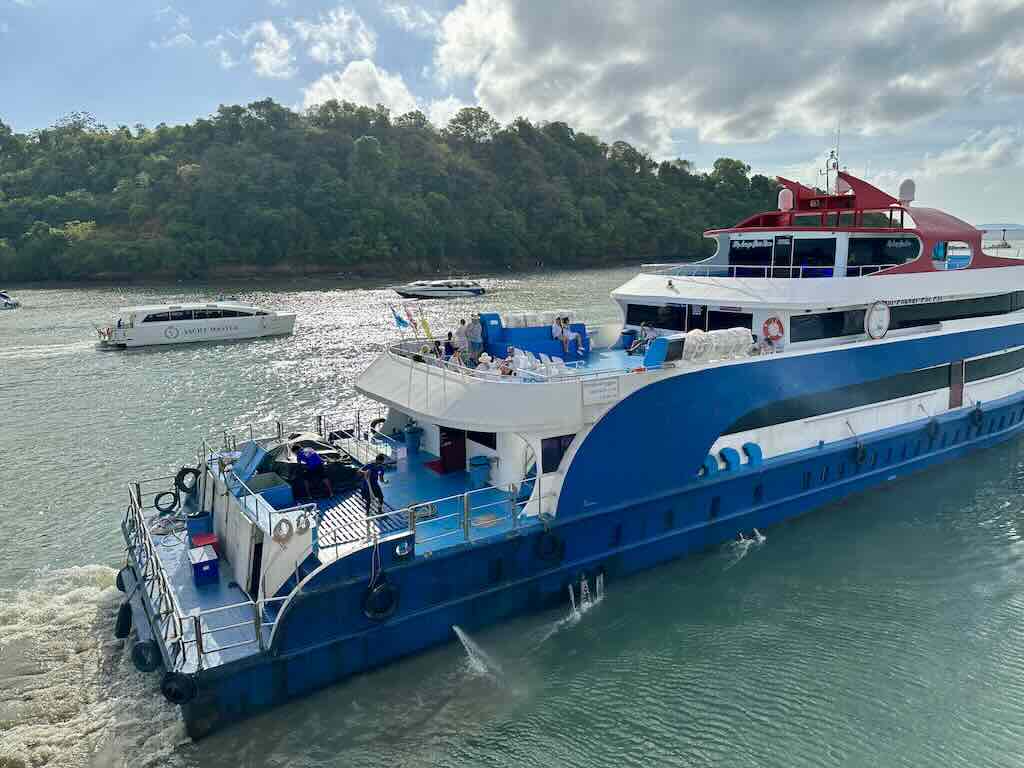
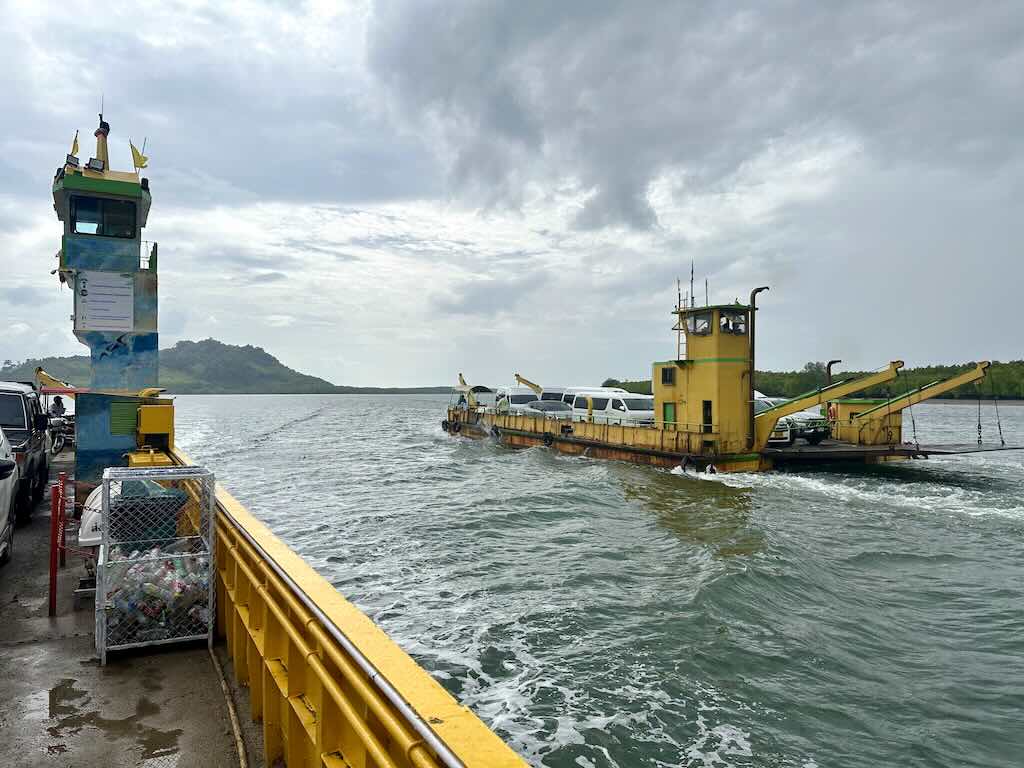
How to Get to Koh Phi Phi
Ferries and speedboats from Phuket, Krabi, Ao Nang, Railay and Koh Lanta, with routes, times and prices. Read more
Frequently Asked Questions About Koh Phi Phi
Where is Koh Phi Phi?
Koh Phi Phi is a small archipelago in the Andaman Sea, in Krabi Province, southern Thailand, roughly halfway between Phuket and Krabi. Two of its six islands matter to visitors: Phi Phi Don, which is inhabited, and Phi Phi Leh, which is uninhabited and protected.
Is Maya Bay open right now?
Maya Bay closes to visitors every year from 1 August to 30 September and reopens on 1 October. Outside those two months it is open daily. Boat tours continue to run during the closure but cannot land at the bay.
Can you swim at Maya Bay?
No. Swimming is prohibited and visitors may only wade to about knee depth. The shallows are a blacktip reef shark nursery, and the rule is actively enforced by park staff on the beach. You can swim at Pileh Lagoon nearby.
How much is the national park fee for Koh Phi Phi?
400 THB for foreign adults and 200 THB for children, payable in cash. Divers pay an extra 200 THB per diving day. Older sources still quote 200/100 THB, which was the pre-2022 rate. Some speedboat packages include the fee; beach-booked longtail tours usually do not.
How do you get to Koh Phi Phi?
Only by boat — there is no airport and no bridge. Ferries and speedboats run from Phuket, Krabi, Ao Nang, Railay Beach and Koh Lanta, taking between 45 minutes and about two hours depending on the route and vessel.
Where should you stay on Koh Phi Phi?
Near Tonsai pier if you plan to dive or take early boat tours, because remote resorts run shuttle boats that rarely start before 8:00 AM. Choose a remote beach such as Long Beach, Laem Tong or Loh Bagao if you are staying longer and the beach itself is the point.
How much do boat tours cost on Koh Phi Phi?
Shared half-day trips run roughly 800 THB per person by longtail and 1,200 THB by speedboat. Private longtail charters start around 3,500 THB for a half day and 5,000 THB for a full day for the whole boat. Check whether the 400 THB park fee is included.
How much is the Phi Phi viewpoint?
50 THB for viewpoints 1 and 2, or 70 THB including viewpoint 3, which comes with a bottle of water. Viewpoint 1 is about 15 minutes’ climb, viewpoint 2 twenty to thirty, and viewpoint 3 thirty to forty.
Is Monkey Beach safe?
The beach is safe but the macaques bite. At least ten tourists were treated for monkey bites in Thailand over the 2025–2026 holiday period, with Monkey Beach among the sites named, and bites carry a rabies risk. Do not feed them, carry nothing visible, keep several metres away, and if bitten or scratched wash the wound immediately and get to a clinic the same day.
Can you dive at Koh Phi Phi?
Yes, and the sites are unusually close — most are 15 to 30 minutes from shore. Koh Bida Nok and Koh Bida Nai are the signature dives, with Shark Point, Anemone Reef and the King Cruiser wreck on day trips. Two fun dives run about 2,400–2,800 THB. Hin Daeng and Hin Muang are not day-trip distance from Phi Phi.
How many days do you need on Koh Phi Phi?
Two nights covers the essentials: one boat tour around Phi Phi Leh and one morning for the viewpoint. Add a third if you want to dive, and more if you are staying on a remote beach, where the shuttle timetable eats into every day.
Is Koh Phi Phi worth visiting?
Yes, provided you go early in the day and come for the landscape rather than for the film. The limestone scenery of Phi Phi Leh is exceptional, the diving is close and good, and there are no cars on the island. If you want somewhere quiet and unspoilt, Koh Lanta is the better choice on this coast.