Vietnam Travel Guide: My Trip from South to North
By Blaise Jaeger · Updated October 8, 2026
Why Visit Vietnam
Vietnam is a land of fascinating contrasts where history, culture, gastronomy, and breathtaking landscapes converge to create an unforgettable experience. The first striking impression hits you right after stepping out of the airport, where the flag of the Vietnamese Communist Party waves proudly. Vietnam remains indeed one of the few nations that still officially identifies itself as communist. Yet, a day later, spotting a Rolls-Royce dealership quickly reveals how deeply the market economy has also taken root.
This Vietnam travel guide follows the country from south to north, region by region, with what I saw, what I would do differently, and the practical basics — when to go, how long to stay, visas and transport — that decide how a trip here goes. Vietnam is indeed one of my favorite destinations in Southeast Asia!
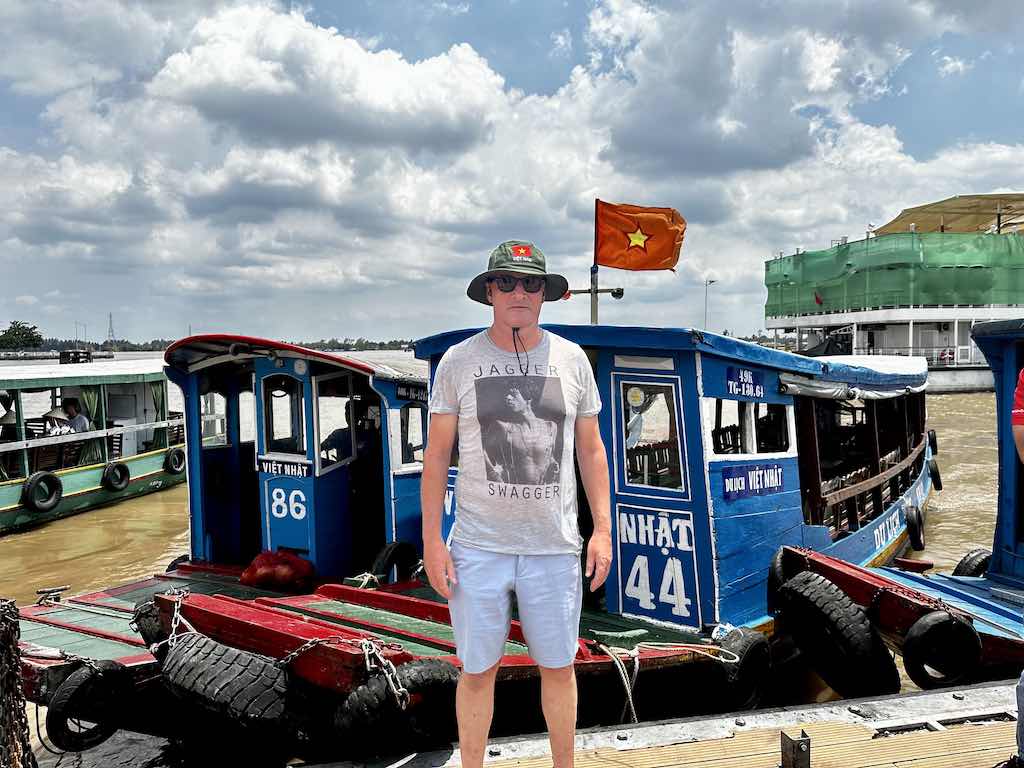
Vietnam at a Glance
- Capital: Hanoi, in the north. The largest city is Ho Chi Minh City, the former Saigon, in the south.
- Length: about 1,650 kilometers from north to south, and as little as 50 kilometers wide in the center — the reason most trips fly at least one leg.
- Currency: the Vietnamese dong (VND). 25,000 VND is roughly one US dollar.
- Visa: many Europeans, Japanese and South Koreans enter visa-free for 45 days; everyone else applies online for an e-visa of up to 90 days.
- Best time to visit: it depends on the region — the north from October to April, the center from February to August, the south from November to April.
- How many days: two weeks for the north, the center and the south; ten days if you fly the long legs, as I did.
- Time zone: UTC+7, all year round.
My First Trip to Vietnam: Ten Days from South to North
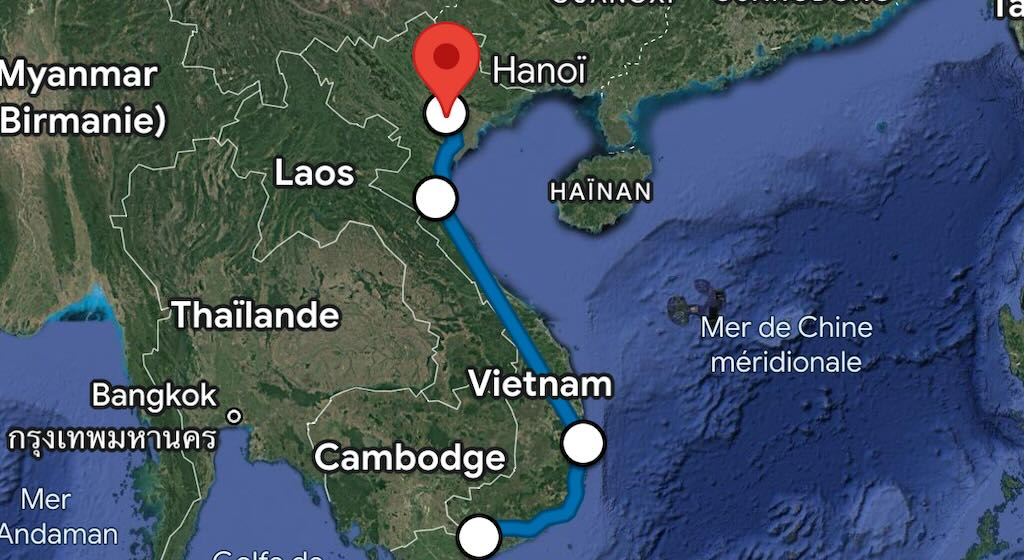
I wanted to capture a broad overview of this captivating country for my first visit. My journey in Vietnam began in the bustling metropolis of Ho Chi Minh City. Followed by a flight to the coastal charm of Da Nang. And finally to the historic streets of Hanoi. Each destination offered a unique perspective on Vietnam’s diverse identity.
It was April 2024: three days in the south with the Cu Chi tunnels and the Mekong Delta, four days on a scooter around Da Nang, Hoi An and the My Son sanctuary, then Hanoi, a night bus to Sapa and a day in Ha Long Bay before flying home from Noi Bai. Every leg of that route, with journey times and prices, is in my guide to getting around Vietnam.
Join me as I take you through an unforgettable exploration of this remarkable country — its vibrant cities, its cultural depth, and its awe-inspiring beauty.
South Vietnam: Ho Chi Minh City, a Crossroads of History and Modernity
Ho Chi Minh City, formerly known as Saigon, is Vietnam’s vibrant and dynamic largest city. To fully immerse myself in its energy, I chose to stay in District 1, the bustling heart of the action. Nguyen Hue Boulevard immediately draws you into the city’s urban charm, with its lively atmosphere and iconic landmarks. One standout spot is the fascinating Cafe Apartment, a unique building transformed into a haven of trendy cafes, definitely worth stopping by for a drink or coffee.

Not far away, the Central Post Office is a stunning example of French colonial architecture, offering a glimpse into the city’s historical past. It was on my way to the Post Office that I found myself (almost) tempted to buy a Rolls-Royce — a moment that perfectly encapsulates the city’s mix of old-world charm and modern-day extravagance.

While walking around the city, don’t miss going up to the top of the imposing Landmark 81 building. You will have a breathtaking view of Ho Chi Minh City. Then explore Chinatown, soak up its authentic atmosphere and feast on Vietnamese cuisine. Immersing in the lively alleys and mystical temples will transport you to another universe. Ho Chi Minh City is truly a crossroads of history and modernity, where every street corner tells a captivating story.

The Cu Chi Tunnels
The Cu Chi Tunnels offer an interesting perspective on the ingenuity and resilience of the Vietnamese people during the Vietnam War. This vast underground network served as a hideout, hospital and living space for the Viet Minh and Viet Cong. Several travel agencies offer very well-organized tours. I chose Klook and my guide was a young man who had just finished his 2 years of military service. He was very proud to show us all the techniques used to trap American soldiers during the war. But his grandfather had also fought with the French soldiers against the soldiers of North Vietnam during the Indochina War. A little glimpse of the turmoil that the people of Vietnam must have experienced.

The Mekong Delta
Don’t miss a trip to the Mekong Delta. It is a living mosaic of floating markets and rice fields. A cruise in the delta reveals a rich aquatic life where water and land feed each other. The organized tours are a bit… touristy. And for each activity, from visiting coconut candy factories to a pirogue excursion through the mangroves, including honey harvesting, you will be offered to buy local products. But it is still a nice trip. The only problem is, if you are tempted like me to buy souvenirs on your first day of travel, you will have to carry them with you for the whole trip!
I took a tour on Klook with a visit to the Cu Chi tunnels and discovery of the Mekong in one day. With a departure at 7am and return around 7pm, with a small group of 6 people, it was ultimately a rather successful day.

Central Vietnam: Hue, Hoi An and Da Nang
After these few days in Ho Chi Minh I flew to Da Nang to discover the center of Vietnam starting with Hue. After reflection I probably should have taken a flight directly from Ho Chi Minh to Hue then from Da Nang to Hanoi to simplify the journey.
Hue: The Imperial City
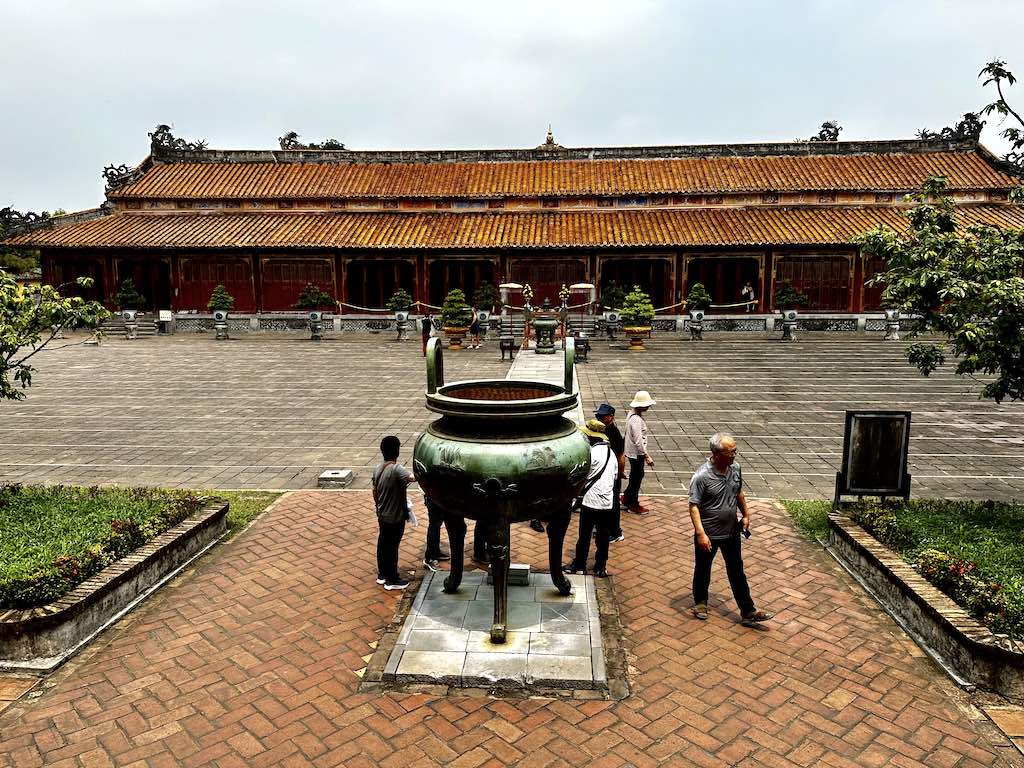
Formerly the imperial capital of Vietnam, Hue is a city rich in history and culture. Its Citadel, listed as a UNESCO World Heritage Site, houses the former Imperial City and the residence of the last Vietnamese emperors. I also recommend that you visit some of the royal tombs. In Hue you will discover a unique architecture that mixes French and Vietnamese influences. Hue is also known for its cuisine, with dishes like bun bo Hue, a type of spicy noodle soup. The Perfume River, which runs through the city, adds to the peaceful and picturesque atmosphere of Hue.
Hoi An
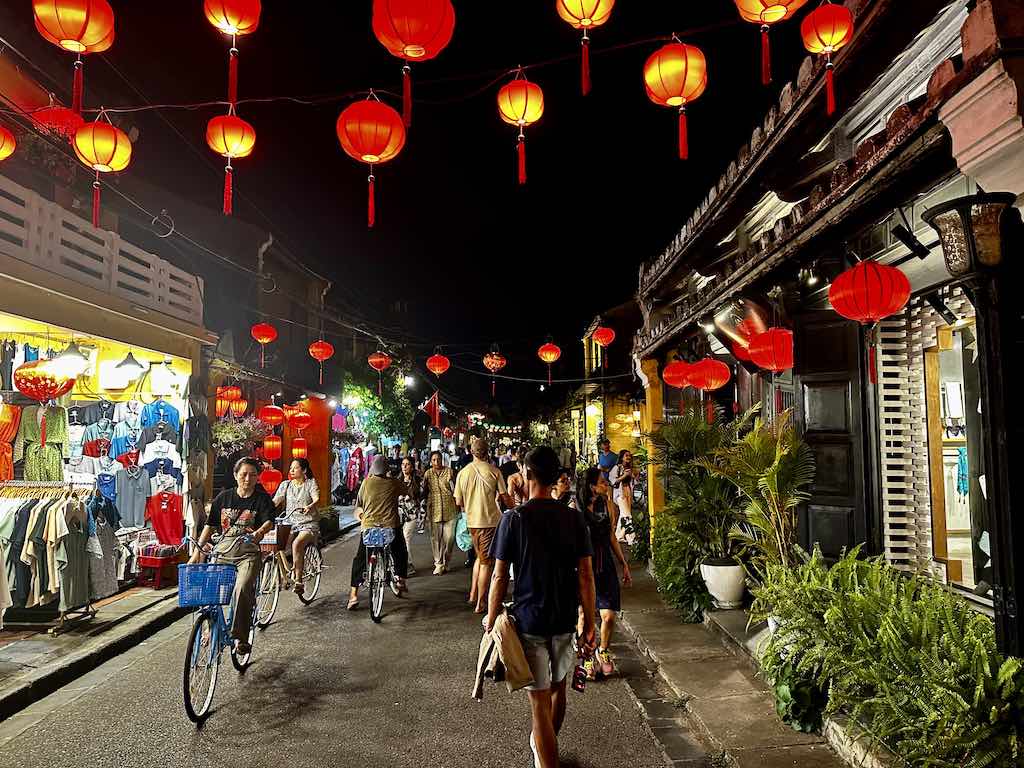
I really liked Hoi An, a picturesque city in central Vietnam. It was probably my favorite stop. The old town of Hoi An is a UNESCO World Heritage Site. It is indeed a real open-air museum, with its streets lined with old wooden houses that reflect Chinese, Japanese and French influences. I also really enjoyed the old town at night to savor local specialties. And for a romantic little tour on the Thu Bon River.
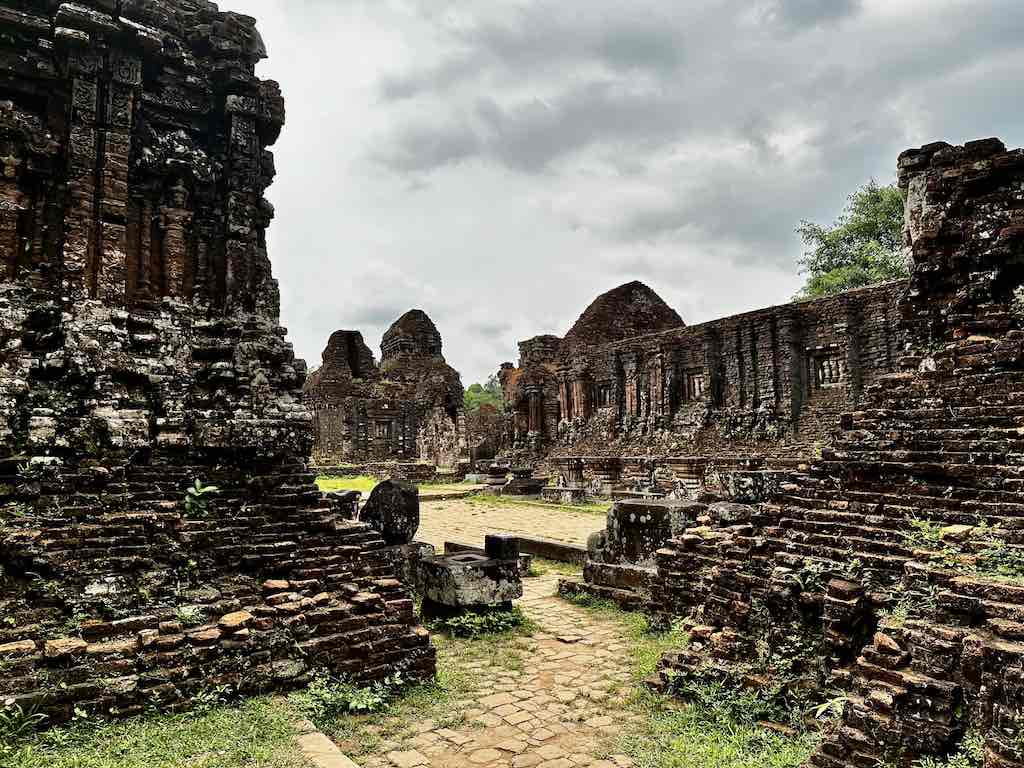
About an hour’s drive from Hoi An is My Son, an archaeological site also listed as a UNESCO World Heritage Site. Formerly the spiritual center of the Champa kingdom, My Son consists of several ruined Hindu temples built between the 4th and 14th centuries. This mystical site, surrounded by lush mountains and greenery, offers a striking contrast to Hoi An’s urban charm. I rode there by scooter, through the rice fields.
Da Nang
Da Nang, with its touristy beaches and the illuminated Dragon Bridge, forms a striking contrast to Hoi An. The city itself is not of great interest. But there are plenty of opportunities for walks in the surrounding area. I particularly recommend visiting the Marble Mountains on the road to Hoi An. And taking the scenic Hai Van Pass to reach Hue.
The Ba Na Hills are a destination in their own right. The hills are accessible by one of the longest cable cars in the world. At the end of this cable car you will find a rather astonishing amusement park, built by the Sun World group. The main attraction, the Golden Bridge, supported by two giant stone hands, offers a spectacular view of the region.

North Vietnam: Hanoi, Sapa and Ha Long Bay
Hanoi, the thousand-year-old capital, is a rather surprising mix of old and new. Hoan Kiem Lake, the old quarter and the One Pillar Pagoda are must-sees. I also really liked the old town, super lively in the evening on weekends to eat a noodle dish in the streets transformed into pedestrian walkways. The street train is also a great classic. If you are lucky or well organized, you can see the train pass a few centimeters from you, sitting on the terrace of a café! But I especially liked the surroundings of Hanoi, Sa Pa and Halong Bay.

Sapa: The Mystical Mountains
Sapa is a breathtaking spectacle with its rice terraces sculpting the mountains. The treks offer spectacular views and encounters with local ethnic groups, demonstrating Vietnam’s cultural diversity. The sleeper bus ride is an adventure in itself, but the journey is worth it.
Sun World has also built a gigantic cable car in Sa Pa that takes you to the top of Indochina. Fansipan Mountain is the highest point in Vietnam, Laos and Cambodia, at 3,143 meters above sea level.

Ha Long Bay: A Natural Masterpiece
Ha Long Bay is also a UNESCO World Heritage Site, about two and a half to three hours from Hanoi by limousine bus. The bay is made up of about 1,600 islands and islets, creating a stunning panorama of limestone peaks that rise directly from the water. Boat tours allow you to explore hidden caves, floating villages and unforgettable viewpoints. The region is also rich in biodiversity, with diverse ecosystems that are home to many species. You can book a day tour to give you a glimpse of the bay — that is what I did. But most people spend one or two nights aboard luxurious or even very luxurious boats!

Best Time to Visit Vietnam, Region by Region
Vietnam has no single good season: the north, the center and the south follow different weather patterns, so a trip in any month is wet somewhere and dry somewhere else.
| Region | Best months | Rainy season | Good to know |
|---|---|---|---|
| North: Hanoi, Sapa, Ha Long Bay | October to April | May to September | December to February is cold and often misty, especially in Sapa |
| Center: Hue, Hoi An, Da Nang | February to August | September to December | Typhoons and floods are possible from September to November |
| South: Ho Chi Minh City, Mekong Delta, Phu Quoc | November to April | May to October | Rain usually falls in short, heavy afternoon showers |
For a single north-to-south trip, March and April are the best compromise: dry in the south and the center, and warming up in the north. That is when I went, and only the summit of Fansipan was lost in the clouds. Avoid Tet, the Lunar New Year in late January or February, when transport is fully booked and many places close for a few days.
How Many Days Do You Need in Vietnam?
- One week: one or two regions only, for example Hanoi and Ha Long Bay, then Hue and Hoi An.
- Ten days to two weeks: the classic north-center-south route, flying the long legs.
- Three weeks: the same route with more time on the ground — Sapa, Nha Trang, Dalat, the Mekong Delta and a few days on Phu Quoc.
The day-by-day ideas are in my guide to planning your trip to Vietnam, and the way each leg connects is explained in the transport guide.
Practical Information: Visa, Transport and Hotels
Visa for Vietnam
Citizens of many European countries — including France, Germany, the United Kingdom, Italy, Spain, the Netherlands, Belgium, Switzerland and the Nordic countries — as well as Japan and South Korea can stay up to 45 days without a visa. Everyone else, including travelers from the United States, Canada and Australia, applies online for an e-visa valid for up to 90 days, single or multiple entry. Rules change regularly, so check the official e-visa portal before you book.
Getting around
There are several options for getting around Vietnam: domestic flights, trains, buses, minivans, or cars. My recommendation is to book your transport online with 12Go. They have very good fares with the best companies, and it is super easy to book.

Where to stay
In Ho Chi Minh City I stayed in District 1, in Hanoi in the Old Quarter around Hoan Kiem Lake, and in Hoi An close to the Ancient Town, which you can then explore on foot in the evening. You can compare hotels in Vietnam on Booking.com.

My Vietnam Travel Guides
- Ho Chi Minh City: District 1, the Cu Chi tunnels and the Mekong Delta.
- Hue: the Imperial City, the royal tombs and the Perfume River.
- Hoi An: the Ancient Town, the lanterns and the My Son sanctuary.
- Da Nang: My Khe Beach, the Marble Mountains, Ba Na Hills and the Hai Van Pass.
- Hanoi and Ha Long Bay: the Old Quarter, Train Street and the bay.
- Sapa: rice terraces, treks and the Fansipan cable car.
- Vietnamese food: pho, banh mi, cao lau and the dishes of each region.
- How to get around Vietnam: planes, trains, sleeper buses and scooters.
- Planning your trip to Vietnam: seasons, entry rules, itineraries and packing.
Vietnam Travel: Frequently Asked Questions
Is Vietnam worth visiting?
Yes. Few countries pack so much into one trip: big cities, imperial history, UNESCO sites like Hoi An, Hue and Ha Long Bay, mountains, beaches and one of the best cuisines in Asia, all at moderate prices. It is one of my favorite destinations in Southeast Asia.
Do I need a visa for Vietnam?
It depends on your passport. Many Europeans, Japanese and South Koreans can stay 45 days without a visa. Other nationalities, including Americans, Canadians and Australians, need an e-visa, which is applied for online and is valid for up to 90 days.
What is the best month to visit Vietnam?
For a trip covering the whole country, March or April. The south and the center are dry, and the north is mild. Each region has its own best season, though: October to April in the north, February to August in the center, November to April in the south.
How many days do you need in Vietnam?
Two weeks to see the north, the center and the south comfortably. Ten days is possible if you fly between the regions, which is what I did. With one week, stick to one or two regions.
Should I travel Vietnam from north to south or south to north?
Either works; choose by the weather and by your flights. I went from south to north. If I did it again, I would fly from Ho Chi Minh City to Hue directly, then from Da Nang to Hanoi, to avoid backtracking in the center.
How far is Ha Long Bay from Hanoi?
About 2.5 to 3 hours by limousine bus or van on the expressway. A day trip is possible, but an overnight cruise gives you far more time in the bay.
Is Vietnam safe for tourists?
Yes, Vietnam is generally safe. The real risk is road traffic, especially on a scooter, so ride only with experience, the right permit and a helmet. In the big cities, keep your phone out of reach of passing motorbikes.
What currency is used in Vietnam?
The Vietnamese dong (VND); 25,000 VND is roughly one US dollar. Cards work in hotels and many restaurants in the cities, but keep cash for street food, markets and small towns. ATMs are easy to find.