Vietnamese Food: What I Ate from Saigon to Sapa
By Blaise Jaeger · Updated October 9, 2026
Vietnamese food is a harmonious blend of subtle flavors, fresh ingredients, and diverse textures. More than just food, Vietnamese cuisine is a delicious expression of Vietnam’s history, culture, and geography. Balancing sweet, bitter, spicy, salty, and sour elements, it captivates with both its simplicity and its complexity.
I ate my way through the country in April 2024, on a ten-day trip from south to north: Saigon and the Mekong Delta, then Hue, Hoi An and Da Nang, and finally Hanoi and Sapa. This guide covers the dishes worth ordering, what to eat in each region, and what I actually ate along the way — from a noodle bowl near Binh Tay market to an egg coffee on Hanoi’s Train Street.

What Makes Vietnamese Food Different
At the heart of Vietnamese cooking are a few key principles:
- Flavor balance: each dish combines contrasting flavors — sour lime, sweet sugar, salty fish sauce, hot chili.
- Fresh herbs: coriander, mint, Thai basil, perilla and lemongrass arrive on the table by the basketful.
- Fish sauce (nước mắm): the umami-rich cornerstone of the cuisine, served straight or mixed into the dipping sauce nước chấm.
- Simple cooking methods: steaming, stir-frying, grilling and boiling keep the flavors natural.
- Rice and noodles at every meal: steamed rice, rice noodles, rice paper and rice cakes are the base of almost everything.
Must-Try Vietnamese Dishes
Phở
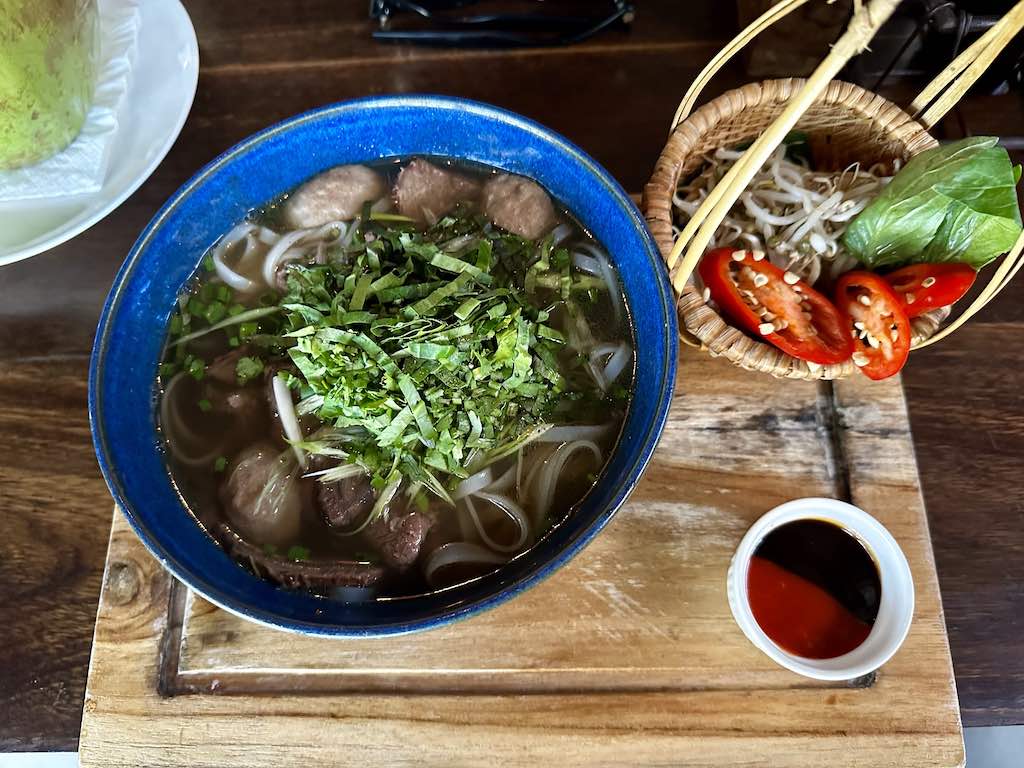
Phở, Vietnam’s most famous dish, is a noodle soup made with beef (phở bò) or chicken (phở gà). Originating in northern Vietnam, it features a broth infused with cinnamon, star anise and ginger. Fresh herbs, bean sprouts, lime and chili are added at the table, so every bowl is seasoned to your taste. Across the country you will see locals eating it for breakfast on tiny street-side stools.
Bánh Mì
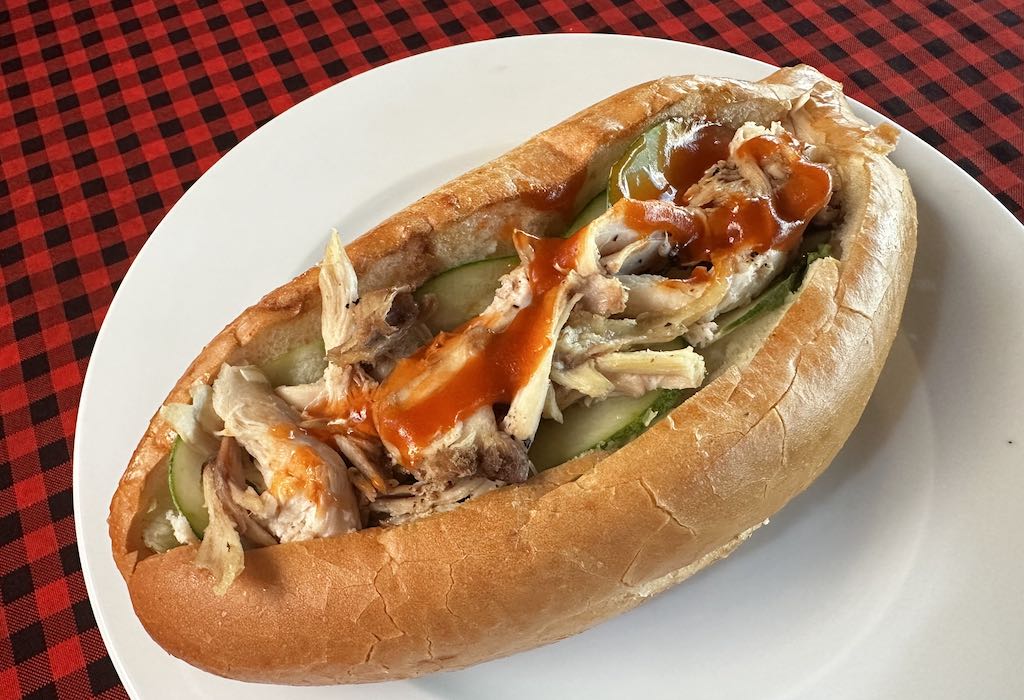
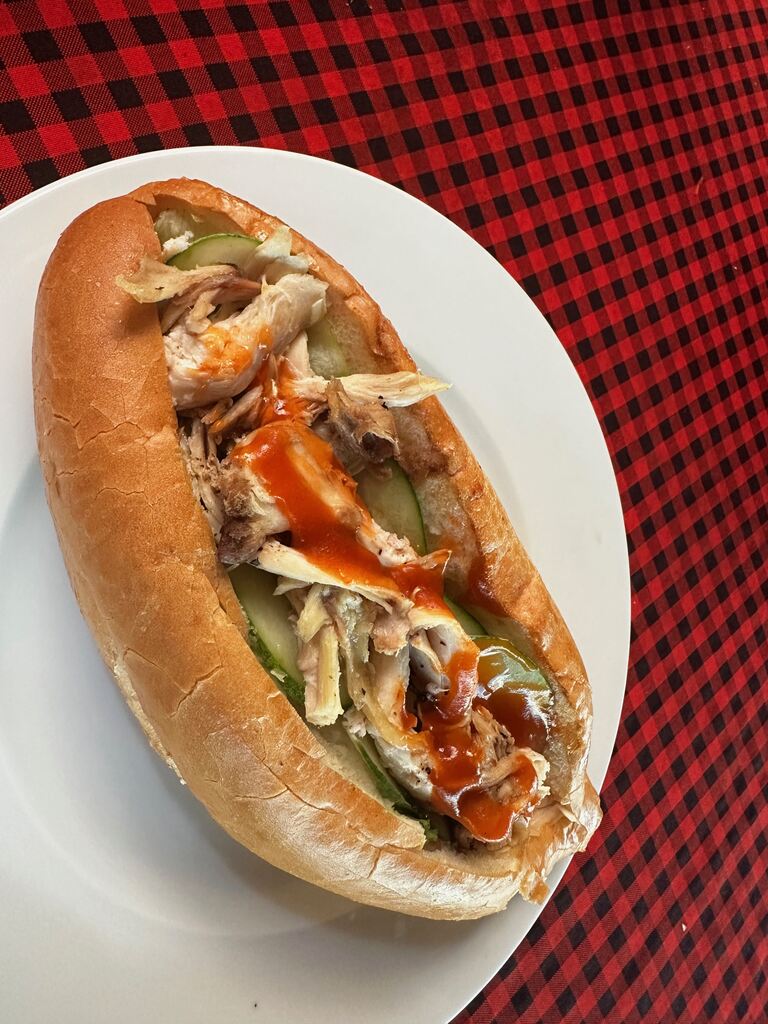
A culinary legacy of French colonialism, bánh mì is a crispy baguette filled with pâté, grilled or cold meat, pickled vegetables, fresh herbs and chili sauce. It is the cheapest good meal in Vietnam and one of the best street foods in the world. Hoi An has a reputation for the best ones, and the chicken bánh mì I had there, drenched in chili sauce, did nothing to contradict it.
Bún Chả
Originating from Hanoi, bún chả combines grilled pork patties and slices of pork belly with bún (rice vermicelli). The pork arrives in a bowl of tangy dipping sauce made with fish sauce, vinegar, sugar, garlic and lime; you dip the noodles and herbs into it. It is a lunchtime dish, and the smoky smell of the grills fills the Old Quarter from late morning.
Gỏi Cuốn (Fresh Spring Rolls)
These translucent rice paper rolls contain shrimp, fresh herbs, rice vermicelli and crunchy vegetables. Served with a peanut-based dipping sauce or with fish sauce, gỏi cuốn is a light and refreshing starter.
Chả Giò (Fried Spring Rolls)
Crispy and golden, chả giò — called nem rán in the north — are deep-fried rolls stuffed with minced meat or shrimp, vermicelli, mushrooms and vegetables. You wrap them in lettuce with herbs and dip them in nước chấm.

Mì Xào (Stir-Fried Noodles)
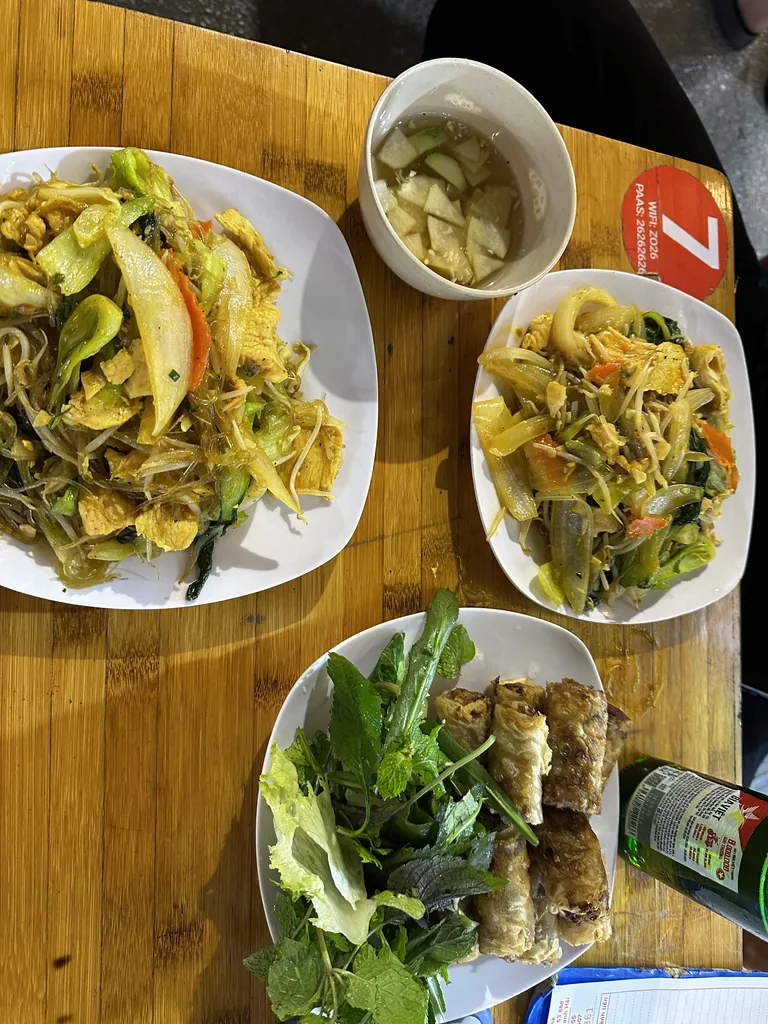
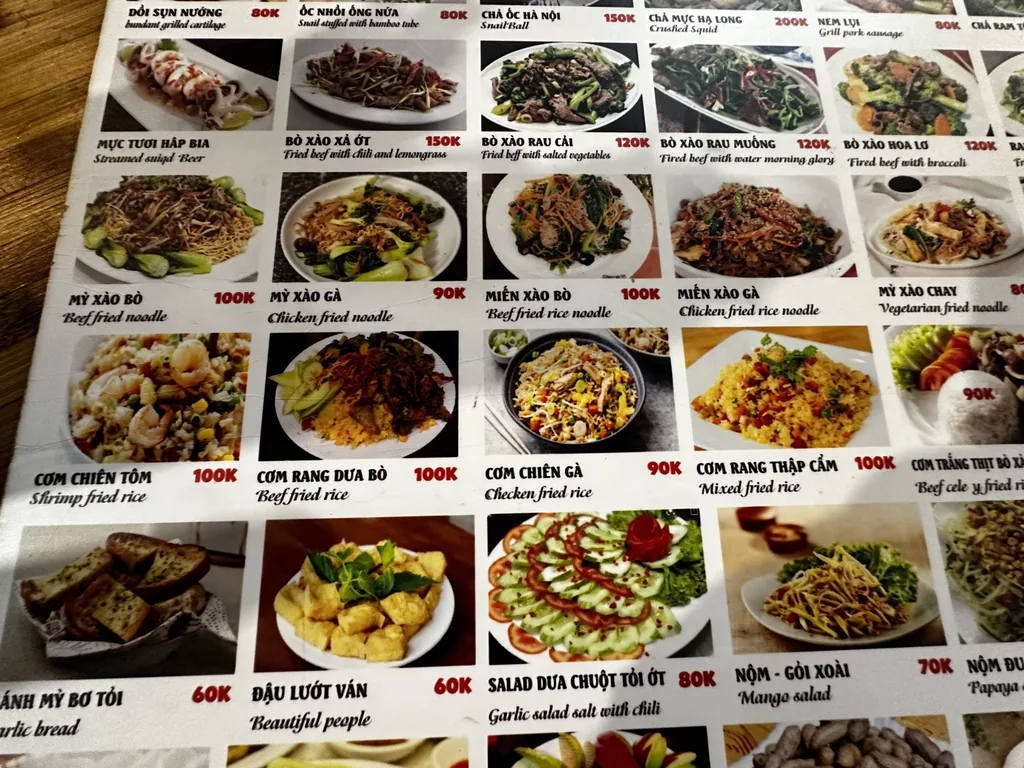
Mì xào is stir-fried wheat noodles with meat, seafood or vegetables in a soy-based sauce. Simple and filling, it is on the menu of almost every street restaurant — it was part of my dinner on Hanoi’s pedestrian streets, with a plate of fried spring rolls and a cold beer.

Rice: The Heart of Vietnamese Cuisine
Rice is central to every Vietnamese meal. A family lunch is a pot of steamed rice in the middle of the table, surrounded by shared dishes — a braise, a stir-fry, a soup and a plate of greens.

Cơm Tấm (Broken Rice)
A staple of southern Vietnam, cơm tấm uses broken rice grains, once considered inferior, turned into a comfort food. It is served with a grilled pork chop (sườn nướng), often a fried egg, slices of cucumber and tomato, and a drizzle of nước chấm. In Saigon it is eaten at any time of day.
Bánh Cuốn
Bánh cuốn are delicate steamed rice sheets stuffed with minced pork, wood ear mushrooms and shallots, topped with fried shallots and served with nước chấm. Light but filling, they are a classic northern breakfast.
Xôi (Sticky Rice)
Xôi comes savory or sweet. Savory xôi (xôi mặn) is topped with Chinese sausage, shredded chicken or quail eggs; sweet xôi is flavored with pandan leaves (xôi lá dứa) or mixed with mung beans (xôi đậu xanh), coconut milk and sesame. Sold from baskets on street corners in the morning, it is the Vietnamese breakfast on the go.
What to Eat in Vietnam, Region by Region
Vietnam stretches 1,650 kilometers from north to south, and each region cooks differently. The north is subtle and savory, the center is spicy and refined, the south is sweeter and generous with herbs and coconut milk.
South Vietnam: Saigon and the Mekong Delta
Southern dishes, especially in Ho Chi Minh City, are sweeter and richer, with plenty of coconut milk, fresh herbs and seafood from the Mekong Delta. Beyond cơm tấm, look for bánh xèo (a crispy turmeric rice pancake wrapped in lettuce and herbs) and hủ tiếu, the southern noodle soup.
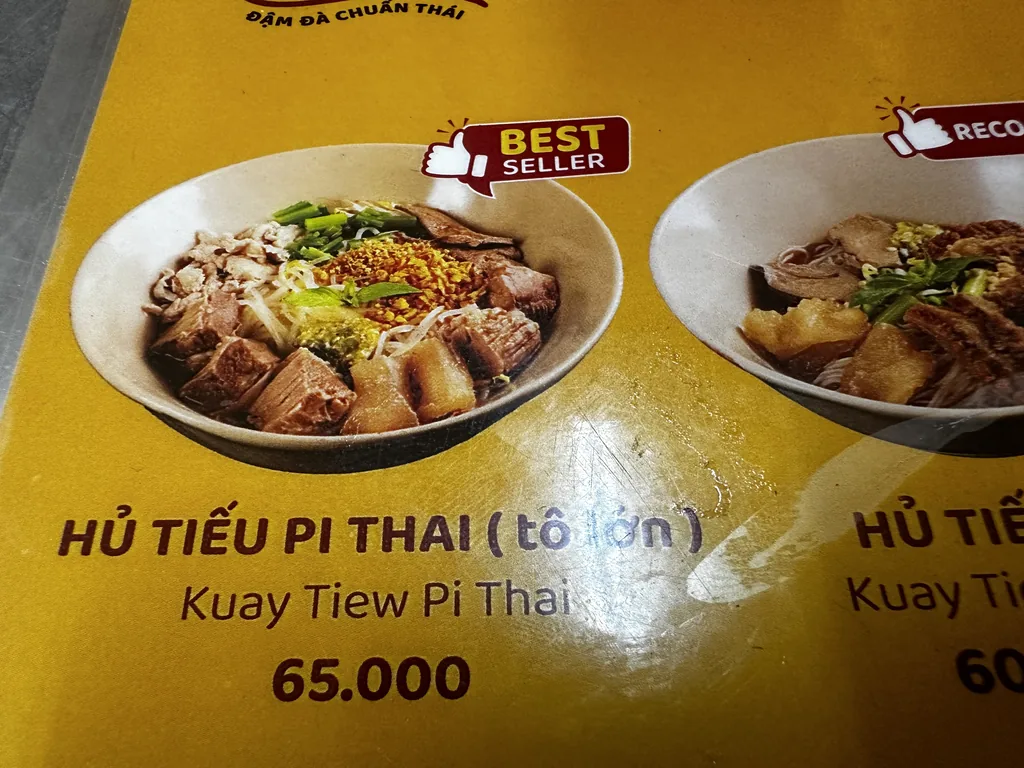
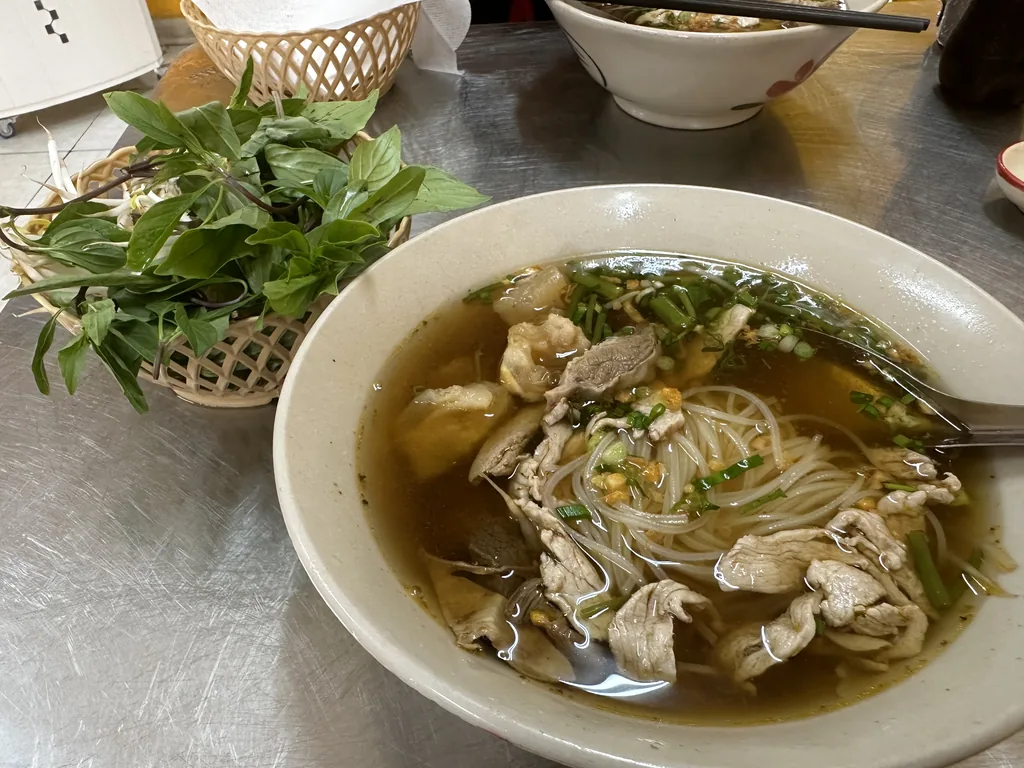
On April 6, in Saigon’s Chinatown, Cholon, I walked through Binh Tay market, piled high with dried fish, shrimp, mushrooms and spices, then sat down for lunch nearby. At Pi Thai, a noodle shop serving hủ tiếu inspired by Thai boat noodles, a large bowl of their signature hủ tiếu was 65,000 VND.

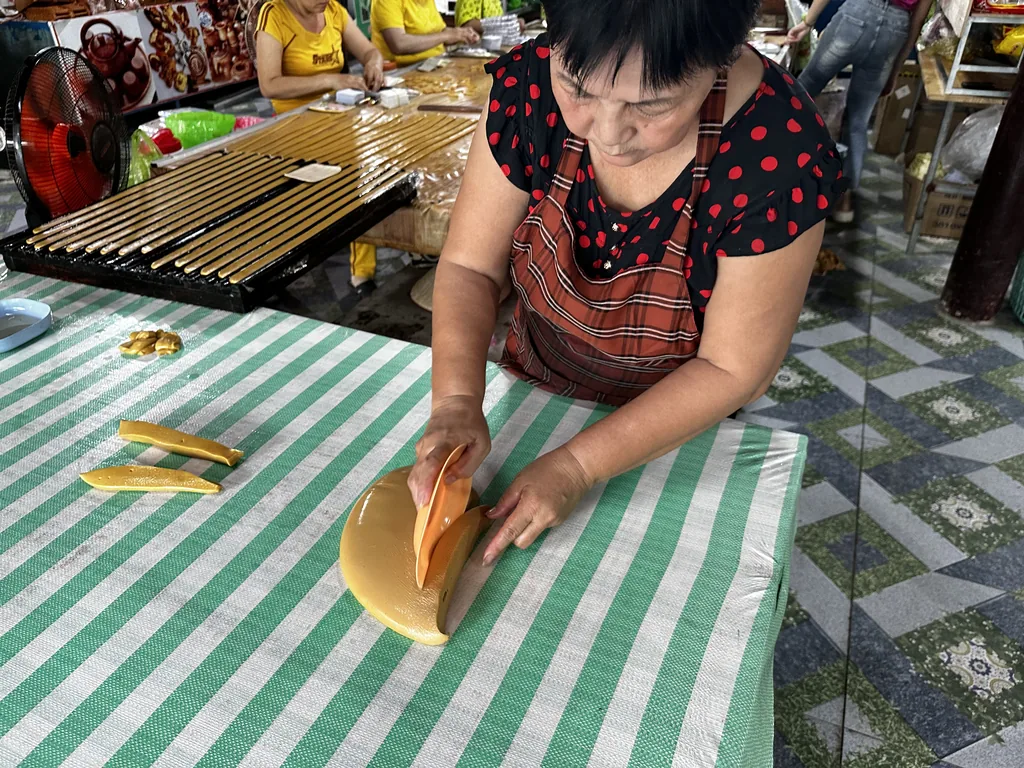
On my day trip to the Mekong Delta on April 5, we stopped at Thiên Ái, a coconut candy workshop in Bến Tre province, where the candy is cooked in large pans, then rolled and cut by hand. Lunch was the classic delta feast: a deep-fried elephant ear fish (cá tai tượng) served standing upright, wrapped at the table in rice paper with herbs, and a huge ball of puffed fried sticky rice.

Central Vietnam: Hue, Hoi An and Da Nang
Central Vietnam has the spiciest and most refined cooking in the country. Hue, the former imperial capital, is the home of bún bò Huế, a spicy beef and lemongrass noodle soup, and of small dishes once served at the royal court. Try gà kho tộ, chicken braised in a clay pot.

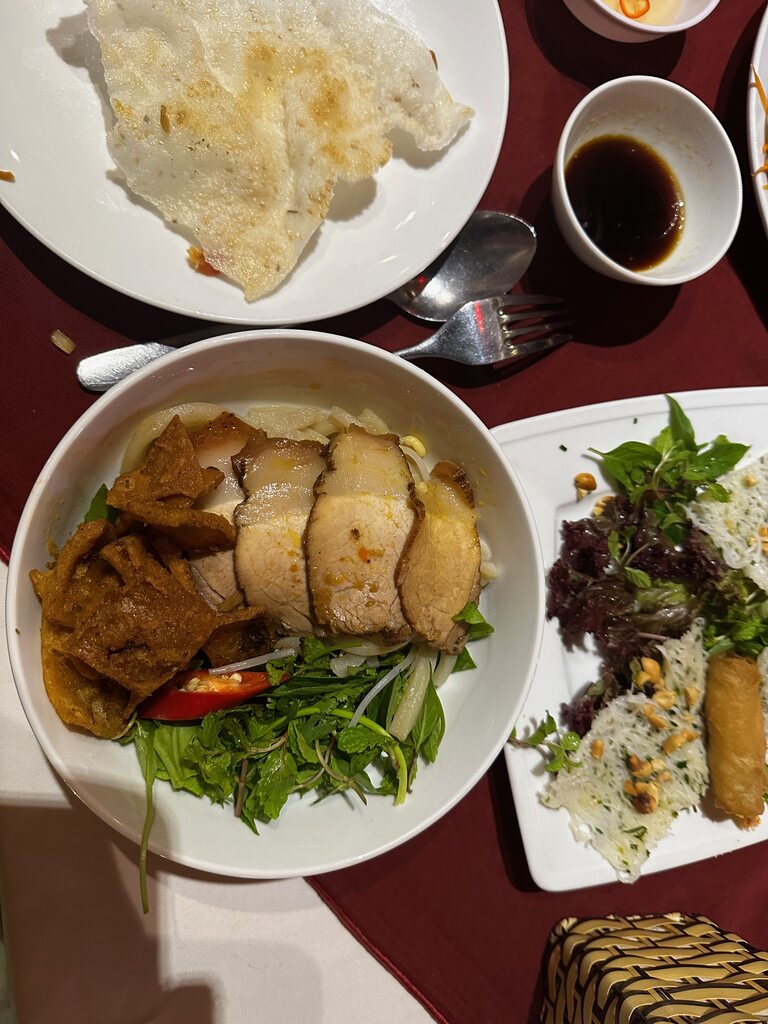
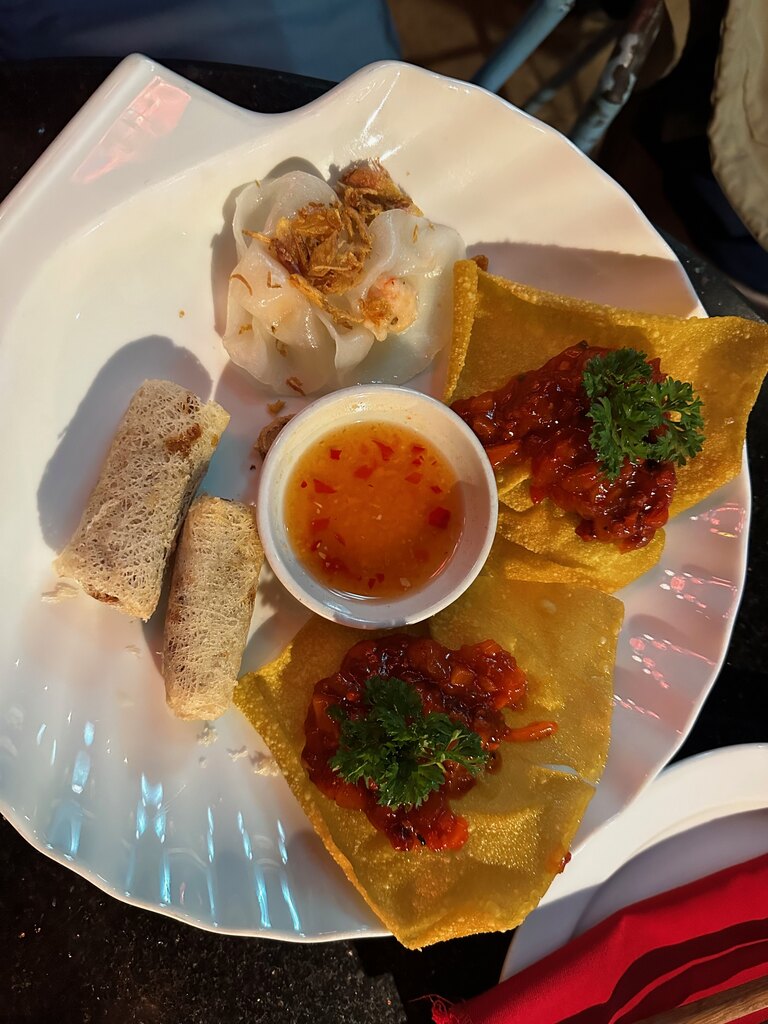
Hoi An has its own specialties, which I would travel back for. Cao lầu is thick, chewy noodles with slices of pork, fresh herbs, crunchy croutons and very little broth; tradition says the real version needs water from the town’s ancient wells. White rose dumplings (bánh bao bánh vạc) are steamed shrimp dumplings shaped like flowers, and fried wontons come topped with a sweet-and-sour salsa. Cơm gà, rice cooked in chicken broth with shredded chicken and herbs, is the other local classic.
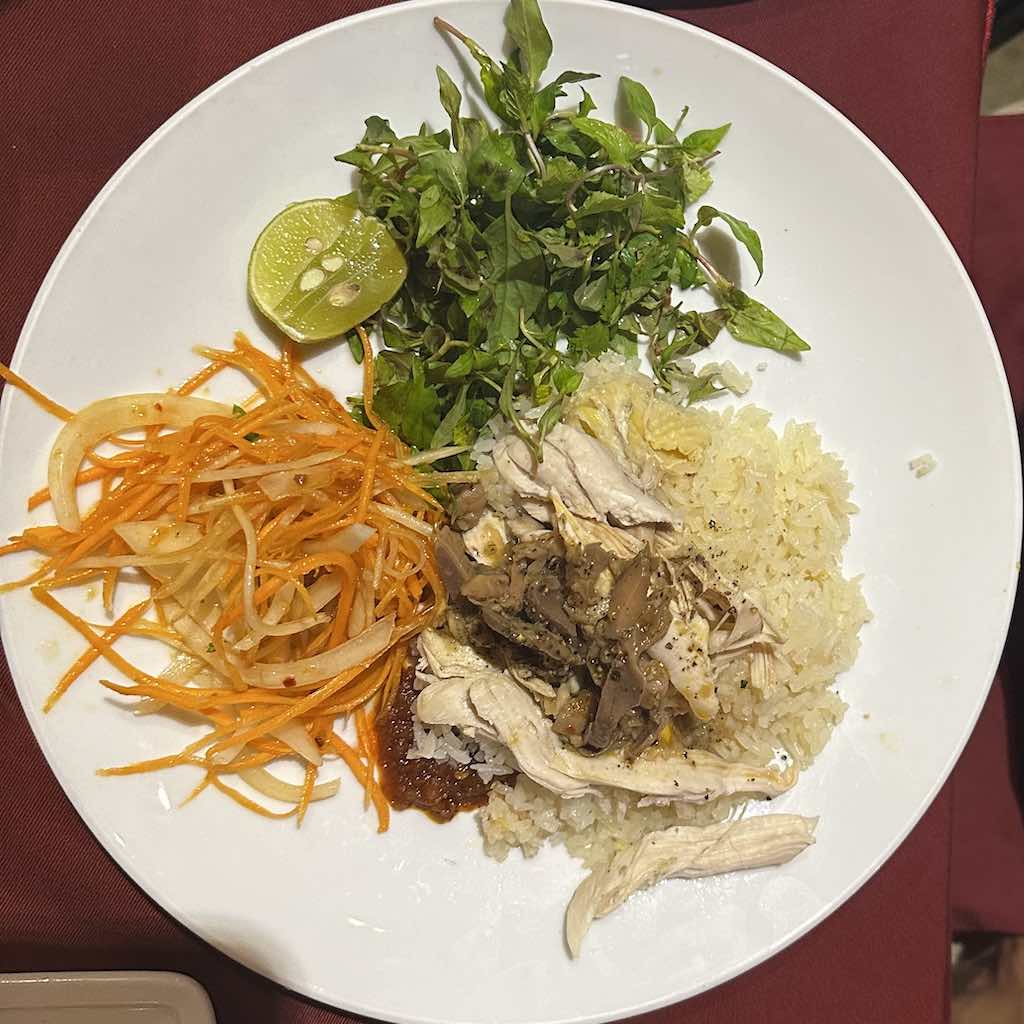
In Da Nang, the local noodle dish is mì Quảng: wide turmeric noodles with pork, shrimp or chicken, peanuts and a sesame rice cracker, served with just a little broth.
North Vietnam: Hanoi and Sapa
Northern cooking is subtler, with clear broths and fewer sweet notes. Hanoi is the city of phở, bún chả and bánh cuốn. In the evening, the streets around Hoan Kiem Lake close to traffic and fill with food stalls selling grilled skewers, and with plastic tables where you eat noodles and spring rolls with a beer.
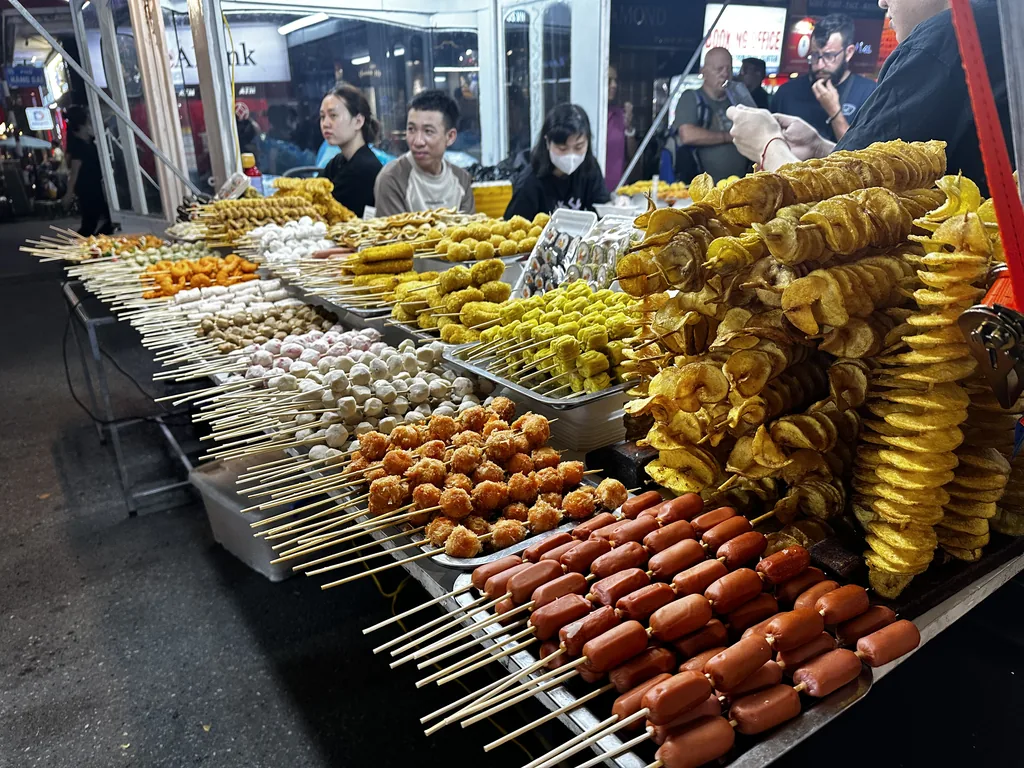
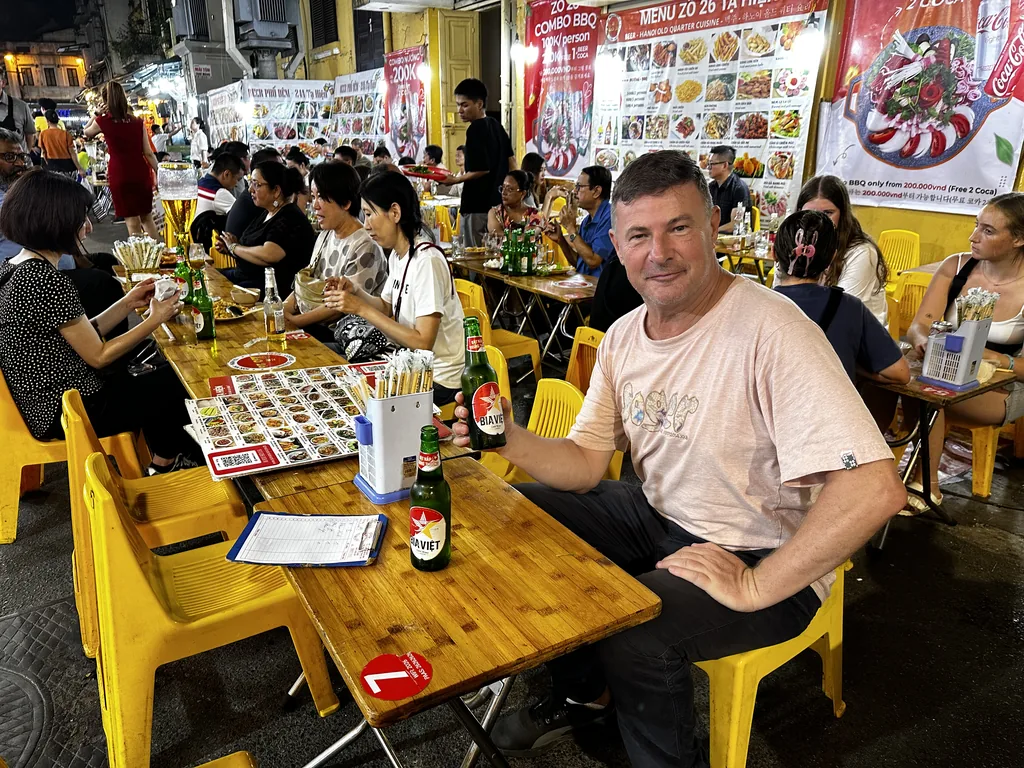
That is where I had dinner on April 12, after coming back from Sapa, at a plastic table on Hàng Bạc street: stir-fried noodles were 90,000 to 100,000 VND on the menu, grilled pork sausage skewers (nem lụi) 80,000 VND, with fried spring rolls and a cold Hanoi beer.
In the mountains of Sapa, the food is simpler: on the road to the O Quy Ho pass, lunch was rice in a clay pot, shrimp stir-fried with dried chilies, a herb soup and boiled squash, shared at the table.
Vietnamese Desserts and Coffee
Chè
Chè is a colorful dessert served hot or cold, usually in a glass: mung beans, black sticky rice, tapioca pearls, fruit, coconut milk and syrup. Variations are endless, and in the heat of the south a cold chè is the best snack of the afternoon.

Vietnamese Coffee and Egg Coffee
Vietnam is the world’s second-largest coffee producer, and coffee is a ritual. It is brewed slowly through a small metal filter, the phin, and served black or with sweetened condensed milk, hot or over ice (cà phê sữa đá). In Hanoi, do not miss cà phê trứng, egg coffee: egg yolk whipped with sugar and condensed milk into a thick, custard-like cream poured over strong coffee. I drank mine sitting on the rails of Train Street, at the Ga Đông Dương café, waiting for the train to pass.


Tips for Eating in Vietnam
- Follow the crowd: a busy street stall with a fast turnover is usually the freshest food in the neighborhood.
- Eat the local dish of each city: bún chả in Hanoi, bún bò Huế in Hue, cao lầu in Hoi An, mì Quảng in Da Nang, cơm tấm in Saigon. They are rarely as good elsewhere.
- Check the menu price before you sit down: street food and local noodle shops are cheap, while tourist streets and restaurants with English-only menus cost several times more.
- Season it yourself: the herbs, lime, chili and sauces on the table are there for you to adjust each bowl.
- Carry cash: street stalls and markets only take Vietnamese dong.
To plan the rest of the trip, see my Vietnam travel guide, my guide to getting around Vietnam and my tips for planning your trip to Vietnam.
Vietnamese Food: Frequently Asked Questions
What is the most famous Vietnamese food?
Phở, the beef or chicken noodle soup from the north, is the national dish. Bánh mì, the Vietnamese baguette sandwich, is a close second, followed by fresh spring rolls (gỏi cuốn) and bún chả.
What should I eat in Vietnam for the first time?
Start with a bowl of phở for breakfast, a bánh mì for lunch and a plate of fresh spring rolls in the evening. Then try the local dish of each city you visit, and finish with an egg coffee in Hanoi.
Is street food in Vietnam safe?
Generally yes, if you choose busy stalls where food is cooked in front of you and served hot. Be more careful with raw herbs and ice if your stomach is sensitive, and drink bottled water.
What is the difference between phở and bún?
Phở is made with flat rice noodles and served in a spiced broth. Bún is round rice vermicelli, used in soups like bún bò Huế but also served dry with grilled meat and dipping sauce, as in bún chả.
What is egg coffee and where can I try it?
Egg coffee (cà phê trứng) is a Hanoi specialty: egg yolk whipped with sugar and condensed milk, spooned over strong coffee. It tastes like a coffee tiramisu. Most cafés in Hanoi’s Old Quarter and along Train Street serve it.
Is Vietnamese food spicy?
Mostly not: the chili is served on the side so you can add as much as you like. The exception is central Vietnam, where dishes like bún bò Huế are genuinely hot.