How to Get Around Vietnam: Transport Guide
By Blaise Jaeger · Updated October 6, 2026
How to Get Around Vietnam: The Short Answer
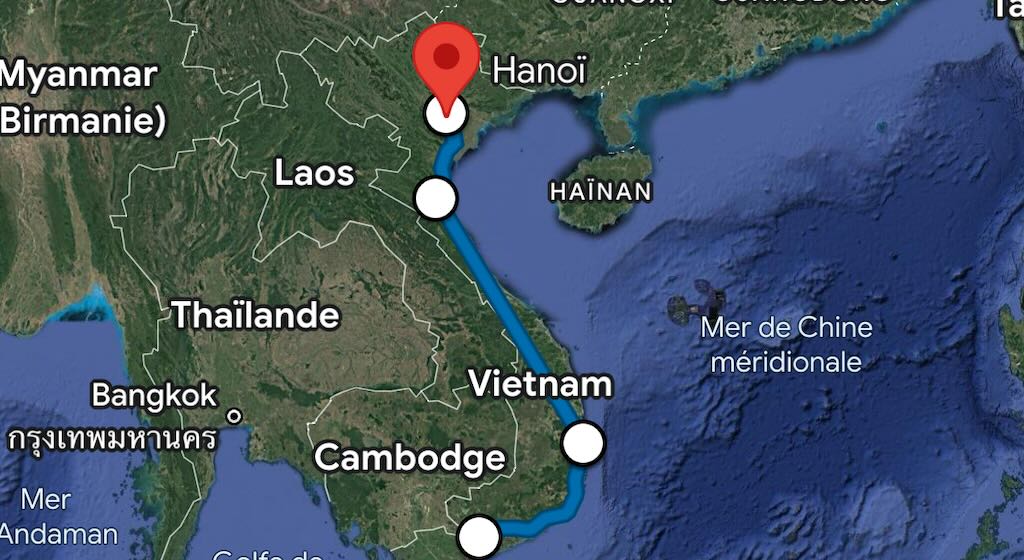
Vietnam is long and narrow: Hanoi and Ho Chi Minh City are 1,726 kilometers apart by rail, and most trips string together the north, the center and the south. The best way to travel around Vietnam is almost always a mix. Fly the long legs, take a bus, a limousine van or a train for anything under eight hours, and use Grab or a rented scooter once you have arrived somewhere. Whether by plane, train, sleeper bus, car or motorbike, each option suits a different budget and a different pace.
This transportation guide gives you real journey times, 2026 prices and the route I actually followed, with my best travel tips to get around Vietnam.
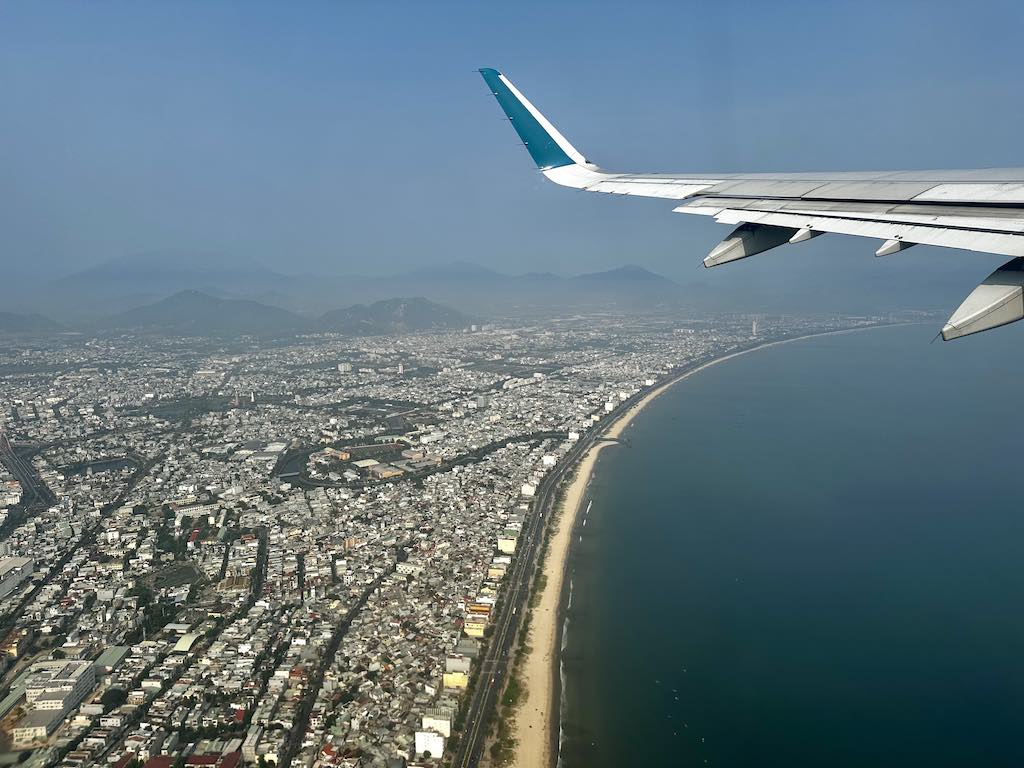
Vietnam Transport at a Glance: Times and Prices
The table below compares the main routes travelers actually use. Prices are one-way, in Vietnamese dong (25,000 VND is roughly 1 US dollar), and move with the season and how early you book.
| Route | Fastest option | Cheapest option | My pick |
|---|---|---|---|
| Hanoi – Ho Chi Minh City | Plane, about 2 h 10 | Train, 30+ h, soft seat from about 1,026,000 VND | Plane |
| Ho Chi Minh City – Da Nang | Plane, 1 h 30, often around 840,000 VND | Sleeper bus, a full night and more | Plane |
| Hanoi – Hue | Plane, about 1 h 15 | Overnight train, 12–14 h, soft seat from 569,000 VND | Night train |
| Hue – Da Nang | Car or bus, about 2 h 30 | Train, 2.5–3 h, over the Hai Van Pass | Train |
| Da Nang – Hoi An | Grab car, about 45 min, 250,000–400,000 VND | Shuttle bus | Scooter or Grab |
| Hanoi – Sapa | Limousine bus or van, 5.5–6 h, 320,000–450,000 VND | Sleeper bus, 6–7 h, 270,000–370,000 VND | Sleeper bus |
| Hanoi – Ha Long Bay | Limousine bus or van, 2.5–3 h, 350,000–450,000 VND | Express bus, 3–3.5 h, 250,000–300,000 VND | Limousine bus |
In most cases, booking your ticket with the 12Go app is the easiest option: it lists buses, vans, trains and flights side by side, and you get an e-ticket on your phone.

How I Got Around Vietnam: Ten Days, South to North
In April 2024 I crossed Vietnam from south to north in ten days, and almost every leg used a different kind of transport. That trip is the backbone of this guide.
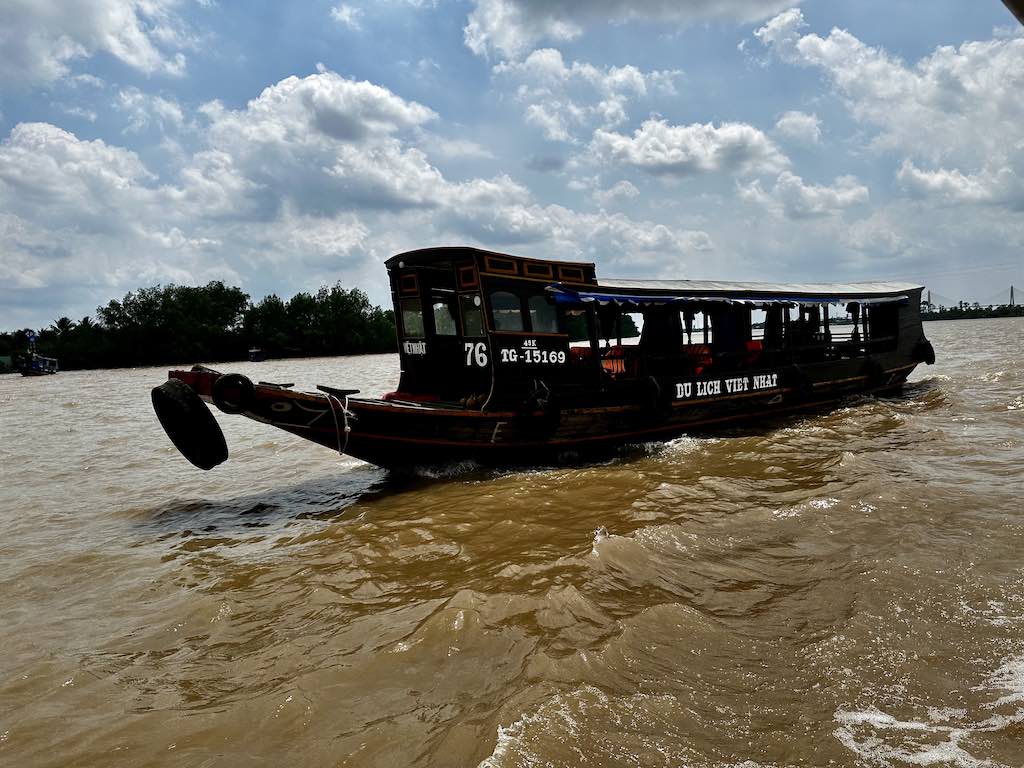
- April 4–5, Ho Chi Minh City: I landed at Tan Son Nhat, bought a local SIM card at the arrivals hall, and the next day joined a day tour to the Mekong Delta, where a rowing sampan took us through the coconut-palm canals near My Tho.
- April 6, Ho Chi Minh City to Da Nang: Vietnam Airlines flight VN146, leaving at 20:10 and landing at 21:40, an hour and a half in the air.
- April 7–10, Da Nang and Hoi An: a rented scooter, from My Khe Beach to the Marble Mountains, then through the rice fields to the My Son sanctuary and on to Hoi An.
- April 11, Da Nang to Hanoi, then Hanoi to Sapa: a flight to Hanoi, a few hours in the city, and the night sleeper bus to Sapa.
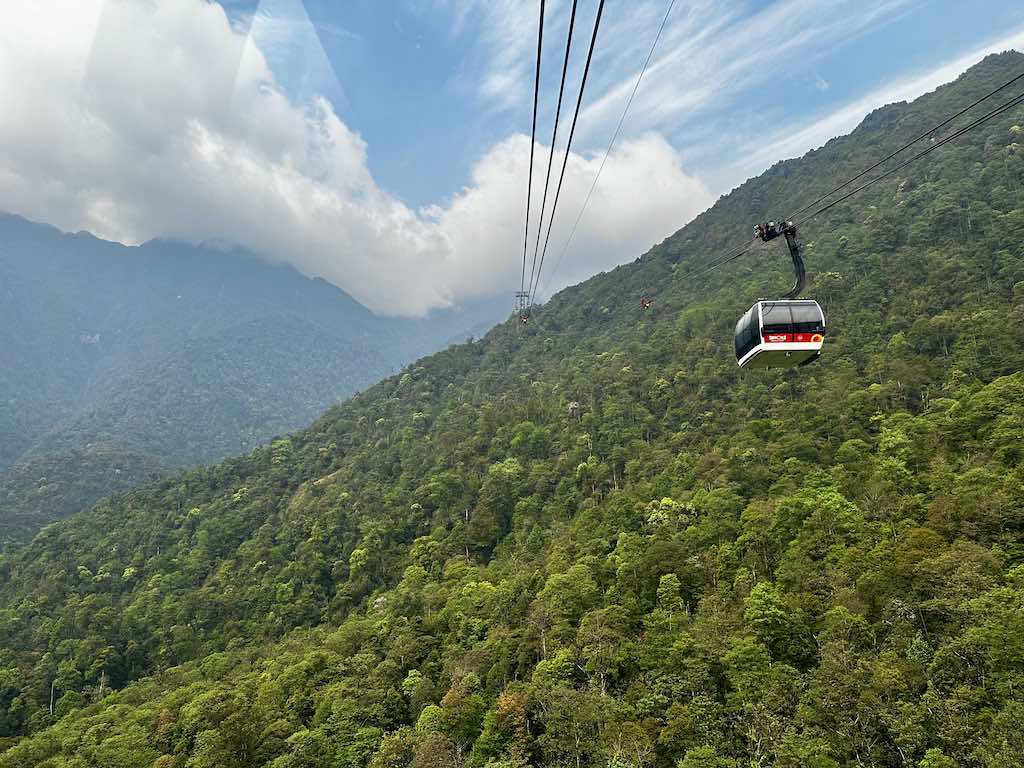
- April 12, Sapa: the funicular and the cable car up Fansipan, then the bus back to Hanoi in the afternoon.
- April 13, Hanoi to Ha Long Bay: a limousine bus from the Hoan Kiem area and a day cruise in the bay.
- April 14: departure from Noi Bai airport.
Ten days was only possible because the two long legs were flights. By road or rail, Ho Chi Minh City to Da Nang alone would have cost a full day and a night.

Getting Around Vietnam by Plane
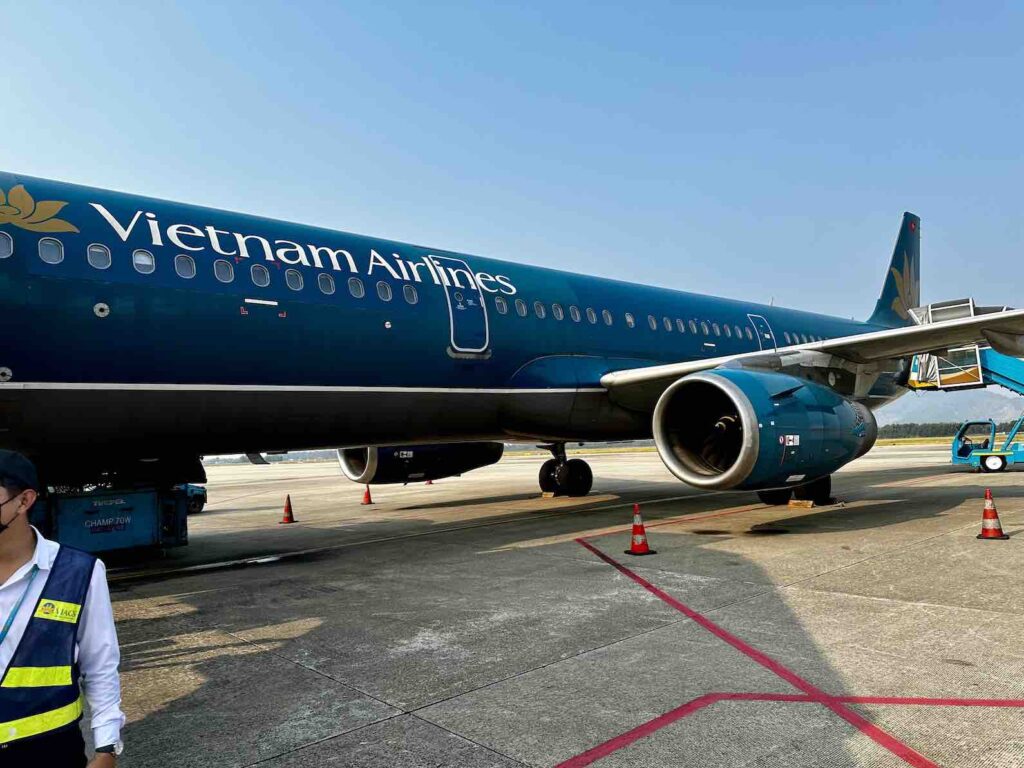
With more than twenty airports, flying is the fastest way to cover long distances in Vietnam. Hanoi to Ho Chi Minh City takes about two hours and ten minutes, Hanoi to Da Nang about an hour and twenty. Flying is ideal for those with limited time who want to maximize their trip. For example, I flew from Ho Chi Minh City to Da Nang and then from Da Nang to Hanoi with Vietnam Airlines — both flights were smooth and hassle-free.
The domestic airlines in 2026
- Vietnam Airlines: the national full-service carrier, with the widest network and the most reliable schedule. It is the one I flew.
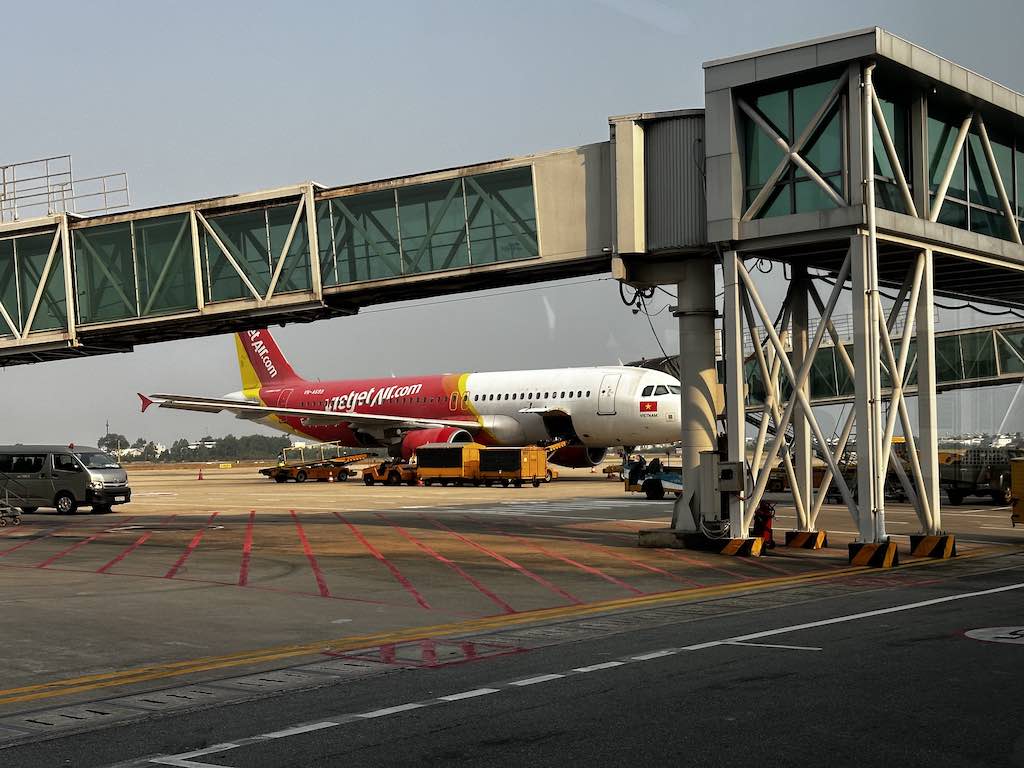
- VietJet Air: the low-cost leader, often the cheapest headline fare, but checked baggage and seat selection are paid extras.
- Vietravel Airlines and Sun PhuQuoc Airways: smaller carriers that add capacity on the busiest routes, especially to the beach destinations.
- Bamboo Airways: stopped selling scheduled tickets on August 1, 2026, and now only flies charters. If an old guide tells you to book Bamboo, look elsewhere.
What domestic flights cost
In July 2026, one-way fares between Ho Chi Minh City and Da Nang were around 840,000 VND, and Hanoi to Da Nang came in under a million dong for travelers who booked early and stayed flexible. The cheapest seats are on weekdays and on evening or late-night departures. Prices jump around Tet, the Lunar New Year, when the whole country flies home.
Pros: Speed, comfort, and efficiency for long distances.
Cons: Higher cost than the bus, airport transfers to add, and baggage fees on low-cost fares.
Exploring Vietnam by Train: the Reunification Express
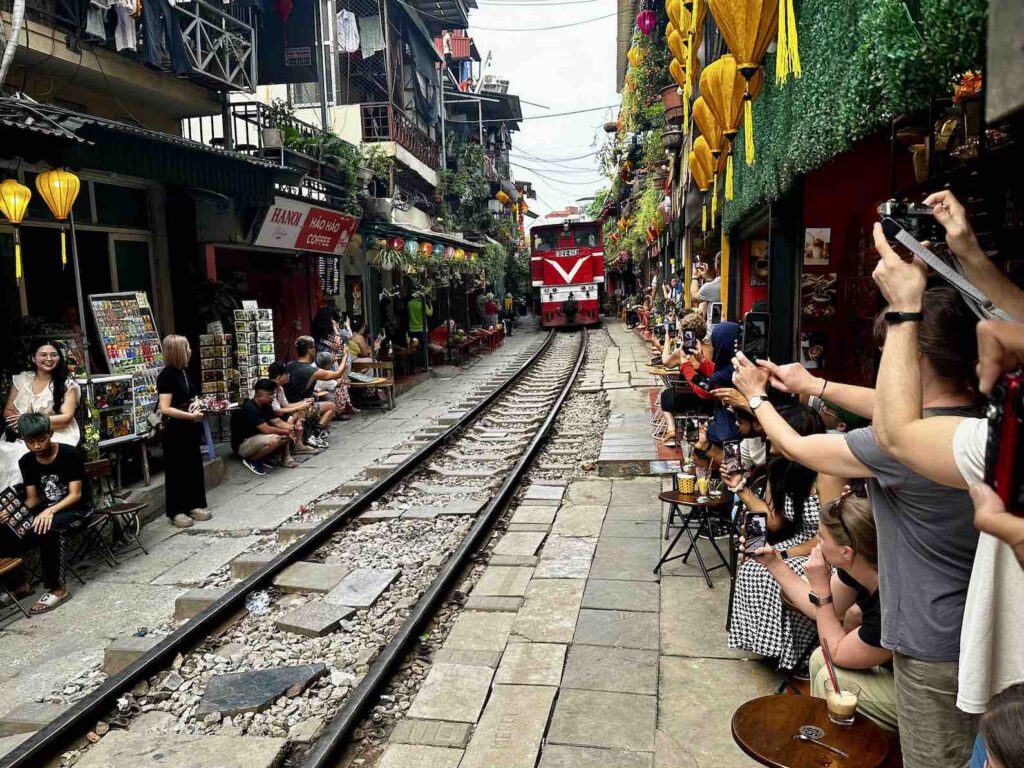
Vietnam’s railway network, though not as developed as in some countries, offers a scenic way to travel, especially along the coast between Hanoi and Ho Chi Minh City. The main line, known as the “Reunification Express,” runs the full 1,726 kilometers in a little over 30 hours on the fastest trains, the SE1 and SE3. While I didn’t personally take the train, I enjoyed watching it pass by while sipping coffee on Hanoi’s famous Train Street.
Classes and fares
Trains offer four classes: hard seat, soft seat, six-berth hard sleeper and four-berth soft sleeper. On the SE1 and SE3, a soft seat costs about 569,000 VND from Hanoi to Hue and 1,026,000 VND to Ho Chi Minh City; a berth in a four-berth soft sleeper costs about 1,218,000 VND to Hue and 1,758,000 VND all the way south. For a night on the train, the soft sleeper is the one worth paying for.
The best stretch: Hue to Da Nang
If you take the train only once, take it between Hue and Da Nang. The two-and-a-half to three-hour ride follows the coast around the Hai Van Pass, with the sea on one side and the mountains on the other, a view the road tunnel skips entirely.
Booking Vietnamese trains
Tickets go on sale on the official Vietnam Railways website and through resellers such as 12Go, which shows the seat map in English. Book a few days ahead for sleepers, and weeks ahead around Tet.
Pros: Safety, moderate comfort, and picturesque views.
Cons: Much slower than flying, and schedules can sometimes be inconvenient.

Sleeper Buses, Cabin Buses and Limousine Vans
Buses are the most affordable and flexible way to travel around Vietnam. The country has an extensive bus network, ranging from local services to long-distance routes, and “bus” now covers three quite different products. Knowing which one you are booking matters more than the company name.
Classic sleeper buses
Two decks of semi-reclined berths along three narrow aisles. You leave your shoes at the door in a plastic bag, and your luggage goes in the hold. They are cheap and run day and night, but taller travelers will find the berths short.
Cabin buses: a private pod for the night
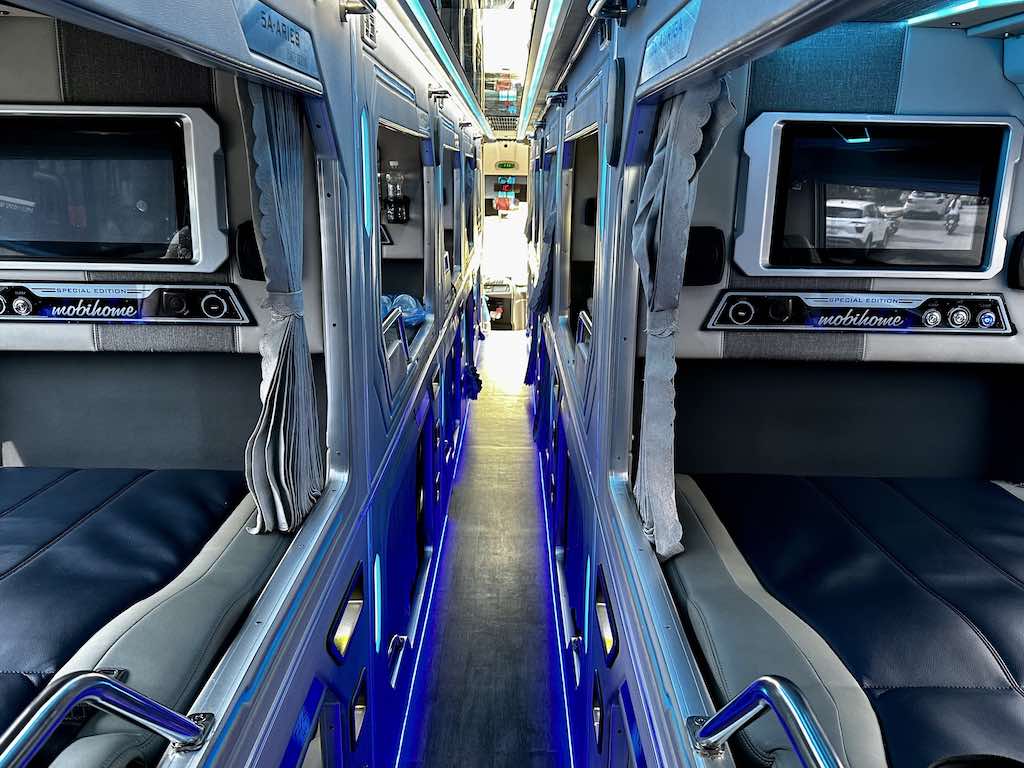
The newer “VIP cabin” buses replace open berths with enclosed single or double cabins, each with a curtain, a screen and a USB socket. That is what I took from Hanoi to Sapa on the night of April 11: a few hours in a blue-lit pod, and I found it surprisingly comfortable. The catch with night buses on this route is the arrival time: they reach Sapa around 4:30 to 5:00 in the morning, long before hotel check-in. I came back to Hanoi the next afternoon on a daytime sleeper bus with wide reclining seats.
Limousine buses and vans
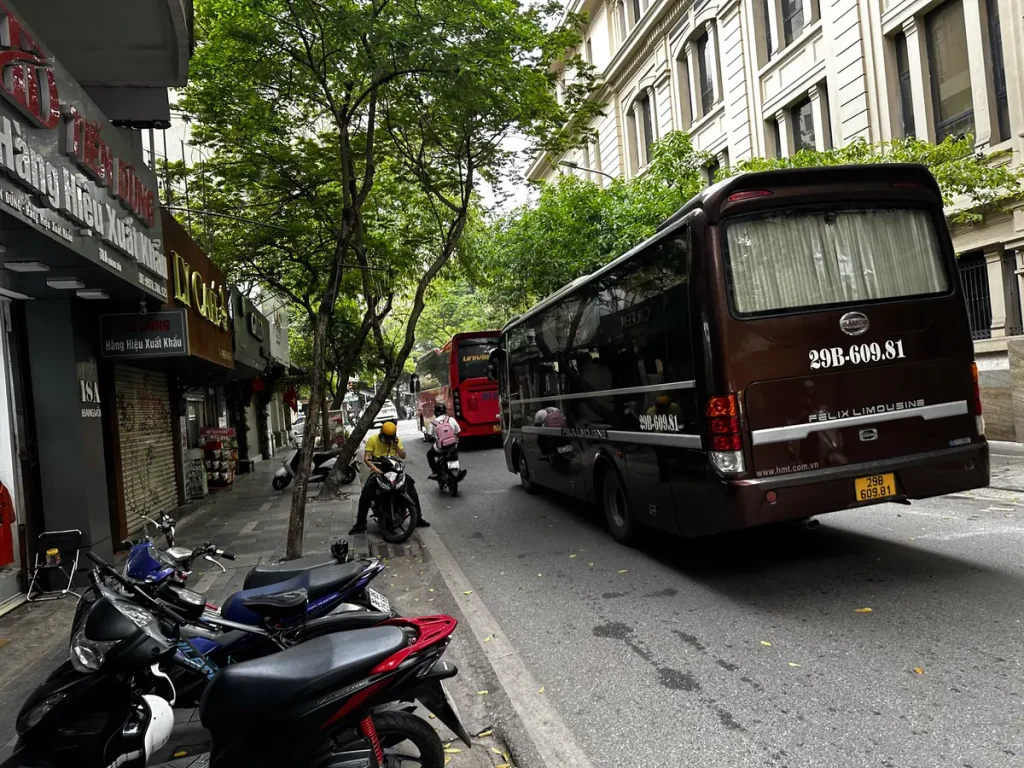
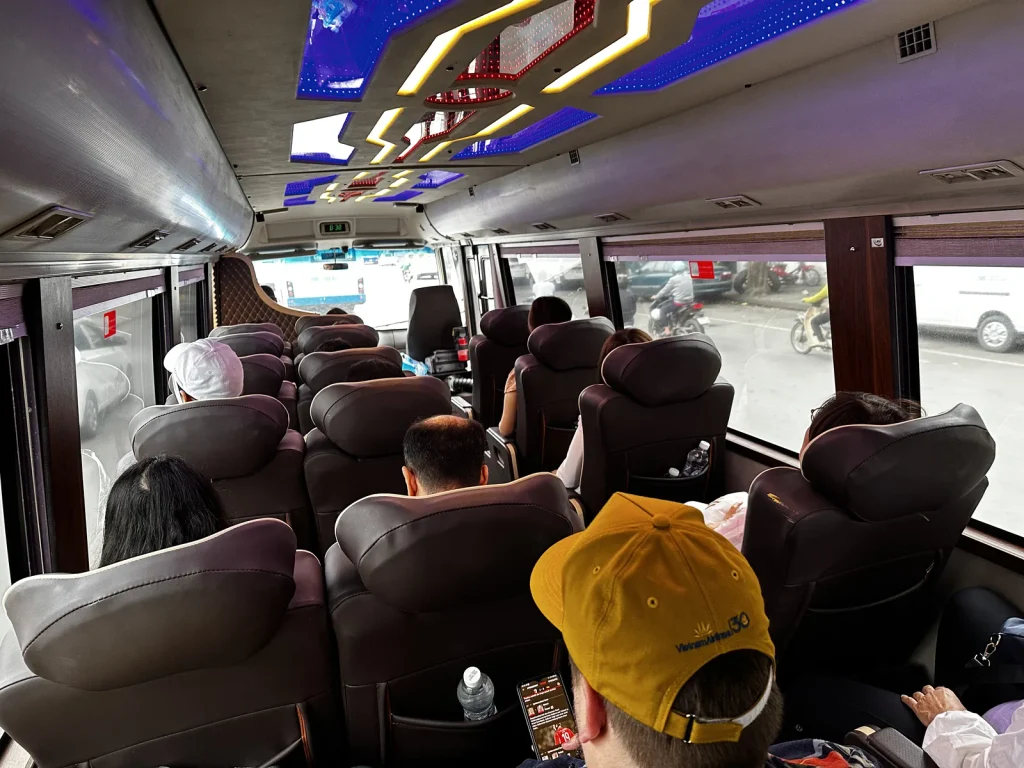
On routes of three to six hours, “limousine” does not mean a car: it is a minibus or a van with leather armchairs instead of rows of seats, often with hotel pick-up. They are the fastest road option to Ha Long Bay (2.5 to 3 hours, 350,000–450,000 VND) and to Sapa (5.5 to 6 hours, 320,000–450,000 VND). For my day in Ha Long Bay on April 13, a limousine bus with leather armchairs left from the Hoan Kiem area shortly after 8:30 in the morning.
Booking bus tickets
I booked my bus tickets using the 12Go app, which is user-friendly and reliable: compare the Hanoi to Sapa and Hanoi to Ha Long options there. Check the photos of the vehicle before paying, since the same route can be sold as a berth, a cabin or a van.
Pros: Cost-effective, wide coverage, and flexible schedules.
Cons: Variable comfort levels, occasional delays, and sometimes reckless driving.

Grab, Taxis and Getting Around Vietnamese Cities
Inside cities, ride-hailing has replaced most of the haggling. Grab works in every city you are likely to visit, either as a motorbike taxi or a car, and the price is fixed before you get in. In Da Nang, a short Grab Bike ride costs 30,000–50,000 VND, a Grab Car from the airport to the city center 50,000–80,000 VND, and a car to Hoi An 250,000–400,000 VND. Xanh SM, the electric taxi and motorbike service, is a good alternative in the big cities.
Hanoi has two slower ways to see the Old Quarter: the cyclo, a pedal rickshaw (agree on the price before you sit down), and the open-top Hanoi City Tour bus that loops around Hoan Kiem Lake.
Renting a Car with a Driver in Vietnam
Renting a car with a driver is a convenient option, especially for families or groups. It offers flexibility to customize your itinerary and make stops along the way. Expect around 1,200,000–1,500,000 VND one-way for a four-seat car from Hanoi to Ha Long Bay. Self-driving, however, is rare for visitors due to heavy traffic and unfamiliar road rules.
Pros: Comfort, flexibility, and the freedom to explore at your own pace.
Cons: Higher cost and requires some planning.

Renting a Motorbike in Vietnam as a Tourist
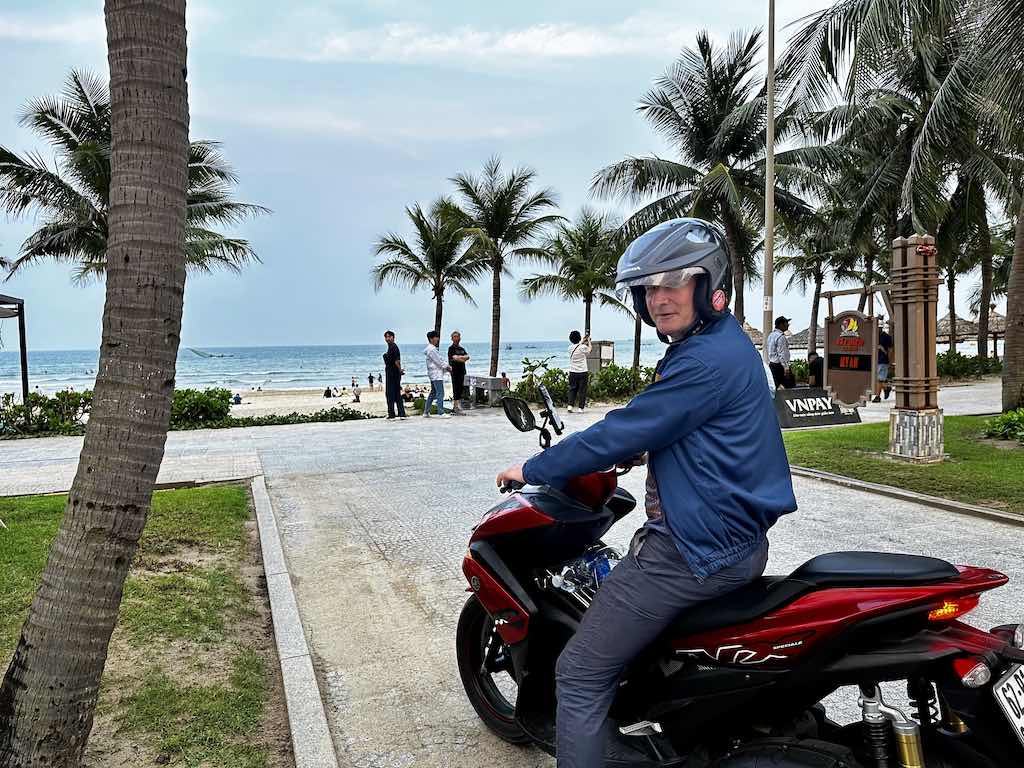
Motorbikes and scooters are the most popular modes of transport in Vietnam, providing unmatched freedom to explore both cities and the countryside. Renting a motorbike is affordable and widely available, around 200,000 VND a day for an automatic scooter in Da Nang, but it’s important to have some experience, as traffic can be chaotic. For instance, I rented a scooter in Da Nang to explore Hue and Hoi An. The roads were in excellent condition, and the ride was surprisingly easy, all the way through the rice fields to the My Son sanctuary.
The license question
Vietnam only recognizes a foreign license together with an International Driving Permit issued under the 1968 Vienna Convention, with the motorcycle category (A, or A1 up to 125 cc) stamped. The 1949 Geneva permit is not accepted. Riding without it means a fine of 2 to 4 million VND at a checkpoint, and above all a travel insurer that can refuse your claim after an accident. Wear the helmet, always: it is compulsory.
Pros: Total freedom, low cost, and an immersive experience.
Cons: Safety risks, the right permit to carry, and prior riding experience needed in busy traffic.
Boats, Cable Cars and Mountain Railways
Boats offer a unique perspective, especially in iconic regions like Ha Long Bay and the Mekong Delta. While slower than other modes of transport, they provide a relaxing and scenic way to appreciate Vietnam’s natural beauty.
Ha Long Bay and the Mekong Delta
In Ha Long Bay, the boat is the destination: day cruises leave from the cruise port in Ha Long city, and overnight cruises add a night among the limestone islands. In the Mekong Delta, the most memorable stretch is the smallest boat of the day, a rowing sampan through the narrow canals; my day tour from Ho Chi Minh City combined a river boat, the sampan and bicycles on Phu Tuc island.
Sapa’s funicular and the Fansipan cable car
From Sapa, a funicular runs from the town to the cable car station, the cable car crosses the valley to the upper station, and a second funicular climbs the last section towards the 3,143-meter summit of Fansipan, the highest peak in Indochina. On April 12 the top was lost in cloud, which is common: check the forecast before you buy.


Travel Tips for Getting Around Vietnam
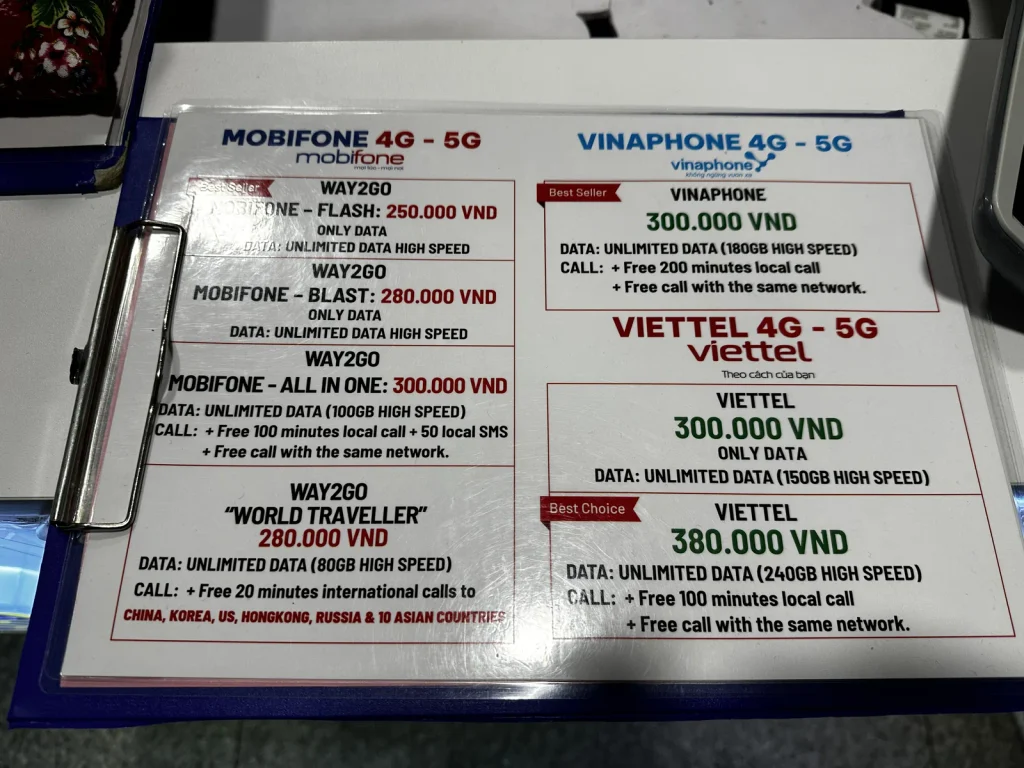
- Get a SIM card on arrival: the operators’ desks at the airports sell tourist SIM cards with unlimited data. At Tan Son Nhat in April 2024 they cost between 250,000 and 380,000 VND, and you need data for Grab and e-tickets.
- Avoid traveling during Tet: around the Lunar New Year, in late January or February, flights, trains and buses sell out weeks ahead and fares climb.
- Travel insurance: make sure your policy covers accidents and medical expenses, and read the motorbike clause if you plan to ride.
- Safety: road safety can be a concern in Vietnam, so always stay cautious and follow local traffic rules.
- Planning ahead: for flights, sleepers on the train and night buses, booking in advance secures your seat and better prices.
Getting around Vietnam is an integral part of the travel experience, offering a mix of challenges and unforgettable moments. By choosing the right mode of transport for your needs and budget, you’ll be able to enjoy the adventure and charm of this incredible country fully.
How Many Days Do You Need? Routes for 7, 14 or 21 Days
How long you stay decides how you travel. Here is how the legs connect for each trip length; for the sights, the seasons and what to pack, see my guide to planning your trip to Vietnam.
1-Week Vietnam Itinerary
With just one week, focus on one or two regions to avoid spending your trip in transit. A typical week: three days in Hanoi with a limousine van to Ha Long Bay and back, then a one-hour flight or the night train to Hue, and the train over the Hai Van Pass to Da Nang and Hoi An. Fly home from Da Nang rather than going back to Hanoi.

2-Week Vietnam Itinerary
Two weeks covers the north, the center and the south. Add the night bus or train to Sapa from Hanoi, keep the train for Hue to Da Nang, and fly from Da Nang to Ho Chi Minh City for the last days and a day trip to the Mekong Delta. That one flight saves you a day and a night on the road.
3-Week Vietnam Itinerary
Three weeks lets you travel more on the ground. Take the train south in stages: Hanoi to Hue overnight, Hue to Da Nang by day, then on to Nha Trang for the beaches and diving and up to Dalat by bus. Finish in Ho Chi Minh City and the Mekong Delta, and fly to Phu Quoc Island for a few days by the sea.
Getting Around Vietnam: Frequently Asked Questions
What is the best way to travel around Vietnam?
A combination. Fly the long legs, such as Hanoi to Ho Chi Minh City or Ho Chi Minh City to Da Nang, and use buses, limousine vans or the train for journeys under about eight hours. In town, Grab and scooters cover the rest.
Is the train from Hanoi to Ho Chi Minh City worth it?
For the whole line in one go, only if you love trains: it takes more than 30 hours. Taken in sections, it is excellent, especially the overnight train from Hanoi to Hue and the day train from Hue to Da Nang over the Hai Van Pass.
How do I get from Hanoi to Sapa?
By sleeper bus (6 to 7 hours, 270,000–370,000 VND), limousine van (5.5 to 6 hours, 320,000–450,000 VND) or the overnight train to Lao Cai followed by an hour’s transfer. Sapa has no airport. Night services arrive very early in the morning.
How do I get from Hanoi to Ha Long Bay?
By limousine van in 2.5 to 3 hours (350,000–450,000 VND), by express bus in 3 to 3.5 hours (250,000–300,000 VND), or by private car. Many cruises include a shuttle from Hanoi’s Old Quarter.
Can tourists legally ride a motorbike in Vietnam?
Yes, with a home license and a 1968-convention International Driving Permit showing the motorcycle category. Without it you risk a fine of 2 to 4 million VND and, more seriously, an insurance claim refused after an accident.
Is Grab available everywhere in Vietnam?
In all the main cities and tourist towns, including Hanoi, Ho Chi Minh City, Da Nang, Hoi An, Hue and Nha Trang. In small towns and the mountains, use a local taxi or ask your hotel.
Are sleeper buses in Vietnam comfortable?
More than their reputation. The newer cabin buses give you a private pod with a curtain, and I found mine from Hanoi to Sapa surprisingly comfortable. Classic berths are short for tall travelers, and mountain roads are winding, so take something for motion sickness if you need it.
Is Bamboo Airways still flying?
Not on scheduled routes. Bamboo Airways stopped selling scheduled tickets on August 1, 2026, and only operates charter flights. For domestic flights, book Vietnam Airlines, VietJet, Vietravel Airlines or Sun PhuQuoc Airways.
When is the worst time to travel around Vietnam?
Tet, the Lunar New Year, in late January or February. Much of the country travels home at the same time, so transport sells out weeks in advance and prices rise sharply.