Da Nang, Vietnam: From the Dragon Bridge to the Hai Van Pass
By Blaise Jaeger · Updated September 23, 2026
Why Visit Da Nang?
Most people meet Da Nang at the airport and leave it the same afternoon for Hoi An. That is a shame. There are few cities in Vietnam where you can swim off a 10 km urban beach before breakfast, ride a cable car to a mountaintop at 1,487 metres by mid-morning, cross the most famous coastal road in the country after lunch, and watch a steel dragon breathe fire over the river at 9 PM — without ever changing hotel.
It is also a city that works. The streets are wide and clean, Grab cars cost a few dollars, the airport is ten minutes from the centre, and the beach is not a resort enclave but the city’s own front garden. That is why Da Nang is the natural base for central Vietnam: Hoi An is 45 minutes south, Hue is across the Hai Van Pass to the north, and the Cham towers of My Son are a morning’s drive inland.
One thing has changed recently and most guides have not caught up: on 1 July 2025, Quang Nam province was merged into Da Nang. Hoi An and My Son are now administratively part of Da Nang City, and the old districts such as Ngu Hanh Son and Son Tra have been replaced by wards. Addresses you find online that end in “Quang Nam” are simply out of date.
Da Nang at a Glance
- Where: central Vietnam, on the coast, roughly halfway between Hanoi and Ho Chi Minh City.
- Airport: Da Nang International (DAD), 3 to 5 km from the centre — about 10 to 15 minutes by car.
- Since July 2025: Da Nang City includes the former Quang Nam province, so Hoi An and My Son are now inside the city limits.
- Signature sights: the Dragon Bridge, My Khe Beach, Son Tra Peninsula and the Lady Buddha, the Marble Mountains, Ba Na Hills and the Golden Bridge, the Hai Van Pass.
- Dragon Bridge fire show: 9 PM on Friday, Saturday, Sunday and public holidays. Free.
- Best months: February to May. The heavy rains and typhoon risk run from September to December.
- Local dish to try first: mi Quang, the flat turmeric noodles of the region.
- How long to stay: two full days for the city, three or four if you add Ba Na Hills and the Hai Van Pass.
- Getting around: Grab and Xanh SM electric taxis everywhere; a scooter if you hold a valid 1968-convention international permit.
- Currency: Vietnamese dong (VND). Cards work in hotels, cash rules at street stalls.
My Days in Da Nang: A Scooter, Ba Na Hills and the Hai Van Pass Twice
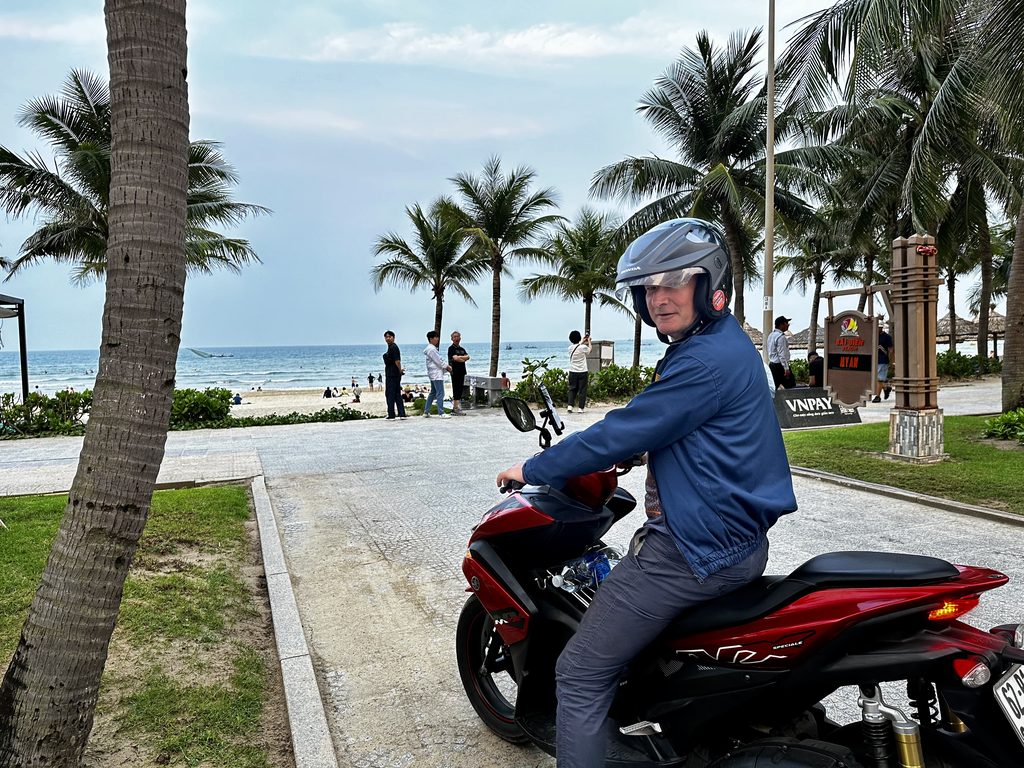
I flew into Da Nang from Ho Chi Minh City in April 2024 and gave central Vietnam five nights, from the 6th to the 11th: two in Hue, two in Hoi An and the rest in Da Nang. A rented scooter was how I got around.
On the morning of 7 April I was on the Ba Na Hills cable car by half past ten, walking through the fake French village an hour later and standing on the Golden Bridge just after noon. It is kitsch — completely, unapologetically kitsch — and it is still worth the day.
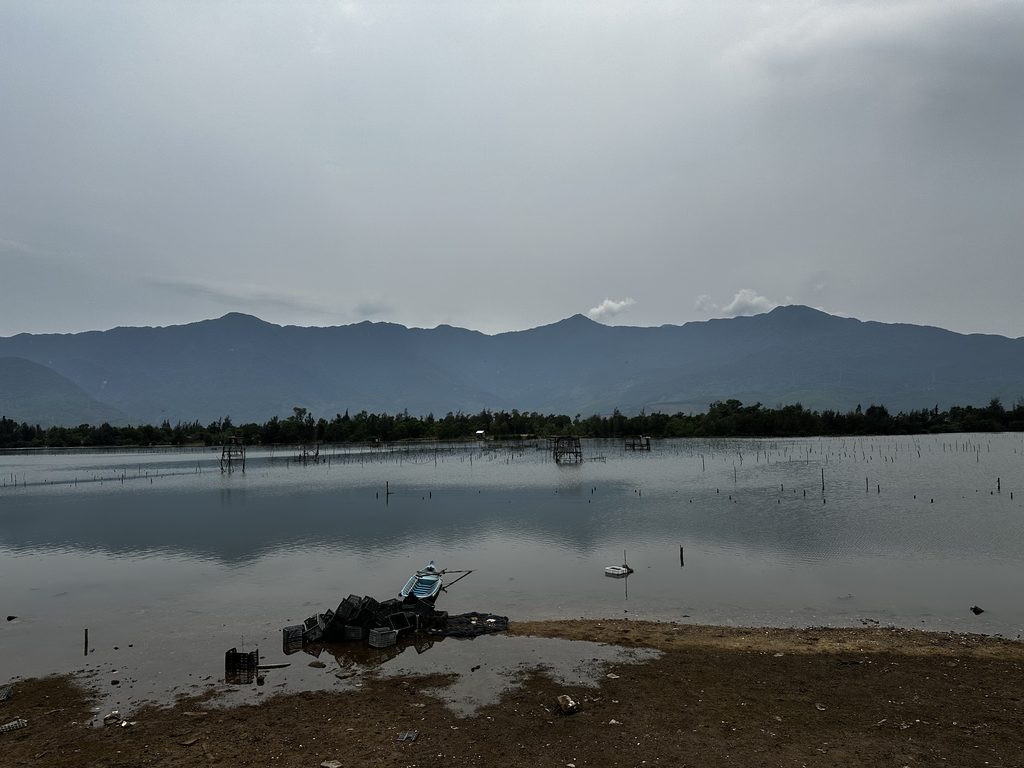
That same afternoon I rode over the Hai Van Pass to Hue, where I stayed two nights. On the way back on 9 April I stopped at the Lap An lagoon at Lang Co, where the mountains reflect in water so still it looks painted, then rode back over the top and straight to the Marble Mountains for the caves in the afternoon.
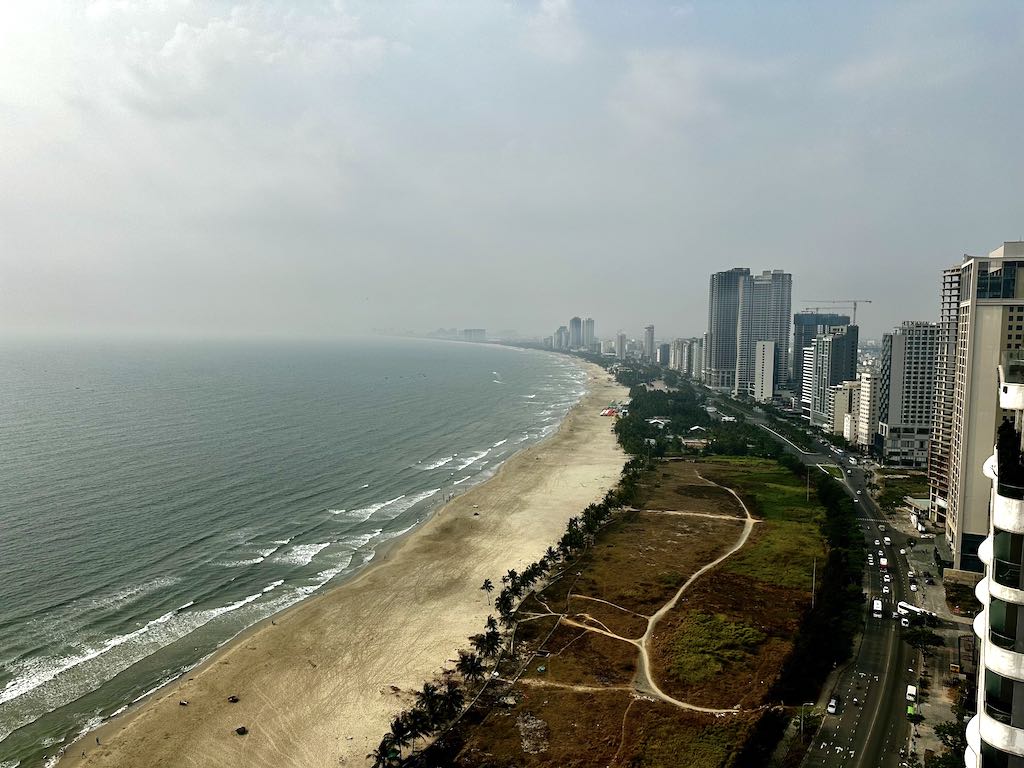
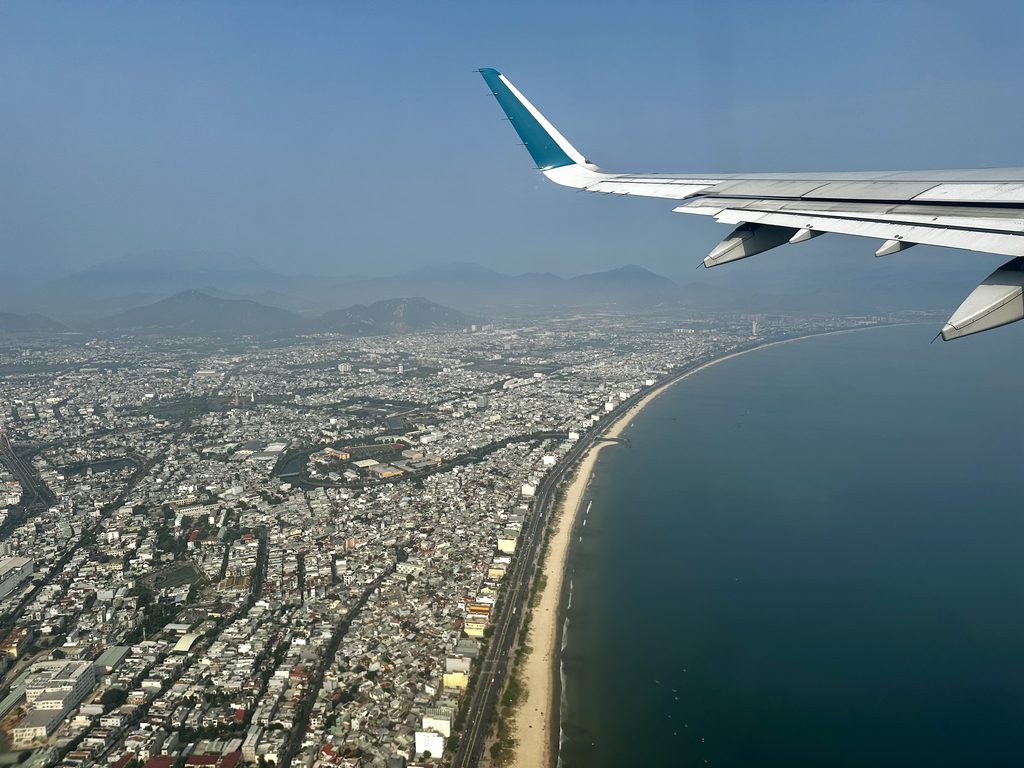
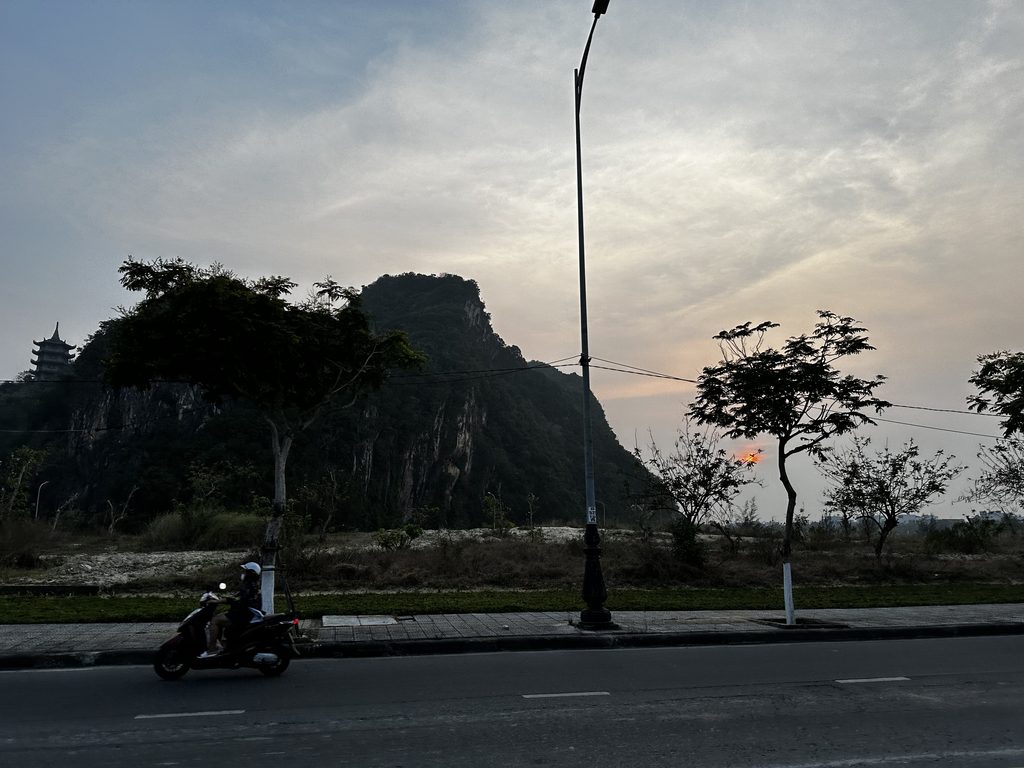
My last evening in the region was the simplest: the Marble Mountains turning into a silhouette at sunset, then ten minutes up the coast road to My Khe to watch the beach empty out. The next morning I flew on to Hanoi, and the window seat gave me the whole curve of the Da Nang coastline in one frame.
What I did not do was see the Dragon Bridge breathe fire — I was never in town on the right night at 9 PM. It is the one thing I would plan around next time, and the section below tells you exactly when it happens.
The Han River: Dragon Bridge, Fire Show and the Swing Bridge
The Han River splits Da Nang in two: the old commercial centre of Hai Chau on the west bank, the beach districts on the east. Several bridges connect them, and two of them are sights in their own right.
The Dragon Bridge (Cau Rong)
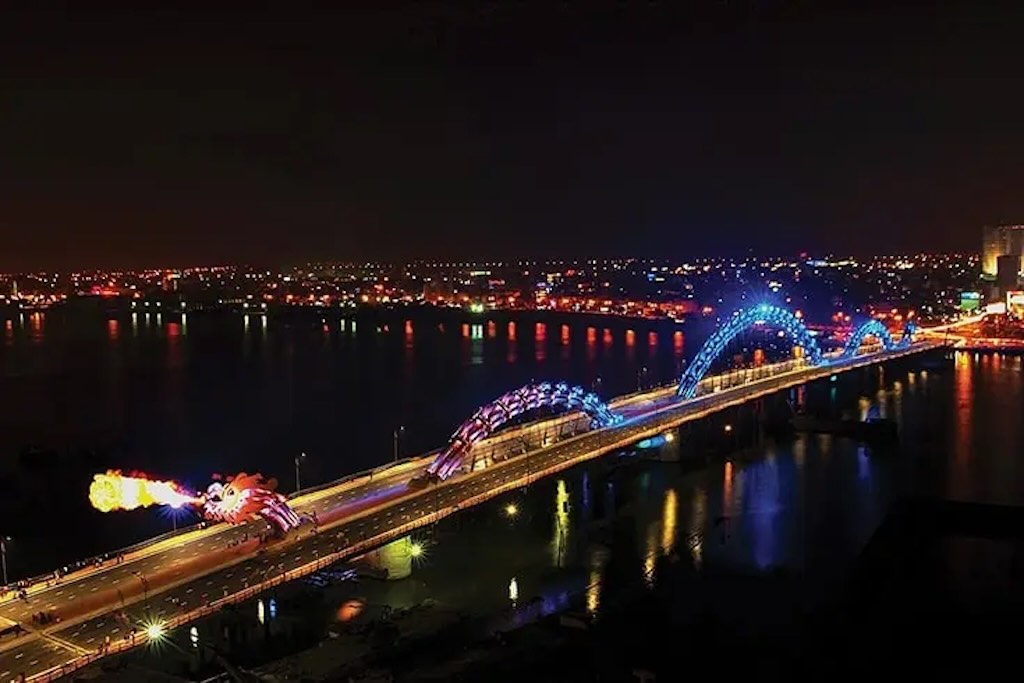
Opened on 29 March 2013, the Dragon Bridge is 666 metres long and carries six lanes of traffic under the body of a yellow steel dragon that rises and dips along its whole length. At night it is lit by thousands of LEDs that change colour; by day it is a busy road that most people cross without looking up.
Dragon Bridge fire show times in 2026
The dragon breathes fire and then water at 9 PM on Friday, Saturday, Sunday and public holidays. According to the city tourism board, the fire lasts about two minutes and the water about three. The show is free, and the bridge is closed to traffic shortly before it starts. The city adds extra nights on big occasions — in 2026, the show ran every night over Tet in February and for six nights in a row around National Day, from 28 August to 2 September.
Where to watch it — and how not to get soaked
The fire and water come out of the dragon’s head, which faces the sea on the east bank, near the Tran Hung Dao riverside promenade. Stand close to the head and you will feel the heat of the fire and then the spray of the water; stand on the promenade a little further away and you get the whole silhouette without the shower. Arrive by 8:30 PM on a Saturday — the good spots go early. A river cruise is the other option, and it avoids the crowd entirely.
The Han River Swing Bridge, the Carp-Dragon and the Love Lock Bridge
The Han River Bridge, a little further north, still pivots: on Saturday and Sunday nights, around 11 PM to midnight, its central span rotates 90 degrees to let ships pass. On the east bank, next to the Dragon Bridge, you will find the Carp-turning-into-Dragon statue and the Love Lock Bridge with its heart-shaped lamps — a ten-minute walk that fills the gap between dinner and the fire show.
My Khe Beach: The City’s Front Garden
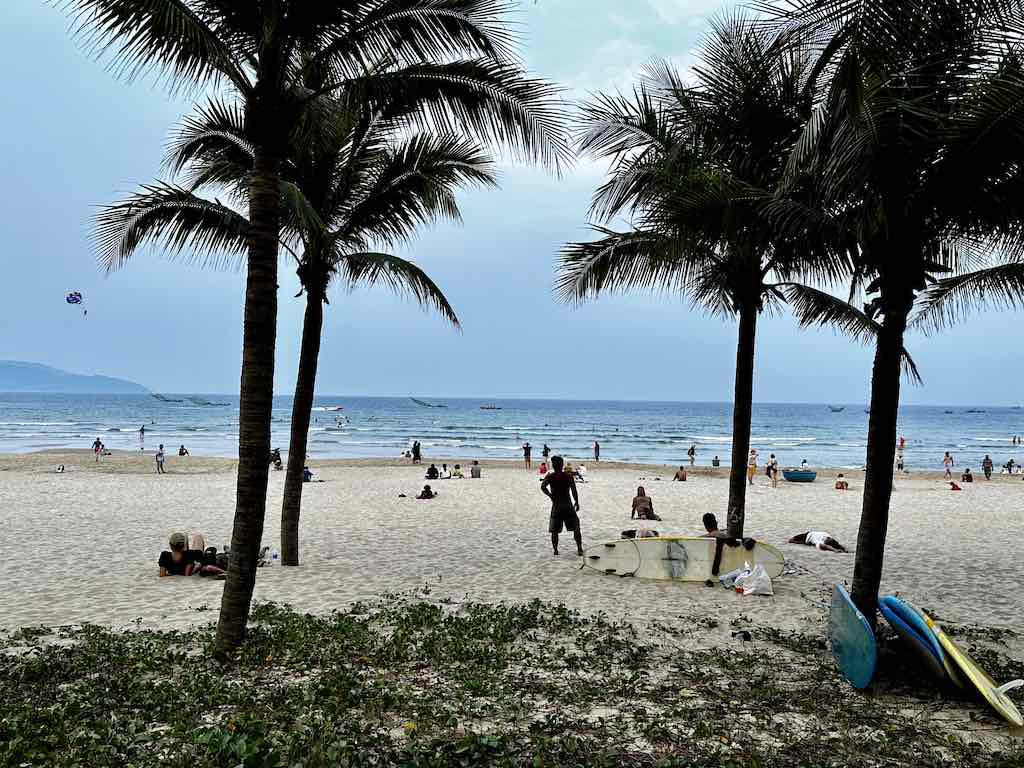
My Khe is part of an almost unbroken stretch of sand that runs close to 10 km from the Son Tra headland south to the Marble Mountains. The main public section is only a few hundred metres from the beach hotels of An Thuong, and at 5 AM it is already busy — locals swim, jog and play football before the heat sets in. By mid-morning it empties, and it fills again in the late afternoon.
When it is safe to swim
Lifeguards are on duty from 4:30 AM to 7 PM during the summer season, 15 March to 30 September, and they rope off the safe swimming zones. From September to March the sea is rougher and rip currents form every hundred metres or so: swim between the flags, and if the red flag is up, do not swim at all. The best surf, for the same reason, comes in September and October.
Sunrise, not sunset
The beach faces east, so the show here is at dawn — around 5:15 AM in May and June, closer to 6 AM in winter. For a sunset, go to the Han River or the Marble Mountains instead.
Son Tra Peninsula: the Lady Buddha and the Langurs
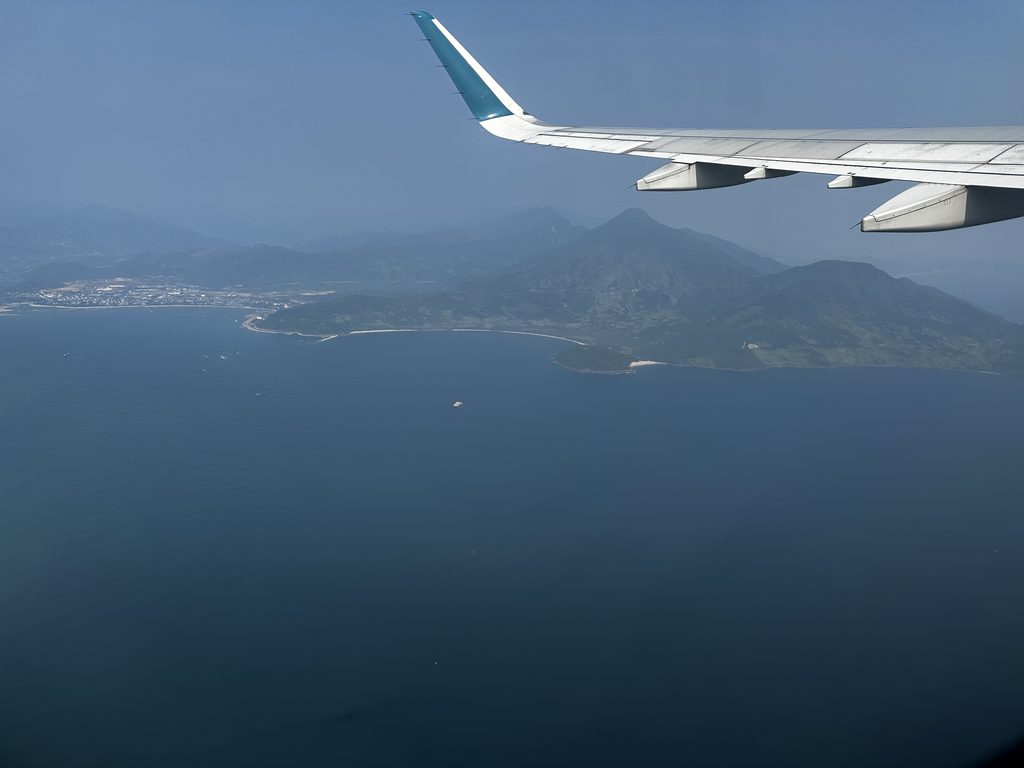
The green headland that closes the bay to the north-east is the Son Tra Peninsula — Monkey Mountain to the expats. It is a nature reserve, and it is the reason Da Nang still has forest a fifteen-minute drive from its beach hotels.
Linh Ung Pagoda and the Lady Buddha
On the southern slope, facing the city, the Linh Ung Pagoda is watched over by a 67-metre white statue of the Lady Buddha (Quan Am), visible from most of the beach. Entry is free. Allow an hour, dress modestly, and go late in the afternoon when the light turns the statue gold and the view back over My Khe is at its best.
The red-shanked douc langurs
Son Tra is home to one of the largest populations of red-shanked douc langurs in the world — over 1,300 animals at the last big count. They are shy, they live in the canopy, and you need patience and binoculars rather than luck. Feeding them is prohibited.
Access rules in 2026 — read before you rent a scooter
Many blogs still tell you to ride a scooter up Monkey Mountain. That has not been allowed for years on the forest roads. As of August 2026, the peninsula’s roads are open from 7:30 AM to 6:30 PM between March and September, and to 5:30 PM from October to February. The Tien Sa – Suoi Om – Ban Co route is limited to bicycles, manual-gear motorbikes and walkers (and was temporarily closed for storm-damage repairs), the Yet Kieu – Ban Co – Bac beach route is one-way, and automatic scooters are banned on both. Access can be suspended in bad weather. The Linh Ung Pagoda itself sits on the coast road and is easy to reach by Grab.
The Marble Mountains (Ngu Hanh Son): Caves, Pagodas and a View
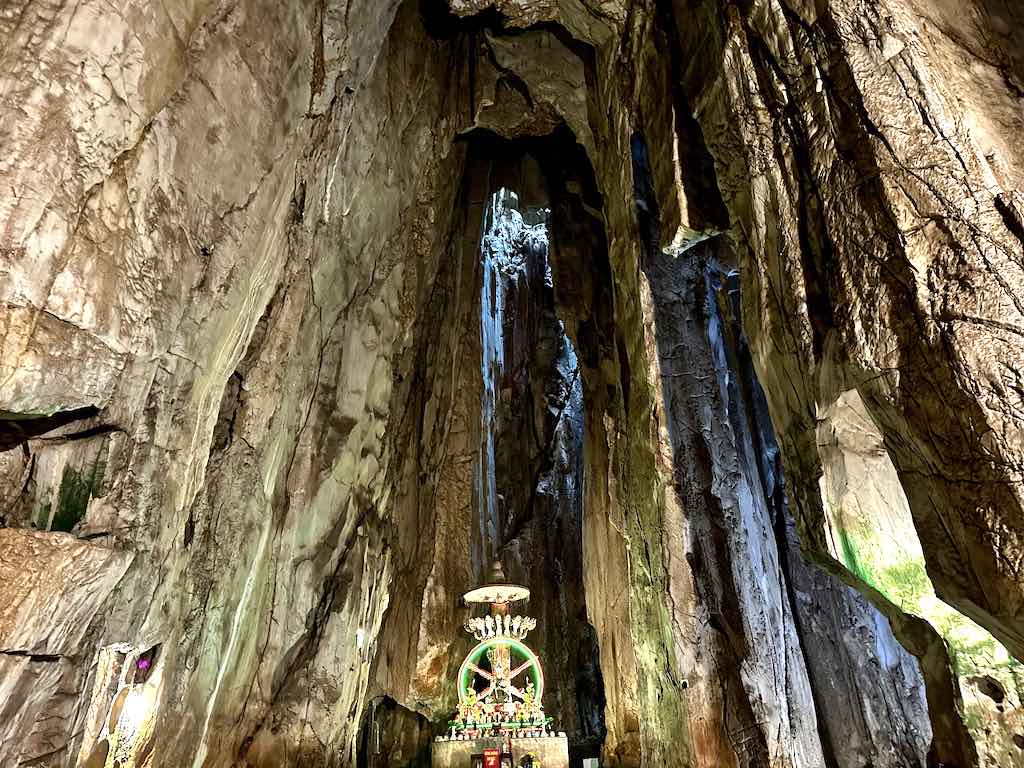
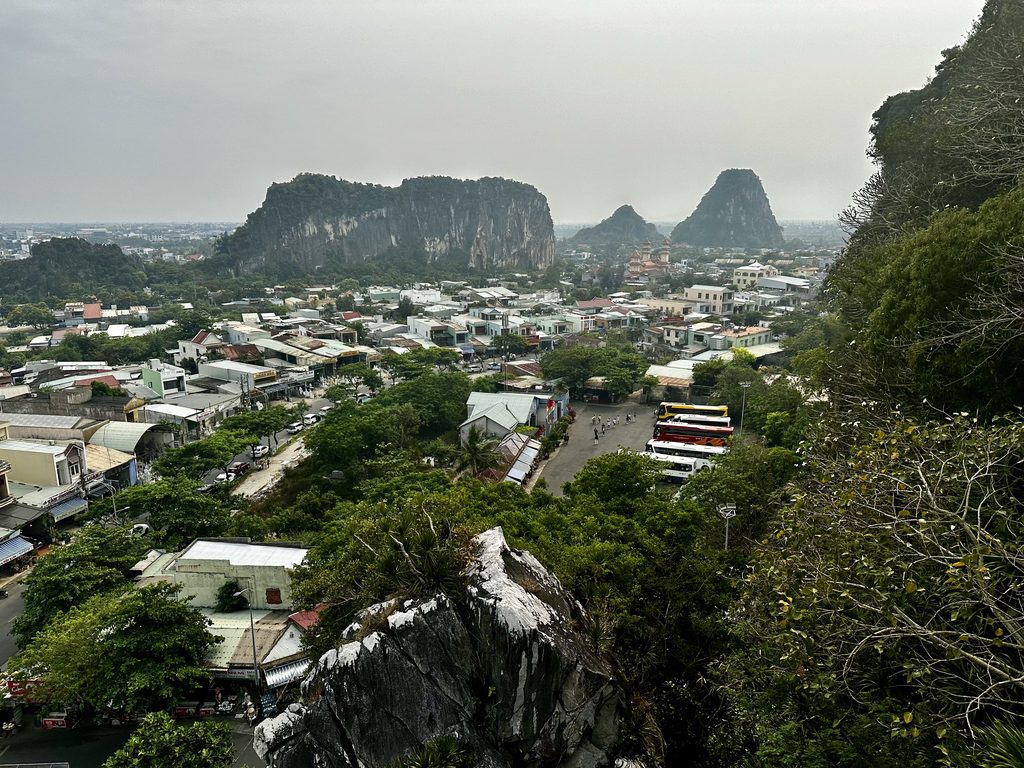
Eight kilometres south of the centre, five limestone and marble outcrops rise straight out of the flat coastal plain. They are named after the five elements — water, wood, fire, metal and earth — and the largest, Thuy Son (Water Mountain), is the one you climb. Its caves have been Buddhist and Hindu sanctuaries for centuries, and its paths link pagodas, grottoes and a summit viewpoint over the other four peaks.
Tickets and opening hours
According to the Da Nang tourism portal, entry to Thuy Son costs 40,000 VND, the Am Phu cave another 20,000 VND, and the lift 15,000 VND one way or 30,000 VND return. The site is open daily from 7 AM to 5:30 PM. Allow three hours, and go in the morning or late afternoon — the stone steps are steep and there is little shade.
What to see on Thuy Son
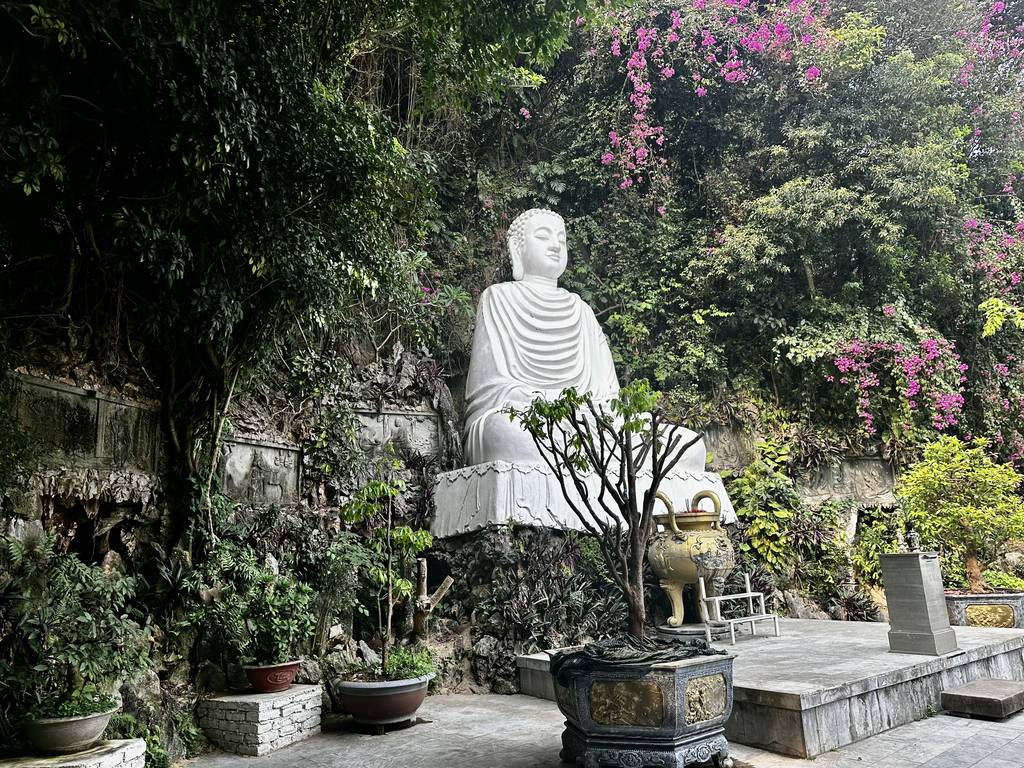
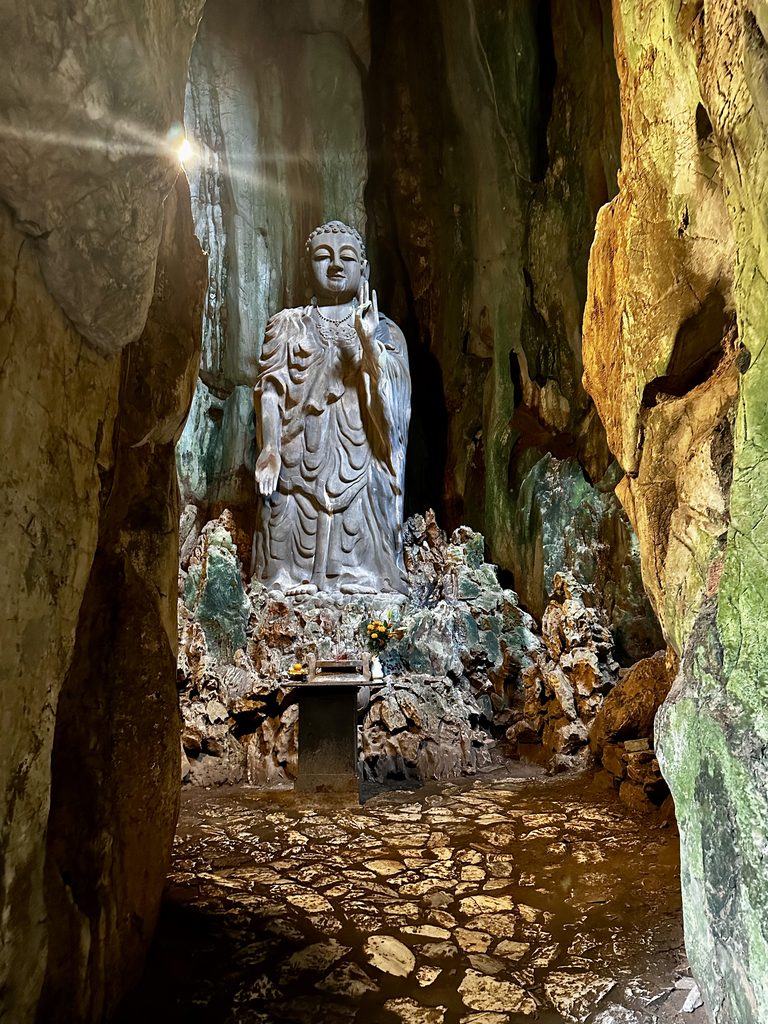
Start with the lift, not the stairs, and work down. Huyen Khong is the big one: a cathedral-sized cave where a shaft of light falls from a hole in the roof onto a seated Buddha. The Linh Ung pagoda terrace, with its white statues and bougainvillea, and the seven-storey Xa Loi tower are just beyond. Then climb to the viewpoint: the three smaller mountains, the rice fields and the coast are all laid out below you.
Am Phu cave: the Buddhist underworld
At the foot of the mountain, the Am Phu cave is a descent into hell as imagined by Vietnamese Buddhism: coloured statues of judges, demons and sinners, lit in red and green, with a path that climbs back up towards the light of paradise. Some scenes are graphic; it is less a sight than an experience, and children tend to either love it or leave quickly.
Non Nuoc stone-carving village
The workshops at the foot of the mountains have been carving stone since the late 17th century. The mountains themselves can no longer be quarried — the stone now comes from other provinces — but the craft survives in some 500 workshops. Browse freely; shipping a two-metre lion home is another matter.
Ba Na Hills and the Golden Bridge: Kitsch, but Worth the Day
Sun World Ba Na Hills is a mountaintop theme park built on the site of a French hill station from the 1920s, at around 1,487 metres. It is 25 to 40 km west of the city depending on where you start, and it is cool up there all year — bring a layer even in April.
The cable car and the Golden Bridge
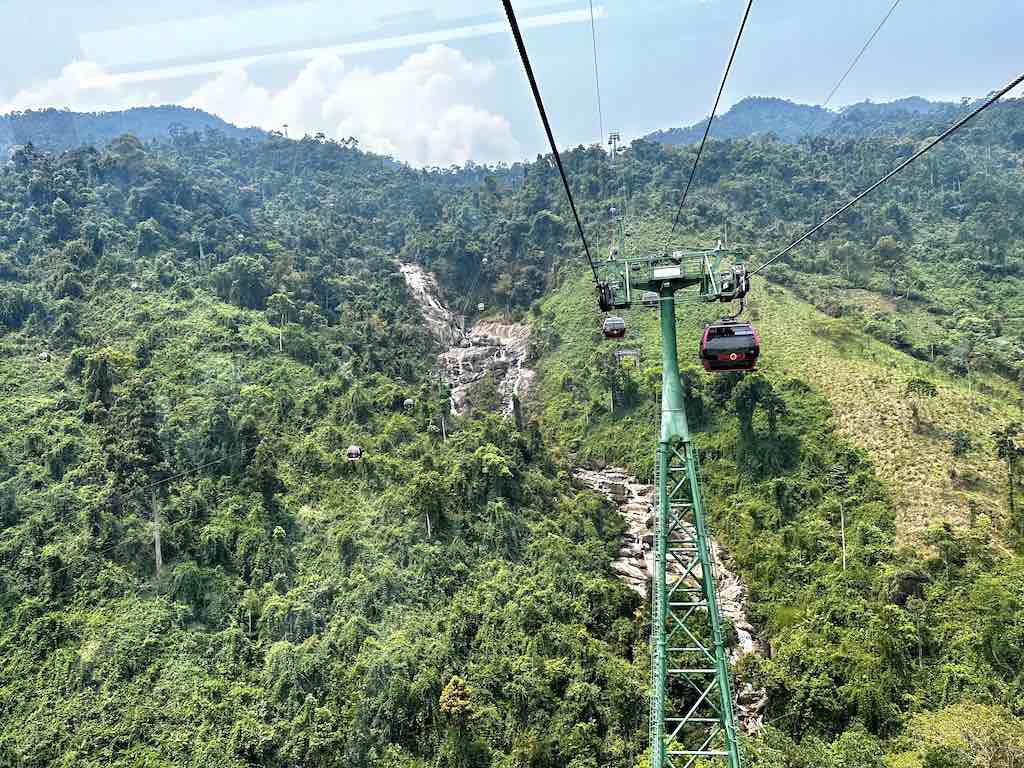
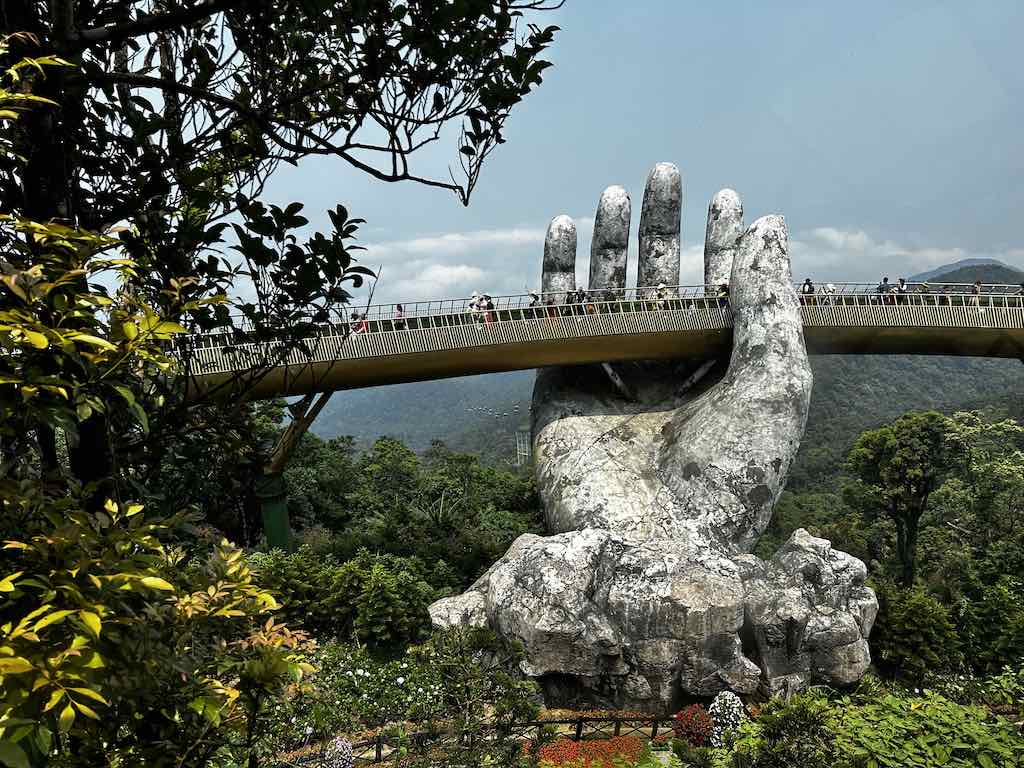
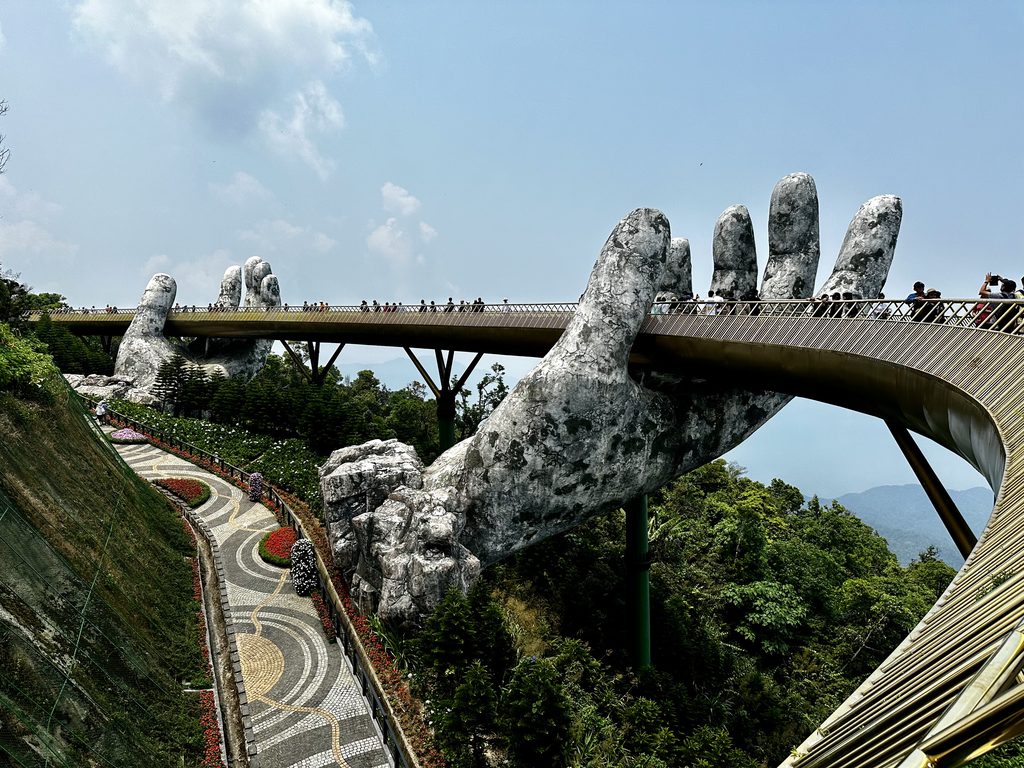
The cable car is part of the show: the longest non-stop single-track cable car in the world when it opened in 2013 (5,801 metres, a Guinness record), climbing over jungle and waterfalls. At the top, the Golden Bridge — opened in June 2018 — is a 150-metre gilded walkway held up by two giant stone hands. It is the photograph you have seen, and it is busier than any photograph suggests.
The French Village and the rest of the park
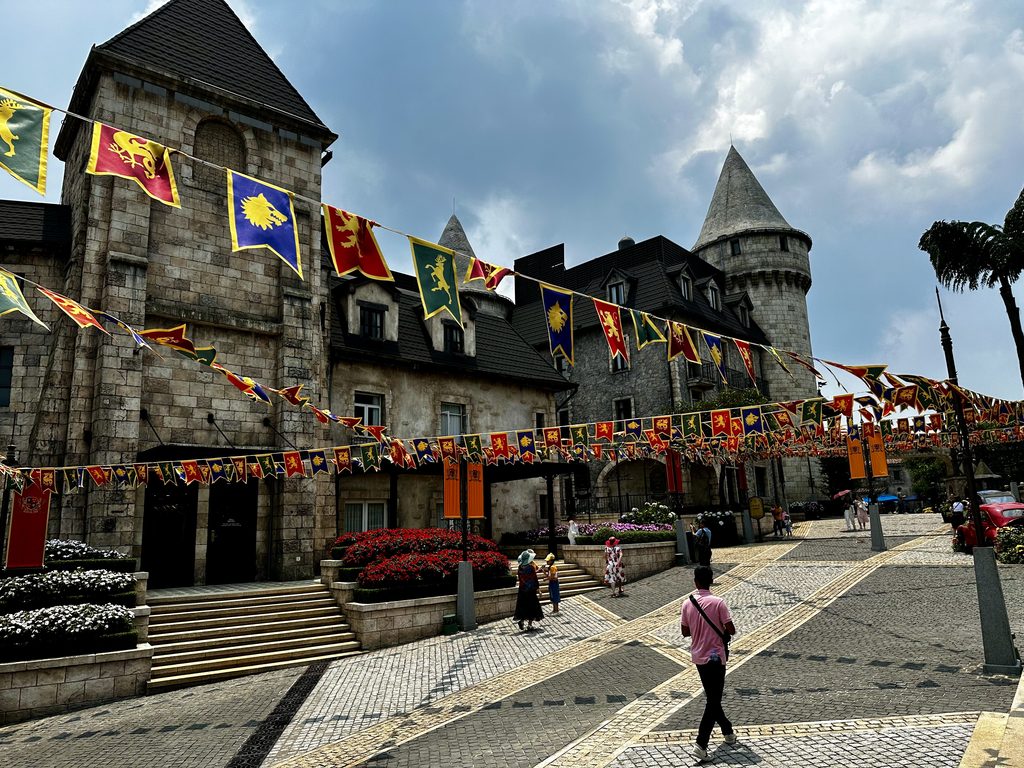
Beyond the bridge is a reconstructed French medieval village with a cathedral, a square and a funicular, then gardens, a wine cellar and an indoor amusement park. It is theatre, not heritage. Take it as that and it is fun.
Ba Na Hills tickets in 2026
The official 2026 price list gives 1,000,000 VND per adult for the cable car and entry (800,000 VND for children between 1 and 1.4 metres), or 1,300,000 VND with the lunch buffet. New in 2026, a ticket can be upgraded at the counter to cover three consecutive days, with face recognition. Blogs quoting 900,000 VND are out of date. The park opens at 7 AM; the cable cars run from about 8 AM.
How to do it well
Be at the lower station when the cable cars start: the Golden Bridge is quiet for about an hour and then it is not. Grab from the city takes 45 minutes to an hour. If you would rather not organise anything, the small-group Golden Bridge day tour includes the transfers and the ticket and is the best-reviewed option I found.
The Hai Van Pass: the Road Everyone Should Ride Once
North of the city, the Truong Son range runs straight into the sea, and the old Mandarin Road climbs over it. The Hai Van Pass — “sea cloud pass” — is about 21 km of curves topping out at 496 metres, with the bay of Da Nang on one side and the Lap An lagoon on the other. Since the tunnel under the mountain opened in 2005, trucks and cars mostly take the tunnel, and the pass belongs to motorbikes, cyclists and the occasional tour bus. Jeremy Clarkson called it “a deserted ribbon of perfection” on Top Gear in 2008; he was right about the ribbon, less about the deserted.
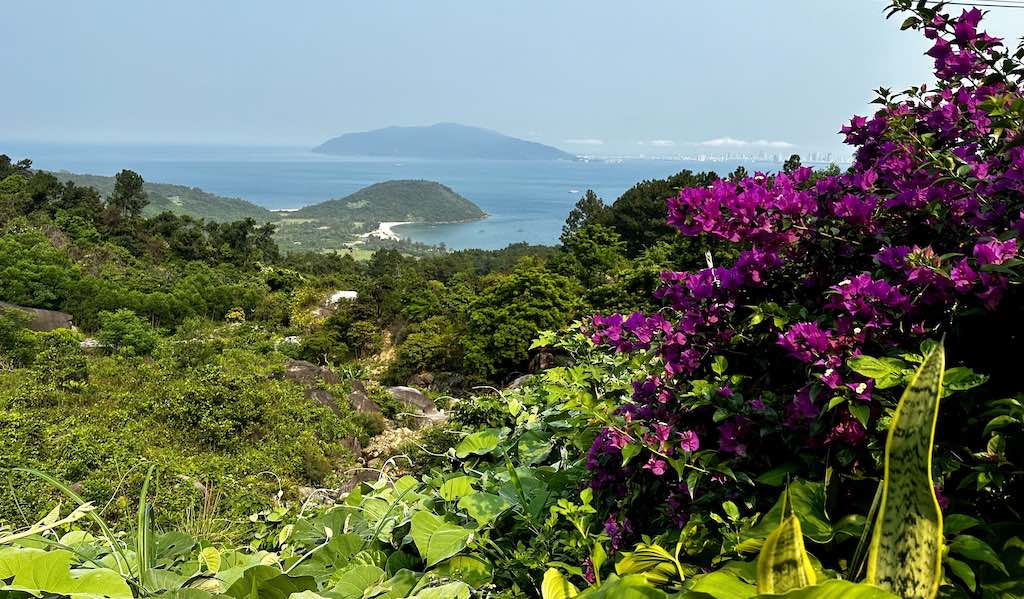
Riding it by scooter
Motorbikes are not allowed in the tunnel, so the pass is yours. From the My Khe hotels it is under an hour to the top. Ride it in the morning, before the cloud that gives the pass its name rolls in, and stop at the lay-bys on the way up: the view back over the bay is better than the one from the summit. You need a valid licence — see the practical section below. If you would rather be a passenger, an Easy Rider motorbike tour over the pass with a local driver is how many travellers do the Hue – Da Nang – Hoi An leg.
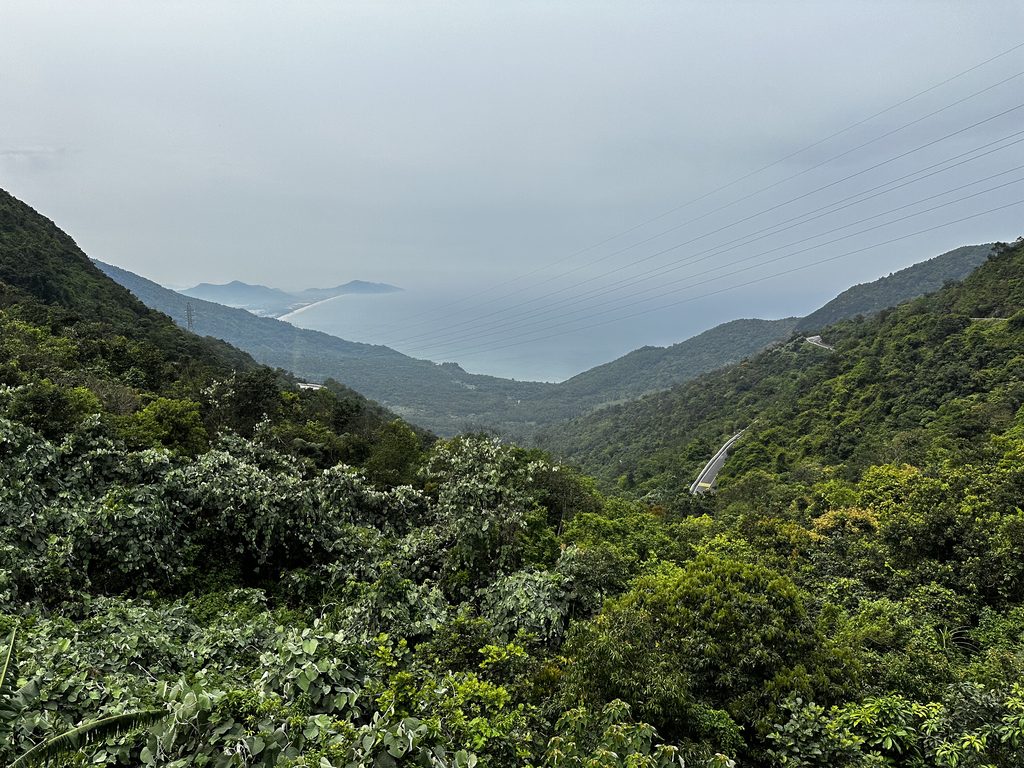
Hai Van Gate
At the summit stands Hai Van Gate, built in 1826 under Emperor Minh Mang to guard the border between two provinces. After years of neglect it reopened on 1 August 2024 after a full restoration. Articles that describe it as a ruin are out of date.
Lang Co and the Lap An lagoon
Coming down the north side, the road opens onto the Lap An lagoon and the fishing town of Lang Co. It is the prettiest stop of the whole route: flat water, oyster stakes, the mountains doubled in the reflection. It is also where most riders stop for lunch before turning back or continuing to Hue.
The heritage train, if you prefer rails
The railway hugs the coast below the road, and Vietnam Railways runs a dedicated heritage train between Da Nang and Hue with a stop at Lang Co. Official timetable: Da Nang 7:05 AM → Lang Co 9:14 AM → Hue 11:03 AM, and Da Nang 3:20 PM → Hue 6:15 PM; in the other direction, Hue 7:05 AM → Da Nang 10:10 AM and Hue 2:30 PM → Da Nang 6:15 PM. Tickets can also be booked through GetYourGuide. Sit on the sea side: on the Da Nang to Hue train, that is the right-hand side.
Culture in the City: Cham Museum, Pink Cathedral and the Markets
Museum of Cham Sculpture
The best museum in central Vietnam, and one of the best in the country. The Museum of Cham Sculpture was founded by French scholars in 1915 and opened its first building in 1919. It holds the world’s largest collection of Cham art — sandstone gods, dancers and altars from the 5th to the 15th centuries, many of them from My Son. Entry is around 60,000 VND, open daily 7 AM to 5 PM. See it before you go to My Son, not after: the ruins make far more sense once you have seen what used to stand in them.
Da Nang Cathedral, the “Pink Church”
Built by the French in 1923-24, the pink cathedral on Tran Phu Street is the city’s most photographed façade. Its rooster weathervane gave it its local nickname, the Rooster Church. Visits are outside mass times; cover shoulders and knees.
Han Market and Con Market
Han Market, opposite the cathedral at 119 Tran Phu (6 AM to 7 PM), is the one for dried fruit, coffee, textiles and tailoring — bargaining expected. Con Market, at 290 Hung Vuong, is bigger, rougher and more local, with a food court where a plate costs 30,000 to 60,000 VND.
Da Nang Itinerary: 1, 2 or 3 Days
One day in Da Nang
Sunrise swim at My Khe. Mi Quang for breakfast. Marble Mountains until lunch, then the Cham Museum and the Pink Cathedral in the afternoon. Linh Ung Pagoda and the Lady Buddha for the late light. Seafood dinner on the beach road, and — if it is Friday, Saturday or Sunday — the Dragon Bridge at 9 PM.
Two days
Add Ba Na Hills on day two: first cable car up, back in the city by mid-afternoon, a nap, and the Han River at night — the Swing Bridge turns around 11 PM at weekends.
Three days
Give day three to the Hai Van Pass: by scooter to Lang Co and back, or one way to Hue by the heritage train. Then move on to Hoi An — or to Hue if you crossed the pass.
Where to Eat in Da Nang
Da Nang eats differently from Hanoi or Saigon: more seafood, more turmeric, more herbs, and noodles you will not find in the north. For the dishes of the whole country, my guide to Vietnamese food goes into detail; here is what is specific to the city. In 2026 the Michelin Guide listed 47 addresses in Da Nang, from street stalls to one star — and the cheapest are often the best.
Mi Quang
Flat rice noodles, coloured with turmeric, in a small amount of rich broth — not a soup — with pork, shrimp or chicken, peanuts, a rice cracker and a mound of herbs and banana flower. Mi Quang 1A, at 1A Hai Phong (6 AM to 9 PM, cash only), is the classic and is in the Michelin selection.
Bun cha ca
Fish cake noodle soup, lightly sour from pineapple and tomato, the breakfast of Da Nang. Bun Cha Ca 109, at 109 Nguyen Chi Thanh (6 AM to 10 PM), holds a Bib Gourmand in 2026.
Banh xeo and banh trang cuon thit heo
Crisp little pancakes wrapped in rice paper with herbs and dipped in a peanut and pork sauce — Banh Xeo Ba Duong, down an alley at 280/23 Hoang Dieu, is the institution. Banh trang cuon thit heo is the other local classic: boiled pork rolled at the table in rice paper with herbs and fermented anchovy sauce. If you want someone to take you round, a food tour by scooter does ten tastings in an evening.
Seafood on the beach road, without being overcharged
The seafood restaurants of Vo Nguyen Giap and Hoang Sa streets sell by weight: you choose from the tanks, they weigh it, you add a cooking fee of 30,000 to 100,000 VND per dish. Ask whether the price is per kilo or per lang (100 g) — a tenfold difference — and watch it being weighed out of the water. Be Ni 2, at 228 Vo Nguyen Giap, open 24 hours, has a Bib Gourmand. The fishing village of Man Thai, one street back, is cheaper.
Da Nang After Dark
Night markets
The Son Tra Night Market, near the Dragon Bridge on the east bank, is open from 5:30 PM to around midnight and is the easy one to combine with the fire show. Helio Night Market, which many guides still recommend, closed for renovation in September 2025 — check that it has reopened before going.
Rooftops and bars
Sky36, on the top floors of the Novotel Danang Premier Han River, is the city’s rooftop bar, open from 6 PM to 2 AM with a dress code and a view over the whole river. For something looser, the numbered lanes of An Thuong, a block back from My Khe, are where the pubs and cocktail bars are.
Where to Stay in Da Nang
The choice is between the beach and the river. The beach side (My Khe and An Thuong) is where most visitors stay: sea at the end of the street, bars and cafés, easy Grab to everything. The river side (Hai Chau) is cheaper, closer to the best local food, and ideal for the Dragon Bridge, but the beach is 3 km away. Son Tra and Non Nuoc are for resorts, not for walking.

Luxury on Son Tra: InterContinental
The InterContinental Danang Sun Peninsula Resort is built down the hillside of the Son Tra Peninsula at Bai Sac, with its own bay and the forest all around. It is one of the most spectacular hotels in Vietnam, rated 9.5 on Booking.com, and it is priced accordingly. You come here to stay put.
On the river: Novotel Danang Premier Han River
The Novotel Danang Premier Han River, at 36 Bach Dang, is the practical choice for a short stay: on the west bank, a walk from the Pink Cathedral, the Han Market and the Dragon Bridge, with Sky36 on its roof. Rated 8.8.
On the beach: Four Points by Sheraton
The Four Points by Sheraton Danang, at 118-120 Vo Nguyen Giap, faces My Khe across the beach road, with the seafood restaurants on the doorstep. Rated 8.5.
Good value in An Thuong: Sala Danang Beach Hotel
The Sala Danang Beach Hotel, at 36-38 Lam Hoanh, is one street back from the beach and in the middle of the An Thuong cafés — the best-rated mid-range hotel I found in the area, at 9.4.
Practical Tips: Getting There, Getting Around, Best Time
Getting to Da Nang
Da Nang International Airport (DAD) is 3 to 5 km from the centre: a Grab costs about 70,000 to 120,000 VND. Domestic flights from Hanoi and Ho Chi Minh City take a little over an hour. By train, the Reunification Express takes 16 to 20 hours from Hanoi and around 17 hours from Ho Chi Minh City. For buses, trains and flights on the same page, compare Hanoi to Da Nang or Ho Chi Minh City to Da Nang on 12Go.
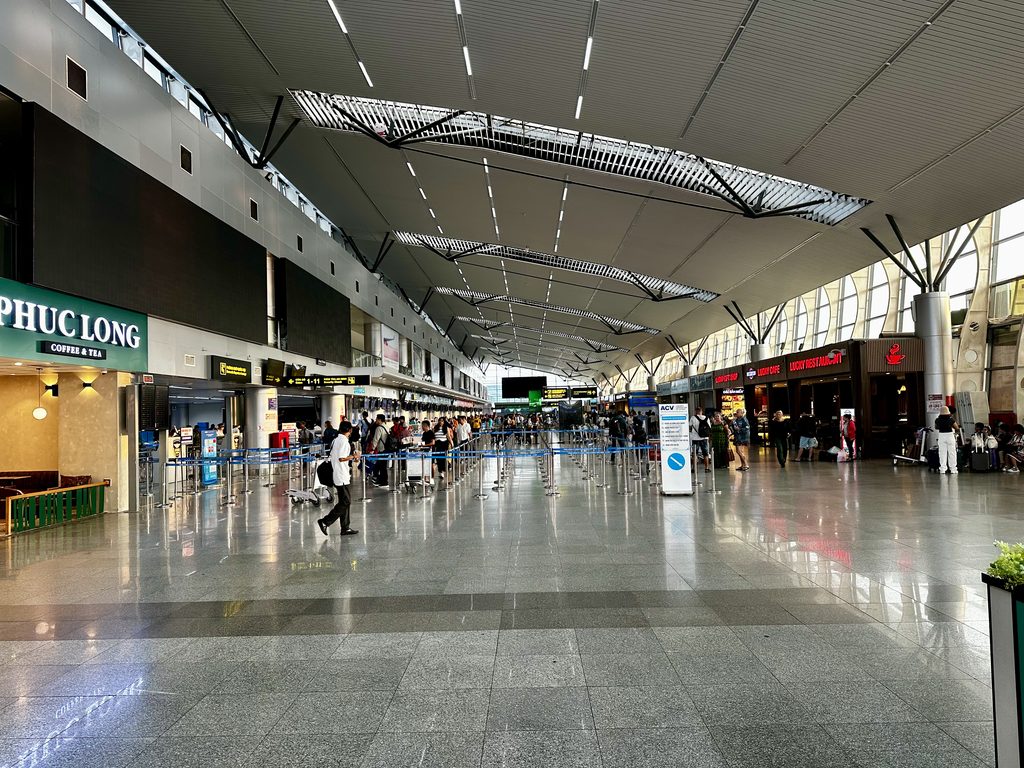
Getting around
Grab (car and bike) and the green Xanh SM electric taxis cover the whole city and show the fare in advance — use them from the airport rather than a street taxi. Scooters rent for 100,000 to 200,000 VND a day. Vietnam only recognises an international driving permit issued under the 1968 convention: US and Canadian permits are not valid, fines run into millions of dong, and travel insurance is usually void if you ride without the right licence. My page on getting around Vietnam covers the rest.
Da Nang to Hoi An and Hue
To Hoi An: the LK02 public bus, running since April 2024, takes 45 to 70 minutes; a Grab takes about 45 minutes; compare transfers on 12Go. To Hue: two and a half hours by road through the tunnel, three by the heritage train over the pass, or see the buses and trains to Hue on 12Go.
Best time to visit
February to May is the sweet spot: dry, warm and before the peak heat. June to August is very hot and bright, and the beach is at its busiest. From September to December the rains arrive — October is the wettest month, with around 650 mm — and the typhoon season runs through to early December. In late October 2025, typhoon rains brought serious flooding to Da Nang and the old Quang Nam area; if you travel in autumn, keep your plans flexible. The Vietnam trip planning guide has the month-by-month picture for the whole country.
Events
The Da Nang International Fireworks Festival (DIFF) takes over the Han River on Saturday nights in early summer — in 2026, from 30 May to 11 July. The 2027 dates have not been announced yet.
Beyond Da Nang: Hoi An, Hue and My Son
Hoi An, 30 km south, is the lantern-lit trading port that most people come to central Vietnam for — give it at least two nights. Hue, over the Hai Van Pass, is the imperial capital of the Nguyen dynasty. And My Son, about 70 km inland, is the Cham sanctuary whose sculptures you will have seen at the museum in Da Nang. If you are heading north afterwards, Hanoi is an hour’s flight away and Sapa a night’s train beyond it; heading south, Ho Chi Minh City is the same hour in the other direction.
Read More About Central Vietnam

Hoi An Travel Guide
The lantern town 45 minutes south of Da Nang: the old town ticket explained, where to eat cao lau, My Son and the flood season.
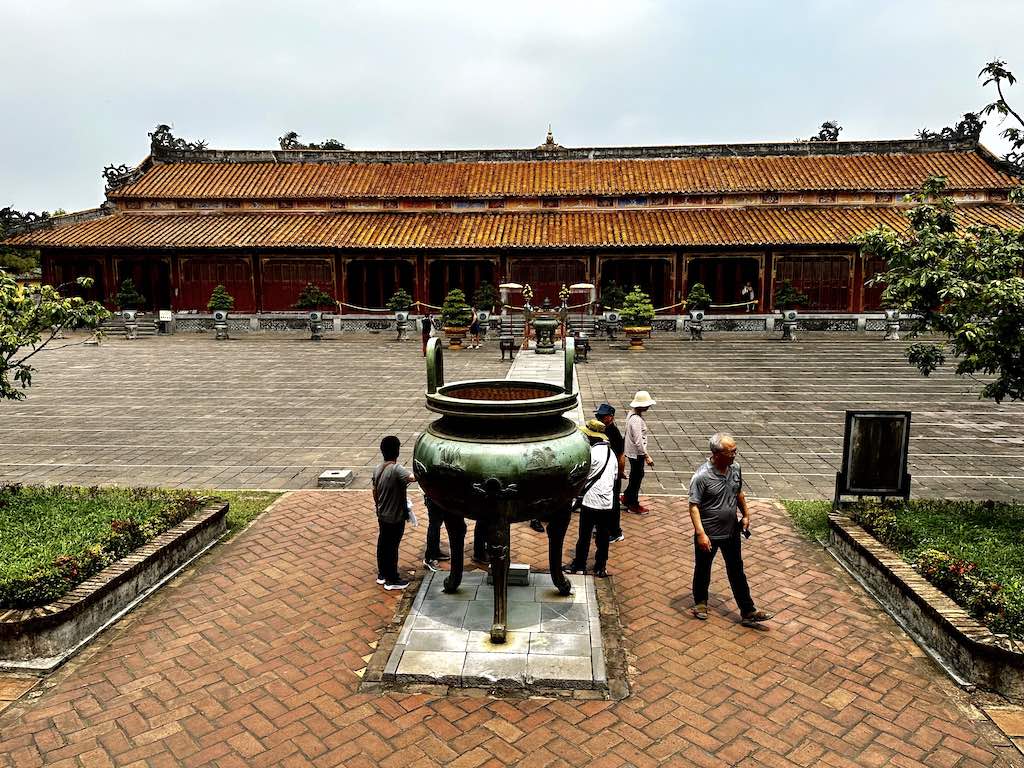
Hue, the Imperial City
Across the Hai Van Pass: the citadel of the Nguyen emperors, the royal tombs and the Perfume River.

Getting Around Vietnam
Trains, sleeper buses, domestic flights and scooters: how to move between Hanoi, Da Nang, Hoi An and Saigon.
Frequently Asked Questions About Da Nang
What time is the Dragon Bridge fire show in Da Nang?
At 9 PM on Friday, Saturday, Sunday and public holidays. The dragon breathes fire for about two minutes and then water for about three. It is free, and the best view is from the east bank near the dragon’s head.
How many days do you need in Da Nang?
Two full days for the city itself — My Khe, the Marble Mountains, Son Tra and the Dragon Bridge — and three or four if you add Ba Na Hills and the Hai Van Pass. Most people then continue to Hoi An for two nights.
Is Da Nang worth visiting or should I go straight to Hoi An?
It is worth at least two nights. Hoi An is a small heritage town; Da Nang has the beach, the mountains, the Hai Van Pass and the best food scene in central Vietnam, and it is only 45 minutes away.
How much is the Ba Na Hills ticket in 2026?
1,000,000 VND per adult for the cable car and entry, 800,000 VND for children between 1 and 1.4 metres, or 1,300,000 VND with the lunch buffet, according to Sun World’s official 2026 price list. A ticket can now be upgraded to cover three consecutive days.
Is Ba Na Hills worth it?
Yes, if you accept it for what it is: a theme park. The cable car ride and the Golden Bridge are genuinely spectacular; the French village is kitsch. Go at opening time to see the bridge before the crowds.
How much does it cost to visit the Marble Mountains?
40,000 VND for Thuy Son, 20,000 VND for the Am Phu cave, and 15,000 VND one way or 30,000 VND return for the lift. The site is open from 7 AM to 5:30 PM.
Can you ride a scooter to the Son Tra Peninsula?
Not on the forest roads. Automatic scooters are banned there, one route is restricted to bicycles, manual-gear motorbikes and walkers, and access hours are limited. The Linh Ung Pagoda and the Lady Buddha, on the coast road, are easy to reach by Grab.
Can you ride the Hai Van Pass by scooter?
Yes — motorbikes are not allowed in the tunnel, so the pass is theirs. You need an international driving permit under the 1968 convention. Ride in the morning, before the cloud comes in.
When is the best time to visit Da Nang?
February to May, when it is dry and warm. June to August is very hot. September to December brings heavy rain and the risk of typhoons, with October the wettest month.
Is it safe to swim at My Khe Beach?
Yes, between the flags during the lifeguard season (15 March to 30 September, 4:30 AM to 7 PM). From September to March rip currents are common; if the red flag is up, do not swim.
How do I get from Da Nang to Hoi An?
By Grab in about 45 minutes, by the LK02 public bus in 45 to 70 minutes, or by a pre-booked private transfer. Hoi An has been part of Da Nang City since July 2025.
Is Hoi An now part of Da Nang?
Yes. On 1 July 2025, Quang Nam province was merged into Da Nang City, so Hoi An and the My Son sanctuary are now administratively part of Da Nang.