Greece Travel Guide: Where to Go, from Athens to the Islands
By Blaise Jaeger · Updated October 23, 2026
Greece is two countries in one: the mainland, with Athens and the great sites of antiquity, and some 200 inhabited islands scattered across the Aegean and Ionian seas, from the white villages of the Cyclades to green Corfu. Most trips combine the two, a few days of history in Athens and then a week or more on an island.
Greece has been part of my life since childhood. I was about nine on my first trip, hosted by a Greek family in Corinth, and that is when I first saw Mycenae and Delphi. I later studied Ancient Greek at school, spent summers island hopping in the Cyclades, went back to Mykonos almost every year for more than ten years, and eventually built a house in Corfu, where I now spend time every year. This guide brings together what I learned on all those trips, with links to my detailed guide to Athens.
Greece at a Glance
- Capital: Athens, with the main international airport. Many islands, including Mykonos, Santorini, Crete and Corfu, also have airports with direct flights from Europe in summer.
- Currency: the euro. Cards are widely accepted, but carry some cash for small tavernas and villages.
- Entry: Greece is in the Schengen area.
- Two seas, two styles: the Cyclades in the Aegean are dry, windy and whitewashed; Corfu and the Ionian islands, to the west, are green and wooded, with a strong Venetian heritage.
- Getting around: ferries between the islands, domestic flights, long-distance buses and a car for the mainland and the larger islands.
- Best time: May, June and September; July and August are hot and crowded, especially on the islands.
My Trips in Greece
My first memories of Greece are archaeological: at about nine, staying with a Greek family in Corinth, I visited Mycenae and Delphi. At around thirteen, I travelled with my mother to Mykonos, Delos and Crete, and at fifteen I went back to the Peloponnese with friends from my high school, especially to Messenia, in the south-west.
In 1984, I went back with friends for several weeks of island hopping in the Cyclades, mostly Paros, Sifnos and Syros, before heading north to Lesbos and on to Turkey. I returned to Mykonos with other friends at the end of the 1990s, and then almost every year from 2005 to 2015, usually at the Hotel Rochari, where it was the custom to book your room for the following summer at the end of each stay.
Since then, I have mostly spent my summers in Corfu, in my own house, which has let me explore the island far from the usual routes. Along the way I have also visited Olympia, Epidaurus, Nafplio and the monasteries of Meteora, and I keep coming back to Athens: in 2013, 2015, 2023, and most recently for two nights in April 2026.

Best Places to Visit in Greece
Athens: Where Every Trip Begins
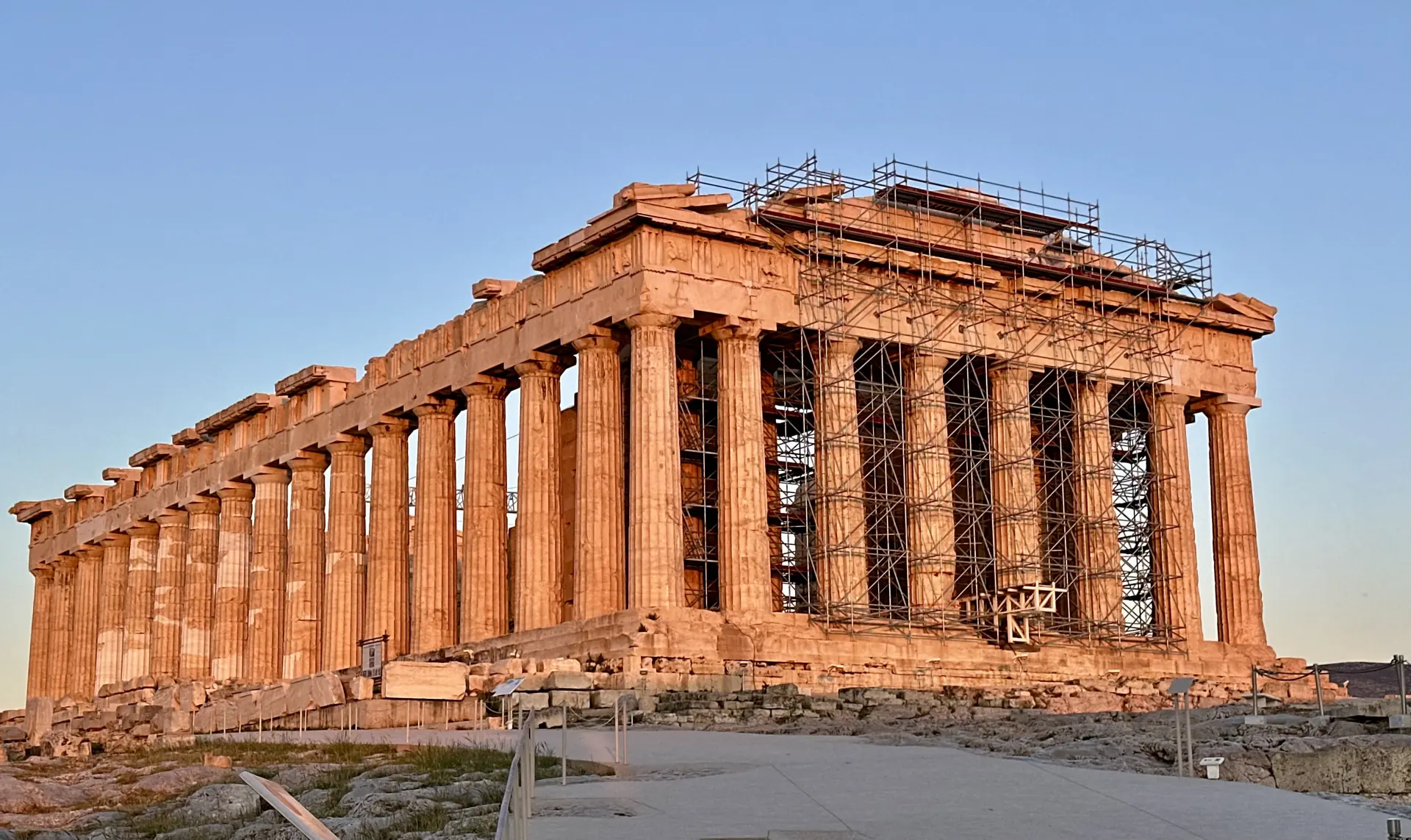
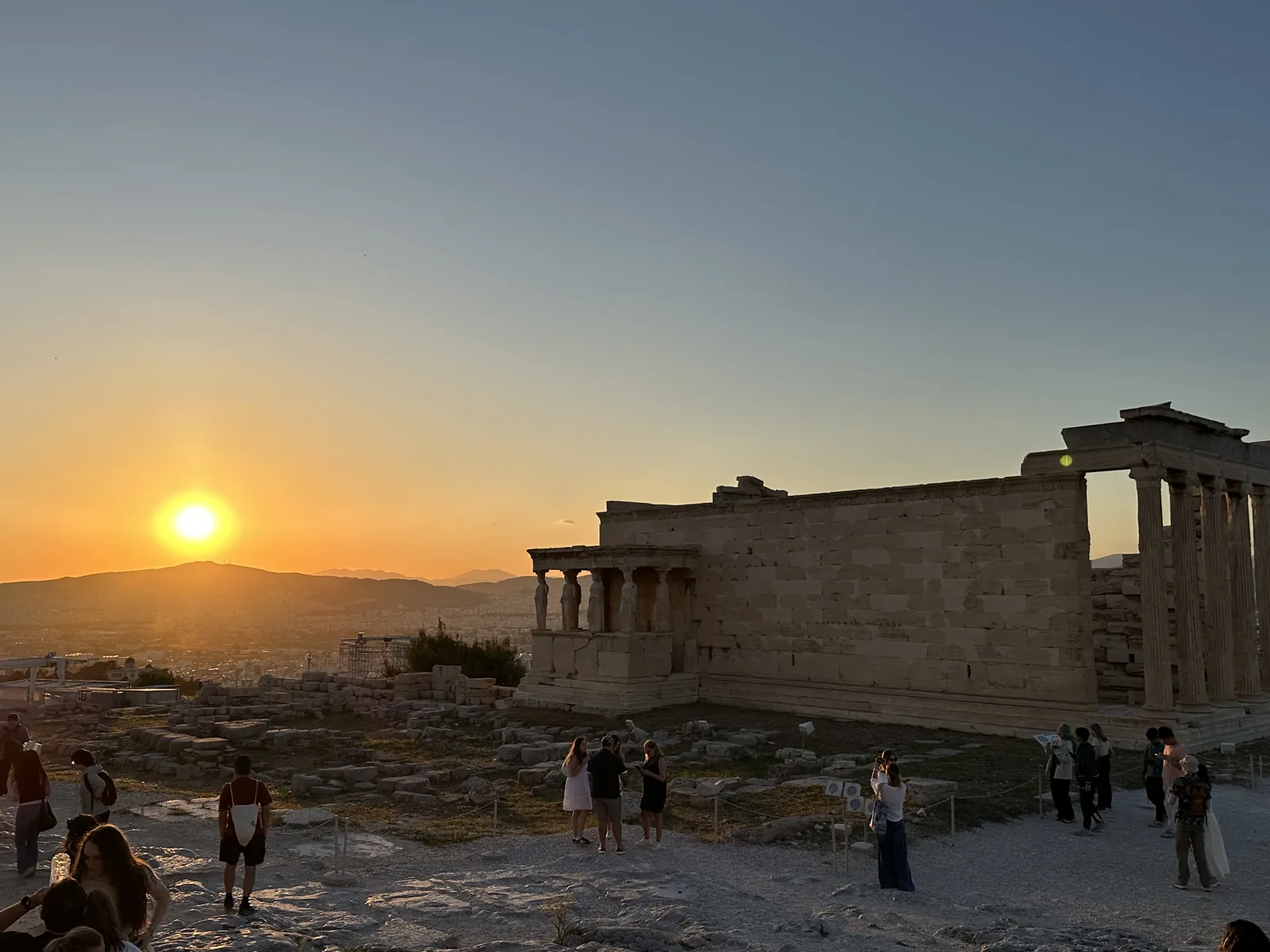
Most trips to Greece start or end in Athens, and it deserves at least two days. Having studied Ancient Greek, I always feel something special there, the impression of walking in the footsteps of Plato. The Acropolis and the Parthenon come first, ideally in the late afternoon; then the Acropolis Museum, the National Archaeological Museum, the old districts of Plaka, Anafiotika and Monastiraki, and the views from Philopappos Hill and Lycabettus. On my last stay, in April 2026, I went up the Acropolis twice, once in the afternoon and once at sunset on another day. Everything is in my Athens travel guide.
Mykonos and the Cyclades
I first saw Mykonos as a teenager with my mother, and it later became my summer island for more than ten years. Its whitewashed town, Little Venice with its houses on the water, the windmills above the harbour and the beaches along the south coast, such as Paradise Beach, make it the liveliest island in the Cyclades, and the busiest in August. From the old harbour, small boats take you to Delos, the sacred island of Apollo and one of the most important archaeological sites in Greece: I went there first with my mother, and several times since.
Over the years, Mykonos has also become very expensive. For a good balance between atmosphere and budget, Paros now seems to me an excellent alternative. If you stay on Mykonos, I can only speak for the place where I spent most summers, the Hotel Rochari, in Mykonos Town: you can check prices for the Hotel Rochari on Booking.com.

The other Cyclades are quieter, and each has its own character. I have been to Paros several times, and also to Naxos, with its sandy beaches, Sifnos, Syros and the tiny Koufonisia, with their turquoise coves. Island hopping between them by ferry is the best way to see how different they are. Santorini, with its volcanic caldera, is the most famous and the most crowded.

Corfu and the Ionian Islands
Corfu is the island I know best, since I have a house there and go every year. It looks nothing like the Cyclades: olive groves and cypresses down to the sea, a Venetian old town listed by UNESCO, the Achilleion palace, Mount Pantokrator, and coves of clear water along the north and west coasts, such as Paleokastritsa. My Corfu travel guide covers Corfu Town, the best beaches, villages like Kassiopi and Old Perithia, what to do, how to get there and where to stay.


The Peloponnese and Delphi
The great sites of antiquity are on the mainland, within a few hours of Athens. In the Peloponnese, Mycenae with its Lion Gate, the theatre of Epidaurus with its famous acoustics, Olympia, birthplace of the Olympic Games, the Venetian port of Nafplio and the wild Mani peninsula make a classic road trip, in a region far less touristy than the islands. North of the Gulf of Corinth, Delphi and its sanctuary of Apollo sit on the slopes of Mount Parnassus. I discovered several of them as a child and as a teenager, and they remain among my strongest memories of Greece.
Crete, Lesbos and Meteora
Greece goes well beyond these classics. Crete, the largest island, which I discovered with my mother, has enough to fill a trip on its own. Lesbos, in the north-east Aegean, is close to the Turkish coast. On the mainland, the monasteries of Meteora, perched on rock pillars in Thessaly, are one of the most striking sights in the country: I saw them when I was young, and I have never forgotten them.
Where to Go in Greece Depending on Your Travel Style
- As a couple: Santorini for its sunsets, Paleokastritsa in Corfu for its turquoise coves.
- With family: Corfu for its beaches, nature and villas; Crete for the variety of things to do.
- To party: Mykonos and its beach clubs; Kavos, in the south of Corfu.
- For culture: Athens and its museums, Delphi, and the sites of the Peloponnese.
- For nature: the Peloponnese, Meteora and green Corfu.
- For beaches: the Cyclades, Crete and the coves of Corfu.
Greece Itinerary Ideas
- 7 days: two or three days in Athens, then four days on one island, such as Mykonos, Paros or Naxos. Ideal for a first trip.
- 10 days: two or three days in Athens, then a week in the Cyclades, combining two islands, for example Paros and Naxos.
- 14 days: Athens, four or five days in the Cyclades, then four or five days on the mainland (the Peloponnese) or in Corfu.
My advice: rather than multiplying stops, choose fewer places and give each of them time. In Greece, ferries and transfers quickly eat into a holiday.
Best Time to Visit Greece
- May and June: my favourite season, warm enough to swim, with flowers in the countryside and before the summer crowds.
- July and August: peak season on the islands, hot and busy, with the strongest wind in the Cyclades, the meltemi.
- September and October: warm sea, lower prices, fewer people and golden light on the white villages.
- Winter: many island hotels close, but it is a good time for Athens, Thessaloniki and the archaeological sites.

Getting Around Greece
- Ferries: they link Piraeus and Rafina, near Athens, to the Cyclades, and the islands to one another. Book ahead in summer.
- Flights: domestic flights from Athens save time for Crete, Rhodes, Corfu or Mykonos.
- Buses: the long-distance KTEL buses are reliable on the mainland.
- Car: the best way to explore the Peloponnese, Delphi, Meteora, Crete or Corfu freely.
- In Athens: the metro links the airport, the centre and the port of Piraeus.
Where to Stay in Greece
- Athens, for culture: Plaka, Monastiraki or Koukaki, close to the Acropolis. I stayed at Ciel Suites Athens, a few steps from Monastiraki, with a rooftop facing the Acropolis.
- The Cyclades, for beaches: in or near the main town of the island, to go out on foot in the evening. In Mykonos, I stayed for years at the Hotel Rochari.
- Corfu, for nature: villas with a pool in the north of the island for quiet, Corfu Town for culture.
- Elsewhere: compare hotels in Greece on Booking.com.
The best option is often to combine Athens with an island, to enjoy both culture and beaches.
Greece Travel Tips
- Archaeological sites: the Acropolis and the main sites now use timed tickets booked online; go early or late in the day in summer.
- What to pack: comfortable shoes for the sites and the cobbled villages, light clothes, a hat and sunscreen, something a little smarter for the evening, and a swimsuit almost all year round.
- Tavernas: meals are late, around 9 PM in summer; order a few dishes to share.
- A few words of Greek: “Kalimera” (good morning) and “Efcharistó” (thank you) are always appreciated.
FAQ: Travelling to Greece
What is the best time to visit Greece?
May, June, September and October are the best months: warm weather, a swimmable sea and fewer visitors than in July and August.
How many days do you need in Greece?
Plan at least a week: two or three days in Athens, then four or five days on one island. With ten days to two weeks, you can add a second island, the Peloponnese or Corfu.
Which Greek island should you choose?
Mykonos for lively towns and nightlife, Paros or Naxos for a more relaxed Cyclades island, Santorini for a romantic stay, Corfu for green landscapes and Venetian heritage, Crete for variety and a longer stay.
Is Athens worth visiting?
Yes. The Acropolis, the Acropolis Museum and the National Archaeological Museum alone justify two days.
Do you need a car in Greece?
Not in Athens or on small islands, but a car is very useful for the Peloponnese, Delphi, Meteora, Crete and Corfu.
Conclusion
From Athens and the Acropolis to the islands of the Cyclades and green Corfu, Greece rewards every kind of traveller, and every return trip. Take your time, choose a few places rather than many, and see all my destinations in Europe. Kalo taxidi!