Day Trips from Lisbon: Sintra, Cascais, Caparica and the Coast
By Blaise Jaeger · Updated October 25, 2026
Why Explore Around Lisbon?
Lisbon is one of the few capitals in Europe where you can be on a wild Atlantic beach, in a forest of romantic palaces or at the westernmost point of the continent less than an hour after leaving your hotel. I lived in Lisbon for close to ten years, renovating apartments, and the coast around the city was where I went on weekends, alone, with friends or with family visiting. This page gathers the places I went back to again and again, with my own photos. For the city itself, see my Lisbon travel guide, and for the rest of the country my Portugal travel guide.
Around Lisbon at a Glance
- North-west, by car or train: Sintra, Cabo da Roca, Azenhas do Mar and the Praia da Adraga.
- West, by train from Cais do Sodré: Estoril and Cascais, with their beaches and seaside promenade.
- On the way to Sintra: the Palace of Queluz.
- Across the Tagus, by ferry: Cristo Rei, Cacilhas and Trafaria.
- South, the beaches: the Costa da Caparica by ferry and bus; Meco and the Praia das Bicas by car.
- Further south, by car: Comporta and the coast of Melides.
Sintra
Sintra is the most famous day trip from Lisbon, and rightly so: a granite hill covered in forest, often wrapped in mist, with palaces, castles and villas scattered through it. The whole Sintra cultural landscape has been a UNESCO World Heritage site since 1995. I always went by car; the train from Rossio station takes about 40 minutes, but the town is spread out and steep, so plan to walk a lot or take the local bus between the sights.
The Pena Palace
Perched on the highest peak of the hill, the Pena Palace is the postcard of Sintra: a 19th-century romantic fantasy in red and yellow, mixing every style imaginable, built for King Ferdinand II. Its terraces look out over the forest to the Atlantic on a clear day.

The Moorish Castle
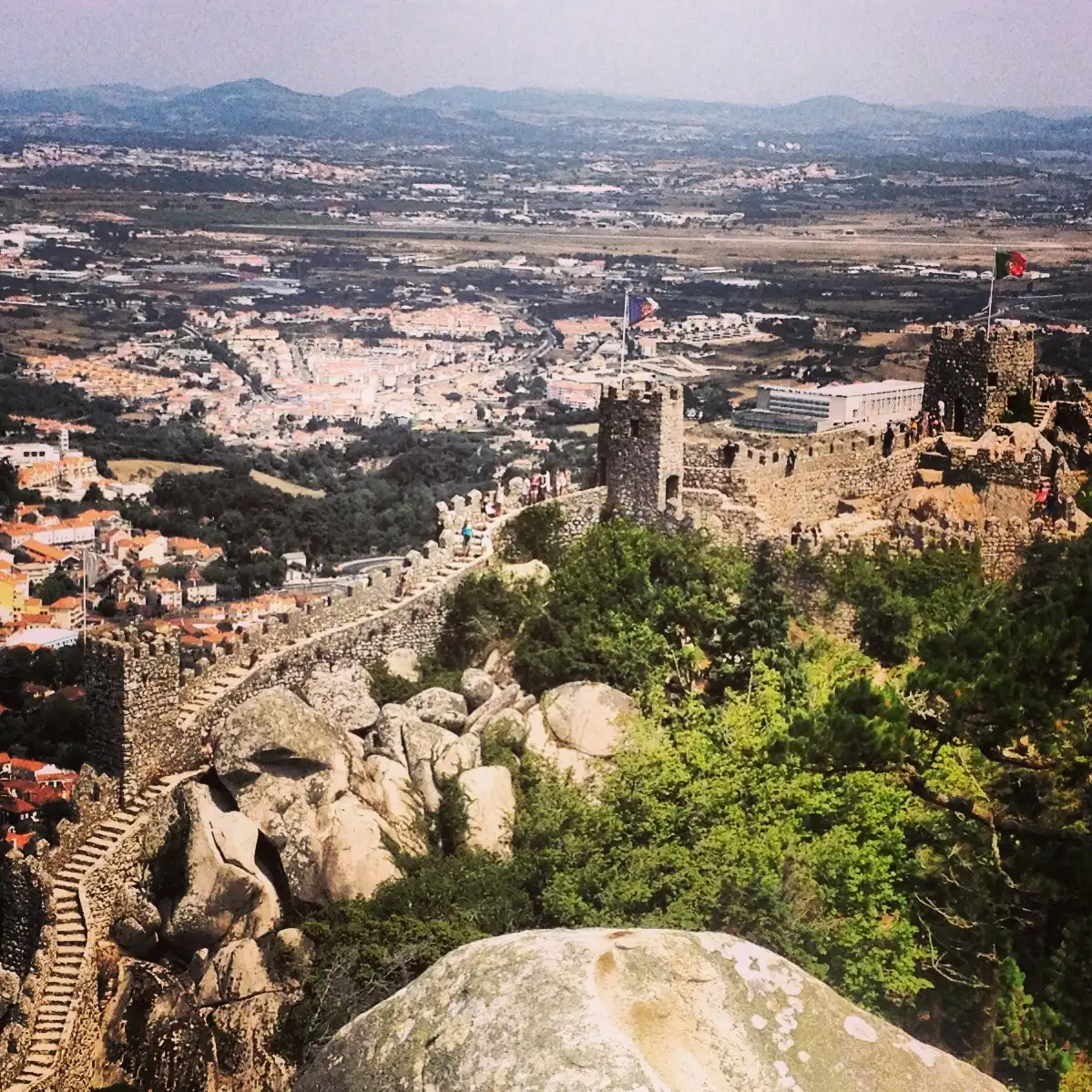
On the next ridge, the walls of the Moorish Castle run along the rocks above the town. Climbing them is my favorite moment in Sintra: from the battlements you see the whole town, the plain down to Lisbon and the ocean.
Go early, especially in summer and at weekends, and buy your tickets for the palaces online in advance: the queues and the traffic on the narrow roads up the hill can be long.
Cabo da Roca, Azenhas do Mar and the Praia da Adraga
Cabo da Roca
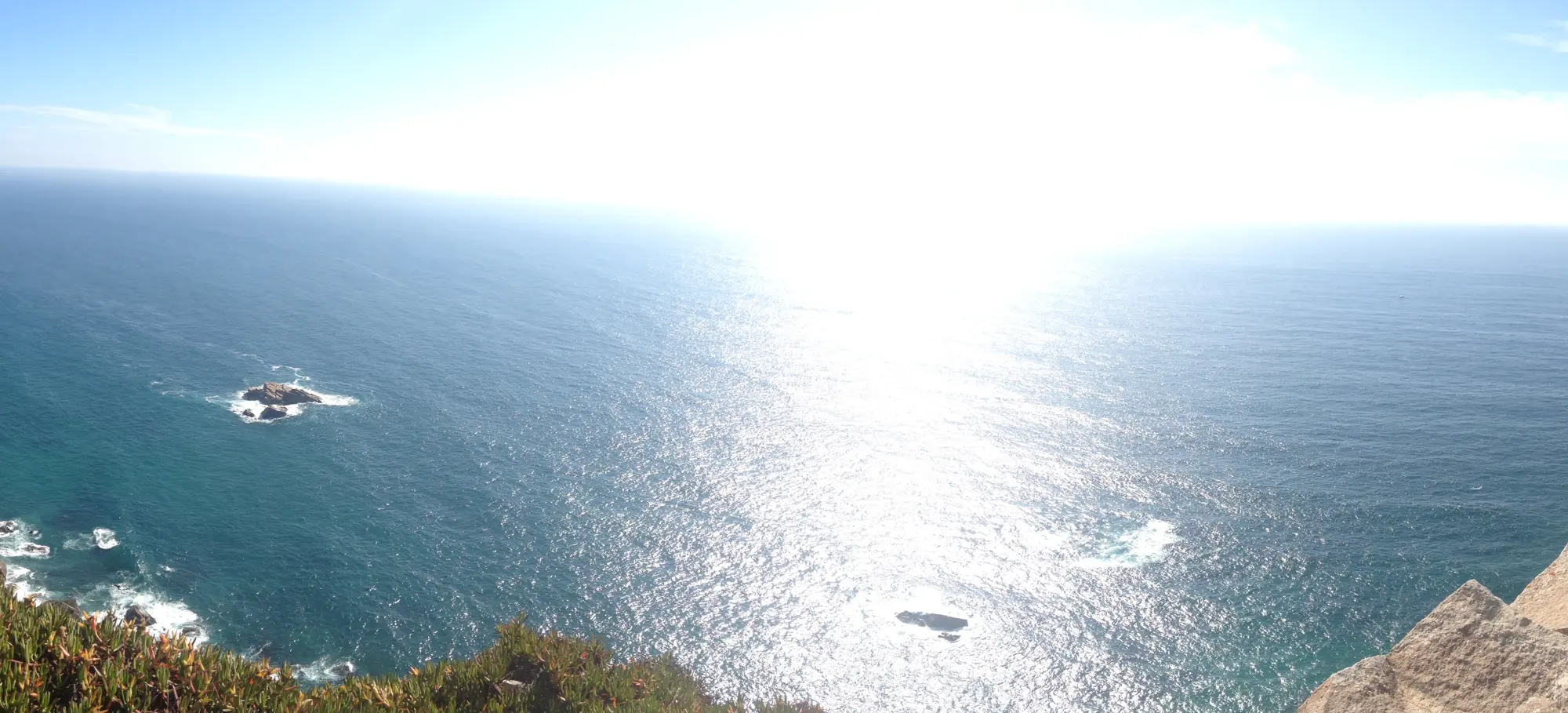
From Sintra, the road winds down through the hills to Cabo da Roca, the westernmost point of mainland Europe. There is little there except a lighthouse, a monument quoting the poet Camões, “where the land ends and the sea begins”, and the cliffs falling 140 meters into the Atlantic. That is exactly why it is worth it. The wind can be fierce, even in summer.
Azenhas do Mar
A few kilometers north, Azenhas do Mar is one of the most photographed villages in Portugal: white houses with red roofs piled on a cliff above a small beach and a natural seawater pool. In June 2020 I had lunch there on a terrace above the beach with my cousin Véronique and her son Raphaël, and it is still one of my best memories of the coast.


The Praia da Adraga
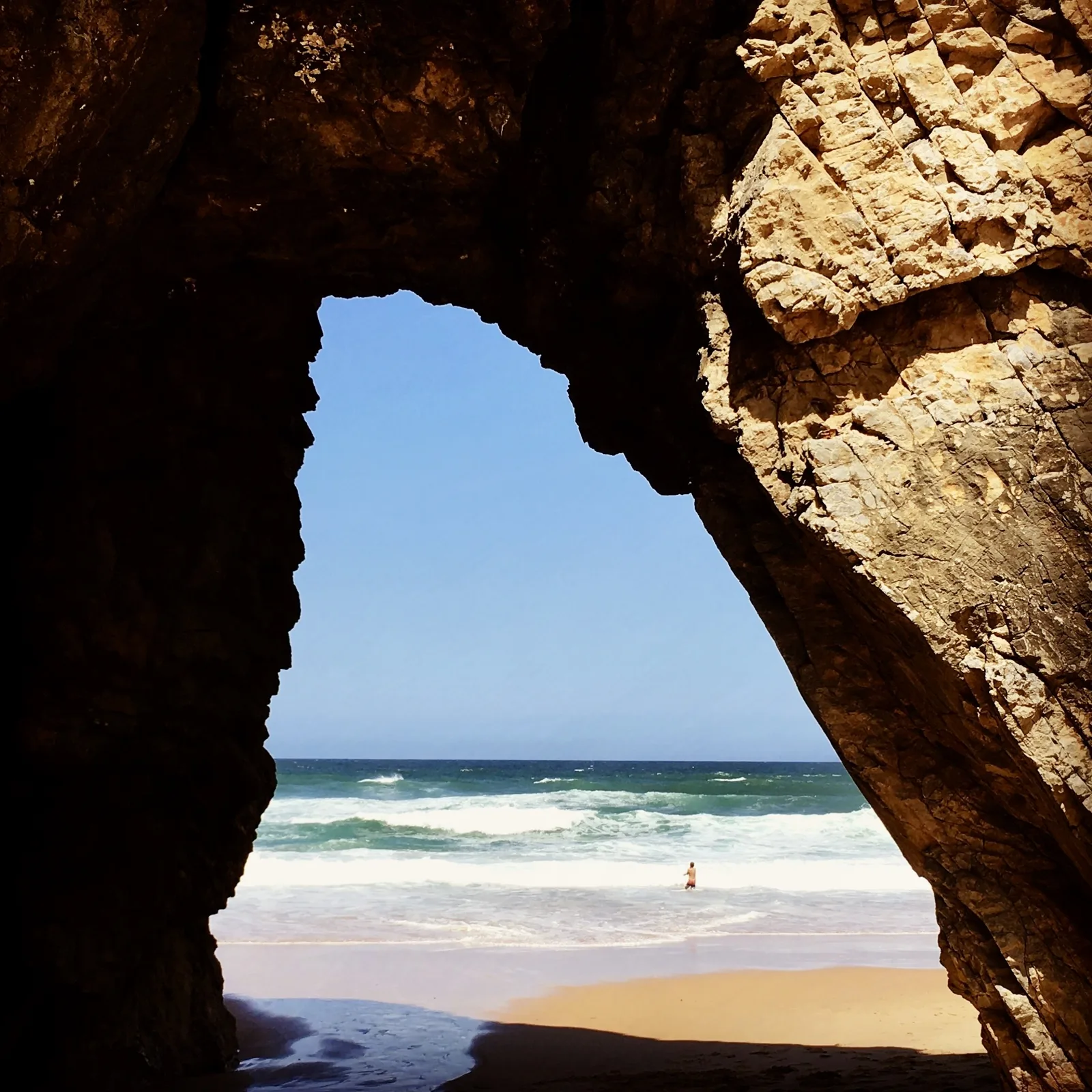
Between Azenhas do Mar and Cabo da Roca, the Praia da Adraga is a wild beach at the foot of dark cliffs, with rock arches and caves carved into the cliffs. Be careful with the currents: this is the open Atlantic.
Estoril and Cascais
Estoril and Cascais are the easiest escape from Lisbon: I usually took the train from Cais do Sodré, which follows the river and then the coast, and reaches Cascais in about 40 minutes. A seaside promenade links Estoril to Cascais along the beaches, perfect for a walk before lunch.
The Praia do Tamariz
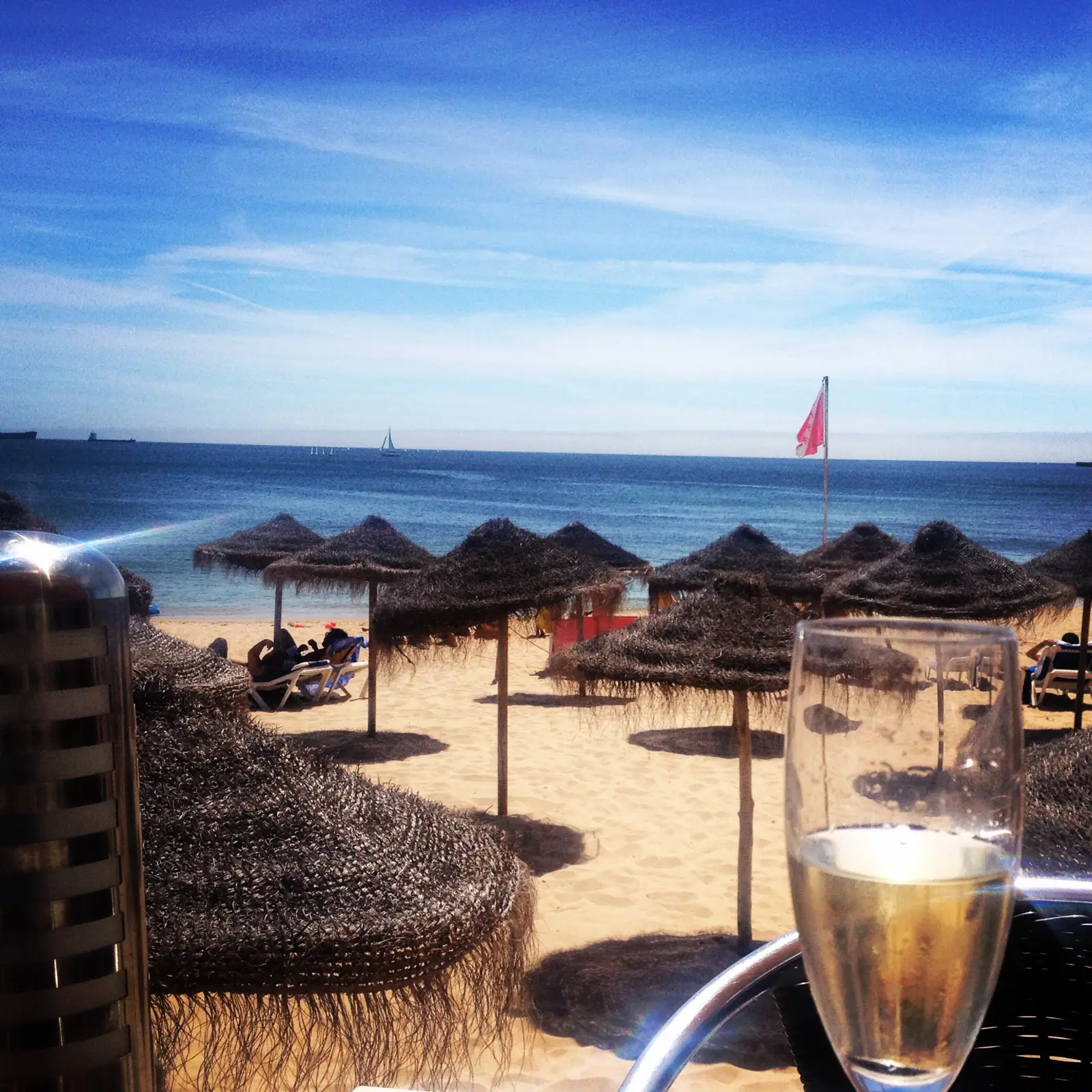
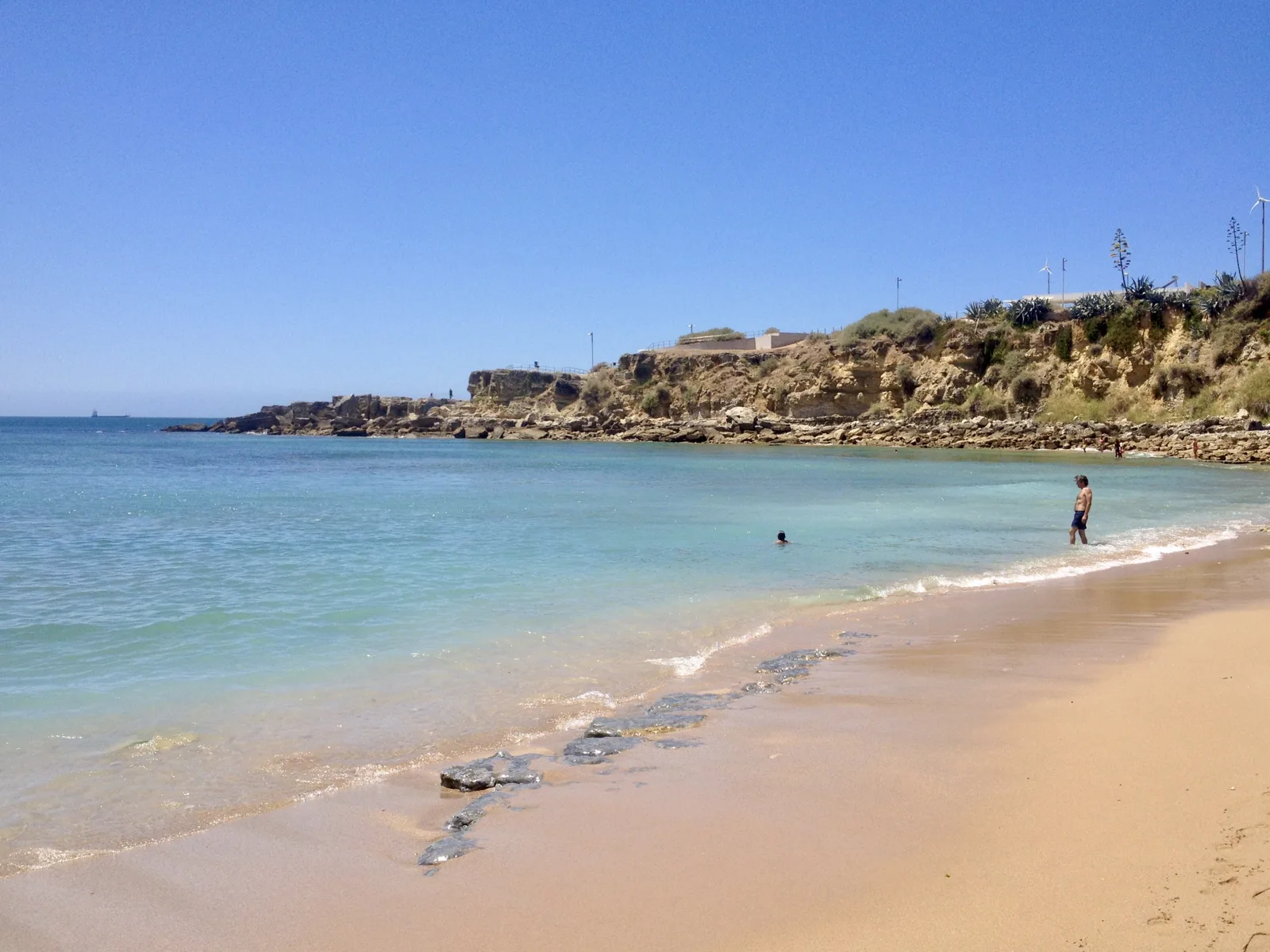
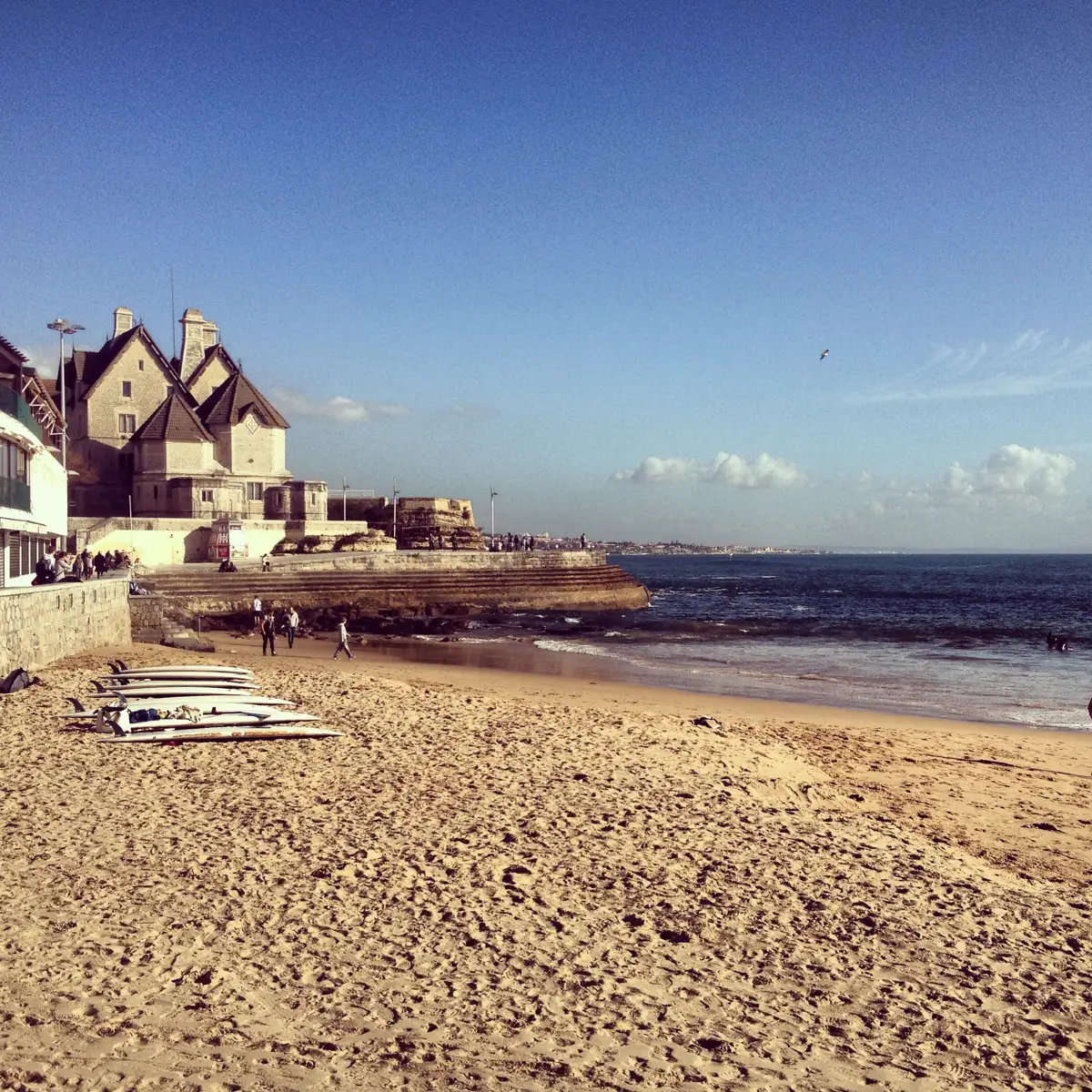
In Estoril, the Praia do Tamariz, right next to the station, was my favorite: a beach of golden sand in a sheltered bay, overlooked by a castle-like villa. I loved having lunch on the beach at the Praia do Tamariz restaurant, where the sea bass baked in a salt crust was excellent. Beach restaurants here change hands often, so check it is open before you go.
Cascais
At the end of the line, Cascais is a former fishing village that became the resort of the Portuguese royal family and aristocracy at the end of the 19th century. Its old town, its small beaches in the middle of town and its marina make it a lovely place to end the day, before taking the train back to Lisbon at sunset.
The Palace of Queluz
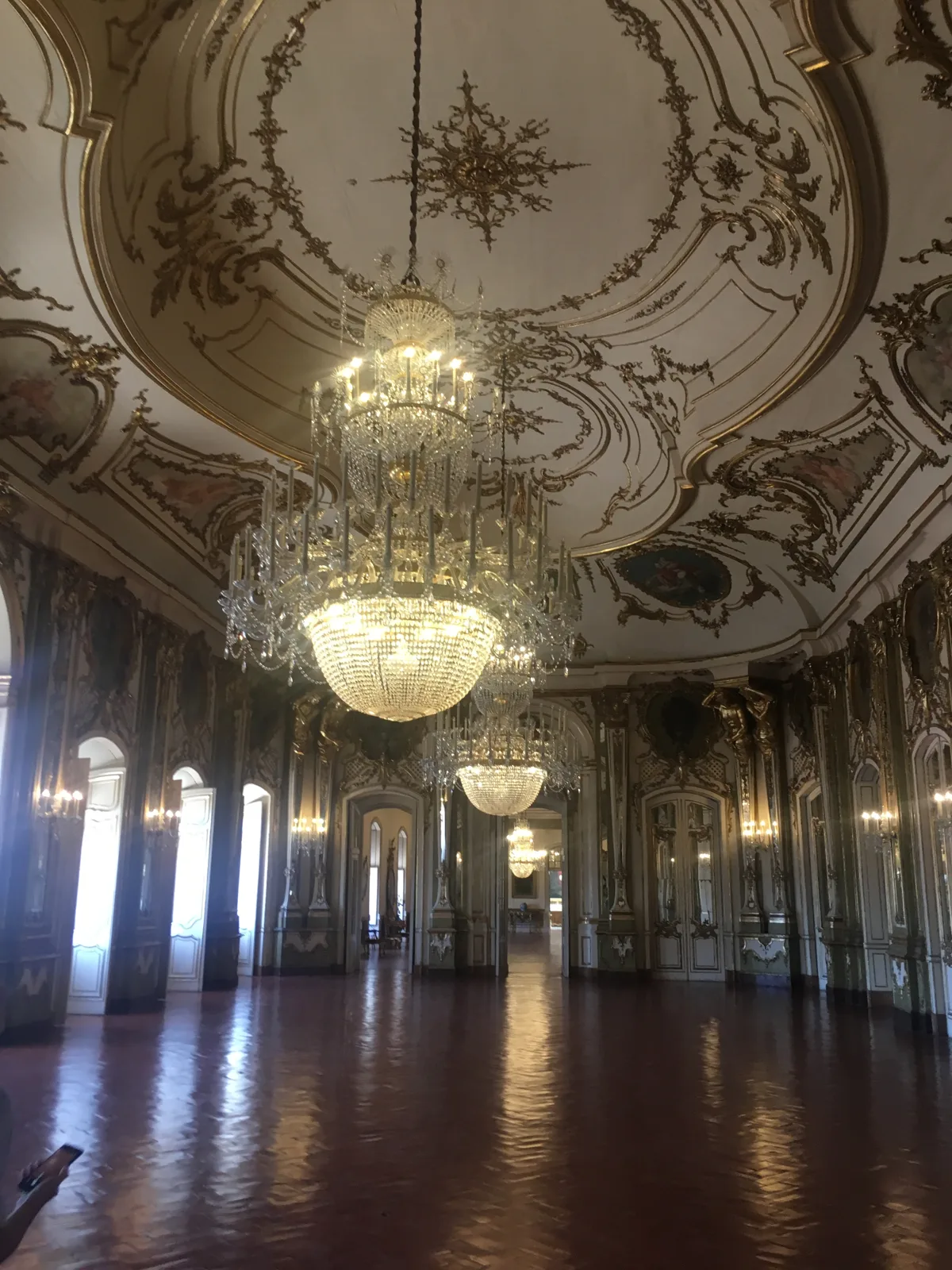
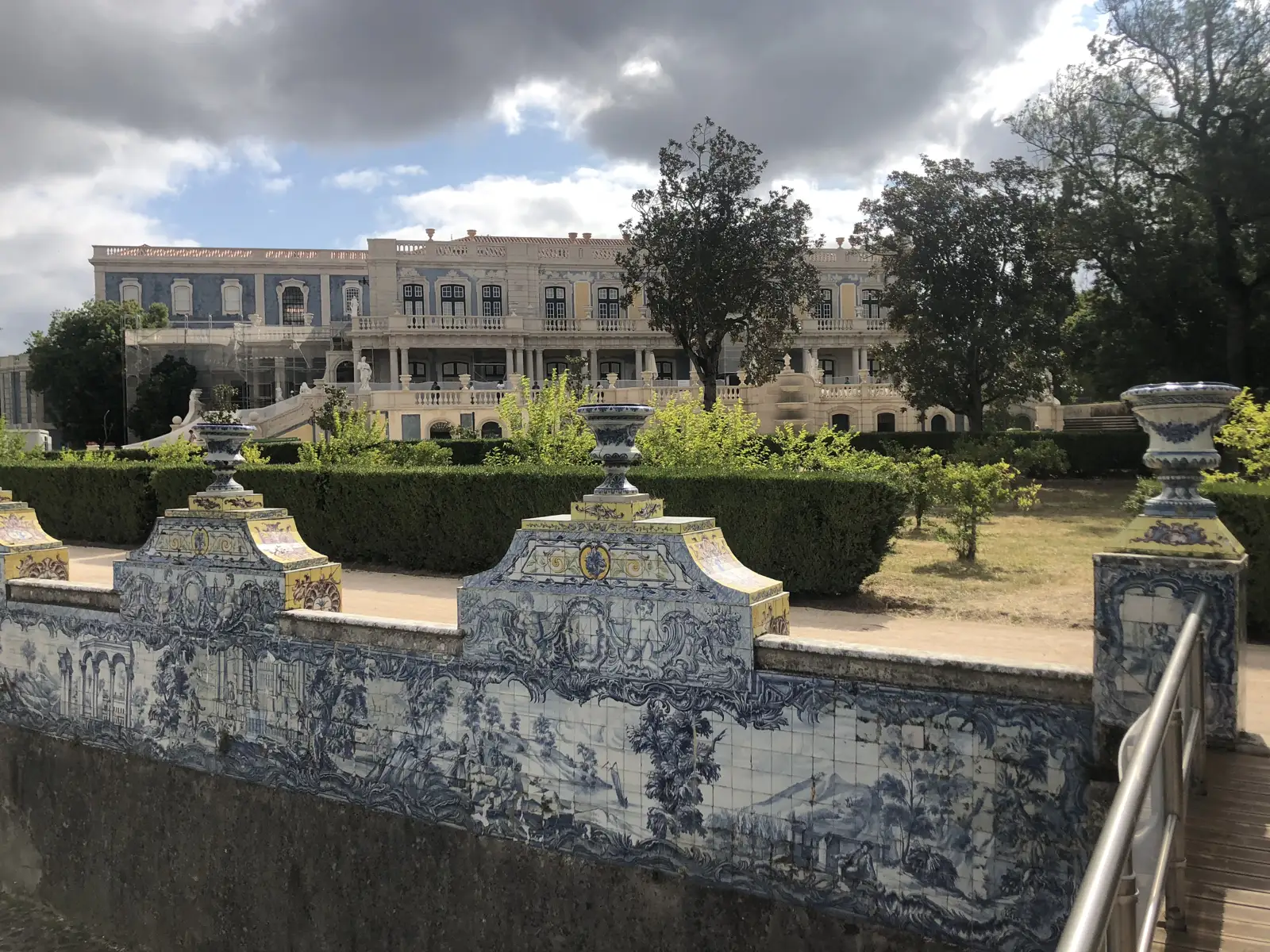
Only 15 kilometers from Lisbon, on the way to Sintra, the National Palace of Queluz is often skipped, and that is a mistake. This 18th-century royal summer residence, nicknamed the Portuguese Versailles, has sumptuous rococo halls with gilded mirrors and crystal chandeliers, and formal gardens with fountains and statues. My favorite detail is the canal lined with blue and white azulejos, where the royal family used to go boating. I took friends visiting Lisbon there three times, and every time they loved it.

Across the Tagus: Cristo Rei, Cacilhas and Trafaria
Cristo Rei and Cacilhas
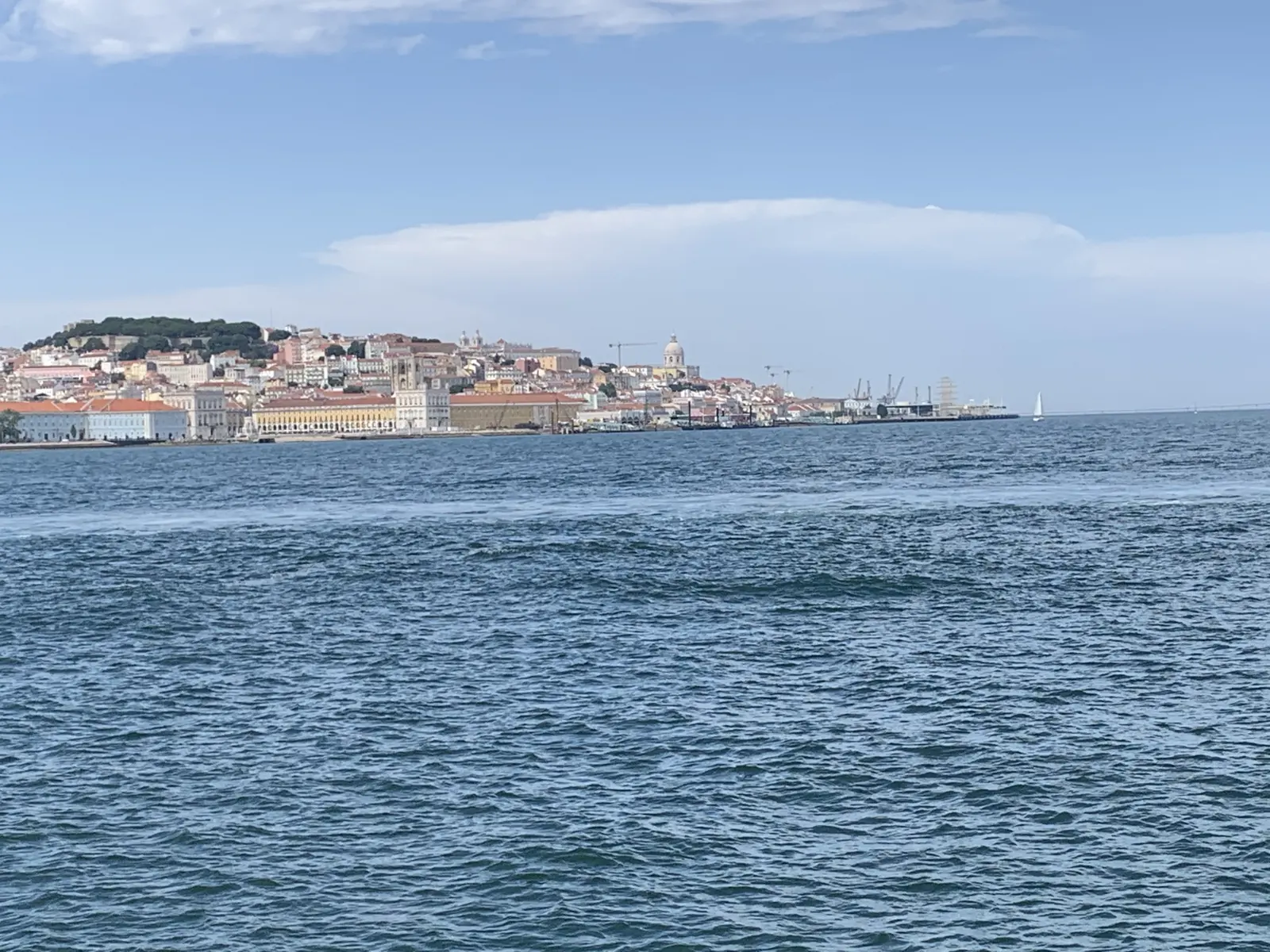
The cheapest and most beautiful cruise in Lisbon is the ferry from Cais do Sodré to Cacilhas: about ten minutes on the Tagus, with the whole city spread out behind you. From Cacilhas, a bus or a taxi takes you up to the Sanctuary of Cristo Rei, the statue of Christ with open arms that faces Lisbon from the south bank. Inaugurated in 1959, it stands 110 meters high including its base, and an elevator takes you up to a terrace at 82 meters, with a breathtaking view of the 25 de Abril bridge and the city.

Trafaria
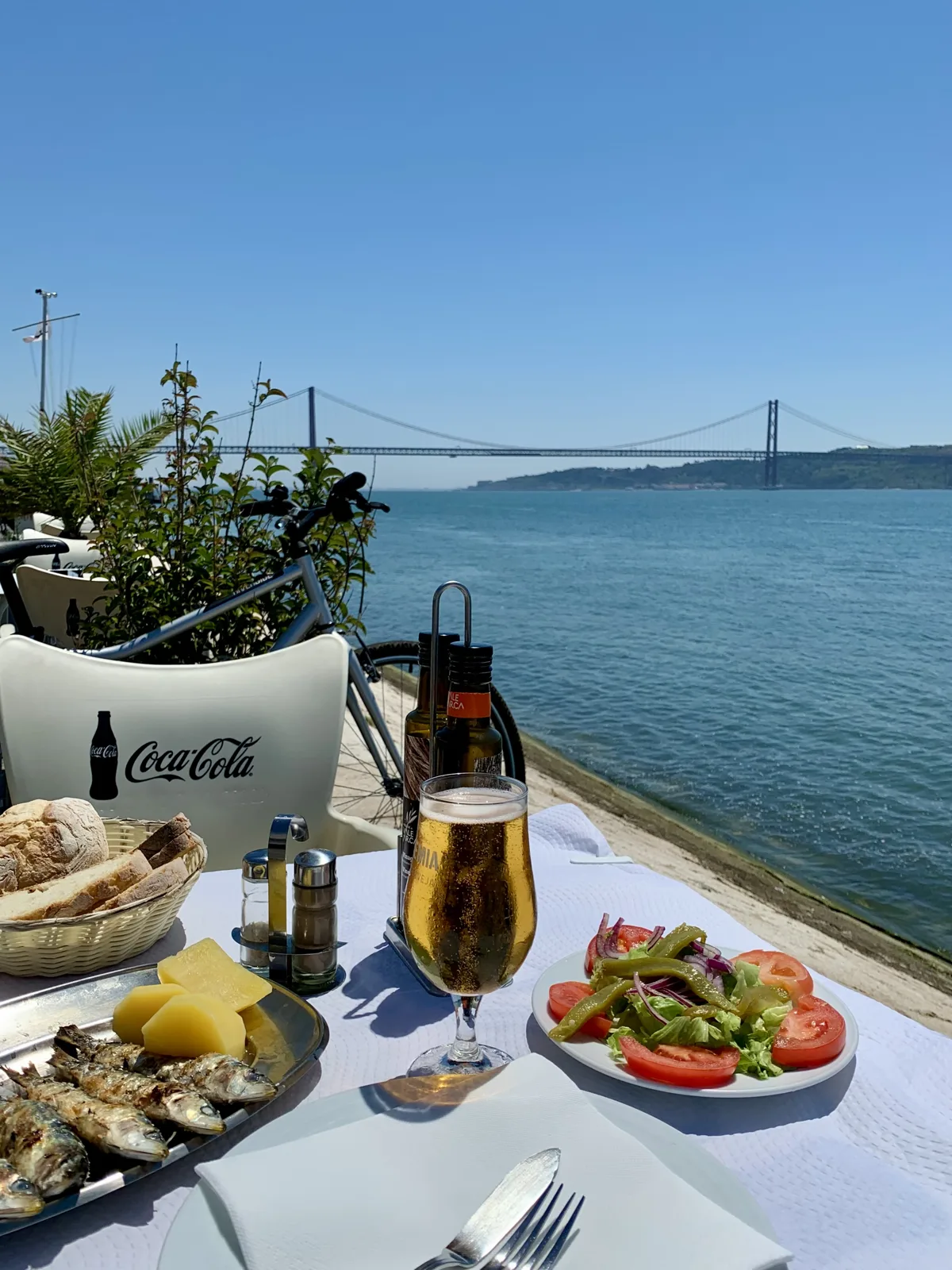
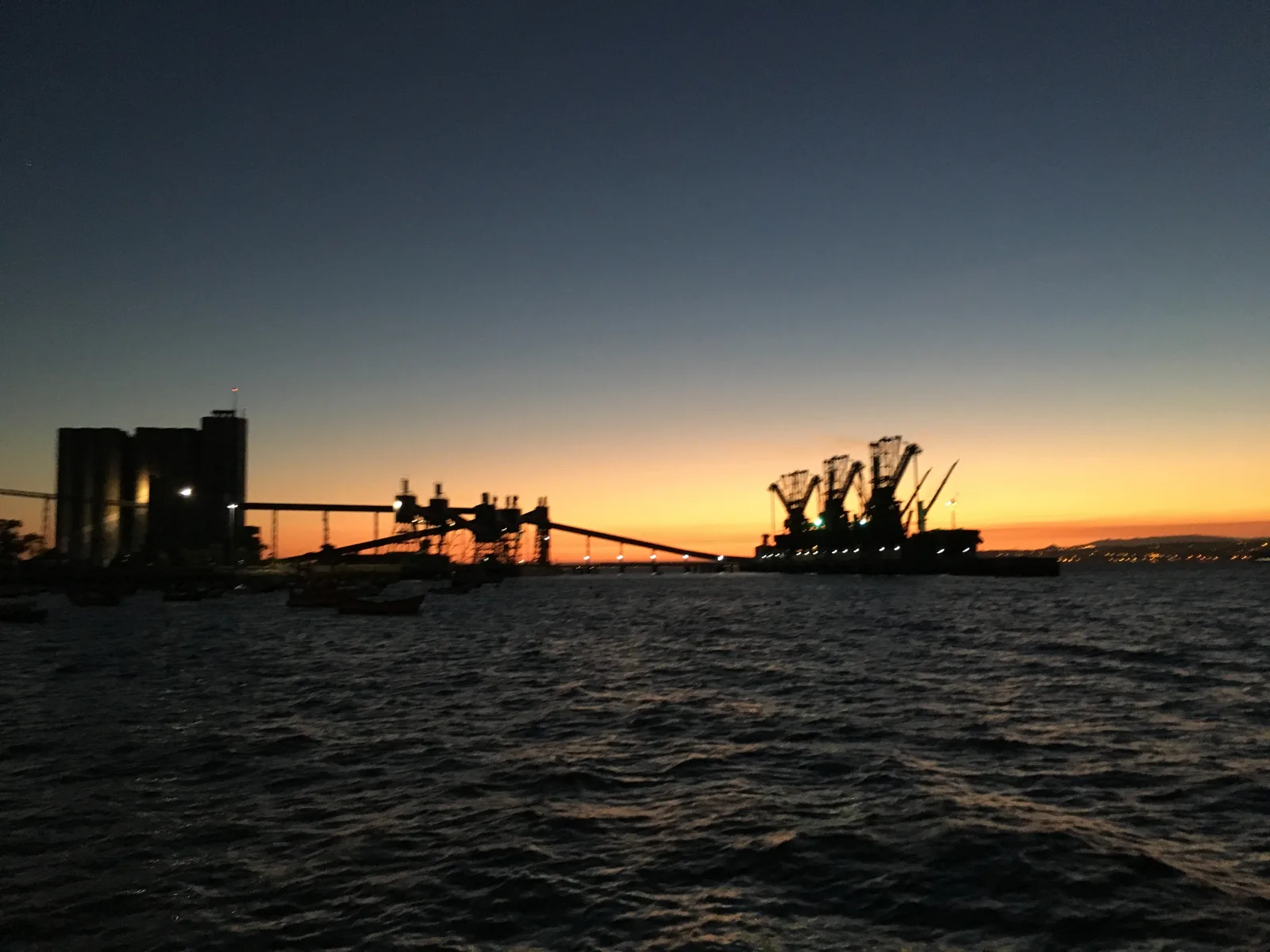
Further west, another ferry crosses from Belém to Trafaria and Porto Brandão, small riverside villages facing Lisbon; since July 2026 it also stops at Algés. Before taking it one day in July 2020, I had lunch at the Terraço de Belém, on the riverside next to the nautical center, with a view of the 25 de Abril bridge. In Trafaria, stay for the sunset: the sun goes down over the mouth of the Tagus behind the silhouettes of the port’s silos.

The Costa da Caparica
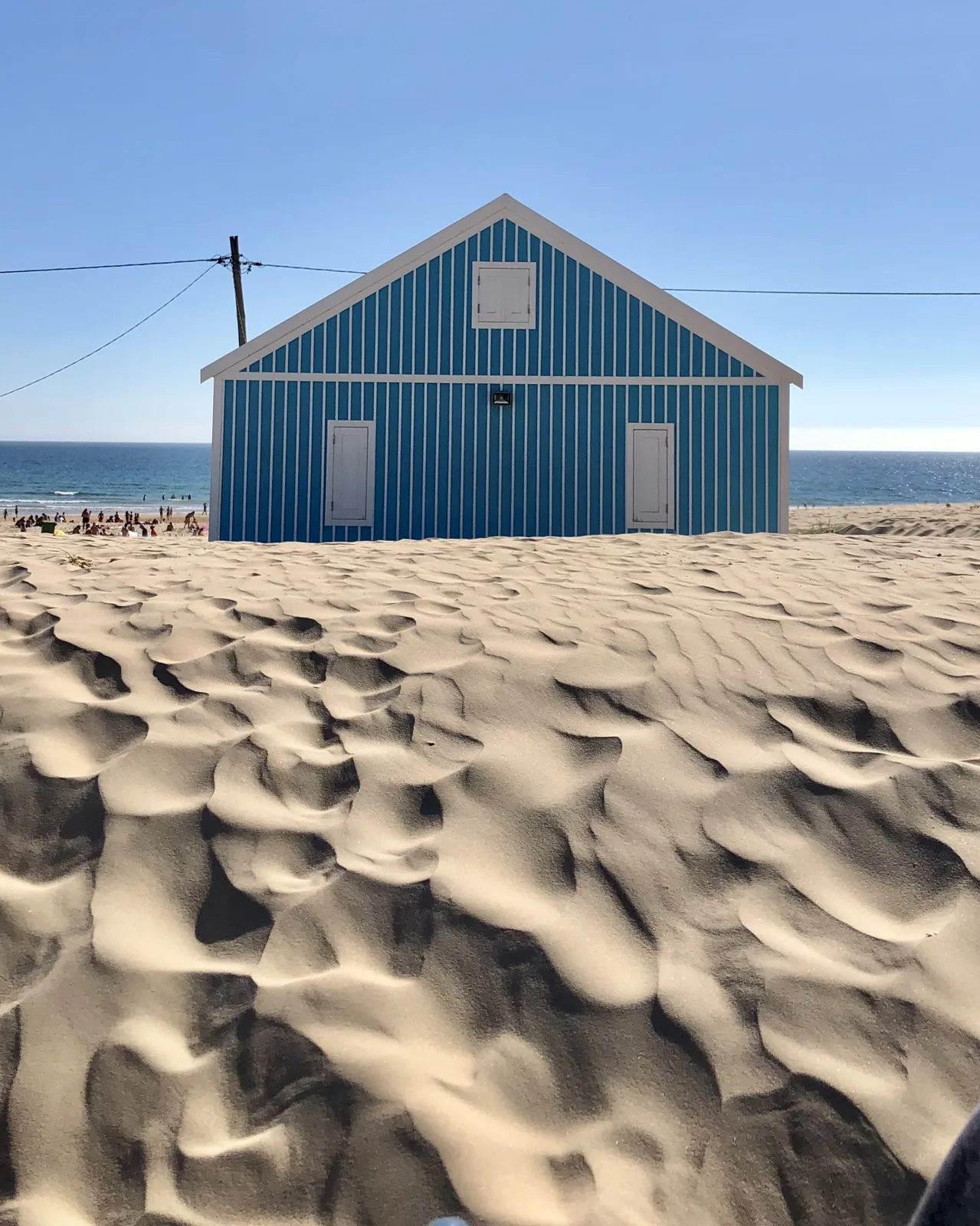
With Praia do Tamariz, the Costa da Caparica is my favorite beach near Lisbon: an immense Atlantic beach of fine sand, backed by dunes and fossil cliffs, where Lisbon goes to swim. I usually went by public transport: the ferry from Cais do Sodré to Cacilhas, then a Carris Metropolitana bus to Costa da Caparica, about 35 to 45 minutes. From the town, walk south along the sand and the crowds thin out quickly.
For years, a little beach train, the Transpraia, ran along the dunes from Costa da Caparica to Fonte da Telha, and I used to ride it to the end of the line. It has been stopped since the pandemic; a new owner wants to bring it back, but there is no date yet. My favorite lunch spot was the Casa de Praia, near beach 19.
Meco and the Praia das Bicas
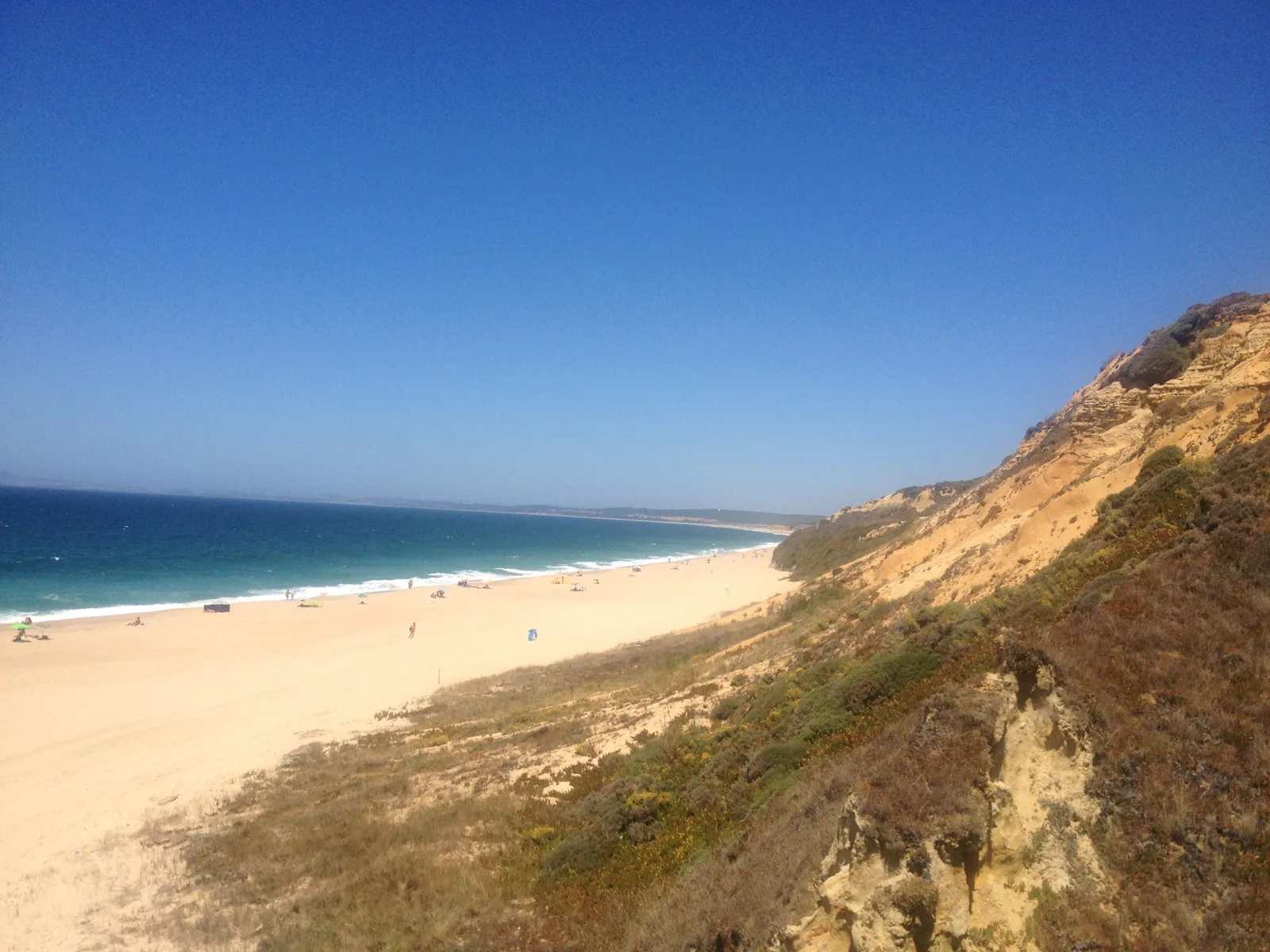
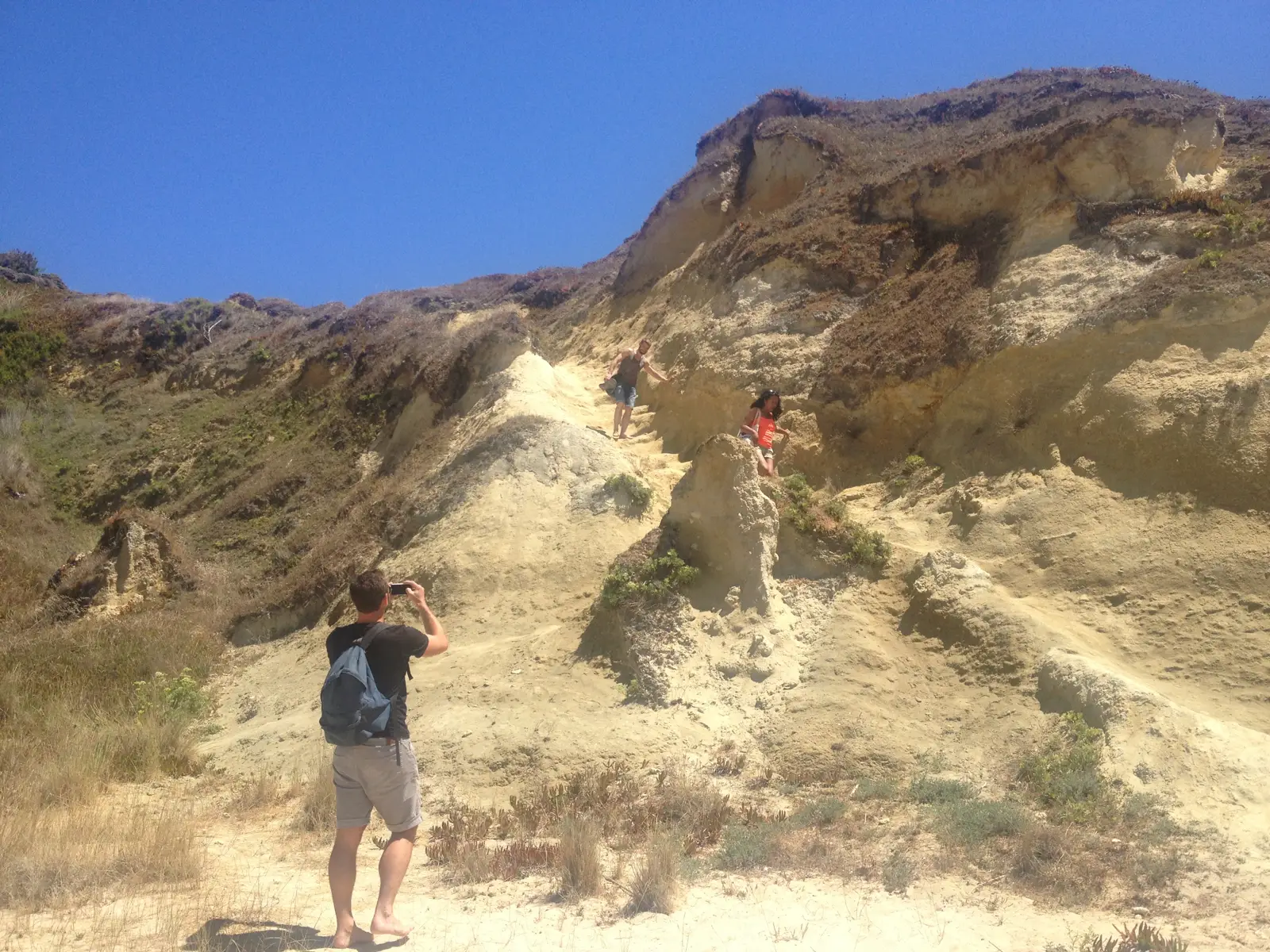
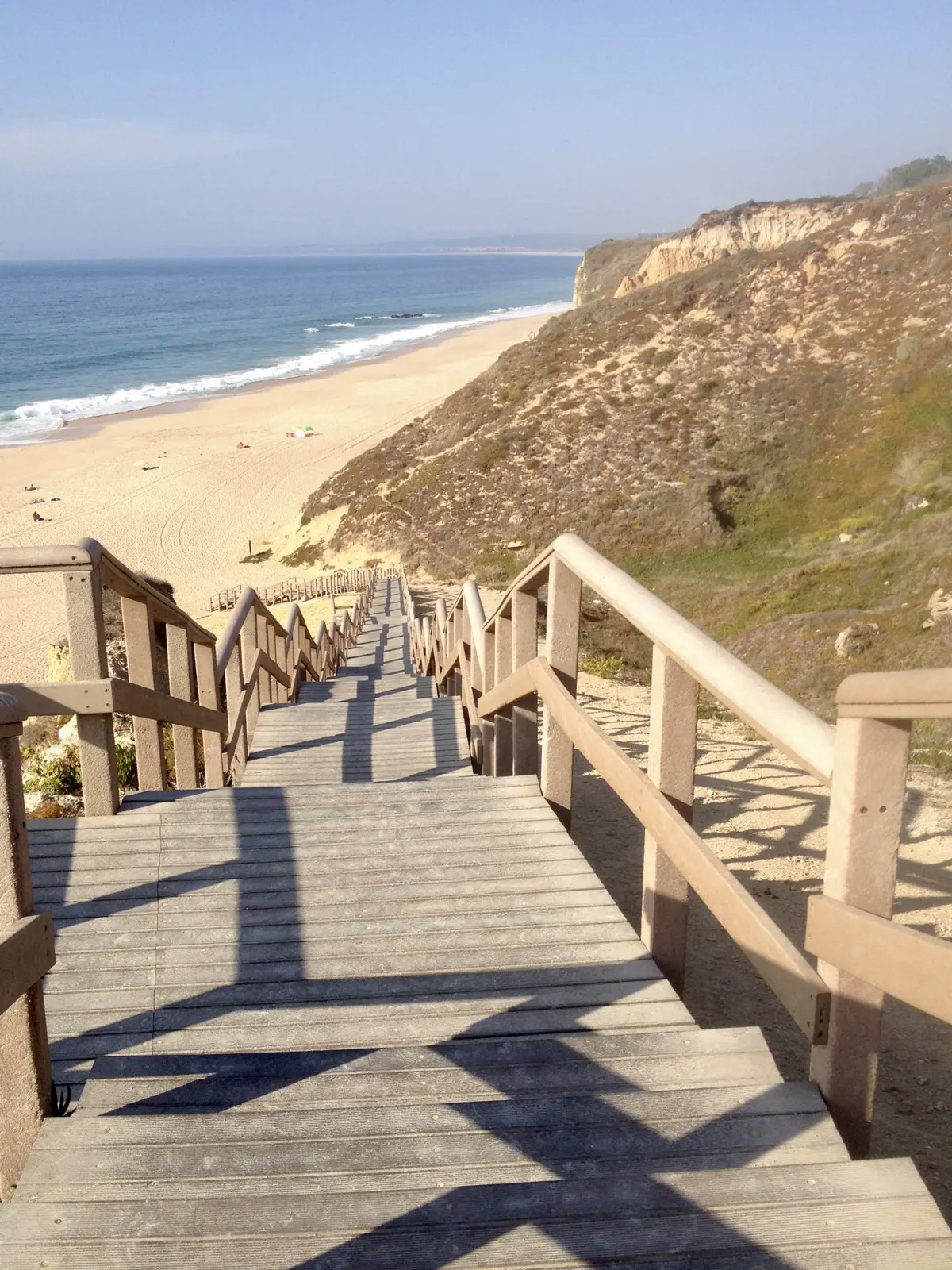
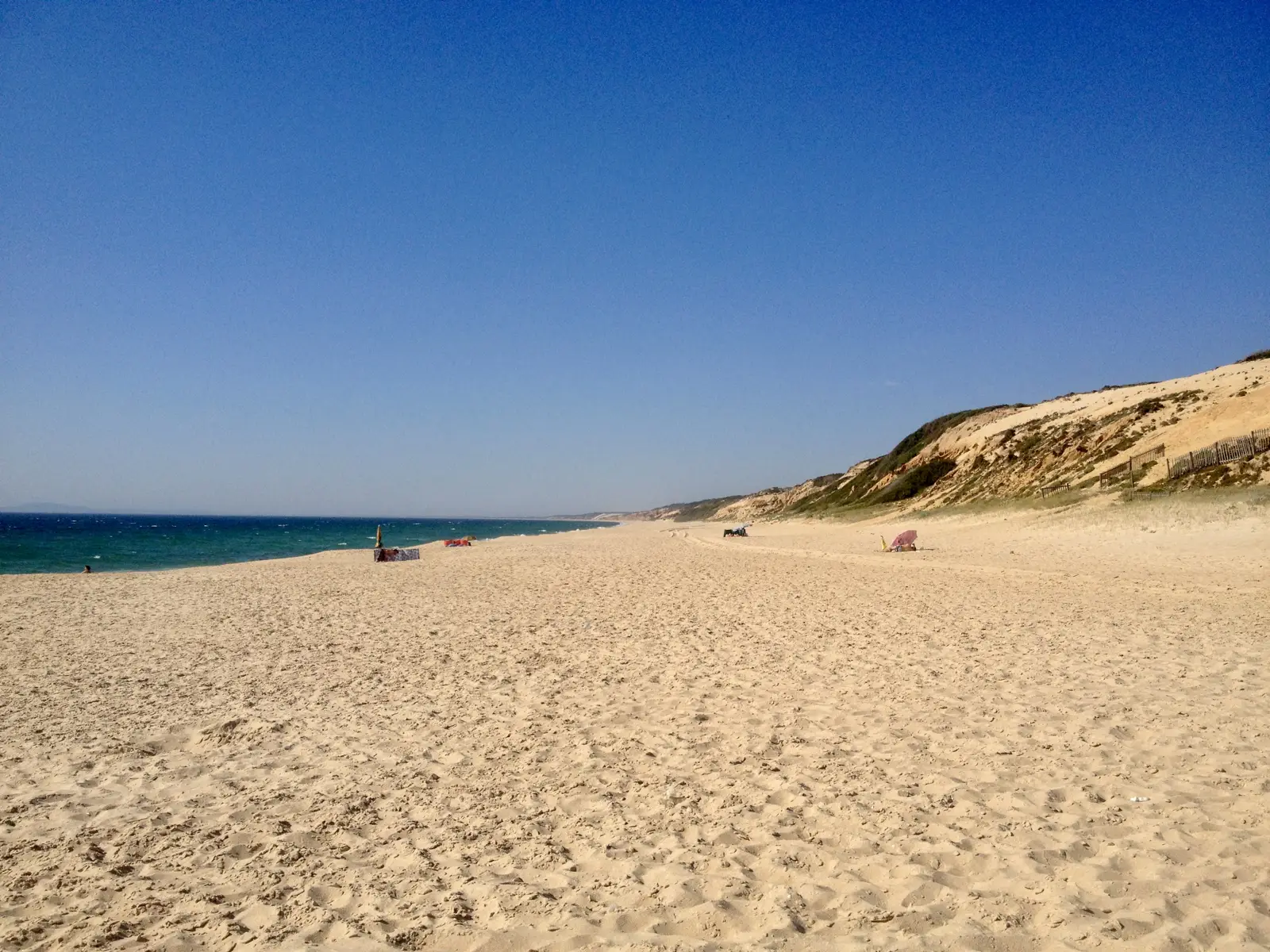
If you have a car, do not miss Meco, south of the Costa da Caparica in the municipality of Sesimbra. It is one of the most beautiful stretches of coast near Lisbon, and still wild: ochre dune cliffs, pine forests and long beaches with few people. My favorite is the Praia das Bicas, reached by a wooden stairway down the cliff. You really need a car to get there.
Comporta
Further south, beyond the Setúbal peninsula, Comporta and the coast down to Melides are the fashionable side of the Lisbon coast: endless beaches, rice fields and holiday homes, a bit like Ramatuelle is to Saint-Tropez on the French Riviera. You need a car, and it is far for a day trip. Honestly, unless you know someone with a house there, I find the beaches of Meco just as beautiful and much closer.
How to Plan Your Day Trips
- Sintra, Cabo da Roca and Azenhas do Mar: one full day, ideally by car, starting early in Sintra and ending with the sunset at Cabo da Roca.
- Estoril and Cascais: half a day or a beach day, by train from Cais do Sodré.
- Queluz: two hours, on the way to Sintra or as a short trip from Lisbon.
- Cristo Rei: half a day, by ferry to Cacilhas.
- Trafaria: an afternoon, by ferry from Belém, staying for the sunset.
- The Costa da Caparica: a beach day, by ferry and bus.
- Meco and the Praia das Bicas: a beach day by car.
Where to Stay
The simplest is to stay in Lisbon and make day trips: everything on this page is less than an hour away. My favorite base is Chiado, close to the trains of Cais do Sodré and Rossio and to the ferries; see my Lisbon guide. If you prefer the seaside, look at hotels in Cascais or hotels in Estoril; for the forests and palaces, places to stay in Sintra; and for the beaches south of the Tagus, hotels in Costa da Caparica.

Best Time to Go
For Sintra and the palaces, spring and autumn are ideal: fewer crowds and soft light, though Sintra is often misty and cooler than Lisbon. For the beaches, June to September; the Atlantic stays cool, rarely above 20°C even in summer, and the beaches of the Costa da Caparica are very busy at weekends in July and August. Go on a weekday if you can.
Read More

Lisbon Travel Guide
The city I know neighborhood by neighborhood, from ten years living there.
French Riviera Travel Guide
Cannes, Antibes, Nice, Saint-Tropez and the Verdon, from four years living in Cannes.
Frequently Asked Questions About Day Trips from Lisbon
What is the best day trip from Lisbon?
Sintra, for its palaces and castle in the forest, ideally combined with Cabo da Roca and Azenhas do Mar on the same day. For a beach day, Estoril and Cascais by train or the Costa da Caparica by ferry and bus.
Do you need a car for day trips from Lisbon?
Not for Sintra, Estoril, Cascais, Cristo Rei or the Costa da Caparica, which are all reachable by train, ferry or bus. A car makes Sintra, Cabo da Roca and Azenhas do Mar much easier to combine, and it is essential for Meco, the Praia das Bicas and Comporta.
How do you get from Lisbon to Cascais?
By train from Cais do Sodré, in about 40 minutes. The line follows the Tagus and then the coast, stopping at Estoril on the way.
What is the best beach near Lisbon?
The Praia do Tamariz in Estoril is the easiest, next to the train station. The Costa da Caparica is the biggest, and Meco and the Praia das Bicas are the wildest and, for me, the most beautiful, but you need a car.
How do you get to Cristo Rei from Lisbon?
Take the ferry from Cais do Sodré to Cacilhas, about ten minutes, then a bus or a taxi up to the sanctuary. An elevator takes you to the viewing terrace at 82 meters.
Is the Palace of Queluz worth visiting?
Yes. It is only 15 kilometers from Lisbon, much less crowded than Sintra, and its rococo halls, formal gardens and azulejo-lined canal are superb. It fits easily on the way to Sintra.