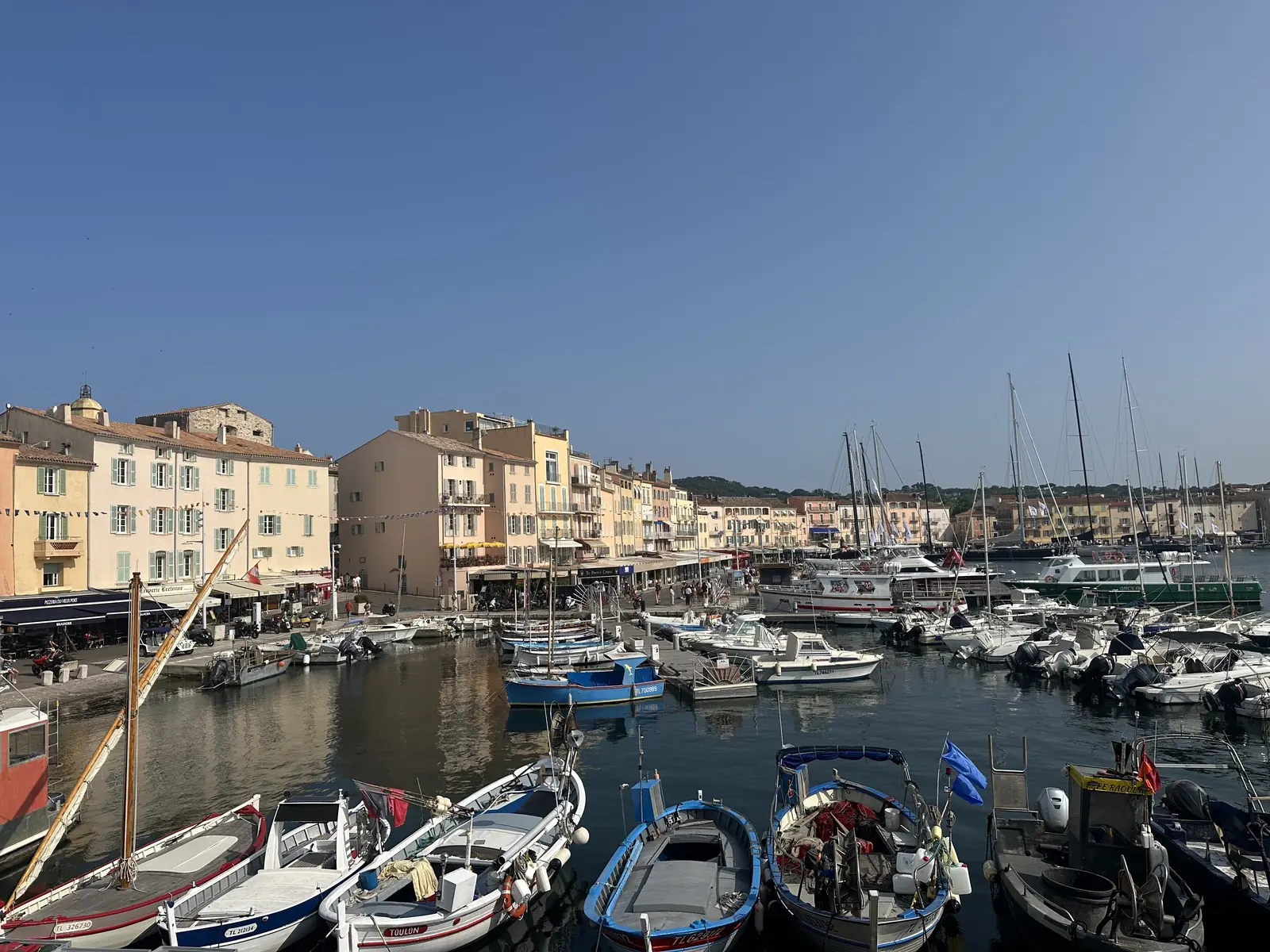
French Riviera Travel Guide: From Cannes to Saint-Tropez and the Verdon
By Blaise Jaeger · Updated October 24, 2026
Why Visit the French Riviera?
The French Riviera, the Côte d’Azur, packs an astonishing amount into a short stretch of coast: the old town and the flower market of Nice, the red carpet of Cannes, the yachts of Antibes and Saint-Tropez, two car-free islands off Cannes that most visitors never set foot on, and a national park at sea off Hyères. Then, less than two hours inland, the scenery changes completely: hilltop villages, a Cistercian abbey in the forest, and the turquoise water of the Verdon gorges.
I lived on the Riviera for four years, in Cannes and then Mandelieu, and I keep coming back. This guide is the trip I would plan for a friend, and in June 2025 it is exactly the one I did with mine. For the rest of the country, see my France travel guide.
The French Riviera at a Glance
- Where: the Mediterranean coast of southeastern France, from Menton and the Italian border to Saint-Tropez, Hyères and its islands.
- Main towns: Nice, Cannes, Antibes, Saint-Tropez, Hyères; Monaco is an independent principality in the middle of it.
- Airport: Nice Côte d’Azur, linked to the city center by tram line 2.
- Getting around: the coastal train between Ventimiglia, Nice and Cannes is easy; for the Var coast and the hills you need a car.
- Best for: old towns, markets, islands, boat trips, diving, and a road trip into Provence.
- Best time: June and September, warm enough to swim without the crowds of July and August.
- How long: a week covers the coast; add three or four days for the Verdon and the Haut-Var villages.
Four Years in Cannes, and a Road Trip Back
I first came to the Riviera for work. From 1997 to 1999 I lived in Cannes, on the hill of La Croix des Gardes, and from 2007 to 2009 in Mandelieu-La Napoule, just to the west. Both times I worked at the satellite plant right on the beach in Cannes La Bocca, which was Aérospatiale when I arrived and is Thales Alenia Space today, one of its largest production sites. My gym was at the top of the Carlton, on the Croisette, and I went to the film festival several times.
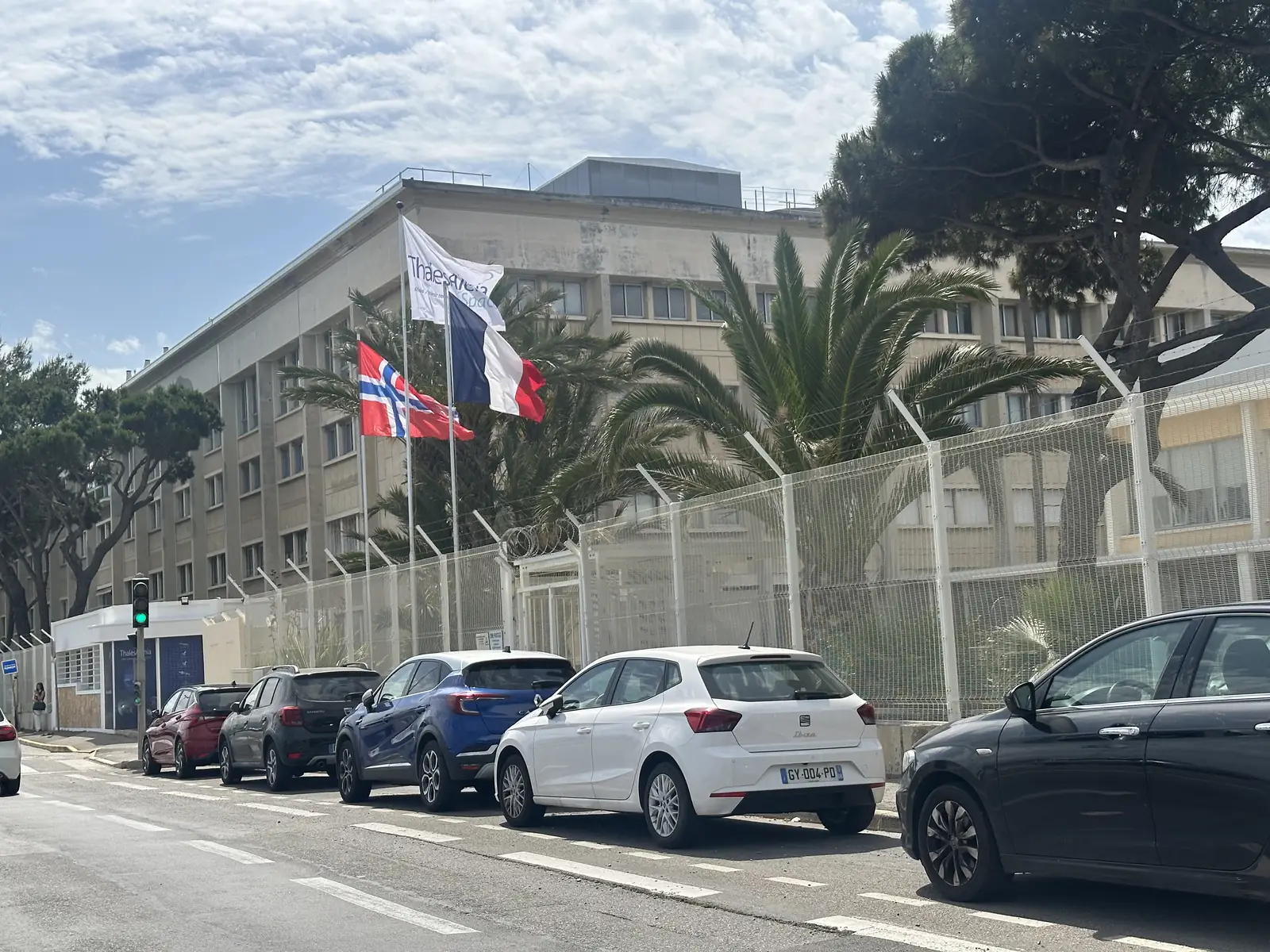
Living there means you stop seeing the postcard and start knowing the coast: where to swim early in the morning, which beach is still quiet in July, how long the drive to Saint-Tropez really takes on a summer Saturday.
I came back many times on vacation. In 2003 I stayed in Saint-Paul-de-Vence with friends before driving on to northern Italy, and in April 2015 I was back on the beach of Les Marinières in Villefranche-sur-Mer. In June 2025 I finally showed the Riviera to my friend Roy: we arrived by train from Genoa, rented a car at Nice airport, and spent eight days between the coast, the islands and the Verdon. The itinerary below is that trip.
My 8-Day French Riviera Itinerary
- Day 1, Nice and Cannes: train from Genoa, rental car at Nice airport, lunch in Cannes facing the Palais des Festivals, then on to La Londe-les-Maures and a first evening on a friend’s boat.
- Day 2, La Londe: the coastal path from the Plage de l’Argentière toward the Fort de Brégançon.
- Day 3, Port-Cros and Porquerolles: a dive in the national park in the morning, a second one off Porquerolles in the afternoon, sunset over the salt marshes of Giens.
- Day 4, into the hills: the Abbaye du Thoronet on the way to Aups.
- Day 5, the Verdon: the market in Aups, lunch with friends, then a tandem paragliding flight over the Lac de Sainte-Croix.
- Day 6, the gorges: kayaking into the Gorges du Verdon.
- Day 7, Tourtour and Saint-Tropez: the village in the sky in the morning, the port of Saint-Tropez in the evening.
- Day 8, Antibes and Nice: the Place des Lices market and Pampelonne, Antibes, a boat to the Lérins islands, and a last night in the old town of Nice.
My one regret: the train from Italy stops in Monaco. We could have got off, walked around for two hours and taken the next train to Nice, and we didn’t. Do it.
Best Things to Do on the French Riviera
Cannes: the Croisette, Le Suquet and the old port
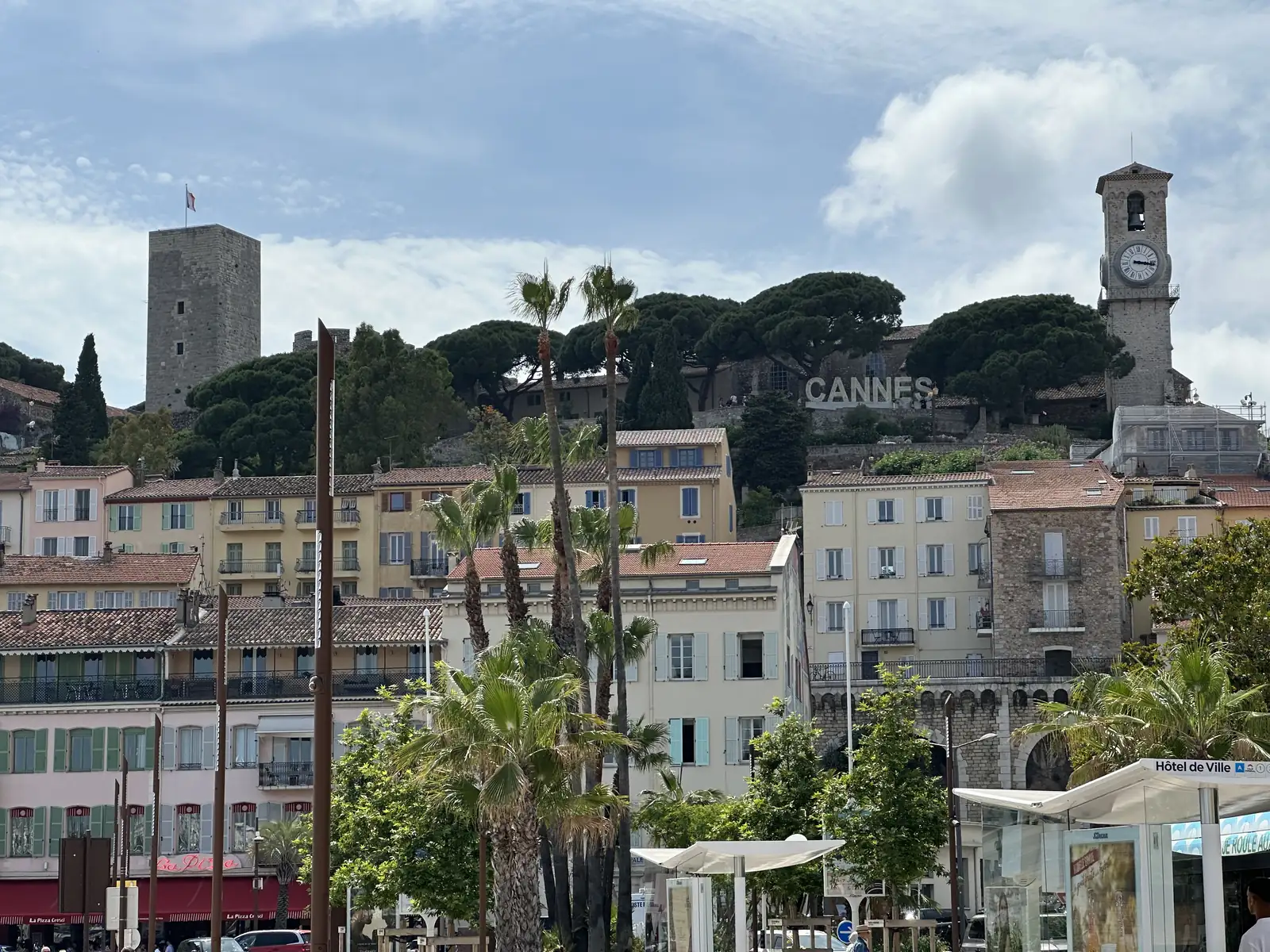
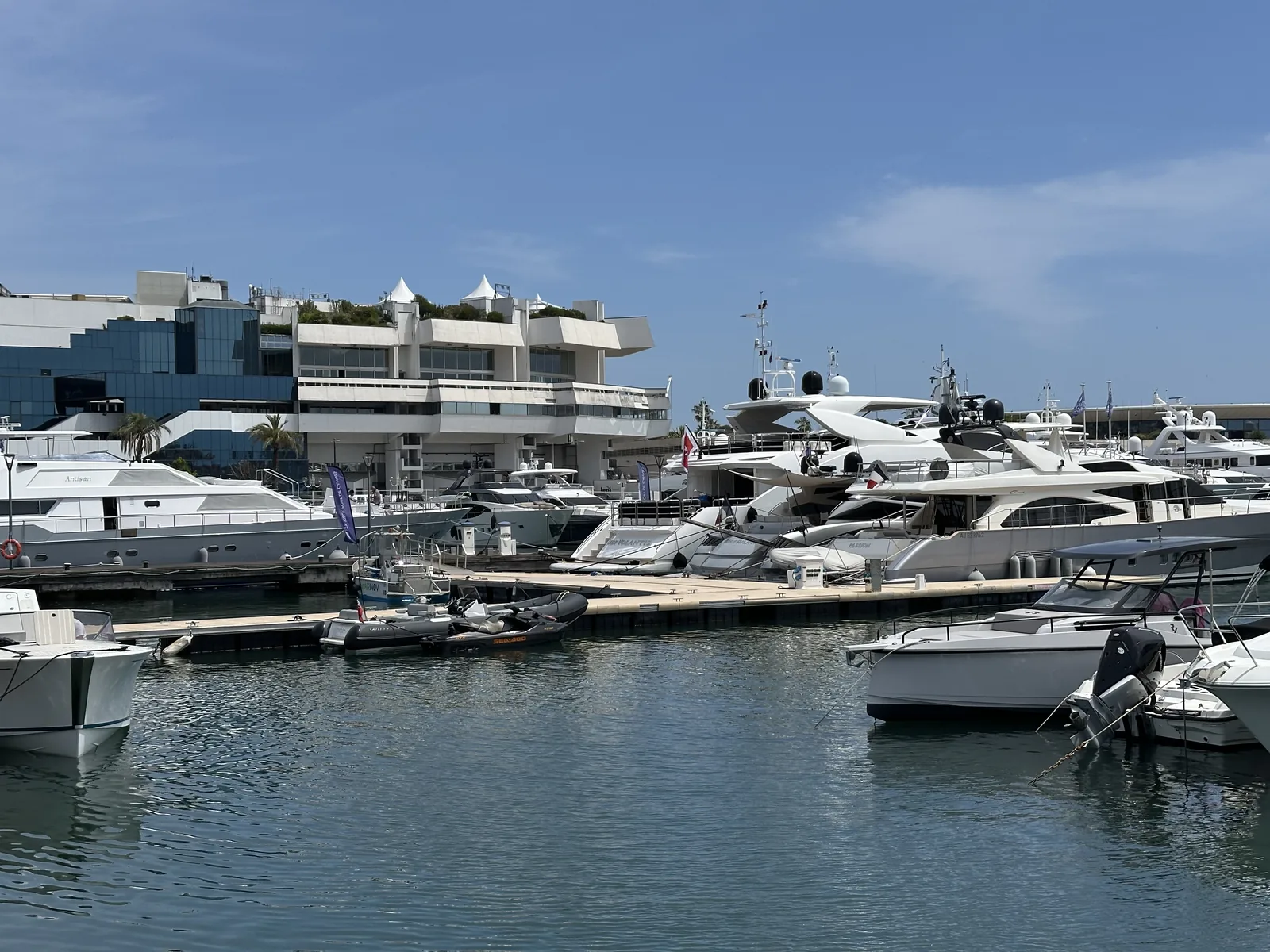
Cannes is more than the film festival, which takes place every May at the Palais des Festivals, opened in 1982. Walk the Croisette from the Palais to the Carlton, then cross the old port and climb Le Suquet, the medieval old town, to the church of Notre-Dame d’Espérance and the view from the Place de la Castre. The Marché Forville, the covered food market, runs Tuesday to Sunday mornings. On our first day we had lunch on a terrace facing the Palais, then drove past the plant where I used to work.
The Lérins Islands, off Cannes
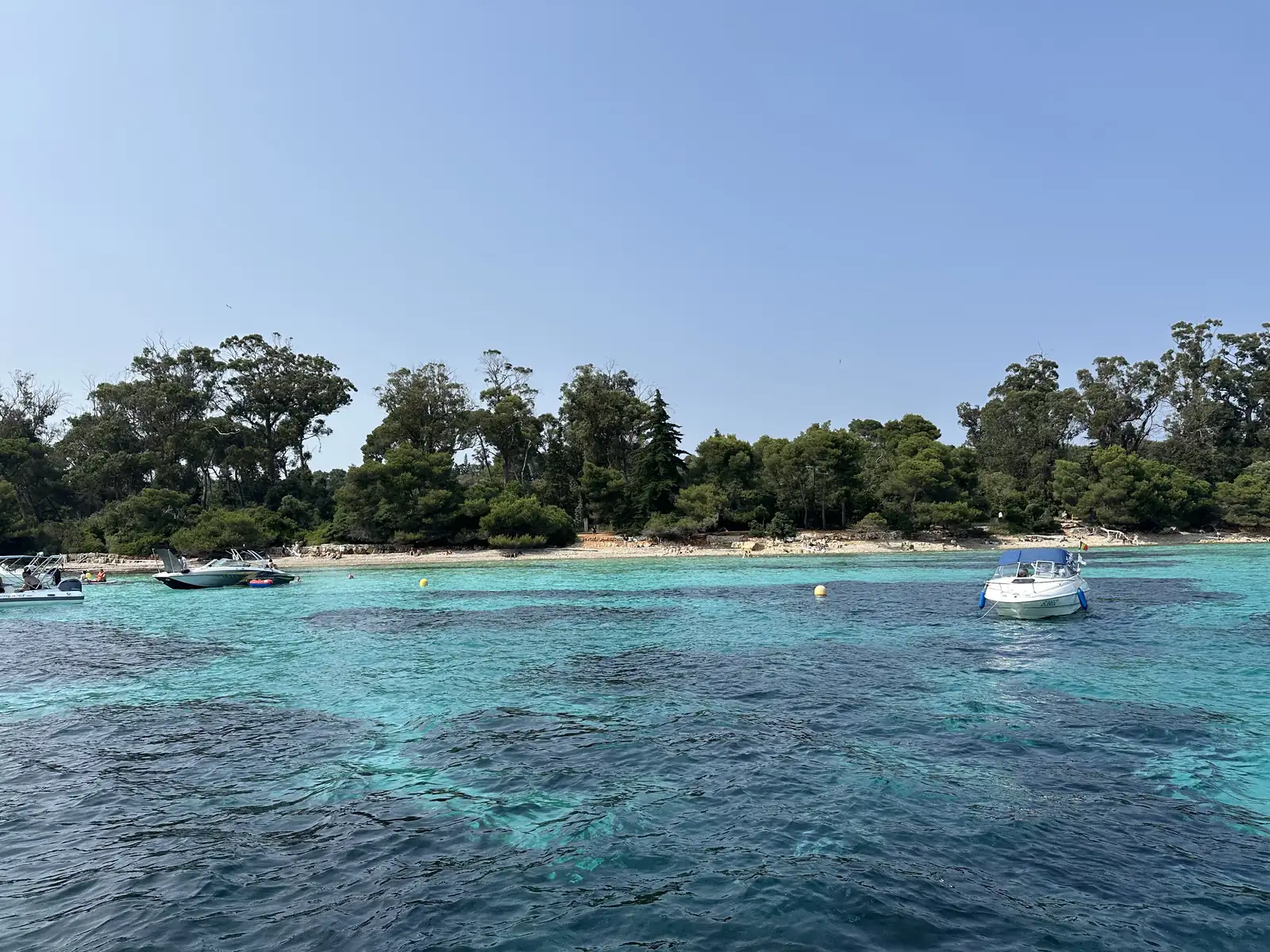
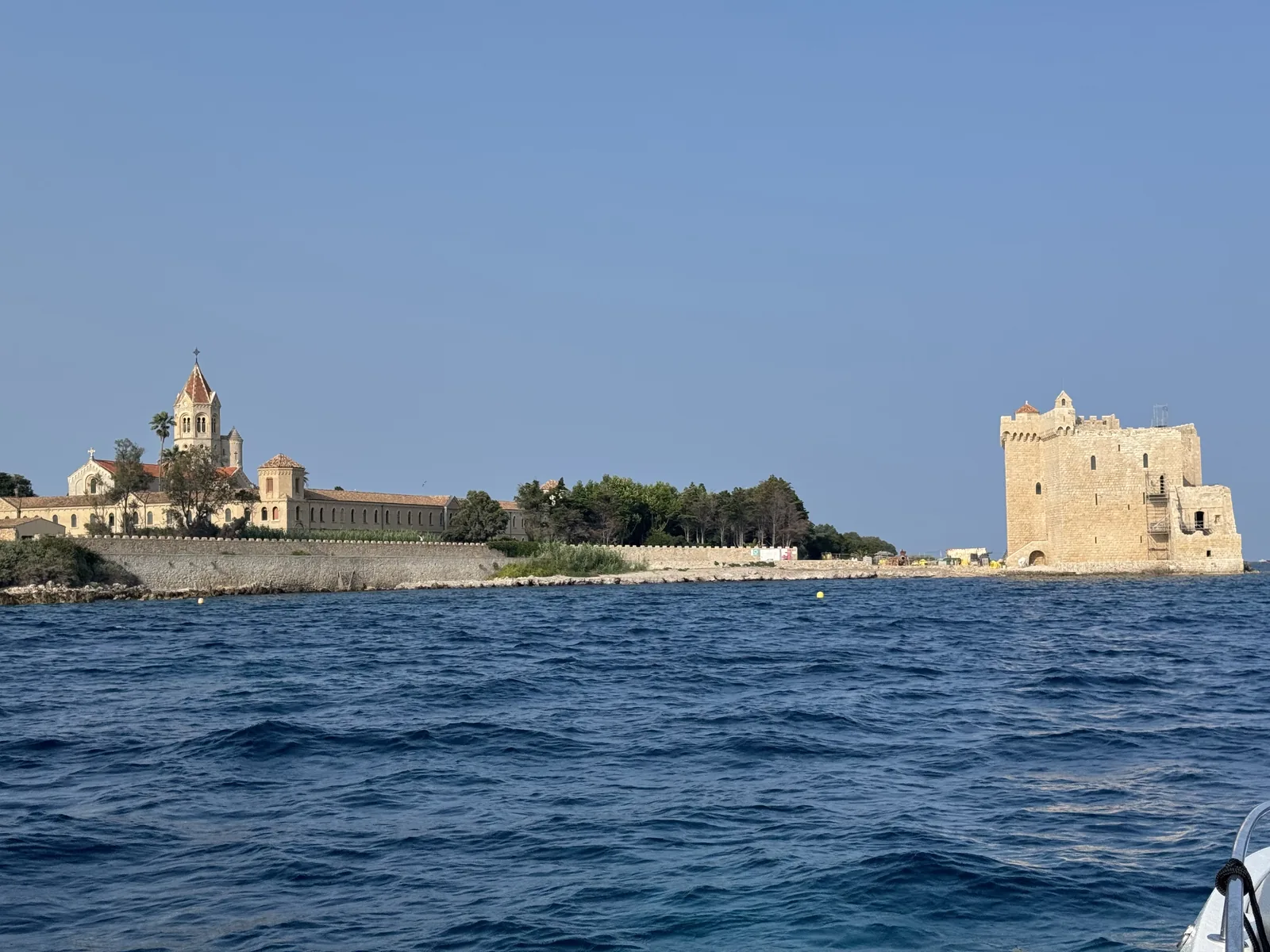
Fifteen minutes by boat from Cannes, the two Lérins islands are the Riviera without cars. On Sainte-Marguerite, the Fort Royal houses the Musée du Masque de Fer, with the cell of the Man in the Iron Mask (€6.50). The island is covered in pine and eucalyptus, and its sheltered north shore has some of the clearest water on the coast. Saint-Honorat, smaller, belongs to the Cistercian monks of Lérins Abbey, who have lived there since 1859 and grow their own vines.
Ferries leave the old port of Cannes all year: about €18.50-19.50 per adult with Trans Côte d’Azur or Horizon for Sainte-Marguerite, and with Planaria, the monks’ boat, for Saint-Honorat. From the Antibes side, Riviera Lines runs to Sainte-Marguerite from Golfe-Juan in season. We went the easy way, on a friend’s boat from Antibes, around Cap d’Antibes and between the two islands at the end of the afternoon.
Antibes and Cap d’Antibes
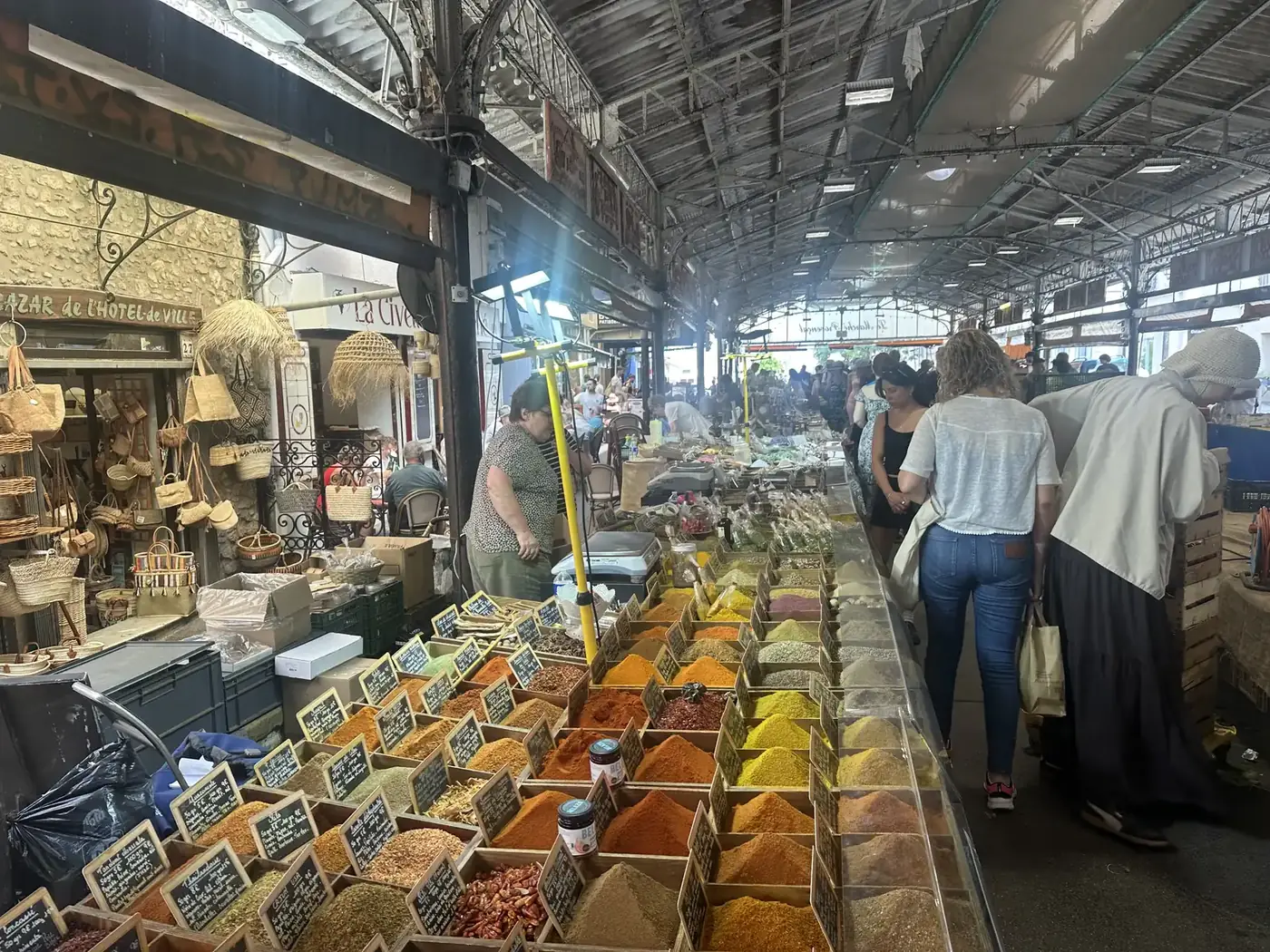
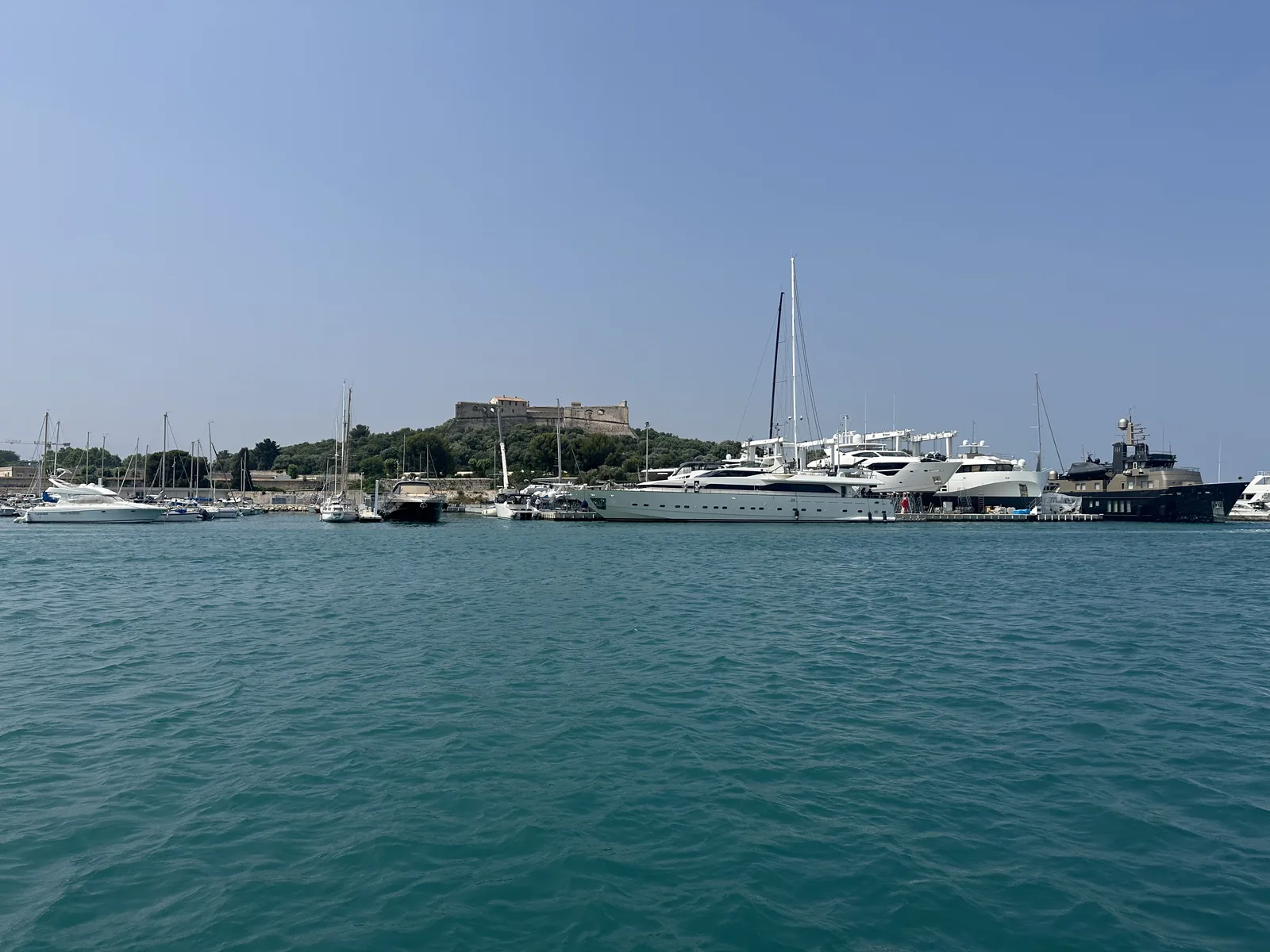
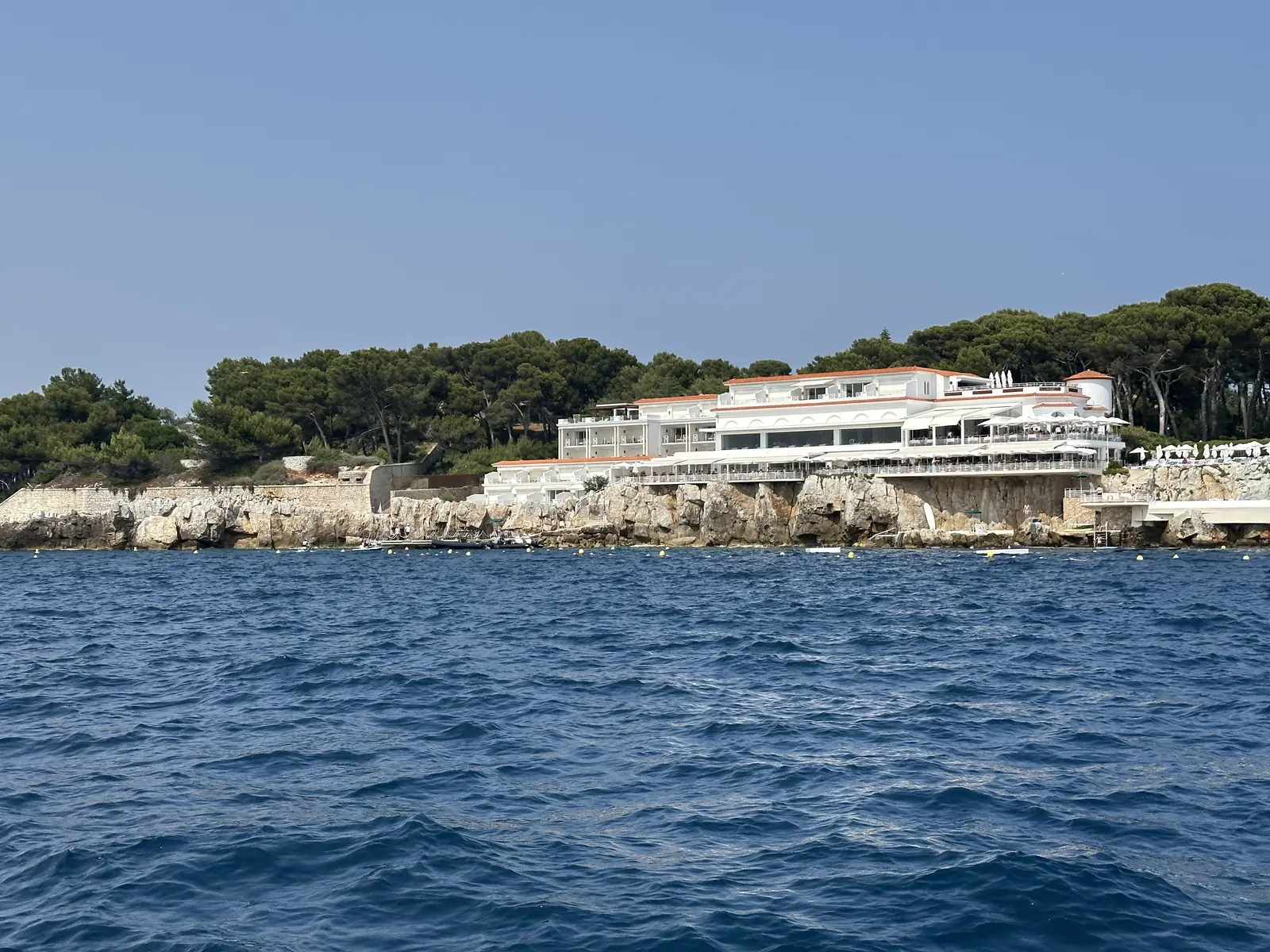
Antibes is the most lived-in town on the coast. Start at the Marché Provençal on the Cours Masséna, open every morning from June to August and Tuesday to Sunday the rest of the year, then walk the ramparts and the lanes of the old town. Port Vauban, which the tourist office calls the largest marina in Europe, holds some of the biggest yachts in the world, under the star-shaped Fort Carré, built in 1585 and reinforced by Vauban. By boat, the tip of Cap d’Antibes reveals the Hôtel du Cap-Eden-Roc, open since 1870, and its Eden-Roc restaurant built on the rocks.
Nice: the old town and the Baie des Anges
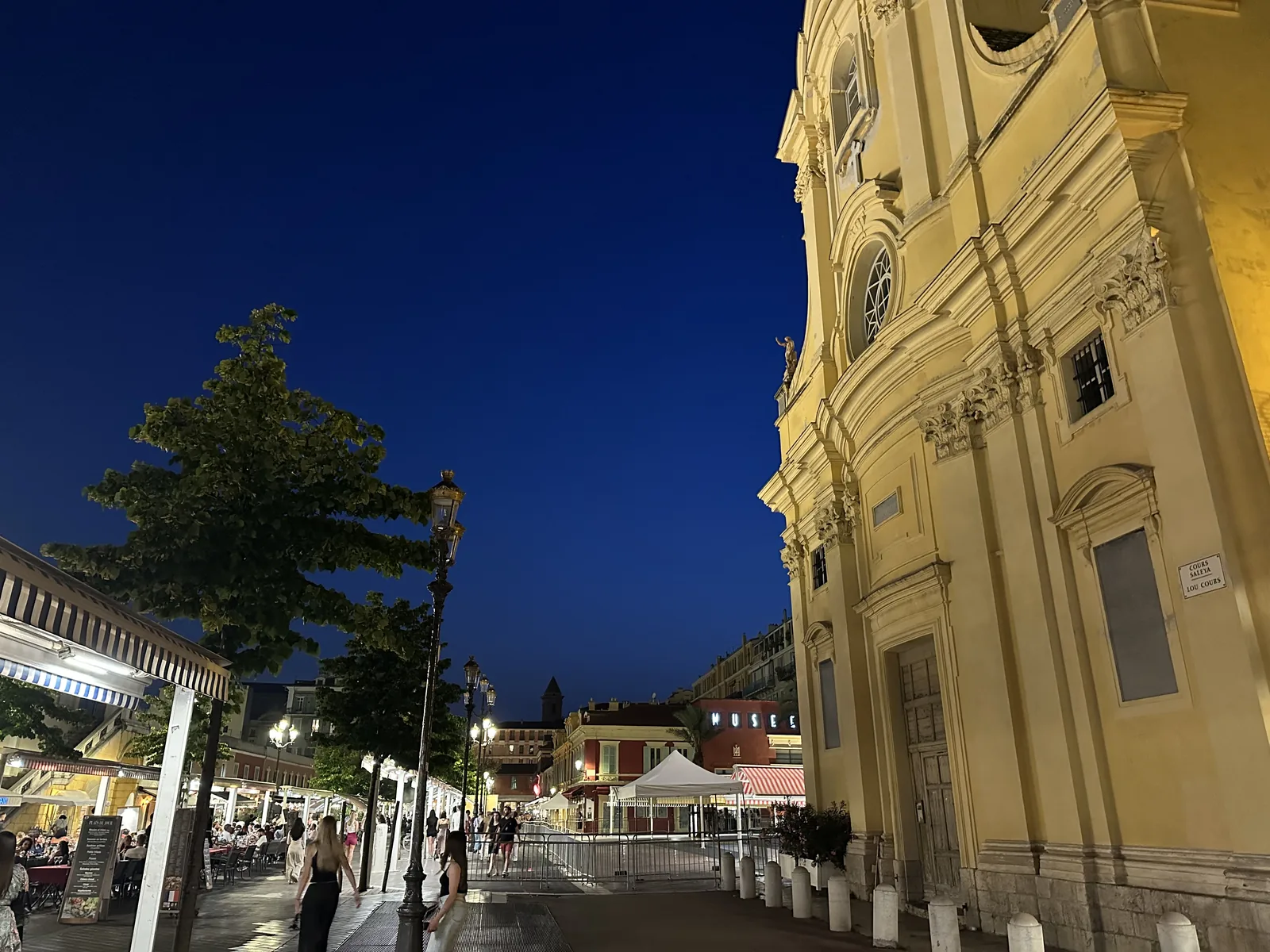
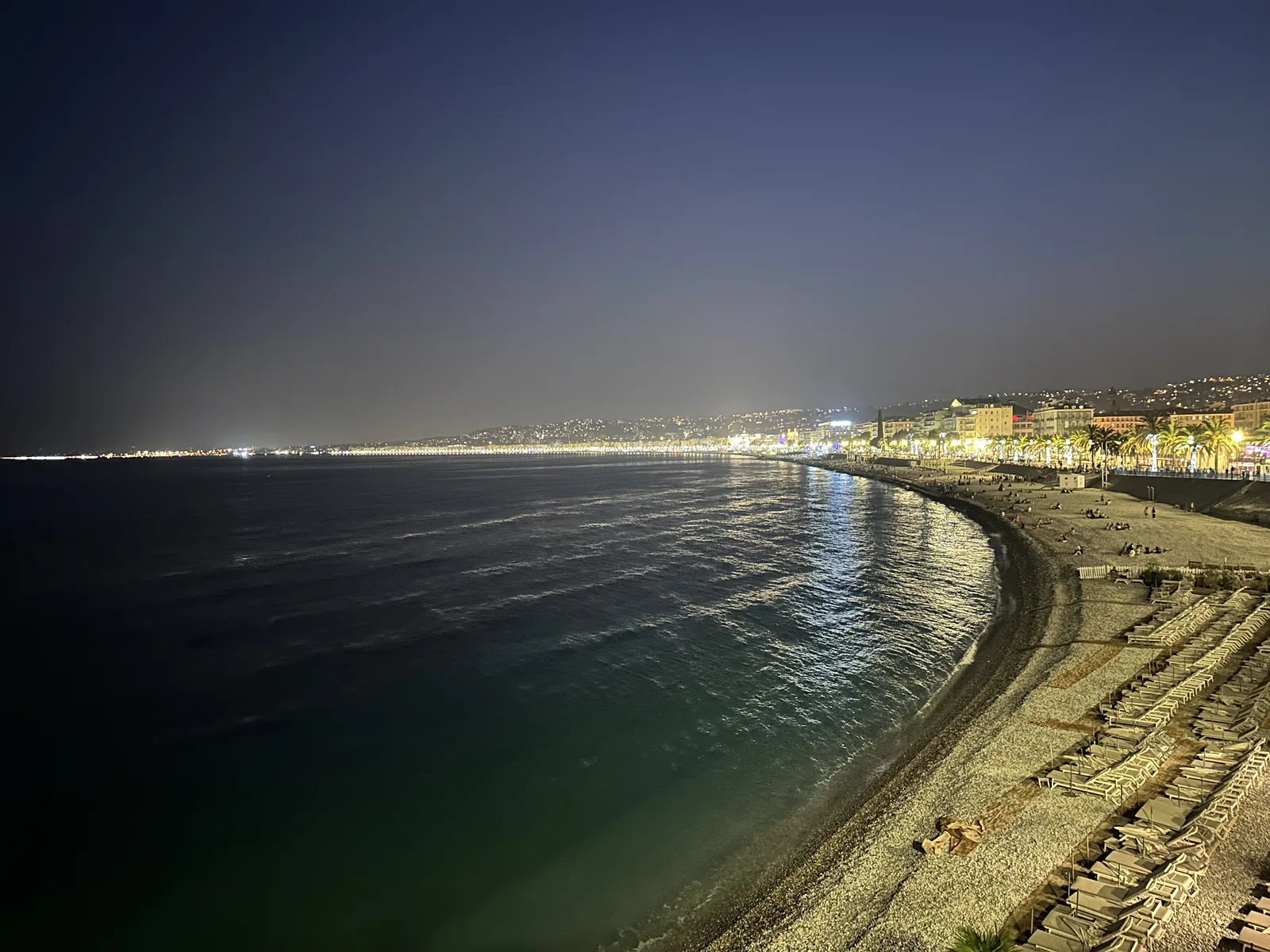
Nice deserves at least a night, ideally two. The Cours Saleya flower market runs Tuesday to Sunday, the old town is a maze of ocher lanes and baroque churches, and the Colline du Château, free to enter, gives the best view over the Baie des Anges. In 2021 UNESCO listed “Nice, Winter Resort Town of the Riviera” as a World Heritage site. On our last evening we walked from the old town down to the Promenade des Anglais, where half the city was sitting on the pebbles under the full moon.
Saint-Paul-de-Vence and Villefranche-sur-Mer
Two places from earlier trips. Saint-Paul-de-Vence, a fortified hilltop village behind Nice, is home to the Fondation Maeght, opened in 1964, one of the great modern art museums in France. Villefranche-sur-Mer, between Nice and Cap Ferrat, curls around a deep bay with a sandy beach, Les Marinières, at the foot of the village. Both are easy on the coastal train or a short drive from Nice.
Saint-Tropez and Pampelonne
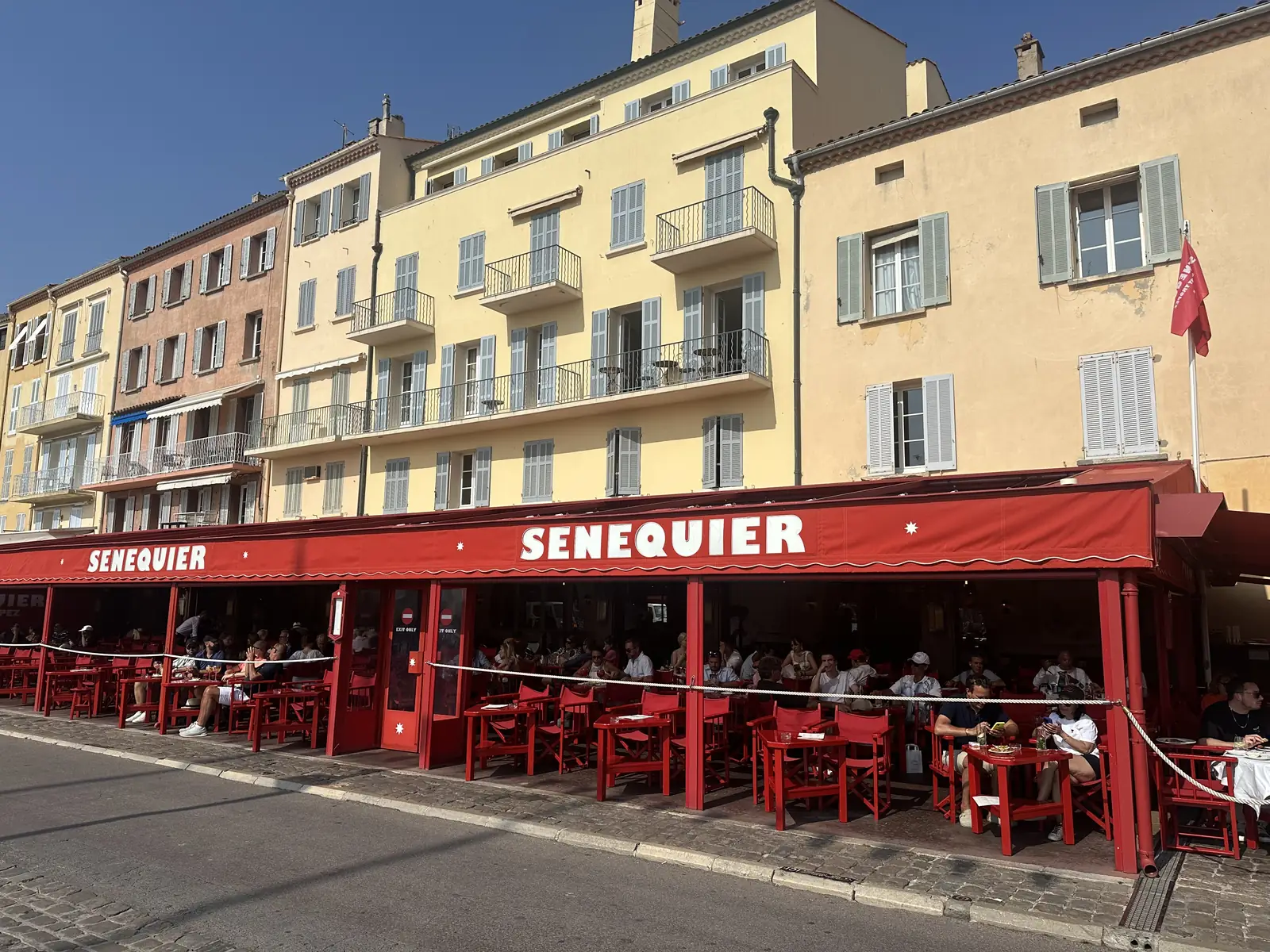
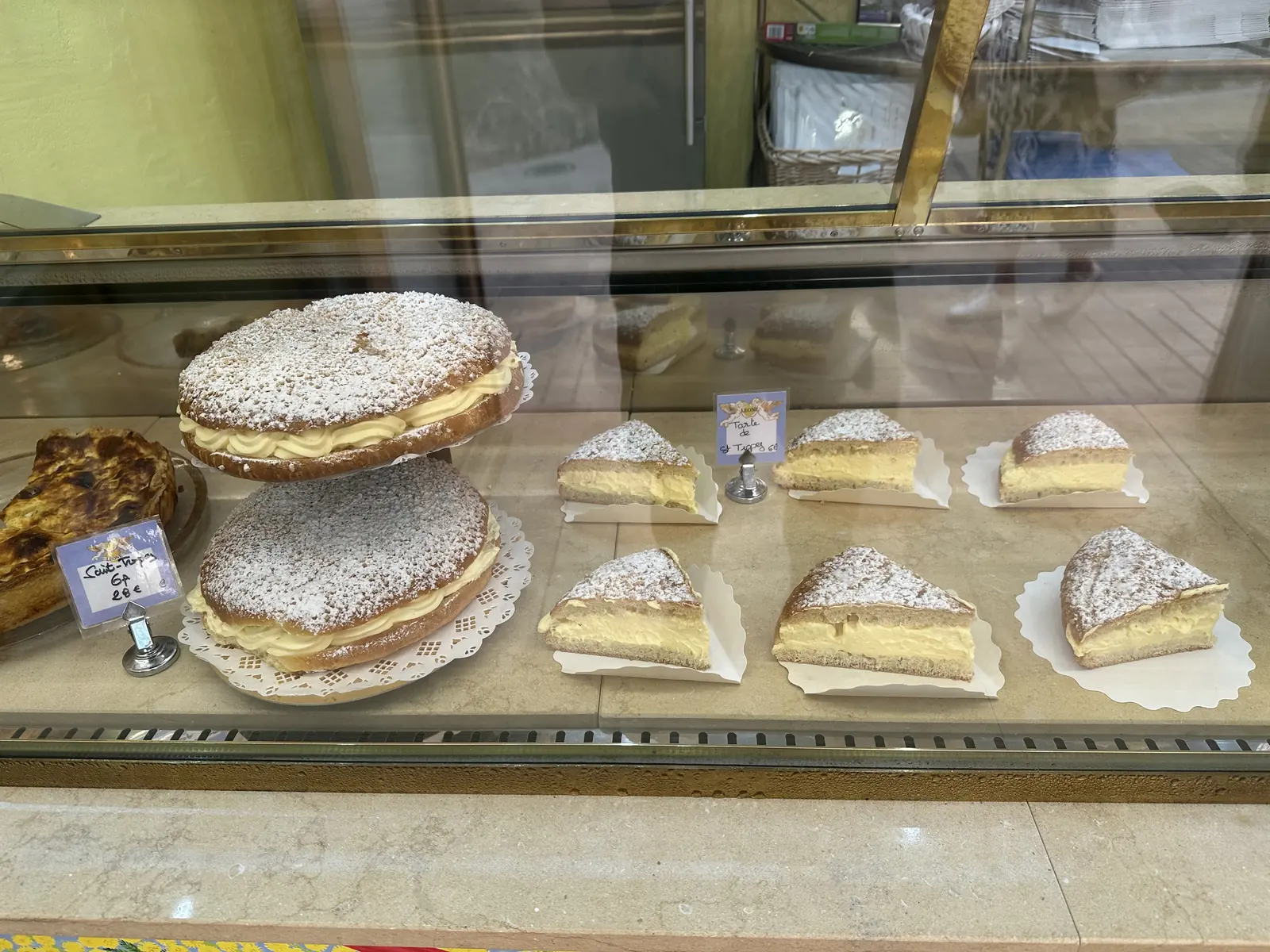
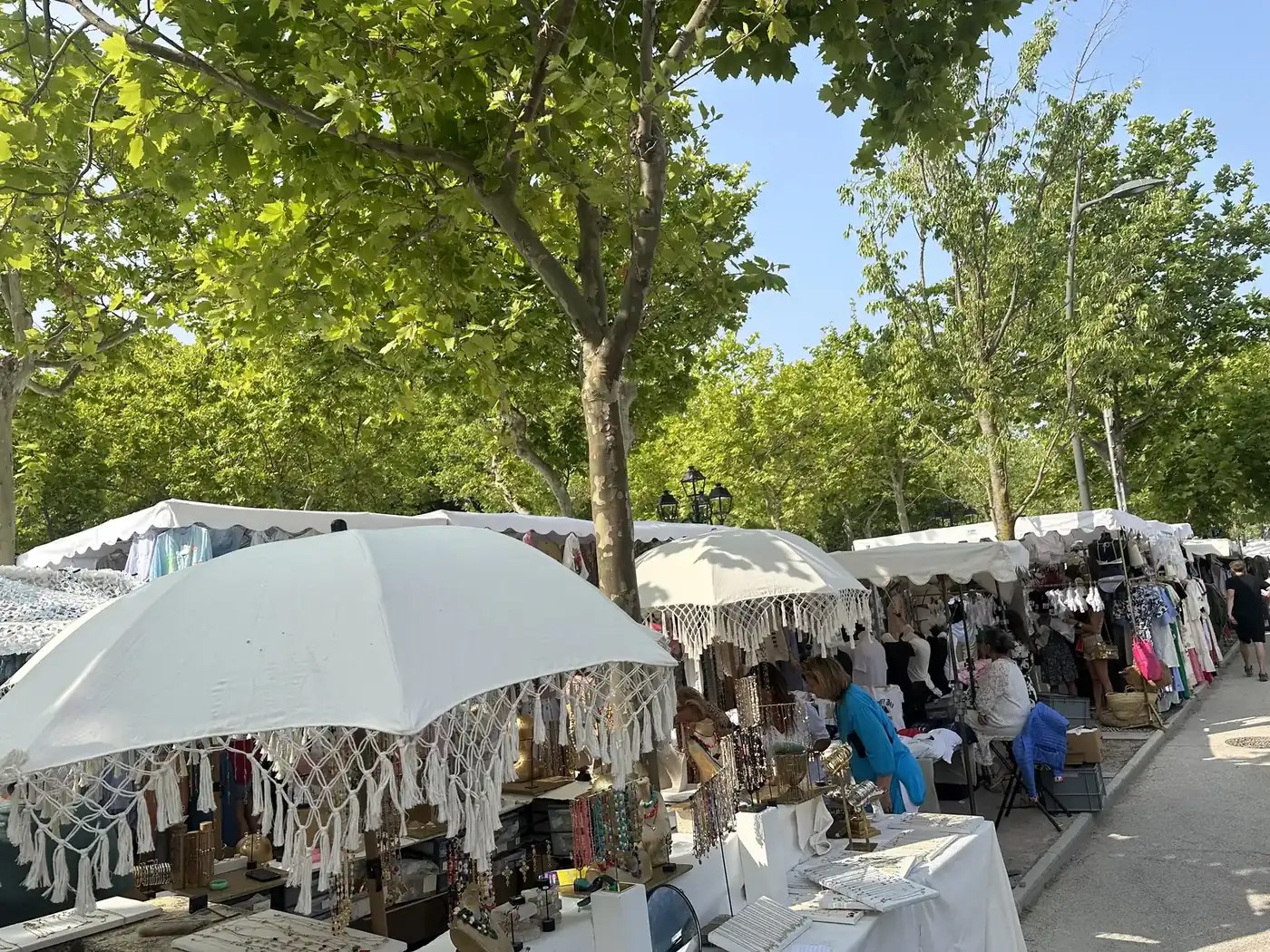
Arrive in Saint-Tropez at the end of the afternoon, when the day-trippers leave and the light turns the facades of the port gold. Have a drink on the red terrace of Sénéquier, there since 1887, and try the tarte tropézienne, the cream-filled brioche created by Alexandre Micka in 1955 and named on the suggestion of Brigitte Bardot. The Place des Lices market fills the square under the plane trees on Tuesday and Saturday mornings, from 8:00 AM to 1:00 PM. Pampelonne, the famous beach, is not in Saint-Tropez itself but in Ramatuelle, about 4.5 km of sand lined with beach clubs.
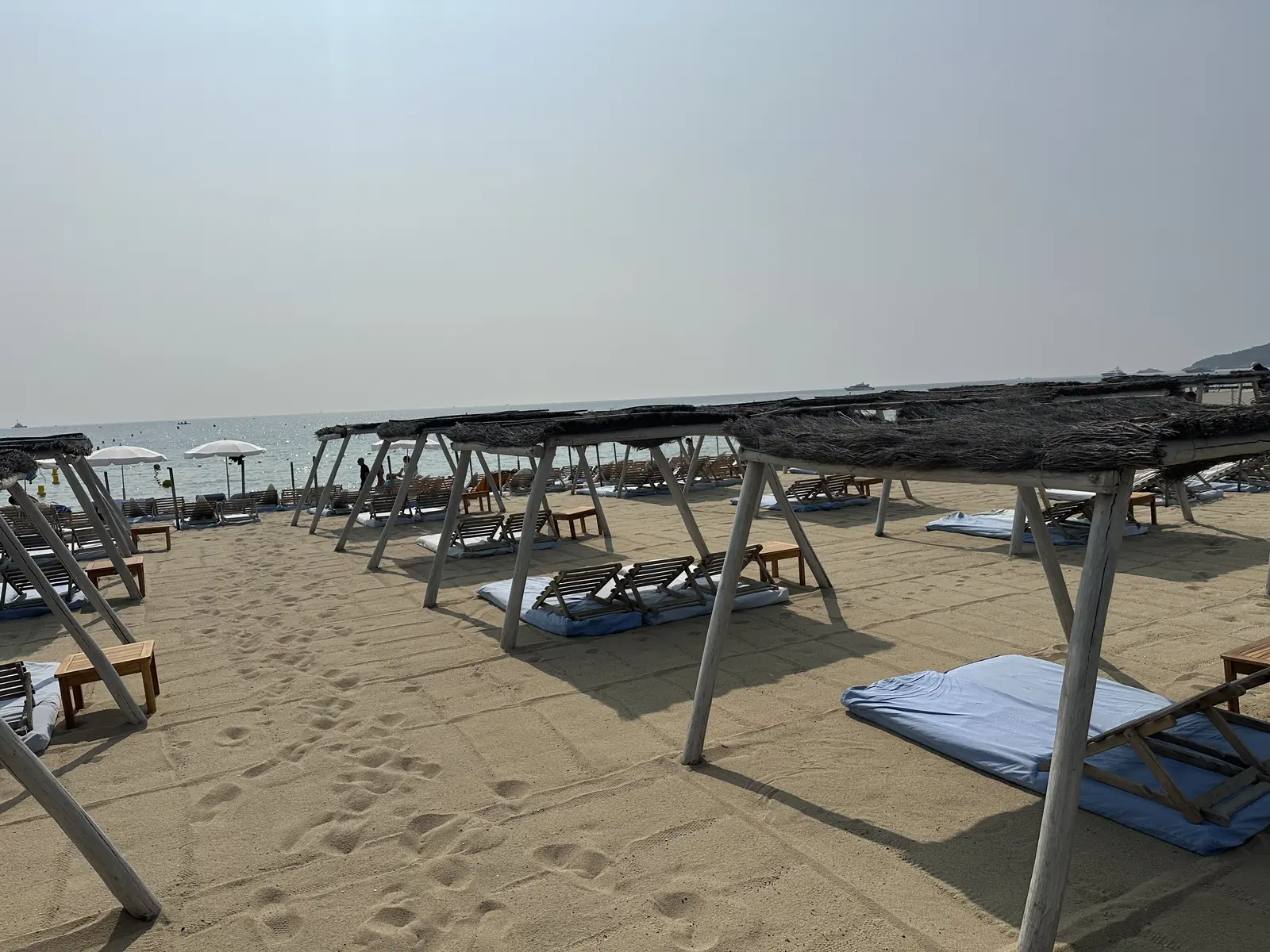
The Var Coast: La Londe, Hyères and the Islands
West of Saint-Tropez, the Var coast is greener and calmer, with pine-covered capes, vineyards that run down to the sea, and the Îles d’Or offshore. We stayed several days with a friend in La Londe-les-Maures, and on the first evening he took us out on his boat along the coast toward Brégançon.
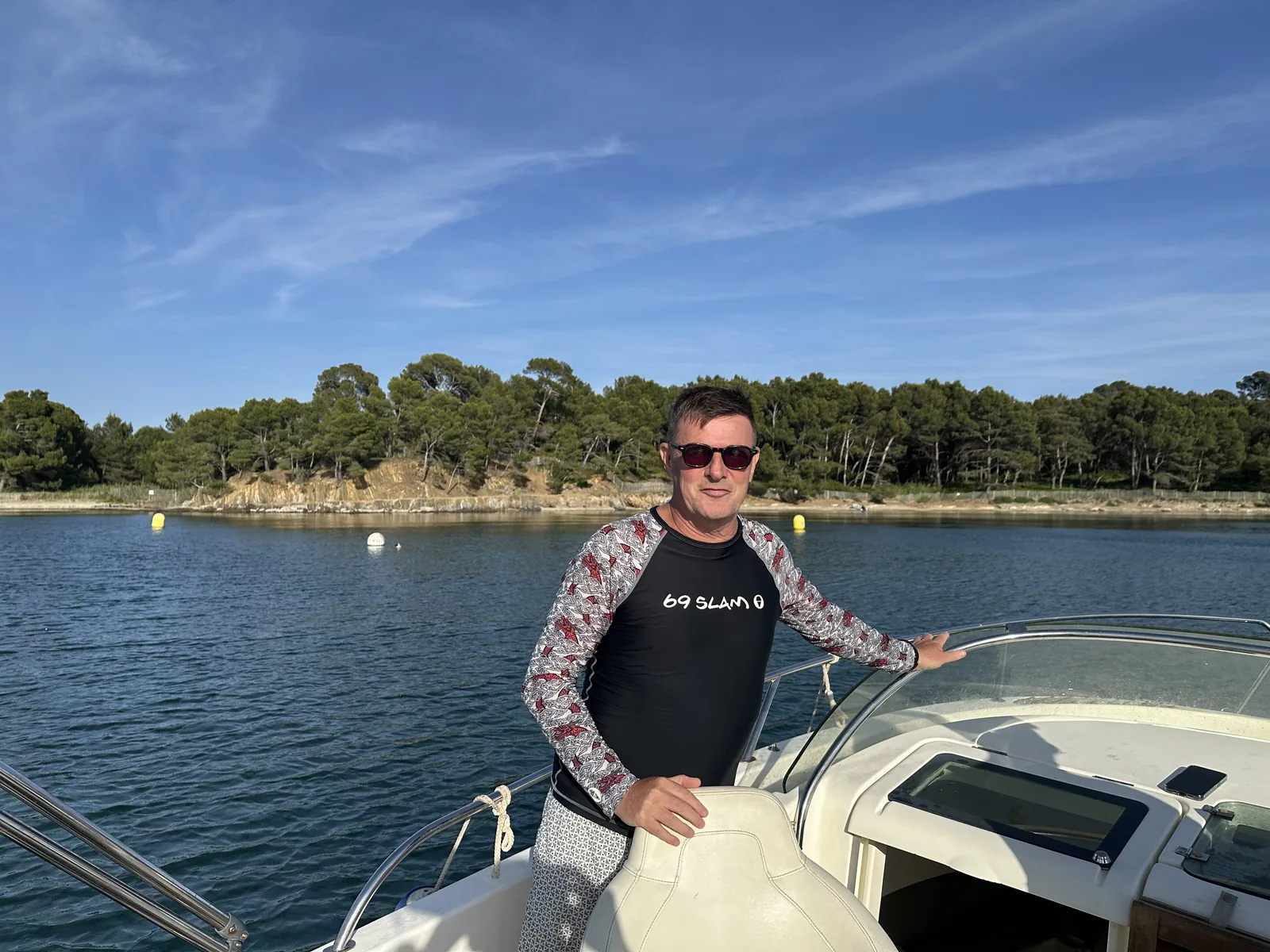
The coastal path from L’Argentière to Brégançon
The sentier du littoral starts at the Plage de l’Argentière in La Londe and follows the coves east toward the Fort de Brégançon, the official retreat of the French president since 1968. The full walk to the fort and back is about 18 km and six hours, with a few steep, exposed sections, so most people do part of it. The fort itself can only be visited on guided tours booked ahead through the Bormes-les-Mimosas tourist office, and dates change, so check before you go.
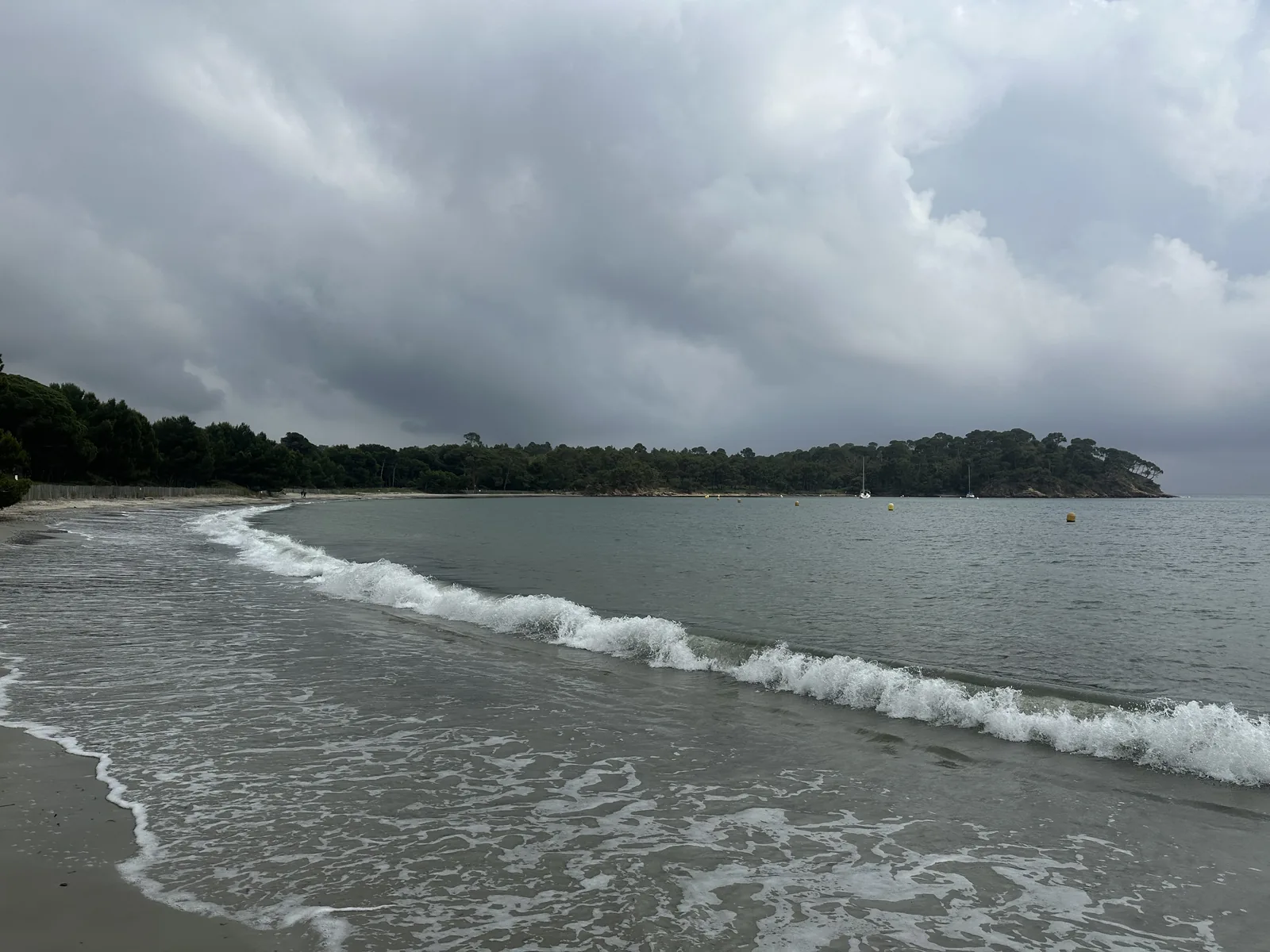
Sunset over the salt marshes of Giens
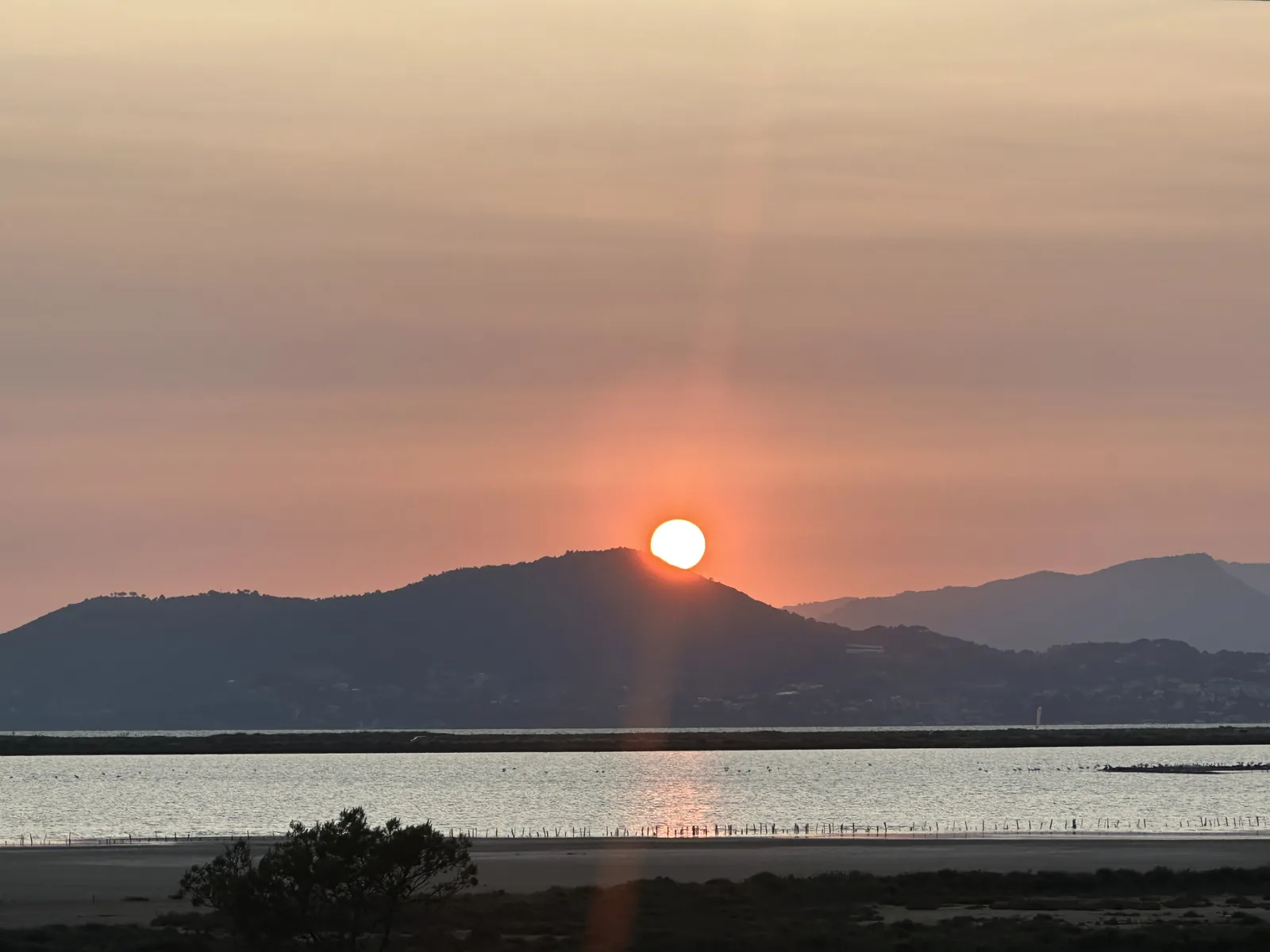
On the Giens peninsula, south of Hyères, the road crosses between the sea and the Salin des Pesquiers, salt pans worked since 1848 where flamingos stay all year. At sunset the sun drops behind the hills across the water; it was one of the most beautiful evenings of the trip.
Diving in Port-Cros and Porquerolles
The Port-Cros National Park, created in 1963, was a pioneer of marine parks in Europe, and Porquerolles has been part of it since 2012. Protection shows underwater: seagrass meadows, gorgonians, and fish that are no longer afraid of divers. We dove with Dune La Londe, the dive center on the seafront at La Londe, at Port-Cros in the morning and off Porquerolles in the afternoon.
The most famous site is La Gabinière, a rock south of Port-Cros where groupers appear from about 15 meters, with barracuda, moray eels and scorpionfish. There is often a current, and a Level 2 certification is required. The water was around 21°C (70°F) in early June, so a 5 mm wetsuit is comfortable.
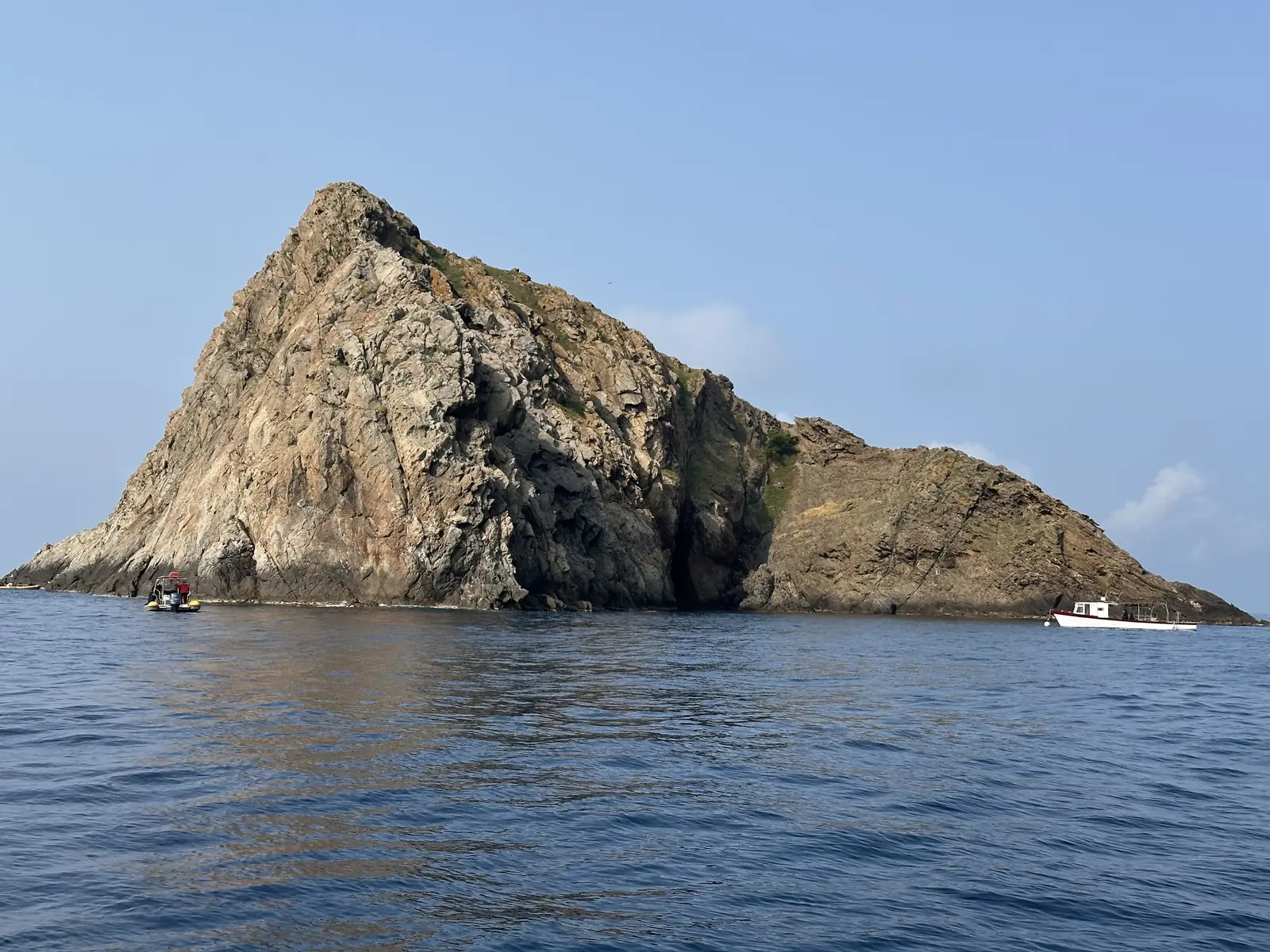
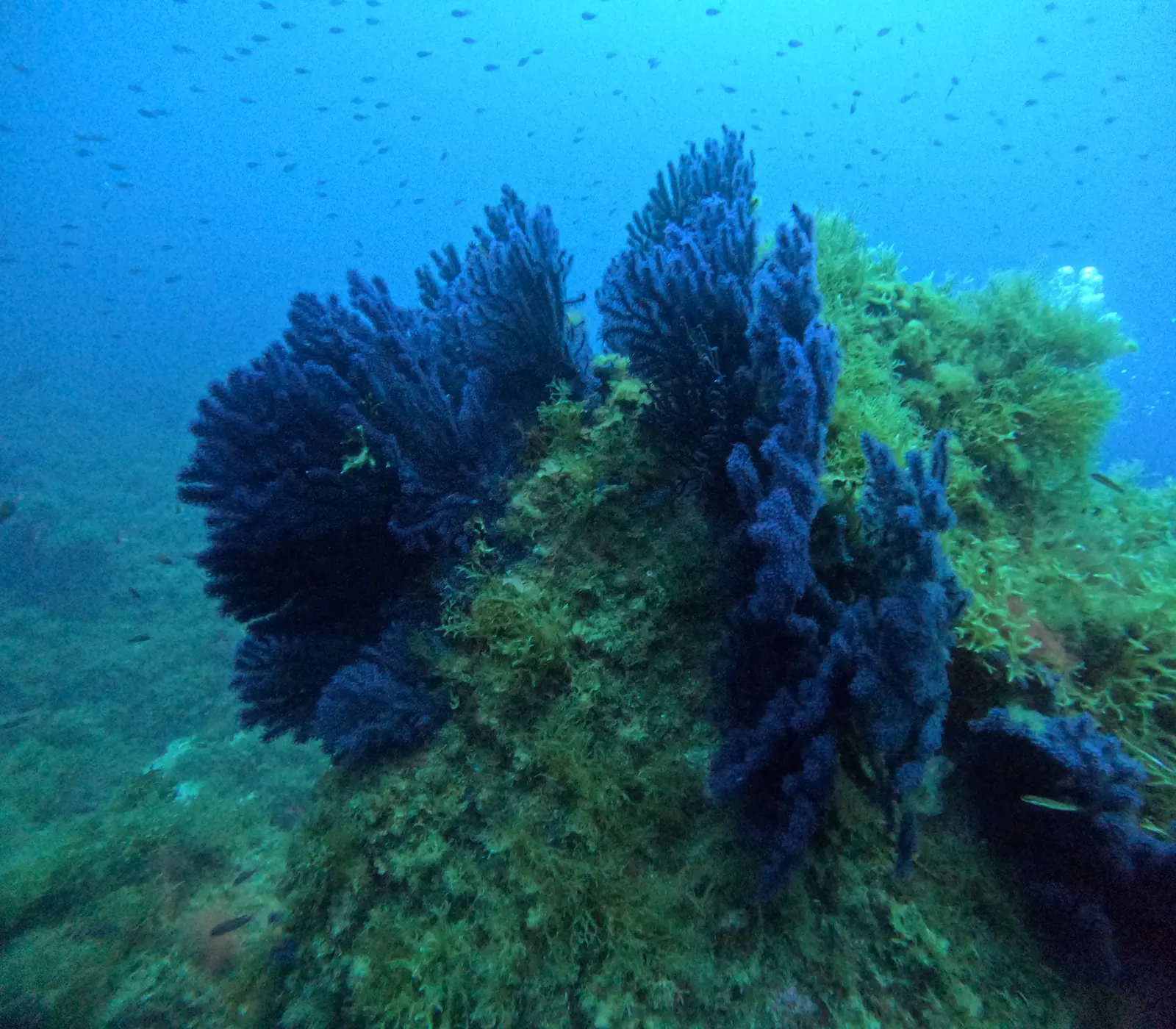
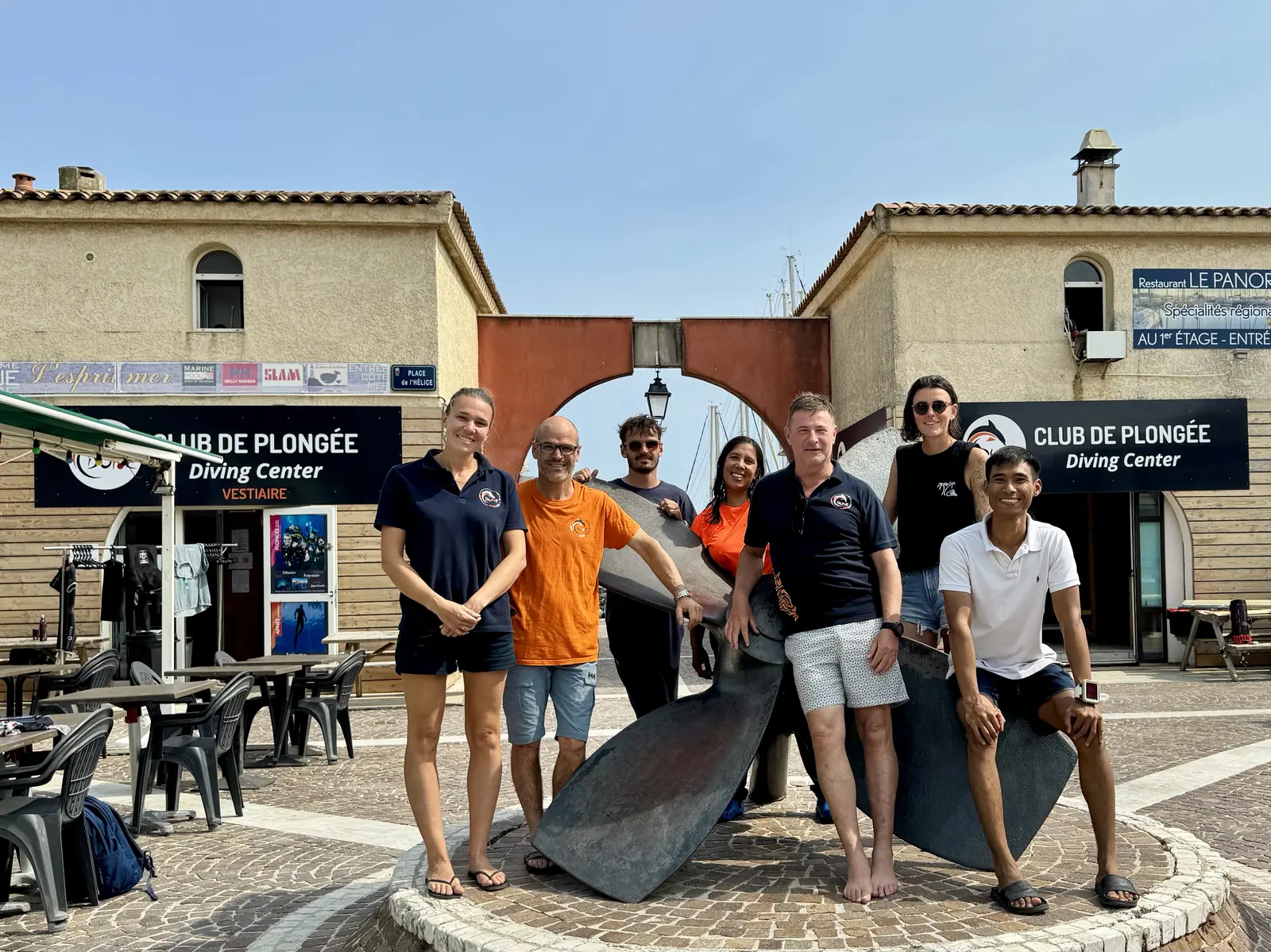
Without a dive, both islands are easy day trips: Porquerolles is about 20 minutes by boat from the Tour Fondue on the Giens peninsula, and Port-Cros is reached from Hyères, Le Lavandou or La Londe.
Into the Hills: Le Thoronet, Aups, the Verdon and Tourtour
An hour and a half inland, the Haut-Var is another world: oak forests, olive groves, villages built on rock, and one of the most spectacular canyons in Europe.
The Abbaye du Thoronet
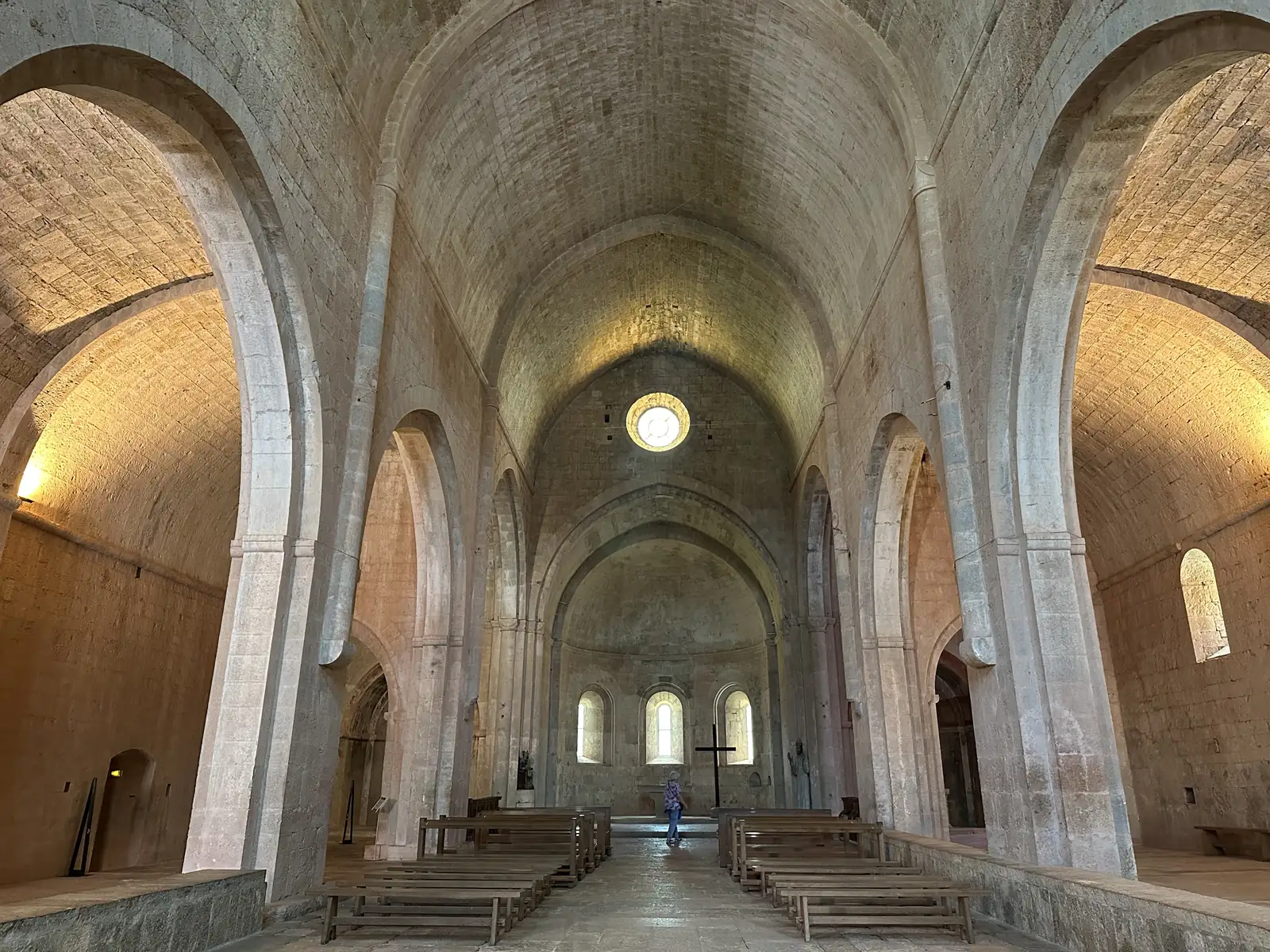
Hidden in the woods, the Abbaye du Thoronet is one of the three great Cistercian abbeys of Provence, founded in 1136 and built between about 1160 and 1190. There is no decoration at all, only stone and light, and the acoustics of the church are extraordinary. It is open daily from April to September, 10:00 AM to 6:30 PM; adult tickets are €9. We stopped there on the way from the coast to Aups.
Aups and its market
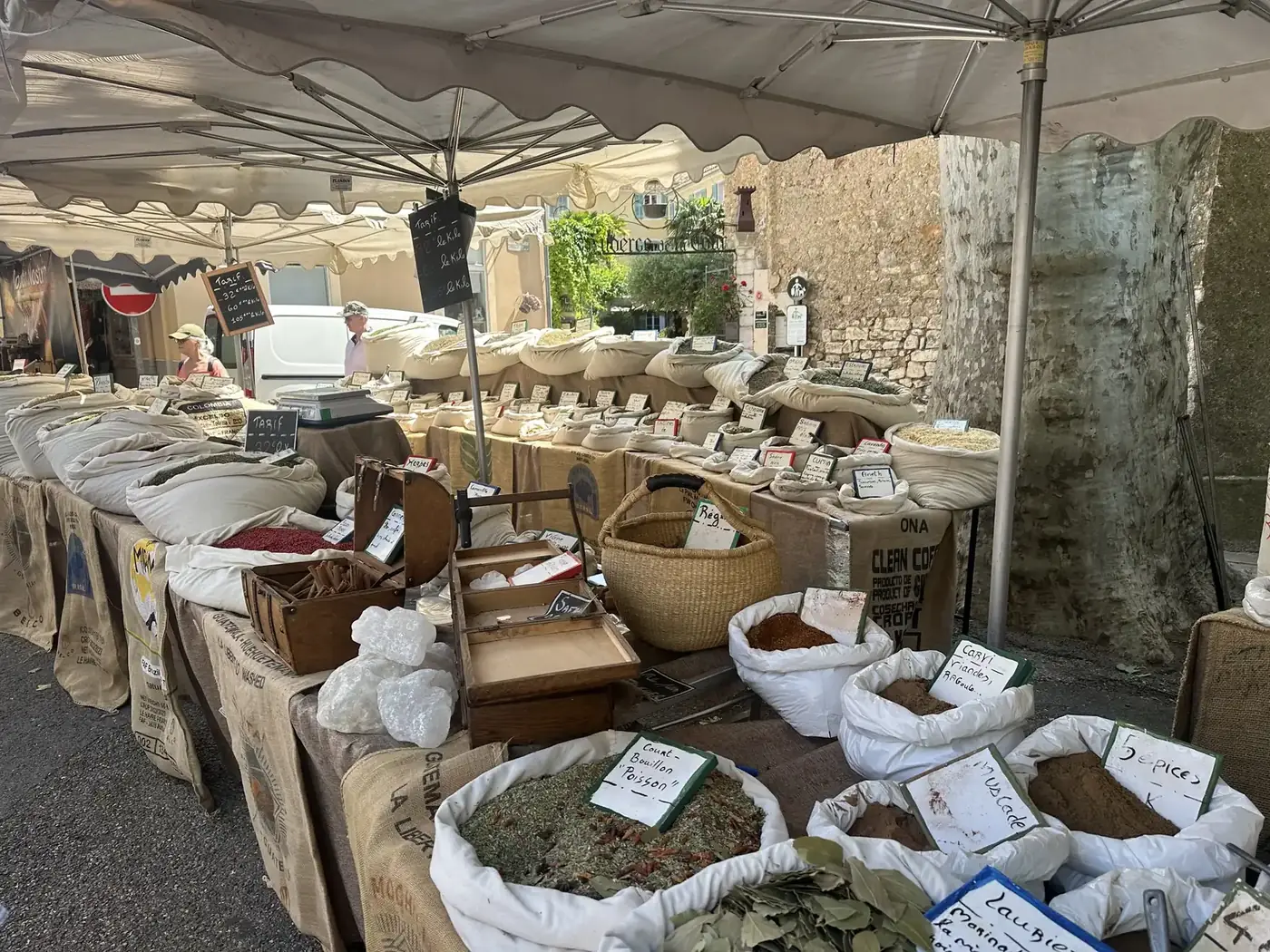
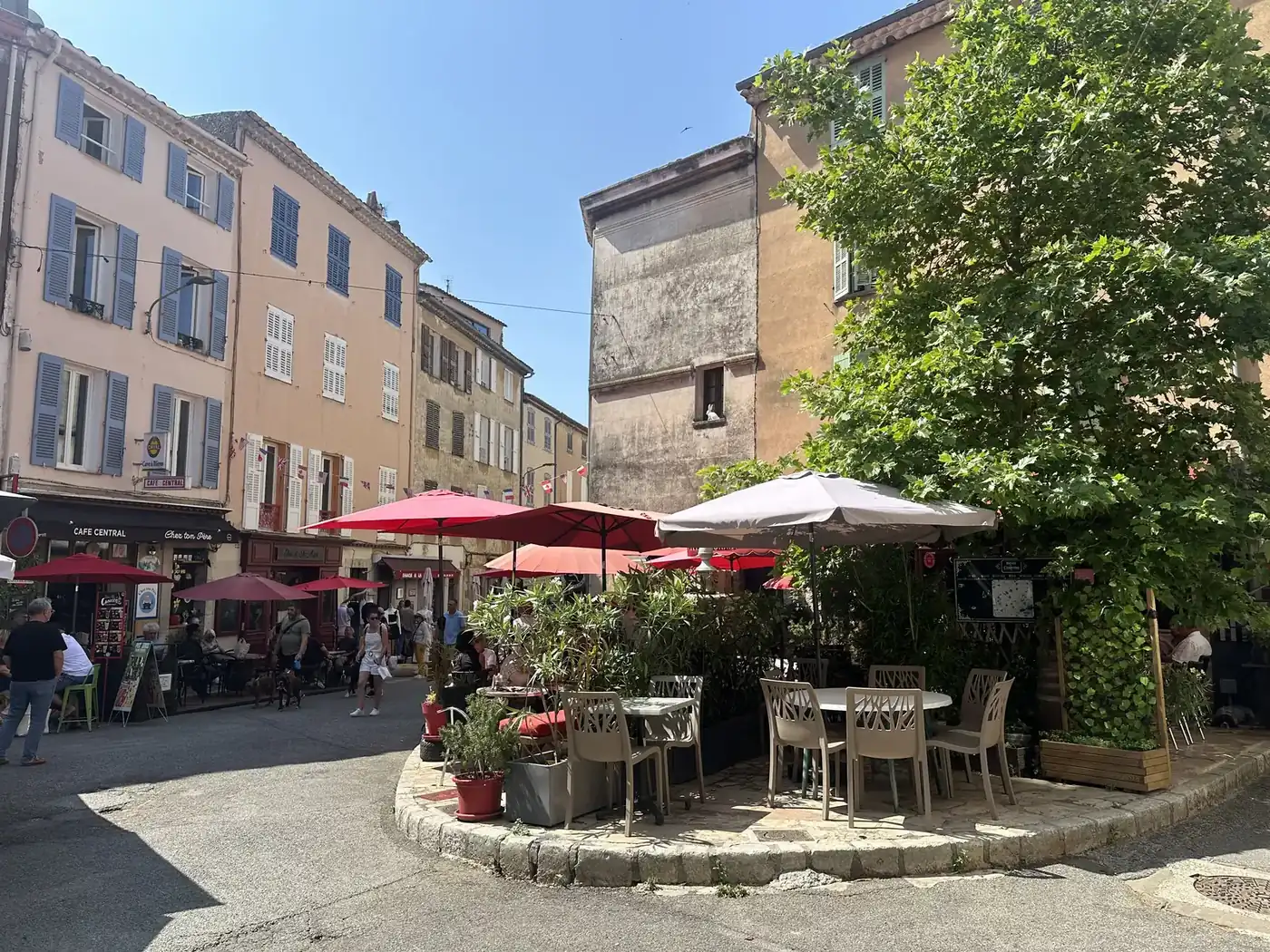
Aups is a village of fountains and plane trees and the capital of the black truffle in the Haut-Var. The Provençal market takes over the Place Frédéric Mistral on Wednesday and Saturday mornings, and from late November to March the truffle market is held on Thursday mornings. We stayed with friends near Aups and spent a long lunch by their pool before heading to the Verdon.
Paragliding over the Lac de Sainte-Croix
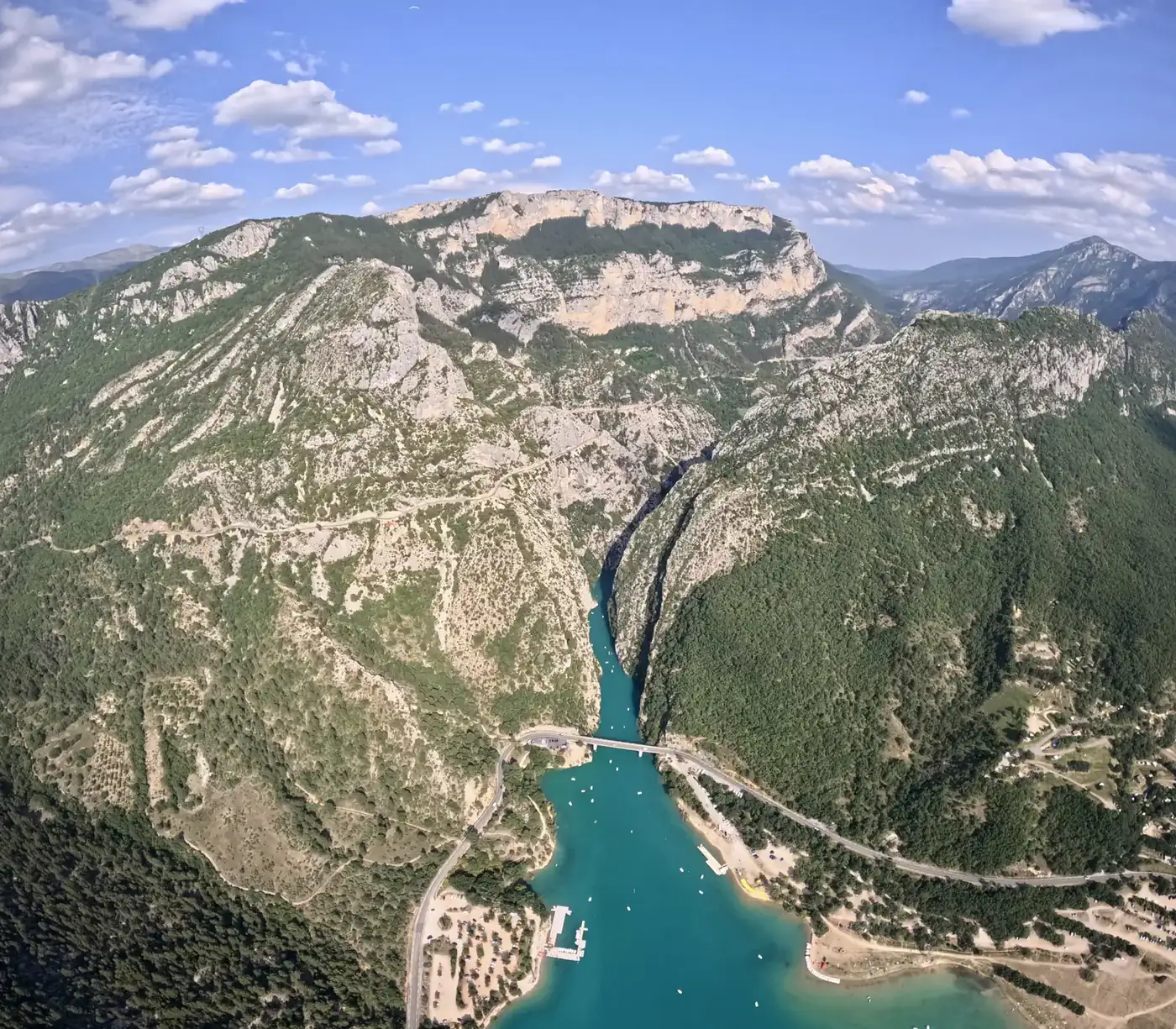
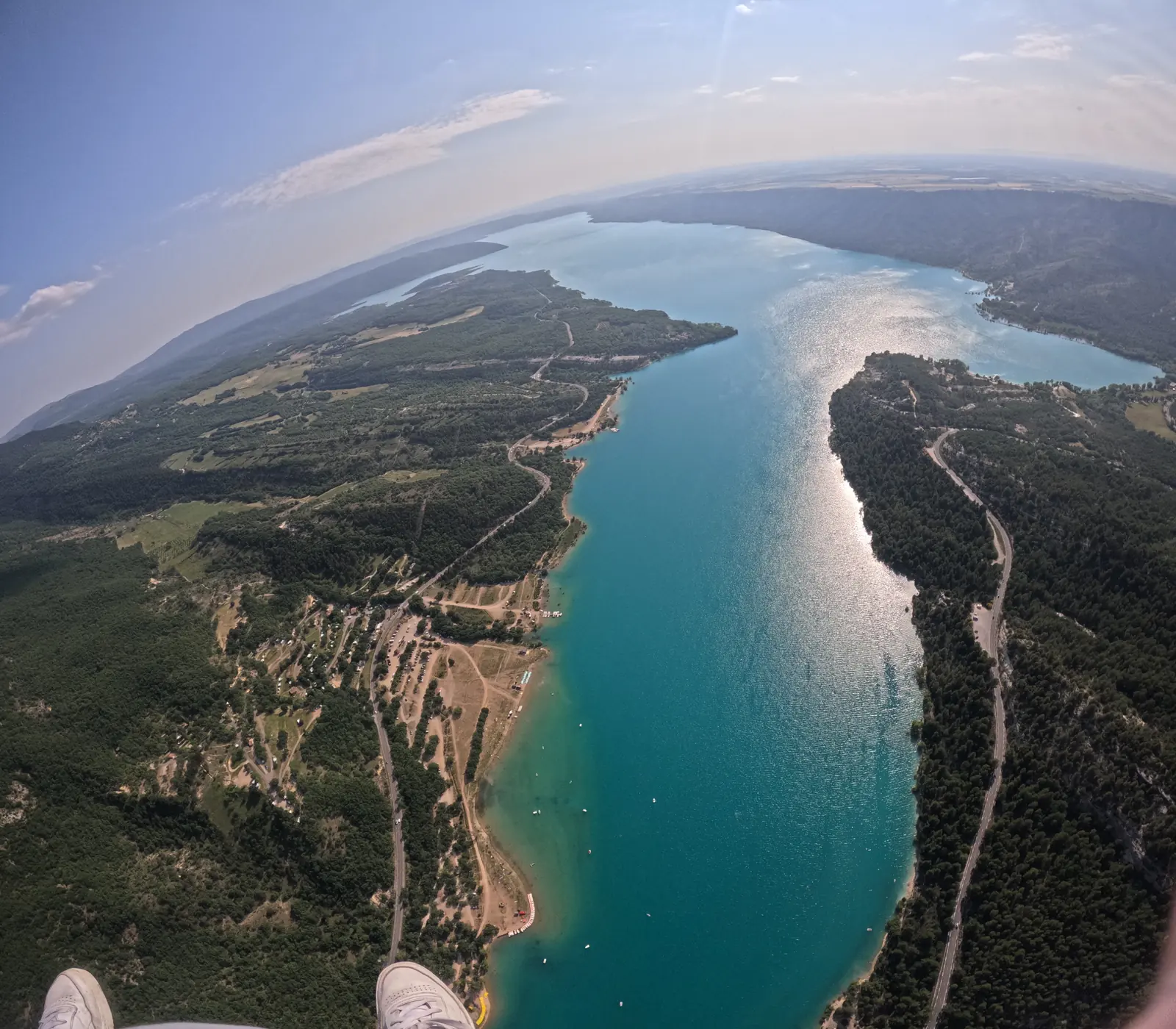
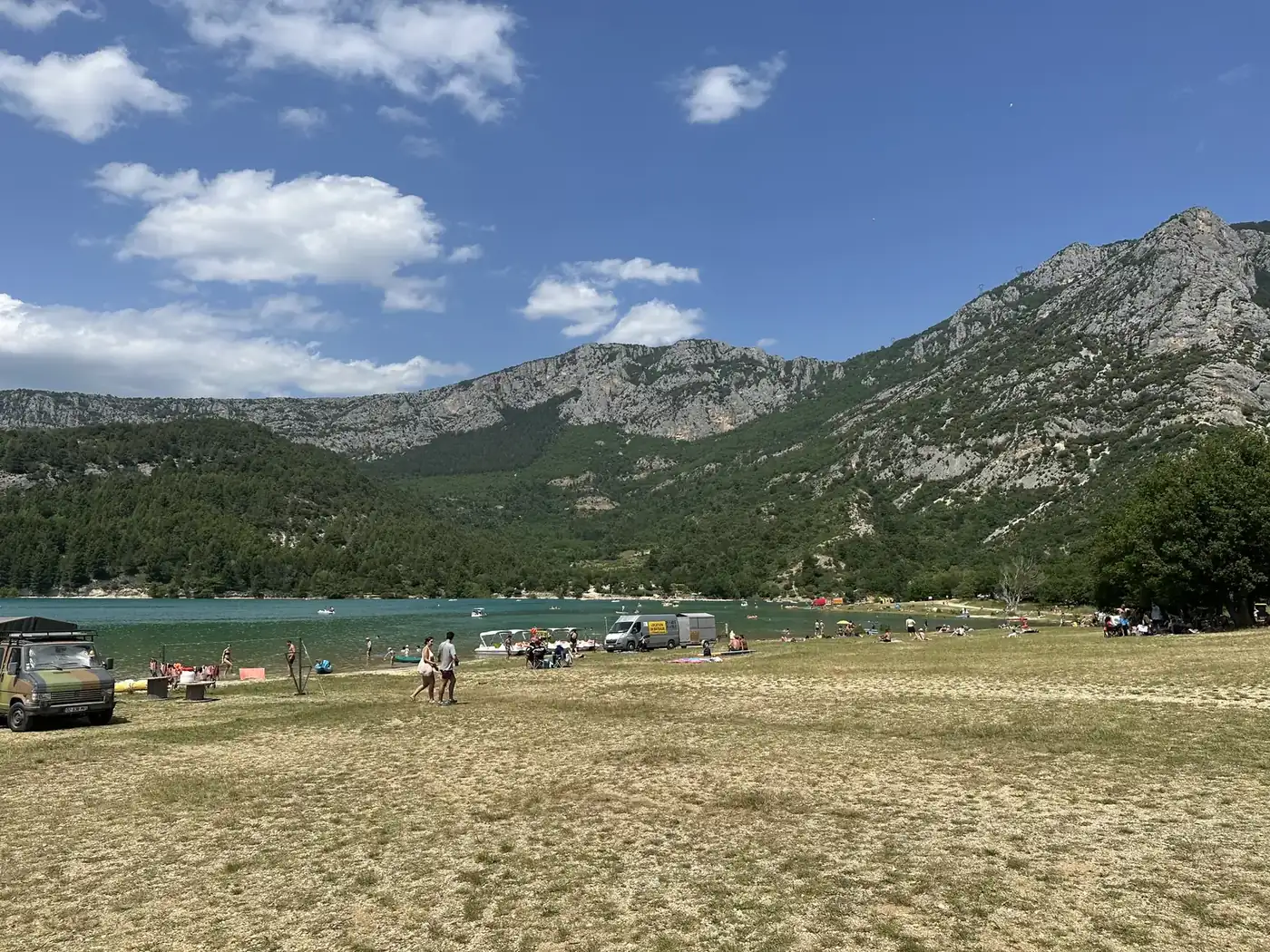
The Lac de Sainte-Croix, filled between 1973 and 1975, is the second largest reservoir in France and an impossible shade of turquoise. Combustion engines are banned, so the lake belongs to swimmers, pedal boats and electric boats. The best way to understand the landscape is from above: tandem paragliding flights take off from Moustiers-Sainte-Marie or Aiguines, from about €140 for 25 to 35 minutes. From the air you see the gorge open onto the lake at the Pont du Galetas.

Kayaking into the Gorges du Verdon
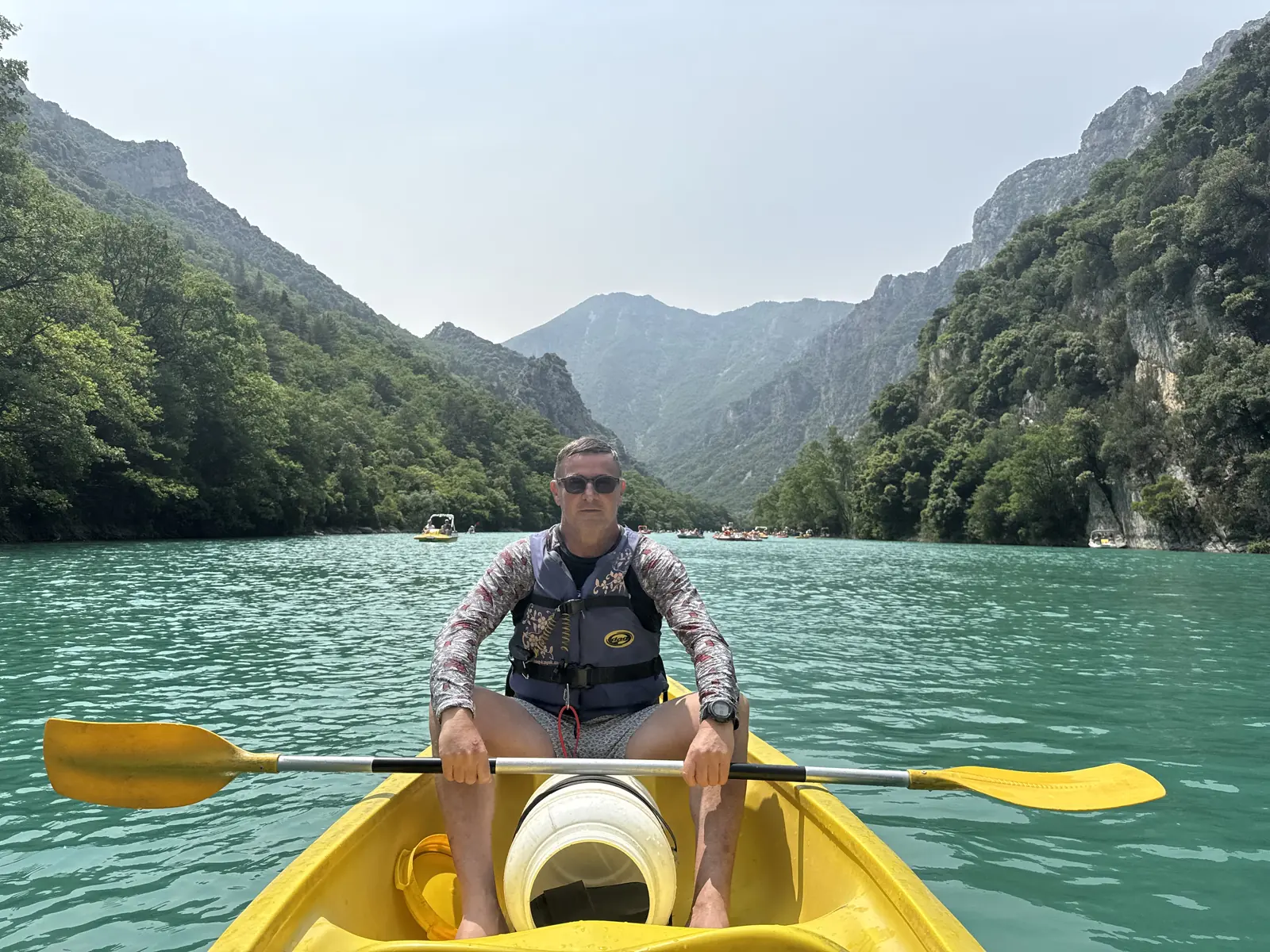
The Gorges du Verdon run for about 25 km and reach some 700 meters deep. From the Pont du Galetas, at the end of the lake, you can rent a kayak, a pedal boat or an electric boat and paddle into the canyon, between limestone walls and water the color of jade, as far as the yellow buoys. Go in the morning: by early afternoon in summer the entrance of the gorge is crowded.
Tourtour, the village in the sky
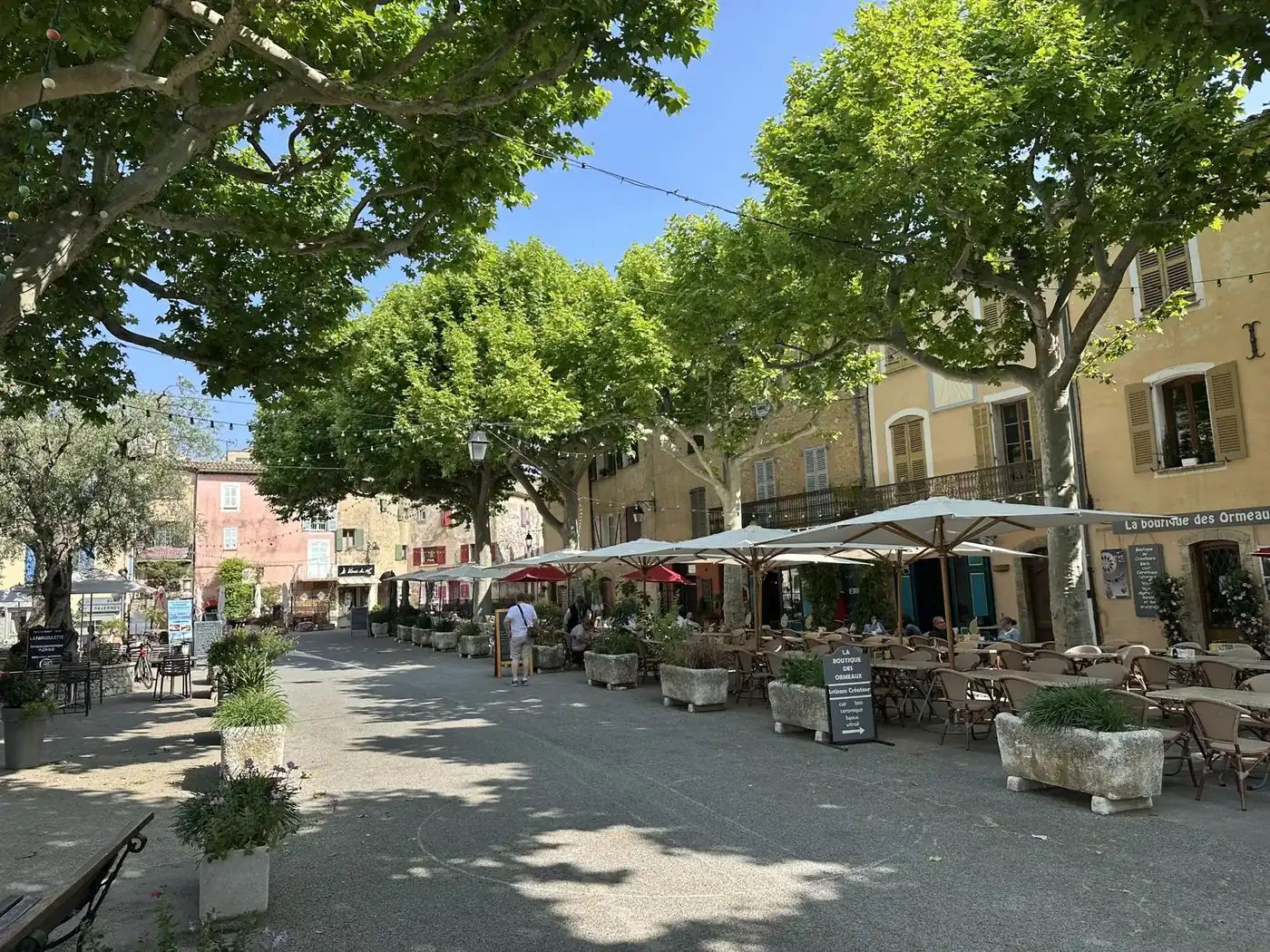
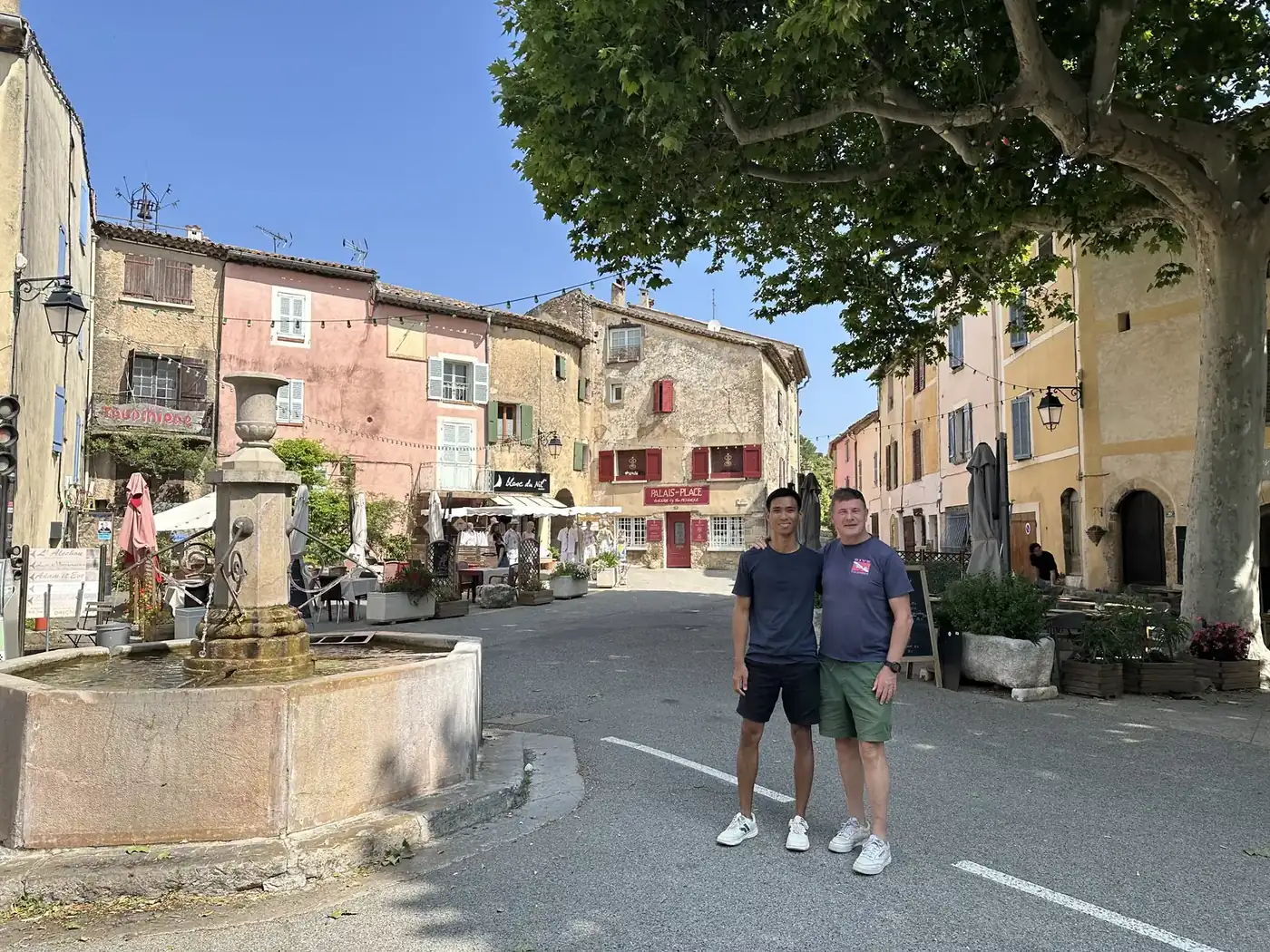
At 635 meters, Tourtour is known as the village in the Provençal sky and is one of the Plus Beaux Villages de France. Its square, shaded by plane trees, its fountain and its church on the edge of the plateau, with a view all the way to the sea on a clear day, make it the perfect last stop before driving down to Saint-Tropez.
Where to Stay on the French Riviera
The coast is long, and the best strategy is to change base two or three times rather than drive back and forth. Book early for July and August: coastal hotels are about 85% full in August.
Saint-Tropez: Hotel B Lodge
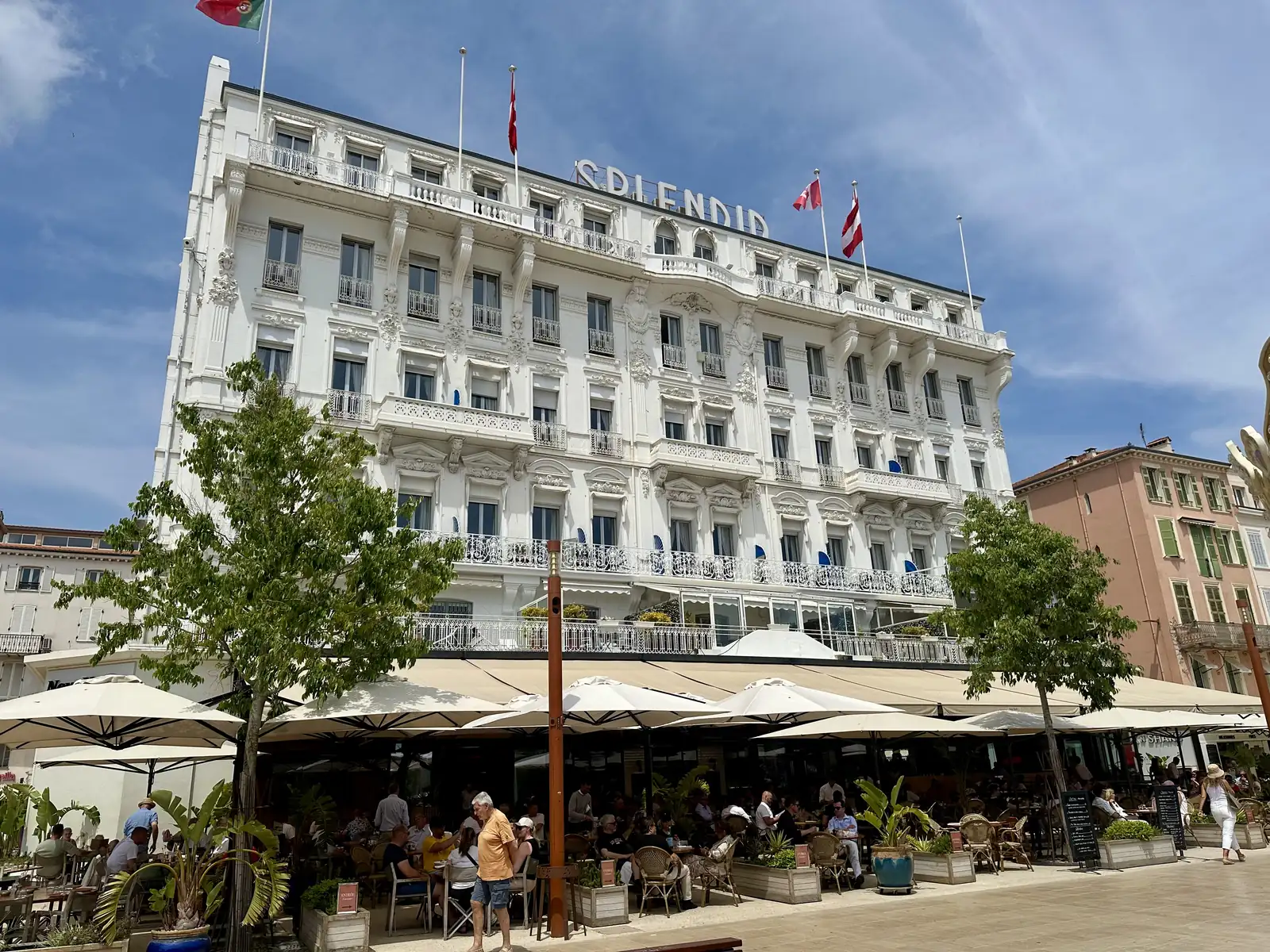
We spent our night in Saint-Tropez at the Hotel B Lodge, and I recommend it warmly: a small hotel within walking distance of the port and the Place des Lices.
Nice: Mercure Nice Marché Aux Fleurs
For the last night, the Mercure Nice Marché Aux Fleurs has an incredible location, between the Cours Saleya and the Promenade des Anglais, so you can walk everywhere in the old town.
Cannes, Antibes and the Var
In Cannes, stay near the Croisette or the old port to do everything on foot: see hotels in Cannes. Antibes is a calmer and slightly cheaper base for the Lérins islands and Cap d’Antibes: hotels in Antibes. For the islands and the Var coast, look around Hyères or La Londe-les-Maures, and for the Verdon, around Moustiers-Sainte-Marie.
How to Get to the French Riviera and Get Around
By plane or train
Nice Côte d’Azur airport is the gateway to the coast; tram line 2 runs from the terminals to the city center for €1.70. From Italy, the train is easy: from Genoa you change at Ventimiglia, and the French regional train to Nice stops at Menton, Monaco and Villefranche, about 55 minutes in all. From Paris, the TGV reaches Cannes and Nice in about six hours.
Train or car?
Between Cannes, Antibes, Nice, Villefranche, Monaco and Menton, the coastal train is the easiest option, and parking is expensive. For La Londe, Hyères, Saint-Tropez and the Verdon, a car is essential. We rented ours at Nice airport and returned it there at the end. Avoid driving into Saint-Tropez on summer weekends, when the single road in can take hours.
Best Time to Visit the French Riviera
June and September are the best months: long days, a sea already at about 22°C (72°F) in Nice in June, and far fewer people than in July and August, when the water reaches 25-26°C (77-79°F) but hotels are nearly full and prices peak. In May, the Cannes Film Festival fills the hotels around Cannes. Winter is mild and quiet, perfect for Nice, the villages and the markets, but not for swimming.
Read More

France Travel Guide
The best regions of France, from Paris and Normandy to Alsace, the Alps and the Riviera.
Italy Travel Guide
Rome, Florence, Venice, Lake Como and the Cinque Terre, just across the border.
Frequently Asked Questions About the French Riviera
How many days do you need on the French Riviera?
A week is ideal for the coast between Nice, Cannes, Antibes and Saint-Tropez. Add three or four days if you want to include the Var coast, the islands and the Gorges du Verdon, as I did on an eight-day trip.
What is the best time to visit the French Riviera?
June and September. The sea is warm, the days are long and there are far fewer people than in July and August, when hotels are nearly full and prices peak.
Do you need a car on the French Riviera?
Not for the coast between Cannes and Menton, which is well served by the train. You do need one for Saint-Tropez, Hyères, La Londe, the Verdon and the hill villages.
Is Saint-Tropez part of the French Riviera?
Yes. Saint-Tropez is on the Var coast, at the western end of the Riviera, about 1 hour 30 minutes from Cannes by car outside rush hour. Its famous beach, Pampelonne, is in the neighboring town of Ramatuelle.
How do you get to the Lérins Islands?
By ferry from the old port of Cannes, about 15 minutes to Sainte-Marguerite with Trans Côte d’Azur or Horizon and about 20 minutes to Saint-Honorat with Planaria, for around €18.50-19.50 per adult. In season, Riviera Lines also sails to Sainte-Marguerite from Golfe-Juan.
Can you dive on the French Riviera?
Yes, and the best diving is in Port-Cros National Park and around Porquerolles, off Hyères. La Gabinière, with its groupers, is the most famous site; it often has a current and requires a Level 2 certification.
How far is the Gorges du Verdon from the coast?
About an hour and a half to two hours by car from Hyères, Saint-Tropez or Cannes. Staying a night or two in a village such as Aups, Tourtour or Moustiers-Sainte-Marie makes the trip far more enjoyable.
Can you stop in Monaco on the train from Italy to Nice?
Yes. The regional train from Ventimiglia to Nice stops at Monaco-Monte-Carlo, so you can get off for a couple of hours and take a later train; the ride from Monaco to Nice takes about 25 minutes.