Ho Chi Minh City (Saigon) Travel Guide
By Blaise Jaeger · Updated October 11, 2026
Ho Chi Minh City, still called Saigon by almost everyone, was where my trip across Vietnam began in April 2024. I landed at Tan Son Nhat on the afternoon of April 4, spent the evening on Nguyen Hue, did the Cu Chi tunnels and the Mekong Delta in one day on the 5th, and gave the 6th to the city itself: the Central Post Office, Landmark 81 and Binh Tay market in Cholon, before flying out that night.
This guide covers what I would do again in three days, what to book, where to stay and how to get around Vietnam’s biggest city.

Why Visit Ho Chi Minh City?
Ho Chi Minh City is the largest city in Vietnam and its economic engine, faster, richer and more modern than Hanoi. It was renamed after the reunification of 1975, but the old name never left: the central district is still Saigon, and so is the river.
The contrasts start at the airport, where the red flag with the yellow star hangs next to the hammer and sickle of the Communist Party. Then you reach District 1, with its glass towers, luxury car dealers and rooftop bars. Vietnam still calls itself communist, but the market economy is everywhere here.
How Many Days Do You Need in Ho Chi Minh City?
- One day for the city centre: Nguyen Hue, the Central Post Office, Landmark 81 or the Bitexco tower, and Cholon.
- One day for the Cu Chi tunnels and the Mekong Delta, combined on a day tour, as I did.
- A third day for the museums and markets, or to slow down.
Saigon is the usual start or end of a south–north trip. The full route and the best time to go are in my guide to planning your trip to Vietnam.
Things to Do in Ho Chi Minh City
Nguyen Hue Walking Street and the Café Apartment
I stayed in District 1, close to Nguyen Hue, the wide pedestrian boulevard that runs from the Saigon River to the City Hall. It is the place to feel the city’s pulse, especially in the evening, when the neon lights come on and families, scooters and street vendors fill the square.
Halfway along, at number 42, stands the Café Apartment, an old residential block whose every flat has become a café or a shop. It looks surprising from the street, and it is a nice place for a coffee with a view of the boulevard. Pick your café before going up: the lift is not free.

At the river end of the boulevard there is even a Rolls-Royce dealer. I was clearly not dressed to be taken seriously as a buyer.
Saigon Central Post Office
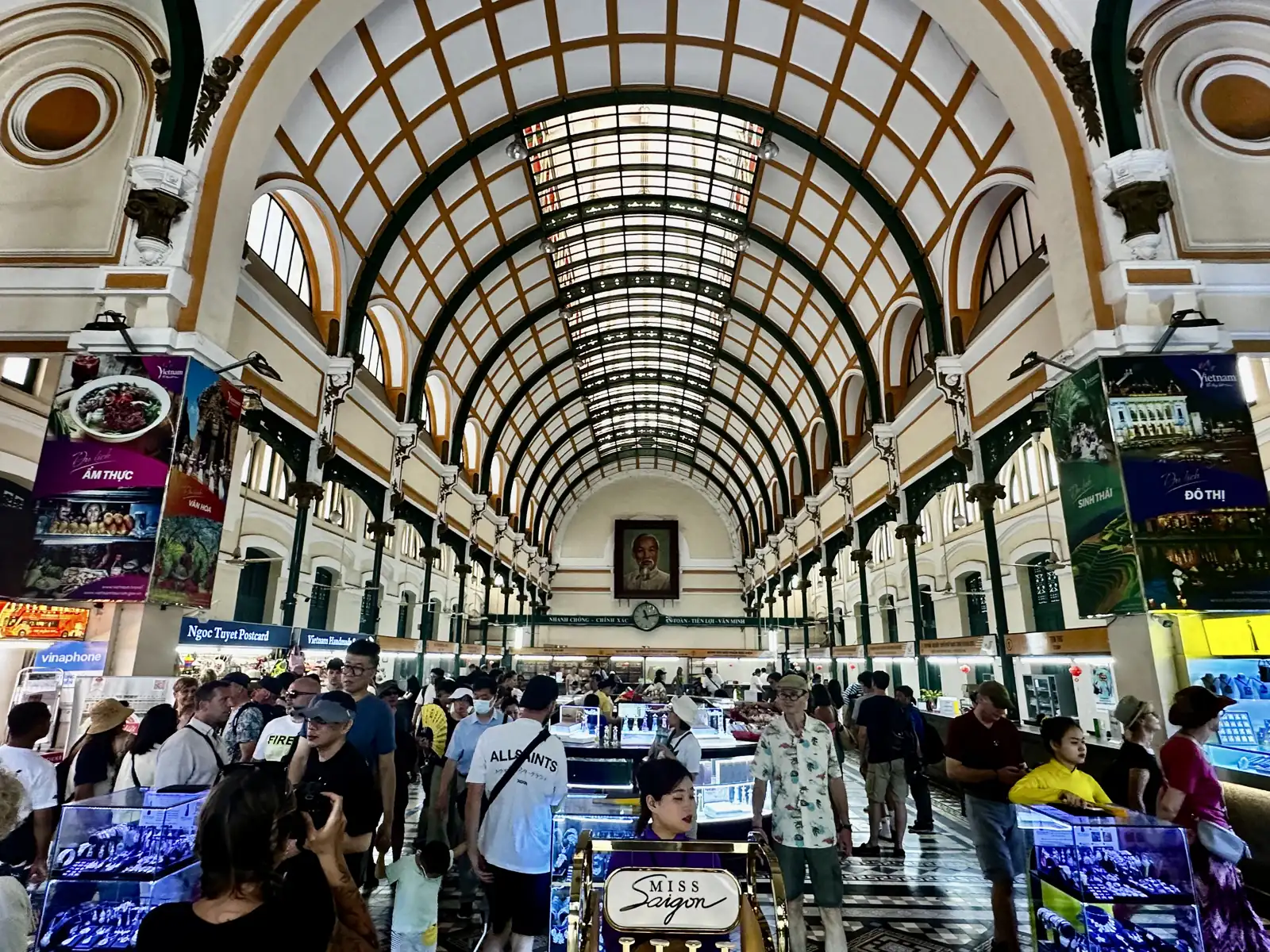
Built by the French between 1886 and 1891, the Central Post Office is the most beautiful colonial building in the city. Inside, under the green iron vault, old maps of Saigon and a portrait of Ho Chi Minh look down on the counters, which still sell stamps alongside the souvenirs. I sent a postcard to my mother in France from here. I am still waiting to hear whether it arrived.

The red-brick Notre-Dame Cathedral stands just across the square, but it was covered in scaffolding for its long restoration when I visited.
Landmark 81 and the SkyTouch Glass Walk
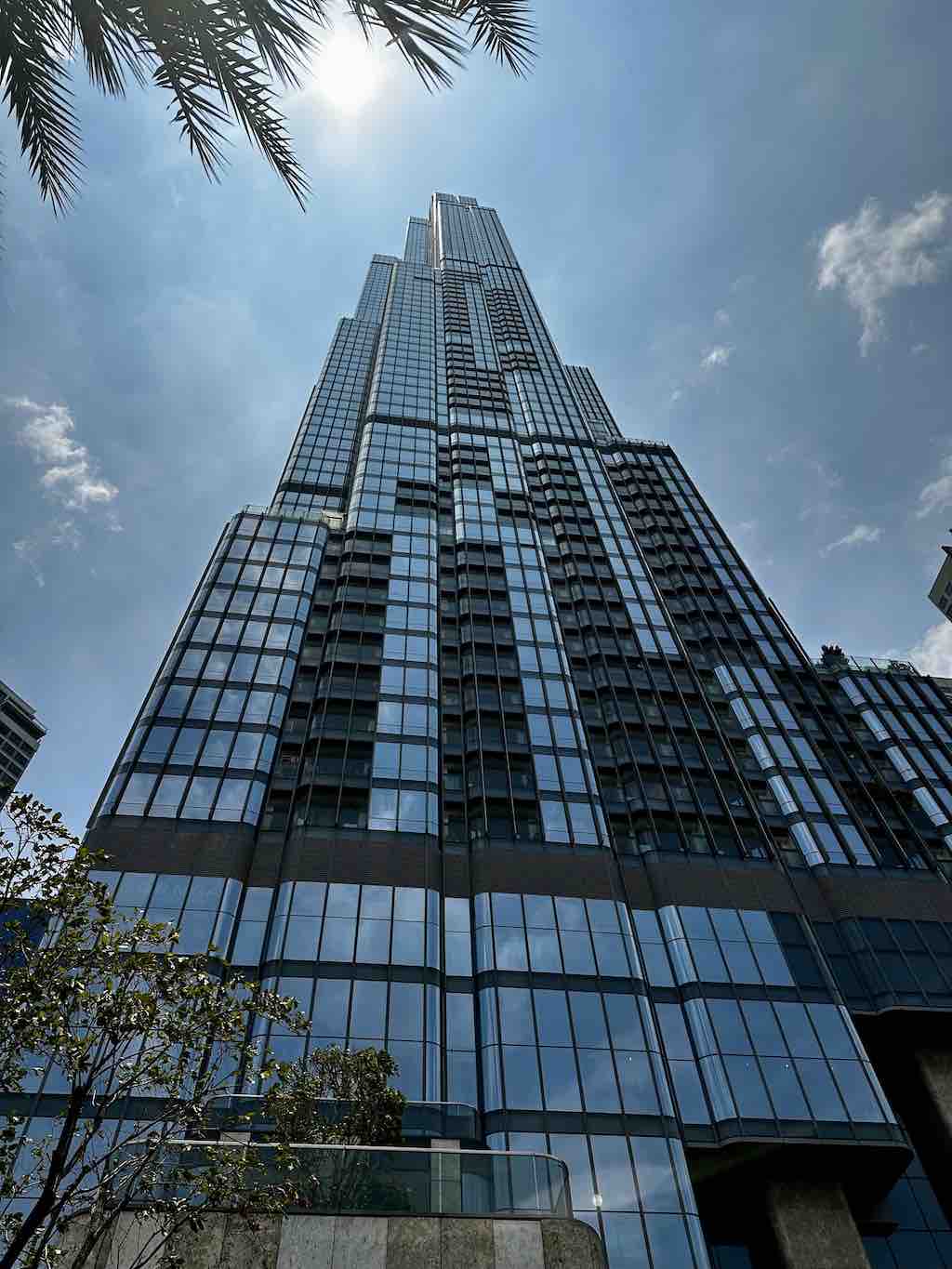
Landmark 81, on the river in Binh Thanh district, is the tallest building in Vietnam at 461 metres. The SkyView observation deck sits on the top floors, and the highlight is SkyTouch, a glass walkway on the 79th floor, about 370 metres above the ground. The view over the Saigon River loops and the endless low-rise districts explains the size of the city better than any map.
There is also a virtual reality game that simulates a jump from the top of the tower. Thrills guaranteed. If you would rather stay central, the Saigon Skydeck in the Bitexco Financial Tower, in District 1, is the closer alternative.
Cholon and Binh Tay Market
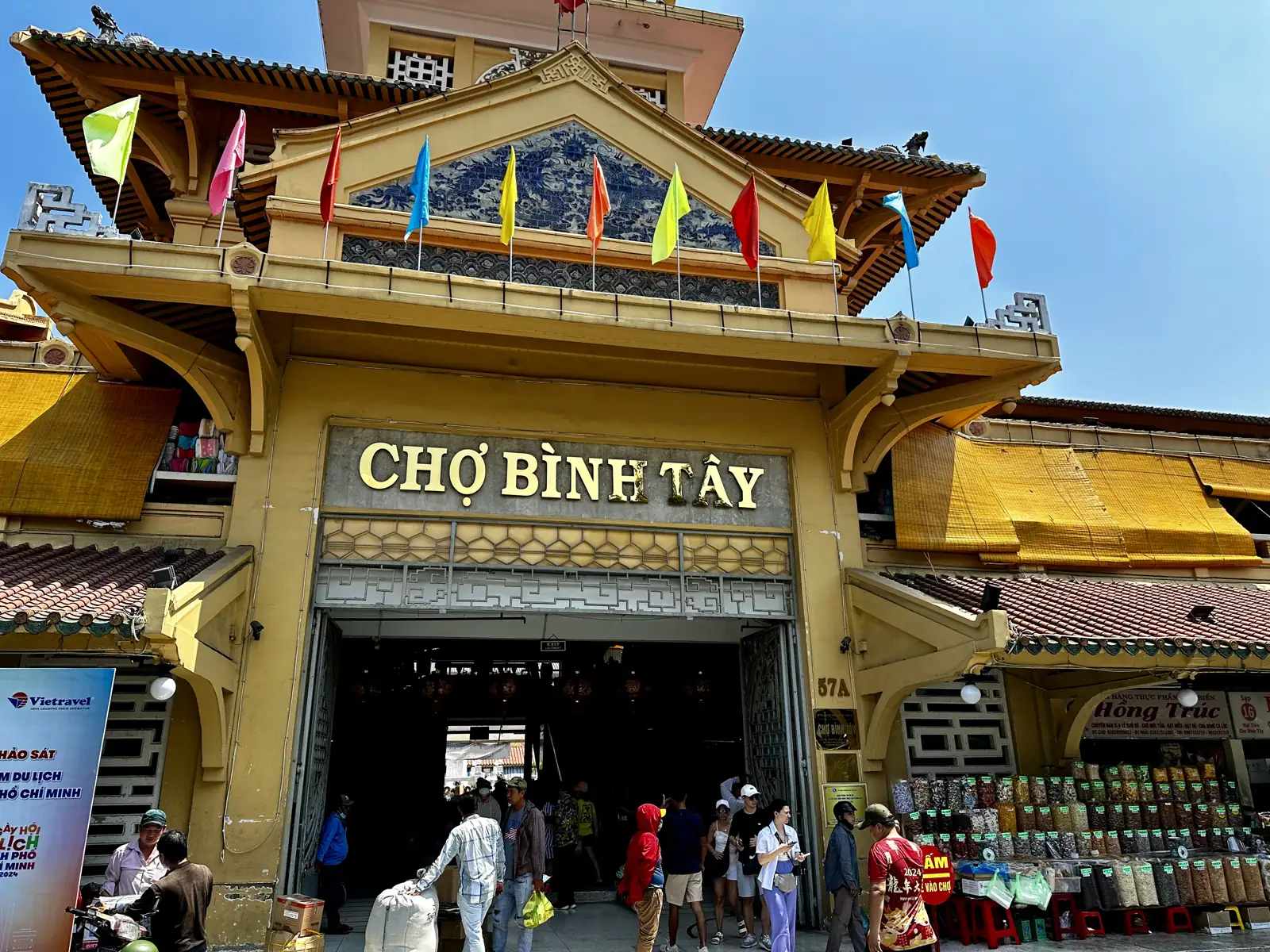
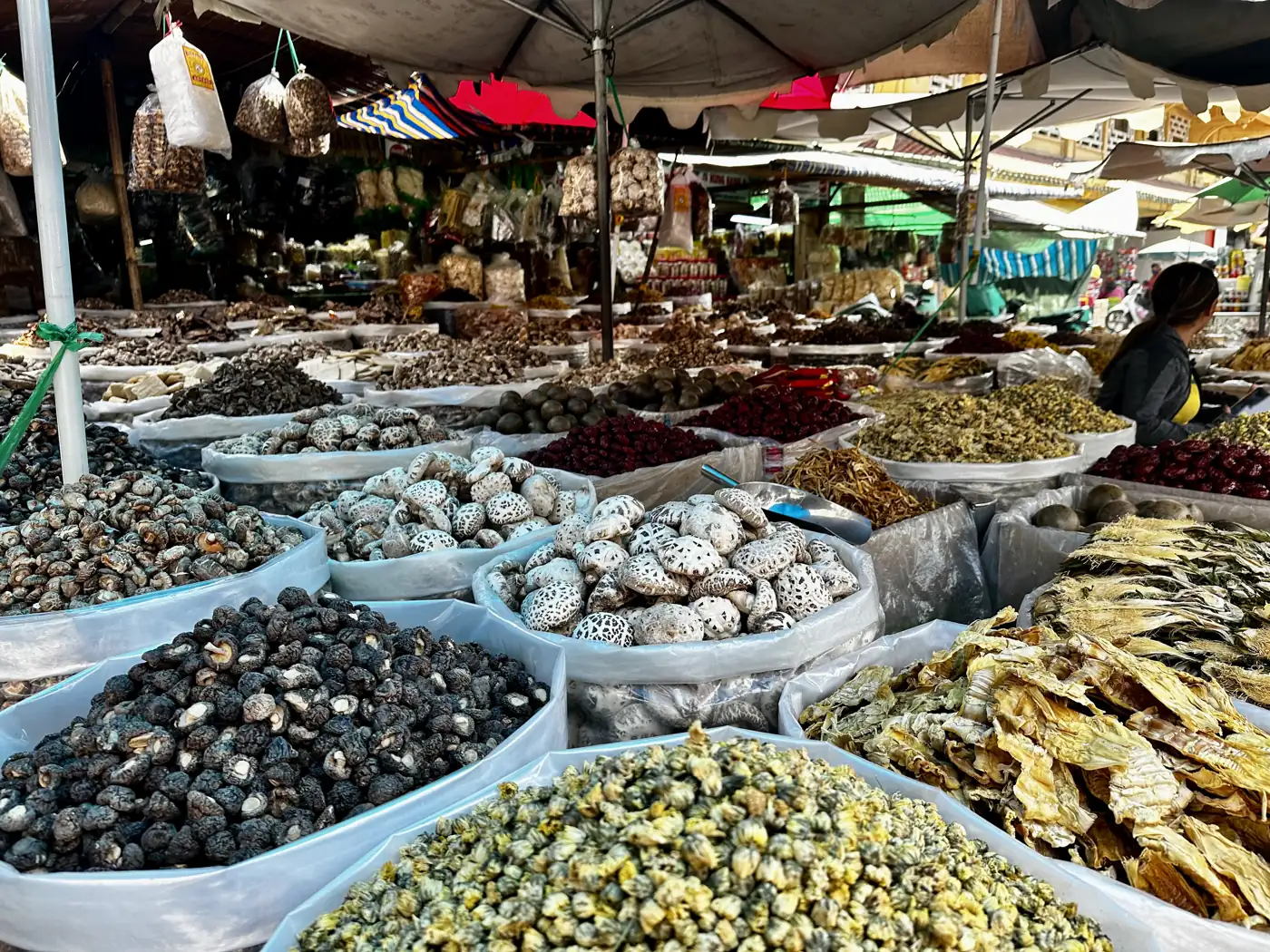
Cholon, Saigon’s Chinatown, in District 5, has been home to the city’s Chinese community for centuries. Its heart is Binh Tay Market, built in 1928, a wholesale market where you will find dried fruit, spices, tea, mushrooms and seafood by the sack. Walk the surrounding streets too: the Chinese assembly halls and pagodas, like Thien Hau Temple, are among the most beautiful in the city.

If You Have More Time
- War Remnants Museum: the Vietnam War seen from the Vietnamese side, hard but essential.
- Independence Palace: the former presidential palace of South Vietnam, where the war ended in April 1975.
- Ben Thanh Market: the most central market, more touristy than Binh Tay but easy to combine with District 1.
Cu Chi Tunnels Day Trip
About two hours north-west of the city, the Cu Chi tunnels are part of a network of more than 200 km of underground galleries dug during the wars against France and then the United States. Villagers and fighters lived, cooked, treated their wounded and hid there. Two sites are open to visitors, Ben Dinh, closer to Saigon and more visited, and Ben Duoc.

I booked the Cu Chi Tunnels & Mekong Delta day tour, which turned out to be very well organised. My guide, a young man who had just finished his two years of military service, was proud to show us the ingenuity of the tunnels, and also, more disturbingly, the traps used against American soldiers.

His story did not stop there: his grandfather had fought on the French side against the North Vietnamese during the Indochina War. One family, both sides of the history.
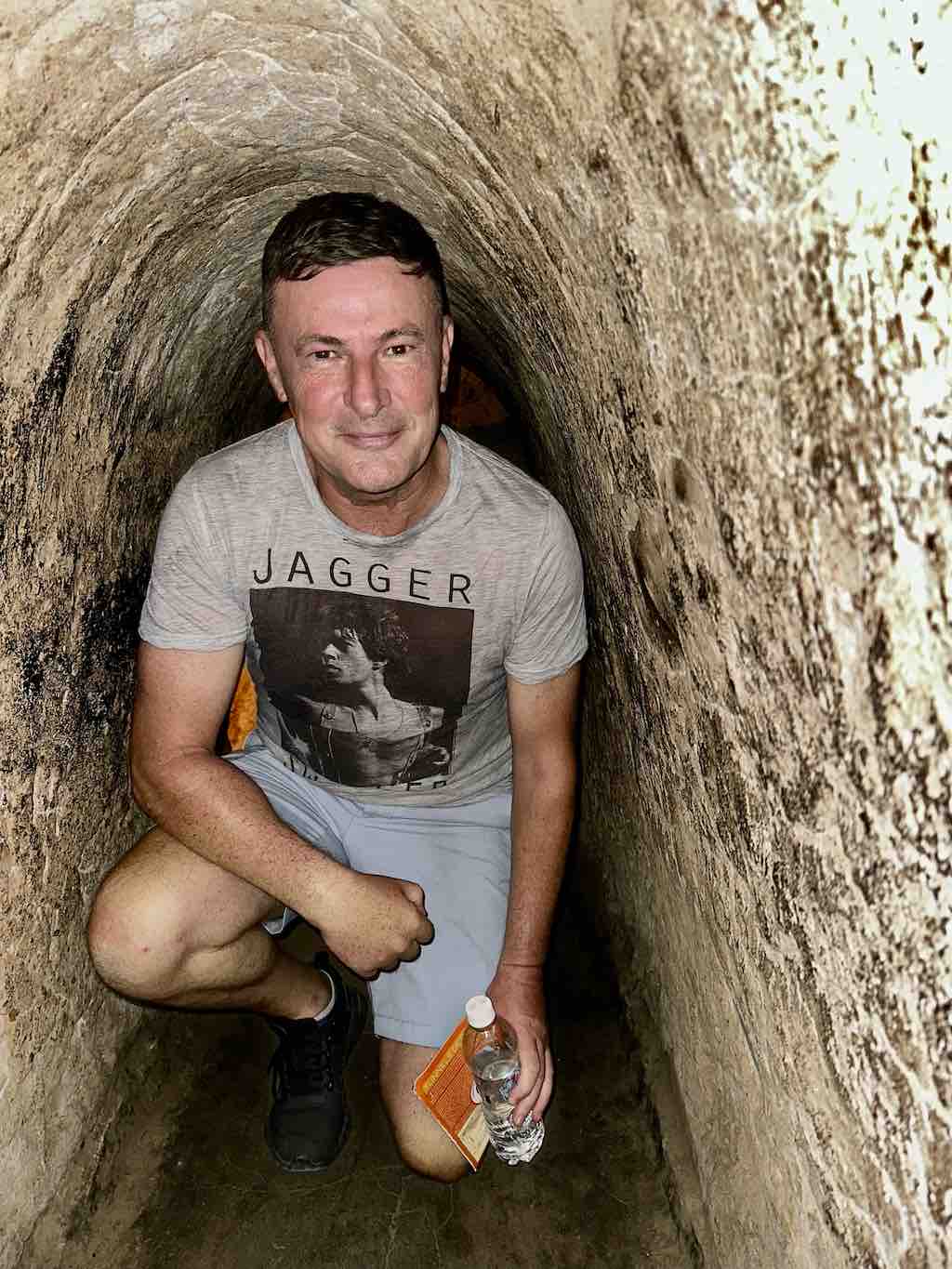
Some sections of tunnel have been widened for tourists, but they are still narrow, hot and dark. If you are claustrophobic, the first few metres are enough.
Mekong Delta Day Trip from Saigon
In the afternoon, the same tour continued to the Mekong Delta, near My Tho and Ben Tre. Most day tours follow the same programme, and it is touristy, with a shop at every stop, but I still enjoyed it:
- A boat across the Mekong to the islands. Look at the bows: every boat except fishing boats has two painted eyes, and your guide will tell you why.
- A coconut candy workshop in Ben Tre, the coconut capital of Vietnam.
- Lunch on the island, with elephant ear fish, spring rolls and fresh fruit.
- A sampan ride through narrow canals lined with water coconut palms.

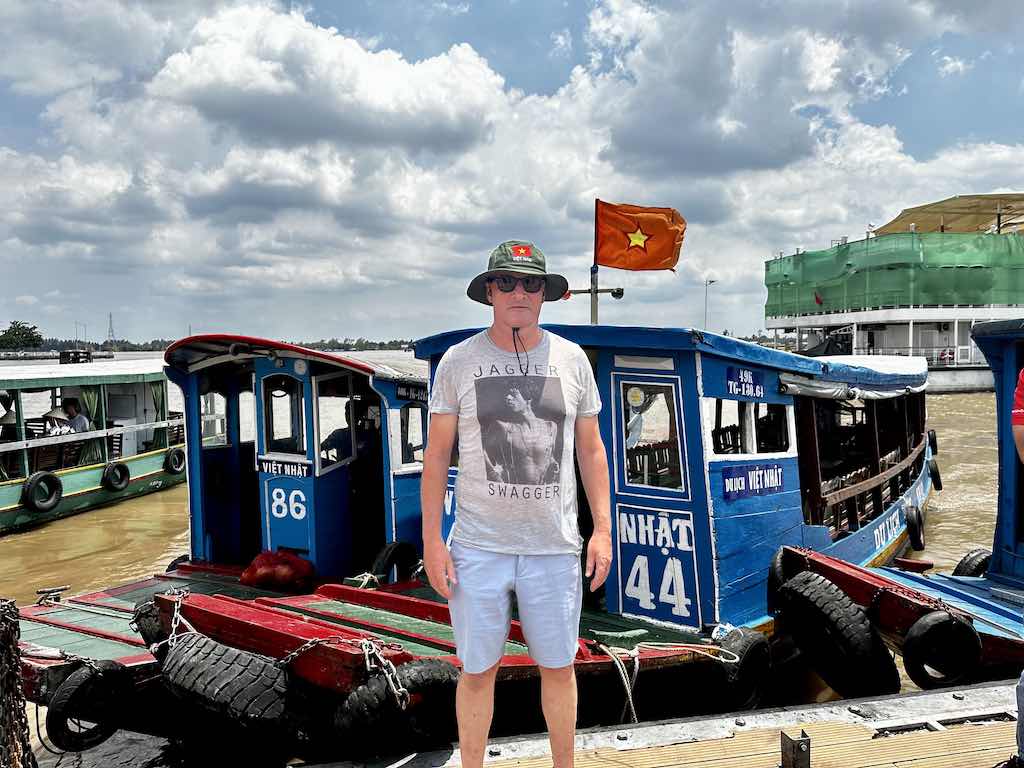
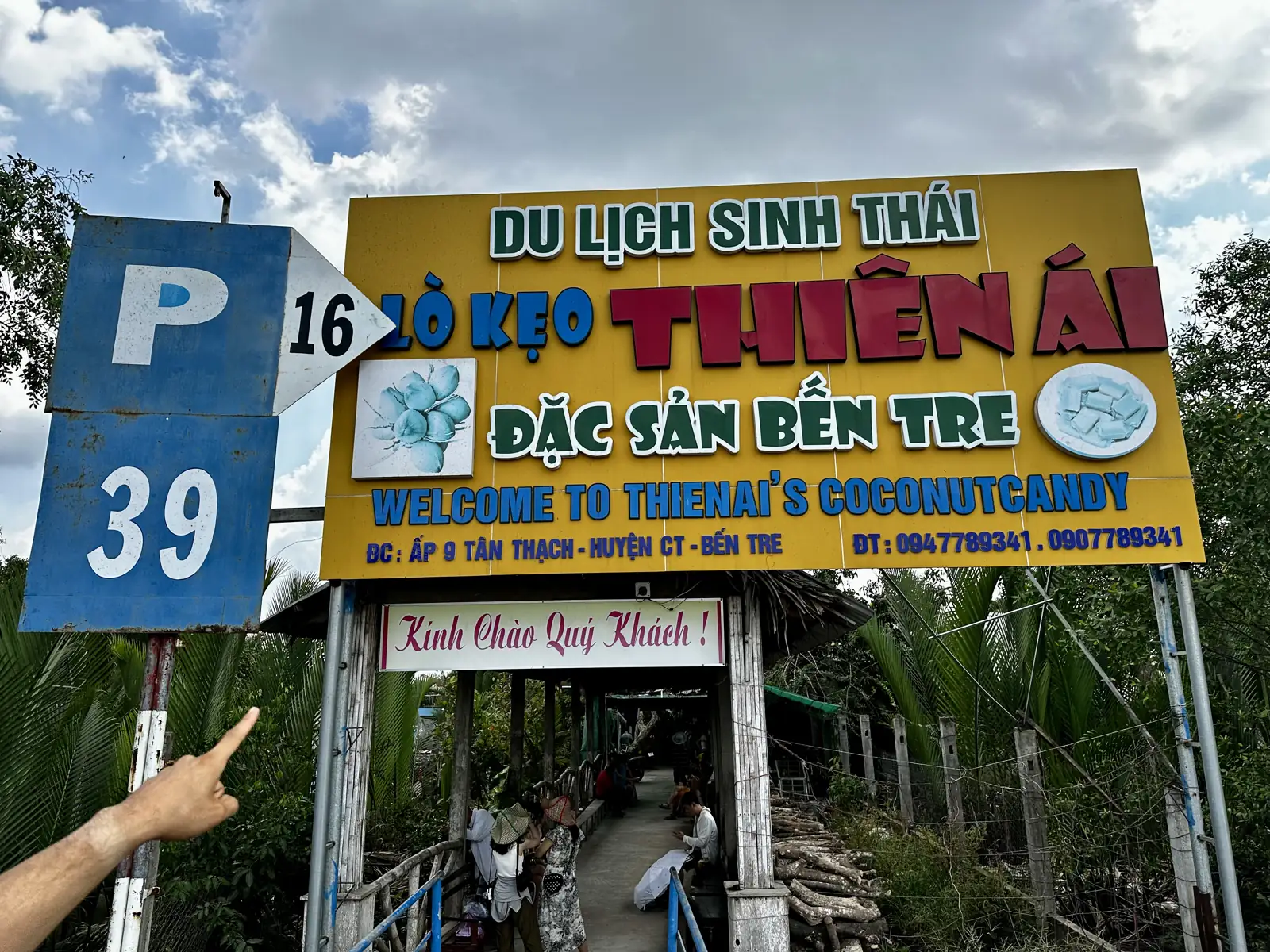
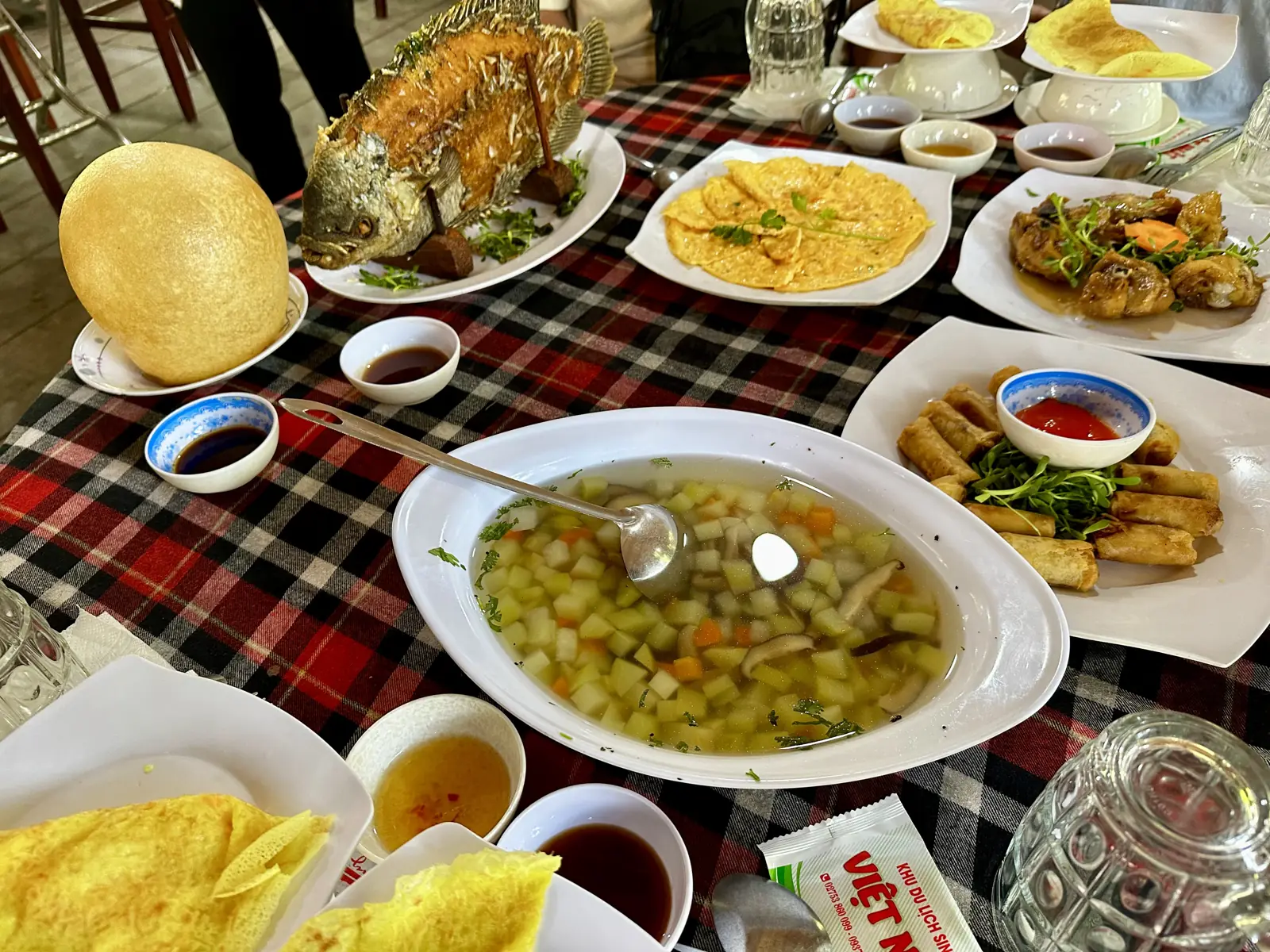

We left at 7 am and were back around 7 pm, in a group of six. For a first taste of the delta from Saigon it is perfect. To see the real floating markets, like Cai Rang near Can Tho, you need to spend at least one night in the delta.
Where to Eat in Ho Chi Minh City
Saigon eats on the street: bánh mì for breakfast, a bowl of hủ tiếu or phở at lunch, broken rice (cơm tấm) with grilled pork in the evening. Prices start at 30,000 to 60,000 VND for a dish at a street stall. My favourite dishes and how much they cost are in my guide to Vietnamese food.
Where to Stay in Ho Chi Minh City
- District 1: the best base for a first visit, within walking distance of Nguyen Hue, the Post Office and Ben Thanh. This is where I stayed.
- District 3: quieter, leafier, and a little cheaper, just west of District 1.
- Binh Thanh: around Landmark 81, modern and well located for the river and the tower.
Since the 2025 administrative reform, districts have officially been replaced by wards, but everyone, from taxi drivers to hotels, still uses the old district names.
I compare places on Booking.com. In District 1, avoid Bui Vien Street if you want to sleep: it is the backpacker party street.
Getting to and Around Ho Chi Minh City
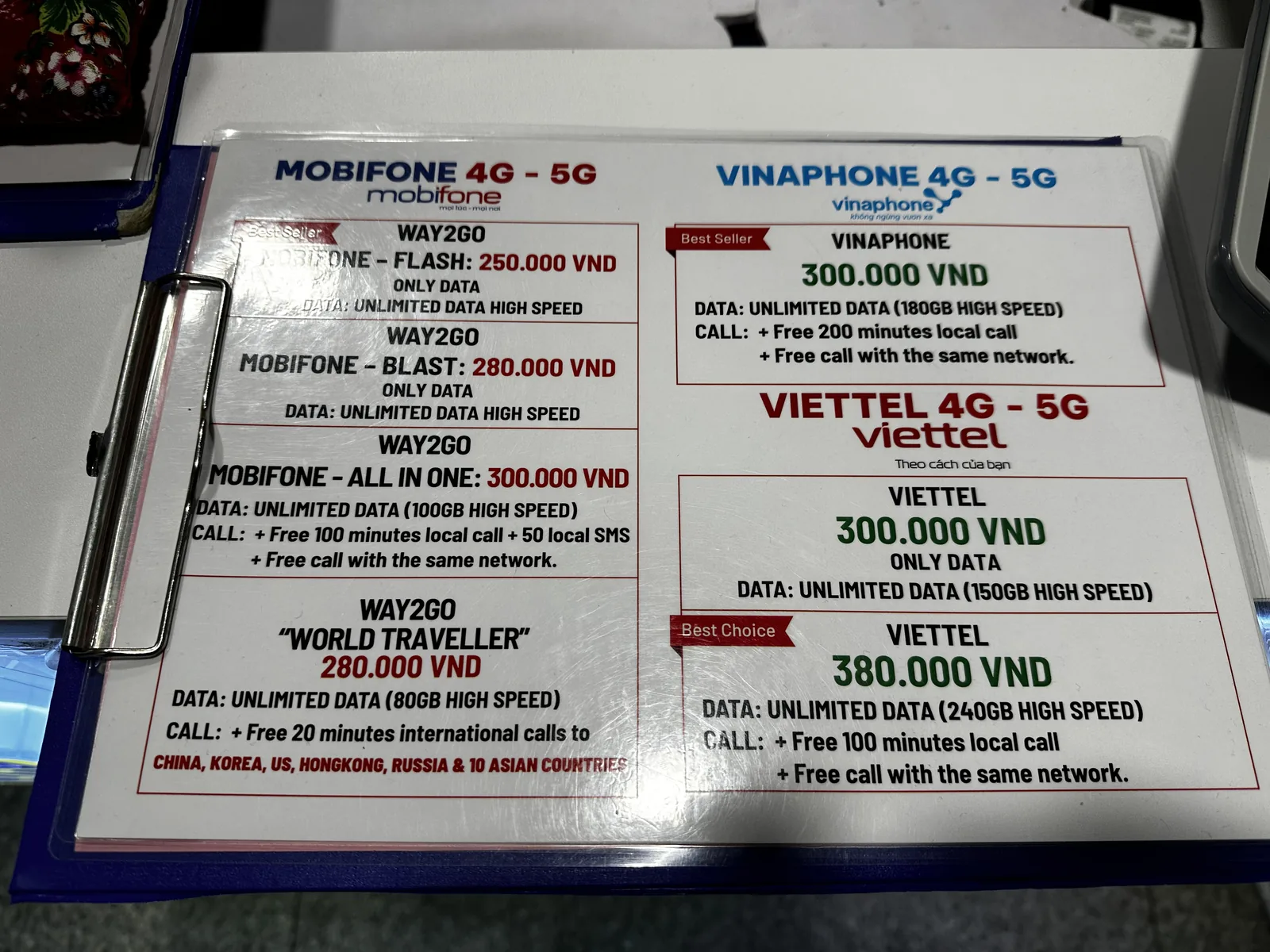
- From Tan Son Nhat Airport: about 30 to 45 minutes to District 1 by Grab or taxi, depending on traffic, or the 109 airport bus. Buy a SIM card in the arrivals hall.
- In the city: walk in District 1, and use Grab for cars or motorbike taxis at a fixed price for anything further. Metro Line 1 now links Ben Thanh to the eastern suburbs.
- Day trips: the Cu Chi tunnels and the Mekong Delta are easiest with a tour, which you can book on Klook, or with a private car.
- To the rest of Vietnam: flights to Da Nang and Hanoi, the train north, and buses to Mui Ne and Dalat, all covered in my guide to getting around Vietnam.
Practical Tips for Ho Chi Minh City
- Best time to visit: the dry season, from December to April. It is hot all year, and from May to November short, heavy afternoon showers are common.
- Crossing the street: walk slowly and steadily; scooters will go around you.
- Bags and phones: keep them away from the road side; snatching from scooters happens in District 1.
- Cash: street food, markets and small cafés are cash only.
Ho Chi Minh City FAQ
Is Ho Chi Minh City the same as Saigon?
Yes. Saigon was renamed Ho Chi Minh City in 1976, after the reunification, but everyone still says Saigon, and the name survives officially in the central Saigon ward.
Can you do the Cu Chi tunnels and the Mekong Delta in one day?
Yes, that is what I did, on a 12-hour tour that combined both. It is a long day but well organised, and it saves a day in your itinerary.
How many days in Ho Chi Minh City?
Three days is ideal: one for the centre, one for Cu Chi and the Mekong, and one for the museums and Cholon. Two days are enough if you combine the day trips as I did.
Saigon is the most dynamic city in Vietnam, and the easiest place to start a trip. For the rest of the country, start with my Vietnam travel guide.