Sulawesi Travel Guide: Four Arms, Four Different Trips
By Blaise Jaeger · Updated August 15, 2026
Sulawesi is the strangest-looking island in Indonesia and one of the least visited. Four long arms radiating from a mountainous centre, no two of them alike, and no road that lets you see them all in one trip. Most travellers who come here pick one arm and accept that the rest will have to wait.
I have been twice — six days in the southern highlands in December 2020, a week in the far north in April 2023 — and the two trips had almost nothing in common. This guide covers what Sulawesi is, why it looks the way it does, what each region is worth, how to get around a place where the flights matter more than the roads, and how long you actually need.
Sulawesi at a Glance
- Where: east of Borneo, west of the Maluku islands, in the middle of the Indonesian archipelago.
- Size: 174,416 km² for the main island — bigger than England and Wales combined, and the eleventh largest island in the world.
- Provinces: six — South, North, Central, South-East, West and Gorontalo.
- Highest point: the Latimojong massif, around 3,480 m.
- Main gateways: Makassar (UPG) in the south, Manado (MDC) in the north.
- Known for: Tana Toraja’s funeral rites, the diving at Bunaken and Lembeh, and a wildlife found nowhere else on earth.
- How long: 7 days for one region, 10 to 14 to combine two.
- Best season: the dry season, May to October.
- Part of: Indonesia — see the country guide for visas and the wider picture.
Where Is Sulawesi — and Why Is It Shaped Like That?
Sulawesi sits in the centre of Indonesia, east of Borneo across the Makassar Strait, north of Bali and Flores, west of the Maluku islands. From Bali it is a two-hour flight; from Jakarta, a little over two.
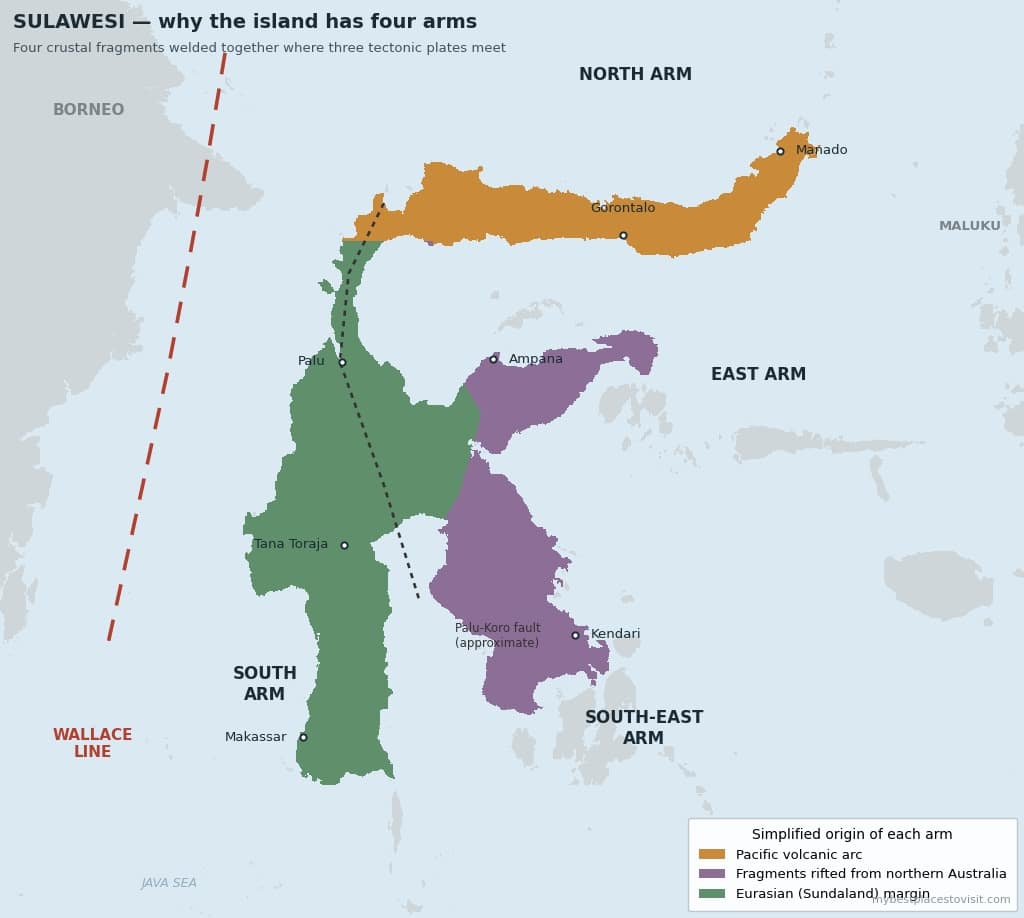
Then there is the shape, which is the first thing anyone notices and which almost no guide explains. Four arms, splayed like a broken letter K, with a knot of mountains where they meet.
Sulawesi did not form as one island. It was assembled. The arms are fragments of crust with genuinely different origins, welded together over tens of millions of years where three tectonic plates converge — the Australian plate pushing north, the Pacific plate pushing west, and the Eurasian margin holding the west.
- The south-east and east arms are continental fragments that broke away from northern Australia — the Banggai-Sula platform and Buton — and drifted north until they collided here.
- The north arm is a volcanic arc built from the Pacific side. It is still building: this is where the active volcanoes are.
- The west and south-west belong to the old Eurasian margin, the edge of the Sundaland shelf.
The collisions are recent in geological terms — the south-east arm arrived roughly 23 to 16 million years ago, the east arm 11 to 5 million years ago — and the island is still being pulled apart along the Palu-Koro fault, a 300 km strike-slip fault that GPS measurements show moving at around 3.4 mm a year.
So the disproportionate arms are not a quirk of the coastline. They are the original pieces, still visible. And it explains something practical: there is no efficient way to cross Sulawesi, because the island was never a single landmass to begin with.
The Wallace Line runs right past it
The Wallace Line — the boundary Alfred Russel Wallace drew in the 1850s between Asian and Australian fauna — passes through the Makassar Strait, between Borneo and Sulawesi. Not through the island: just to the west of it. It is a deep-water channel that stayed open even at the lowest ice-age sea levels, and it kept land animals from crossing for more than 50 million years.
One correction, because this is repeated wrongly everywhere: the line does not put Sulawesi neatly on the Australian side. Sulawesi belongs to Wallacea, the transition zone — its macaques, tarsiers and pigs have Asian ancestry, other elements are Australian in origin, and a great deal is neither. That in-between status is exactly why the island’s wildlife is so odd.
What Is Sulawesi Known For?
Four things, and they have almost nothing to do with each other.
- The funeral rites of Tana Toraja — the most photographed and least understood culture in Indonesia, in the southern highlands.
- Diving — Bunaken’s walls and the Lembeh Strait, the world capital of muck diving, both in the far north.
- Endemic wildlife — the reason biologists come.
- Spice-trade history — Makassar was one of the great maritime powers of the region, and the Bugis were its sailors.
The wildlife nobody expects
According to the Wildlife Conservation Society, Sulawesi has 127 mammal species and about 62 % of them are found nowhere else. Exclude bats, which fly and therefore travel, and endemism rises to nearly 99 %. There is no comparable figure anywhere in Indonesia.
- Black crested macaque — Macaca nigra, jet black with a punk crest, critically endangered. The largest surviving population is at Tangkoko, on the north-east coast.
- Spectral tarsier — a primate the size of a fist with eyes bigger than its brain. Tangkoko again, at dusk, when they leave their fig trees.
- Babirusa — the “pig-deer”, whose upper tusks grow through the roof of its own snout and curve back towards its forehead.
- Anoa — a dwarf buffalo the size of a large dog, endangered, and very hard to see.
- Maleo — a bird that buries its eggs in volcanically heated sand and leaves; the chick digs itself out and flies the same day. Critically endangered.
Conservation statuses here follow IUCN assessments made between 2016 and 2021. They are not fixed, and several of these populations are falling.
Where to actually see it: Tangkoko
Tangkoko Batuangus, on the north-east coast an hour and a half from Manado, has been protected since 1919 and is the one place where seeing this wildlife is close to reliable rather than a matter of luck. Two walks, at two different hours:
- Early morning — the black crested macaques come down through the forest towards the beach. Groups run to dozens of animals and they are entirely habituated, which means keeping your distance is your job, not theirs.
- Dusk — the spectral tarsiers wake up. Guides know the specific strangler figs they nest in, and the animals emerge within a few minutes of the same time each evening.
Entry runs around Rp 100,000 for foreign visitors and Rp 5,000 for Indonesians, with a guide at Rp 100,000 to 200,000. Guiding here is not officially regulated, so ask your accommodation to arrange someone rather than taking whoever is at the gate.
Two other parks matter if you have time. Bogani Nani Wartabone, 2,871 km² in the north, holds 125 bird species and the maleo nesting grounds, and it is under real pressure from illegal logging, poaching and small-scale gold mining. Lore Lindu, in Central Sulawesi, combines more than 230 bird species with the megaliths of the Bada valley.
The People of Sulawesi
The island’s four arms carry four cultures that would be foreign to each other anywhere else, and the differences are not decorative — they change what you eat, what day things close, and how you are received.
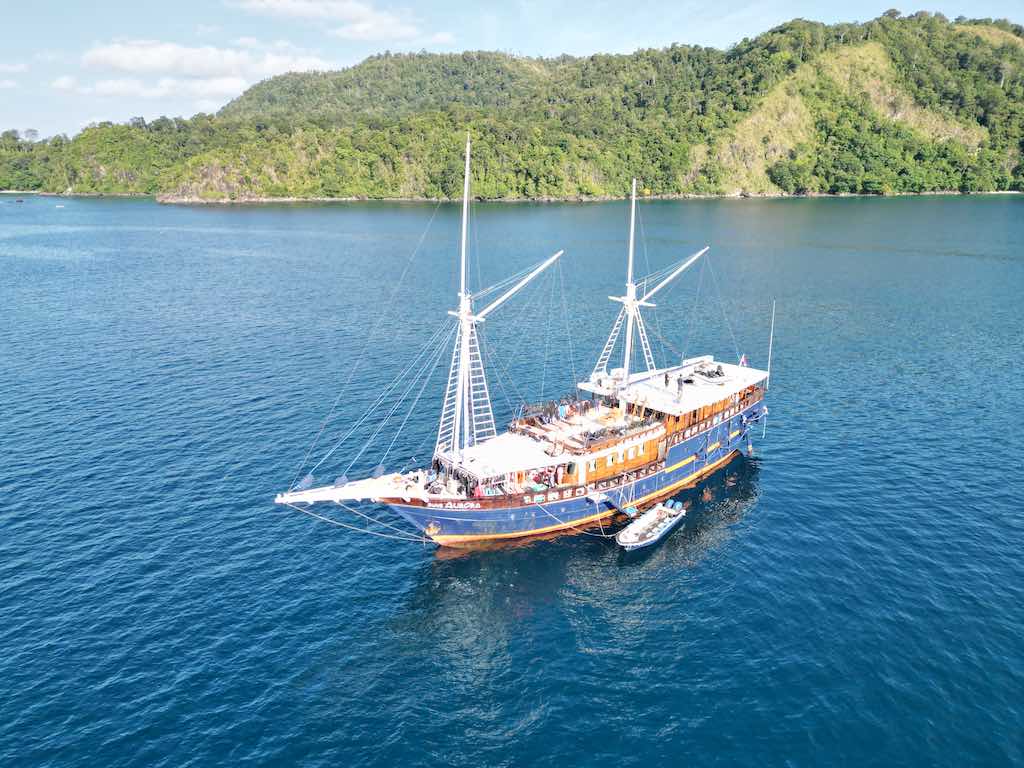
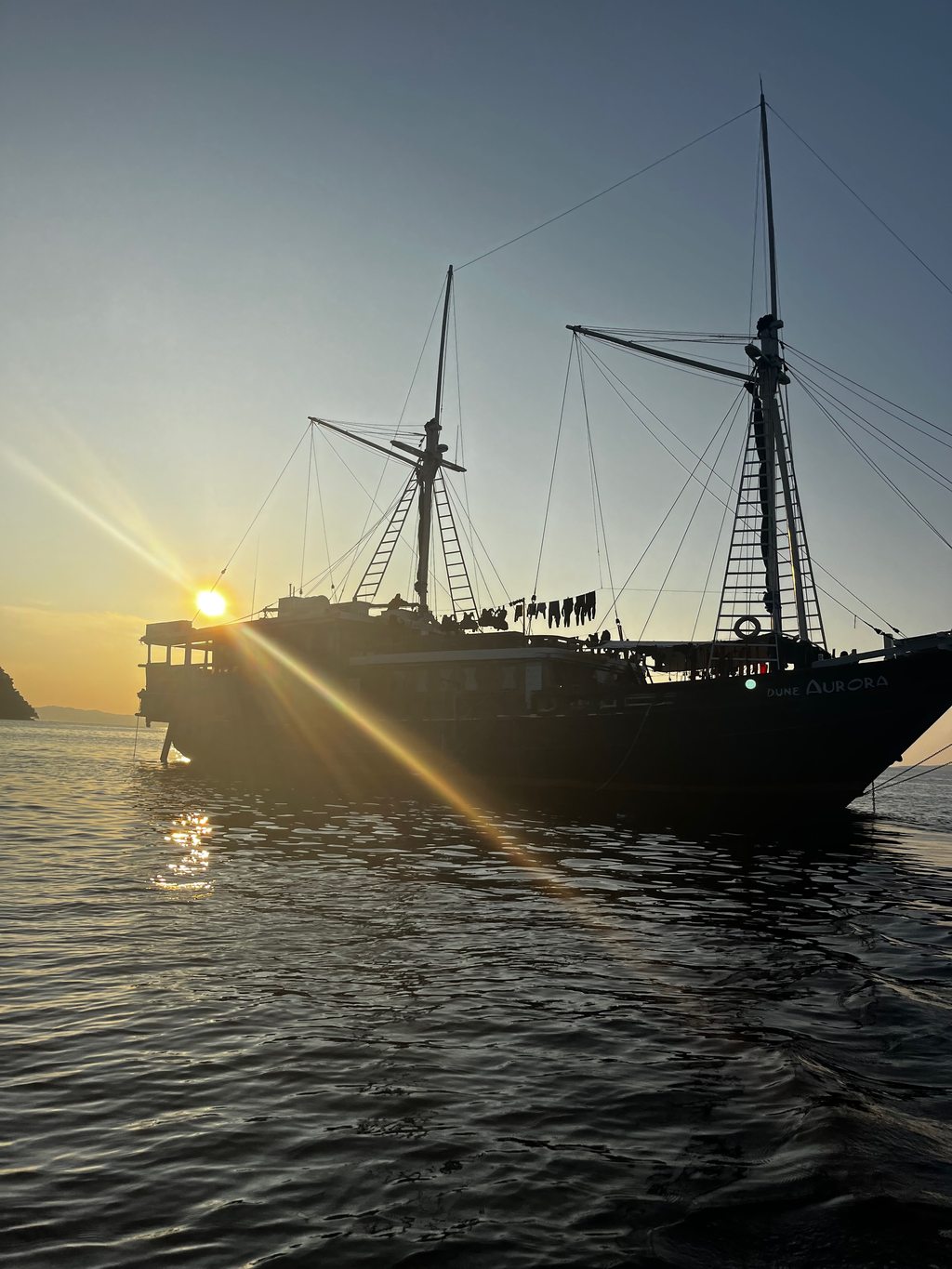
- The Bugis and Makassarese, in the south. Muslim, and the greatest seafarers in the archipelago — the pinisi schooner is theirs, and the boat at the top of this page is one. Bugis crews traded as far as northern Australia for centuries, and the wooden hulls still load at Paotere harbour in Makassar.
- The Toraja, in the southern highlands. Overwhelmingly Protestant, layered over the ancestral aluk to dolo — which is what produces the funeral rites the island is known for.
- The Minahasa, in the north. Christian since the Dutch mission, famously outward-looking, and the source of a cuisine built on chilli, pork and bushmeat that has no equivalent in Indonesia.
- The Mandar, Bajau and dozens of smaller groups along the coasts — the Bajau being the sea nomads whose free-diving physiology has been the subject of genuine scientific study.
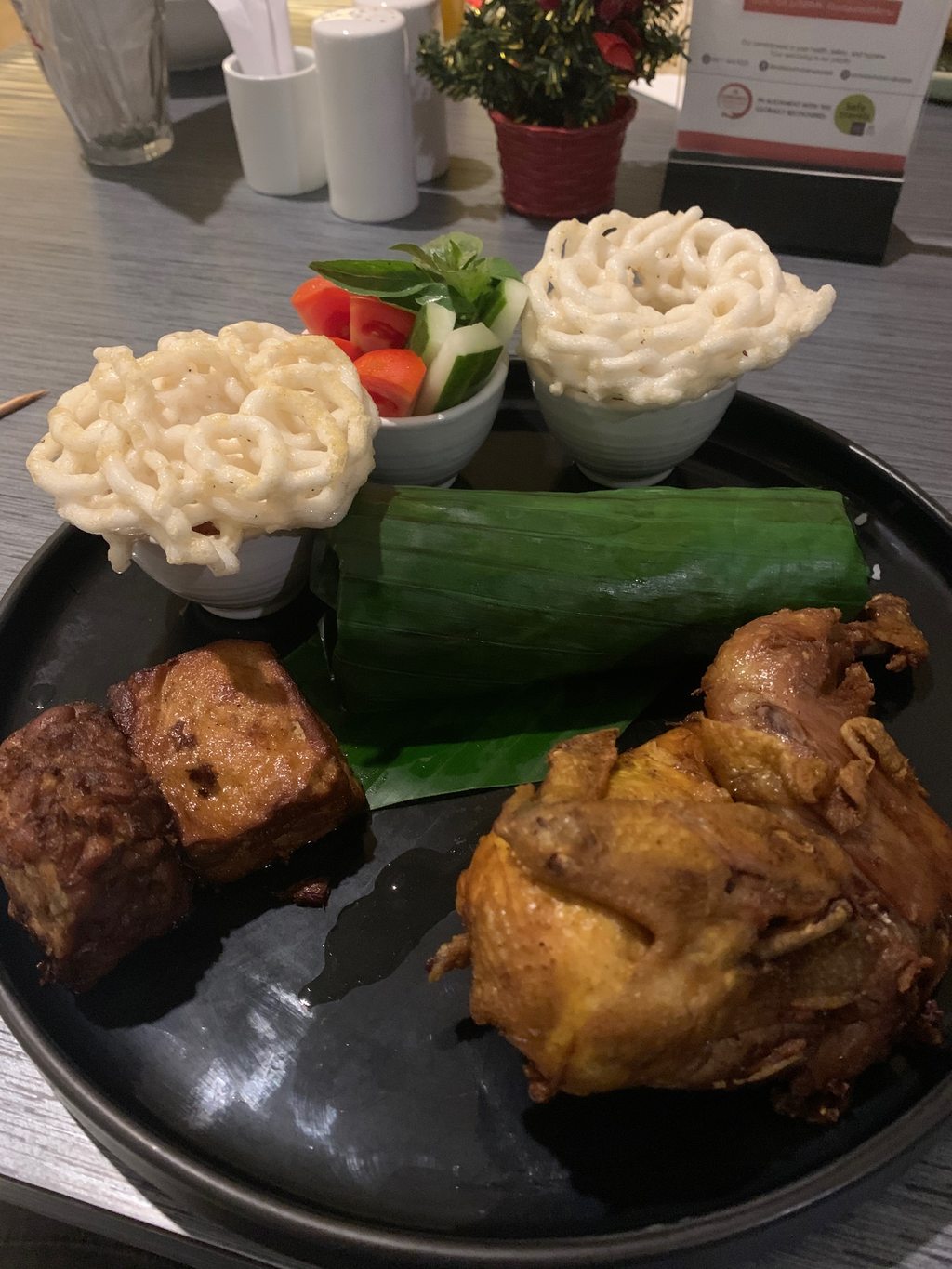
The practical consequence: the religious map is the food map. Pork is everywhere in Toraja and the Minahasa highlands and essentially absent in the Bugis south. Sunday is quiet in the north and in the highlands, and Friday midday is quiet in Makassar. Bahasa Indonesia works everywhere; English does not, outside dive centres and hotels.
Is Sulawesi Worth Visiting?
Yes — with one condition. Sulawesi is not a place you visit casually on the way to somewhere else. Distances are long, the roads are slow, and the two things it does best sit at opposite ends of a 1,500 km island.
What you get in exchange is a version of Indonesia that has not been shaped around visitors. In Tana Toraja you are looking at a living ritual system, not a performance. At Lembeh you dive on black sand over creatures most divers never see. In Tangkoko the macaques come down to the beach in the early morning because they always have.
Come if you want culture and wildlife over beaches, you are comfortable with long transfers, and you have at least a week.
Do not come if you have five days, want a resort, or expect Bali’s infrastructure. Sulawesi will disappoint you for reasons that are entirely about expectations.
Best Places to Visit in Sulawesi
Pick by arm, not by list. These are the six that justify a trip.
- Tana Toraja, south — funeral rites, tongkonan houses and cliff tombs in the highlands above Makassar. The reason most people come.
- Makassar, south — the gateway city: Fort Rotterdam, the Losari waterfront, and the best seafood on the island.
- Bunaken, north — a marine park of vertical coral walls, 45 minutes by boat from Manado.
- Lembeh Strait, north-east — black volcanic sand, and the strangest small marine life on the planet.
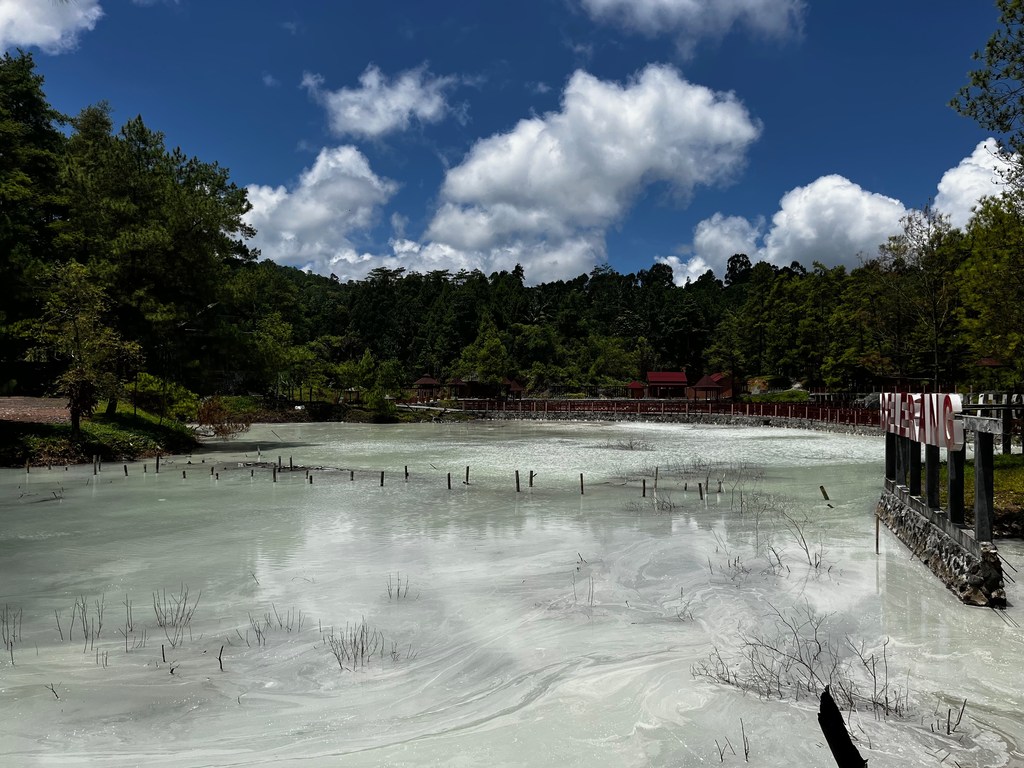
- Tomohon and the Minahasa highlands, north — volcanoes, a sulphur lake, and the market that made the region notorious.
- Tangkoko, north-east — black crested macaques and spectral tarsiers, in a reserve protected since 1919.
Two more for travellers with time: the Togean Islands in the Gulf of Tomini, reached by ferry from Ampana and genuinely remote; and Lore Lindu in Central Sulawesi, a 3,310 km² park with more than 230 bird species and the megaliths of the Bada valley, some dated to as late as 1300 AD and still unexplained.
Tana Toraja: Rambu Solo’, Tongkonan and Cliff Tombs
Five hours by road above the south coast, the Toraja highlands hold the culture Sulawesi is known for. Three things define it.
- Rambu Solo’ — the funeral. It can take a year or more to arrange, because it has to be paid for, and until it happens the deceased stays at home and is not considered dead.
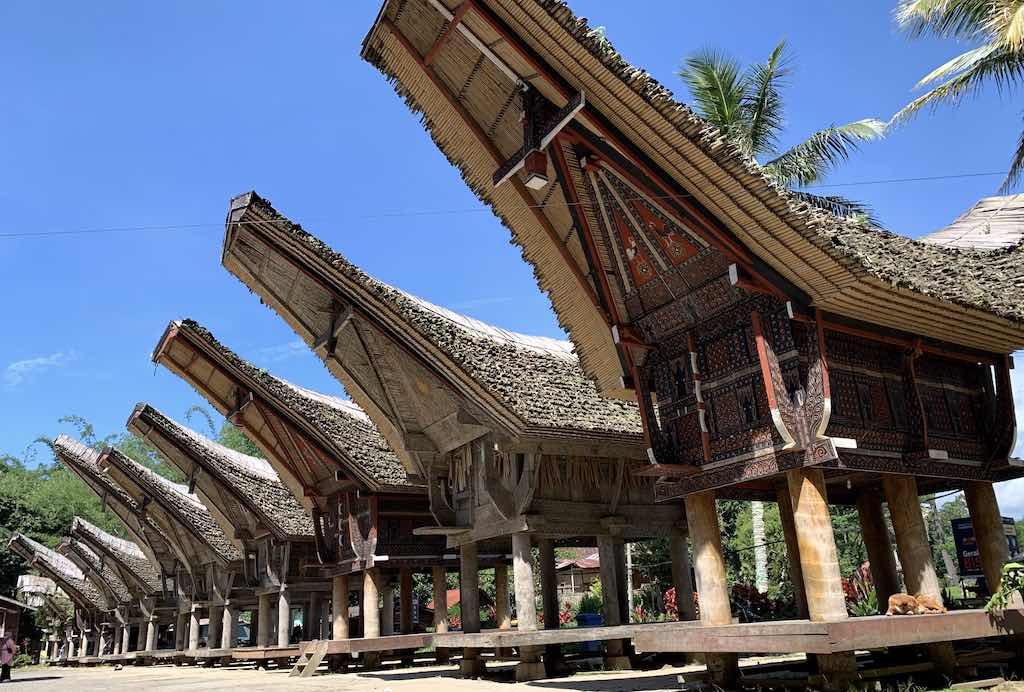
- Tongkonan — ancestral houses with roofs curved like boat hulls, aligned north-south, their façades carved in red, black, white and yellow.
- Cliff tombs and tau-tau — graves cut into limestone, watched over by carved wooden effigies of the dead.
Two corrections worth making here, because they are repeated across the travel web. Tana Toraja is not a UNESCO World Heritage Site — it has been on the tentative list since 6 October 2009 and has never been inscribed. And as a foreign visitor at a ceremony you bring nothing: the advice to arrive with cigarettes, sugar or a small gift is wrong, and following it puts you in an awkward position rather than a gracious one.
I spent six days there in December 2020. The full account — what a Rambu Solo’ actually costs, what to makula’ means, where the sites are, and what a Toraja family told me about visitor etiquette — is in the dedicated Tana Toraja travel guide.
North Sulawesi: Manado, Tomohon and Bunaken
The north arm is a different country. Christian rather than Muslim, volcanic rather than karst, oriented towards the sea rather than the highlands. Manado is the base — a working port city of half a million people with an airport that now takes direct flights from Singapore, Seoul, Taipei, Shanghai and Guangzhou, which makes it the easiest way into Sulawesi that most people have never considered.
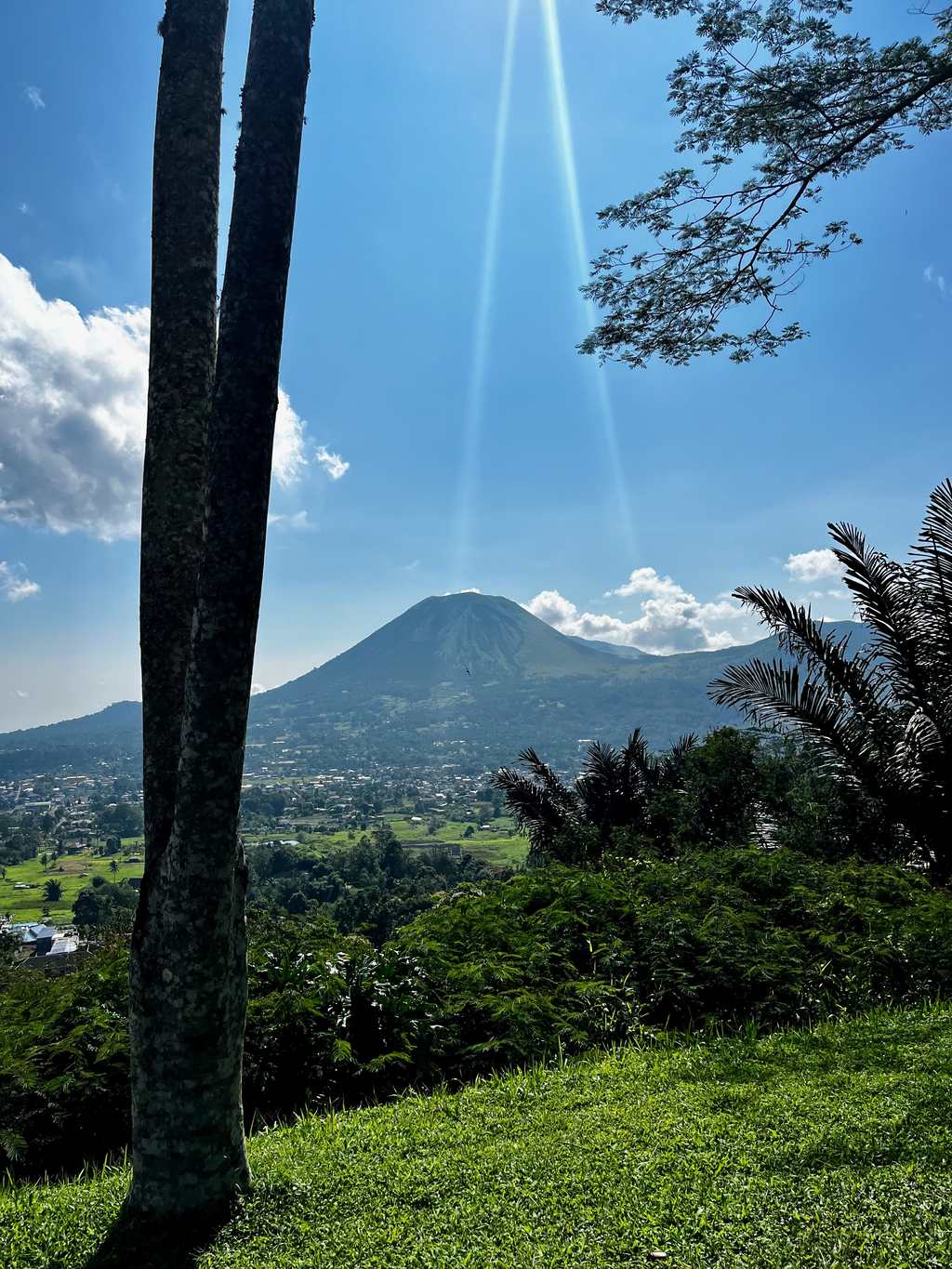
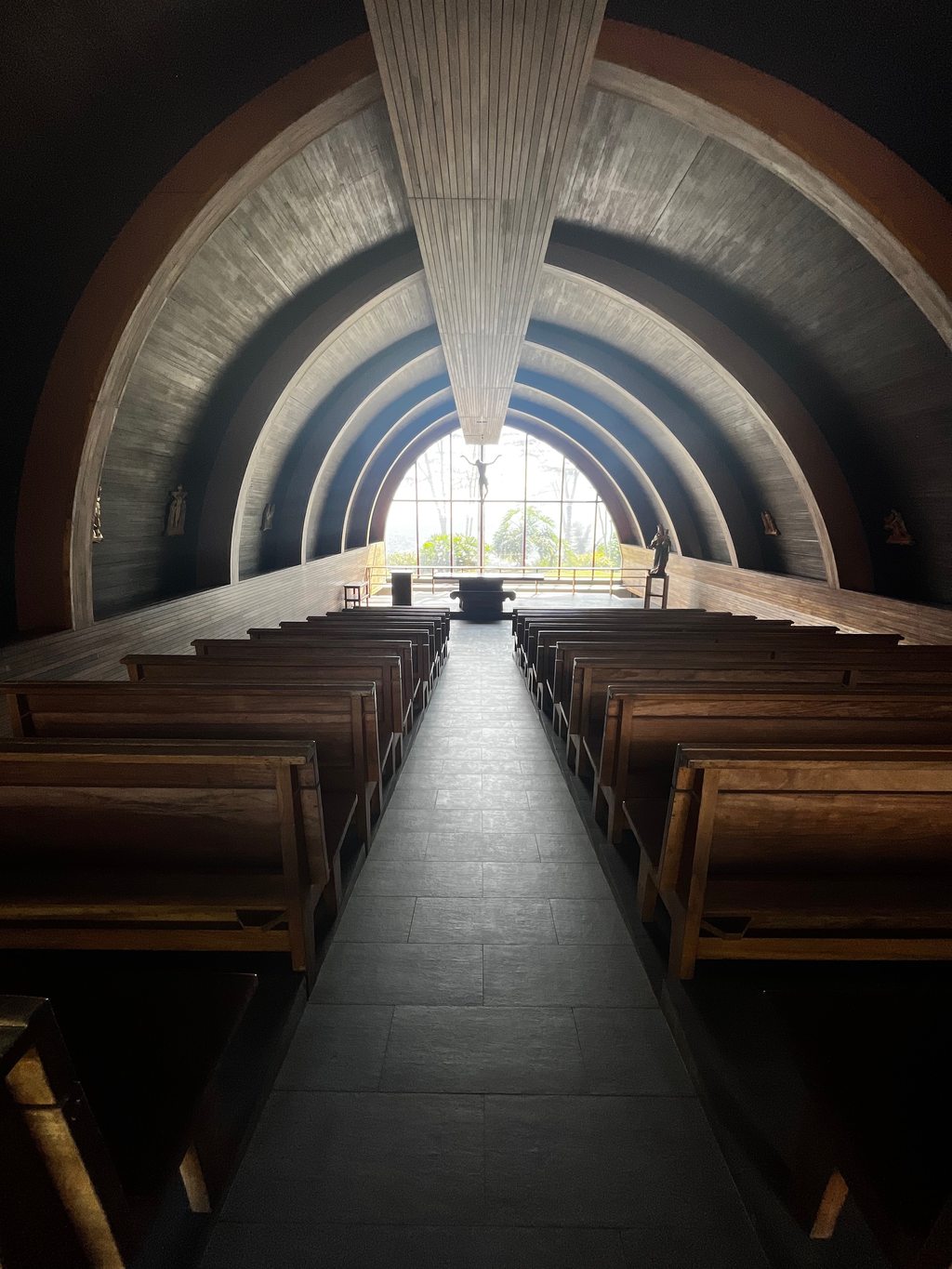
An hour inland and 700 m higher, Tomohon sits in the Minahasa highlands between two active volcanoes. It is cool, green, intensely Protestant — churches everywhere, several of them architecturally ambitious — and it is the base for everything worth seeing in the interior.
- Lake Linow — a sulphur crater lake that changes colour through the day, from turquoise to white to grey, depending on the light and the mineral content. The smell tells you what you are looking at before you see it.
- Mount Lokon and Mount Mahawu — the two volcanoes above Tomohon. Mahawu is the one you can walk up to the crater rim; Lokon is the one that erupts.
- Bukit Kasih — a hill of white statues and a long stairway, built as a monument to religious coexistence. Divisive, and very Minahasa.
- Tekaan Telu waterfall — three jets falling side by side into jungle, reached on foot from the road.
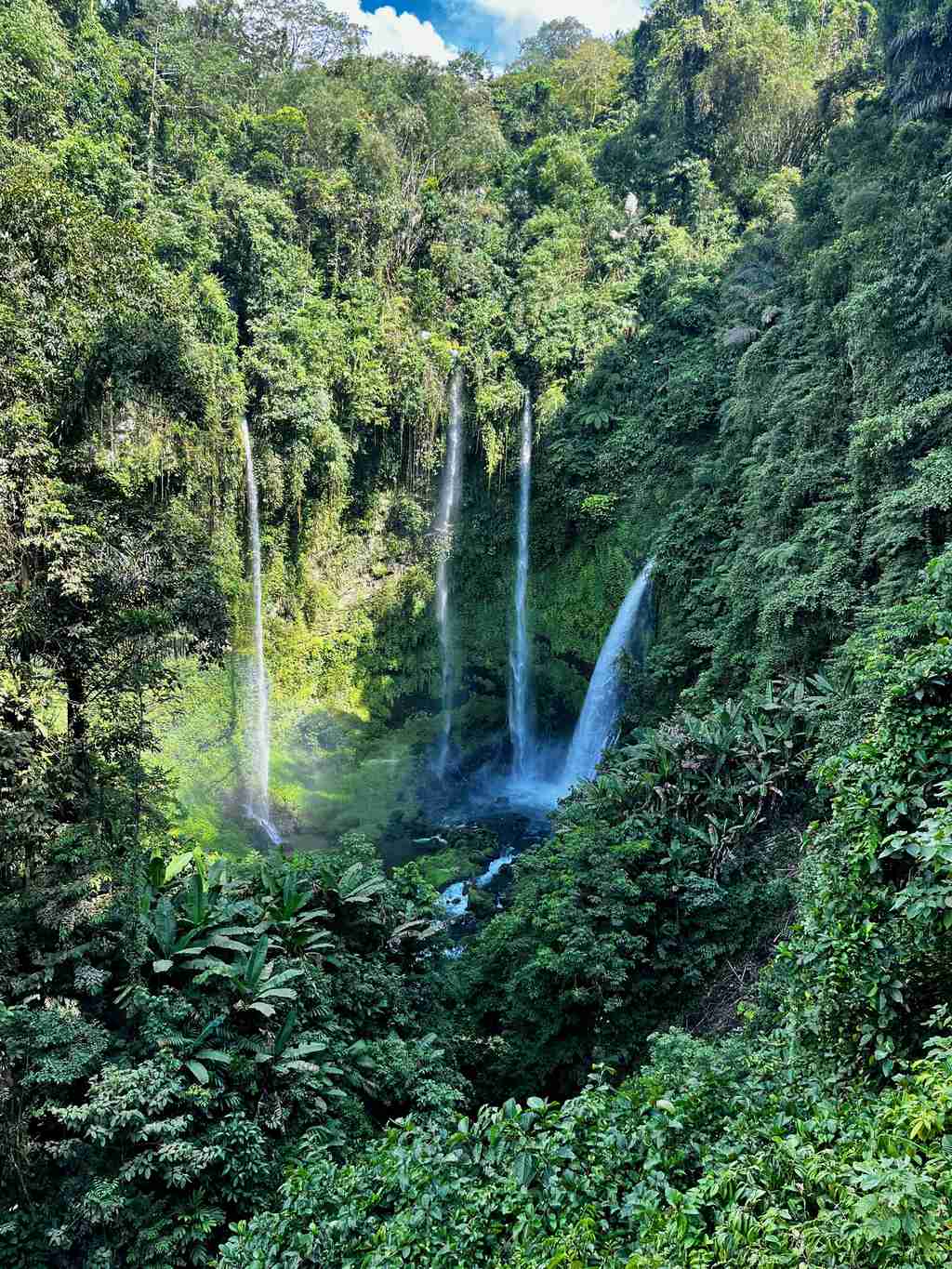
Volcanic activity is monitored and the levels change. As of early 2026 Lokon was at level II (Waspada) with a 2.5 km exclusion radius around the Tompaluan crater, and Mahawu at level I (Normal). Check magma.esdm.go.id before you plan a climb rather than trusting any guide, including this one.
The Tomohon Market: What I Saw, and Where the Ban Stands
The Pasar Beriman in Tomohon is the most written-about market in Indonesia, almost always by people describing it from a distance. I went on 18 April 2023. This is what was on the stalls, and what has changed since.
Minahasa cooking uses bushmeat, and the market supplies it. Alongside the ordinary pork, fish and vegetables there were fruit bats, laid out flat and singed, sold by the pile; python, coiled on the counter; forest rats on skewers; and dog. It is not staged for visitors — this is a working produce market and the crowd is entirely local.
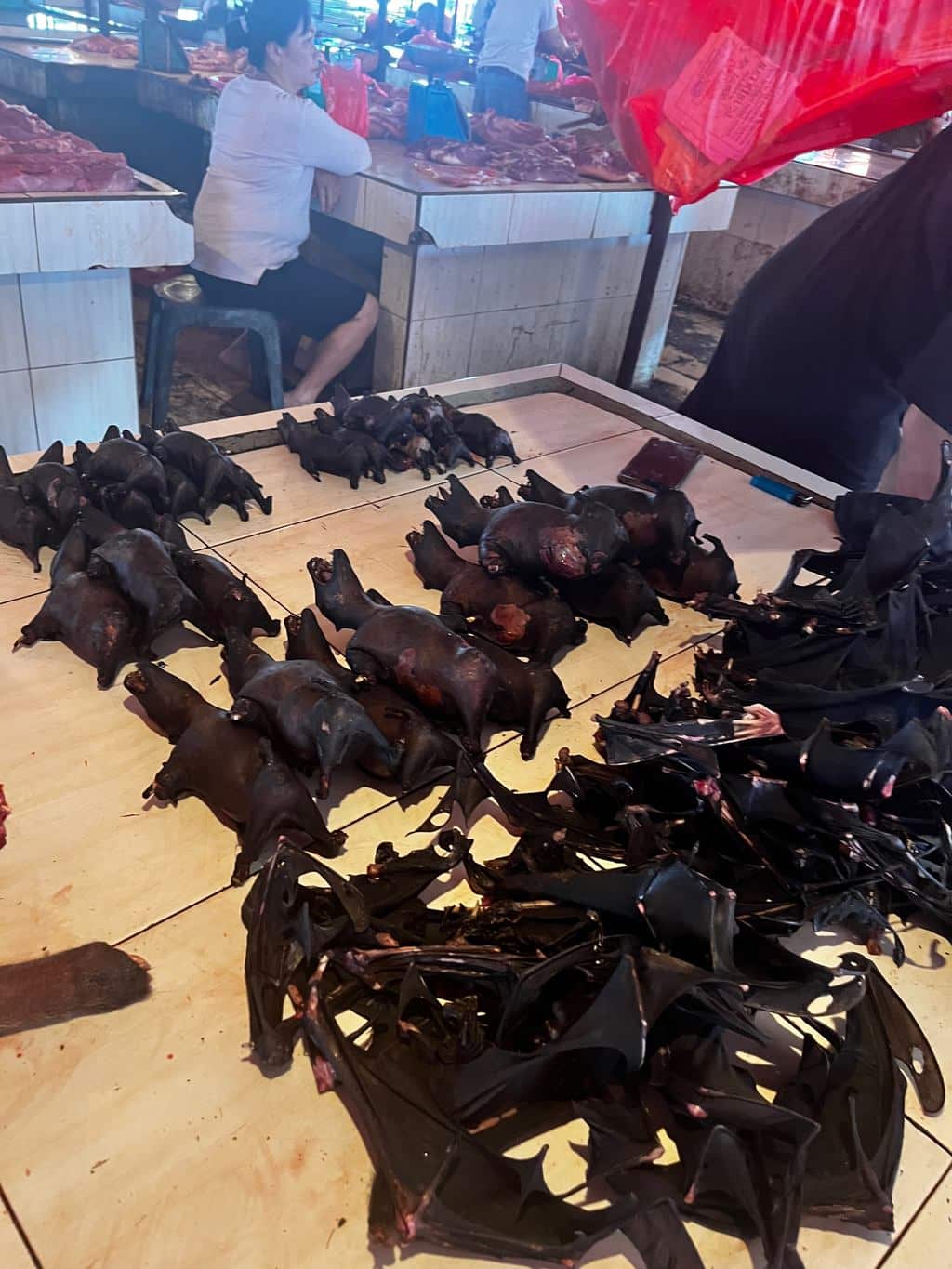
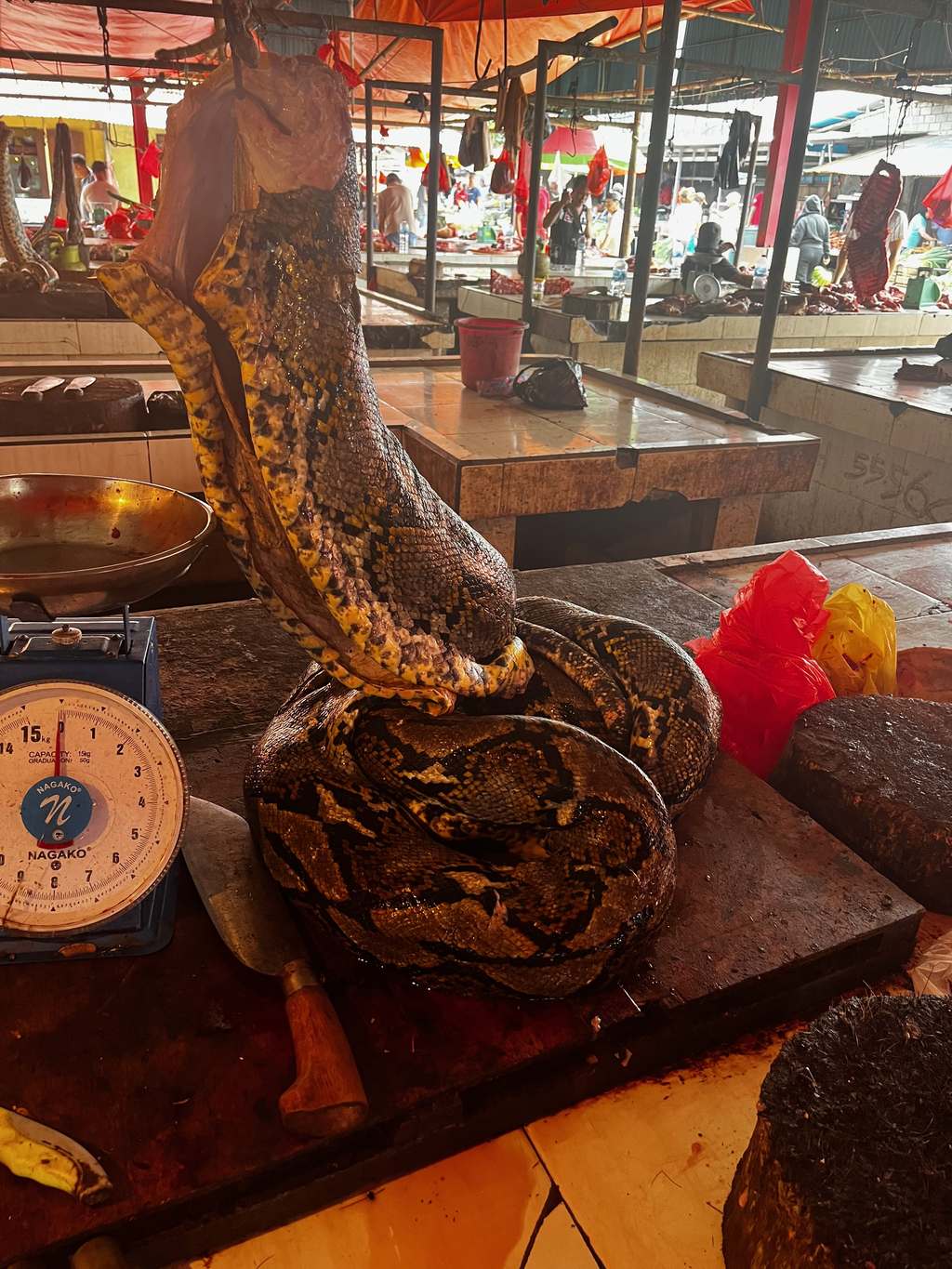
The dog and cat meat trade was banned in July 2023, three months after I was there. Between 21 and 24 July 2023 the last six vendors at the Pasar Beriman signed an agreement ending the trade, mayor Caroll Senduk formalised the ban by municipal instruction, twenty-five dogs and three cats were removed from the supplying slaughterhouses, and a banner went up at the entrance.
But the ban has not held, and most articles stop before this part. In June 2025 the Indonesian press described it as semu — illusory. Sales were continuing on a reduced scale: around ten of thirty vendors were still offering dog or wild meat in March 2025. One vendor said his volume had fallen from 500 dogs a month to 200, and attributed the drop to supply drying up rather than to enforcement.
That is the last reliable reporting I could find — June 2025. I have no data on 2026, and neither does anyone claiming the trade has ended.
Should you go? It is open to anyone and nobody will stop you photographing. What I would say is this: go because you want to understand what Minahasa people eat and why, not to collect an image. I was interested rather than shocked, and I am not in the business of judging what other cultures put on a plate. If you know the sight will distress you, the answer is simply not to go — Tomohon has a sulphur lake, two volcanoes and a waterfall, and none of them require this.
Diving in Sulawesi
The north arm is one of the great diving regions of the world, and it does two completely different things within an hour of each other.
Bunaken — walls and visibility
Bunaken National Marine Park, 45 minutes by boat from Manado, is built on vertical coral walls dropping into deep blue water, with turtles, reef sharks and enormous sponges. Visibility runs above 30 m in season. Park entry is around Rp 75,000, and dives cost roughly 30 to 50 USD including equipment.
Season: April to October. From November to March visibility drops sharply.
In the interest of honesty: I have not dived Bunaken. What is here comes from operators and published sources, not from my own logbook.
Lembeh Strait — the opposite of a coral reef
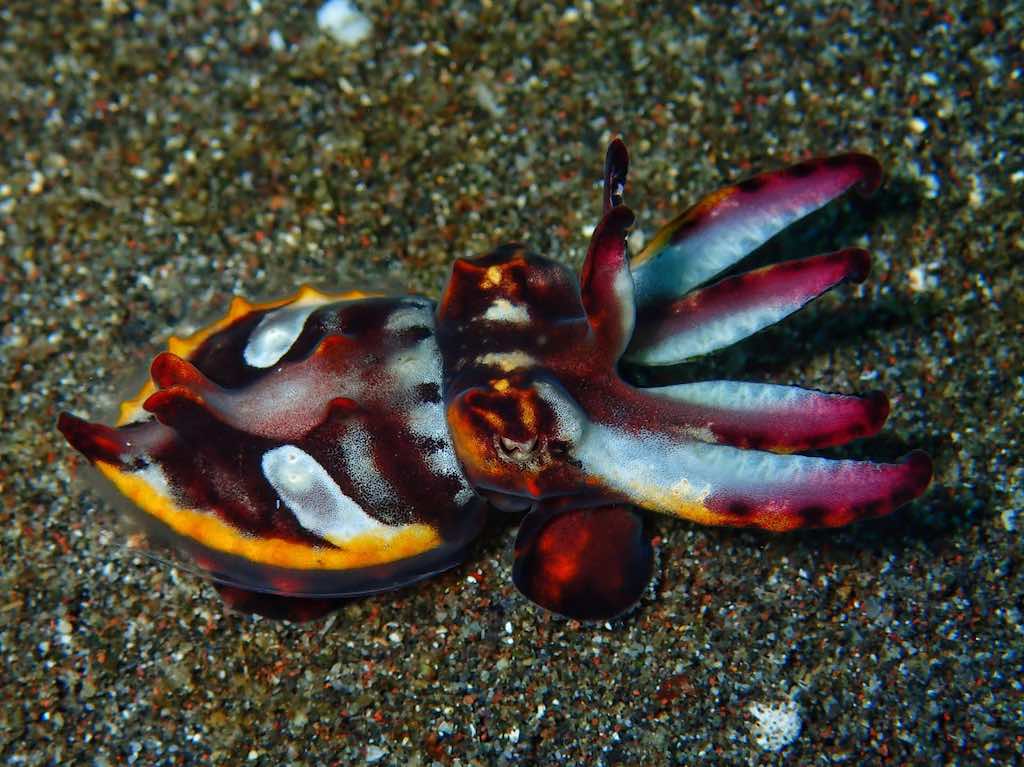
An hour east by road, the Lembeh Strait is the world capital of muck diving: black volcanic sand, almost no coral, and a density of bizarre small animals that has no equivalent anywhere. Flamboyant cuttlefish, mimic octopus, hairy frogfish, blue-ringed octopus, Pontohi pygmy seahorses. Divers come specifically for the macro photography and dive the same twenty sites for a week.
This is the one I know: I finished a liveaboard diving cruise in Lembeh in April 2023, and it is the trip that brought me to the north of the island in the first place.
Wakatobi and the rest
Wakatobi, off the south-east arm, is a national park of barrier reefs and atolls with a serious reputation and almost no independent infrastructure — most visitors arrive on a package with a fixed charter flight. The Togean Islands in the Gulf of Tomini offer reefs, a jellyfish lake and very little else, which is precisely their appeal.
My Two Trips to Sulawesi
Two visits, two and a half years apart, at opposite ends of the island.
December 2020 — Toraja and Makassar, during the pandemic
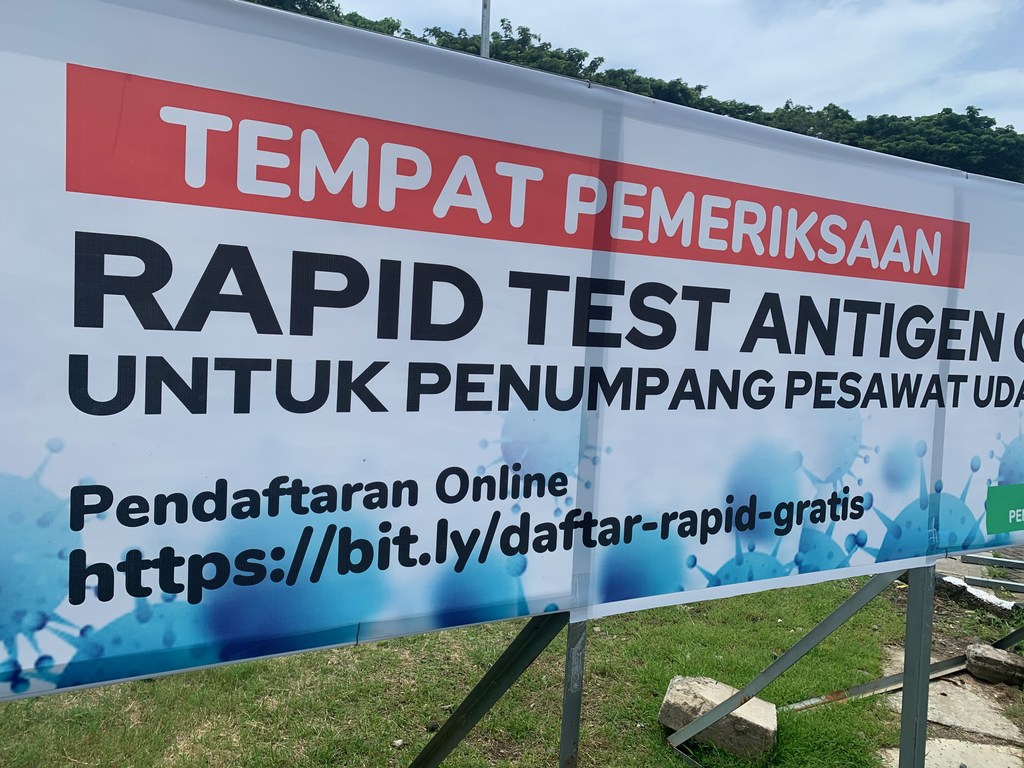
I flew into Makassar on 25 December 2020 and spent six days in the Toraja highlands before coming back down the coast. Indonesia was under Covid restrictions throughout: seats crossed out on the airport shuttle, antigen testing required before every domestic flight, and gatherings — including Toraja funerals — banned or broken up.
I ended the trip in Makassar on 30 December, then flew to Yogyakarta on New Year’s Eve — which is how I came to be at Borobudur on 1 January 2021, in the Java guide.
April 2023 — the north, off a liveaboard
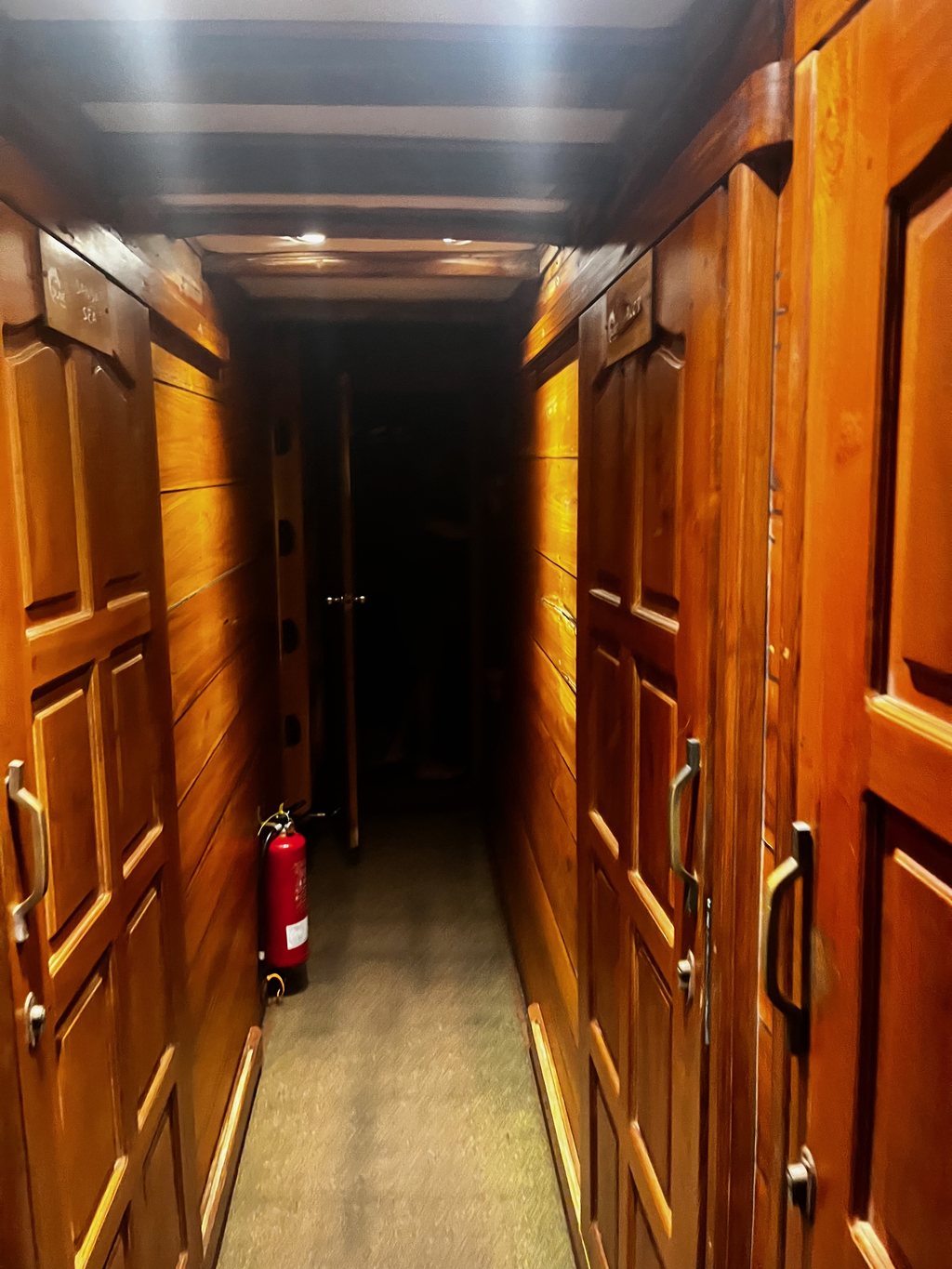
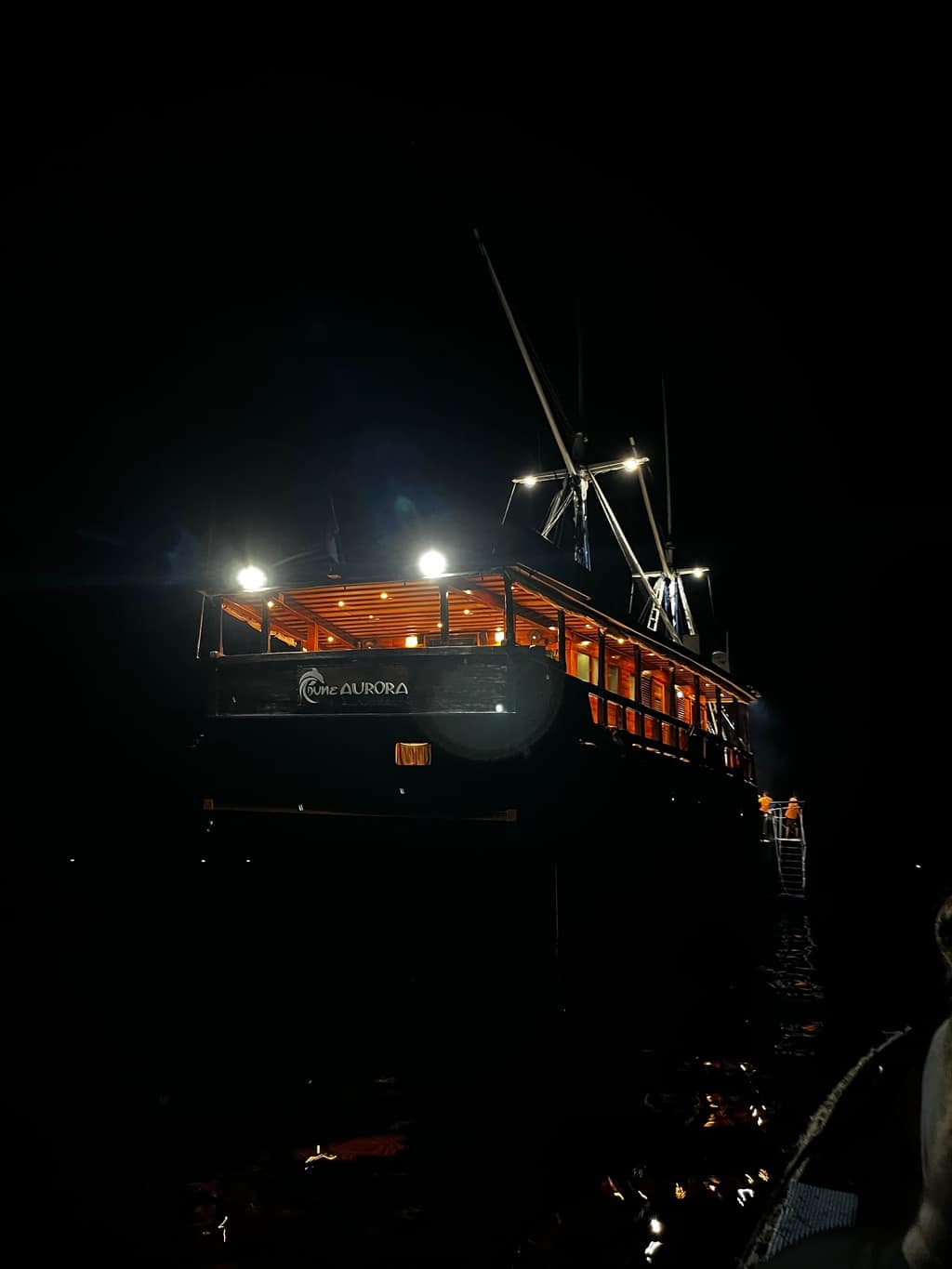
The second trip came off the back of a diving cruise that ended in the north-east. The boat was a phinisi, the traditional Bugis schooner rig that Indonesian liveaboards are built on, and the last anchorage was at Labuan Babi, between the Pulisan headland and Bangka Island — the far north-eastern tip of the arm, a short distance from Tangkoko.
From there I went overland: Bitung, then Tomohon for two days, then Manado, then home via Makassar and Bali. A week, one arm, and no attempt to see the rest.
That is the honest shape of a Sulawesi trip. Both times I saw one arm properly and ignored the others, and I would do it the same way again.
Makassar: the Gateway You Should Not Skip
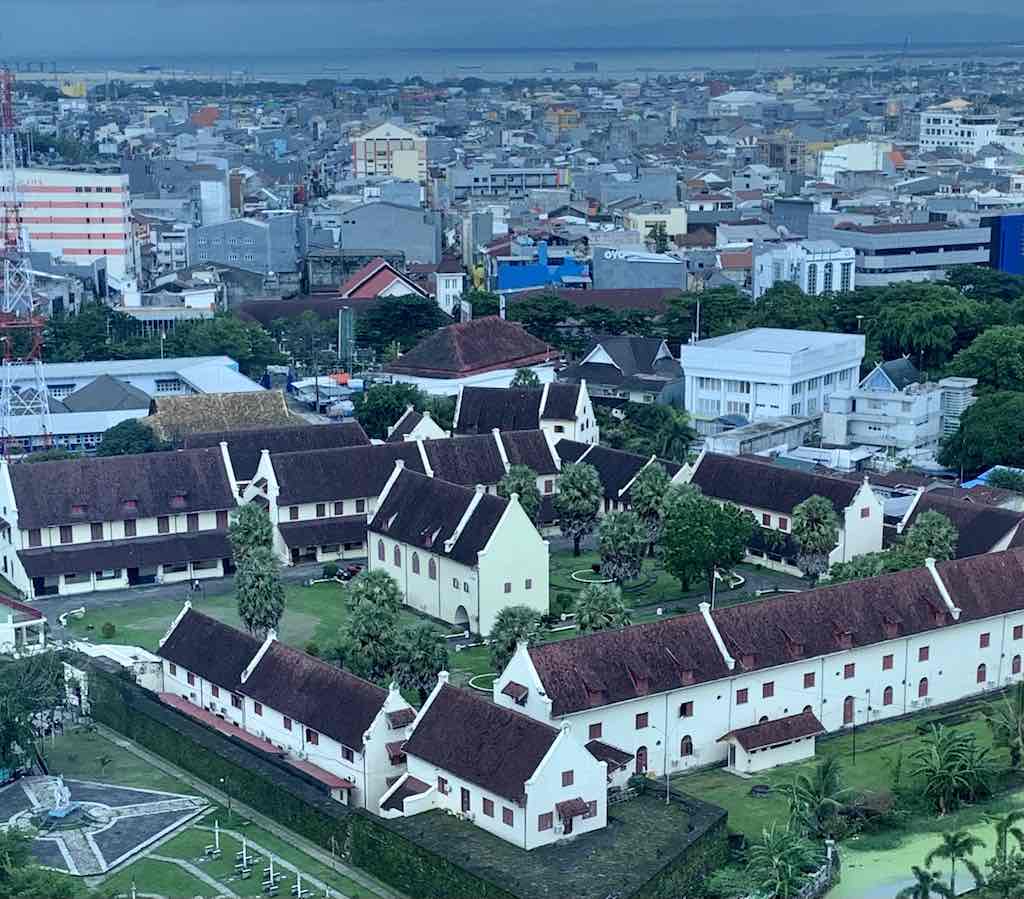
Almost everyone lands in Makassar and leaves the next morning. Give it an afternoon and an evening instead — it was one of the great maritime powers of South-East Asia, and it still behaves like a port city.
- Fort Rotterdam — the Dutch fort built over a Gowa sultanate stronghold, remarkably intact, with the museum inside it.
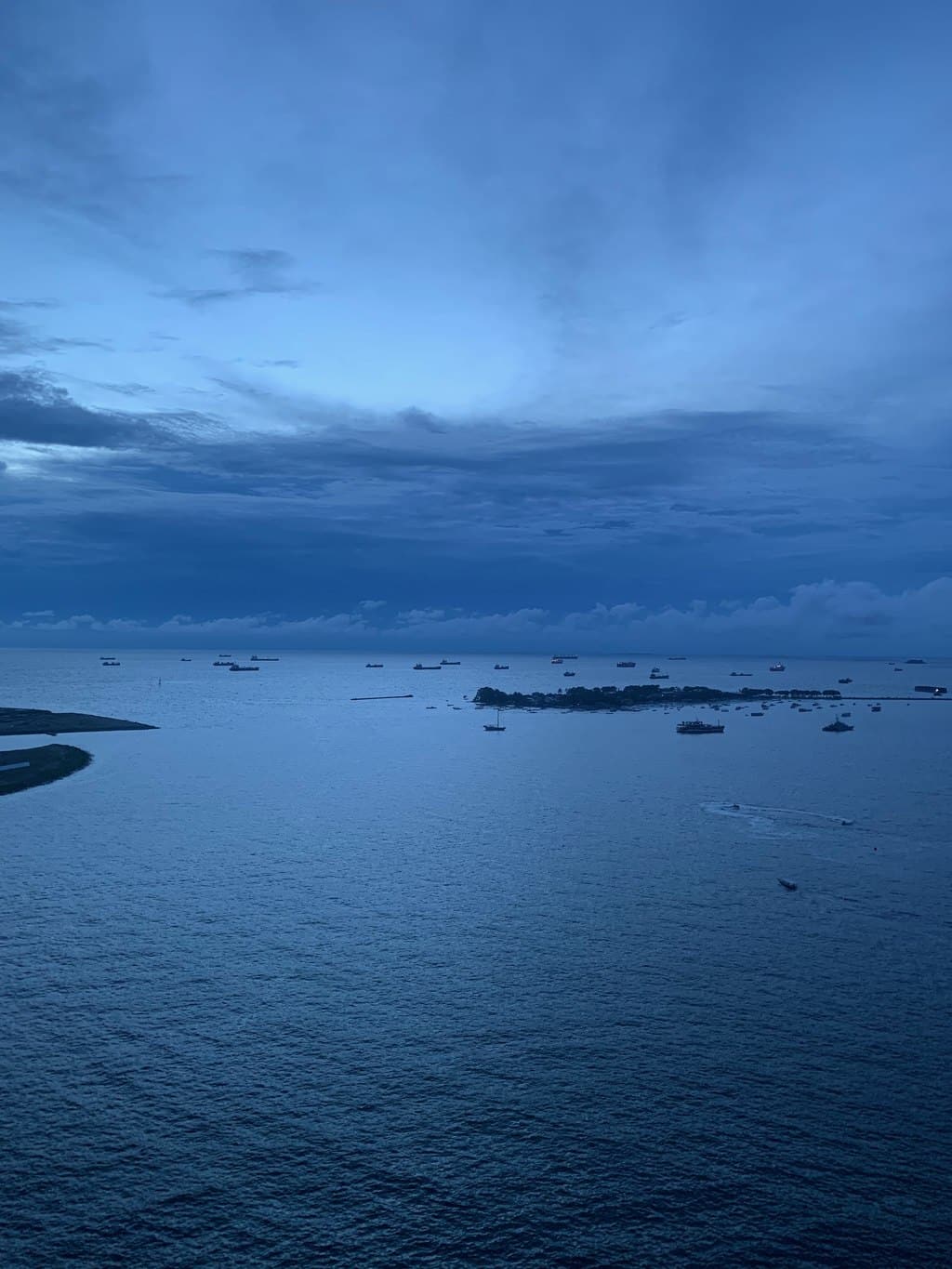
- Losari beach — not a beach but a two-kilometre esplanade where the whole city comes out at sunset. Walk north from it to the fort and you get the anchorage instead: dozens of ships waiting offshore, which is what Makassar has always been for.
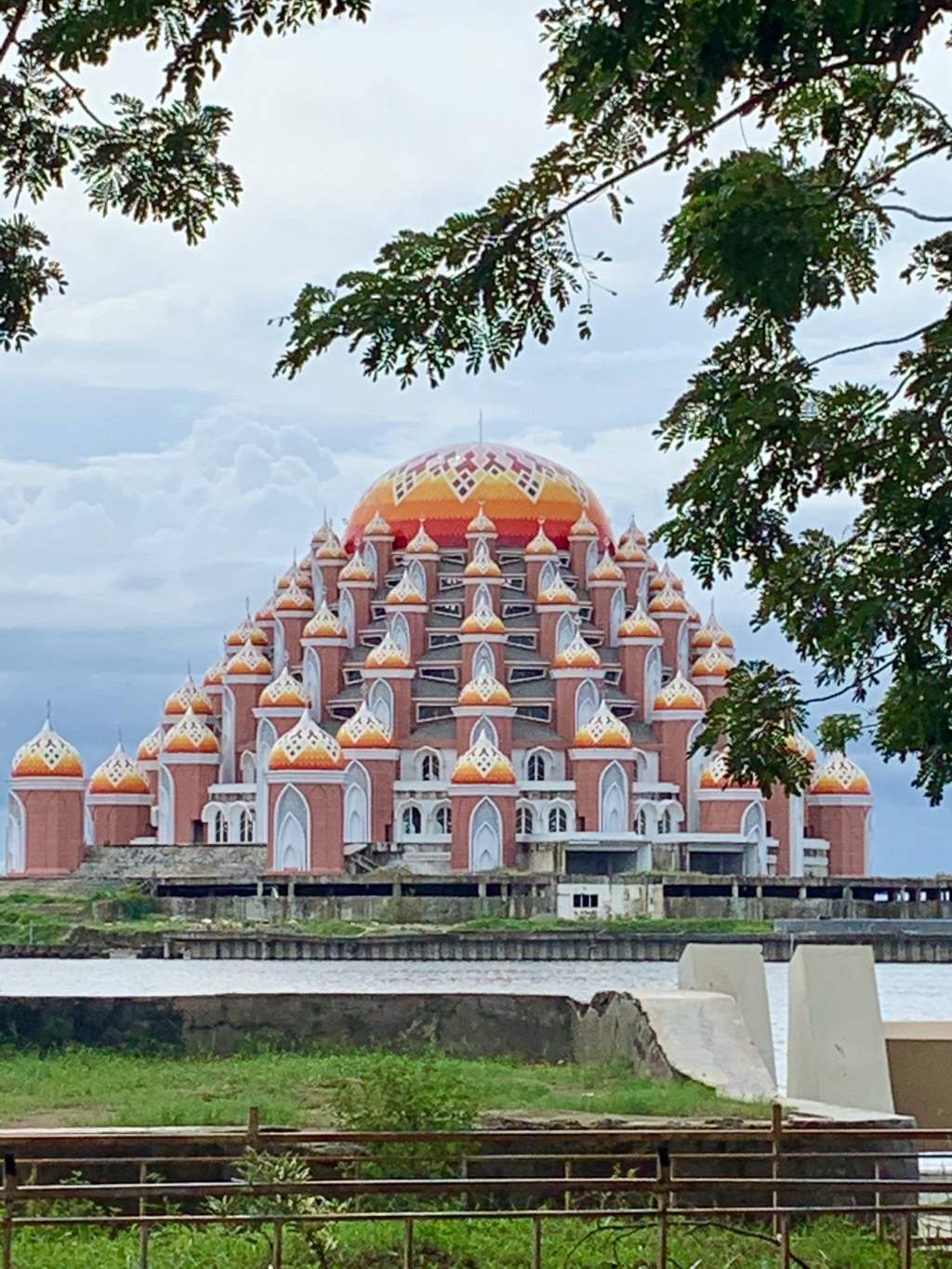
- Masjid Amirul Mukminin — the floating mosque on stilts off the Losari front, orange-domed and best seen from the promenade.
- Paotere harbour — where the wooden pinisi schooners still load, in the north of the city.
Eat coto Makassar, a beef offal soup served with compressed rice cakes, and pisang epe, grilled flattened banana with palm sugar, sold along the waterfront. In the north, Minahasa cooking is a different world again — hot, and heavy on pork, which is unusual in Indonesia and follows directly from the region being Christian. More in my guide to Indonesian food.
How to Get to Sulawesi
Two doors, and which one you use decides your whole trip.
- Makassar — Sultan Hasanuddin (UPG), in the south. Flights from Jakarta, Bali, Surabaya, Singapore and Kuala Lumpur. This is the door for Tana Toraja.
- Manado — Sam Ratulangi (MDC), in the north. Domestic flights plus a growing international list: Singapore with Scoot, Seoul-Incheon, Taipei, Shanghai, Shenzhen, Guangzhou and Ningbo have all been added since late 2025. This is the door for the diving and the wildlife.
Rough fares, as orders of magnitude rather than quotes: Jakarta to Makassar from about 89 USD, Jakarta to Manado 174 to 233 USD, Bali to Manado 89 to 180 USD. Makassar to Manado is 1 h 45 with Lion Air or Batik Air, from around Rp 1,635,000 one way.
Pelni ferries connect Makassar to Java, Kalimantan, Papua and the Lesser Sundas — the KM Dobonsolo, Nggapulu, Sinabung, Tilongkabila and Leuser were all running out of Makassar in August 2026. Schedules are monthly and change; they are a way of travelling, not a way of saving time.
How to Get Around Sulawesi
Fly between arms. Drive within one. That single rule will save you more time than anything else in this guide.
Makassar to Tana Toraja
Night buses leave Makassar around 20:00-21:00 and reach Rantepao between 05:00 and 07:00 — operators include Litha & Co, Bintang Prima, Metro Permai and Bintang Timur, for Rp 180,000 to 390,000. On duration, be sceptical of any single number: locals who make the trip regularly say 7 to 8 hours, published schedules say 9 to 11. Both are true depending on operator, weather and departure time. The road runs along the coast to Parepare and then climbs — the last section is winding and slow, whatever the words “Trans-Sulawesi” suggest.
There is also a flight, and almost no guide mentions it. Toraja Airport (TRT) at Buntu Kunik opened in 2020 with a terminal roofed like a tongkonan, and the hop from Makassar takes about 55 minutes. I flew it in December 2020, three months after it opened.
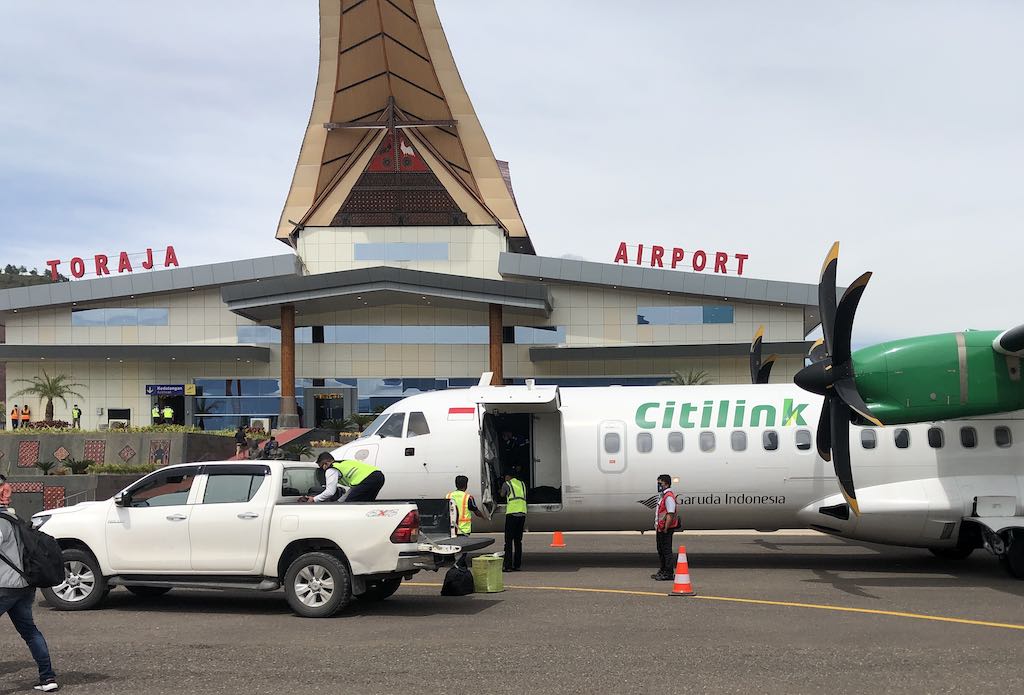
Do not build a trip around it. The route has been suspended and relaunched repeatedly; as of August 2026 it runs twice a week with Wings Air, around Rp 1,000,000 to 1,300,000 one way. Check it exists for your dates.
Within the north
Manado, Tomohon, Bitung and Tangkoko sit within a two-hour triangle and a car with driver is the sensible way to cover them — it is what I did. Boats to Bunaken leave from Manado; boats to Lembeh from Bitung. Public minibuses (mikrolet) work for short hops and require patience.
For the wider national picture — domestic airlines, trains on Java, ferries — see my guide on how to get around Indonesia.
Sulawesi Itineraries: 7, 10 and 14 Days
7 days — one arm, done properly
Option A, the south: Makassar (1) · Tana Toraja (4) · Makassar (1) · departure. This is the culture trip, and four days in the highlands is the minimum to see the villages, the burial sites and the viewpoints without being driven from one to the next.
Option B, the north: Manado (1) · Bunaken (2) · Lembeh (2) · Tomohon (1) · departure. This is the diving and wildlife trip, and it is the better week if you dive.
10 days — both ends
Makassar (1) · Tana Toraja (4) · fly Makassar-Manado (1) · Bunaken or Lembeh (2) · Tomohon and Tangkoko (2). Tight but achievable, and only because of the internal flight. Attempting the same route overland would take three weeks.
14 days — with room to breathe
The 10-day route with two extra days in Toraja for walking between villages, and two in the north for a second dive site or the Togean crossing. Two weeks is the first length at which Sulawesi stops feeling like a series of transfers.
Where to Stay in Sulawesi
Book by region. Below are the addresses I used and the ones that hold their reputation locally.
Manado and the north coast
- Four Points by Sheraton Manado — where I stayed, on the seafront, reliable.
- Murex Dive Resort — a historic name in Manado diving, with its own house reef.
- Swiss-Belhotel Maleosan Manado — central, dependable, mid-range.
- Aryaduta Manado — on the waterfront, upper mid-range.
- Best Western The Lagoon — good value, sea views.
Bunaken, Lembeh and Tangkoko
- Two Fish Resort Lembeh — on the strait, built for muck divers.
- Tangkoko Sanctuary Villa — the base for the macaques and the tarsiers, at the reserve gate.
- EL Homestay Bunaken — simple, on the island itself.
- Bunaken Paradise Beach Homestay — budget, beachfront.
Tomohon and the highlands
- Highland Resort and Spa — volcano views, the comfortable option.
- Villa Lokon Tomohon — at the foot of Mount Lokon, quiet.
Makassar and the south
- Meliá Makassar — the upper-end address on the Losari waterfront.
- Four Points by Sheraton Makassar — central and predictable.
- Hyatt Place Makassar — newer, good for an airport-adjacent night.
- Aston Makassar — solid mid-range.
For Tana Toraja itself — Rantepao and Makale — the hotels are listed in the Tana Toraja guide, along with the one place I stayed that has no Booking listing at all.
Central Sulawesi
- Best Western Plus Coco Palu — Palu, for Lore Lindu and the Bada valley.
- Reconnect Private Island Resort — Ampana, the jumping-off point for the Togean Islands.
Best Time to Visit Sulawesi
May to October is the dry season and the right answer for almost every plan: mountain roads in better condition, viewpoints that actually have views, and dive visibility at its best.
- Diving in the north: April to October. November to March, visibility drops sharply.
- Tana Toraja ceremonies: concentrated between June and September, after the harvest, with July and August busiest. Treat that as a tendency — the date of a funeral is set by a family, not a calendar.
- The highlands are cold: above 1,000 m, Toraja and Tomohon mornings are nothing like the coast. Bring a jacket in any season.
I went in late December once, in the rain, and it was the wrong season on every count — which is a reasonable summary of why the dry season exists.
What Sulawesi Costs
Sulawesi is cheaper than Bali and more expensive to move around, and the second point usually outweighs the first. Treat all of these as orders of magnitude at August 2026, not as quotes.
- Internal flight Makassar-Manado: from around Rp 1,635,000 one way, 1 h 45.
- Night bus Makassar-Rantepao: Rp 180,000 to 390,000.
- Toraja site entry: around Rp 30,000 each for foreign visitors.
- Tangkoko: Rp 100,000 entry plus Rp 100,000-200,000 for a guide.
- Bunaken marine park: around Rp 75,000; dives 30-50 USD including equipment.
- Mid-range hotel: Rp 400,000-800,000 a night in Manado or Makassar; less in Rantepao.
- Car with driver: the standard way to cover the north, and the one price I could not pin down reliably — negotiate locally and expect to pay for the driver’s fuel and meals.
The single biggest variable is whether you fly between regions. Doing so costs the price of a domestic ticket and saves two to three days, which on a ten-day trip is the difference between seeing two arms and seeing one.
Practical Tips for Sulawesi
- Fly between regions. The single most useful decision on the whole island.
- Carry cash. ATMs exist in Makassar, Manado, Rantepao and Makale, and thin out fast beyond them. Site entrances and small guesthouses are cash-only.
- Hire a guide in Toraja. Not for safety — the region is very safe — but because the sites are mute without one.
- Malaria exists here, concentrated in rural areas. Get advice from a travel clinic rather than from a website, including this one.
- Expect pork in the north and in Toraja, and almost none elsewhere. The map of what is on the menu is a map of religion.
- Check volcano status on magma.esdm.go.id before any climb.
- On Poso: France still advises heightened vigilance in the Poso area of Central Sulawesi as of August 2026, while the UK and US list no specific warning for it. None of the three classifies it as a no-go zone, and the situation has improved markedly since the 2010s.
- Allow slack. Ferry schedules move, the Toraja flight gets suspended, and mountain roads decide their own timetable.
Is Sulawesi for You?
Sulawesi asks more of a traveller than Bali or Java and gives back something neither can. It has no single itinerary because it is not a single island — it is four, joined at a mountainous knot, and any honest trip here means choosing one and letting the others go.
Choose the south for the Toraja highlands. Choose the north for what lives in the water and in the forest. Come back for the other one.
To go deeper on the highlands, read the Tana Toraja travel guide. For the country as a whole, see the Indonesia travel guide, and for the island next door, Java.
Frequently Asked Questions About Sulawesi
Where is Sulawesi?
In the centre of Indonesia, east of Borneo across the Makassar Strait and north of Bali and Flores. It is the eleventh largest island in the world, at 174,416 km². Flights reach it from Jakarta, Bali, Singapore and Kuala Lumpur.
Why is Sulawesi shaped like that?
Because it was assembled rather than formed. The four arms are fragments of crust with different origins — some broke away from northern Australia, others are Pacific volcanic arcs, others belong to the old Eurasian margin — welded together where three tectonic plates converge. The shape is the seam.
What is Sulawesi known for?
The funeral rites of Tana Toraja, the diving at Bunaken and in the Lembeh Strait, and its endemic wildlife — 127 mammal species of which about 62 % exist nowhere else, rising to nearly 99 % if you exclude bats.
Is Sulawesi worth visiting?
Yes, if you want culture and wildlife rather than beaches and resorts, and you have at least a week. It is not a good add-on to a short Indonesia trip: distances are long and the highlights sit at opposite ends of the island.
How many days do you need in Sulawesi?
Seven for one region done properly, ten to combine the south and the north using an internal flight, fourteen to do it without rushing.
Is Tana Toraja a UNESCO World Heritage Site?
No. It has been on UNESCO’s tentative list since 6 October 2009, which makes it a candidate. It has never been inscribed, whatever many guides state.
Is the Tomohon market still selling dog meat?
The trade was banned in July 2023, but the ban has not been fully enforced. In June 2025 the Indonesian press reported sales continuing on a reduced scale, with around ten of thirty vendors still involved earlier that year. That is the last reliable reporting available; no one can honestly describe the situation in 2026.
Where is the best diving in Sulawesi?
Bunaken for coral walls and visibility above 30 m, the Lembeh Strait for muck diving and macro photography, Wakatobi for remote barrier reefs. Bunaken and Lembeh are an hour apart and complement each other.
How do you get from Makassar to Tana Toraja?
Night bus, 7 to 11 hours depending on operator and weather, for Rp 180,000 to 390,000. There are also flights to Toraja Airport (TRT), about 55 minutes, but the route runs only twice a week as of August 2026 and has been suspended several times since 2020.
When is the best time to visit Sulawesi?
May to October, the dry season. Diving in the north is best from April to October, and Toraja ceremonies concentrate between June and September.
Is Sulawesi safe?
Yes. The main practical hazards are mountain roads, malaria in rural areas and volcanic activity in the north. France advises heightened vigilance around Poso in Central Sulawesi; no major foreign ministry classifies any part of the island as a no-go zone.
Is Sulawesi good for a first trip to Indonesia?
Not as a first stop. Bali or Java are easier introductions. Sulawesi rewards travellers who already know how Indonesian domestic travel works, and who are not counting on tourist infrastructure to smooth the way.