Java, Indonesia: The Complete Travel Guide
By Blaise Jaeger · Updated August 12, 2026
Java is the most diverse island in Indonesia — dramatic volcanoes, ancient temples, dense cities, and landscapes that shift completely every two hours of driving. Java is often called the heart of Indonesia, and the numbers justify it: around 56 percent of the country’s population lives here, on roughly 7 percent of its land. Less touristy than Bali, Java is rawer, more local, and more demanding.
This guide covers the best places to visit, the volcanoes, a realistic seven-day itinerary, how to actually move around the island in 2026 — including the things that changed recently and that most guides have not updated — and where to stay along the way.
Java at a Glance
If you read only one section before planning, read this one.
- Size: about 1,000 km from Merak in the west to Banyuwangi in the east — roughly Paris to Rome.
- Population: more than 150 million people, the most densely populated large island on earth.
- Volcanoes: more than 45, about twenty of them actively monitored by the PVMBG, Indonesia’s volcanology agency.
- Minimum time: 5 days. Comfortable: 7. Ideal: 10.
- Classic route: west to east — Jakarta, Bandung, Yogyakarta, Bromo, Ijen, then the ferry to Bali.
- Best season: May to October, the dry season.
- Main airports: Soekarno-Hatta in Jakarta (CGK), Juanda in Surabaya (SUB), Yogyakarta International (YIA).
- Getting around: trains are excellent and cheap, a private driver is the flexible option, tours are the practical choice for Bromo and Ijen.
- Time zone: WIB, UTC+7 — one hour behind Bali. This matters on ferry day.
Is Java Worth Visiting?
Yes — if you want Indonesia beyond Bali, and if you accept that Java asks more of you.
Java is best for:
- Active volcano hikes, at a scale and frequency found almost nowhere else
- Two of the greatest temple complexes in Asia, Borobudur and Prambanan
- Living Javanese culture in Yogyakarta and Solo, not culture staged for visitors
- Dramatic landscapes with far fewer crowds
- Long overland journeys by train or road, which are part of the experience rather than a cost of it
Where Java asks more: distances are long, English is less widely spoken outside cities and tourist sites, volcano excursions start between midnight and 3 am, and the island has almost no resort infrastructure designed to insulate you. That is precisely the appeal for some travellers and the deal-breaker for others.
Java or Bali: Which Should You Choose?
Most guides bury this in an FAQ line. It deserves a straight answer, because it is the question that decides your trip.
Choose Java if you want volcanoes, temples, trains, and a country that carries on with its own life whether you are there or not. You will spend more time in transit and less time relaxing, and you will see things almost no one at home has seen.
Choose Bali if you want beaches, easy logistics, food and accommodation of consistently high standard, and the ability to change plans on the same day. Bali is small; Java is not.
Choose both — which is what most people should do, and what the geography invites. The classic route crosses Java west to east and ends with the ferry to Bali, so the two islands chain naturally. Ten days for Java plus a week in Bali is the most complete first trip to Indonesia I know.
One caveat worth stating plainly: Java is not a lesser Bali or an authentic version of it. It is a different proposition. Bali is one province of 4.4 million people; Java is four provinces plus two special regions and more than 150 million. Expecting Java to feel like Bali without tourists is the most common way to be disappointed by it.
Best Places to Visit in Java
Jakarta: The Capital You Will Probably Underestimate
I have been to Jakarta about a dozen times and barely visited it. That is not a confession of laziness — it is what Jakarta is for most travellers: an arrival hall, a transit, a night before something else. I first came in 2010 and 2011 for work, including a February 2011 trip accompanying a French ministerial delegation of some forty business leaders; I saw a conference centre and an airport. I came back in 2021 twice for mandatory Covid quarantine, in 2022 for an administrative errand at an embassy, in 2023 as the starting point of my crossing of the island, and several times since 2026 in an elected role representing French citizens abroad.
So here is the honest verdict, and it is a decision rule rather than an opinion. Whether Jakarta deserves a night depends entirely on your arrival time. Land in the evening and you will sleep near the airport and see nothing — accept it, book accordingly, and leave early. Land in the morning and you can be on a train or a plane to Yogyakarta the same day without regret. The one scenario to avoid is building a Jakarta day into a seven-day itinerary out of a sense of obligation.
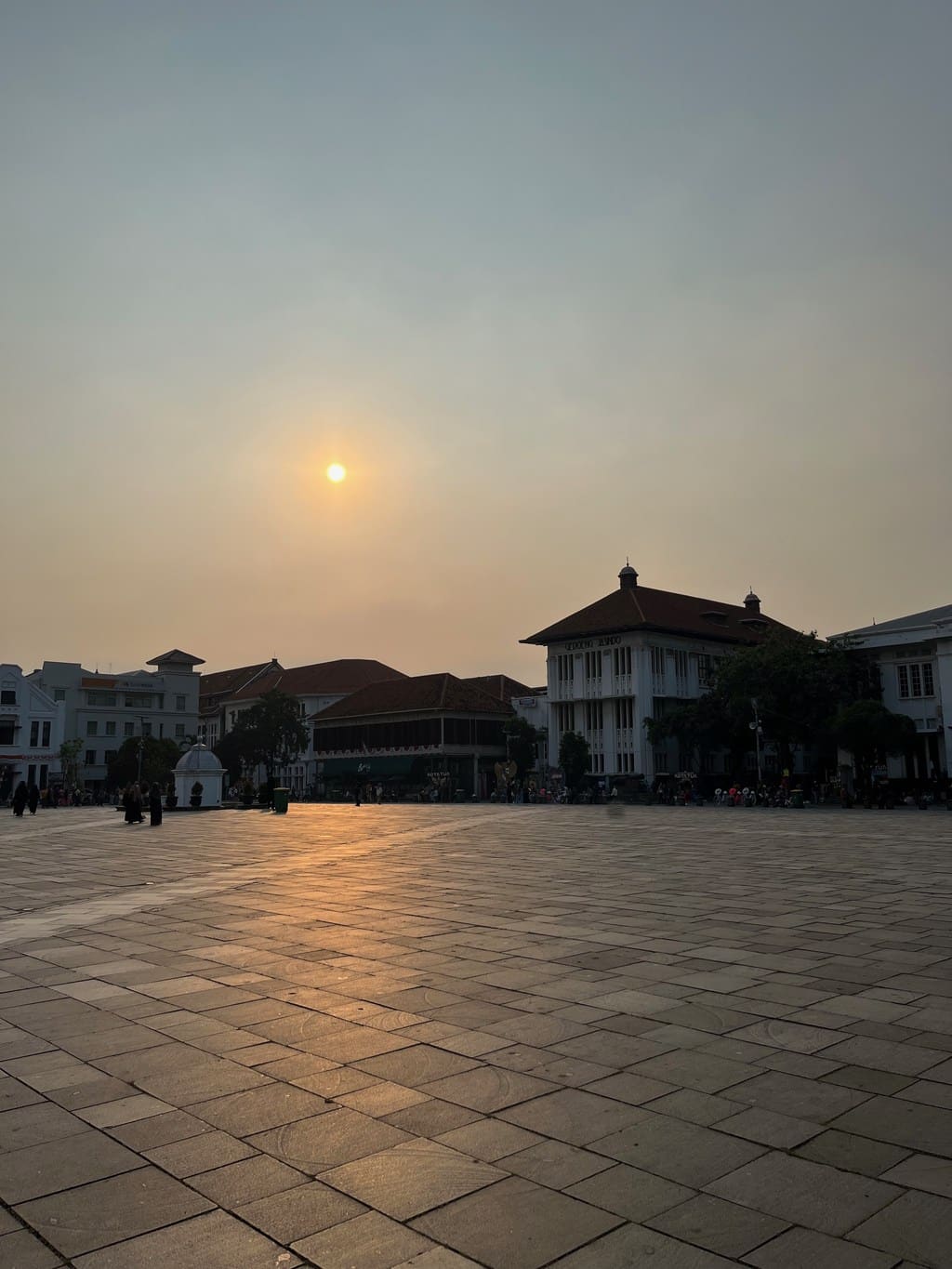
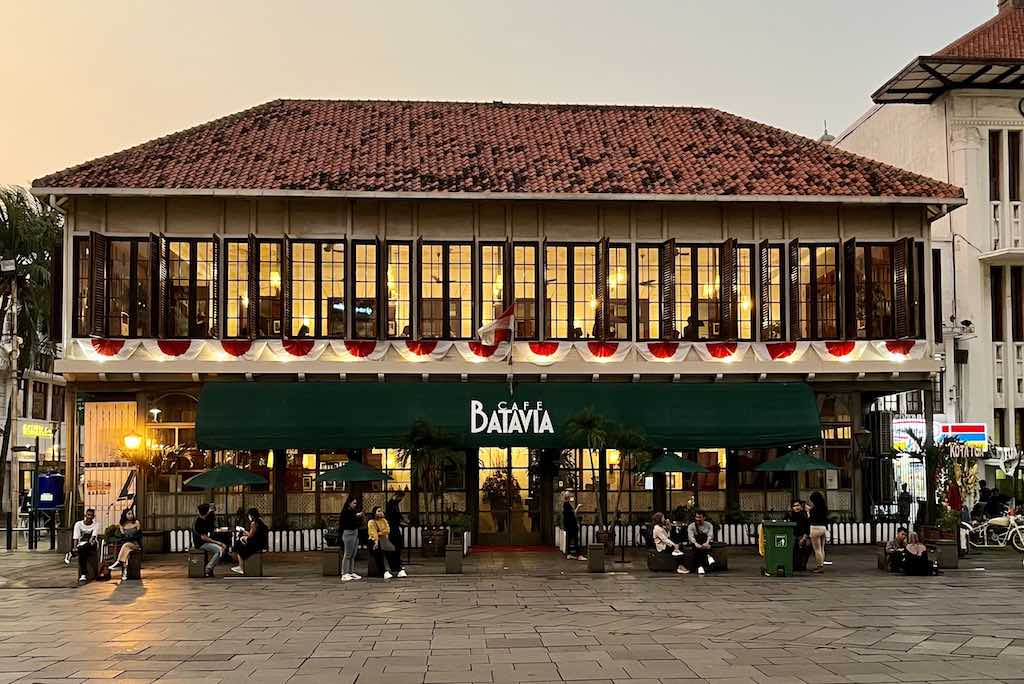
If you do have half a day, spend it in Kota Tua, the old Batavia. Fatahillah Square is the centre: the former city hall, now the Jakarta History Museum, the Wayang Museum, and the Fine Art and Ceramics Museum stand around a wide expanse of stone that fills with locals in the late afternoon. Go at the end of the day. The light drops, the square empties of tour groups and fills with families, and the Café Batavia lights up across from the museum — a 19th-century building with dark wood, shutters and slow ceiling fans, and the single most atmospheric room in Jakarta.
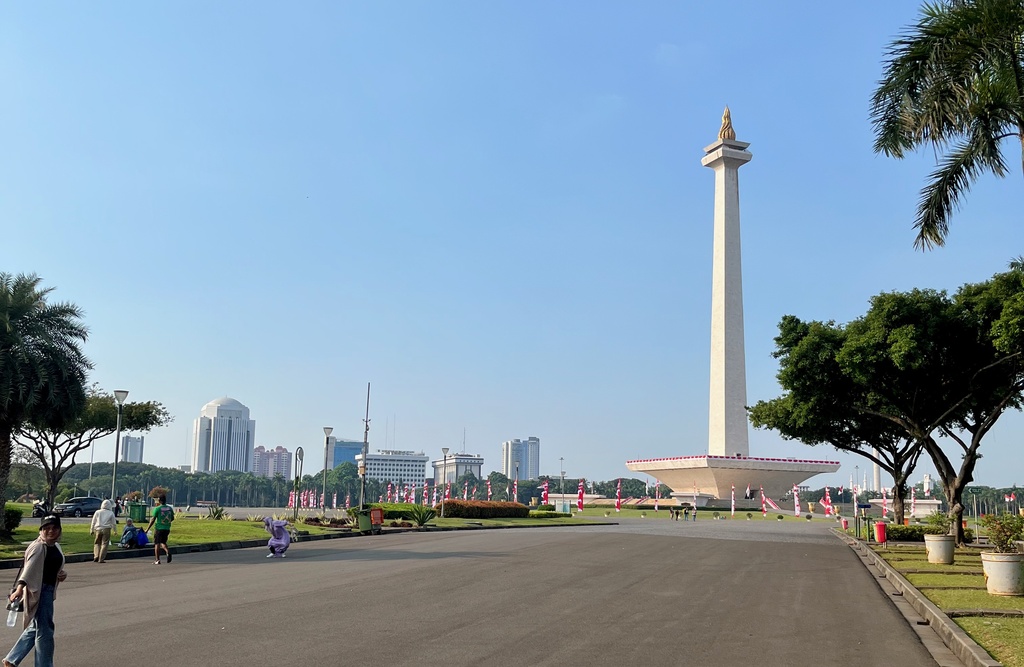
The other fixed point is Monas, the National Monument, a 132 m marble obelisk topped with gold at the centre of Merdeka Square. It is worth twenty minutes and a photograph rather than an afternoon. Nearby, the Istiqlal Mosque — the largest in Southeast Asia — faces the neo-Gothic Catholic cathedral across the road, deliberately, and the two share a pedestrian tunnel opened in 2021. That juxtaposition tells you more about Indonesia than any museum.
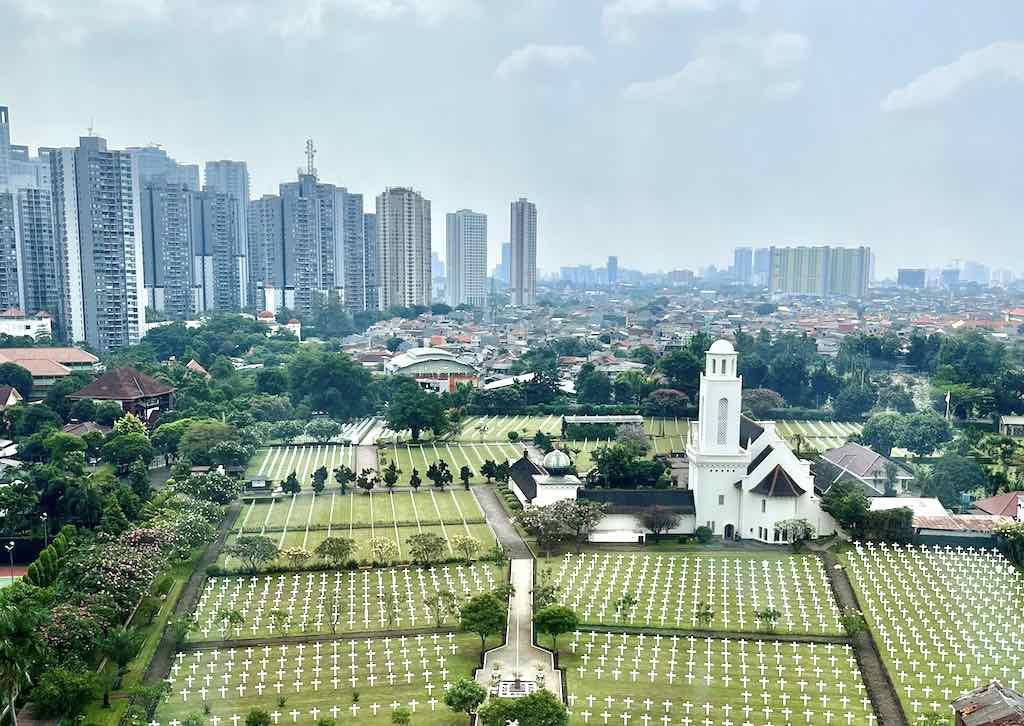
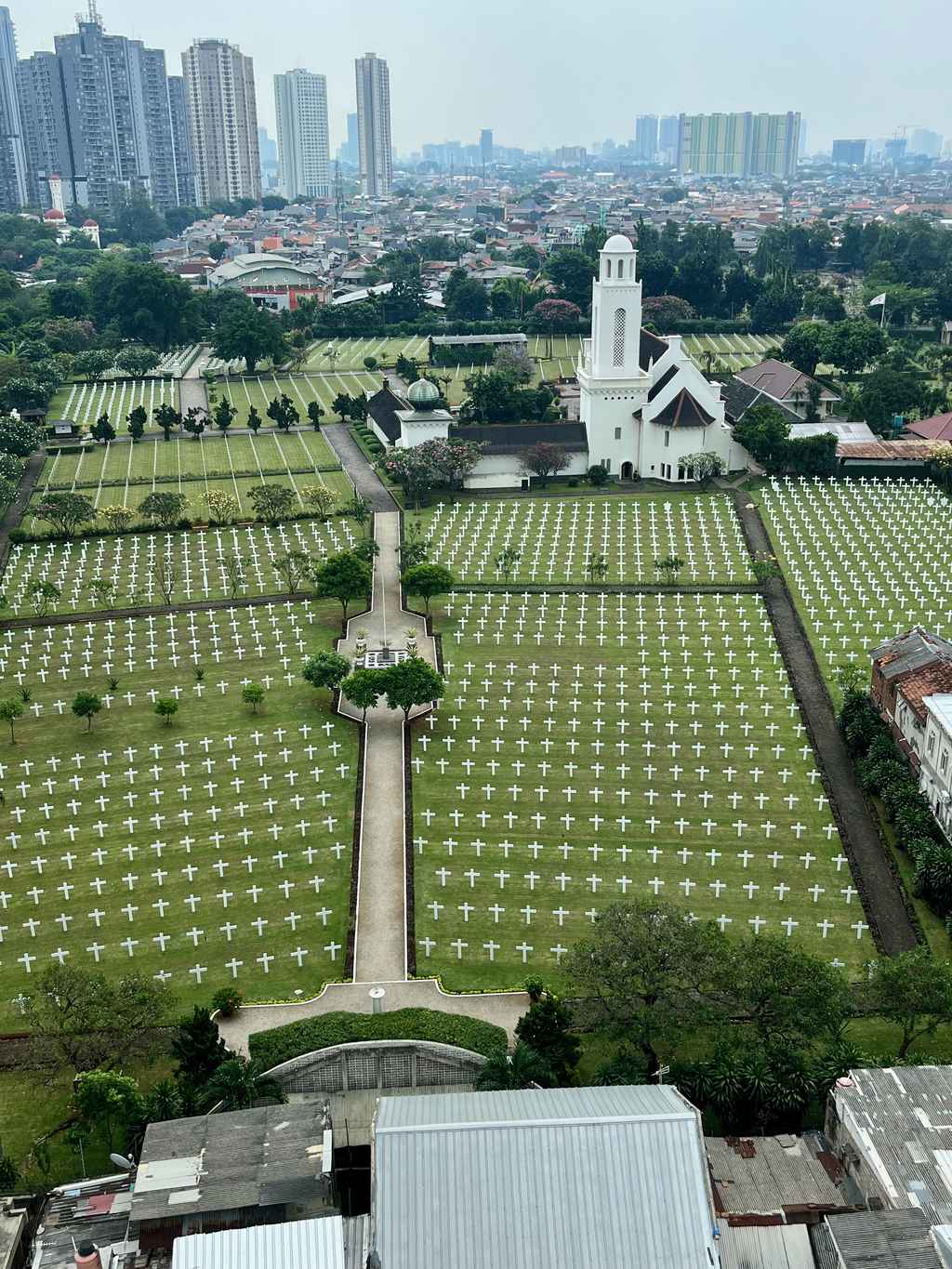
And one place almost no guide mentions: the Ereveld Menteng Pulo, a Dutch war cemetery in the middle of South Jakarta, thousands of white crosses in rows around a church with a tall white tower, with the Kuningan office towers rising behind. I photographed it from a hotel window without knowing what it was. Batavia is not only in Kota Tua.
Bandung: Cool Air, Art Deco and the Fastest Train in Southeast Asia
Bandung sits at 768 m in a volcanic bowl, which gives it a climate Jakarta can only envy and a reputation as a weekend escape. It was the Dutch colonial hill capital, and the legacy is architectural: Jalan Braga and the avenues around it hold one of the densest concentrations of tropical Art Deco anywhere.
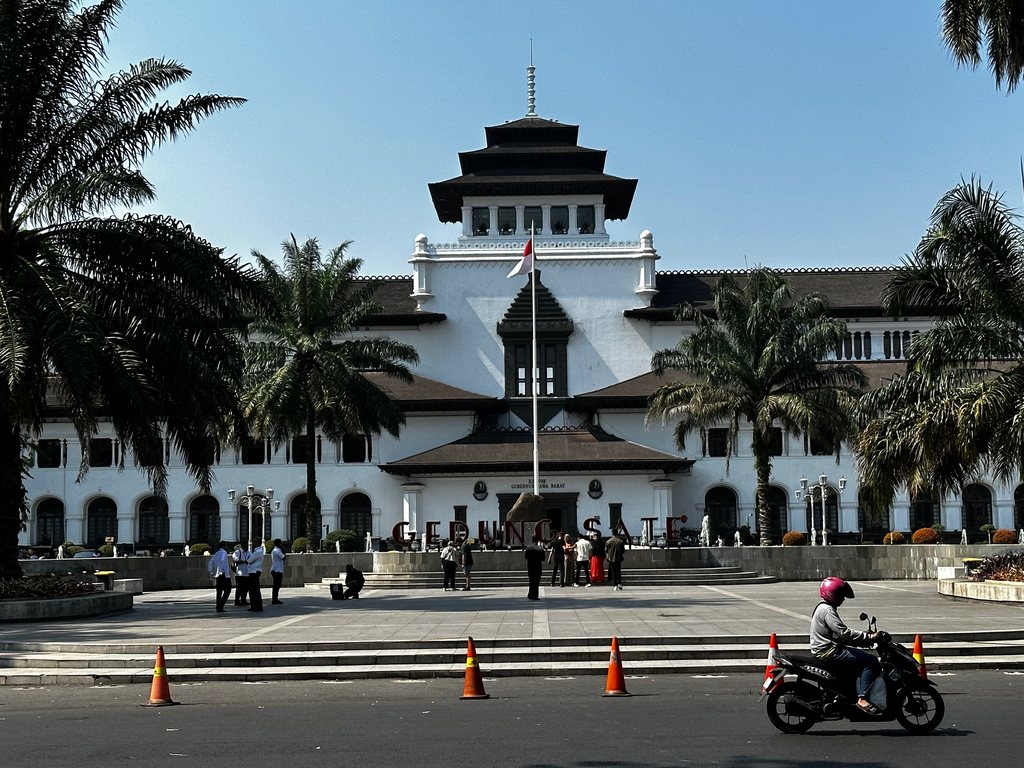
Gedung Sate is the landmark — the 1920 government building with the skewer-shaped ornament on its central tower that gives it its name. It photographs best in the late afternoon from the far side of the road, with the palms in frame.
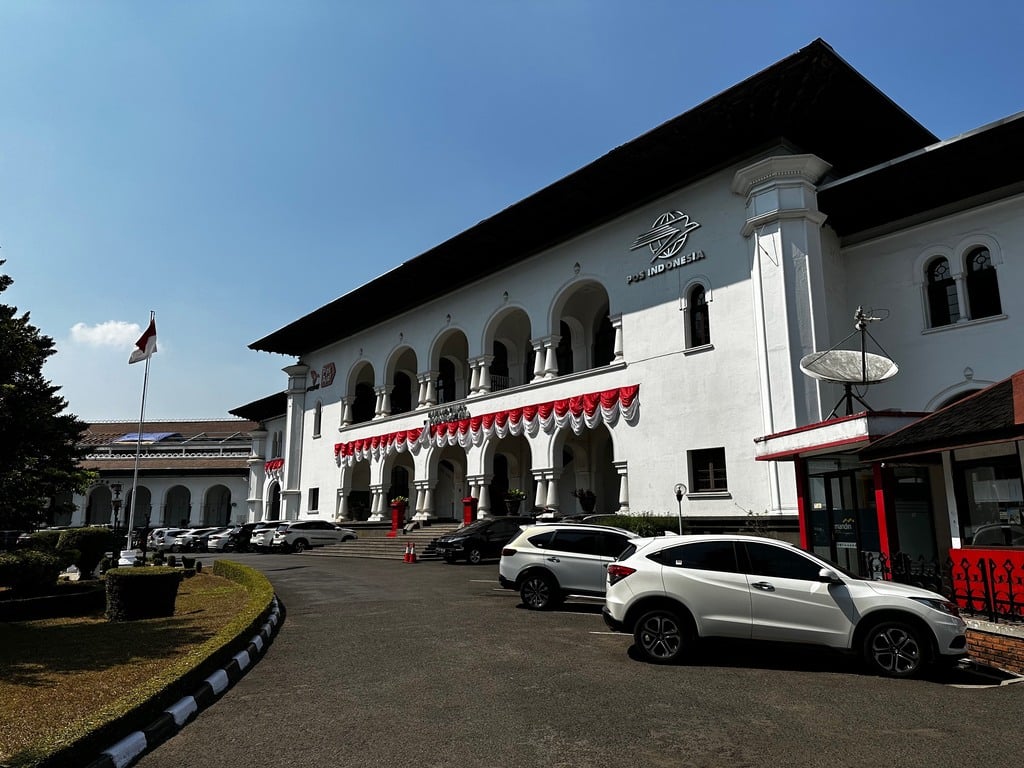
The other reason to stop is history you can stand inside. The Asian-African Conference of 1955 — the founding moment of the Non-Aligned Movement, with Sukarno, Nehru, Zhou Enlai and Nasser — took place on Jalan Asia-Afrika, in the Gedung Merdeka, and the delegations were housed in the Art Deco hotels along the same street. The museum there is free and genuinely good.
Outside the city: the tea plantations and the Kawah Putih crater lake at Ciwidey to the south, and the volcanic crater of Tangkuban Perahu to the north. Both are a half-day each with traffic, and Bandung traffic is worse than its reputation.
One thing has changed completely since most guides were written, this one included until now. When I visited in September 2023, reaching Bandung from Jakarta meant three hours by road or classic train. The Whoosh high-speed line opened days later, in October 2023, and now covers Halim to Tegalluar in about 40 minutes. See the transport section below for what that means in practice, because the honest door-to-door figure is not 40 minutes either.
Yogyakarta: The Cultural Heart
If you only have time for one stop in Java, make it Yogyakarta. It is the base for Borobudur and Prambanan, it is a walkable city with a functioning palace and a living court culture, and it has the best food and the best-value accommodation on the island.
The Kraton is still the residence of the reigning Sultan and is staffed by abdi dalem, courtiers in traditional dress. Taman Sari, the ruined water castle, is next door. Malioboro is the main artery, better at night. Kotagede, the old silver quarter, is where the city started. And Yogyakarta is the one place in Java where two or three days feel too short rather than too long.
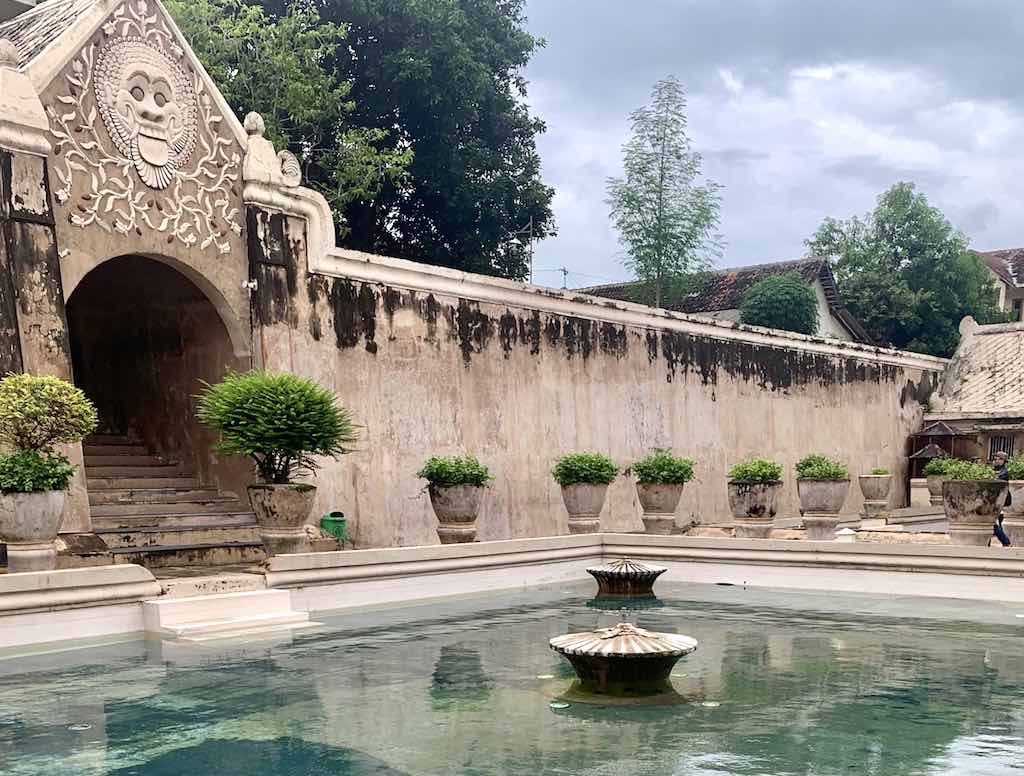
I have been three times — January 2021, September 2023 and May 2024 — and I have written the full guide separately, with ticket prices, the combined Borobudur and Prambanan ticket that most guides say does not exist, and the days the Ramayana ballet actually runs. Read my complete Yogyakarta guide.
Borobudur: The Largest Buddhist Monument on Earth
Built in the 9th century, buried by volcanic ash and jungle, rediscovered in 1814 and restored by UNESCO between 1975 and 1982, Borobudur is a single vast stupa in nine stacked terraces, carrying 2,672 relief panels and 504 Buddha statues.
The practical point that matters most in 2026: access to the upper terraces is limited and requires a separate, timed ticket, with a guide and the provision of upanat sandals to protect the stone. Ground-level access to the park is a cheaper, separate ticket. I visited in January 2021 when the upper terraces were closed for Covid and again in September 2023 when I took the climbing ticket — the difference is enormous, and worth the price.
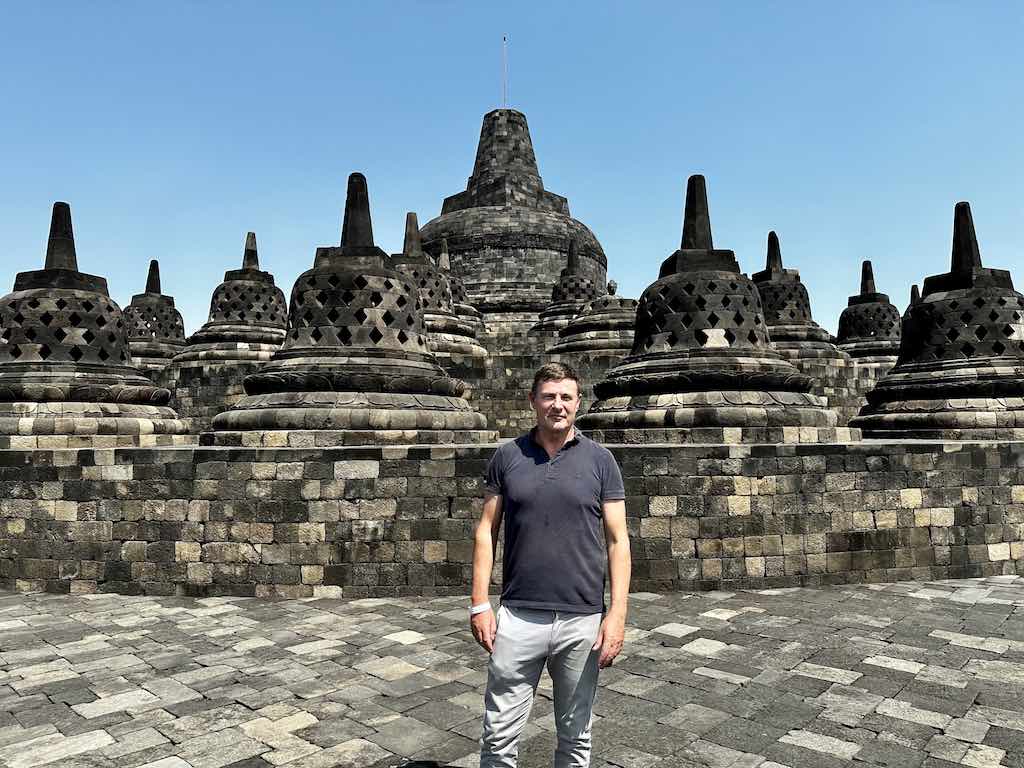
Sunrise at Borobudur is the classic image and the classic disappointment: the sunrise slot is not sold from inside the temple park itself but from the neighbouring hotel grounds and the Setumbu hill viewpoint. Manage that expectation before you pay for it.
Prambanan: Hindu Java in Stone
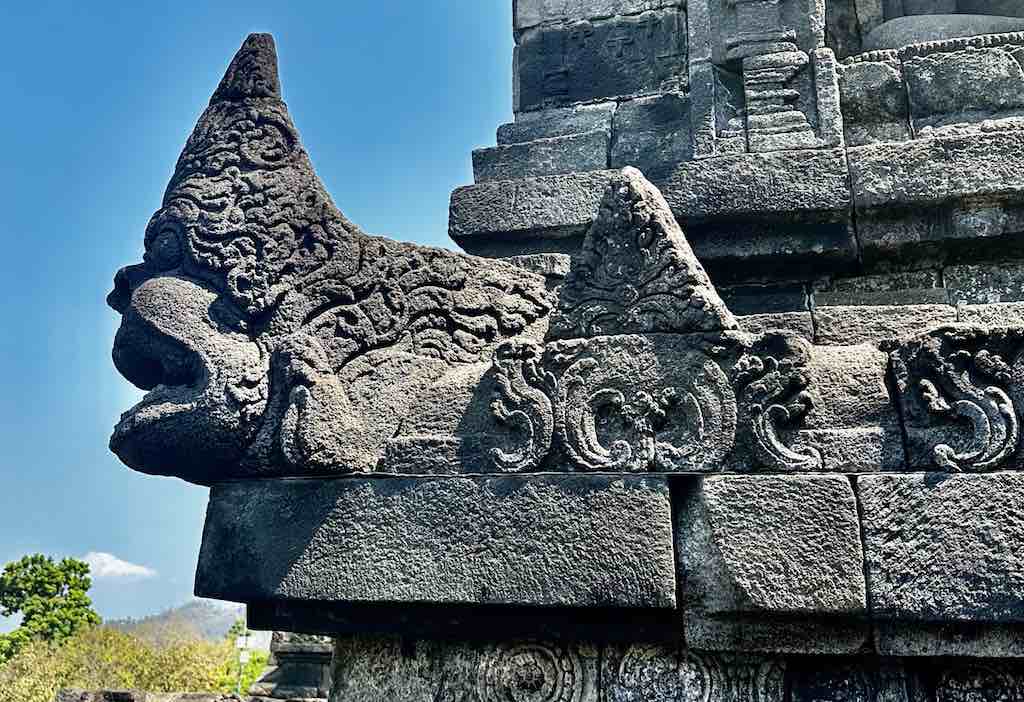
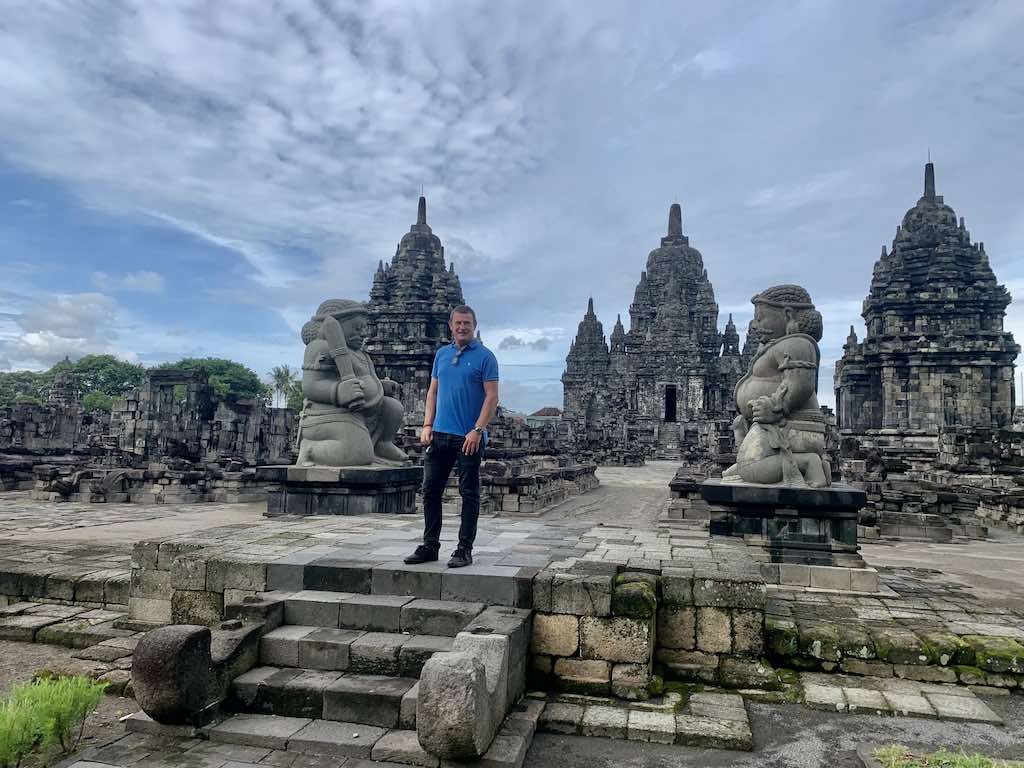
Prambanan is the counterweight to Borobudur: 9th-century, Hindu, and vertical where Borobudur is horizontal. The central Shiva temple rises 47 m. The site holds 249 structures in various states of restoration, and the surrounding plain contains several more temple groups — Candi Sewu, Plaosan, Ratu Boko — that almost no visitor reaches and that are among the quietest places in central Java.
The Ramayana ballet is performed at the open-air theatre beside the temples. It runs on set evenings rather than at full moon, whatever you may read elsewhere — the schedule is published on the official ticketing site and is worth checking rather than assuming.
Mount Bromo: The One You Have Seen in Photographs
Bromo is a 2,329 m cone inside a much larger caldera, surrounded by a plain of volcanic ash known as the Sea of Sand, with the 3,676 m cone of Semeru smoking on the horizon behind it. The classic sunrise view is from the Penanjakan viewpoints on the caldera rim, reached by jeep from Cemoro Lawang between 3 and 4 am.

Two things to know before booking. The viewpoints are crowded — this is the single most visited natural site in Java, and at sunrise in July or August you will be sharing the rail with several hundred people. And the crater rim itself, reached on foot across the Sea of Sand and up a staircase, is a separate and often better experience than the viewpoint. I have covered access, jeep prices, the Tengger villages and the alternative viewpoints in my full Mount Bromo guide.
Kawah Ijen: Blue Fire, and Some Honesty About It
I have never climbed Ijen. I drove past it on the road to Bali in September 2023 and did not go up. Most guides — including the earlier version of this one — describe the hike in the imperative, as though the writer had done it. Mine did not, and you should know which parts of a guide are lived and which are researched.
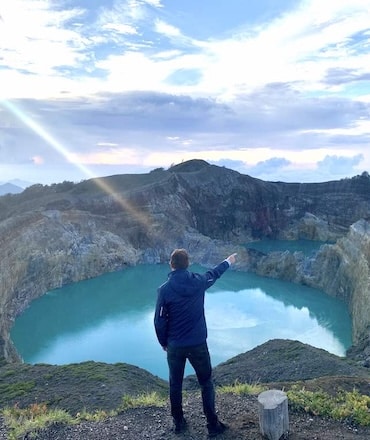
Here is what is verifiable. Ijen is a volcanic complex in East Java, its crater rim standing at roughly 2,386 m, holding the largest acidic crater lake in the world — a turquoise expanse of sulphuric water. At night, escaping sulphurous gases ignite and burn with a blue flame, visible from the crater rim and in the crater itself. Sulphur miners carry loads of solidified sulphur up the crater wall and down the mountain by hand.
What you need to plan for:
- The hike is 3 to 3.4 km from the Paltuding car park to the rim, 1 h 30 to 2 h up, on a steady incline. Departures are around 1 am to reach the blue flames before dawn.
- Entry is about Rp 150,000 for foreign visitors, around Rp 20,000 to 22,000 for Indonesian nationals.
- A surgical mask or a bandana does not filter sulphur dioxide. This is the point most often got wrong. You need a proper respirator with an acid-gas cartridge; rental at the trailhead costs roughly Rp 25,000 to 50,000.
- Closures happen and are not announced far ahead. Ijen was closed from 1 November 2025 to early February 2026 for sulphur pipeline repairs — during which the blue flame was extinguished — and again from 19 to 26 February 2026 for a search and rescue operation. Check the volcanology agency, MAGMA Indonesia, before committing to a date.
- “Human taxis” — a two-wheeled cart pushed and pulled by porters — will carry you up and down for roughly Rp 800,000 to 1,500,000 return. Whether you use one is your decision to make with your eyes open.
You will read that the miners have a life expectancy of around fifty. That figure circulates widely and I have not been able to trace it to any source that stands up. The work is visibly brutal — loads of 70 to 90 kg, twice a day, through acid gas — and it does not need an unverifiable statistic attached to it.
Best Volcanoes in Java
Java has more than 45 volcanoes, about twenty of them under active monitoring by the PVMBG. That density is why the island exists in the shape it does, why its soil is extraordinarily fertile, and why 150 million people live on it.
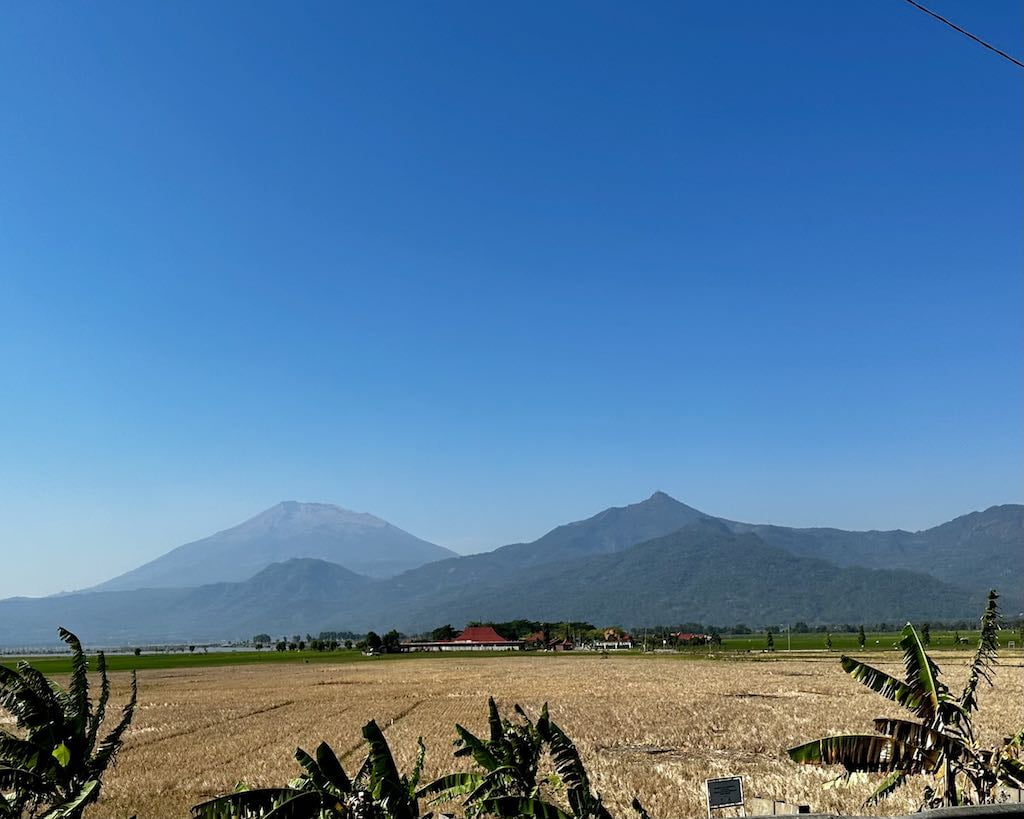
The four that travellers ask about, with their real status rather than the brochure version:
- Mount Bromo (2,329 m) — the accessible one. Sunrise viewpoints by jeep, crater rim on foot. Open, busy, worth it.
- Kawah Ijen (rim about 2,386 m) — the blue fire. Open at the time of writing, but subject to closures announced at short notice.
- Mount Merapi (2,930 m, near Yogyakarta) — Indonesia’s most active volcano. It has been at Siaga, alert level III, continuously since 5 November 2020, and the summit climb has been closed since 22 May 2018. What remains, and is excellent, is the jeep lava tour across the 2010 eruption zone from Kaliurang.
- Mount Semeru (3,676 m) — the highest in Java and a serious multi-day trek. The summit has been closed since the eruption of 19 June 2026, and the whole park closes periodically for the Tengger Karo festival. Do not build a trip around Semeru without checking first.
Volcano status in Indonesia changes on a scale of days. The single authoritative source is MAGMA Indonesia, published by the geological agency; check it before you book a tour, not after.
One point of vocabulary that has caused real confusion: Merapi in Java is not Marapi in Sumatra. Two different volcanoes, two different islands, near-identical names, and news reports that regularly conflate them.
Culture and Traditions
Java’s layers are stacked rather than replaced, and you can see all of them in a single week.
The Hindu-Buddhist period built Borobudur and Prambanan within a few decades of each other in the 9th century, in the same plain, under different dynasties. The Majapahit empire, from its capital in East Java, dominated the archipelago in the 14th century and remains the historical reference modern Indonesia reaches for when it talks about its own unity.
Islam arrived through trade from the 13th century and spread across Java without erasing what preceded it. The result is specific to this island: a Muslim society that has kept its Hindu-Buddhist court rituals, its pre-Islamic calendar, and a Sultan in Yogyakarta who is simultaneously a governor of the Republic and the custodian of a pre-Islamic cosmology.
Three and a half centuries of Dutch presence left the railway network you will travel on, the Art Deco of Bandung, the warehouses of Kota Tua, and a cemetery of white crosses in the middle of South Jakarta.
What to actually seek out:
- Wayang kulit — shadow puppet theatre, performed with a gamelan orchestra, traditionally all night. Yogyakarta and Solo both stage shortened versions for visitors and full versions for locals; ask for the second.
- Batik — a UNESCO-listed Javanese craft. Yogyakarta, Solo and Pekalongan are the centres. Be aware that a well-known scam in Yogyakarta involves a friendly stranger steering you to a “government batik exhibition, last day”. It is neither.
- Gamelan — the tuned percussion orchestra. The Kraton in Yogyakarta holds free performances on set days of the Javanese week.
- Javanese food — sweeter than the rest of Indonesia. Gudeg in Yogyakarta, rawon in East Java, sate klathak grilled on bicycle spokes.
Crossing Java: What It Was Actually Like
I have crossed Java three times, in three different ways, and none of them resembled the itinerary I would have written beforehand.
January 2021: an empty island
I flew into Yogyakarta from Sulawesi on 31 December 2020 and visited Borobudur on 1 January 2021 — as, it turned out, the first foreigner of the year, which earned me a piece in the local paper in those strange Covid months. The upper terraces were closed. Prambanan was open, masked, with #COVIDSAFE signs at the entrance. Ratu Boko and Candi Sewu were all but empty.
I left by train from Lempuyangan station to Probolinggo for Bromo: more than eight hours in economy class, on wooden-backed seats, and one of the better journeys of my life. That same route today is served in about seven hours by more modern rolling stock — worth knowing if you are comparing my account with a timetable.
May and October 2021: Jakarta from a hotel window
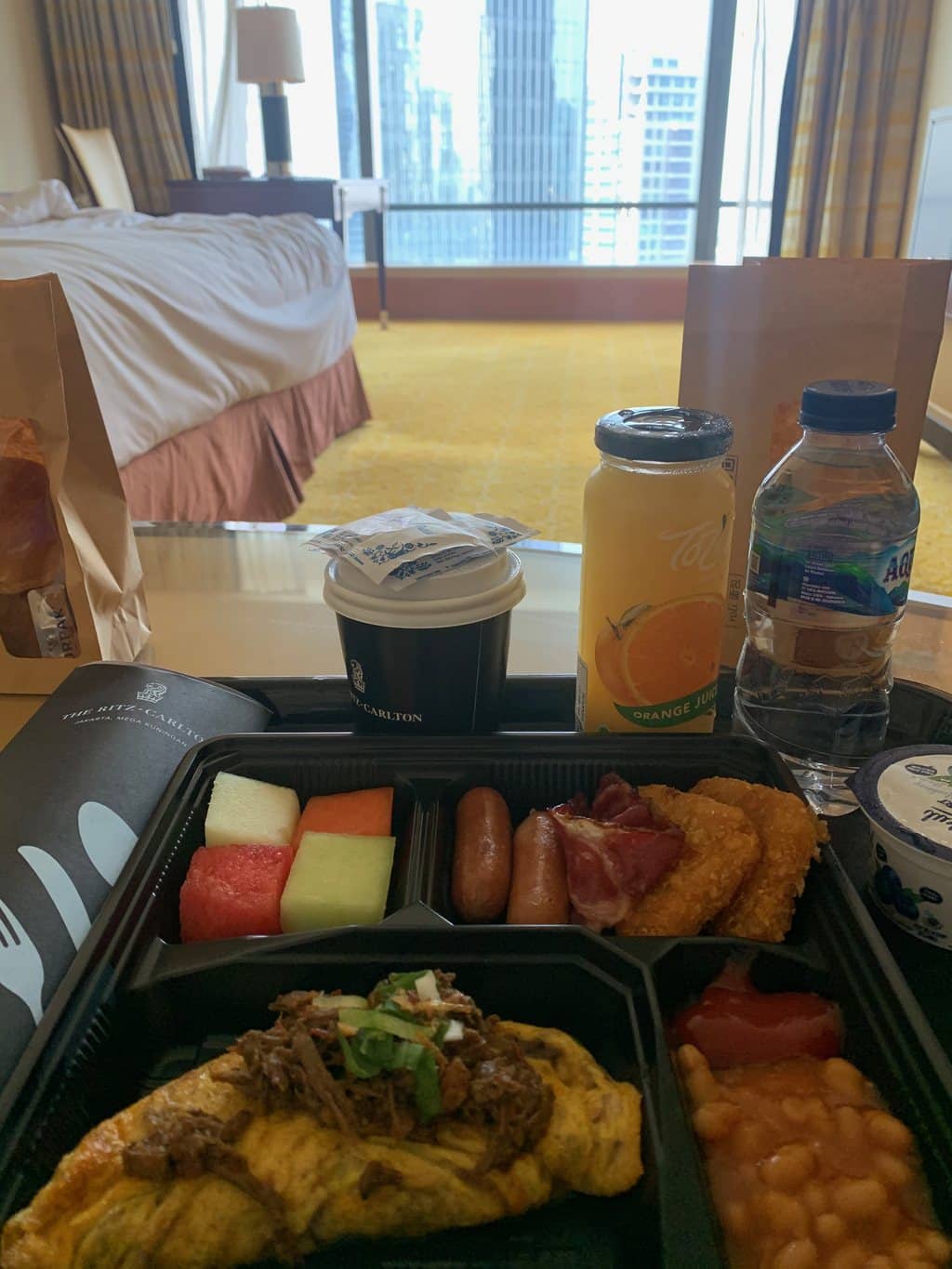
During the pandemic Jakarta was the compulsory point of entry for anyone travelling on to Bali, with a mandatory quarantine in a designated hotel. I did it twice. Meals arrived on a tray outside the door, staff moved through the corridors in full protective suits, and the only view of Java for a week was whatever the window framed.
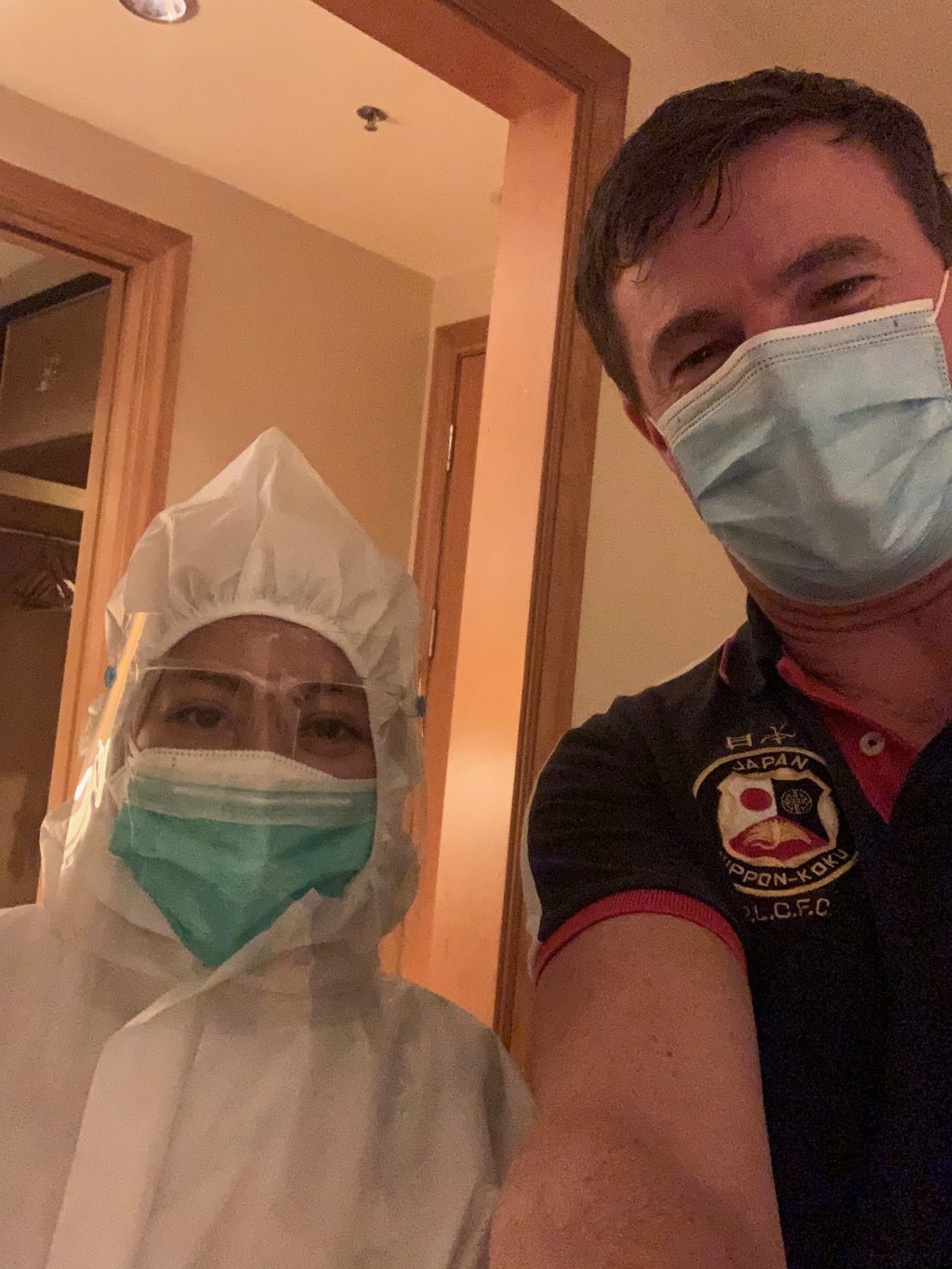
It is a period no guidebook records and nobody misses. I mention it only because it is the reason I have been to Jakarta so many times and seen so little of it, and because it is a useful reminder that Indonesia’s entry rules can change fast and are worth checking close to departure rather than at booking.
September 2023: the whole island in three days
This is the crossing that shaped this guide. Jakarta to Bali by road, in three days.
- 25 September — Jakarta to Bandung by road. Gedung Sate, Jalan Asia-Afrika, the Art Deco. The Whoosh high-speed line opened the following week; had I gone seven days later, this day would have looked entirely different.
- 26 September — Bandung to Borobudur, then straight on to Probolinggo. Borobudur only: no Prambanan, no city, no stopping. This was the day I took the climbing ticket and went up to the terraces.
- 27 September — East Java, past Ijen without going up, then Ketapang and the ferry to Bali.
My verdict: it is doable, but the pace is punishing and you miss part of the experience. Java in three days is a transit, not a visit. If you have seven, use them.
The ferry to Bali: the part nobody writes down
Every guide tells you the Ketapang to Gilimanuk crossing takes 45 to 60 minutes. That is true and it is not the useful number.
We boarded at Ketapang at dusk on 27 September 2023 under a storm sky. The crossing itself took under an hour. We then waited more than an hour at anchor off Gilimanuk, in the dark, watching the lights of the port, because there was no berth free. The real cost of that leg was not the sea. It was the quay.
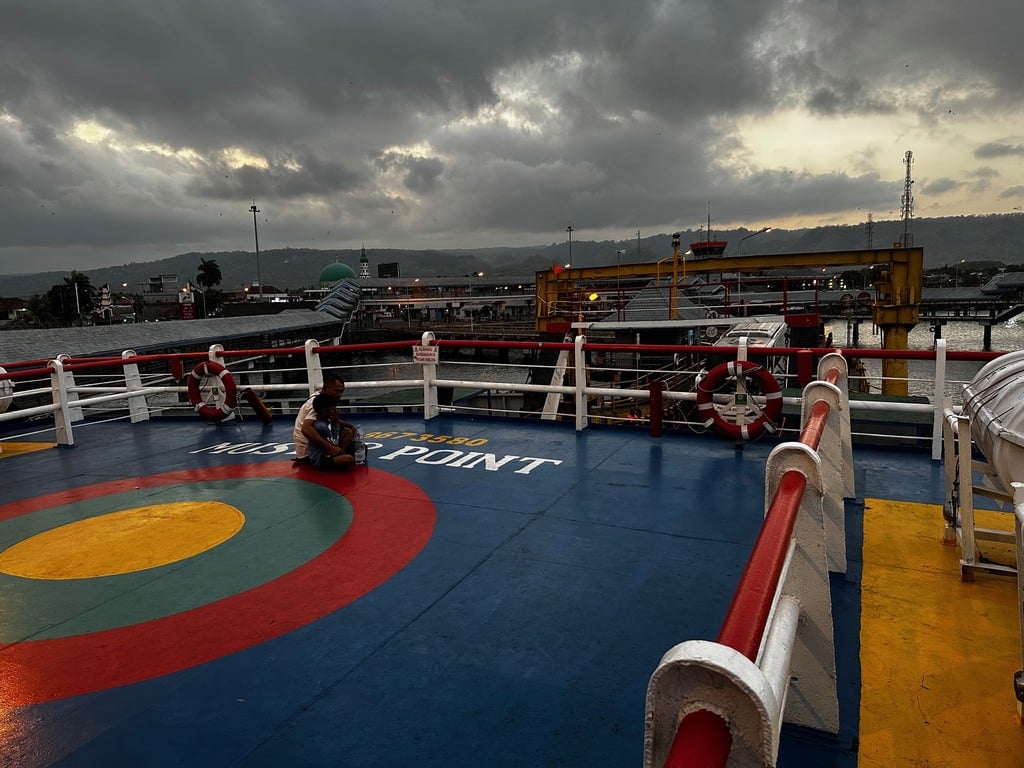
This is not bad luck. The Gilimanuk terminal has only four berths, and traffic has risen sharply since the Trans-Java toll road reached East Java. In June 2026 — an ordinary school-holiday weekend, not a religious festival — queues at the crossing reached eleven hours for freight vehicles, with 5 km tailbacks, and the operator ASDP issued a public apology. Plan the ferry as a variable, not a fixed 60 minutes.
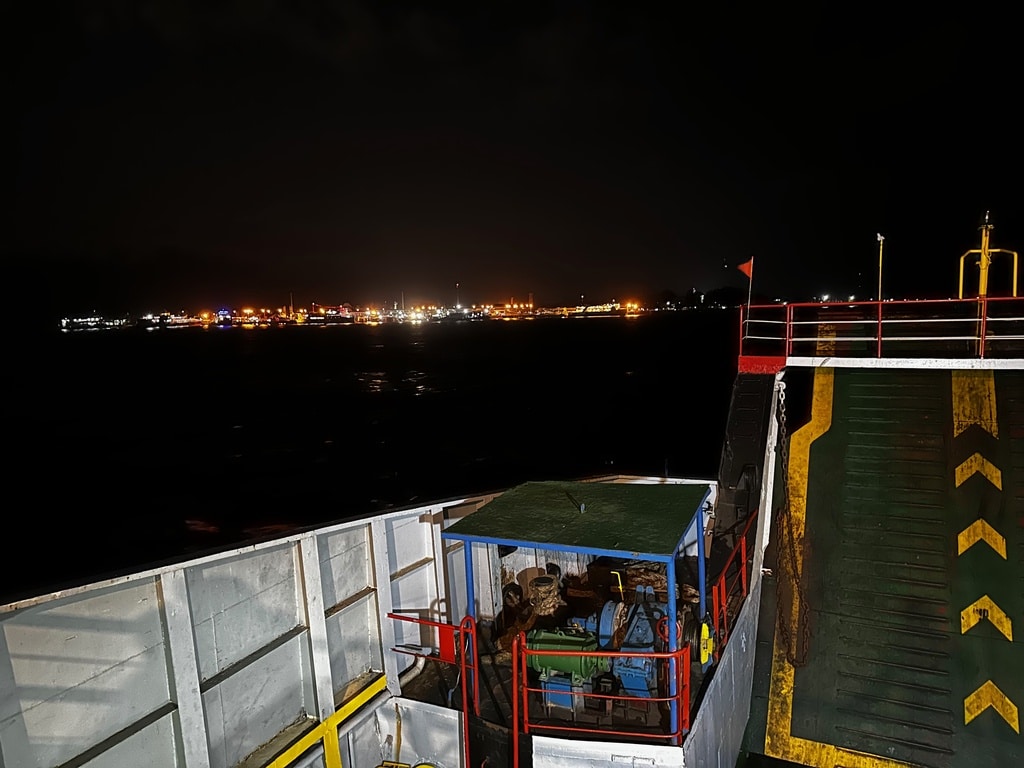
Two practical things I did not know before doing it:
- If you cross in a vehicle, you can and should leave it. Passengers are allowed up onto the passenger decks for the crossing, and it is actively encouraged. Nobody tells you this, and plenty of people sit in a hot car for two hours.
- Swimmers come out to the ship. Young men swim alongside the hull and dive for coins thrown from the rail. It has been going on for decades and it is the strangest, most memorable thing about the crossing.
And when you step off in Gilimanuk, put your watch forward. Java is on WIB, Bali on WITA — you lose an hour crossing the strait.
How Many Days in Java?
Plan at least 5 days, 7 comfortably, 10 ideally.
- 3 days — a transit. I have done it. You will see Borobudur, a stretch of motorway and a ferry. It works if Java is the corridor between two other trips, not if Java is the trip.
- 5 to 7 days — the classic west-to-east route: Yogyakarta with Borobudur and Prambanan, Bromo at sunrise, Ijen, and at least one long train journey.
- 8 to 10 days — the same route without rushed transfer days, plus Bandung or Solo, plus the Merapi jeep tour, plus a day that is not spent moving.
The mistake almost everyone makes is underestimating the distances. Java is 1,000 km long, its roads are congested even where the motorway runs, and a “short hop” between two cities on the map is routinely five hours on the ground.
Suggested 7-Day Java Itinerary
A logical west-to-east progression, written with the 2026 transport reality rather than the one in older guides.
Day 1 — Arrival in Jakarta
Apply the rule above. Evening arrival: sleep near Soekarno-Hatta, do not attempt the city, leave on an early train. Morning arrival: drop your bags in Central Jakarta or Menteng, spend the afternoon in Kota Tua, eat at Café Batavia, and take the train the next morning — or skip the city entirely and fly straight on to Yogyakarta.
Day 2 — Bandung
Take the Whoosh from Halim: about 40 minutes to Tegalluar, then the free feeder train into Bandung city centre. Gedung Sate, Jalan Braga, the Asian-African Conference museum. If you would rather have the landscape, the classic train from Gambir takes about three hours through the mountains and is one of the finest rail journeys in Indonesia — this is a case where the slow option is defensible.
Day 3 — Yogyakarta
Morning train to Yogyakarta, around seven to eight hours from Bandung. Kraton, Taman Sari, Malioboro in the evening. Book the train well ahead: seats on the Yogyakarta corridor sell out.
Day 4 — Borobudur and Prambanan
Borobudur early, with the timed upper-terrace ticket booked in advance. Prambanan in the afternoon, and the Ramayana ballet in the evening if it is running. Overnight in Yogyakarta.
Day 5 — East to Bromo
Train to Probolinggo — around seven hours — then road transfer up to Cemoro Lawang, the village on the caldera rim. Eat early and sleep earlier: tomorrow starts at 3 am.
Day 6 — Bromo sunrise, then Banyuwangi
Jeep to the viewpoint before dawn, then down across the Sea of Sand to the crater rim on foot. Back for breakfast, then the long transfer east to Banyuwangi — five to six hours.
Day 7 — Ijen, then the ferry to Bali
Departure around midnight for the Ijen hike, back down mid-morning, and the ferry from Ketapang in the afternoon. Do not book anything in Bali for that evening. The crossing is an hour; the waiting is not. Give the ferry day an open end, and remember the hour you lose to the time zone.
If seven days feels tight — it is — the cut to make is Bandung. Fly or take the train straight from Jakarta to Yogyakarta and give the extra day to central Java.
How to Get Around Java
This is the section where guides date fastest, and where most of them are currently wrong. Everything below reflects the situation in August 2026.
Trains — the default, and the best of it
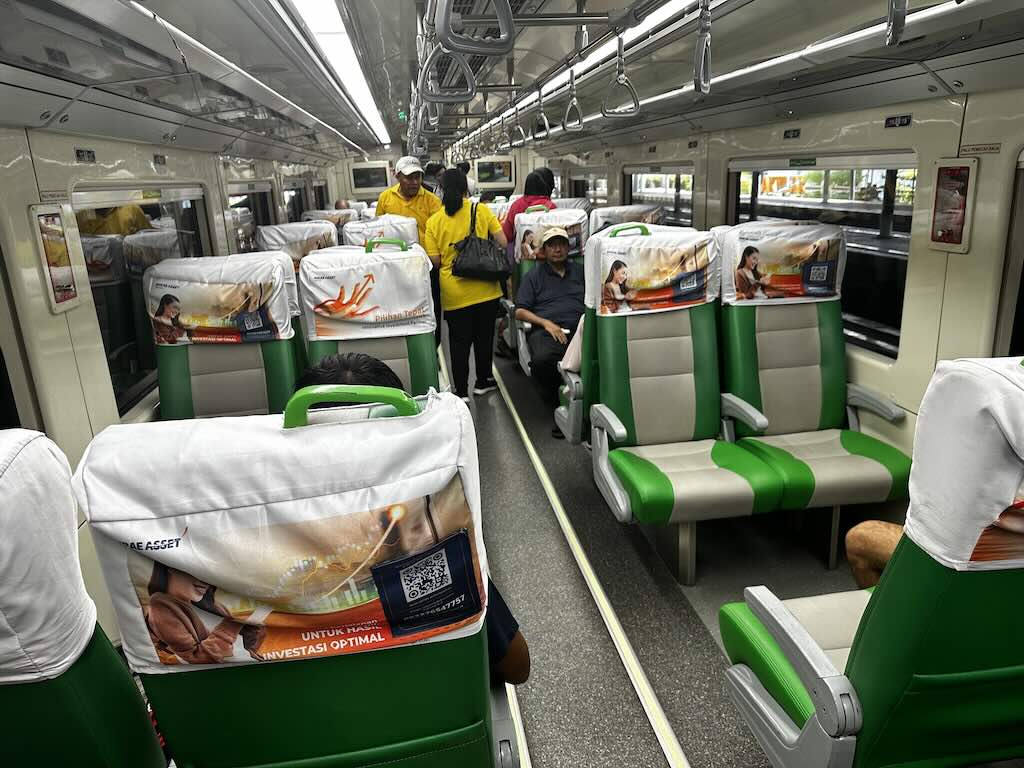
Java’s rail network is dense, punctual, cheap and comfortable, and it is the reason independent travel here is easy. Book through the official Access by KAI app. Tickets open 45 days ahead and can now be bought up to 30 minutes before departure. Foreign travellers need to enter a passport number; Indonesians use their KTP.
One change that trips people up: the “bisnis” class no longer exists on Java. It was withdrawn on 15 July 2025 and replaced by “Ekonomi New Generation” — stainless-steel carriages, ergonomic seats, far more legroom than the old economy. If a website still offers you bisnis on a Java route, that website is out of date. The current ladder is Ekonomi New Generation, Eksekutif, then the premium classes: Panoramic with glazed roof and walls, Luxury with reclining seats and meals included, and Suite Class Compartment with private sliding-door cabins.
Useful reference journeys: Jakarta Gambir to Surabaya about 9 hours; Yogyakarta to Probolinggo about 7 hours; Yogyakarta to Solo about an hour, and one of the cheapest, prettiest short rides anywhere.
Whoosh — the high-speed line, and the honest number
The Jakarta–Bandung high-speed line opened in October 2023 and runs at up to 350 km/h. Halim to Tegalluar takes 36 to 45 minutes, with departures every 20 to 30 minutes.
Three classes: Premium Economy from around Rp 150,000 to 300,000 depending on time and day, Business around Rp 450,000, First Class around Rp 600,000. Buy through the Whoosh app, Access by KAI, or the machines at the stations.
Now the caveat that matters. Tegalluar is not central Bandung. A free feeder train connects Padalarang to Bandung station in about 19 minutes, and it is included in your Whoosh ticket — but with the connection and a sensible buffer, the realistic door-to-door time from central Jakarta to central Bandung is about an hour to an hour and a quarter. That is still transformative next to the old three hours. It is simply not 40 minutes, and anyone writing “40 minutes” has not made the journey. Note too that since 10 March 2026 the feeder access and waiting area at Bandung station have moved to the west side.
You may read that Whoosh is being extended to Surabaya. As of August 2026 that is a preliminary study with no route, no financing and no timetable. Do not plan around it.
Private driver — the flexible option
For temples, volcanoes and anywhere off the rail line, a car with a driver is the simplest solution and not expensive by European standards. It is what I used for the three-day crossing. The advantage is not speed — it is being able to stop.
The Trans-Java toll road now runs virtually the whole length of the island, from Merak to the approaches of Banyuwangi, with the final section completed in 2026. Jakarta to Surabaya is 9 to 11 hours in clear traffic, and tolls for a light vehicle total roughly Rp 900,000 to 1,000,000. Tolls are cashless — you need a prepaid e-toll card with sufficient balance, and topping it up is the single most common thing foreign drivers get wrong.
The Ketapang–Gilimanuk ferry
Operated by ASDP, running around the clock. Official crossing time 45 to 60 minutes. Fares in 2026: Rp 10,600 on foot, Rp 31,600 for a small motorbike, Rp 213,400 for a car.
Booking through Ferizy is now compulsory and fully digital, for foot passengers as well as vehicles, and you should book at least the day before. Buying at a counter on the day is no longer the norm. Then budget generously for the wait, for the reasons given above.
Domestic flights
Worth it for Jakarta to Yogyakarta or Surabaya if days are short; otherwise the train is more enjoyable and lands you in the centre. Expect roughly Rp 700,000 to 2,000,000 one way depending on season and how far ahead you book.
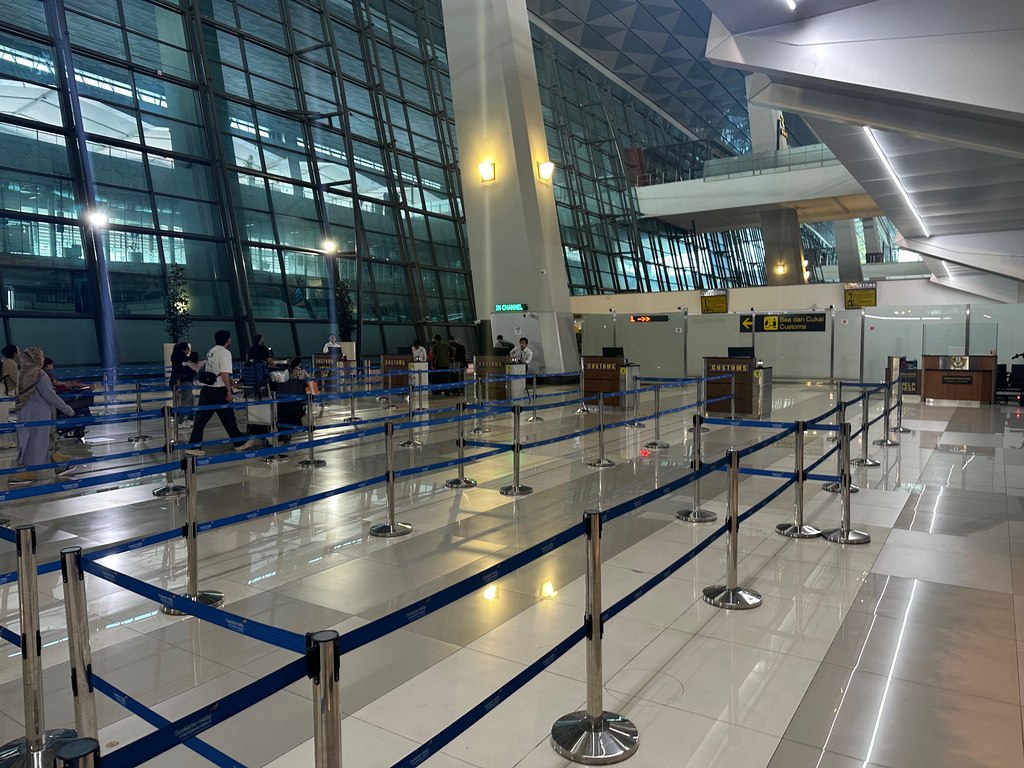
Two airport facts that older guides get wrong. Husein Sastranegara in Bandung has been closed to scheduled commercial flights since October 2023 — a reopening on eight domestic routes is announced for 17 September 2026, so check its status against your travel dates. And in Yogyakarta, YIA is the operating airport; the old Adisutjipto keeps its JOG code and has not been formally closed, but it now handles almost no traffic.
Organised volcano tours
For Bromo and Ijen, a tour is usually the practical answer rather than a compromise: departures between midnight and 3 am, jeeps that private cars cannot replace on the Sea of Sand, and access points that are genuinely remote.
For everything else — trains, buses, ferries, and the Bali connection — I book through 12Go, which aggregates operators that do not sell in English.

For the full picture across the archipelago, see my guide on how to get around Indonesia.
Where to Stay in Java
Because almost everyone crosses west to east, where you sleep is dictated by the route rather than by preference. Six bases cover the whole island.
Jakarta — one night, chosen by arrival time
Landing late? Stay by the airport and save the hour of traffic: FM7 Resort Hotel for a proper night’s sleep, or Jakarta Airport Hotel if you are leaving again in a few hours.
Staying in the city? Central Jakarta or Menteng, for access to Monas, Kota Tua and Gambir station.
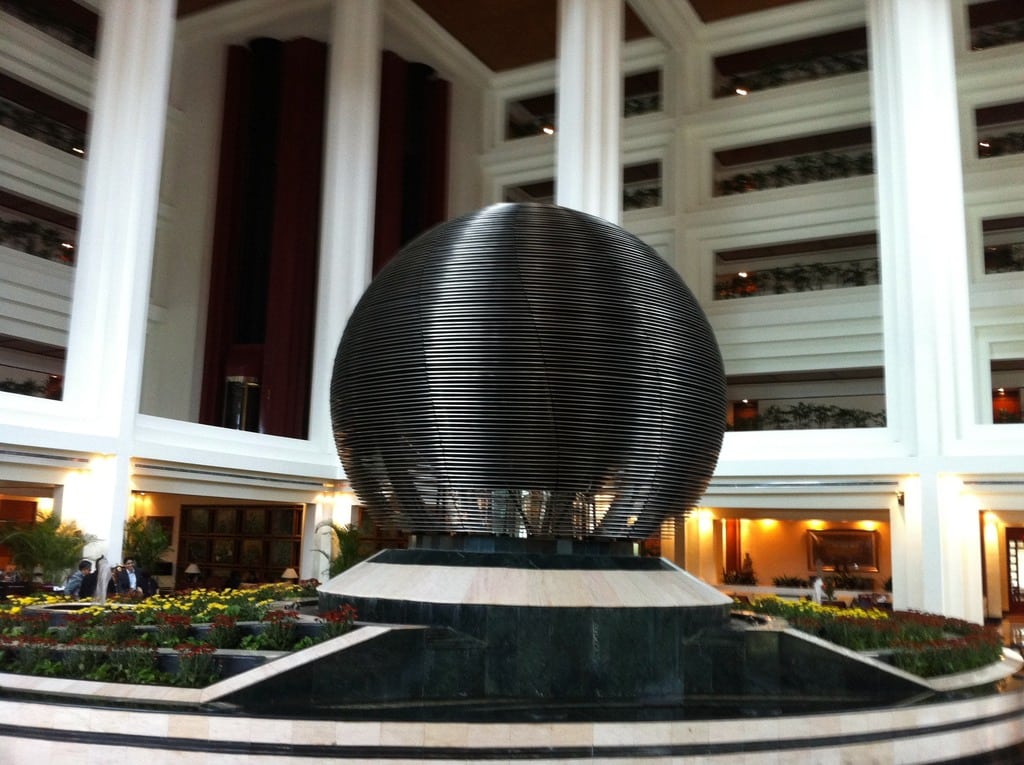
- Hotel Indonesia Kempinski — the country’s first modern grand hotel, opened in 1962 on the Bundaran HI roundabout. A piece of national history you can sleep in.
- The Hermitage Menteng — 1920s Art Deco in the embassy quarter.
- House of Tugu Jakarta — the Tugu group’s Jakarta property, closer to a museum than a hotel.
- Wyndham Casablanca Jakarta — where I stayed in 2022; the upper floors look straight down onto the Ereveld Menteng Pulo.
- Kosenda Hotel — small, central, mid-range, off Thamrin.
- Wonderloft Hostel — in Kota Tua itself, the budget choice with the best location in the city.
Bandung — one night, in the old centre
- Savoy Homann — 1939 Art Deco on Jalan Asia-Afrika, and one of the hotels that housed the delegations of the 1955 conference. If you stay anywhere in Bandung, stay here.
- The Trans Luxury Hotel — the city’s landmark five-star.
- El Cavana — mid-range, walking distance from Braga.
- Amaris Cihampelas — reliable budget chain.
Yogyakarta — two to three nights, the one place to slow down
Stay near Malioboro for walkable access to the Kraton, the markets and the station, or in Prawirotaman for a calmer street of cafés and guesthouses.
- The Phoenix Yogyakarta — 1918 colonial building, the most characterful address in the city.
- Greenhost Boutique Hotel — design hotel in Prawirotaman.
- Wonderloft Hostel Jogja — the budget option, five minutes from Malioboro.
The full list, including the Borobudur options and the ones I have slept in myself, is in my Yogyakarta guide.
Bromo — one night, and only in Cemoro Lawang
Cemoro Lawang sits on the caldera rim. Accommodation there is simple and often cold; the point is entirely proximity, because staying anywhere else means a two-hour drive starting at 1 am. Alternatively, base yourself in Malang and accept the early start — the city is far more pleasant and has real hotels.
- Hotel Tugu Malang — one of the most remarkable hotels in Indonesia, a genuine collection of Javanese art and antiques.
- The Shalimar Boutique Hotel — restored Art Deco.
- Ibis Styles Malang — dependable mid-range.
Full details of the Cemoro Lawang options are in my Mount Bromo guide.
Banyuwangi — one night, before Ijen and the ferry
- Ketapang Indah Hotel — beside the ferry port itself. If your crossing is early, or you arrive late off the volcano, this is the logical choice.
- Dialoog Banyuwangi — the town’s architectural hotel, on the beach.
- Ijen Cottages — closer to the trailhead, for a midnight departure.
Surabaya — for the history, if you pass through
Most itineraries skip Surabaya. If yours does not, Hotel Majapahit is worth the detour on its own: opened in 1910 by the Sarkies brothers, who also built Raffles in Singapore, and the site of the flag incident of 19 September 1945 that helped trigger the Battle of Surabaya.

When Is the Best Time to Visit Java?
May to October, the dry season: clearer skies, lower humidity, and the conditions the volcano hikes depend on.
Dry season, May to October
- The only reliable window for sunrise at Bromo and blue fire at Ijen
- Clear visibility at Borobudur and Prambanan
- Low risk of rain disrupting transfers
- Busiest in July and August, when accommodation near the volcanoes fills weeks ahead
Rainy season, November to April
- Far fewer visitors and much greener landscapes
- Afternoon downpours are the norm rather than the exception
- High risk of cloud at sunrise viewpoints — you may make the 3 am start and see nothing
- Trails muddy but passable
Two dates to avoid unless you have a reason to be there: Lebaran, the end of Ramadan, when the entire country travels at once, and Nyepi in Bali, which paralyses the ferry crossing in both directions. In March 2026 the Gilimanuk approaches jammed for the better part of a day.
Practical Tips for Visiting Java
- Distances are longer than they look. Plan realistic transfer days and never chain two of them.
- Volcano excursions start between midnight and 3 am. Build the short nights into the itinerary rather than discovering them on arrival.
- Take warm clothes. Temperatures at Bromo and Ijen drop below 10 °C before dawn. A jacket, long trousers and proper shoes are not optional.
- A surgical mask is useless at Ijen. You need a respirator with an acid-gas cartridge, rentable at the trailhead.
- Book trains and the ferry ahead. Access by KAI opens 45 days out; Ferizy is compulsory for the ferry and should be done the day before at the latest.
- Carry an e-toll card if you are driving. Motorway tolls cannot be paid in cash.
- Carry cash. Cards work in cities; at temple entrances, in warungs and at village level they often do not.
- If you hold a KITAS, Indonesia’s temporary residence permit, you pay the domestic rate at Borobudur, Prambanan and Ratu Boko — a difference of several hundred thousand rupiah. Very few sites advertise this.
- Learn five words of Bahasa Indonesia. English drops off sharply outside cities, and the effort is disproportionately rewarded.
- Check volcano status before you commit. MAGMA Indonesia, not a tour operator’s website.
Conclusion — Why Visit Java?
Java gives you the most complete version of Indonesia available in a single island: two of Asia’s greatest temples, volcanoes you can stand on the rim of, a court culture still being practised rather than performed, and 150 million people getting on with their lives around you.
If Bali shows you Indonesia’s polished side, Java shows you its engine room. It asks for more planning, more patience and more early mornings, and it returns more than it takes.
For the wider picture, see my complete Indonesia travel guide, or chain Java with Bali the way the ferry invites you to.
Indonesia Travel Guide
From Bali to Java, Flores and Raja Ampat, explore the best places to visit in Indonesia and plan a multi-island adventure.
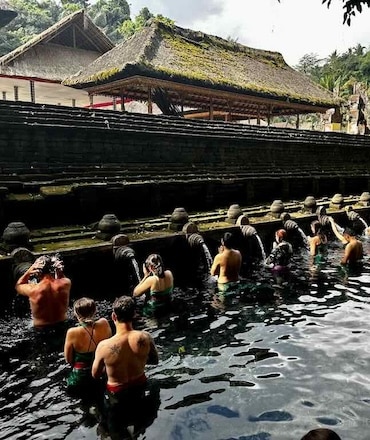
Bali Travel Guide
Discover where to stay in Bali, top experiences, hidden gems, practical tips, and a 10-day itinerary to plan the perfect trip.
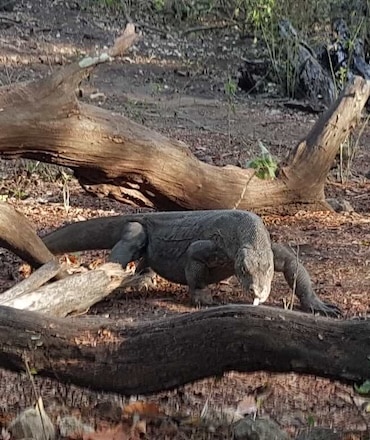
Flores & Komodo
After Java’s volcanoes, explore Komodo National Park, pink beaches, and the famous Komodo dragons.
Frequently Asked Questions About Java
How many days do you need in Java?
Seven days is the realistic minimum for the classic west-to-east route. Five days works if you skip Bandung and fly into Yogyakarta. Three days, which I have done, is a transit rather than a visit.
Is Java better than Bali?
They answer different questions. Java is better for volcanoes, temples and cultural depth; Bali is better for beaches, food and easy logistics. Most first-time visitors should do both, and the ferry between them makes that straightforward.
How long does the ferry from Java to Bali take?
The crossing itself is 45 to 60 minutes, but the waiting is the variable that matters. On my crossing in September 2023 we spent over an hour at anchor off Gilimanuk waiting for a berth. Queues of several hours are common, and reached eleven hours during a school-holiday weekend in June 2026. Book on Ferizy the day before and leave the end of that day open.
How long does the train from Jakarta to Bandung take in 2026?
The Whoosh high-speed service takes 36 to 45 minutes from Halim to Tegalluar. Allowing for the free feeder train into central Bandung and a sensible connection buffer, the realistic door-to-door time is about an hour to an hour and a quarter. The old figure of three hours refers to the classic train, which still runs and is the more scenic option.
Is Java safe for travellers?
Yes. Java is generally very safe, with ordinary big-city precautions in Jakarta and Surabaya. The real risks are traffic and altitude cold on the volcanoes, not crime.
Can you visit Java without a tour?
Easily. The rail network is excellent and bookable in English through Access by KAI, and cities are well served. The exceptions are Bromo and Ijen, where the pre-dawn departures and jeep access make an organised excursion the practical choice.
Do you need a guide for Ijen?
Most visitors go with one, and the logistics of a 1 am start make it sensible. What is not optional is the respirator: a surgical mask or a scarf does not filter sulphur dioxide, and masks with acid-gas cartridges are rented at the trailhead for around Rp 25,000 to 50,000.
Can you climb Mount Merapi?
No. The summit climb has been closed since 22 May 2018, and Merapi has been at alert level III, Siaga, continuously since 5 November 2020. What remains open, and is excellent, is the jeep lava tour across the 2010 eruption zone from Kaliurang.
What is Java famous for?
Its volcanoes, the UNESCO temples of Borobudur and Prambanan, the court culture of Yogyakarta and Solo, and being the most densely populated large island on earth — home to more than half of Indonesia’s people.
Is Java touristy?
Far less than Bali. Borobudur and Bromo draw real crowds, especially at sunrise in July and August, but a hundred kilometres in any direction from those two points you are travelling in a country that is not organised around visitors.
What is the best time of year to visit Java?
May to October, the dry season, and especially the shoulder months of May, June and September if you want the weather without the July–August crowds. Avoid Lebaran and, if you are crossing to Bali, Nyepi.