Flores Indonesia: Complete Island Travel Guide
By Blaise Jaeger · Updated August 9, 2026
Why Visit Flores?
Flores is the long, mountainous island running east to west through Indonesia’s Lesser Sunda chain, in the province of East Nusa Tenggara. Most travellers know one thing about it: it is where the boats to Komodo leave from. They fly into Labuan Bajo at the western tip, take a boat into the park, and fly out again without ever seeing the island behind the harbour.
That island is the reason to come. Behind Labuan Bajo there are 350 kilometres of volcanic ridge road, three crater lakes that change colour, villages of thatched houses circled around megalithic shrines, rice fields cut in a spiderweb pattern that exists nowhere else, and beaches with no resort on them at all. Flores is Catholic where most of Indonesia is Muslim, cool where most of it is hot, and quiet where Bali is not.
I have crossed Flores twice from end to end, once by car and once by motorbike, and this guide is built the way the island is: as a route — the places worth stopping for, and the full guides I have written for the biggest three.
Flores at a Glance
- Where it is: Lesser Sunda Islands, province of East Nusa Tenggara, east of Bali, Lombok and Sumbawa
- Size: around 14,300 km², roughly 350 km long and rarely more than 60 km wide
- Population: roughly two million people
- Airports: Labuan Bajo in the west (LBJ) and Maumere in the east (MOF), both connected to Bali and Jakarta
- Languages: Indonesian everywhere, plus more than a dozen distinct local languages across the island
- Religion: overwhelmingly Catholic, a legacy of Portuguese contact in the sixteenth century
- Currency: Indonesian rupiah (IDR); carry cash, small towns have few working ATMs
- How long to stay: five to six days minimum, seven to ten to do it properly
- Best season: the dry months, May to October
- Direction of travel: east to west, Maumere to Labuan Bajo, so the island builds towards Komodo
My Two Crossings of Flores
I have been based in Indonesia since 2020. In March 2021 I crossed Flores from east to west, Maumere to Labuan Bajo, in a car with a driver. In June of the same year I did the identical route on a motorbike, because after the first crossing I wanted the version where you feel the altitude change and stop wherever you like.
2021 was an unrepeatable moment to see this island. Indonesia was empty of foreign travellers, and on both crossings I was regularly the first foreigner people had seen in more than a year — which showed in how I was received. The driver who picked me up at Maumere airport invited me to his house for an improvised dinner of grilled fish. Nothing about it was arranged. Flores was raw and completely intact.
The stops that stayed with me were the small ones. At Koka Beach I met Blasius, who runs a homestay next to the sand and will cook you a simple, excellent fish meal if you ask. In Moni, below Kelimutu, I slept at the Moni Mahalika before the pre-dawn climb; at the western end, at the Blue Parrot in Labuan Bajo, a three-room place, one of them with a view over the bay.
Underwater, my history here goes back further: I dived Komodo National Park north, centre and south on a diving cruise in September 2016, and again in October 2024. By that second trip tourism had picked up a little in Labuan Bajo, but the rest of Flores remains a long way behind Bali — and that gap is the whole appeal.
Best Places to Visit in Flores
These are the eight stops that structure a crossing of Flores island, east to west, in the order you meet them driving from Maumere.
Kelimutu and Its Three Coloured Crater Lakes
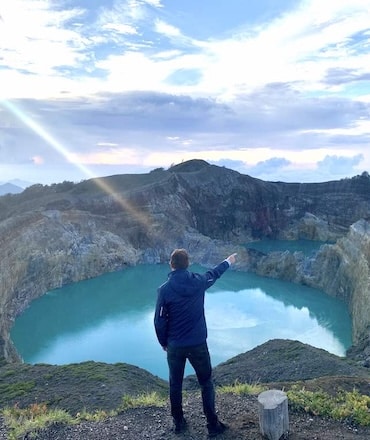
Kelimutu is the most famous sight on Flores, and it earns it. Three crater lakes sit side by side on one summit, each a different colour — turquoise, emerald, rust, and a brown so dark it looks black. The colours are not fixed: they shift over months and years as mineral reactions and oxidation change each lake’s chemistry, so no two visits are identical. In local belief the lakes are where souls go to rest, sorted by the life they led.
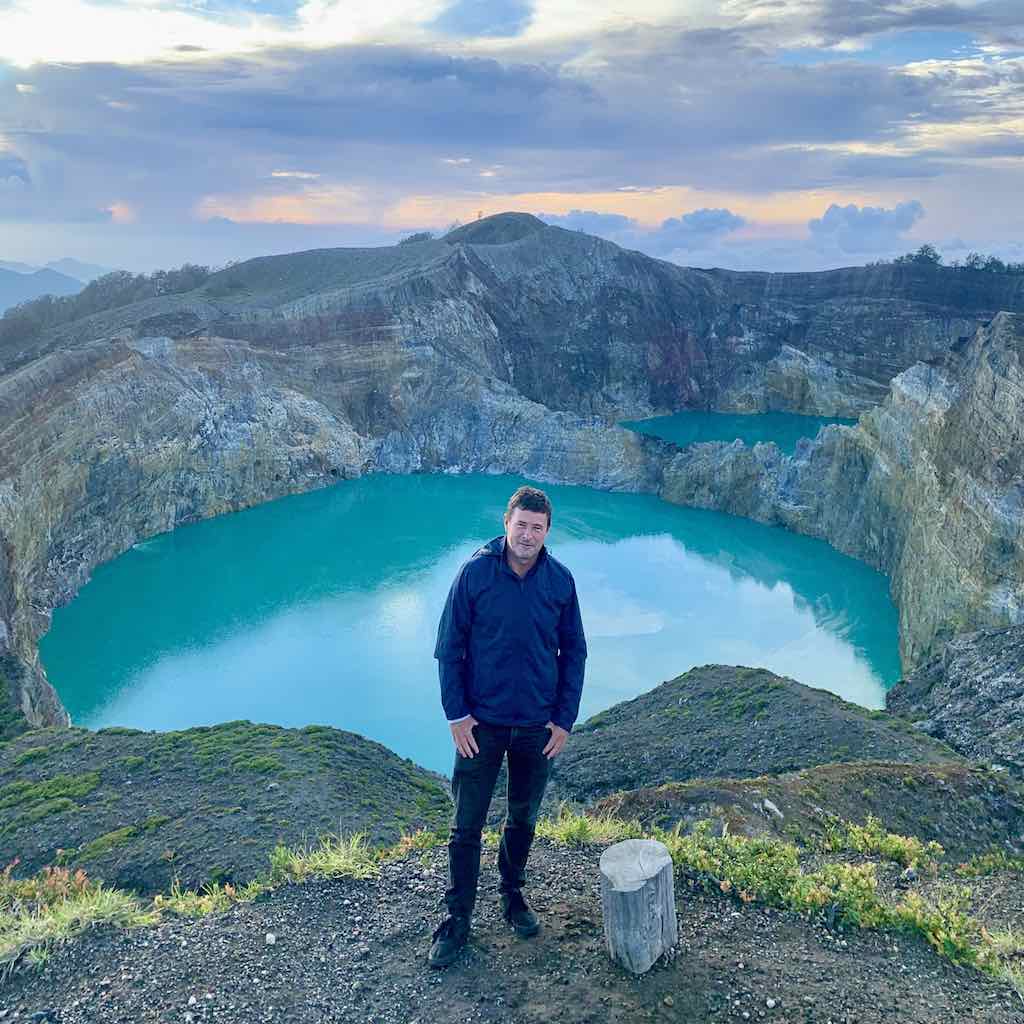
You go up before sunrise from Moni, the standard base. The walk from the car park is short — the effort is in the hour, not the distance — but bring a warm layer, because it is genuinely cold before dawn, and keep hold of your snacks: the monkeys along the path are practised thieves. Timings, what the walk is like and where to stand are all in my complete Kelimutu sunrise guide.
Bajawa and the Ngada Villages
Bajawa is the cultural heart of central Flores and the gateway to the Ngada villages, of which Bena and Wogo are the two you will most likely visit. These are not reconstructions. Thatched houses stand facing each other around a common yard, and between them sit megalithic shrines — stacked stone platforms and carved wooden posts that mark clan lineage and hold the ancestors. Families live here, dry their coffee here, and weave here.
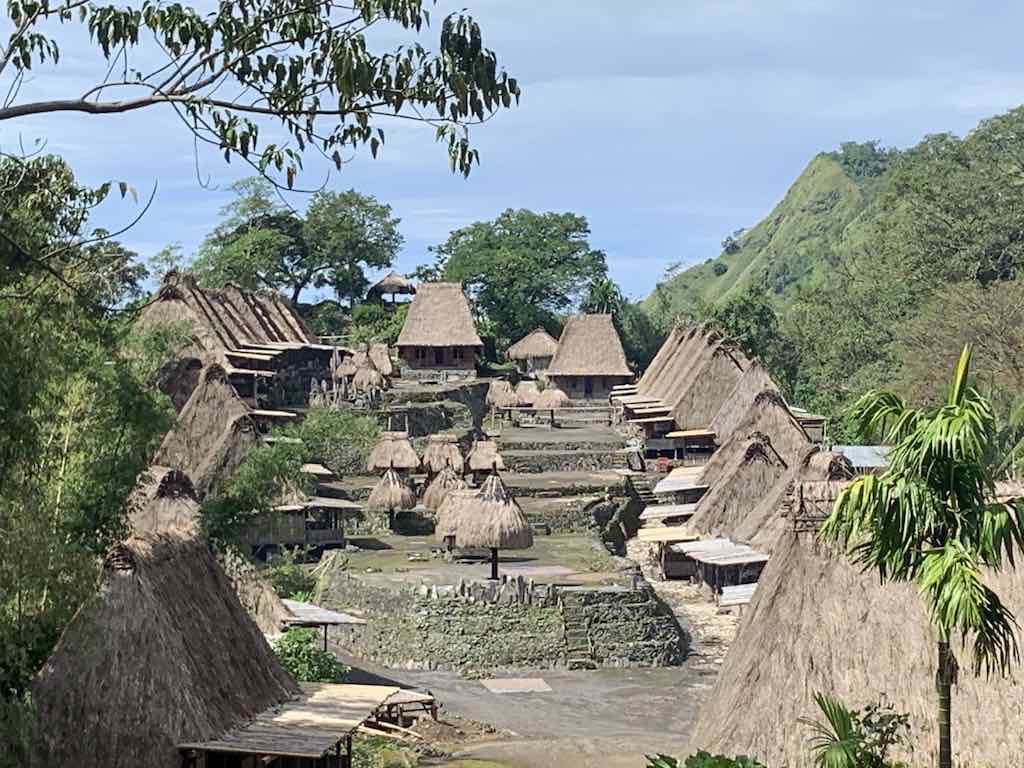
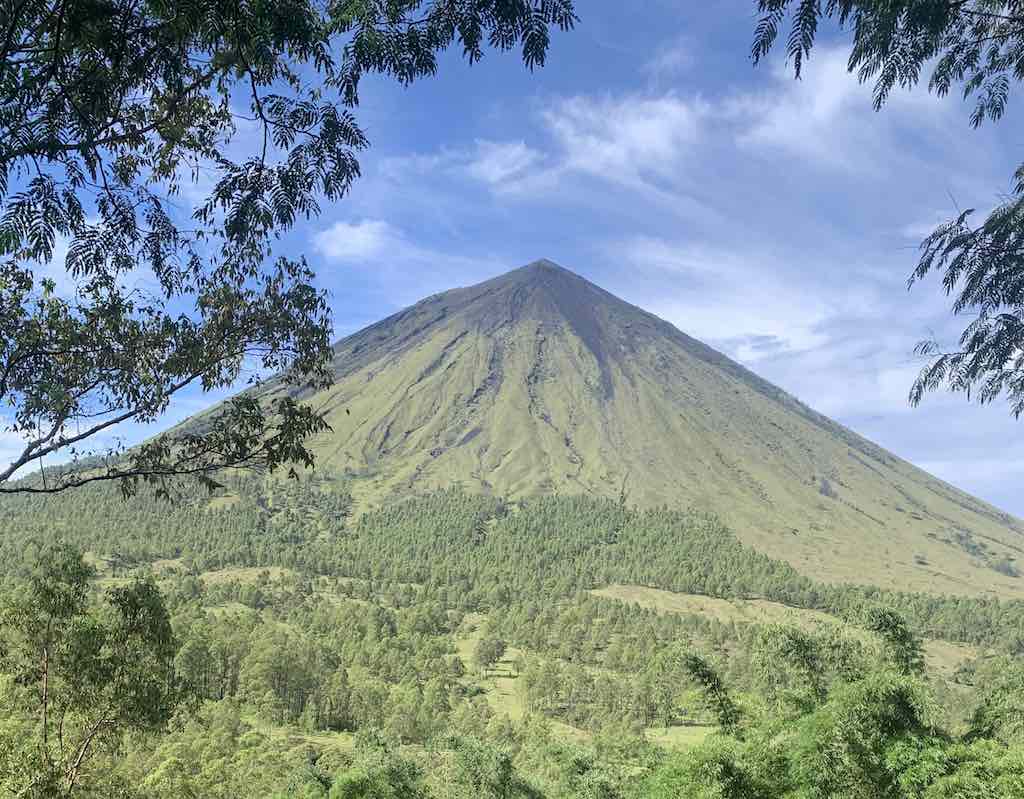
The setting does half the work. Mount Inerie, a near-perfect cone, stands behind the villages and is visible across the plateau when the cloud lifts. The area is high enough that evenings are cool, and there are natural hot springs nearby where you can sit in a stream of volcanic water at the end of a driving day. Bajawa is the stop where people who came for Komodo realise the island itself was the point.
Wae Rebo, the Village You Can Only Reach on Foot
Wae Rebo is a Manggarai village set at roughly 1,100 metres in the mountains west of Ruteng, and it is the most striking piece of built heritage on Flores. Seven conical houses, the mbaru niang, stand in a circle around a central altar. Each is a tall cone of thatch over a wooden frame, tiered inside and shared by several families. The circle is not decorative; it is the village’s social structure made visible.
There is no road in. Visitors reach the village on foot from the hamlet of Denge, on a climb through forest that takes three to four hours, which is why almost everyone who goes stays the night with a host family rather than turning around. Before entering, arriving visitors take part in the waelu, a welcome ceremony in which the head of the village presents the newcomers to the ancestors and asks for their protection. It is a condition of entry, not a performance laid on for tourists.
The village was recognised by UNESCO in 2012 for the way it has conserved its traditional architecture.
Ruteng and the Spiderweb Rice Fields
Ruteng sits in the cool western highlands and is the base for the lingko rice fields, which are the strangest agricultural landscape in Indonesia. Instead of the stepped terraces you see in Bali, the paddies here radiate outwards from a single centre point in wedges, like a spiderweb seen from above. The pattern is not aesthetic: it is the Manggarai system of communal land tenure, in which fields are allocated to families as slices from a shared centre, so the shape on the ground is a map of who holds what.
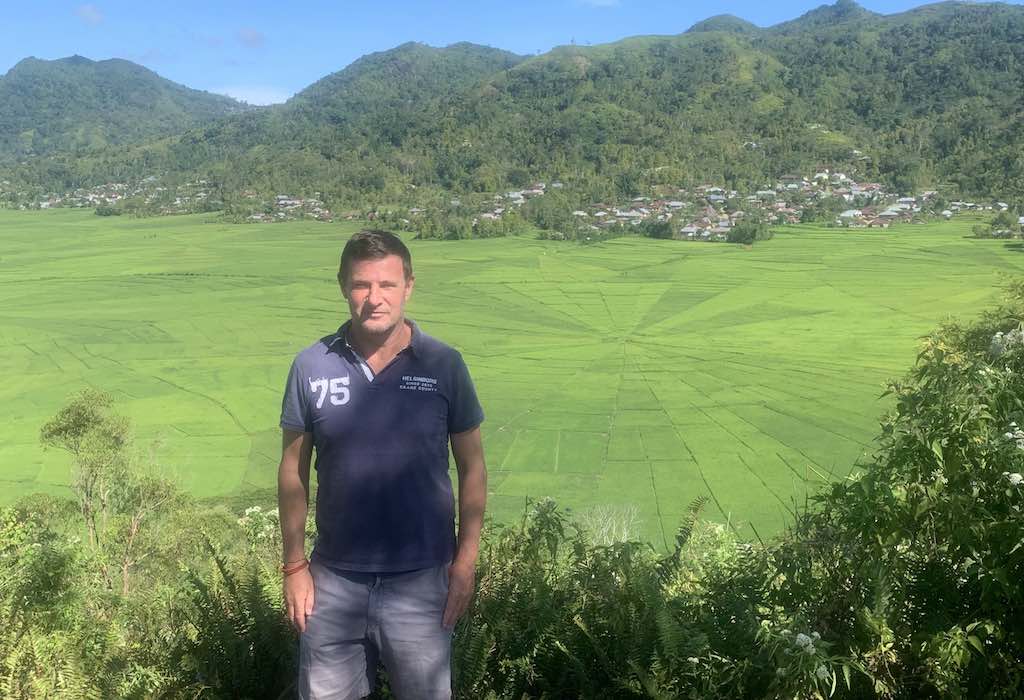
You need height to read the pattern, so the visit is a short climb to a viewpoint rather than a walk through the fields. Ruteng itself is a working highland town, cold at night by Indonesian standards, and a sensible last stop before the descent to the coast. It is also the closest town to Liang Bua, the cave that changed what we thought we knew about human evolution.
Koka Beach, the Double Bay With No Resort
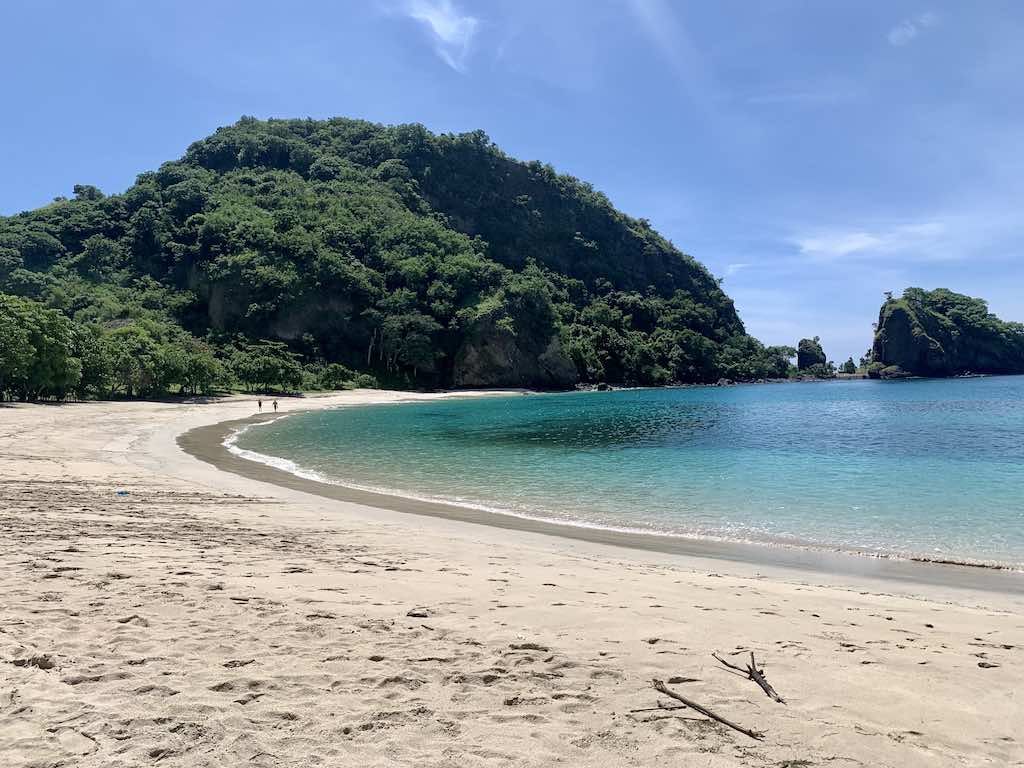
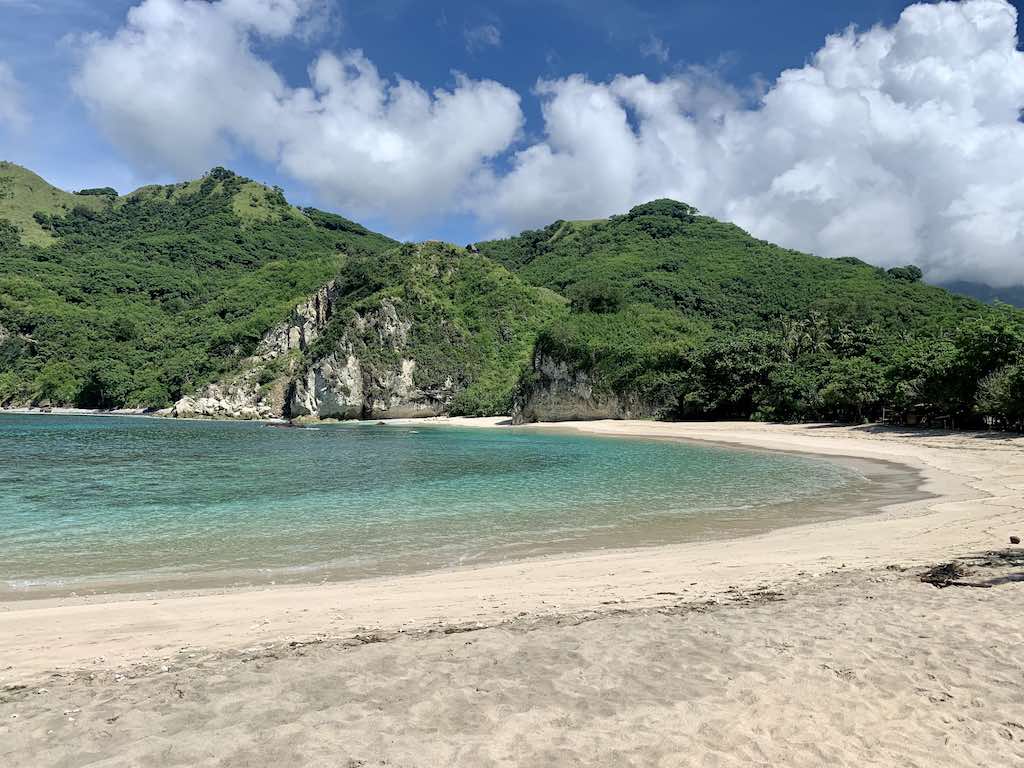
Koka is two crescent bays separated by a green headland, near the village of Wolowiro and an easy detour off the road between Maumere and Moni. White sand, clear water, and — the part that matters — no resort, no beach club, no loungers. On weekdays you may have it to yourself; at weekends local families come down and grill fish on the sand, which is the better version.
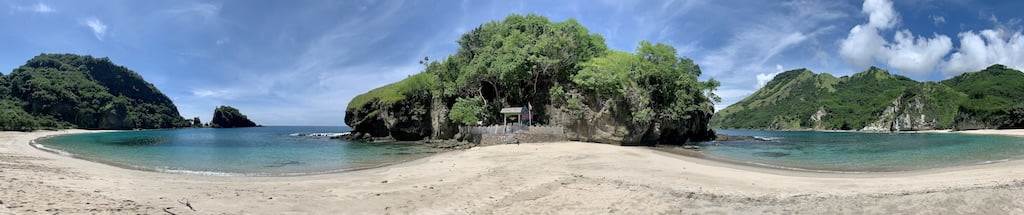
Blasius keeps a small homestay next to the sand and cooks a simple fish meal on request — worth arranging before you arrive. How to get there, which bay to swim in and what to bring is all in my dedicated guide to Koka Beach.
Maumere and the Islands Offshore
Maumere is the largest town on Flores and the island’s eastern gateway. It is not a pretty town and is not trying to be, but it is a real one: the markets are worth an hour, the food is cheap and good, and it is a soft landing before the mountains start. Most people treat it as a night and a departure. It deserves more.
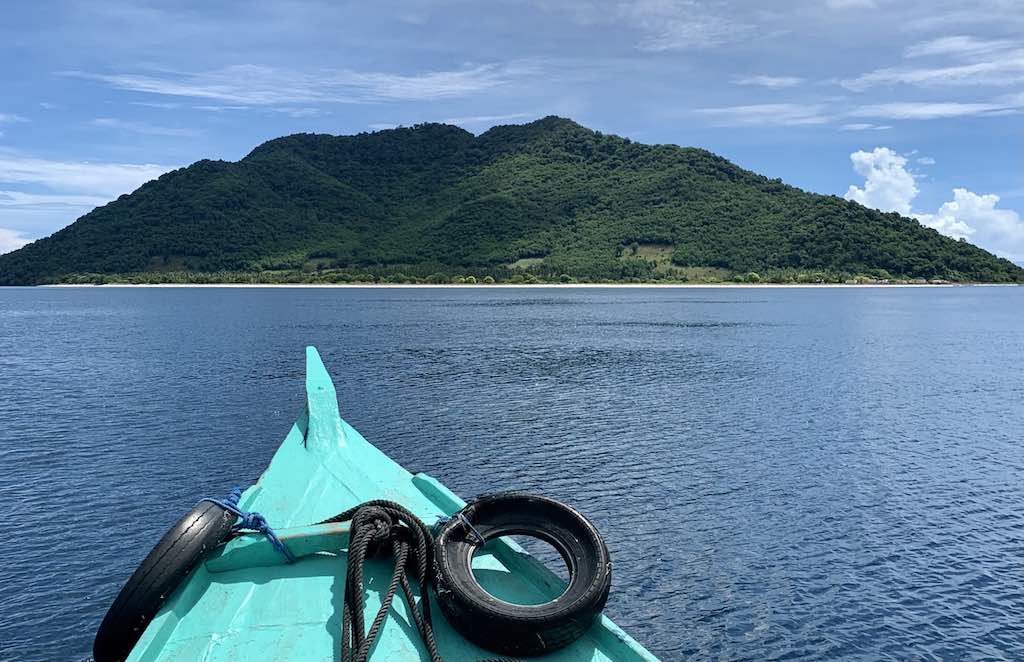
What makes it worth a day is the water. Maumere Bay is the snorkelling ground for this end of Flores, and the way to use it is to drive 45 minutes to the village of Nangahale and take a wooden boat out to Kojadoi, Panga Batang or Babi. The coral gardens out there are in good condition, the islands are inhabited and unpolished, and the whole thing runs on local boats rather than an organised excursion industry.
Labuan Bajo, the Western Gateway
Labuan Bajo sits at the western tip of Flores and is the gateway to Komodo National Park. A fishing village not long ago, it is now the island’s tourism hub and the one place on Flores where you have real choice: hotels at every price level, proper restaurants, dive shops and boat operators along the front, daily departures into the park. After a week of highland towns it feels like a city.
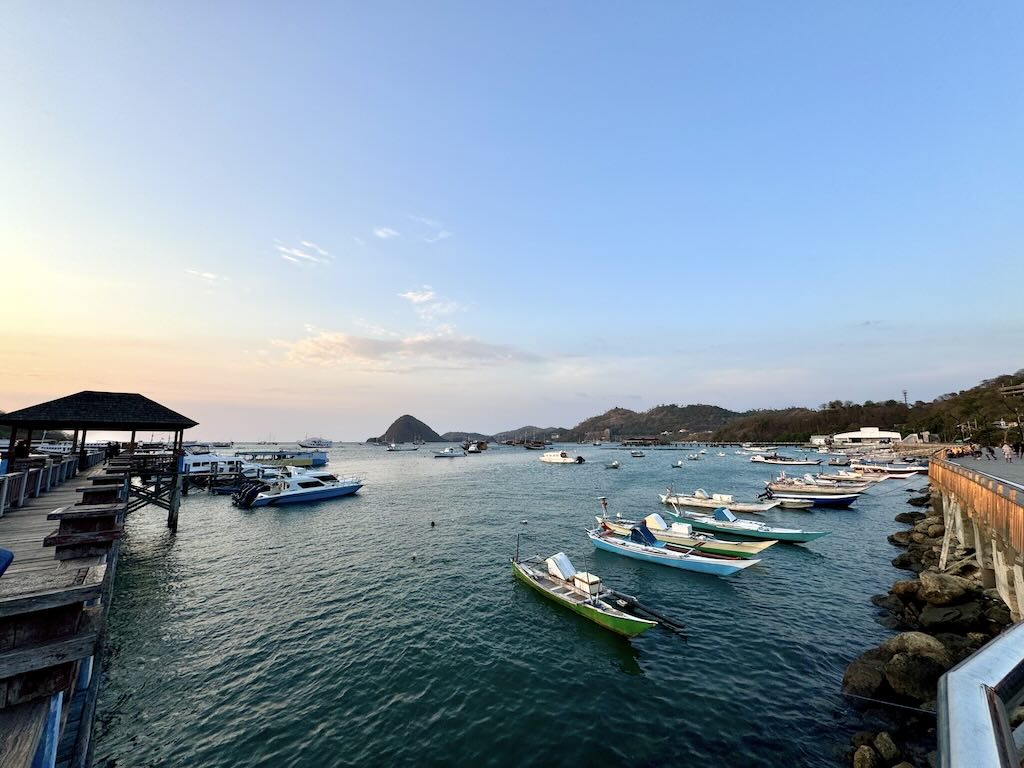
Arriving here at the end of an east-to-west crossing is the right way round: you have earned the comfort and you understand the island the boats leave from. Stay for the sunsets over the harbour, and see my full guide to Labuan Bajo and Komodo for how to choose a boat and how long to give the park.
Komodo National Park
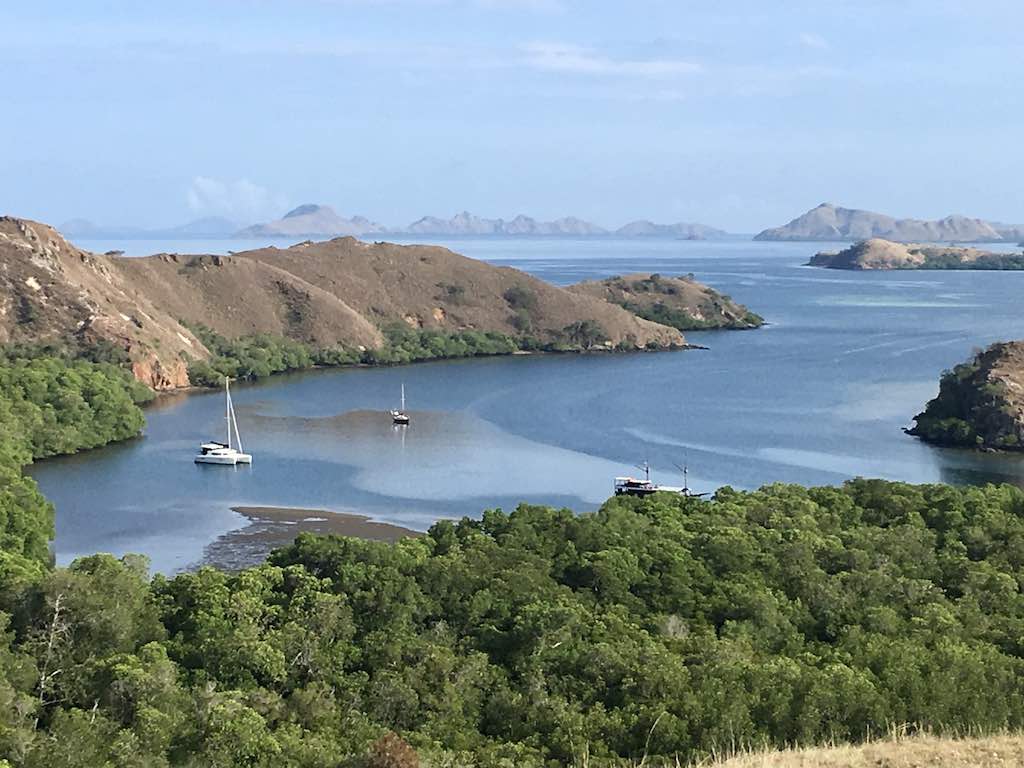
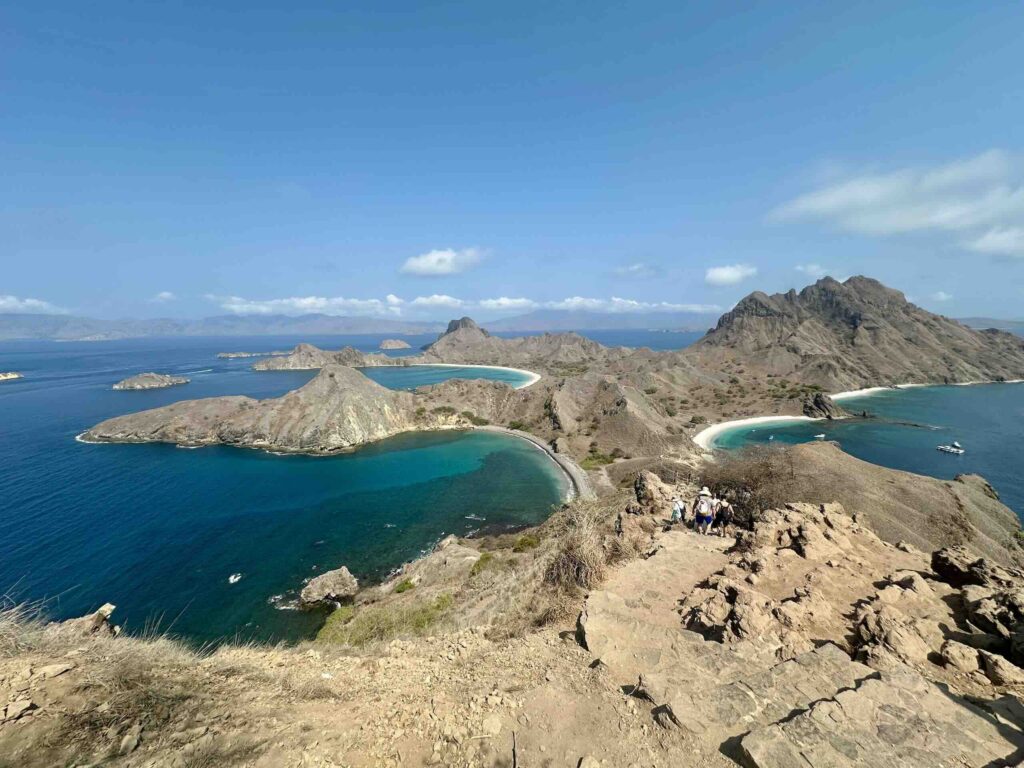
Komodo National Park is a UNESCO World Heritage site and the only place on earth where you can see Komodo dragons — ora in the local language — living wild. You see them on guided walks with a ranger, on Komodo island or on Rinca, and the guide is compulsory for good reason. Boats also stop at Pink Beach, where broken red coral tints the sand, and at the viewpoints that made this coast famous.
Underwater is the other half of the park, and for me the better half. The currents here are powerful and they feed everything: manta rays, reef sharks, turtles and schooling fish in numbers you rarely see elsewhere. I have dived the north, centre and south, and the three zones feel like three different oceans. If diving is your reason for coming, start with my guide to the best diving in Indonesia, then plan the trip with the Labuan Bajo and Komodo guide.
Culture and Traditional Life in Flores
Flores is culturally unlike anywhere else in Indonesia, and you notice it within an hour of landing. The name itself is Portuguese, and so is a good part of what follows.
A Catholic Island in a Muslim Country
Flores is overwhelmingly Catholic, the result of Portuguese contact and missionary work from the sixteenth century onwards. Every village has a church, statues of the Virgin stand at road junctions and on ridgelines, and the rhythm of the week is Sunday, not Friday. What makes it interesting is that Catholicism did not replace what came before so much as settle on top of it: the megalithic shrines in the Ngada villages are still tended, and the ancestors are still addressed.
Caci, the Manggarai Whip Duel
Caci is the Manggarai whip fight of western Flores, and calling it a dance undersells it while calling it a fight misses the point. Two men face each other, one attacking with a rawhide whip, one defending with a shield and a length of bamboo, both in headdresses and bells, while drums and gongs keep the tempo. A strike that draws blood is part of the exchange, not a disgrace. It is performed at harvests, weddings and major village occasions rather than on a schedule, so seeing one is a matter of luck.
Homo floresiensis, the Hobbit of Liang Bua
In the cave of Liang Bua, near Ruteng, archaeologists uncovered the remains of Homo floresiensis, a small-bodied human species immediately nicknamed the Hobbit. It is one of the most significant and most argued-over finds in modern palaeoanthropology, and it happened here, in a cave you can stand in. Whatever the specialists settle on, it gives Flores a claim almost nowhere else has.
Two more things shape daily life here. Ikat weaving is still done by hand across the island, in patterns and colours that identify the weaver’s region and clan — buy it in a village rather than a shop in Labuan Bajo. And Flores is not one culture but many: more than a dozen distinct languages are spoken along its length, which is why a driver from Maumere needs Indonesian to talk to a farmer in Ruteng.
How Many Days in Flores, and a 7-Day Itinerary
Five to six days is the realistic minimum for crossing Flores island, and it will feel rushed. Seven to ten is the right answer: enough to absorb the driving, spend a full day around Bajawa, and still give Komodo the time it needs. Under four days, skip the crossing, fly straight to Labuan Bajo and treat it as a Komodo trip.
A 7-Day Flores Itinerary, East to West
- Day 1 — Arrive in Maumere. Land, see the markets, and with an afternoon, break the drive west at Koka Beach before Moni.
- Day 2 — Kelimutu at sunrise, then the road to Bajawa. Up before dawn for the lakes, then a long, beautiful drive.
- Day 3 — Ngada villages and hot springs. Bena and Wogo in the morning, Inerie behind them, hot springs at the end of the day.
- Day 4 — Drive to Ruteng. A mountain day of ridgelines and switchbacks into the cool highlands.
- Day 5 — Spiderweb rice fields, then transfer to Labuan Bajo. The viewpoint first thing, then down to the coast.
- Day 6 — Komodo boat tour. Dragons with a ranger, a viewpoint climb, and snorkelling or diving in the park.
- Day 7 — Slow day in Labuan Bajo. Sleep in, eat well, watch the sunset over the harbour, fly out.
Run it in reverse if your flights work better that way, but east to west builds properly: you finish on Komodo instead of starting there. With ten days, add a night at Wae Rebo and a second day in the park.
Getting to Flores and Getting Around
Flores has two airports that matter: Labuan Bajo in the west and Maumere in the east, both connected to Bali and Jakarta. For an east-to-west crossing, fly into Maumere and out of Labuan Bajo — book the two legs as separate one-way flights and you save yourself two days of backtracking. If you are still planning the wider trip, my guide on how to get to Indonesia covers visas and the main international gateways.
You can also reach Labuan Bajo overland and by sea from Bali via Lombok and Sumbawa — days rather than hours, but a genuine journey. Compare bus and ferry combinations on 12Go for Bali to Labuan Bajo.
Driver, Motorbike or Boat: Getting Around Flores
A private driver is what I recommend for most people, and it is what I did on my first crossing. The Trans-Flores road is spectacular and relentlessly winding: distances that look like two hours on a map take four. Having someone else drive means you can look out of the window, stop where you want, and arrive able to enjoy the evening — and it solves the language problem in villages where Indonesian is a second language.
Renting a motorbike is entirely possible, and the stretch between Maumere and Labuan Bajo is one of the great rides in Indonesia — that is why I went back and did it on two wheels. It is not a beginner’s route: blind bends, trucks, gravel, sudden rain and long gaps between fuel stops make it a road for experienced riders only. Bring a proper helmet and do not ride after dark. For transport across the country, see my guide on how to get around Indonesia.
Boats cover what roads cannot: wooden boats out of Nangahale for the islands off Maumere, day boats and liveaboards out of Labuan Bajo for Komodo. Both are arranged locally, on the spot or the evening before.
Where to Stay Along the Route
Accommodation on Flores follows the road. Outside Labuan Bajo you are choosing between homestays and small hotels, rooms are limited and the good ones fill up in the dry season — so book each stage before you set off. Here they are in the order you will travel them, east to west.

Stage 1 — Maumere, the Arrival Night
This is a landing night, not a destination: what you want is a bed near the airport and the bay, and an easy start west the next morning. Two names to compare on your dates:
- Capa Resort Maumere — check current rates and availability
- Coconut Garden Beach Resort — check current rates and availability
Stage 2 — Moni, the Base for Kelimutu
Moni is where you sleep before the pre-dawn climb, so what matters is a bed and a very early departure, not luxury. Book ahead: it is a small village and the whole route funnels through it.
- Moni Mahalika — where I stayed before the Kelimutu sunrise
- Kelimutu Lodge Moni — the other name to compare in the village
Stage 3 — Bajawa and the Ngada Highlands
Bajawa is cool at night, and between the Ngada villages and the hot springs you will want two nights here if you can spare them. Compare both on price and on what is still free for your dates:
- Manulalu Jungle — check current rates and availability
- Bajawa-Roo Hotel — check current rates and availability
Stage 4 — Ruteng, Before the Descent
Ruteng is a homestay town, and after several driving days that is part of its appeal. Pack a warm layer whichever you choose — the highlands get properly cold at night.
- Sun Rice Homestay — check current rates and availability
- Natalia Homestay Ruteng — check current rates and availability
Stage 5 — Labuan Bajo, the Komodo Base
This is where the choice finally widens, and where you should book earlier than anywhere else on Flores, especially in the dry season.
- Blue Parrot — where I stayed; three rooms, one of them looking over the bay, so ask for that one
- Seaesta Komodo Hotel & Hostel — check current rates and availability
Once the beds are sorted, the Labuan Bajo and Komodo guide covers how to plan your days in the park.
Where to Eat in Flores
Eating on Flores means warungs, and that is not a compromise. Along the whole route you eat nasi campur, nasi goreng, vegetables, sambal and whatever fish came in that morning, for a few dollars a plate. Portions are honest, and the standard is more consistent than you would expect from places with no menu on the wall.
Wherever the coast is close, order ikan bakar, grilled fish. The two best meals I had on the island were both versions of it: the improvised dinner at my driver’s house in Maumere, and the fish Blasius cooked at his homestay by Koka Beach. Neither was a restaurant, which tells you where the good food is. Drink the local coffee too — the highlands around Bajawa are serious coffee country.
Labuan Bajo is the exception: proper restaurants, seafood grills along the front, cafés with espresso machines and harbour views. After a week of warungs it is welcome, and it costs more than everywhere else combined.
Best Time to Visit Flores
The dry season, May to October, is the best time to visit Flores, and it is not close. Clear skies mean you actually see the Kelimutu lakes at sunrise instead of a wall of cloud, seas are calm for boats to Komodo and the islands off Maumere, and the mountain roads are dry. It is also when everyone else comes, so book ahead.
The rainy season runs from November to April, and the trade-off cuts both ways: the island turns a green you will not see in August, the rice fields are at their best, prices soften and you get villages to yourself. But the sea gets rough enough to cancel boat trips, roads are slower and occasionally blocked, and the Kelimutu sunrise becomes a lottery. If the crater lakes are your main reason for coming, go in the dry season.
Flores vs Bali: Which One Is Right for You?
They are not competing for the same trip. Bali is set up for visitors: you land, everything works, and there is a beach club, a yoga class, a driver and a restaurant for every taste. Flores has almost none of that infrastructure outside Labuan Bajo, and that is the entire point of going.
Choose Bali if it is a short trip, if you are travelling with small children, if you want comfort and variety without planning, or if it is your first time in Indonesia. Choose Flores if you would rather spend a week on a mountain road than on a sun lounger, if empty beaches matter more than good coffee at 8 AM, if you want to see living traditional villages rather than a cultural show, and if you are comfortable with long drives and simple rooms.
The honest answer for most people is both: a few days in Bali at either end, and the week in between crossing Flores. The flight is short, and the contrast is the best argument for either.
Why Flores Is One of Indonesia’s Most Unique Islands
Flores gives you something the rest of Indonesia mostly cannot any more: an island crossing where the road itself is the attraction and nothing has been arranged for your benefit. Three lakes that change colour on one summit. Villages built around their ancestors. Rice fields shaped like spiderwebs. A beach with nothing on it. Dragons at the far end, and world-class reefs underneath them.
Crossing it east to west, the way I did in 2021, is the inverse of what almost everyone does, and it is the reason Flores stayed with me when louder islands did not. Fly into Maumere, take the road, and arrive in Labuan Bajo having earned it. For more on planning the wider trip, the national tourist board’s site indonesia.travel is a useful starting point — and my guides to Kelimutu, Koka Beach and Labuan Bajo and Komodo have the detail for each stop.
Read More About Indonesia
Islands, volcanoes, reefs and cities across the whole archipelago.
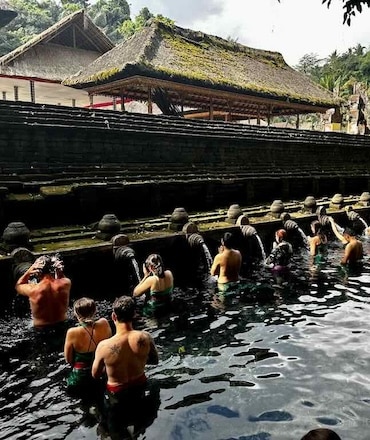
Temples, rice terraces and beaches, and how to plan a first trip.

Volcanoes, temples and the busiest island in the country.
Frequently Asked Questions About Flores
Is Flores worth visiting?
Yes, and for far more than Komodo. Flores gives you crater lakes that change colour, traditional Ngada villages, spiderweb rice fields and empty beaches, on a road crossing almost no one makes. If you have three days and want comfort, choose Bali. If you have a week and want an island that has not been rearranged for visitors, Flores is one of the most rewarding places in Indonesia.
Where is Flores in Indonesia?
Flores — Pulau Flores in Indonesian — is in the Lesser Sunda Islands, in the province of East Nusa Tenggara, east of Bali, Lombok and Sumbawa. It is a long, narrow, mountainous island of around 14,300 km², roughly 350 km from end to end, with Maumere at the eastern end and Labuan Bajo at the western tip.
How do you get to Flores?
By air, into Labuan Bajo (LBJ) in the west or Maumere (MOF) in the east, both served from Bali and Jakarta. For a full crossing, fly into Maumere and out of Labuan Bajo. You can also arrive overland and by ferry from Bali via Lombok and Sumbawa, which takes several days.
How many days do you need in Flores?
Five to six days minimum, seven to ten ideally. A week lets you cross east to west, see Kelimutu at sunrise, spend a day around Bajawa, reach the Ruteng rice fields and still give Komodo a proper day. Fewer than four days, fly straight to Labuan Bajo instead.
What is the best time to visit Flores?
May to October, the dry season. Clear skies for the Kelimutu sunrise, calm seas for Komodo, and mountain roads in good condition. November to April is greener and quieter but brings rough seas, slower roads and clouded-over sunrises.
Flores or Bali — which should I choose?
Bali for comfort, variety and a short or first trip; Flores for wild landscapes, living traditions and near-empty beaches. Flores asks more of you — long winding drives, simple rooms, few restaurants outside Labuan Bajo — and gives back more. Many people do both.
Is Flores safe for travellers?
Yes. Flores is a calm, welcoming island and I never felt uneasy on either crossing. The risks are on the road, not from people: winding mountain routes, night driving, sudden rain and long distances between towns. Avoid driving after dark, and travel with medical insurance — serious hospitals are few.
Can you visit Komodo National Park without crossing Flores?
Yes. Fly directly to Labuan Bajo and take a day boat or a liveaboard into the park, which is what most visitors do and it works perfectly well for a short trip. You just see the harbour town and the islands, not the island behind them.
Do you need a driver in Flores?
Not strictly, but a private driver is the sensible choice for most travellers. The Trans-Flores road is long and winding, distances take far longer than they look, and a driver handles the language in villages where Indonesian is a second language. Renting a motorbike is a great alternative for experienced riders only.
Is Flores touristy?
Only in Labuan Bajo. The rest of the island sees very few foreign visitors: on my 2021 crossings I was often the first foreigner people had seen in over a year, and although tourism had picked up by my return in 2024, Flores remains far behind Bali. Expect homestays rather than hotels once you leave the west.
What is Flores known for?
Komodo dragons, the three coloured crater lakes of Kelimutu, and the traditional villages of the interior. Also for being Indonesia’s Catholic island, for the spiderweb rice fields around Ruteng, the conical mbaru niang houses of Wae Rebo, and Homo floresiensis, the small human species found at Liang Bua.