Best Diving in Indonesia (2026): Where Should You Go?
By Blaise Jaeger · Updated 24 September 2026
Why Dive in Indonesia?
Indonesia sits in the heart of the Coral Triangle and offers an extraordinary range of diving. Across the archipelago you can encounter manta rays and Mola Mola around Nusa Penida, extraordinary reef biodiversity in Raja Ampat, strong-current pelagic action in Komodo, macro life in Lembeh, whale sharks in Sumbawa and barracuda and sharks around Maratua.
But Indonesia is not one dive destination. Raja Ampat, Komodo, Bali, Nusa Penida, Maratua, North Sulawesi and the Banda Sea offer very different experiences, seasons and levels of difficulty. This guide is designed to answer one question first: which Indonesian dive destination is right for you?
I have logged more than 700 dives, most of them in Indonesia, and have dived many of the country’s major regions, including Nusa Penida, Raja Ampat, Komodo, Maratua, Lembeh and Halmahera. I am based in Bali and have been diving around Nusa Penida since 2015. The comparisons below combine that first-hand experience with practical information on season, access and diver level — and where I have not dived a region myself, I say so.
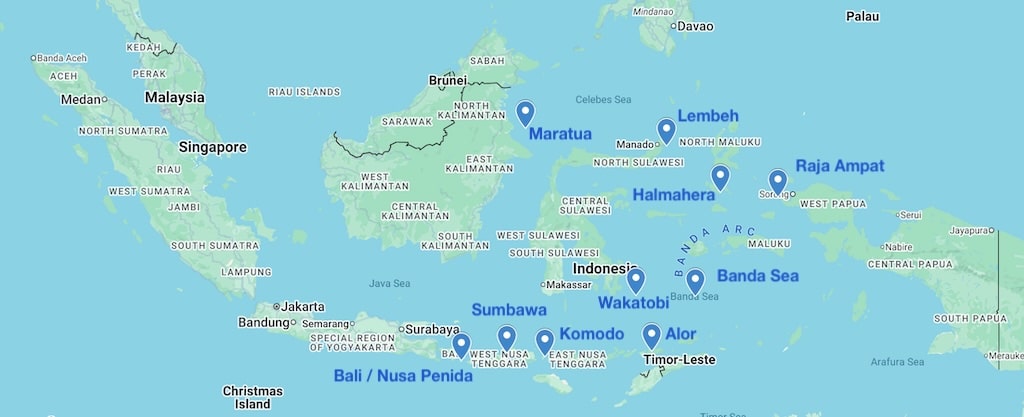
Indonesia Diving at a Glance
If you are still deciding where to dive, start here. Each region has a different strength: biodiversity, pelagics, macro, easy access, remote reefs or a particular marine species.
| Region | Best for | Level | Best season | Access |
|---|---|---|---|---|
| Raja Ampat | Biodiversity, reefs, mantas | All levels / Advanced | Oct–Apr | Liveaboard or resort |
| Komodo | Mantas, currents, pelagics | Intermediate / Advanced | Apr–Nov | Day boat or liveaboard |
| Bali & Nusa Penida | Mantas, Mola Mola, easy access | All levels | Year-round; Mola Jul–Oct | Resort / day boat |
| Sumbawa | Whale sharks, uncrowded diving | All levels | May–Nov | Resort / day boat |
| Maratua & Derawan | Barracuda, sharks, remote reefs | Intermediate | Mar–Oct | Resort |
| Banda Sea | Hammerheads, walls | Advanced | Sep–Nov | Liveaboard |
| North Sulawesi | Macro in Lembeh + Bunaken walls | All levels | Mar–Oct | Resort |
| Wakatobi | Pristine coral, relaxed diving | All levels | Mar–Dec | Resort / liveaboard |
| Alor & Ambon | Critters, rhinopias, muck | All levels | Sep–Dec | Resort / liveaboard |
| Halmahera | Remote, exploratory | Intermediate | Oct–Apr | Liveaboard |
Which Indonesian Dive Destination Should You Choose?
There is no single best place to dive in Indonesia. The right destination depends on what you want to see, your experience level, the season and how much travel you are prepared to do.
| If you want… | Start with… | Why |
|---|---|---|
| Maximum reef biodiversity | Raja Ampat | Exceptionally rich coral reefs and fish life, plus mantas |
| Mantas + high-energy diving | Komodo | Manta sites, pinnacles, pelagics and strong currents |
| Mantas + Mola Mola + easy access | Nusa Penida | World-class diving within easy reach of Bali |
| Sharks + barracuda + few divers | Maratua | The Channel, healthy reefs and remote atoll diving |
| Schooling hammerheads | Banda Sea | Remote seasonal liveaboard diving |
| Macro and muck diving | Lembeh / Ambon | Frogfish, octopus, rhinopias and other critters |
| Easy pristine reef diving | Wakatobi | Healthy reefs with generally relaxed conditions |
| Whale sharks | Sumbawa | Saleh Bay encounters around traditional fishing platforms |
| Remote exploration | Halmahera / Alor | Less-dived reefs and limited infrastructure |
The Best Dive Destinations in Indonesia
Raja Ampat – extraordinary reef biodiversity
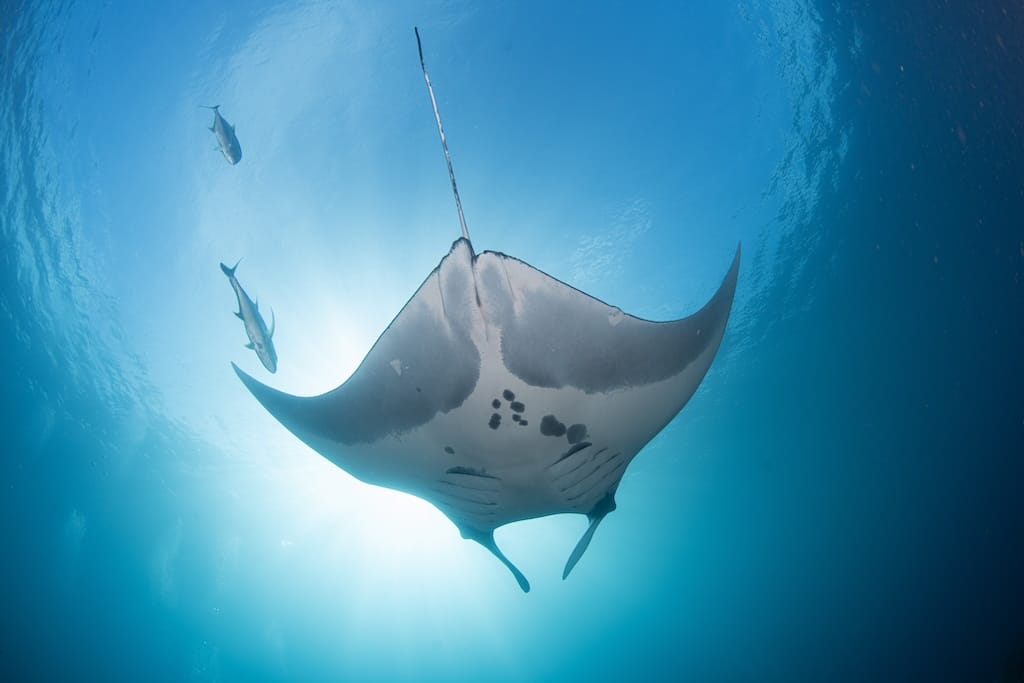
Raja Ampat, off the northwest tip of Papua, is Indonesia’s reference destination for marine biodiversity. The diving is split mainly between Dampier Strait in the north — with sites such as Cape Kri, Sardine Reef, Blue Magic and Manta Sandy — and Misool in the south, known for spectacular soft-coral reefs and walls.
It works both as a liveaboard destination and from land-based resorts. Some sites are suitable for less experienced divers, while the currents in Dampier Strait reward divers already comfortable in moving water. Read my Raja Ampat diving guide.
Komodo – mantas, currents and pelagics
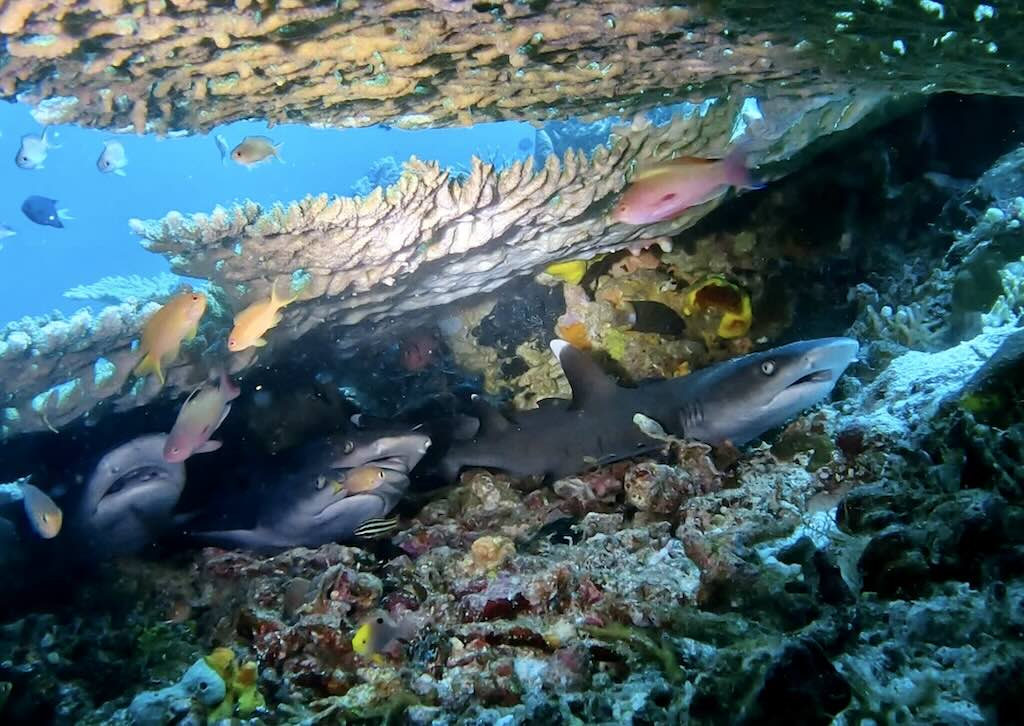
Komodo combines coral reefs, manta rays and some of Indonesia’s most energetic current diving. Castle Rock and Crystal Rock are famous for pelagic action, while Manta Alley and Karang Makassar are headline manta sites. You can dive from Labuan Bajo by day boat or use a liveaboard to cover a wider part of the park.
The currents can be powerful, so the most exciting sites are better suited to intermediate and advanced divers. See my Labuan Bajo and Komodo guide.
Bali & Nusa Penida – mantas, Mola Mola and easy access
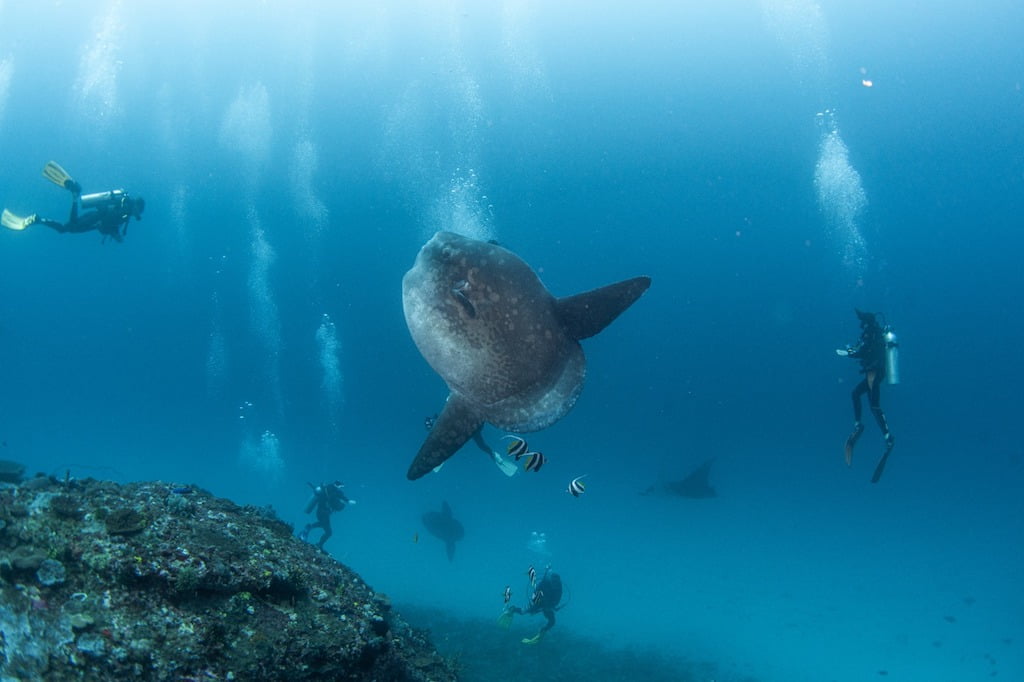
Bali is the easiest gateway to high-quality diving in Indonesia. Around the main island you have the USAT Liberty wreck at Tulamben, macro around Amed and Seraya, and the reefs of Menjangan. See my guide to diving in Bali.
Nusa Penida is the headline destination. Reef mantas can be seen year-round at Manta Point, while Mola Mola encounters peak from July to October. The north coast adds long drift dives over healthy coral. See my Nusa Penida diving guide.
Maratua & the Derawan Islands – barracuda and sharks
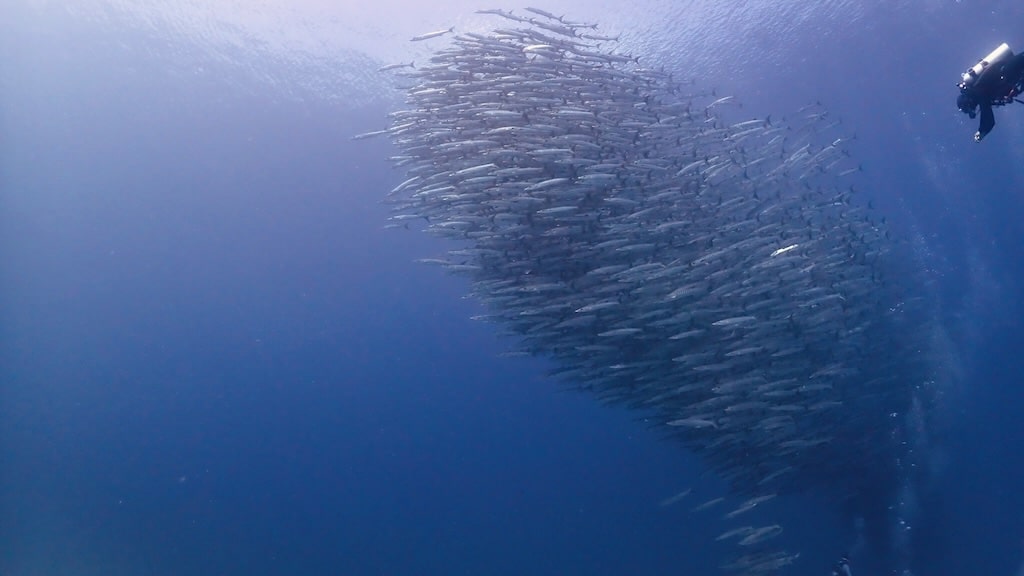
Maratua is one of the most remote destinations in this guide. I spent a week there in June 2026 and logged sixteen dives around the atoll and Kakaban. The Channel is the signature dive, with a huge barracuda school and grey reef sharks in the current. Around the wider region you can also encounter leopard sharks, eagle rays, turtles and, off Kakaban, scalloped hammerheads and thresher sharks. Nearby Sangalaki is known for mantas. Read my Maratua diving guide.
The Banda Sea – hammerheads and remote liveaboard diving
The Banda Sea is one of Indonesia’s classic remote liveaboard regions: a deep basin in the east of the country, scattered with volcanic islands and reachable only on seasonal crossings. What draws divers here is one animal above all — the scalloped hammerhead. Between September and November, schools patrol the deep water around the volcanic seamounts of Manuk and Serua, in numbers rarely matched elsewhere in Indonesia, with October generally considered the peak.
The route is part of the appeal. Most crossings leave from Ambon and follow the Ring of Fire arc through the Banda Islands — the original Spice Islands, for centuries the world’s only source of nutmeg. Off Banda Neira, the Lava Flow site grows table corals on lava laid down by the 1988 eruption of Gunung Api, among the fastest reef recoveries ever documented. Manuk adds swarms of curious sea snakes to the hammerhead action. Itineraries typically run 7 to 12 nights, and the diving is deep, exposed and current-driven — this is a destination for experienced divers.
Unlike Raja Ampat, Komodo, Nusa Penida and Maratua, I have not yet dived the Banda Sea myself, so I treat it here as a destination to compare rather than presenting it as first-hand experience. Its standing rests on the consistent verdict of diving friends and crews I trust, several of whom call it their best trip in Indonesia. For routes and boats, see my Indonesia liveaboard guide.
North Sulawesi – Lembeh macro and Bunaken walls
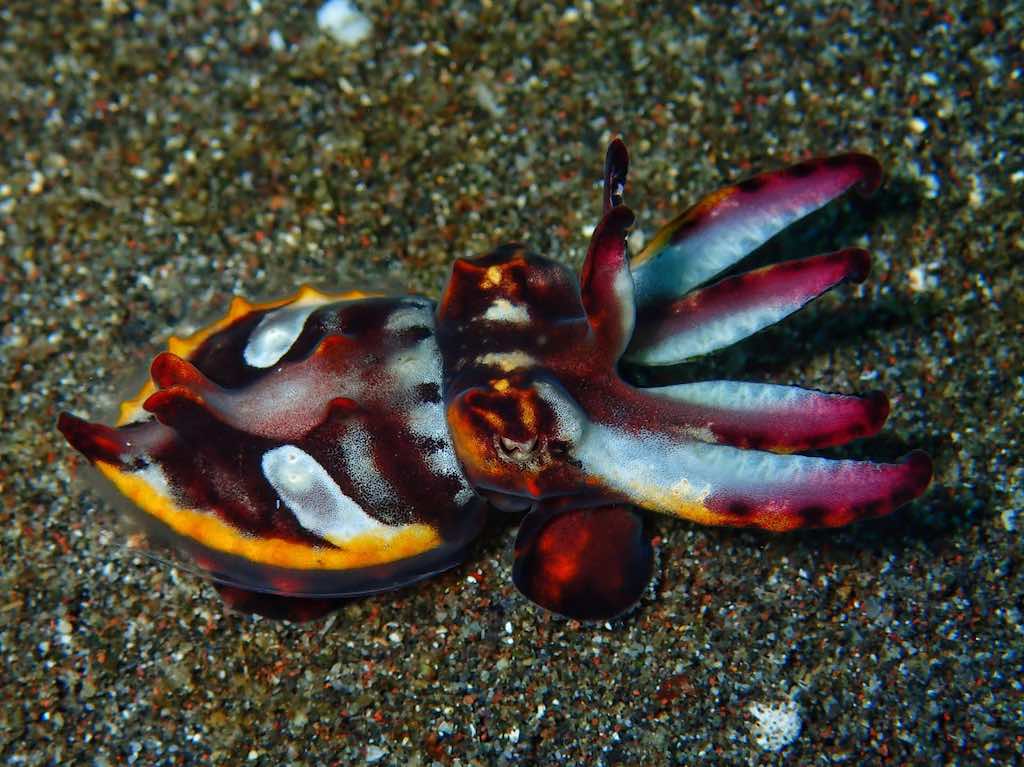
North Sulawesi gives you two very different styles of diving within the same trip. Lembeh Strait is famous for muck diving on black volcanic sand, with frogfish, flamboyant cuttlefish, mimic octopus and other unusual macro life. Bunaken offers the opposite experience: clear water and steep coral walls with turtles and reef fish. See my Sulawesi guide.
Wakatobi – pristine coral and relaxed diving
Wakatobi, in the Tukang Besi archipelago off southeast Sulawesi, is the destination to compare when reef quality matters more than big-animal encounters. Its reputation rests on coral cover rather than pelagics: hard and soft coral gardens in very good condition, walls that start close to the surface, and house reefs good enough that many divers spend half their week without taking a boat.
Conditions are generally gentle, which makes it one of the easier Indonesian destinations for divers who are still building confidence, for underwater photographers who want time rather than current, and for mixed groups where not everyone dives. The trade-off is access and price: Wakatobi is remote, the resort model dominates, and it is rarely the cheapest week in Indonesia. The season is long, roughly March to December. I have not dived Wakatobi myself — it sits here as a comparison point, on the strength of a reputation that has been consistent for two decades. For the wider region, see my Sulawesi guide.
Alor & Ambon – macro and unusual critters
Ambon and Alor are the destinations divers tend to reach on their second or third Indonesian trip, once the headline names are behind them. Ambon Bay is known above all for muck diving: the sheltered sites around Laha produce rhinopias, frogfish, nudibranchs and a steady supply of subjects that most divers have only seen in photographs. It is slow, deliberate diving, and it rewards a good guide more than almost anywhere else in the country.
Alor, further west in the Lesser Sunda chain, mixes the same critter diving with something more demanding. The Pantar Strait channels cold upwellings between the islands, which keeps the reefs healthy and brings in pelagics, but also means thermoclines and current on some sites. September to December is the usual window for both. Neither is in my logbook yet, so I present them here as destinations to compare rather than from experience. Both are commonly combined on eastern Indonesian crossings — see my Indonesia liveaboard guide.
Halmahera – remote and exploratory
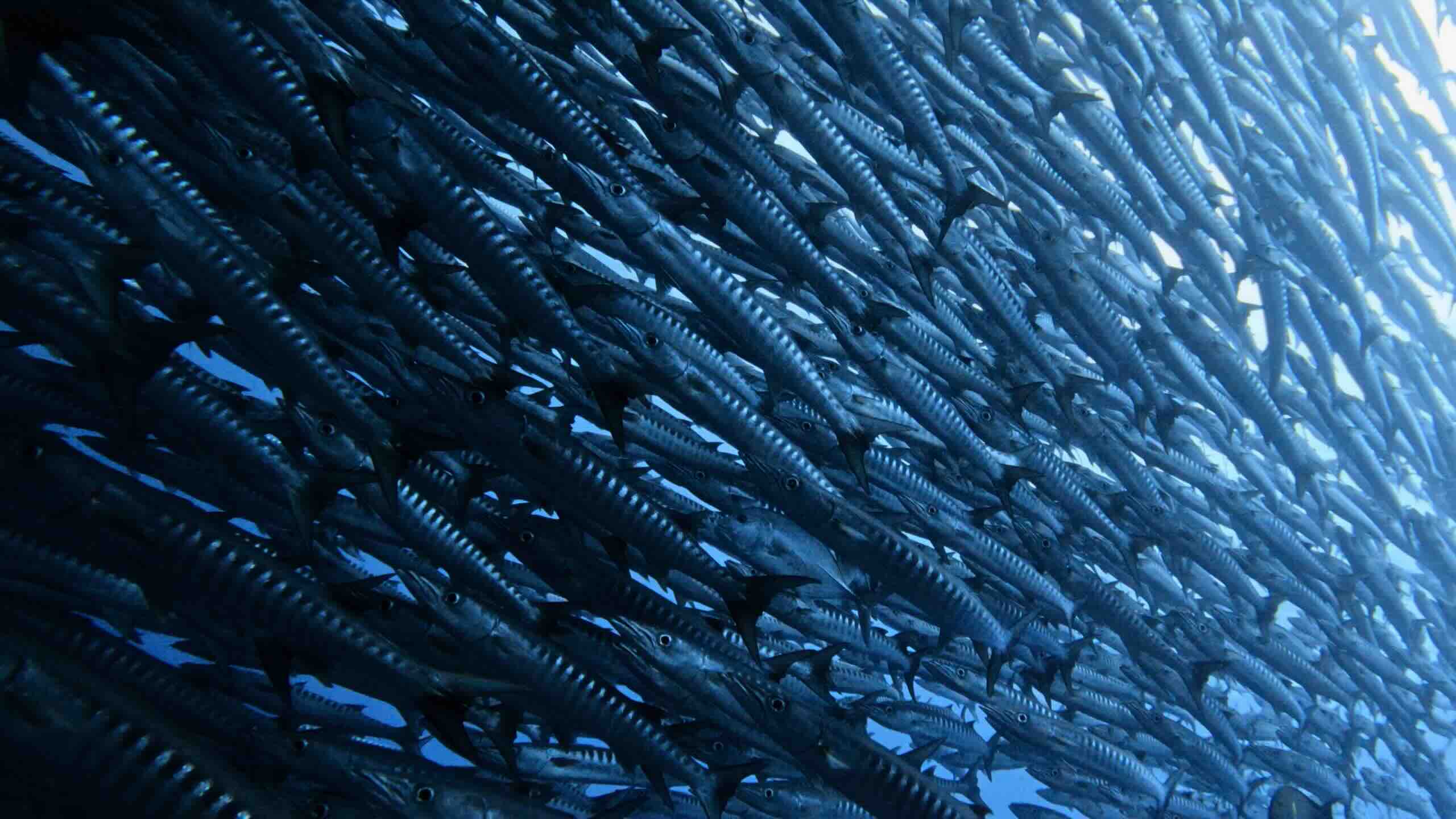
Halmahera, in North Maluku, is the one destination on this list that still feels genuinely exploratory. Few liveaboards cross these waters, large stretches of reef are effectively unmapped, and on my own crossing aboard the Dune Aurora we dived sites that may never have seen divers before. Off the tiny island of Tifore, between Sulawesi and Halmahera, I swam through a barracuda vortex with nobody else on the reef — the photo above is from that dive.
What you get is pristine hard-coral gardens, schooling pelagics and the feeling — increasingly rare in diving — of arriving somewhere first. What you give up is choice: almost nobody visits Halmahera as a destination in its own right. Most boats pass through on repositioning crossings between North Sulawesi and Raja Ampat, in October–November or April–May, which makes the timing rigid and the planning window narrow. It suits divers who value low traffic and exploration over easy logistics. Routes are in my Indonesia liveaboard guide.
Sumbawa – whale sharks and uncrowded diving
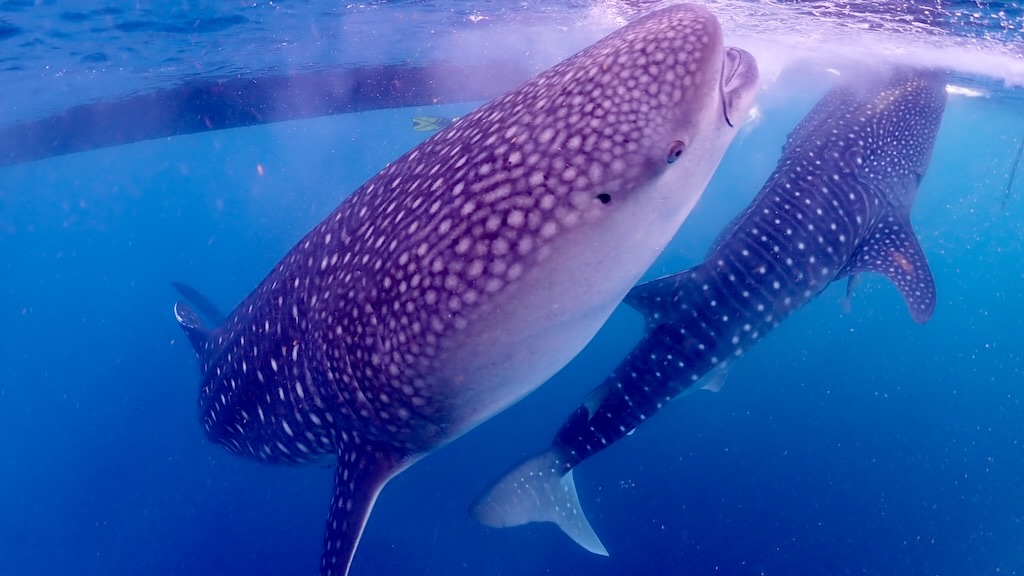
Sumbawa is particularly interesting for Saleh Bay, where whale sharks gather around traditional fishing platforms known as bagans. The encounters take place in calm, shallow water and can also be enjoyed by snorkellers. See my Sumbawa guide and guide to whale sharks in Saleh Bay.
Best Diving in Indonesia by Marine Life
| What you want to see | Destinations to compare | Notes |
|---|---|---|
| Manta rays | Nusa Penida, Komodo, Raja Ampat, Sangalaki | Nusa Penida offers year-round reef manta encounters; seasonality varies elsewhere |
| Mola Mola | Nusa Penida | Peak season July–October |
| Hammerhead sharks | Banda Sea, Kakaban / Maratua | Seasonal, deep and never guaranteed |
| Whale sharks | Saleh Bay, Sumbawa | Shallow encounters around bagans |
| Barracuda schools | Maratua | The Channel is the signature site |
| Macro / muck | Lembeh, Ambon, Alor | Strong choices for underwater photography |
| Coral biodiversity | Raja Ampat, Wakatobi | Raja Ampat for diversity, Wakatobi for coral cover and calm conditions |
Best Diving in Indonesia by Experience Level
Beginners
Bali, selected sites around Nusa Penida, Bunaken, Lembeh and Wakatobi offer accessible diving with good infrastructure. The important distinction is the individual site: even beginner-friendly destinations can contain strong-current dives.
Intermediate divers
Komodo, Maratua and many Raja Ampat sites become much more rewarding once you are comfortable in current and have good buoyancy and surface-marker skills.
Advanced divers
The Banda Sea, deep shark dives around Kakaban and the more exposed sites of Komodo and Raja Ampat reward experience in current, blue water and remote diving.
Best Time to Dive in Indonesia
There is no single best month for diving Indonesia because the seasons differ by region. Raja Ampat and Halmahera are generally at their most accessible during October–April, while Komodo, North Sulawesi and Maratua tend to fit better into the middle of the year. Bali and Nusa Penida can be dived all year.
| Destination | Typical best period | What matters most |
|---|---|---|
| Raja Ampat | Oct–Apr | Calmer seas and manta season |
| Komodo | Apr–Nov | Conditions vary between north and south |
| Nusa Penida / Bali | Year-round | Mola Mola peak Jul–Oct |
| Maratua | Mar–Oct | Calmer crossings and good visibility; most resorts close in January |
| Banda Sea | Sep–Nov | Hammerhead itineraries concentrate around Oct–Nov |
| Lembeh / Bunaken | Mar–Oct | Good general diving window |
| Wakatobi | Mar–Dec | Long season, gentle conditions |
| Alor / Ambon | Sep–Dec | Strong period for critter-focused trips |
| Halmahera | Oct–Nov, Apr–May | Tied to repositioning crossings, not to a local season |
Liveaboard or Land-Based Diving in Indonesia?
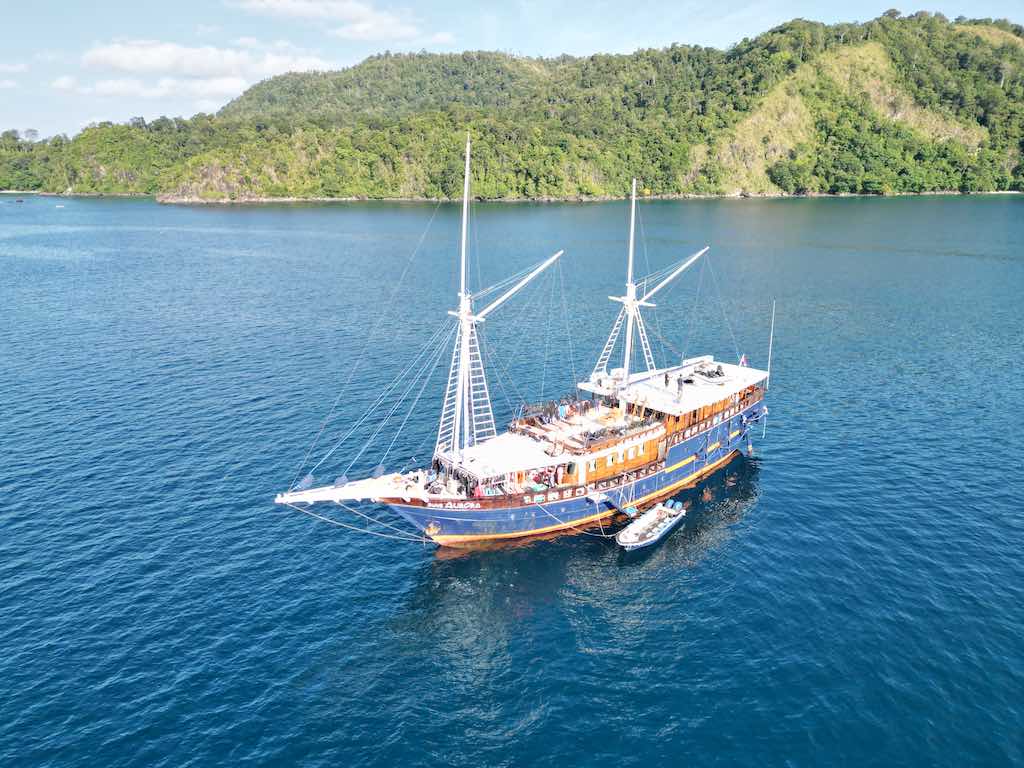
A liveaboard makes sense when the best sites are spread across a large area or have little land infrastructure. Raja Ampat, Komodo and Halmahera all have itineraries where a liveaboard lets you cover far more ground, while the Banda Sea is primarily a liveaboard destination.
Land-based diving is usually simpler and less expensive in Nusa Penida, Bali, Lembeh, Bunaken, Wakatobi, Ambon and Maratua. See my Indonesia liveaboard guide.
Planning an Indonesia Diving Trip
How many days?
For a single region, allow at least a week once transfers are included. Remote destinations such as Raja Ampat and Maratua reward a longer stay. With two weeks, combining two regions becomes much more realistic.
Getting around
Most international trips connect through Bali or Jakarta. The main regional gateways include Sorong for Raja Ampat, Labuan Bajo for Komodo, Manado for North Sulawesi and Berau for Maratua. Remote itineraries need buffer time because domestic flights and boat transfers do not always connect neatly.
Costs and park fees
Prices vary dramatically between easy-access destinations and remote resorts or liveaboards. Marine park and conservation fees may also apply. Check the current fee with your operator when booking rather than building an itinerary around an old published price.
Safety
Indonesia includes serious current diving, particularly around Komodo, Nusa Penida and Raja Ampat. Choose an operator that matches sites to your experience, listen carefully to briefings, carry an SMB where appropriate and dive conservative profiles in remote areas where evacuation can take time. Dive insurance that covers evacuation is particularly important for remote trips.
Where I’ve Stayed and Dived
First-hand experience matters when comparing remote dive destinations. Among the bases and boats I have personally used are Noah Maratua Resort in Maratua, Adiwana Warnakali on Nusa Penida, accommodation in Labuan Bajo for Komodo, and the Dune Aurora liveaboard on Indonesian itineraries.

Keep Planning Your Indonesia Diving Trip
Best Diving in Southeast Asia: compare Indonesia with Thailand, Malaysia and the Philippines in my guide to the best diving in Southeast Asia.
Indonesia Liveaboard Cruises: read my first-hand guide to liveaboard diving in Indonesia.
Nusa Penida Diving Guide: explore sites, seasons, currents and marine life in my complete Nusa Penida diving guide.
Frequently Asked Questions About Diving in Indonesia
Where is the best diving in Indonesia?
It depends on what you want from the trip. Raja Ampat stands out for reef biodiversity, Komodo for mantas and current-driven pelagic action, Nusa Penida for mantas and seasonal Mola Mola with easy access, Maratua for barracuda and sharks, and Lembeh for macro and muck diving.
When is the best time to dive in Indonesia?
There is no single nationwide season. Raja Ampat and Halmahera are generally best planned around October to April, while Komodo, North Sulawesi and Maratua tend to fit better into the middle of the year. Nusa Penida can be dived year-round, with Mola Mola encounters peaking from July to October.
Is Indonesia good for beginner divers?
Yes, provided the site is chosen appropriately. Bali, calmer Nusa Penida sites, Bunaken, Lembeh and Wakatobi all offer options for newer divers.
Where can you dive with manta rays in Indonesia?
Nusa Penida, Komodo and Raja Ampat are three of the main destinations to compare. Sangalaki in the Derawan archipelago is another important manta destination.
Where can you see hammerhead sharks in Indonesia?
The Banda Sea is known for seasonal schooling scalloped hammerheads around the Manuk and Serua seamounts, with October the usual peak. Deeper sites off Kakaban near Maratua can also produce encounters. Sightings are never guaranteed.
Where is the best macro and muck diving in Indonesia?
Lembeh Strait is Indonesia’s best-known muck-diving destination. Ambon and Alor are also strong choices for unusual critters and underwater photography.
Do you need a liveaboard to dive Indonesia?
No. Many major destinations can be dived from land. A liveaboard becomes especially useful when sites are widely dispersed or remote, as in Raja Ampat, Halmahera and above all the Banda Sea.
How long should you spend on an Indonesia diving trip?
Allow at least 7–10 days for one major region. Two weeks gives enough time to combine two regions without spending most of the trip in transit.
What is the water temperature when diving in Indonesia?
Much of Indonesia offers warm tropical water, but temperature varies significantly by region and season. Maratua runs bath-warm at 29–32°C, while Nusa Penida and southern Komodo can drop through much colder thermoclines.