How to Get to Indonesia: Entry Requirements and Gateways
By Blaise Jaeger · Updated September 20, 2026
Getting into Indonesia is easier than it has been in years — but it is not quite the formality people assume. The visa itself takes minutes. What catches travelers out is everything around it: a passport in the wrong condition, an arrival form nobody told them about, an extension started three days too late, or a flight booked into the wrong island entirely. This guide covers the national rules that apply wherever you land, and how to choose the right way into a country that spreads across 17,000 islands and three time zones.
I live in Indonesia and cross this border several times a year, through Jakarta and through Bali. Below is what actually happens at the gate, what the official pages don’t spell out, and the one fee change announced this month that could double what you pay on arrival.
Entry Requirements for Indonesia in 2026: the Short Version
If you read nothing else, read this. For a tourist stay of 30 days or less, from one of the eligible nationalities, you need four things:
- A passport valid at least six months from your date of entry, with blank pages and no damage.
- A Visa on Arrival (VOA) or e-VOA — currently IDR 500,000 per person, children included.
- The All Indonesia Arrival Card, a free online form completed within three days of arrival.
- Proof of onward or return travel, which officers ask for irregularly but do ask for.
Everything else on this page is detail, exceptions, and the parts that go wrong. Always confirm current rules on the Directorate General of Immigration site before you fly — Indonesia adjusts these rules more often than most countries.
Indonesia Entry Essentials at a Glance
| Tourist visa | VOA or e-VOA, IDR 500,000 (~$28) — increase announced, not yet in force |
| Length of stay | 30 days, extendable once for 30 more (60 days total) |
| Passport validity | 6 months minimum from date of entry, undamaged, blank pages |
| Arrival form | All Indonesia Arrival Card — free, mandatory, within 3 days before arrival |
| Main gateways | Jakarta (CGK), Bali (DPS), Surabaya (SUB), Medan (KNO), Makassar (UPG), Manado (MDC) |
| Autogates | Jakarta and Bali, for biometric passports with an e-VOA |
| Overstay penalty | IDR 1,000,000 per day |
| Longer stays | B211 visa — 60 days, renewable twice, up to 6 months total |
| Currency on arrival | Indonesian rupiah (IDR); VOA payable by Visa, Mastercard or cash |
What I’ve Learned Crossing This Border
I moved to Indonesia permanently in 2020, after opening Nusa Penida’s first PADI dive center in 2017, and I hold a KITAS — a residence permit. That changes what I line up for, but not what I see: every time I land, the immigration hall tells the same story. The autogates move in a steady trickle while the VOA counters build the kind of line you measure in flights, not minutes.
These days I use the autogate exclusively. It is faster than the dedicated KITAS counter — which surprises people, since the KITAS desk exists precisely to be the shortcut. Passport on the reader, look at the camera, gate opens. The travelers still waiting are almost always the ones who chose to buy their visa on the spot rather than online.
The one time an officer questioned my own passport, it was over its condition, not my paperwork. He turned it over, examined the wear, made a remark — and let me through. I have wondered since whether the KITAS is what tipped it. I genuinely don’t know, and that uncertainty is exactly why I now treat passport condition as the first thing to check, not the last.

I have never needed a visa extension myself, so I won’t pretend to have stood in line for one. But I have talked several French travelers through it, and the pattern never varies: they all started the process too late. That is the section below that I’d read twice if you’re planning more than a few weeks here.
Your Passport: the Detail That Turns People Away
Six months of validity is the rule everyone knows. Passport condition is the one that catches people out, and Indonesian officers are known for applying it strictly.
Press reports periodically describe travelers denied entry over a stain, a torn page, a warped cover or water damage — arriving after a long-haul flight, refused at the desk, and put on a return flight the same day. These cases are rare in absolute terms, but they are real, and they are not appealable in the moment.
What to check before you book:
- The photo page and the laminate. Any lifting, bubbling or discoloration is what an officer looks at first.
- The chip. A biometric passport that fails to read sends you straight from the autogate back into the manual line.
- Blank pages. Two clear pages is a sensible minimum for entry and exit stamps.
- Water exposure. The most common cause of the damage that gets flagged, and the easiest to miss because it develops slowly.
If your passport is marginal and you don’t have time to replace it, apply for the e-VOA online before you fly. With an e-VOA and a working chip you can clear the autogate without a face-to-face assessment of your document. It is not a guarantee — a passport that fails the chip read still lands you at a counter — but it removes the most subjective step from the process.
The All Indonesia Arrival Card
Indonesia has consolidated its immigration, customs and health declarations into a single online form, replacing the old SATUSEHAT health pass and the separate e-CD customs declaration. It is free, it is mandatory at the major airports, and it is not a visa — you still need the correct visa for your stay.
- Complete the form at allindonesia.imigrasi.go.id or in the All Indonesia mobile app, within three days before arrival.
- Enter your personal details, flight information and declarations.
- Receive a QR code by email or in the app, and present it with your passport on arrival.
Two practical notes. Fill it in on hotel Wi-Fi before you leave for the airport, not on landing — arrivals halls are exactly where cellular data fails you. And screenshot the QR code rather than relying on your inbox: you will be asked for it before you have bought a local SIM.
Visa Options: VOA, e-VOA and What Comes Next
Visa on Arrival, bought at the airport
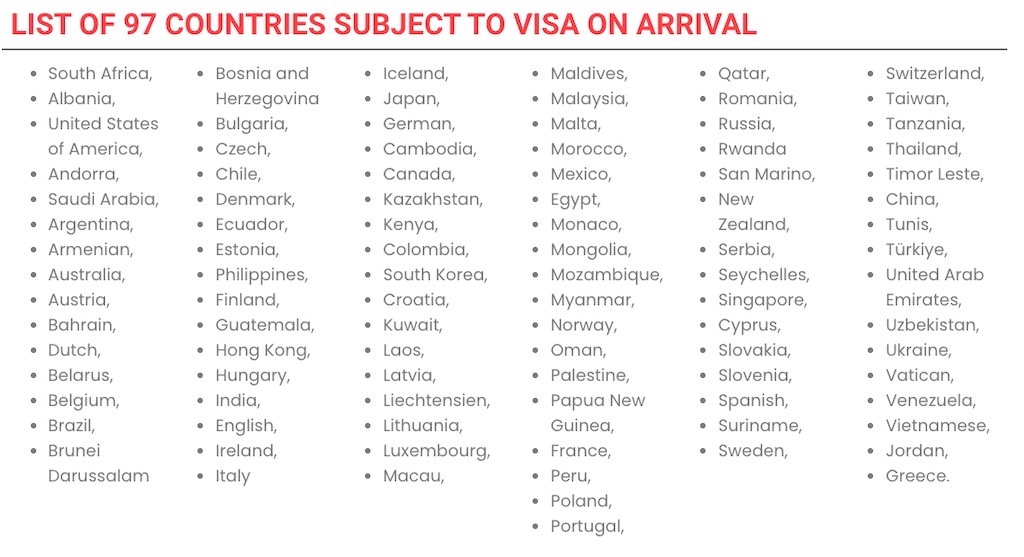
Nationals of the eligible countries can buy a Visa on Arrival at the counter for IDR 500,000 per person, children included, payable by Visa, Mastercard or cash. It is valid for 30 days and can be extended once. Check the official immigration site for the current eligibility list before you count on it.
e-VOA, bought online before you fly
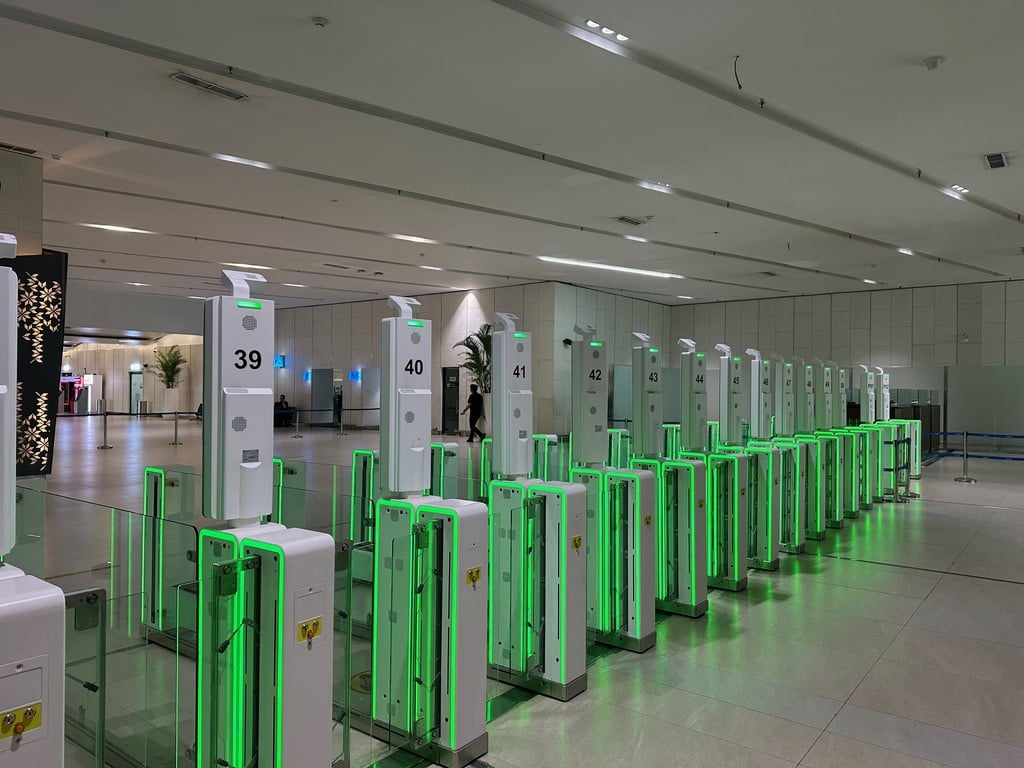
The same visa, same price, applied for in advance at the official e-visa portal. It buys you three things the counter version does not: access to the autogates, an extension you can file online instead of in person, and — if your passport is less than pristine — one fewer conversation with an officer.
Since January 2024, e-VOA holders with biometric passports have been able to use automated gates at Jakarta and Bali. There is no meaningful argument left for buying at the counter.
The fee increase announced in August 2026
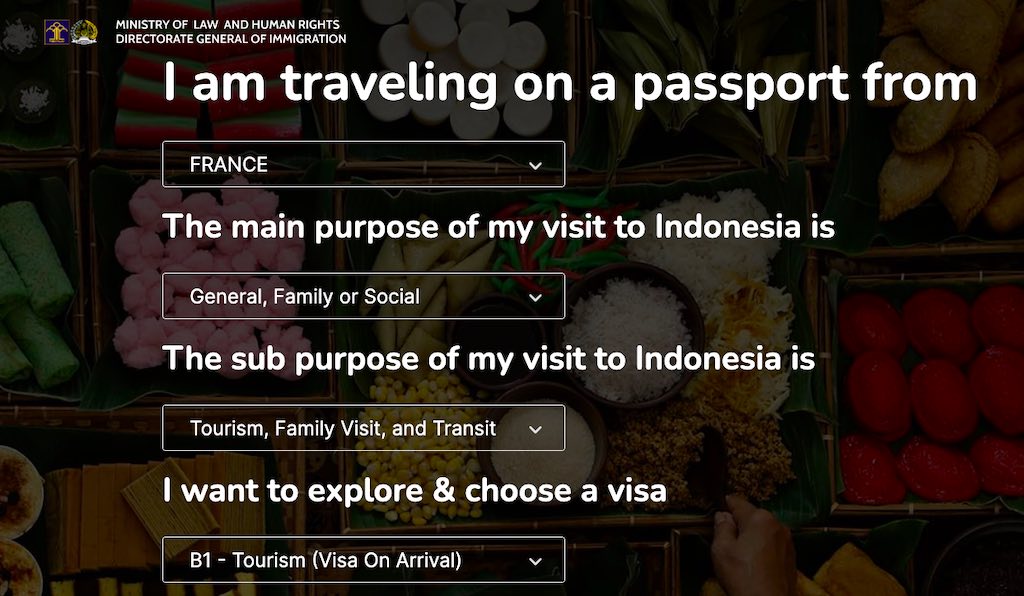
On 12 August 2026, the Directorate General of Immigration presented a revision of visa fees at its Jakarta headquarters: IDR 750,000 (~$42) for the e-VOA and IDR 1,000,000 (~$56) for the VOA bought at the airport — up from IDR 500,000 for both.
This is not in force. No effective date has been announced, and until one is, you pay IDR 500,000. But note what the proposal does: it stops pricing the two routes identically and makes the counter the expensive option, by a margin of IDR 250,000 per person. If it lands, applying online stops being a convenience and becomes the default. Check the fee before you travel rather than budgeting from this page.
Staying longer: the B211 visa
Beyond two months, the B211 is the usual route: valid 60 days, renewable twice for 60 days each time, up to six months in total. Budget IDR 2.5–5 million depending on whether it is a first application, a renewal or an expedited service. You will need a passport scan, a recent photo, and proof of around $2,000 in a bank account. It is applied for through a sponsor or an agent rather than at a counter.
Extending Your Stay — and the Overstay Trap
Both the VOA and the e-VOA can be extended once, for a further 30 days. The e-VOA extension is filed online; the VOA extension is the slower, in-person version, which is the single best argument for buying online in the first place.
Start at least 15 days before your visa expires. Every traveler I have helped with this made the same mistake — they treated the extension as a formality to handle in the last week, discovered it involves processing time and sometimes an appointment, and ended up choosing between a rushed application and a flight out.
Overstaying costs IDR 1,000,000 per day. Do the arithmetic before you gamble on it: a week of overstay is IDR 7 million, which is comfortably more than a return flight to Singapore or Kuala Lumpur. If an extension is going to be tight, leaving and re-entering is frequently the cheaper and calmer option. Long overstays move out of fine territory and into detention and deportation, so this is not a corner to cut.
Choosing Your Gateway: Which Airport to Fly Into
This is the decision most travelers make by default, and the one that shapes the rest of the trip. Indonesia is 5,000 kilometers wide. Flying into the wrong end of it costs a day and a domestic fare you didn’t plan for.
Jakarta — Soekarno-Hatta (CGK)
The country’s main hub, and the gateway I use most. Terminal 3 is modern, the autogates work reliably, and international fares into Jakarta are often cheaper than into Bali on the same routing. It is the right choice for Java — Yogyakarta, Bromo, Ijen — and the natural starting point if your trip runs west to east. Domestic connections from here reach everywhere. For the ride into the city, see taxi, Grab or train from Jakarta airport below.
Bali — Ngurah Rai (DPS)
The busiest international entry point and the obvious choice if Bali, Lombok or the Gili Islands are your destination. It also has its own arrival specifics, including the Bali tourist levy, which we cover separately in the guide to getting to Bali.
Surabaya, Medan, Makassar, Manado
The gateways nobody considers, and the ones that occasionally save a whole day:
- Surabaya (SUB) — East Java. The shortest approach to Bromo and Ijen, and to the ferry across to Bali.
- Medan (KNO) — North Sumatra. The way in for Lake Toba and the Bukit Lawang orangutans, with short hops from Kuala Lumpur and Singapore.
- Makassar (UPG) — South Sulawesi. The hub for Sulawesi and the launch point for Tana Toraja and the Togian Islands.
- Manado (MDC) — North Sulawesi. Straight into Bunaken and the Lembeh Strait, saving divers two domestic flights.
Not every airport issues a Visa on Arrival, and the designated list is revised periodically. If you are routing through a secondary airport, confirm on the immigration site that it is a VOA entry point — or hold an e-VOA, which removes the question.
Flying to Indonesia: Hubs, Routes and Cheaper Fares
There are no direct flights from most of Europe or North America. You will connect, and where you connect is worth choosing rather than accepting.
- Singapore and Kuala Lumpur — the shortest final legs, and the widest choice of Indonesian destinations on the onward hop. A Singapore layover is easy to fill if the connection is long. Best if you’re heading somewhere other than Bali.
- Doha, Dubai, Istanbul — usually the cheapest one-stop options from Europe, with a long second leg.
- Hong Kong, Bangkok, Seoul — competitive from North America and worth comparing against the Gulf routings.
Three habits that consistently cut the fare. Check neighboring departure airports — Brussels and Geneva regularly beat Paris on the same itinerary. Price Jakarta against Bali, then add a domestic leg: the combination often costs less than flying into Bali directly, and gives you a second region for free. And keep your dates flexible: on these routes a two-day shift moves the price more than any booking trick.
Price the same trip into two different gateways before you commit — it is the single comparison that changes the shape of an Indonesian itinerary. Compare fares to Jakarta and Bali on Trip.com, then check what the domestic leg costs from each.
Arriving by Sea or by Land
Flying is not the only way in, and for two itineraries in particular the alternatives make sense.
From Singapore by ferry. Fast ferries cross to Batam and Bintan in under an hour. It is a genuine entry route into Indonesia, popular with travelers already in Singapore, and it puts you within a short domestic flight of Sumatra or Jakarta.
From Timor-Leste by road. The land crossing into West Timor is the classic overland entry for anyone traveling the eastern islands, and it pairs naturally with a route through Flores and Komodo.
Sea and land crossings are the case where the entry-point question really matters: not every port and border post issues a Visa on Arrival. Arriving with an e-VOA already in hand is the safe approach on these routes. For ferries and inter-island transport once you’re in, see how to get around Indonesia.
When to Travel: Seasons Across the Archipelago
Indonesia straddles the equator, so “best time” depends on where you’re going more than on the calendar.
- Dry season, April to October. The reliable window for most of the country — Java, Bali, Lombok, Sulawesi. Warm, sunny, minimal rain.
- Wet season, November to March. Heavy rain in Sumatra and Kalimantan, but prime surf season in the Mentawai Islands and quieter everywhere.
- Shoulder months, April and October. Thinner crowds, lower prices, weather that still holds.
- Peak season tracks the dry months plus Christmas and New Year — best weather, highest prices, busiest immigration halls.
One caveat worth knowing: the eastern islands run on a different rhythm. Raja Ampat’s calmest window is October to April in the north — the opposite of Java’s. If your trip is built around one region, check that region rather than the national average.
Practical Tips for Your First Hours in Indonesia
- Have the arrival QR code offline. Screenshot it. You will be asked for it before you have data.
- Carry proof of onward travel. Asked for irregularly, but a booking confirmation on your phone settles it instantly.
- Withdraw rupiah at an airport ATM, not a change counter. The rate is better and the machines are reliable at the main airports.
- Buy your SIM inside the terminal. Telkomsel and XL have official counters; the price difference against town is small and the setup is done for you.
- Get an International Driving Permit before you rent a scooter. It is what makes your insurance valid in an accident — the point people discover too late.
- No vaccinations are mandatory, but several are recommended depending on the regions you’ll visit. Check your national health advisory.
If a scooter is part of the plan, get your International Driving Permit online before you fly. It takes minutes, and it is the document that keeps your insurance valid if anything happens on the road.

If you’re renting a car rather than a scooter, compare rental prices across Indonesian airports on DiscoverCars. And if your first night is near the airport before an early domestic connection, it is worth booking ahead — arrival-day walk-ins are the one situation where Indonesian hotel pricing works against you.
From Jakarta Airport (CGK) to the City: Taxi, Grab or Train
Soekarno-Hatta sits about 30 km west of central Jakarta, and there are three realistic ways to cover that distance: a metered taxi, a Grab, or the airport train. In September 2026 I tried all three to the same place, Sudirman in the business district. Both road options landed me in the city in well under an hour; the train, cheapest by far, took the longest.
| Option | What I paid | Door to door | Good to know |
|---|---|---|---|
| Blue Bird taxi (metered) | about IDR 200,000 (~$12), tolls included | about 40 min | Official line only, meter on |
| GrabCar Premium | IDR 298,200 (~$18) | about 47 min | Fixed price shown before you book |
| Skytrain + airport train | IDR 85,000 (~$5) per person | about 1 hr 15 on average | Skytrain from your terminal to the station, then one train every 30 minutes |
Blue Bird taxi: metered and reliable
My Blue Bird from the airport to Sudirman came to about IDR 200,000 including the tolls, in roughly 40 minutes. Tolls are paid on top of the meter on this route, so that total is what you actually spend. Take it from the official Blue Bird counter or taxi line at arrivals, and make sure the meter is running when you set off.
Ignore anyone who approaches you inside the terminal with a fixed price. Drivers in blue look-alike cars and unofficial uniforms work the arrivals halls, and their “fixed rate” to central Jakarta is typically two to three times the metered fare.
Grab: a fixed price before you leave
Grab shows the price before you book, which removes any negotiation. My GrabCar Premium from the pickup point at Terminal 1B to a hotel in central Jakarta — 33 km, about 47 minutes — cost IDR 298,200. I booked the Premium tier; a standard GrabCar costs less and can come in close to the taxi fare, so compare both in the app before you head for the taxi line. More on ride-hailing in Grab, Gojek and taxis in Indonesia.
The Skytrain and the airport train: cheap, but slow door to door
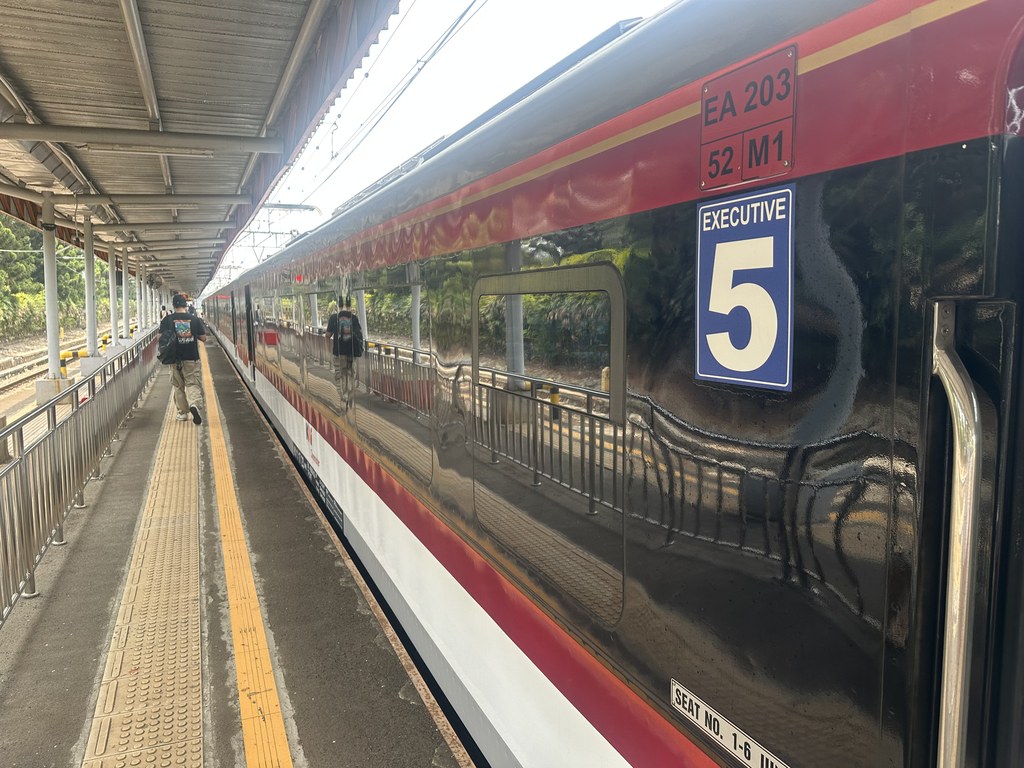
The airport train runs between Soekarno-Hatta’s railway station and the city, with stops at Batu Ceper, Rawa Buaya and Duri, then BNI City in Sudirman and Manggarai. From BNI City the ride itself takes about 45 minutes. I paid IDR 85,000; the fare changes with the time of day, roughly between IDR 50,000 and IDR 100,000. Buy it in the Access by KAI app or at the ticket machines in the station.
The catch is everything around the ride. The airport station is not in any terminal: from arrivals you first take the free Skytrain, which links Terminals 1, 2 and 3 to the station, and then wait for a train that runs only every 30 minutes. I waited eight minutes for the Skytrain; allow up to ten. Add those waits and the transfers with your bags, and the door-to-door average comes closer to an hour and a quarter.
Which one to choose
Having tried all three, I wouldn’t take the train again traveling alone, and certainly not as a couple. Two people sharing a taxi pay about IDR 100,000 each, barely more than one train ticket, and arrive half an hour sooner with no transfers. The train’s one real advantage is that its timing doesn’t depend on the roads. If you land at rush hour or in a heavy downpour, when the toll road into Jakarta can double the drive, it becomes the safer bet.

Read More: Plan the Rest of Your Trip
✈️ Getting to Bali
Landing at DPS, the Bali tourist levy, immigration at the airport and how to reach your hotel — everything specific to arriving in Bali.
🚌 Getting Around Indonesia
Domestic flights, ferries, trains and buses — how to move between the islands once you have cleared immigration.
🇮🇩 Indonesia Travel Guide
Where to go across the archipelago, region by region, with itineraries and the destinations worth the domestic flight.
Frequently Asked Questions About Traveling to Indonesia
Do I need a visa to travel to Indonesia?
Most tourists need a Visa on Arrival or e-VOA, currently IDR 500,000 per person for a 30-day stay. Eligibility is set by nationality and the list is revised periodically, so check the official immigration site before you fly. A small number of nationalities are visa-exempt for short stays.
How much does the Indonesian visa cost in 2026?
IDR 500,000 (around $28) for both the VOA and the e-VOA. A fee revision presented on 12 August 2026 would raise this to IDR 750,000 for the e-VOA and IDR 1,000,000 for the VOA bought at the airport, but no effective date has been announced and it is not yet in force.
What is the All Indonesia Arrival Card?
A single free online form combining immigration, customs and health declarations, replacing the old SATUSEHAT and e-CD. Complete it within three days before arrival at allindonesia.imigrasi.go.id or in the app, then present the QR code with your passport. It is mandatory at the major airports and it is not a visa.
Should I get the e-VOA online or buy the visa on arrival?
Get the e-VOA online. It costs the same today, lets you use the automated gates instead of queuing, and allows you to file your extension online rather than in person. The proposed 2026 fee revision would also make the counter version IDR 250,000 more expensive.
Can I be refused entry because of a damaged passport?
Yes. Indonesian officers apply passport-condition rules strictly, and press reports describe travelers turned away over a stain, a torn page or water damage. Replace a marginal passport before you travel; if you can’t, apply for an e-VOA so you can clear the autogate rather than face a manual assessment.
How long can I stay in Indonesia as a tourist?
Thirty days on a VOA or e-VOA, extendable once for a further 30 days, so 60 days in total. Beyond that you need a different visa — usually the B211, valid 60 days and renewable twice for up to six months.
How do I extend my Indonesian tourist visa?
An e-VOA is extended online; a VOA bought at the counter requires an in-person process. Start at least 15 days before expiry — the most common mistake is treating it as a last-week formality. Overstaying costs IDR 1,000,000 per day.
What happens if I overstay my visa in Indonesia?
You pay IDR 1,000,000 for each day beyond your permitted stay, settled on departure. A week costs IDR 7 million — more than a return flight to Singapore or Kuala Lumpur, which is why leaving and re-entering is often cheaper than a late extension. Long overstays lead to detention and deportation.
Which airport should I fly into in Indonesia?
Jakarta (CGK) for Java and for the widest domestic network, and often the cheaper international fare. Bali (DPS) for Bali, Lombok and the Gilis. For everything else, consider Surabaya for Bromo and Ijen, Medan for Lake Toba, Makassar for Sulawesi and Manado for Bunaken — each can save a full day of domestic connections.
How do I get from Jakarta airport to the city center?
The easiest ways are a metered Blue Bird taxi from the official line — about IDR 200,000 including tolls and around 40 minutes to Sudirman on my trip — or a Grab at a price fixed before you leave. The airport train costs IDR 50,000–100,000 depending on the time, but with the Skytrain from your terminal to the station first and then a train only every 30 minutes, allow about an hour and a quarter door to door.
How much is a taxi from Jakarta airport to central Jakarta?
About IDR 200,000 (~$12) with Blue Bird to Sudirman, tolls included, in September 2026. A GrabCar Premium on a similar trip cost IDR 298,200. Refuse any driver who offers a fixed price inside the terminal: unofficial taxis typically ask two to three times the metered fare.
Can I enter Indonesia by sea or overland?
Yes. Ferries from Singapore reach Batam and Bintan in under an hour, and there is a land crossing from Timor-Leste into West Timor. Not every port or border post issues a Visa on Arrival, so arrive with an e-VOA already granted if you are entering this way.
Do I need proof of onward travel to enter Indonesia?
Officers may ask for a return or onward ticket, and airlines sometimes check at the departure gate. It is requested irregularly rather than systematically, but having a booking confirmation on your phone resolves it in seconds.
Are vaccinations required to travel to Indonesia?
None are mandatory for entry, but several are recommended depending on the regions and the season. Consult your national health advisory a few weeks before departure, since some courses need to start well in advance.