Tana Toraja: Rambu Solo’, Tongkonan and the Toraja Highlands
By Blaise Jaeger · Updated August 14, 2026
Tana Toraja sits in the mountains of South Sulawesi, five hours by road above the coast, and it is unlike anywhere else in Indonesia. Not for its landscapes, though they are extraordinary, but for what happens inside its houses: here, a person who has died is not immediately dead.
This guide covers the funeral rites that made Toraja famous, the tongkonan houses and cliff tombs, how to get there in 2026, where to stay, and what is actually expected of a foreign visitor at a ceremony — a point on which most guides get it wrong.
Tana Toraja at a Glance
- Where: highlands of South Sulawesi, around Rantepao and Makale, 1,000 m and above.
- Getting there: from Makassar — 7 to 11 hours by bus, or a short flight to Toraja Airport when it is running.
- How long: 3 days minimum, 4 to 5 to do it properly.
- Best season: the dry season, May to October. Ceremonies concentrate between June and September.
- Known for: Rambu Solo’ funerals, tongkonan houses, cliff tombs and tau-tau effigies.
- Part of: Sulawesi, the K-shaped island east of Borneo.
- Religion: mainly Protestant, layered over the ancestral aluk to dolo.
- UNESCO status: on the tentative list since 2009 — not a World Heritage Site, whatever you may read elsewhere.
Why Tana Toraja Is Like Nowhere Else
Isolated in the highlands for centuries, the Toraja developed a relationship with death that has no equivalent in Southeast Asia — and arguably anywhere.
Christianity arrived with Dutch missionaries in the early 20th century and most Toraja today are Protestant. It did not replace the older system, aluk to dolo, “the way of the ancestors” — it settled on top of it. The result is a society that goes to church on Sunday and sacrifices buffalo for its dead, without experiencing that as a contradiction.
Three things make the region visually unmistakable: the tongkonan, ancestral houses with roofs curved like boats or buffalo horns; burial sites carved into limestone cliffs, guarded by wooden effigies; and funerals so elaborate that families spend years preparing them.
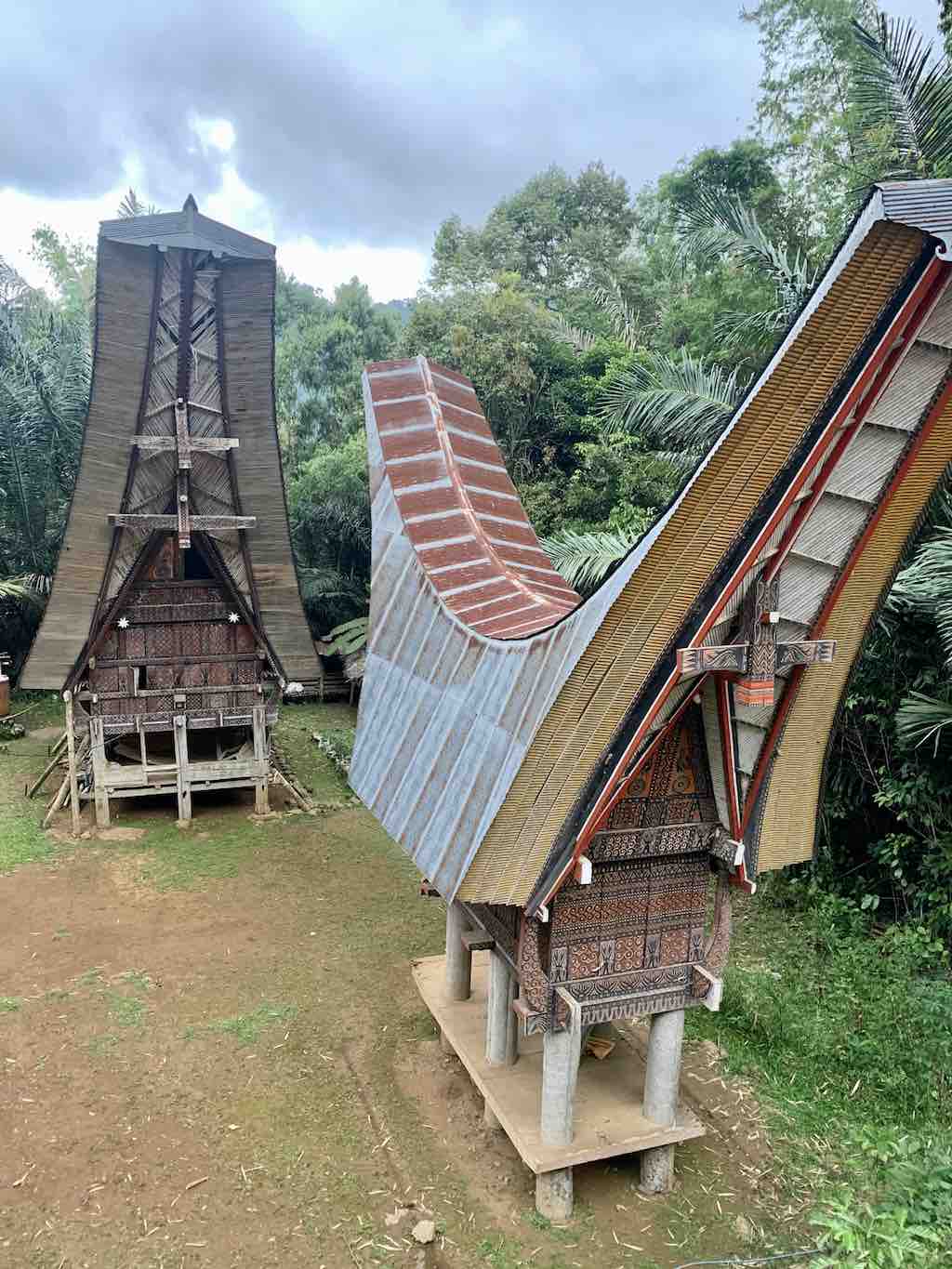
My Own Visit
I went to Tana Toraja in December 2020 — from 25 to 31 December — specifically to attend the Rambu Solo’ of the uncle of an Indonesian friend. I was received at the family’s tongkonan, and I saw his uncle, who had died about a year earlier, waiting for the ceremony. But the ceremony was banned and postponed because of Covid, and it finally took place a few weeks after I left. The ban was general. On 26 December 2020, Indonesian police broke up a Rambu Solo’ in North Toraja under Covid prevention rules.
I did not want to ask too many questions at that time but I did later and everything in this guide comes from those six days, from questions I put afterwards to my friend, and from published sources.
To Makula’: Between the Death and the Funeral
Between the death and the funeral, a Toraja person is not considered dead. The term is to makula’ — “a sick person” — and it is not a polite fiction. Until the Rambu Solo’ takes place, the sumanga’, the soul, is understood to be still in the house. The person keeps a room, and the household goes on around them.
Food, drink and tobacco are brought daily. What is striking is that these are not standardised offerings. As my friend explained it to me: you bring what the person liked when they were alive. Coffee for someone who drank coffee. Cigarettes for someone who smoked. The children of the house come into the room as well — there is nothing concealed about it.
One correction to what you will read elsewhere, including in international magazine features: families do not spend their days in conversation with the deceased. As my friend put it — some people will talk to him if they have come from far away to see him, but normally, no. The daily reality is quieter and more domestic than the reportage suggests.
This period lasts weeks, months, and more often a year or more. It is not neglect and it is not superstition — the reason is money, and it is the subject of the next two sections.
Rambu Solo’: The Funeral That Can Take Years
Start with the name, because almost no guide explains it. Rambu Solo’ means “descending smoke”. Rambu Tuka’ means “ascending smoke”. Toraja ritual is divided in two by the direction the smoke of the offerings travels: the rites of death go down, the rites of life — weddings, house blessings, harvests — go up. Every ceremony in Toraja belongs to one side or the other.
The gap between the death and the funeral is the part outsiders find hardest to grasp, and the explanation is arithmetic rather than belief: a Rambu Solo’ has to be paid for, and until the family can pay for it, the person stays home as to makula’. Thirteen months, in the household I visited, and that is unremarkable.
When it finally happens, the ceremony runs for several days and can draw hundreds or thousands of people. It involves processions, chanting and dance, communal feasting, and the ritual slaughter of pigs and water buffalo. The buffalo is not livestock here: it is understood to carry the soul of the deceased to Puya, the land of the dead.
The scale of the ceremony is calibrated to the rank of the family. The number of buffalo, the number of days, the presence or absence of a carved effigy afterwards — all of it reads as a statement of social position to everyone attending.
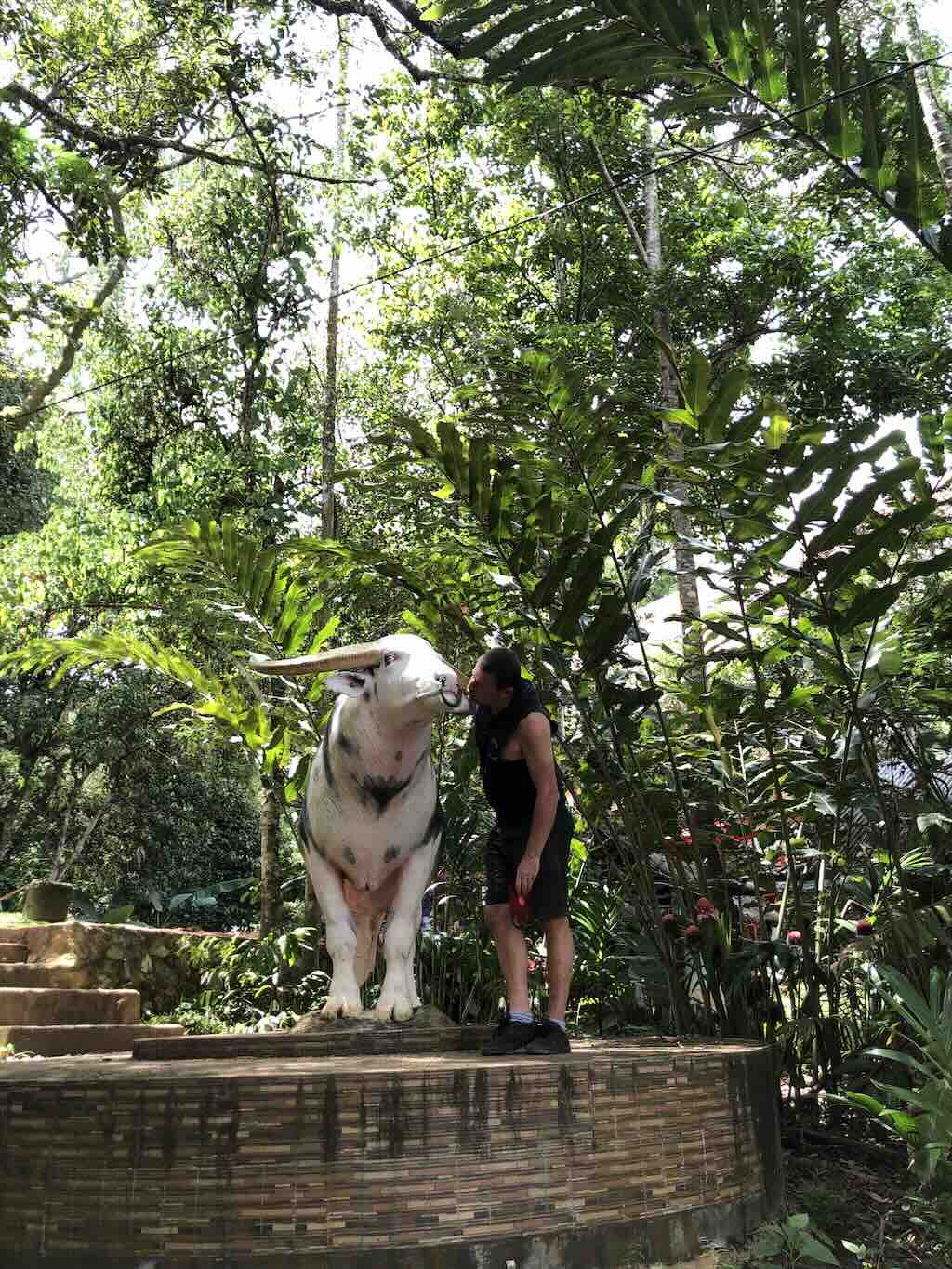
The albino buffalo
The tedong bonga, the pink-and-white spotted buffalo prized above all others, is the clearest sign of a family’s standing — so central to Toraja identity that you find life-size painted effigies of it standing in gardens, on plinths, the way other cultures put up statues of generals.
The starting price is around Rp 200 million — roughly €11,000, or the price of a car — and exceptional animals go far beyond that. A single funeral may require several.
What a Toraja Funeral Costs
No guidebook gives a figure, so here is one, from a Toraja family rather than from a travel website.
It varies enormously with the wealth of the family. But as an order of magnitude, a Rambu Solo’ costs several hundred million rupiah — tens of thousands of euros — before counting the sacrificial animals. Add the buffalo at Rp 200 million and upwards each, and the arithmetic of the delay becomes obvious.
This is why the family waits. It is also why the wider family contributes, why contributions are recorded with care, and why those records create obligations that are repaid at the next funeral, sometimes a generation later. A Rambu Solo’ is not only a farewell — it is the settling and the reopening of a ledger that runs between families for decades.
Understanding that changes what you see if you attend one. The buffalo in the field is not spectacle. It is somebody’s savings.
Tongkonan Houses, and Why They All Face North
The tongkonan is the ancestral house, and it is not simply a dwelling. It is the anchor of a lineage: a family’s tongkonan defines who they are, and descendants scattered across Indonesia return to it for ceremonies. The façades carry carvings in red, black, white and yellow, each motif with a meaning, and rows of buffalo horns fixed to the front post record the animals sacrificed at past funerals — a visible ledger of the family’s history.
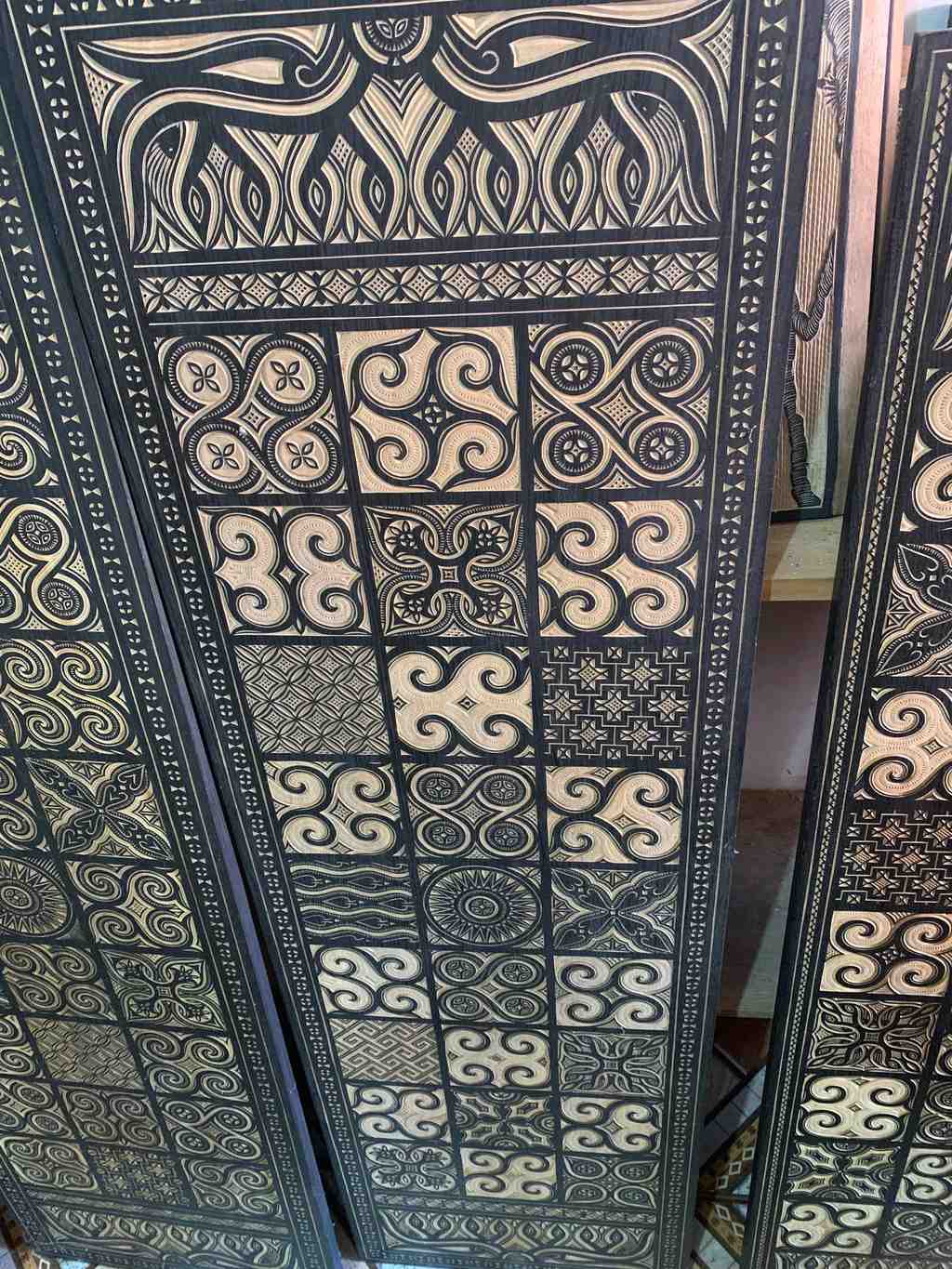
What almost no guide explains is the orientation, and it is the key to everything else.
Tongkonan are aligned north–south, always, with the façade turned north. This is not aesthetic. In Toraja cosmology the north is the direction of Puang Matua, the creator — ulunna lino, “the head of the world”. The south is pollo’na lino, “the tail of the world”, and the direction of Puya, the land of the dead. The house is an axis stretched between origin and afterlife.
Inside, the house is divided into three rooms along that axis: a north room, a central room called the sali, and a south room called the sumbung.
Here I have to report a disagreement rather than resolve it. The ethnographers who documented these houses in the 1980s place the to makula’ in the sali, on its western side. In the household I visited in 2020, the to makula’ was in the sumbung, the south room — the side the cosmology assigns to Puya — while the family slept in the north room. He was not the head of the household, so that placement was not a matter of rank.
Forty years separate the two descriptions, and practice varies from family to family and valley to valley. I record what I was shown. Treat neither version as the universal rule.
Where to see the best tongkonan
- Ke’te Kesu — the postcard village: a row of tongkonan facing their rice barns, with a burial cliff behind. Also the most visited.
- Pallawa — a spectacular alignment on a ridge, quieter than Ke’te Kesu.
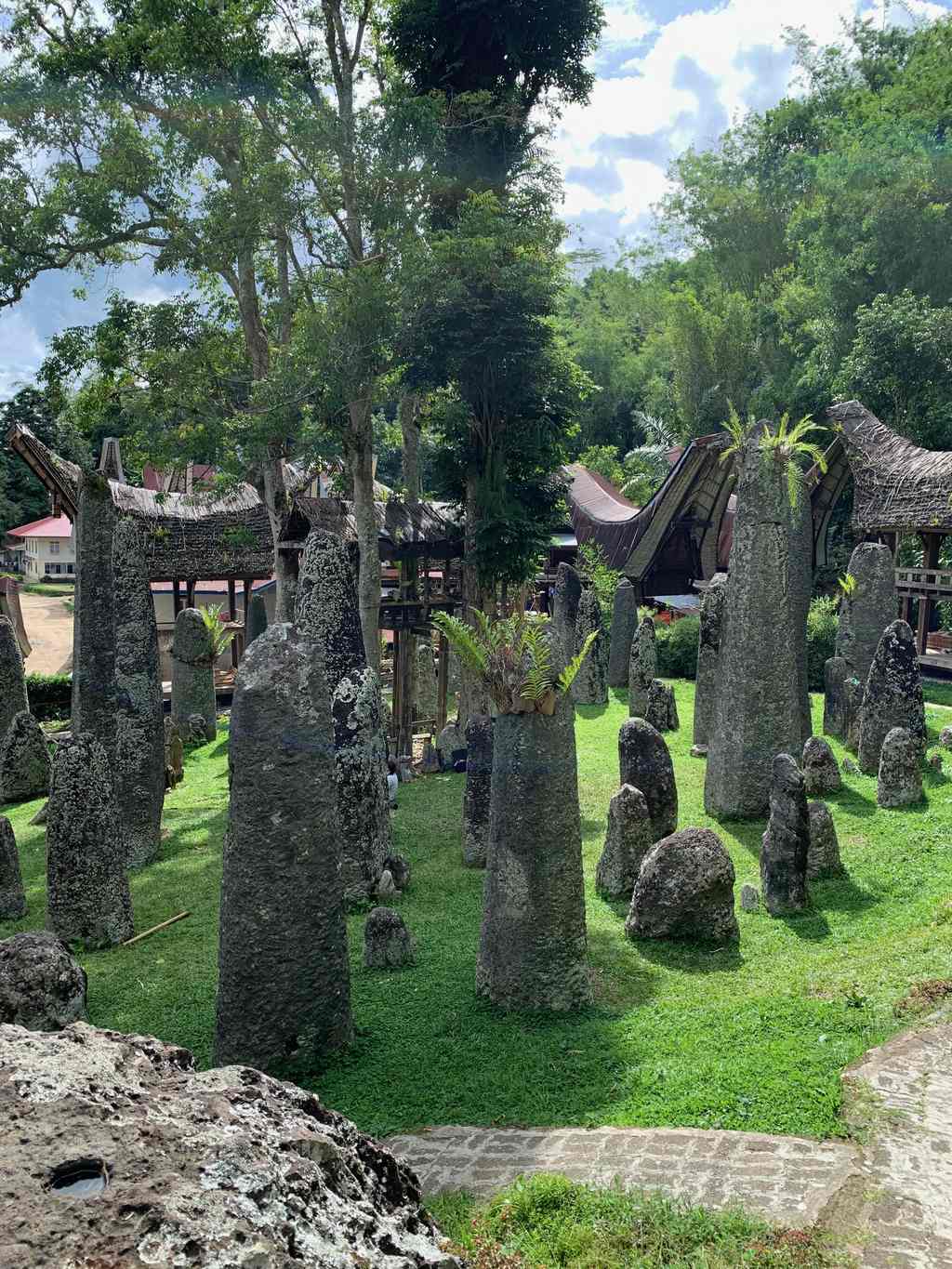
- Bori Kalimbuang — tongkonan alongside a field of standing megaliths (see below).
- Buntu Pune, Nanggala — smaller, working villages where nobody is selling anything.
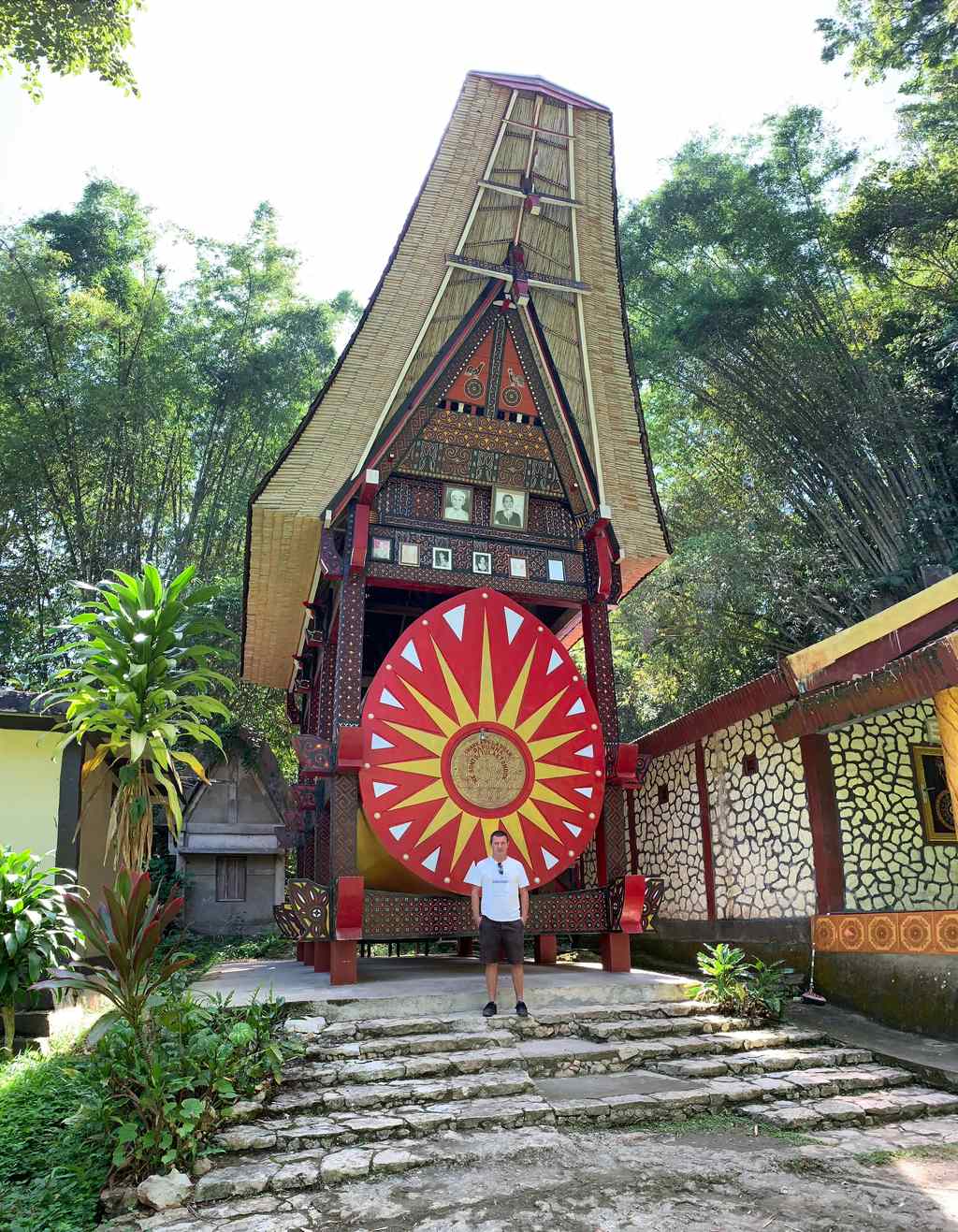
Cliff Burials, Tau-Tau and Baby Graves
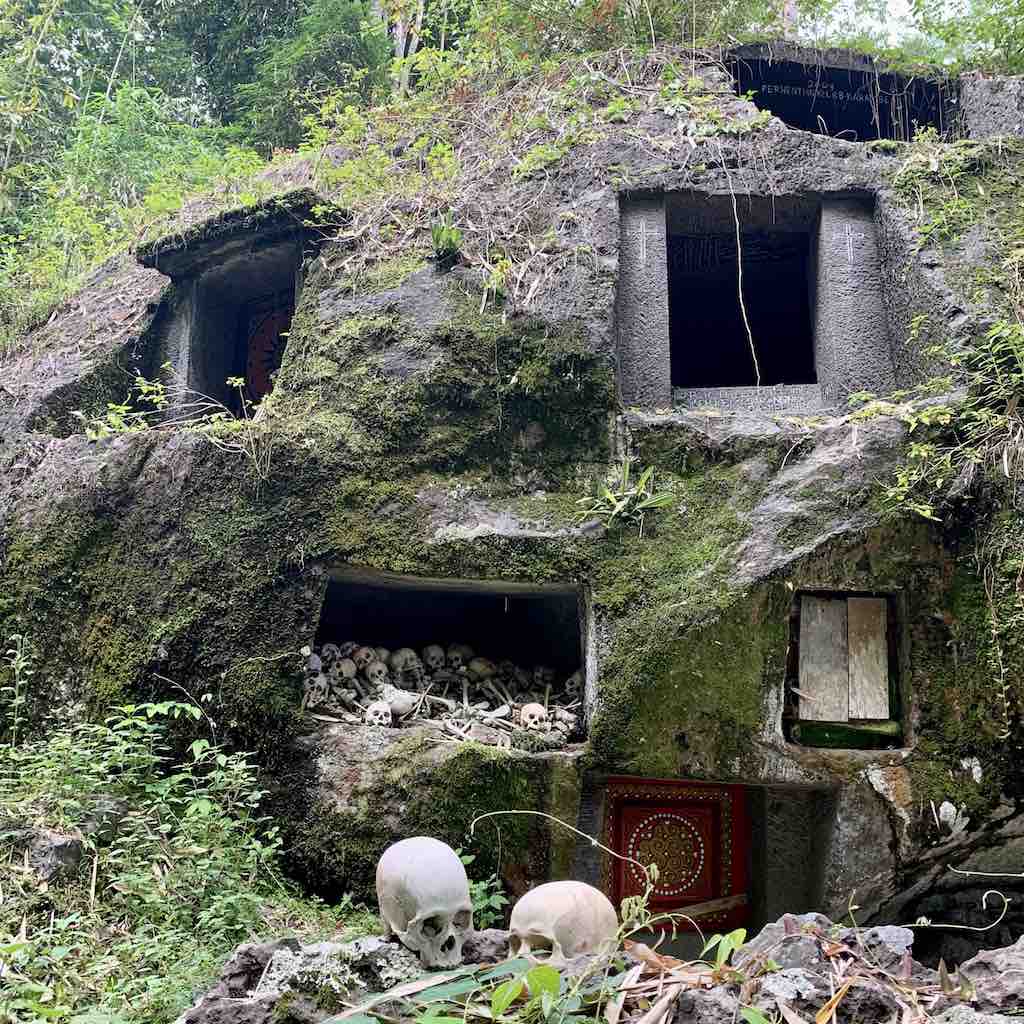
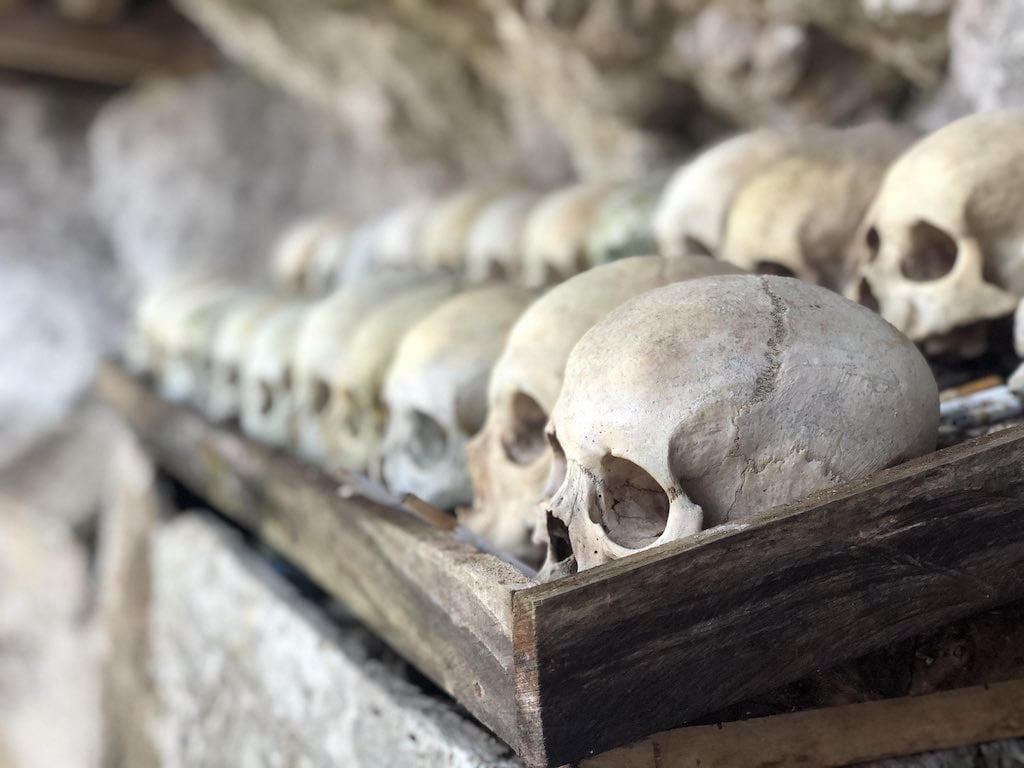
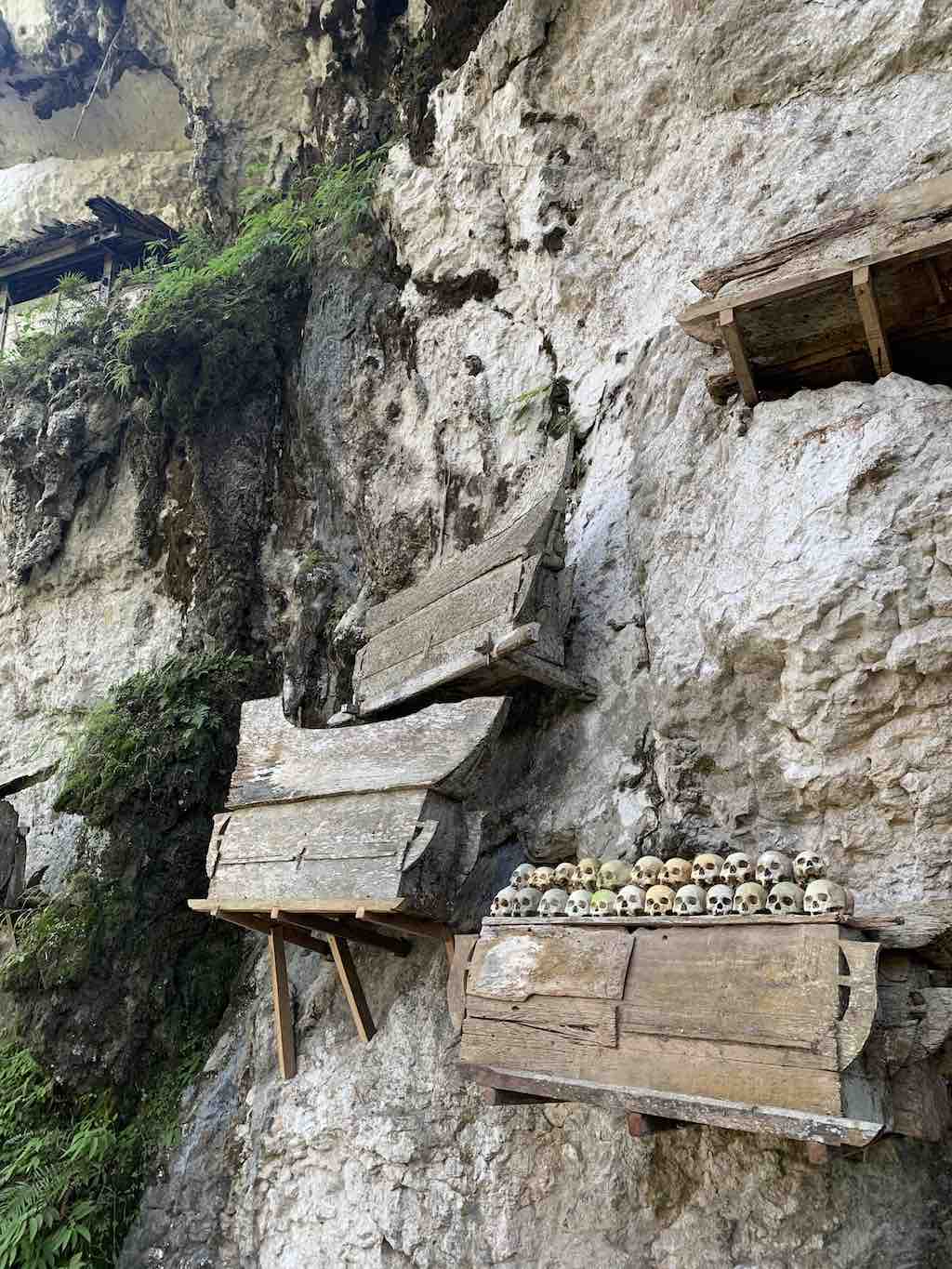
The Toraja do not bury their dead in the ground. Graves are cut into limestone cliffs, placed in natural caves, or built as family mausoleums. In older sites, coffins hang on wooden beams driven into the rock face; when the beams eventually rot, the coffins fall, and bones and skulls accumulate at the foot of the cliff. Nobody clears them away.
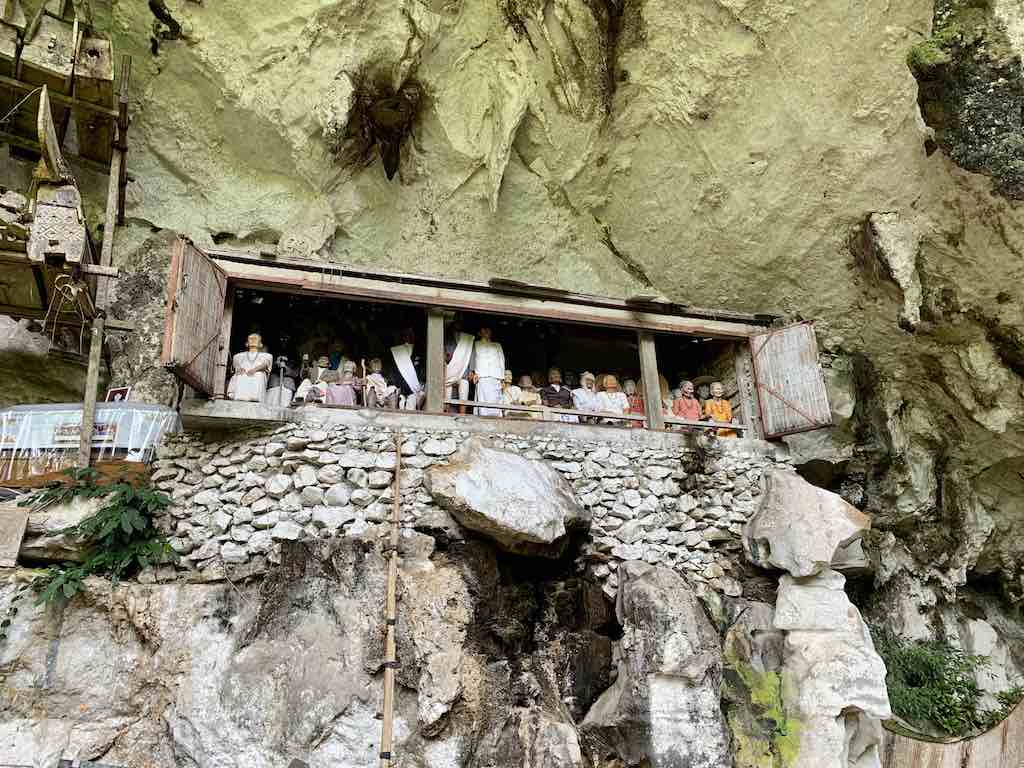
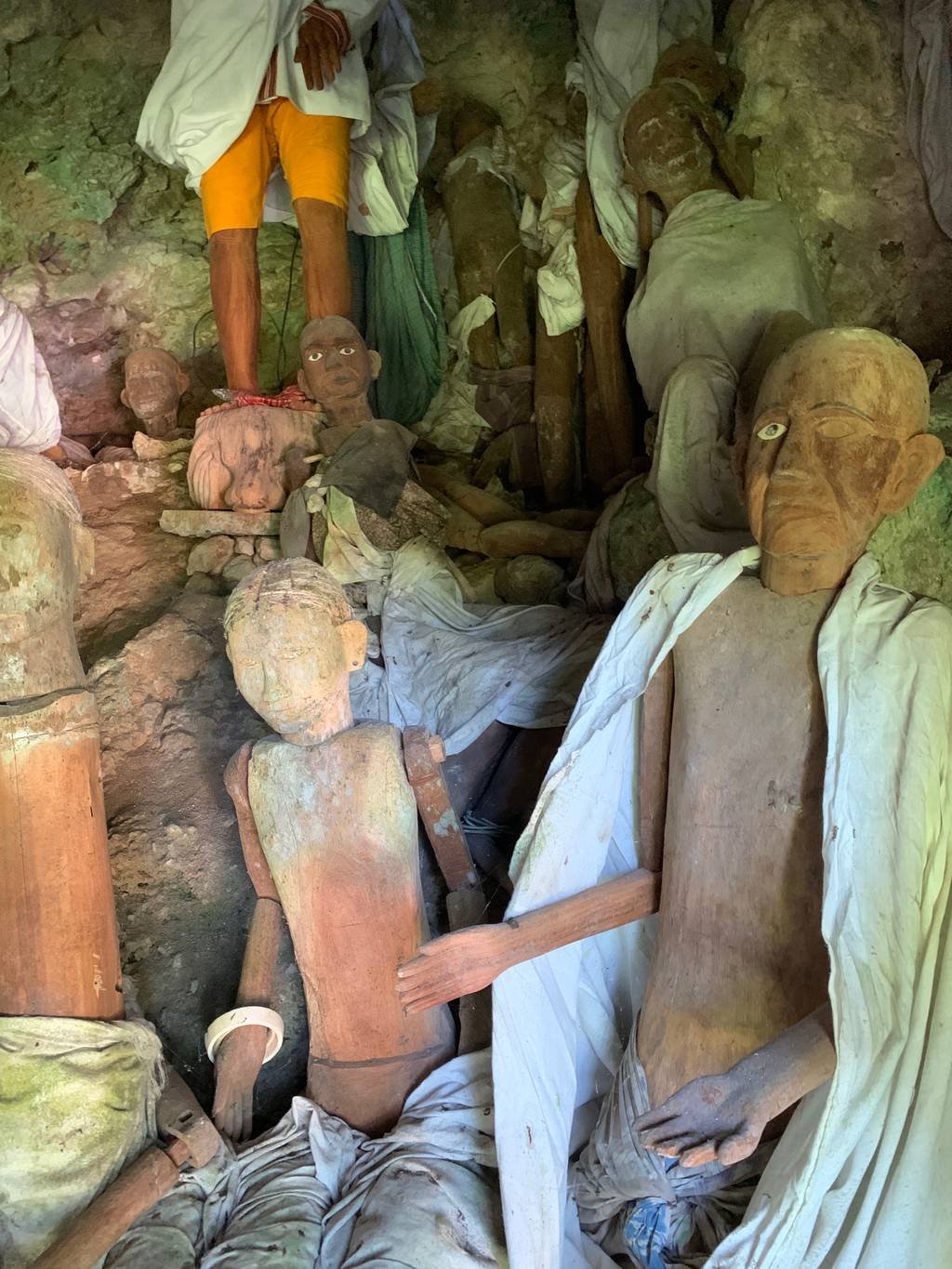
Above many tombs stand the tau-tau: carved wooden effigies of the dead, dressed in real clothes, standing on balconies cut into the rock and facing out over the valley. They are unnerving, and they are meant to be — they represent the deceased and stand guard over the tomb.
Not everyone gets one. Tau-tau are made for wealthy families and high-ranking lineages only. The figures you see lined up on the cliffs are an elite, not a cross-section of the Toraja dead — a distinction worth keeping in mind when a guide implies otherwise.
The sites worth your time:
- Londa — burial caves you enter with a lamp and a local guide, past coffins and stacked skulls. The most confronting of them all.
- Lemo — the classic wall of tau-tau, best in the morning light.
- Bori Kalimbuang — rock tombs alongside a field of simbuang batu, standing stones raised for the funerals of the highest-ranking dead.
- Kambira — baby graves cut into a living tree. Infants who died before teething were placed inside the trunk, which then closed over them as it grew. The practice has ended, the tree remains.
- Suaya — the royal tombs of the Sangalla line.
Ma’nene’: The Ritual That Is Not What You Read
The Ma’nene’ is the ceremony that made Toraja go viral: the dead are taken from their tombs, cleaned, dressed in new clothes, photographed with their families, and returned. The images circulate every year with captions announcing that “every August, the Toraja people walk their dead”.
That is not accurate. Here is what a Toraja family told me:
- It is practised in certain areas of Toraja only, not across the whole region.
- It is practised by certain families only.
- The usual interval is around five years, not annual.
- The family decides when. There is no calendar, no fixed date, no season you can book against.
The family whose uncle I saw in 2020 has still not held a Ma’nene’. If you arrive hoping to witness one, understand that you are hoping to coincide with a private family decision in a specific valley — not attending a scheduled festival. Ask locally, accept that the answer will usually be no, and do not treat a family’s ancestors as a photo opportunity you are owed.
Attending a Ceremony: What Is Actually Expected of You
This section corrects what a great many guides still say.
As a foreign visitor, you bring nothing. Not cigarettes, not sugar, not an envelope. The advice to “bring a small gift for the host family”, repeated across the travel web, is wrong, and following it puts you in an awkward position rather than a gracious one.
The gift economy of a Rambu Solo’ is between Toraja families. A local guest arrives with at least a pig. The contribution is recorded, and it creates a debt to be repaid at a future funeral. You are not part of that system, and you cannot join it with a carton of cigarettes.
One rule that no guidebook mentions and that a Toraja source gave me plainly: never bring a chicken. It is taboo. Pigs and buffalo are the animals of sacrifice and of reciprocal debt; a chicken carries no such weight, and offering one devalues the dead.
On the practical questions, the answers I was given are more relaxed than the internet suggests:
- Dress: no special clothing is required. Ordinary respectful dress is enough — you are not expected to wear black or Toraja costume.
- Photography: permitted. Visitors take photographs and this is accepted.
- Finding a ceremony: through a local travel guide. This is the normal route, and a guide is what turns a visit into something you understand rather than something you stare at.
I am reporting these from a Toraja source, and they run against the cautious consensus online — so weigh them accordingly, and follow your guide’s lead on the day. Common courtesy still applies: a funeral is a funeral, and the family in front of you is grieving, however festive the scale.
Landscapes, Viewpoints and the Sea of Clouds
Toraja is not only rites, and the food alone justifies a detour — see my guide to Indonesian food. The highlands are green, steep and worked: terraced rice fields, bamboo, limestone outcrops, and villages scattered across the slopes with their tongkonan visible from a long way off.
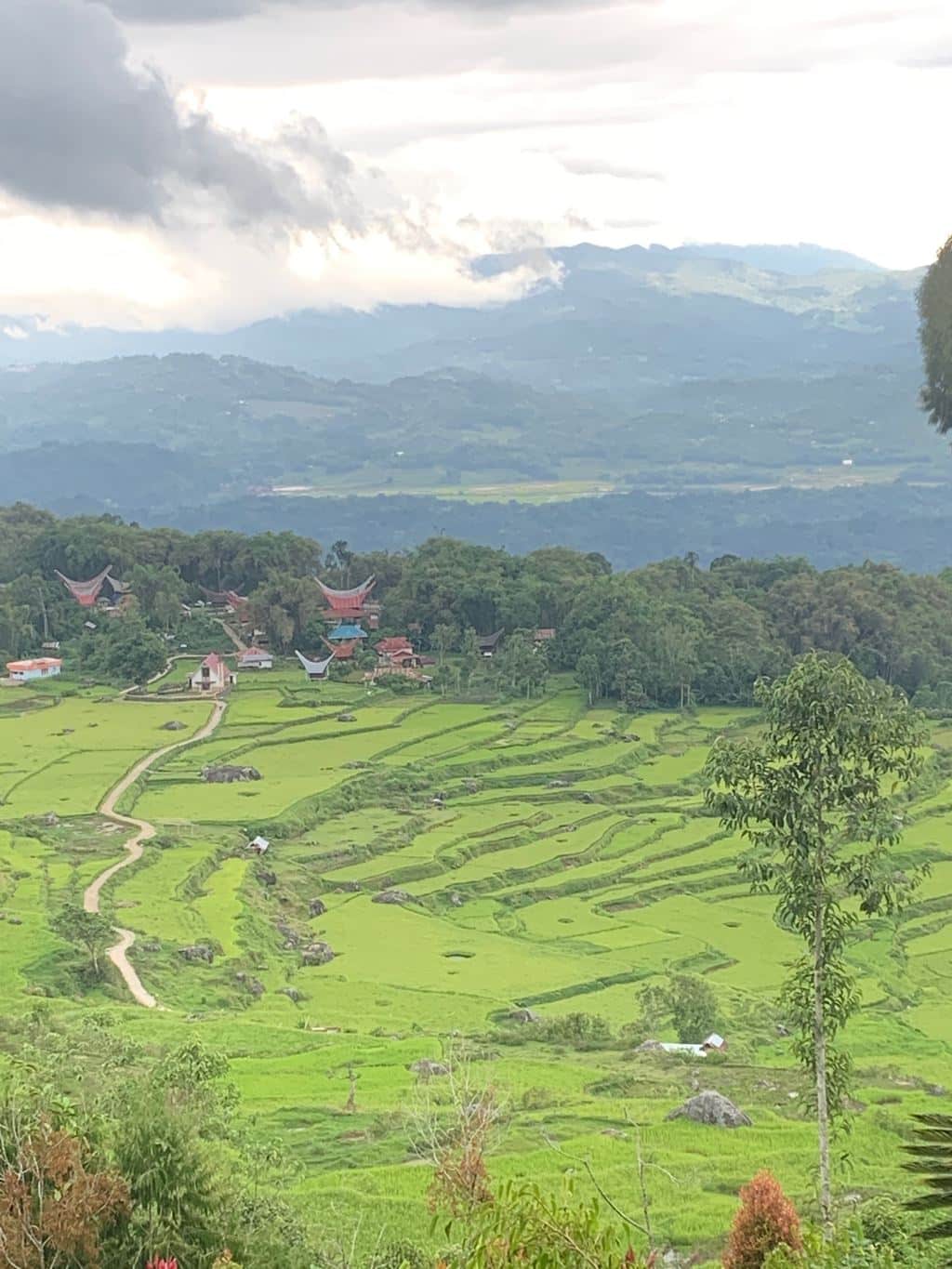
- Lolai — marketed as Negeri di Atas Awan, “the land above the clouds”. Arrive before dawn and the valley below fills with mist while you sit above it. Cafés have installed platforms and viewing decks along the ridge; it is touristic and it is still worth the early start.
- Batutumonga — higher and wider than Lolai, on the flank of Mount Sesean. The best base if you want to walk between villages rather than be driven between sites.
- Buntu Burake — a 40 m statue of Christ blessing the valley, standing on a limestone peak above Makale, reached by a long stair and a glass walkway. It is the least “traditional” thing in Toraja and one of the most revealing: this is a Protestant society, and it says so from the top of a mountain.
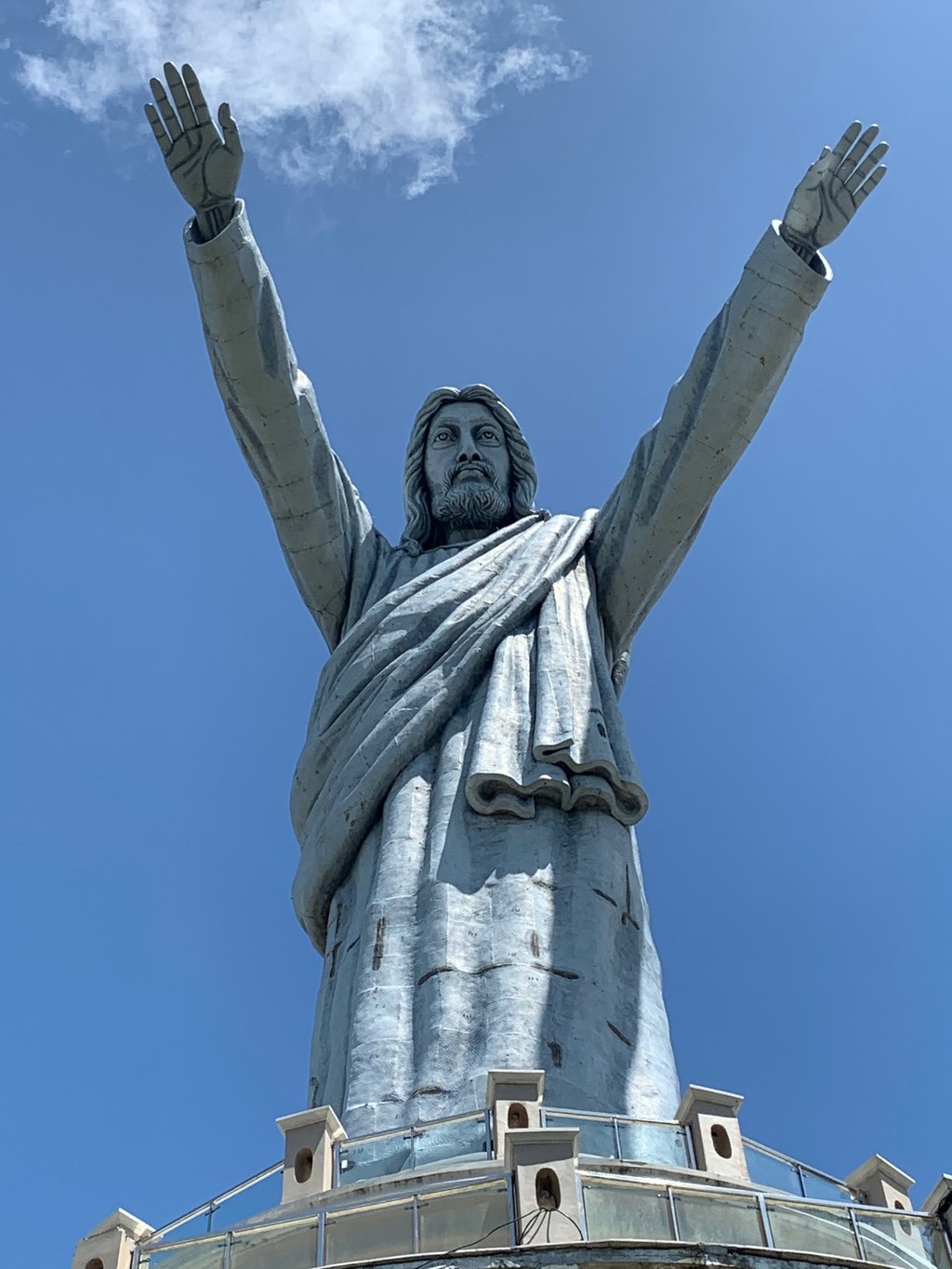
Entry to Buntu Burake was around Rp 10,000 when I visited, with a separate charge of about Rp 50,000 to rent the shoes required for the glass walkway. Most Toraja sites — Ke’te Kesu, Londa, Lemo — charge in the region of Rp 30,000 for foreign visitors. Treat these as orders of magnitude rather than fixed prices.
How to Get to Tana Toraja
Everyone arrives via Makassar, most often after Bali or Jakarta, capital of South Sulawesi, served by Sultan Hasanuddin airport (UPG) with flights from Jakarta, Bali, Surabaya, Singapore and Kuala Lumpur.
By air — the option most guides still miss
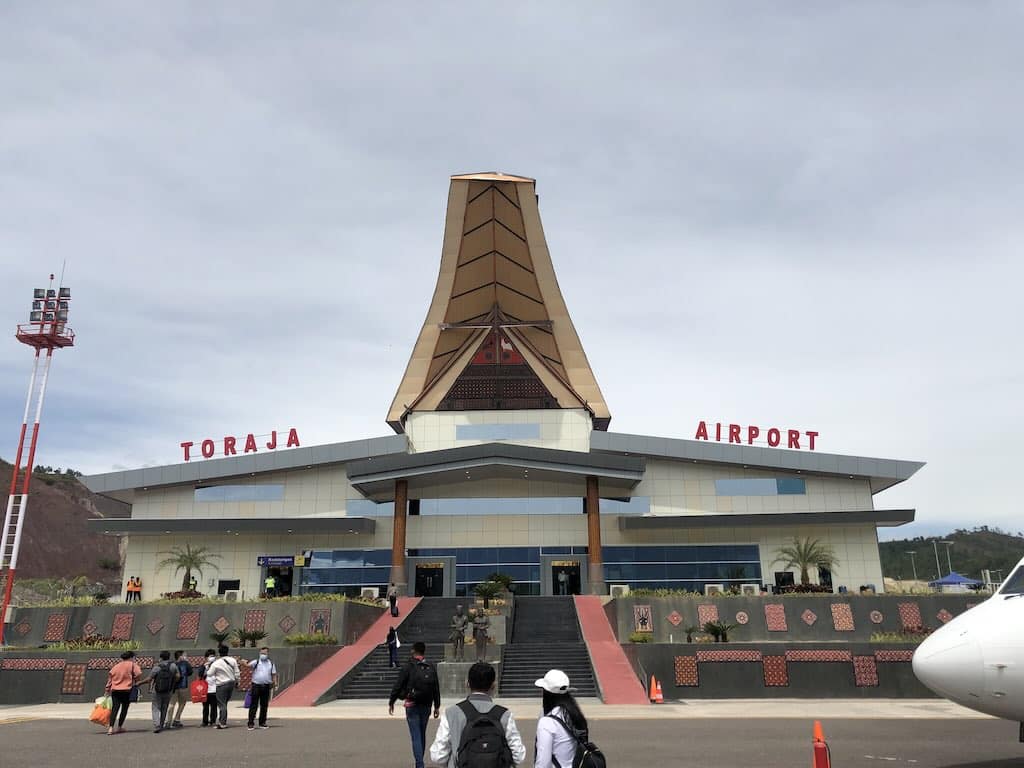
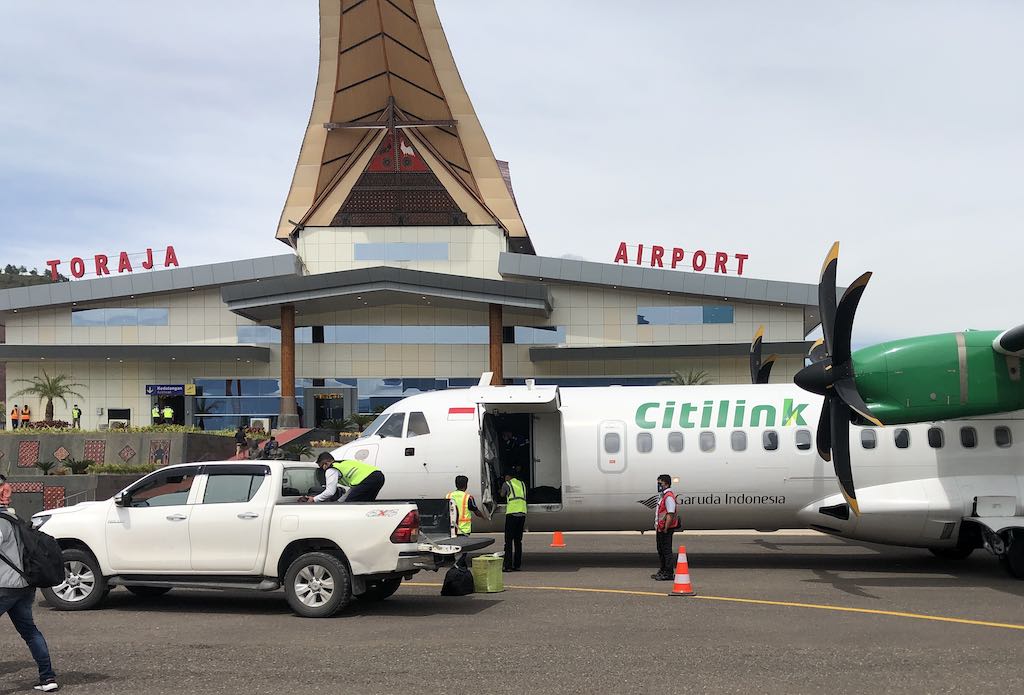
Tana Toraja has had its own airport since 2020: Toraja Airport, code TRT, at Buntu Kunik in Mengkendek, about half an hour south of Makale. It replaced the old Pongtiku airstrip — and if you see the code TTR quoted anywhere, that is the closed one.
The terminal roof is built as a tongkonan. I flew in from Makassar in December 2020, three months after it opened, on a Citilink ATR, and the flight takes about 55 minutes against a full day on the road.
But do not build a trip around it. The route has been suspended and relaunched several times for lack of traffic. It was operating with Citilink, Wings Air and Susi Air in late 2024, dropped during 2025, and relaunched by Wings Air on 15 October 2025. As of August 2026 it runs twice a week, one class, around Rp 1,000,000 to 1,300,000 one way. Check it exists for your dates before you count on it.
By road — what everyone actually does
Night buses leave Makassar around 20:00–21:00 and reach Rantepao between 05:00 and 07:00. Operators include Litha & Co, Bintang Prima, Metro Permai, Bintang Timur, Manggala Trans and Primadona. Fares run from about Rp 180,000 to 390,000; my friend, who makes the trip regularly, pays around Rp 200,000.
On duration, be sceptical of any single figure. Locals who do it often say 7 to 8 hours; published schedules say 9 to 11. Both are true depending on the operator, the departure time and the weather. The road follows the coast to Parepare, then climbs into the mountains, and the final section is winding and slow — heavy rain or darkness can add hours. It is not a motorway, whatever the word “Trans-Sulawesi” suggests.
A private car with driver is the comfortable alternative and lets you stop; it is also the sensible way to get around once you are there, since the sites are scattered across a wide area.
For the wider picture on domestic transport, see my guide on how to get around Indonesia.
Where to Stay in Tana Toraja
Rantepao is the base almost everyone chooses: it is the largest town, closest to the main sites, and has the restaurants. Makale, further south, is quieter and closer to the airport and to Buntu Burake.
One honest note first. I stayed at the Hotel Luta in Rantepao, and it is also what my Toraja friend recommends — the only place in this guide with that double endorsement. It is not listed on Booking, so there is no link for it here. Contact it directly.
The bookable options:
- Toraja Heritage Hotel — the best known in Rantepao, built in tongkonan style, gardens.
- Toraja Misiliana Hotel — a local institution, wide grounds, mid-range.
- Indra Toraja — central Rantepao, long-standing address.
- Toraja Lodge — mid-range, quiet.
- Sahid Toraja Hotel — chain comfort, on the Makale side.
- Pia’s Poppies Hotel — small, budget, walkable in Rantepao.
- Santai Toraja — guesthouse, the cheapest of the list.
For food in Rantepao, my friend sends people to Saruran. Toraja cooking is its own thing — expect pa’piong, meat and vegetables cooked inside bamboo tubes over a fire, and be aware that pork is everywhere here, which is unusual in Indonesia and is a direct consequence of the region being Christian.
If you are coming through Makassar, Swiss-Belhotel Makassar is where I stayed, and Meliá Makassar is the upper-end option on the Losari waterfront.

How Many Days, and When to Go
Three days is the minimum — one for the villages and tongkonan, one for the burial sites, one for the highlands and viewpoints. Four or five lets you walk between villages instead of being driven, and gives you the slack to attend a ceremony if one is happening.
Go in the dry season, May to October: the mountain roads are in better condition, the viewpoints actually have views, and the highlands are pleasantly cool rather than cold and wet. Bring a jacket regardless — at 1,000 m and above, Toraja mornings are nothing like the Indonesian coast.
Ceremonies cluster between June and September, after the harvest and in the dry weather, with July and August the busiest. Treat that as a tendency rather than a schedule: the date of a Rambu Solo’ is set by a family, not by a calendar.
I went in late December, in the rainy season, during a pandemic. It is the wrong time of year on every count. It is also the only reason I saw a household living with a postponed funeral rather than a ceremony arranged for visitors. Sometimes the wrong season shows you what the right one would not.
Practical Tips for Visiting Tana Toraja
- Hire a guide. Not for safety — Toraja is very safe — but because the sites are mute without one. A cliff with holes in it is a cliff with holes in it until somebody explains whose family is inside.
- Bring warm clothes. The highlands sit above 1,000 m and mornings are cold, especially at Lolai and Batutumonga before dawn.
- Carry cash. Site entrances, guides and small guesthouses are cash-only. ATMs exist in Rantepao and Makale, not beyond.
- Expect pork. Toraja is Christian and pork is on every menu — worth knowing if you are travelling on from Muslim-majority parts of Indonesia and had adjusted your expectations.
- Do not chase a Ma’nene’. It is not scheduled and it is not owed to you.
- At a ceremony, follow your guide. Bring nothing, never a chicken, and remember you are at a funeral.
- Allow slack on the road. Whatever the bus timetable says, the mountain section decides.
Is Tana Toraja Worth the Journey?
It is a long way from anywhere. There is no beach, no nightlife, and the nearest international airport is a full day away by road. If you want ease, Toraja is not it.
What it offers instead is one of the few places left where a genuinely different answer to the oldest human question is not performed for visitors but simply lived. The dead stay in the house until the family can afford to let them go. The cliffs hold generations. A buffalo is worth a car because a buffalo carries a soul.
You do not need to attend a funeral to understand that. I never did.
To plan the rest of the island, read my Sulawesi travel guide. For the wider country, see the Indonesia travel guide. And if you are heading to the north of the island afterwards, I finished a liveaboard diving cruise in the Lembeh Strait in April 2023.
Frequently Asked Questions About Tana Toraja
What is Tana Toraja famous for?
Its funeral rites. The Toraja keep their dead at home — sometimes for years — until the family can pay for a Rambu Solo’ ceremony, then bury them in cliff tombs watched over by carved effigies. The region is also known for tongkonan houses with boat-shaped roofs and for its mountain landscapes.
Is Tana Toraja a UNESCO World Heritage Site?
No. Tana Toraja has been on UNESCO’s tentative list since 6 October 2009, which means it is a candidate. It has never been inscribed. Many guides state otherwise; they are wrong.
Why do the Toraja keep their dead at home?
Because the funeral has not happened yet, and until it does the person is to makula’ — “a sick person” — rather than dead. The delay is financial: a Rambu Solo’ costs several hundred million rupiah before the sacrificial animals, so families wait until they can afford it. A year or more is common.
Is it ethical to attend a Toraja funeral?
Yes. Rambu Solo’ are large public events and guests raise the family’s standing, so visitors are genuinely welcome. Go through a local guide rather than turning up, follow their lead, and remember the family is grieving whatever the scale of the gathering.
What should I bring to a Toraja funeral?
Nothing. Foreign visitors are not expected to contribute, and the widespread advice to bring cigarettes, sugar or a small gift is mistaken. Toraja guests bring at least a pig, recorded as a debt to be repaid at a future funeral — a system you are not part of. Never bring a chicken: it is taboo.
What should I wear, and can I take photos?
No special dress is required, and photography is accepted — this is what Toraja hosts told me, and it is more relaxed than most online advice suggests. Dress respectfully as you would at any funeral, and take your cue from your guide on the day.
When is the Ma’nene’ ceremony?
There is no fixed date. Ma’nene’ is practised only in certain areas and by certain families, usually around every five years, and the family chooses when. The claim that it happens every August across Tana Toraja is not accurate. You cannot plan a trip around it.
How many days do you need in Tana Toraja?
Three at a minimum, four or five to do it properly — one day for villages and tongkonan, one for the burial sites, one for the highlands, and slack for a ceremony if one falls during your stay.
How do you get to Tana Toraja?
Via Makassar. Night buses take 7 to 11 hours to Rantepao for around Rp 200,000. There are also flights to Toraja Airport (TRT) at Buntu Kunik, about 55 minutes — but the route has been suspended and relaunched repeatedly and runs only twice a week as of August 2026, so check before relying on it. The old code TTR refers to the closed Pongtiku airstrip.
When is the best time to visit?
May to October, the dry season. Ceremonies concentrate between June and September, especially July and August, though dates are set by families rather than by a calendar.
Can you visit Tana Toraja without a guide?
You can, and it is perfectly safe. But the sites are scattered and largely unexplained on the ground, and a guide is the difference between looking at a cliff and understanding whose family is in it.
Is Tana Toraja safe?
Yes, very. The region is welcoming and used to visitors. The only real hazards are the mountain roads and the cold at altitude before dawn.