How to Get Around Bali: Grab, Drivers and Real Prices
By Blaise Jaeger · Updated September 2026 · I have lived in Indonesia since 2016 and I get around Bali by Grab, scooter and private driver every week.
Bali looks small on a map. It is about 150 kilometers from the western ferry port to the eastern coast, and you could convince yourself that everything is half an hour away. It is not. There is no train, no metro and only one bus network, cheap but slow, and the island runs on a handful of two-lane roads shared by scooters, tourist minivans, trucks, dogs and the occasional temple procession that closes the road entirely for twenty minutes.
So how you get around Bali is not a footnote to your trip. It decides how much of the island you actually see. This guide covers the four options that matter — Grab and Gojek, a car with a driver, a scooter, and boats — with the prices I paid, screenshots taken from my own Grab history, the neighborhoods where the apps are not allowed to pick you up, and honest journey times. All prices are in Indonesian rupiah with an approximate euro equivalent; the rupiah moves, so treat conversions as indicative.
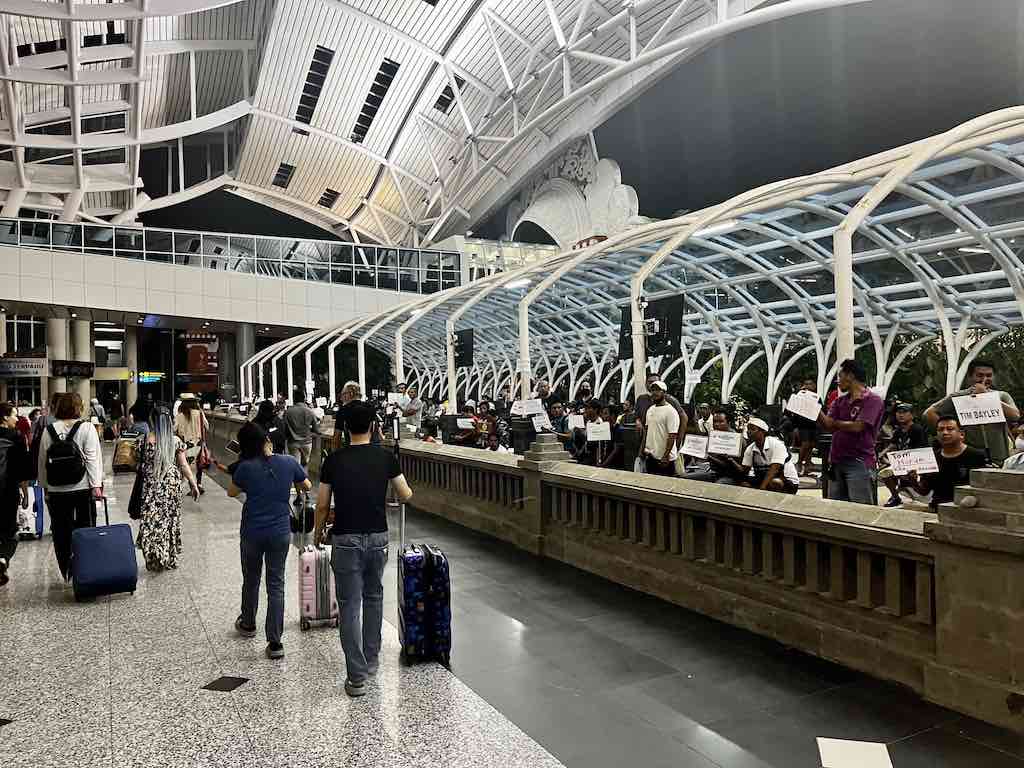
Getting Around Bali: What Actually Works
Here is the whole island in one table. Everything after this section is detail.
| How you move | Typical cost | Realistic range | Who it is for |
|---|---|---|---|
| GrabBike / GoRide (scooter taxi) | IDR 15,000–60,000 (~€0.80–3.30) | 1–20 km | One person, one small bag, short hops |
| GrabCar / GoCar | IDR 50,000–150,000 (~€2.80–8) | 1–25 km | Couples, luggage, rain, night |
| Blue Bird metered taxi | Roughly IDR 8,000/km after the flag drop | South Bali, Denpasar | No app, no data, no negotiation |
| Trans Metro Dewata bus | IDR 4,400 (~€0.25) a ride | Six routes around Denpasar | No hurry, tight budget |
| Car with a driver (full day) | IDR 800,000–900,000 (~€44–50), max 8 hours | The whole island | Day trips, families, multiple stops |
| Private airport transfer | From IDR 300,000 (~€16) | Airport to your hotel | Arriving with luggage or children |
| Scooter rental | IDR 70,000–100,000/day (~€4–5.50) | Anywhere you dare | Confident riders with a license |
| Self-drive car rental | ~€25–30/day | Anywhere | Honestly, almost nobody |
| Shared shuttle / minivan | IDR 100,000–250,000 (~€5.50–14) | Town to town | Solo budget travelers |
| Fast boat | IDR 175,000–400,000 (~€10–22) | Nusa islands, Lombok, Gilis | Anyone leaving the main island |
Public transport: one bus network worth knowing
Bali has public minibuses, called bemo, but they are not designed for visitors: the routes do not connect the places tourists actually go, and the frequencies are unpredictable.
The exception is Trans Metro Dewata, the red provincial buses that run six routes across Denpasar and the neighboring regencies. I took them in September 2026 and was pleasantly surprised. A ride costs IDR 4,400 (about €0.25), the buses are air-conditioned, and the Trans Metro Dewata app is very well made: it shows the nearest stop, the whole network, and each bus moving live on the map, with the time until the next one reaches you. Payment is cashless — QRIS or a contactless e-money card — so have one of the two ready before you board.
The catch is time. You wait for the bus, the routes wind through Denpasar rather than running straight between the beach towns, and the last departures leave in the early evening. If you are not in a hurry and your hotel is near a route, it is by far the cheapest way to get around; for a day with several stops, Grab is still faster.
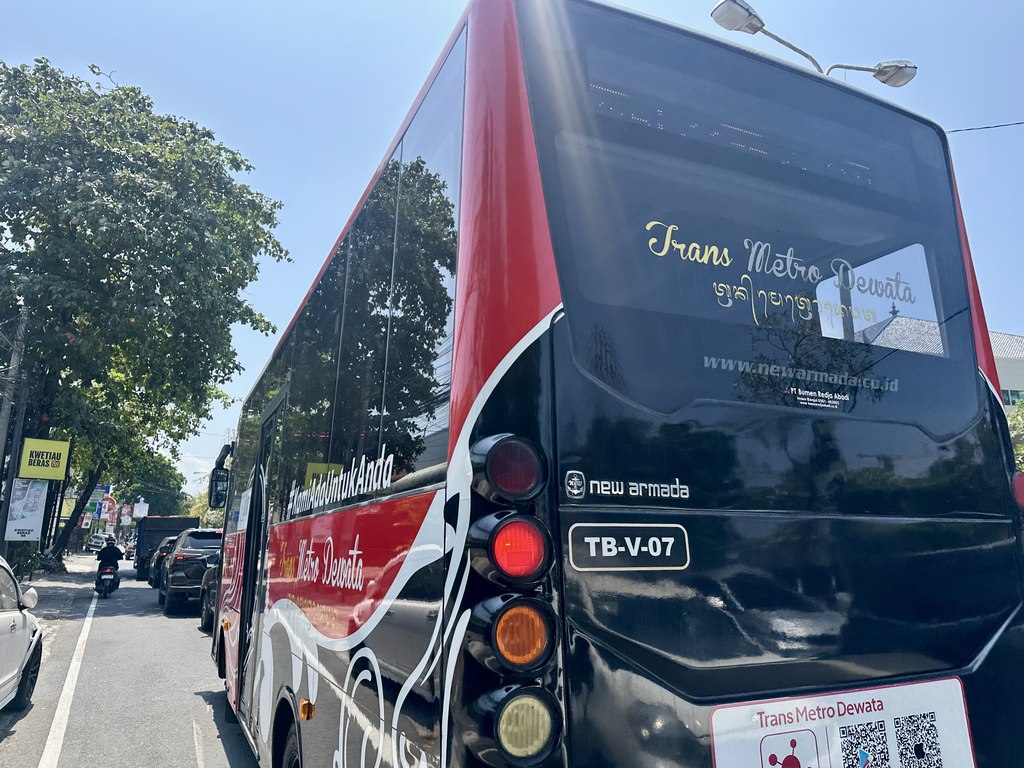
For most journeys a visitor makes, though, Bali’s public transport is Grab and Gojek, plus a very large informal economy of drivers with a car.
The rule that governs everything: time, not distance
If you remember one thing from this page, remember this: never ask how many kilometers, ask how many minutes. The airport to Ubud is 35 km and can take two hours. Seminyak to Sanur is 20 km and took me 42 minutes on a scooter at midday — a car would have taken over an hour. Average speed on the main tourist axes sits somewhere between 20 and 30 km/h, and drops further between 4 pm and 7 pm.
What I actually use, and when
- Short hop, alone, no bags → GrabBike. Nothing comes close on price or on time.
- Airport, rain, or two people with luggage → GrabCar, or a pre-booked transfer if I am arriving at night.
- A full day with three or more stops → a car with a driver, every time. This is where the apps fall apart.
- A week in one area → a rented scooter, if you can ride one.
Grab and Gojek: the Two Apps You Need
Grab and Gojek are the two ride-hailing applications used across Indonesia, and between them they solve about eighty percent of the getting-around problem in Bali. Download both before you leave home. They are free, they compete on price, and having the second one open when the first shows no drivers has saved me more than one evening.
What the two apps actually do
Both work like Uber: you enter a destination, the app shows a fixed price before you confirm, a driver accepts, you track them on the map. The price you see is the price you pay — no meter, no negotiation, no argument at the end. That single feature is why they changed transport in Bali.
Where Grab and Gojek work in Bali
Both applications work reliably in south Bali, in Denpasar, in Ubud and along most main roads. Coverage thins out as you go north and east: in Amed, Munduk or the west coast you can still get a ride, but you may wait fifteen minutes and there may be no driver at all for the return journey. In the mountains around Kintamani, do not count on it.
The practical consequence: the apps are a south Bali tool. Once you leave the triangle formed by the airport, Ubud and Sanur, you should be planning around a driver or your own scooter.
GrabBike or GrabCar: which one to pick
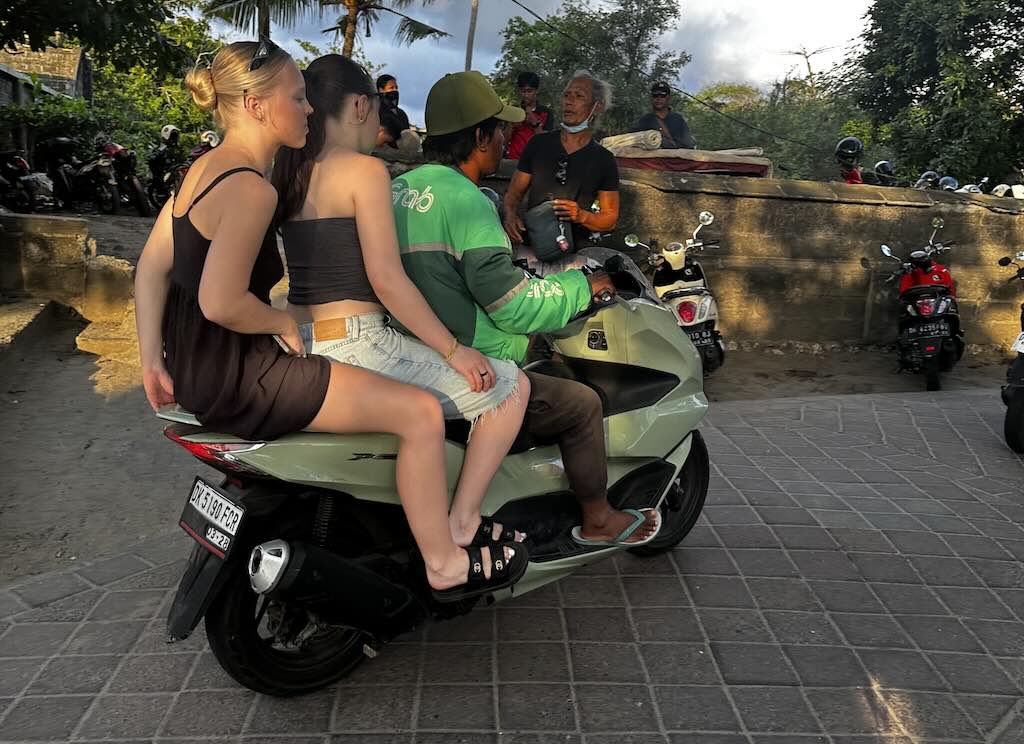
GrabBike is a scooter taxi. It is the cheapest option on the island, it slips through traffic that stops cars dead, and it comes with a spare helmet. The limits are obvious: one passenger, one small bag, no rain protection, and you need to be comfortable on the back of a motorbike in Balinese traffic.
GrabCar costs roughly twice as much and solves everything the bike does not: family, suitcases, air conditioning, rain, late nights. For a couple, the price difference per person is often small enough that the car wins by default.
Gojek: the same thing, occasionally cheaper
Gojek is the Indonesian competitor, and in Bali the two are close to interchangeable. The equivalents are GoRide for the scooter and GoCar for the car. My habit is to check both for anything over 10 km: the gap is usually IDR 5,000 to 15,000, occasionally more when one of them is running a promotion. Gojek’s driver pool is slightly stronger in Denpasar, Grab’s is stronger in the tourist south.
The real reason to have both is availability, not price. At 11 pm in Ubud, or during a downpour anywhere, one app will show “no driver found” while the other quietly assigns you a car.
How to pay
Three options, all of them fine: a registered bank card, the in-app wallet (GrabPay or GoPay, which you top up at any Indomaret or Alfamart), or cash in rupiah. Cash is still extremely common and every driver carries change, but keep small notes — handing over a 100,000 note for a 20,000 ride at 6 am is not appreciated.
Foreign cards are sometimes rejected during registration. If that happens, use the wallet: top it up with cash at a convenience store and the problem disappears.
Set both apps up before you land
Registration needs a phone number that can receive an SMS code. That is exactly what you do not have in your first hour in Indonesia if you have just swapped to a local SIM. Install both apps and verify your account at home, on your own number, then swap SIM or activate your eSIM on arrival. The account stays valid.
Grab at Bali airport
This used to be a fight. For years, app drivers were kept off airport property and you had to walk out to the main road with your suitcases. That has changed: Grab drivers are now allowed inside the airport grounds, and there is a dedicated Grab lounge and pick-up area a few meters’ walk from the arrivals exit. You order in the app as you would anywhere else, follow the signs, and wait in the shade.
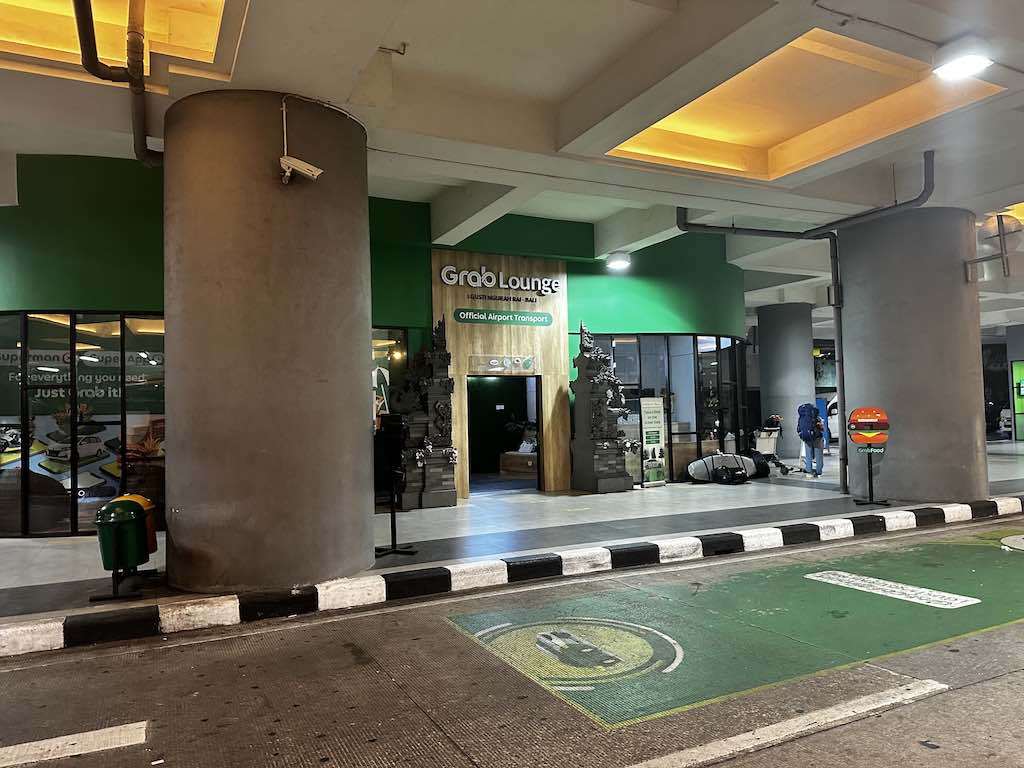
One caveat that has not changed: after midnight, when a delayed wide-body unloads three hundred exhausted passengers at once, the number of available cars collapses. If you land late, read my guide on getting to Bali and arrange a transfer in advance instead.
Heavy rain changes everything
This is the single most underrated fact about ride-hailing in Bali. When a proper tropical downpour starts, everyone switches from the bike to the car at the same moment. Demand for GrabCar triples in about ninety seconds, waiting times jump from four minutes to twenty-five, and prices climb with them. Meanwhile the bike drivers stop accepting rides because they do not want to soak a passenger.
The practical response is to order early — the moment the sky goes gray, not when the first drop lands — or to sit it out with a coffee. Balinese rain is violent and usually short.
What I Actually Paid: Real Grab Fares
Every guide tells you Grab is cheap. Very few show you a receipt. These are two rides I took this year, the prices I paid, screenshots taken from my own Grab history, unedited.
GrabBike: Seminyak to Sanur harbor, 20 km for €3.30
On 28 July 2026 at 12:01 pm I rode from Villa Banua in Seminyak to the Maruti Group fast boat terminal in Sanur Kaja, to catch a boat to Nusa Penida. 19.95 kilometers, 42 minutes, IDR 59,200 — about €3.30.
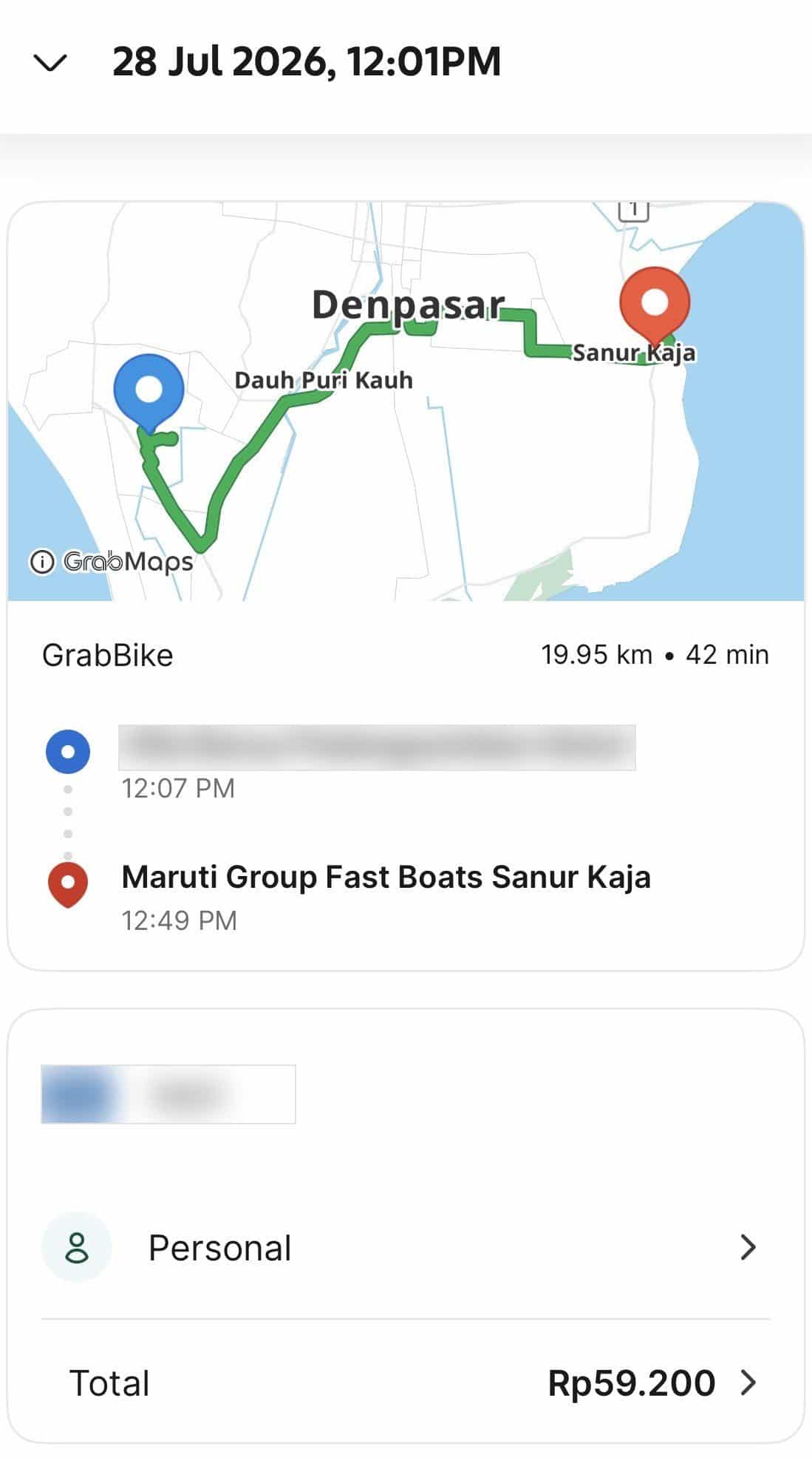
Two things stand out. First, the price: crossing the entire south of the island, harbor to beach club district, for the cost of a coffee in Europe. Second, the 42 minutes for 20 kilometers — and that is on a scooter, filtering through traffic, at midday rather than at rush hour. In a car, the same trip would have taken an hour or more.
GrabCar: across Denpasar to the domestic terminal at 5:30 am
On 19 June 2026 at 5:30 am I took a GrabCar from the west of Denpasar to the Domestic Departure Terminal at Ngurah Rai. 10.55 kilometers, 19 minutes, IDR 73,300 — about €4.10. I gave the driver five stars, which I mention because the rating system is what keeps the standard high.
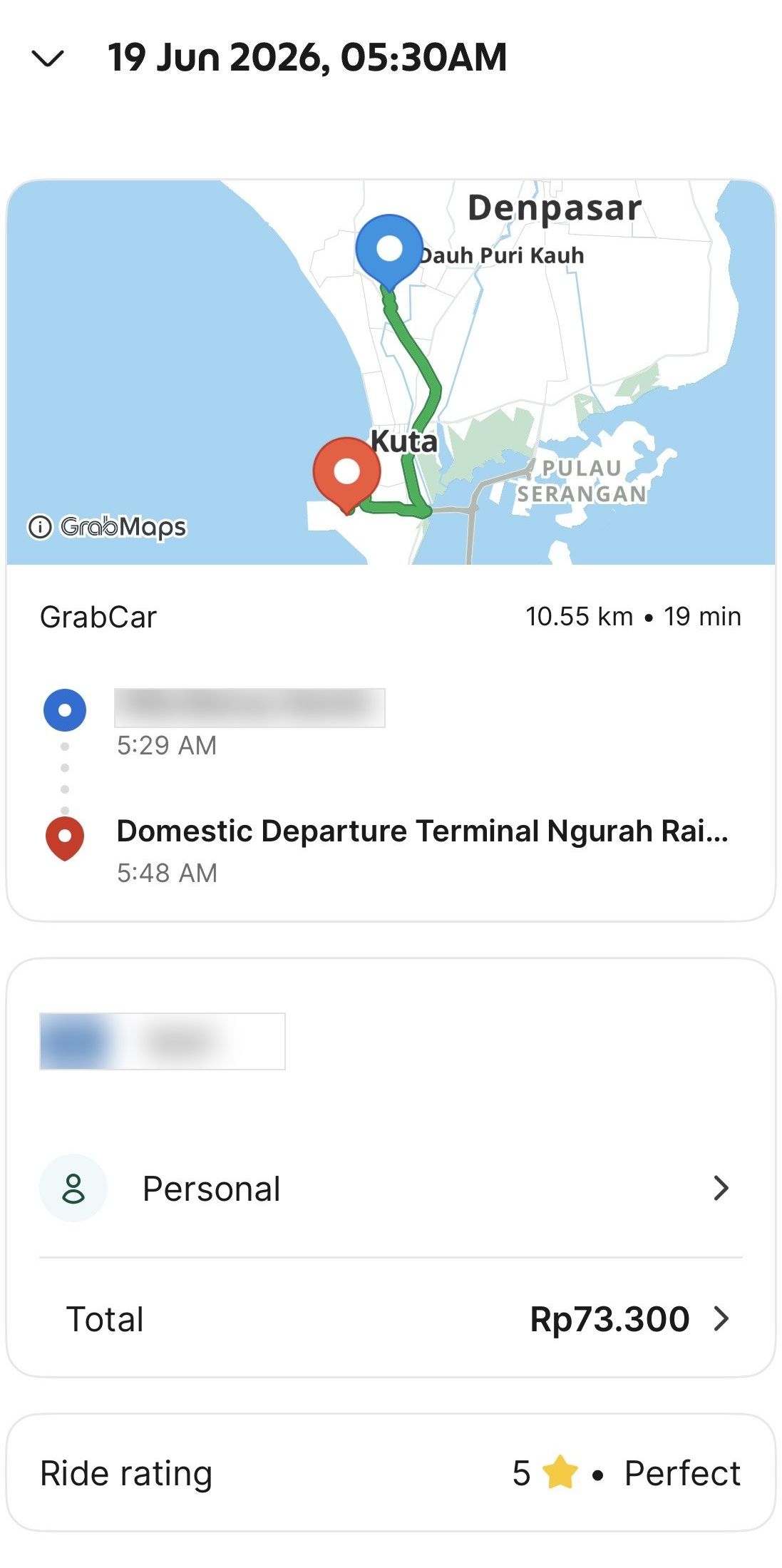
Note the time of day. At 5:30 am the roads are empty and the car covered 10.55 km in 19 minutes — an average of 33 km/h, which counts as fast here. The same journey at 5:30 pm would be forty-five minutes.
| Ride | Date and time | Route | Distance | Duration | Fare paid |
|---|---|---|---|---|---|
| GrabBike | 28 July 2026, 12:01 pm | Villa Banua, Seminyak → Maruti Group fast boats, Sanur Kaja | 19.95 km | 42 min | IDR 59,200 (~€3.30) |
| GrabCar | 19 June 2026, 5:30 am | West Denpasar → Domestic Departure Terminal, Ngurah Rai | 10.55 km | 19 min | IDR 73,300 (~€4.10) |
| Real fares from my own Grab account, not estimates | |||||
What that works out to per kilometer
Run the numbers and the picture is very clear. The bike came out at roughly IDR 3,000 per kilometer, the car at roughly IDR 7,000 per kilometer. Long rides are proportionally cheaper than short ones, because both apps apply a minimum fare: a two-kilometer bike hop rarely drops below IDR 10,000 to 15,000 whatever the distance.
What other typical rides cost
- Airport to Seminyak or Kuta by GrabCar: around IDR 90,000–140,000 (~€5–8)
- Within Ubud center by GrabBike: IDR 12,000–25,000 (~€0.70–1.40)
- Seminyak to Ubud by GrabCar: IDR 200,000–280,000 (~€11–15), one way, and no waiting
- A restaurant delivery within 5 km: IDR 10,000–20,000 (~€0.55–1.10) of delivery fee
Keep that Seminyak–Ubud figure in mind. It is the number that decides, later on this page, whether a private driver is worth it.
Where Grab and Gojek Are Not Allowed
Sooner or later you will book a ride, watch the driver approach on the map, and then get a message asking you to walk to a different corner. You have hit a no-pickup zone, and it is one of the few things about Bali transport that genuinely confuses visitors.
Why some neighborhoods ban app pickups
Before the apps arrived, local transport was organized by village-level cooperatives — groups of drivers with an agreed territory and agreed prices. Ride-hailing undercut them overnight. The compromise that emerged, street by street, is that in certain areas the local cooperative forbids Grab and Gojek from picking passengers up, while dropping off is generally tolerated.
You will see it signposted, often on hand-painted boards at the entrance to a street: no Grab, no Gojek, local transport only. It is not a scam and it is not aimed at you. It is a livelihood question, and it is a sensitive one locally.
Where you will run into it
The zones move, so no list stays accurate for long. In practice you are most likely to meet them in parts of Ubud, in several streets of Canggu, around the harbor at Padang Bai, and in a scattering of villages elsewhere. It is almost always specific streets rather than a whole town — you can usually be picked up 300 meters away.
What to do about it — and what not to do
- Walk 200 to 300 meters out of the zone before ordering. This solves it nine times out of ten.
- Message the driver a meeting point — a gas station, a minimarket, a junction. They know the local boundaries far better than you do and will suggest one.
- Take the local transport instead. Agree the price first; it will be higher than the app, and it is a perfectly reasonable way to spend IDR 50,000.
- Do not argue, film, or insist. Stay polite. Your driver is the one who takes the consequences, not you.
Grab and Gojek do not work on Nusa Penida at all
This one is absolute, and it catches people out constantly. There is no Grab and no Gojek on Nusa Penida, Nusa Lembongan or Nusa Ceningan. You can open the app, but no driver will ever accept. Transport on the three islands is scooter rental, a car with a driver arranged locally, or a pre-booked pickup at the harbor.
I live and work on Nusa Penida, so I keep a dedicated guide updated on that side: how to get around Nusa Penida, with real prices for scooters, drivers and boat tours. Arrange your transport before you board the boat, not on the pier.
Taxis in Bali: Blue Bird and the Others
Taxis still have their place, mostly when your phone is dead, your data has run out, or you are standing outside a restaurant at midnight and cannot be bothered to wait. The trick is knowing which taxi you are getting into.
Blue Bird: the only fully metered fleet
Blue Bird is the one company in Bali whose entire fleet runs on a meter, and the only taxi brand I will get into without discussing money first. The meter starts at a low flag drop and ticks up predictably; a fare from Seminyak to Kuta typically lands somewhere between IDR 60,000 and 100,000 (~€3.30–5.50), which is more than Grab and considerably less than an argument.
How to spot a real Blue Bird
Imitators exist, with similar blue paint and near-identical names. A genuine Blue Bird has the bird logo on the roof sign and on the doors, a driver in uniform with an ID card displayed, and a meter that is switched on without you asking. If the driver says the meter is broken, get out. That is the entire test.
Taxis at the airport
Inside the terminal there is an official taxi counter with fixed prices displayed by zone. You pay at the desk, you get a coupon, someone walks you to a car. It costs more than Grab — expect IDR 200,000 to 300,000 (~€11–16) for the southern beach areas — but it is instant, requires no app, and there is nothing to negotiate. After a twenty-hour flight that is worth something.
Unmetered taxis: agree the price first
Away from the airport, many taxis have no meter at all, or have one that is permanently “not working”. This is normal and not necessarily dishonest — it simply means the price is a negotiation. Agree the full fare out loud, in rupiah, before you sit down, and confirm it covers everyone in the car. A reasonable benchmark is roughly double what Grab quotes for the same route; if you are asked for four times, walk.
Hiring a Car with a Driver
This is how most people end up seeing Bali properly, and it is the option I recommend to every friend who visits. Not because it is the cheapest way to cover a kilometer — it is not, and I will show you the numbers — but because a full day of Balinese sightseeing is not a series of point-to-point rides. It is a car that waits for you.
How it works in practice
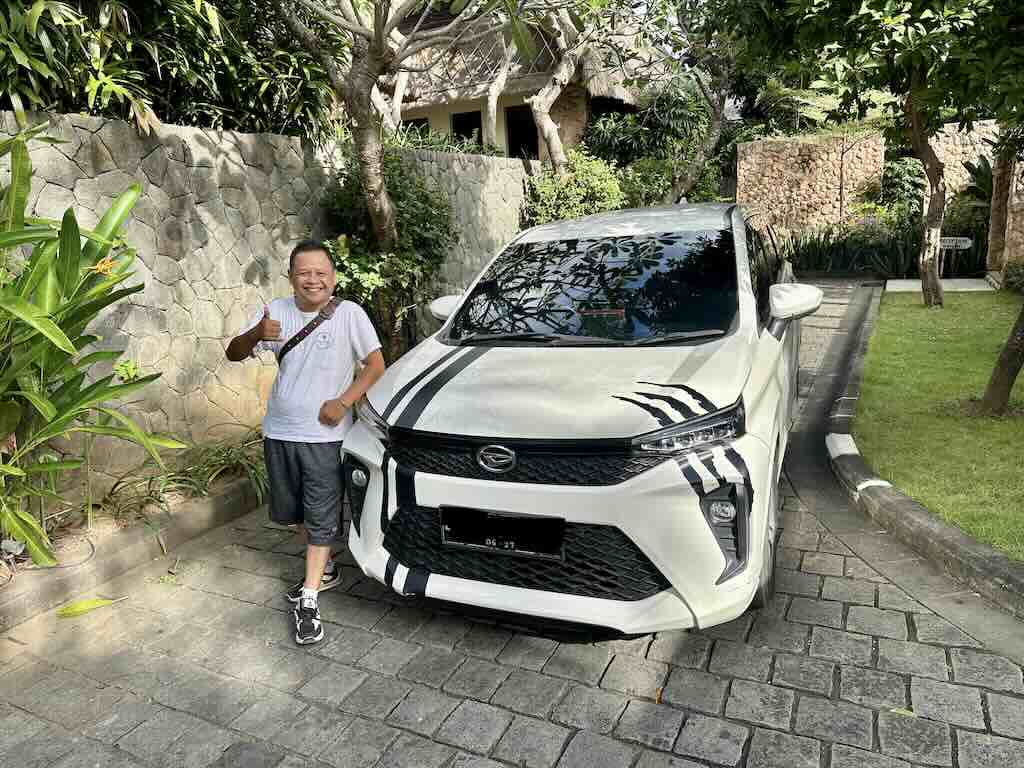
You book a car and a driver for the day, not a route. The driver picks you up at your hotel, you tell him roughly what you want to see, and he handles the rest: the order of the stops, the parking, the temple sarongs, where to eat lunch that is not a tourist trap, and the timing so you are not at the rice terraces at the worst hour. He waits while you walk, swim, eat and photograph.
A day is eight hours maximum. Beyond that you pay overtime, usually agreed on the spot, and it is normally modest — but tell your driver in the morning if you plan a long day, so he can plan his own.
Roy and Easy Journey Bali
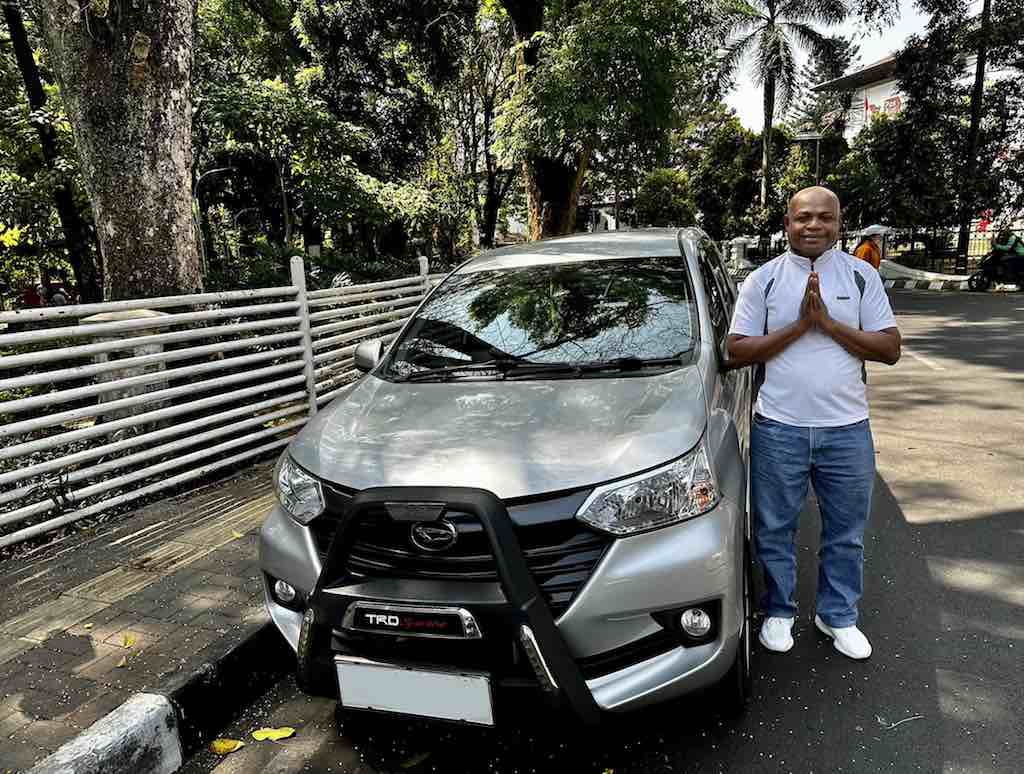
Roy is a Balinese friend of mine. He does not drive himself: he set up a company, Easy Journey Bali, and runs a pool of drivers he has personally selected and trusts. He takes the booking, confirms the price, and assigns the driver who fits the day — the coast, the mountains, a family with five bags, an early start for the volcano.
What a day costs: IDR 800,000 to 900,000
A full day with a car and a driver costs IDR 800,000 to 900,000, roughly €44 to €50, depending on the area you want to cover. A loop around Ubud and the rice terraces sits at the bottom of that range; a long run to the east coast, the north, or Kintamani and back sits at the top, because it is more fuel and more hours behind the wheel.
That price is for the car, not per person. Split between four people it is around €12 each for an entire day of transport. That is the calculation that matters.
What is included, and what is not
- Included: the car, the driver, air conditioning, and fuel. You are not asked to stop at a gas station and pay.
- Included: parking and the driver’s own meals — he pays for those himself, and on a multi-day trip he pays for his own accommodation too.
- Not included: your entrance tickets, your lunch, your temple donations. Bring cash for those.
- Not included: a tip. It is not expected. It is very much appreciated after a good day, and IDR 50,000 to 100,000 is normal.
Airport transfers from IDR 300,000
Separate from the day rate, a straight airport transfer starts at IDR 300,000 (about €16) for the southern beach areas, and costs more toward Ubud, the east coast and the north, simply because of the distance and the time. The driver waits in arrivals with your name on a sign, in an air-conditioned car, at a price agreed before you took off.
Yes, GrabCar would cost you €5 to €8 for the same trip. What you are buying for the difference is: a car that is definitely there at 1 am, a trunk that definitely takes three suitcases, and no walk to a pick-up point with a sleeping child on your shoulder.
How to book
Everything happens on WhatsApp, which is how Indonesia does business. Send Roy your flight number, arrival time and hotel name — or, for a day trip, the date and roughly what you want to see. He confirms the price and assigns a driver. The driver tracks your flight, so a two-hour delay is not your problem.
Tell him you come from My Best Places to Visit. If you get on well with your driver — and you probably will — ask Roy for the same one again later in the trip.
Is a driver cheaper than Grab? Honestly, no — and that is not the point
Let me be straight about this, because you would work it out yourself within a day. Per kilometer, Grab beats a private driver comfortably. My GrabCar to the airport cost €4.10. No driver on this island will do that trip for €4.10, and anyone who tells you otherwise is selling something.
The comparison changes completely once a day has more than two stops. Take a classic Ubud loop: rice terraces, a waterfall, a temple, lunch somewhere with a view, a sunset stop. By Grab that is five separate bookings, at IDR 60,000 to 150,000 each, with no waiting — the driver leaves the moment you arrive. At the waterfall parking lot, forty minutes later, you are standing in the sun refreshing an app that says no driver found. Add it up and you are near IDR 500,000 in fares plus an hour of your day lost waiting, versus IDR 850,000 for a car that never leaves.
| Your day | Best option | Realistic cost | Why |
|---|---|---|---|
| Airport to a hotel in the south, daytime, light bags | GrabCar | IDR 90,000–140,000 (~€5–8) | Unbeatable on a single point-to-point ride |
| Airport at 1 am, family, three suitcases | Private transfer | From IDR 300,000 (~€16) | Guaranteed car, trunk space, someone waiting |
| Dinner 4 km away and back | GrabBike or GrabCar | IDR 20,000–60,000 (~€1–3.30) | Two rides, no waiting involved |
| Full day, 4–5 stops around Ubud or the east | Car with driver | IDR 800,000–900,000 (~€44–50) | The car waits; no re-booking, no dead time |
| Mount Batur sunrise, 2:30 am pickup | Car with driver | IDR 800,000–900,000 (~€44–50) | No app driver takes a 2:30 am job in the mountains |
| Hotel change, Seminyak to Ubud, two people | GrabCar | IDR 200,000–280,000 (~€11–15) | One transfer, one price, no stops planned |
| Same transfer, but stopping at two temples on the way | Car with driver | IDR 800,000–900,000 (~€44–50) | Stops and waiting are exactly what a day rate buys |
Luggage, families and the trunk test
The other argument is physical. A GrabCar in Bali is often a small hatchback — an Avanza on a good day, something considerably smaller on a bad one. Two large suitcases and three passengers is already a gamble, and a family of five with the beach gear is simply not happening.
The photo below is a family of five — two adults, three children, five bags — loading into one of Roy’s cars. That is the whole argument in a single image.
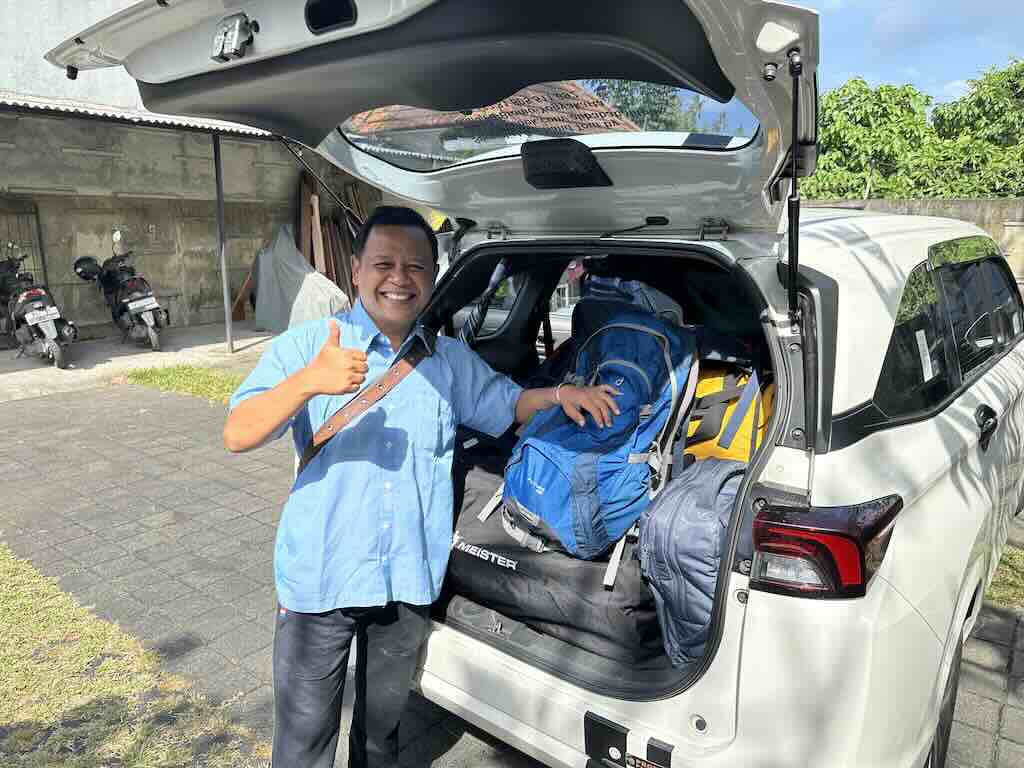
If you travel with small children, ask for a child seat when you book. It is not standard in Indonesia and it needs to be requested in advance.
What a good Bali driver actually does
The transport is the least interesting part of the service. A good driver reorders your itinerary so you reach the temple before the tour buses, tells you which waterfall has 400 steps and which has 40, knows the warung where the staff eat, and quietly handles the parking attendants and the entrance formalities. Roy’s drivers speak English and have been doing this for years.
Multi-day trips and overnight stays
For consecutive days across the island — say the east coast, then the north, then back through the center — you book the same driver for several days at the same daily rate. On those trips the driver pays for his own accommodation, so you are not budgeting a second hotel room. Discuss the route with Roy in advance so the days are balanced.
How to be a good customer
- Agree the itinerary the night before, not in the car at 9 am.
- Be on time. Your eight hours start when he arrives, not when you come downstairs.
- Invite him to eat with you if you like — many will politely decline and eat with the other drivers, which is completely normal.
- Pay in cash, in rupiah, at the end of the day, and say thank you properly. Word travels.
Renting a Car Without a Driver
You can rent a car and drive it yourself in Bali. I am going to spend this section explaining why I think you should not.
What it costs and what you need
A small self-drive car runs about €25 to €30 per day, less on a weekly rate. You need to be at least 21, to hold an International Driving Permit alongside your home license, and to be insured — check what the policy actually covers, because the standard cover is often thin. Fuel and any repairs are on you.
On paper that beats a driver: €28 against €45. On paper.
Why I don’t recommend it
Balinese roads are not difficult in the way European mountain roads are difficult. They are difficult because of everything happening on them at once. In one hundred meters you can meet a scooter carrying a wardrobe, a stray dog asleep in the lane, a family crossing without looking, a pothole deep enough to matter, and a truck overtaking into your side of the road.
- Traffic is dense and rules are advisory. Indicators mean whatever the driver wants them to mean.
- Roads are narrow, and often narrower than they look once both verges are parked up with scooters.
- You drive on the left, which for most European and American visitors is a real cognitive load on day one.
- Stray dogs, pedestrians and potholes are permanent hazards, and most rural roads are unlit at night.
- Parking is a job in itself in Ubud and Canggu, and you will be doing it alone.
Add it up and you spend your vacation concentrating on the road instead of looking at the island — for a saving of about €17 a day over a driver who knows every one of those roads. That trade is bad, and it is why I steer people away from self-drive. If you rent anyway, photograph the car from every angle before leaving the lot, keep your IDP on you, and never drive an unfamiliar mountain road after dark.
Renting a Scooter in Bali
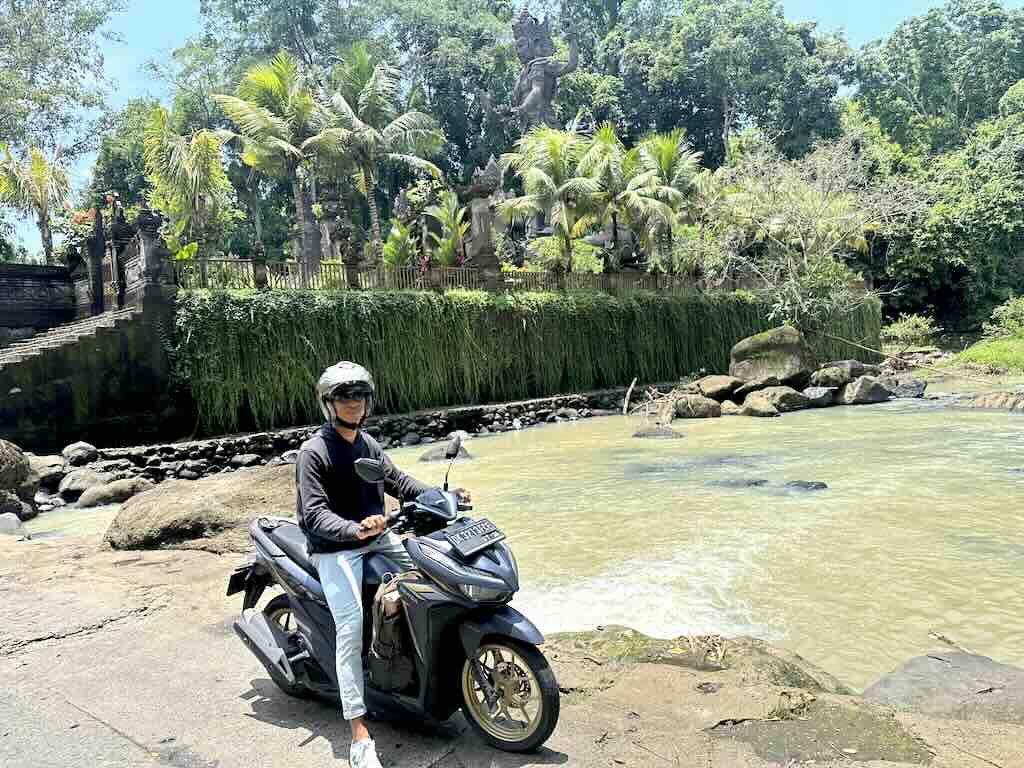
The scooter is how Bali really moves. Every local uses one, the whole island is built around them, and once you can ride one confidently you have complete freedom for less than the price of a cocktail per day.
What it costs
Expect IDR 70,000 to 100,000 per day, about €4 to €5.50, depending on the brand and the age of the machine. A tired 110cc Scoopy sits at the bottom of the range, a recent 150cc Vario or PCX at the top. Monthly rates are much cheaper — often the equivalent of ten to fifteen days — so if you are staying three weeks, negotiate by the month.
The license question — take it seriously
You need an International Driving Permit endorsed for motorcycles, on top of a home license that covers the same category. Plenty of shops will rent to you without checking anything. That is not the point: the point is that if you have an accident without the right license, your travel insurance will not pay, and medical evacuation from Indonesia is genuinely expensive.
Helmets are compulsory for rider and passenger, and this is one of the rules the police genuinely enforce. Roadside checks happen, mostly in the south and around Ubud, and they target foreigners without a helmet or without documents — carry your passport copy, your IDP and the rental papers.
Bikago: where I send people
Bikago has been renting scooters in Bali since 2014 and has eight pick-up points across the island. What makes them useful is delivery: they will bring the scooter to the airport, to your hotel, or to the harbors at Sanur, Padang Bai and Gilimanuk — which means you can step off a fast boat and ride away, rather than negotiating with whoever is standing on the pier.

Riding in Bali: what nobody tells you
- You ride on the left. The dangerous moment is not the straight road, it is the first junction after a distraction.
- Traffic flows rather than stops. Move predictably and slowly; sudden braking is what causes the accidents.
- The horn is a greeting, not an insult. A short beep means “I am beside you”.
- Never ride in flip-flops, ever in the rain. Wet Balinese asphalt plus a worn tire is how vacations end.
- If you have never ridden before, Bali is not where you learn. Take a GrabBike instead — same experience, someone else’s problem.
Minivans and Shared Shuttles
Between the €4 scooter and the €45 driver there is a middle layer that solo travelers use a lot: shared shuttles that run fixed routes between the main tourist towns.
How shared shuttles work
A minivan picks up at set times from set points and runs a fixed route — Kuta to Ubud, Ubud to Padang Bai, Ubud to Lovina, and so on. Prices land somewhere between IDR 100,000 and 250,000 (~€5.50 to €14) per person, and journeys take longer than a private car because of the pickups. For one person moving between two towns with a backpack, it is by far the cheapest sensible option.
Booking through 12Go
The simplest way to see what actually runs, and at what time, is 12Go. It aggregates shuttles, minivans, ferries and fast boats across Indonesia in one search, shows the real departure times, and lets you book without a phone call in Bahasa Indonesia. I use it mainly for combined journeys — a shuttle plus a boat to Lombok, for example, sold as one ticket.

Chartering a private minivan
For a group of six to twelve, the answer is a chartered minivan with a driver, priced by the day like a car but larger. Ask Roy — a group that size is exactly the case where splitting into two GrabCars stops making any sense, and where the per-person cost drops through the floor. For the bigger picture across the archipelago, see my guide to getting around Indonesia.
Getting Around by Boat: Nusa Penida, Lombok and the Gili Islands
Some of the best days of a Bali trip involve leaving Bali. Three harbors do almost all of the work: Sanur for the Nusa islands, Padang Bai for Lombok and the Gilis, and Gilimanuk for Java.
Sanur to Nusa Penida
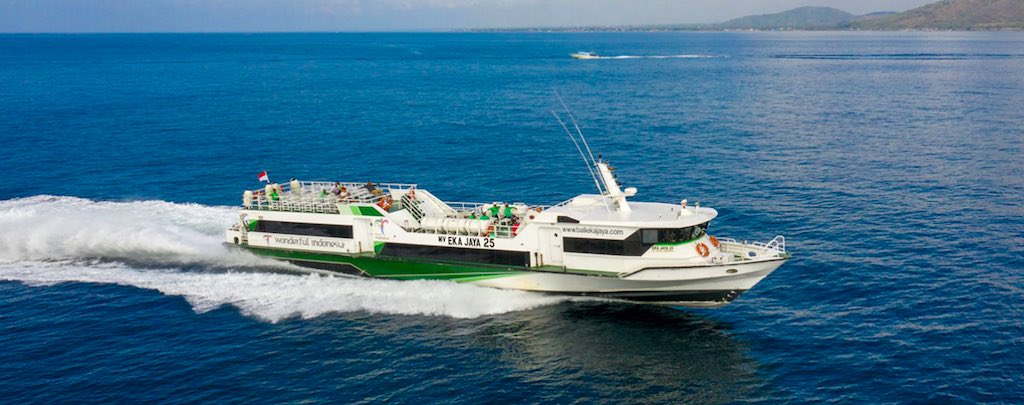
Fast boats to Nusa Penida leave from the modern terminal at Sanur and take 30 to 45 minutes, landing at Toyapakeh, Buyuk or Sampalan depending on the operator. Departures run from early morning to late afternoon, and the first boats are the ones to take: the sea is flattest before 10 am and you get a full day on the island.
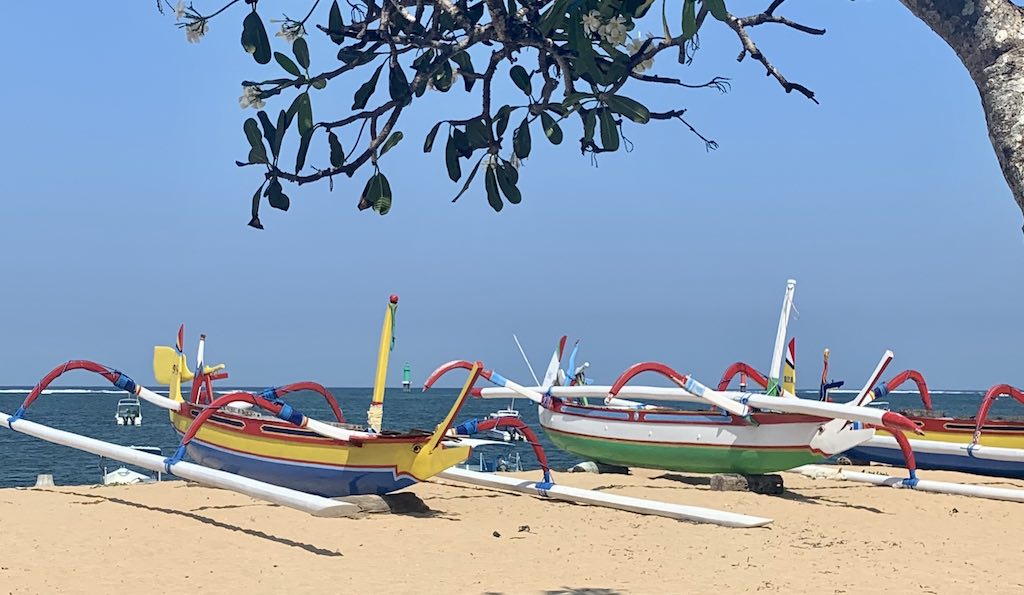
Getting to Sanur is the easy part: my GrabBike from Seminyak cost IDR 59,200 and took 42 minutes. Schedules, operators and prices change constantly, so I keep a separate guide updated: how to get to Nusa Penida from Bali. Remember that once you land there, the apps do not work — arrange your island transport in advance.
Padang Bai to Lombok and the Gili Islands
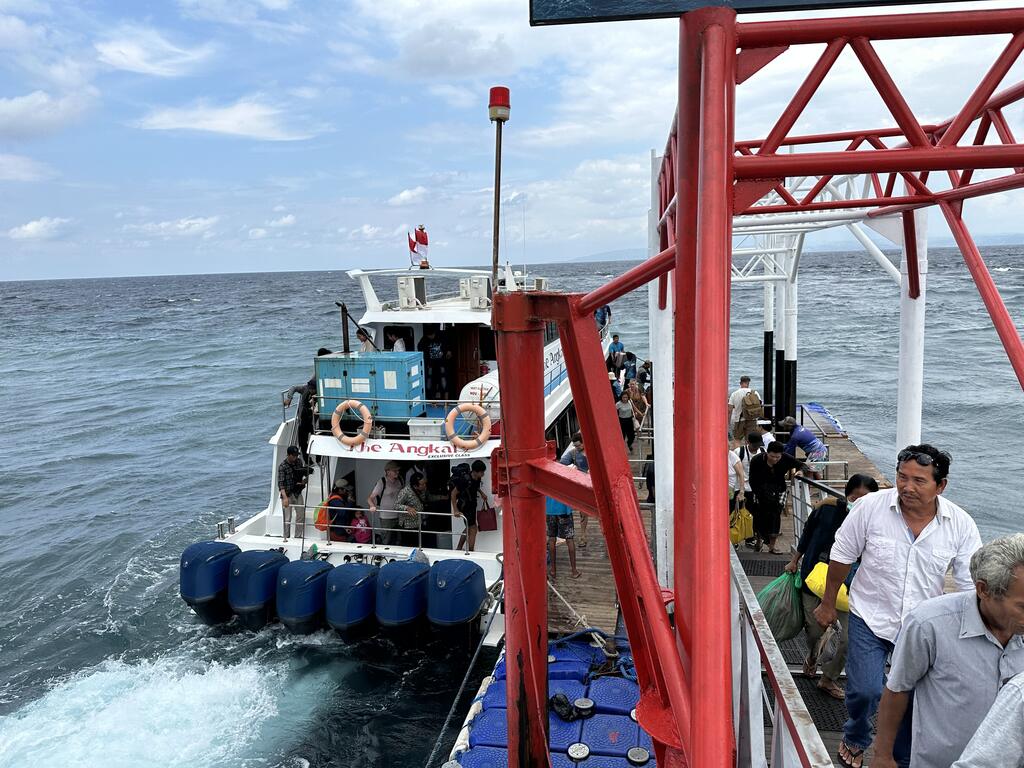
Padang Bai, on the east coast about two hours from the airport, is where fast boats leave for Lombok and the Gili Islands. The crossing takes 1 h 30 to 2 h 30 depending on the swell and on how many islands the boat serves. See my dedicated guide on getting to Lombok for operators and timings.
The slow public ferry to Lombok
There is also a public ferry between Padang Bai and Lembar on Lombok, running around the clock and taking about five hours. It is cheap, it takes vehicles, and it is used mostly by Indonesians. If you are seasick-prone, the crossing between December and February can be rough — a 40-minute domestic flight is the civilized alternative.
Gilimanuk to Java
At the far western tip of the island, the Gilimanuk to Ketapang ferry crosses to Java in 30 to 45 minutes and runs 24 hours a day. Be realistic about what comes before it: Gilimanuk is a four to five hour drive from the southern beaches, so this is an overland route to Java, not a day trip.
Boats, diving and the east coast
If you are here for the underwater life, most of it involves a boat and an early start: the wrecks of the east coast, the drift dives around the Nusa islands, the manta cleaning stations. See my guides to diving in Bali and to the best diving in Indonesia, and plan a driver for those days — dive centers are rarely where the apps are.
How Long Journeys Really Take
This is the table I wish someone had shown me on my first trip. Times are ranges, because Balinese traffic makes precision dishonest: the low figure is early morning or late evening, the high figure is a weekday afternoon or a ceremony day.
| Route | Approx. distance | Realistic driving time | Note |
|---|---|---|---|
| Airport → Kuta / Seminyak | ~10–13 km | 30–60 min | Short distance, unreliable traffic |
| Airport → Sanur | ~13 km | 30–50 min | Bypass most of the way |
| Airport → Uluwatu | ~22 km | 45–75 min | Slower on weekends |
| Airport → Canggu | ~20 km | 45–90 min | The last 3 km are the problem |
| Airport → Ubud | ~35 km | 1 h 15 – 2 h | The classic underestimate |
| Seminyak → Sanur harbor | ~20 km | 42 min by scooter, 1 h+ by car | My own GrabBike ride, at midday |
| Seminyak → Ubud | ~25 km | 1 h – 1 h 45 | Avoid 4 pm to 7 pm |
| Ubud → Mount Batur / Kintamani | ~30 km | 1 h – 1 h 30 | Sunrise trips leave at 2:30 am |
| Airport → Padang Bai | ~55 km | 1 h 45 – 2 h 30 | Allow extra before a boat |
| Airport → Amed / Karangasem | ~90–110 km | 2 h 30 – 3 h 30 | Beautiful coastal road, slow |
| Airport → Lovina (north coast) | ~90 km | 3 h – 3 h 30 | Over the mountains |
| Airport → Gilimanuk (Java ferry) | ~130 km | 4 h – 5 h | Plan it as a full day |
The rush hours that actually matter
Two windows wreck schedules: 7 am to 9 am around Denpasar, and 4 pm to 7 pm everywhere in the south. Sundays and Balinese ceremony days add their own chaos, including full road closures for processions that nobody can predict. If you have a flight or a boat, leave an hour earlier than feels reasonable.
The 2:30 am start: Mount Batur
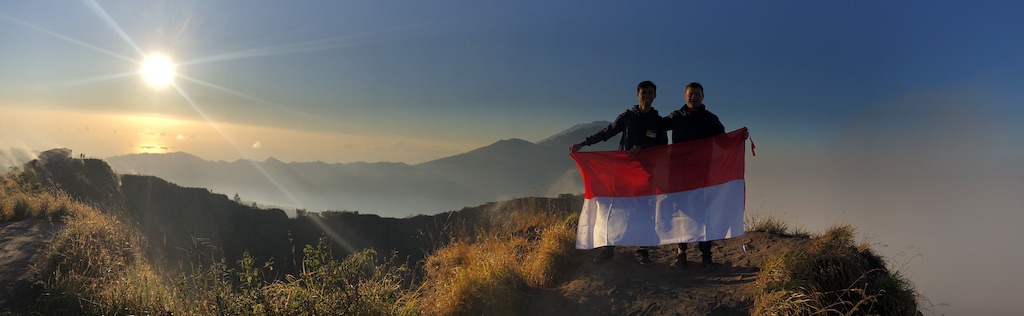
The sunrise trek up Mount Batur means a pickup between 2 am and 2:30 am from Ubud, and closer to 1:30 am from the southern beaches. No app driver will take that job, in the dark, in the mountains, with a return trip five hours later. This is a private driver day, period.
How many bases should you plan?
Given those times, resist the temptation to do everything from one hotel. Two or three bases over ten days — the south, then Ubud, then the east coast — cuts hours of driving out of your trip. My full Bali travel guide covers how long to spend in each region.
Google Maps and Navigation in Bali
Google Maps works well in Bali, better than in most of Indonesia, and it is what everybody here uses — including your Grab driver. A few habits make it far more useful.
Download the offline map before you land
In Google Maps, search Bali, then use “Download offline map”. The whole island is roughly 140 MB. Do it on hotel wifi. Cell coverage is good in the south and patchy in the mountains and along parts of the north and east coasts, and the offline map is what saves you when you are looking for a homestay on an unnamed lane with one bar of signal.
Use motorcycle mode
When you have a connection, Google Maps offers a two-wheeler routing mode in Indonesia. It uses narrow lanes and shortcuts that cars cannot take, and its time estimates for a scooter are genuinely close to reality. Real-time traffic is also reliable in the south — worth checking before you commit to a 5 pm departure.
Where Google Maps lies to you
Two failure modes. It will happily route a car down a lane that turns into a footpath, particularly around Ubud and the rice fields. And it consistently underestimates travel time on rural roads, because it does not know about the truck, the ceremony or the market. Add 20 to 30 percent to anything outside the south.
Addresses, and why you should send a pin
Balinese addresses are often approximate — a street name, a village, and “near the temple”. Many small hotels are not correctly placed on the map at all. The fix is universal here: ask your hotel for a Google Maps pin on WhatsApp and share that pin with your driver. Everyone in Indonesia navigates by shared pin, and it eliminates the entire class of “the driver cannot find you” problem.
Where to Stay Depending on How You Plan to Move Around
Where you sleep determines how much of your vacation you spend in a car. Four areas, four transport profiles.
Seminyak — if you want the apps to just work
Seminyak is the easiest base in Bali for getting around. It is 30 to 60 minutes from the airport, Grab and Gojek work everywhere, restaurants and beach clubs are walkable, and a scooter is optional rather than necessary.
Villa Banua is where the GrabBike ride at the top of this page started — a quiet villa a few streets back from the main strip, which is exactly the profile that works here: calm at night, three minutes from a main road where a driver can reach you. For something more polished on the beach itself, The Legian Seminyak puts you on the sand with sunset in front of you.
Sanur — if Nusa Penida is on your list
Sanur is flat, quiet, and the departure point for every fast boat to Nusa Penida. Grab and Gojek work normally, the beachfront path runs for several kilometers and is genuinely walkable, and you are 20 to 30 minutes from the airport without crossing Kuta. That GrabBike screenshot above ends at the Sanur pier for a reason.
The good boats leave early, and south Bali traffic at 7 am is the one variable you cannot control. Sleeping in Sanur the night before your crossing removes it entirely — you walk or take a five-minute Grab to the pier instead of gambling on an hour of traffic from Seminyak.
Maya Sanur Resort & Spa is on the beach a few minutes from the boat terminals, which is exactly what you want the morning of a crossing. InterContinental Bali Sanur Resort, the former Fairmont, is the bigger resort option on the same stretch of sand, with more space for families.
Ubud — if you plan on a driver
Ubud is the right base for the interior: rice terraces, waterfalls, temples and the volcanoes are all within a day’s loop. It is also where you will meet no-pickup zones, where the center is congested, and where a private driver pays for itself fastest.
Adiwana Bisma sits on Jalan Bisma, walkable into the center but far enough from the traffic to sleep. The Kayon Jungle Resort is deeper into the valley — spectacular, and precisely the kind of address where you want a driver rather than an app.
East Bali — if you have your own wheels
The east, around Karangasem, Amed and Candidasa, is the quietest and the most beautiful part of the island — and the one where Grab and Gojek become unreliable. Come with a scooter, or with a driver, and accept that you will not be ordering a car at 10 pm.
Bali Dive Resort Amed puts you on the black sand within walking distance of the dive sites, which removes the transport question entirely. Alila Manggis, near Candidasa, is a calm coastal base twenty minutes from Padang Bai and the boats.

Read More: Plan the Rest of Your Trip
Bali Travel Guide
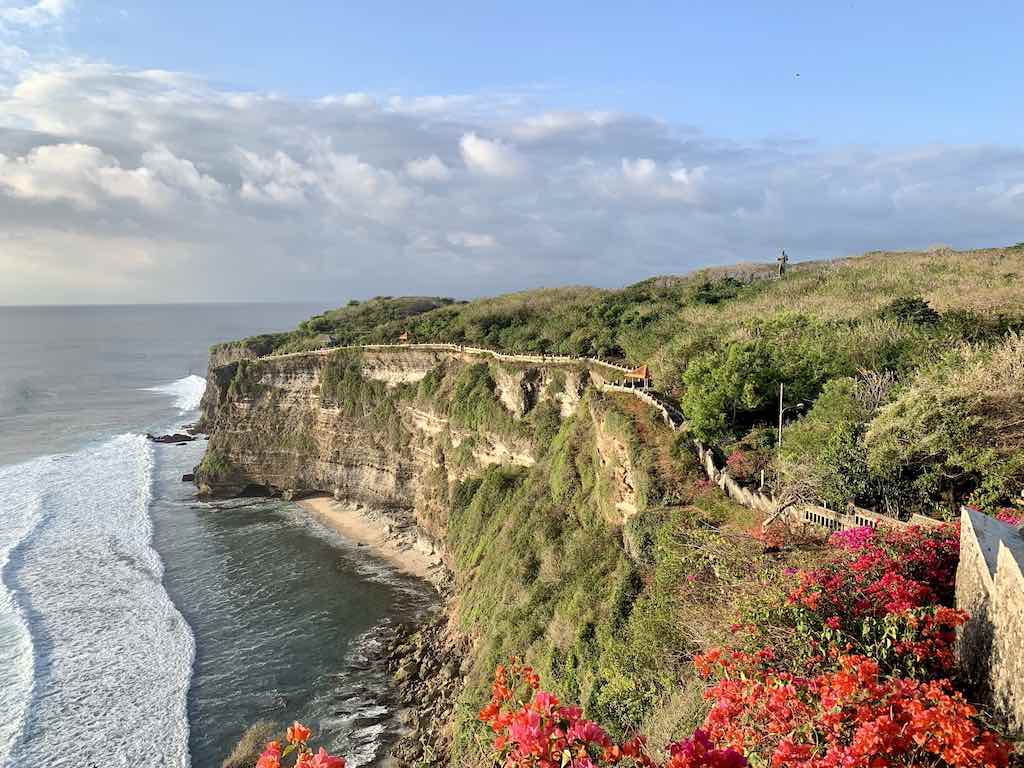
The best places to visit in Bali, region by region: beaches, temples, volcanoes, rice terraces, where to stay and how many days to plan.
How to Get to Bali
Visa on arrival, the All Indonesia Arrival Card, the tourist levy, flights and the real cost of every airport transfer option.
Nusa Penida Travel Guide
Discover where to stay in Nusa Penida, the island’s most beautiful beaches, top viewpoints, manta ray snorkeling, practical travel tips, and detailed itineraries to plan the perfect trip.
FAQ — Getting Around Bali
How much does a Grab bike cost in Bali?
Between IDR 15,000 and 60,000 (~€0.80 to €3.30) for almost any ride in south Bali. My longest recent GrabBike, Seminyak to the Sanur fast boat terminal, was 19.95 km and cost IDR 59,200. Short hops within Ubud or Seminyak are usually IDR 12,000 to 25,000.
Is Grab cheaper than a taxi in Bali?
Yes, consistently. A metered Blue Bird typically costs 30 to 60 percent more than a GrabCar for the same route, and an unmetered taxi can ask double or more. The other advantage is that Grab shows a fixed price before you confirm, so there is nothing to negotiate.
Does Grab work at Bali airport?
Yes. Grab drivers are now allowed onto airport property and there is a dedicated Grab lounge and pick-up point a few meters’ walk from the arrivals exit. Availability drops sharply after midnight, so if you land late, pre-book a transfer instead.
Grab or Gojek in Bali: which one is better?
Neither, really — install both. Prices are within IDR 5,000 to 15,000 of each other on most routes, and the real benefit of having both is availability: when one shows no drivers, at night or during rain, the other often does.
Why won’t Grab pick me up in Ubud or Canggu?
You are in a no-pickup zone. Local transport cooperatives forbid Grab and Gojek from collecting passengers in certain streets, usually marked with hand-painted signs. Drop-offs are generally fine. Walk 200 to 300 meters out of the zone, or agree a meeting point with your driver — and stay polite about it, it is a sensitive local issue.
Does Grab work on Nusa Penida?
No. Grab and Gojek do not operate on Nusa Penida, Nusa Lembongan or Nusa Ceningan. Transport there is scooter rental, a locally arranged car with driver, or a pre-booked harbor pickup. Sort it out before you get on the boat.
How much does a car with a driver cost per day in Bali?
IDR 800,000 to 900,000, about €44 to €50, for a maximum of eight hours, depending on the area covered. Fuel is included. The driver pays for his own meals, and his own accommodation on multi-day trips. Entrance tickets and your own lunch are not included.
Is a private driver worth it compared to Grab?
It depends entirely on the day. For a single point-to-point ride, Grab is cheaper and nothing beats it — my GrabCar to the airport cost €4.10. For a full day with four or five stops, or with a family and luggage, the private driver wins: the car waits for you, there is no re-booking between stops, and no risk of standing at a waterfall parking lot with no driver available.
Can I drive in Bali with my own license?
You need an International Driving Permit alongside your national license, endorsed for motorcycles if you rent a scooter. Without it, your insurance will not cover an accident. Car rental also requires a minimum age of 21. Traffic drives on the left.
How much is scooter rental in Bali?
IDR 70,000 to 100,000 per day (about €4 to €5.50), depending on the model and its age, and significantly cheaper by the month. Helmets are compulsory. Companies like Bikago deliver to the airport, your hotel, or the harbors at Sanur, Padang Bai and Gilimanuk.
How long does it take to get from Bali airport to Ubud?
Between 1 h 15 and 2 hours for around 35 kilometers. It is the journey visitors underestimate most. Leaving between 4 pm and 7 pm puts you at the top of that range or beyond, so if you land in the late afternoon, consider sleeping in the south and moving the next morning.
Can you get around Bali without renting anything?
Yes, easily, if you stay in the south or in Ubud. Grab and Gojek cover the whole tourist south, and a private driver handles the excursion days. You only really need your own scooter if you are basing yourself in the east, the north, or on the Nusa islands — where the apps stop working. On a tight budget and with time to spare, the red Trans Metro Dewata buses cost IDR 4,400 a ride on six routes around Denpasar.
DRIVER A BALI AFFIDABILE.
GRAZIE
Olá Alberto 🙂
Por favor, contacte o Roy pelo WhatsApp (enviei o seu número por e-mail).
É uma pessoa de confiança que pode organizar a estadia dos turistas em Bali e providenciar transfers de acordo com as necessidades de cada um.
Tenha uma ótima viagem e desfrute da sua estadia em Bali!
Blaise