Karangasem, Bali: Temples, Diving, Sidemen & Amed
By Blaise Jaeger · Updated 2 August 2026
Karangasem is the regency that occupies the eastern tip of Bali, from the slopes of Mount Agung down to a coastline of black volcanic sand. It is where the island’s last kingdom built its water palaces, where the Balinese climb to their holiest temple, and where the diving is the best on Bali.
It is also, by Bali standards, quiet. Two hours from the airport is enough to filter out most of the crowd: no beach clubs, no traffic jams outside the odd market town, and villages where the rice cycle still sets the rhythm of the week.
I have lived in Bali since 2020 and I drive east several times a year — to dive Tulamben, to walk the Sidemen valley, to eat at a warung in Amlapura where nobody speaks English. This guide covers how to get there from the south, what is genuinely worth your time, where to stay by area, and how long to give it.
Written from Bali: I have lived on the island since 2020 and opened Nusa Penida’s first PADI dive centre in 2017. Every site, driving time and price below is one I have checked on the ground, not copied from a press kit. Prices are 2026 and given in euros.
Karangasem Travel Guide: Quick Navigation
- Where is Karangasem and how to get there
- Best things to do in Karangasem
- Temples and royal water palaces
- Diving and snorkelling
- Sidemen: rice terraces, a waterfall and silver
- The coast: Amed, Candidasa, Padang Bai
- Where to stay in Karangasem
- How many days you need
- Practical tips
- Frequently asked questions
Where Is Karangasem? And How to Get There
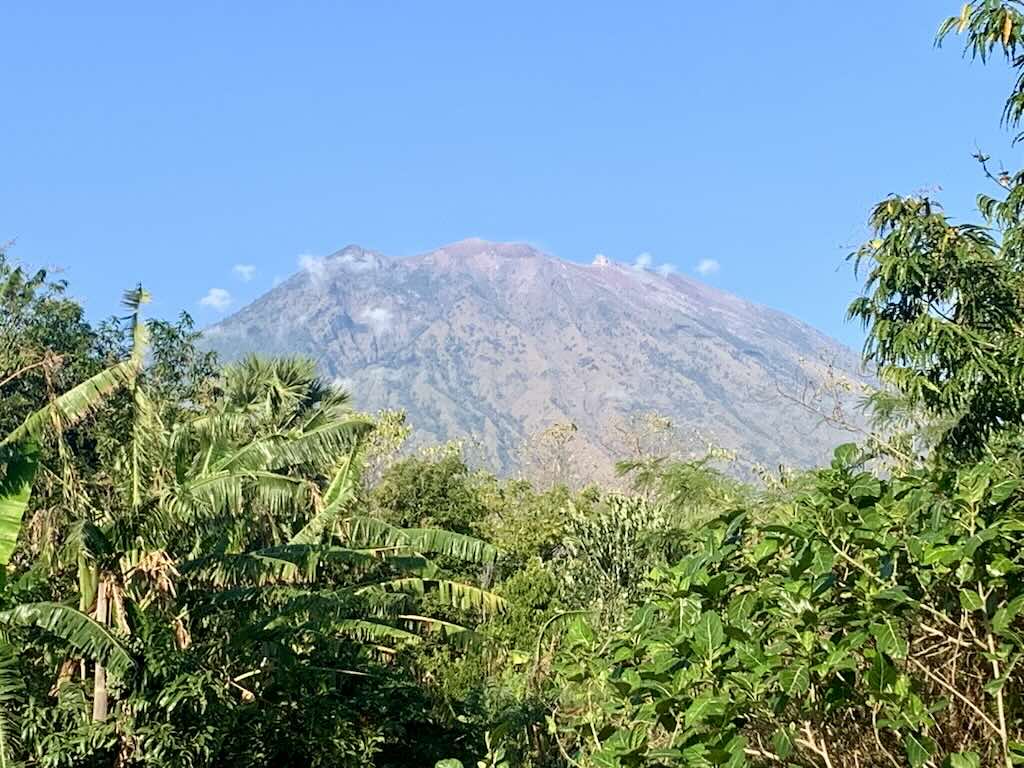
Karangasem is the easternmost of Bali’s eight regencies, with Amlapura as its administrative capital. It stretches from Mount Agung — the island’s highest volcano at 3,031 m — down to the Lombok Strait, and covers most of what people mean when they say “East Bali”.
There is no airport and no useful public transport. Everything starts with a drive from the south, and that drive is longer than the map suggests: the coast road out of Denpasar is slow, and the mountain roads inland are narrow.
| From | To | Distance | Typical drive |
|---|---|---|---|
| Kuta / airport | Candidasa | 65 km | 2 h – 2 h 30 |
| Kuta / airport | Amed | 105 km | 3 h – 3 h 30 |
| Seminyak | Sidemen | 60 km | 2 h – 2 h 30 |
| Ubud | Tirta Gangga | 50 km | 1 h 30 – 2 h |
| Ubud | Amed | 65 km | 2 h – 2 h 30 |
| Sanur | Padang Bai | 40 km | 1 h – 1 h 15 |
| Amed | Tulamben | 15 km | 25 min |
Coming from Kuta, Seminyak or the airport
A private driver is the standard solution and costs €35–45 for a full day, including fuel and waiting time. For a one-way transfer, expect €25–35 depending on where you are going. Any hotel will arrange it, and it is cheaper booked locally than online.
Ride-hailing apps work for the outbound leg but not always for the return — coverage thins out east of Candidasa, and in some villages the local transport associations discourage them. If you are heading to Amed or Tulamben, book a driver both ways or plan to rent a scooter once you are there.
Can you do it as a day trip from Kuta? You can, but it is a poor trade: five to six hours in a car for four or five hours on the ground. If your only option is a day trip, pick one cluster — Tirta Gangga plus Taman Ujung, or Besakih plus Sidemen — and accept that you will not see the coast. Karangasem rewards at least one night. Full details on airport arrival and visas are in my guide on how to get to Bali.
Getting around once you are there
Distances inside the regency are short but slow. A scooter (€5–7 a day) is ideal along the coast between Candidasa, Amed and Tulamben, where the road hugs the sea. For the temple circuit inland — Besakih, Lempuyang, Tirta Gangga — a driver is worth it: the climbs are steep, the parking chaotic, and Lempuyang in particular involves a shuttle from the lower car park.
Fill up when you can. Petrol stations are sparse north of Amed; villages sell fuel by the litre in glass bottles, which works fine. My full breakdown of scooters, drivers and apps is here: getting around Bali.
Best Things to Do in Karangasem
Karangasem packs an unusual range into a small area: two royal water palaces, Bali’s mother temple, its best wreck dive, a volcano and a valley of rice terraces. Here is the shortlist with what each one actually costs you.
| Site | What it is | Time needed | Entrance (approx.) | Best time |
|---|---|---|---|---|
| Tirta Gangga | Royal water garden, stepping stones, koi ponds | 1 h 30 | €2.50 | Early morning |
| Taman Ujung | Water palace, lagoons, sea views | 1 h 30 | €3 | Late afternoon |
| Besakih | Bali’s mother temple, on Agung’s slopes | 2 h | €4 incl. sarong | Before 10 am |
| Lempuyang | “Gates of Heaven”, 1,700 steps above | Half day | €5 + shuttle | Sunrise, queue after 8 am |
| Tulamben | USAT Liberty wreck, shore dive | Half day | €55–75 for 2 dives | Sunrise for the wreck alone |
| Amed | Snorkelling, black sand, fishing boats | 1–2 days | Free | Morning, flat sea |
| Sidemen valley | Rice terraces, weaving, silver, waterfall | Full day | Free–€3 | Any time |
| Goa Lawah | Bat cave temple on the coast road | 45 min | €2 | On the way east |
| Bias Tugel / Blue Lagoon | Small white-sand coves near Padang Bai | Half day | €1 parking | Morning |
| Gili Tepekong / Mimpang / Biaha | Three dive islets off Candidasa | Half day | €70–90 for 2 dives | Apr–Nov |
If you only have one day, the classic pairing is Tirta Gangga in the morning and Taman Ujung in the afternoon — they are twenty minutes apart and tell the same story of a kingdom that spent its last decades building gardens. If you have two, add the coast.
Temples and Royal Water Palaces
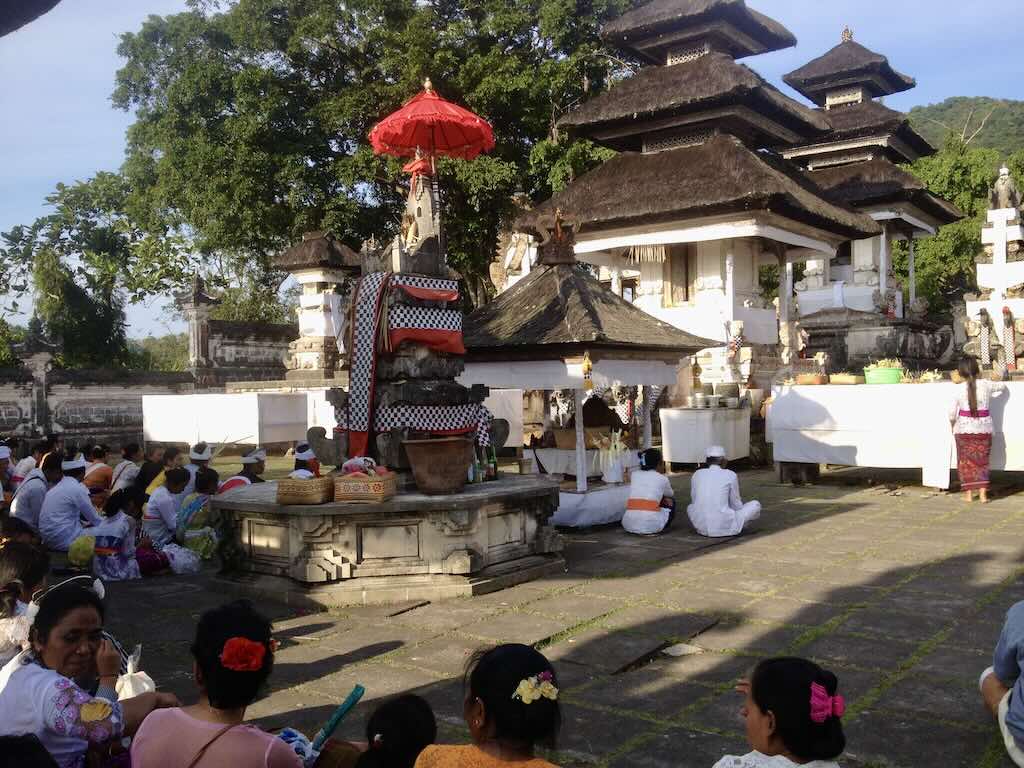
Karangasem was the last Balinese kingdom to keep its independence, and the last to spend money like one. Two of its water palaces survive, alongside the island’s most sacred temple and its most photographed gate. All of them are active places of worship: a sarong and sash are required, shoulders covered, and they are lent at every entrance.
Besakih, the Mother Temple
Pura Besakih sits at 1,000 m on the south-western slope of Mount Agung and is the holiest site in Balinese Hinduism — a complex of twenty-three temples, the oldest dating to the 14th century, arranged up the mountainside on seven terraces. When Agung erupted in 1963 and killed more than a thousand people, the lava flows stopped a few metres short of the main sanctuary. The Balinese have not forgotten it.
Since 2023 a new visitor centre at the bottom handles tickets and a shuttle, which has cut out most of the “compulsory guide” hustling the site was notorious for. Entry is around €4 including sarong hire. Go before 10 am: the mountain clouds over almost every day by late morning, and with it the view that is half the point of coming.
Non-worshippers cannot enter the inner courtyards, so what you get is the ascent, the gates and the terraces — which is plenty. Allow two hours including the shuttle.
Lempuyang and the Gates of Heaven
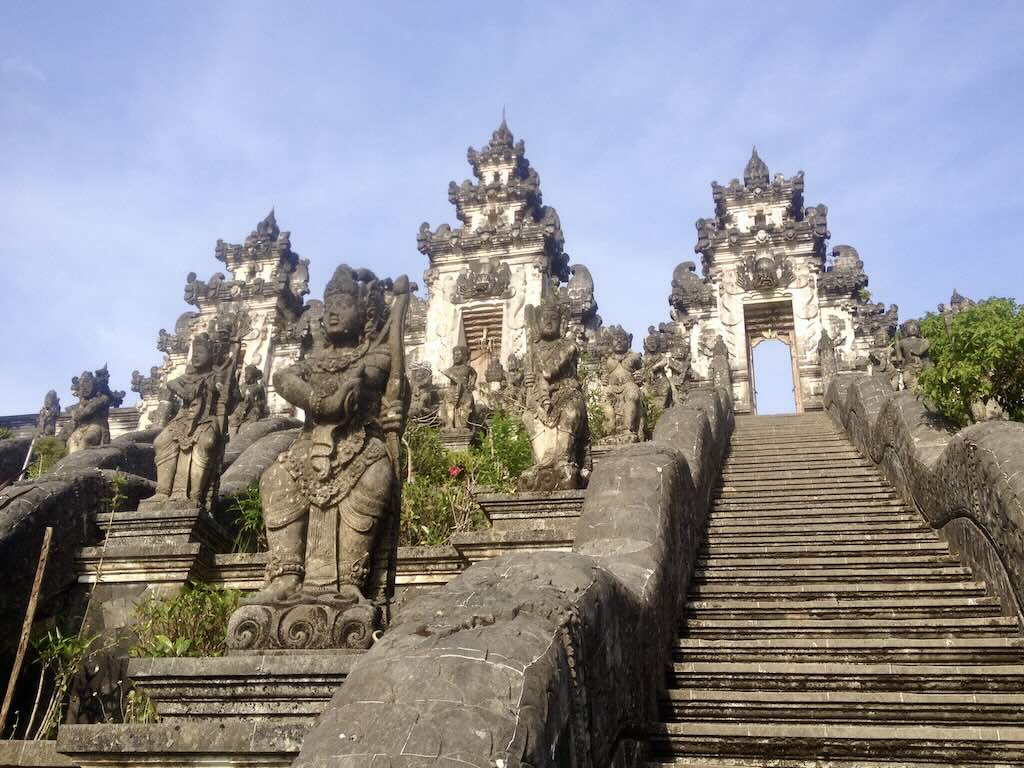
Pura Lempuyang Luhur is one of Bali’s six holiest temples, spread over seven sanctuaries climbing Mount Lempuyang. The lowest one, Pura Penataran Agung, has the split gate that frames Mount Agung — the “Gates of Heaven” that made the site famous.
Two things worth knowing before you go. First, the mirror-lake reflection you have seen online does not exist: it is a photographer holding a piece of glass under a phone, and there is an official queue for it that regularly runs two to three hours. Second, the actual summit temple is 1,700 steps above, takes two hours each way, and almost nobody does it — which is exactly why it is the better half of the visit.
Arrive at opening, around 6 am, or skip the gate entirely and climb. On a clear morning the view over the strait to Lombok is worth more than the photo.
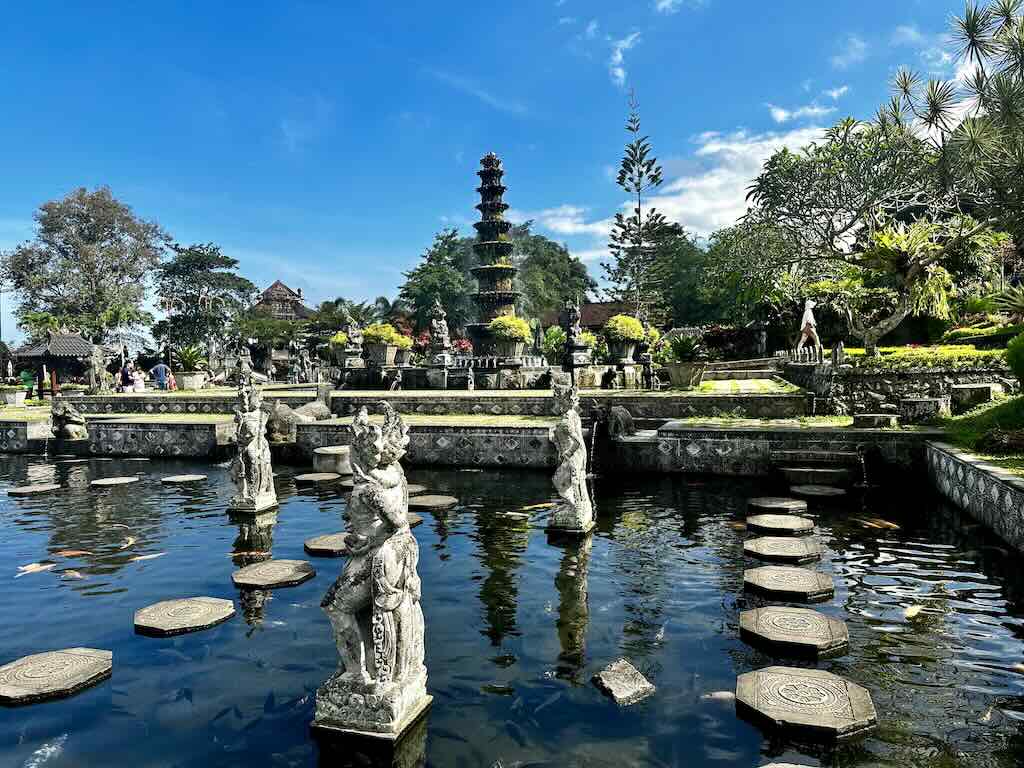
Tirta Gangga, the water garden
Tirta Gangga — “water of the Ganges” — was built in 1946 by Anak Agung Anglurah Ketut Karangasem, the last raja, who designed it himself. A spring feeds a tiered fountain and a series of pools laid out around stone statues of Hindu deities, with the famous line of stepping stones crossing a pond thick with koi.
It is small — an hour and a half is enough — and it is best early, both for the light and because the stepping stones become a photo queue by mid-morning. Entry is around €2.50; a bag of fish food costs a few cents and is the surest way to make the koi follow you across.
The gardens above the pools are almost always empty, and the spring itself is still used for temple water. Nearby, the Maha Gangga valley is a fifteen-minute drive and one of the quietest walks in the regency.
Taman Ujung, the palace on the water
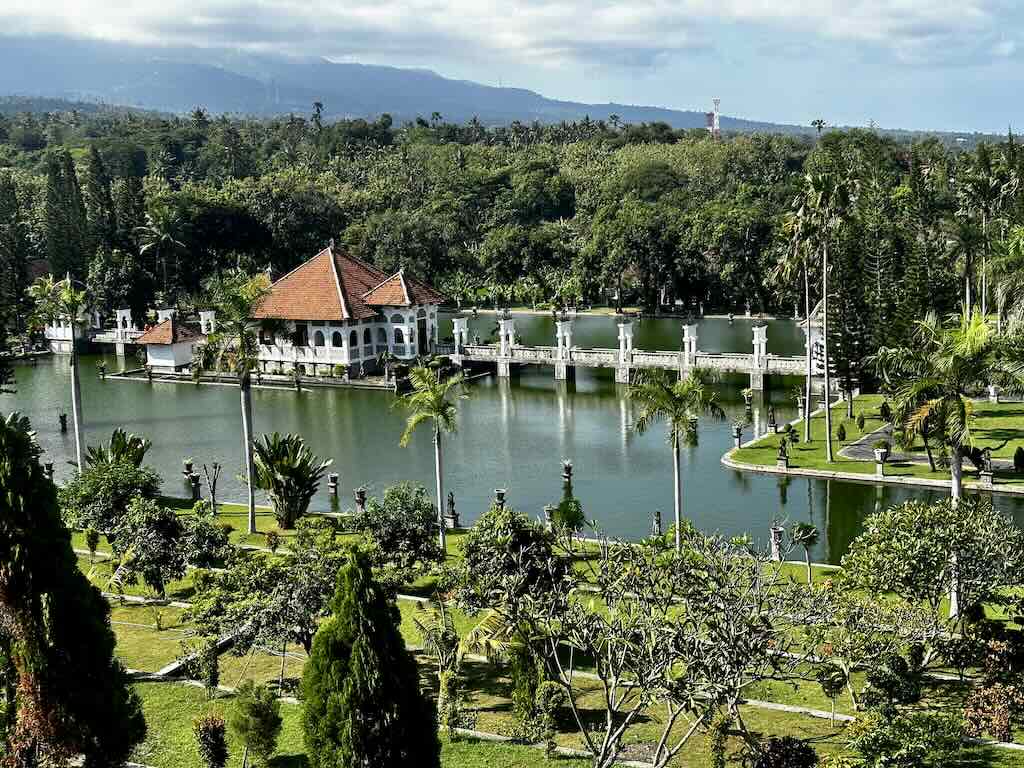
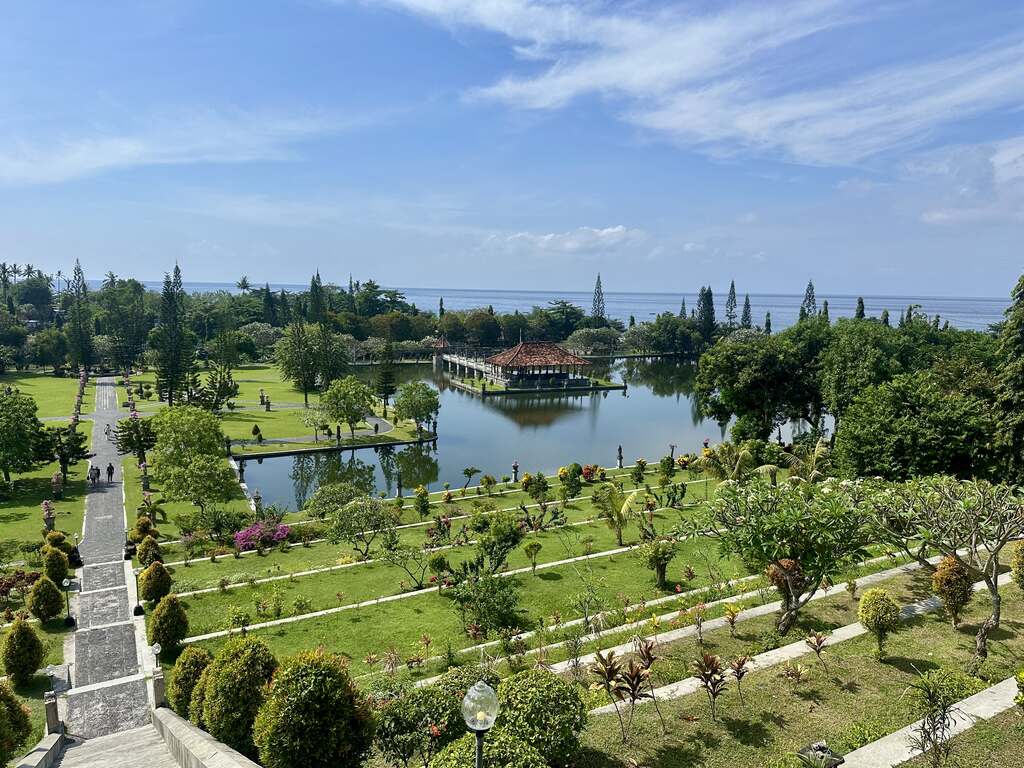
Taman Ujung — also called Taman Sukasada — was built in 1921 by the same raja, twenty-five years before Tirta Gangga, and on a completely different scale: three large lagoons, a European-style pavilion reached by a long white bridge, and terraces climbing to a viewpoint over the sea.
The 1963 eruption and the 1979 earthquake destroyed most of it; what stands today is a careful restoration. The mix of Balinese and colonial European architecture is unusual anywhere on the island, and because the site is large it never feels crowded even when the car park is full.
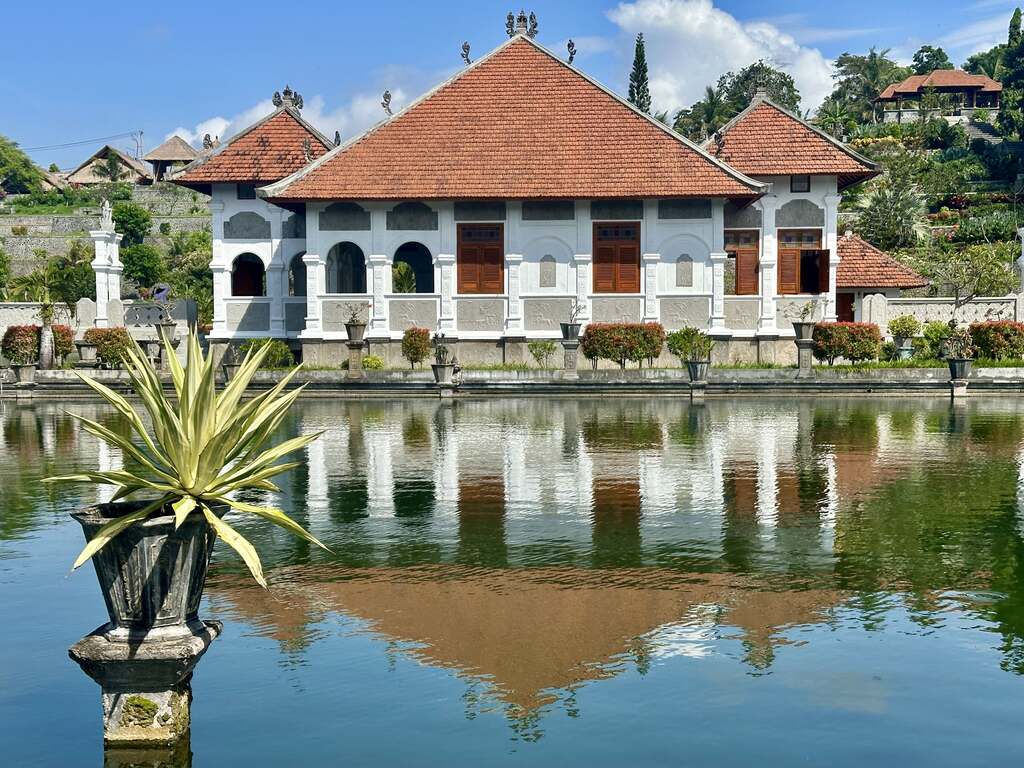
Climb to the upper terrace. From there you see the whole layout at once — the lagoons, the bridge, the gardens — with the Lombok Strait behind. Late afternoon light is the best, and it is a fifteen-minute drive from Amlapura.
Goa Lawah, the bat cave temple
Goa Lawah sits directly on the coast road you take to reach Karangasem, about ten minutes west of Padang Bai. Strictly speaking it is in the neighbouring regency of Klungkung, but it is on everyone’s route east and it is one of Bali’s six holiest temples, so it belongs in any East Bali itinerary.
The shrines are built against the mouth of a cave inhabited by thousands of fruit bats — you hear them before you see them. Balinese tradition holds that the cave runs all the way to Besakih, 30 km inland. It is a major site for post-cremation ceremonies, so there is a good chance you will arrive during one.
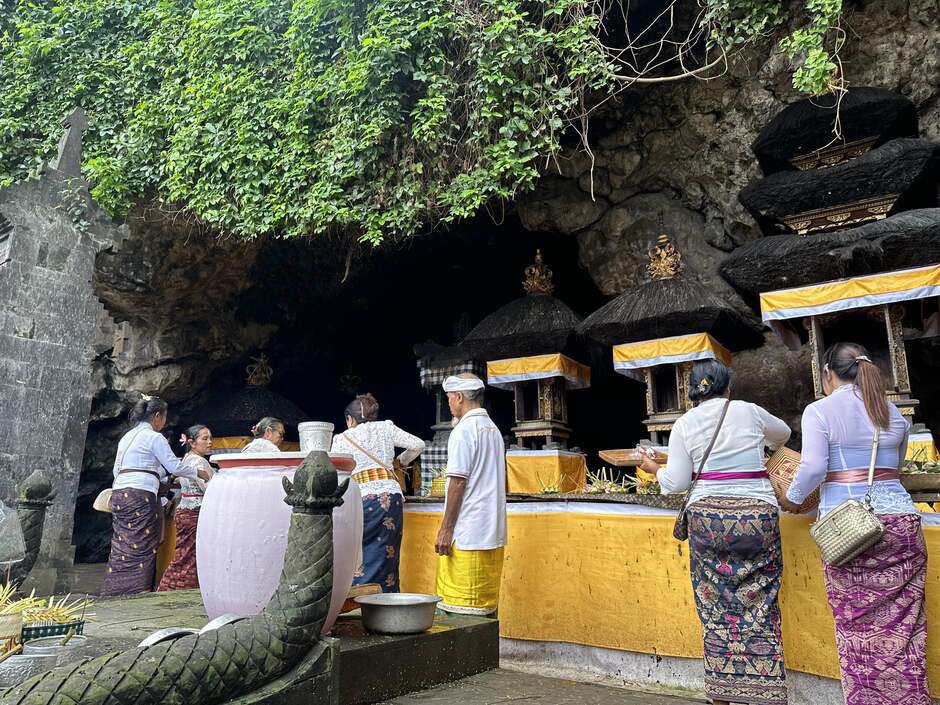
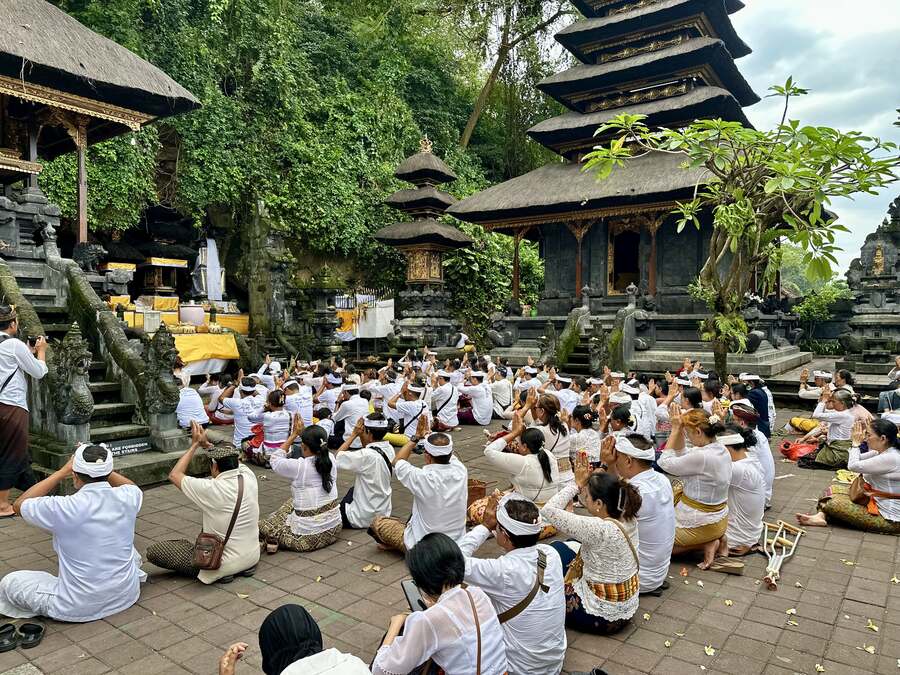
If a ceremony is under way, stay at the back, keep your head lower than the offerings, and do not walk in front of people praying. Nobody will ask you to leave — Balinese temples are remarkably relaxed about visitors — but the courtesy is noticed. Forty-five minutes is enough, and entry is around €2.
Diving and Snorkelling in Karangasem
This coast holds the best diving on mainland Bali. The volcanic shelf drops away close to shore, the water is clear from April to November, and three of the island’s signature sites are within twenty kilometres of each other. For the full picture across the island, see my guide to diving in Bali.
Tulamben and the USAT Liberty wreck
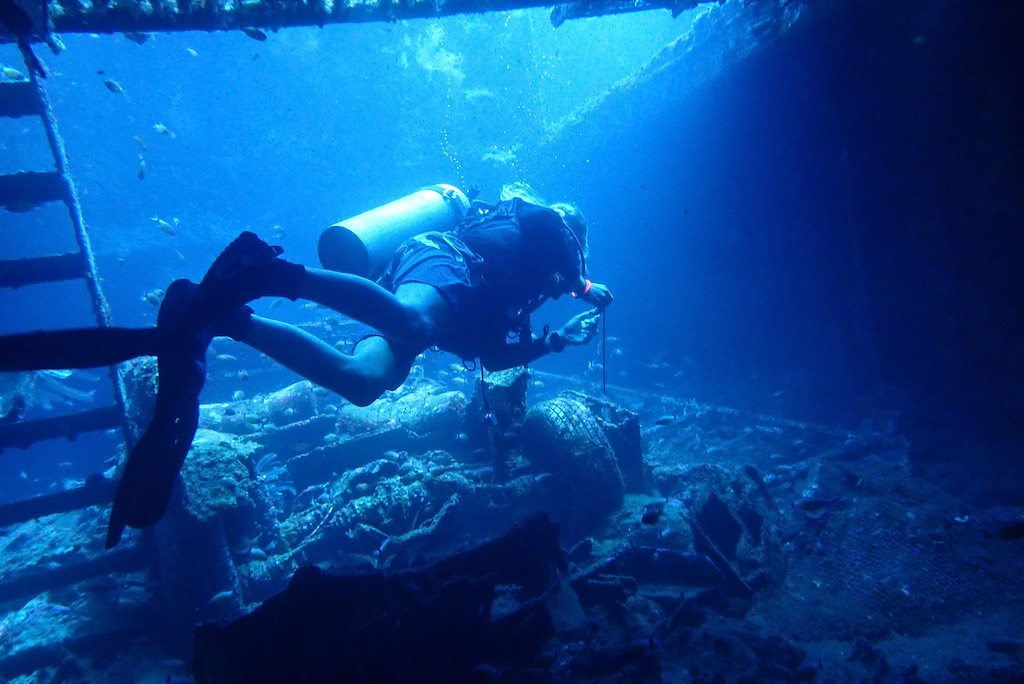
The Liberty is a US Army cargo ship torpedoed in 1942, beached at Tulamben, and pushed into the water by the 1963 eruption. It now lies 30 m from the shore in 5 to 30 m of water, parallel to the beach — which makes it one of the easiest big wrecks in the world to dive. You walk in from a black pebble beach.
Snorkellers reach the shallow end of the hull without difficulty. Divers of any level can do the whole thing. Two dives cost €55–75 including equipment. The site is busy from 9 am — dive centres run a 6 am departure specifically to have it empty, and it is worth the alarm clock. Everything you need to dive it is in my Tulamben diving guide.
Amed: snorkelling straight off the beach
Amed is really a string of seven fishing villages along fifteen kilometres of black sand. The reef starts a few metres out at Jemeluk Bay and Lipah, so you can snorkel from the beach without a boat — coral, reef fish, and at Lipah a small Japanese wreck in 6 m of water.
Go in the morning: the wind gets up after midday and the visibility drops. Masks and fins rent for €3–4 a day from any warung on the beach.
Gili Tepekong, Gili Mimpang and Gili Biaha
Three rocky islets sit offshore between Padang Bai and Candidasa, and they are the most demanding diving on Bali. Strong, unpredictable currents, cold thermoclines dropping to 20 °C, and — from July to October — a real chance of mola mola, the oceanic sunfish. Sharks, big schools of trevally, and at Biaha a cave where white-tip reef sharks rest.
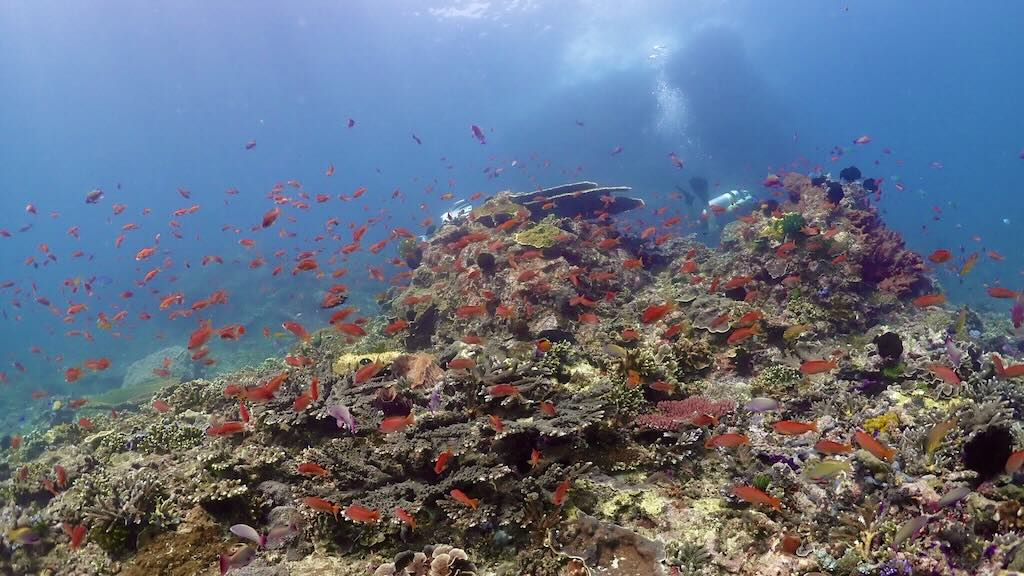
These are not beginner sites. Reputable centres in Padang Bai and Candidasa ask for 30 to 50 logged dives and will refuse you otherwise. Two dives run €70–90. If Bali’s east coast is the reason you came, the wider picture is in the best diving in Indonesia.
Sidemen: Rice Terraces, a Waterfall and Silver
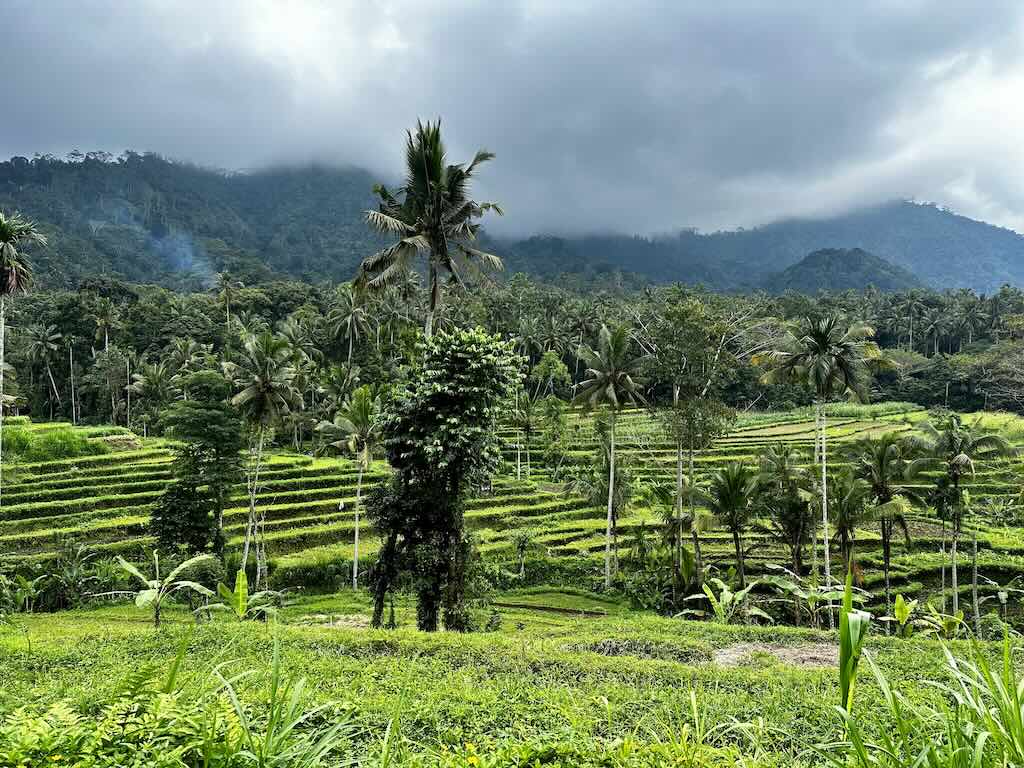
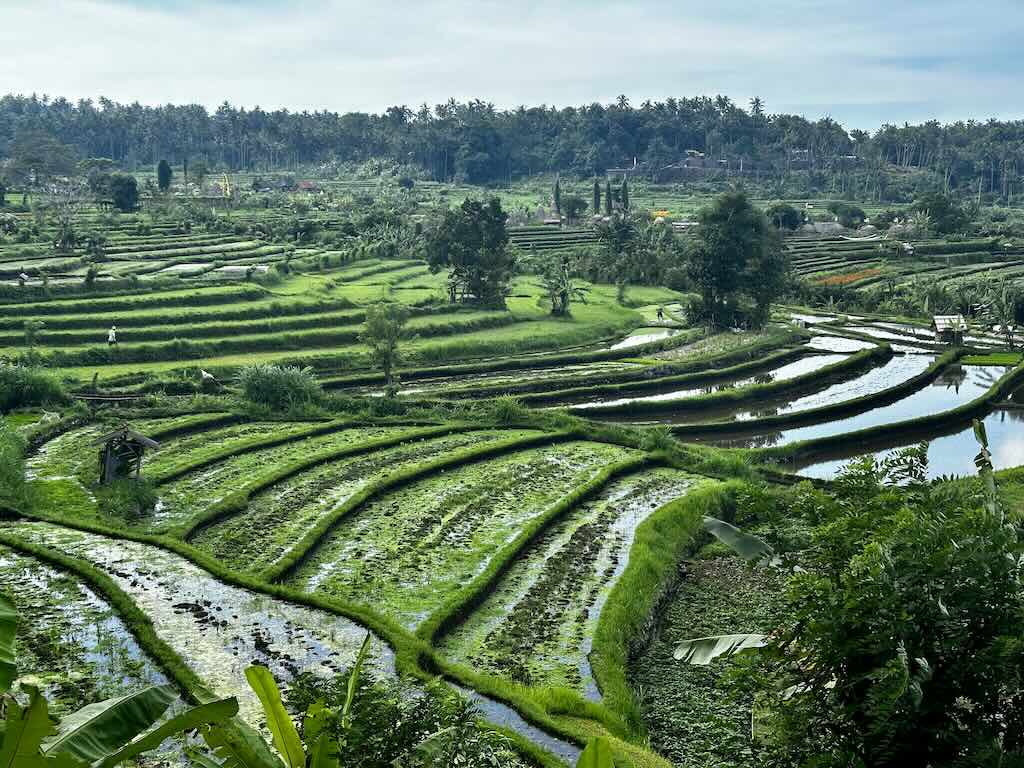
Sidemen is a valley an hour inland from the coast, between Mount Agung and the Unda river. People call it “Ubud thirty years ago”, which is lazy but not wrong: rice terraces, a handful of small hotels on the ridges, and almost nothing built for tourism. It is the part of Karangasem I send people to when they say they want the Bali that still works.
The valley is also a working one — weaving, palm sugar, arak distilling, silver — which gives it something the postcard villages have lost.
Walking the valley
There is no single viewpoint and no ticket booth. You park in the village and walk: paths run between the terraces, past irrigation channels, down to the river and up the far side. Two to three hours covers the classic loop, and you will meet farmers rather than photographers.
Early morning is best — the light is low across the terraces and Agung is usually clear before the cloud builds. Any hotel will point you to a route, and a local guide costs €10–15 for a half day, which is money well spent for the explanations rather than the navigation.
Tri Eka Buana waterfall
Tri Eka Buana is a village at the top of the Sidemen valley, best known locally for arak — and it has a waterfall that almost no guide mentions. The water drops down a dark rock face into a shallow basin at the bottom of a jungle ravine, ten minutes’ walk from where you leave the scooter.
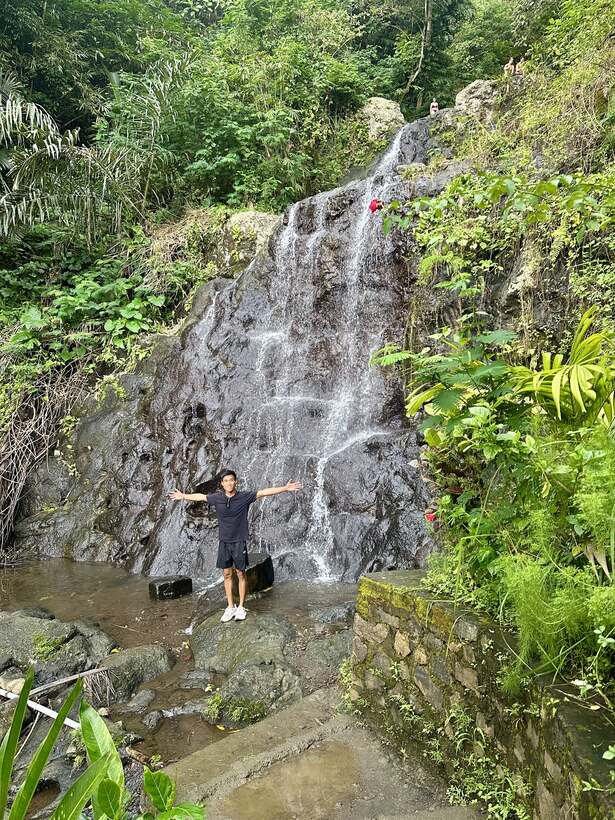
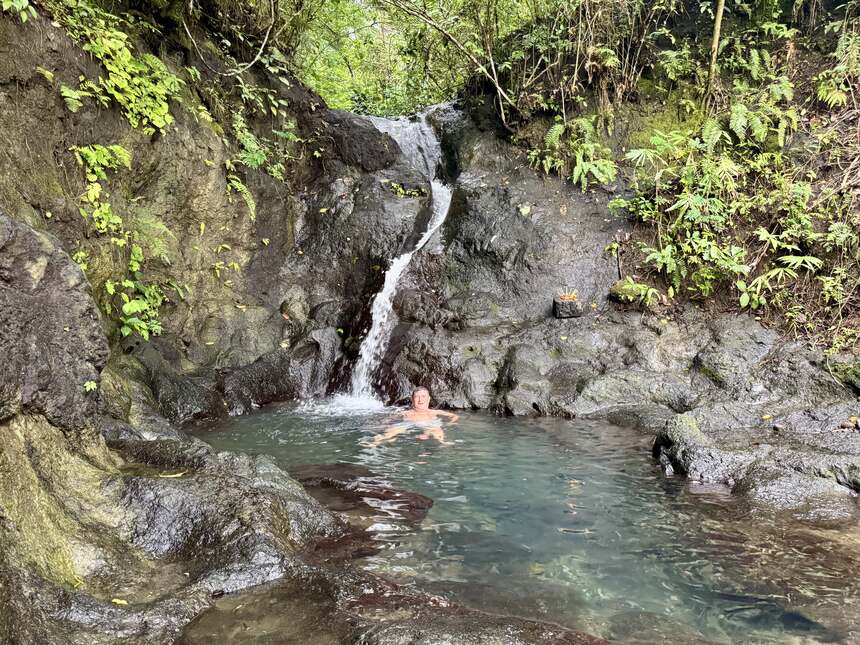
A short way downstream the river has carved natural pools into the black rock, deep enough to sit in, with the valley opening out below. There is no entrance fee, no warung and usually nobody else. Go in the morning, and skip it after heavy rain — the ravine channels a lot of water very quickly.
Making your own silver ring
Bali’s silver is usually associated with Celuk, near Ubud, where the workshops long ago turned into showrooms. Sidemen has kept something closer to the original: family workshops in open pavilions where the silversmith works with a blowtorch, a hand-cranked rolling mill and a set of files, and where you can sit down and make something yourself.
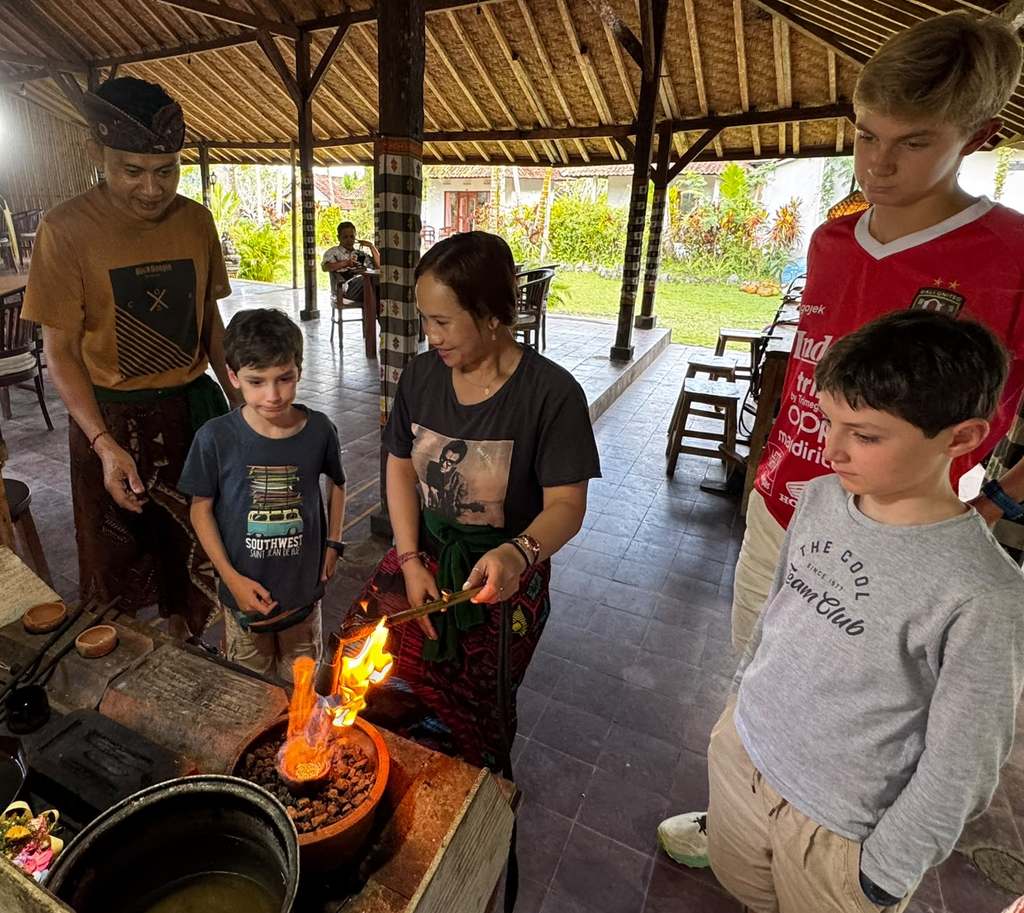
The session starts with the raw metal. Silver granules are weighed on a balance — you pay by the gram, so the price depends on what you make — then melted in a clay crucible over charcoal until the metal runs.
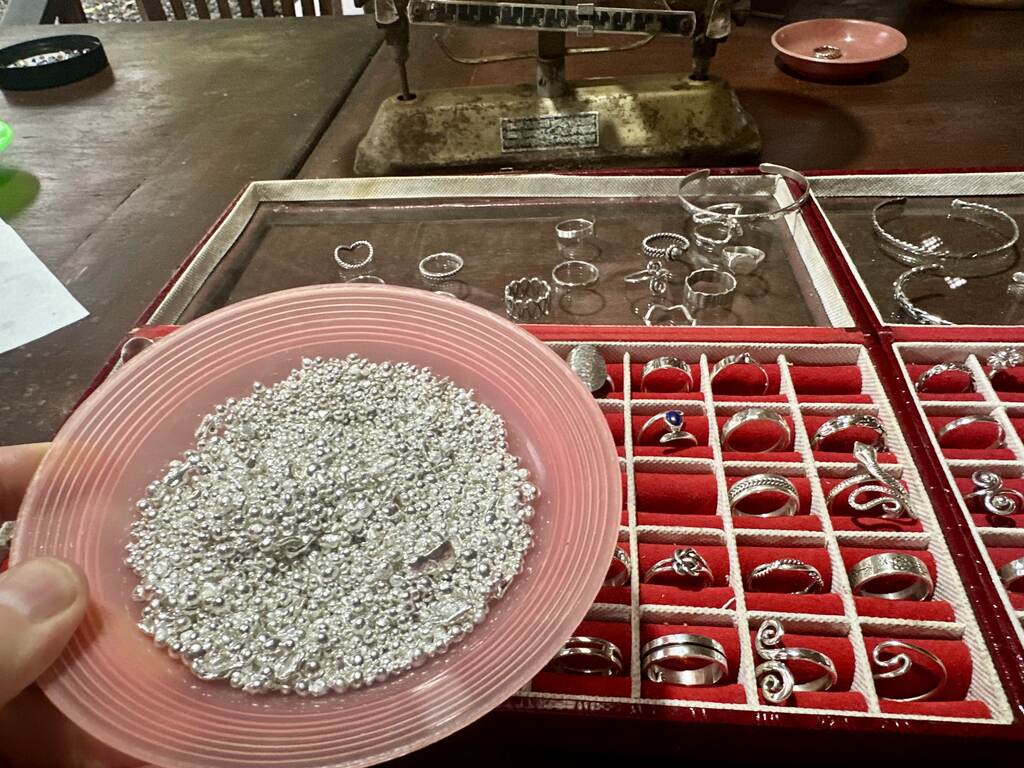
The melting is the moment everyone remembers. The crucible glows, the torch goes in, and a few grams of grey granules turn into a bead of liquid silver in about thirty seconds. It is also the part where children stop fidgeting — this works well as a family activity, with the workshop handling anything hot.
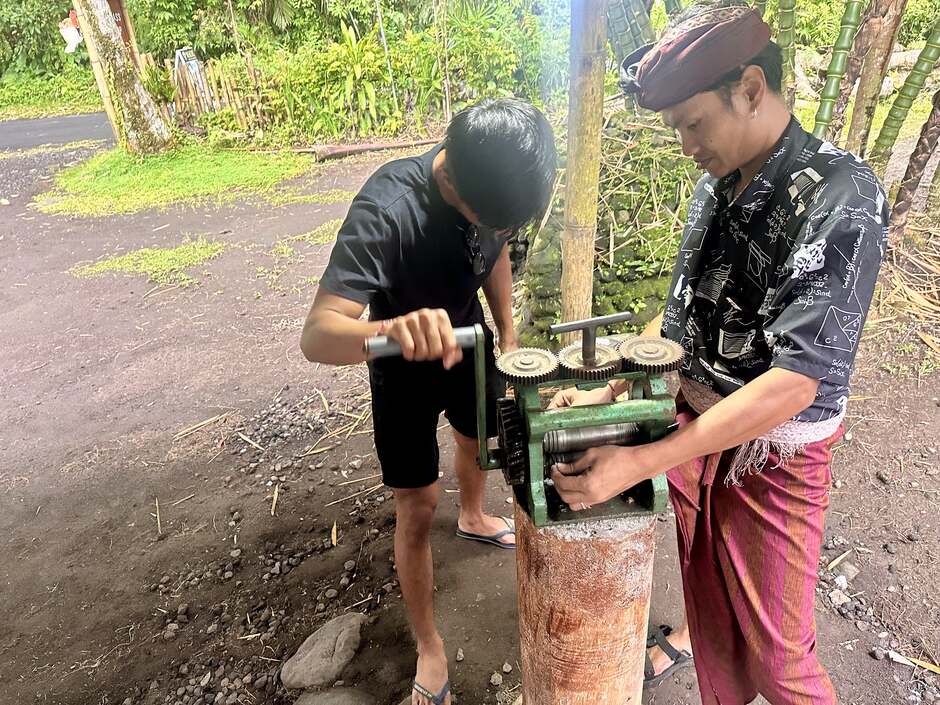
The cooled ingot then goes through the rolling mill, cranked by hand, until it is a flat strip of the right thickness. That strip becomes your ring: bent, soldered, filed, hammered and polished, with the silversmith taking over whenever it needs a skill you do not have.
Count on three to four hours and roughly €25–40 depending on the weight of silver. Book the day before — these are families, not a business with a reception desk. You leave with something you made, which beats anything in the Ubud art market.
Arak, weaving and the Samsara Living Museum
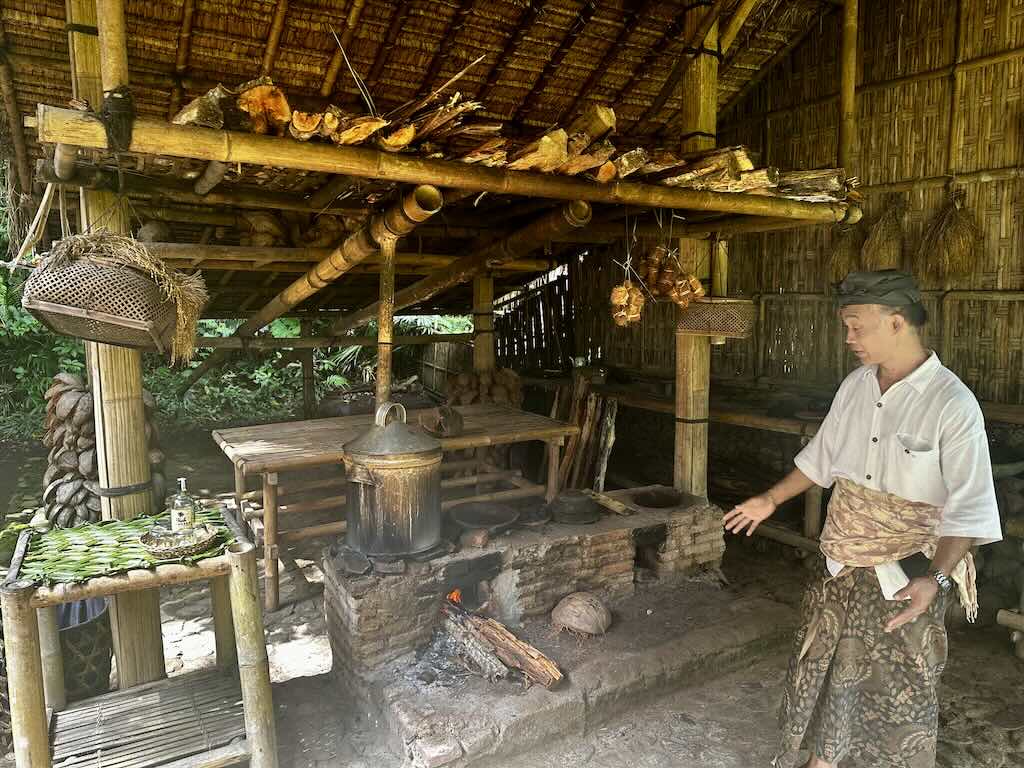
Tri Eka Buana is one of Bali’s arak villages: palm sap collected at dawn, fermented, then distilled over a wood fire in equipment that has not changed in generations. Arak is a ceremonial drink before it is a recreational one, and seeing it made explains a lot about how Balinese ritual actually functions.
Sidemen is also known for songket and endek weaving — silk and cotton worked on backstrap looms, one of the few places on Bali where it is still a village industry rather than a demonstration.
If you want all of it explained in one place, the Samsara Living Museum near Karangasem town walks you through the ceremonies that mark a Balinese life from conception to cremation, plus arak production and craft demonstrations. A guide takes you round; it is the most useful two hours of cultural context you can buy in the regency.
The Coast: Amed, Candidasa and Padang Bai
Amed
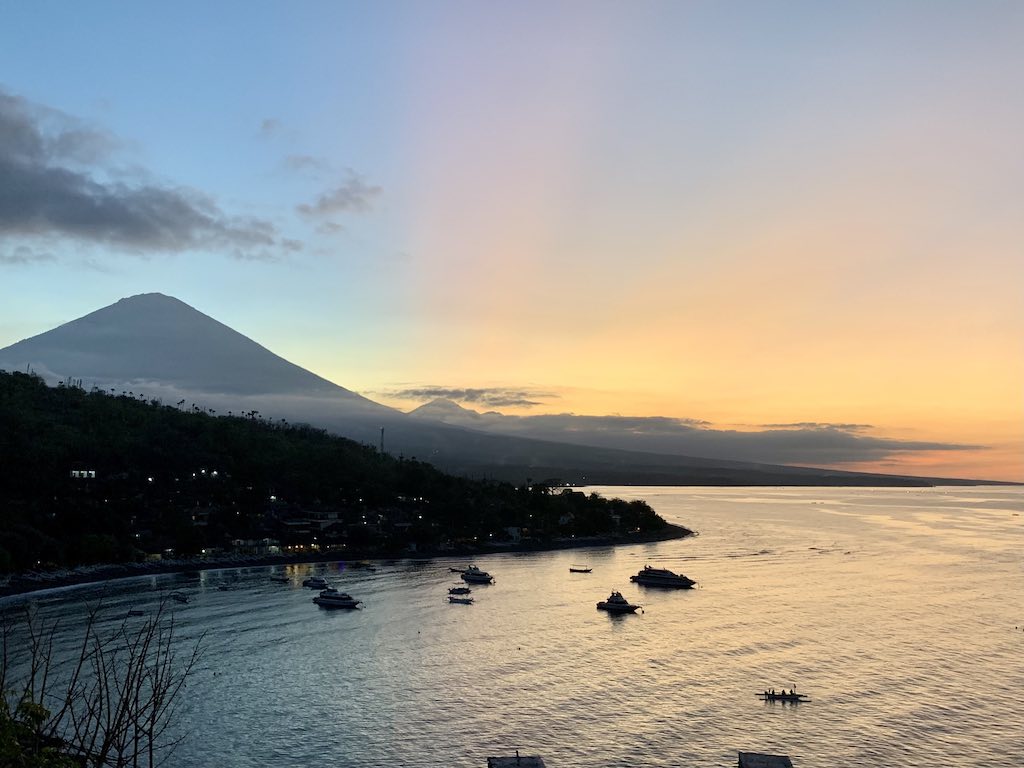
Amed is the name people use for a fifteen-kilometre stretch of black-sand coves in the north-east — Jemeluk, Lipah, Bunutan, Selang and the rest — where the mountain comes down almost to the water. Traditional jukung outriggers still fish from the beaches at dawn, and salt is still made by hand in evaporation pans along the shore.
There is no nightlife and very little shopping. What there is: snorkelling and diving straight off the beach, freediving schools, a sunrise over Lombok, and Mount Agung filling the view behind you. Two to three nights is the right dose.
Candidasa
Candidasa was Bali’s first attempt at an east-coast resort, in the 1980s, and it went wrong: the offshore reef was quarried for lime to build the hotels, and without it the beach washed away within a decade. What remains is a quiet strip of hotels behind sea walls, a lotus lagoon, and — for divers — the closest base to Tepekong, Mimpang and Biaha.
Come for the diving, the calm, and the position halfway between the temples and the coast. Do not come for the beach; for sand, drive fifteen minutes to Bias Tugel or Virgin Beach.
Padang Bai
Padang Bai is the harbour town, and for most visitors it is a transit point: fast boats leave here for the Gili islands, Lombok and Nusa Penida, and the vehicle ferry crosses to Lembar in about four hours. If you are travelling with a scooter or a car, this is where you board.
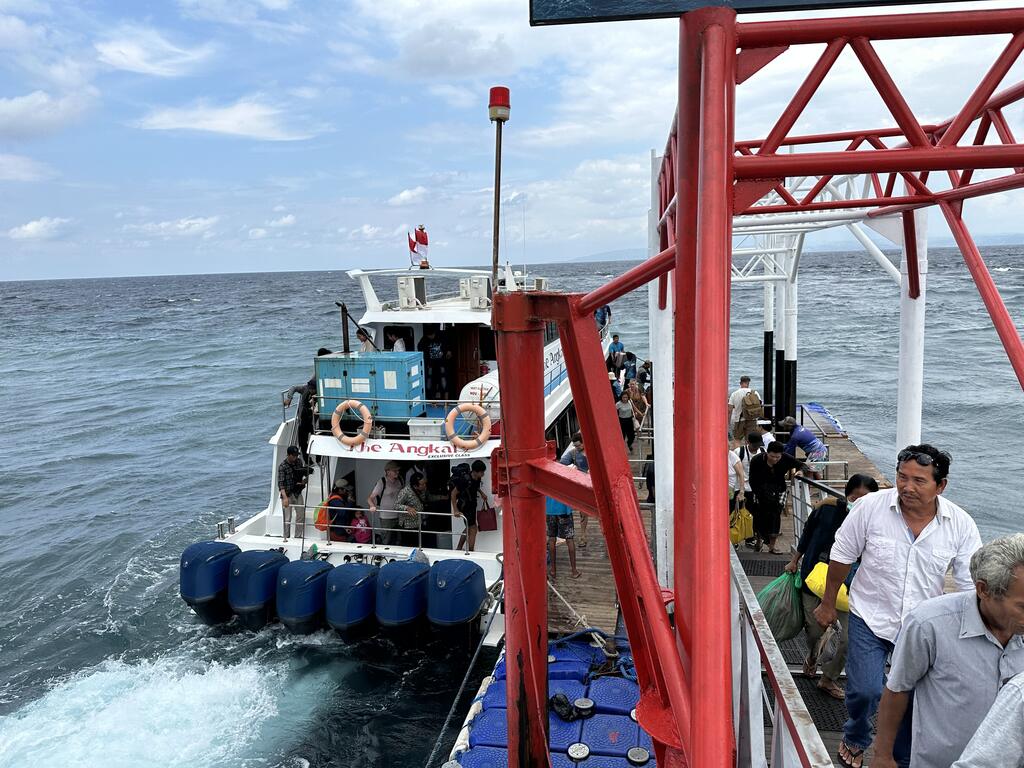
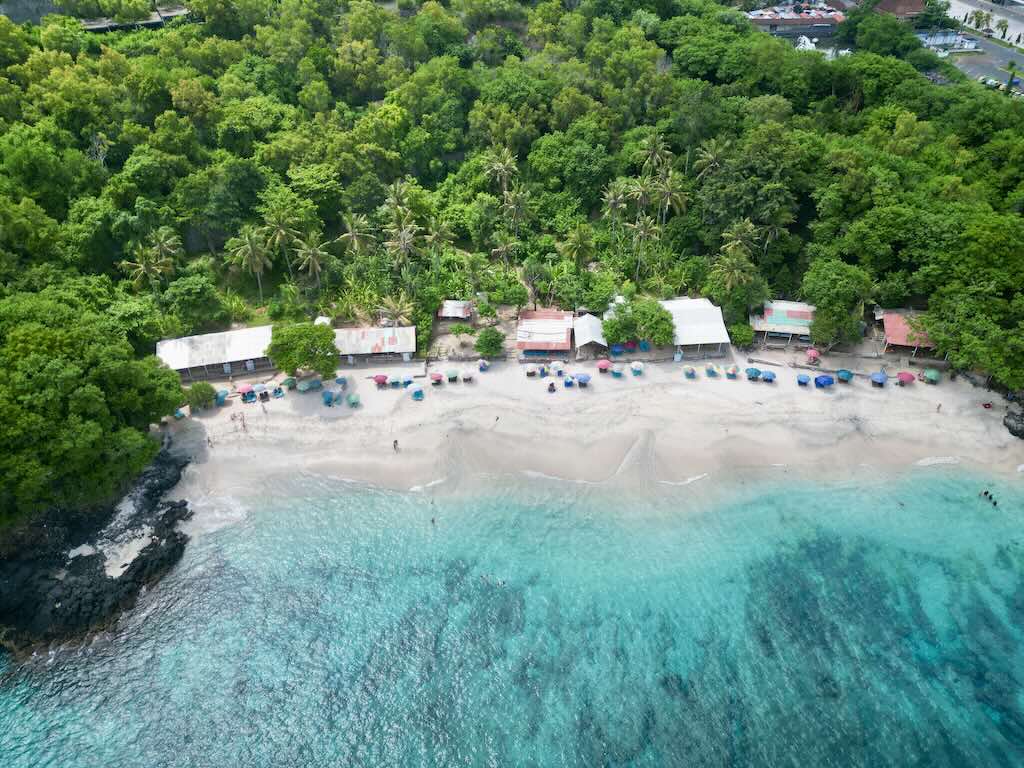
It deserves more than a transit stop. Two small coves sit within walking distance of the port: Bias Tugel, white sand reached by a short path over the headland, and Blue Lagoon, the better of the two for snorkelling. Both are quiet outside weekends.
Boats to Nusa Penida also run from Padang Bai, though Sanur is the more frequent departure point. If the island is on your list, the practicalities are covered in my Nusa Penida travel guide.
Where to Stay in Karangasem
There is no single base that covers the whole regency — the coast and the valley are an hour apart, and the temples sit between them. Pick according to what you came for.
| Base | Best for | Trade-off |
|---|---|---|
| Sidemen | Rice terraces, walking, silence, silver and arak | No beach, an hour from the coast |
| Amed | Diving, snorkelling, sunrise, Tulamben | Furthest from the south, no nightlife |
| Candidasa | Central for temples + the three dive islets | No real beach |
| Tirta Gangga | Temples, Lempuyang at dawn, cool nights | Very little choice of restaurants |
| Padang Bai | One night before a boat to the Gilis or Lombok | A port town, not a destination |
Sidemen — for the valley
- Wapa di Ume Sidemen — the best-known address in the valley: a pool cantilevered over the rice fields, and Agung in the window on a clear morning.
- Samanvaya — adults-only, perched on the ridge with one of the best infinity pools in East Bali.
Amed — for the water
- The Griya Villas and Spa — clifftop villas above the sea at the quiet eastern end, past Selang.
- Bali Dive Resort Amed — straightforward, on the beach, with the dive centre on site. The practical choice if you are here to be in the water every morning.
Candidasa — for the central position
- Alila Manggis — a low-rise design hotel in a coconut grove on the water, and the best restaurant on this coast.
- Ramayana Candidasa Beach Resort — mid-range, seafront, good value and an easy base for the dive boats.
Guesthouses across the regency start around €15–25 a night, and outside July–August you can turn up without booking almost anywhere except Sidemen, where the good places are few and fill early.
How Many Days Do You Need in Karangasem?
Three nights is the sweet spot — enough for the temples, the valley and the coast without spending the whole time driving. Two works if you skip either Sidemen or Amed. One is a day trip in disguise.
A three-day route that works
Day 1 — arrive and the water palaces. Leave the south early, stop at Goa Lawah on the coast road, lunch in Candidasa. Afternoon at Taman Ujung, climbing to the upper terrace for the light. Sleep near Tirta Gangga or Candidasa.
Day 2 — temples then the sea. Tirta Gangga at opening, before the stepping stones fill up. Then either Lempuyang at dawn if you want the gate, or Besakih if you would rather have the mountain. Drive north to Amed in the afternoon and snorkel at Jemeluk before sunset.
Day 3 — the wreck, then inland. Tulamben at 6 am for the Liberty with nobody on it. Back down to Sidemen for the afternoon: the valley walk, or the silver workshop if you booked it.
From Karangasem most itineraries continue west to Ubud for the culture, or back south to Seminyak for the last few days. The whole island is laid out in the full Bali travel guide.
Practical Tips for Visiting Karangasem
- Leave the south before 8 am. The road east clogs from mid-morning and again from 4 pm. The same drive can take two hours or four.
- Bring cash. ATMs exist in Amlapura, Candidasa and Amed and nowhere else worth relying on. Temples, waterfalls, parking and warungs are cash-only.
- Sarong and sash at every temple. Lent at the entrance, usually included in the ticket. Shoulders covered.
- Check Agung before you commit to a viewpoint. The mountain is clear at dawn perhaps one day in two, and clouds over by 10 am most of the year.
- Dive with a centre that asks about your logbook. Around Tepekong and Biaha the currents are serious. A centre that takes anyone is a centre to avoid.
- Expect ceremonies. Odalan festivals close temples to visitors several days a year and block roads for processions. It is not a problem to plan around — it is the reason to come.
- Book the silver workshop and any guide the day before. These are family operations, not businesses with a booking desk.
- Travelling on to Lombok or the Gilis? Boats leave Padang Bai in the morning; afternoon crossings are rougher. Regional logistics are covered in getting around Indonesia.
When to go: April to October is the dry season and the best window for diving, hiking and clear volcano views. The east is drier than the rest of Bali all year — even in the wet season the rain tends to come in short afternoon bursts. My preference is May, June or September.
Why Karangasem Is Worth the Drive
Karangasem is the part of Bali that has kept its proportions. The temples are used, the terraces are farmed, the fishermen still go out at dawn, and the two royal palaces stand in gardens that a king designed for himself rather than for visitors. Nothing here has been scaled up for tourism, which is precisely why it takes two hours to reach.
Give it three nights, start early, and split your time between the mountain and the sea. For the rest of the island, see the complete Bali travel guide; if Bali is one stop on a longer trip, the Indonesia travel guide covers Java, Flores, Komodo and Raja Ampat.
Indonesia Travel Guide
From Bali to Java, Flores, and Raja Ampat, explore the best places to visit in Indonesia and plan a multi-island adventure.
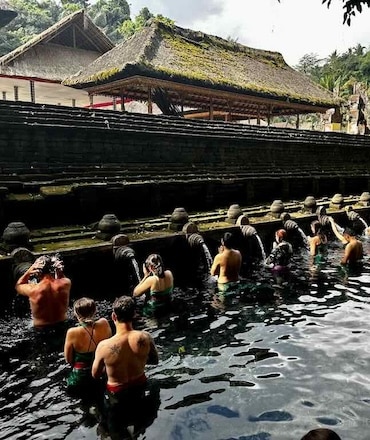
Bali Travel Guide
Discover where to stay in Bali, top experiences, hidden gems, practical tips, and a 10-day itinerary to plan the perfect trip.
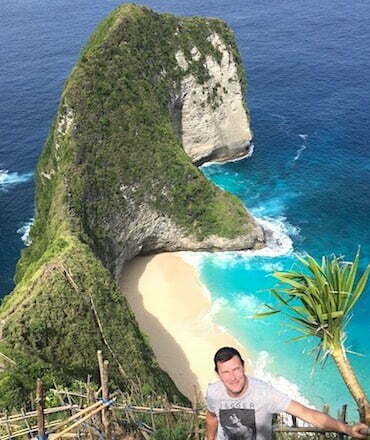
Nusa Penida Travel Guide
Boats from Padang Bai and Sanur reach it in under an hour: dramatic cliffs, manta rays, hidden beaches and where to stay.
Frequently Asked Questions About Karangasem
Where is Karangasem in Bali?
Karangasem is the easternmost regency of Bali, with Amlapura as its capital. It runs from Mount Agung down to the Lombok Strait and covers most of what is called East Bali — Sidemen, Tirta Gangga, Candidasa, Amed and Tulamben are all inside it.
How far is Karangasem from Kuta?
Between 65 and 105 km depending on where you are heading: two to two and a half hours to Candidasa, three or more to Amed. A private driver costs €35–45 for the day. Leave before 8 am to avoid the worst of the traffic.
Can you visit Karangasem as a day trip?
You can, but you will spend five to six hours in a car for four or five on the ground, and you will have to choose between the temples and the coast. One night turns the same trip into a proper visit; three is better.
What is Karangasem known for?
Mount Agung and Besakih, Bali’s mother temple; the royal water palaces of Tirta Gangga and Taman Ujung; the Gates of Heaven at Lempuyang; the USAT Liberty wreck at Tulamben; and the Sidemen valley, known for weaving, arak and silverwork.
Where should I stay in Karangasem?
Sidemen for rice terraces and quiet, Amed for diving and snorkelling, Candidasa for a central position between the two, Tirta Gangga for the temples. There is no base that covers everything — the coast and the valley are an hour apart.
Is Tulamben good for beginners?
Yes. The USAT Liberty lies 30 m from the beach in 5 to 30 m of water, with no boat and no current in normal conditions — it is one of the most accessible large wrecks anywhere. Snorkellers can see the shallow end of the hull. The islets off Candidasa are the opposite: experienced divers only.
Is there good snorkelling in Karangasem?
Some of the best on Bali, and most of it from the beach. Jemeluk Bay and Lipah in Amed have reef a few metres out, Tulamben has the wreck, and Blue Lagoon near Padang Bai is the pick further south. Go in the morning, before the wind.
Is Sidemen worth visiting?
If you like walking and want the rice-terrace landscape without the crowds of Tegallalang, yes. It is a working valley — weaving, arak, silver — with no ticket booths and very little built for visitors. Give it a full day, or a night if you can.
Can you make your own silver ring in Sidemen?
Yes. Family workshops in the valley run sessions where you melt the silver, roll it, shape and polish it yourself. Count on three to four hours and €25–40 depending on the weight of metal. It works well with children — the workshop handles anything hot. Book the day before.
Is Lempuyang worth the queue?
Only at opening. The reflection in the famous photo is a piece of glass held under a phone, and the queue for it regularly runs two to three hours. Arrive at 6 am, or ignore the gate and climb the 1,700 steps to the summit temple, which almost nobody does and which is the better half of the site.
When is the best time to visit East Bali?
April to October, the dry season, for diving, hiking and clear views of Agung. The east is drier than the rest of the island year-round, so even the wet season is manageable — the rain usually comes in short afternoon bursts. May, June and September give the best balance of weather, crowds and prices.
How do you get from Karangasem to the Gili islands?
Fast boats leave Padang Bai every morning and take about 90 minutes to Gili Trawangan. The vehicle ferry to Lembar in Lombok takes around four hours and runs day and night. Morning crossings are calmer than afternoon ones.