Ubud, Bali: Complete Travel Guide & Best Things to Do
By Blaise Jaeger · Updated 1 August 2026
Ubud sits in the hills of central Bali, about 25 km inland from the coast, and it is the one place on the island that has almost nothing to do with the Bali of beach clubs and sunset cocktails. No beach, no surf, no nightlife to speak of. Instead: rice terraces, river gorges, temples that are still in daily use, and a town centre that empties out by 10 pm.
That contrast is exactly why most itineraries include it. I have been based in Bali since 2020, and Ubud is where I send friends who want to understand the island rather than just lie on it — and where I go myself when the south gets too loud.
It is also, to be blunt, busier than the marketing suggests. Central Ubud has real traffic, the Monkey Forest is packed by 10 am, and the famous Tegallalang viewpoint is lined with cafés. None of that ruins the place — it just means knowing where to go, and when.
This guide covers where Ubud actually is and how to get there, the best things to do, the temples, waterfalls and rice terraces worth the drive, where to stay by area and budget, how many days to plan, and the practical details that make the difference on the ground.
Written from Bali: I have lived on the island since 2020, currently in Seminyak, after first visiting in 2009 and opening Nusa Penida’s first PADI dive centre in 2017. Every site, price and driving time below is one I have checked myself on the ground rather than copied from a press kit. Prices are 2026 and given in euros.
Ubud Travel Guide: Quick Navigation
- Where is Ubud and how to get there
- Is Ubud worth visiting?
- Best things to do in Ubud
- Best temples near Ubud
- Best waterfalls around Ubud
- Best rice terraces near Ubud
- Where to stay in Ubud
- How many days in Ubud (and a 3-day plan)
- Ubud vs Seminyak vs Canggu
- Practical tips for visiting Ubud
- Frequently asked questions
Where Is Ubud? And How to Get There
Ubud is a town in the Gianyar regency, in the uplands of central Bali, Indonesia. It sits at roughly 200 metres above sea level, about 25 km north-east of Denpasar and 35 km from Ngurah Rai International Airport (DPS). It is not on the coast — the nearest beach is around 45 minutes away by car.
Administratively “Ubud” is a village that has absorbed several neighbouring ones — Padangtegal, Peliatan, Sayan, Penestanan, Campuhan. In practice, when people say Ubud they mean the walkable centre around Jalan Raya Ubud, Monkey Forest Road and the Royal Palace, plus the rice-field valleys within a few kilometres.
Because Ubud is inland, everything is a drive. Here is what those drives actually take — allow more in the late afternoon, when the roads into town back up.
| From | Distance | Typical drive | Notes |
|---|---|---|---|
| Airport (DPS) | 35 km | 1 h 15 – 2 h | Fixed-price airport taxi or pre-booked driver; worst between 16:00 and 19:00 |
| Seminyak | 32 km | 1 h 15 – 1 h 45 | The most common transfer on a Bali itinerary |
| Canggu | 30 km | 1 h 15 – 1 h 45 | Shorter on paper, rarely faster in practice |
| Sanur | 25 km | 45 min – 1 h 15 | The fastest coastal connection, and the port for Nusa Penida |
| Amed / Karangasem (east) | 65 km | 2 h – 2 h 30 | Scenic road via Sidemen; worth splitting the trip |
| Mount Batur (Kintamani) | 35 km | 1 h – 1 h 15 | Sunrise treks leave Ubud around 02:00 |
| Nusa Penida (via Sanur port) | 25 km + boat | 1 h + 45 min ferry | Doable as a long day trip, better as an overnight |
Getting to Ubud from the airport
There is no train and no useful public bus. Your options are an official airport taxi (fixed rate, roughly €20–25 to Ubud), a ride-hailing app such as Grab or Gojek (often cheaper, but pick-up from the airport is restricted to designated zones), or a pre-booked private driver, which is what most hotels will arrange for you at a similar price.
If you are landing late, book the transfer in advance — negotiating at 1 am after a long-haul flight is nobody’s idea of a good start. For visas, terminals and arrival formalities, see my guide on how to get to Bali.
Getting around once you are there
Central Ubud is walkable, and that is one of its real advantages over the south. Everything beyond it — temples, waterfalls, rice terraces — needs wheels. Most visitors either rent a scooter (around €5–7 per day) or hire a driver for the day (€30–40 for 8–10 hours, including fuel and waiting time, and usually the better deal for a group).
A driver is also the sane option for the temple loop north of town, where parking is chaotic and the roads are narrow. My full breakdown of scooters, drivers, taxis and apps is here: getting around Bali.
Is Ubud Worth Visiting?
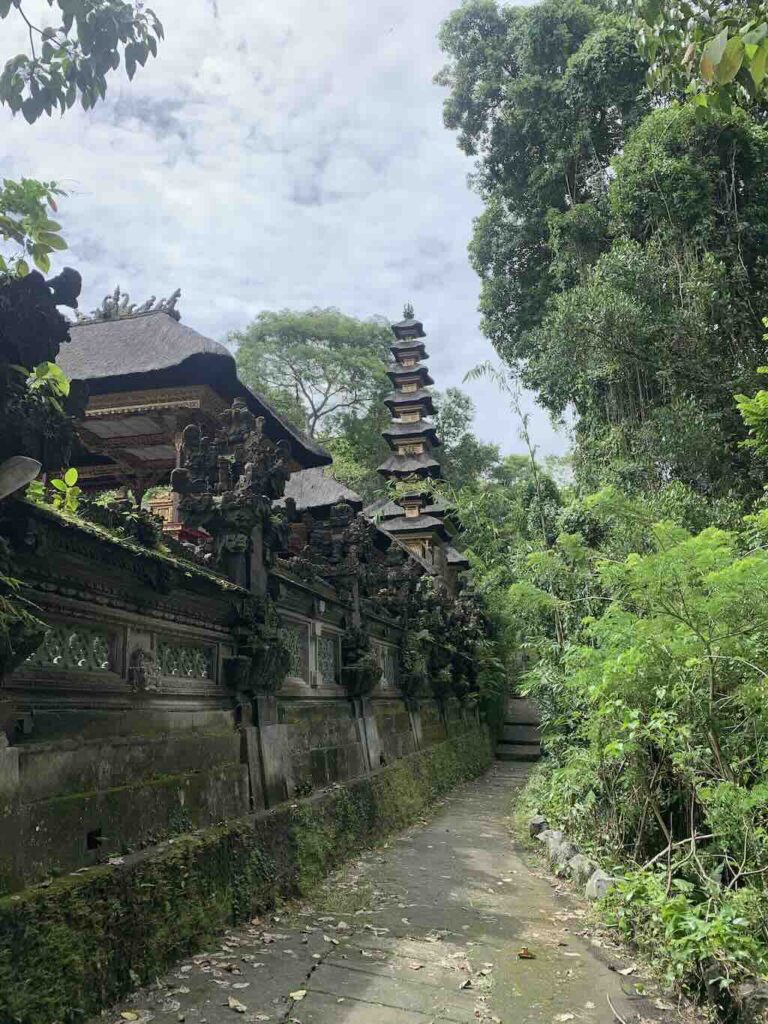
Yes — provided you want something other than a beach. Ubud is the best base on Bali for temples, rice terraces, waterfalls, art, yoga and jungle scenery, and it is the only part of the island where Balinese Hindu culture is visibly part of daily life rather than a performance staged for visitors.
Compared with Seminyak or Canggu, Ubud is:
- Greener, cooler and more traditional — you are in the hills, and it shows
- Almost free of nightlife; dinner is the evening’s main event
- Built around art, ceremony and wellness rather than surf and beach clubs
- Better value for accommodation at every level, from guesthouses to villas
Who should skip it: if you have five days in Bali and you came to surf or to be on a beach every morning, Ubud will feel like a detour. Everyone else should give it two to three nights.
One honest caveat. Ubud has been famous for a long time, and the central streets show it: traffic, souvenir shops, and a queue for the swing photo. The town rewards people who get out of the centre — walk a ridge at 7 am, drive twenty minutes to a temple nobody has posted about, eat where the menu is in Indonesian. Do that and Ubud is still extraordinary.
Best Things to Do in Ubud
Almost everything worth seeing around Ubud is within an hour’s drive. Here is the shortlist, with what each one actually costs you in time and money, so you can build a realistic day instead of a wish list.
| Site | What it is | Drive from Ubud | Time needed | Entrance (approx.) |
|---|---|---|---|---|
| Monkey Forest | Sacred forest and temple complex, hundreds of macaques | Walkable | 1 h 30 | €5 |
| Campuhan Ridge Walk | Easy ridge path between two river valleys | Walkable | 1 h – 1 h 30 | Free |
| Tegallalang | The famous terraced rice valley, plus swings | 20 min | 1 h – 2 h | €1.50 + swing extra |
| Tirta Empul | Holy spring temple with purification pools | 30 min | 1 h 30 | €3 |
| Goa Gajah | 9th-century cave temple, “Elephant Cave” | 15 min | 45 min | €3 |
| Gunung Kawi | 11th-century shrines carved into a river gorge | 35 min | 1 h 30 | €3 |
| Taman Ayun | Royal temple with multi-roofed meru towers | 50 min | 1 h | €2 |
| Tegenungan / Tibumana / Kanto Lampo | The three most accessible waterfalls | 20–40 min | 1 h each | €1.50–3 |
| Jatiluwih | UNESCO-listed rice terraces, far larger and quieter | 1 h 30 | Half day | €2.50 |
| Mount Batur sunrise trek | Active volcano, guided pre-dawn climb | 1 h (pick-up 02:00) | Half day | €30–50 guided |
Visit the Sacred Monkey Forest
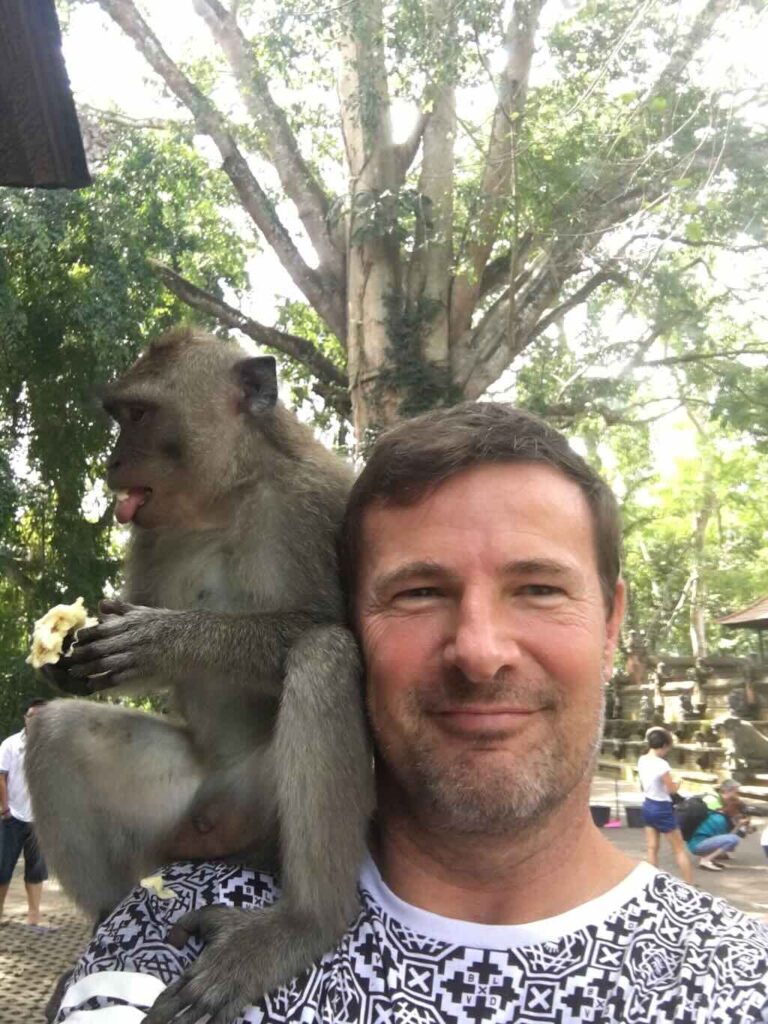
The Sacred Monkey Forest — Mandala Suci Wenara Wana — is a nature reserve and active religious site right in the middle of Ubud, ten minutes’ walk from the Royal Palace. Several hundred long-tailed macaques live among moss-covered temples, banyan roots and stone sculptures. It is unapologetically touristy, and it is still worth it: the shaded paths are beautiful, and seeing that many monkeys in something close to their natural habitat is not an everyday experience.
Put away anything a monkey might want — sunglasses, water bottles, loose phones, anything shiny hanging off a bag. If one is taken, you end up buying bananas from a local guide to trade your own property back. Amusing once, expensive twice. Go at opening (around 09:00) before the tour groups.
Walk the Campuhan Ridge at dawn
The Campuhan Ridge Walk is a paved path along a narrow spine of land between two river valleys, starting a few minutes from the centre of town. It is flat, it is free, and at 6:30 in the morning it is close to empty, with mist still sitting in the gorges on either side.
Allow an hour there and back, or continue to Karsa Café at the far end for breakfast among the rice fields and walk back. By 10 am the light is harsh and the path is busy — this is a sunrise activity or nothing.
Hike Mount Batur at sunrise
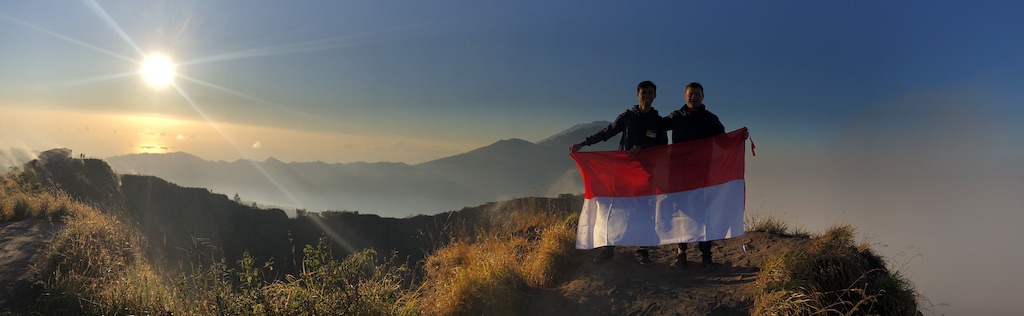
Kintamani, an hour north-east of Ubud, is the starting point for the climb up Mount Batur, one of Bali’s active volcanoes. Pick-up from your hotel is around 02:00; the trek itself takes two to three hours over rocky paths and steep loose slopes, in the dark, with a head torch.
If the weather cooperates you reach the crater rim for sunrise over Lake Batur and the mountains beyond, with volcanic steam venting from the ground beside you. If it does not, you are in cloud — that is the gamble, and no guide can promise otherwise. Go with a licensed guide (independent climbing is not permitted), wear real shoes, and take a layer: it is genuinely cold at the top before dawn.
Experience Balinese culture and the arts
Ubud has been Bali’s artistic centre since the 1930s, when European painters settled here and local schools of painting and carving grew up around them. Galleries and workshops are everywhere, and the Royal Palace in the centre of town is the easiest place to start.
Traditional dance and gamelan performances take place at the palace almost every evening — Legong, Barong and Kecak on rotation, usually starting at 19:30. Tickets are sold on the spot for a few euros. It is staged for visitors, obviously, but the musicians and dancers are the real thing.
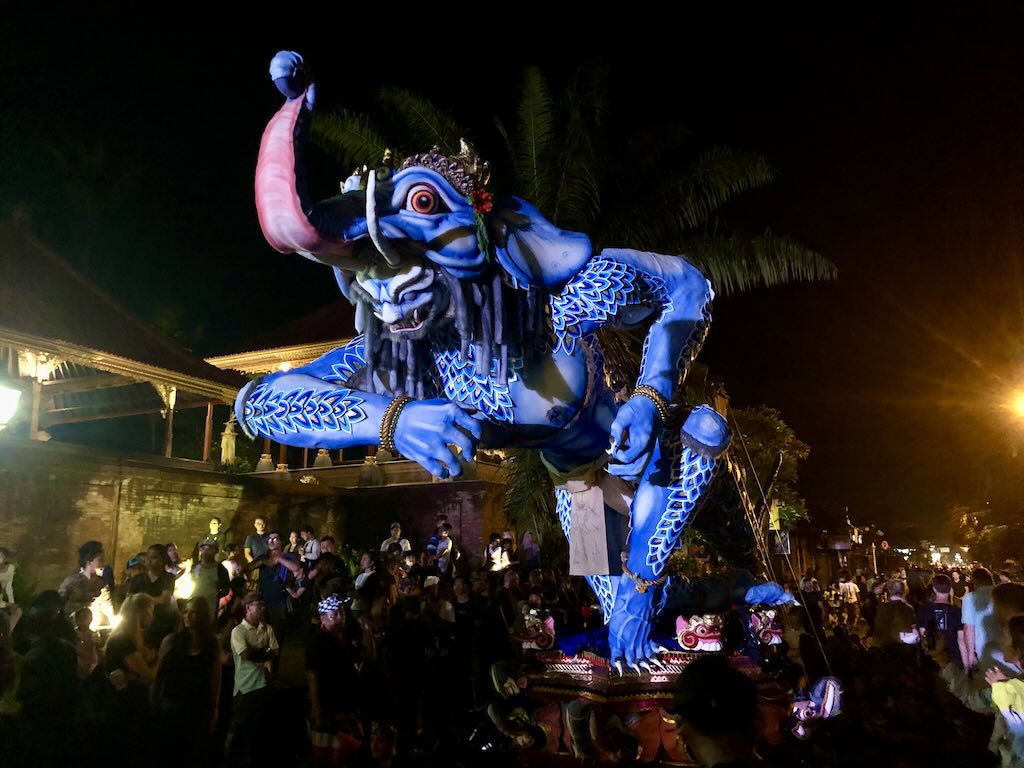
If you are in Ubud around Nyepi — Bali’s day of silence, in March — stay for the Ogoh-Ogoh parade the evening before. Giant papier-mâché demons are carried through the streets and burned. It is the single most spectacular thing you can witness on the island, and it is not put on for tourism.
Museums and galleries
The Puri Lukisan Museum holds the best collection of classical and modern Balinese painting, and it is small enough to see properly in an hour. The Neka Art Museum covers the same ground with more emphasis on foreign artists who worked in Bali, and the Blanco Renaissance Museum — the former home and studio of Antonio Blanco — is worth it as much for the building and the setting as for the paintings.
Yoga, spas and wellness
Ubud is one of the world’s yoga capitals, and the offer runs from a €7 drop-in class to a two-week silent retreat. The Yoga Barn is the best-known studio and takes walk-ins; smaller studios in Penestanan and Nyuh Kuning are quieter. No booking is needed for a single class outside high season.
Spas are equally abundant and remarkably cheap by European standards: a one-hour traditional Balinese massage costs €8–15 in town, €30–60 at a resort. Most use local ingredients — coconut oil, frangipani, turmeric, rice powder — and many are set in gardens or over the river valley, which is half the point.
Eat your way through Balinese cuisine
Ubud is the best place on the island to eat Balinese food properly, because it has both the warungs (small family restaurants) and the fine-dining kitchens that take the cuisine seriously. The dishes to look for: babi guling (spit-roast suckling pig, traditionally a ceremonial dish and served from late morning until it runs out), bebek betutu (duck slow-cooked in spices and banana leaf, usually ordered a day ahead), and nasi campur, a plate of rice with a rotating cast of small sides — the everyday meal, and the best value in Indonesia.
A warung meal costs €2–4. A cooking class — market visit at dawn, then five or six dishes from scratch — costs €25–40 and is the single best souvenir you can bring home from Bali.

Best Temples Near Ubud
Bali has thousands of temples, and the ones around Ubud are among the oldest and most significant on the island. All four below are active places of worship, not monuments: a sarong and sash are required, shoulders covered, and menstruating women are asked not to enter. Sarongs are lent at the entrance of each site.
Goa Gajah, the Elephant Cave
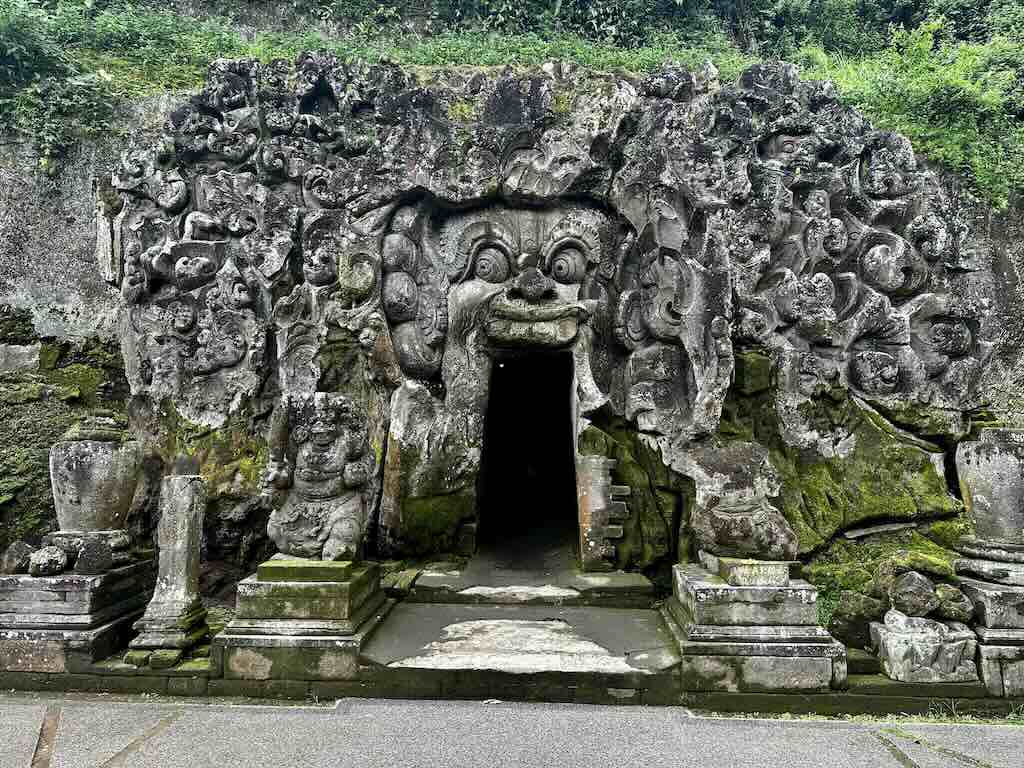
Goa Gajah dates from the 9th century and is fifteen minutes east of Ubud. The entrance to the cave is carved as a vast demonic face, mouth open, surrounded by dense relief work; inside, in a T-shaped chamber, are a Ganesha statue and three lingams. Hindu and Buddhist relics sit side by side here, which tells you something about how Balinese religion actually developed.
Below the cave, bathing pools and fountains excavated in the 1950s sit in a green hollow, with a path continuing down to the river. Forty-five minutes is enough. Go early — the car park fills by 10 am.
Tirta Empul, the holy spring
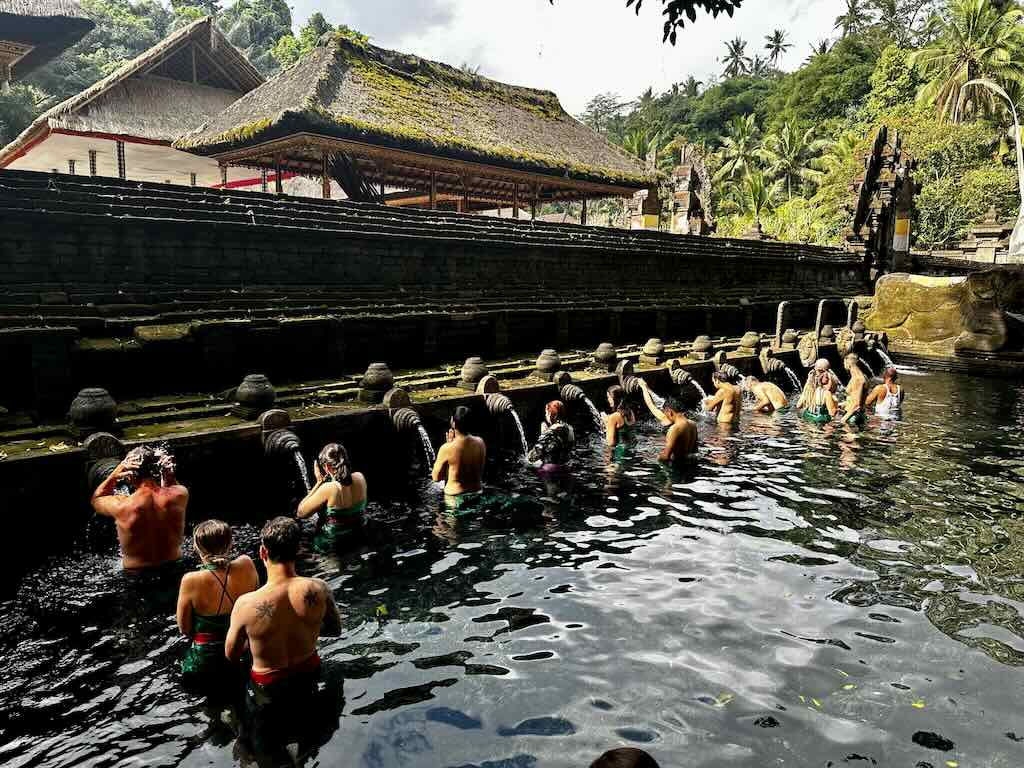
Founded in the 10th century at Tampaksiring, half an hour north of Ubud, Tirta Empul is dedicated to Vishnu and built around a natural spring — the name means “holy water”. Balinese families come here for melukat, a purification ritual: you move along a row of stone spouts, praying and submerging your head under each in turn.
Visitors are welcome to take part, and it is a genuinely moving thing to do — but treat it as a ritual, not a photo opportunity. You will need a sarong for the water (rented on site), a change of clothes, and the patience to follow the queue properly. Skip the spouts directly in front of the shrine to the dead; local worshippers will show you which.
Gunung Kawi, shrines cut into the gorge
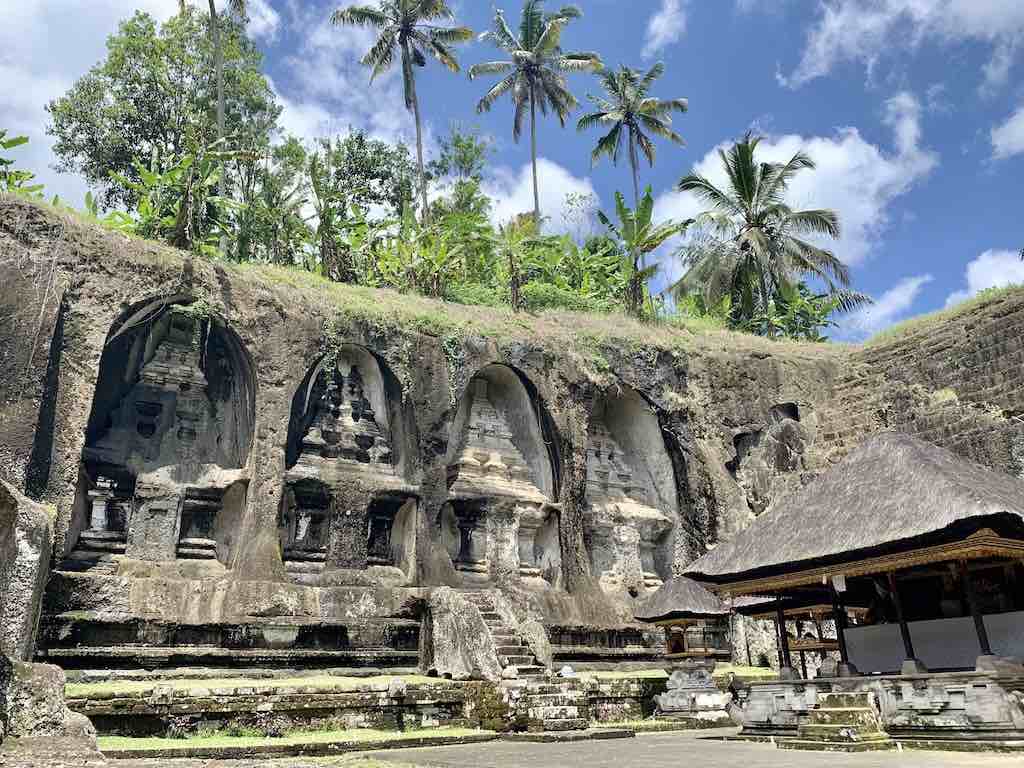
Gunung Kawi is the most atmospheric temple near Ubud and the least crowded of the four. Ten shrines from the 11th century are carved directly into the cliffs of the Pakerisan river valley, seven metres high, dedicated to King Anak Wungsu and his family.
You reach them down some 300 stone steps through rice terraces and coconut palms — which of course you then climb back up, so bring water. At the bottom the noise of the river and the scale of the rock-cut facades make it feel far older and far more remote than a 35-minute drive from town.
Taman Ayun, the royal water temple
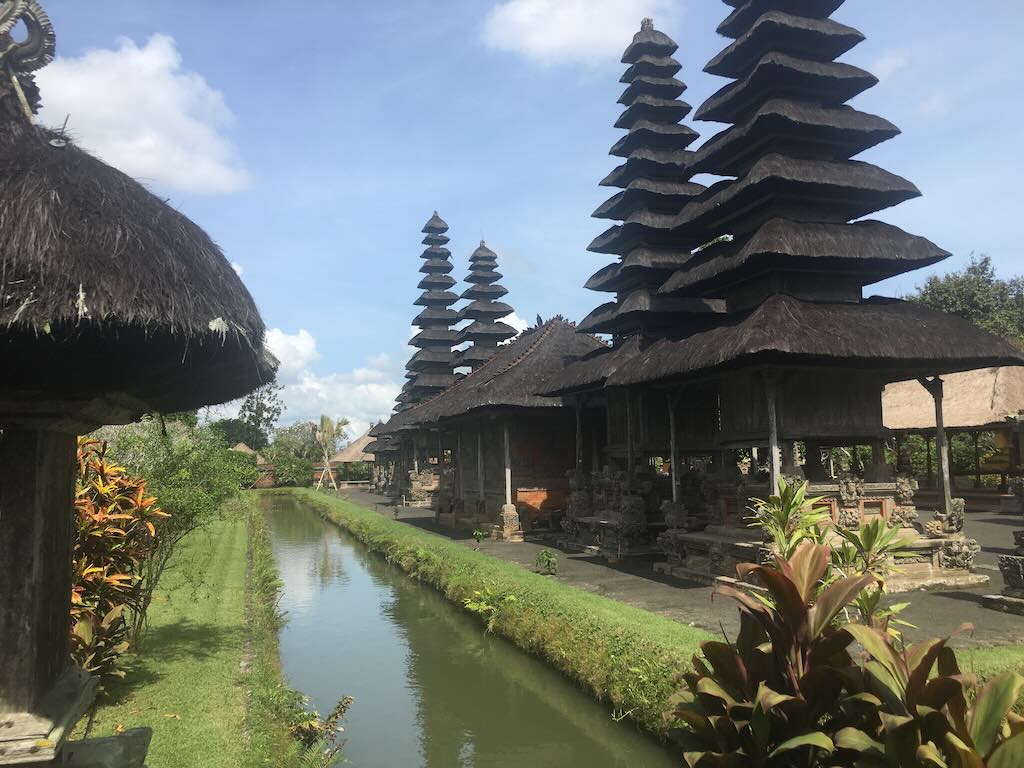
Built in 1634 by the Mengwi dynasty and part of the UNESCO-listed subak landscape, Taman Ayun means “beautiful garden”. The temple sits on a raised platform inside a moat, its courtyards lined with meru — the tiered pagoda towers, each dedicated to a deity or royal ancestor, their thatched roofs stepping up in odd numbers.
It is fifty minutes west of Ubud, which puts it slightly off the standard loop; combine it with Jatiluwih and make a half day of it. Visitors walk the perimeter rather than entering the inner courtyard, so an hour is plenty.
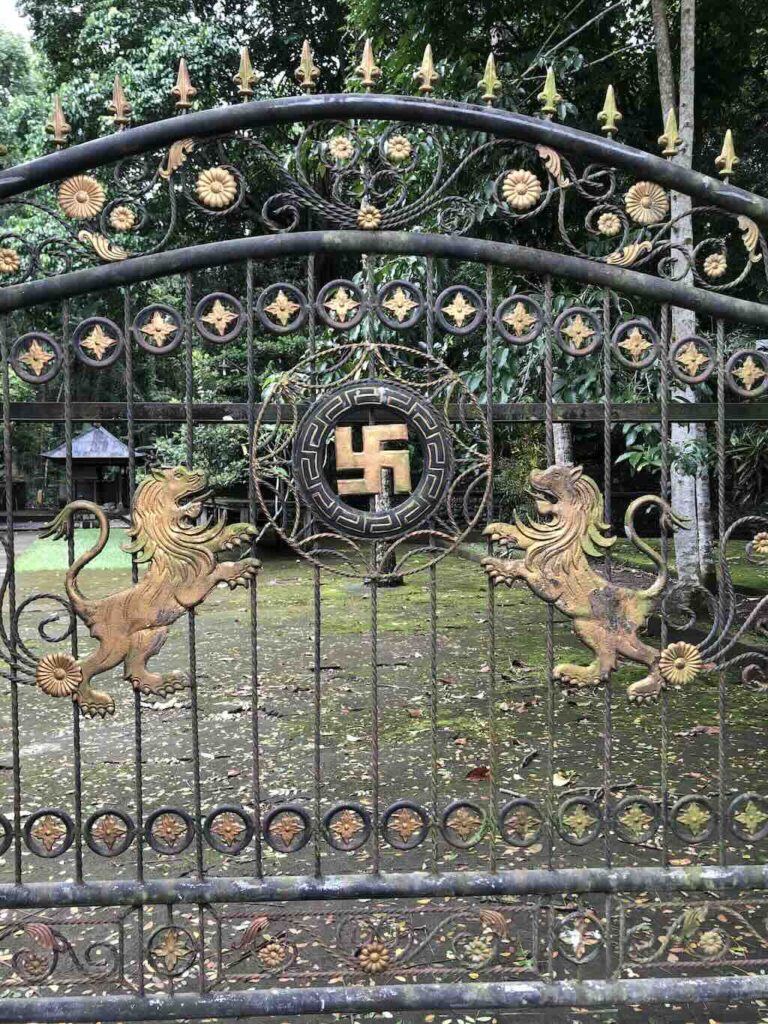
One thing that surprises visitors: you will see swastikas carved on temple gates and painted on shrines all over Ubud. This is the ancient svastika, a sacred symbol of good fortune in Hinduism, Jainism and Buddhism, in use for several thousand years before it was appropriated in 20th-century Europe. In Bali it means exactly what it has always meant.
Best Waterfalls Around Ubud
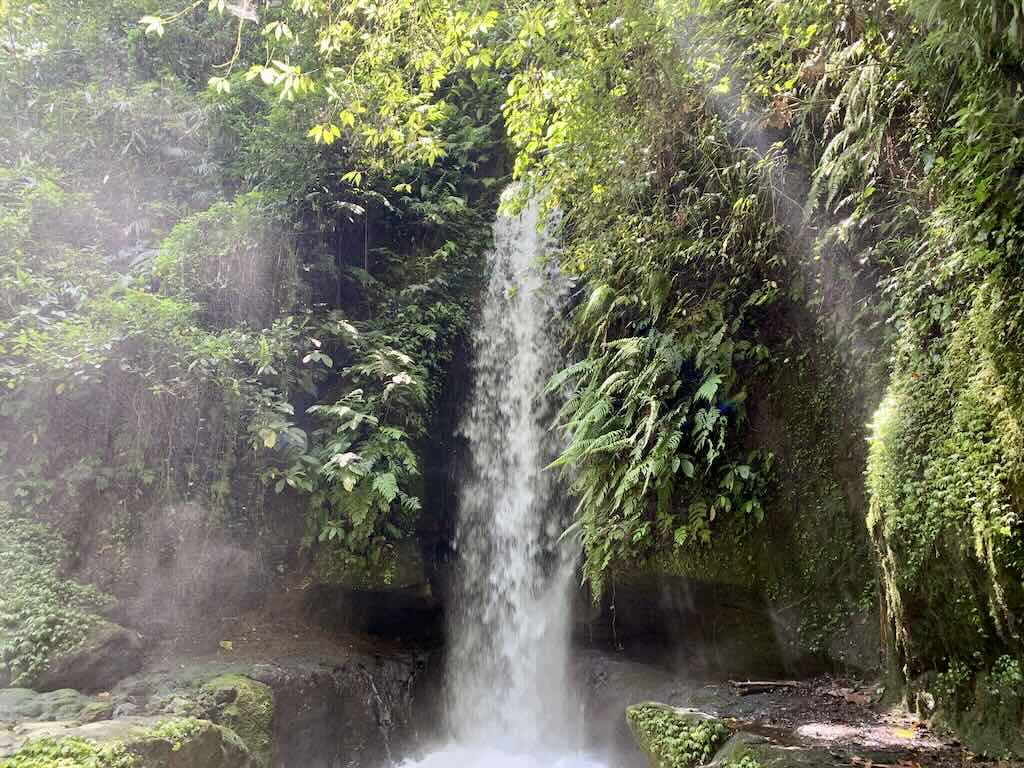
The rivers that cut the gorges around Ubud produce a remarkable concentration of waterfalls, most of them twenty to forty minutes away by scooter. Two rules apply to all of them: go in the morning, before the tour vans, and expect a staircase — the falls sit at the bottom of the valleys, and what goes down comes back up.
Tegenungan, the easy one
Tegenungan is the closest and the most accessible, a few kilometres south of Ubud, and consequently the busiest. A wide curtain of water drops into a broad pool you can swim in, with viewing platforms above and cafés on the rim. It is not the most beautiful waterfall in the area, but it is the one you can reach in twenty minutes with no walking to speak of — perfect if you have half a morning.
Tibumana, the quiet one
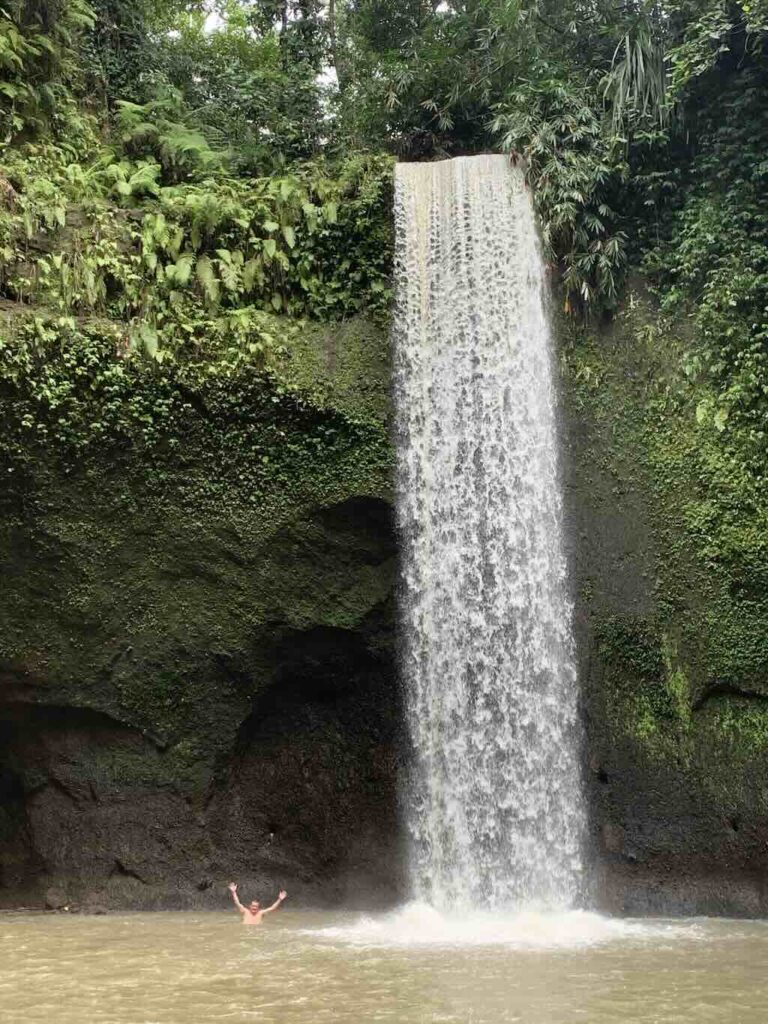
Tibumana is a single narrow fall into a round pool enclosed by jungle, about forty minutes east of Ubud. The access path is short and easy, the crowds are a fraction of Tegenungan’s, and the swimming is the best of the group. If you only do one waterfall around Ubud, make it this one.
Kanto Lampo, the photogenic one
Kanto Lampo is unlike the others: rather than a single drop, the water fans out over a broad staircase of black rock, which you can climb into. It photographs extraordinarily well, which means a queue for the best spot on weekends and a local attendant managing turns. Come at opening and you will have it to yourself. The rock is slippery — this is not the place for flip-flops.
Goa Rang Reng, the one people miss
Goa Rang Reng sits in a narrow gorge east of Ubud where the water slides down an inclined rock face rather than falling. There is a small cave beside it, a temple above, and on a weekday morning almost nobody. Access is a steep set of steps and a short scramble.
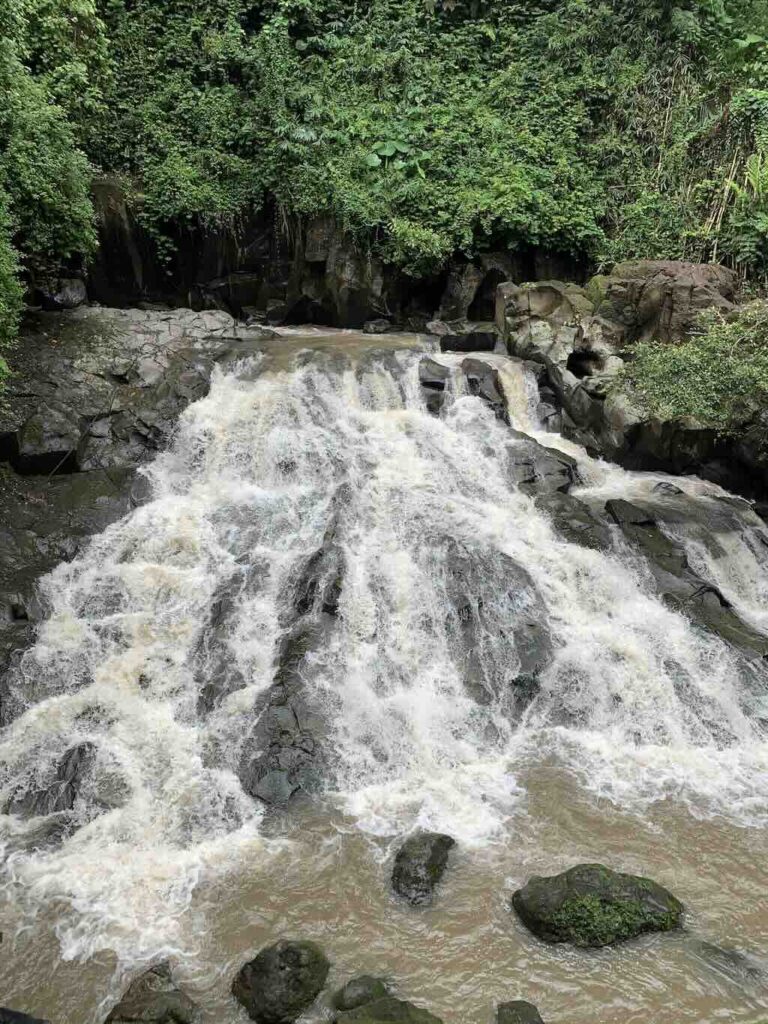
A practical note on all of them: entrance fees are €1.50–3, cash only, and the flow is strongest in the wet season (November to March) when the water is also browner. In the dry season the falls are clearer but thinner. Swimming after heavy rain is a bad idea in any of these gorges.
Best Rice Terraces Near Ubud
The rice terraces around Ubud are irrigated by subak, a cooperative water-management system run by temple councils since the 9th century and inscribed on the UNESCO World Heritage list in 2012. It is not decorative: the whole landscape you are photographing is a working thousand-year-old piece of hydraulic engineering.
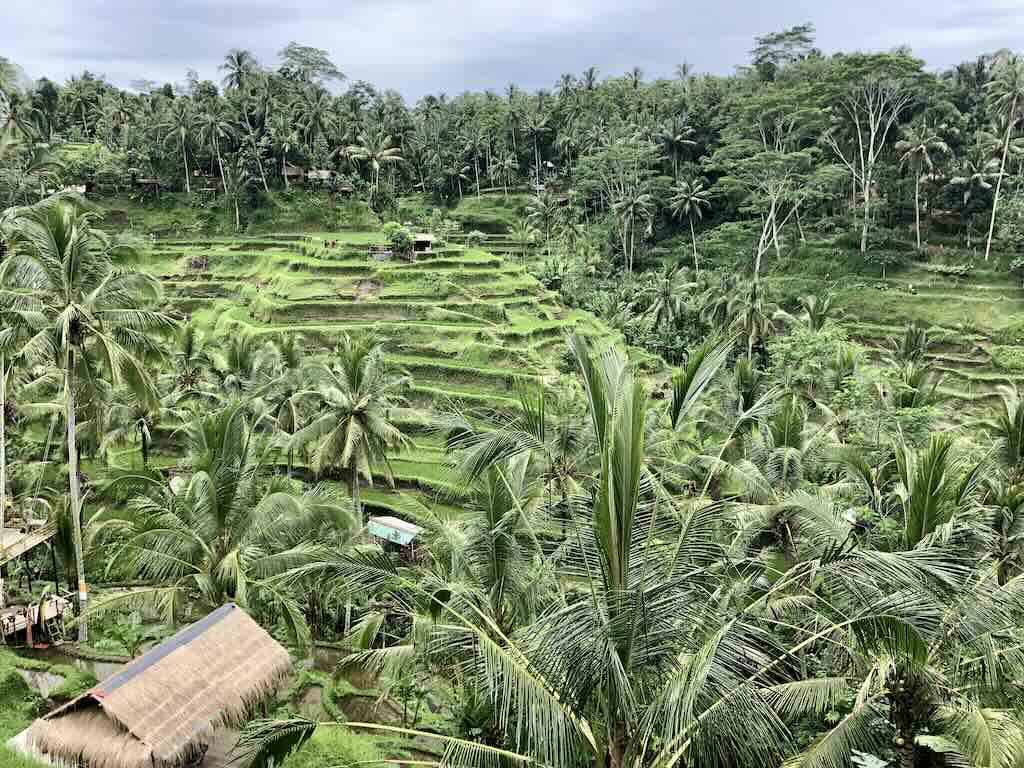
Tegallalang Rice Terraces
Twenty minutes north of Ubud, Tegallalang is the terraced valley you have already seen a hundred times online — steep, narrow, dramatically stepped, and best at sunrise or in the last hour of light. Most visitors stop at the roadside viewpoints, take the photo and leave. Don’t: walk down into the valley and up the far side. The path takes an hour, costs a small donation at two or three gates, and puts you among people actually working the fields.
The swings are here too — several operators, €10–25 depending on height and whether photos are included. Touristy, undeniably, and genuinely spectacular if that is your thing.
Jatiluwih Rice Terraces
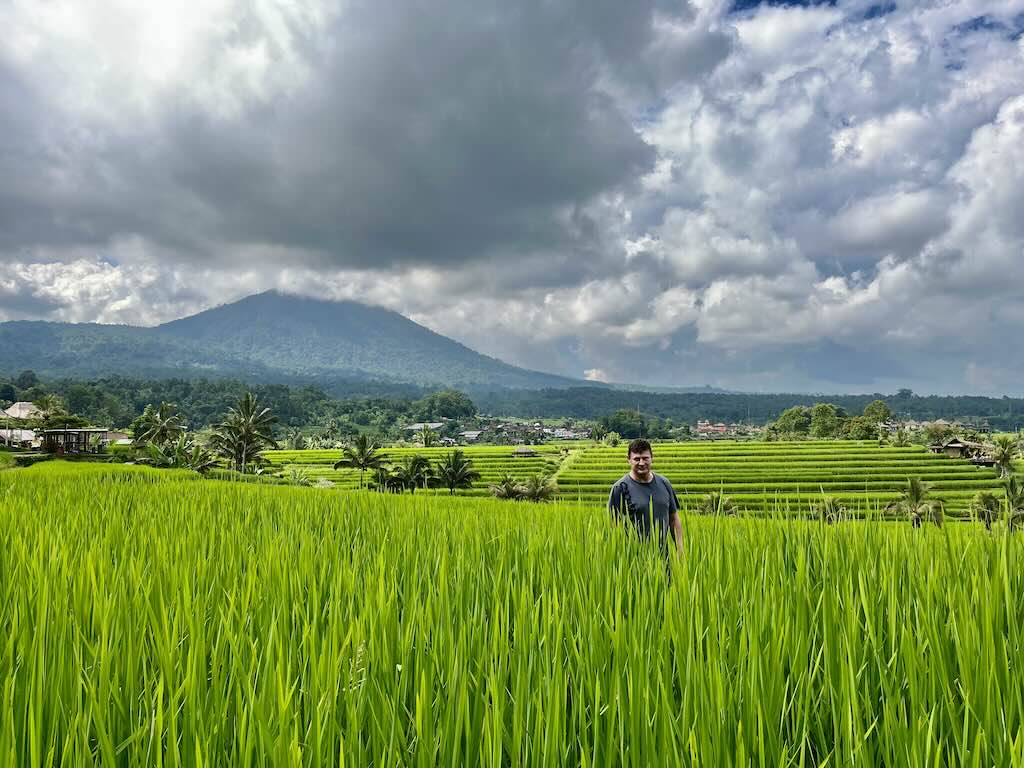
Jatiluwih is an hour and a half from Ubud on the slopes of Mount Batukaru, and it is a different order of thing: not a photogenic valley but 600 hectares of terraces stepping away to the horizon, with marked walking loops of one to two hours through them. It is the core of the UNESCO subak listing.
Fewer visitors make the drive, which is exactly the point. Combine it with Taman Ayun on the way back and you have a full, unhurried day. Bring a rain jacket — it is higher and wetter than Ubud.
Which one should you choose?
If you have one morning, go to Tegallalang and walk the valley properly. If you have a full day and want the landscape without the crowds, go to Jatiluwih. If you have neither, walk the Campuhan Ridge at dawn — the rice fields at the far end are free, five minutes from town, and empty.
Where to Stay in Ubud
Where you sleep in Ubud changes the trip more than in most Bali destinations, because the difference between “walk to dinner” and “call a driver for everything” is about two kilometres. Four broad options, in order of how most people should think about it.
Central Ubud — best for walkability and restaurants
Staying in the centre puts the Royal Palace, the art market, Monkey Forest Road, the yoga studios and the evening dance performances all within walking distance. If you are here for two or three nights and don’t want to depend on a scooter or a driver after dark, this is the right call.
Best for: first-time visitors · short stays · anyone who wants to eat out and see a performance without organising transport.
- Adiwana Bisma — the pick of the Adiwana group in town: contemporary Balinese design, a long pool over the valley, five minutes’ walk from the palace.
- Komaneka at Bisma Ubud — quiet luxury on the same ridge, large rooms facing the rice fields, still walkable to the centre.
- Bisma Eight — smaller, design-led, with one of the better rooftop restaurants in Ubud.
- Adiwana Resort Jembawan — mid-range, garden setting, a short walk from Monkey Forest Road.
Jungle and valley hotels — best for nature and views
Ten to twenty minutes out of the centre, the hotels change character entirely: properties built along the Ayung and Petanu river gorges, or set among rice fields, with pools cantilevered over the forest and no sound at night but water and insects. You will need a scooter or the hotel shuttle to go into town, and most of them run one.
Best for: couples and honeymooners · photographers · anyone who would rather have the view than the restaurants.
- The Kayon Jungle Resort — the multi-level infinity pools above the forest that you have seen photographed a thousand times. Adults-only, about twenty minutes from the centre.
- Adiwana Unagi Suites — rice-field setting on the edge of town, good value for the standard of room.
Luxury retreats — best for privacy and wellness
Ubud is one of Asia’s densest concentrations of high-end resorts, and what they sell is seclusion: private pool villas down in the gorges, spa pavilions over the river, yoga decks, and a chef who will cook you a Balinese tasting menu for two. Expect €250–800 a night, and expect to be twenty minutes from anywhere.
Best for: honeymoons and anniversaries · long-haul travellers who want to stop moving · anyone treating Ubud as the restful half of a Bali trip.
Guesthouses and mid-range — best for longer stays
Ubud has an enormous supply of family-run guesthouses, many of them in compounds behind the main streets or in the villages just outside — Penestanan, Nyuh Kuning, Peliatan. Rooms from €20–40, breakfast included, and a level of hospitality that resorts charge ten times as much to imitate.
Best for: digital nomads · solo travellers · stays of a week or more.
- Beehouse Dijiwa Ubud — the best value in this bracket: comfortable rooms, a proper pool, a quiet setting, and still close enough to walk in.
- Adiwana Suweta — small, calm, on the north side of the centre, a good step up from a guesthouse without a resort price.
Insider tip: the sweet spot in Ubud is five to ten minutes outside the central streets — Penestanan or Nyuh Kuning. You lose the traffic noise, you keep the walk to dinner, and you pay noticeably less for the same standard of room.

How Many Days Do You Need in Ubud?
Two to three nights is right for most trips. That is enough for the temples, one set of rice terraces, a waterfall, an evening performance and a spa or yoga session, without spending the whole time in a car. One night is a mistake — you will spend half of it driving in from the airport. A week is only worth it if you are here to slow down, take classes, or work.
A realistic three-day plan
Day 1 — the town. Campuhan Ridge Walk at 6:30, breakfast at the far end, back for the Monkey Forest at opening. Afternoon: the Puri Lukisan museum, then the art market and the streets around it. Evening: dance performance at the Royal Palace, dinner in the centre.
Day 2 — the temple and terrace loop. Driver for the day. Goa Gajah first (it opens early and fills fast), then Gunung Kawi, then Tirta Empul for the purification pools. Late afternoon at Tegallalang, walking down into the valley rather than staying at the viewpoints. Back for a massage before dinner.
Day 3 — pick one. Either the Mount Batur sunrise trek (02:00 pick-up, back by lunch, then rest), or a slower day: a cooking class in the morning, Tibumana waterfall in the early afternoon, Jatiluwih if you want the drive.
From there, most itineraries continue east to Karangasem for the water palaces and the quieter coast, or back south to Seminyak for the beach half of the trip. Both are covered in the full Bali travel guide.
Ubud vs Seminyak vs Canggu: Which Should You Choose?
This is the question most people are really asking when they plan Bali. The honest answer is that these three places have almost nothing in common, and most itineraries include two of them.
| Ubud | Seminyak | Canggu | |
|---|---|---|---|
| Setting | Inland hills, rice fields, river gorges | Beachfront, dense and developed | Beach and rice fields, spread out |
| Best for | Culture, temples, nature, wellness | Restaurants, beach clubs, shopping | Surf, cafés, remote work |
| Beach | None — 45 min away | Long sunset beach, strong surf | Black sand, good beginner surf |
| Nightlife | Almost none | The most on the island | Bars and beach clubs, younger |
| Traffic | Bad in the centre, 16:00–19:00 | Heavy, constant | Heavy, worsening |
| Typical stay | 2–3 nights | 2–4 nights | 3+ nights, or months |
| Value | Best of the three | Most expensive | Mid to expensive |
The most common two-week structure: three nights in the south to recover from the flight and get some beach, two or three in Ubud for the culture and the interior, then east or offshore — Karangasem, the Gili islands, or Nusa Penida — for the last stretch. If your trip is diving-led, plan it around diving in Bali instead and slot Ubud in between dive days.
Practical Tips for Visiting Ubud
- Plan around the traffic. Central Ubud is congested from roughly 16:00 to 19:00, and Jalan Raya Ubud in particular can take twenty minutes to cross by car. Do your driving in the morning.
- Dress for temples. A sarong and sash are required at every temple, and shoulders must be covered. All the major sites lend them at the entrance, usually included in the ticket.
- Carry cash. Restaurants and hotels take cards; temples, waterfalls, parking attendants, warungs and market stalls do not. ATMs in the centre dispense a maximum of 2.5 million IDR (about €125) per withdrawal.
- Start at 7 am. This is the single most useful piece of advice in this guide. Before 9 am, the rice terraces, the waterfalls and Tirta Empul are quiet, cool and beautiful. After 10 am they are car parks.
- Take a driver for the temple loop. €30–40 for the day, four sites, no parking to worry about and no navigating in the dark. Split between two or three people it costs less than scooter rental and fuel.
- Expect rain, even in the dry season. Ubud is in the hills and gets considerably more rain than the coast. Afternoon showers are normal year-round; November to March they are heavy and daily.
- Respect ceremonies. Offerings (canang sari) are placed on the ground everywhere — walk around them, not over them. If a procession blocks the road, wait; it will not be long, and it is the reason you came.
- Get an eSIM before you land. Coverage in Ubud is good, but you will want maps and a ride-hailing app from the moment you arrive. Regional practicalities are covered in getting around Indonesia.
When to go: April to October is the dry season and the best time for hiking, waterfalls and clear volcano views. July and August are busiest and priciest. My preference is May, June or September — the landscape is still green, the crowds are thinner and the rates are lower.
Why Ubud Belongs in Your Bali Trip
Ubud is where Bali stops being a beach destination and starts being an island with a thousand-year-old culture that is still, visibly, running. The temples are in use. The rice terraces are farmed. The offerings on your hotel doorstep were made that morning by someone who works there. None of it is staged, and that is the difference between Ubud and the south.
Give it two or three nights, get up early, get out of the centre, and it will very likely be the part of the trip you talk about afterwards.
For the rest of the island — where to go, how long to spend, and a full 10-day route — see my complete Bali travel guide. If Bali is one stop on a longer trip, the Indonesia travel guide covers Java, Flores, Komodo and Raja Ampat, and the best diving in Indonesia covers what is under the water.
Indonesia Travel Guide
From Bali to Java, Flores, and Raja Ampat, explore the best places to visit in Indonesia and plan a multi-island adventure.
Bali Travel Guide
Discover where to stay in Bali, top experiences, hidden gems, practical tips, and a 10-day itinerary to plan the perfect trip.
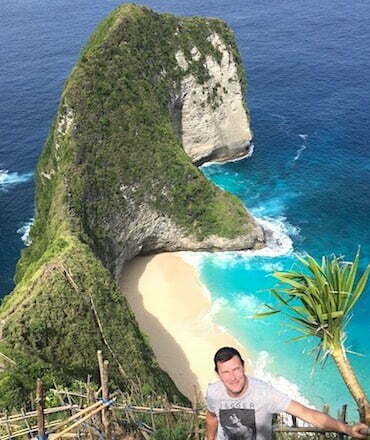
Nusa Penida Travel Guide
An hour from Bali, discover dramatic cliffs, manta rays, hidden beaches, where to stay and insider tips for visiting Nusa Penida.
Frequently Asked Questions About Ubud
Where is Ubud in Bali?
Ubud is in the Gianyar regency, in the hills of central Bali, about 25 km inland from the south coast and 35 km from Ngurah Rai airport. It sits at around 200 metres above sea level, surrounded by rice terraces and river gorges. It is not a coastal town — the nearest beach is roughly 45 minutes away.
How far is Ubud from Bali airport?
About 35 km, which takes between 1 h 15 and 2 h depending on traffic. There is no train or useful bus; use an airport taxi (€20–25), a ride-hailing app, or a driver arranged by your hotel. Book ahead for late arrivals.
Is Ubud worth visiting?
Yes, if you want temples, rice terraces, waterfalls, art and wellness rather than beaches and nightlife. It is the cultural centre of Bali and the best base for the interior of the island. If your trip is entirely beach-focused, it may not be for you.
How many days do you need in Ubud?
Two to three nights suits most itineraries: one day for the town, one for the temple and rice terrace loop, and one for a waterfall, a volcano hike or a cooking class. Longer is worth it only if you are here to slow down.
Is Ubud touristy?
Central Ubud is busy, particularly Monkey Forest Road and the area around the palace. The surrounding villages and valleys — Penestanan, Nyuh Kuning, Sayan — stay quiet, and almost every site is peaceful before 9 am.
Is Ubud safe?
Yes, Ubud is very safe for travellers, including solo women. The realistic risks are traffic on a scooter, slippery paths at waterfalls, and opportunistic theft from an unlocked scooter or bag — not violent crime.
When is the best time to visit Ubud?
April to October, the dry season, is best for hiking, waterfalls and volcano views. May, June and September offer the best balance of weather, crowds and prices. Note that Ubud is wetter than the coast all year because of its altitude.
Can you swim in Ubud waterfalls?
Yes, at Tegenungan, Tibumana and Kanto Lampo among others. Check conditions first: after heavy rain, flow and currents can become dangerous, and the rocks are slippery everywhere. Tibumana has the best swimming pool of the group.
Do you need a scooter in Ubud?
Not for the centre, which is walkable. For temples, waterfalls and rice terraces you need either a scooter (€5–7 a day) or a driver (€30–40 for the day). A driver is usually better value for two or more people, and far less stressful on the narrow roads north of town.
Ubud or Canggu — which is better?
Ubud for culture, nature and quiet; Canggu for surf, cafés, coworking and a younger crowd. They are about 75 minutes apart and serve entirely different trips. Many visitors do a few nights in each.
Is there a beach in Ubud?
No. Ubud is inland, in the hills. The closest beaches are around Sanur, about 45 minutes to an hour away by car. If a beach every morning matters to you, stay on the coast and visit Ubud as a day trip or a short stopover.
Can you visit Nusa Penida as a day trip from Ubud?
You can, but it makes for a very long day: an hour to Sanur port, a 45-minute fast boat, then a full day on rough island roads before the return crossing. Staying one or two nights on Nusa Penida is far more rewarding — and it is the only way to dive with the manta rays and see the west coast properly.