Lombok Travel Guide: Things to Do, Itineraries & Tips
By Blaise Jaeger · Updated August 7, 2026
Lombok sits just east of Bali, close enough to reach in under two hours by boat and different enough to feel like another country. Wilder, quieter, far less built up — and home to Indonesia’s second-highest volcano, some of the best beaches in the archipelago, and the gateway to the Gili Islands.
I have been coming here for years from my base in Bali. This guide covers what to do in Lombok, where to go, how many days you actually need, where to stay in each area, what it costs, and the mistakes that ruin people’s trips. It is written from repeat visits, not from a press release.
Why Visit Lombok — and Is It Worth It?
Short answer: yes, and for most people it is worth more than another week in Bali. The longer answer depends on what you want. Lombok trades Bali’s temples, cafés and infrastructure for space, silence and landscape. If that trade appeals to you, you will love it. If you need a flat white within walking distance, you may not.
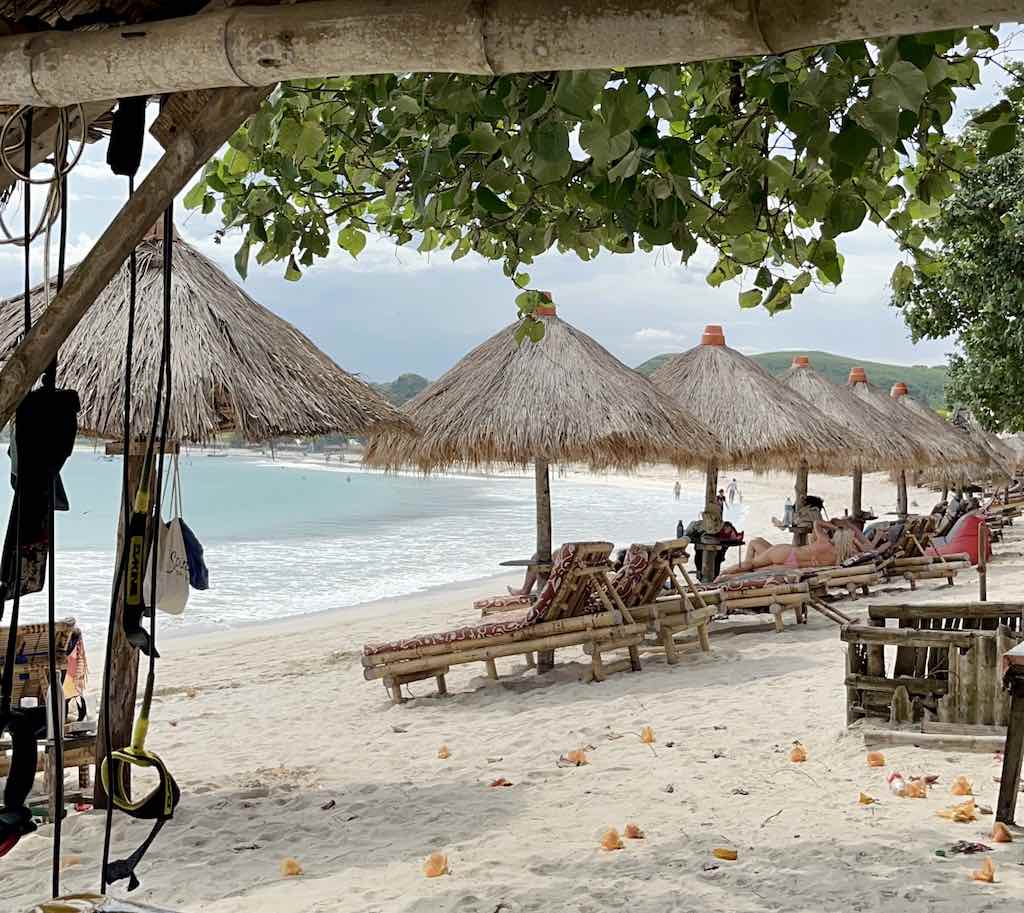
- Genuinely uncrowded beaches. Selong Belanak, Mawun and Tanjung Aan are the equal of anything in Bali, and on a weekday you may share them with a handful of people.
- Mount Rinjani. At 3,726 metres it is the second-highest volcano in Indonesia, with a crater lake inside it. The trek is one of the great walks in Southeast Asia.
- The Gili Islands on your doorstep. Twenty minutes by boat from Bangsal. Most people treat them as a separate trip; they are really part of Lombok.
- A living Sasak culture. Lombok is predominantly Muslim and its Sasak traditions are not staged for visitors — they are simply how people live.
- It costs less. Accommodation, food and transport all run below Bali prices for equivalent quality.
The honest counterpoint: distances are long, roads are slow, public transport barely exists, and outside Kuta and the Gilis the tourist infrastructure thins out fast. Lombok rewards planning in a way Bali does not.
Lombok at a Glance
- Where: West Nusa Tenggara, immediately east of Bali across the Lombok Strait
- Size: 4,738 km² — roughly the same as Bali, with a fifth of the visitors
- Getting there: fast boat from Padang Bai (1h30-2h30) or a 30-minute flight from Denpasar
- How long to stay: 4 to 6 days for the island, 7+ if you climb Rinjani
- Best time: May to October (dry season); June to September for the clearest conditions
- Budget: $30-45 a day backpacking, $75-130 mid-range, $200+ high end
- Getting around: scooter or a car with a driver — public transport is not a realistic option
What Ten Trips to Lombok Taught Me
I have lived in Bali since 2020 and I have crossed to Lombok around ten times since. Some of those were proper trips, some were stopovers on the way to the Gilis, and one was an accident — every fast boat was cancelled for rough seas and I ended up on the public ferry to Lembar for the best part of a day.
My default is the north. I like settling for a few days in the beachfront hotels near Bangsal, on Sire Beach, either side of a stay on the Gili Islands. It is the part of Lombok where you can do very little without feeling you are missing out, and where the Gilis are close enough to visit for a day rather than a week.
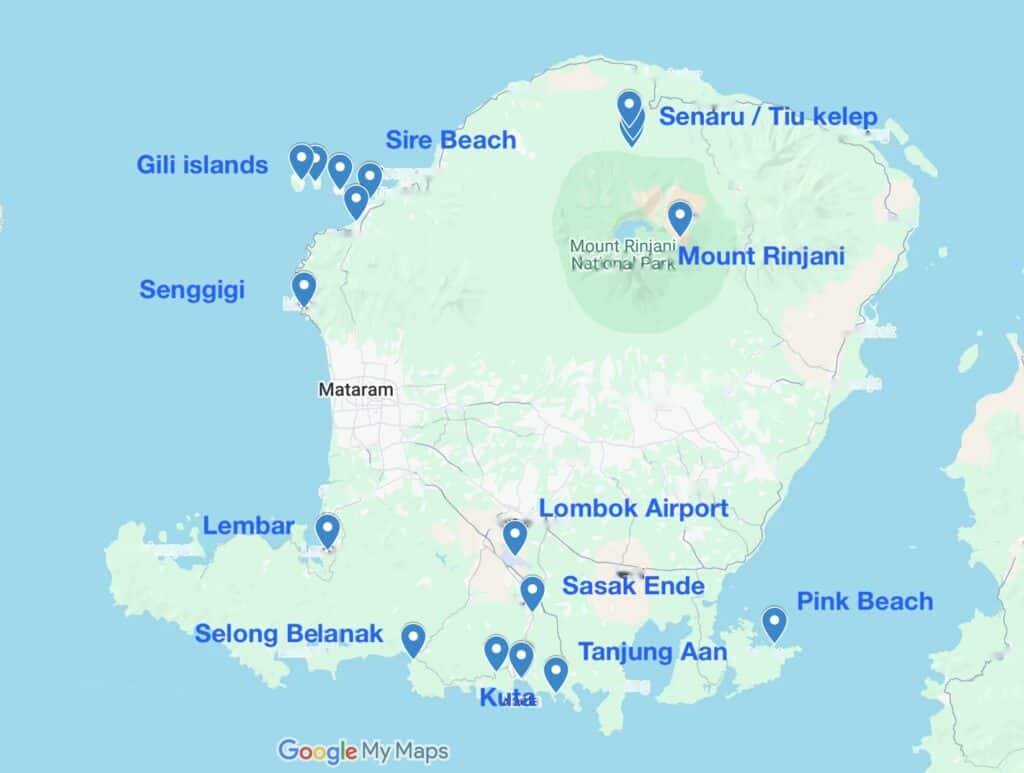
I rent a scooter at Bangsal every single time. There are rental places right at the port, the paperwork takes ten minutes, and it changes the island completely — from a series of expensive transfers into somewhere you can actually explore. I have ridden Bangsal to Senaru for the waterfalls, and Bangsal all the way down to Kuta Lombok. That last one is about 90 km and a solid three hours on roads that are mostly good but never empty. It is a real ride, not a hop. Leave in the morning and do not attempt it after dark.
The thing I got wrong the first few times was distance. Lombok looks small on a map. Kuta in the south to Senaru in the north is four to five hours of driving, not the ninety minutes your brain estimates. I have watched people book one night in the south and one in the north and spend their entire holiday in a car.
Best Things to Do in Lombok
- Swim and surf the south coast beaches — Tanjung Aan, Selong Belanak, Mawun, Kuta
- Take a boat to the Gili Islands — Trawangan for nightlife, Air for balance, Meno for silence
- Trek Mount Rinjani — two to three days to the crater rim or the summit, with a guide
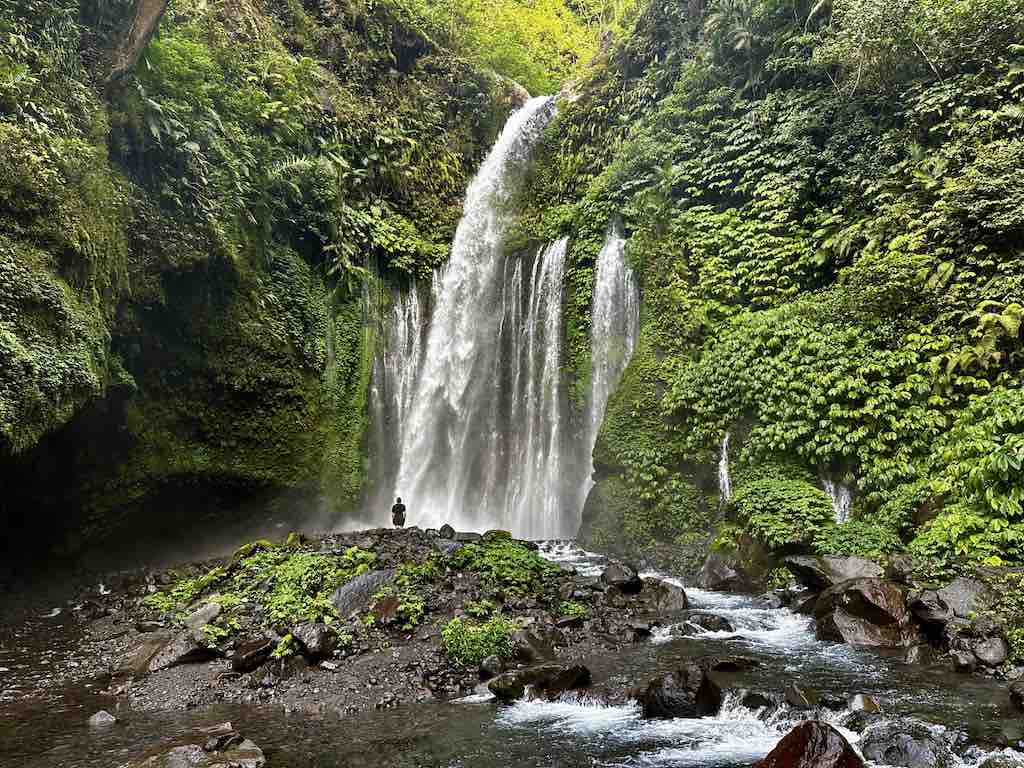
- Walk to the Senaru waterfalls — Sendang Gile in fifteen minutes, Tiu Kelep in another thirty
- Watch the sunset at Senggigi — the west coast faces Bali and Mount Agung on a clear evening
- Visit the Sasak village of Ende — bamboo houses, thatched roofs, and traditions still in daily use
- Go into the Prabu bat cave — thousands of fruit bats, and not for the squeamish
Where to Go in Lombok: The Main Regions
Lombok breaks into four areas that feel nothing alike. Pick two, at most three, and stay put in each — the driving times below are the whole reason.
Kuta Lombok and the south — beaches and surf
Kuta Lombok has nothing to do with its namesake in Bali. It is a small, low-rise town strung along a bay, surrounded by the best beaches on the island and a serious surf scene. Kuta Beach itself is pleasant; Tanjung Aan, ten minutes east, is the one you have seen in photographs — a horseshoe bay with two shades of sand, one fine and pale, one coarse and golden. Small boats will run you out to the break inside the bay if you surf.
West of Kuta, Selong Belanak is a wide crescent with a gentle beach break — it is where most people take their first surf lesson in Indonesia — and Mawun sits in a near-enclosed bay with almost no development. The Mandalika circuit, which has hosted the Indonesian motorcycle Grand Prix since 2022, is on the edge of town, and the airport is 25 minutes away.
Prabu Cave — the strangest hour on the island
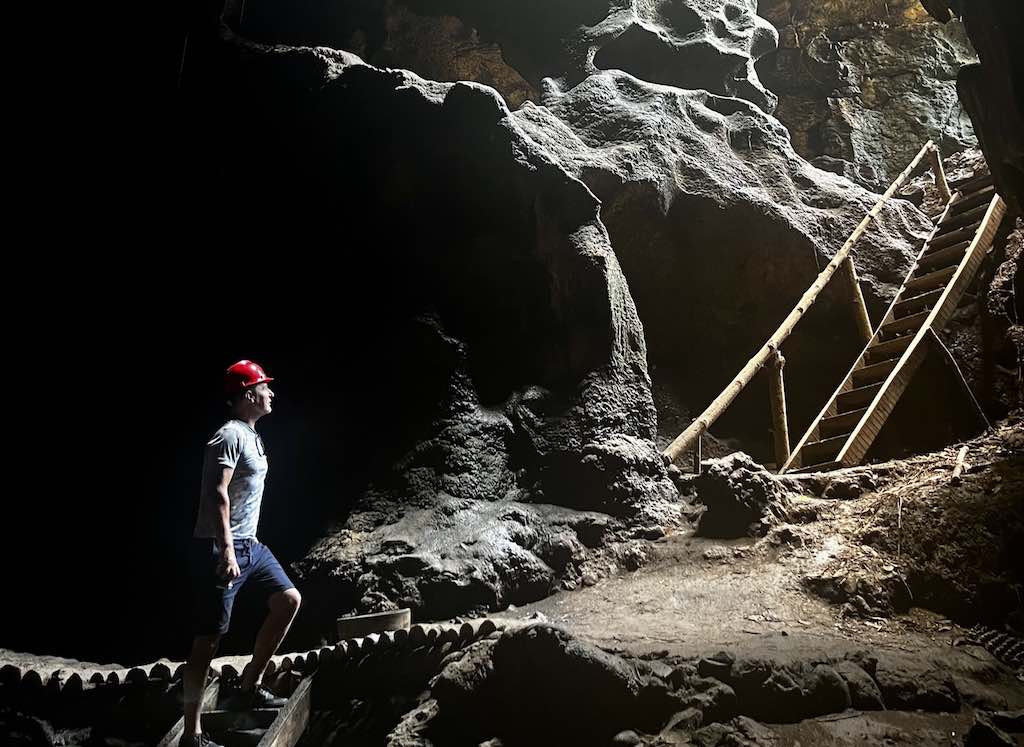
Goa Bangkang Prabu holds a large colony of fruit bats along with stalactites and stalagmites. You get a helmet at the entrance. Bring something to hold over your mouth and nose, because the smell of guano is powerful, and be aware that the walls are alive with cockroaches. It is genuinely memorable and absolutely not for everyone.
Mount Rinjani and Senaru — volcano and waterfalls
Senaru is a mountain village on Rinjani’s northern slopes, about an hour and fifteen minutes from Bangsal, and the main gateway to the volcano. You arrive to rice terraces, traditional Sasak houses and a pace that drops noticeably.
Most visitors come for the two waterfalls rather than the trek. Sendang Gile is fifteen minutes from the car park down a stepped path, and spectacular enough on its own that plenty of people stop there. Tiu Kelep is another thirty minutes on, through jungle, across streams and over rocky ground. The name translates as “flying pool”, and the Sasak community holds it to have mystical powers. The reward is a 45-metre fall into a turquoise pool with enough spray in the air to cool you down before you get in.
The Rinjani trek itself is two days and one night to the crater rim, or three days and two nights for the summit, starting from Senaru or Sembalun. It costs roughly $170-330 depending on the operator and the format, it requires real fitness, and a licensed guide is now mandatory — you cannot do it independently. The national park usually closes from January to March.
Bangsal and the north coast — hotels and the Gili crossing
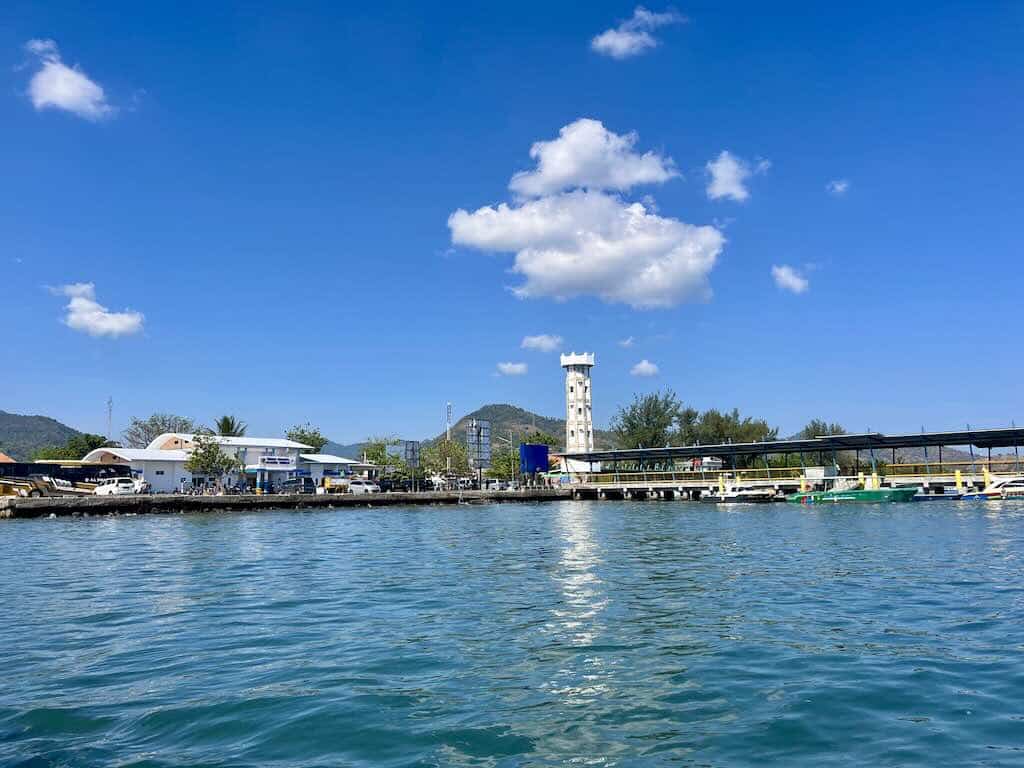
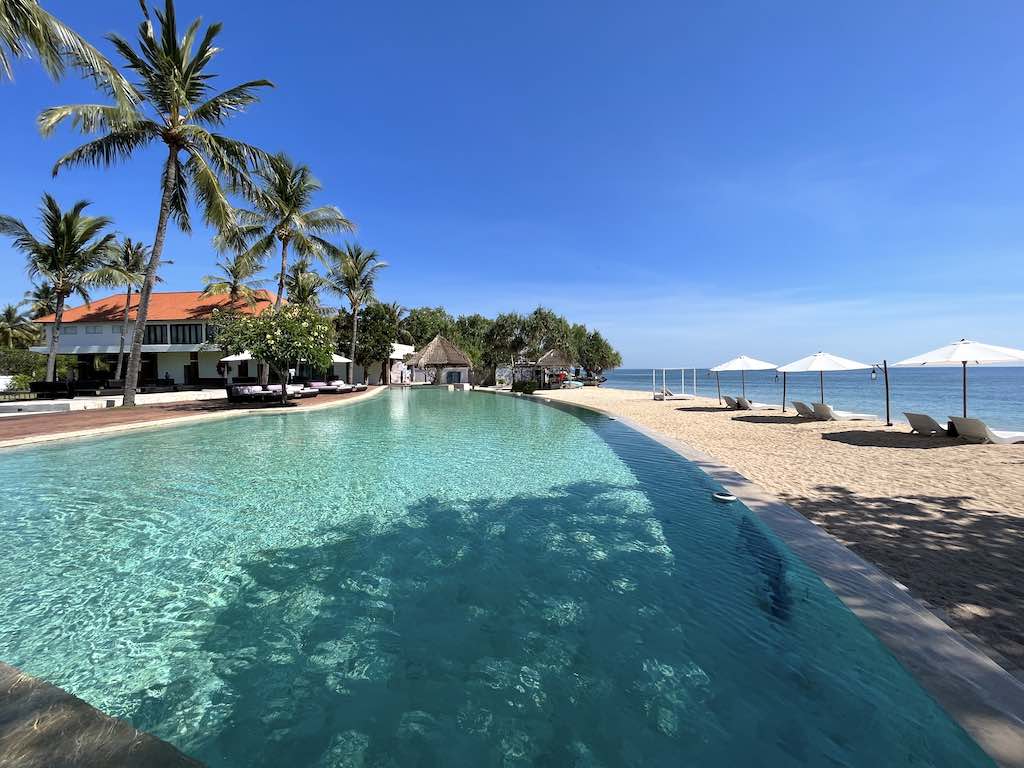
Bangsal is a small fishing village on the northwest coast, directly opposite the Gilis, and the main public port for boats to the islands. Fast boats from Bali land here or at the neighbouring jetties of Teluk Nare and Teluk Kodek. You can also hire a traditional perahu to poke around the bays and islets nearby.
Just north, Sire Beach is where the island’s best beachfront hotels are, on a long calm stretch of sand looking straight at the Gilis. This is my own base most trips. The Lombok Wildlife Park is nearby — I am not usually keen on seeing animals in captivity, but the ones here look genuinely well kept.
The Gili Islands — three islands, three moods
The Gili Islands are three small islands off the northwest coast, all white sand, clear water and coral, and all car-free. Choosing the wrong one is the single most common way people are disappointed by them.
- Gili Trawangan — the biggest and busiest, with restaurants, bars and a nightlife scene
- Gili Air — the balance: real beaches, good beach bars for sunset, and somewhere to sleep afterwards
- Gili Meno — the smallest and quietest, for people who want nothing to happen
Senggigi and the Sasak village of Ende
Senggigi is Lombok’s original beach resort, on the west coast, with a beach that runs for several kilometres and faces the sunset — and Bali’s Mount Agung on the horizon when the air is clear. It has more restaurants, shops and hotels than anywhere else on the island outside Kuta, and it works as a base for the volcano and the villages.
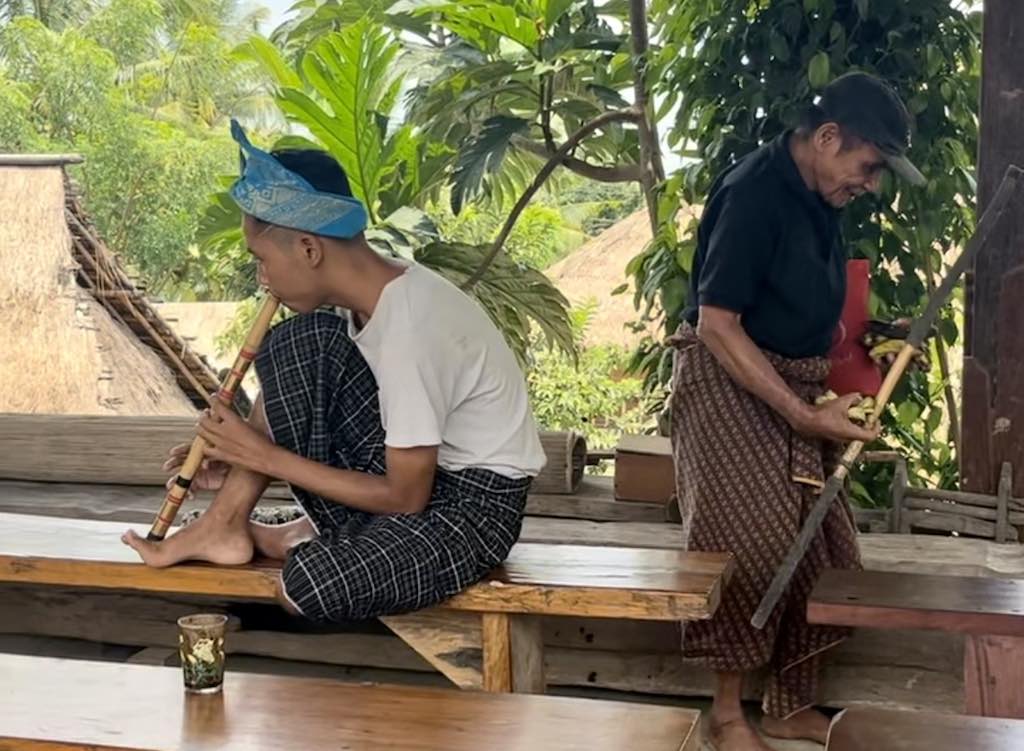
Sasak Ende, inland from the south coast, is a traditional village of bamboo-and-timber houses with thatched roofs and mud-and-dung floors, surrounded by rice fields. The residents are farmers and craftspeople and they still live by the old customs. A guide will walk you round and explain them — including the tradition by which a young man is expected to literally abduct his bride before he can marry her.
How Many Days Do You Need in Lombok?
Four to six days is the honest answer for the island itself, and seven or more if you climb Rinjani. The constraint is not how much there is to see — it is how long it takes to get between the parts of the island.
- 3 days — the south only: Kuta and the beaches, nothing else
- 4 to 5 days — south plus the Senaru waterfalls, plus a night or two on the Gilis
- 6 to 7 days — a full circuit, or the same with the Rinjani trek instead of the Gilis
- 8 days or more — Lombok and the Gilis without rushing, or combined with Bali
Whatever length you pick, use two or three bases, not five. Changing hotel every night on Lombok means spending your holiday in a car.
Lombok Itineraries
4 days in Lombok
- Day 1 — Kuta Lombok. Fly into Praya, 25 minutes to your hotel, spend what is left of the day on the beach.
- Day 2 — the south coast. Tanjung Aan, Selong Belanak, Mawun. A surf lesson if you want one.
- Day 3 — north to Senaru. Three and a half to four hours of driving, the two waterfalls in the afternoon, night in the north.
- Day 4 — Gili Air. Twenty minutes by boat from Bangsal, snorkel, do nothing, carry on or fly home.
This works because it gives you three genuinely different days — beach, jungle, island — without a single wasted transfer.
6 days in Lombok
- Days 1-3 — Kuta Lombok, three nights. All the southern beaches, surf, sunsets, no rush.
- Day 4 — drive north to Senaru for the waterfalls.
- Days 5-6 — the Gilis, two nights on Air or Meno.
Two extra days over the four-day version buy you a completely different pace. If you only read one line of this section, read this one: six days is the sweet spot for Lombok.
1 week in Lombok, with the Rinjani trek
- Days 1-3 — Kuta Lombok and the south
- Days 4-6 — the Rinjani trek, two or three days from Senaru or Sembalun
- Day 7 — recovery on Sire Beach or a Gili, because you will need it
Bali and Lombok in 10 days
- Days 1-5 — Bali: Ubud, the temples, and Nusa Penida if you can fit it
- Day 6 — fast boat across to the Gilis or Bangsal
- Days 7-8 — the Gili Islands, two nights
- Days 9-10 — Kuta Lombok and the southern beaches before flying home from Praya
This is the most popular version for a reason: Bali for the culture, the Gilis for the postcard, Lombok for the landscape. Flying home from Praya rather than doubling back to Denpasar saves you the best part of a day.
Where to Stay in Lombok
Every hotel below is one I have stayed in or eaten at, with the exception noted. Compare availability and prices across Lombok on Booking.com.
Kuta Lombok
I stayed at the Pullman Lombok Mandalika Beach Resort. It is new and short on character, but the beach in front of it is good. Next door, the Novotel Lombok Resort & Villas is older and its restaurant has considerably more charm. Both sit beside the Mandalika circuit. On my next trip I will try the Sikara Lombok Hotel — I had dinner there and both the rooms and the price looked right.
Bangsal and Sire Beach
This is where Lombok’s best beachfront hotels are, and where I stay most often. At the top end, the Oberoi Beach Resort Lombok is the most luxurious and the most expensive on the island. Tugu Lombok is the most characterful — it is half hotel, half museum. And the Anema Wellness & Resort Gili Lombok is the best value of the three, with a dive centre attached.
Senaru and Mount Rinjani
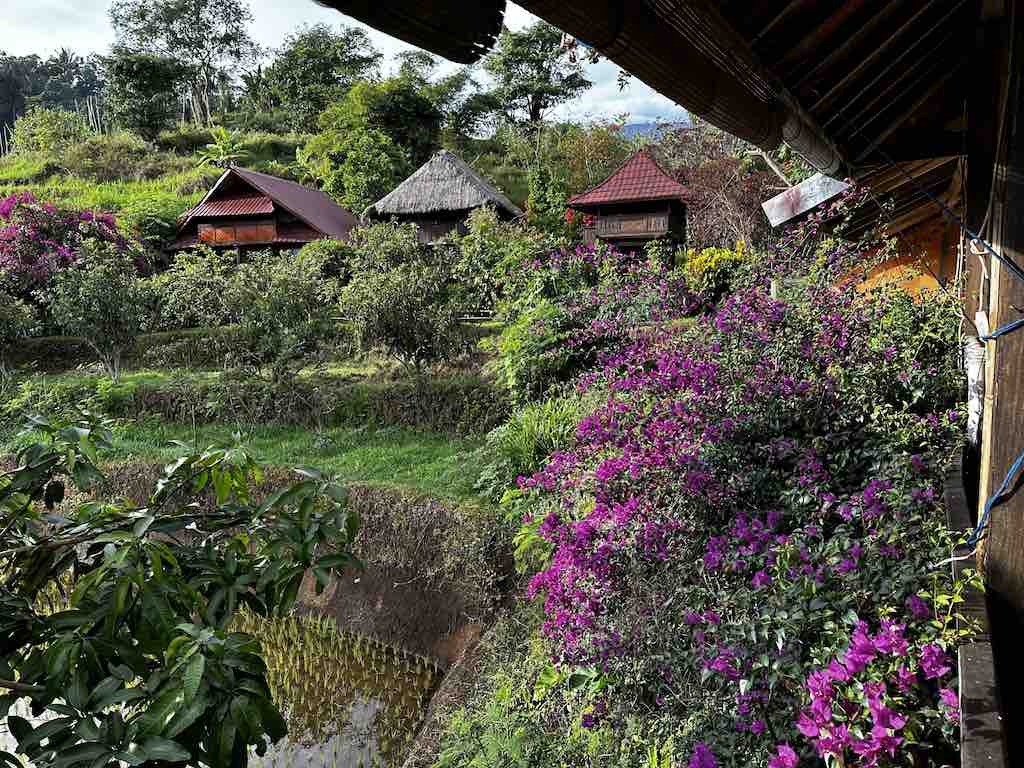
I stayed at Rinjani Mountain Garden, a small resort of bungalows set in a beautifully kept garden with a long view down the mountain. The staff are exceptional and they organise treks to the Rinjani summit and up Mount Sitampol.
The Gili Islands and Senggigi
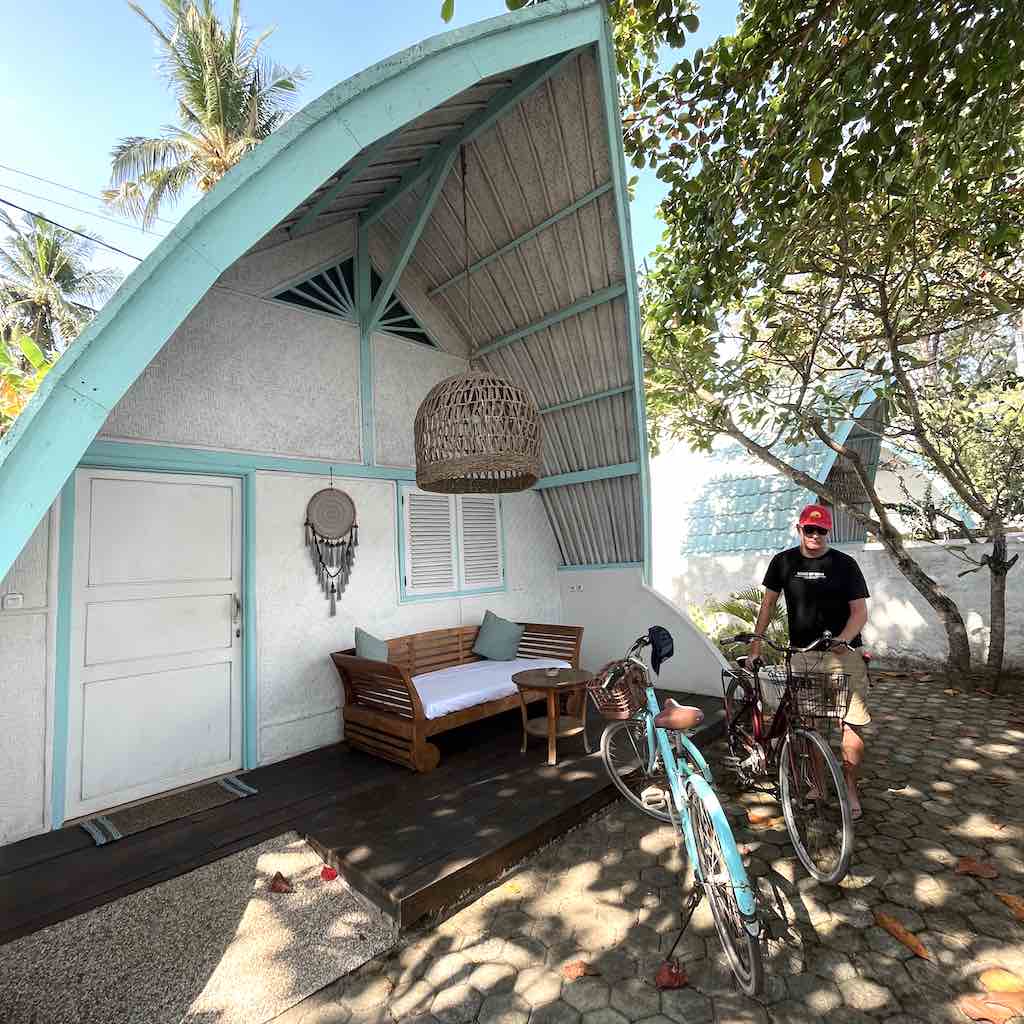
On Gili Air I recommend 7 Seas Cottages, on the beach next to the harbour, where you can also hire bikes. In Senggigi I stayed at the Katamaran Resort — a little impersonal as a building, but the beachfront position is excellent and the pool is genuinely unusual.
Best Time to Visit Lombok
May to October is the dry season and the best window overall: sunshine, calm seas, good conditions for the beaches, the Gilis and Rinjani. July and August are peak season, with the prices and crowds that implies.
November to April is the wet season — hotter, more humid, with downpours that are often heavy but short. The island is at its greenest and prices drop. The catch is the sea: crossings are more often disrupted, and some waterfall paths become difficult.
One thing that catches people out: the roughest boat crossings are in the dry season, not the wet one. The southeast trade winds blow hardest across the Lombok Strait between June and September, and that is when fast boats are most often cancelled. If you are travelling then, take the earliest departure of the day and keep a spare day in your plans.
- Surfing — good year-round, best May to October on the south coast
- Rinjani — dry season only; the national park usually closes January to March
- Calmest seas — April, May, October and November
Getting Around Lombok
Public transport is minimal and not a realistic way to see the island. You have two workable options.
A scooter is the cheapest and by far the most flexible, at around $4-6 a day. It is ideal around Kuta, Senggigi and the coast roads. Main roads are generally good; secondary ones can be broken or steep. Take it only if you are genuinely comfortable on two wheels — and carry an international licence, because you will not be covered without one.
A car with a driver runs about $40-60 a day and is the better choice for long distances or for a group. It lets you cover several sites in a day without stress, which matters for the northern waterfalls and the inland villages.
The driving times that shape any Lombok itinerary:
- Praya airport → Kuta Lombok — 25 to 30 minutes
- Kuta Lombok → Senggigi — about 2h30
- Senggigi → Bangsal — about 1 hour
- Bangsal → Senaru — about 1h15
- Kuta Lombok → Senaru — 4 to 5 hours
How to Get to Lombok
Two realistic routes from Bali. The fast boat leaves from Padang Bai and crosses in 1h30 to 2h30 for around $19-38, landing at Bangsal in the north — the right choice for the Gilis, Senggigi and Sire. The flight from Denpasar takes 30 minutes and costs $18-45 booked ahead, landing at Praya in the south, 25 minutes from Kuta Lombok.
The choice is not really about speed, it is about where you are sleeping that night. Heading north, take the boat. Heading to Kuta and the southern beaches, fly — taking the boat to Bangsal instead adds a two-hour drive across the island, and this is the single thing most guides get wrong.
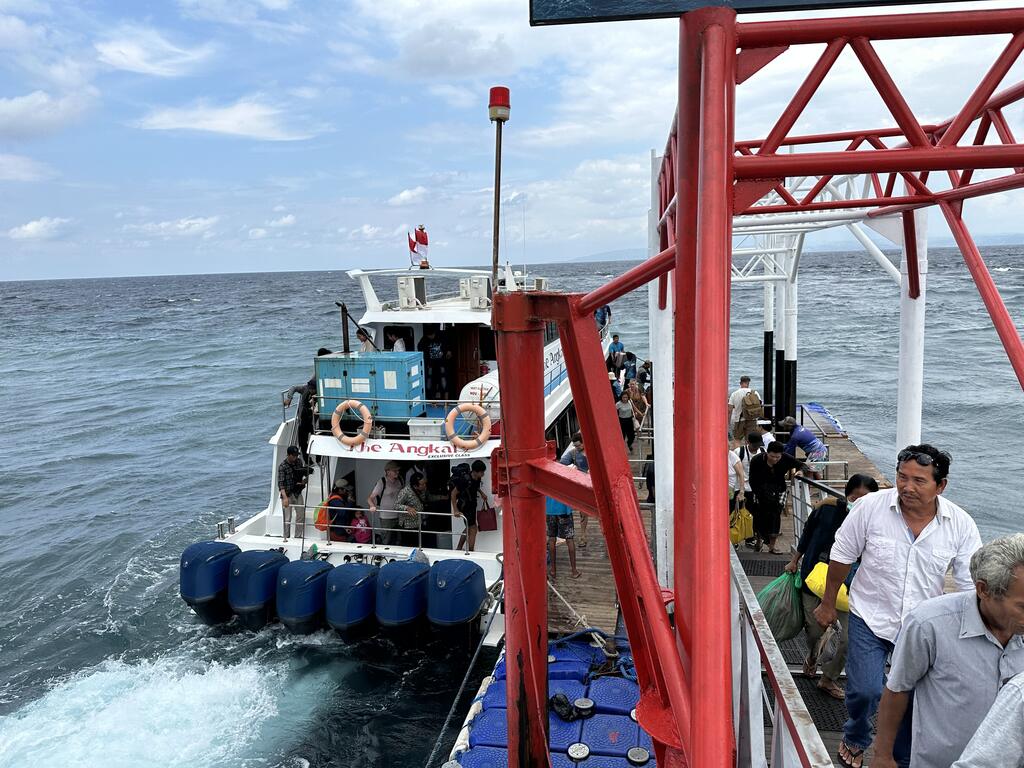
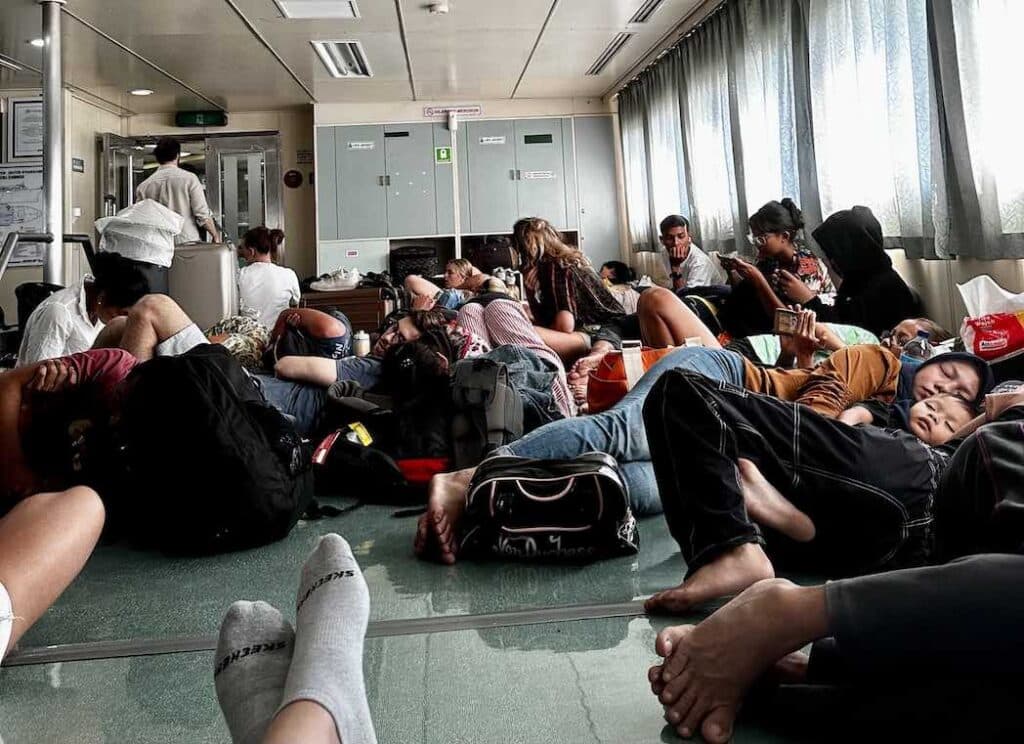
There is also the public ferry from Padang Bai to Lembar, which costs a fraction of the fast boat, is the only option that carries vehicles, and keeps sailing when rough seas ground everything else. It takes 8 to 10 hours door to door. Full schedules, fares, ports and operators are in the detailed guide: how to get to Lombok from Bali.
Lombok Travel Budget
Lombok is cheaper than Bali across the board, most noticeably on accommodation and activities.
| Per person | Backpacker | Mid-range | High end |
|---|---|---|---|
| Accommodation / night | $16 | $55 | $160 |
| Food / day | $9 | $22 | $55 |
| Transport / day | $5 | $32 | $85 |
| Activities / week | $32 | $110 | $320 |
| Daily total | $30-45 | $75-130 | $200+ |
- Senaru waterfalls entry — about $2
- Beaches — free, parking around $0.50
- Snorkelling trip from the Gilis — $11-27
- Rinjani trek, 2-3 days with a guide — $170-330
- Local boat to the Gilis from Bangsal — $2-3; fast boat from Bali — $19-38
Mistakes to Avoid in Lombok
Underestimating the distances. Kuta to Senaru is four hours, not ninety minutes. This is the mistake that spoils more Lombok trips than everything else combined.
Taking a scooter without the experience. Roads can be broken, winding and slippery in the rain. Without an international licence and real confidence, hire a driver instead.
Not carrying cash. There are ATMs in Kuta Lombok and on the Gilis, and very few in the north. Cards are useless in most villages. Arriving in Senaru without cash means not being able to pay for your room.
Picking the wrong Gili. Trawangan is for nightlife, Meno for silence, Air for the middle ground. People who choose blind are usually the ones who come back disappointed.
Taking the slow ferry to save money. It costs a fraction of the fast boat and it costs you a day — 8 to 10 hours door to door, arriving at Lembar, which is far from anywhere you want to be. Take it if you have a motorbike with you, or if the fast boats are cancelled. Not to save $20.
Moving every night. Two or three bases is plenty. Five is a driving holiday.
Lombok vs Bali: Which Island Should You Choose?
They are neighbours and they are nothing alike. Bali gives you temples, rice terraces, a restaurant scene, yoga, nightlife and an infrastructure that absorbs millions of visitors a year. Lombok gives you space, landscape and quiet, with a fraction of the development.
- Choose Bali for a first trip to Indonesia, for variety, for culture, and for somewhere that works without planning.
- Choose Lombok for beaches you can have to yourself, for the volcano, and for a slower pace.
- Choose both — which is what most people should do. They are two hours apart and they complement each other almost perfectly.
Read More
Bali Travel Guide
Where to go in Bali, area by area: Ubud and the rice terraces, the beaches of the south, the temples, the volcanoes and Nusa Penida — with the practical detail to build an itinerary that works.
Indonesia Travel Guide
Which islands to pick, how to route between them, when to go and what it costs — the overview that turns seventeen thousand islands into a trip you can actually book.
Sumbawa Travel Guide
The island straight after Lombok, and still almost empty: whale sharks in Saleh Bay, world-class surf breaks with nobody on them, and two volcanoes that changed world history.
Frequently Asked Questions About Lombok
Where is Lombok?
Lombok is an Indonesian island in the Lesser Sunda chain, immediately east of Bali across the Lombok Strait and west of Sumbawa. It belongs to the province of West Nusa Tenggara and covers 4,738 km², roughly the same area as Bali.
Is Lombok worth visiting?
Yes, particularly if you want beaches without crowds, dramatic landscape and a slower pace than Bali. Lombok suits travellers who are happy to plan a little and to accept longer drives in exchange for far fewer people.
How many days do you need in Lombok?
Four to six days covers the island properly. Seven or more if you want to trek Mount Rinjani, which takes two to three days on its own. Three days is enough only for the south coast beaches.
What is the best time to visit Lombok?
May to October, the dry season, with June to September the most reliable. Note that the sea is roughest in those same months because of the southeast trade winds, so boat crossings are more often cancelled then than in the wet season.
How do you get to Lombok from Bali?
By fast boat from Padang Bai, 1h30 to 2h30 to Bangsal in the north, or by air from Denpasar, 30 minutes to Praya in the south. There is also a slow public ferry to Lembar which carries vehicles and takes 8 to 10 hours door to door.
Where should you stay in Lombok?
Kuta Lombok for the southern beaches and surf, Sire Beach near Bangsal for the best beachfront hotels and the Gili crossing, Senggigi for a conventional resort stay, and Senaru or Sembalun if you are trekking Rinjani.
Which Gili island should you choose?
Gili Trawangan for nightlife and the widest choice of restaurants, Gili Meno for quiet and near-total seclusion, and Gili Air for the balance between the two. All three are car-free and 20 to 30 minutes by boat from Bangsal.
Can you climb Mount Rinjani without a guide?
No. A licensed guide is mandatory on the Rinjani trek, for safety and under park regulations. Expect $170-330 for a two- or three-day trip, and note that the national park usually closes from January to March.
How much does a trip to Lombok cost?
Around $30-45 a day backpacking, $75-130 mid-range and $200 or more at the high end, excluding international flights. Lombok runs consistently below Bali for the same standard of accommodation and food.
Is Lombok safe for travellers?
Yes, Lombok is generally calm and safe. The real risks are the roads rather than crime: avoid riding at night, take normal precautions with belongings on quiet beaches, and be aware that medical facilities outside Mataram are limited.
Do you need a visa for Lombok?
The same rules apply as for the rest of Indonesia. Most visitors use the visa on arrival, valid 30 days and extendable once. Check the current requirements for your nationality before you travel, as they change.
Lombok or Bali — which is better?
Bali for culture, variety and convenience; Lombok for nature, beaches and quiet. If your trip is longer than a week, do both — they are two hours apart by boat and they complement each other well.
About the author — Blaise Jaeger
Blaise Jaeger has been based in Bali since 2020 and has travelled to Lombok around ten times since, by fast boat, by public ferry and by plane. He usually stays on Sire Beach near Bangsal, hires a scooter at the port on arrival, and has ridden the length of the island from Bangsal to Kuta. He also publishes the Nusa Penida travel guides.