Gili Islands, Indonesia: Trawangan, Meno or Air? 2026
By Blaise Jaeger · Updated August 4, 2026
The Gili Islands, located off the northwest coast of Lombok in Indonesia, are a tropical paradise renowned for their stunning beauty, vibrant marine life, and laid-back atmosphere. Comprising three main islands – Gili Trawangan, Gili Meno, and Gili Air – these idyllic islets are a haven for travelers seeking a peaceful escape from the hustle and bustle of everyday life.
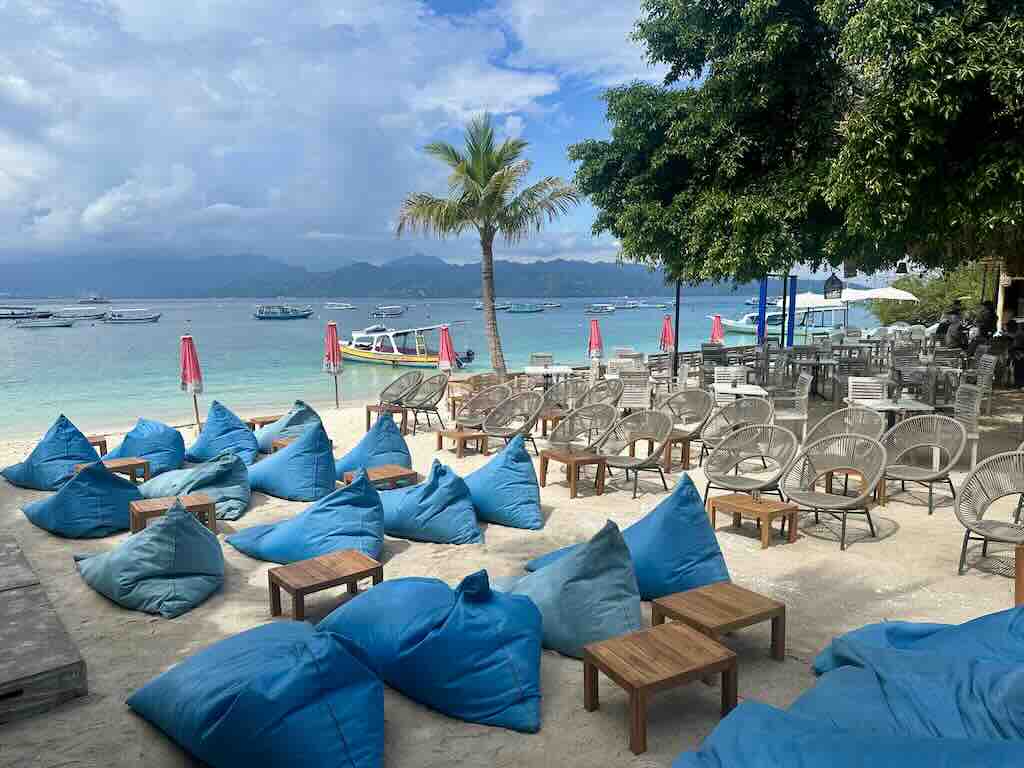
One of the most remarkable features of the Gili Islands is their pristine beaches with powdery white sand and crystal-clear waters that are perfect for snorkeling and diving. The underwater world is indeed a kaleidoscope of colorful coral reefs, sea turtles, and diverse marine species, making it a hotspot for aquatic enthusiasts. These islands have consciously embraced eco-friendly and sustainable practices, with restrictions on motorized vehicles, a ban on single-use plastics, and promoting renewable energy sources.
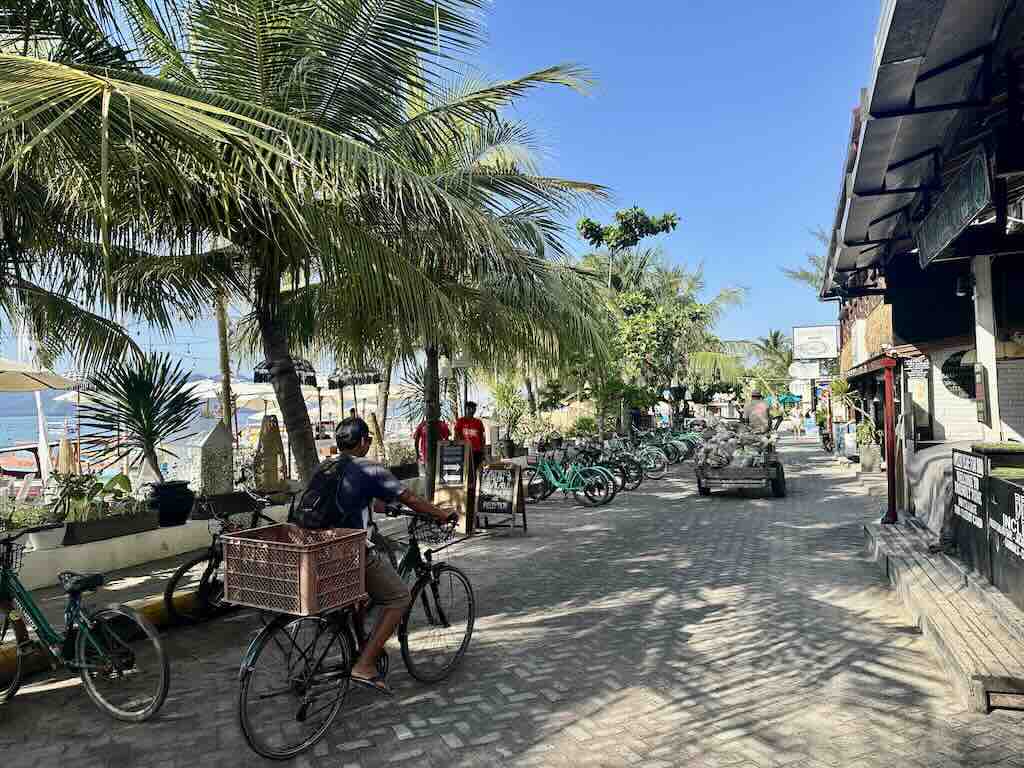
All these efforts help preserve the natural beauty that has made the Gili Islands a beloved destination for eco-conscious travelers. Whether you seek adventure or relaxation, the Gili Islands offer a little paradise that’s hard to resist. With their picturesque landscapes and a commitment to sustainability, they remain a top destination for those searching for an authentic island experience in Indonesia.
The Gili Islands at a Glance
Before we get into the detail, here is everything you need to place the Gilis on a map and on a budget. “Gili” simply means “small island” in Sasak, the language of Lombok, which is why you will find dozens of other “Gili” somethings scattered around Indonesia. The three famous ones sit in a tight cluster about 5 km off Lombok’s northwest coast.
- Where: West Nusa Tenggara province, off northwest Lombok — administratively part of Lombok, not Bali.
- Three islands: Gili Trawangan (the biggest, roughly 7 km around), Gili Meno (the smallest and quietest), Gili Air (the closest to Lombok).
- Getting there: fast boat from Padang Bai, Sanur or Serangan in Bali (2 to 3 hours), direct fast boat from Nusa Penida or Nusa Lembongan, or public boat from Bangsal or Teluk Nare on Lombok (20 to 30 minutes).
- Transport on the islands: no cars, no scooters. Walking, bicycles and cidomo horse carts only.
- Best time: April to October (dry season), with the clearest water from June to September.
- Typical daily budget 2026: $25-40 backpacking, $60-100 comfortable, $200+ for a beachfront boutique resort.
- Fun dive: IDR 450,000-650,000 ($28-41) per dive; PADI Open Water IDR 6-8.5 million ($375-530).
- Currency and cash: Indonesian rupiah. ATMs on Trawangan and Air, none on Meno — and they do run dry in high season.
- Language: Sasak and Indonesian; English is spoken everywhere in tourism.
My Four Trips to the Gilis, from 2017 to 2026
I have been based in Bali since 2020 and I dive in Indonesia year-round. The Gilis are one of those places I keep coming back to: I have stayed on them four times, on two different islands, on either side of the event that changed everything here — the August 2018 Lombok earthquake.
My first stay was in July 2017, on Gili Air, at Damai Bungalow. Gili Air back then was already the sensible middle ground: enough warungs and dive shops to never be bored, quiet enough that the loudest thing at night was the generator and the surf. I came back to Gili Air in August 2022, at 7SEAS Cottages, four years after the earthquake and two years after the borders reopened.
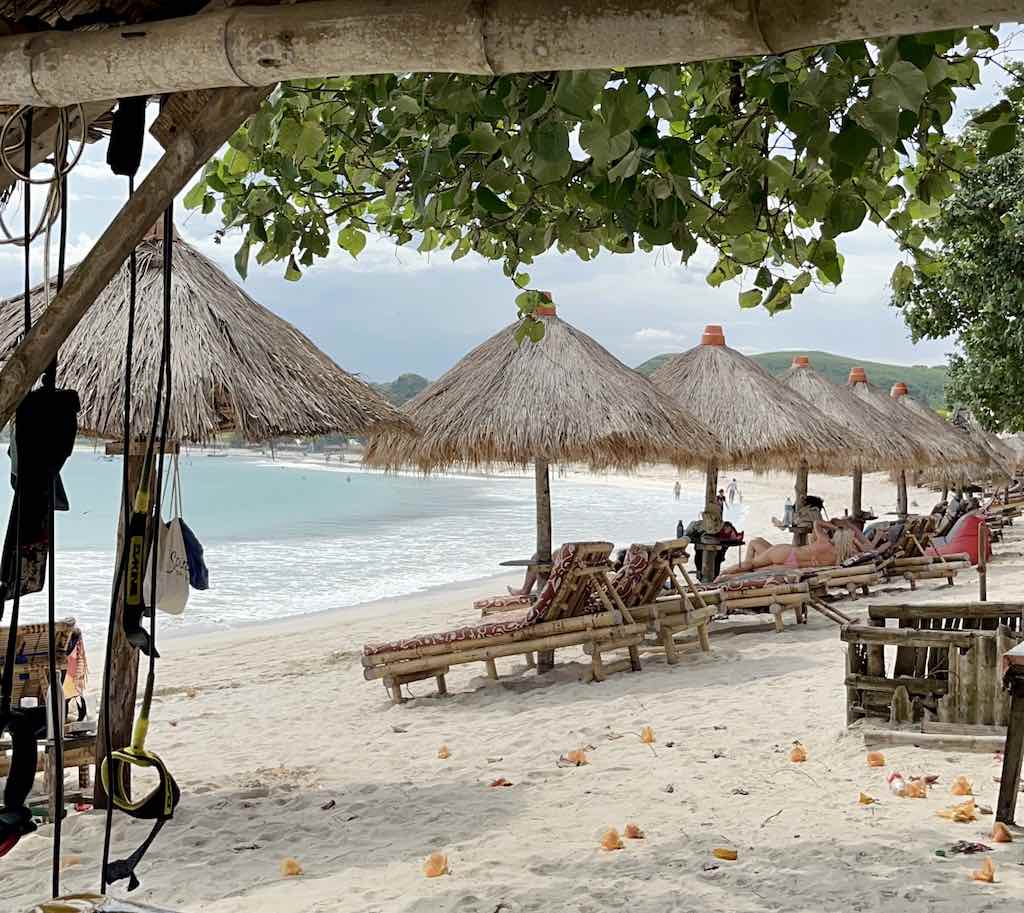
My two most recent trips were on Gili Trawangan, in May 2025 and January 2026, both at Hotel Vila Ombak — the property whose thatched roofs you can see further down this page. Trawangan is a different animal from Air: louder, busier, better equipped, and much easier if you want a real choice of restaurants and dive centres.
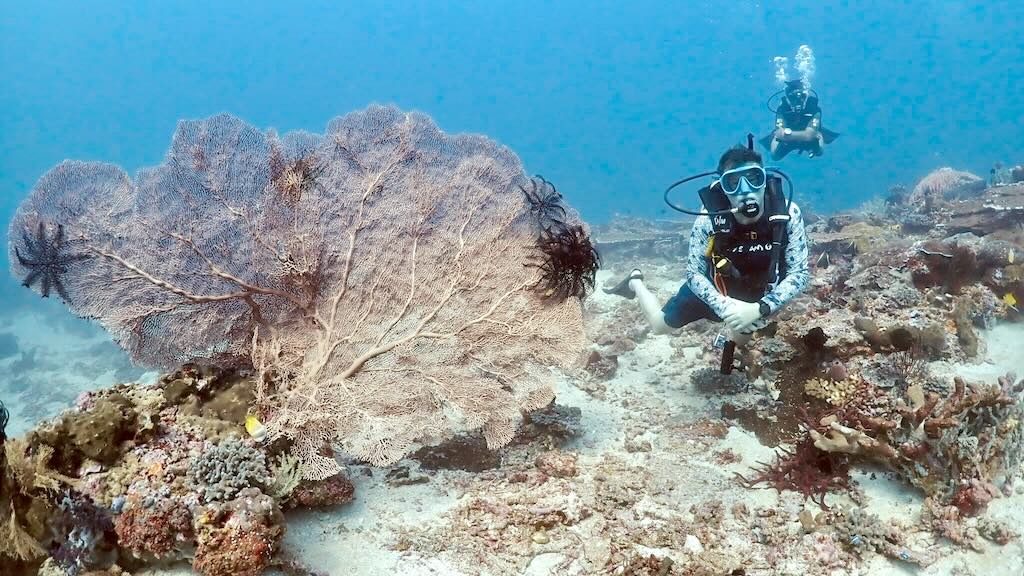
In May 2025 I dived with Blue Marlin Dive, the oldest dive centre on Trawangan, on Deep Turbo — the deep site north of the island. What stayed with me there is the topography rather than any single animal: valleys of white sand running between coral formations that rise like underwater hills, so you descend into a landscape instead of onto a flat reef. It is genuinely unusual for this part of Indonesia. The current can pick up fast, which is why it is an advanced site rather than a first-dive one.
On top of those four stays, I have passed in front of the three islands more times than I can count on the way to Lombok, going in and out of Bangsal. That crossing is the one thing nobody tells you about: from the deck of a boat, the Gilis look absurdly small — three flat sandy discs with a fringe of coconut palms — and you understand instantly why there are no cars on them.
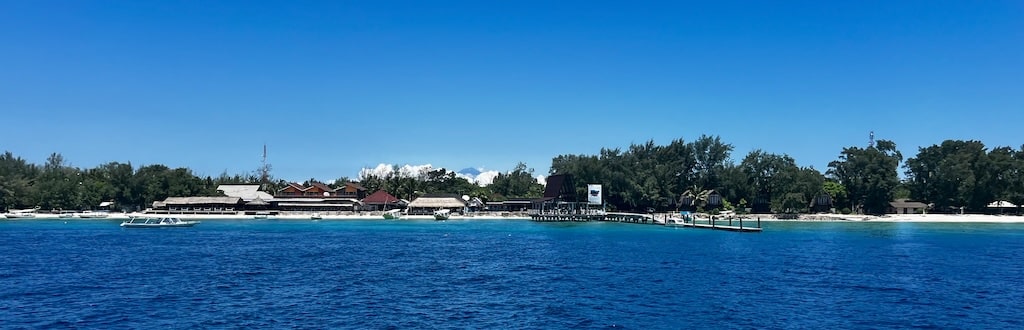
The one thing I would tell anyone who knew the islands before 2018: visitor numbers fell very sharply after the earthquake, and that drop is still felt today. The Gilis have never gone back to the crowds of 2017 — the buildings were rebuilt, the people did not all come back. Depending on what you came for, that is either the bad news or the best news on this page. The islands are quieter now than they have been in a decade.
Which Gili island to visit : Trawangan, Meno or Air?
Gili Trawangan, the largest of the three, is often dubbed the “party island.” It offers a lively nightlife scene, with beachfront bars and restaurants where you can watch mesmerizing sunsets. Gili Meno, in contrast, is the most serene and perfect for honeymooners or anyone looking for tranquility. Finally, Gili Air balances the two, making it ideal for couples, families, and solo travelers.
Gili Trawangan — the busy one
Trawangan is roughly 7 km around, which is about two hours of flat walking or forty minutes by bicycle. Everything is concentrated on the east coast: the harbour, the ATMs, the night market, the dive centres and most of the bars. The west coast is where you go for sunset over Mount Agung, and the interior is a grid of sandy lanes, small hills and, at the centre, a modest viewpoint hill worth the ten-minute climb. Choose Trawangan if you want choice — of restaurants, of dive shops, of company — and if a beach party until 2 am on a Wednesday sounds like a feature rather than a bug.
Gili Meno — the quiet one
Meno is the smallest and the least developed: a salt lake in the middle, a handful of resorts, almost no nightlife and no ATM at all. It is also where the underwater sculpture garden known as Nest sits in 4 to 5 metres of water, and where turtles are easiest to find straight off the beach. Choose Meno if your idea of a holiday is a book, a hammock and a snorkel — and bring cash.
Gili Air — the balanced one
Gili Air is the one I keep going back to. It is the closest to Lombok, the easiest to reach from Bangsal, and it has the best ratio of “things to do” to “people doing them”. The south and east coasts have the bulk of the warungs, dive centres and beach bars; the north and west are almost empty. It is small enough to walk around in ninety minutes and lively enough that you never feel stranded. Families, couples and solo travellers all tend to land here and stay longer than planned.
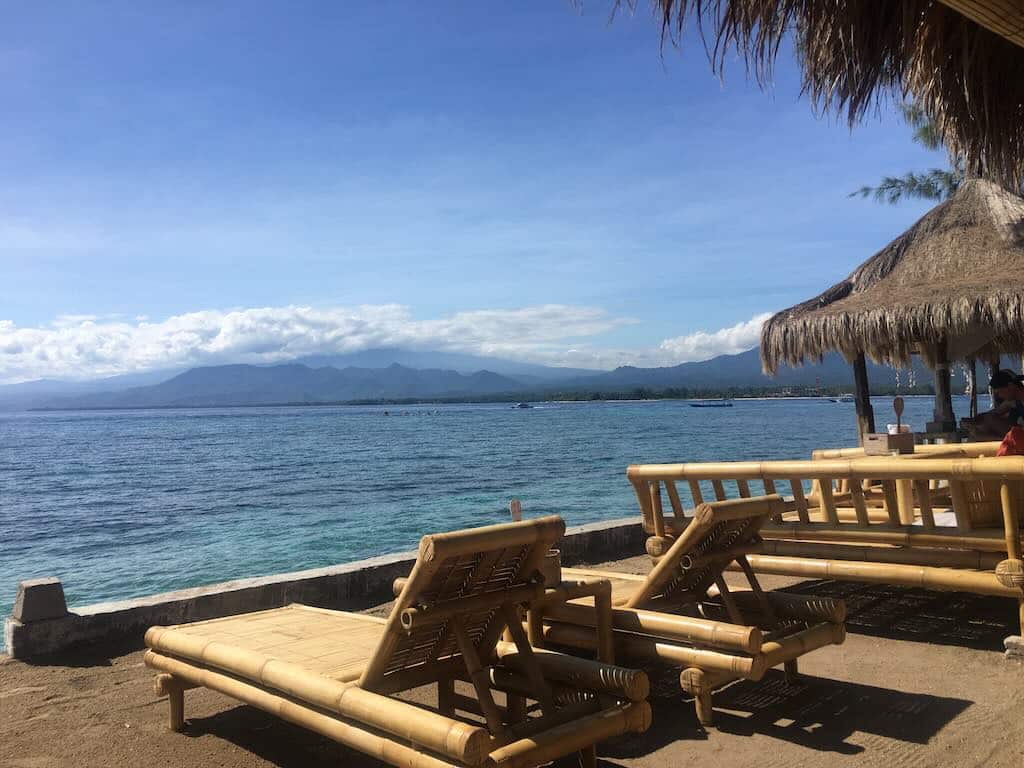
It is worth noting that the tourism landscape in the Gili Islands has been impacted by two significant events: the earthquake that struck Lombok in August 2018 and the coronavirus crisis in 2020.
Gili Islands vs Nusa Penida: Which One Should You Choose?
This is the single most common question I get from travellers planning a first trip to Indonesia, and it deserves a straight answer rather than a diplomatic one. Both are islands off Bali’s coast, both are famous for their water, and they are not remotely the same holiday.
Nusa Penida is a big, rugged island 45 minutes by fast boat from Sanur, with dramatic limestone cliffs, viewpoints like Kelingking and Diamond Beach, scooters and cars, steep roads, and world-class diving — manta rays at Manta Point all year, and mola-mola (ocean sunfish) between July and October. It is a place you explore, on wheels, with a plan.
The Gili Islands are three flat coral islets 2 to 2.5 hours by fast boat from Padang Bai, with no vehicles at all, gentle shore snorkelling, green turtles in the seagrass, and a beach-bar culture Nusa Penida simply does not have. It is a place you stay put in.
- Choose the Gilis if you want to switch off, walk everywhere barefoot, snorkel from the beach, and finish the day with a cold Bintang facing the sunset.
- Choose Nusa Penida if you want big landscapes and viewpoints, serious diving with mantas and mola-mola, and you are happy to ride a scooter or hire a driver.
- Time from Bali: Nusa Penida 45 minutes from Sanur; the Gilis 2 to 2.5 hours from Padang Bai — plus the drive to Padang Bai.
- Diving: Nusa Penida wins on big pelagics and drift dives; the Gilis win on easy, warm, beginner-friendly diving and turtle encounters.
- Nightlife: Gili Trawangan, no contest. Nusa Penida goes to bed early.
- With small children: the Gilis — no traffic at all is a genuine argument.
If you only have a week in Bali, Nusa Penida is the easier add-on because the crossing is short and the payoff is immediate. If you have two weeks and want a proper change of rhythm, do both — Nusa Penida first for the landscapes, the Gilis after to recover from them. I have written a full side-by-side comparison — Nusa Penida vs the Gili Islands: which to choose — that goes into the detail of both, plus a complete Nusa Penida travel guide covering the beaches, viewpoints, dive sites and practicalities.
Gili Islands after the 2018 Lombok Earthquake
On 5 August 2018, a magnitude 6.9 earthquake struck northern Lombok at a depth of about 34 km. It was not a volcanic eruption — Mount Rinjani did not erupt — but the shaking triggered landslides on the volcano’s flanks and devastated the north of the island. The 5 August main shock alone killed 436 people, and the whole August 2018 sequence caused 563 deaths, more than 1,350 injuries and over 400,000 displaced — the overwhelming majority of them on Lombok itself, not on the Gilis.
On the islands, the impact was above all one of panic and logistics. A tsunami warning was issued and cancelled about an hour later, but on three flat sandy islands with no high ground, that hour was terrifying. Resorts and facilities suffered 50 to 70% damage. Around 2,700 people were ferried out to the mainland in the following days and more than 4,000 were eventually evacuated. Many hotels and restaurants were destroyed or badly damaged, and the traumatic experience of those evacuations kept visitor numbers down through 2018 and 2019 — before Covid closed the door again in 2020.
The reef took a hit too. Surveys by Gili Shark Conservation found cracks or landslides at five of ten dive sites surveyed — Sunset Point and Han’s Reef cracked, Turtle City, the Bounty Wreck and Meno Slope slid. But the headline finding matters more: the marine life that people come for — turtles, whitetip reef sharks, rays — is still very much there. Today, almost eight years on, the islands are fully rebuilt and back in business; you would need someone to point out the old damage for you to notice it.
Facilities and Infrastructure on the Islands
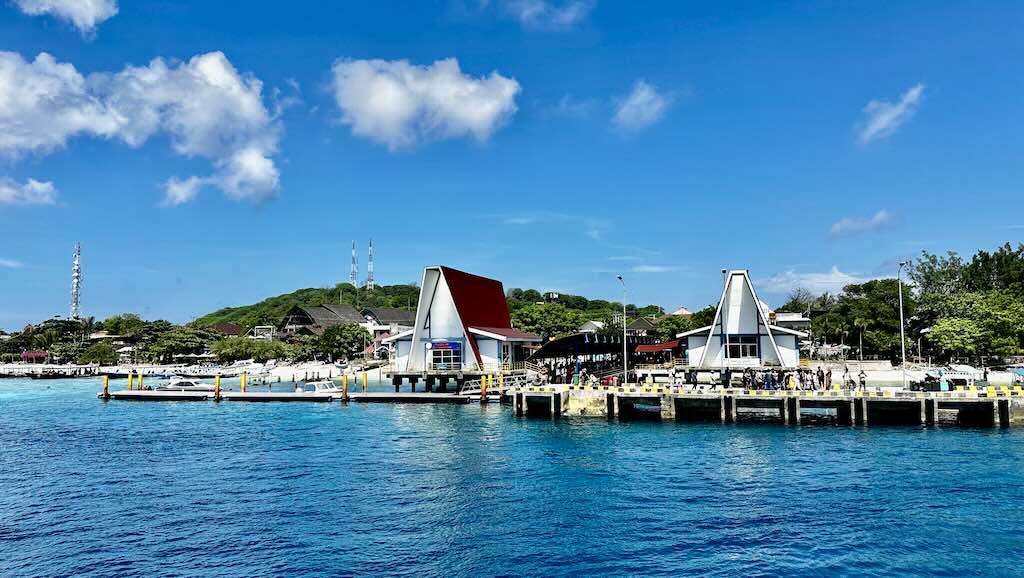
Tourism emerged on the Gili Islands approximately three decades ago, when they were uninhabited. The three islands have evolved from quiet, secluded retreats to popular tourist destinations, and the infrastructure has adapted to cater to this influx of visitors. Accommodations on the Gili Islands have grown exponentially, offering a range of options from budget-friendly hostels to luxurious resorts. Many eco-friendly lodgings have also emerged, emphasizing sustainability in line with the islands’ conservation efforts.
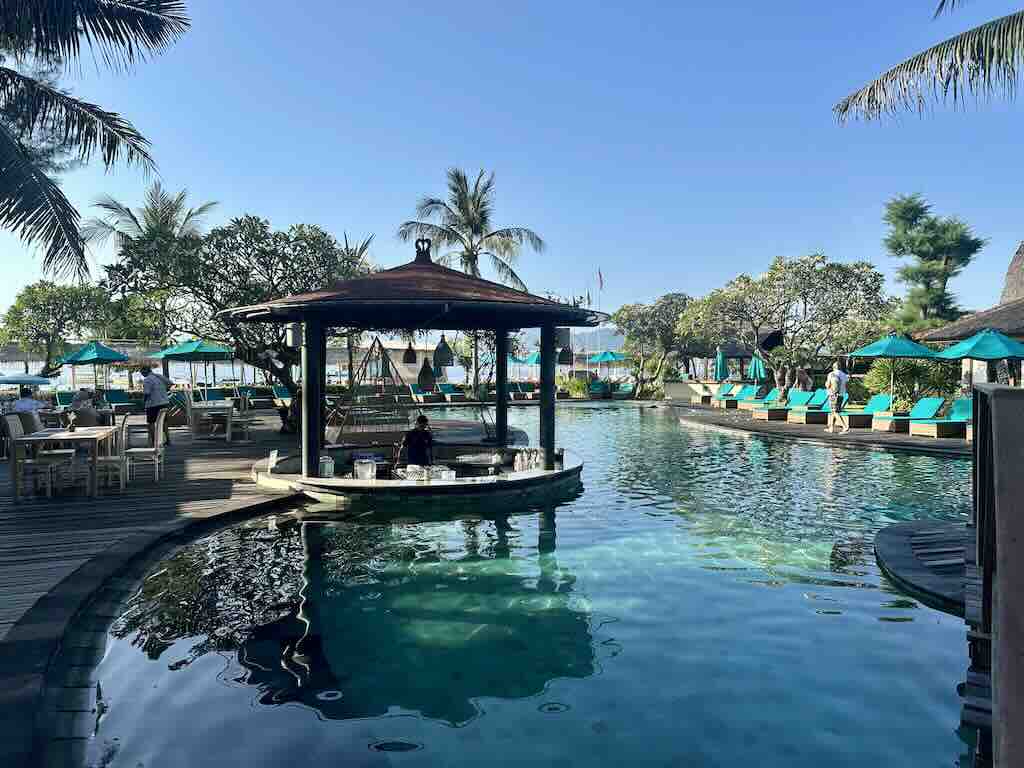
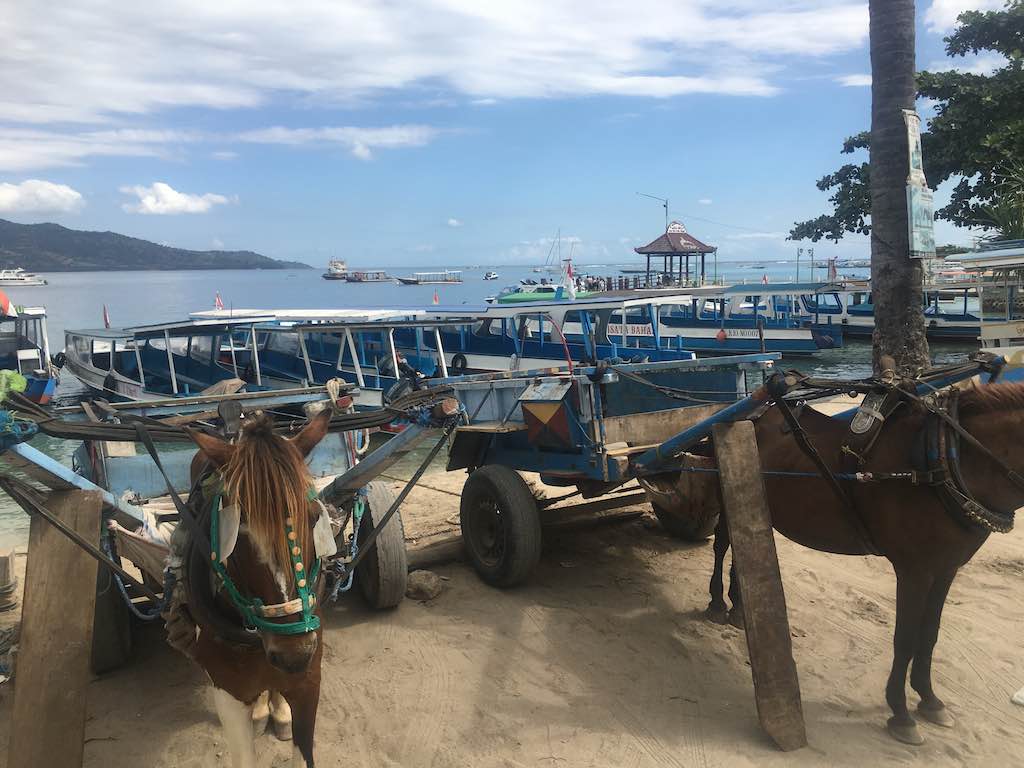
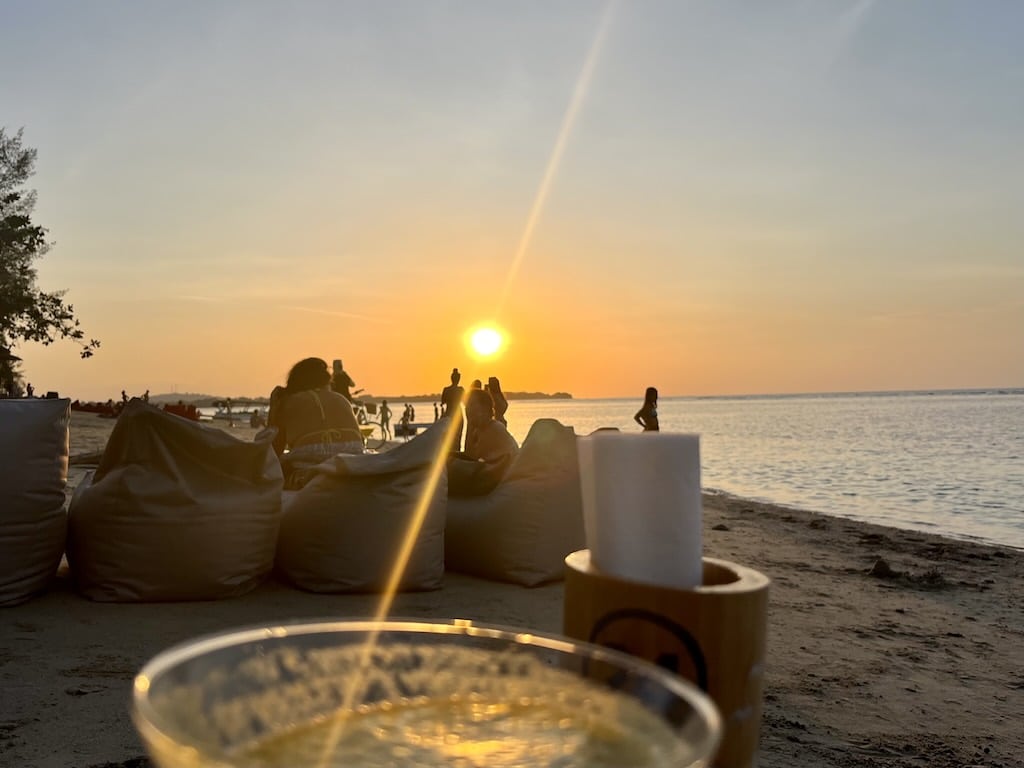
Dining options are abundant, with restaurants serving local Indonesian cuisine, fresh seafood, and international dishes to suit diverse palates. Beachfront bars and cafes provide scenic spots for sunset watching, contributing to the islands’ laid-back atmosphere. Transportation within the Gilis primarily relies on bicycles and horse-drawn carts, as motorized vehicles are prohibited. These eco-friendly modes of transport enhance the islands’ charm and commitment to sustainability. The islands offer an array of water-based activities, including snorkeling, diving, and paddleboarding, with rental shops and diving schools readily available.
Best Things to Do in the Gili Islands
There is no temple circuit here and no volcano to climb. What the Gilis offer is a short, very good list of things that all involve water, a bicycle, or a sunset.
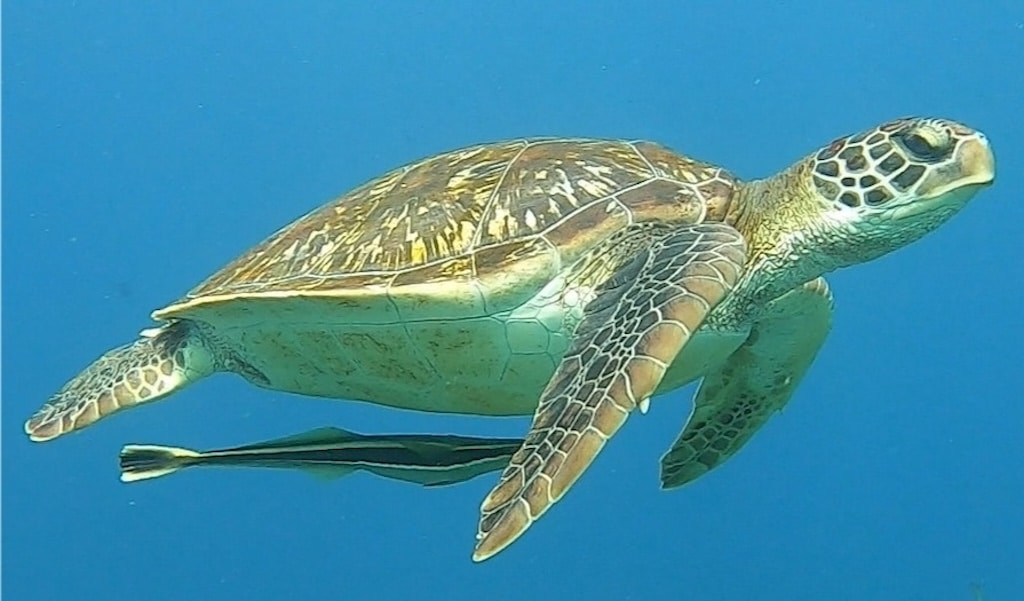
Snorkel with green turtles
The Gilis have one of the densest green turtle populations in Indonesia, and unlike most places you do not need a boat. Turtle Point on the northeast coast of Trawangan and the seagrass beds off Meno both deliver, especially before 9 am when the water is glassy and the turtles are feeding. A three-hour island-hopping snorkel trip costs IDR 150,000-250,000 ($10-16) per person, gear rental IDR 50,000-75,000 a day.
Cycle around your island
A bicycle costs IDR 50,000-75,000 for the day and is the single best purchase you will make. Trawangan takes about forty minutes to circle, Air about thirty, Meno twenty. Be warned: on all three islands the track degenerates into deep soft sand on the far side, and you will end up pushing. That is part of the ritual.
See the underwater sculptures at Nest
Off the west coast of Gili Meno, a ring of 48 life-sized human figures sits in 4 to 5 metres of water. Installed as an artificial reef, they are now colonised by coral and sponges, and they are shallow enough to free-dive comfortably. Go at slack tide and on a calm morning — the visibility makes or breaks the photograph.
Watch the sunset over Mount Agung
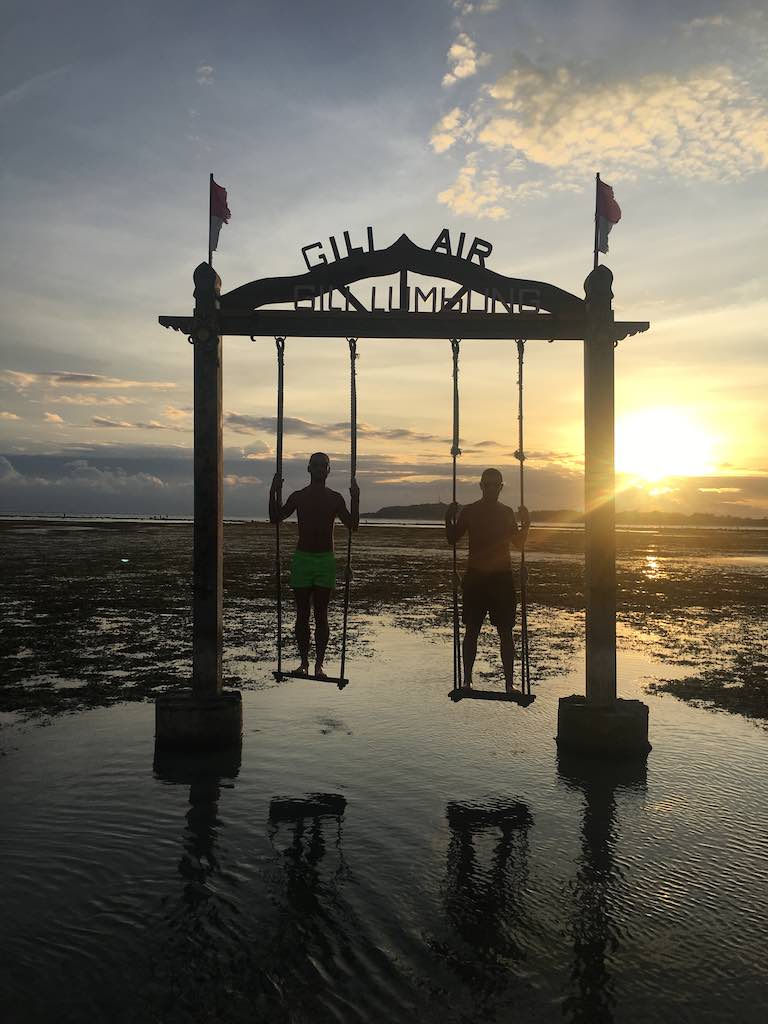
On a clear evening, the west coasts of all three islands look straight at Bali, with the cone of Mount Agung on the horizon. Sunset Point on Trawangan is the classic spot — get there by 5:30 pm in high season if you want a lounger. The famous beach swings are a few hundred metres further south, and they are busiest exactly when the light is best.
Eat at the night market
Trawangan’s night market, behind the harbour, is where you eat well for IDR 25,000-50,000: grilled fish by the kilo, satay, nasi campur, corn on the coals. Gili Air has a smaller version near the main junction. It is also the cheapest meal you will find on islands where a restaurant dinner runs IDR 80,000-150,000. For more on what to order, see our guide to Indonesian food.
Scuba diving and snorkeling
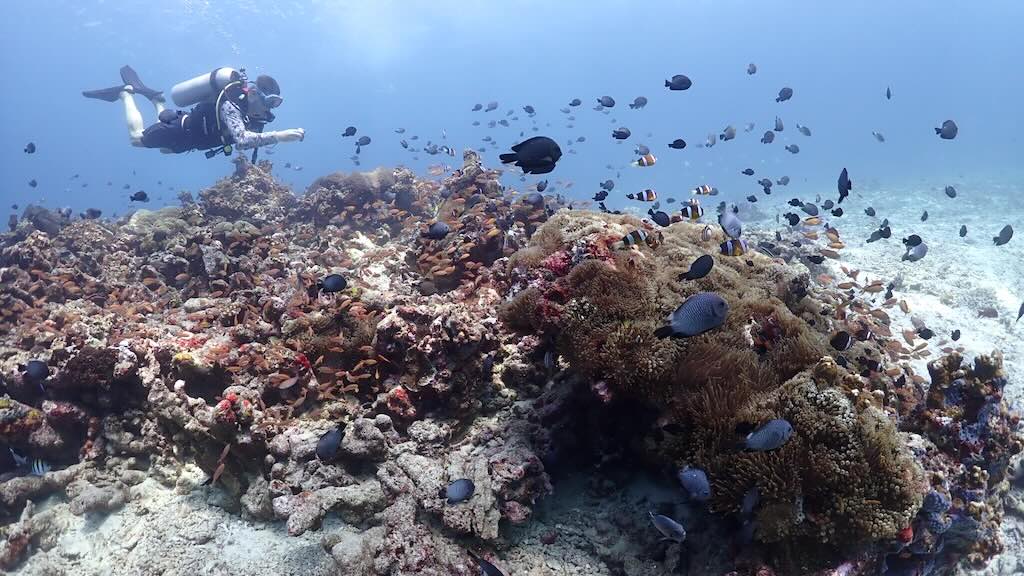
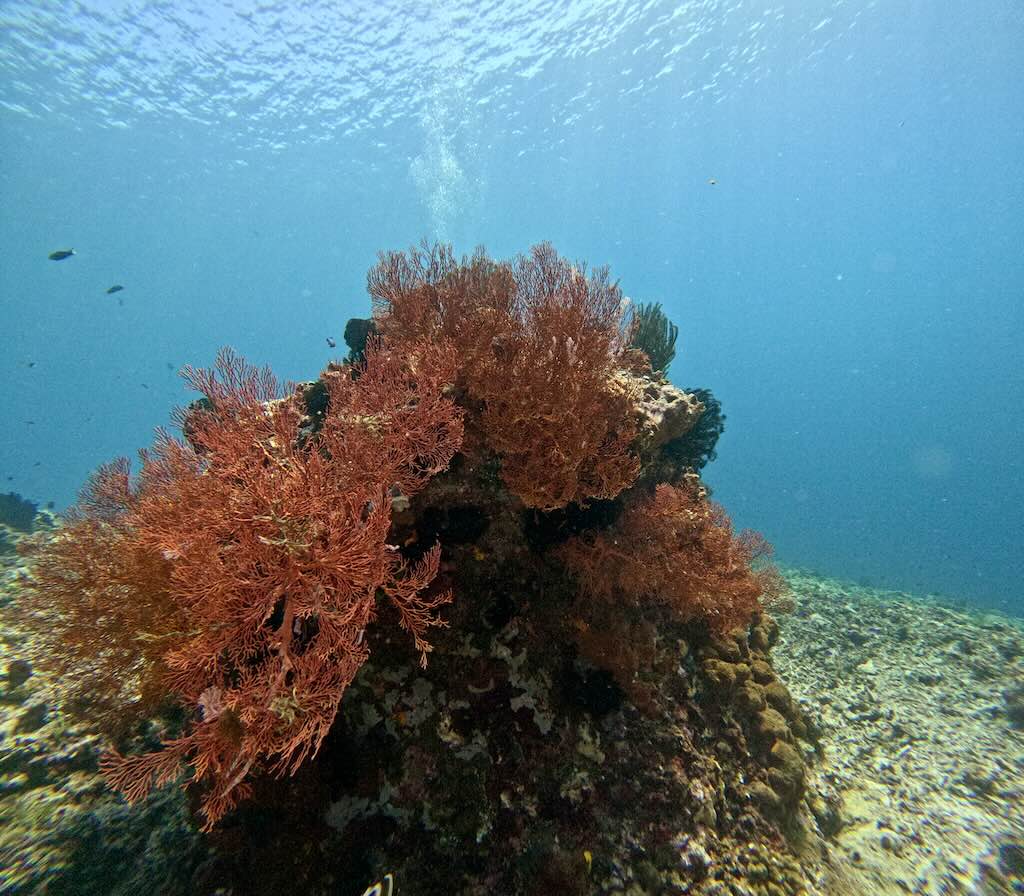
Let’s be honest about the reef first: it has taken a beating. Dynamite fishing did the early damage, tourism pressure added to it, and the 2018 earthquake cracked or buried several sites. The coral here is patchier than the brochures suggest, and restoration projects like the Biorock structures off Meno exist precisely because of that. What has not gone away is the marine life. The water is reliably clear, the coral gardens are still full of colourful fish, turtles and reef sharks, and the dive sites suit every level, from a first open-water dive to a deep drift. “Turtle Heaven” and “Shark Point” remain the two where an encounter is close to guaranteed.
The dive sites worth your tank
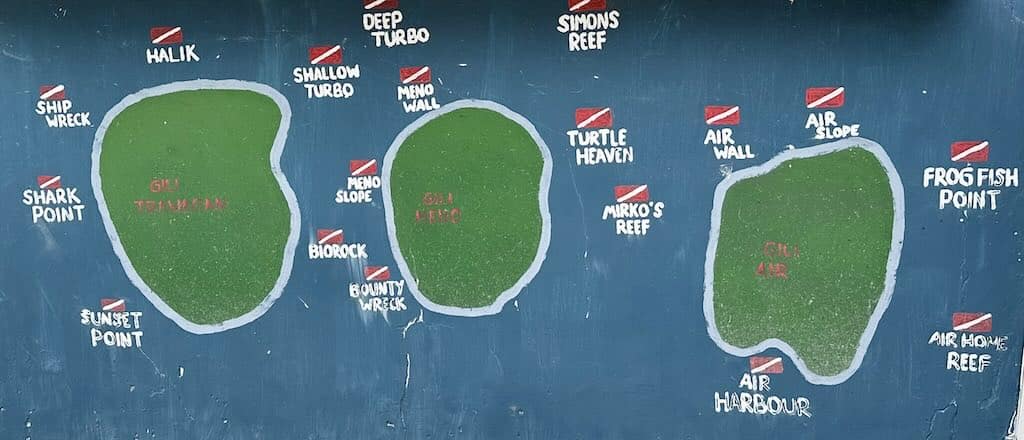
Everything here is close: the boat ride to any site is 5 to 10 minutes, which is a luxury after diving somewhere like Maratua. Around Gili Trawangan, Shark Point and Halik are the reliable whitetip reef shark sites, Sunset Point and the Ship Wreck sit on the west side, and Deep Turbo is the deep one — coral bommies scattered on sand at 28-30 m, with leopard sharks and eagle rays on a good day, and a current that can turn a relaxed dive into a drift without warning. Its shallower neighbour, Shallow Turbo, is the same terrain in half the depth. Around Gili Meno, Meno Wall and Meno Slope hold the best coral cover, the Bounty Wreck is a sunken pontoon full of batfish and sweetlips, and the Biorock structures are the coral restoration project you can dive through. Turtle Heaven and Mirko’s Reef sit in the channel between Meno and Air. Off Gili Air, Air Wall, Air Slope and Frogfish Point are the macro dives — frogfish, ghost pipefish, nudibranchs — and Han’s Reef is the one everyone comes back for.
What diving costs in the Gilis
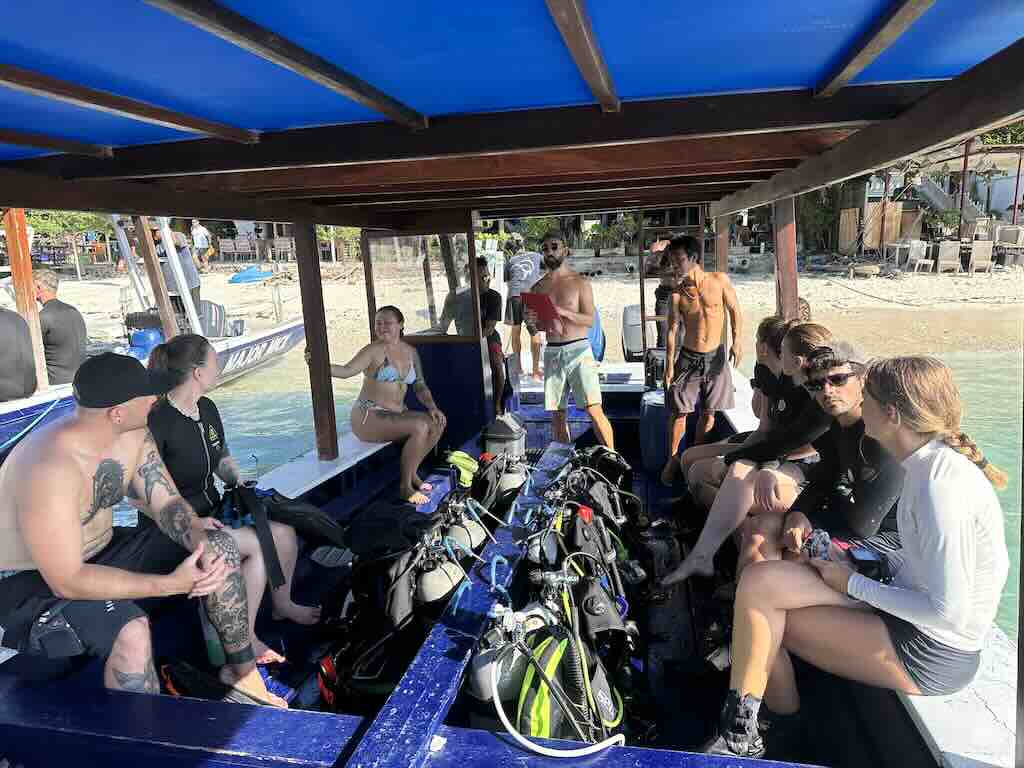
Prices are broadly standardised between the dive centres, which removes the temptation to shop on price alone. Expect IDR 450,000-650,000 ($28-41) for a single fun dive, and IDR 6,000,000-8,500,000 ($375-530) for a PADI Open Water course. A marine park fee of around IDR 100,000 and a small eco-trust donation are usually added once. I dived with Blue Marlin Dive, the oldest centre on Trawangan, and would go back — but there are a dozen serious operators across the three islands. If you are building a bigger dive trip, compare with the rest of our best diving in Indonesia guide or with a liveaboard cruise.
For snorkelers, the Gili Islands present an equally enchanting world. The shallow reefs are easily accessible from the shore, making it convenient for anyone to don a mask and snorkel to discover the beauty beneath the surface. Whether you’re strolling from the beach or venturing further offshore, you’ll be greeted by mesmerizing coral formations, playful sea turtles, and schools of fish in a kaleidoscope of colors.
One warning: the currents between the islands
The channels separating Trawangan, Meno and Air look like a short swim. They are not. On an incoming or outgoing tide the current running through those channels is strong enough to carry a competent swimmer out past the islands. Never swim between the Gilis — cross by boat, and if you snorkel from a beach, check which way the water is moving before you get in.
The Beaches of the Gili Islands
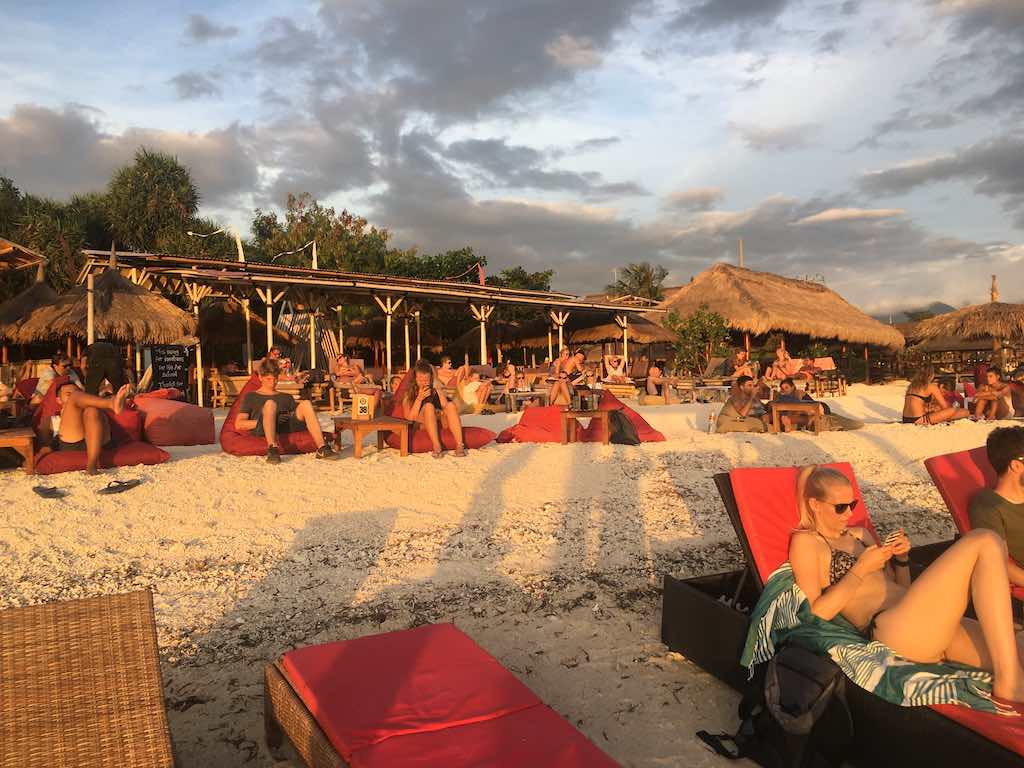
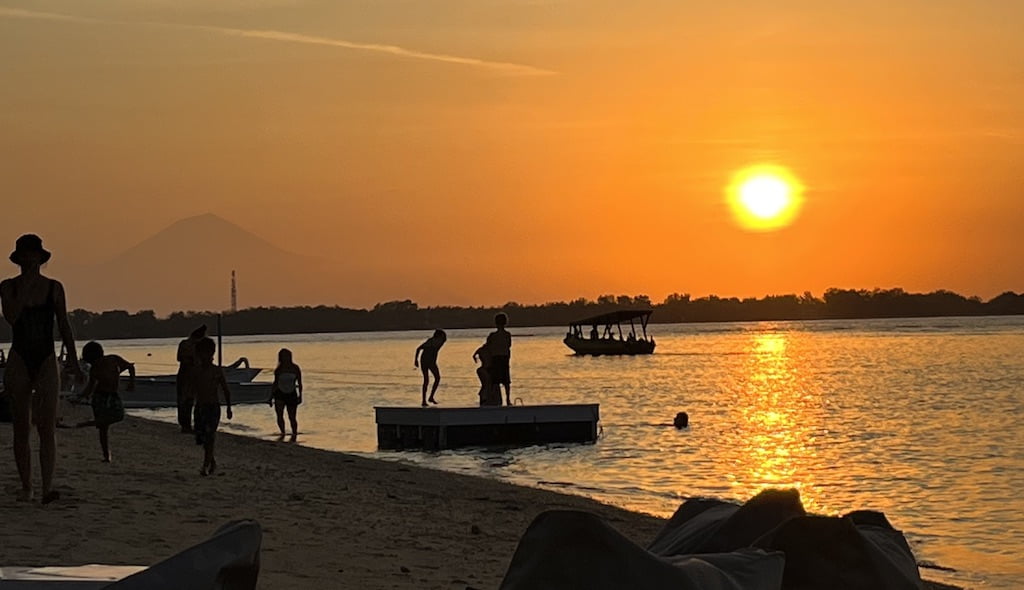
The beaches on the Gili Islands are undeniably stunning and offer the classic picture-perfect sandy beach on a remote island. The sunsets are equally breathtaking, and many bars provide the perfect ambiance with relaxing lounge music. With their soft, powdery white sands, crystal-clear turquoise waters, and swaying palm trees, Gili islands beaches offer a postcard-perfect setting for relaxation and adventure.
Two practical caveats worth knowing before you picture yourself wading in. First, much of the shoreline is fringed by shallow coral rubble rather than clean sand underfoot — reef shoes are genuinely useful, especially on the west coast of Trawangan and around Han’s Reef on Air. Second, the tide matters enormously: at low tide some stretches become too shallow to swim. The east coast of Gili Air and the northeast of Trawangan hold the most swimmable water across the tidal range; the west coasts are for sunsets rather than swimming.
Where to Stay in the Gili Islands
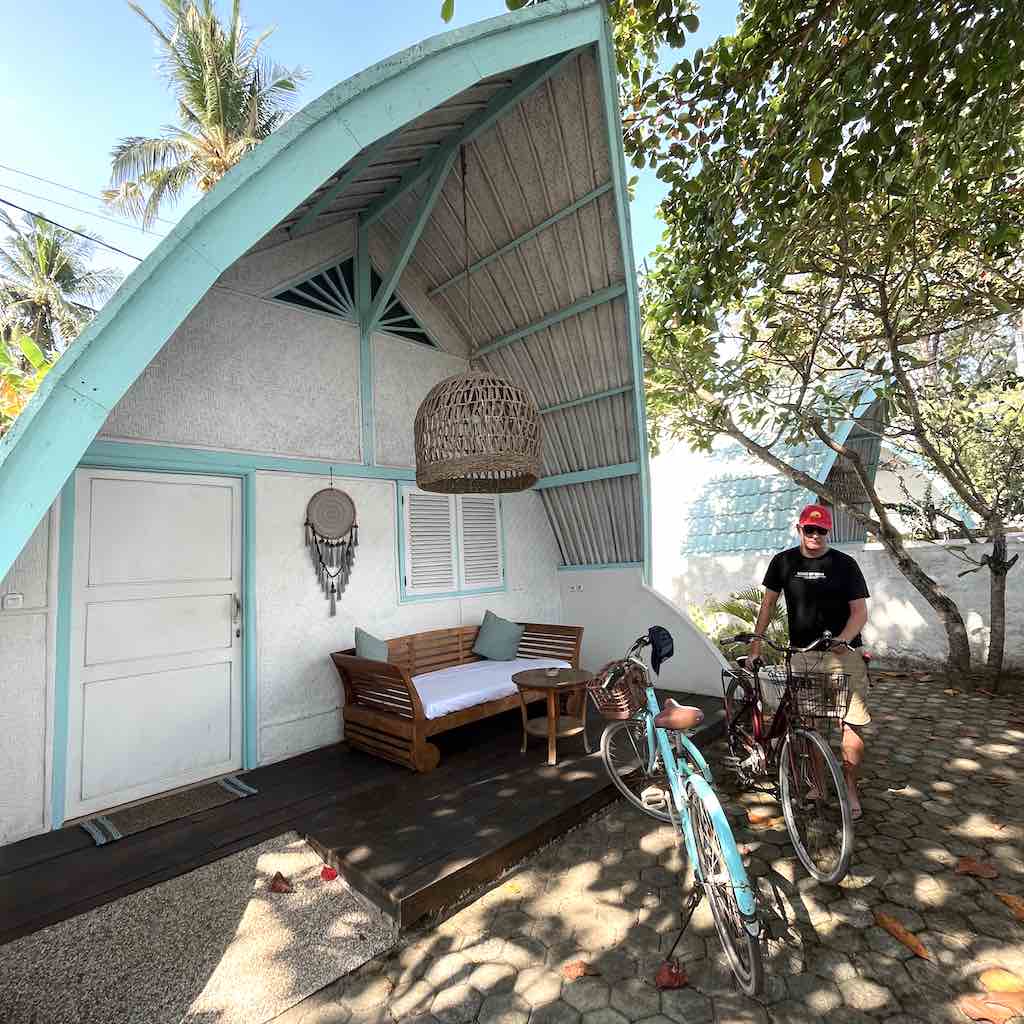
Accommodation on the Gilis runs from IDR 80,000 dorm beds to IDR 15 million private villas, and the island you pick matters more than the category. One rule applies everywhere: on Trawangan, check how far your room is from the bars before you book. The island is small, and sound carries across sand.
Gili Trawangan
Expect IDR 100,000-200,000 for a dorm, IDR 250,000-500,000 for a budget guesthouse, IDR 600,000-1,500,000 mid-range and IDR 1,500,000-4,000,000 for beachfront boutique. Hotel Vila Ombak is where I stayed twice: a large, established resort on the southeast coast, walking distance from the harbour but set back enough from the party strip. Pondok Santi Estate and Ponte Villas sit at the top end, Pearl of Trawangan and Gili Eco Villas in the comfortable middle, and Gili Pirates or Jati Village at the backpacker end. Compare availability and prices on Gili Trawangan.
Gili Air
Gili Air is slightly cheaper than Trawangan across the board: IDR 80,000-180,000 for a dorm, IDR 200,000-450,000 for a bungalow, IDR 500,000-1,200,000 mid-range. I stayed at Damai Bungalow in 2017 and at 7SEAS Cottages in 2022, both simple, both a short walk from the water — which is exactly what you want on this island. Check 7SEAS Cottages on Booking, or browse all Gili Air stays.
Gili Meno
Meno has no dorm scene to speak of and skews towards couples: IDR 250,000-500,000 for a guesthouse, IDR 600,000-1,500,000 for a bungalow, and a small number of luxury villas that run from IDR 4,500,000 upwards. Book further ahead than you would on the other two islands — there is simply less stock, and no ATM to bail you out. See where to stay on Gili Meno.
Boat connections from Bali
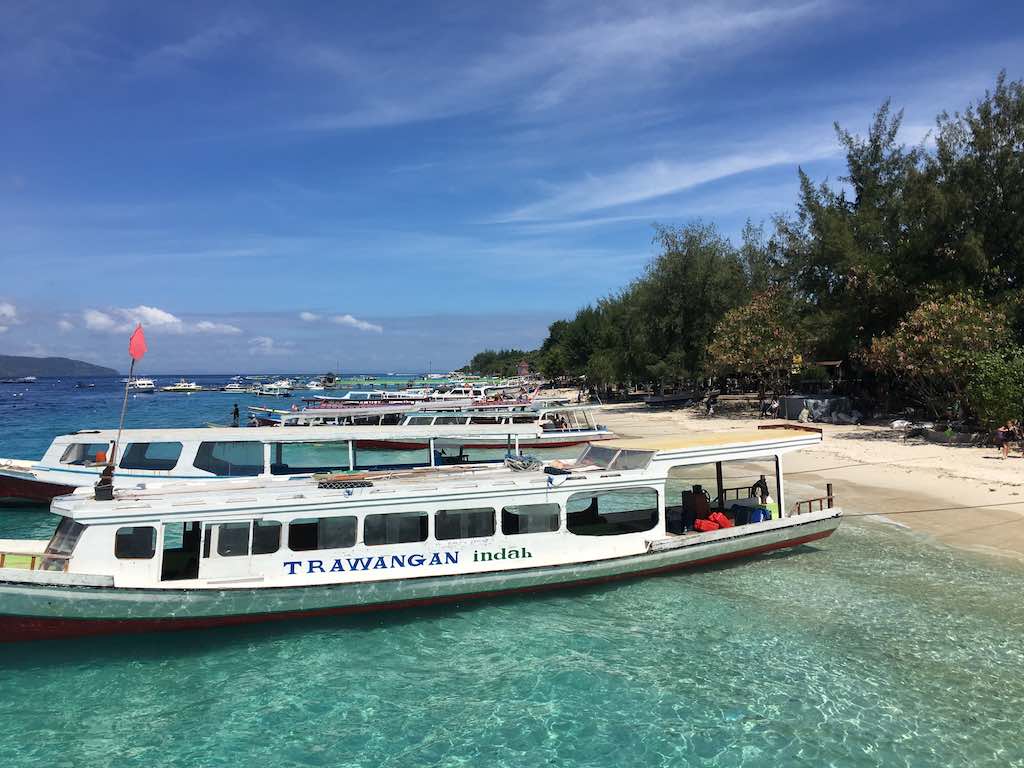
Multiple fast boat services operate between Padang Bai in Bali and the Gili Islands, providing convenient access. The journey typically offers stunning sea views, and the boats are equipped with modern amenities, ensuring a comfortable voyage if the sea is not too rough. Most of the fast boat go to Lombok after reaching the Gilis.
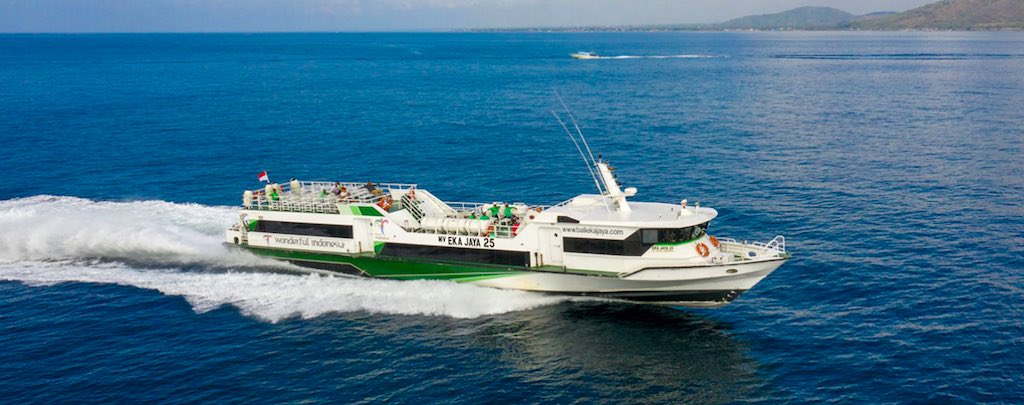
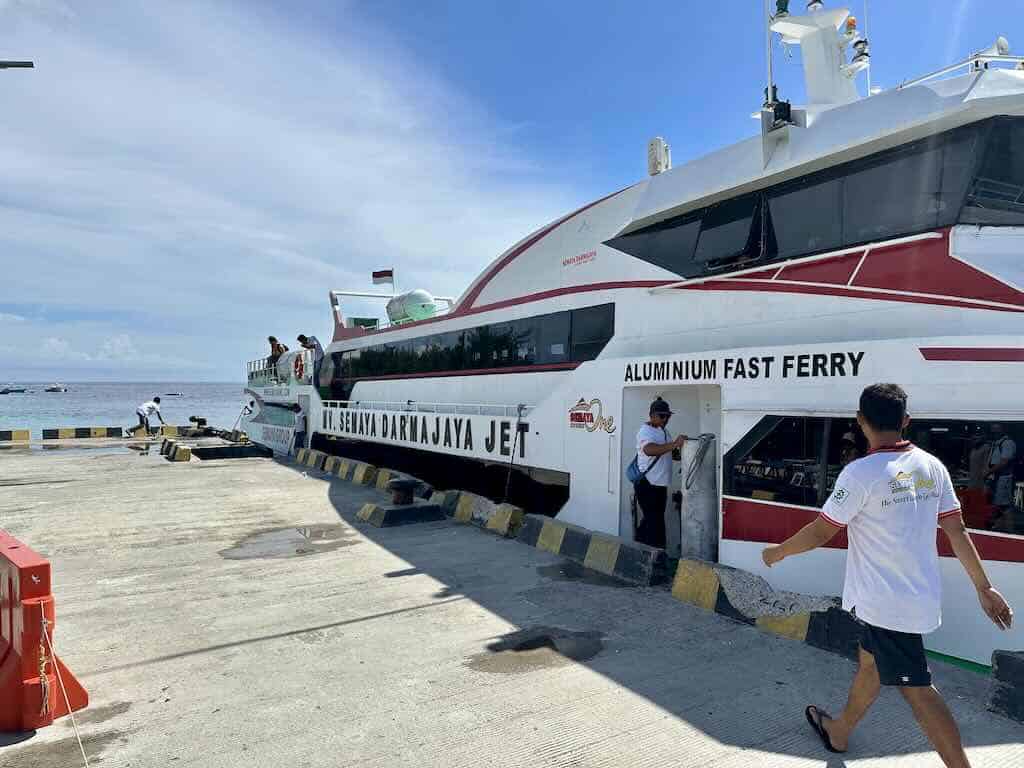
Reaching the Gili Islands can be time-consuming if you opt for an all-inclusive ticket from your hotel in Bali. Instead, I recommend traveling to Padang Bai alone and taking a fast boat directly to the Gilis. The trip typically takes 2.5 hours, provided the sea conditions are favorable. One of the best options is Eka Jaya, which offers daily service between Nusa Penida, Bali, the Gilis and Lombok. Eka Jaya uses spacious and comfortable fast boats equipped with four powerful engines so that you can travel quickly and comfortably. The boats are 23 meters long and can accommodate up to 210 passengers.
From Padang Bai, Sanur, Serangan — or straight from Nusa Penida
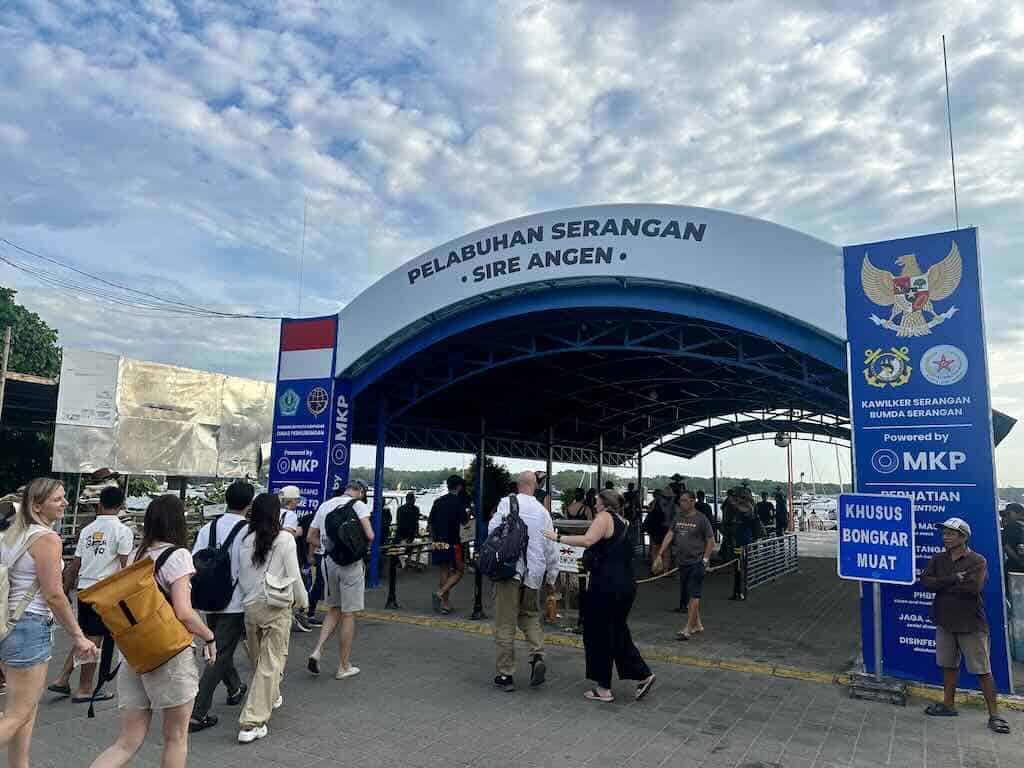
Three ports in Bali serve the Gilis: Padang Bai in the Karangasem regency of east Bali, and Sanur and Serangan in the south. Padang Bai is where most crossings start — around twenty scheduled departures a day, mostly clustered between 8:30 and 10:30 am, advertised at 1.5 to 2 hours but closer to 2 to 2.5 in practice. Sanur and Serangan save you the drive east but add sea time: count 2.5 to 3 hours. One-way fares run roughly $22-38 depending on the operator and the port. Getting to Padang Bai from Seminyak or Canggu takes 2 to 2.5 hours by car, so an early departure means a very early start; see our guide to getting around Bali for the realistic drive times.
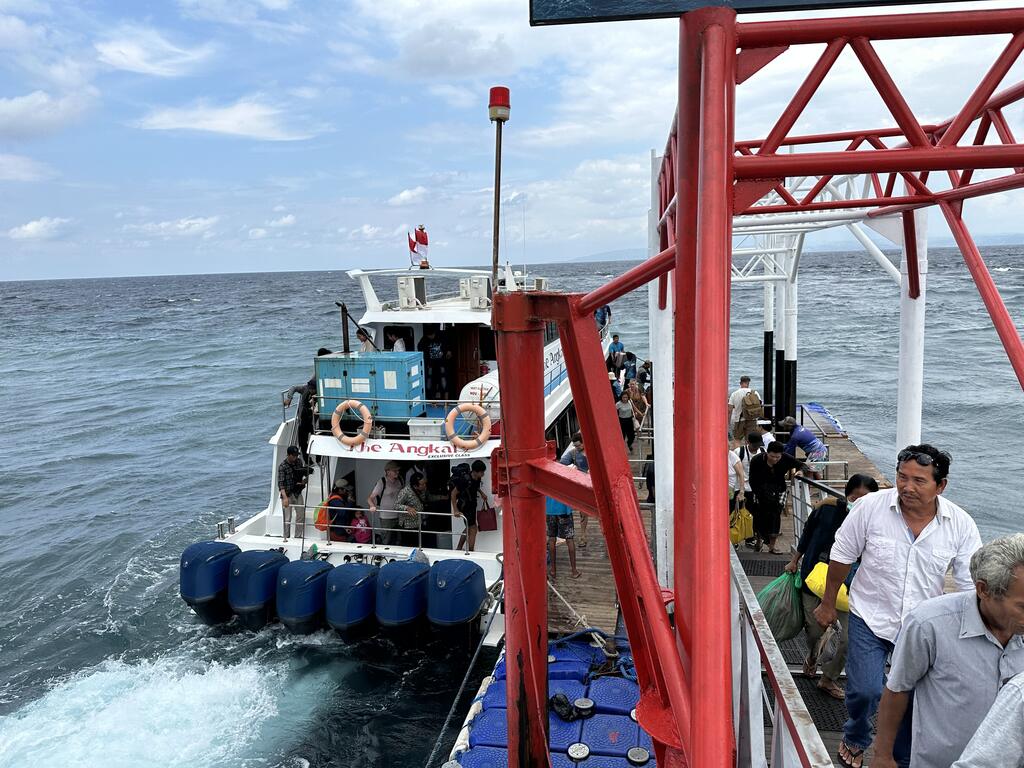
There is also a fourth option that most itineraries miss: several operators run direct fast boats between Nusa Penida and the Gilis, without going back through Bali — and the same in reverse, including from Nusa Lembongan. If you are already on Nusa Penida, that saves you a full transfer day, and it makes the Nusa Penida + Gili combination far more practical than it looks on a map. I have put the operators, schedules and 2026 fares in a dedicated guide: Nusa Penida to the Gili Islands by fast boat. If you are still deciding between the two destinations rather than combining them, start with the Nusa Penida vs Gili Islands comparison.
From Bangsal or Teluk Nare on Lombok — the cheap way in
If you are already on Lombok, forget the fast boats. Bangsal harbour, north of Senggigi, runs public boats to all three islands for IDR 19,500 to 22,500 one way — about 20 to 30 minutes of crossing. The catch is that they leave when full (40 passengers minimum), so aim to be at the ticket office between 9:30 and 10:30 am, when the traffic is heaviest. The office runs 8:00 am to 5:00 pm, ticket sales close at 4:30 pm. If you are in a hurry or in a group, a charter costs IDR 360,000 to 500,000 one way for up to twenty people. Teluk Nare, a few kilometres further north, is the other departure point and is mostly used by fast boats and hotel transfers. Bangsal is the route I have used most often, and it is by far the least stressful way to reach the Gilis.
Hopping between the three islands
A public island-hopping boat links Trawangan, Meno and Air twice a day, typically around 9:30 am and 4 pm, for IDR 35,000-75,000 depending on the leg. A private charter between two islands runs about IDR 200,000. Do not plan a tight schedule around the public boat: it is a slow, informal service and it does not wait.
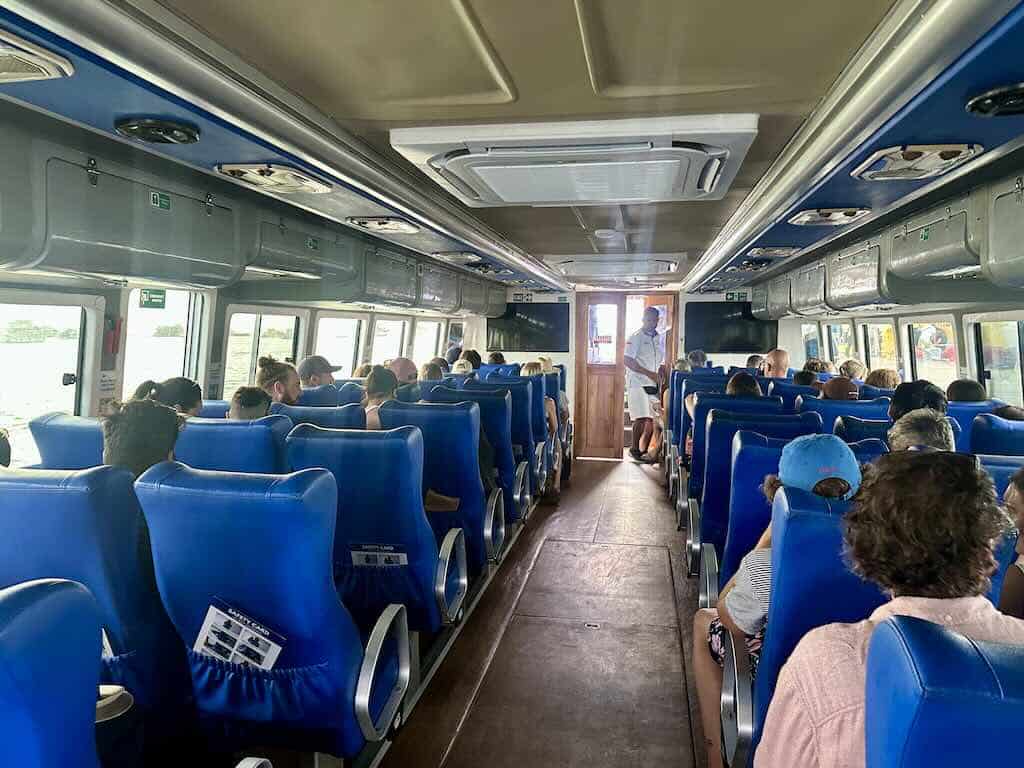
My recommendation is to book your transport online with 12go. They have excellent fares with the best companies, and booking is super easy.
Flying to Lombok
Another option is to fly to Lombok and visit Kuta Lombok before heading to the Gilis. Keep in mind that this option will be more expensive, and the airport is anyway pretty far away from Kuta and Bangsal. Lombok International Airport sits in the far south of the island: budget around two hours by car to reach Bangsal, and add that to your flight time before deciding it is the faster route. Full details in our guide on how to get to Lombok, and see getting around Indonesia for the wider picture.
Best Time to Visit the Gili Islands
The dry season runs from April to October, with temperatures between 22 and 34 °C and the best underwater visibility from June to September. That is also when the islands are fullest: July and August, along with the Christmas and New Year window, are peak season, with higher room rates and boats that sell out days in advance.
My preferred window is September to early November — the sea is still calm, prices have dropped, and the crowds have thinned. Be aware that October to December brings small stinging jellyfish in some years; a rash vest solves it. The wet season, November to April, means short heavy downpours rather than all-day rain, but it also means rougher crossings: fast boats are cancelled far more often, and the 2 hour trip from Padang Bai stops being fun when the swell is up. If you travel in January or February, keep a spare day in the schedule.
Practical Tips for the Gili Islands
Money and ATMs
Bring cash. Trawangan has several ATMs near the harbour and Gili Air has a couple; Gili Meno has none. All of them run out during high season, and card acceptance outside the bigger hotels and dive centres is patchy. Withdraw on Lombok or Bali before you cross, and carry small notes — nobody on a beach has change for a 100,000.
Getting around, and the cidomo question
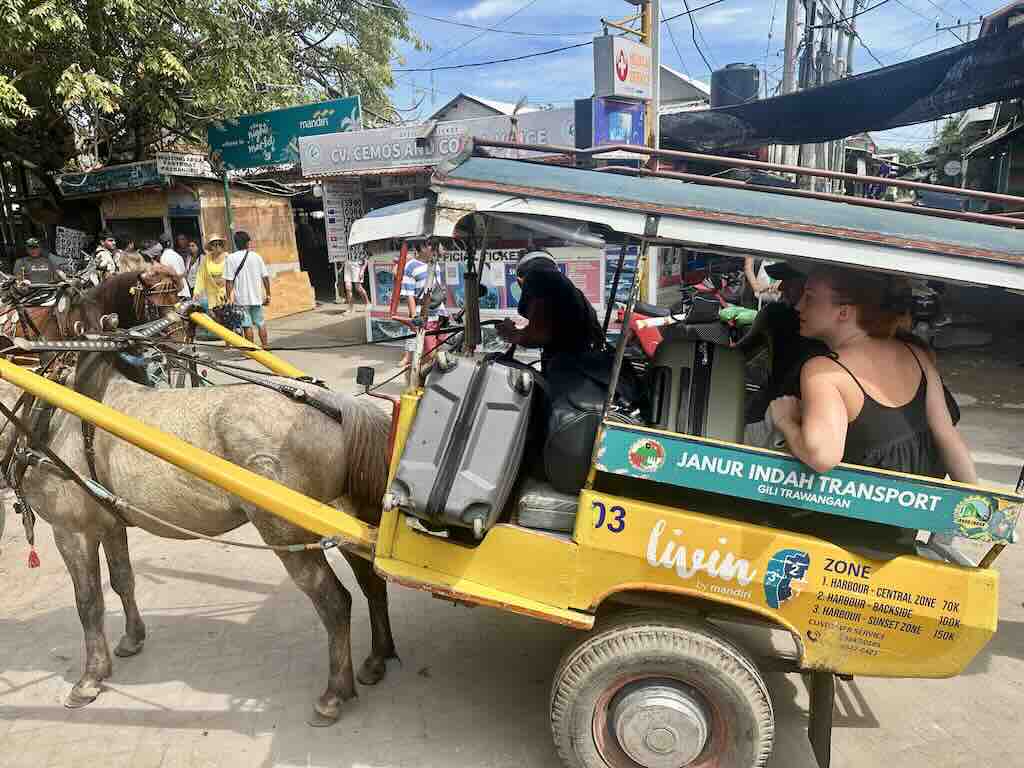
There are no motorised vehicles: you walk, you cycle (IDR 50,000-75,000 a day), or you take a cidomo horse cart (IDR 50,000-200,000 depending on distance and island). Worth being honest about the cidomos: horse welfare on the islands is a genuine and long-running concern, and several visitor-facing campaigns have pushed for better conditions. If you can carry your own bag, walk. If you do take one, refuse a cart that is visibly overloaded or a horse in poor condition.
Water, plastic and electricity
Tap water is not drinkable, and much of the shower water is brackish — expect it to feel slightly salty and to be unkind to long hair. Single-use plastic is banned; refill stations are widespread, so bring a bottle. Power comes by undersea cable from Lombok and cuts do happen, mostly briefly. Mobile coverage is good on Trawangan and Air, weaker on Meno, and hotel wifi ranges from decent to decorative.
Safety
The Gilis are safe, including for solo female travellers, and the absence of traffic makes walking after dark easier than almost anywhere else in Indonesia. The two real risks are in the water — the channel currents described above — and in what you drink: avoid unbranded spirits and be wary of very cheap cocktails, a rule that applies across Indonesia. There is a small police post on Trawangan, but do not count on a fast response; take the usual precautions with valuables in beachfront bungalows.
Read More
Lombok Travel Guide
The island the Gilis belong to: Kuta Lombok’s surf beaches, Mount Rinjani, the Sasak villages and the waterfalls of the north.
Sumbawa Travel Guide
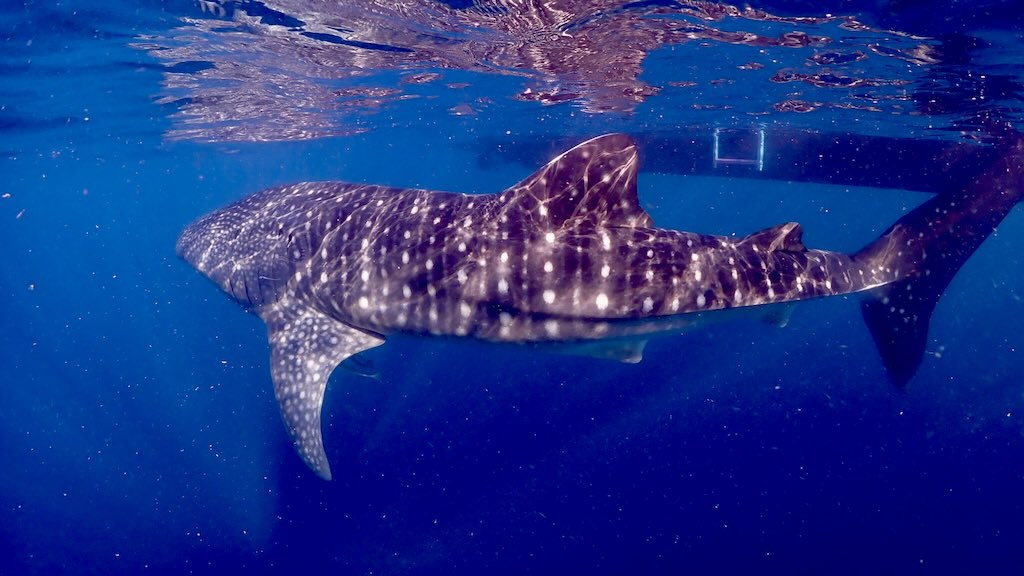
The next island east, still largely undiscovered: world-class surf at Lakey Peak, empty beaches and whale sharks in Saleh Bay.
Nusa Penida Travel Guide
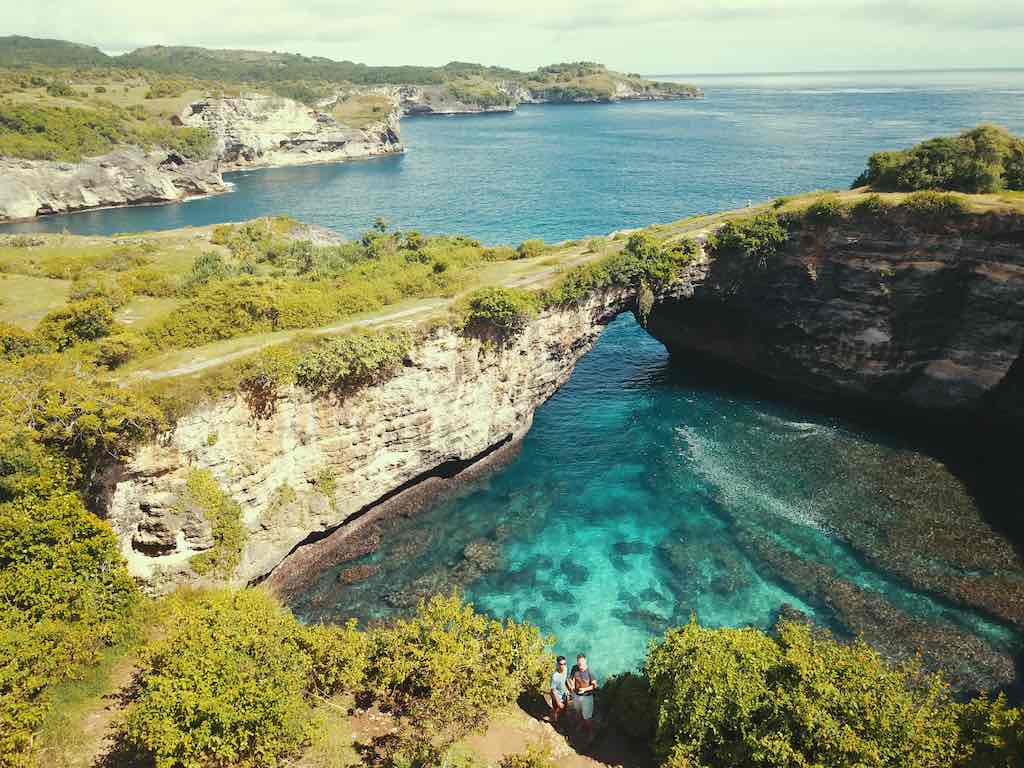
Discover where to stay in Nusa Penida, the island’s most beautiful beaches, top viewpoints, manta ray snorkeling, practical travel tips, and detailed itineraries to plan the perfect trip.
Frequently Asked Questions About the Gili Islands
Where are the Gili Islands in Indonesia?
The Gili Islands lie about 5 km off the northwest coast of Lombok, in West Nusa Tenggara province, roughly 35 km east of Bali. Administratively they belong to Lombok, not to Bali, even though most visitors arrive from Bali by fast boat.
Which Gili island should I choose?
Gili Trawangan for nightlife, choice of restaurants and dive centres; Gili Meno for absolute quiet and the best turtle snorkelling; Gili Air for the balance between the two. First-time visitors who are unsure should go to Gili Air.
How do you get to the Gili Islands from Bali?
By fast boat from Padang Bai, Sanur or Serangan. Padang Bai has the most departures — about twenty a day, mostly between 8:30 and 10:30 am — and the shortest crossing at 2 to 2.5 hours; Sanur and Serangan take 2.5 to 3 hours but save the drive east. Fares run roughly $22-38 one way. Direct fast boats also run from Nusa Penida if you are already there, so you do not have to backtrack through Bali.
How long is the boat from Bali to the Gili Islands?
Operators advertise 1.5 to 2 hours from Padang Bai; in practice count 2 to 2.5 hours, and 2.5 to 3 from Sanur or Serangan. From Bangsal or Teluk Nare on Lombok the crossing is only 20 to 30 minutes. Crossings are rougher and more often cancelled in the wet season, from November to April.
Are the Gili Islands part of Lombok or Bali?
They are part of Lombok, in West Nusa Tenggara. “Gili” means “small island” in Sasak, the language of Lombok, which is why dozens of other islands around Indonesia are also called Gili something.
Gili Islands or Nusa Penida — which is better?
They serve different trips. Nusa Penida is closer to Bali (45 minutes from Sanur), bigger, and built around cliff viewpoints and world-class diving with manta rays and mola-mola. The Gilis are flat, car-free and built around beach life, easy shore snorkelling and turtles. With two weeks, do both — there are direct boats between them. Full breakdown in our Nusa Penida vs Gili Islands comparison.
Can you swim with turtles in the Gili Islands?
Yes, and you rarely need a boat. Green turtles feed in the seagrass beds off Gili Meno and at Turtle Point on the northeast coast of Gili Trawangan, in water shallow enough to snorkel from the beach. Go before 9 am for the calmest water and the most active turtles.
Are there cars on the Gili Islands?
No. Motorised vehicles are banned on all three islands. You get around on foot, by bicycle, or in a cidomo horse cart, and everything from luggage to building materials moves the same way.
Is it safe to visit the Gili Islands after the 2018 earthquake?
Yes. The islands were fully rebuilt in the years after the August 2018 Lombok earthquake and have been operating normally since. The reef suffered cracks and landslides at some dive sites, but turtles, reef sharks and rays remain abundant.
How many days do you need in the Gili Islands?
Three nights on one island is the minimum that justifies the crossing. Five to seven nights lets you split between two islands and dive or snorkel properly without spending your holiday on boats.
What is the best time of year to visit the Gili Islands?
April to October, with the clearest water from June to September. September to early November is the sweet spot: calm seas, lower prices and fewer people. July, August and the New Year period are the busiest and most expensive.
Are there ATMs on the Gili Islands?
There are ATMs on Gili Trawangan and Gili Air, but none on Gili Meno, and they regularly run out of cash in high season. Withdraw what you need on Bali or Lombok before crossing and bring small notes.
How much does a fun dive cost in the Gili Islands?
Around IDR 450,000-650,000 ($28-41) per dive, with prices broadly aligned between the dive centres, plus a one-off marine park fee of about IDR 100,000. A PADI Open Water course runs IDR 6,000,000-8,500,000 ($375-530).
About the author — Blaise Jaeger
Blaise Jaeger has been based in Bali since 2020 and dives in Indonesia year-round. He has stayed on the Gili Islands four times between 2017 and 2026 — twice on Gili Air, twice on Gili Trawangan — and has crossed to Lombok through Bangsal more times than he can count. He also runs the Nusa Penida travel guides, which is why the comparison between the two destinations on this page is a first-hand one rather than a theoretical one.
Blaise Jaeger has been based in Bali since 2020 and dives in Indonesia year-round. He has stayed on the Gili Islands four times between 2017 and 2026 — twice on Gili Air, twice on Gili Trawangan — and has crossed to Lombok through Bangsal more times than he can count. He also runs the Nusa Penida travel guides, which is why the comparison between the two destinations on this page is a first-hand one rather than a theoretical one.