Getting Around Paris: A Parisian’s Guide to the Metro, RER, Tickets and Vélib’
By Blaise Jaeger · Updated October 28, 2026
Paris is one of the easiest cities in the world to get around without a car, and I say that as someone who has lived here without one for a very long time. I live in Montorgueil, in the heart of the city, and I move around by metro, RER, Vélib’ and on foot. The system changed a lot in 2025: paper tickets are gone, and buying the right pass now matters more than ever. Here is how it works in 2026, and what I tell friends who come to visit.
Getting Around Paris at a Glance
- Metro: 16 lines, a station every few hundred meters in central Paris, trains every few minutes. The fastest way to cross the city.
- RER: five express lines (A to E) that cross Paris and reach the suburbs, the airports, Versailles and Disneyland Paris.
- Tickets: no more paper tickets. You load tickets or passes on a Navigo Easy card (€2) or on your phone.
- Prices in 2026: €2.55 for a metro, train or RER trip, €2.05 for a bus or tram, €14 to or from the airports.
- Airports: RER B to Charles de Gaulle, metro line 14 to Orly, both for €14.
- Vélib’: the city’s bike-sharing system, from €3 for a 45-minute ride.
- On foot: central Paris is compact, and walking is often the nicest way to go from one neighborhood to the next.
How I Get Around Paris
From Montorgueil, my everyday lines are metro lines 1, 3 and 4, and the RER A, which crosses Paris from west to east in a few stops. For the airports, I take the RER B to Charles de Gaulle or to Orly. I have not owned a car for a very long time, including the years when I lived in Paris full time: traffic is difficult and parking is rare and expensive, so a car is more of a burden than a help.
I have my own Navigo pass. When I plan to move around a lot, I load a weekly pass: a single trip to or from Charles de Gaulle already costs €14, so the weekly pass pays for itself very quickly and gives me unlimited metro, bus and RER for the rest of the week. When I only make a few trips, I use the pay-as-you-go option on the same card. For friends who come to visit, I keep a Navigo Easy card that I lend them with tickets already loaded.
Paris Metro Tickets in 2026: No More Paper Tickets
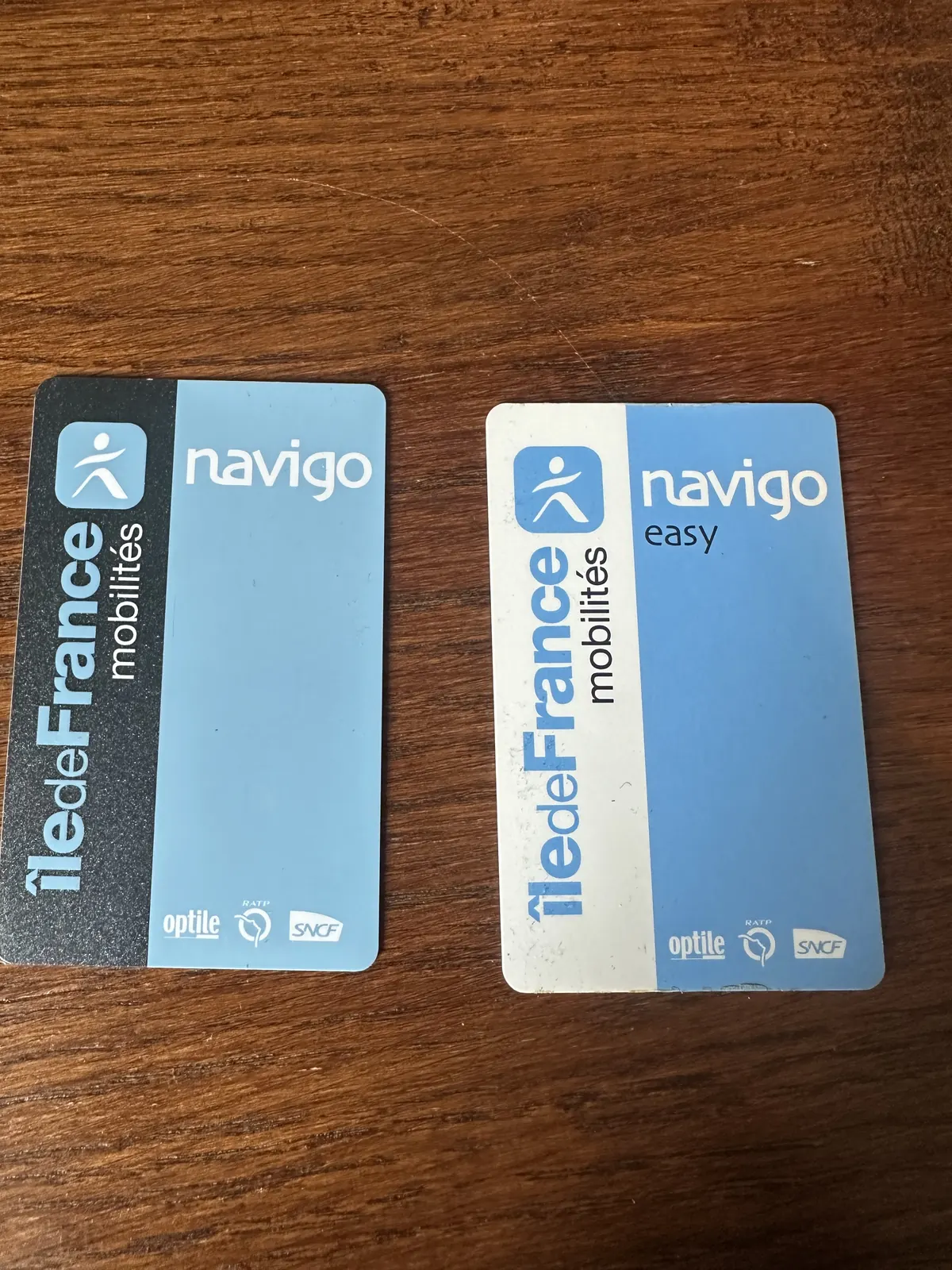
The famous little cardboard ticket is history. Ticket machines stopped selling paper tickets in 2025, and the last ones still accepted on the metro will no longer be valid after December 15, 2026. Today you have three options: a Navigo Easy card, your phone, or, if you live in the region, a personal Navigo pass.
The Navigo Easy card
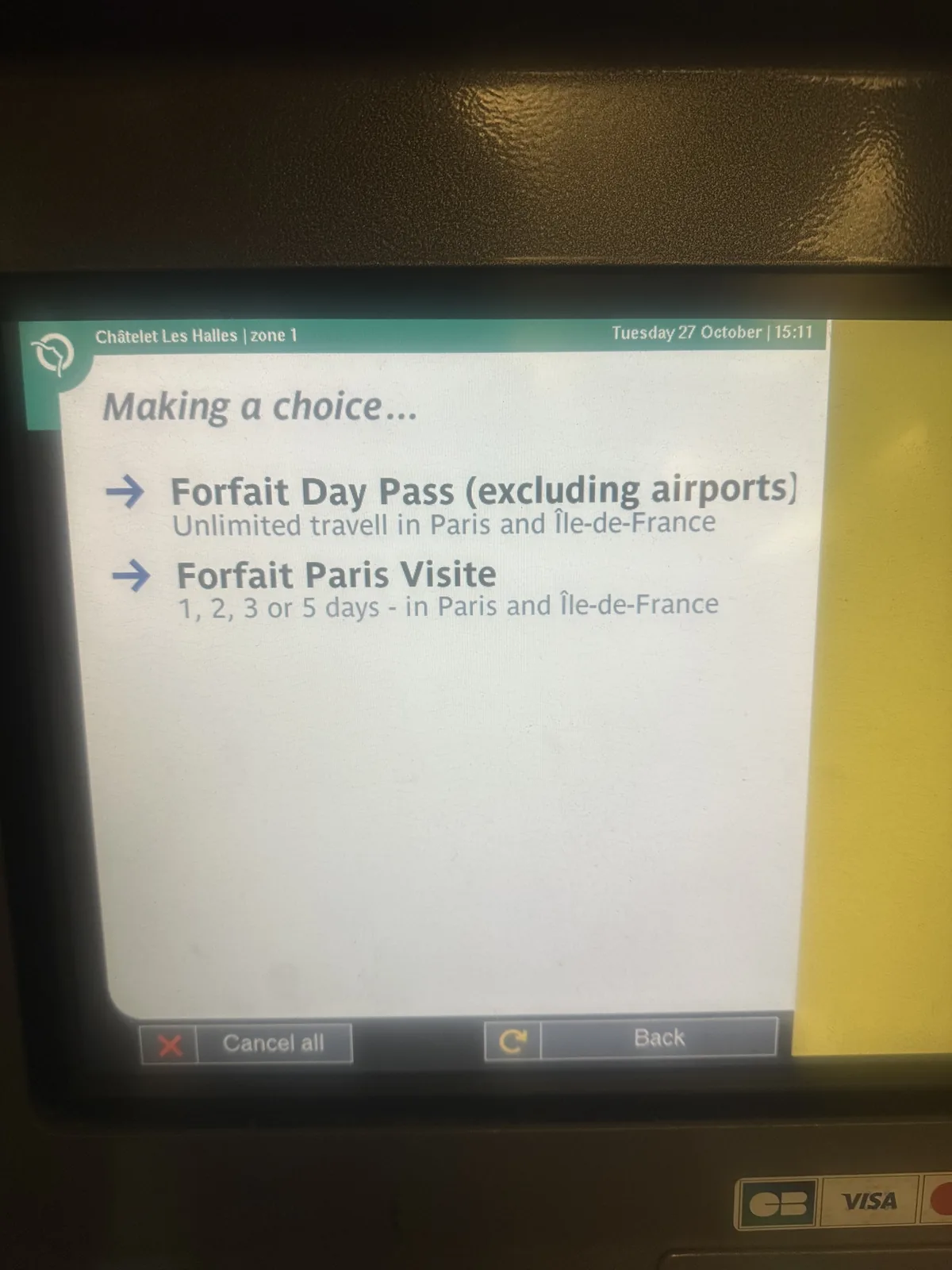
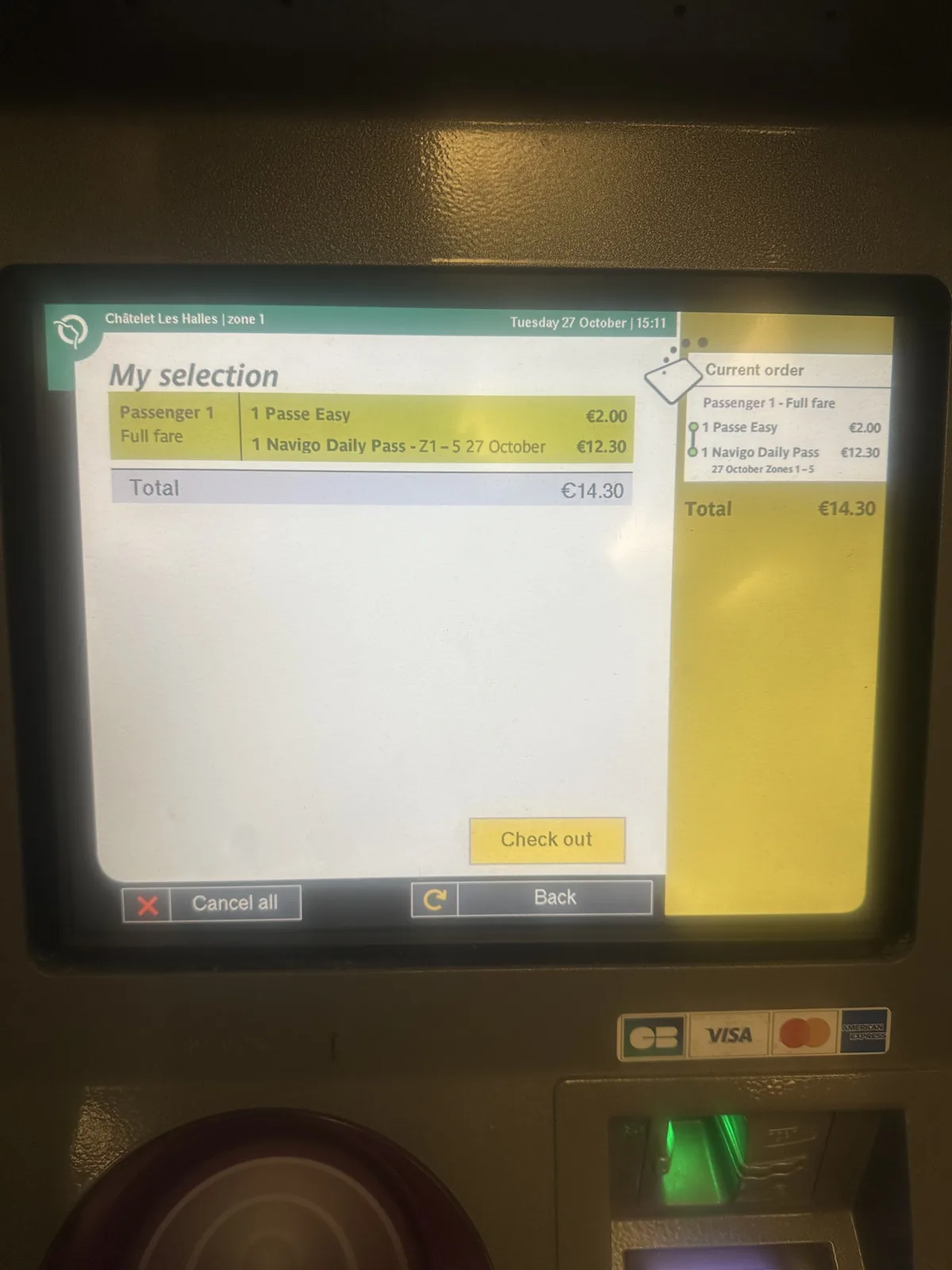
Navigo Easy is the visitor’s card. It costs €2 at any ticket machine or ticket office, is not in your name, and can be lent to someone else. You load it with single tickets, a day pass or a Paris Visite pass. Only one type of ticket can be loaded at a time, so finish your single tickets before loading a day pass.
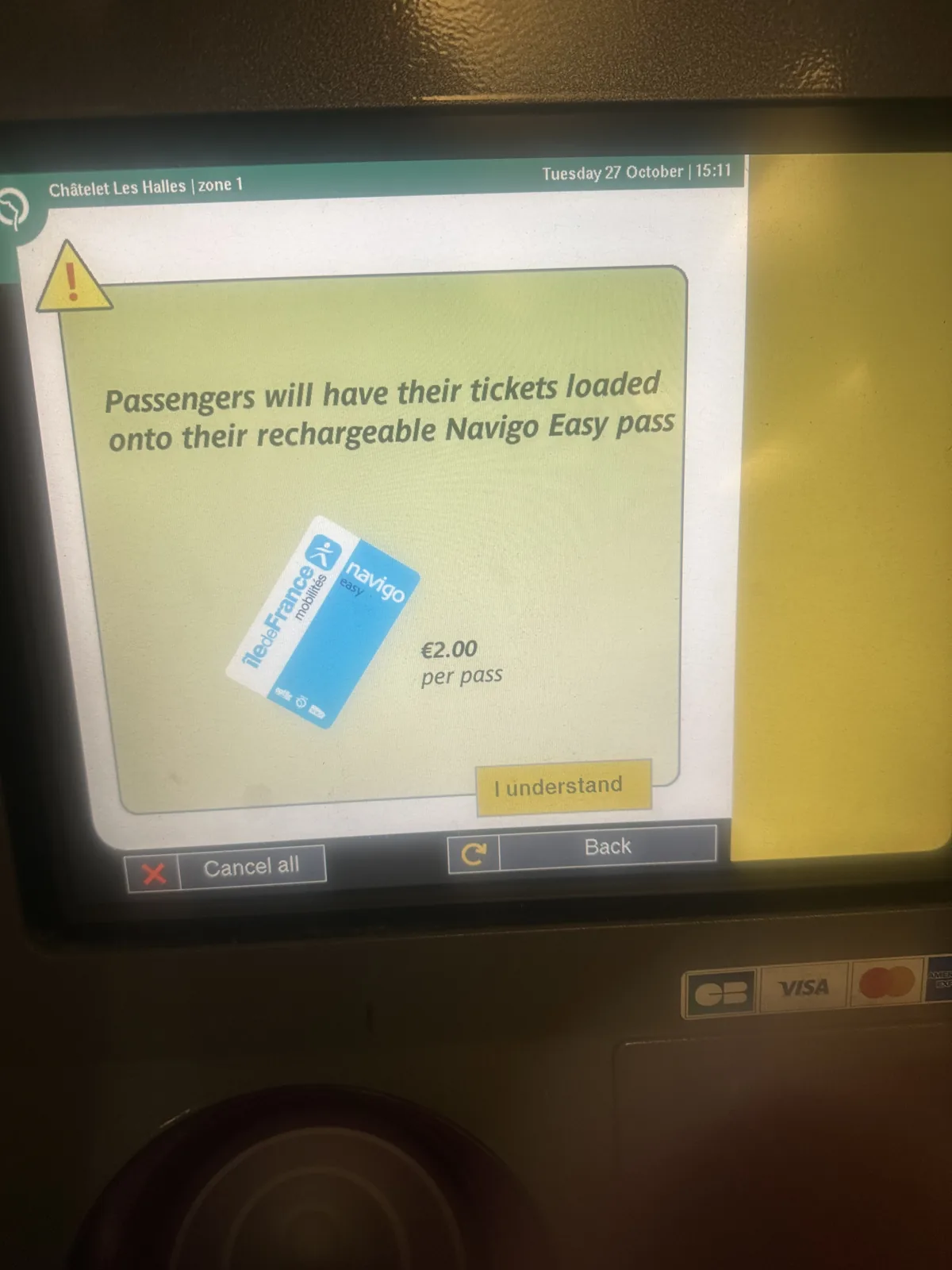
- Metro-Train-RER ticket: €2.55, valid for one journey of up to two hours on the metro, RER and suburban trains within the region, except the airports.
- Bus-Tram ticket: €2.05, valid for 90 minutes on buses and trams, with transfers between them.
- Paris Region ↔ Airports ticket: €14, for the RER B to Charles de Gaulle, metro line 14 to Orly and the other airport links.
- Navigo Day Pass: €12.30, unlimited travel for one day in the whole region, except the airports.
- Paris Visite: €30.60 for one day, €45.40 for two, €63.80 for three and €78 for five, airports included.
The weekly pass: my favorite deal
The Navigo weekly pass costs €32.40 and gives unlimited travel from Monday to Sunday on the metro, RER, buses, trams and the airport links. It is not sold on Navigo Easy: you need a Navigo Découverte card, which anyone can buy for €5 at a ticket office: you write your name on it and stick on a passport-size photo, with no ID document or address required. If your stay covers most of a Monday-to-Sunday week and you land at Charles de Gaulle or Orly, do the math: two airport trips alone cost €28.
Tickets on your phone
You can also buy and validate tickets with your phone through the official Île-de-France Mobilités app or the Bonjour RATP app, on most recent phones. It is convenient, but keep your battery charged: a dead phone means no ticket.
Pay as you go, for residents
People who live or work in the region can use a personal Navigo pass with the Navigo Liberté+ option: you validate as usual and are billed at the end of the month, about €2 per metro trip, with a daily cap. This is what I use when I only have a few trips to make. It requires a personal pass and a French bank account, so it is not for short visits.
Which Ticket Should You Buy?
- A weekend with a few metro rides: a Navigo Easy card with single tickets.
- A full day of sightseeing: the Navigo Day Pass at €12.30, if you make more than four or five trips.
- A week, Monday to Sunday, arriving by plane: the weekly pass on a Navigo Découverte card. It is my favorite deal.
- Two or three days including an airport trip: compare Paris Visite with single tickets plus an airport ticket. Paris Visite is rarely the cheapest option, but it is the simplest.
- Children: children under 4 travel free, and children aged 4 to 9 pay a reduced fare.
The Paris Metro: The Lines That Matter
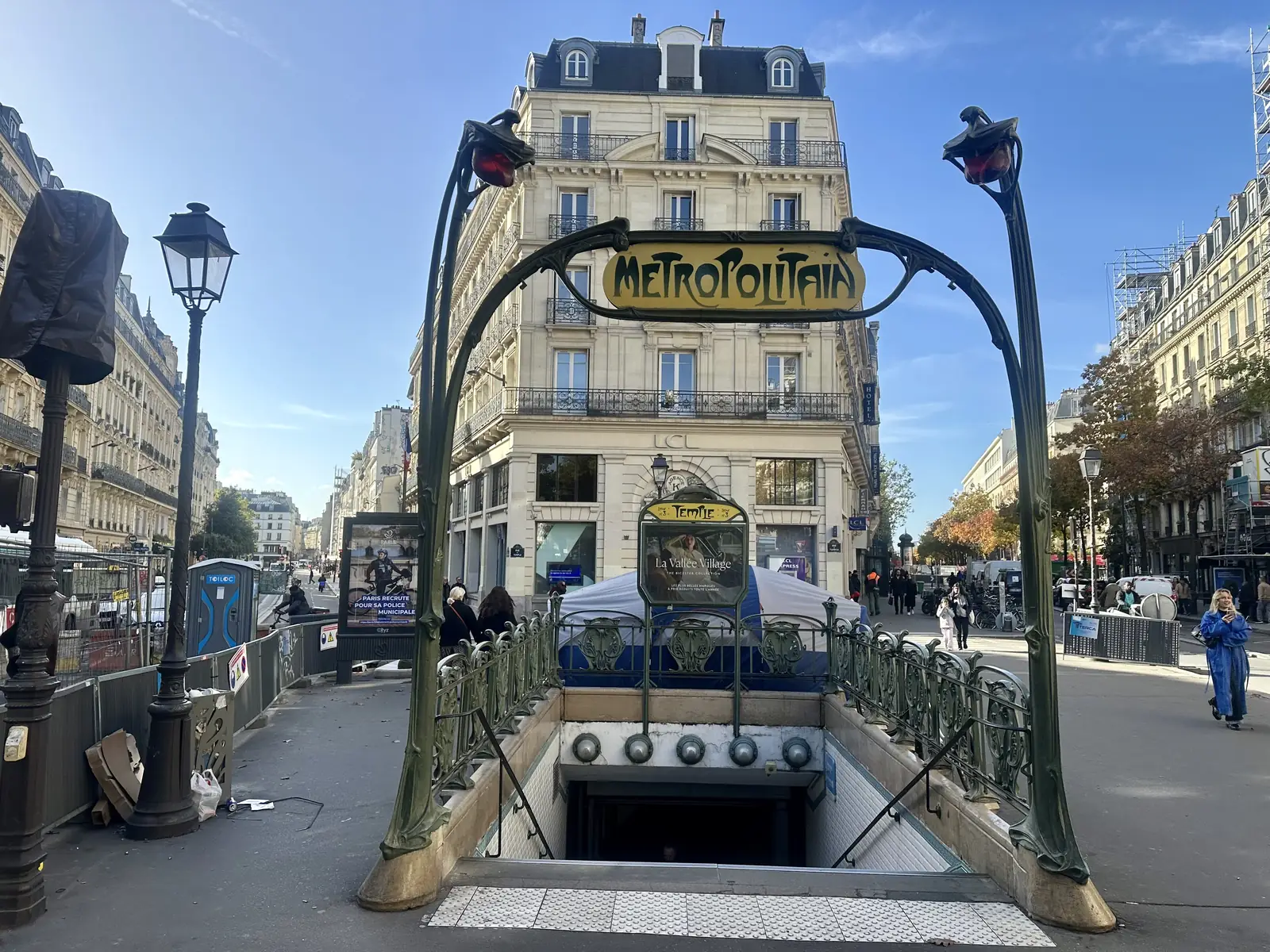
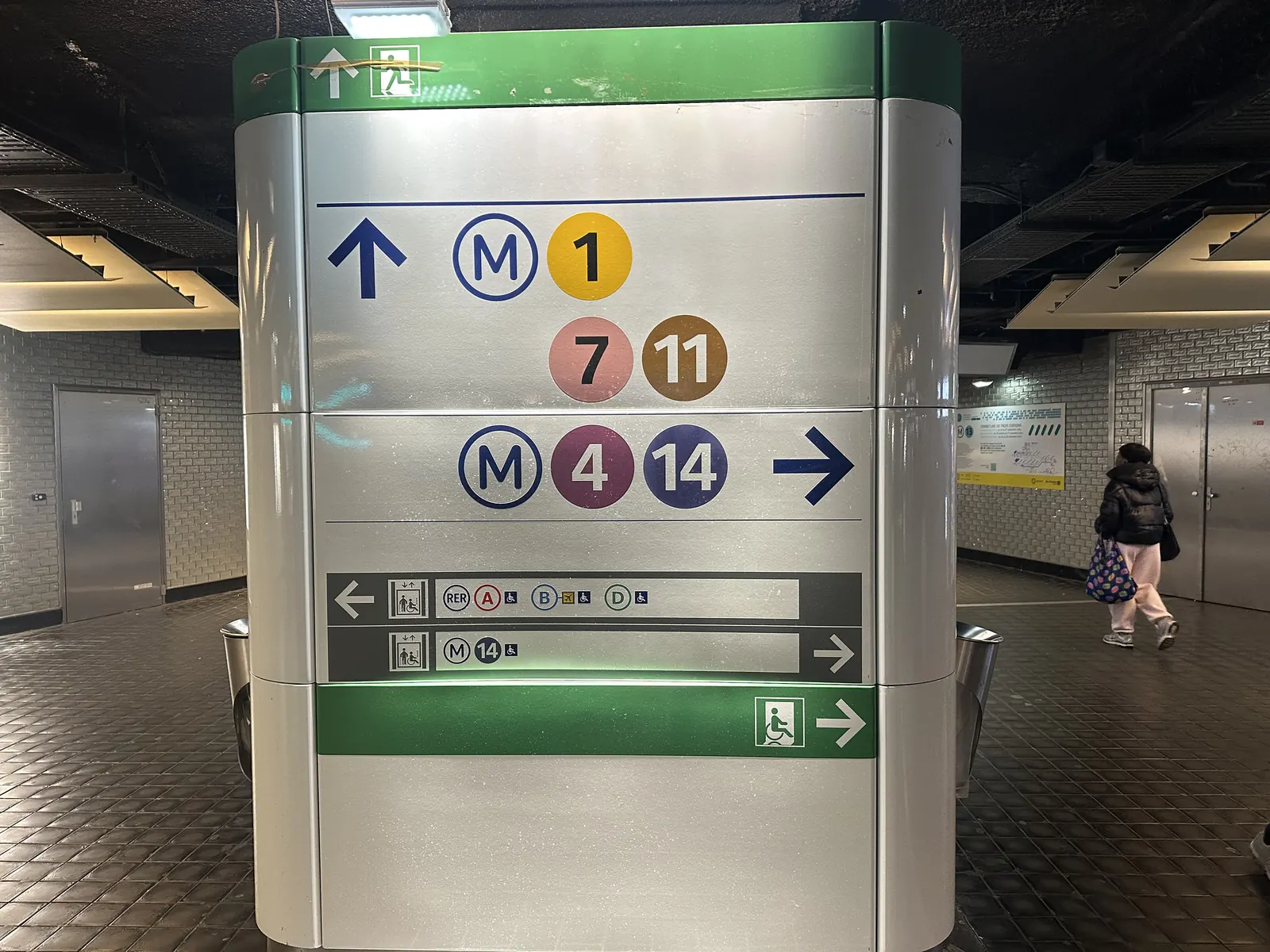
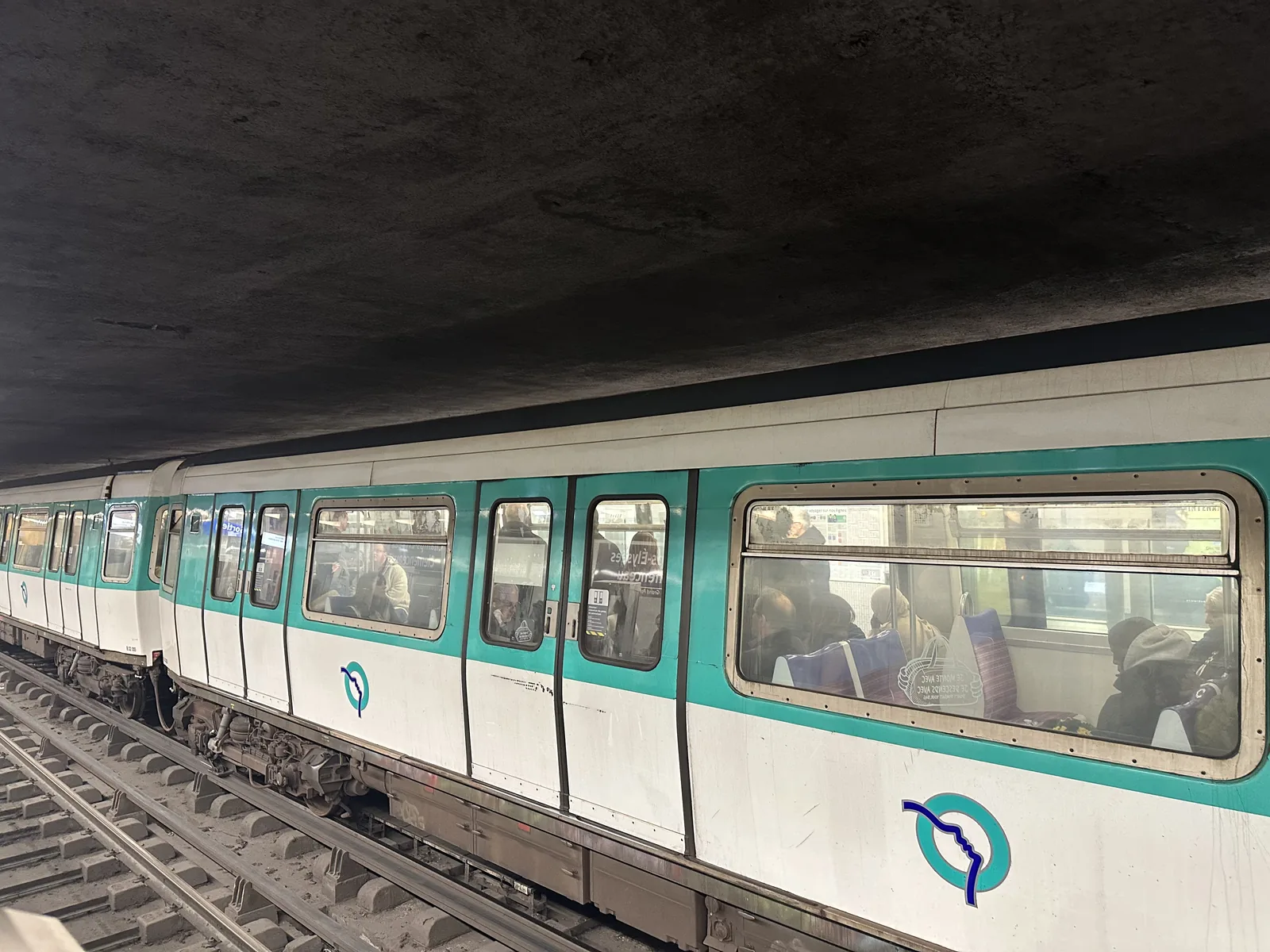
The metro runs from about 5:30 AM to just after midnight, and until about 2:00 AM on Friday and Saturday nights. You rarely wait more than a few minutes. For a visitor, a few lines do most of the work:
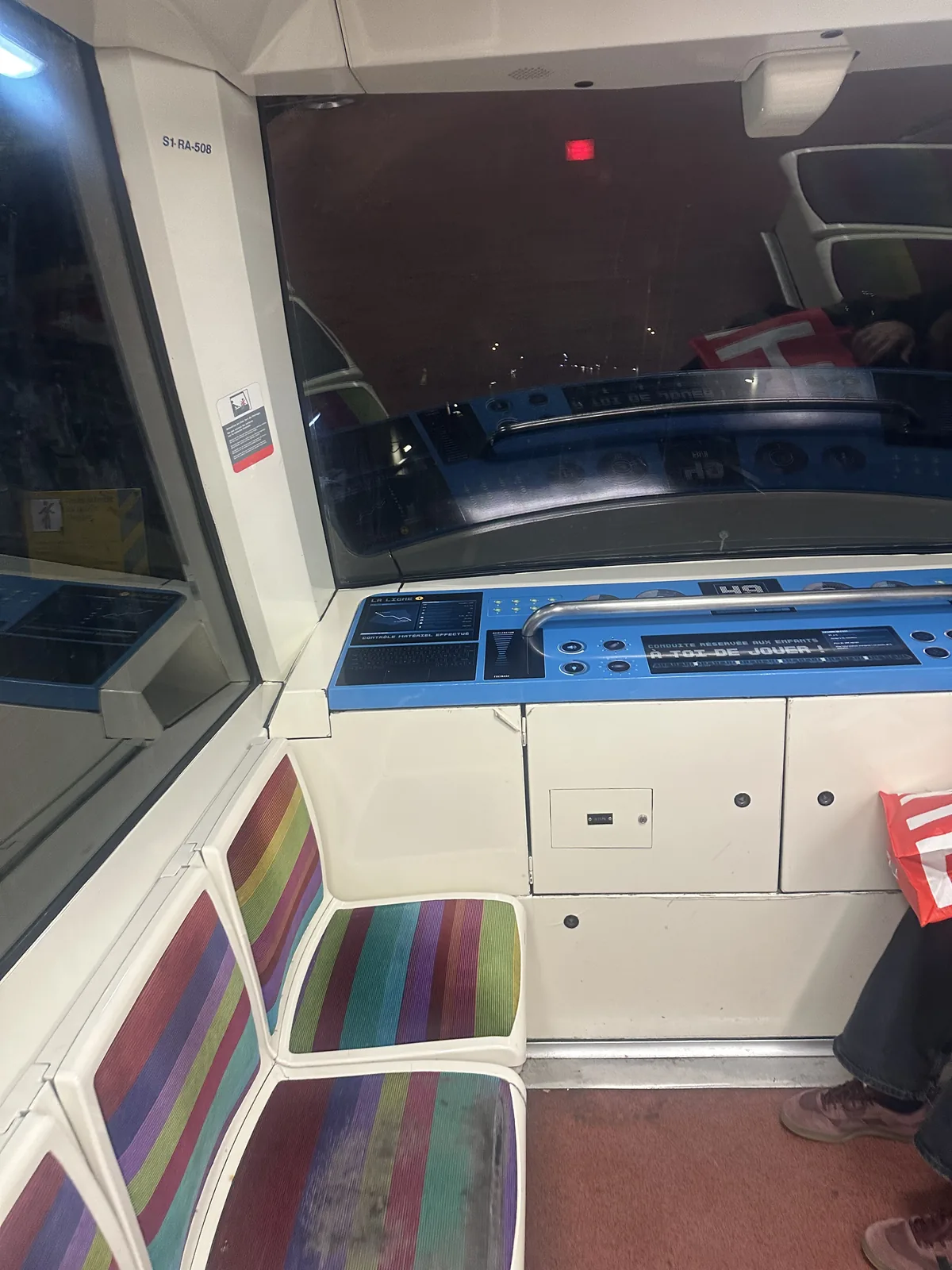
- Line 1: the visitor’s line, east to west, from the Bastille past the Hôtel de Ville, the Louvre, the Concorde and up the Champs-Élysées to La Défense. It is fully automated, with platform screen doors.
- Line 14: also automated, the fastest line in Paris, linking Saint-Lazare, Châtelet and the Gare de Lyon, and now Orly Airport.
- Line 4: north to south through the center, from the Gare du Nord and Gare de l’Est to Châtelet, Saint-Germain-des-Prés and Montparnasse.
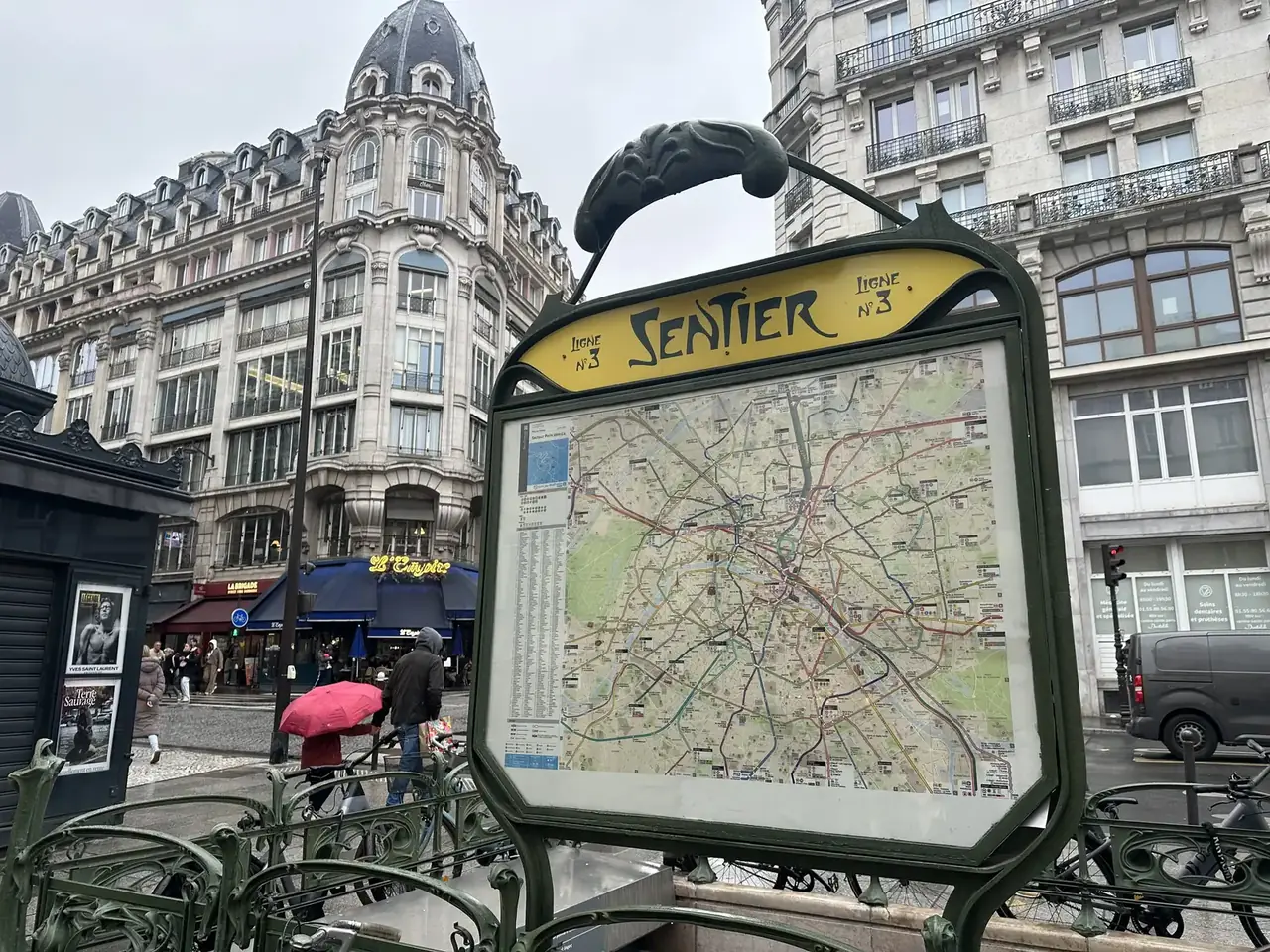
- Line 3: Opéra, the Grands Boulevards and the Sentier, my local line.
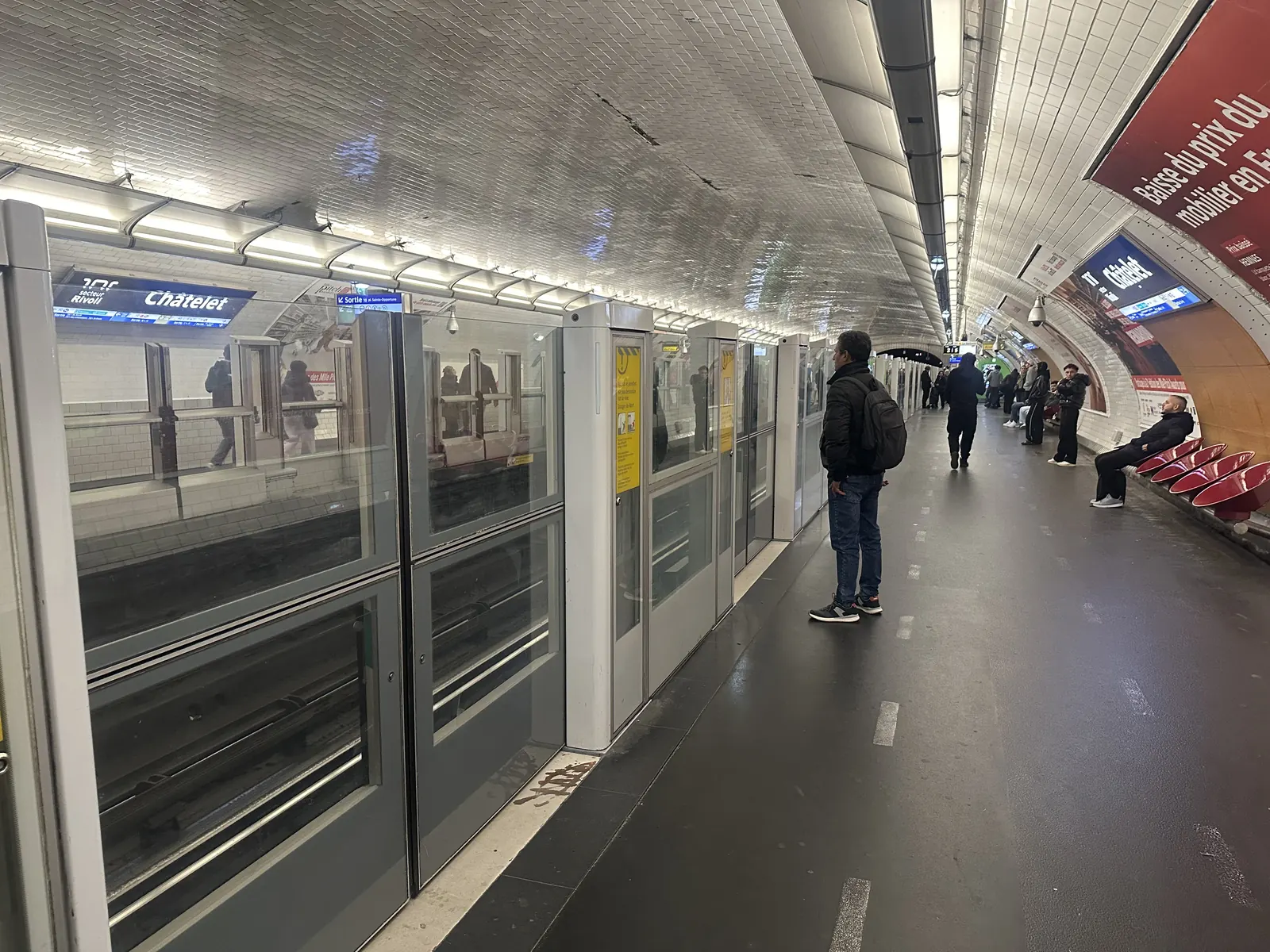
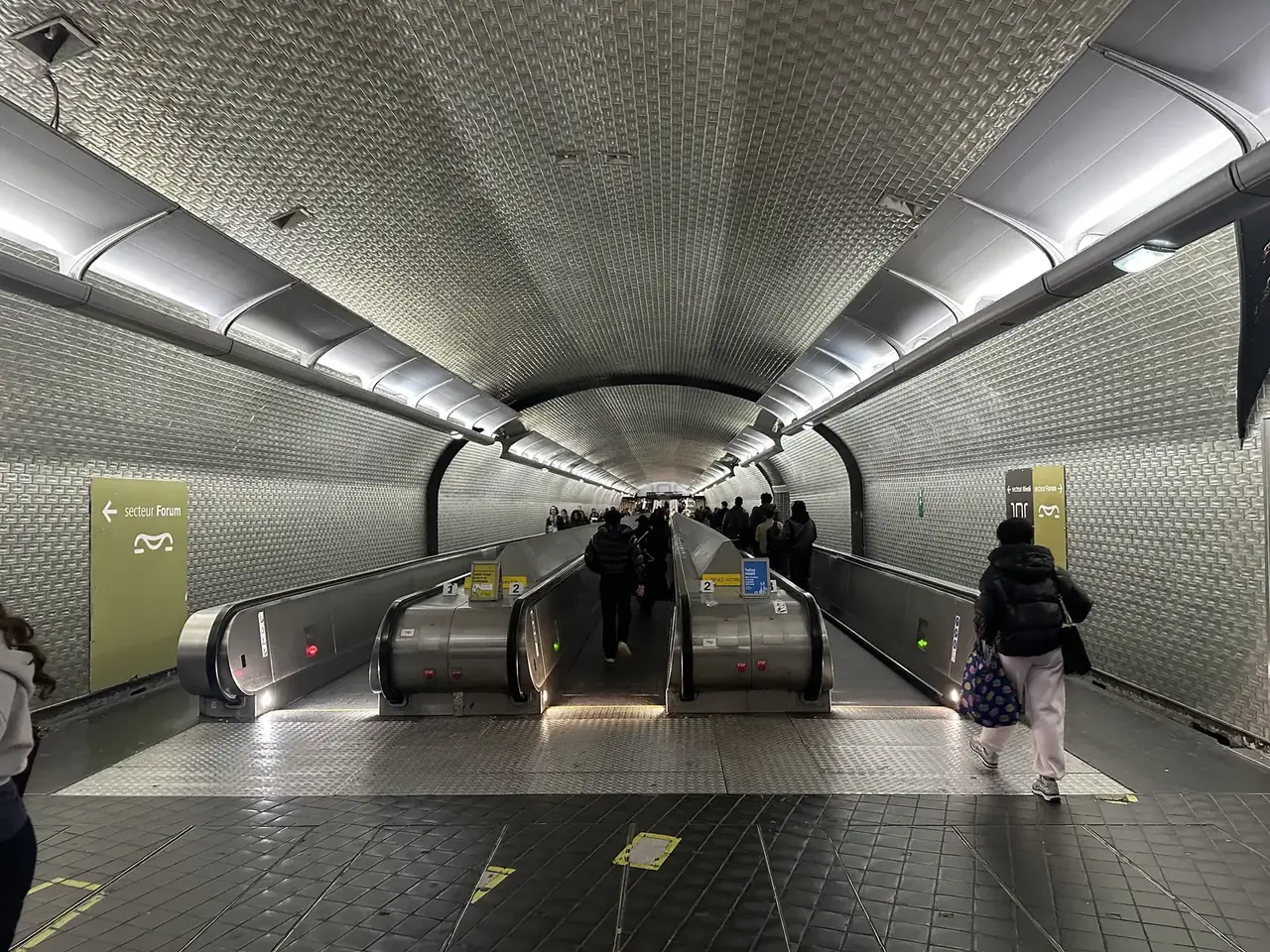
Avoid changing trains at Châtelet if you can. It is one of the largest underground stations in the world, and a change between two lines can mean ten minutes of corridors and moving walkways. Some stations are worth a look for themselves: Louvre-Rivoli has replicas of works from the museum on its platforms.

The RER: Faster Across Paris
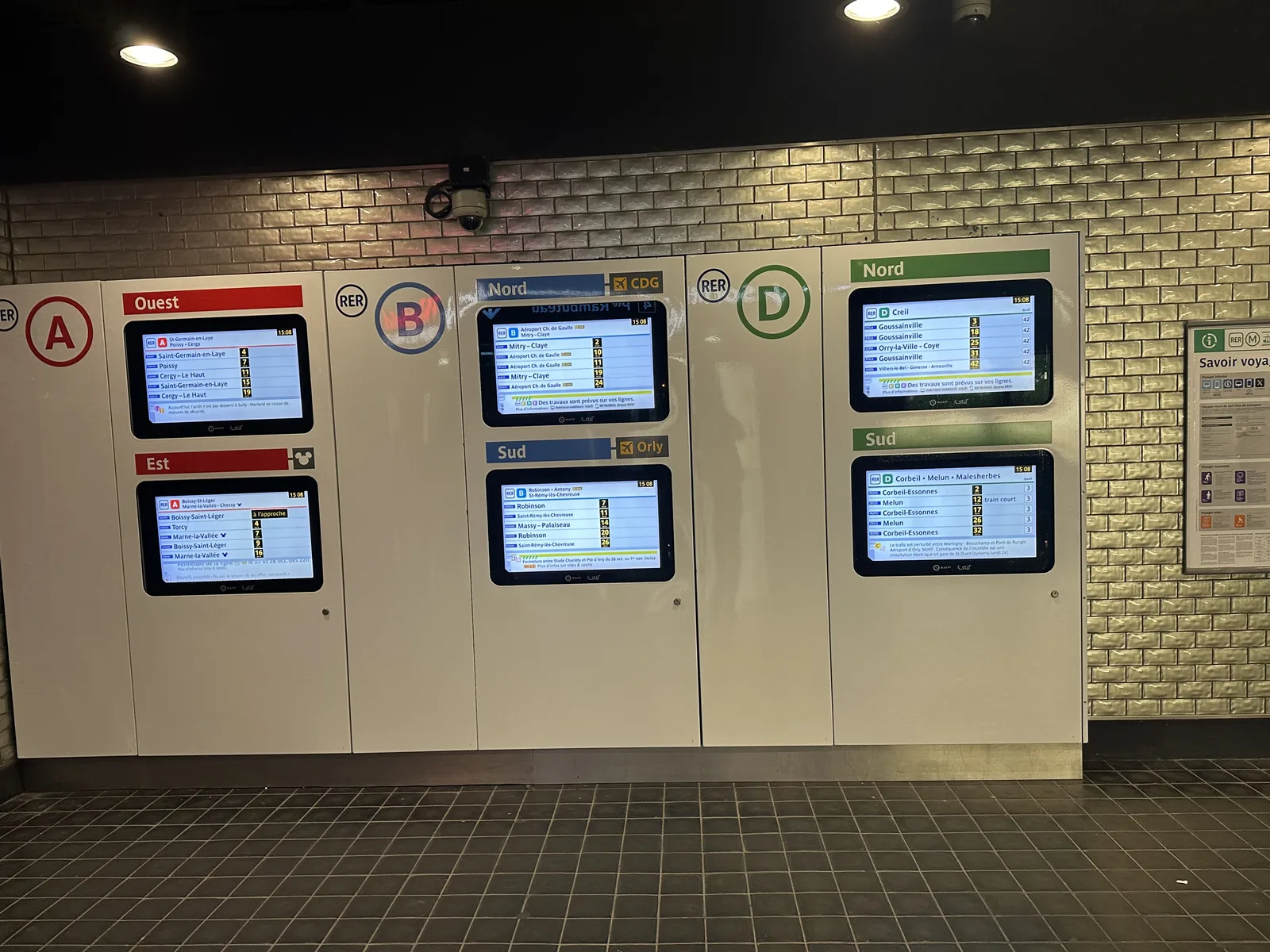
The RER lines stop less often than the metro inside Paris, so they are much faster for long distances. The RER A links the Opéra, Châtelet, Gare de Lyon and Nation in a few minutes, then goes on to La Défense and Disneyland Paris. The RER B goes north to Charles de Gaulle and south toward Orly, and the RER C serves Versailles. Inside Paris, a metro ticket is valid on the RER.
Getting to and from Charles de Gaulle and Orly
Charles de Gaulle by RER B
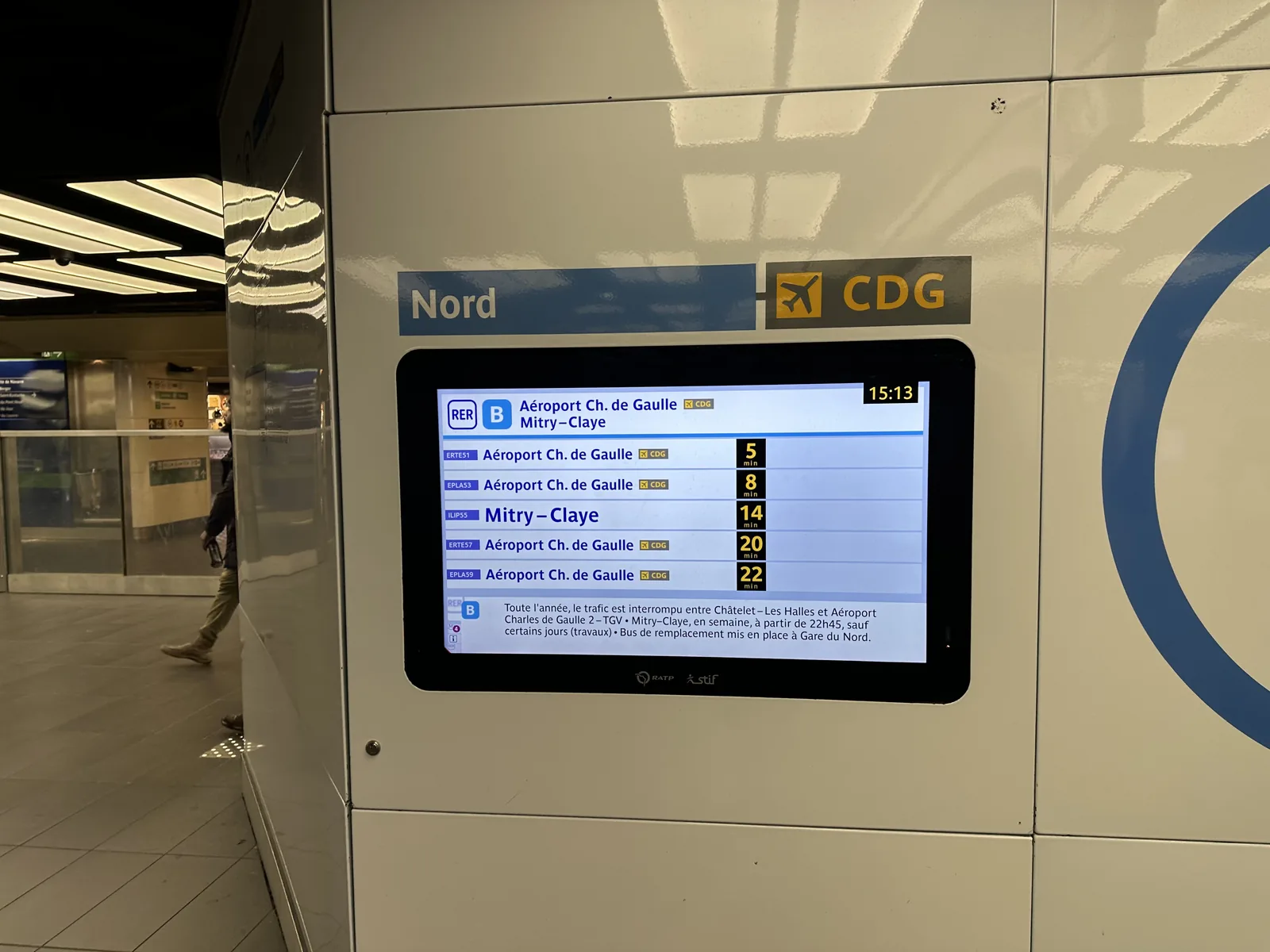
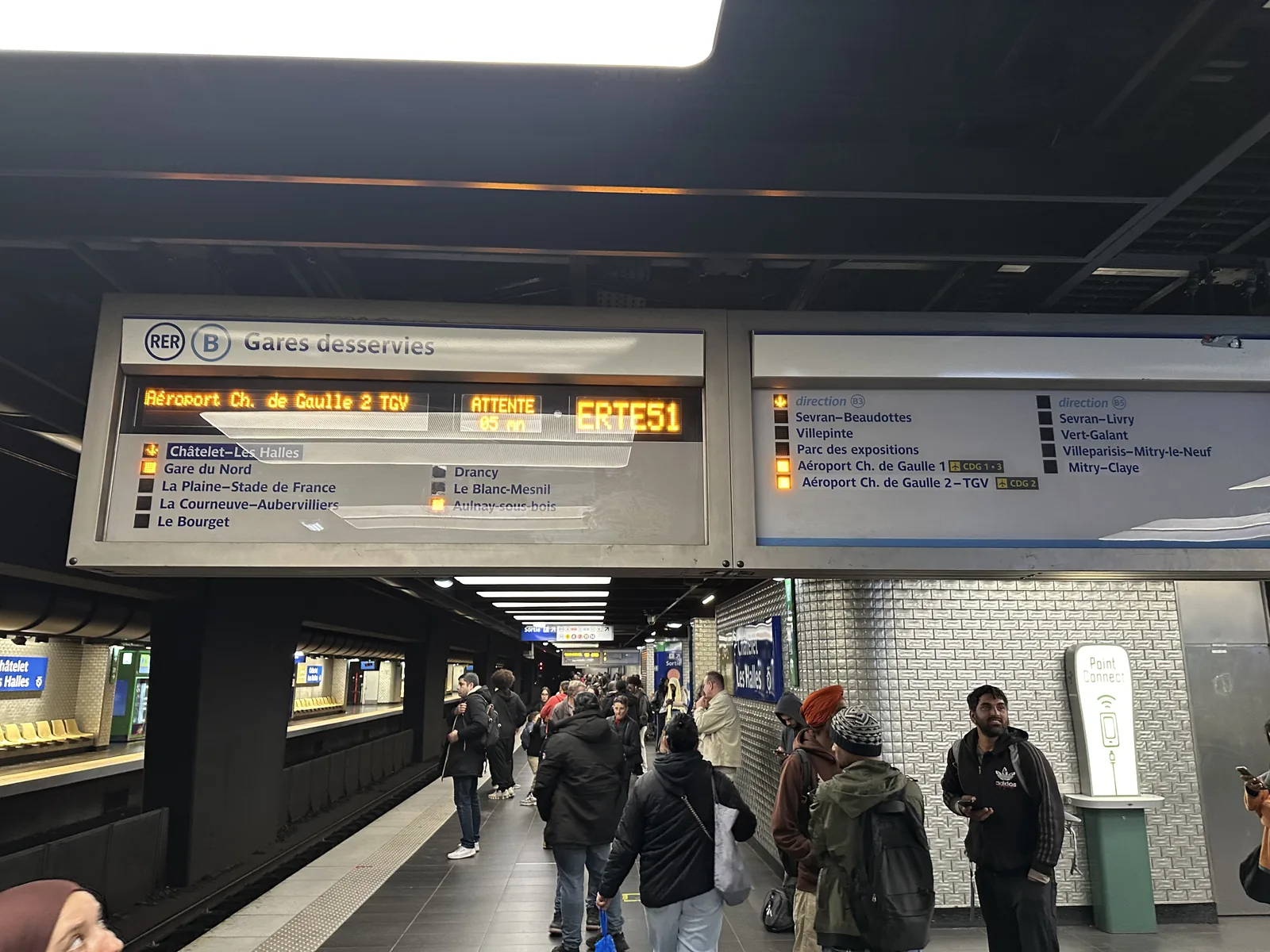
The RER B links Charles de Gaulle to the Gare du Nord, Châtelet and Saint-Michel in about 30 to 45 minutes, every 10 to 20 minutes, for €14. My advice: check the departure boards and try to take a direct train rather than one that stops at every station. Direct trains skip the stations between the Gare du Nord and the airport and save you a good ten minutes.
Orly by metro line 14
Since 2024, metro line 14 runs to Orly Airport: about 25 minutes from Châtelet, with a train every few minutes, for €14. The older route, RER B to Antony then the Orlyval shuttle, still exists but takes longer.
Taxis
Taxis between Paris and the airports charge a flat fare in 2026: €56 to the Right Bank and €65 to the Left Bank from Charles de Gaulle; €45 to the Right Bank and €36 to the Left Bank from Orly. Use the official taxi rank, never the people who approach you inside the terminal.
Buses: Paris Above Ground
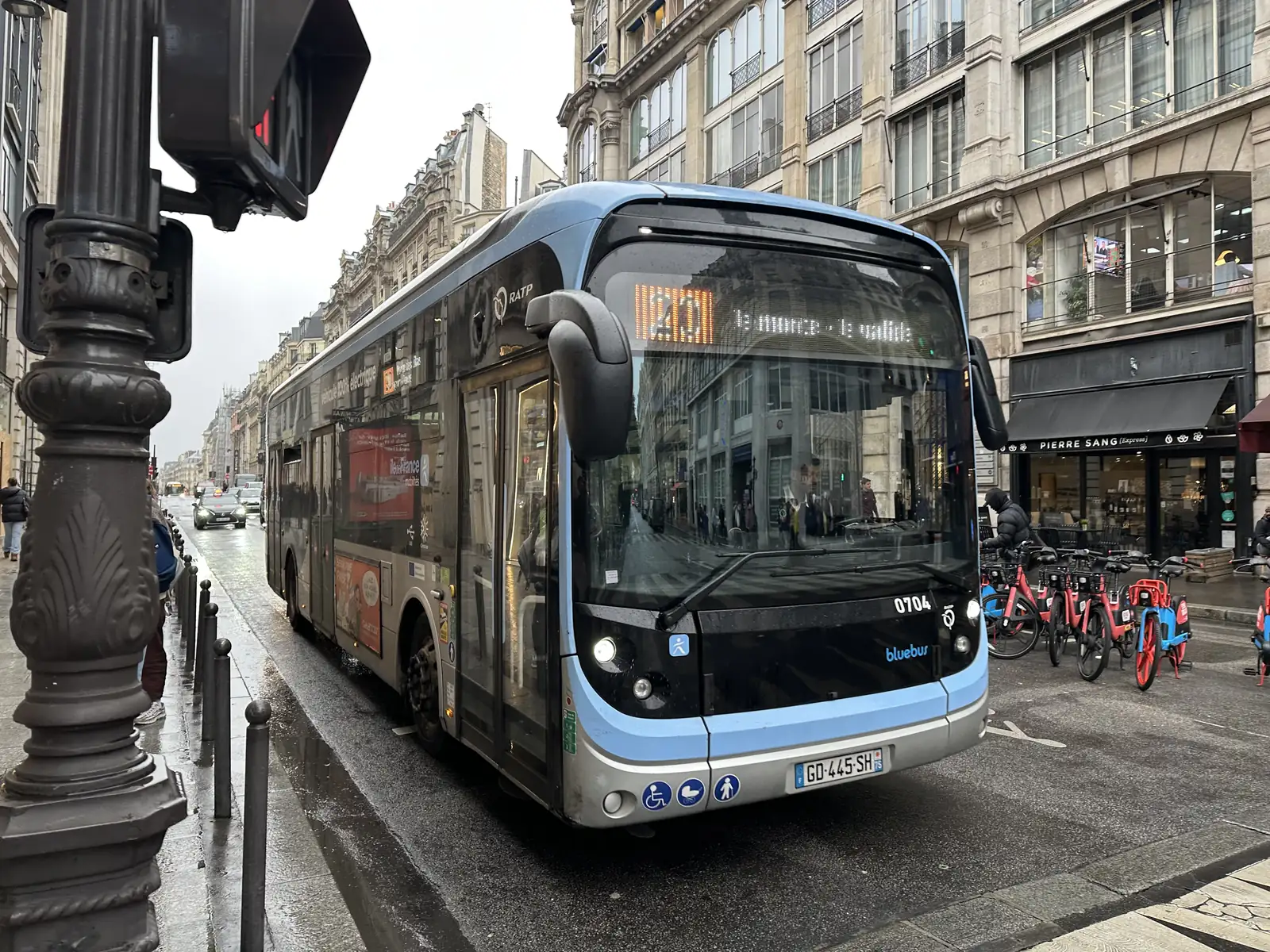
Buses are slower than the metro but show you the city on the way, and most of the fleet is now electric. Bus lanes make them more reliable than they used to be. A Bus-Tram ticket costs €2.05 and is valid for 90 minutes, with transfers between buses and trams.
Vélib’ and Cycling in Paris
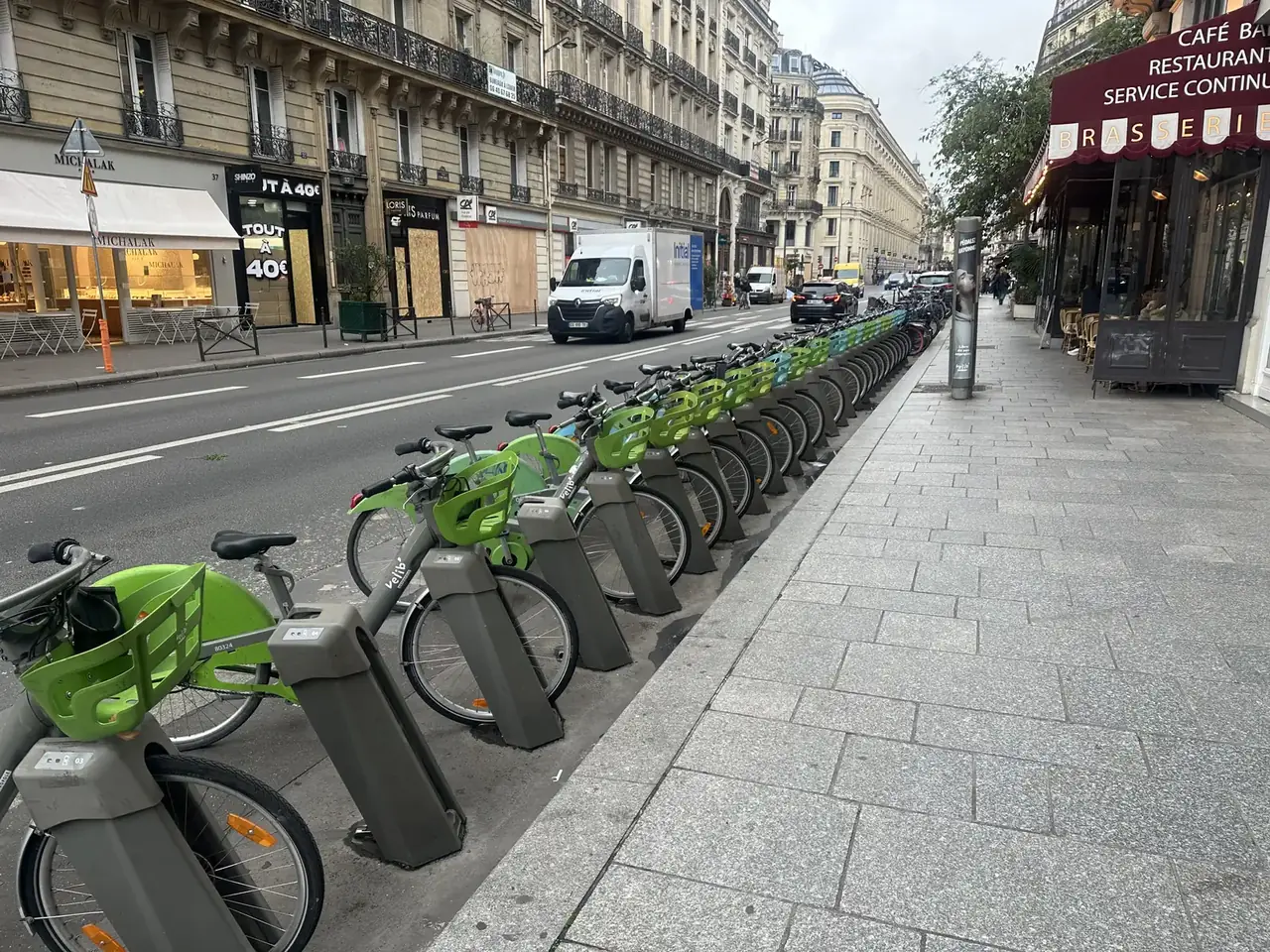
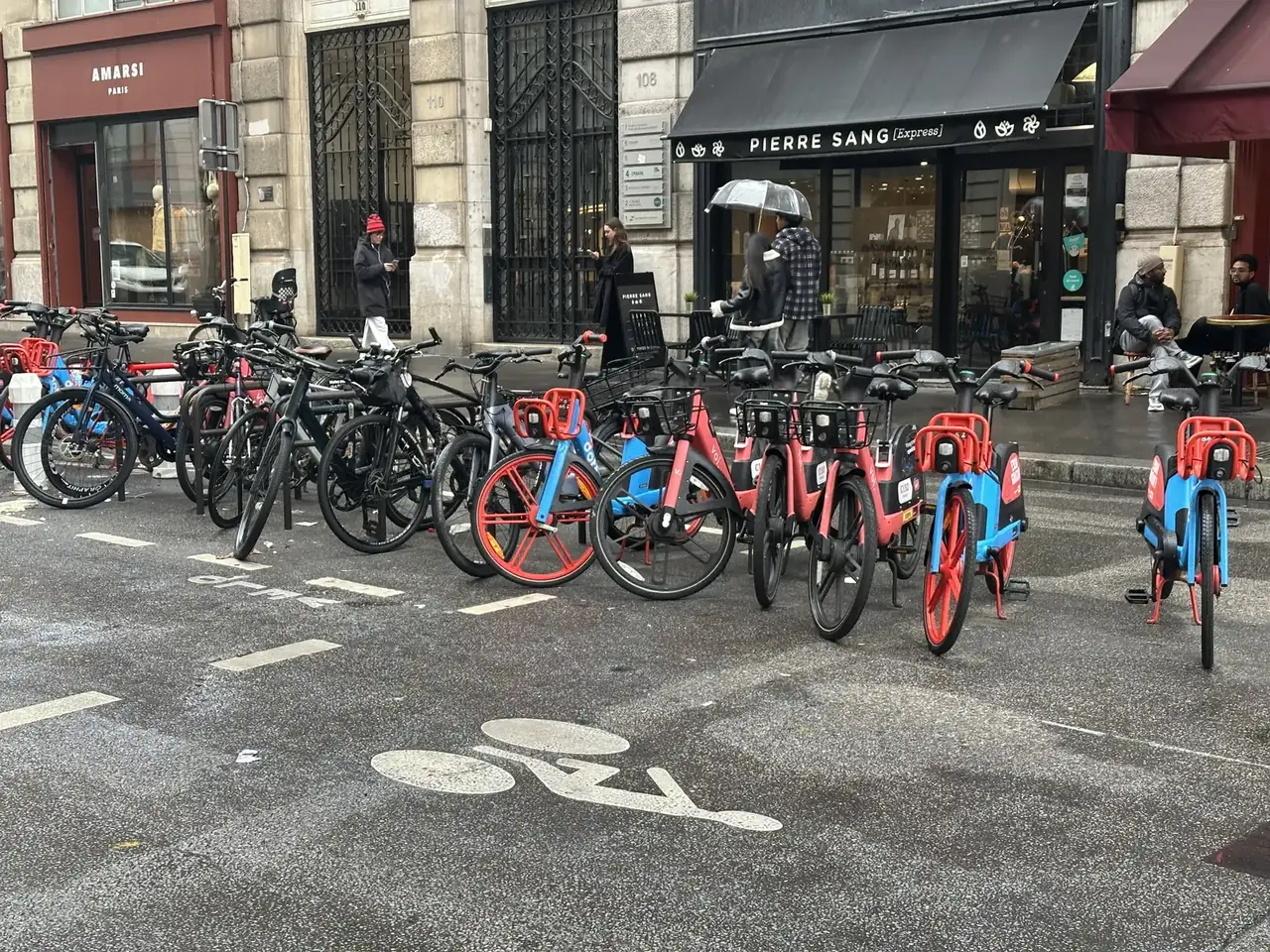
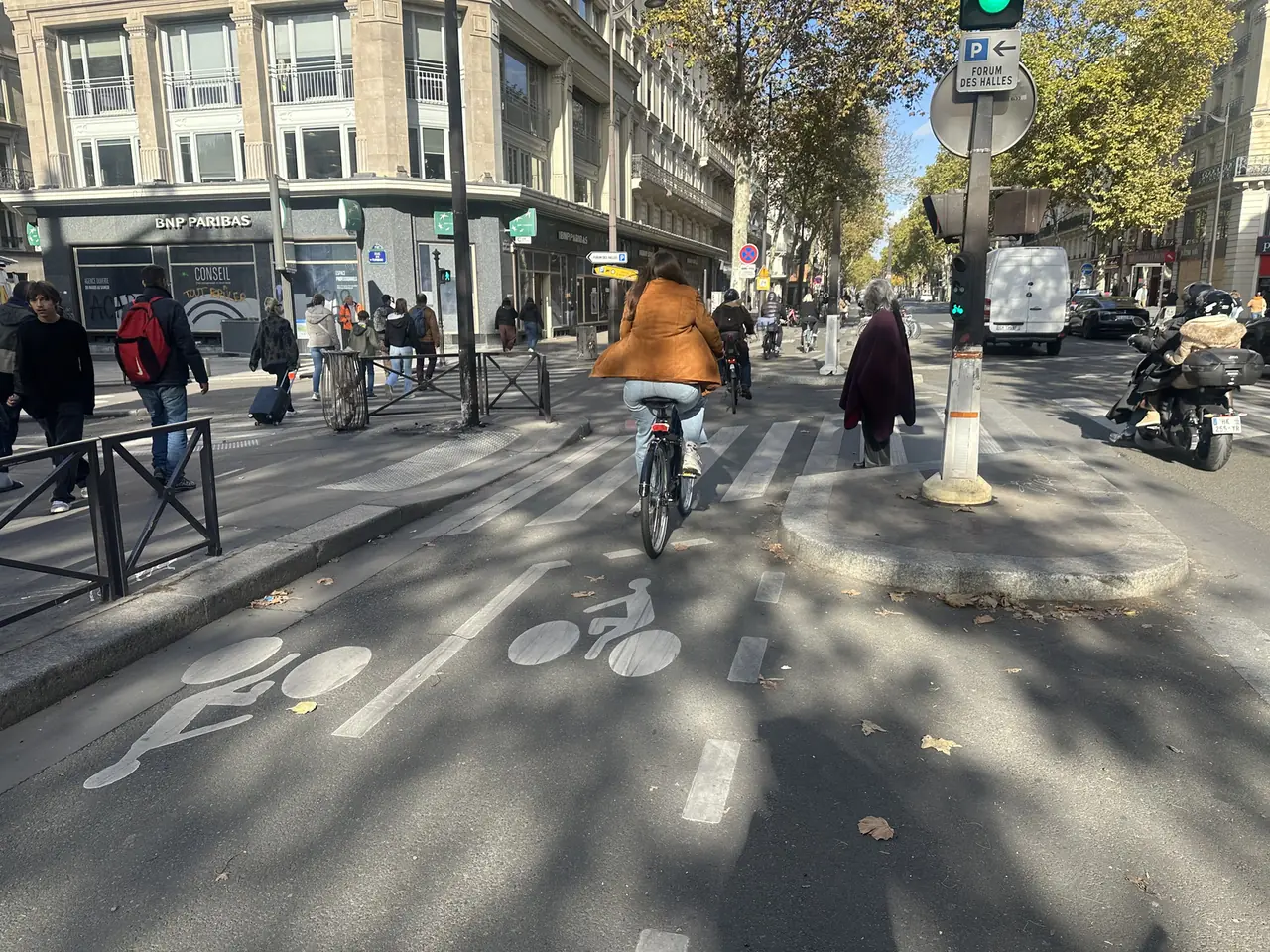
I have used Vélib’ a lot and I recommend it to visitors. There are stations all over the city, and the network of bike lanes has grown enormously. A single ride costs €3 for 45 minutes, a 24-hour pass €5, or €10 including electric bikes, and a three-day electric pass €20.
One thing to know: in the evening, stations in the higher neighborhoods of the north, such as Montmartre, are often empty. Everyone rides down, and nobody rides up. Plan to walk or take the metro uphill, or choose an electric bike.
As a pedestrian, be careful with bikes too: many go fast and do not always stop at red lights.
E-scooters, Taxis and Driving
Shared rental e-scooters were banned in Paris in 2023, after a public vote. Private e-scooters are still allowed, on bike lanes or on streets with a speed limit of 50 km/h or less, and never on sidewalks; in practice, the rules are not always respected, which makes them a real hazard for pedestrians. As for driving, I strongly advise against renting a car for Paris itself: traffic is slow, many streets are closed to cars and parking is expensive.
Boats on the Seine
The Batobus is a hop-on, hop-off boat that stops near the main monuments. It is fun once, but it is very slow and not a real way to get around. If you have time, a cruise with the Bateaux-Mouches is a better way to see Paris from the river.
Walking: The Best Way to Discover Paris
Central Paris is compact: from the Louvre to Notre-Dame, or from the Marais to the Latin Quarter, the walk takes less time than the metro once you count the corridors. Walking is also how you discover the passages, courtyards and little streets that no metro line will show you. I share my favorite walks in my Paris travel guide and in my walking itineraries for the Latin Quarter, the 6th arrondissement and Montorgueil.
Safety Tips on Paris Public Transport
- Watch out for pickpockets: especially on line 1, the RER B to the airport and in crowded stations like Châtelet. Keep your phone and wallet in a closed inside pocket.
- Keep your ticket until you leave: inspectors check tickets, and fines are high.
- Validate every time: on buses and trams, even with a pass.
- Avoid the rush hours if you can: from about 8:00 to 9:30 AM and 5:30 to 7:30 PM, the busiest lines are packed.
Read More
Paris Travel Guide
Where to stay, what to see and the neighborhoods to explore, by a born-and-raised Parisian.
Montorgueil Guide
My neighborhood: the pedestrian market street, its bakeries, bistros and passages.
Le Marais Guide
Hidden courtyards, museums and the best places to eat in Paris’s most charming district.
Frequently Asked Questions About Getting Around Paris
Can you still buy paper metro tickets in Paris?
No. Paper tickets stopped being sold in 2025, and the last ones are no longer valid on the metro after December 15, 2026. Buy a Navigo Easy card for €2 and load tickets on it, or use your phone.
How much is a metro ticket in Paris in 2026?
A Metro-Train-RER ticket costs €2.55 and a Bus-Tram ticket €2.05. A ticket to or from the airports costs €14.
What is the best transport card for tourists in Paris?
For a short stay, a Navigo Easy card loaded with single tickets or a day pass. For a Monday-to-Sunday week, the Navigo weekly pass at €32.40 is the best deal, airports included.
Which pass should I buy for 3 days in Paris?
It depends on how many trips you make. Single tickets on a Navigo Easy card are often cheapest; Paris Visite (€63.80 for three days) is simpler and includes the airports; and if your stay runs from Monday, the weekly pass can beat both.
When is public transport free in Paris?
Children under 4 travel free. There is no general free day for adults.
How do I get from Charles de Gaulle Airport to central Paris?
Take the RER B to the Gare du Nord, Châtelet or Saint-Michel for €14, in about 30 to 45 minutes; try to catch a direct train. A taxi costs a flat €56 to the Right Bank or €65 to the Left Bank.
How do I get to Orly Airport from Paris?
Take metro line 14, which reaches Orly in about 25 minutes from Châtelet, for €14. A taxi costs a flat €45 from the Right Bank or €36 from the Left Bank.
Is it safe to use the Paris metro?
Yes. The main risk is pickpocketing on busy lines such as line 1 and the RER B. Keep your valuables in a closed pocket and stay alert in crowds.