Koka Beach: Twin Bays of Tranquility in Flores
By Blaise Jaeger · Updated June 11, 2026
Why Visit Koka Beach?
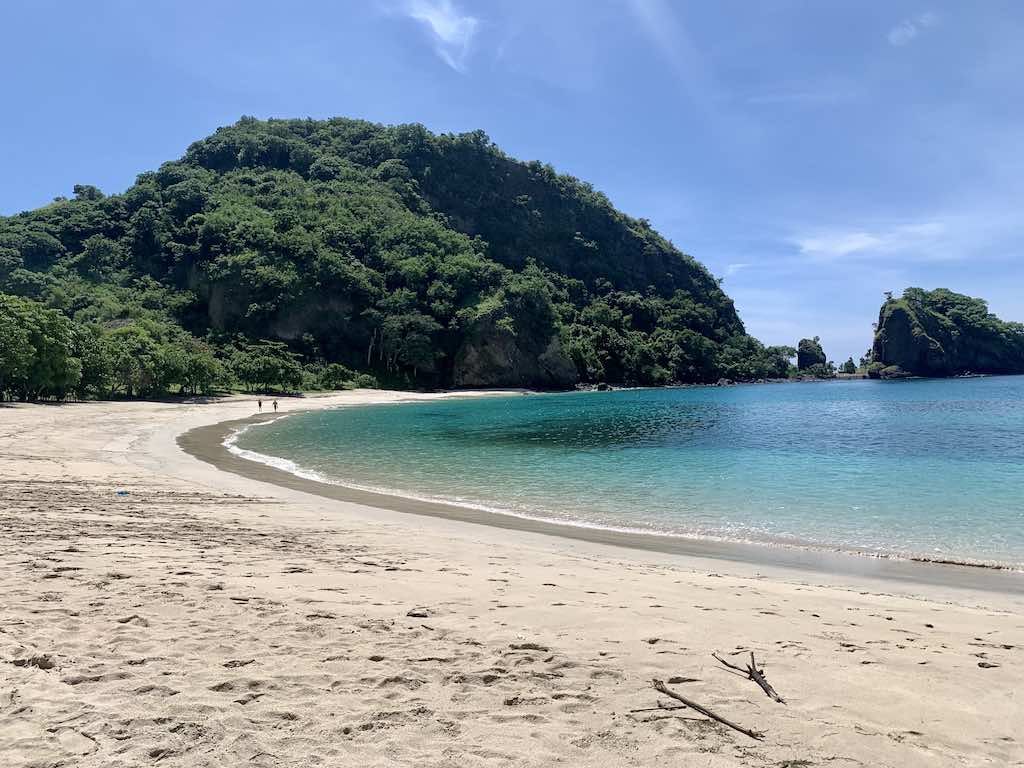
Of all the stops along the Trans-Flores Highway, Koka Beach is the one travelers most often skip — and the one they most regret skipping. Hidden below the village of Wolowiro on the south coast of Flores, about halfway between Maumere and the Kelimutu crater lakes, Koka is a pair of white-sand bays separated by a green headland, facing the open Savu Sea. One bay glows deep blue, the other a pale turquoise, and from the little hill between them you can take in both at once.
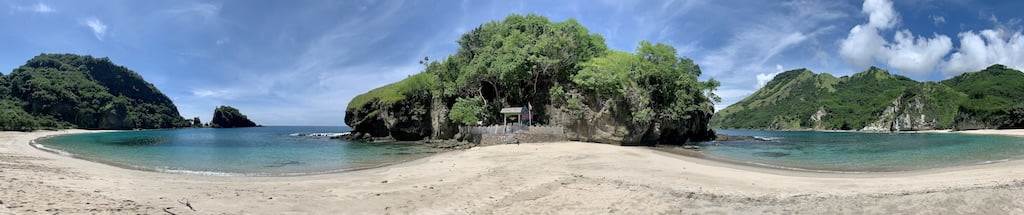
What makes Koka special is everything it does not have. No resort, no beach club, no jet skis — just a handful of bamboo warungs, a family-run homestay, fishermen balancing on outrigger pirogues, and a dirt track through a cocoa forest to get there. It is a relaxing stopover where you can stop for a grilled-fish lunch and a swim, or — if you have time — spend a night in one of the small bungalows run by Blasius and his family and have the two beaches entirely to yourself at sunrise. I have done both, and I will tell you exactly how below.
Koka also solves a very practical problem. The overland crossing of Flores — one of the great road trips of Southeast Asia — is long, winding and mountainous, and by the middle of the Maumere–Kelimutu leg everyone in the car is dreaming of a break. Koka is that break: less than two kilometers off the highway, almost exactly at the halfway point, with cold coconuts and the best swimming on the south coast. Very few detours in Indonesia offer such a high reward for such a small effort.
Koka Beach at a Glance
- Location: Wolowiro village, Paga district, Sikka Regency, on the south coast of Flores (East Nusa Tenggara, Indonesia)
- Sea: the Savu Sea — crystal-clear, turquoise to deep blue
- Distances: about 48 km (1h15) west of Maumere, 1h30 east of Moni and the Kelimutu lakes
- Access: a 2 km dirt road off the Trans-Flores Highway at Wolowiro, through a cocoa-tree forest
- Fees: two small checkpoints on the private road — roughly IDR 5,000–20,000 each depending on your vehicle (under $3 total)
- Famous for: the double bay, the hilltop viewpoint, fishermen on outrigger pirogues, Sunday fish barbecues
- Facilities: a few warungs, basic beach bungalows, no ATM, weak phone signal
- Best time: April to October (dry season); weekdays for solitude, Sundays for local life
- Nearest airport: Frans Seda Airport in Maumere (MOF), daily flights from Bali
My Two Stops at Koka Beach — and a Night at Blasius’s
I first stopped at Koka Beach in March 2021, crossing Flores from Maumere to Labuan Bajo by car with a driver. Indonesia was almost empty of foreign travelers back then, and Koka felt like a secret: we turned off the highway at Wolowiro, bumped down the dirt track through the cocoa trees, and had lunch on a beach with nobody on it but a few fishermen. We were back on the road an hour later, heading for Kelimutu — but I knew I would come back.
I did, three months later, in June 2021 — same crossing, but this time alone on a motorbike. I spent the night at Koka in one of the simple beach bungalows built by Blasius, who runs the homestay and the warung with his family. We laughed about our names: he is Blasius, I am Blaise — the same saint’s name, his in its Latin form, because like most families in this part of Flores his is Catholic, a legacy of the Portuguese missionaries who reached Sikka in the 16th century.
Staying over also meant I was still there on Sunday, which is when Koka completely changes character. Local families arrive from the villages around Paga and Maumere, grill fresh fish on makeshift barbecues, and swim in the double bay all afternoon. Eating grilled fish on the sand among them remains one of my favorite memories of Flores. Everything in this guide comes from those two visits — checked and updated with current prices and logistics — not from a desk.
The Story Behind Koka Beach
A beach named after cocoa trees
Koka takes its name from the trees you drive through to reach it. After leaving the Trans-Flores Highway at Wolowiro, the dirt road crosses a forest of cocoa (cacao) trees — the local pronunciation of “cocoa” gave the beach its name. If you visit during harvest season, ask to taste a fresh cocoa bean: the white pulp around the seed is sweet and tangy, nothing like chocolate yet, and it is a fun little ritual before you even see the sand.
Wolowiro, a fishing village in Catholic Flores
The beach belongs to the community of Wolowiro, in Paga district, and the land behind it is private — which is why you pay a small fee at the checkpoints on the way in, and why the place has stayed in local hands rather than being sold to a resort chain. This is the heart of Sikka Regency, one of the oldest Catholic regions of Indonesia: Portuguese missionaries settled the nearby coastal village of Sikka in the 16th century, and the island of Flores itself — “flowers” in Portuguese — still carries the name they gave it. Around 85% of the island is Catholic today, which explains the churches in every village and first names like Blasius.
From hidden gem to local favorite
For years Koka was known only to locals and to the rare overlanders crossing Flores. Indonesian social media changed that: the twin bays are now a minor celebrity on domestic Instagram, and weekends can get genuinely lively with families from Maumere and Ende. But the development has stayed humble — bamboo warungs, a viewpoint, a couple of homestays — and on a weekday morning you will still often have both bays to yourself. It remains one of the most beautiful beaches in Flores, and arguably in Indonesia. The checkpoint fees, modest as they are, matter here: they go directly to the Wolowiro community, which keeps the path maintained, the beach clean and the development in local hands. Paying your IDR 20,000 with a smile is the cheapest act of sustainable tourism you will perform all trip.
The Twin Bays: What to See and Do
The double bay
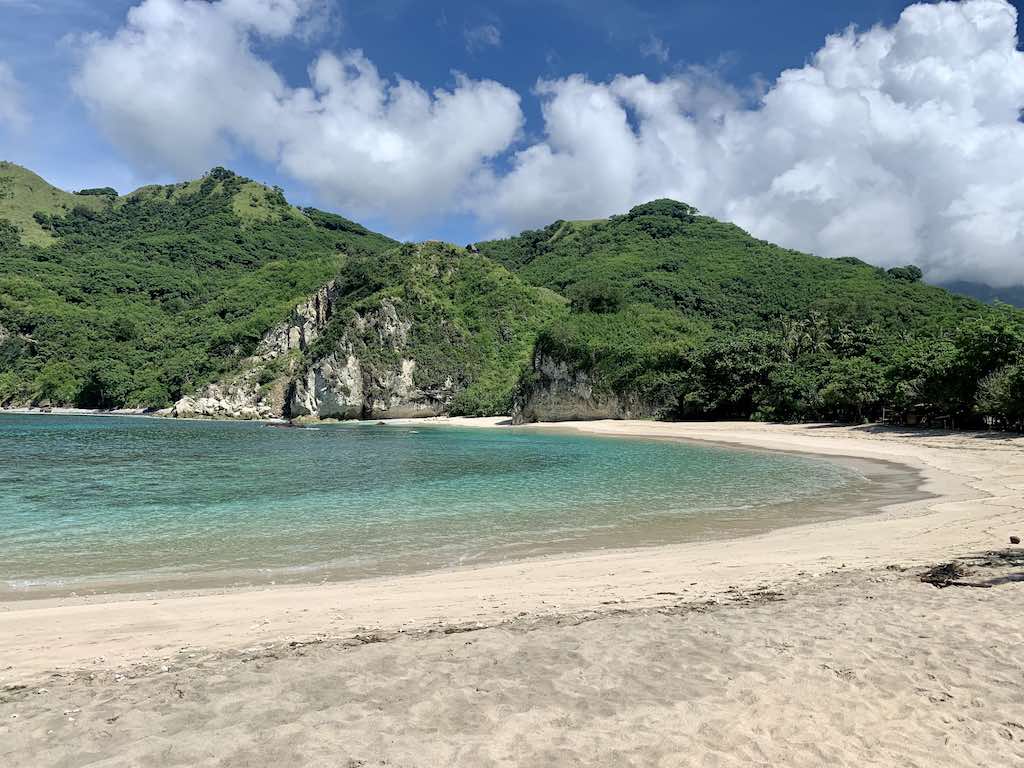
Koka’s signature is its double-beach configuration: two crescents of white sand separated by a small, climbable green headland, both washed by the Savu Sea. The two bays look almost identical on the map but feel completely different on the ground, mainly because of the water: one side is a deep, saturated blue, the other a pale, milky turquoise, and the contrast between them is what makes every photo of Koka instantly recognizable. It reminded me of the double beach of Porto Timoni in Corfu — except here you might be the only visitor.
The hilltop viewpoint
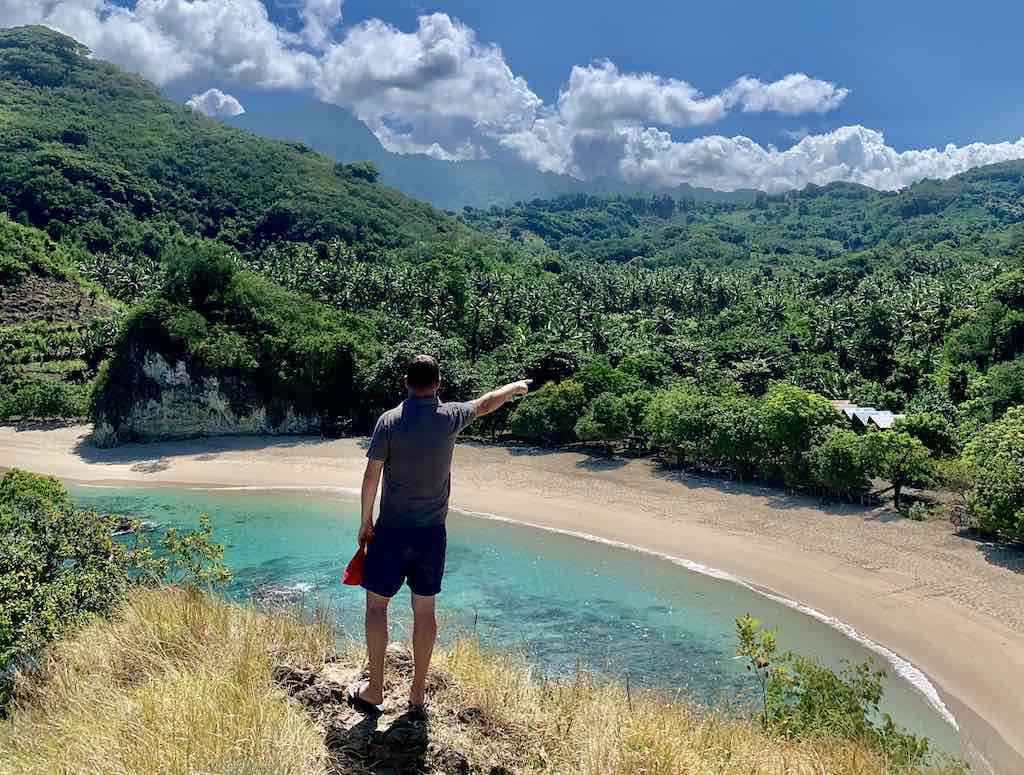
The walk up the headland between the two beaches takes five to ten minutes and is the single best thing to do at Koka. From the top you see both bays at once, the fishing pirogues working offshore, and the green hills of Paga district rolling down to the coast. Go early or late: at midday the light flattens the colors and the climb is hot. Some visitors are asked for a tiny extra fee (a few thousand rupiah) at the viewpoint — it goes to the families who maintain the path.
Watching the fishermen
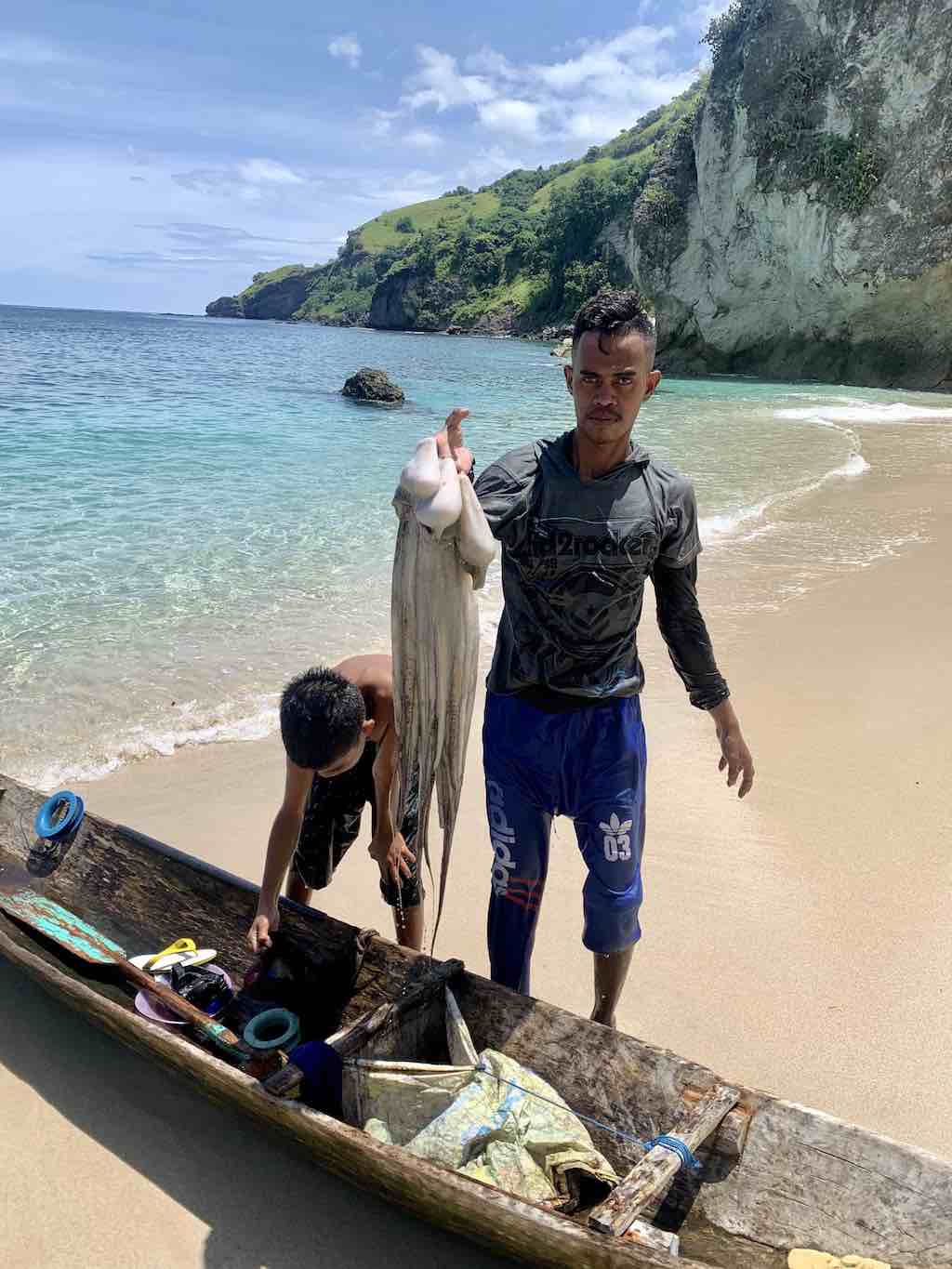
Bring nothing to do and just watch the fishermen of Wolowiro work the bay. Their technique is hypnotic: balanced on a narrow pirogue, head and arms in the water on one side of the hull, one leg stretched out on the other side as a counterweight, scanning the reef below. Most of the fish grilled at the warungs in the afternoon swam past that same headland in the morning — it does not get fresher.
Photographers: the fishermen work mostly in the early morning and late afternoon, exactly when the light is best. A zoom lens earns its weight here, and the headland viewpoint gives you a clean top-down angle on the pirogues crossing the turquoise shallows.
Canoe trips to hidden beaches
If you stay longer than a lunch break, ask Blasius about renting a canoe. Several smaller beaches east and west of Koka are only reachable from the water, and a few adventurous travelers even arrange to camp for a night or two on a deserted stretch of sand with a pickup agreed for the next day. It is as close to a castaway experience as you can get without a boat license.
Swimming — and a word about the waves
Both bays are sandy-bottomed and beautiful for swimming, and on calm dry-season days the water is glassy. But this is the open Savu Sea, not a lagoon: swell and currents pick up at times, especially in the rainy months, and there is no lifeguard. Do what the locals do — swim where the families swim, stay inside the bay, and keep an eye on the sets rolling in. Snorkeling is decent around the rocks at the edges of the bays when the sea is flat, so pack a mask; there is nowhere to rent one.
A Day at Koka Beach: How to Plan Your Stop
Morning: arrive before the heat
Coming from Maumere, leave around 8:00 AM and you will be at Koka by 9:30 AM, when the light on the bays is still soft and the sand is empty. Climb the viewpoint first, then claim a patch of shade. If you are coming the other way after a Kelimutu sunrise, you will roll in around 10:00–11:00 AM — perfect timing for a swim before lunch.
Lunch: grilled fish on the sand
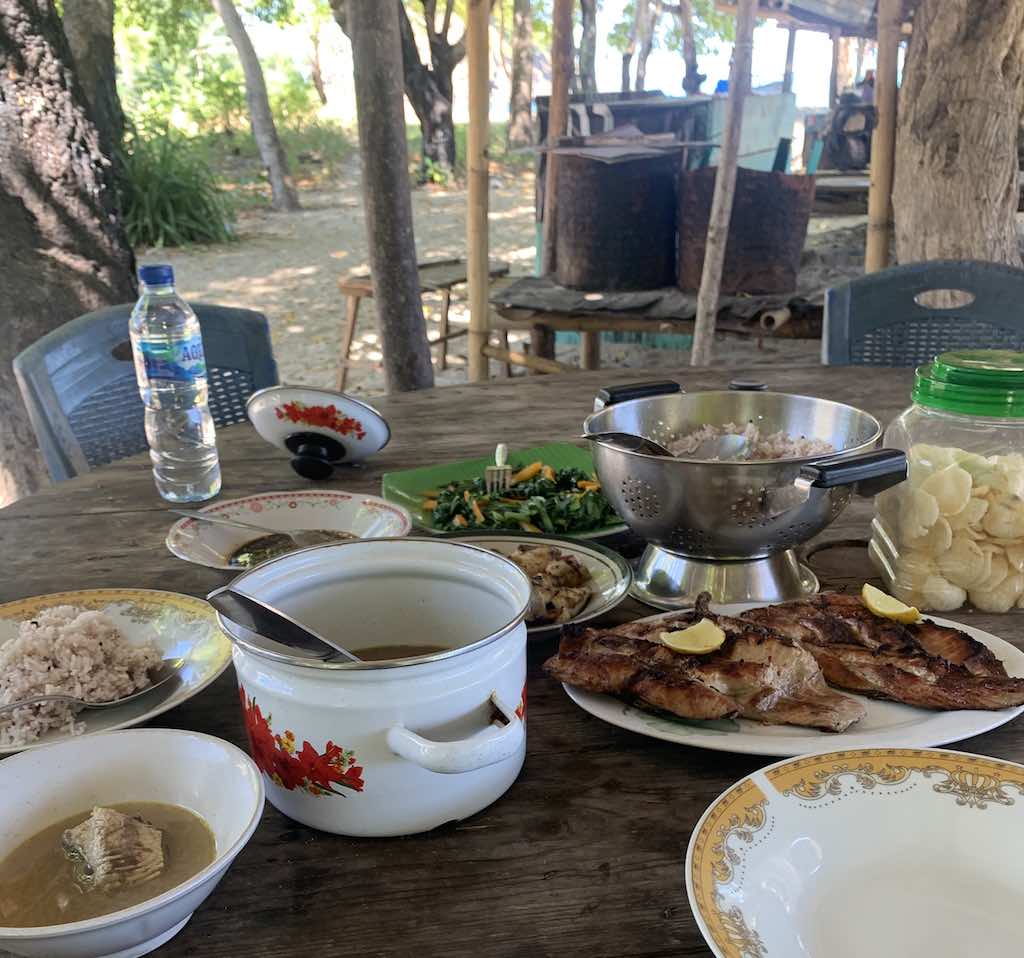
Order your fish as soon as you arrive — Blasius or one of the warung families will grill whatever came in that morning, served with rice, sambal and usually a small mountain of fruit. Count on a relaxed hour: this is Flores, the fish is cooked when it is cooked, and that is exactly the point.
Afternoon: swim, then push on — or stay
After lunch, swim, doze, or paddle a canoe. If you are crossing Flores, leave by 3:00 PM to reach Moni comfortably before dark for the next morning’s Kelimutu sunrise. And if your itinerary allows it, stay the night instead — the hour after the day-trippers leave, when the fishermen pull their pirogues up the sand, is Koka at its best.
One honest warning about timing: distances on Flores always take longer than the map suggests. The Trans-Flores Highway is a continuous sequence of curves and switchbacks, and an average speed of 40 km/h is optimistic. Build slack into your day, treat Koka as a two-to-three-hour stop minimum, and resist the temptation to squeeze it between two long driving legs — rushing this place defeats its purpose entirely.
Culture and Local Life Around Koka Beach
Sunday, when the beach belongs to the families
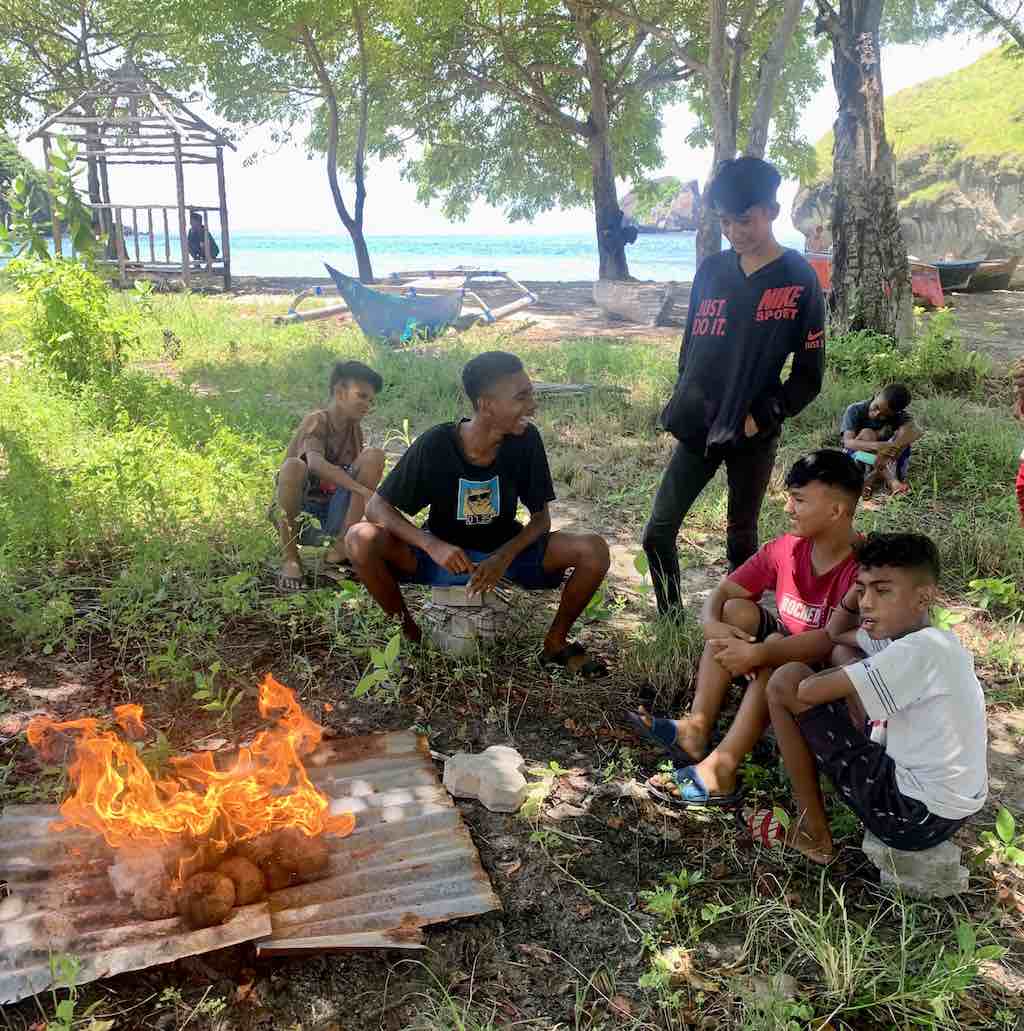
If you can choose your day, come on a Sunday. After church, families from Paga, Maumere and the villages along the highway drive down to Koka with coolboxes of fish, light barbecues directly on the sand, and spend the whole afternoon eating and swimming in the double bay. As a visitor you are not in the way — you are a curiosity and usually an instant guest. It is the warmest introduction to Florinese life you will find anywhere on the island. Expect to be offered fish, asked where you are from, and pulled into at least one family photo. If you have children with you, consider the afternoon sorted: by my count, roughly half of Sunday’s visitors are kids, and the calm inner bay is their swimming pool.
Ikat weaving in Watublapi
Sikka Regency is one of the great ikat-weaving regions of Indonesia, and the hillside village of Watublapi, between Paga and Maumere, is the easiest place to see it done properly: hand-spun cotton, natural dyes from indigo and morinda bark, and patterns that identify the weaver’s clan. Demonstrations (often with traditional dance) can be arranged through any driver or guesthouse in Maumere — it pairs naturally with a Koka stop on the same day.
Portuguese heritage in Sikka and Lela
Twenty minutes east of Paga, the coastal villages of Sikka and Lela are where Portuguese missionaries first put down roots in Flores. Sikka village’s large church, built in 1899 by Jesuit priests on the site of the older mission, is still the centerpiece of village life, and the ikat woven here carries motifs influenced by Portuguese textiles. If colonial-era history interests you, this little detour adds real depth to the south-coast drive — and explains why everyone you meet around Koka, Blasius included, carries a saint’s name. Time your visit around Easter and you will see the legacy at full strength: Larantuka, at the far eastern tip of Flores, hosts Indonesia’s most famous Holy Week processions, a tradition unbroken since the Portuguese era.
Where to Eat at Koka Beach
Blasius’s beachfront warung
The simplest and best option: Blasius and his family cook lunch from whatever the pirogues brought in — grilled reef fish, rice, vegetables, sambal, fresh fruit, young coconuts. Prices are honest warung prices, a small fraction of what any beach restaurant in Bali would charge. Order when you arrive (or have your driver call ahead if you are on a tight schedule) and eat with your feet in the sand.
Weekend beach barbecues
On Saturdays and especially Sundays, the local families’ barbecues fill the beach with smoke and the smell of grilling fish. This is not a commercial operation — it is picnic culture — but warungs grill extra fish on weekends precisely because the beach is busy, so you will eat particularly well. Bring small cash; nobody has change for big notes.
Warungs in Paga and along the Trans-Flores
Back on the highway, the village of Paga has simple warung makan serving Indonesian staples — nasi goreng, mie goreng, fish with rice — and a couple of spots overlooking Paga’s own beach. Stock up on water and snacks in Maumere or Ende before the drive; between the two towns, shops are small and basic. For everything about food and logistics on the road, see my guide to getting around Indonesia.
Evenings at Koka Beach
Sunset from the headland, stars from the sand
There are no bars at Koka and no nightlife in any usual sense — and that is the attraction. Climb the headland for sunset over the Savu Sea, then come down to a beach lit only by the warung’s bulbs and, offshore, the lamps of night fishermen. With zero light pollution, the southern sky here is staggering; June visitors get the Milky Way core rising straight over the bay.
Dinner with the family
If you stay over, dinner is whatever Blasius’s family is cooking — usually fish again, and you will not complain. Evenings are slow and conversational: a beer if there is one in the coolbox, stories about the village, an early night. The reward comes at dawn, when you wake up to two private bays and the first pirogues sliding out past the headland.
Koka Beach on the Trans-Flores Road Trip
West: Moni and the Kelimutu crater lakes (1h30)
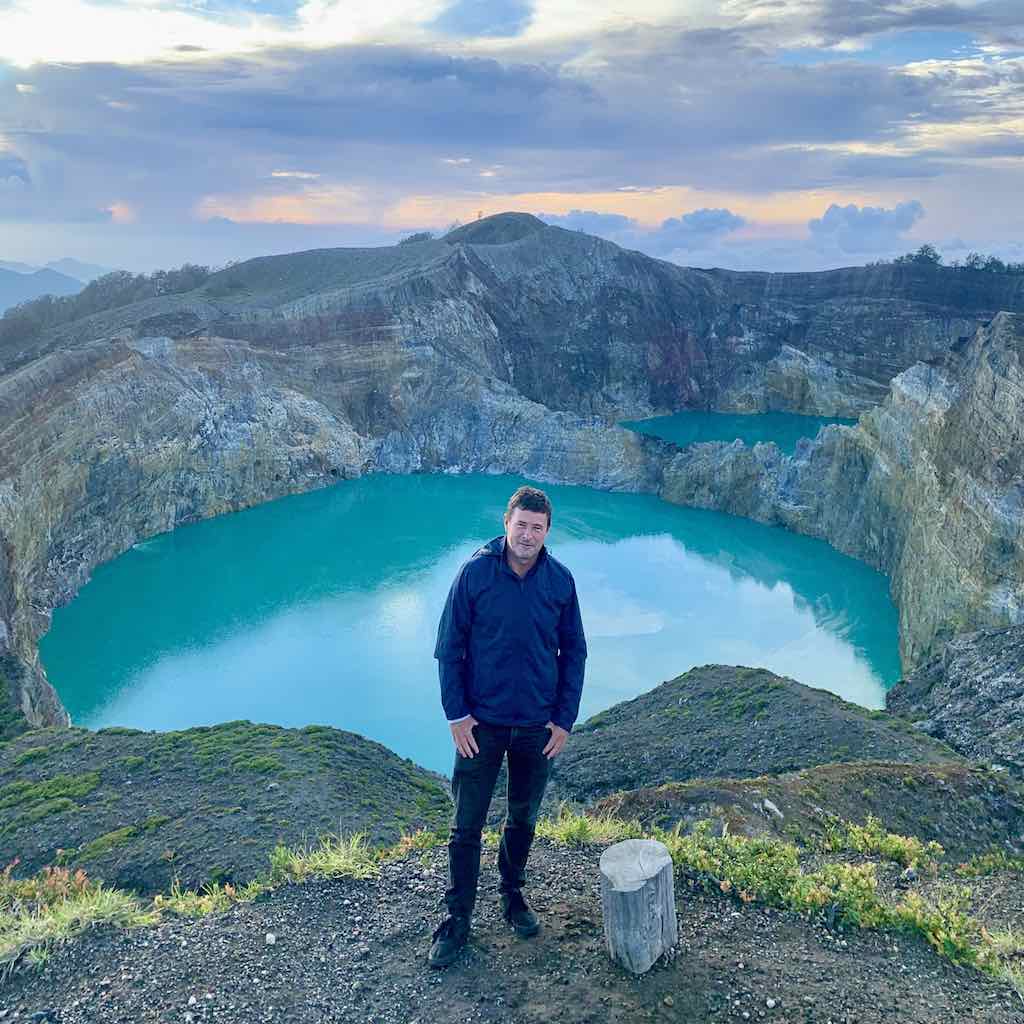
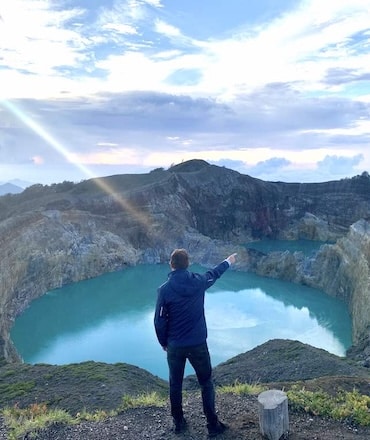
Koka’s classic pairing is Kelimutu, the volcano whose three crater lakes change color from turquoise to rust to near-black. The standard plan: lunch and a swim at Koka, drive 1h30 west to the village of Moni before dark, then leave Moni between 4:00 and 4:30 AM for sunrise at the crater rim. Park entry is IDR 150,000 on weekdays and IDR 250,000 on Sundays and public holidays (2025 tariffs); an ojek from Moni to the gate runs about IDR 40,000–60,000 return. It is one of Indonesia’s great sunrises, and Koka the day before makes it a perfect 24 hours.
East: Maumere, diving and Babi Island (1h15)
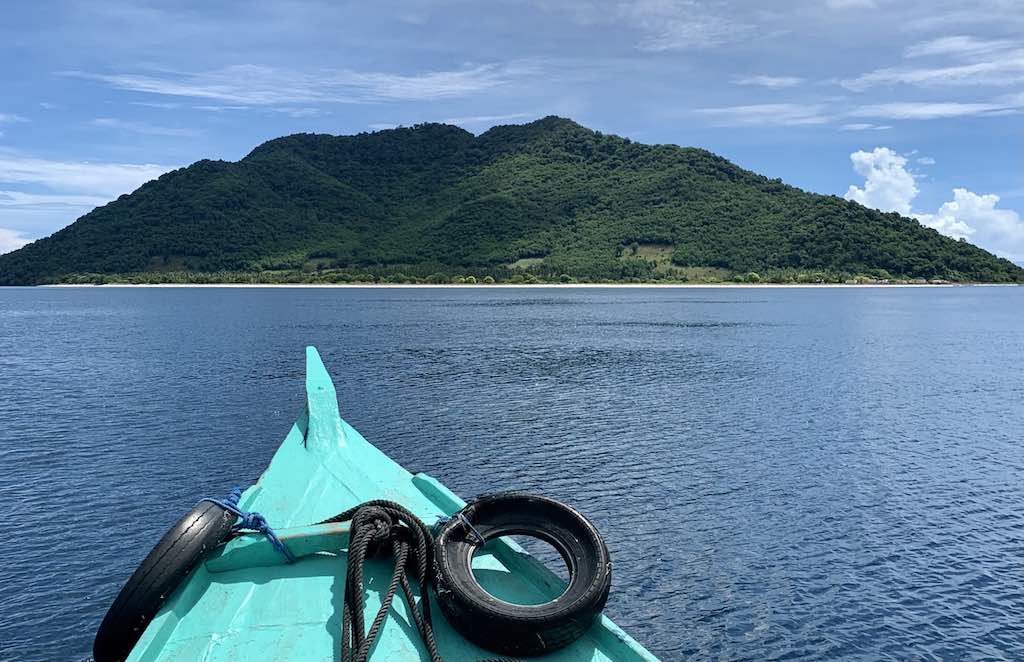
To the east, Maumere is Flores’s second-largest town, your likely arrival point, and the gateway to Maumere Bay — once rated among the world’s best dive areas, and quietly recovering its reputation, with healthy reefs around Babi Island and the Waiara coast. If you dive, build in a day or two here; I cover the area in my guide to the best diving in Indonesia.
Further west: Bajawa, Ruteng and Labuan Bajo
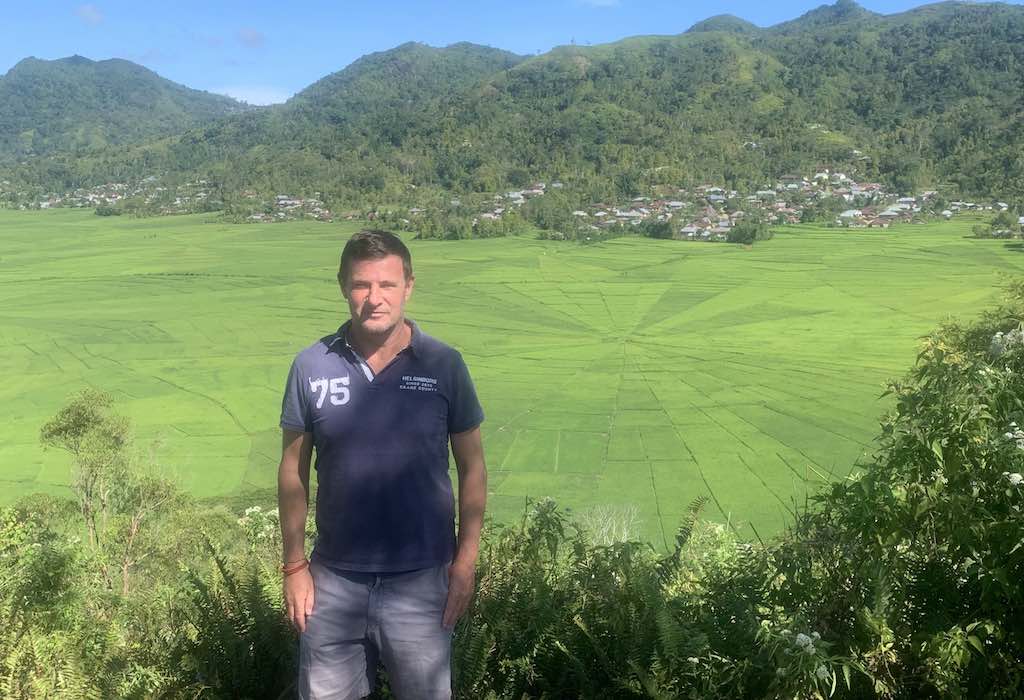
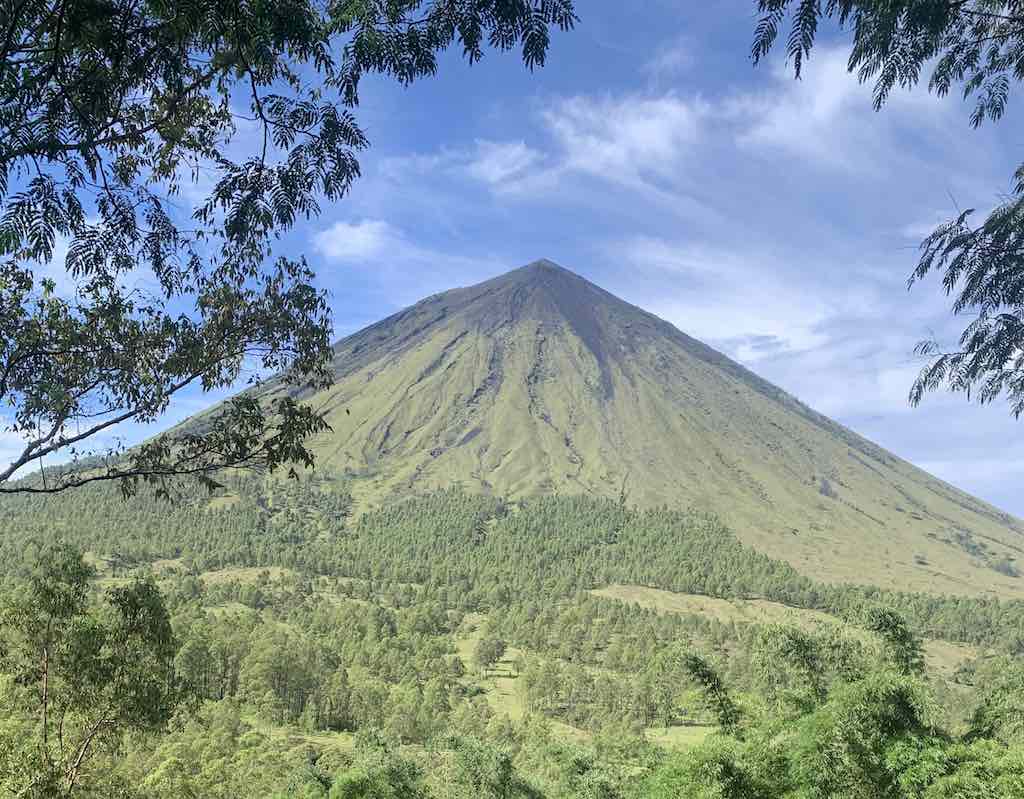
Continuing west after Kelimutu, the Trans-Flores Highway threads through Ende, the traditional Ngada villages around Bajawa (with the perfect cone of Inerie volcano), the spider-web rice fields of Ruteng, and finally Labuan Bajo and Komodo National Park. The full crossing deserves five to seven days; Koka is its best beach stop. See the Flores overview for the island-wide itinerary.
Where to Stay at Koka Beach
On the beach: Koka Beach Homestay by Blasius Woda
Blasius has built a few bungalows right on the beach. Comfort is basic — one older wooden bungalow, a newer tiled one with a fan, outdoor bathroom — but the deal includes a big breakfast (fruit platter, banana pancakes), free bananas all day, the freshest fish dinners imaginable, and the privilege of waking up with the two bays entirely to yourself. Expect roughly IDR 150,000–250,000 per bungalow ($10–16). It is not on the booking platforms: ask any Flores driver, message the Koka Beach Homestay page on Facebook, or simply show up before mid-afternoon. There are also two small homestays up on the main road at Wolowiro if the bungalows are full.
In Moni, for the Kelimutu sunrise (1h30 west)
Moni is a strip of family guesthouses in the rice terraces below Kelimutu — simple, friendly and cheap (most rooms $15–45 with breakfast). Reliable picks: Kelimutu Lodge Moni, the well-rated Family Guest House Moni, and Chenty Lodge Moni. For something greener, the Kelimutu Crater Lakes Ecolodge sits in gardens by the river just outside the village.
In Maumere, for arrival, departure and diving (1h15 east)
Maumere’s best places line the coast east of town. My pick is Capa Resort Maumere, where I slept right in front of the sea — comfortable air-conditioned rooms, a pool, and a rooftop bar with panoramic sunset views over the bay; easily the most polished address in town. Also excellent: Coconut Garden Beach Resort (private beach, bungalows in the palms, from about $64 a night), Sea World Club Beach Resort & Dive Center (from ~$24), the classic divers’ base with its own dive school, and Budi Sun Resort (from ~$32), with a pool and a house reef.
Which base should you choose?
Crossing Flores west-bound: sleep at Koka or Moni. Diving or catching a flight: sleep in Maumere. Want the memory you will still talk about in five years: one night in Blasius’s bungalow, no contest. Wherever you sleep, book Moni and Maumere ahead in July–August — rooms are few and the Trans-Flores fills up. And manage your expectations accordingly: around Koka you are paying for location and warmth, not amenities. Hot showers and air-conditioning reappear in Maumere — at Capa Resort I even had a rooftop bar.
Practical Tips: Getting There, Fees, Best Time
Getting to Koka Beach
Fly into Maumere’s Frans Seda Airport (MOF) — Wings Air and AirAsia connect it with Bali daily in about two hours; compare schedules and fares on 12Go, and book two to four weeks ahead in high season. From Maumere it is a 48 km, 1h15 drive west on the Trans-Flores Highway; turn off at Wolowiro and follow the bumpy 2 km dirt track through the cocoa trees. Most travelers come with a car and driver as part of a Trans-Flores crossing; on a motorbike the track is easy in the dry season, rideable but slippery after rain. Public buses between Maumere and Ende can drop you at the Wolowiro junction, leaving a hot 2 km walk or a short ojek ride. Buses run without fixed schedules — mornings are most reliable — and cost a few tens of thousands of rupiah for the Maumere–Ende leg, but for a first visit a car with driver is worth it: you control the stops, and every Flores driver knows Koka. More options in my guides to getting to Indonesia and Indonesia generally.
Fees and money
The access road is private, so expect to pay at up to two checkpoints — typically IDR 5,000–10,000 for a motorbike and IDR 10,000–20,000 for a car at each, so under $3 in total. Bring enough cash for fees, lunch and a bungalow: there is no ATM at Koka, in Wolowiro or in Paga. The nearest reliable ATMs are in Maumere and Ende. Small notes are gold.
Best time to visit
The dry season, April to October, is the time to cross Flores: the Trans-Flores Highway is at its best, the sea is calmer and the bays show their full palette of blues. November to March brings rain, a muddier access track and occasional landslides on the highway. For atmosphere, weekdays mean near-private beaches; Sundays mean barbecues and local life. Both are wonderful — just know which one you are choosing. July and August bring the most overland travelers (and the highest demand for the few rooms in Moni), so the shoulder months — April–May and September–October — are the sweet spot: dry roads, calm seas, almost nobody on the sand.
What to pack
Water, sunscreen, cash in small notes, a snorkeling mask, and ideally your own towel and power bank — this is a beach, not a resort. Phone signal is weak to nonexistent in the bays (part of the charm). Official tourism information for the region is on Wonderful Indonesia.
Explore More of Indonesia
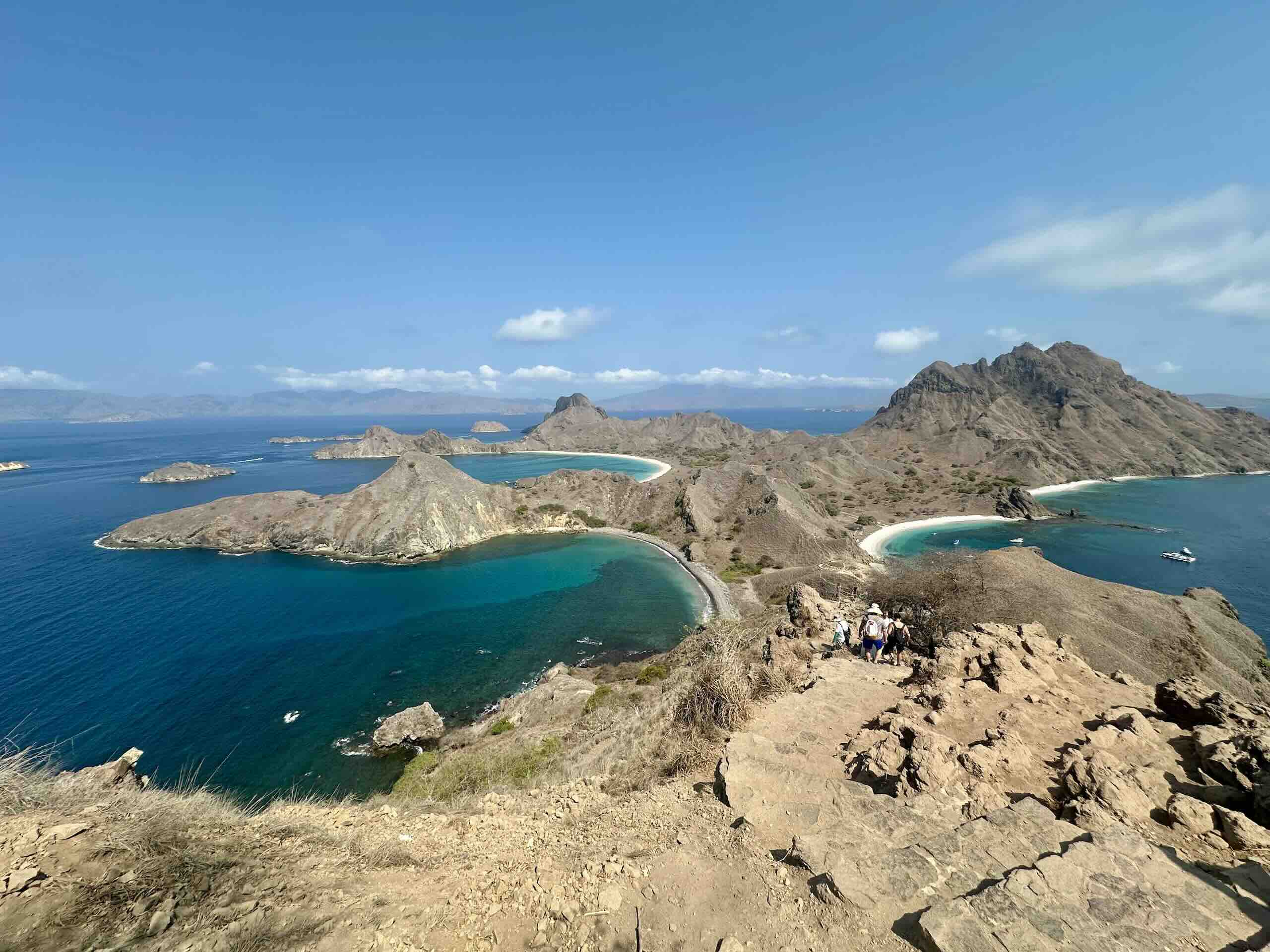
At the western end of the Trans-Flores road: Labuan Bajo and Komodo National Park, dragons, Padar Island and world-class snorkeling.
From Maumere Bay to Raja Ampat: my complete guide to the best diving in Indonesia.
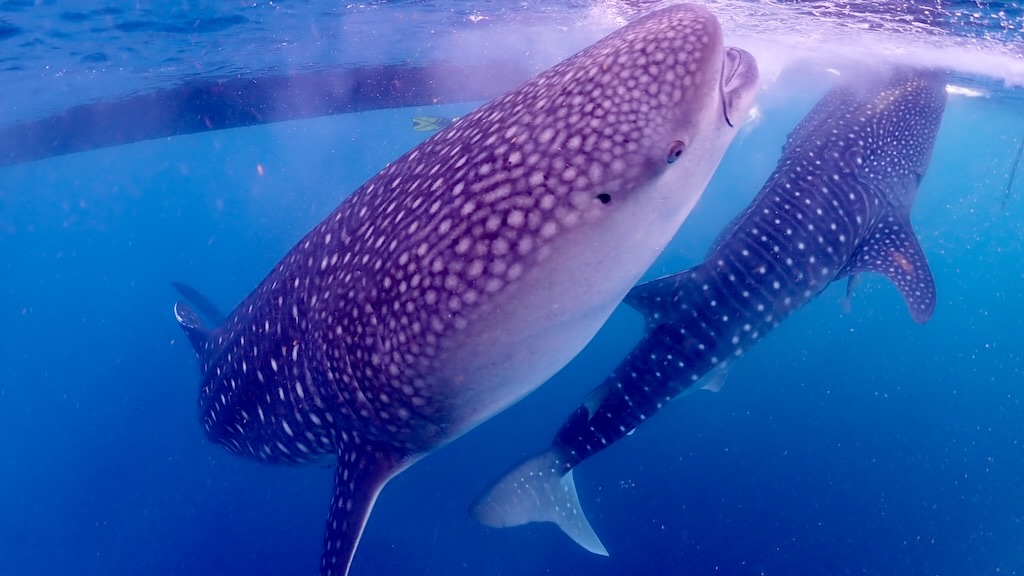
Love off-the-radar Indonesia? Sumbawa has whale sharks, empty surf breaks and beaches to rival Koka.
Frequently Asked Questions About Koka Beach
Koka Beach is on the south coast of Flores, Indonesia, below the village of Wolowiro in Paga district, Sikka Regency — about 48 km (1h15 by road) west of Maumere and 1h30 east of Moni and the Kelimutu crater lakes.
The access road is private, so you pay small fees at up to two checkpoints: roughly IDR 5,000–10,000 per motorbike and IDR 10,000–20,000 per car at each, or under $3 in total. The beach itself is free.
Yes. Blasius Woda and his family run a few basic bungalows right on the beach for about IDR 150,000–250,000 per night including a generous breakfast. There are also two small homestays on the main road at Wolowiro.
Drive 48 km west on the Trans-Flores Highway (about 1h15), turn off at Wolowiro and follow a bumpy 2 km dirt road through a cocoa forest. Buses between Maumere and Ende can drop you at the junction.
Generally yes in the dry season, when the bays are calm and local families swim every weekend. It is the open Savu Sea though: stay inside the bays, watch for swell and currents, and avoid swimming in rough conditions — there is no lifeguard.
The name comes from the forest of cocoa (cacao) trees you cross on the access road from Wolowiro. Ask to taste a fresh cocoa bean on the way in.
April to October, during the dry season, when the road is good and the sea is calm. Come on a weekday for near-empty beaches, or on a Sunday to experience the local families’ fish barbecues.
Absolutely. It sits almost exactly halfway between Maumere and Kelimutu, less than 2 km off the highway, and is widely considered one of the most beautiful beaches in Flores. It is the perfect lunch-and-swim break.
Yes — a few beachfront warungs, including the one run by Blasius’s family, grill fresh fish caught the same morning, served with rice, sambal and fruit. Order when you arrive, and bring cash in small notes.
About 1h30 by road. The classic plan is lunch and a swim at Koka, then driving on to Moni village to sleep, and climbing Kelimutu for sunrise the next morning (park entry IDR 150,000 on weekdays, IDR 250,000 on Sundays and holidays).