Balinese Food: What to Eat in Bali and Where I Eat It
By Blaise Jaeger · Updated October 28, 2026
Balinese food is not the same as Indonesian food. Bali is a Hindu island, so pork is the festive meat, and almost every savory dish starts from the same spice paste. Many of the classics began as temple and ceremony food. I live in Bali and run dive resorts on Nusa Penida, and I eat this food every week: at warungs, at ceremonies, and at the restaurants I take friends to. Here are the dishes worth knowing, how the island really eats them, and my favorite places to try them.
What Makes Balinese Food Different
Three things set Balinese cooking apart from the rest of Indonesia.
- Pork is on the menu. Most of Indonesia is Muslim and eats halal; Hindu Bali roasts whole pigs for its feasts. Beef, on the other hand, is largely avoided.
- One master spice paste. Base genep, literally the “complete spice,” is pounded from shallot, garlic, chili, galangal, turmeric, ginger, kencur (lesser galangal), candlenut, lemongrass and shrimp paste. It goes into the meat, the vegetables and the stuffing alike, which is why so many Balinese dishes share a family taste.
- Food follows the ritual calendar. The great dishes, babi guling and lawar first of all, are cooked in quantity for temple festivals, weddings and cremations, and the whole village helps.
For the bigger picture, from Padang curries to Javanese sweet soy, see my guide to Indonesian food.
The Balinese Dishes to Try
Babi guling
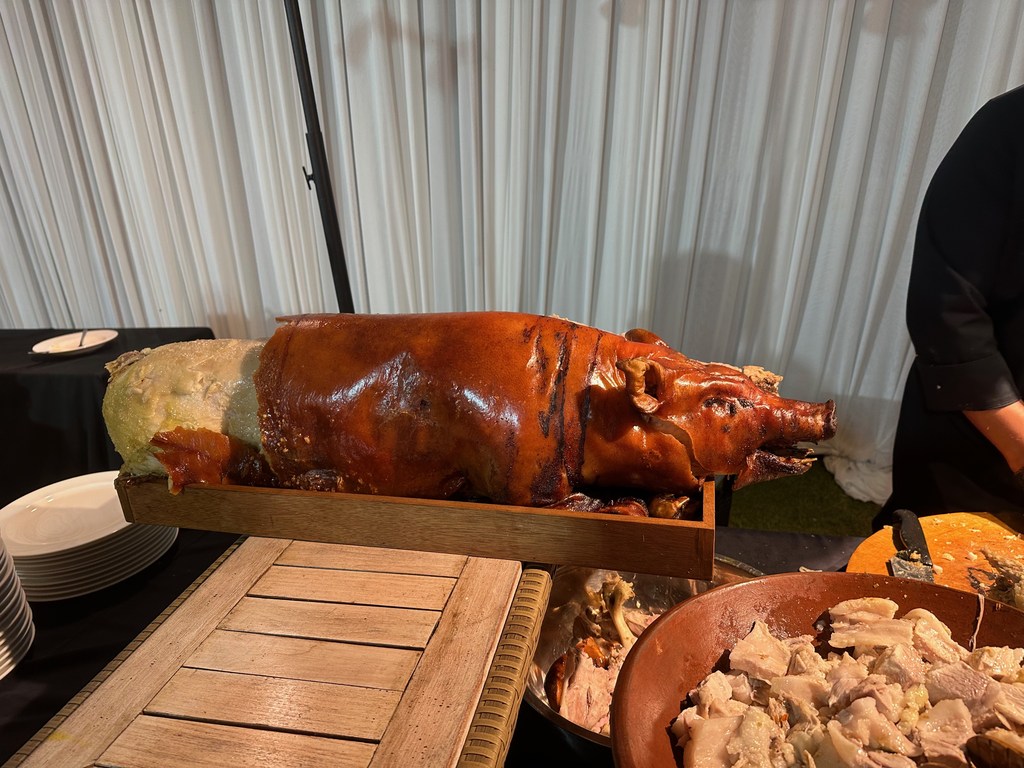
The king of Balinese food: a whole young pig stuffed with base genep and leaves, rubbed with turmeric and coconut oil, then turned slowly on a spit over coconut husks until the skin cracks like glass. A plate of babi guling comes with a bit of everything: slices of meat, crackling, spicy sausage, lawar and a ladle of broth over rice. For every big celebration in Bali, there is always a babi guling.
Bebek and ayam betutu
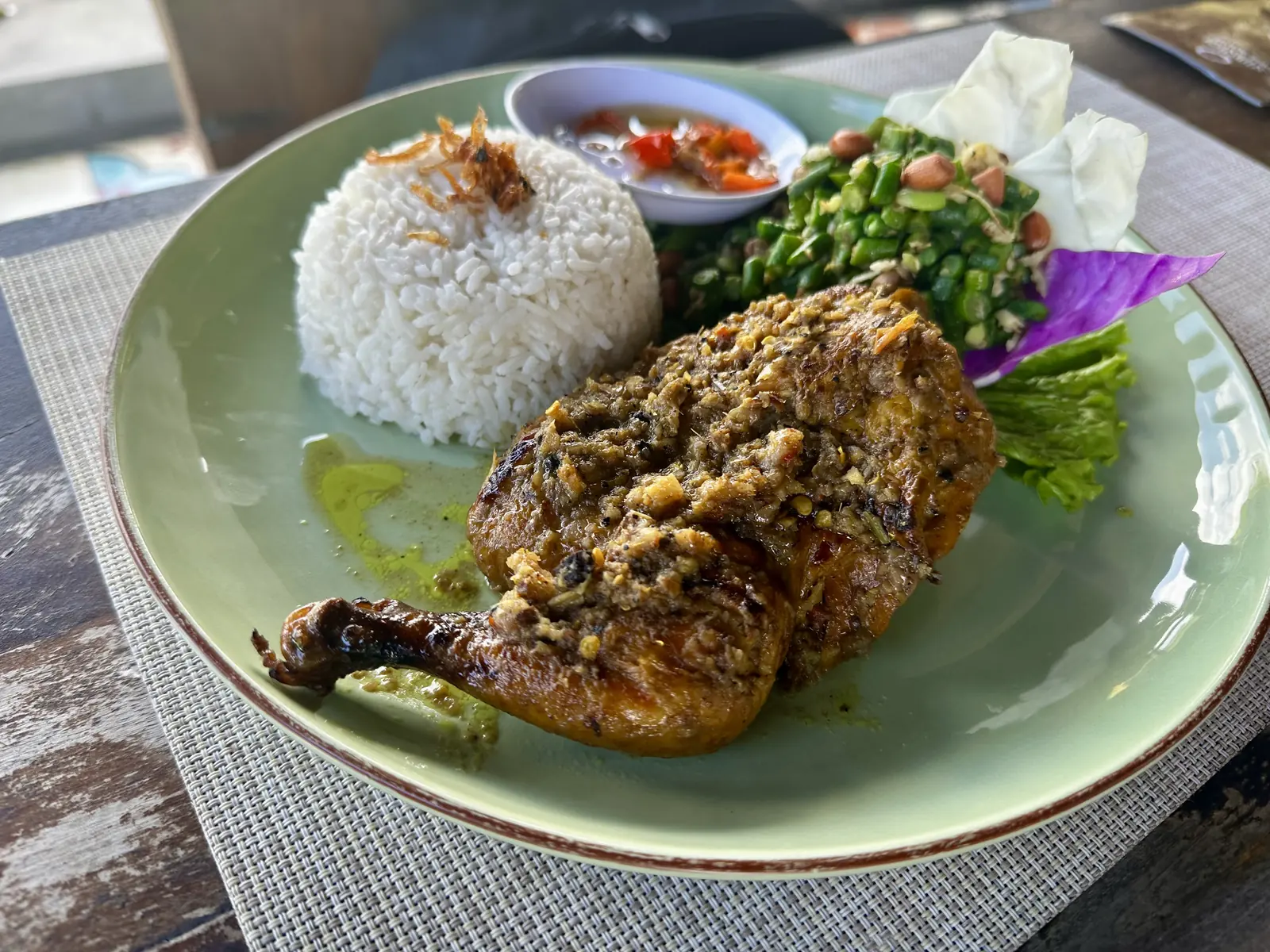
Duck (bebek) or chicken (ayam) stuffed and coated with spice paste, wrapped in banana leaves, then cooked slowly for hours, traditionally buried in the embers of rice husks. The meat falls off the bone and is properly spicy. Many restaurants ask you to order bebek betutu a day ahead because of the cooking time.
Lawar
Finely chopped green beans or young jackfruit mixed with grated coconut, minced meat and base genep, made the morning it is eaten. Red lawar (lawar merah) is mixed with fresh pig’s blood; white lawar is not. If the blood puts you off, simply ask for lawar putih.
Sate lilit
Bali’s own satay: minced fish, chicken or pork mixed with grated coconut and spices, wrapped around a lemongrass stalk or a flat bamboo stick, then grilled. It is softer and more fragrant than the skewered satay of Java, and it is on almost every Balinese plate.
Sambal matah
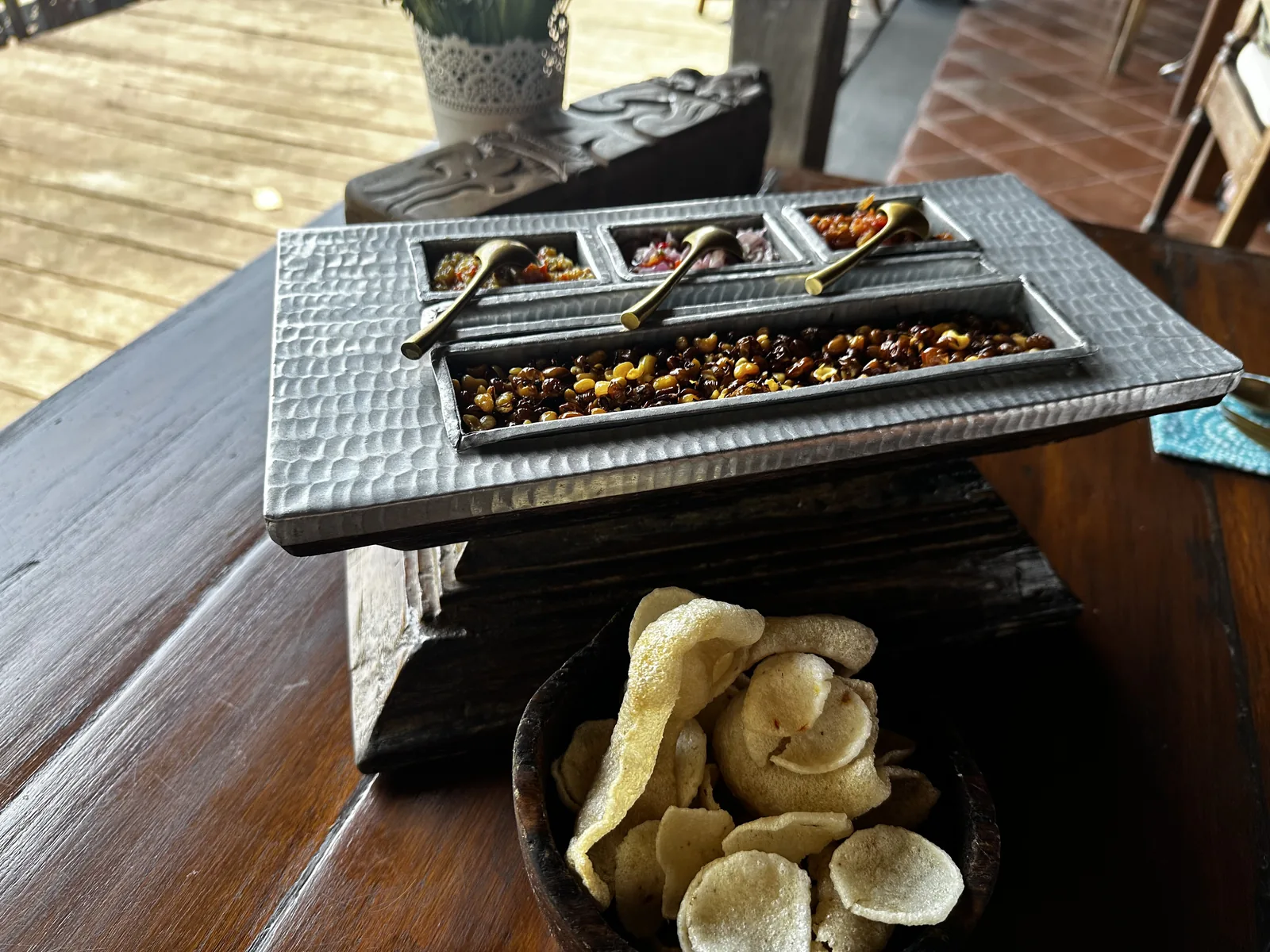
The Balinese chili sauce is raw: sliced shallot, lemongrass, chili and kaffir lime leaf with hot coconut oil poured over it. It goes with grilled fish, chicken and just about everything else. Sambal embe, made with fried shallots, is its cooked cousin.
Nasi campur Bali
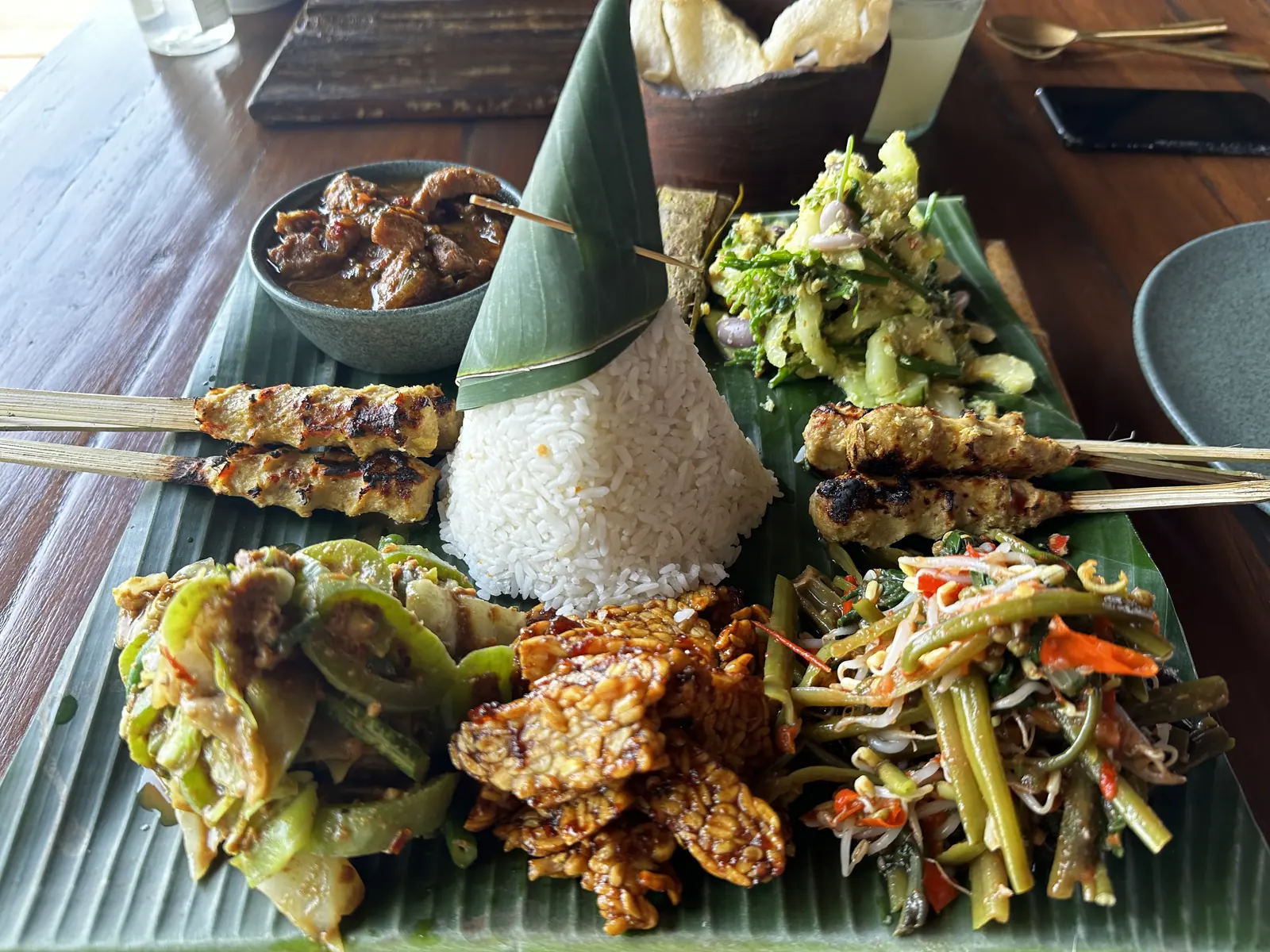
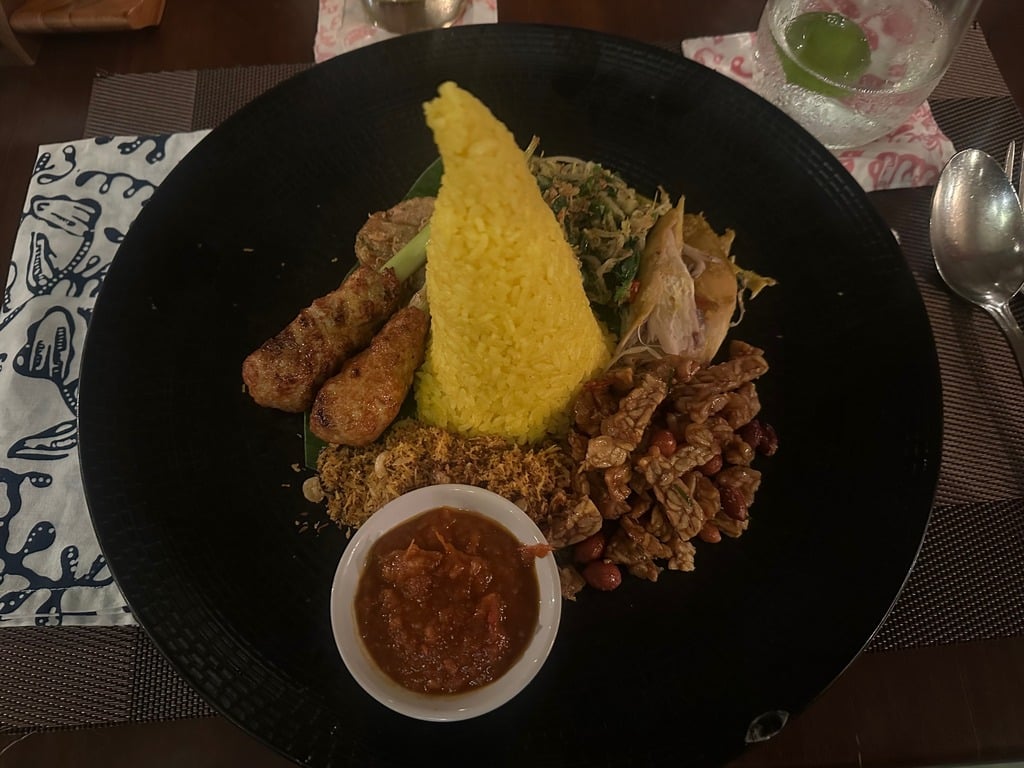
“Mixed rice”: a mound of rice with small portions of whatever the cook has made that day, usually sate lilit, lawar, shredded chicken, a vegetable dish and sambal. It is the best way to taste several Balinese dishes at once, and the standard lunch at any Balinese warung.
Nasi jinggo
A small packet of rice wrapped in banana leaf with a spoonful of shredded chicken, fried tempeh, serundeng (spiced fried coconut) and sambal. Born on the streets of Denpasar as a late-night snack, it costs very little, and you will see stacks of it at roadside stalls in the evening.
Jukut urab, tipat cantok and pepes
- Jukut urab: blanched vegetables tossed with spiced grated coconut, the vegetable side of most Balinese meals.
- Tipat cantok: pressed rice cakes with vegetables and a peanut sauce pounded to order, a Balinese cousin of gado-gado and a good vegetarian choice.
- Pepes ikan: fish steamed or grilled in banana leaf with spice paste, very common along the coast.
Grilled seafood in Jimbaran
Not a single dish but a Bali institution: fish, prawns and squid grilled over coconut husks and eaten at tables on Jimbaran beach at sunset, with sambal matah and rice. Prices are by weight, so check them before you choose.
Balinese Ceremony Food: Where the Real Feasts Happen
In Bali, food is how you celebrate. There are ceremonial meals, simple or elaborate, for just about every occasion: a birthday, a wedding, a temple festival, or the anniversary of a business. At my hotel, we celebrate the anniversary of our opening every year this way.
The centerpiece is often a tumpeng, a cone of rice surrounded by side dishes. The guest of honor cuts off the top of the cone, which is a mark of respect, then everyone shares the rest. And for the big events, there is always babi guling.
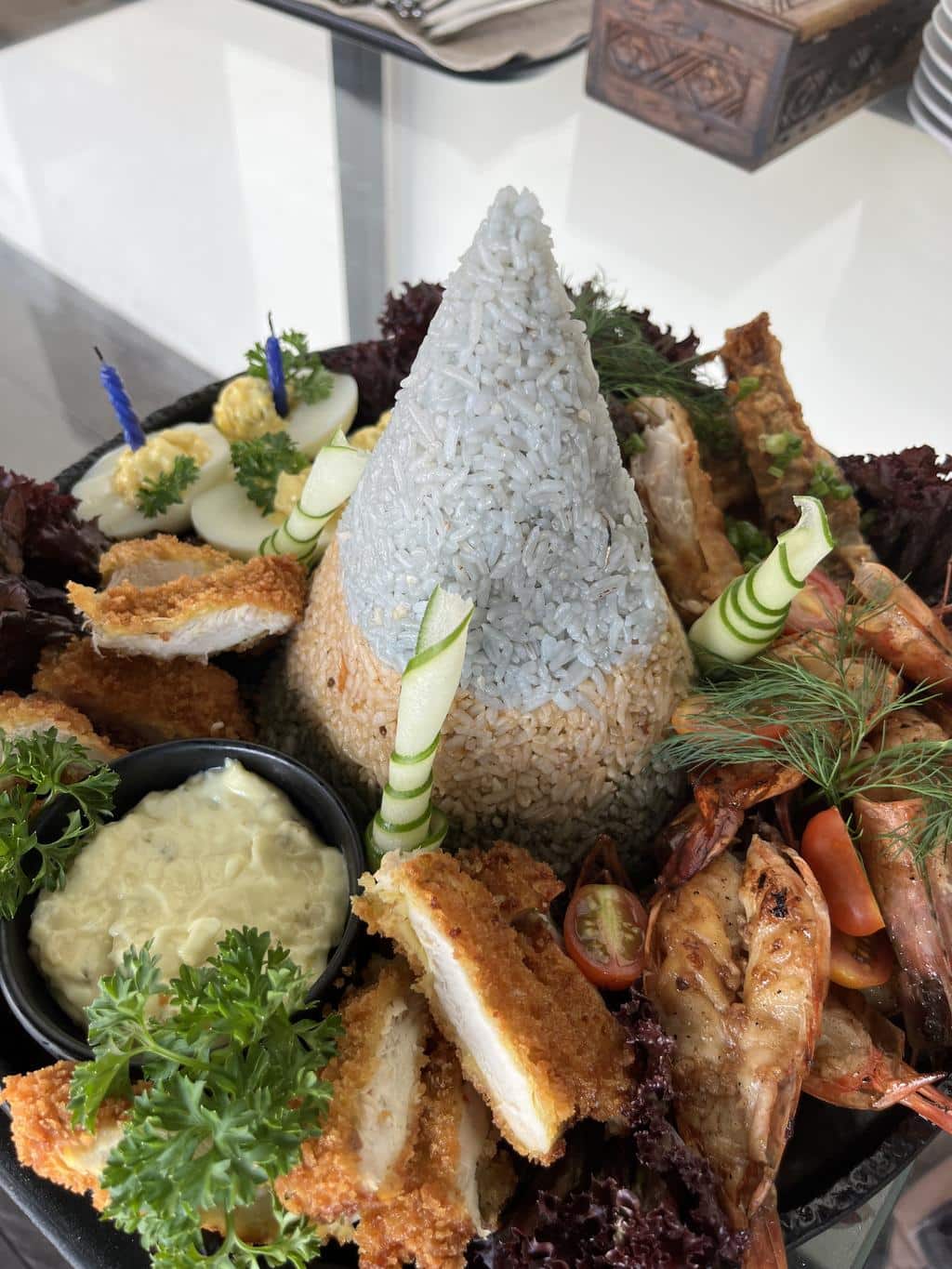
The biggest cooking day of the year is Penampahan Galungan, the day before the Galungan festival. Before dawn, families all over the island slaughter pigs, and the whole day goes into making lawar, satay and babi guling for the offerings and the feast. In East Bali, especially Karangasem, the tradition of megibung is still alive: a group sits in a circle and shares a large spread of rice and dishes laid out together, eating by hand. If you are invited to a ceremony meal, accept: it is the best Balinese food you will ever eat.
Want to know when the next festival falls? See Indonesia’s public holidays and my history of Bali for the culture behind the temples.
Balinese Desserts and Drinks
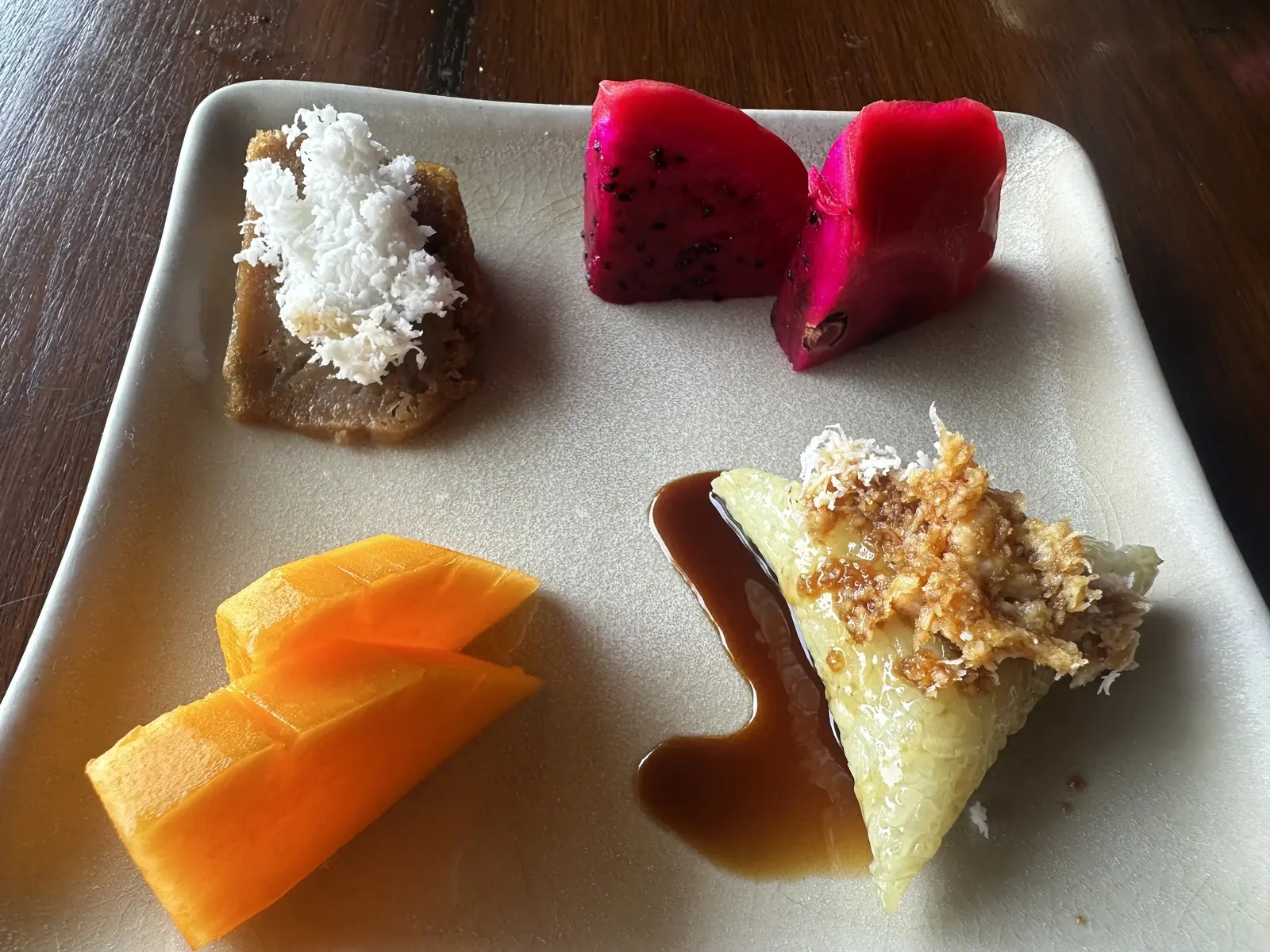
Balinese sweets, jaja Bali, are made from rice flour, coconut and palm sugar, often colored with pandan leaf. Look for bubur injin (black rice pudding with coconut milk), klepon (green rice balls that burst with liquid palm sugar), dadar gulung (pandan crêpes rolled around sweet coconut) and laklak (small rice-flour pancakes). They are sold at morning markets and also appear at ceremonies, stacked into offerings.
- Kopi Bali: strong, finely ground coffee, served with the grounds at the bottom of the glass. Let them settle before drinking.
- Arak: the local spirit, distilled from palm sap or rice. Drink it only from a licensed bottle or a reputable bar: cheap unlabeled arak has caused methanol poisoning.
- Brem: a sweet, low-alcohol rice wine, often used in offerings.
- Loloh: traditional herbal drinks made from leaves and roots, sold in villages and at some warungs.
Where to Eat Balinese Food: My Favorite Places
Bali Asli, Karangasem: my best address by far
Bali Asli sits in the hills of Gelumpang, near Amlapura in East Bali, with a terrace that looks straight at Mount Agung. It was founded by an Australian chef, Penelope Williams, and the food is cooked over wood fires in a traditional Balinese kitchen. I have been twice. The first time, in June 2024, we had lunch on the terrace: a nasi campur served on a banana leaf with a rice cone, sate lilit, lawar and tempeh, then a plate of Balinese sweets. It is the best Balinese meal I have eaten in a restaurant.

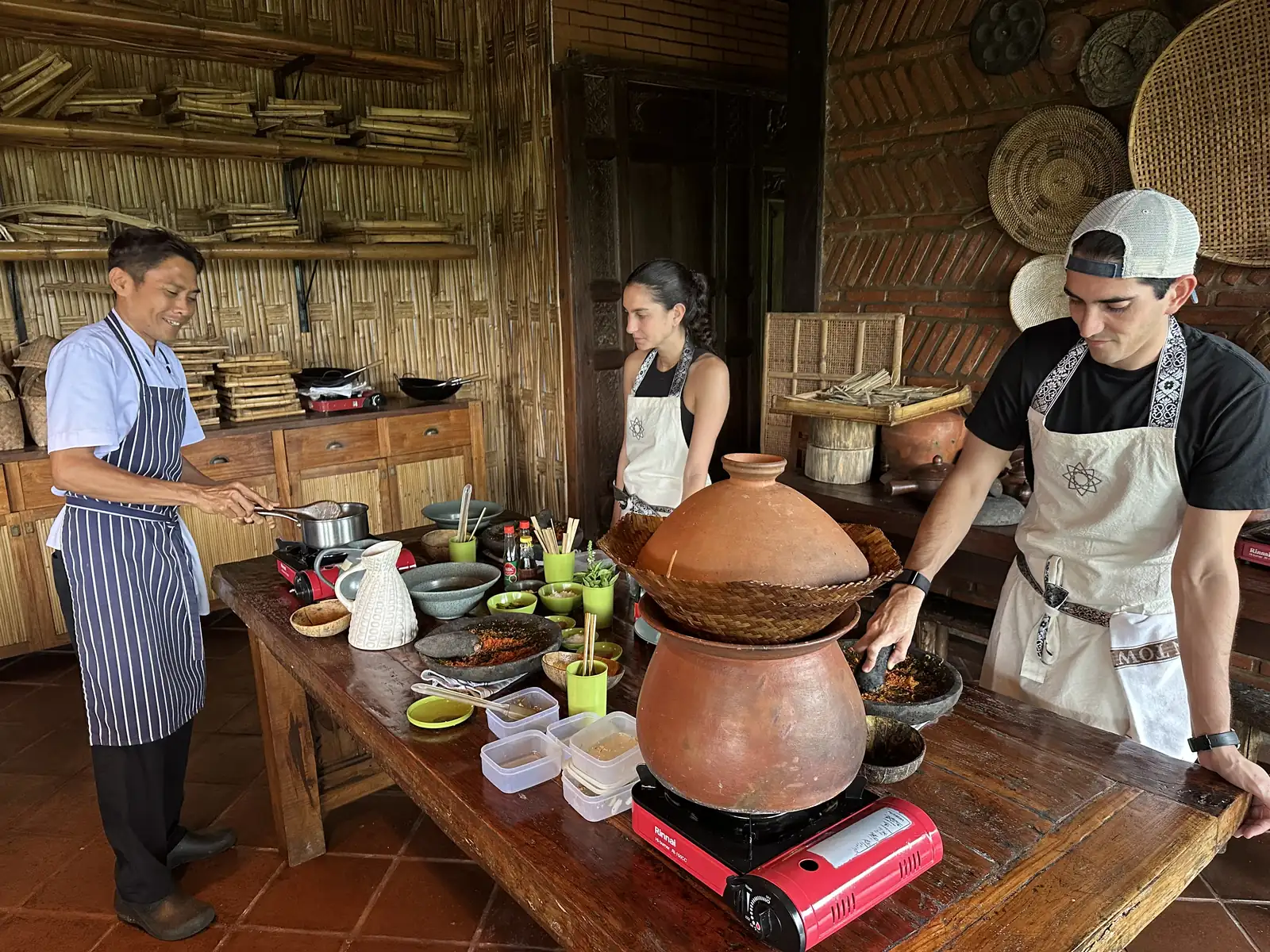
On my second visit, in June 2025, a cooking class was under way in the open kitchen. Bali Asli runs a cooking school where you prepare several dishes yourself, the traditional way: spice pastes ground by hand in a stone mortar and food cooked over wood fires. If you want to learn Balinese cooking rather than just eat it, this is where I would go.
- Where: Jalan Raya Gelumpang, Amlapura, Karangasem. About 30 minutes by car from Candidasa and 35 minutes from Amed.
- When: lunch is served from 11 a.m. to 3:30 p.m.; come at lunchtime, when Mount Agung is often still clear of clouds.
- Book ahead: reservations are highly recommended, through the Bali Asli website.
- Combine it with: Lempuyang, Tirta Gangga or the coast of Amed. See my Karangasem guide.
Kampoeng Bali at RIMBA, Jimbaran
For an evening in the south, the Kampoeng Bali night at AYANA’s RIMBA in Jimbaran is a Balinese buffet with traditional dance, from 6 to 10 p.m. The buffet includes babi guling and satay from an open kitchen, and the show is a kecak dance telling the story of Rama and Sita. It is a resort experience rather than a village one, but it is an easy way to taste a dozen Balinese dishes in one evening. Book ahead.
Ulekan, Canggu
In Canggu, Ulekan on Jalan Tegal Sari in Berawa is a good Indonesian restaurant with several Balinese dishes on the menu. It is a pleasant, more polished alternative to the warungs if you are staying on the west coast.
Warungs: where the Balinese eat
For everyday Balinese food, go to a warung, the small family-run eateries found everywhere on the island. A plate of nasi campur costs a fraction of a restaurant meal. Choose busy ones at lunchtime, when the food is fresh, and look for a sign saying babi guling if that is what you are after: many of the best open in the morning and close when the pig is finished.
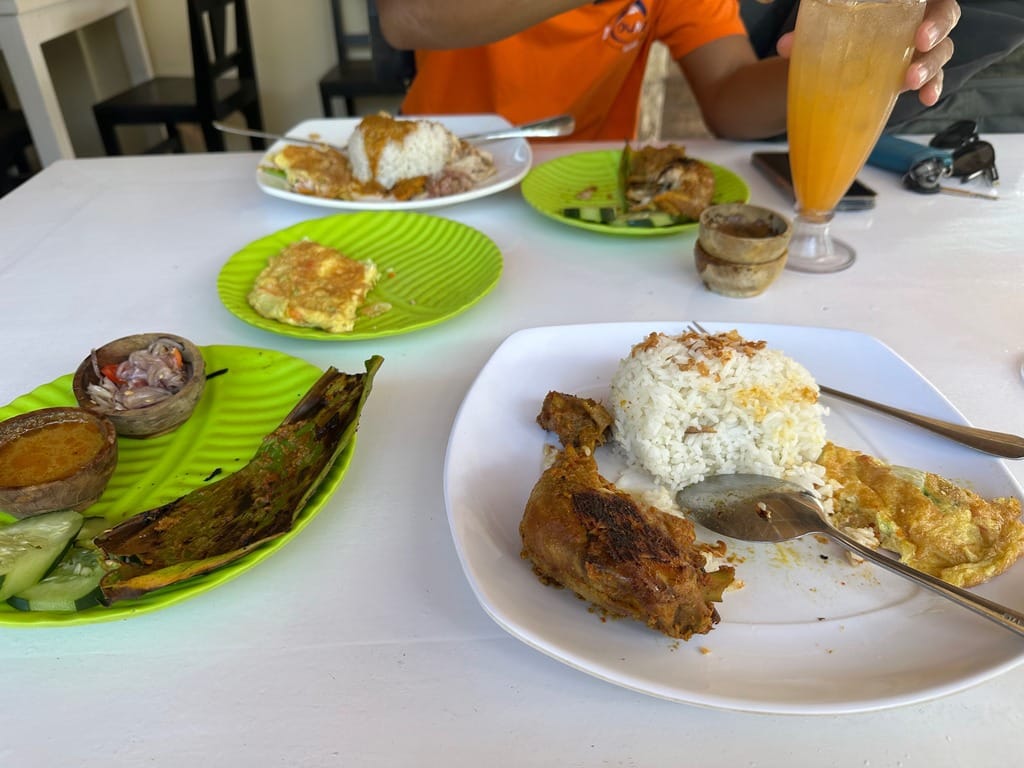
Staying on Nusa Penida? The warungs around the harbor serve the same Balinese classics; see my Nusa Penida guide.
Practical Tips for Eating in Bali
- Halal food: pork is everywhere in Balinese cooking, so look for Javanese or Padang restaurants, which are halal and easy to find in every town.
- Vegetarians: tempeh, tofu, jukut urab, tipat cantok and gado-gado are good choices, but ask about shrimp paste, which goes into many sauces.
- Spice: lawar, betutu and sambal matah are hot. Say tidak pedas (not spicy) or sedikit pedas (a little spicy) when you order.
- Eat with your right hand if you share a ceremony meal, and wait for the host to invite you to start.
- Getting there: Bali Asli is a day trip from the south; see how to get around Bali.
Read More
Indonesian Food Guide
The dishes to know across the archipelago, from Padang curries to Javanese street food, and how to order them.

Karangasem Travel Guide
East Bali at its best: Lempuyang, Tirta Gangga, Amed and the slopes of Mount Agung.
History of Bali
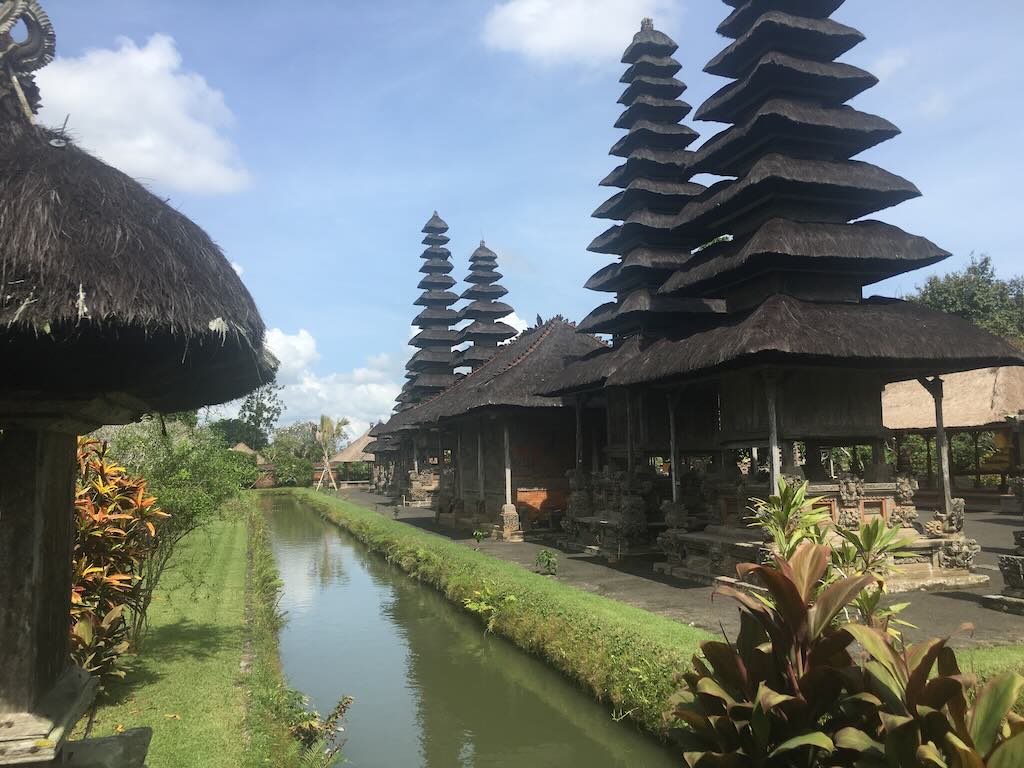
The island’s story in brief and the historical sites where you can still see it.
Frequently Asked Questions About Balinese Food
What is the most famous food in Bali?
Babi guling, the spit-roasted whole pig, is the best-known Balinese dish. Bebek betutu, lawar and sate lilit come right after it.
Is Balinese food spicy?
Often, yes. Lawar, betutu and sambal matah are hot, but sambal is usually served on the side, and you can ask for food that is not spicy (tidak pedas).
What is the difference between Balinese and Indonesian food?
Bali is Hindu, so pork is common and beef is largely avoided, while the rest of Indonesia is mostly Muslim and eats halal. Balinese cooking is also built on one spice paste, base genep, and many dishes come from temple and ceremony food.
Can you find halal food in Bali?
Yes. Javanese and Padang restaurants are halal and easy to find in every town, and many tourist restaurants have halal options.
Is Balinese food good for vegetarians?
Reasonably. Tempeh, tofu, jukut urab, tipat cantok and gado-gado are vegetarian, but shrimp paste goes into many sauces, so ask.
Where can I take a Balinese cooking class?
Many places offer one, especially around Ubud. My favorite is the cooking school at Bali Asli in Karangasem, where you cook over wood fires with a view of Mount Agung.