Best Diving in Indonesia – Top Dive Destinations (2026 Guide)
By Blaise Jaeger · Updated June 14, 2026
Why Indonesia Is the World’s Greatest Diving Country
Indonesia sits squarely in the middle of the Coral Triangle, the most biodiverse marine region on Earth, and no other country comes close to its range of diving. This stretch of ocean holds roughly three-quarters of the world’s known coral species and more than 2,000 species of reef fish, and Indonesia owns the richest slice of it. In a single archipelago of more than 17,000 islands you can drift with manta trains in Komodo, hover over the richest reefs ever recorded in Raja Ampat, photograph a hairy frogfish on black sand in Lembeh, and watch schooling hammerheads patrol a volcanic seamount in the Banda Sea — all without leaving the country.
This guide is my complete overview of the best diving in Indonesia: every major region, when to go, how to choose between them, what each marine park costs, where to stay, and how a normal recreational dive can now feed real shark science. It is also the home base for my wider guide to the best diving in Southeast Asia — if you want to see how Indonesia stacks up against Thailand, Malaysia and the Philippines, start there; if you have already chosen Indonesia and want to plan the trip itself, you are in the right place.
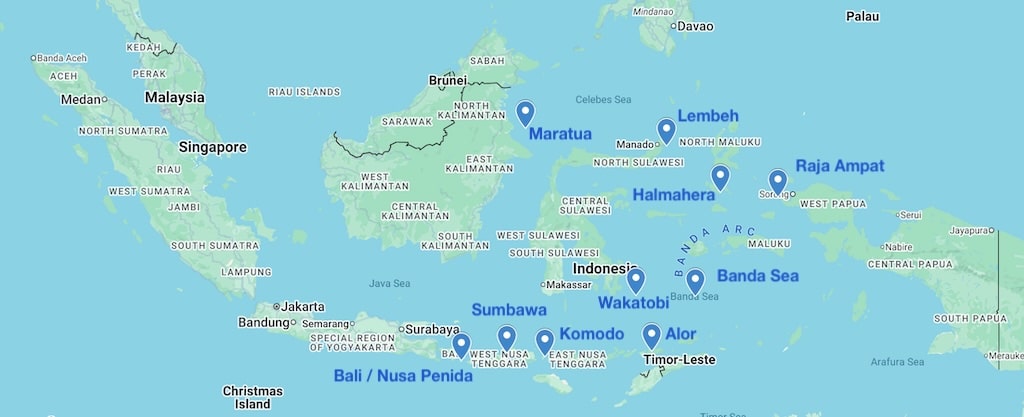
Indonesia Diving at a Glance
Indonesia is not one destination but a dozen, each with its own marine life, season and style of diving. This table is the quick map I give friends before they commit to a region; the sections that follow go into the detail.
| Region | Best For | Level | Best Season | Access |
|---|---|---|---|---|
| Raja Ampat | Biodiversity, reefs, mantas | All levels / Advanced | Oct–Apr | Liveaboard or resort |
| Komodo | Mantas, currents, pelagics | Intermediate / Advanced | Apr–Nov | Day boat or liveaboard |
| Bali & Nusa Penida | Mantas, Mola Mola, easy access | All levels | Apr–Nov (Mola Jul–Oct) | Resort / day boat |
| Sumbawa | Whale sharks, Saleh Bay, uncrowded diving | All levels | May–Nov | Resort / day boat |
| Maratua & Derawan | Barracuda tornado, sharks | Intermediate | Mar–Oct | Resort |
| Banda Sea | Hammerheads, walls | Advanced | Sep–Nov | Liveaboard only |
| North Sulawesi (Lembeh / Bunaken) | Muck + walls | All levels | Mar–Oct | Resort |
| Wakatobi | Pristine coral, macro | All levels | Mar–Dec | Resort / liveaboard |
| Alor & Ambon | Critters, rhinopias, muck | All levels | Sep–Dec | Resort / liveaboard |
| Halmahera | Remote, exploratory | Intermediate | Oct–Apr | Liveaboard |
Years of Diving Indonesia: What I’ve Learned

I’ve lived in Indonesia for years, based on Nusa Penida just off Bali, where I work in the diving industry. That gives me two things most guides don’t have: thousands of dives in Indonesian water across every season, and the perspective of someone who lives here rather than flying in for a week. Over the last decade I’ve dived Raja Ampat, Lembeh and Halmahera from the Dune Aurora liveaboard and on repeated cruises with Uber Diving, Komodo from Labuan Bajo, the Derawan atolls from Maratua, and of course Nusa Penida almost daily.
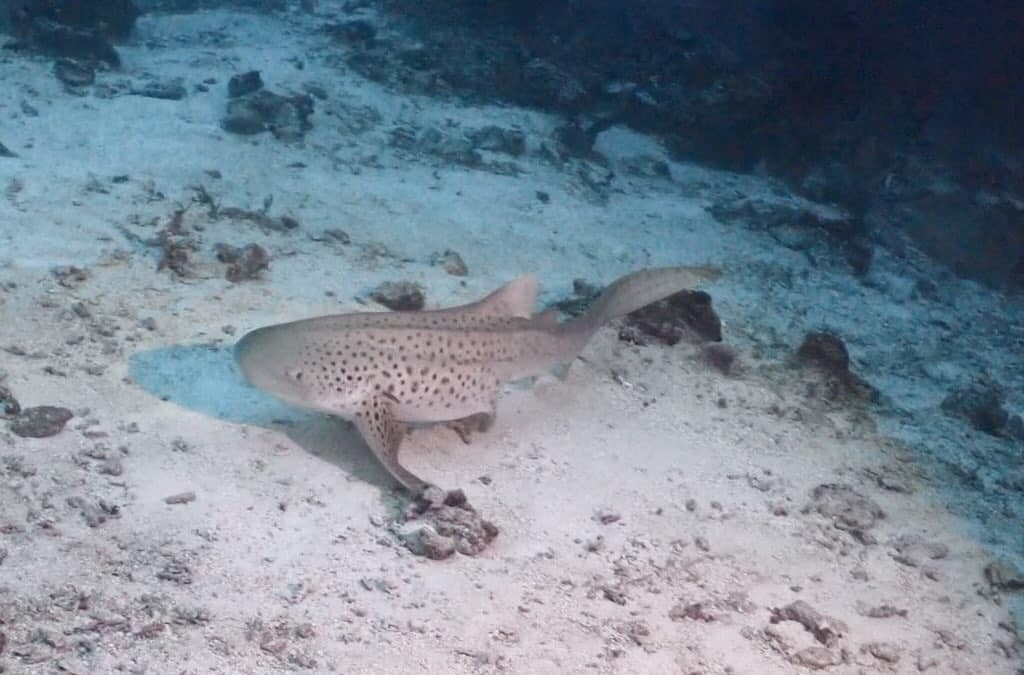
As I write this I’m on Maratua, in Indonesian Borneo, where I’ve spent the week logging leopard sharks, eagle rays and — one recent morning — twelve scalloped hammerheads at 36 meters off Kakaban. Yesterday I filmed a leopard shark that turned out not to be in any catalogue: a brand-new individual. I sent the date, time, dive site, depth and footage to the researchers who track these animals, and the sighting now carries my name. That is the kind of thing that only happens when you dive the same water often enough to notice when something is new — and it’s the heart of why I keep diving Indonesia rather than ticking off a bucket list.
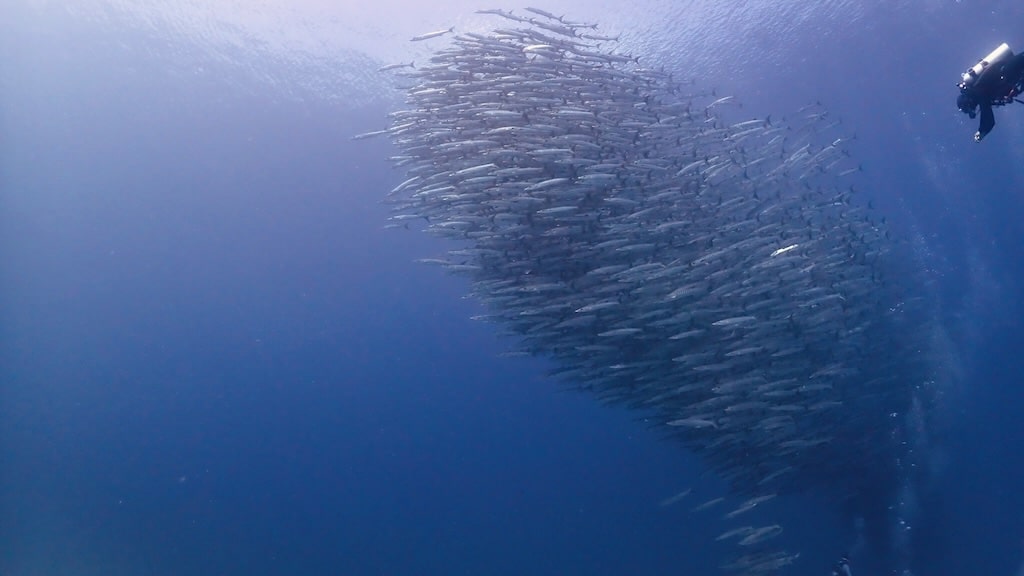
I’m booked on a Banda Sea crossing this September for hammerhead season — the one major Indonesian region still on my own to-do list. So when I tell you Raja Ampat is worth the airfare, that Komodo’s currents demand respect, or that Maratua’s barracuda tornado is the single most cinematic thing I’ve witnessed underwater, it comes from logged dives, not press trips.
The Best Dive Destinations in Indonesia
Here is every Indonesian region worth planning a trip around, with what makes each one special, the signature dives, the level it suits and how you actually get there. I’ve ordered them roughly from the famous heavyweights to the exploratory frontier.
Raja Ampat – the most biodiverse reefs on Earth
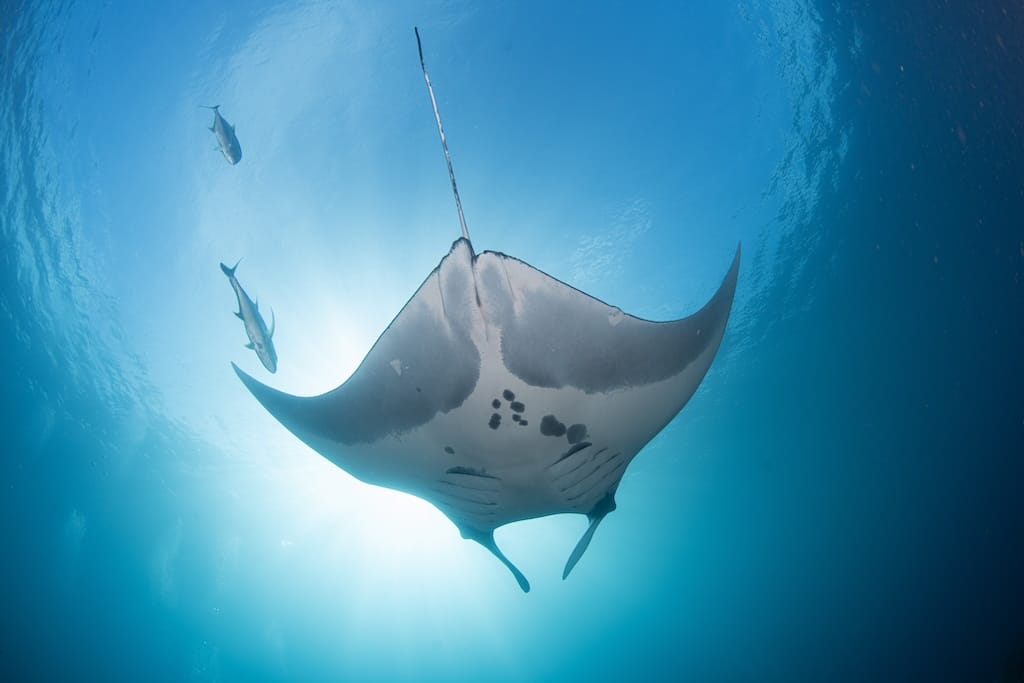
Raja Ampat, off the northwest tip of Papua, holds the highest marine biodiversity ever recorded — surveys here have counted more fish and coral species on a single reef than anywhere else on the planet. Cape Kri famously logged 374 species on one dive. The diving splits into two hubs: Dampier Strait in the north (Cape Kri, Sardine Reef, Blue Magic and Manta Sandy) and Misool in the south, with its soft-coral walls and the Boo Window swim-throughs. Reefs are so dense with fish that the water can darken; oceanic and reef mantas cruise cleaning stations from October to April. You’ll fly into Sorong (via Jakarta or Makassar), then continue by liveaboard or by boat transfer to a resort. Manageable as an “all levels” destination at the calmer sites, but the strait currents reward divers who are comfortable in moving water. Full details in my dedicated Raja Ampat diving guide.
Komodo – mantas, currents and big pelagics
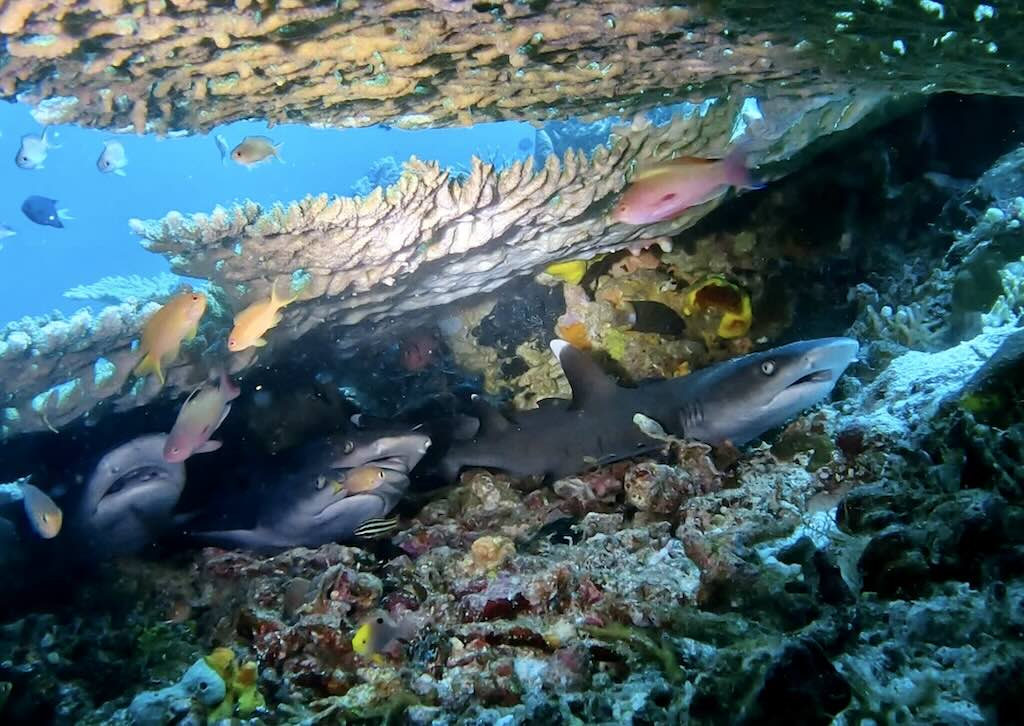
Komodo National Park, a UNESCO World Heritage Site, packs an extraordinary range of diving into a compact area reached from Labuan Bajo on Flores. The north is warm, calm and coral-rich; the south is colder, plankton-fed and wilder, with mantas aggregating at Manta Alley and Karang Makassar. Castle Rock and Crystal Rock are adrenaline pinnacles where trevally, sharks and dogtooth tuna hunt in the current — this is where a reef hook earns its place in your kit. You can dive Komodo on day boats from Labuan Bajo or on a liveaboard that also reaches the remote southern and eastern sites. From April 2026 the park runs a 1,000-visitor daily quota with pre-booking through the official SiOra system, so plan permits in advance. More in my Labuan Bajo and Komodo guide.
Bali & Nusa Penida – mantas and Mola Mola, 45 minutes from the airport
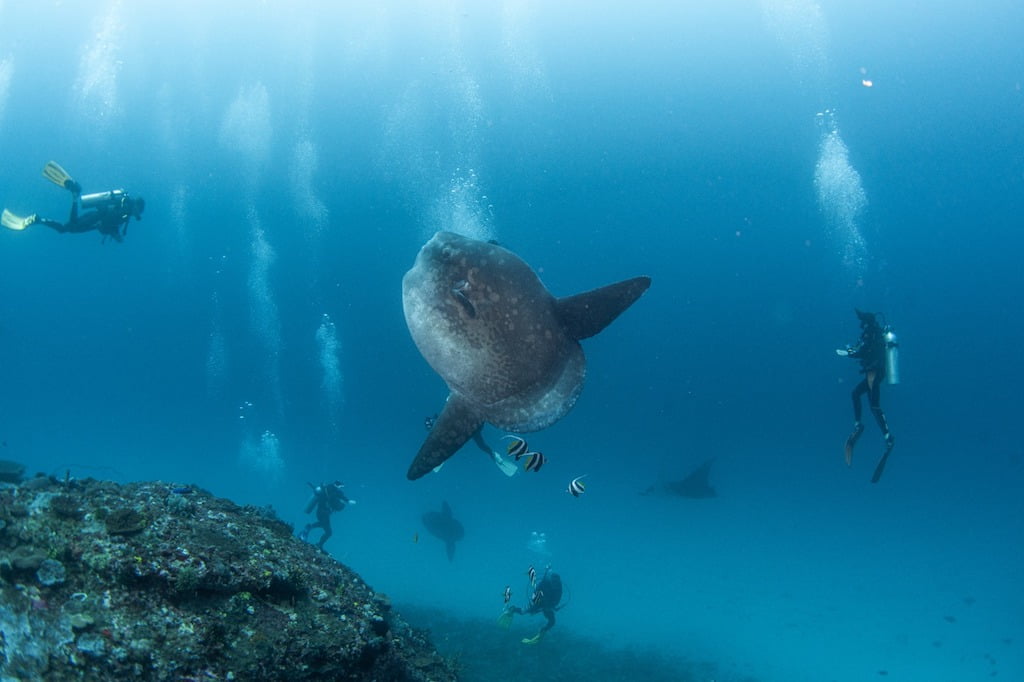
This is my home water, so I’ll be honest about both its magic and its limits. Bali offers genuine variety — the USAT Liberty wreck at Tulamben, the muck of Seraya and Amed, and the reefs of Menjangan in the northwest. But the headline act is Nusa Penida, 45 minutes by speedboat from Bali, where reef mantas feed year-round at Manta Point and the rare Mola Mola (ocean sunfish) rises from the deep between July and October. The water at Crystal Bay can drop below 20°C when the Mola are in, so a 5mm wetsuit is no luxury. Currents here are strong and occasionally down-welling — dive with a reputable operator. It’s the most accessible world-class diving in Indonesia and the easiest place to start; see my full rundown of the 20 best dive sites of Bali and Nusa Penida, or the wider Bali travel guide.
Maratua & the Derawan Islands – the barracuda tornado
The Derawan archipelago off East Kalimantan (Indonesian Borneo) is where I’m writing this, and it remains one of Indonesia’s most underrated regions. Maratua‘s signature dive is The Channel, where on an incoming tide thousands of big-eye barracuda spiral into a slow tornado you can hang beneath for an entire dive. Nearby Kakaban has a stingless-jellyfish lake and a wall patrolled by scalloped hammerheads in the cooler months, while Sangalaki is a turtle and manta nursery. You reach it by flying to Berau (Kalimarau), then a road-and-boat transfer to the islands — remote enough that resorts run their own dive operations and bring their own spares. Intermediate divers comfortable with current will get the most out of The Channel.
The Banda Sea – schooling hammerheads and the Ring of Fire
The Banda Sea is a liveaboard-only crossing through the volcanic heart of eastern Indonesia, typically run between Ambon and Maumere or Saumlaki. Its two draws are very different: in October and November, walls at sites like Nil Desperandum and Manuk (“Snake Island,” wrapped in sea kraits) draw schooling scalloped hammerheads, while the rest of the year the region is about pristine walls, blue-ringed octopus and the surreal sight of diving beside steaming active volcanoes. This is advanced, blue-water diving — deep, current-prone and remote, with no quick exit. It’s the crossing I’m booked on this September, and the one region in this guide I’ll update from first-hand experience soon.
North Sulawesi – Lembeh muck plus Bunaken walls
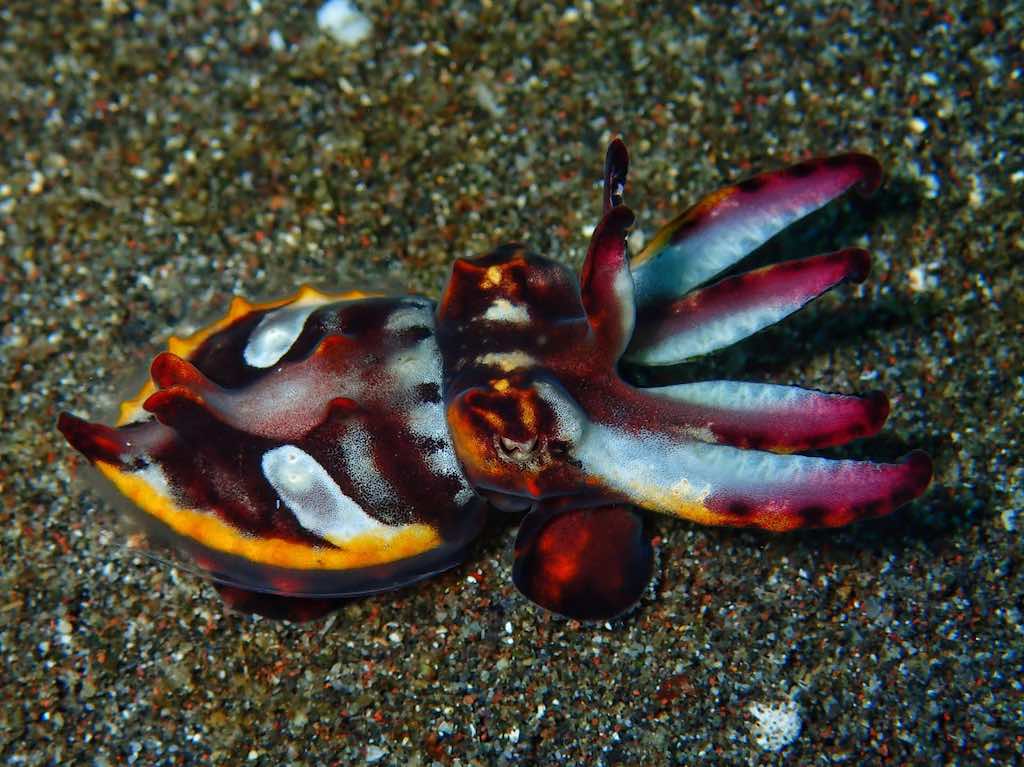
North Sulawesi gives you two opposite worlds within a couple of hours of Manado. The Lembeh Strait is the undisputed muck-diving capital of the world: black volcanic sand hiding flamboyant cuttlefish, hairy frogfish, mimic octopus, Bobbit worms and a roll-call of critters that photographers cross the planet for. Then, on the other side, Bunaken National Park drops into sheer coral walls in gin-clear water alive with turtles and reef fish. The combination — a week of macro in Lembeh, a few days of walls at Bunaken — is one of the best-value, all-levels diving trips in the country, and almost all of it is shore- or short-boat accessible from comfortable resorts. See the wider Sulawesi guide.
Wakatobi – pristine coral and easy macro
Wakatobi, in southeast Sulawesi, is for divers who want world-class reef health with none of the current stress. The reefs here are among the most pristine in Indonesia thanks to a long-running private marine reserve, with healthy hard and soft coral, big sponges, and gentle drift dives suited to every level. House reefs are exceptional — you can do superb macro and wide-angle straight off the jetty. It’s a fly-in destination (charter flights serve the main resort) and tends to attract a calmer, photography-minded crowd. Best dived March to December.
Alor & Ambon – critter capitals
Alor and Ambon are the connoisseur’s muck destinations. Ambon Bay is famous for the psychedelic frogfish found nowhere else, plus rhinopias, harlequin shrimp and night dives full of weird life. Alor pairs critter-rich bays with surprisingly punchy reef and pelagic action, and its remoteness keeps the crowds away. Both reward macro-focused divers and underwater photographers, are best in the September-to-December window, and are usually combined into a single eastern-Indonesia liveaboard or resort trip.
Halmahera – the exploratory frontier
Halmahera, in North Maluku, is where Indonesian diving still feels like exploration. I’ve dived it from the Dune Aurora and surfaced from sites that see only a handful of divers a year — untouched reefs, WWII relics, and the barracuda vortex at nearby Tifore. It’s reached by liveaboard, often as part of a wider Maluku itinerary, and suits intermediate divers happy to trade polish and infrastructure for the thrill of reefs that are barely mapped. Best October to April.
Sumbawa – whale sharks and Indonesia’s next diving frontier
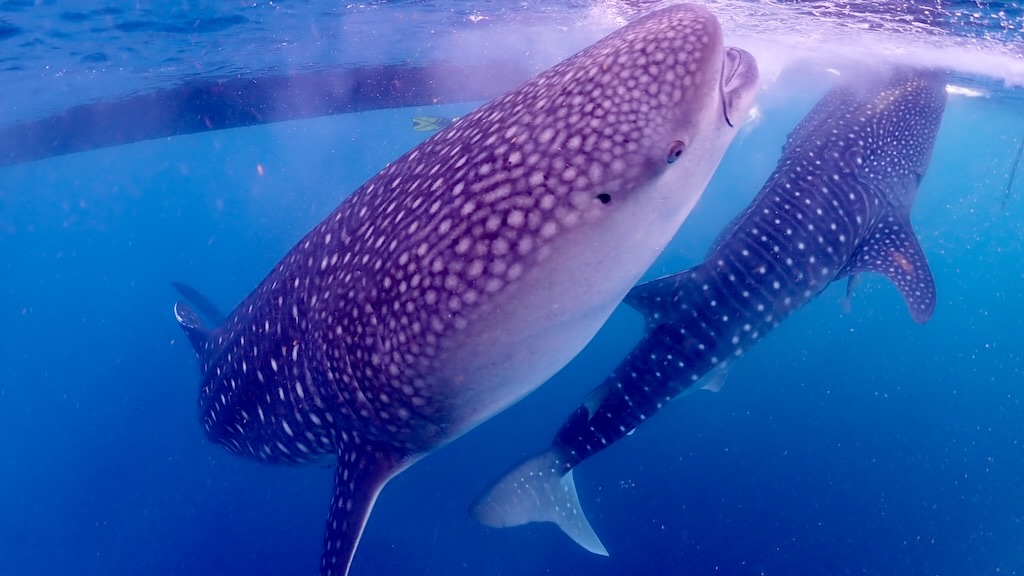
East of Lombok, Sumbawa is the rising star. Saleh Bay offers near-guaranteed encounters with whale sharks that gather around fishing platforms (bagans) — calm, shallow and suitable even for snorkellers — while the island’s reefs stay blissfully uncrowded. It’s an easy add-on to a Komodo trip and one of the few places where you can swim with the world’s biggest fish without the circus of mass tourism. Read the Sumbawa travel guide and the dedicated whale sharks of Saleh Bay guide.
Diving for Science: How Divers Help Catalogue Indonesia’s Sharks and Rays
One thing that sets Indonesian diving apart from a pure bucket-list trip is how directly recreational divers now contribute to marine science. Sharks and rays — elasmobranchs — carry unique natural markings: the spot patterns on a leopard shark, the belly markings of a manta, the shape of a fin. Photograph the same animal twice and researchers can tell whether it’s a known individual or a brand-new one, building population maps that feed straight into conservation policy.
That stopped being abstract for me this week on Maratua. The Elasmobranch Institute Indonesia runs a species-exploration program cataloguing the leopard sharks, thresher sharks and hammerheads of the Derawan region, and I’d been in touch with their researchers. When I filmed a leopard shark that didn’t match any individual in their database, I logged the full record — date, time, dive site, depth — and the new individual now sits in their catalogue under my name. It’s a small contribution, but multiply it across thousands of divers and you get one of the most powerful, lowest-cost monitoring networks in the ocean.
If you dive Indonesia, you can do the same: shoot clean, well-lit ID shots of sharks, rays and turtles, note the location and depth, and send them to the research group active in that area. You’ll dive more attentively, and your holiday photos become data.
Marine Park Fees and Conservation in Indonesia
Indonesia’s best reefs are protected, and that protection is funded largely by diver fees. Budget for them up front — they’re modest against the cost of getting there, and they pay for the rangers and patrols that keep these places worth diving.
- Raja Ampat: a Marine Park Entry Permit (the “PIN,” around IDR 1,000,000 / roughly $60 for foreign visitors) plus a separate Visitor Entry Ticket (about IDR 300,000). The permit is valid for the calendar year, and the local authority adjusts the price annually — confirm the current rate before you travel.
- Komodo: a daily park-and-diver fee in the region of IDR 300,000–400,000 per diver. From April 2026 the park enforces a 1,000-visitor daily quota with mandatory pre-booking through the official SiOra reservation system.
- Bunaken & Wakatobi: both levy national-park entry tags; Bunaken’s is a small daily/annual fee, while Wakatobi’s reserve fee is usually bundled into the resort package.
Komodo National Park is a UNESCO World Heritage Site, and the wider region forms part of the Coral Triangle conservation priority. Choosing operators that brief on no-touch, no-glove reef etiquette and that support local patrols matters as much as paying the fee.
Best Time to Dive in Indonesia
Because Indonesia straddles the equator and two monsoons, there is no single “best” season — only the best season for your region. The general rule is that eastern and central Indonesia (Komodo, Bali, Sulawesi, Maratua) dive best during the dry season from April to November, while Raja Ampat and Halmahera flip to a calm-water window from October to April. Water is warm almost everywhere (27–30°C), with cold thermoclines the exception: Nusa Penida’s Crystal Bay and southern Komodo can drop to 20°C or below, especially in Mola Mola season.
- Raja Ampat: October–April (calmest seas, manta season).
- Komodo: April–November; the south is best July–September when the mantas aggregate.
- Nusa Penida / Bali: year-round, but Mola Mola peak July–October.
- Banda Sea hammerheads: a tight October–November window.
- Lembeh / Bunaken & Maratua: March–October.
- Alor & Ambon: September–December for peak critter season.
Liveaboard vs Land-Based Diving in Indonesia
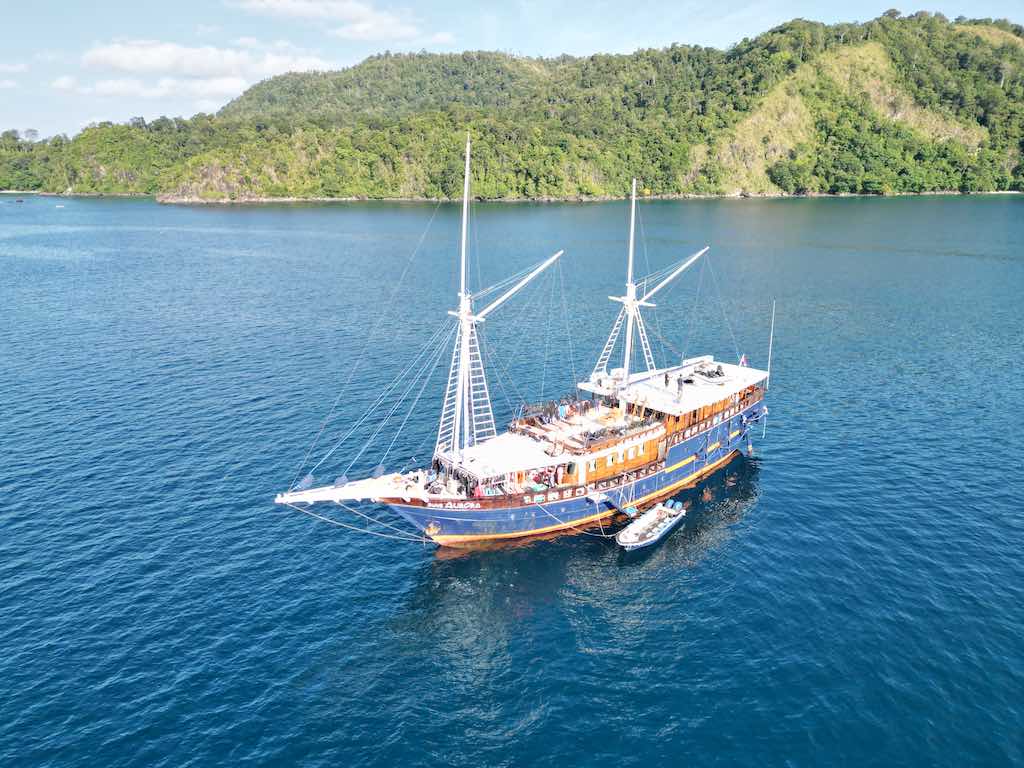
Some Indonesian regions can only be dived from a liveaboard; others are better and cheaper from a resort. Knowing which is which saves you money and disappointment.
When a liveaboard is the only real option
The Banda Sea, Halmahera and the remote southern and eastern reaches of Raja Ampat and Komodo have little or no land infrastructure — a boat is your only access. A liveaboard also lets you chase conditions, dive three or four times a day, and reach sites day boats never see. Typical Indonesian routes include the 7–10 night Raja Ampat loop (Dampier Strait to Misool), the Komodo circuit out of Labuan Bajo, and the epic Banda Sea crossing between Ambon and Maumere that I’m booked on this September. Expect $300–450 per night all-inclusive.
When a resort makes more sense
For Lembeh, Bunaken, Wakatobi, Ambon, Nusa Penida and the resort-served corners of Raja Ampat, land-based diving is more relaxed, far cheaper, and gives you unlimited house-reef and macro time. It’s also the right call for new divers, families, and anyone who’d rather sleep on solid ground. My honest take: do your first Indonesian trip from a resort, then graduate to a liveaboard once you know you love the diving. See my dedicated Indonesia liveaboard cruise guide.
Indonesia Diving by Experience Level
Beginners
Start in Bali and the calmer sites of Nusa Penida, North Sulawesi (Bunaken’s walls and Lembeh’s gentle muck) or Wakatobi. Warm water, easy logistics and plenty of dive centres make these ideal for an Open Water course or your first tropical dives. Save the strong-current sites until you’ve built confidence.
Intermediate
Komodo, Maratua and the main sites of Raja Ampat open up once you’re comfortable with current and have 30–50 logged dives. Learn to use a reef hook and an SMB, and you can handle Castle Rock, The Channel and Dampier Strait. This is the sweet spot where Indonesia’s best diving becomes accessible.
Advanced
The Banda Sea, deep hammerhead dives off Kakaban, and the wilder pinnacles of Komodo and Raja Ampat demand solid buoyancy, good air consumption and experience in blue water and down-currents. Nitrox certification and a measure of self-sufficiency go a long way out here.
Where to Stay: Dive Resorts and Liveaboards I’ve Used
Every place below is somewhere I’ve personally slept, eaten and dived from — not a list scraped from a booking engine. Prices are indicative per double room or per liveaboard night.
- Maratua & Derawan — Noah Maratua Resort: stilted water bungalows on the lagoon, a serious dive operation five minutes from The Channel, and the team behind the barracuda-tornado photo above (~$150–250/night with dives).
- Nusa Penida — Adiwana Warnakali: the island’s most comfortable dive resort, with a pool over the Toyapakeh strait and an in-house PADI centre (~$120–200/night).
- Komodo — Blue Parrot, Labuan Bajo: relaxed, diver-friendly base a short walk from the harbour for day trips into the park (~$40–80/night).
- Raja Ampat, Banda Sea, Halmahera & Lembeh — Dune Aurora liveaboard: the wooden phinisi I return to again and again, plus repeated cruises with Uber Diving ($300–400/night, all dives included).
For everywhere else — Bali, Wakatobi, Bunaken, Ambon — compare dive resorts and hotels on Booking.com:

Practical Tips: Getting There, Visas, Costs and Safety
Getting there and around
Most divers arrive via Bali (Denpasar) or Jakarta, then connect on domestic flights — Sorong for Raja Ampat, Labuan Bajo for Komodo, Manado for North Sulawesi, Berau for Maratua, Ambon for the Banda Sea. Internal legs are short but frequent, so build in buffer time and pack a save-a-dive kit; remote regions have little to no gear for sale.
Visa and entry
Most nationalities can use the Visa on Arrival or e-VOA: 30 days, around IDR 500,000 (≈$35), extendable once for another 30 days (60 total), with the extension now processed in person at an immigration office. For longer dive trips, the C1 visit visa (the former B211) allows 60 days, extendable up to six months. Always check the current rules on the official Indonesian immigration site and make sure your passport has at least six months’ validity.
Costs
Expect roughly $35–60 per fun dive at most resorts, $80–120 a day in remote regions like Maratua including any park fees, and $250–450 per liveaboard night all-inclusive. Marine park fees apply in Raja Ampat, Komodo, Bunaken and Wakatobi — factor them in (see the fees section above).
Safety
Currents in Komodo, Nusa Penida and Raja Ampat can be serious — dive with reputable local operators, listen to the briefing, and carry an SMB and a reef hook. Decompression chambers are concentrated in Bali, Jakarta and a few hubs, so dive conservative profiles in remote regions, leave generous surface intervals before flying, and never dive beyond your certification just to chase a hammerhead. Dive insurance from DAN (Divers Alert Network) is worth every cent out here.
Keep Planning Your Diving Trip
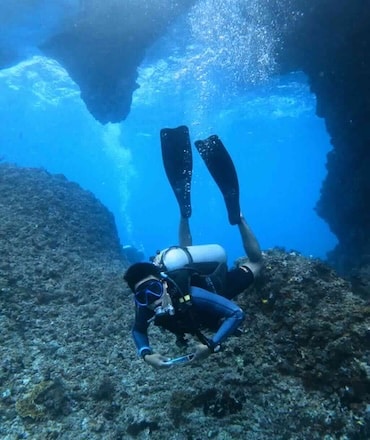
Best Diving in Southeast Asia
See how Indonesia compares with Thailand, Malaysia and the Philippines in my ranking of the top 12 dive sites across the whole region.
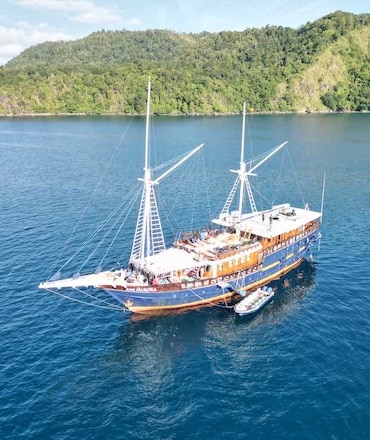
Indonesia Liveaboard Cruises
Come along on a 12-day liveaboard from Raja Ampat through the North Moluccas to the Lembeh Strait aboard the Dune Aurora — the dives, the wildlife and life on board.
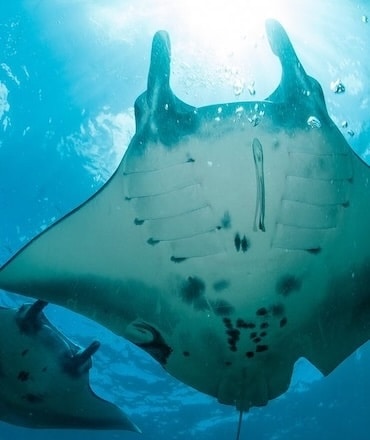
Nusa Penida Diving Guide
Just 40 minutes from Bali, Nusa Penida delivers manta rays year-round and Mola Mola in season. Discover its best dive sites in my first-hand guide, written from a dive centre I’ve run since 2017
Frequently Asked Questions About Diving in Indonesia
Where is the best diving in Indonesia?
Raja Ampat is widely considered the best diving in Indonesia for sheer biodiversity, with the highest fish and coral counts ever recorded. Komodo is the best for big animals in current, Lembeh for muck and macro, and Nusa Penida for the most accessible world-class diving. The “best” depends on what you want to see and your experience level.
When is the best time to dive in Indonesia?
It depends on the region. Komodo, Bali, Sulawesi and Maratua dive best in the dry season from April to November, while Raja Ampat and Halmahera are calmest from October to April. Banda Sea hammerhead season is a tight October–November window, and Nusa Penida’s Mola Mola peak is July to October.
Is Indonesia good for beginner divers?
Yes. Bali, the calmer sites of Nusa Penida, Bunaken’s walls, Lembeh’s gentle muck and Wakatobi are all excellent for new divers, with warm water and plenty of dive centres. Save strong-current destinations like Komodo’s pinnacles and the Banda Sea until you have more logged dives.
How much does diving in Indonesia cost?
Budget roughly $35–60 per fun dive at most resorts, $80–120 a day in remote regions, and $250–450 per night for an all-inclusive liveaboard. Marine park fees in Raja Ampat, Komodo, Bunaken and Wakatobi add to that, and flights to remote hubs are the biggest variable cost.
Liveaboard or land-based diving in Indonesia?
Choose a liveaboard for regions with no land infrastructure — the Banda Sea, Halmahera and remote Raja Ampat or Komodo — or to maximise dives per day. Choose a resort for Lembeh, Bunaken, Wakatobi, Ambon and Nusa Penida, which are cheaper, more relaxed and better for new divers. Many divers start land-based and graduate to a liveaboard.
Where can you dive with manta rays in Indonesia?
The top manta spots are Nusa Penida’s Manta Point (reef mantas year-round), Komodo’s Manta Alley and Karang Makassar, and Raja Ampat’s Manta Sandy and Blue Magic, where both reef and oceanic mantas gather at cleaning stations from October to April. Sangalaki in the Derawan islands is also a manta nursery.
Where can you see hammerhead sharks in Indonesia?
The Banda Sea is the classic destination for schooling scalloped hammerheads, on liveaboard trips in October and November. You can also encounter them in deeper water off Kakaban near Maratua in the cooler months. Both require advanced experience because the action is deep and current-prone.
Where is the best macro and muck diving in Indonesia?
The Lembeh Strait in North Sulawesi is the muck-diving capital of the world, with flamboyant cuttlefish, hairy frogfish, mimic octopus and Bobbit worms on black volcanic sand. Ambon and Alor are the other great critter destinations, famous for psychedelic frogfish and rhinopias.
Do you need a liveaboard for Raja Ampat?
No. Raja Ampat has excellent land-based resorts in both the Dampier Strait and Misool areas, and many top sites are reachable by day boat. A liveaboard lets you cover more ground and reach remote southern sites, but a resort stay is cheaper and perfectly good for a first visit.
Is diving in Indonesia safe?
Yes, with sensible precautions. Use reputable operators, respect current briefings, and carry an SMB and reef hook for strong-current sites. Decompression chambers are concentrated in Bali, Jakarta and a few hubs, so dive conservatively in remote regions, leave a long surface interval before flying, and carry dive insurance such as DAN.
How many days do you need to dive Indonesia?
Plan at least 7–10 days for a single region once you factor in travel to remote hubs. A classic Raja Ampat or Komodo liveaboard runs 7–11 nights, while a Lembeh-and-Bunaken resort trip works well over 10 days. Two weeks lets you combine two regions comfortably.
What is the water temperature when diving in Indonesia?
Water is generally a warm 27–30°C across most of the country, so a 3mm wetsuit suffices in many areas. The exceptions are cold thermoclines at Nusa Penida’s Crystal Bay and southern Komodo, where temperatures can drop below 20°C — especially in Mola Mola season — so bring a 5mm if you’re chasing the sunfish.