Balinese Culture: How Bali Lives Its Religion Every Day
By Blaise Jaeger · Updated October 29, 2026
In Bali, culture is not something you visit in a museum. It is the small offering on the sidewalk in front of a shop, the procession that blocks the road for an hour, the temple festival in the village next door. I moved to Bali in 2020 and split my time between Seminyak and Nusa Penida, where my hotel and dive center are. The team of my hotel is Balinese, I take part in the important ceremonies of the hotel, and I have spent Nyepi in Bali many times. Here is what Balinese culture looks like from the inside, and how to respect it when you visit.
Balinese Culture in Brief
Bali is the only Hindu-majority province of Indonesia, the country with the largest Muslim population in the world. Balinese Hinduism, Agama Hindu Dharma, blends Indian Hinduism with Buddhism and much older local beliefs about ancestors and the spirits of nature. When the Majapahit empire of Java fell, its priests and artists took refuge in Bali, which is why the island kept its Hindu traditions.
At the heart of it is Tri Hita Karana, the “three causes of well-being”: harmony with the gods, with other people and with nature. You see it everywhere, from the way a house compound is laid out to the shared management of rice-field water. For the island’s story, see my history of Bali.
Canang Sari: The Offerings You See Everywhere
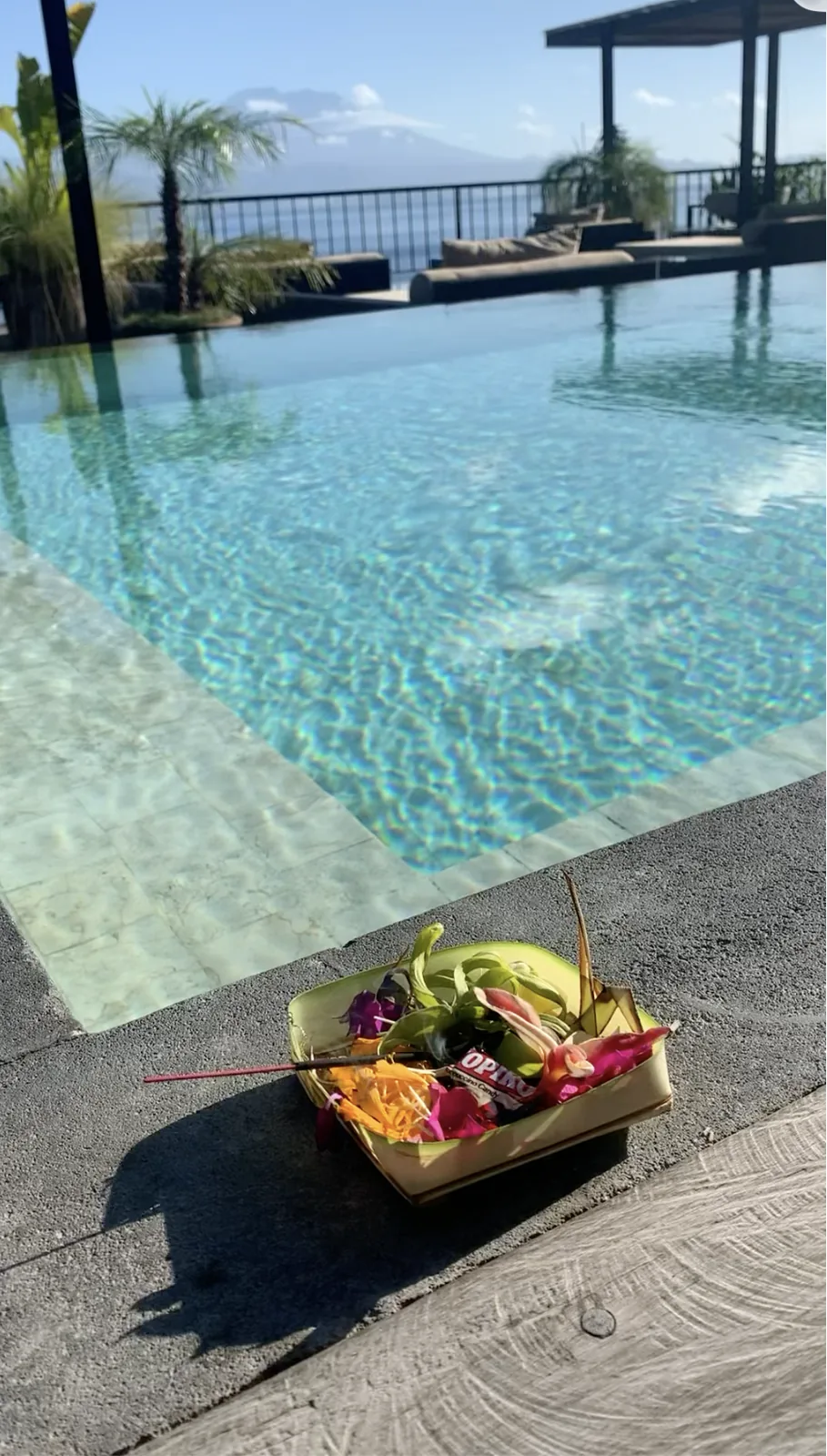
The first thing every visitor notices is the canang sari: a small square tray of woven palm leaf filled with flowers, a little rice, sometimes a biscuit or a sweet, and a stick of incense. I see them every day, at home, at the hotel, everywhere. They are placed on shrines, in temples, in front of houses and shops, on the dashboard of cars and even on motorbikes.
Offerings placed high, on shrines, are for the gods. Those placed on the ground are for the lower spirits, to keep them calm. That is why you will find them on the sidewalk. Walk around them, never on them.
Ceremonies: The Rhythm of Balinese Life
Balinese life follows two calendars: the 210-day Pawukon calendar and the lunar Saka calendar. Between them, there is a ceremony somewhere on the island almost every day. My guide to ceremonies and celebrations in Bali gives the dates for the year; here are the ones you are most likely to see.
- Odalan: the anniversary of a temple, every 210 days. The village dresses in white and gold, women carry towers of fruit and offerings on their heads, and the festival can last from one day to several.
- Galungan and Kuningan: the ten days that celebrate the victory of good over evil, when the ancestors are believed to return home. Every street is lined with penjor, tall bamboo poles decorated with palm leaves.
- Nyepi: the Balinese New Year, a day of total silence. No one goes out, no lights, no traffic, and even the airport closes.
- Ngaben: the cremation that frees the soul for its next life. Far from a sad event, it is a noisy, colorful and very costly ceremony, often held collectively by a village.

Nyepi and the ogoh-ogoh parade
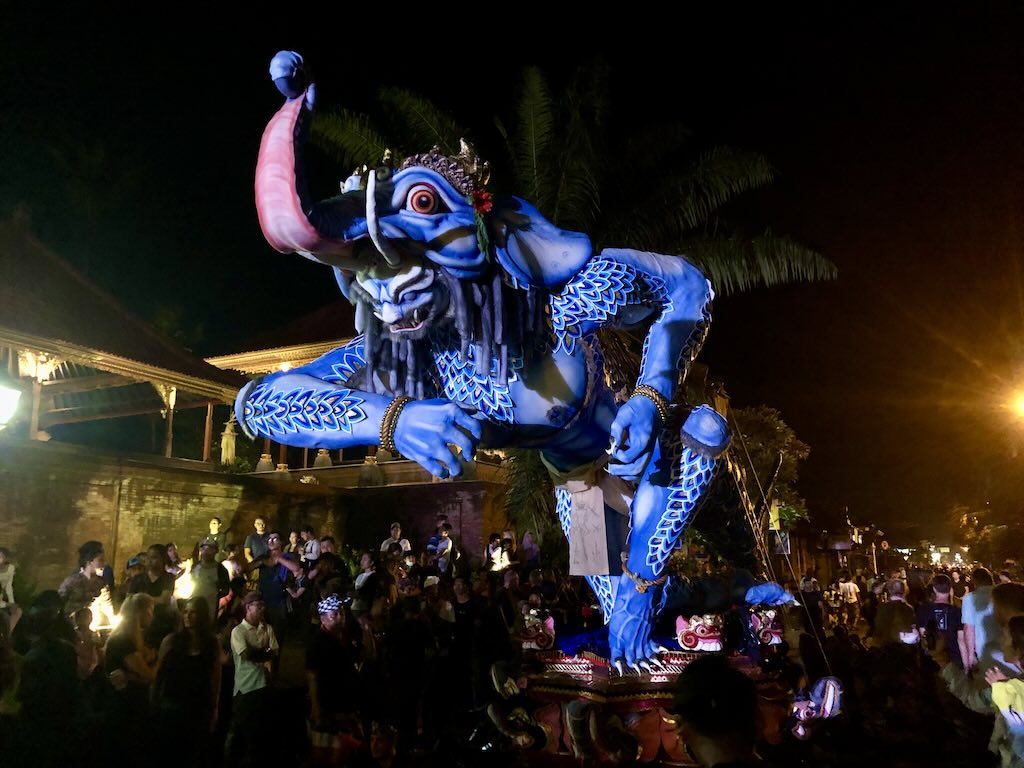
On the eve of Nyepi, every village parades its ogoh-ogoh, huge demon figures built for months by the young people of the neighborhood, to the sound of gongs and drums, and many are burned afterwards. I have spent Nyepi in Bali many times, and the parade is truly impressive. The next day, the island goes completely silent; the traditional village guards, the pecalang, patrol the empty streets. See my Nyepi guide for the rules.

The ceremonies of my hotel: mecaru and melaspas
A hotel in Bali has its own ceremonies, and I take part in the important ones. The melaspas consecrates a new building before anyone uses it: until it is held, a Balinese house or hotel is not considered ready to live in. The mecaru is a purification ceremony, with offerings to the lower forces to restore balance. During one mecaru, I saw a member of my team fall into a trance; since then, I no longer take these ceremonies lightly.
Ngaben, the Balinese cremation
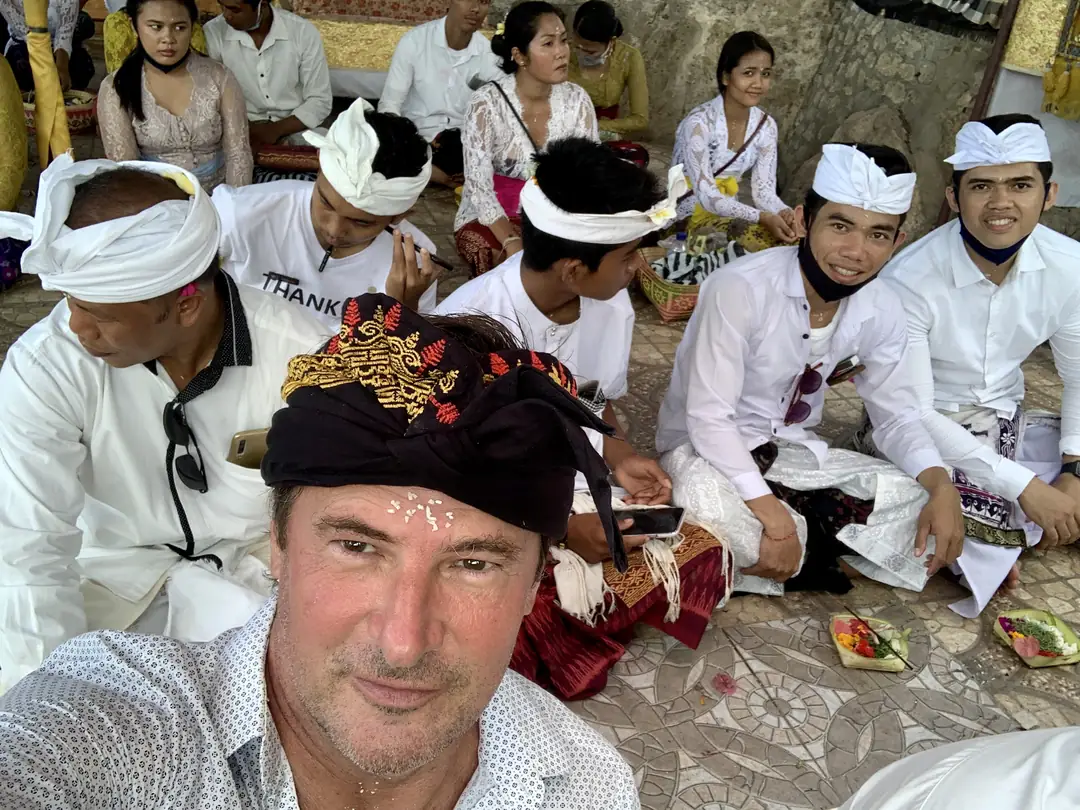
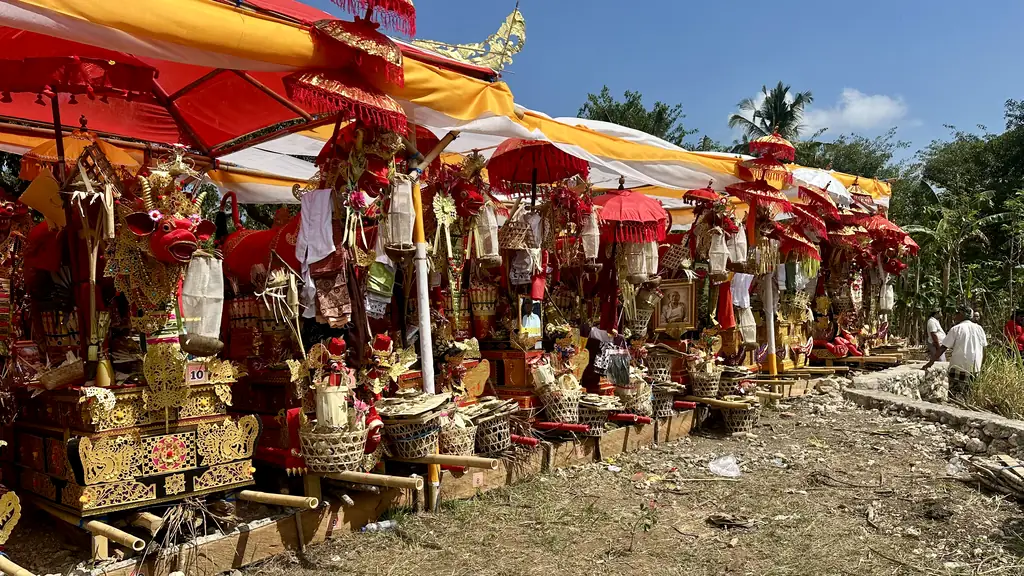
In August 2026, I attended a collective ngaben in the village of Sebunibus, on Nusa Penida, for 83 villagers, because relatives of seven members of my teams were among them. I have described every stage, from the exhumation to the fire, in my account of a Balinese cremation.
The Banjar: Village Life in Bali
Every Balinese belongs to a banjar, the neighborhood council. The banjar organizes the ceremonies, cremations and weddings, shares out the work and the costs, and runs the communal hall where meetings, gamelan rehearsals and the construction of the ogoh-ogoh take place. It is also the banjar and the customary village, the desa adat, that provide the pecalang who keep order during festivals.
This is why ceremonies are not optional for a Balinese employee. In all my businesses, the team gets days off for its ceremonies, on top of the national public holidays.
A Hindu Island in a Muslim Country
Bali is Hindu, but many people who work there are not. At my hotel the team is Balinese and Hindu; at my dive center most of the team is Muslim, with some Christians and some Hindus, and Toyapakeh, the village where the dive center is based, is itself a Muslim village on this Hindu island; at my bar, Muslims and Hindus work side by side. Each person’s festivals are respected, and Bali also stops for the national holidays, from Eid to Christmas. See Indonesia’s public holidays for the calendar.
Dance, Gamelan and Art
Balinese arts were born in the temples and still serve them. The gamelan, an orchestra of bronze gongs and metallophones, plays at every ceremony. The dances, such as the legong, the barong and the kecak, tell the stories of the Ramayana and the eternal fight between good and evil. Painting and wood carving are just as alive, especially around Ubud and in the villages of the east.
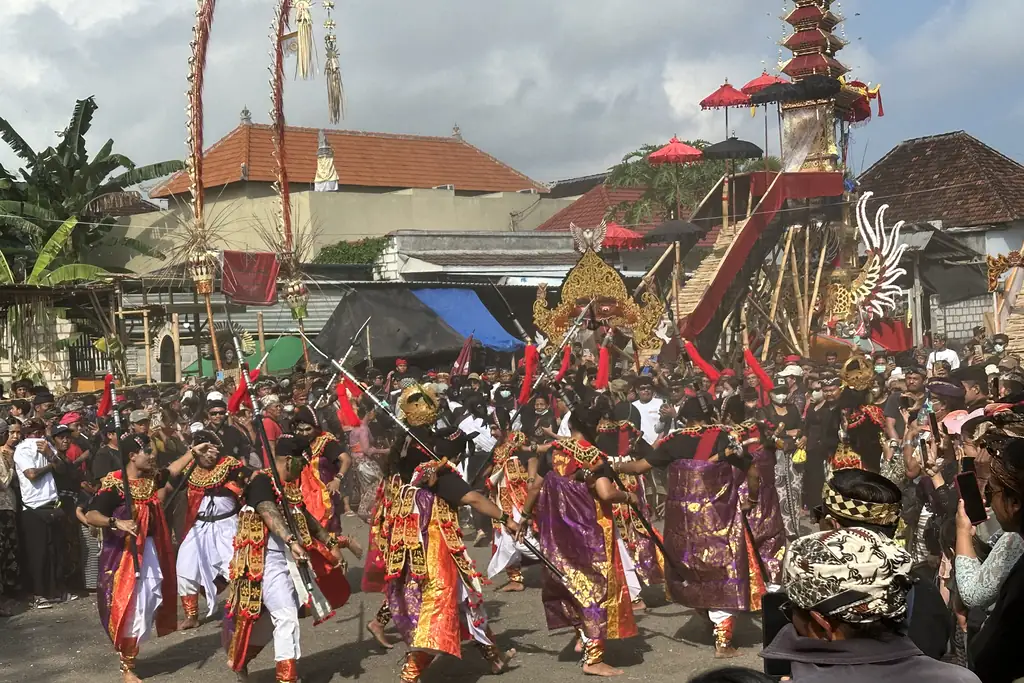
To see a performance, the easiest is Ubud, which has shows almost every evening, or the kecak at sunset at Uluwatu temple. See my Ubud guide.
Cockfighting in Bali
Cockfights are part of Balinese culture, and you may come across one in a village. There are two kinds. The tabuh rah is a ritual: the blood spilled is an offering to the lower spirits during temple ceremonies. The tajen is the same fight with betting, and gambling is illegal in Indonesia, even if tajen remains common in villages. As a visitor, do not take photos without asking, and keep in mind that for the Balinese it is not a show.
Balinese Etiquette: What Not to Do in Bali
My rule is simple: respect every culture, and understand that in Bali almost everything is sacred. Many tourists do not try to understand, and some want to shock for views on social media. Here is what you must know.
- Mountain tops are sacred. For the Balinese, Agung and Batur are the homes of the gods. Getting naked on the summit of Batur is like getting naked in front of the altar of Notre-Dame. In 2022, a Canadian who filmed himself dancing naked on Mount Batur was detained and faced deportation; in 2023, a Russian tourist was deported for a naked photo on Mount Agung.
- Stay inside during Nyepi. Going out on the day of silence and disrespecting the pecalang who ask you to go home can lead to deportation or prison. In August 2026, a 26-year-old Swiss tourist was sentenced to one year in prison by the Denpasar court: during Nyepi, he had walked to the beach and posted videos calling the tradition “crazy.”
- Holy water is not a game. The water flowing from a temple spring is sacred. In 2019, a Czech couple filmed splashing holy water from a shrine at a temple in Ubud’s Monkey Forest had to take part in a cleansing ceremony to apologize.
- Wear a sarong and a sash in temples, and cover your shoulders. Women who have their period should not enter a temple.
- Never step on an offering, never climb on a shrine or a temple wall for a photo, and never stand higher than a priest.
- Do not touch anyone’s head, and give or receive things with your right hand.
- Do not block a procession to take a photo. If a ceremony closes the road, wait: it rarely lasts long.
Before visiting a temple, see how to wear a sarong and behave in a temple, on my Nusa Penida site.
Read More
History of Bali
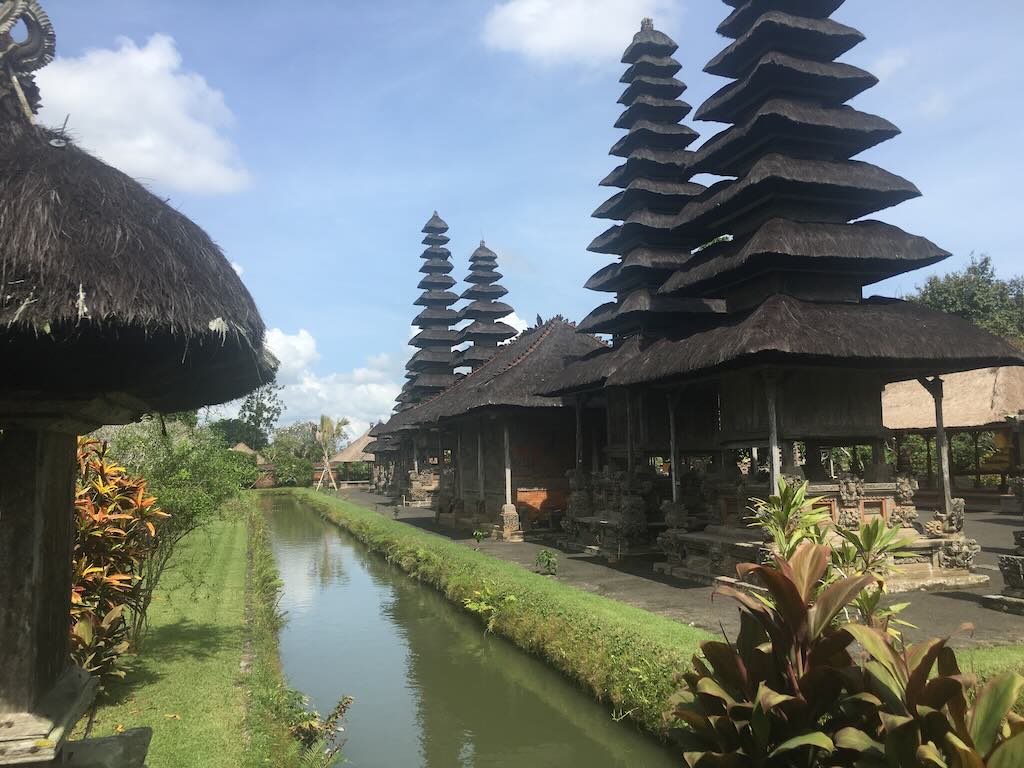
The island’s story in brief and the historical sites where you can still see it.

Bali Ceremonies and Nyepi
The dates of Nyepi, Galungan and the other festivals, and the rules to follow.
Frequently Asked Questions About Balinese Culture
What is the main religion in Bali?
Balinese Hinduism, Agama Hindu Dharma. Bali is the only Hindu-majority province of Indonesia, where most people are Muslim.
What is typical of Bali?
The daily offerings (canang sari), the temple festivals, the penjor of Galungan, the ogoh-ogoh of Nyepi, the gamelan and the dances, and food such as babi guling.
What should you not do in Bali?
Do not step on offerings, enter a temple without a sarong, touch someone’s head or climb on shrines. Never pose naked or play with holy water at a sacred site, and stay inside during Nyepi: tourists have been deported for all of these.
Can tourists attend a Balinese ceremony?
Often, yes, if you are discreet: wear a sarong and sash, stay at the back, do not use a flash and never walk in front of people praying. Ask before taking photos.
What is Tri Hita Karana?
The Balinese philosophy of the “three causes of well-being”: harmony with the gods, with other people and with nature.
What is a canang sari?
A small palm-leaf tray of flowers, rice and incense that the Balinese offer every day to the gods and spirits, on shrines, in front of houses and on the ground.