Where to Stay in Paris: The Best Areas, From Someone Who Lives Here
By Blaise Jaeger · Updated October 29, 2026
I was born in Paris and I live in Montorgueil, in the 2nd arrondissement. Friends ask me the same question before every trip: where should we stay? My answer depends on what they want from Paris, but some rules never change. Stay central, close to a good metro line, and avoid a few areas at night. Here are the neighborhoods I recommend, the ones I would avoid, the two hotels I know well, and why I often tell friends to rent an apartment instead.
Where to Stay in Paris: My Quick Answer
- First trip, and you want to walk everywhere: Montorgueil (2nd), my own neighborhood. See my Montorgueil guide.
- Art, history and nightlife: the Marais (3rd and 4th).
- Classic, elegant Paris: Saint-Germain-des-Prés (6th).
- Student atmosphere, close to Notre-Dame: the Latin Quarter (5th).
- Shopping and quick trips out of Paris: Opéra and the Grands Boulevards (9th).
- Quiet nights and the Eiffel Tower: the 7th.
- Areas I would avoid for your hotel: the streets around Gare du Nord and Gare de l’Est, Pigalle and Barbès.
How to Choose Where to Stay in Paris
Paris is small: you can cross the center on foot in an hour. What matters most is not the arrondissement number but three things.
- A good metro station within five minutes. A line that crosses the city, like line 1, 4 or 14, saves you more time than a hotel that is “close to the Eiffel Tower.” My guide to getting around Paris explains the lines and tickets.
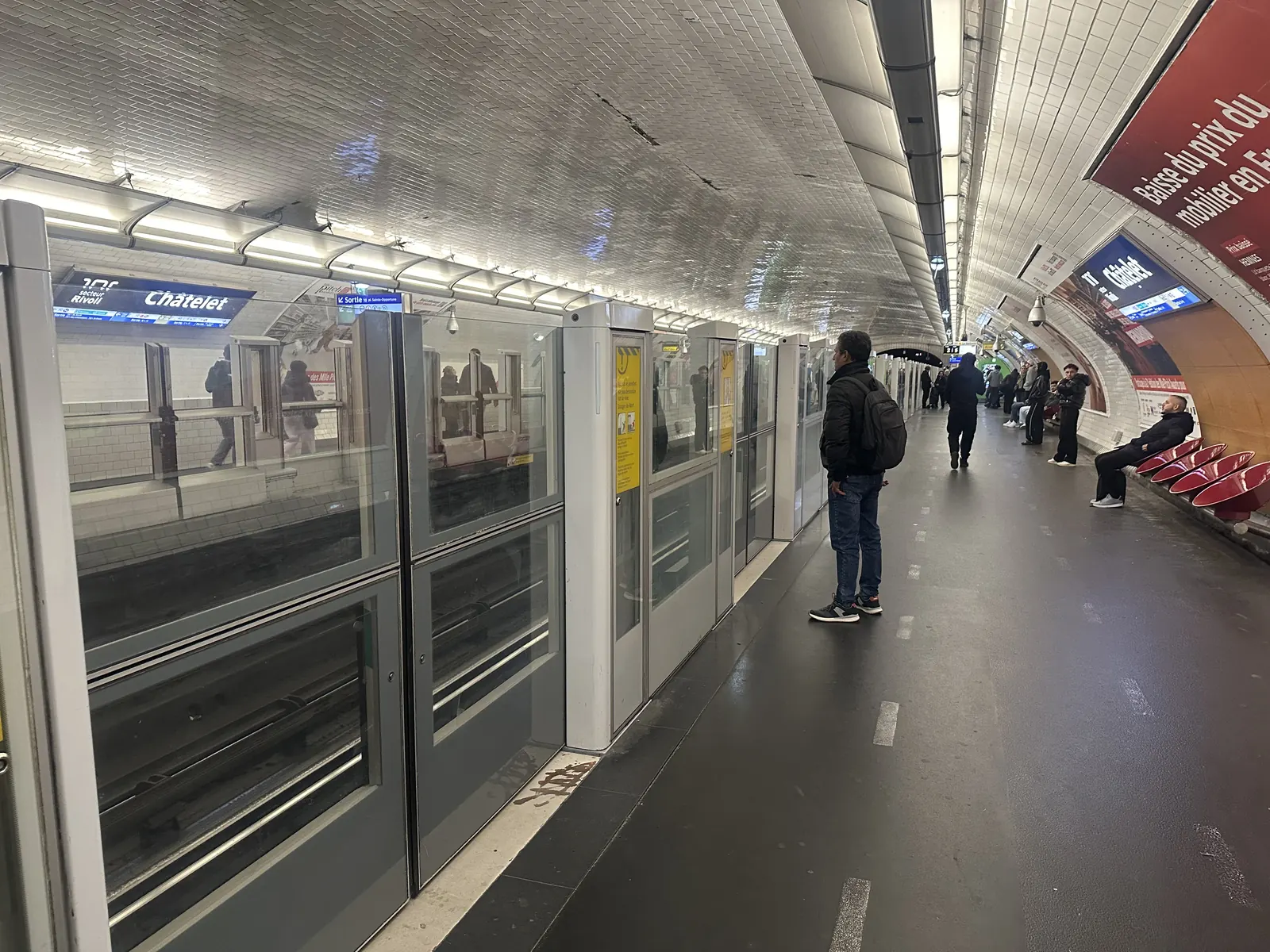
- Your airport. The RER B runs from Châtelet–Les Halles and Gare du Nord to Charles de Gaulle airport, and metro line 14 now runs from Châtelet to Orly. Staying near these lines makes arrival and departure much easier.
- How the street feels at night. A neighborhood can be lovely at noon and unpleasant at midnight. This is the point I insist on most with friends, and it is why I would not book near the big northern train stations.
Montorgueil: Where I Live
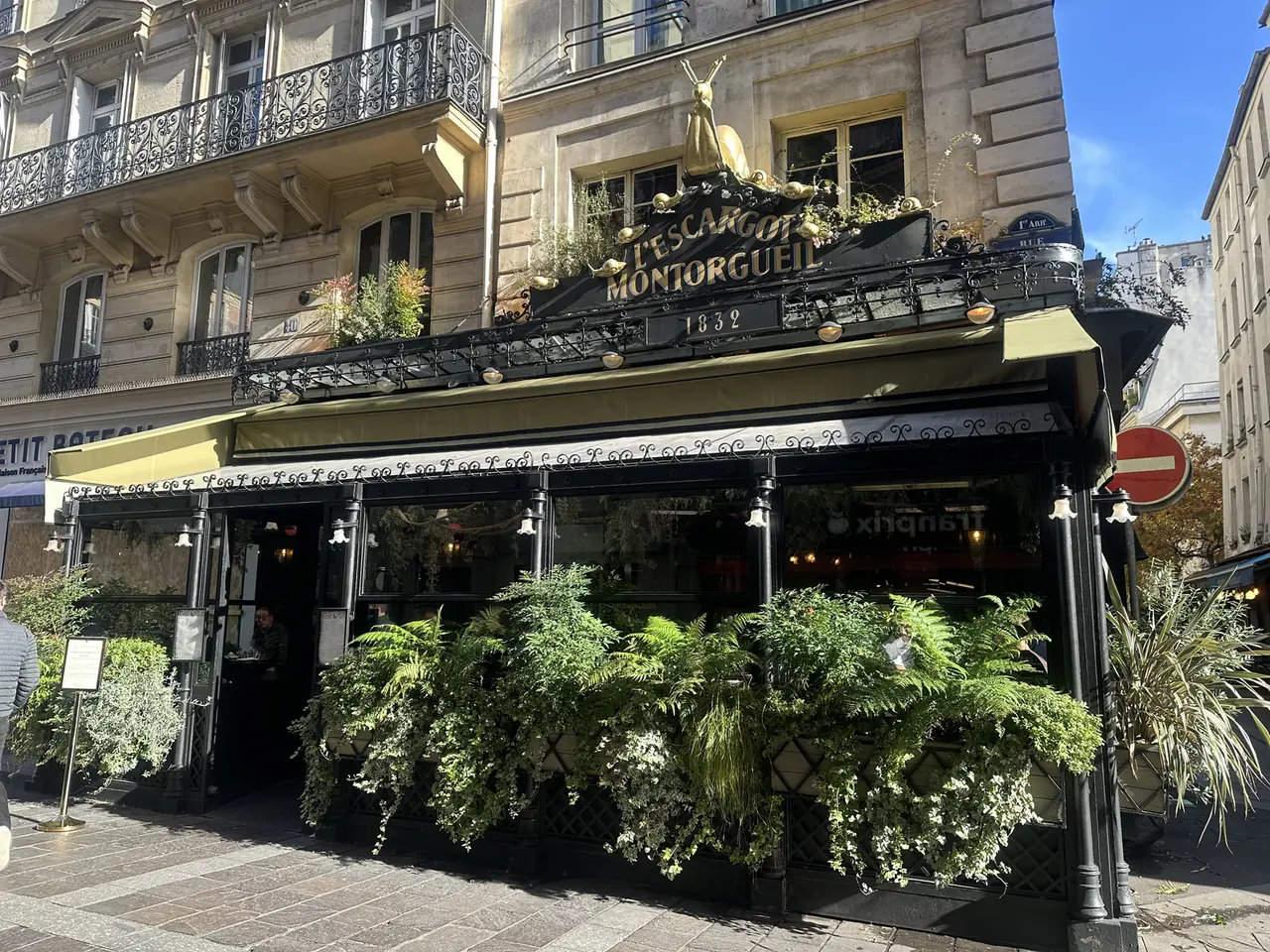
This is the area I know best, and the one I recommend first. Rue Montorgueil is a pedestrian market street with bakeries, cheese shops, fishmongers and café terraces, between the Opéra district and the Marais. You can walk to the Louvre, the Seine, Notre-Dame and the Centre Pompidou, and it still feels like a real neighborhood where Parisians do their shopping.
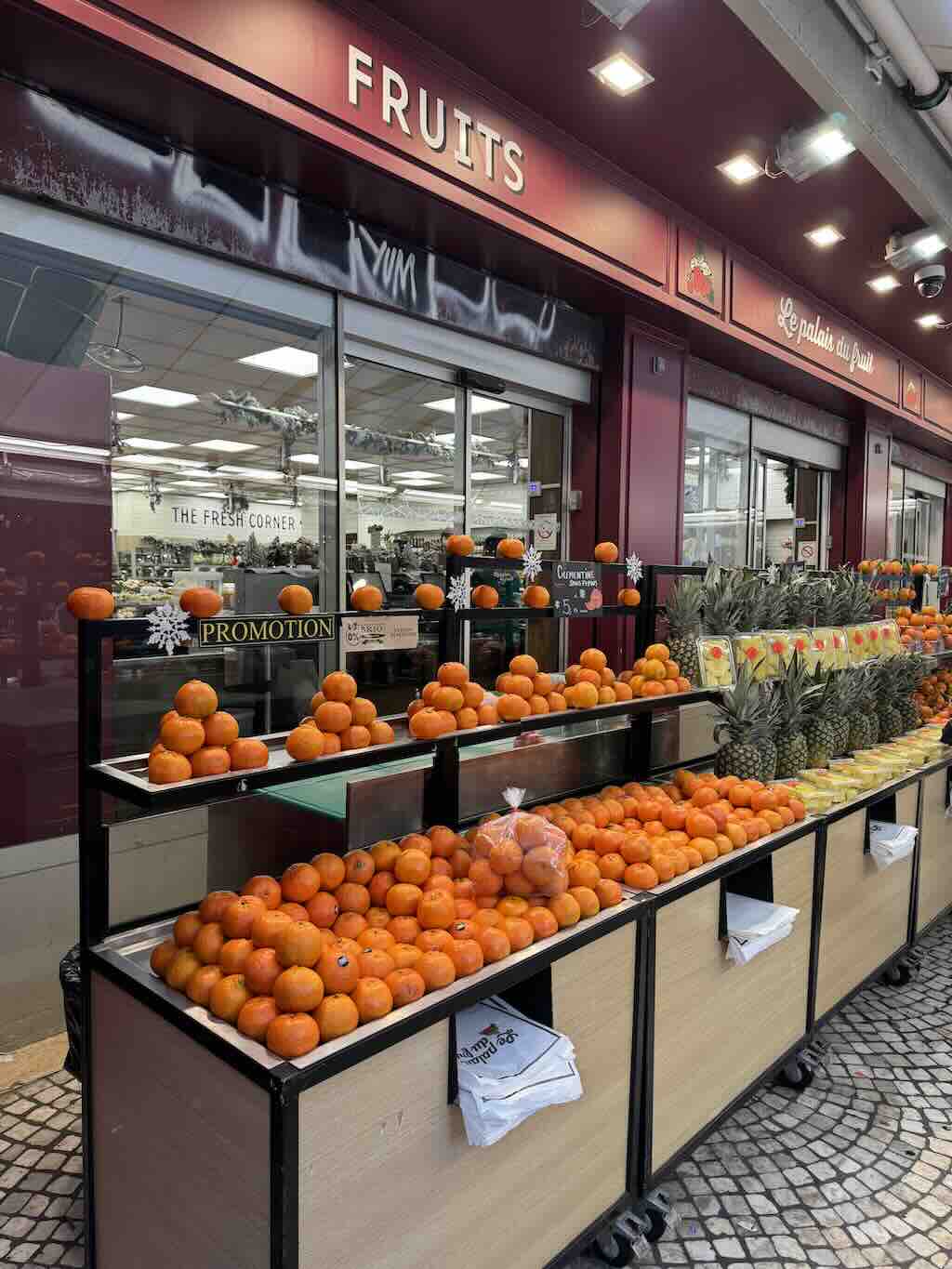
For transport, it is hard to beat. My favorite lines are the 1, 3 and 4, and the Châtelet–Les Halles hub, 300 meters south and five minutes on foot, has the RER A and B and metro line 14, so you reach both airports without changing. I would not stay right at Les Halles, though: the area around the station and the underground shopping center is very busy and not pleasant at night. A few streets north, rue Montorgueil is a different world.
Best for: a first trip, food lovers, travelers who want to do everything on foot. Less good for: very light sleepers, as the streets stay lively in the evening. See hotels around Montorgueil on Booking.com.
The Marais: Art, History and Nightlife
The Marais spreads over the 3rd and 4th arrondissements, from the Centre Pompidou to the Place des Vosges. It has the best small museums in Paris, old mansions, galleries, the Jewish quarter around rue des Rosiers and many bars. It is lively until late, especially on weekends. See my Marais guide.
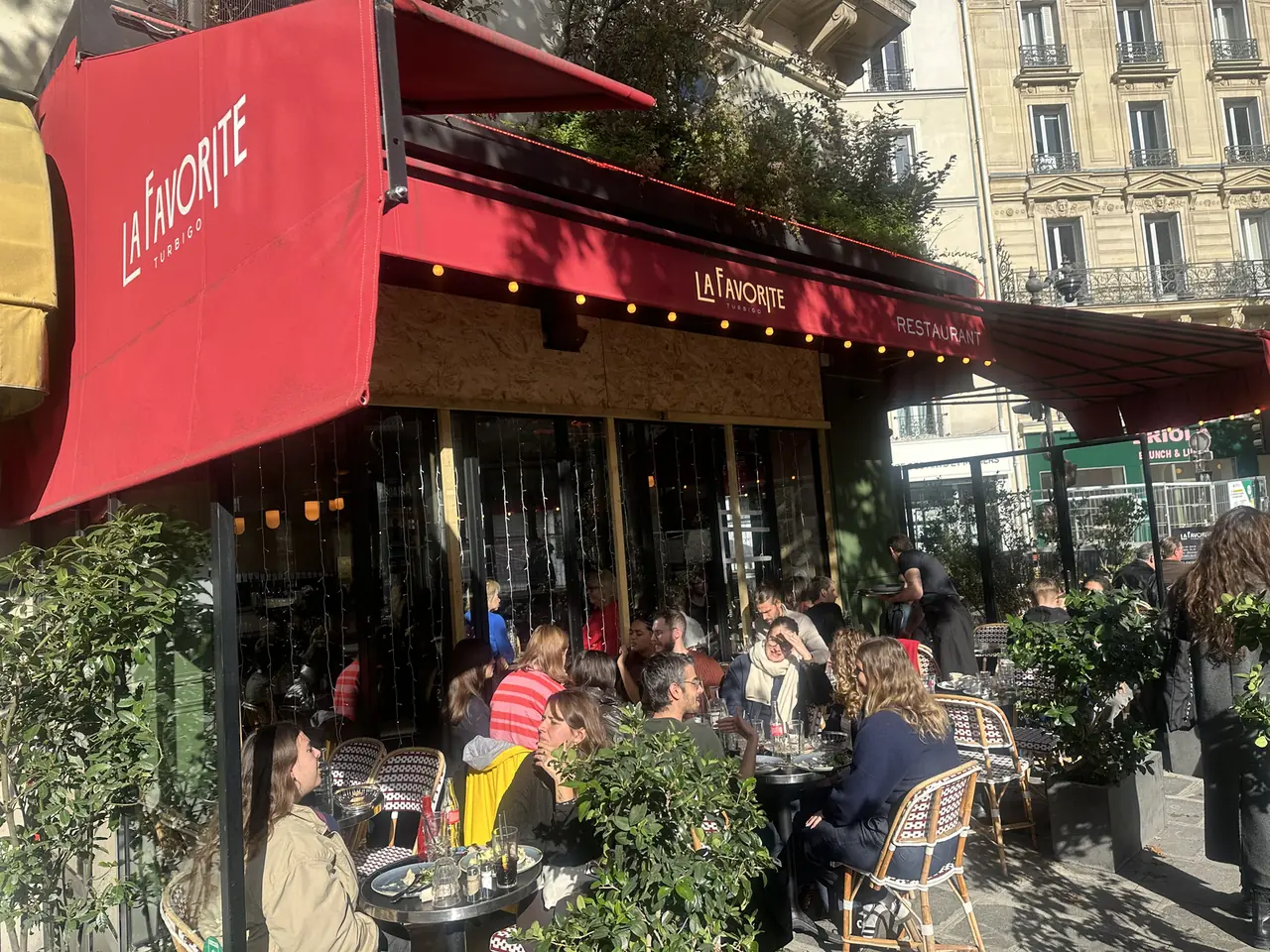
Best for: art and history lovers, couples, nightlife. Less good for: tight budgets, as hotels here are among the most expensive. See hotels in the Marais on Booking.com.
Saint-Germain-des-Prés: Classic Paris
Saint-Germain, in the 6th, is the Paris of literary cafés, bookshops, art galleries and elegant streets, a short walk from the Luxembourg Garden and the Seine. It is calm at night and very safe, which makes it a good choice for families and first-timers who want a postcard Paris. See my 6th arrondissement guide and the Luxembourg Garden.
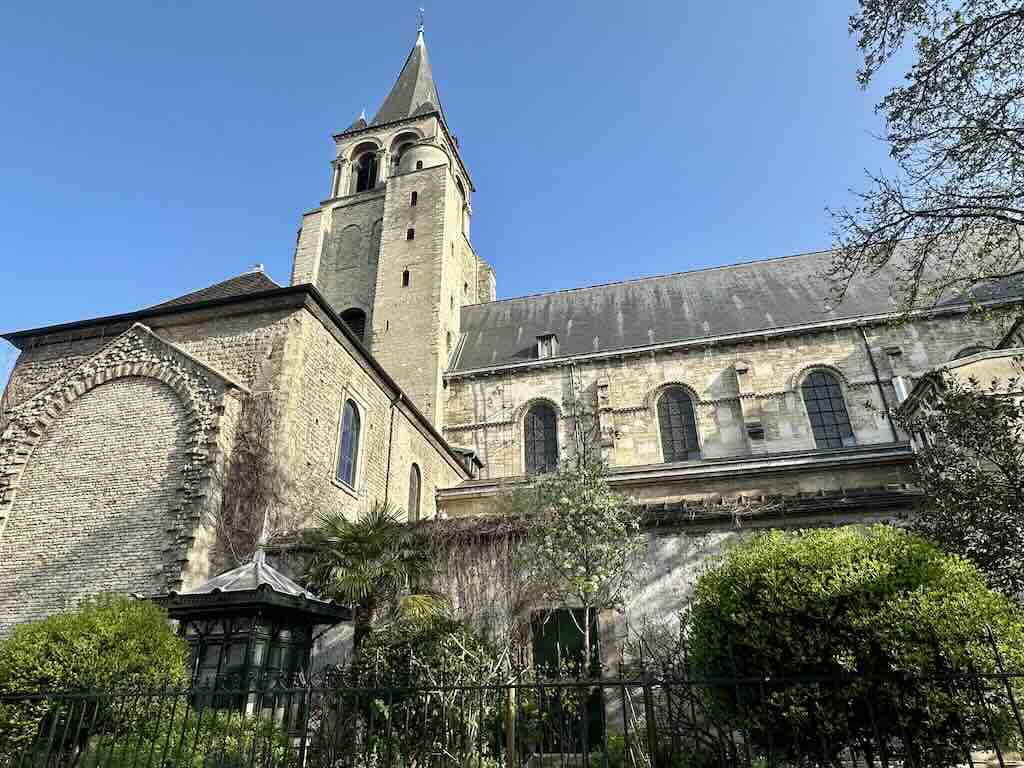
Best for: families, couples, a calm and elegant stay. Less good for: nightlife and smaller budgets. See hotels in Saint-Germain on Booking.com.
The Latin Quarter: Student Paris Near Notre-Dame
The Latin Quarter, in the 5th, is the old student district around the Sorbonne and the Panthéon. It is central, close to Notre-Dame and the Seine, with bookshops, cinemas and small restaurants. Do not expect it to be cheap, though: it is one of the most visited parts of the Left Bank. The streets around the Panthéon are quiet at night; the area around Saint-Michel is busier and more touristy. See my Latin Quarter guide.
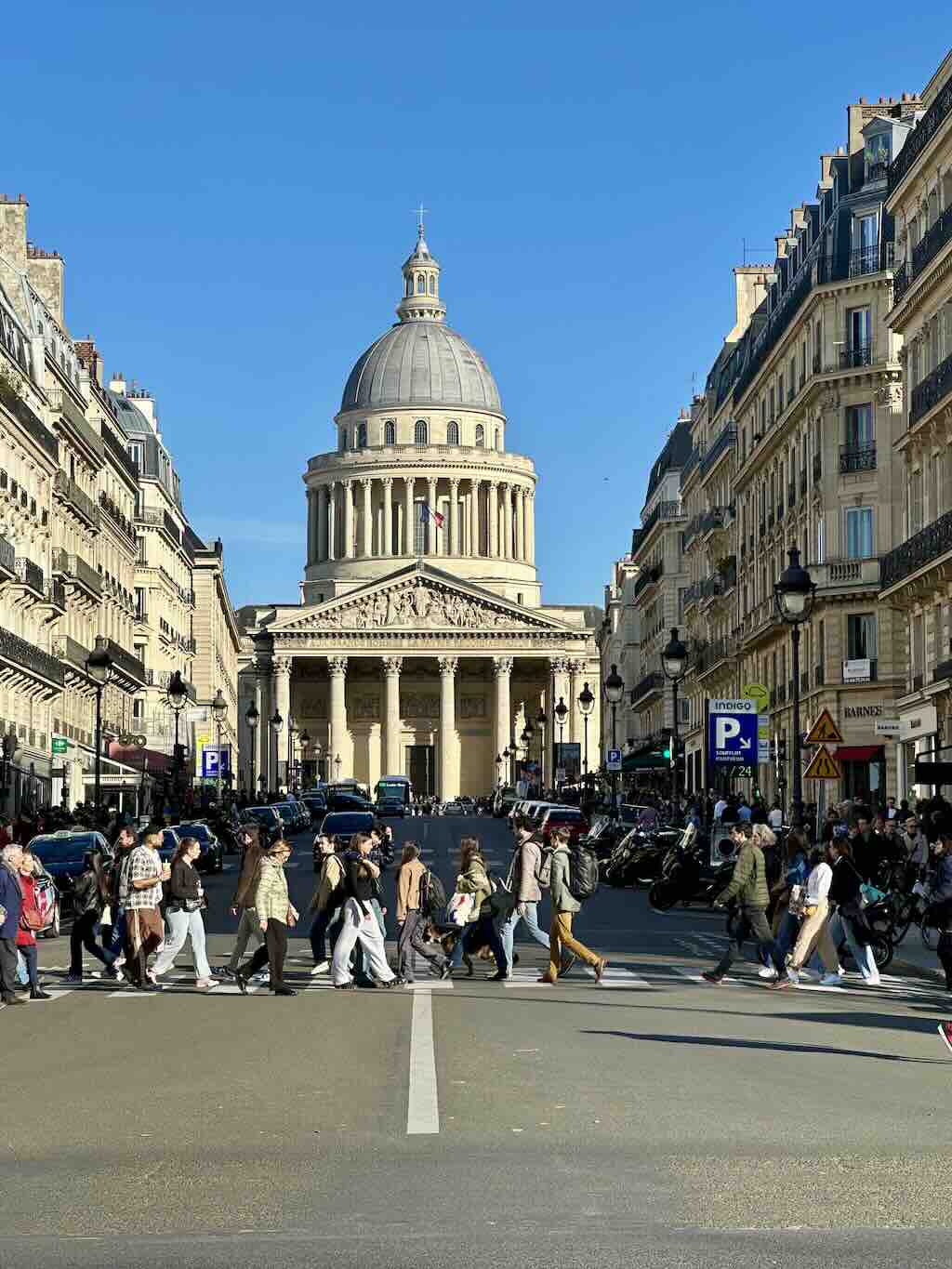
Best for: a lively, central base close to Notre-Dame and the Seine. See hotels in the Latin Quarter on Booking.com.
Opéra and the Grands Boulevards: Shopping and Easy Connections
Around the Opéra Garnier and the big department stores of the 9th, you are on the best metro and RER lines in the city, close to Gare Saint-Lazare for trips to Normandy and Giverny. There are many hotels of every size and price. It is busy by day and quieter in the evening. See my Opéra guide.

Best for: shopping, easy connections, day trips. Be careful: the north of the 9th runs up to Pigalle, which I would avoid at night, so stay close to the Opéra and the boulevards. See hotels around Opéra on Booking.com.
Around the Eiffel Tower: Quiet and Residential
The 7th arrondissement, around the Eiffel Tower and Les Invalides, is calm, safe and residential, with wide avenues and views of the tower. The downside is that it feels a bit empty in the evening and you will take the metro more often to reach the center. See my Eiffel Tower to Concorde guide.
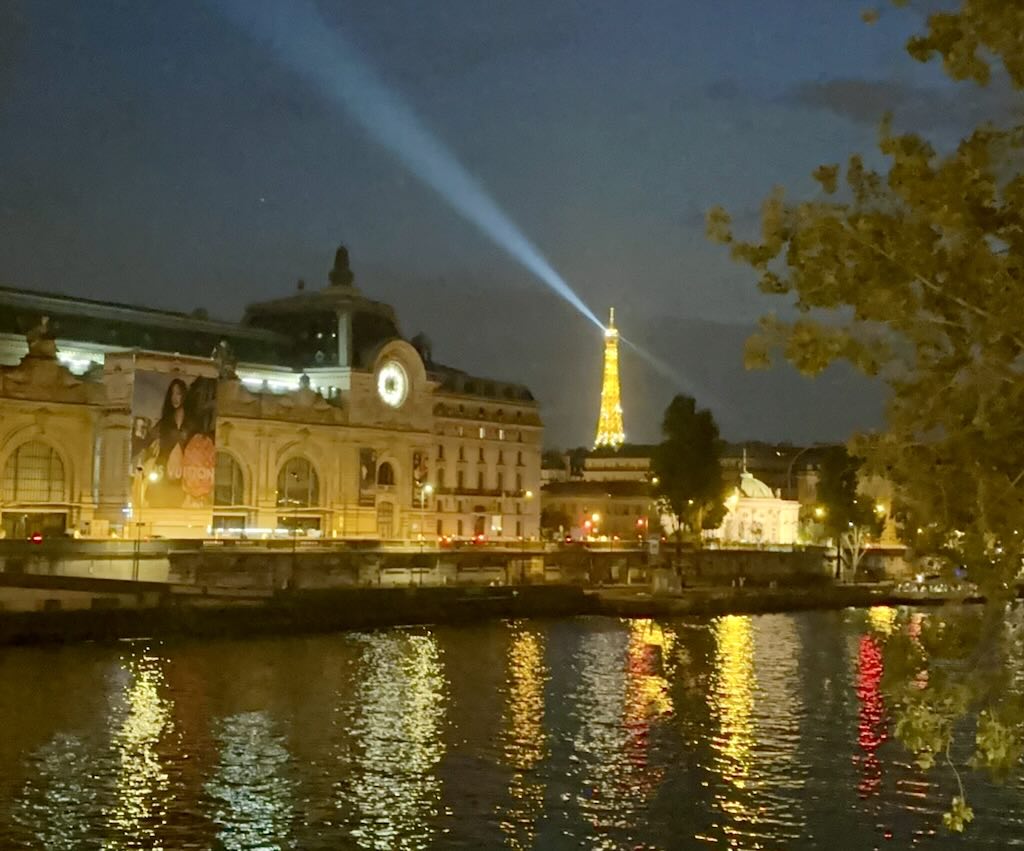
Best for: families, a quiet stay, a room with a view of the tower. See hotels near the Eiffel Tower on Booking.com.
Montparnasse: A Practical Left Bank Base
Montparnasse, at the meeting point of the 6th, 14th and 15th, is a practical choice: its station has trains to the west of France, and four metro lines meet there. It is less charming than the center, but lively, with its brasseries and theaters. See my Montparnasse guide.
Best for: train travelers heading west, a practical Left Bank base. See hotels in Montparnasse on Booking.com.
Where Not to Stay in Paris
Paris is not a dangerous city, but some areas are not where I would put friends for their first trip, mainly because of how they feel at night.
- Around Gare du Nord and Gare de l’Est (10th): convenient for the Eurostar and the RER B to the airport, but the streets around the stations are unpleasant at night, with a lot of petty crime.
- Pigalle (9th and 18th): famous for the Moulin Rouge, but the boulevard is noisy and seedy at night. If you want Montmartre, stay higher up the hill rather than on the boulevard.
- Barbès (18th): lively by day, but crowded in the evening, with frequent pickpocketing.
Wherever you stay, the main risk in Paris is pickpocketing: in the metro, on the RER to the airports, and around the big monuments. Keep your phone and wallet out of back pockets and keep your bag closed and in front of you.
The Two Hotels I Know
I live in Paris, so I rarely stay in a hotel here. These are the two I know well, both in my neighborhood. Both are very good. Like all Paris hotels, they are expensive compared with renting an apartment.
Le Relais des Halles (1st arrondissement)
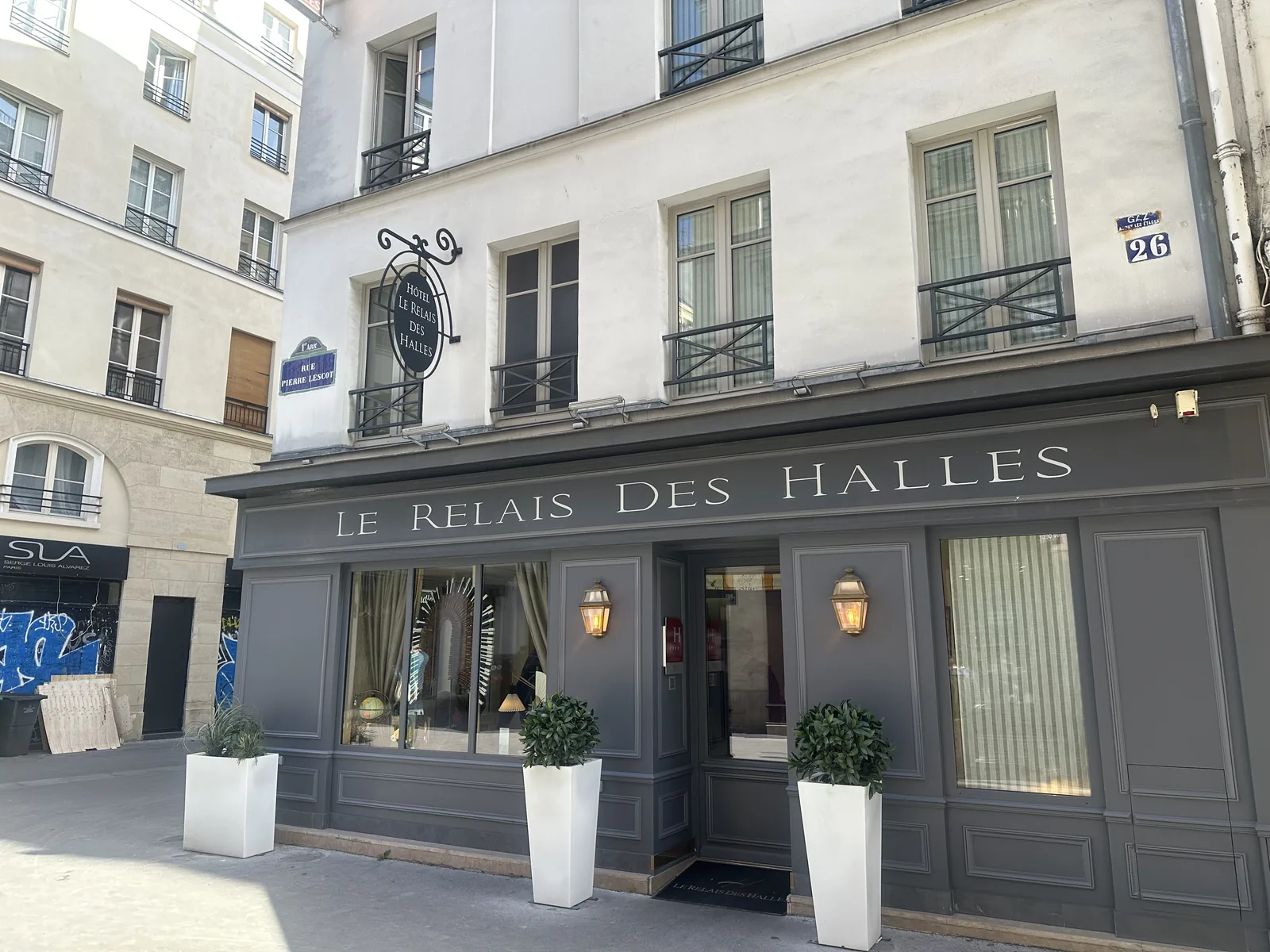
I have stayed at Le Relais des Halles. It is a small 3-star boutique hotel of 19 rooms on rue Pierre Lescot, a pedestrian street between Les Halles and the Centre Pompidou. The pedestrian street is calmer than the station area, Châtelet–Les Halles is a couple of minutes away, and rue Montorgueil a five-minute walk. Check prices for Le Relais des Halles on Booking.com.
Hôtel Victoires Opéra (2nd arrondissement)
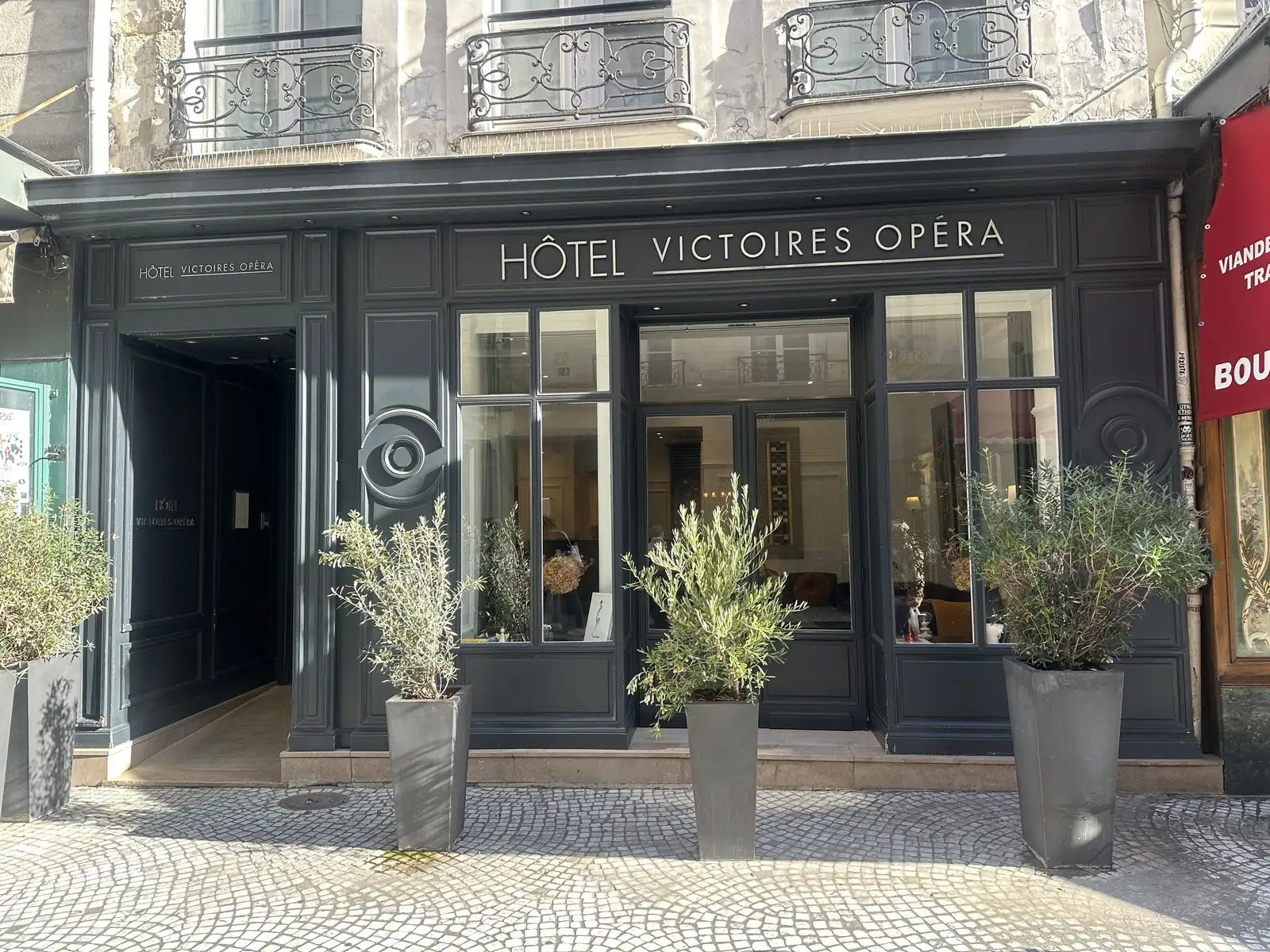
I have visited the Hôtel Victoires Opéra, a 4-star hotel of 24 rooms at 56 rue Montorgueil, right on the market street. It is more upscale. If you want to wake up on rue Montorgueil, this is the one. Check prices for Hôtel Victoires Opéra on Booking.com.
Hotel or Apartment in Paris?
Paris hotels are expensive, and rooms are often small. For a stay of more than a few nights, or for a family, I usually recommend renting an apartment, as I do to my friends: you get more space for the money and you live like a local. My advice for choosing one:
- Choose a Superhost. On Airbnb, the badge goes to hosts with an average rating of at least 4.8, a response rate of at least 90% and almost no cancellations.
- Read the reviews, especially the recent ones. Look for comments on noise, cleanliness, the stairs and the check-in. Many Paris buildings have no elevator, so check the floor if you have heavy luggage.
- Check the location the same way as for a hotel: a metro station within five minutes, and not next to the big northern train stations.
- Make sure the listing shows a registration number. In Paris, every legal short-term rental must have one, and owners can rent their main home for up to 90 nights a year.
Read More

Montorgueil Guide
My own neighborhood: the market street, its bakeries, cafés and the best places to eat.
Getting Around Paris
Metro, RER, tickets, Navigo passes and Vélib’: how Parisians actually get around.

Paris Travel Guide
The must-see places, the best neighborhoods and my tips as a born-and-raised Parisian.
Frequently Asked Questions About Where to Stay in Paris
What is the best area to stay in Paris for first-timers?
For a first trip, stay in the center: Montorgueil, the Marais or Saint-Germain-des-Prés. You can walk to most sights and you are close to good metro lines.
What is the safest area to stay in Paris?
Saint-Germain-des-Prés and the 7th around the Eiffel Tower are calm at night. The areas I would avoid for a hotel are around Gare du Nord and Gare de l’Est, Pigalle and Barbès.
Is it better to stay on the Left Bank or the Right Bank?
The Right Bank (Montorgueil, the Marais, Opéra) is livelier and better connected; the Left Bank (Saint-Germain, the Latin Quarter, the 7th) is calmer and more classic. Both are good choices if you stay central.
Is Châtelet–Les Halles a good place to stay?
It is the best-connected spot in Paris, with direct trains to both airports, but not the most pleasant place to sleep: the area around the station is very busy and not great at night. I prefer Montorgueil, 300 meters north and five minutes on foot from the station.
Is it cheaper to rent an apartment than a hotel in Paris?
Usually yes, especially for families or stays of several nights. Choose a Superhost, read the recent reviews and check that the listing has a registration number.
Where should I stay in Paris near the airport trains?
Within walking distance of Châtelet–Les Halles, for example in Montorgueil: the RER B runs from there directly to Charles de Gaulle airport, and metro line 14 now goes from Châtelet to Orly.