Eiffel Tower to Concorde: Paris 7th & 8th Guide 2026
By Blaise Jaeger · Updated July 25, 2026
Why Visit the 7th & 8th Arrondissements?
The 7th and 8th arrondissements are the monumental heart of Paris — home to more world-famous landmarks than anywhere else in the city. Spread along both banks of the Seine, they blend history, culture and luxury. On the quieter Left Bank, the 7th arrondissement holds the Eiffel Tower, Les Invalides and the Musée d’Orsay, with grand Haussmann buildings, charming cafés and dozens of embassies. On the livelier Right Bank, the 8th runs from the Place de la Concorde up the Champs-Élysées to the Arc de Triomphe, past the Grand Palais and Petit Palais.
What makes these two arrondissements unique is the sheer density of icons: you can photograph the Eiffel Tower at sunrise, stand at Napoleon’s tomb by mid-morning, admire Monet and Van Gogh at the Musée d’Orsay after lunch, and watch the sun set behind the Arc de Triomphe — all in a single day. This guide walks you through the essential sights, plus where to eat, where to stay, and how to see it all without wasting a minute.
The 7th & 8th at a Glance
- Location: both banks of the Seine — 7th on the Left Bank (Eiffel Tower, Invalides, Orsay), 8th on the Right Bank (Champs-Élysées, Concorde, Arc de Triomphe)
- Famous for: the Eiffel Tower, the Champs-Élysées, the Arc de Triomphe, the Musée d’Orsay, Les Invalides and Napoleon’s tomb
- Best time to visit: late April to mid-June and September to mid-October — mild weather, long golden evenings
- Eiffel Tower prices (2026): stairs to the 2nd floor €14.80, lift to the 2nd floor €23.50, lift to the summit €36.70 (adult)
- Don’t miss: the Eiffel Tower sparkling for 5 minutes on the hour, every hour after dark
- Closest metro: Bir-Hakeim, Trocadéro, École Militaire (7th); Champs-Élysées–Clemenceau, George V, Concorde, Charles de Gaulle–Étoile (8th)
- Avg meal price: €18-30 for a bistro lunch, €50-120 for a Champs-Élysées or Eiffel dinner
- Hotel prices: €180-600 per night — among the most expensive in Paris, especially near the Champs-Élysées
- Languages: French primary, English widely spoken at all major sights
Growing Up Near the Champ de Mars
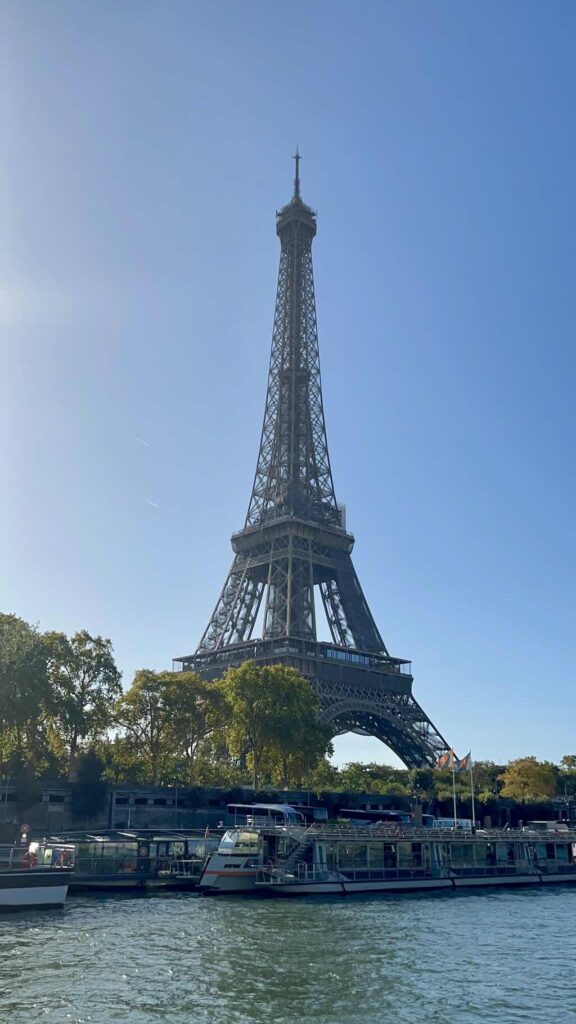
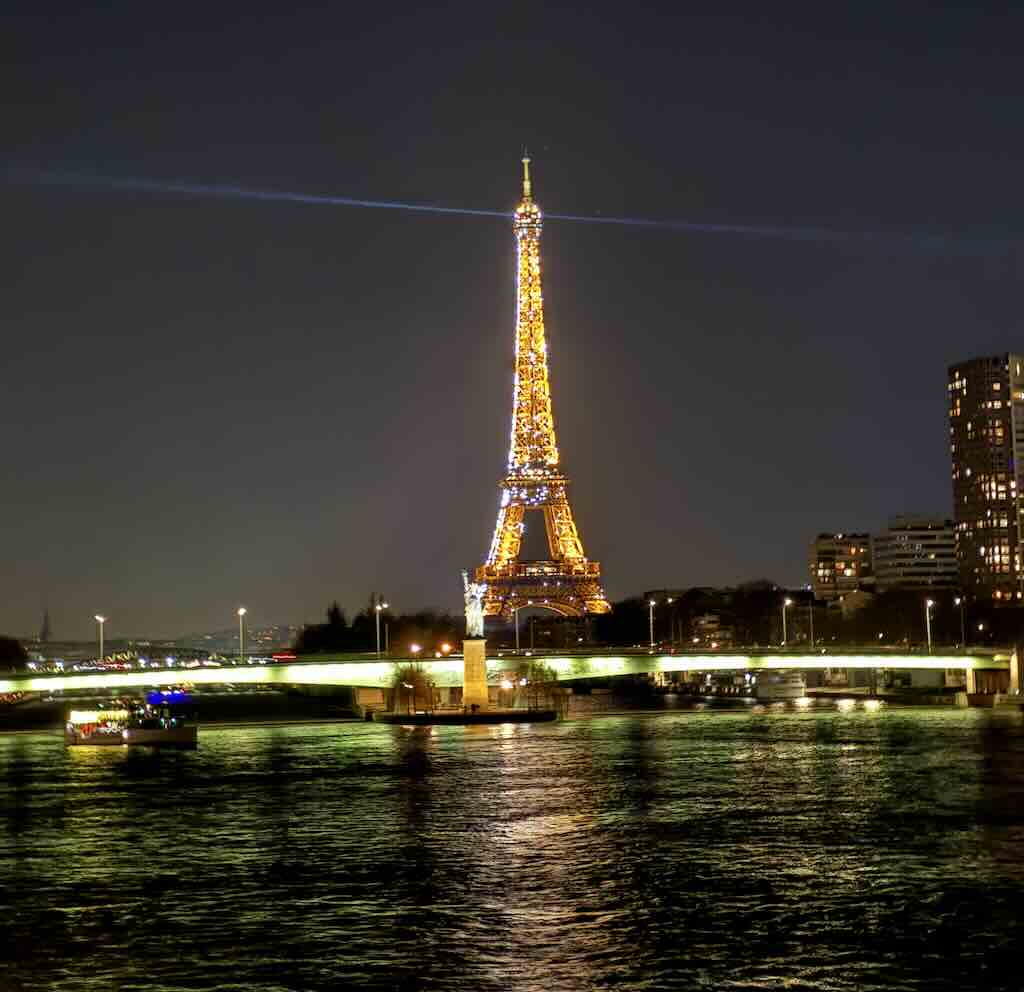
The Eiffel Tower was part of my life before I have any memory of it: I lived near the Champ de Mars until I was five. To be honest, I don’t remember much from that time — but the tower has never really left. I first visited it as a child, and even now I find myself going back, especially whenever friends come to Paris. No matter how many times I’ve seen it, watching it sparkle at night — for five magical minutes every hour — never loses its charm.
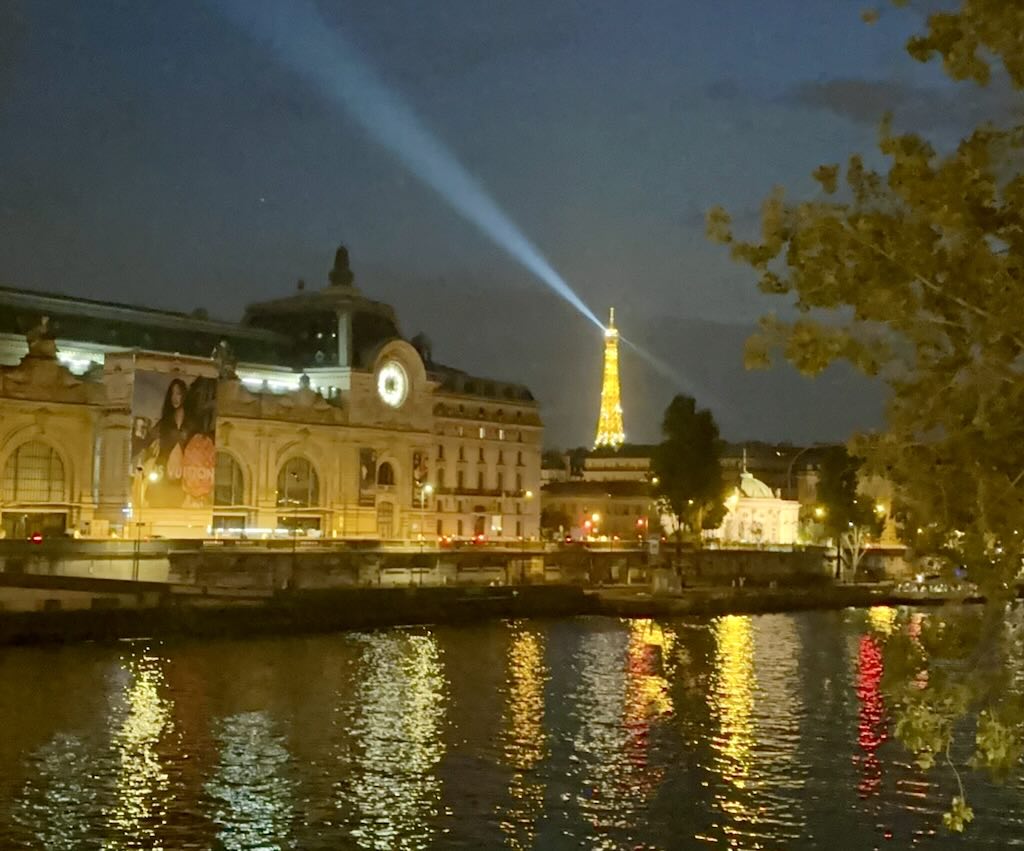
Over the years I’ve developed my own opinions about where to see it best. My favorite place to photograph the Eiffel Tower at night is from the Left Bank: close to the Pont-Neuf you can frame the Musée d’Orsay with the sparkling tower rising behind it. Another option is the Pont Mirabeau, with Paris’ replica Statue of Liberty in the foreground. This guide reflects what I actually know about these two arrondissements — not the rushed coach-tour version, but the one you’d learn if you’d grown up looking at the tower every day.
A Short History of the 7th & 8th Arrondissements
The two arrondissements grew out of very different stories. The 7th developed in the 18th century as the aristocratic Faubourg Saint-Germain, a district of noble mansions (hôtels particuliers) that today house ministries and embassies. The 8th was shaped in the 19th century by Baron Haussmann, who turned the Champs-Élysées into the grand ceremonial axis of the capital. Two World’s Fairs left their mark: the 1889 Exposition Universelle gave Paris the Eiffel Tower, and the 1900 Exposition Universelle added the Grand Palais, the Petit Palais and the Pont Alexandre III. Understanding that layered past makes every monument here read a little differently.
The Eiffel Tower & Champ de Mars
The Eiffel Tower, the most iconic symbol of Paris, has captivated visitors since it was built in 1889 for the World’s Fair. Designed by Gustave Eiffel, this 330-meter-tall masterpiece remains a global landmark and offers some of the most breathtaking views of the city (together with the Tour Montparnasse in Montparnasse). For up-to-date opening hours and tickets, see the official Eiffel Tower website.
Visiting the Eiffel Tower

To make the most of your visit, arrive early in the morning or late in the evening to avoid the crowds, and book online in advance to skip the longest queues. In 2026, adult tickets cost €14.80 by the stairs to the 2nd floor, €23.50 by lift to the 2nd floor, and €36.70 by lift to the summit. For those seeking a challenge, climbing the 674 steps to the second level is exhilarating; otherwise the lifts glide you straight up to the panoramic observation decks. For a special occasion, Le Jules Verne — the Michelin-starred restaurant on the second floor — serves gourmet cuisine with an unbeatable skyline backdrop, while Madame Brasserie and the food stalls at the base offer more casual options.
Champ de Mars
At the foot of the Eiffel Tower, the Champ de Mars is a large park where you can relax after your visit. It’s a great place for a picnic, watching street performers, or simply enjoying the view. Locals and tourists come here throughout the day, making it lively yet peaceful, and in spring and summer the flowerbeds are in full bloom. Bring a baguette and a bottle of something cold, find a spot on the lawn, and wait for the tower to light up.
Best Eiffel Tower Photo Spots
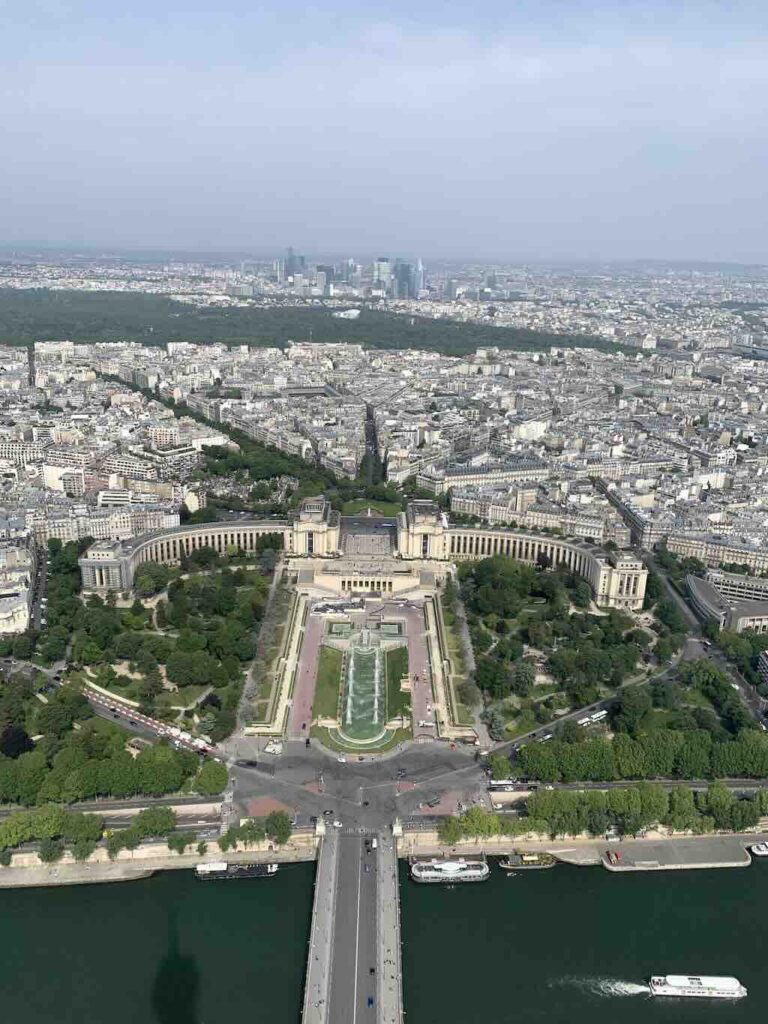
For the best photo opportunities, head to the Trocadéro, just across the Seine: its elevated terrace gives a stunning, unobstructed view of the tower, especially at sunrise and sunset. Another favorite is the Pont de Bir-Hakeim, famous for its elegant metal arches. For a more intimate, classic frame, the rue de l’Université lets the tower peek out between Haussmann-style buildings. And no visit is complete without the evening light show: the tower glows gold from dusk, then sparkles for five minutes on the hour — an enchanting sight that never fails to impress.
Les Invalides & Napoleon’s Tomb
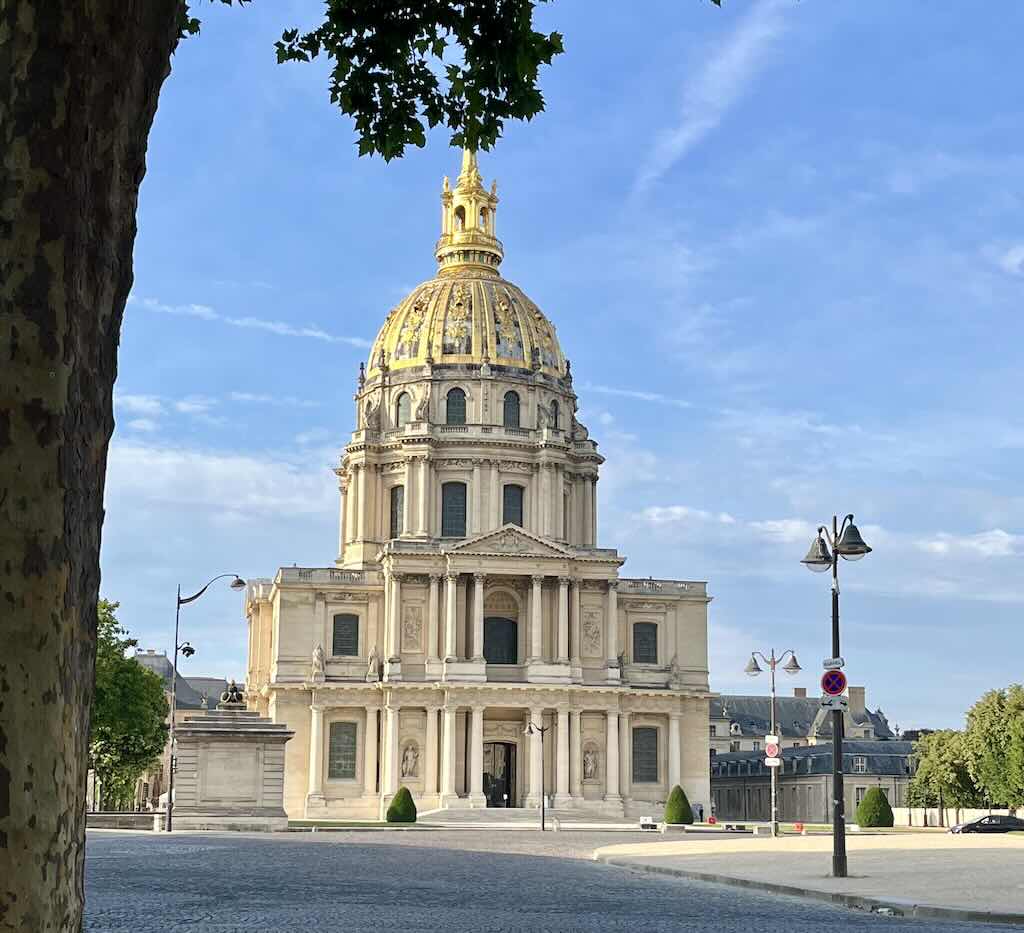
The Hôtel des Invalides is one of Paris’ most significant historical sites. Built in the 17th century by King Louis XIV as a hospital and retirement home for war veterans, it remains a striking example of classical French architecture and still houses military institutions. But the complex is best known for its golden dome, which glistens on the Parisian skyline.
Inside, Napoleon Bonaparte’s tomb rests beneath the dome in an ornate circular crypt. The emperor’s remains were moved here in 1840, and his grand red-quartzite sarcophagus now sits on a green granite pedestal, surrounded by statues symbolizing his military victories. For those interested in military history, the Musée de l’Armée within Les Invalides offers an extensive collection of weapons, armor and exhibits covering French military history from medieval times to World War II — a must for history enthusiasts.
Musée d’Orsay & the Left-Bank Museums
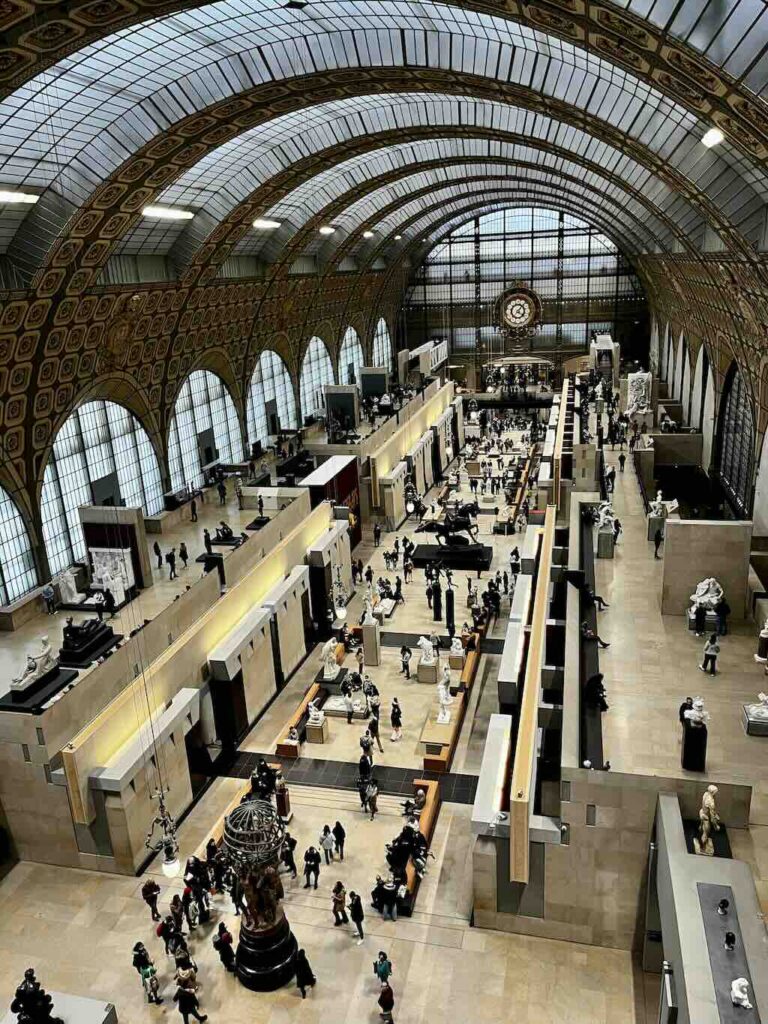
The Musée d’Orsay is one of Paris’ most beloved museums, especially for fans of Impressionist and Post-Impressionist art. Housed in a beautifully restored Beaux-Arts railway station, it offers a breathtaking setting for masterpieces from the 19th and early 20th centuries. Check current exhibitions on the official Musée d’Orsay website.
Inside, you can marvel at iconic works by Claude Monet, Pierre-Auguste Renoir, Vincent van Gogh, Edgar Degas and Édouard Manet — including Van Gogh’s Starry Night Over the Rhône and Degas’ ballet scenes. Unlike the Louvre, which spans thousands of years, the Orsay gives a more focused and intimate experience. Afterwards, continue your artistic journey at the nearby Musée de l’Orangerie, home to Monet’s monumental Water Lilies, or take a relaxing walk through the Jardin des Tuileries.
Place de la Concorde
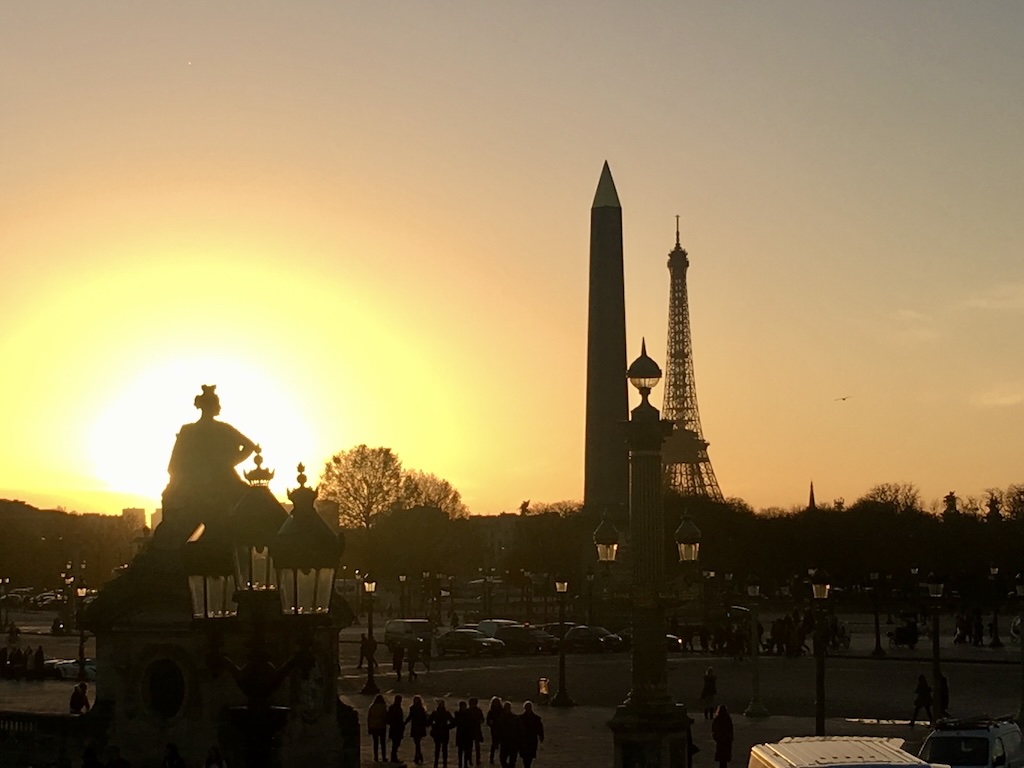
Place de la Concorde is one of Paris’ most impressive and historically charged squares. At the eastern end of the Champs-Élysées, it witnessed some of the most dramatic moments in French history: during the Revolution, this was the site of the guillotine where King Louis XVI, Queen Marie Antoinette and thousands of others met their fate.
At the center stands the Luxor Obelisk, a striking 3,300-year-old Egyptian monument offered to France in the 19th century. Covered in hieroglyphs, it originally marked the entrance of the Luxor Temple in Egypt. Two magnificent fountains inspired by Roman designs flank it — the Fontaine des Mers and the Fontaine des Fleuves. From here, a short, scenic walk through the Jardin des Tuileries leads directly to the Louvre, making Concorde a perfect starting point for exploring Paris’ artistic treasures.
Grand Palais & Petit Palais
The Grand Palais was built for the 1900 Exposition Universelle and is one of Paris’ most prestigious venues for art, culture and major events. After a four-year, €466-million restoration, it fully reopened in 2025 — its spectacular glass-domed nave and ornate Beaux-Arts façade restored to their original splendor. It now hosts world-class art exhibitions, fashion shows and major cultural events, and served as an Olympic venue during the Paris 2024 Games. Check the current program before you go, as major shows sell out.
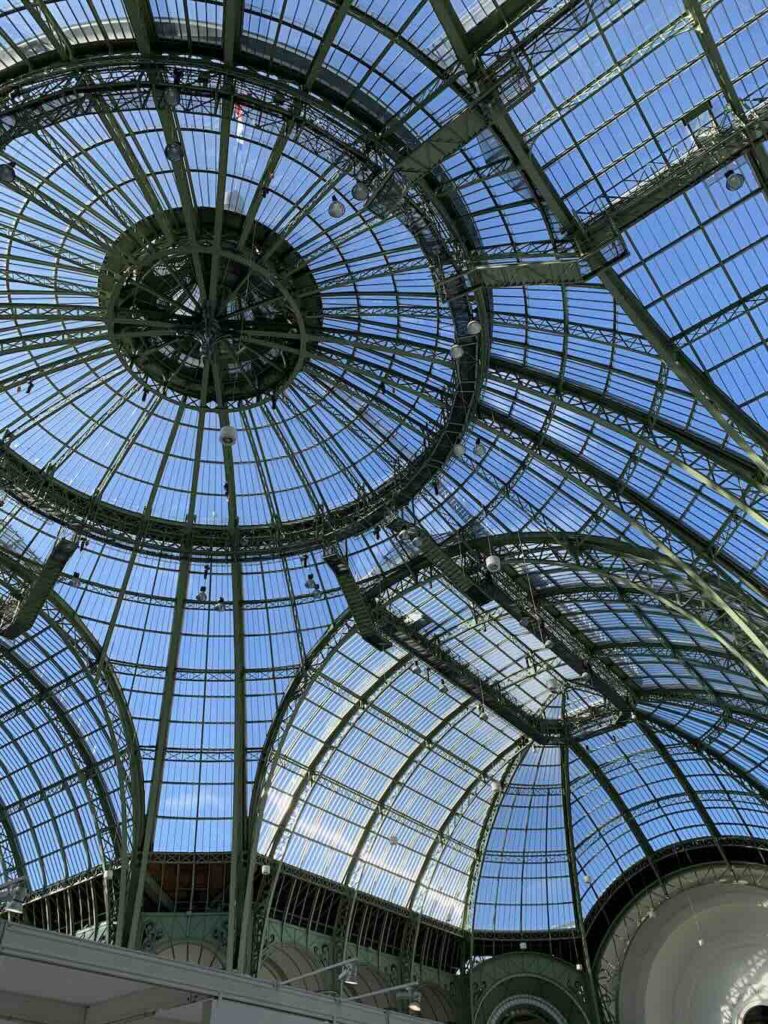
Right across the avenue, the Petit Palais is often overshadowed by its larger neighbor — but it’s a true hidden gem. This elegant museum offers a free permanent collection featuring works by Rembrandt, Monet and Courbet, and its charming courtyard café is a perfect spot to rest between sights.

Champs-Élysées & Arc de Triomphe
The Champs-Élysées
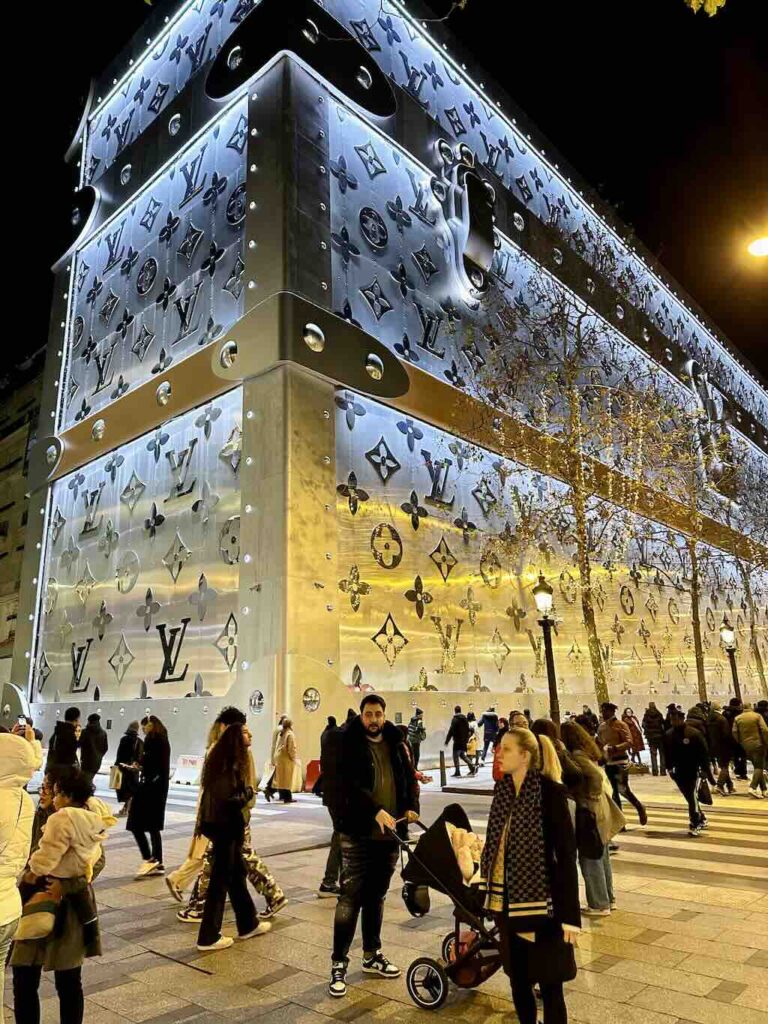
The Avenue des Champs-Élysées is one of the most iconic streets in the world, stretching from Place de la Concorde to the Arc de Triomphe. Known for its majestic tree-lined boulevard and vibrant atmosphere, it embodies the elegance and grandeur of Paris. It hosts the Bastille Day parade, the finish of the Tour de France and the city’s New Year’s Eve celebrations. For luxury shopping, the avenue is home to flagship stores from Louis Vuitton, Cartier, Guerlain and Dior, while cafés such as Fouquet’s and Ladurée are perfect for a coffee or classic French pastries. During the holiday season the avenue sparkles with festive lights, and a Christmas market near Concorde creates a charming winter wonderland.
The Arc de Triomphe
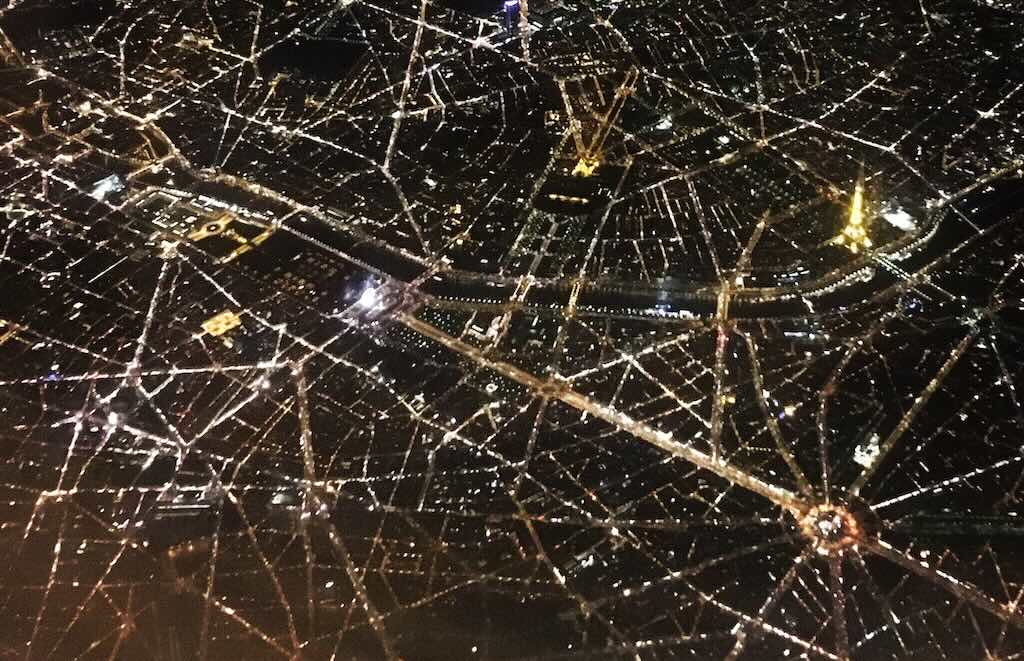
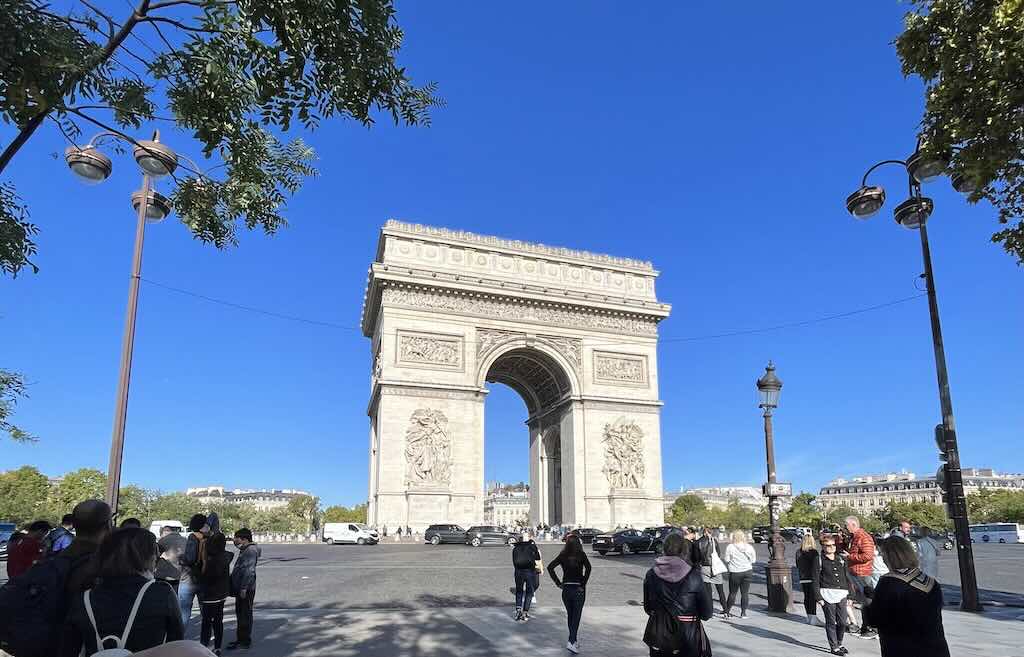
The Arc de Triomphe stands at the center of Place Charles de Gaulle, marking the western end of the Champs-Élysées. Commissioned by Napoleon Bonaparte in 1806 to honor the soldiers who fought and died for France, it is engraved with the names of French generals and battles, and remains a powerful symbol of national pride. Visitors can climb the 284 steps to the top for one of the most breathtaking panoramas in Paris, with the grand boulevards radiating outward in a star pattern toward the Eiffel Tower, the Louvre and La Défense. Beneath the arch lies the Tomb of the Unknown Soldier, added in 1921, whose Eternal Flame is rekindled every evening.
Where to Eat, Shop & Café Culture
Dining in the 7th and 8th ranges from world-famous tables to neighborhood bistros. For a special occasion, book Le Jules Verne on the Eiffel Tower itself, or one of the historic Champs-Élysées addresses. For everyday Paris, my advice is to leave the avenue: the rue Cler market street in the 7th, near the Champ de Mars, is a pedestrian stretch of boulangeries, cheese shops and small bistros where locals actually eat — perfect for assembling a picnic before heading to the park. Around Les Invalides and rue Saint-Dominique you’ll also find excellent, more reasonably priced bistros.
For shopping, the Champs-Élysées concentrates the flagship luxury boutiques, but the streets of the 8th’s “Golden Triangle” (avenue Montaigne, avenue George V) are where Parisians go for high fashion. If you’d rather browse than buy, the Petit Palais and the seasonal exhibitions at the Grand Palais give the neighborhood a strong dose of culture between shops.
Where to Stay in the 7th & 8th
These are among the most expensive arrondissements in Paris — but also among the most rewarding to wake up in. Here are four micro-zones to choose from based on your priorities.
Near the Eiffel Tower & Champ de Mars
Staying near the Champ de Mars means tower views and quiet, elegant streets. Expect €220-500 per night for well-located hotels. Ideal for first-time visitors who want the Eiffel Tower on their doorstep.
Around Les Invalides & Rue Cler
The heart of the residential 7th, around rue Cler and rue Saint-Dominique, offers a genuine neighborhood feel with markets and bistros. Hotels here run €180-350 per night — better value than the tower-front addresses, with the same walkability.
Champs-Élysées & the Golden Triangle
For luxury and nightlife, the 8th around the Champs-Élysées and avenue Montaigne is home to the city’s grand palace hotels (€400-900+ per night). Best for travelers who want five-star service and flagship shopping steps from the door.
Around Saint-Lazare & Madeleine — Best Value
The northern edge of the 8th, near the Madeleine and Saint-Lazare, offers larger, more modern hotels at better rates (€150-260 per night), with excellent transport links across the city. Ideal for travelers who want central Paris without central-Paris prices.
Some links in this section are affiliate links. If you book through them, MBPV receives a small commission at no extra cost to you. We only recommend hotels we’ve personally stayed in or carefully vetted.
How to Get There, Itinerary & Practical Tips
The 7th and 8th are in central Paris and very well connected. For the full metro map, see the official RATP website.
Closest Metro Stations
For the Eiffel Tower: Bir-Hakeim (line 6) or RER C Champ de Mars–Tour Eiffel; Trocadéro (lines 6 and 9) for the best view. For Les Invalides: La Tour-Maubourg or Invalides (line 8). For the Musée d’Orsay: Solférino (line 12) or RER C Musée d’Orsay. For the Champs-Élysées and Arc de Triomphe: Champs-Élysées–Clemenceau, George V, or Charles de Gaulle–Étoile (line 1). Concorde (lines 1, 8, 12) links the two arrondissements.
A One-Day Itinerary
Start at 9:00 AM at the Trocadéro for the classic Eiffel Tower photo, then walk down and cross to the Champ de Mars and the tower itself. Mid-morning, walk east to Les Invalides and Napoleon’s tomb, then continue to the Musée d’Orsay for lunch and Impressionists. In the afternoon, cross the Seine at the Pont de la Concorde to the Place de la Concorde, walk up the Champs-Élysées (with a stop at the Grand and Petit Palais), and finish at the Arc de Triomphe for sunset. From there you’re a short ride from the Opéra and Grands Boulevards for dinner.
Best Time to Visit & Safety
Late spring and early autumn offer the best light and mildest crowds; summer is busiest, and the Champs-Élysées is magical (if hectic) during the Christmas illuminations. The area is safe day and night, but the Eiffel Tower, Trocadéro and Champs-Élysées are prime pickpocket spots — keep bags zipped and ignore anyone pushing petitions or “gold rings.” Book major sights online to skip queues, and carry water in summer.
Explore More of Paris
The 7th and 8th are only one face of Paris. For the bigger picture, see our complete Paris travel guide — or keep exploring the neighborhoods across the river and along the Left Bank:
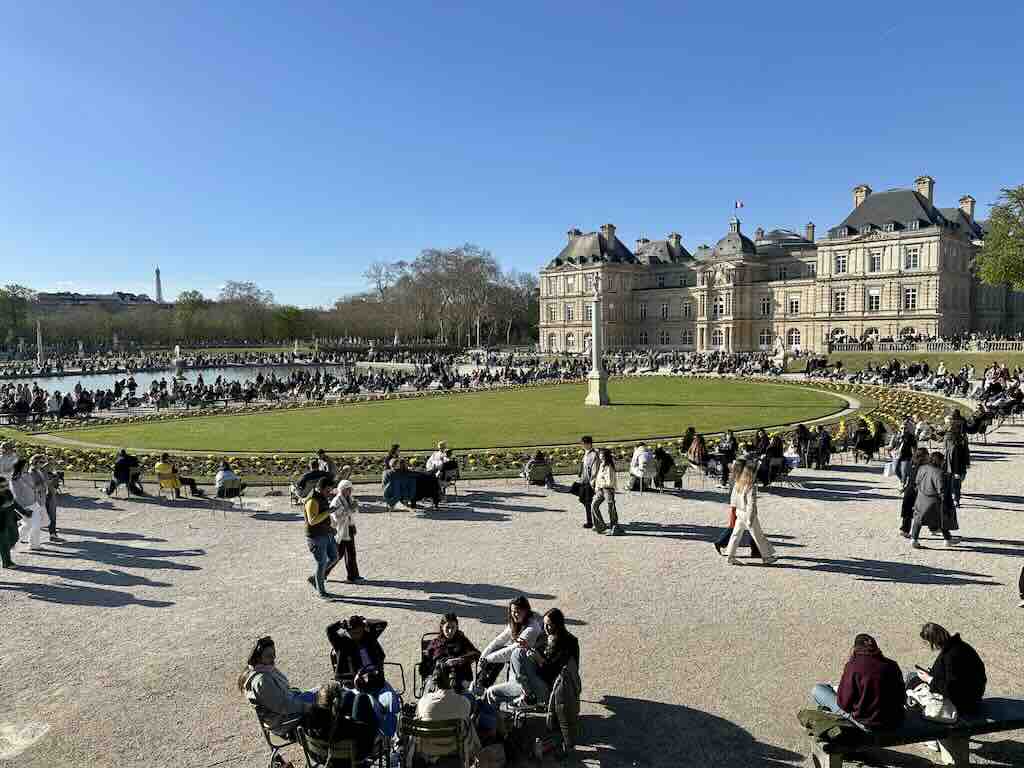
Step into the Luxembourg Gardens — Paris’ most beloved park, with the Palais du Luxembourg and the Fontaine Médicis on the Left Bank.
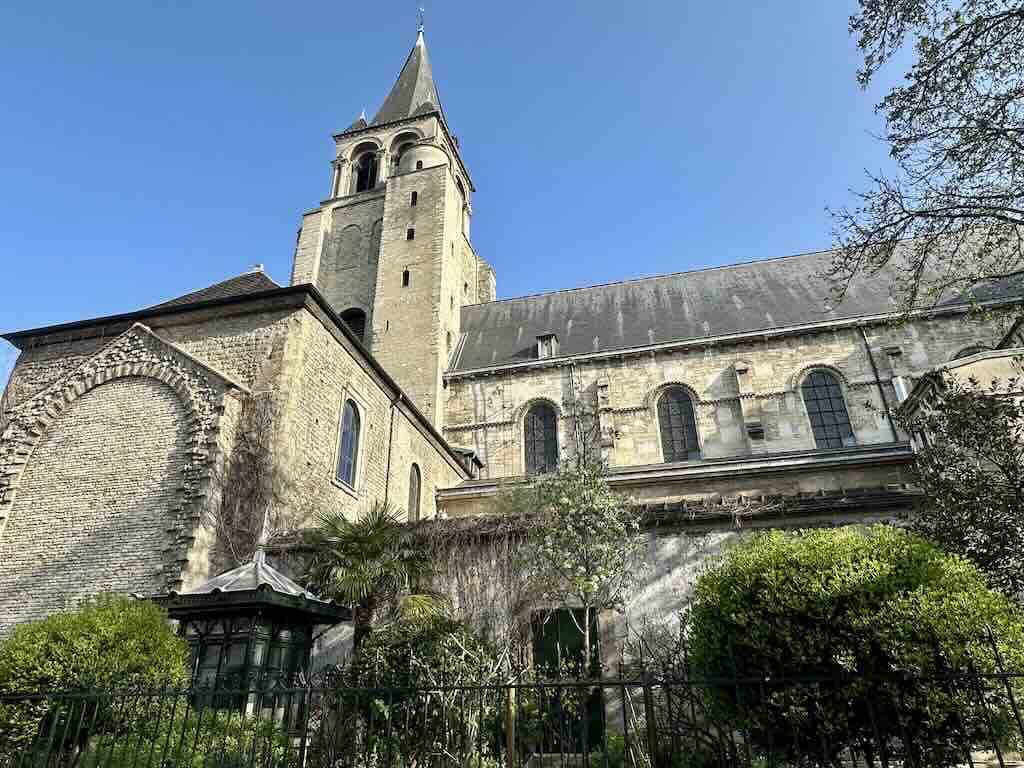
Explore the 6th arrondissement — Saint-Germain-des-Prés, literary cafés and art galleries, a short walk east of the 7th.
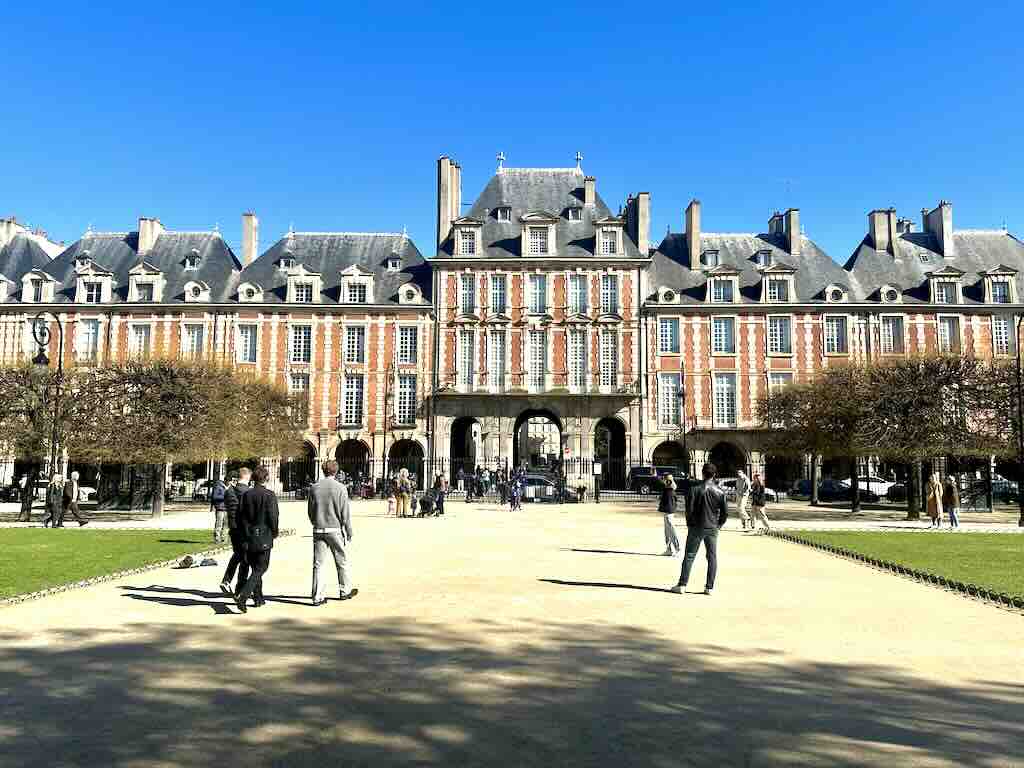
Cross the Seine to the Marais — the Place des Vosges, hôtels particuliers and the most vibrant Right Bank atmosphere.
Frequently Asked Questions about the 7th & 8th Arrondissements
Where are the 7th and 8th arrondissements of Paris?
They sit on either side of the Seine in central-western Paris. The 7th is on the Left Bank and holds the Eiffel Tower, Les Invalides and the Musée d’Orsay. The 8th is on the Right Bank and runs from the Place de la Concorde up the Champs-Élysées to the Arc de Triomphe, taking in the Grand Palais and Petit Palais.
How much does it cost to go up the Eiffel Tower in 2026?
In 2026, adult tickets are €14.80 to climb the stairs to the 2nd floor, €23.50 by lift to the 2nd floor, and €36.70 by lift all the way to the summit. Booking online in advance is strongly recommended, as summit tickets often sell out during peak periods.
What’s the best time to visit the Eiffel Tower?
Arrive early in the morning (right at opening) or in the late evening to avoid the longest queues. Sunset is the most beautiful moment, and after dark the tower sparkles for five minutes on the hour, every hour. Weekdays are quieter than weekends, and spring and autumn are more comfortable than the height of summer.
What are the best spots to photograph the Eiffel Tower?
The Trocadéro terrace across the Seine gives the classic unobstructed view, especially at sunrise and sunset. The Pont de Bir-Hakeim frames it through elegant metal arches, and the rue de l’Université offers an intimate view between Haussmann buildings. For night shots, the Left Bank near the Pont-Neuf and the Pont Mirabeau (with Paris’ replica Statue of Liberty) are excellent.
Is the Musée d’Orsay worth visiting?
Absolutely — for Impressionist and Post-Impressionist art it’s the best museum in the world, with major works by Monet, Van Gogh, Renoir, Degas and Manet in a stunning former railway station. It’s more focused and less overwhelming than the Louvre, and pairs perfectly with the nearby Musée de l’Orangerie (Monet’s Water Lilies) and a walk in the Jardin des Tuileries.
Has the Grand Palais reopened?
Yes. After a four-year, roughly €466-million restoration, the Grand Palais fully reopened in 2025, with its glass-domed nave and Beaux-Arts façade restored. It hosts major art exhibitions, fashion shows and cultural events (and was an Olympic venue during Paris 2024). Check the current program in advance, as headline shows sell out.
Can you visit Napoleon’s tomb at Les Invalides?
Yes. Napoleon’s tomb sits beneath the golden dome of Les Invalides, in a circular crypt open to visitors as part of the Musée de l’Armée. The same ticket gives access to the army museum’s extensive collections covering French military history from the Middle Ages to World War II. Allow at least 1.5 to 2 hours.
How do you get to the Champs-Élysées?
Metro line 1 runs the length of the avenue with stops at Champs-Élysées–Clemenceau, Franklin D. Roosevelt, George V and Charles de Gaulle–Étoile (for the Arc de Triomphe). Concorde (lines 1, 8, 12) marks the lower end. It’s also a pleasant walk from the Louvre through the Jardin des Tuileries and across the Place de la Concorde.
How many days do you need for the 7th and 8th arrondissements?
You can see the headline sights in a well-planned full day (Eiffel Tower, Invalides, Orsay, Concorde, Champs-Élysées, Arc de Triomphe). If you want to go up the Eiffel Tower and the Arc de Triomphe, spend proper time in the Orsay, and slow down for lunch, plan two days — one per bank of the Seine.
Where should I stay near the Eiffel Tower?
For tower views and quiet elegance, stay near the Champ de Mars in the 7th (€220-500/night). For a more local, better-value base with markets and bistros, choose around rue Cler and Les Invalides (€180-350/night). For luxury and shopping, the Champs-Élysées and the Golden Triangle in the 8th have the grand palace hotels (€400-900+/night).