Montparnasse Paris: Tower, Catacombs & Café Guide 2026
By Blaise Jaeger · Updated July 25, 2026
Why Visit Montparnasse
Montparnasse is one of the most fascinating and underrated neighborhoods in Paris. Spread across the borders of the 6th, 14th, and 15th arrondissements on the Left Bank, it trades the postcard crowds of Saint-Germain and the Latin Quarter for something more lived-in: a district where locals still outnumber tourists, and where a century of art history hides in plain sight.
In the 1920s and 1930s this was the beating heart of bohemian Paris. Picasso, Modigliani, Hemingway, Man Ray, and Anaïs Nin worked, argued, and drank here, turning a handful of cafés into the most famous artistic salons in the world. That spirit hasn’t vanished. It lingers in the Art Deco brasseries, in the artists’ studios turned museums, and in the quiet, tree-lined avenues of one of Paris’ great cemeteries.
Today, Montparnasse rewards travelers who want to see Paris the way Parisians do. You get the single best panoramic view of the city, an unforgettable descent into the Catacombs, legendary cafés, and museums most visitors never reach, all within a 15-minute walk. This guide walks you through everything worth your time, with a local’s shortcuts along the way.
Montparnasse at a Glance
- Location: Left Bank, straddling the 6th, 14th, and 15th arrondissements, around Boulevard du Montparnasse.
- Best for: Panoramic views, art history, atmospheric cafés, and a calmer, more local side of Paris.
- Don’t miss: The Montparnasse Tower rooftop, the Catacombs, Montparnasse Cemetery, and a drink at La Rotonde or Le Select.
- Getting there: Métro lines 4, 6, 12, and 13 (Montparnasse-Bienvenüe); Gare Montparnasse for TGV trains to western France.
- Time needed: Half a day to a full day, depending on how many museums and cafés you linger in.
Growing Up in Montparnasse
This is the neighborhood I grew up in. From the age of 6 until I was 18, I lived on rue Joseph Bara, a quiet street just a few hundred meters from the Carrefour Vavin, the crossroads that was the very heart of artistic Montparnasse. La Rotonde, Le Dôme, Le Select, and La Coupole all sit within a two-minute walk of where I grew up, so the cafés that fill the guidebooks were, for me, simply the corner where I waited for the bus and watched the city go by. That’s the strange privilege of a Montparnasse childhood: the most storied terraces in Paris were just the local café.
Montparnasse also holds a deeper personal meaning for me now: my father is buried in the Montparnasse Cemetery, and I still walk its tree-lined paths regularly. There’s a particular calm to that place, the muffled hush of a green island in the middle of the city, and returning to it always sends me back through the streets I knew as a child.
When I want to treat someone to the neighborhood, I take them to La Closerie des Lilas for the steak tartare, which is, without exaggeration, the best I have ever eaten in Paris. Impeccably seasoned, cut by hand, served on a lush terrace under the Belle Époque awnings. It’s a dish worth crossing the city for. What I’ve learned from a lifetime here is that Montparnasse is a neighborhood you have to slow down for. It doesn’t hand you its charm the way the Eiffel Tower or the Marais does. You find it in a quiet epitaph, a café that hasn’t changed in a hundred years, a view of the whole city opening up above the rooftops. This guide is built around the places I actually know.
A Short History of Bohemian Montparnasse
Montparnasse takes its name from a mound of quarry rubble that 17th-century students nicknamed “Mont Parnasse,” after the mountain sacred to the Muses in Greek mythology. The hill is long gone, flattened in the 18th century, but the poetic name stuck to a neighborhood that would become synonymous with art and ideas.
The district’s golden age came in the 1910s to 1930s, when Montparnasse overtook Montmartre as the capital of the Parisian avant-garde. Cheap rents, lively nightlife, and a wave of foreign artists made it a genuine melting pot. Painters, sculptors, poets, and exiles from across Europe and America, the loose group later known as the École de Paris, converged on its cafés and studios. Picasso, Modigliani, Chagall, Soutine, Foujita, Man Ray, Hemingway, Fitzgerald, and Henry Miller all passed through, and much of the era’s creative energy was fueled over espresso and absinthe on Boulevard du Montparnasse. That legacy is still the neighborhood’s defining identity.
Main Sites to See in Montparnasse
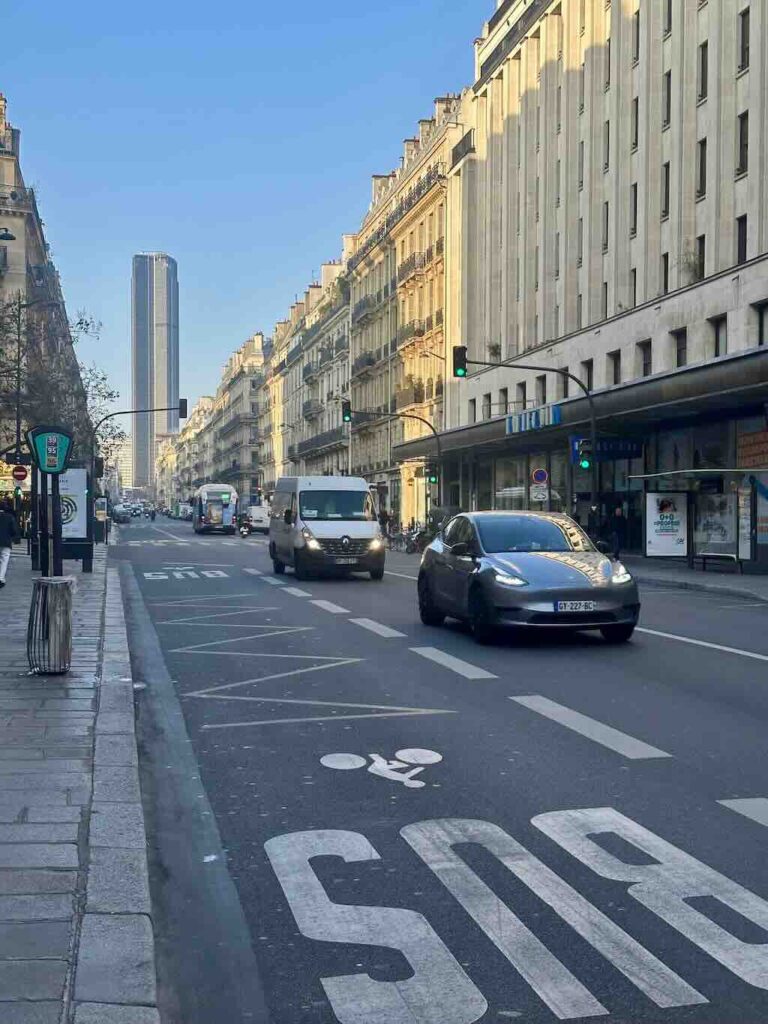
Montparnasse Tower: The Best Panoramic View of Paris
The Montparnasse Tower (Tour Montparnasse) is one of the only skyscrapers in central Paris, and its blunt 1970s silhouette has always divided Parisians. But there’s one thing no one disputes: its observation deck offers the most complete panoramic view in the city. As locals like to joke, it’s the best view of Paris precisely because it’s the one spot where you can’t see the tower itself.
- The 56th-floor indoor deck has floor-to-ceiling windows and a clear 360-degree sweep across the Eiffel Tower, Sacré-Cœur, Notre-Dame, Les Invalides, and the Seine.
- From there, stairs lead up to the open-air rooftop terrace on the 59th floor, the highest publicly accessible rooftop in Paris.
- Unlike the Eiffel Tower, there are rarely long lines, so it’s a far more relaxed way to take in the skyline. Tickets start at around €18 for adults (roughly €15 reduced) and are cheaper booked online.
- It’s open daily from about 9:30 AM to 11:30 PM. Come at sunset, when the city glows gold and the Eiffel Tower begins to sparkle on the hour, for the most memorable visit.
Montparnasse Cemetery: A Place of Reflection and History
Opened in 1824, the Montparnasse Cemetery (Cimetière du Montparnasse) is one of the most famous burial grounds in Paris, and one of the most peaceful places to walk in the whole city. Its 19 hectares of tree-lined paths are the final resting place for many of the great minds who shaped modern literature, philosophy, and the arts. As I mentioned, it also holds a personal meaning for me, and I always tell visitors to give it more time than they expect. Among the graves worth seeking out:
- Jean-Paul Sartre & Simone de Beauvoir – The existentialist philosophers, buried side by side, remain a symbol of intellectual partnership.
- Samuel Beckett – The Nobel Prize-winning playwright behind Waiting for Godot, in a strikingly plain grave.
- Charles Baudelaire – The poet of Les Fleurs du Mal, whose cenotaph draws admirers and scribbled notes.
- Serge Gainsbourg – The provocative French singer-songwriter, whose grave is still covered in métro tickets, flowers, and fan tributes.
- Man Ray, Constantin Brancusi, Marguerite Duras, Susan Sontag, and Julio Cortázar also rest here, a roll call of 20th-century culture.
The cemetery is free to enter and open daily (roughly 8:00 AM to 6:00 PM, slightly later in summer). Pick up a free map at the entrance gates on Boulevard Edgar Quinet to find the graves you’re looking for.
The Paris Catacombs
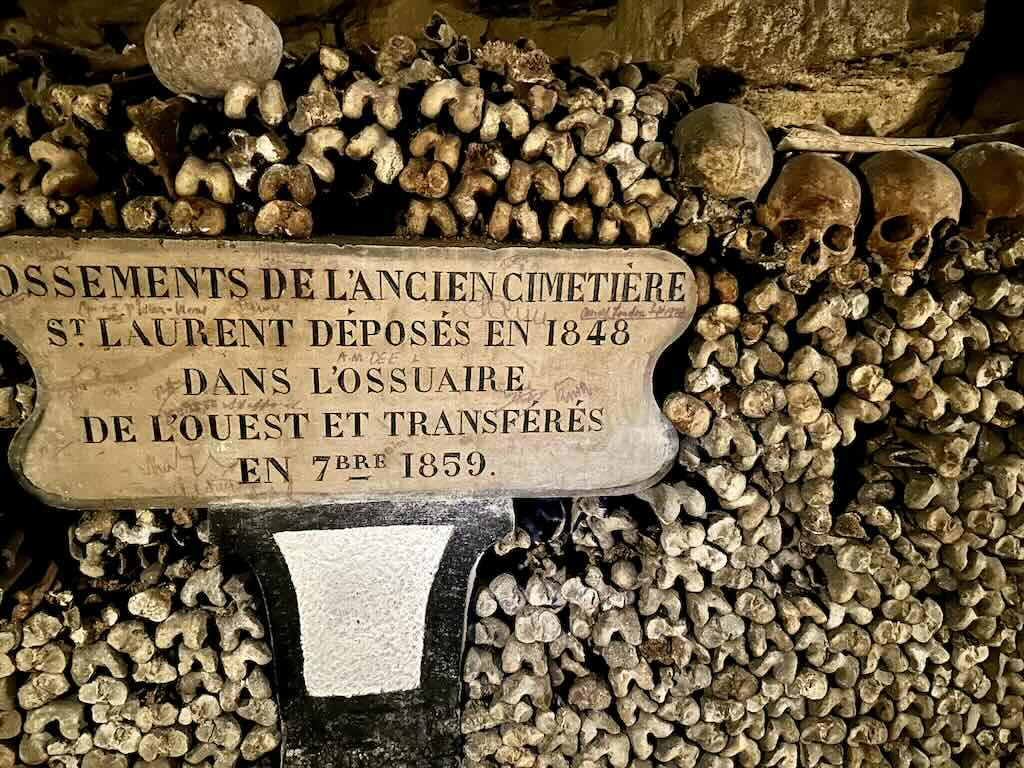
The Paris Catacombs offer one of the city’s most haunting yet fascinating experiences. Hidden 20 meters beneath the streets at the edge of Montparnasse, this underground ossuary holds the remains of more than six million Parisians. It was created in the late 18th century, when the city’s overflowing cemeteries were emptied and the bones relocated into the tunnels of abandoned limestone quarries.
Today you can walk a small section of this vast network, where walls of carefully arranged bones and skulls form eerie, almost artful patterns. Carved inscriptions remind visitors of the fleeting nature of life, and the famous warning over the entrance still stops everyone in their tracks: “Arrête! C’est ici l’empire de la mort.” (Stop! This is the empire of death.) The tunnels are cool and humid year-round, which only adds to the surreal atmosphere.
Practical info (2026): The entrance is at 1 avenue du Colonel Henri Rol-Tanguy (Denfert-Rochereau). It’s open Tuesday to Sunday, 9:45 AM to 8:30 PM (last entry 7:30 PM), closed Mondays. Tickets are €31 full price and €25 reduced, with an audio guide included; children 8–17 pay €15 and under-8s are free. The Catacombs are hugely popular and entry is timed, so booking online in advance is strongly recommended.
Observatoire de Paris: A Gateway to the Stars
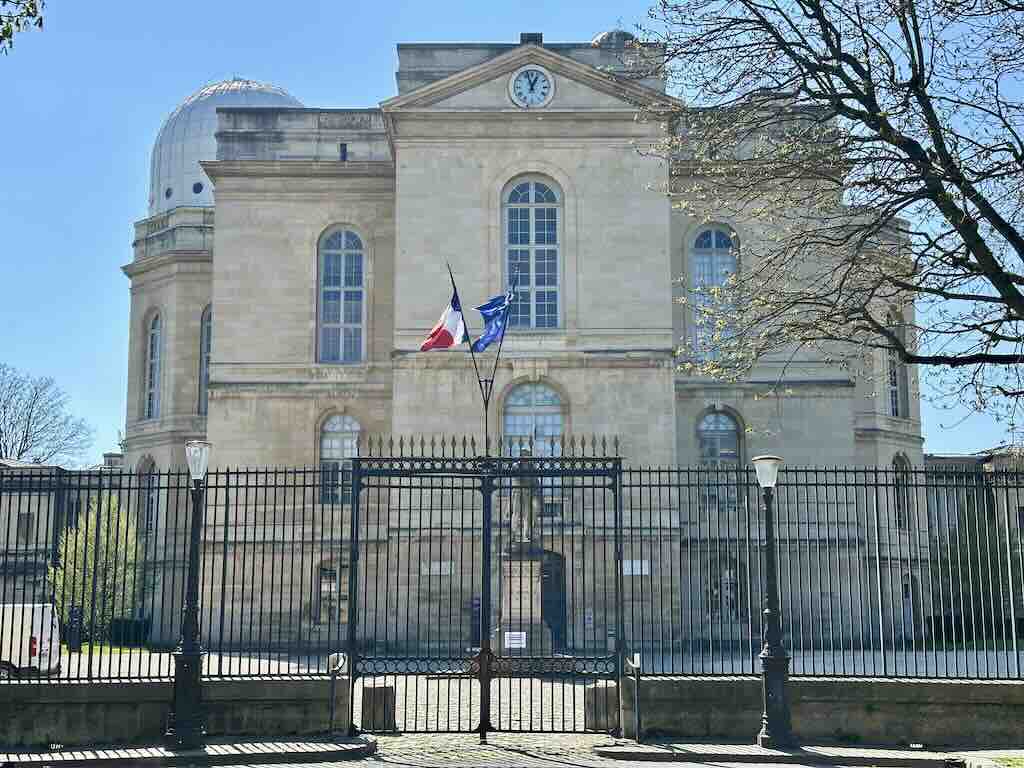
Not far from the Catacombs stands the Observatoire de Paris, one of the oldest working astronomical observatories in the world. Founded in 1667 under King Louis XIV, it has played a central role in centuries of scientific discovery, from mapping the sky to measuring the speed of light.
It was designed by Claude Perrault, the architect who also worked on the Louvre’s colonnade, and its building is aligned with the historic Paris Meridian, the reference line French mapmakers used before Greenwich was adopted in the late 19th century. The Observatoire is still an active research institution, but it opens its doors to the public for occasional guided tours, which let you step inside to see centuries-old telescopes, archives, and observation rooms. Places are limited and must be booked well in advance.
Montparnasse’s Artistic Legacy: Museums and Studios
Montparnasse wears its bohemian past lightly, but you can still step directly into it. Several of the neighborhood’s greatest artists left their studios behind, and today they’re among the most atmospheric small museums in Paris, most of them free.
- Institut Giacometti (5 rue Victor Schoelcher, beside the cemetery) recreates Alberto Giacometti’s studio in an Art Deco townhouse, with his tools, painted walls, and sculptures. Open Tuesday–Sunday, 10:00 AM–6:00 PM; tickets around €9.
- Musée Bourdelle (18 rue Antoine Bourdelle) preserves the studio and leafy sculpture garden of Antoine Bourdelle, a student of Rodin. The permanent collection is free.
- Musée Zadkine (100 bis rue d’Assas) is the tiny former home and garden of sculptor Ossip Zadkine, a hidden gem between Montparnasse and the Luxembourg Garden. Permanent collection free.
- Jardin Atlantique is a secret 3.5-hectare rooftop garden built above the tracks of Gare Montparnasse, a wonderful spot to escape the crowds that most visitors walk right past.
One update worth noting: the Fondation Cartier pour l’Art Contemporain, long housed in Jean Nouvel’s glass building on Boulevard Raspail, relocated in October 2025 to a spectacular new home on Place du Palais-Royal, opposite the Louvre. So if contemporary art is on your list, you’ll now find the Fondation across the river rather than in Montparnasse.
Legendary Cafés and Brasseries of Montparnasse
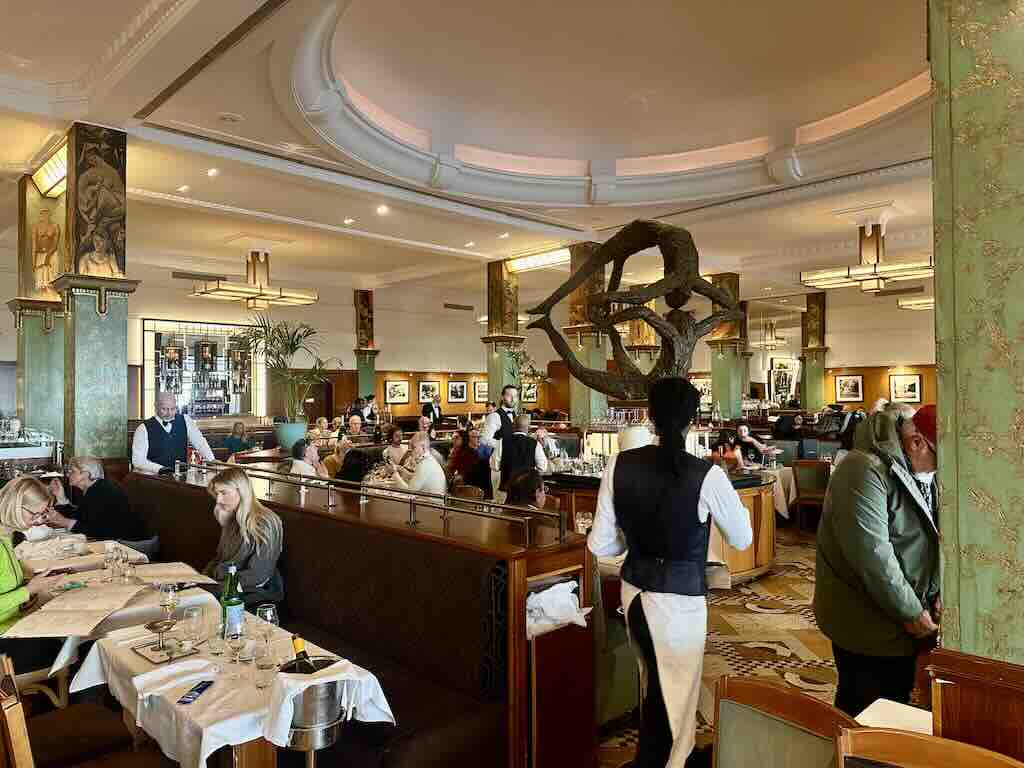
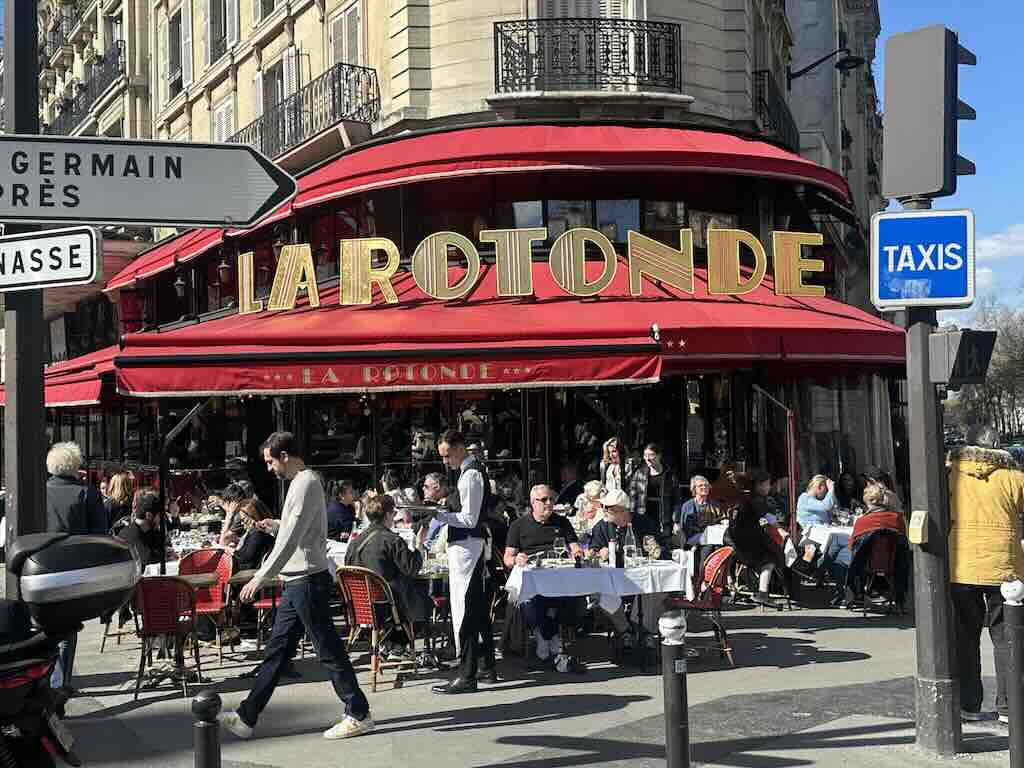
Like Saint-Germain-des-Prés, Montparnasse is defined by its cafés, the grand terraces where artists and writers once gathered to argue about philosophy, politics, and art over espresso and absinthe. Remarkably, most of them are still open, still serving, and clustered within a two-minute walk of each other on Boulevard du Montparnasse.
- La Coupole (102 Bd du Montparnasse) – A vast Art Deco brasserie, once the haunt of Hemingway, Picasso, and Man Ray, and still a Montparnasse institution.
- Le Dôme (108 Bd du Montparnasse) – A historic café turned elegant seafood brasserie, where Henry Miller, Modigliani, and Anaïs Nin once spent their nights.
- Le Select (99 Bd du Montparnasse) – A literary hotspot that inspired F. Scott Fitzgerald and Ernest Hemingway, and still has one of the best terraces for people-watching.
- La Rotonde (105 Bd du Montparnasse) – A warm, red-awninged meeting place for the artists of the École de Paris, and a personal favorite for a slow coffee.
Though it may no longer be the bohemian epicenter it once was, Montparnasse still celebrates its artistic heritage through its galleries, theaters, and cultural spaces, from the contemporary stage of the Théâtre de la Gaîté-Montparnasse to the many small art galleries scattered through its side streets.
Montparnasse in Half a Day: A Walking Itinerary
If you only have a few hours, here’s the loop I’d walk. It packs in the view, the history, and a proper café stop without ever feeling rushed.
- Start at the Catacombs (Denfert-Rochereau) first thing, with a pre-booked morning ticket to beat the queues.
- Walk to the Montparnasse Cemetery for a quiet loop past Sartre, Beckett, Baudelaire, and Gainsbourg.
- Detour to the Institut Giacometti next door, if sculpture appeals to you.
- Head up Boulevard du Montparnasse for lunch at a historic brasserie, La Coupole or Le Select.
- Finish at the Montparnasse Tower, ideally timed for late afternoon or sunset and the full panorama of Paris.
Where to Eat in Montparnasse
Beyond the historic cafés, Montparnasse is genuinely good for eating, from old-world brasseries to the crêperies clustered around Rue du Montparnasse, a legacy of the Breton community that arrived through Gare Montparnasse.
For an unforgettable old-world brasserie experience, head to La Closerie des Lilas (171 Bd du Montparnasse), the iconic spot where Hemingway wrote and where Fitzgerald and countless others gathered. The setting, with its lush terrace and classic Belle Époque decor, is magical, but the highlight for me is the steak tartare, the best I have ever eaten in Paris. Impeccable preparation and fresh ingredients make it a dish worth returning for. For something more casual, the crêperies of Rue du Montparnasse and Rue d’Odessa serve excellent savory galettes and sweet crêpes with cider, a Breton tradition and one of the best-value meals in the area.
Where to Stay in Montparnasse
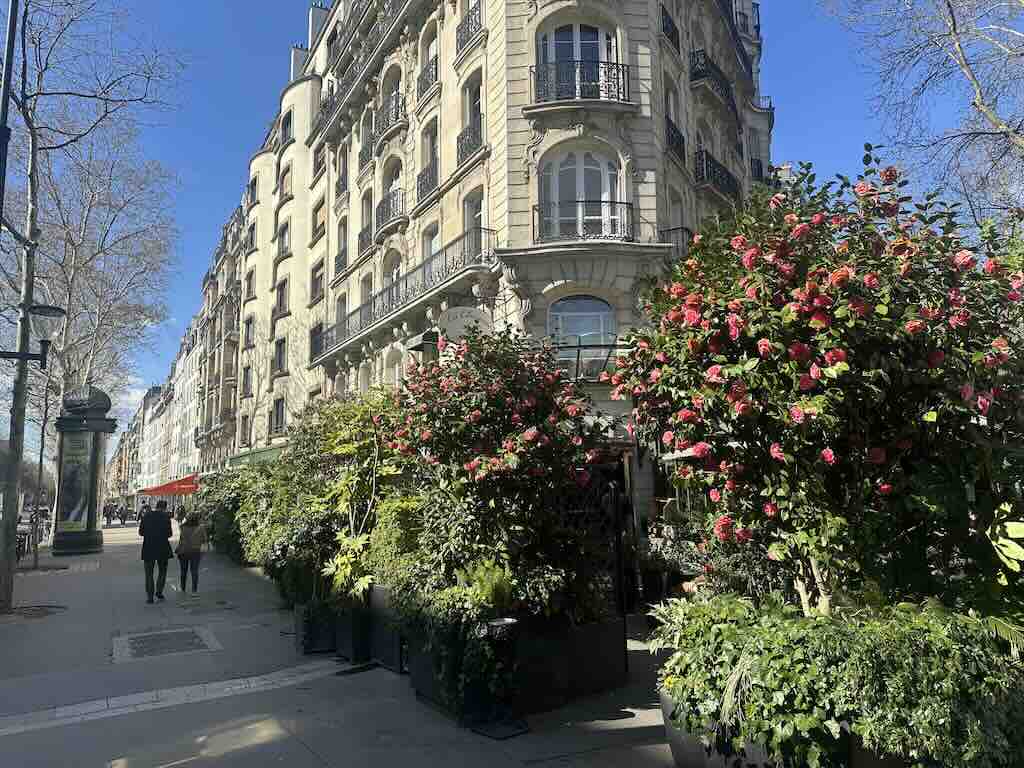
Montparnasse is an excellent, well-connected base: quieter and better value than Saint-Germain, yet only a short métro ride from the major sights, and right on top of the TGV station if you’re continuing to western France. Here are reliable options by budget.
- Upscale: Pullman Paris Montparnasse, a large, fully renovated 4-star tower next to the station, with skyline views and a stylish bar.
- Boutique / mid-range: Hôtel Lenox Montparnasse (15 rue Delambre), a charming literary-themed hotel a step from the historic cafés, and the Art Deco Hôtel Aiglon on Boulevard Raspail.
- Comfortable value: Villa Modigliani and Hôtel Delambre, both well-located for the cafés and cemetery without the Left Bank price tag.
👉 Compare the latest prices for hotels in Montparnasse on Booking.com.
Practical Tips for Visiting Montparnasse
- Getting there: Montparnasse-Bienvenüe is served by métro lines 4, 6, 12, and 13, plus dozens of buses. Denfert-Rochereau (lines 4, 6, RER B) is the stop for the Catacombs and cemetery.
- Best time to go: Late afternoon into sunset is ideal, letting you tour the museums and cemetery by day and finish with the Montparnasse Tower at golden hour.
- Book ahead: The Catacombs sell timed tickets that regularly sell out; reserve online days in advance. The Observatoire’s guided tours are rare and need booking too.
- Closed days: The Catacombs and most museums close on Mondays, so plan a museum-free itinerary if you’re visiting at the start of the week.
Explore More of Paris
Complete Guide to Paris
Plan the whole trip with our overview of the city’s neighborhoods, sights, and practical tips.
The 6th Arrondissement & Saint-Germain
Discover Montparnasse’s elegant neighbor, from Saint-Germain-des-Prés to the Luxembourg Garden.
The Latin Quarter (5th)
Explore the Left Bank’s oldest quarter, its cafés, bookshops, and Roman ruins.
Frequently Asked Questions About Montparnasse
Where is Montparnasse in Paris?
Montparnasse is on the Left Bank of Paris, spread across the borders of the 6th, 14th, and 15th arrondissements. Its main axis is Boulevard du Montparnasse, and its landmark is the Montparnasse Tower above the train station of the same name.
Is the Montparnasse Tower worth visiting?
Yes. Its observation deck gives you the most complete 360-degree view of Paris, including the Eiffel Tower, and it’s famously the one high viewpoint where the tower itself doesn’t block the skyline. Lines are much shorter than at the Eiffel Tower, especially at sunset.
How much does it cost to go up the Montparnasse Tower?
Tickets start at around €18 for adults, with reduced rates near €15, and it’s usually cheaper to book online. Entry covers both the 56th-floor indoor deck and the open-air rooftop terrace on the 59th floor.
How much are Paris Catacombs tickets in 2026?
In 2026, standard tickets are €31 (€25 reduced), including an audio guide; children aged 8 to 17 pay €15, and under-8s enter free. The Catacombs are open Tuesday to Sunday and closed Mondays, and because entry is timed and popular, booking online in advance is strongly recommended.
Who is buried in Montparnasse Cemetery?
The Montparnasse Cemetery is the resting place of Jean-Paul Sartre and Simone de Beauvoir, Samuel Beckett, Charles Baudelaire, Serge Gainsbourg, Man Ray, Constantin Brancusi, Marguerite Duras, Susan Sontag, and Julio Cortázar, among many other cultural figures. Entry is free and a map is available at the gates.
What are the most famous cafés in Montparnasse?
The legendary cafés are La Coupole, Le Dôme, Le Select, and La Rotonde, all on Boulevard du Montparnasse, plus La Closerie des Lilas nearby. They were the gathering places of artists and writers like Hemingway, Picasso, and Modigliani, and most are still open today.
Is Montparnasse worth visiting?
Absolutely, especially if you want a more local, less touristy side of Paris. Montparnasse combines the best panoramic view in the city, the Catacombs, a beautiful cemetery, historic cafés, and free artist-studio museums, all in a walkable area away from the biggest crowds.
How do I get to Montparnasse?
Take métro line 4, 6, 12, or 13 to Montparnasse-Bienvenüe, or line 4, 6, or RER B to Denfert-Rochereau for the Catacombs. Gare Montparnasse is also a major TGV station with fast trains to Brittany, Bordeaux, and southwestern France.
When is the best time to go up the Montparnasse Tower?
Sunset is the best time. You catch Paris in golden light, then watch the city switch on and the Eiffel Tower sparkle for five minutes on the hour after dark. The deck stays open late, to around 11:30 PM, so there’s no need to rush.
Can you visit the Observatoire de Paris?
The Observatoire de Paris is an active research institution, but it opens to the public for occasional guided tours of its historic telescopes and rooms. Places are limited and must be booked well ahead, so check availability before you plan a visit around it.