Angkor Travel Guide: My Three Days Among the Temples
By Blaise Jaeger · Updated October 13, 2026
Angkor, near Siem Reap in Cambodia, was the capital of the Khmer Empire from the 9th to the 15th century. What remains today is one of the largest archaeological sites in the world: more than a thousand temples spread over 400 km² of forest and rice fields, from Angkor Wat, the largest religious monument ever built, to the stone faces of the Bayon and the trees growing through the walls of Ta Prohm.
I spent three days there in October 2022, during a trip to Bangkok, with my friend Roy. This guide is based on that trip: the temples we visited and in what order, sunrise at Angkor Wat, the floating village of Kampong Phluk, the Angkor Pass, how to get there and where to stay.
Angkor at a Glance
- Where: about 6 km north of Siem Reap, in north-western Cambodia.
- What: the Angkor Archaeological Park, a UNESCO World Heritage Site since 1992, with the remains of several Khmer capitals built between the 9th and the 15th century.
- Must-see temples: Angkor Wat, the Bayon in Angkor Thom, Ta Prohm, Pre Rup, Preah Khan, Ta Som and Banteay Srei.
- How long: one day for the highlights, three days to see the main temples without rushing.
- Ticket: the Angkor Pass, sold for 1, 3 or 7 days ($37, $62 and $72).
- Getting there: fly to Siem Reap, for example from Bangkok, then take a tuk-tuk or a car with a driver around the park.
- Best time: November to March, the dry and cooler season.
My Three Days at Angkor
In October 2022, Roy and I flew from Bangkok to Siem Reap for three days. We stayed at The Cyclo d’Angkor Boutique Hotel, bought a three-day Angkor Pass, and hired the same tuk-tuk driver for the three days. He picked us up at the hotel every morning, waited for us at each temple, and took us wherever we wanted to go. It is the simplest way to visit Angkor, and it does not require an organised tour.
Roy is Indonesian, but everybody in Cambodia took him for a Cambodian. People kept speaking to him in Khmer, convinced he was from Siem Reap.
Day 1: the rice fields, Roluos and the Tonle Sap lake
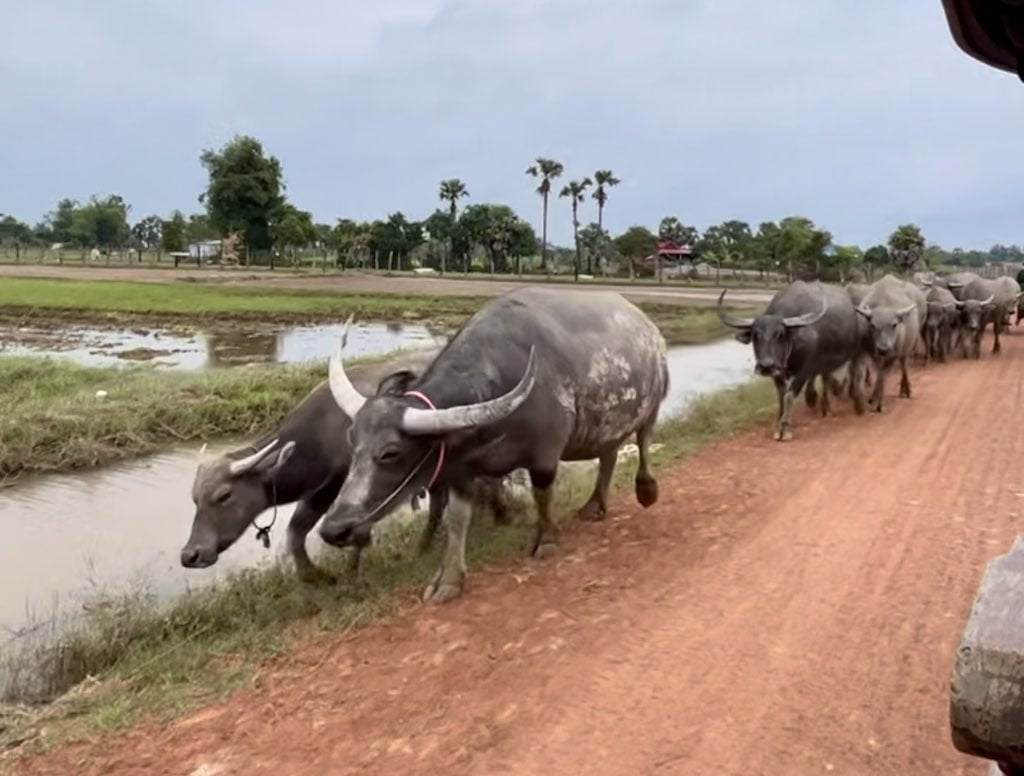
On the first afternoon, our driver took us out of Siem Reap through the rice fields, where buffaloes were walking along the red-earth tracks, to the Roluos group and its temple-mountain, Prasat Bakong. We then continued to the edge of the Tonle Sap lake and took a boat to Kampong Phluk, a village of houses on stilts. We had lunch in a floating restaurant on stilts. It was not an organised tour: we simply went there with our tuk-tuk driver and paid for the boat and the meal on the spot.
Day 2: sunrise at Angkor Wat and the Grand Circuit
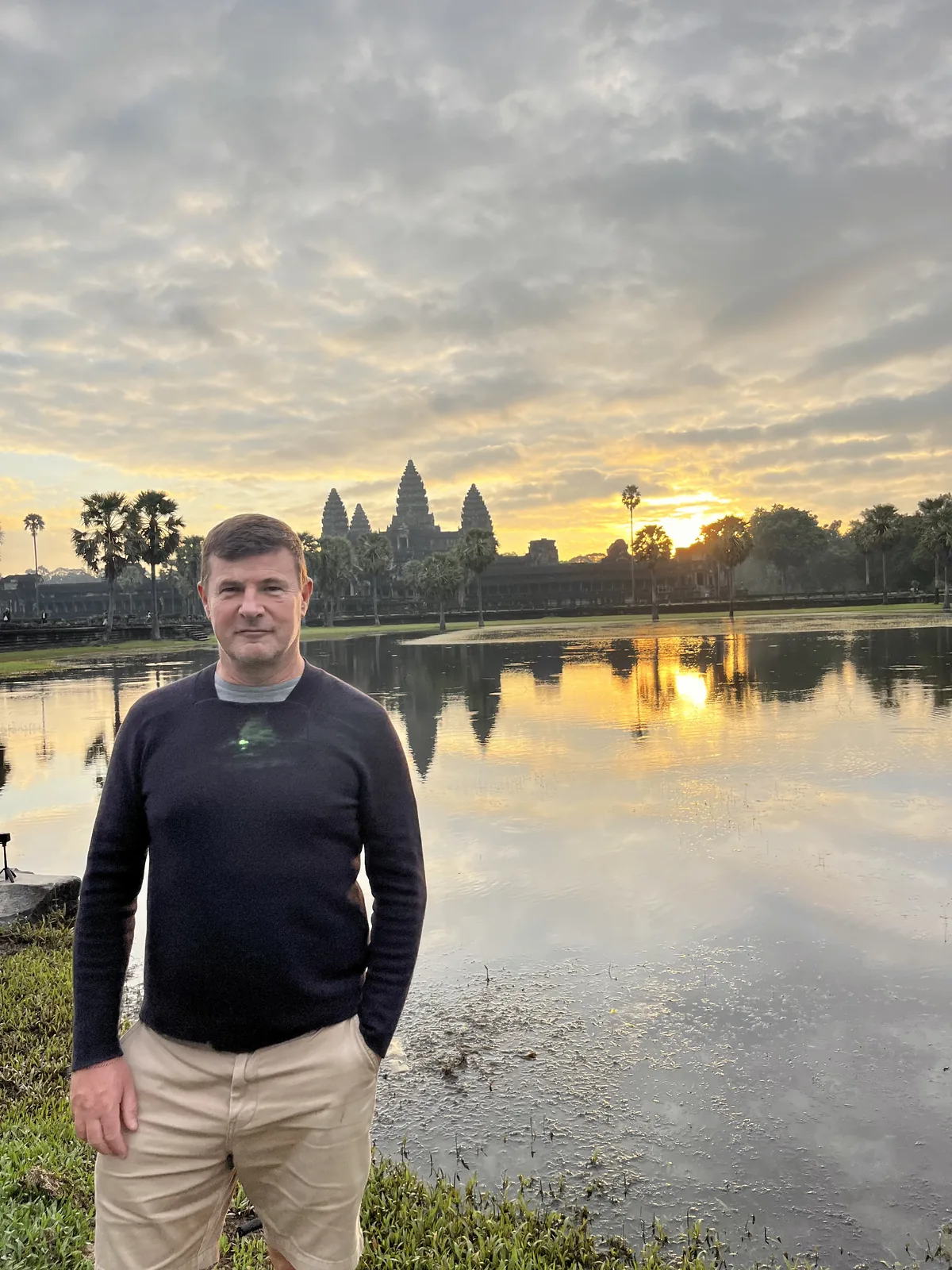
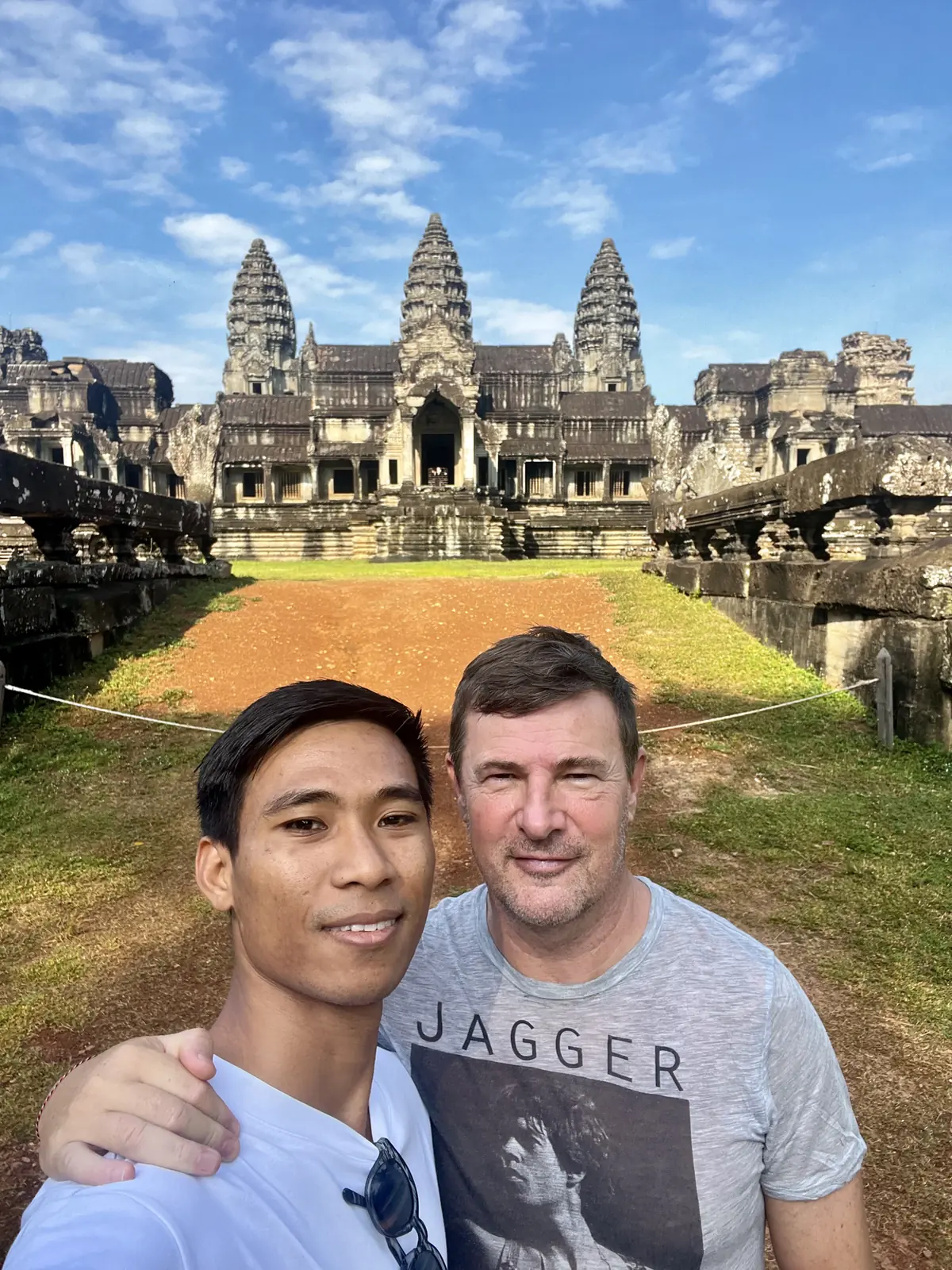
On the second day, we left the hotel in the dark to be at Angkor Wat for the sunrise. We were in front of the north pond before 6:00 AM, and the sky lit up behind the five towers a few minutes later. We then spent the whole day in the park: Ta Prohm before 8:00 AM, while it was still quiet, then the Grand Circuit with Pre Rup, Ta Som and Preah Khan, and in the afternoon Angkor Thom, with the Baphuon and the Bayon.
Day 3: Angkor Wat by day
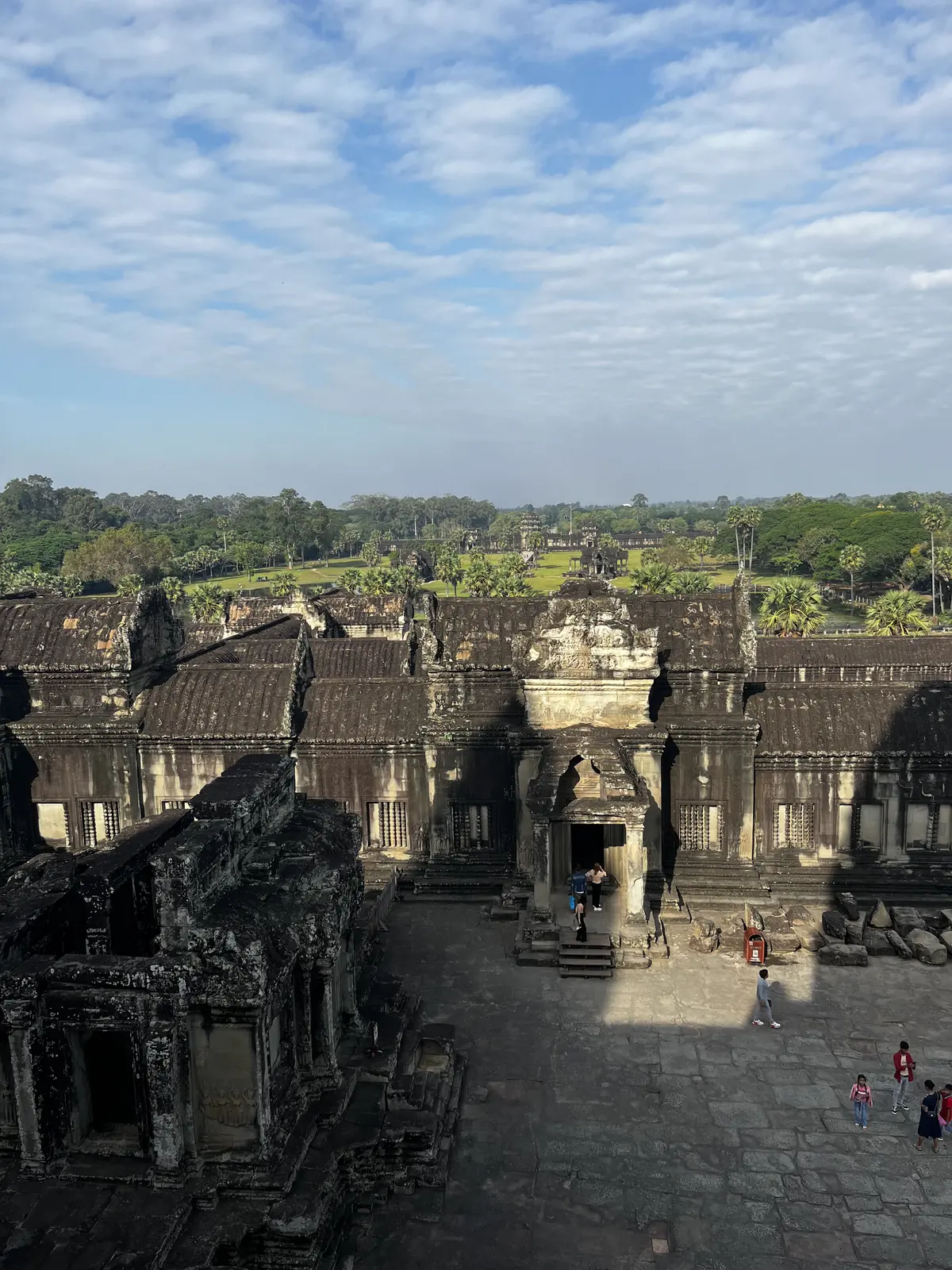
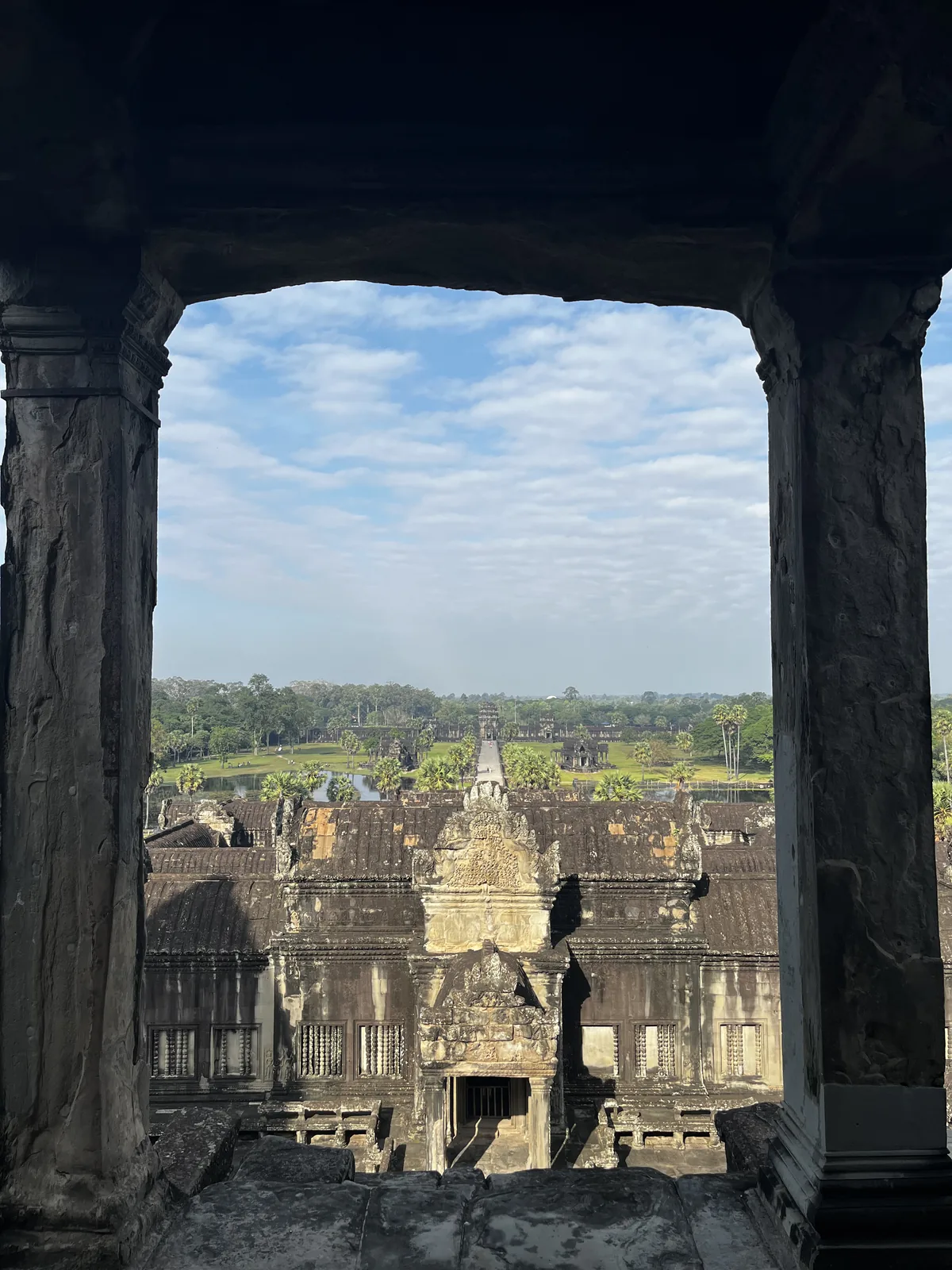
On the last morning, we went back to Angkor Wat, this time in full daylight, to walk the galleries and their bas-reliefs, and to climb the steep stairs to the Bakan, the upper level of the central tower. From there, the view stretches over the courtyards, the outer galleries and the forest.
A Short History of Angkor
The Khmer Empire dominated a large part of mainland Southeast Asia between the 9th and the 15th century. Its kings built a succession of capitals in the plain north of the Tonle Sap lake, each with its state temple: Hariharalaya, today the Roluos group, at the end of the 9th century; then Yasodharapura around Phnom Bakheng; then the great temples of the 10th and 11th centuries.
Angkor Wat was built in the first half of the 12th century under King Suryavarman II and dedicated to the Hindu god Vishnu. At the end of the same century, King Jayavarman VII, a Buddhist, built Angkor Thom and its Bayon, Ta Prohm, Preah Khan and many other temples. The city was fed by a vast network of reservoirs, the barays, and canals.
After the 15th century, the capital moved south towards Phnom Penh, and most of Angkor was taken over by the forest. Angkor Wat itself was never completely abandoned by the monks. The site became known in Europe in the 19th century, and the restoration work, begun during the French period, continues today with teams from many countries.
The Temples of Angkor
Angkor Wat
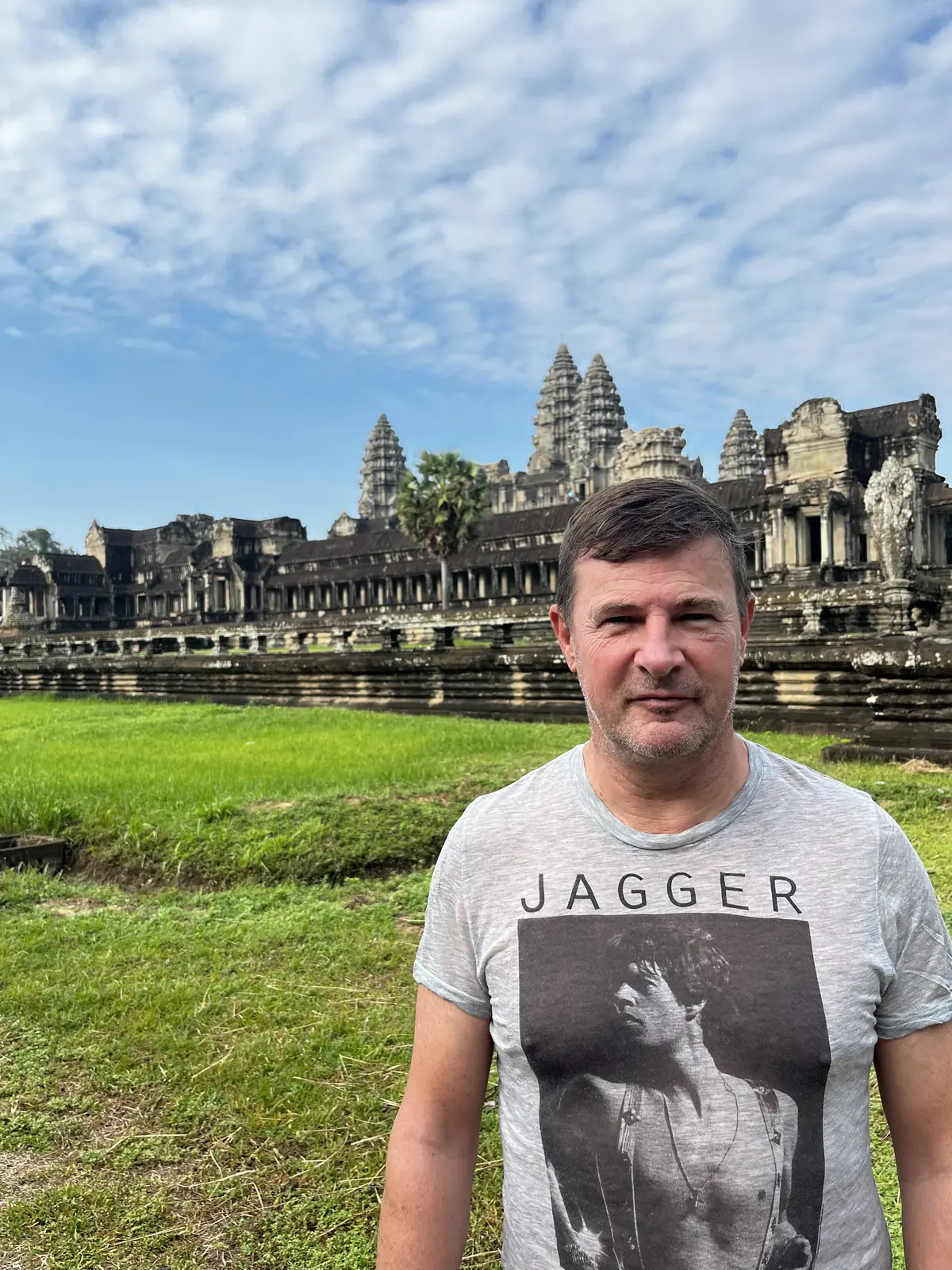
Angkor Wat is the largest religious monument in the world and the symbol of Cambodia, which has it on its flag. It is surrounded by a moat 190 metres wide and faces west, which is why the sunrise appears behind its towers. Allow at least two hours for the three levels of galleries, the bas-reliefs, including the Churning of the Ocean of Milk on the east gallery, and the Bakan, the upper level, reached by very steep stairs.
Angkor Thom and the Bayon
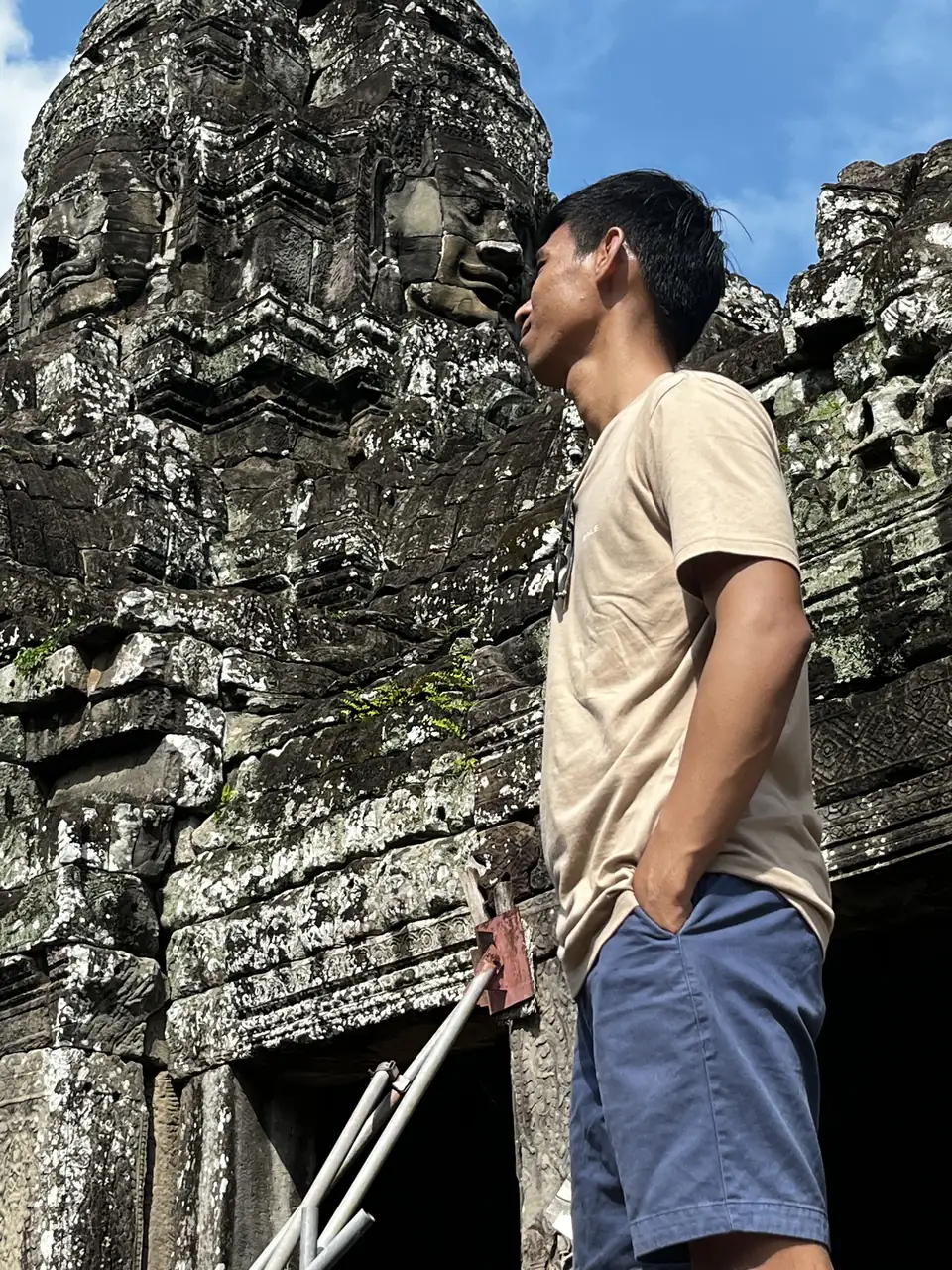
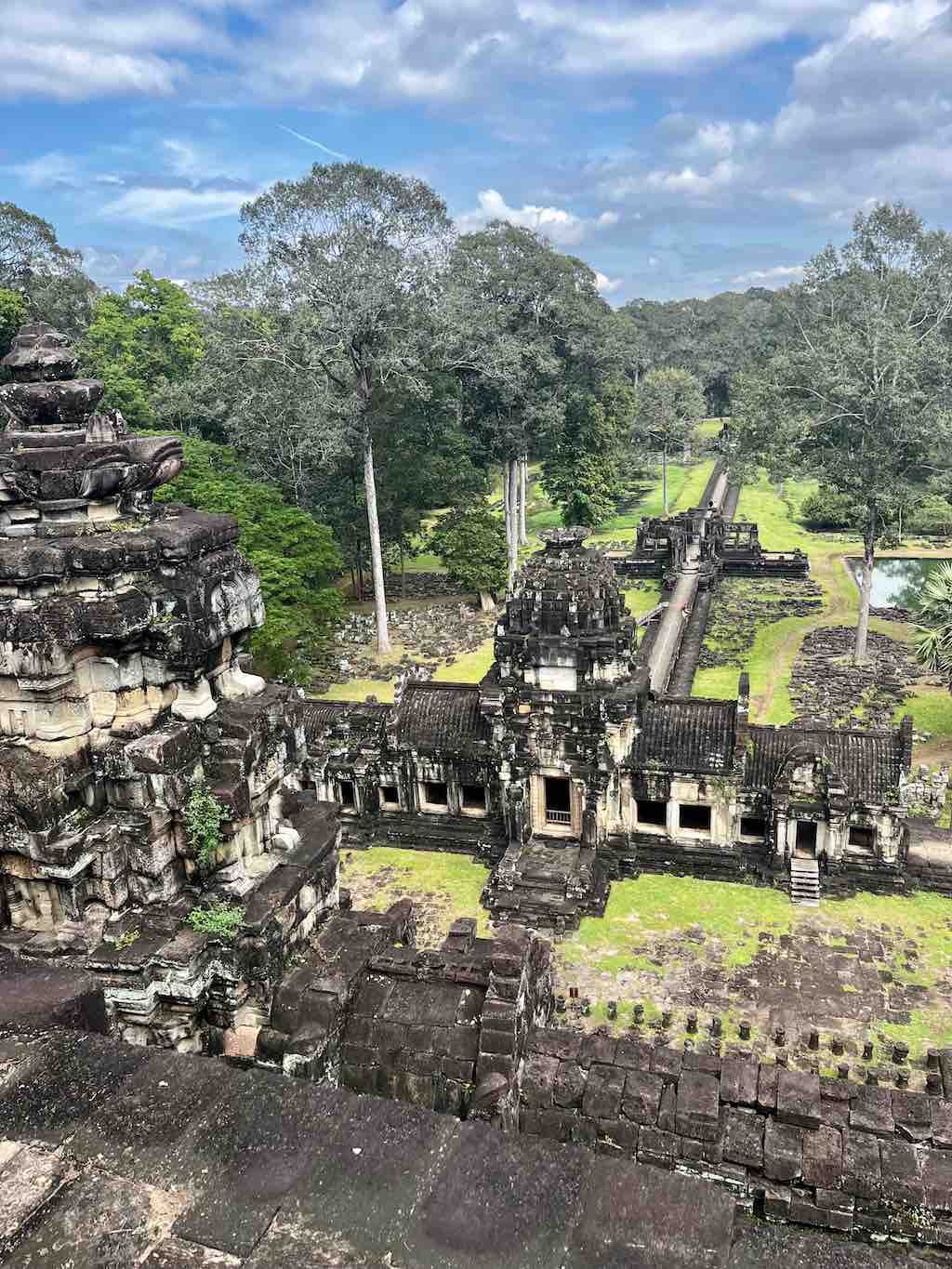
Angkor Thom, “the great city”, was the last capital of the empire, built by Jayavarman VII. Its walls form a square of 3 km per side, entered through monumental gates topped with faces. In the centre, the Bayon is the most mysterious temple of Angkor, with its towers carved with more than two hundred serene faces. Around it are the Baphuon, a huge temple-mountain from the 11th century, the Phimeanakas, and the Terrace of the Elephants.
Ta Prohm
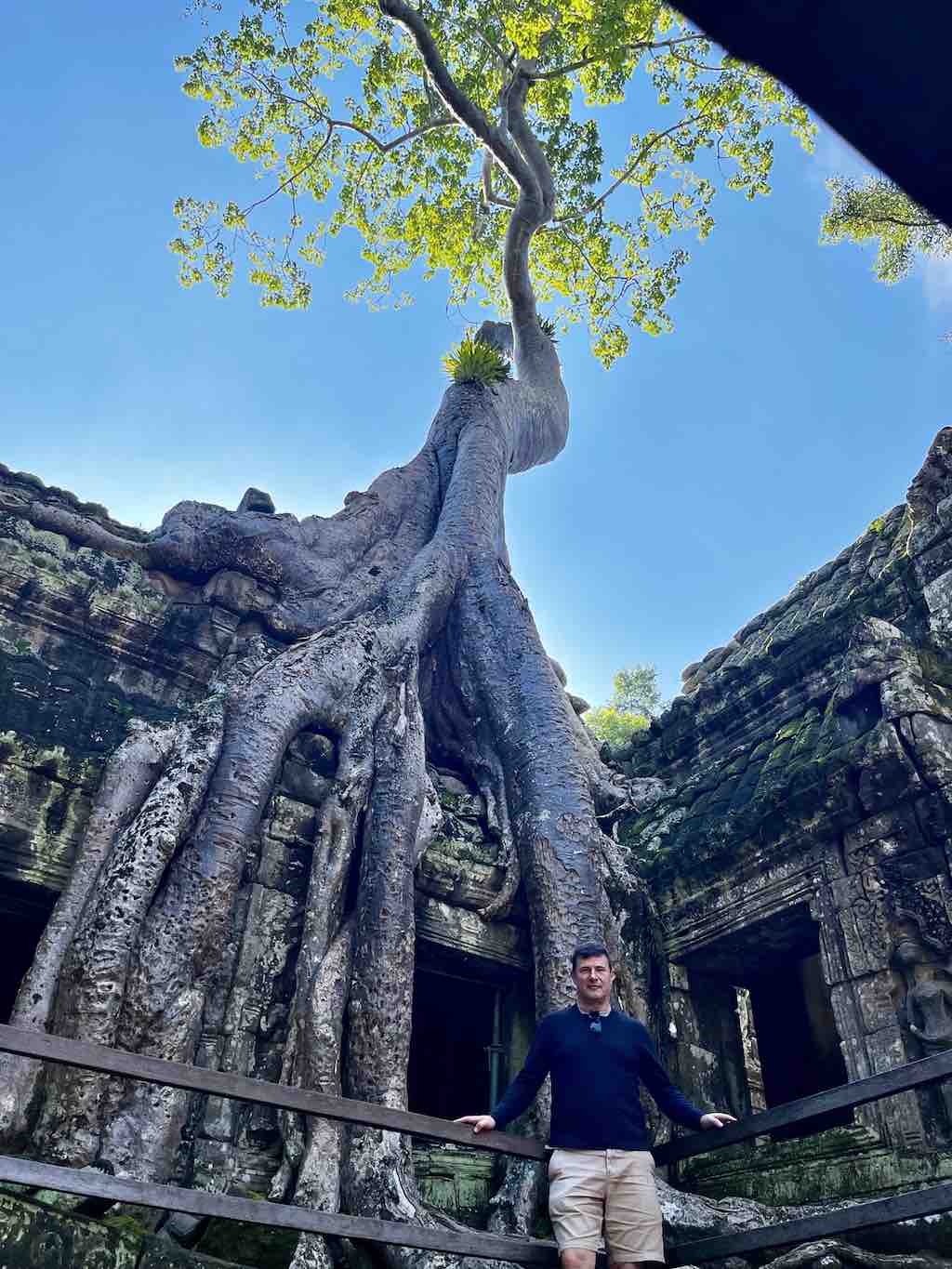
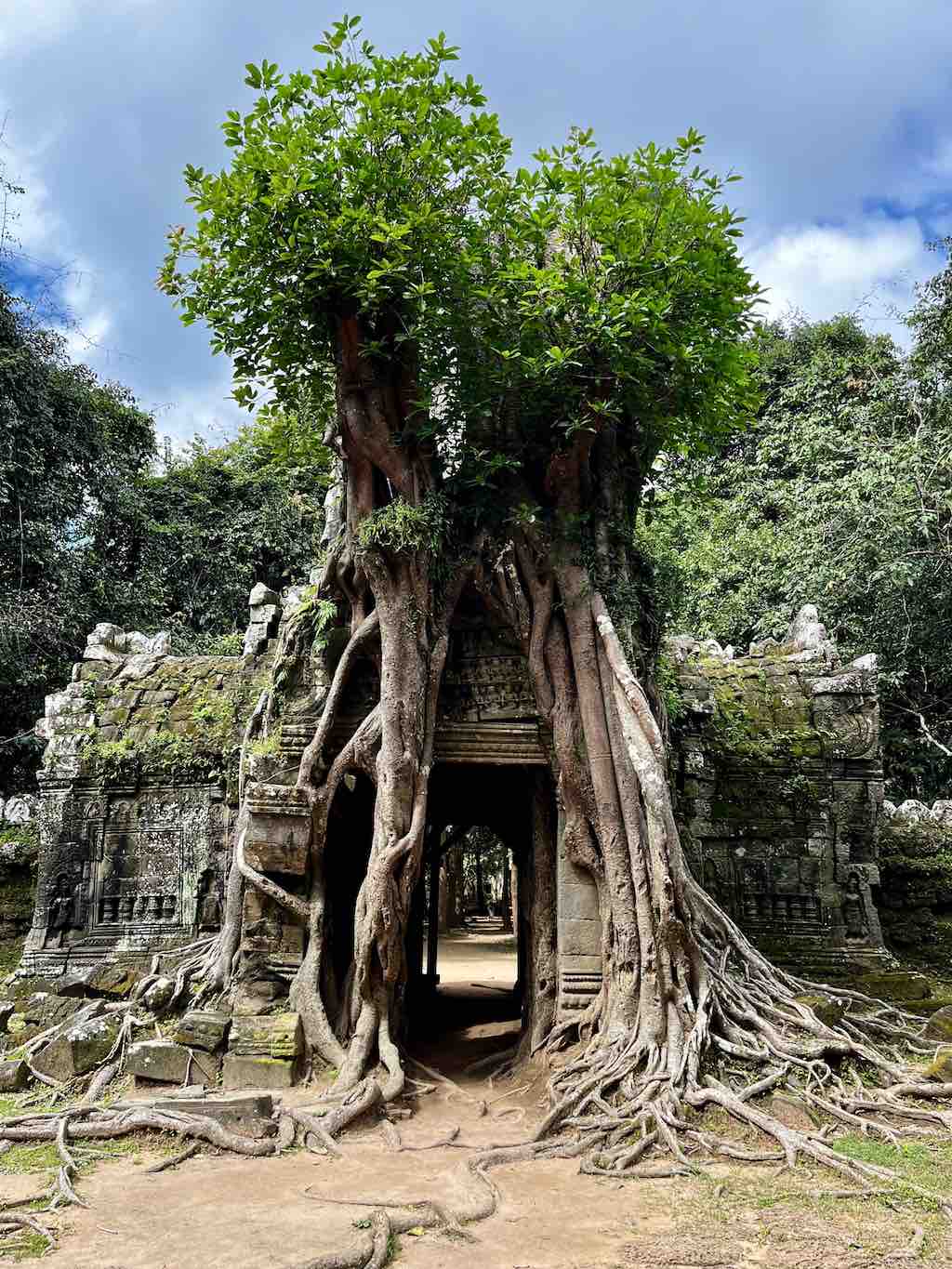
Ta Prohm is the temple that was left to the jungle. Founded in 1186 by Jayavarman VII, it is famous for the silk-cotton and strangler fig trees whose roots grow over the walls and through the galleries. It appeared in the film Tomb Raider, and it gets very busy by mid-morning: go early, as we did.
Pre Rup
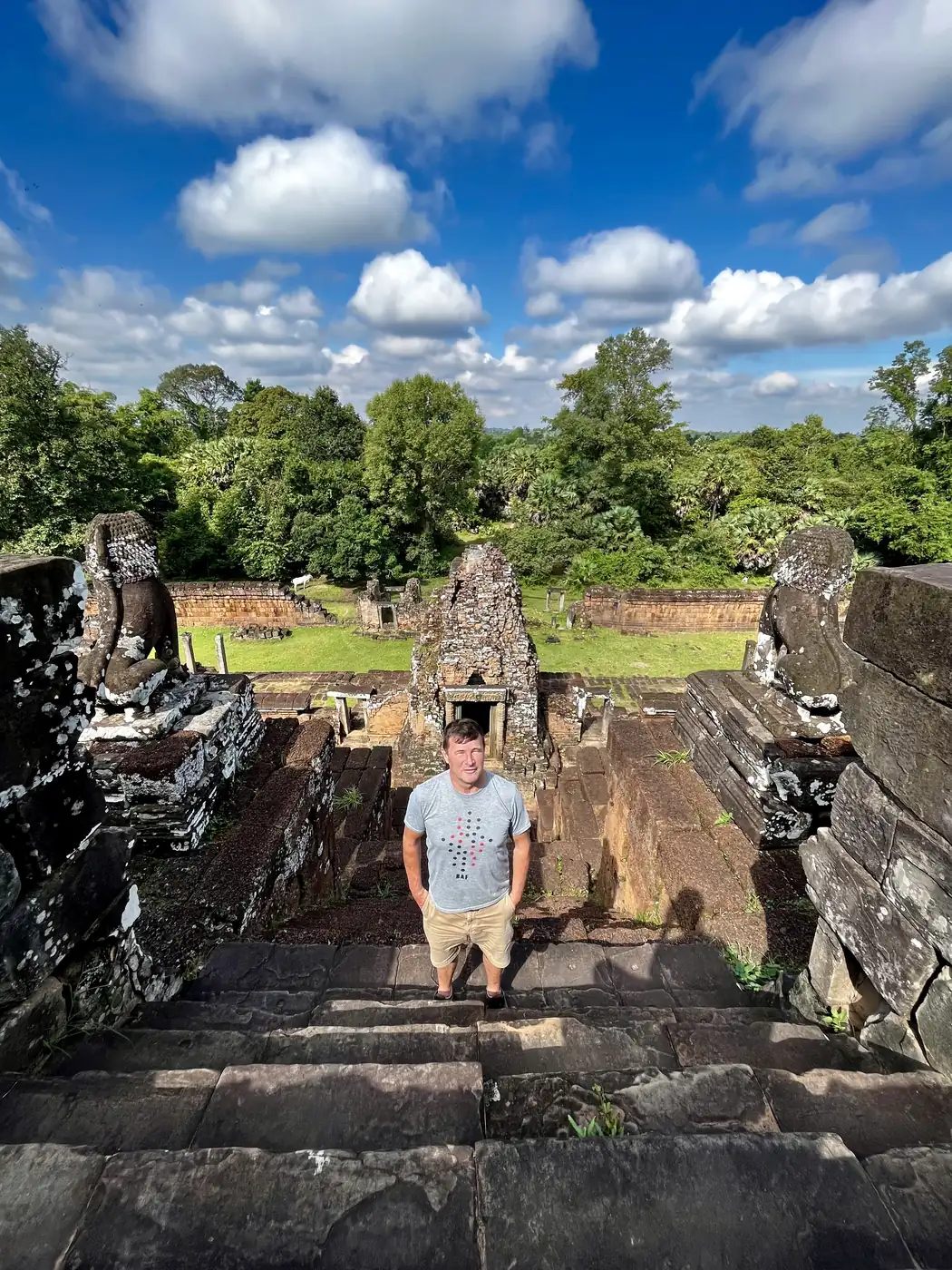
Pre Rup, consecrated in the second half of the 10th century, is a temple-mountain in brick and laterite, with five towers on a high terrace. Its red colour is beautiful in the morning or late afternoon light, and it is one of the classic places to watch the sunset.
Ta Som and Preah Khan
On the Grand Circuit, Ta Som is a small temple from the end of the 12th century, known for its eastern gate entirely swallowed by a strangler fig. Preah Khan, built by Jayavarman VII in 1191, is a vast temple with long corridors of doorways, partly in ruins and much quieter than Ta Prohm.
Banteay Srei and the Roluos group
Banteay Srei, about 25 km north-east of the main temples, is a small 10th-century temple in pink sandstone, famous for the finest carvings of Angkor. We did not have time for it, but it is worth half a day if you stay longer. South-east of Siem Reap, the Roluos group gathers the oldest temples of the area, including Bakong, the first great temple-mountain of the Khmer kings, which we saw on our first day.
Angkor Itinerary: One, Two or Three Days
- One day: sunrise at Angkor Wat, then Ta Prohm, the Bayon and the gates of Angkor Thom. It is a long and tiring day, but it covers the essentials.
- Two days: the Small Circuit on the first day (Angkor Wat, Angkor Thom, Ta Prohm, Banteay Kdei), the Grand Circuit on the second (Preah Khan, Neak Pean, Ta Som, East Mebon, Pre Rup).
- Three days: add Banteay Srei, the Roluos group or the floating villages of the Tonle Sap. This is close to what we did: Roluos and Kampong Phluk on day 1, sunrise and the two circuits on day 2, Angkor Wat by day on day 3.
Whatever the length of your stay, start early. The temples open at sunrise, the light is softer, and the heat and the tour groups arrive from 9:00 AM.
Watching the Sunrise at Angkor Wat
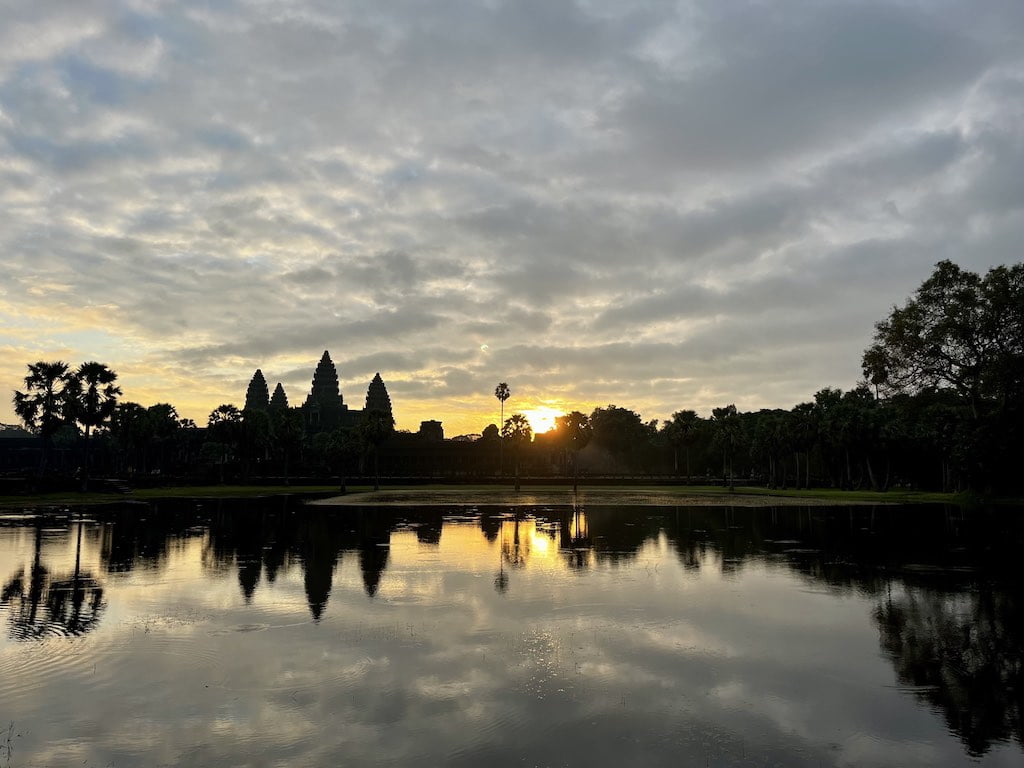
The classic spot is the north pond, on the left after the western entrance: the five towers are reflected in the water, and the sun rises behind them. The ticket office opens at 5:00 AM, and Angkor Wat opens at the same time for the sunrise, so leave Siem Reap around 5:00 AM. If you buy your pass after 4:30 PM the day before, it is valid for the next day, which avoids the queue in the morning.
In mid-October, at the end of the rainy season, the sky was cloudy, but the sun came through just above the horizon, to the right of the towers, around 6:15 AM.

Kampong Phluk and the Tonle Sap Lake
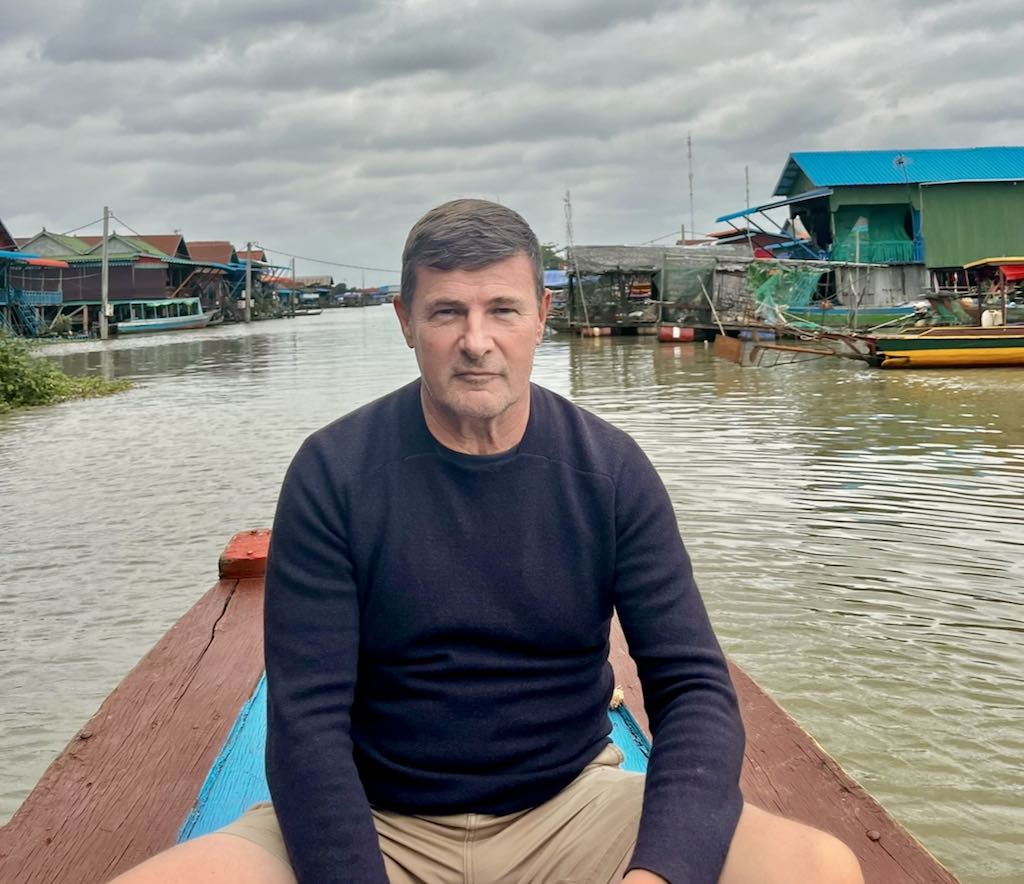
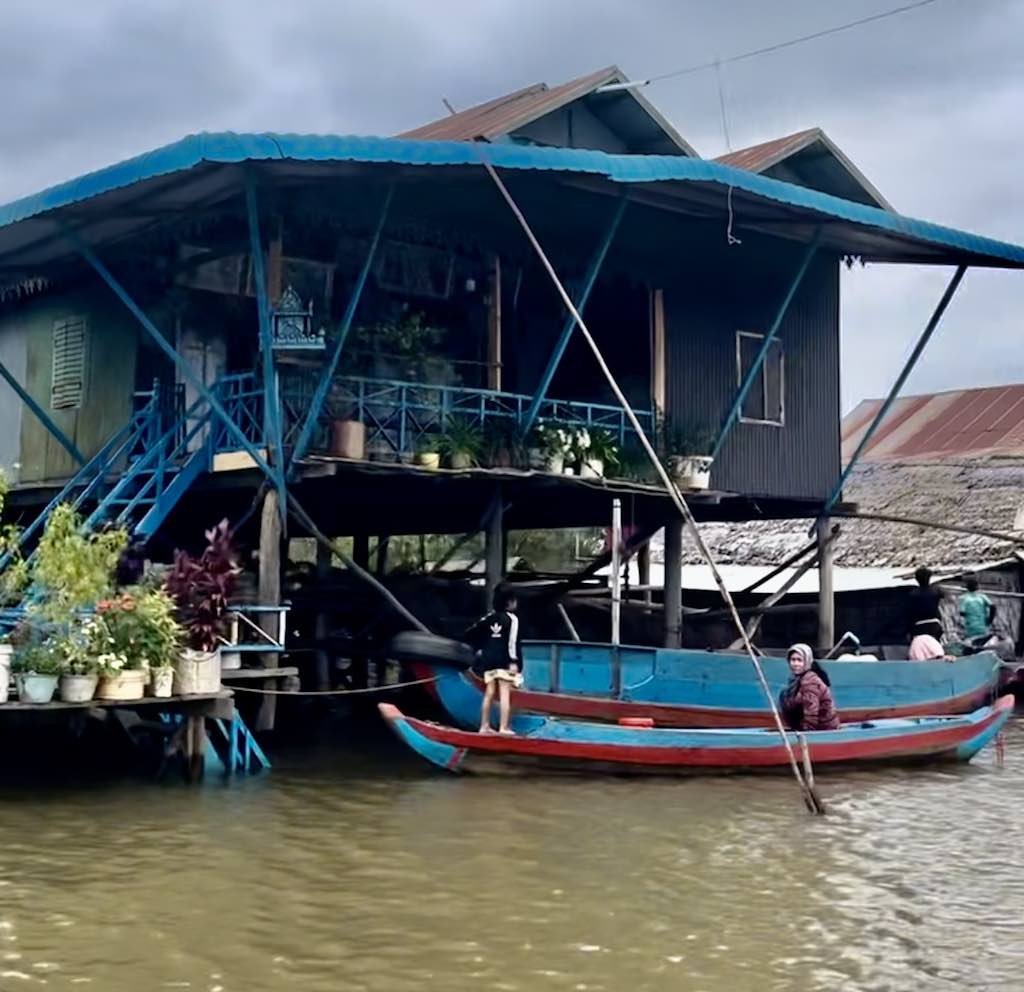
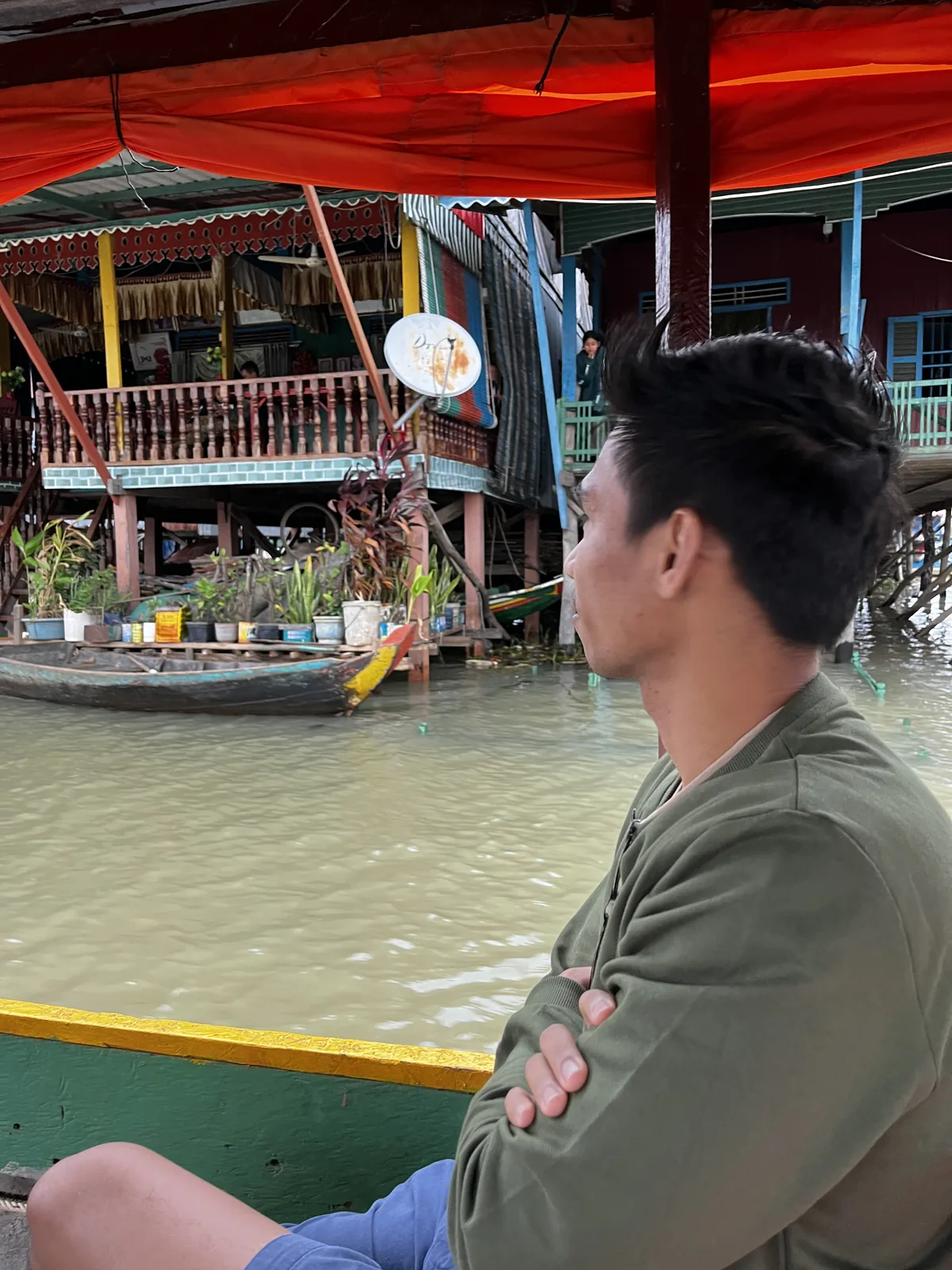
The Tonle Sap is the largest lake in Southeast Asia, and its size changes with the seasons: in the rainy season, the Mekong pushes its waters back and the lake grows several times larger. Kampong Phluk, south-east of Siem Reap at the edge of the lake, is a village of fishermen whose wooden houses stand on stilts several metres high, to stay above the water in the rainy season.
In October, the water was high, and the boat took us between the houses on stilts, then out onto the open lake. We had lunch in a floating restaurant on stilts. The boat trip is paid at the pier, separately from the Angkor Pass.
Angkor Pass: Tickets, Prices and Opening Hours
- Prices: $37 for one day, $62 for three days and $72 for seven days. The three-day pass can be used on non-consecutive days within a limited period, printed on the ticket.
- Where to buy: at the official Angkor ticket office on the road from Siem Reap, open from 5:00 AM to 5:30 PM, or online on the Angkor Enterprise website. Cards are accepted.
- Opening hours: Angkor Wat from 5:00 AM to 6:00 PM; Pre Rup and Phnom Bakheng from 6:00 AM to 7:00 PM for the sunset; the other temples from 6:00 AM to 6:30 PM.
- Children: under 12 enter free, with a passport as proof of age.
- Checks: keep the pass with you, it is checked at the entrance of each major temple.
Getting to Angkor and Getting Around
Flying to Siem Reap
We flew from Bangkok to Siem Reap, a flight of about one hour. Since October 2023, flights land at the new Siem Reap-Angkor International Airport, about 50 km east of the city, which takes a little over an hour by car or shuttle bus; the old airport, where we landed in 2022, was only a few kilometres from town. There are also buses from Bangkok, which take most of a day. Flights and buses can be compared on 12Go.
Getting around the temples
The temples are too far apart to walk between them. The easiest way is a tuk-tuk with a driver for the day, as we did for three days; your hotel can arrange it, and the price depends on the circuit. A car with air conditioning is more comfortable in the hot season, and some visitors cycle around the Small Circuit.
Best Time to Visit Angkor
The best season is from November to March, when it is dry and cooler, but it is also the busiest. April and May are the hottest months. From June to October, the rainy season brings short, heavy showers, mostly in the afternoon, green rice fields, full moats and far fewer visitors.
We went in mid-October, at the end of the rainy season: cloudy mornings, a few showers, the Tonle Sap at its highest and the countryside very green.
Where to Stay in Siem Reap
All the hotels are in Siem Reap, a few kilometres from the temples. We stayed at The Cyclo d’Angkor Boutique Hotel. Our tuk-tuk driver picked us up at the door every morning.
- The centre, around Pub Street and the Old Market: restaurants, bars and night markets within walking distance.
- The Wat Bo area, east of the river: calmer, with many small boutique hotels.
- The road to the temples (Charles de Gaulle Road): larger resorts, closer to the park.
See all the hotels in Siem Reap.
Practical Tips for Visiting Angkor
- Visa: most nationalities need a visa for Cambodia, available as an e-visa online or on arrival at the airport. Check the current rules before you go.
- Money: US dollars are used everywhere in Siem Reap, alongside the Cambodian riel, which is used for small change.
- Dress code: cover your shoulders and knees in the temples; it is strictly checked at the entrance to the Bakan of Angkor Wat.
- Heat: take water, a hat and sunscreen, and plan a break in the middle of the day.
- Respect: do not climb on fragile structures, and do not touch or sit on the carvings.
- Footwear: wear shoes with a good grip; the stairs of the temple-mountains are very steep.
Read More
- Thailand travel guide: my five trips, from Bangkok to the islands.
- Bangkok travel guide: the city where my trip to Angkor started.
- Getting around Thailand: flights, ferries and Grab.
- My top 5 destinations in Southeast Asia.
Angkor FAQ
How many days do you need for Angkor?
Three days is ideal to see the main temples without rushing. One day is enough for Angkor Wat, the Bayon and Ta Prohm, but it is a very full day.
Is Angkor in Cambodia or in Laos?
Angkor is in Cambodia, near the city of Siem Reap. It is sometimes confused with Wat Phou, a Khmer temple in southern Laos, but the Angkor temples are all in Cambodia.
How much is the Angkor Pass?
The Angkor Pass costs $37 for one day, $62 for three days and $72 for seven days. Children under 12 enter free.
What time does Angkor Wat open for sunrise?
Angkor Wat opens at 5:00 AM, at the same time as the ticket office. Plan to arrive between 5:15 and 5:30 AM to get a place in front of the north pond.
Is Angkor Wat the same as Angkor?
No. Angkor is the whole archaeological park, with hundreds of temples. Angkor Wat is its largest and most famous temple.
How do you get from Bangkok to Angkor?
The fastest way is a one-hour flight from Bangkok to Siem Reap, then a transfer of a little over an hour from the new airport. There are also direct buses, which take most of a day.
Do you need a guide to visit Angkor?
No. We visited on our own with a tuk-tuk driver for three days. A guide helps to understand the bas-reliefs and the history, but it is not required.
When is the best time to visit Angkor?
From November to March, during the dry and cooler season. The rainy season, from June to October, is greener and much less crowded.
Can you visit Kampong Phluk with the Angkor Pass?
No. The floating village is outside the archaeological park; the boat trip is paid separately at the pier.