Alsace, France: Best Towns, Villages & Wine Route 2026
By Blaise Jaeger · Updated July 27, 2026
Why Visit Alsace?
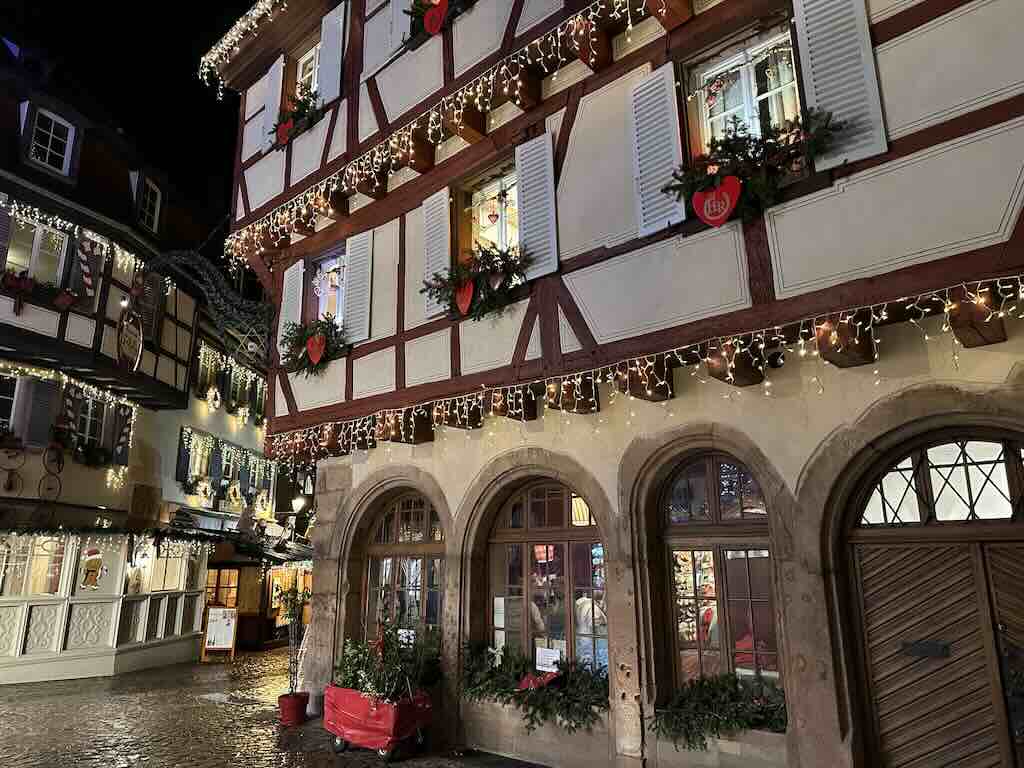
Alsace is the France of storybooks: half-timbered houses painted in candy colours, geranium-filled window boxes, medieval villages wrapped in vineyards, and a food-and-wine culture that borrows the best from both France and Germany. Tucked against the Rhine in the country’s north-east, this is the region that gives you Colmar’s canals, Strasbourg’s soaring Gothic cathedral, the 170 km Alsace Wine Route, and the oldest, most magical Christmas markets in Europe.
My family comes from here, so this is not a guide written from a hotel lobby. It is the Alsace I grew up visiting every year — the villages, the winstubs, the smell of mulled wine in December. Whether you have a long weekend or a full week, here is everything you need to plan the perfect trip, town by town.
Alsace at a Glance
Where is Alsace? Alsace sits in the far north-east of France, along the Rhine river that forms the border with Germany. It is part of the wider Grand Est region and stretches roughly 190 km from north to south, hemmed in by the Vosges mountains to the west.
What is the capital of Alsace? Strasbourg is the historic capital and largest city, and also the official seat of the European Parliament. Colmar, 70 km to the south, is the unofficial “capital of Alsatian wine” and the gateway to the vineyards.
- Main cities: Strasbourg, Colmar, Mulhouse
- Best time to visit: May–September for vineyards and warm evenings; late November–December for the Christmas markets
- How long you need: 3 days for the highlights, 5–7 days to slow down and drive the Wine Route
- Getting there: Direct TGV from Paris to Strasbourg in about 1 h 46; airports at Strasbourg-Entzheim and EuroAirport Basel-Mulhouse
- Language: French, with the Alsatian dialect (a Germanic language) still spoken by older generations
A Personal Connection to Alsace
Alsace has always been close to my heart because my roots are here. My father was born in Obernai and my mother in Colmar, and my parents were married at Mont Sainte-Odile, the abbey perched high above the Alsace plain. Every Christmas until I was 16, I visited my grandmothers in Strasbourg — I still measure all other Christmas markets against the ones I grew up with.
The connection runs even deeper: my great-grandfather helped fund the Alsatian Museum (Musée Alsacien) in Strasbourg, which preserves the region’s folk traditions. So when I recommend a village, a winstub or a glass of Pinot Noir, it comes from a lifetime of family visits rather than a single trip. Alsace, for me, will always be home — and that is exactly why I love sharing it.
The Best Towns and Villages in Alsace
The magic of Alsace is that its “cities” are really a string of small, walkable towns and villages, most of them less than an hour apart. Here are the ones worth building your trip around, from the two main cities to the fairytale wine villages in between.
Strasbourg — The Capital
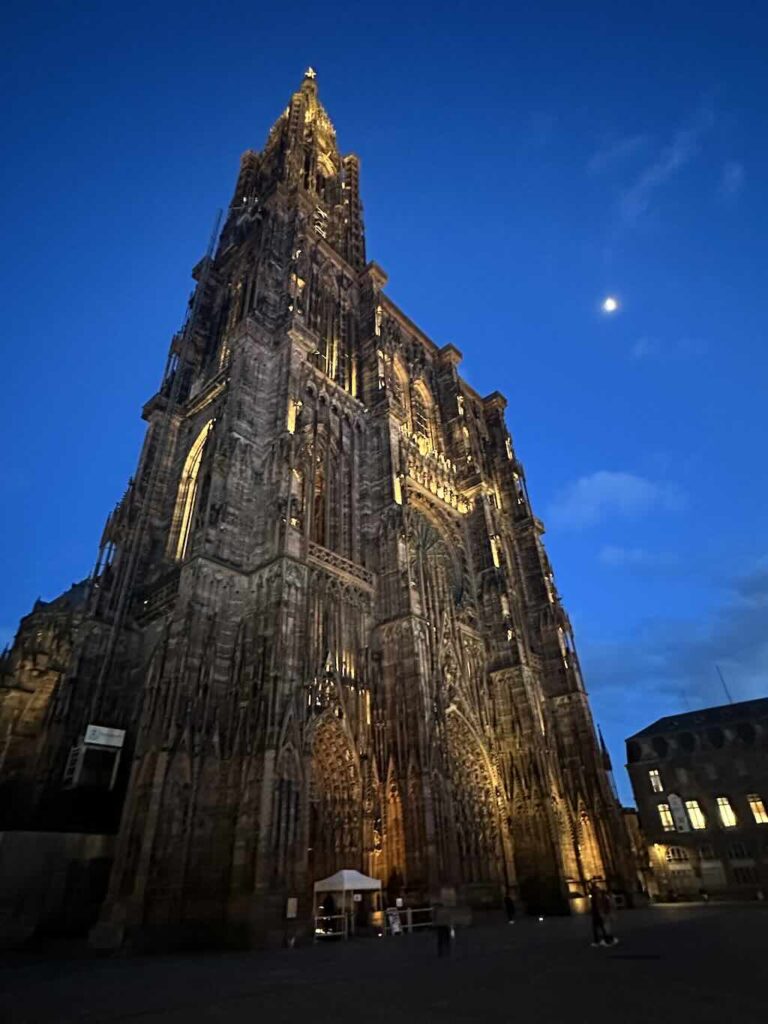
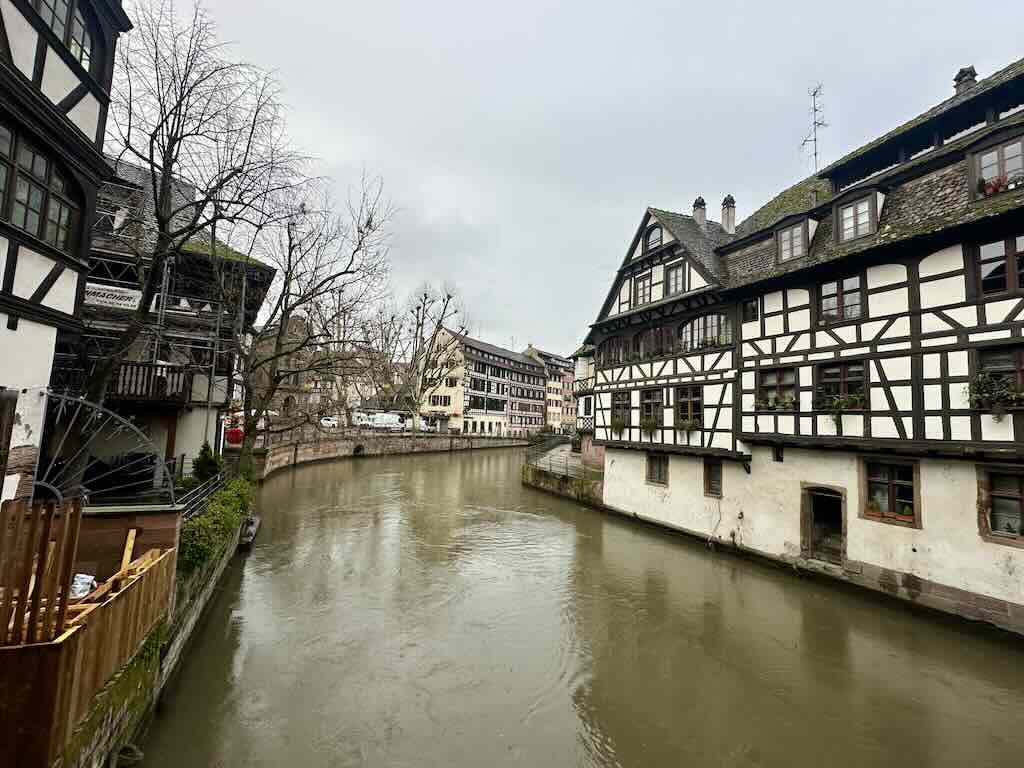
Strasbourg blends medieval charm with European modernity. Don’t miss the Cathédrale Notre-Dame de Strasbourg, one of France’s finest Gothic churches and for centuries the tallest building in the world; the fairytale canals of La Petite France; a boat tour on the Ill river past the European Parliament; and the museums of the Palais Rohan and the Alsatian Museum. Give it at least a full day.
Colmar — The Capital of Alsatian Wine
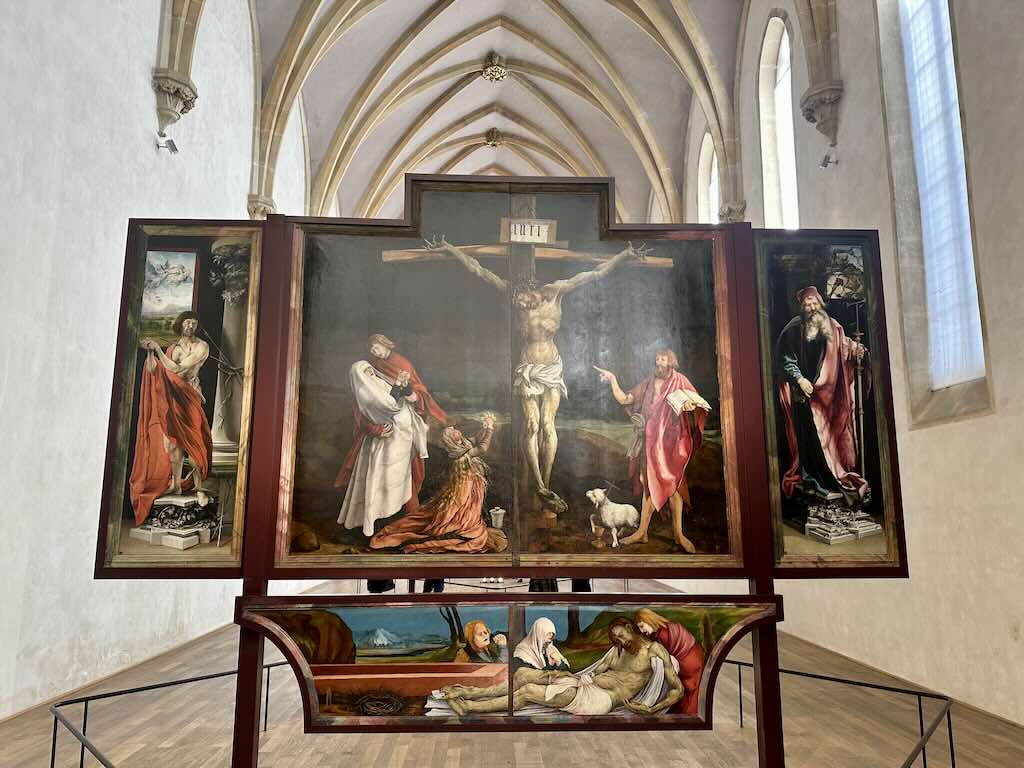
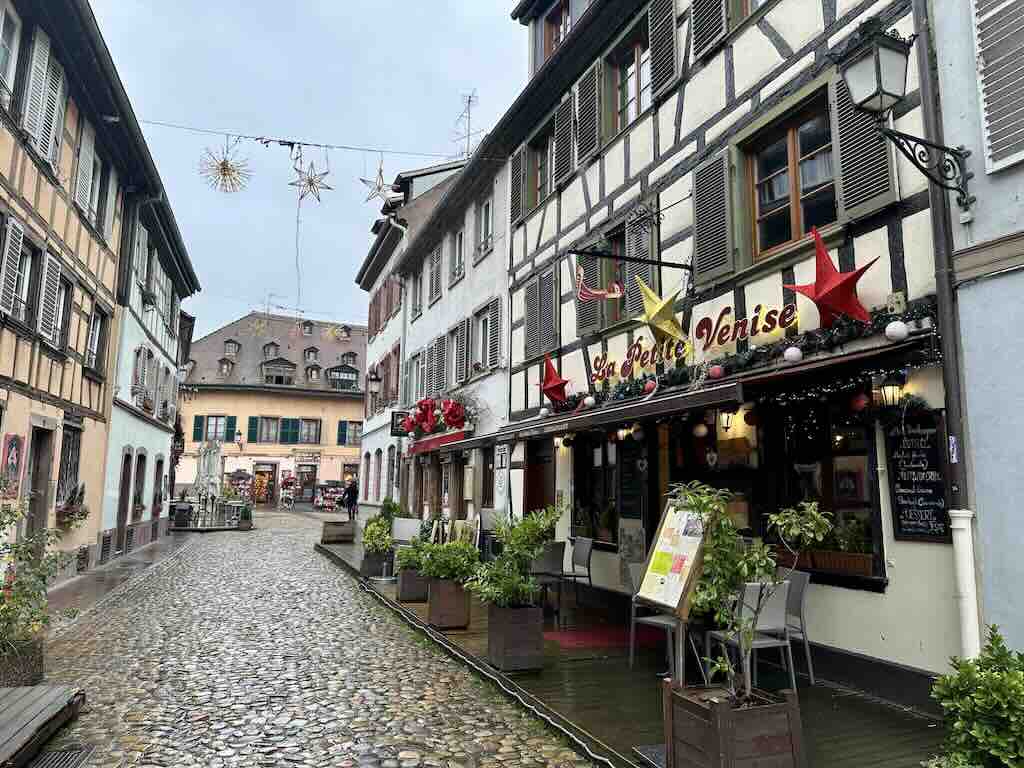
Often called the “capital of Alsatian wine,” Colmar looks like a scene from a fairytale, with colourful half-timbered houses, cobbled lanes and canals. Stroll through Little Venice (La Petite Venise), visit the Unterlinden Museum to see the famous Isenheim Altarpiece (open Wed–Mon 9 AM–6 PM, €14 adults / €9 for ages 12–17, free under 12), and stop by the Bartholdi Museum, dedicated to the Colmar-born sculptor of the Statue of Liberty. In December it hosts one of the most beautiful Christmas markets in France.
Riquewihr
Ranked among the “Most Beautiful Villages of France,” Riquewihr sits in the middle of the vineyards and looks almost untouched since the 16th century. Walk through the Dolder Tower, the historic entrance gate, admire the flower-decked half-timbered houses, and taste Alsace Grand Cru wines in one of the many cellars. Its Christmas market is pure Alsatian storybook.
Ribeauvillé
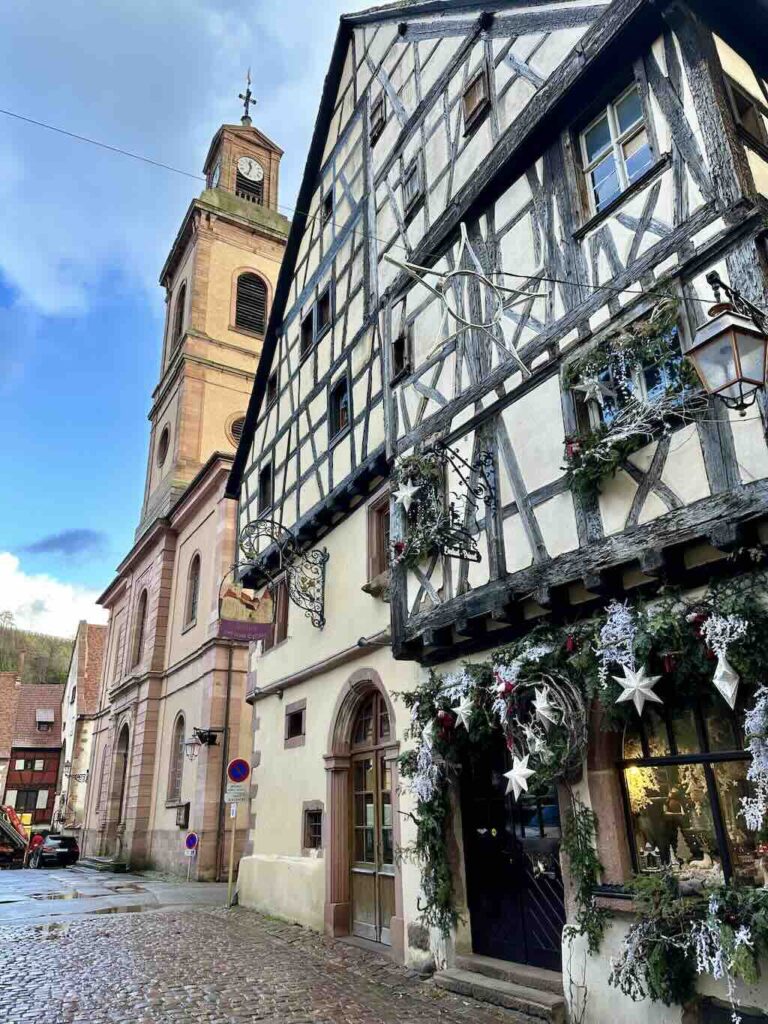
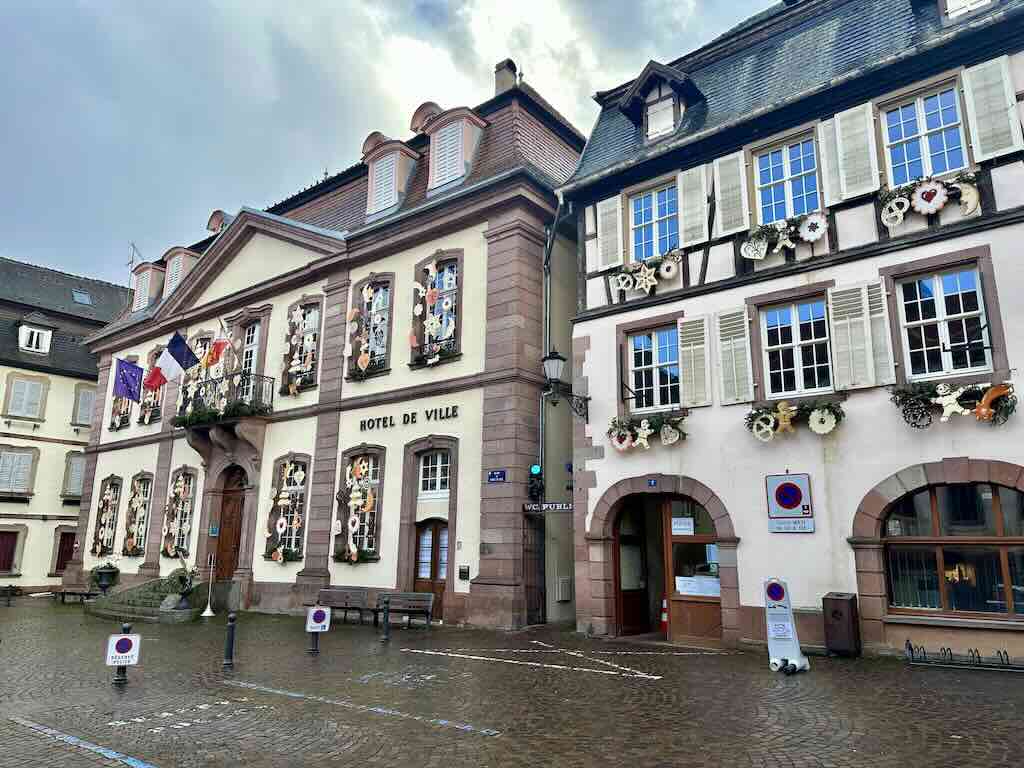
A few minutes from Riquewihr, Ribeauvillé is another jewel on the Wine Route, watched over by three ruined castles including Saint-Ulrich, which rewards the climb with sweeping views. Wander the streets lined with wine shops and winstubs, taste at the local vineyards, and visit the nearby stork park at Hunawihr to see Alsace’s iconic birds.
Eguisheim
Often called the birthplace of Alsatian wine, Eguisheim is built in concentric rings around its castle and was once voted France’s Favourite Village. Its perfectly preserved circular lanes and flower-covered façades make it one of the most photogenic stops on the whole route — and it is only 15 minutes from Colmar.
Kaysersberg
Crowned “France’s Favourite Village” in 2017, Kaysersberg is the birthplace of Nobel laureate Albert Schweitzer. A fortified bridge, a ruined imperial castle on the hill, and a cluster of excellent wine estates make it a must, especially in autumn when the vineyards turn gold.
Obernai
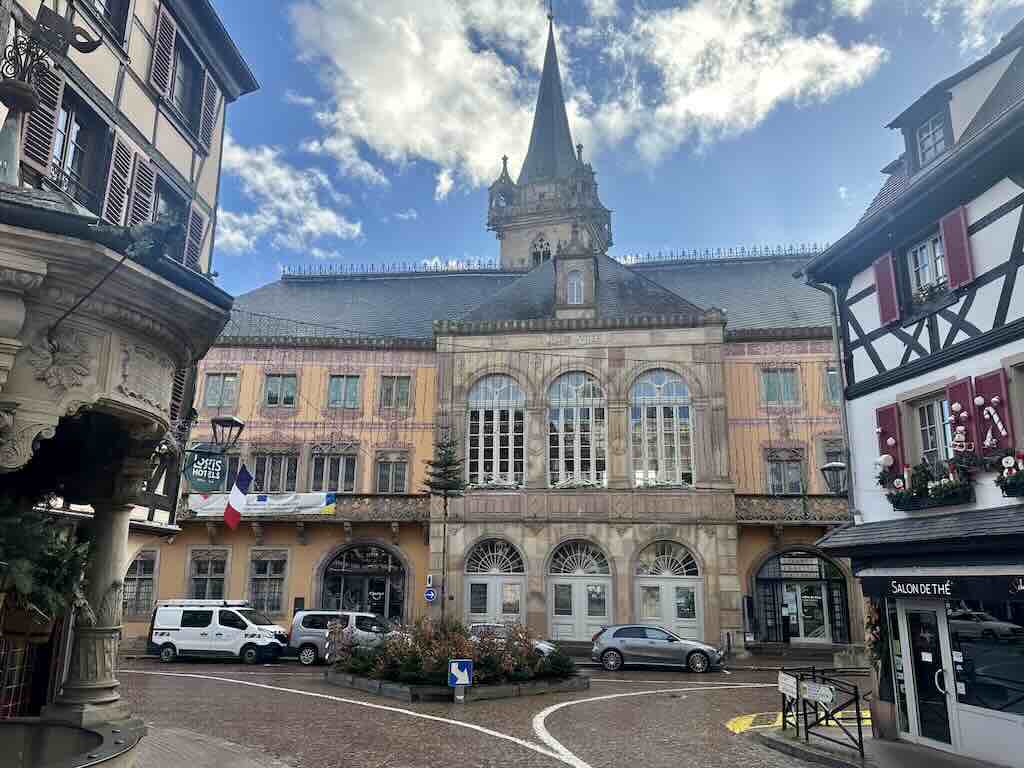
My father’s birthplace, Obernai is one of the liveliest towns in northern Alsace. Walk the old ramparts and the historic centre with its market square, climb to Mont Sainte-Odile for panoramic views over the plain (where my parents were married), and sample Munster cheese and local charcuterie in a traditional winstub.
Turckheim, Bergheim & More Wine Villages
If you have extra time, add Turckheim (famous for its nightly watchman who still tours the streets with a lantern), the fortified village of Bergheim, and Hunawihr with its fortified church and stork reserve. Each is small enough to see in an hour and rewards you with far fewer crowds than Colmar or Riquewihr.
The Alsace Wine Route
The Alsace Wine Route (Route des Vins d’Alsace) is the oldest wine route in France, running about 170 km from Marlenheim in the north to Thann in the south and threading through more than 70 wine-growing villages. It is the single best way to experience the region: rent a car, pick a handful of villages, and let the vineyards, tasting cellars and Grand Cru hillsides set the pace.
Look for the “Grand Cru” signs marking the 51 top-rated vineyard sites, and don’t be shy about stopping at a family domaine for a free or low-cost tasting — this is how Alsatians expect you to shop for wine. Autumn (September–October), during and just after the harvest, is the most atmospheric time to drive it. You can find the official village-by-village map on the Alsace Wine Route website.
Food and Wine in Alsace
Alsace has one of the most distinctive cuisines in France — hearty, generous and unmistakably shaped by its French and German heritage. Eat in a winstub, the cosy Alsatian version of a bistro, and pair everything with a crisp local white.
Dishes to Try
- Flammekueche (tarte flambée) — a thin, crisp flatbread topped with crème fraîche, onions and bacon
- Choucroute garnie — sauerkraut slow-cooked with sausages and pork, the region’s signature dish
- Baeckeoffe — a slow-baked casserole of marinated meats and potatoes
- Kugelhopf — a fluted brioche-like cake, perfect with morning coffee
- Bretzel and Munster cheese — the pretzel and the pungent local cheese you’ll find at every market
Wines of Alsace
Alsace is one of the few French regions that labels its wines by grape rather than by estate. The stars are Riesling and Gewürztraminer, joined by Pinot Gris, Sylvaner, Muscat and the sparkling Crémant d’Alsace. The only red is Pinot Noir — my personal favourite here. For dessert, seek out the sweet late-harvest Vendanges Tardives.
Christmas Markets in Alsace
Alsace is the spiritual home of the European Christmas market, and for many visitors — including me, growing up — this is the reason to come. The markets typically run from late November to Christmas Eve, filling the town squares with wooden chalets, mulled wine (vin chaud), bredele biscuits and twinkling lights.
- Strasbourg — the Christkindelsmärik, dating back to 1570, is the oldest Christmas market in France and the largest in Alsace, spread across the city centre beneath a giant tree on Place Kléber
- Colmar — several interconnected markets set among the canals and half-timbered houses, arguably the prettiest of all
- Riquewihr, Kaysersberg & Eguisheim — smaller, intimate village markets that feel like stepping inside an advent calendar
Book accommodation months ahead for December, and consider staying in Colmar or a village and taking the train into Strasbourg for the day to avoid the busiest crowds.
A Brief History of Alsace
Alsace’s unique character comes from its history on the fault line between France and Germany. Over the centuries it changed hands several times — French under Louis XIV, German after 1871, French again after 1918, occupied during the Second World War, and definitively French since 1945. That back-and-forth is why the region feels culturally distinct: German-style architecture and food, French language and identity, and a proud regional dialect of its own.
You’ll often hear “Alsace-Lorraine” — the historical name for the territory annexed by Germany between 1871 and 1918. Today Lorraine is a separate area to the west; Alsace itself is what you’ll be exploring, and its layered past is written into every fortified gate, cathedral and winstub you visit.
Alsace Itinerary: 3 Perfect Days
- Day 1 — Strasbourg: the cathedral, La Petite France, a boat tour on the Ill, and the Alsatian Museum, ending with a choucroute dinner in a winstub
- Day 2 — Colmar & the northern villages: Little Venice and the Unterlinden Museum in the morning, then Eguisheim and a vineyard tasting in the afternoon
- Day 3 — The Wine Route: Riquewihr, Ribeauvillé and Kaysersberg by car, with stops for Grand Cru tastings and lunch in a village square
With five to seven days you can add Obernai and Mont Sainte-Odile in the north, the wine villages around Barr, and a slower pace on the Wine Route — exactly how I’d recommend doing it if you can.
Where to Stay in Alsace
The best base depends on your trip: Strasbourg for city life and easy train access, Colmar for the vineyards and the prettiest old town, or a wine village such as Riquewihr or Eguisheim if you want to wake up surrounded by vines. Here are reliable picks I’d point friends to.
In and Around Colmar
- La Maison des Têtes — a 5-star Relais & Châteaux in a Renaissance landmark in the heart of Colmar
- Hostellerie Le Maréchal — a romantic canal-side hotel in Little Venice
- James Boutique Hôtel — a stylish, well-priced mid-range option a short walk from the old town
👉 Check availability and prices for hotels in Colmar on Booking.com
In Strasbourg
- Cour du Corbeau, MGallery — a beautifully restored 16th-century inn steps from La Petite France
- Régent Petite France & Spa — a luxury waterfront hotel in a former ice factory
- Hôtel Gutenberg — a charming, central mid-range choice near the cathedral
👉 Check availability and prices for hotels in Strasbourg on Booking.com
Practical Travel Tips for Visiting Alsace
- Getting there: direct TGV trains link Paris (Gare de l’Est) to Strasbourg in about 1 h 46. The nearest airports are Strasbourg-Entzheim and EuroAirport Basel-Mulhouse (about 45 minutes from Colmar).
- Getting around: Strasbourg, Colmar and many wine villages are connected by train, but a car is by far the best way to explore the Wine Route and reach the smaller villages.
- Best time to visit: spring and summer for the blooming vineyards and long evenings; late November to December for the Christmas markets.
- Book ahead: hotels sell out fast in December and during the autumn harvest, so reserve well in advance.
🚗 Planning to drive the Wine Route? Compare car hire prices in Strasbourg on DiscoverCars.
Explore More of France

Paris
Discover the best of Paris with must-visit attractions, hidden gems, and expert tips for an unforgettable stay. Insider tips from a real Parisian who was born in Paris!
France
Discover the best of France, from iconic landmarks and charming villages to breathtaking landscapes and local secrets. Firsthand tips from a real French local!
Alps Mountain
Discover the best of the French Alps with breathtaking peaks, scenic hikes, charming villages, and expert travel tips for an unforgettable mountain adventure.
Frequently Asked Questions About Alsace
Where is Alsace in France?
Alsace is in the far north-east of France, along the Rhine river bordering Germany. It belongs to the Grand Est region and lies between the Vosges mountains and the German states of Baden-Württemberg and the Rhineland.
What is the capital of Alsace?
Strasbourg is the capital of Alsace and its largest city. It is also home to the European Parliament. Colmar, further south, is known as the capital of Alsatian wine.
What are the best towns and villages to visit in Alsace?
The essential stops are Strasbourg and Colmar, plus the wine villages of Riquewihr, Ribeauvillé, Eguisheim, Kaysersberg and Obernai. Add Turckheim, Bergheim and Hunawihr if you have more time.
How many days do you need in Alsace?
Three days is enough for Strasbourg, Colmar and a taste of the Wine Route. Five to seven days lets you slow down, drive the full route and explore the northern towns like Obernai and Mont Sainte-Odile.
What is the best time to visit Alsace?
Late spring to early autumn (May–October) is ideal for the vineyards, hiking and warm evenings. Late November to Christmas Eve is magical for the Christmas markets, though it is cold and busy.
How do you get to Alsace?
The easiest way is the direct TGV from Paris to Strasbourg (about 1 h 46). You can also fly into Strasbourg-Entzheim or EuroAirport Basel-Mulhouse, which is roughly 45 minutes from Colmar.
Do you need a car in Alsace?
Not for the cities — Strasbourg and Colmar are well connected by train. But a car is the best way to explore the Alsace Wine Route and reach the smaller villages, many of which have limited public transport.
Is Alsace French or German?
Alsace is French, but it changed hands between France and Germany several times between 1871 and 1945. That history gives it a unique blend of German-influenced architecture and cuisine with French language and identity, plus its own Alsatian dialect.
Which is better to visit, Colmar or Strasbourg?
Both are worth visiting. Strasbourg is larger, with a grand cathedral and more city energy, while Colmar is smaller, more picturesque and closer to the vineyards. Ideally, base yourself in one and day-trip to the other — they are only about 30 minutes apart by train.
Is Alsace worth visiting?
Absolutely. Alsace offers some of the prettiest villages in France, a world-class wine route, distinctive food, and the best Christmas markets in Europe — all in a compact area that’s easy to explore in a few days.