Chiang Rai Travel Guide: 3 Days of Temples, Tea and the Golden Triangle
By Blaise Jaeger · Updated October 11, 2026
Chiang Rai is the far north of Thailand: a small, relaxed city surrounded by mountains, tea plantations and some of the most extraordinary temples in the country, with the Golden Triangle an hour away. I spent three days there in October 2024, from the 17th to the 19th, and it was one of the highlights of my trips in Thailand.
This guide follows those three days: the White and Blue Temples, Wat Huay Pla Kang, the Golden Triangle and Chiang Saen, the tea hills, the night market, and where I slept and ate.
Where Is Chiang Rai?
Chiang Rai is the northernmost province of Thailand, bordering Myanmar and Laos. The city sits on the Kok River, about 180 km north-east of Chiang Mai and an hour and a quarter by road from the Golden Triangle, where Thailand, Laos and Myanmar meet on the Mekong. It is smaller and calmer than Chiang Mai, and the best base to explore the far north.
My 3-Day Chiang Rai Itinerary
- Day 1: arrival by plane, and a night in a glamping dome on a lake outside the city.
- Day 2: a full day north of the city: Wat Phra That Pha Ngao and its skywalk, the Golden Triangle, Wat Tham Pla, a tea plantation and a Karen village.
- Day 3: the temples around the city: the clock tower, the White Temple, Wat Huay Pla Kang, Wat Phra Kaew and the Blue Temple, then the Saturday night market.
Three days is the right length: two would be enough for the temples and the Golden Triangle, but you would have to rush.
Day 1: Arriving in Chiang Rai
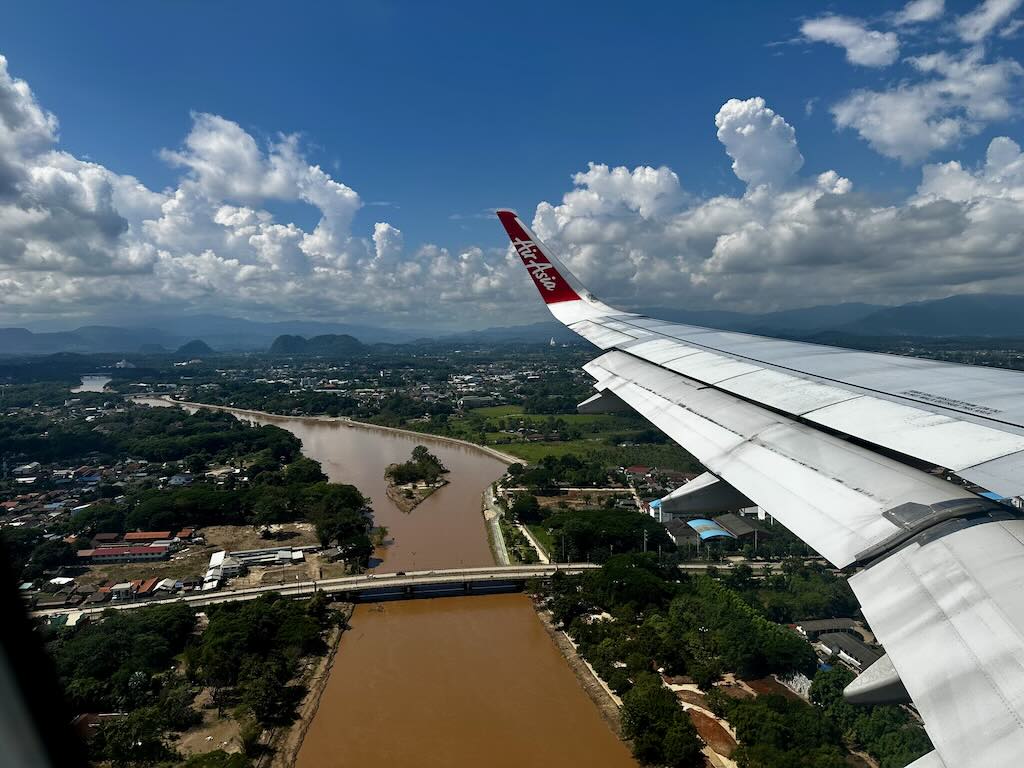
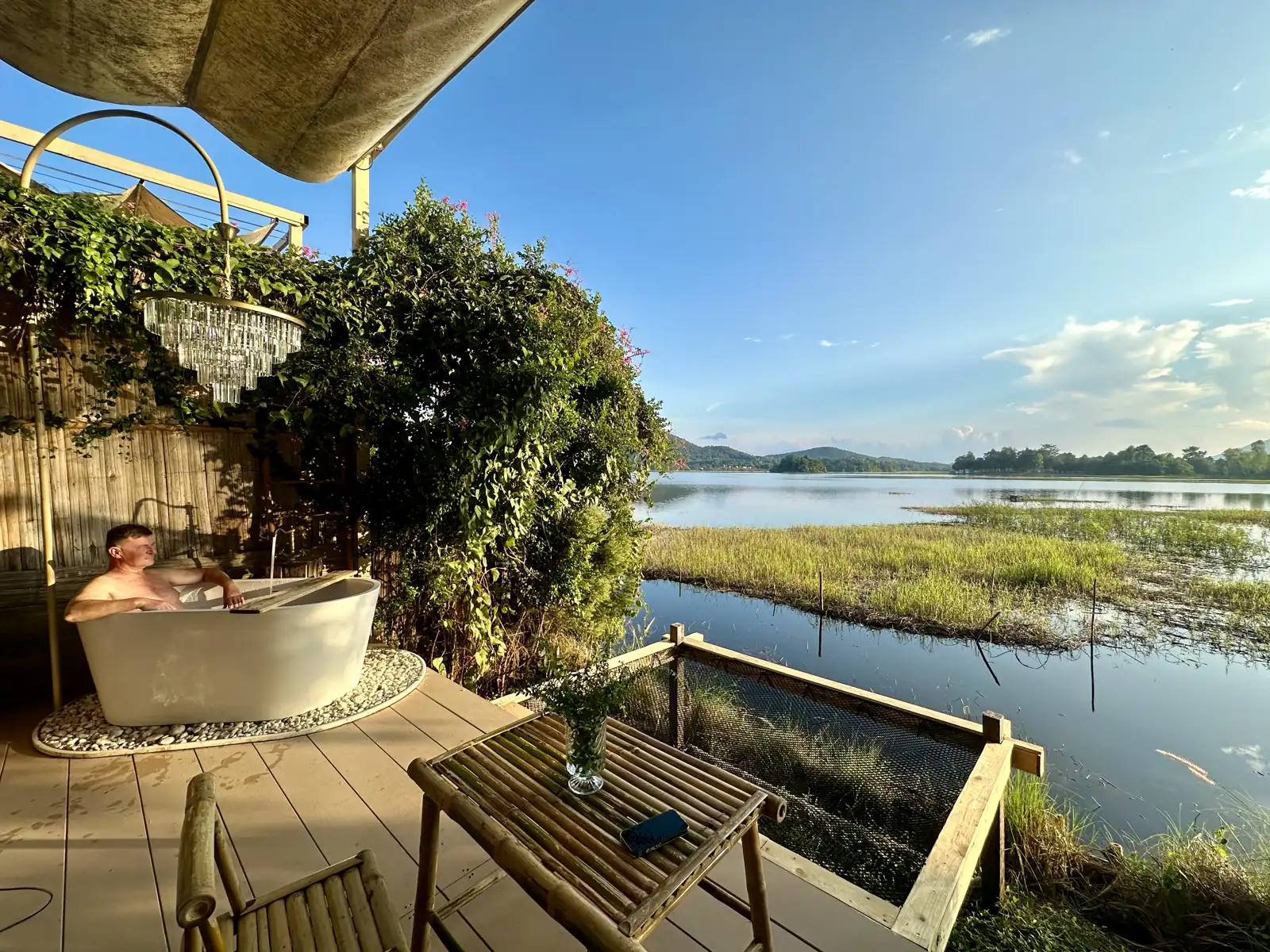
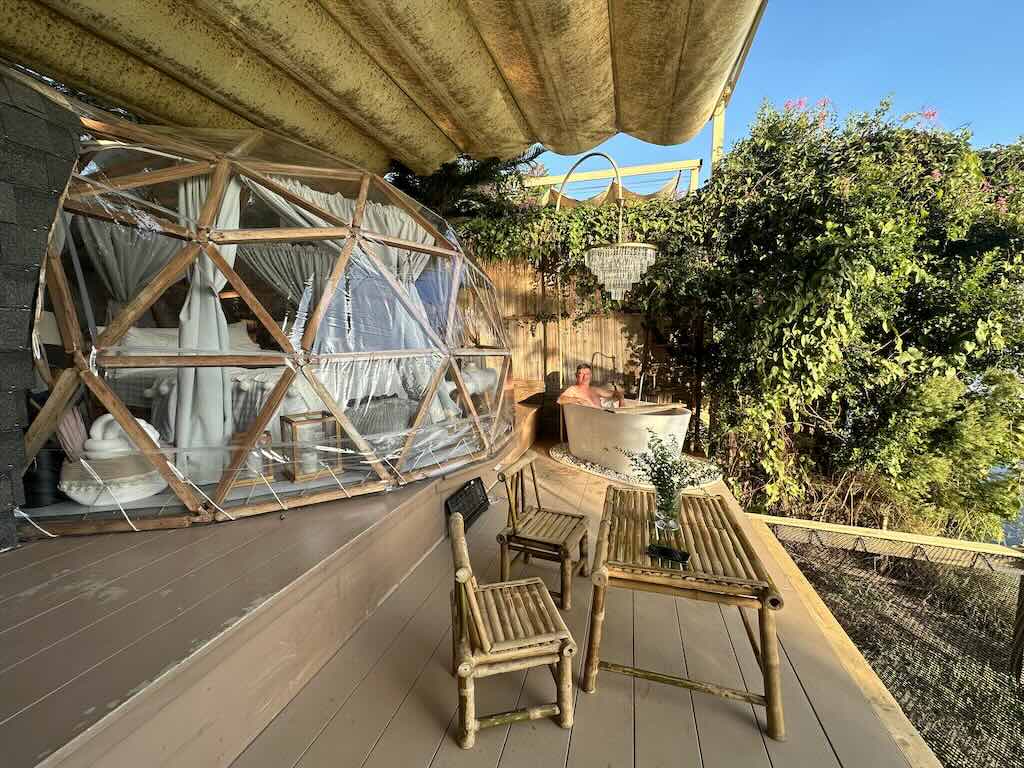
I flew in on October 17, a few weeks after the big floods of September 2024: from the plane, the Kok River was still brown and swollen. Instead of the city, I spent the first night at 1000 Stars, a small glamping place on the edge of a lake, with four glass domes, a café with a slightly kitsch decoration, and a bathtub facing the water.
Day 2: The Golden Triangle and Chiang Saen
The second day was a long loop north of the city, by car with a driver. Most tours of the Golden Triangle follow a similar route.
Wat Phra That Pha Ngao and Its Skywalk
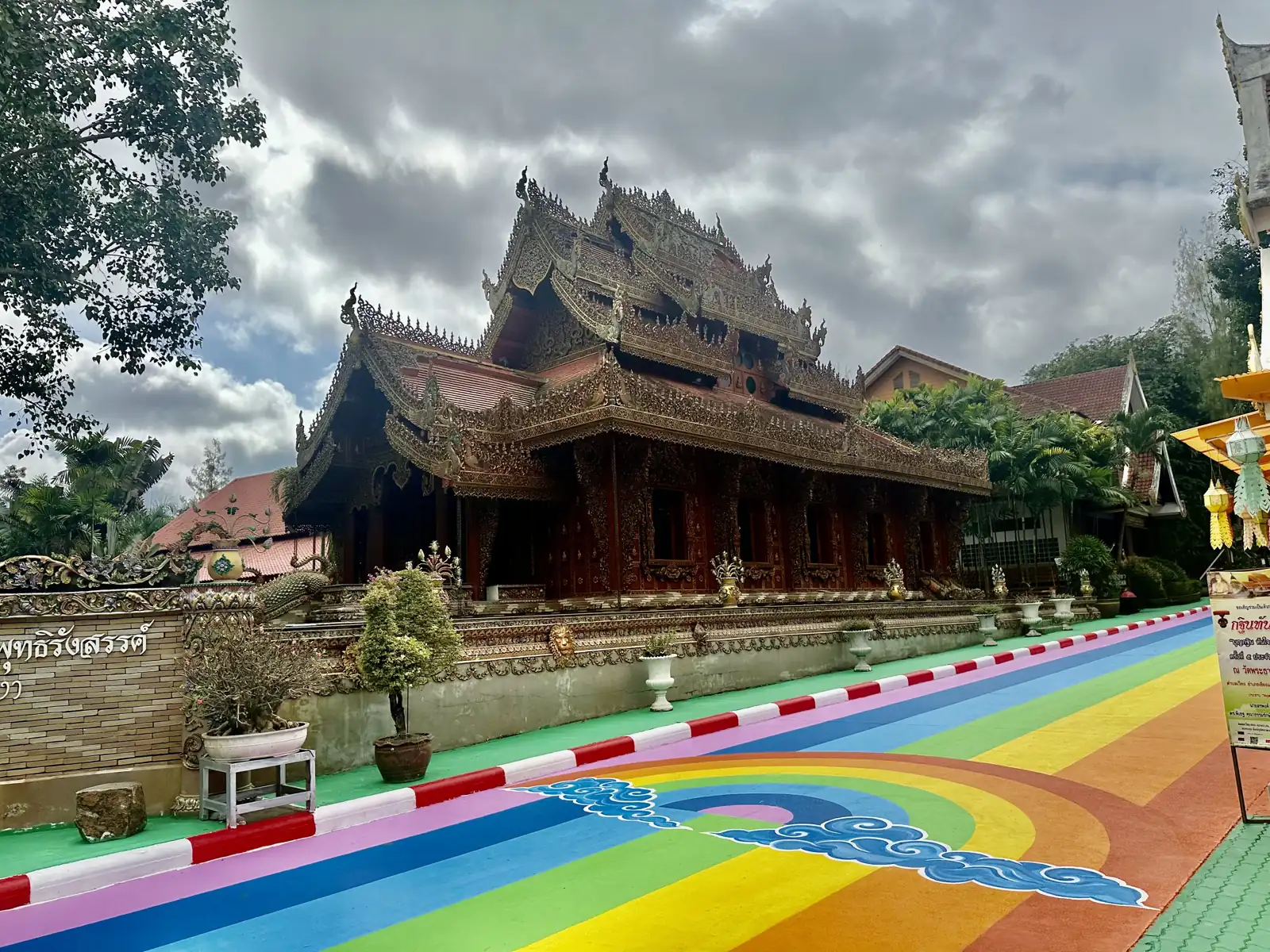
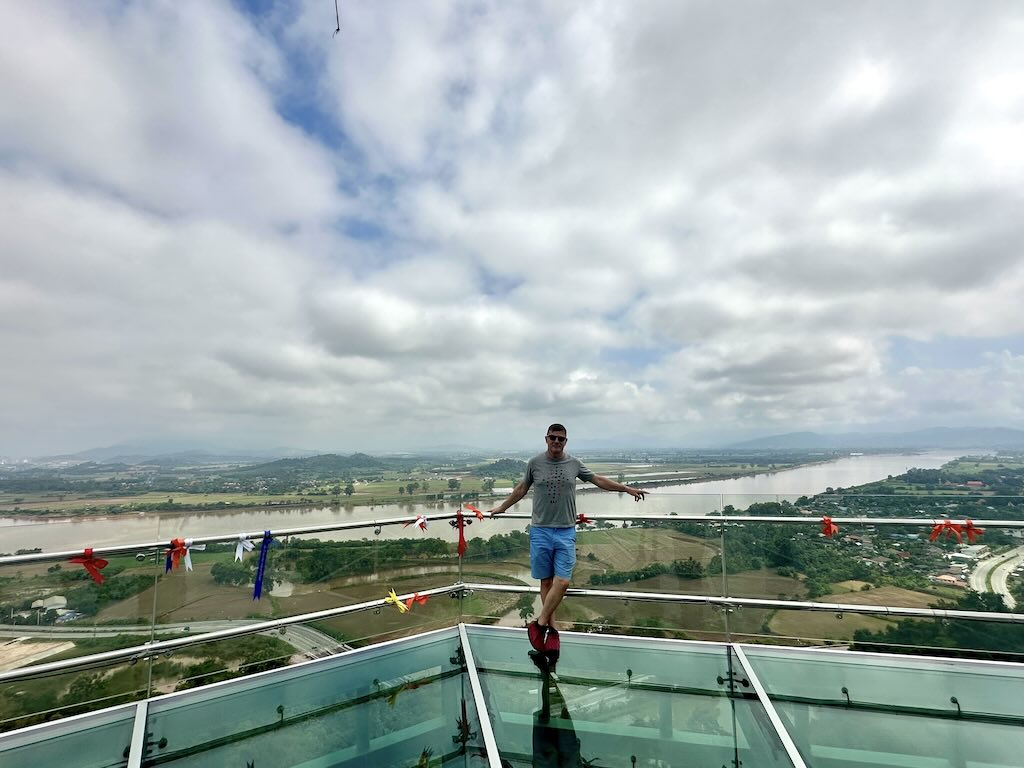
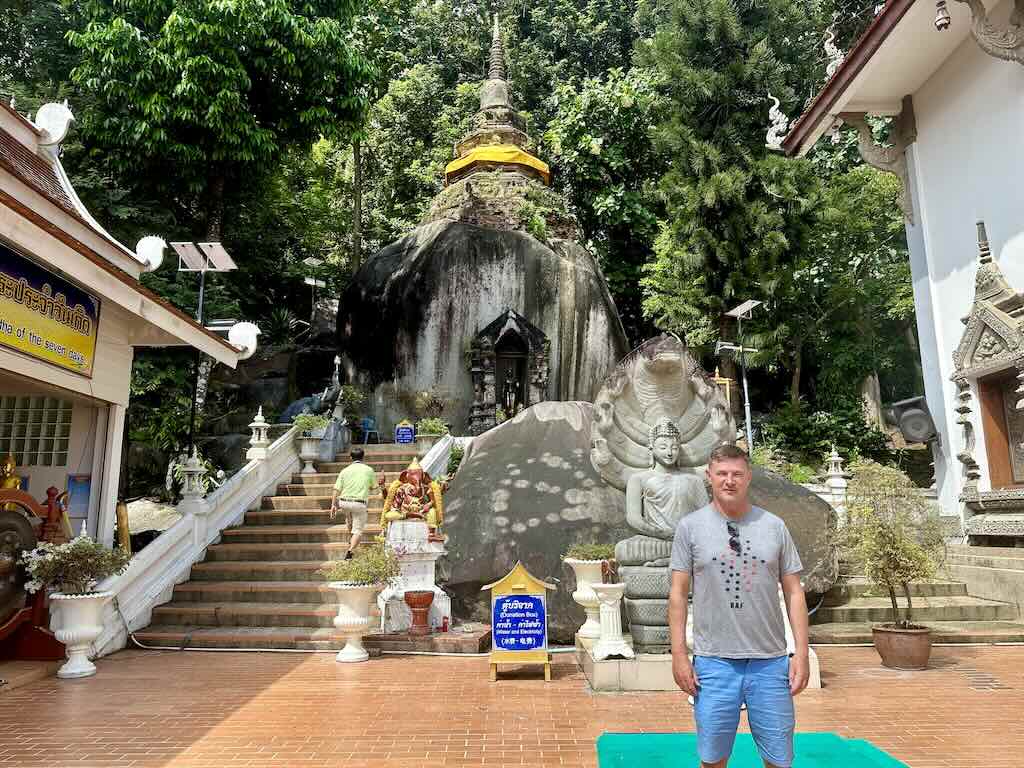
Wat Phra That Pha Ngao, in Chiang Saen, is a temple complex on a hill above the Mekong. You arrive by a road painted in rainbow colours, then the monastery, built where the monks found old Buddha statues hidden in a cave. Higher up, a glass skywalk hangs over the slope, with the Mekong, Laos and the plain of Chiang Saen below. Not for those who suffer from vertigo.
The Golden Triangle
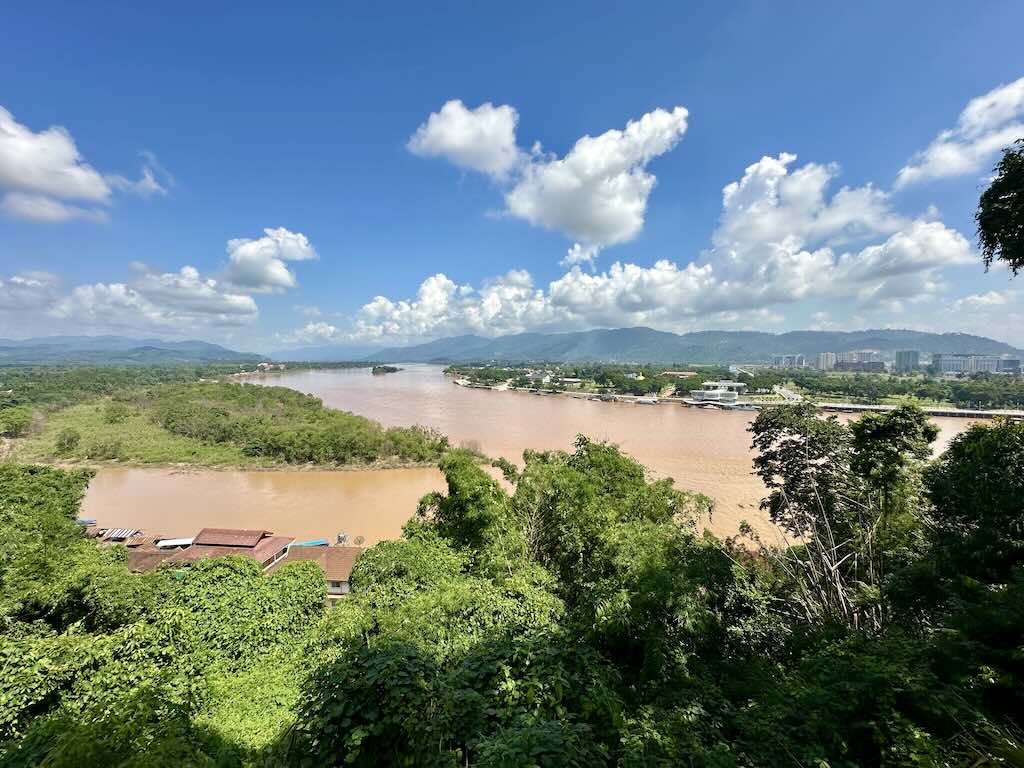
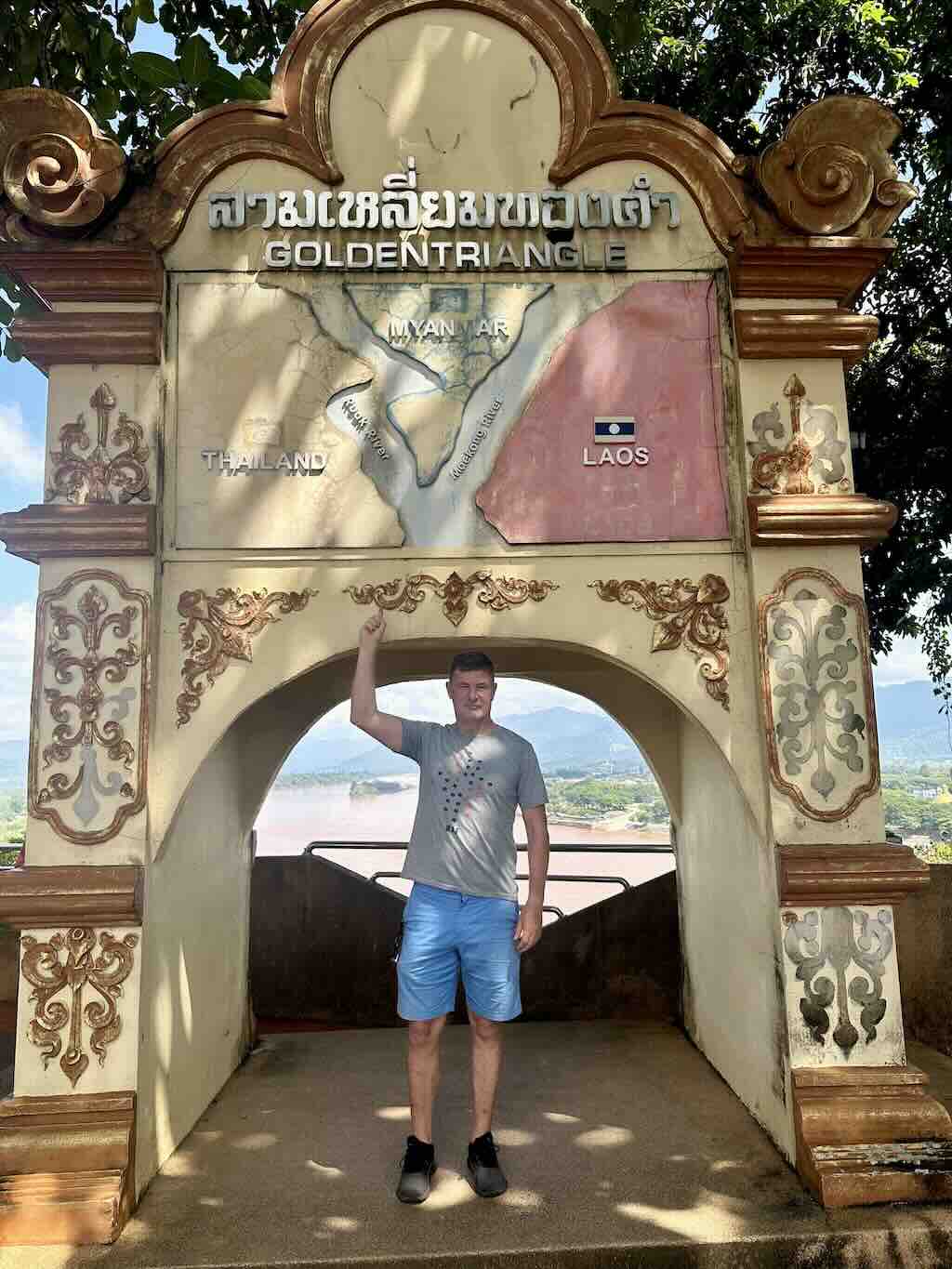
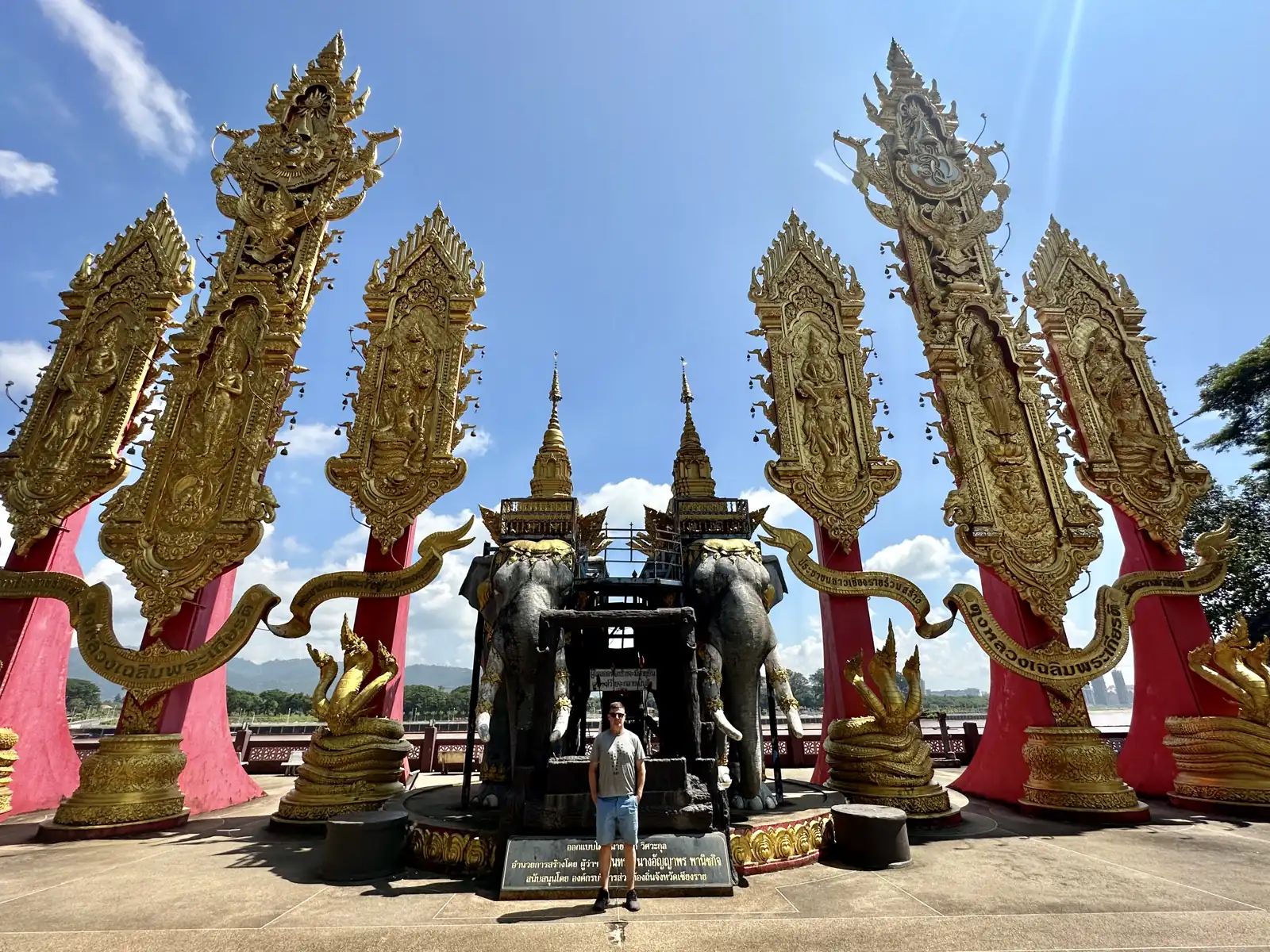
A few kilometres further, the Golden Triangle marks the point where the Ruak River flows into the Mekong, and where Thailand, Laos and Myanmar meet. The viewpoint gives a clear view of the three countries. On the riverbank, a giant golden Buddha and statues of elephants make the most photographed spot in the area. Boats leave from the pier for short trips on the Mekong, some stopping briefly on the Lao side.
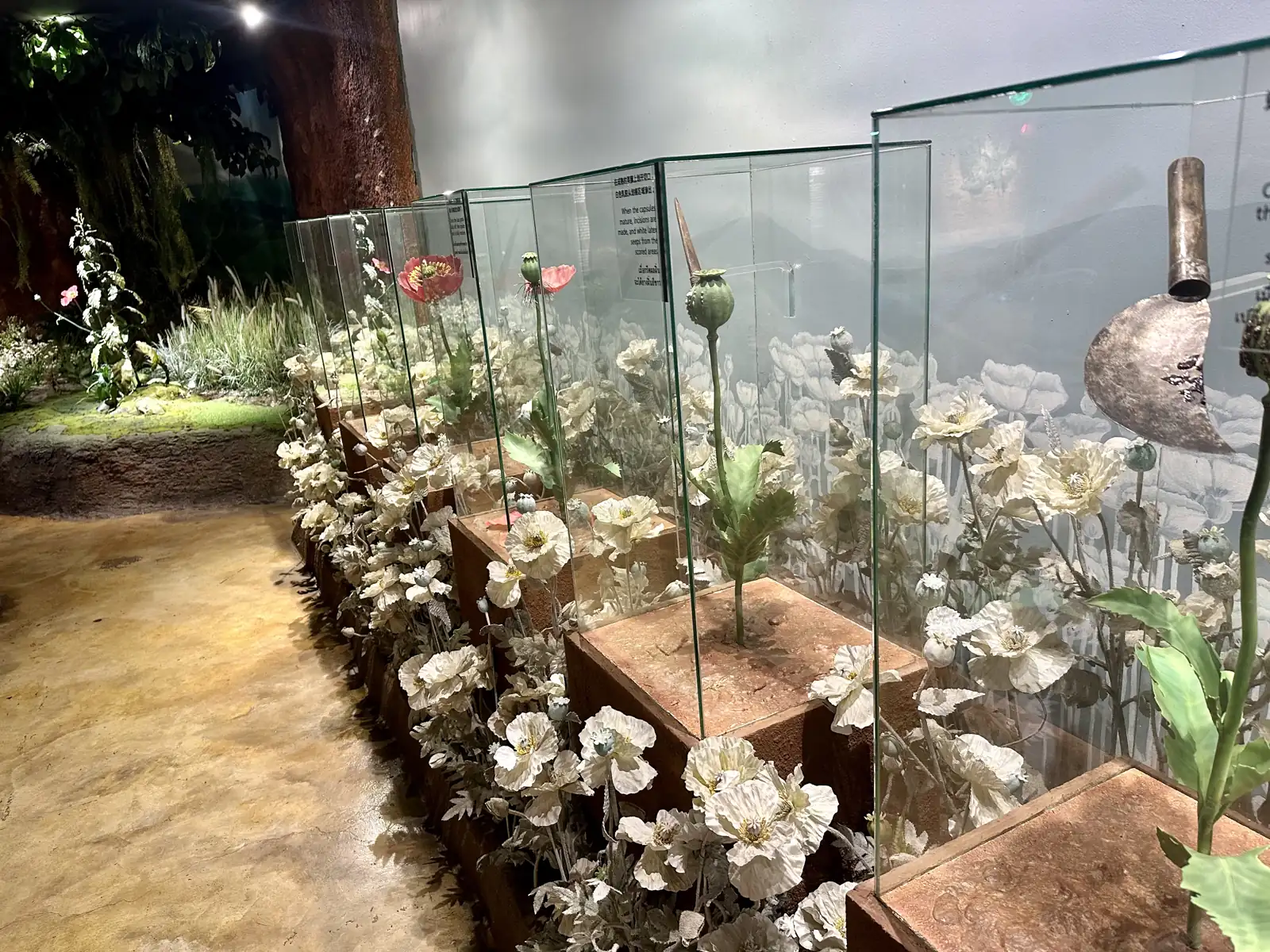
For decades, the area was one of the largest opium-producing regions in the world. The opium museums near the viewpoint tell that story well, from the poppy fields to the trafficking routes and the crop replacement projects of the royal family.
Wat Tham Pla, the Monkey Cave Temple
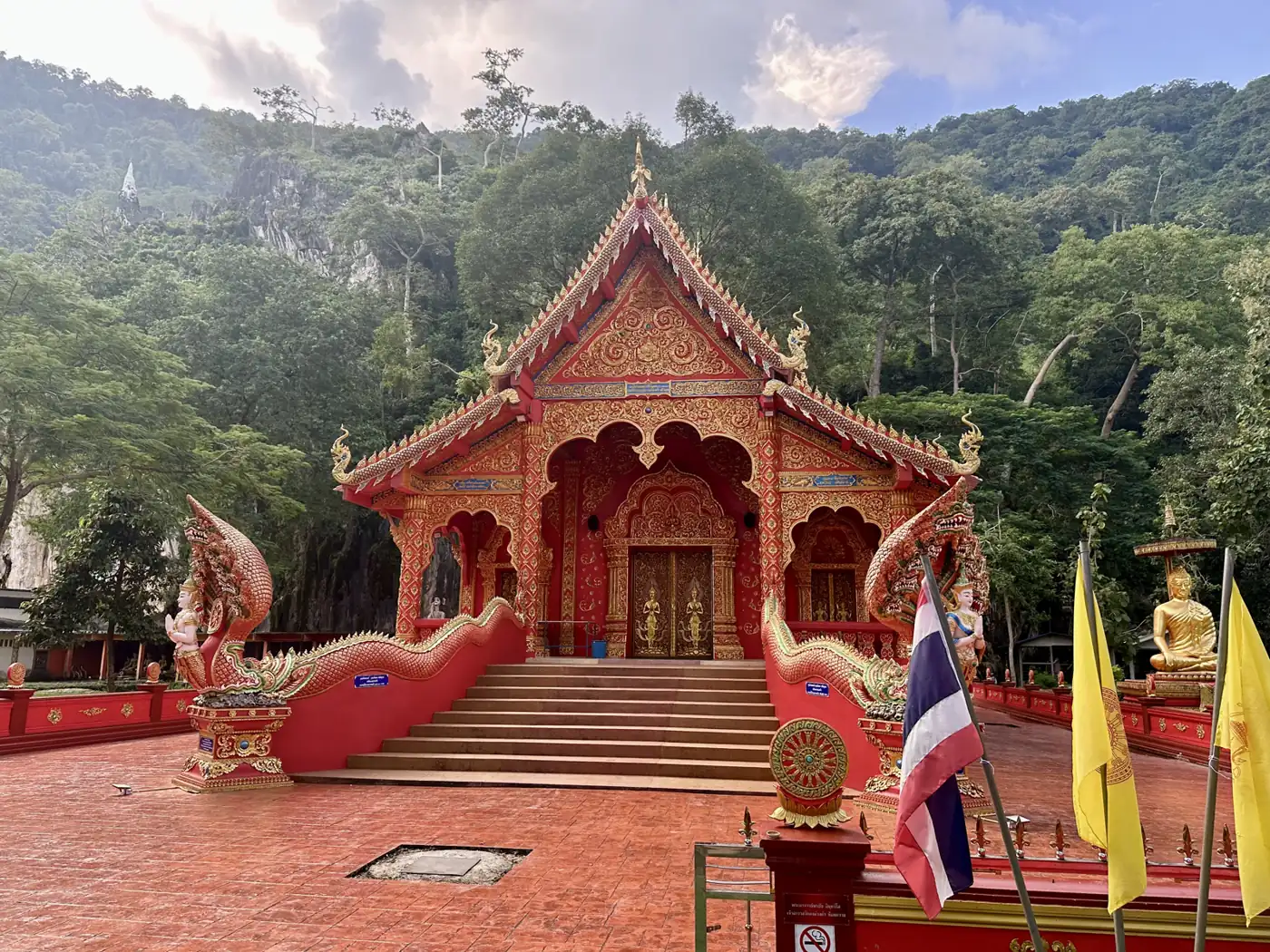
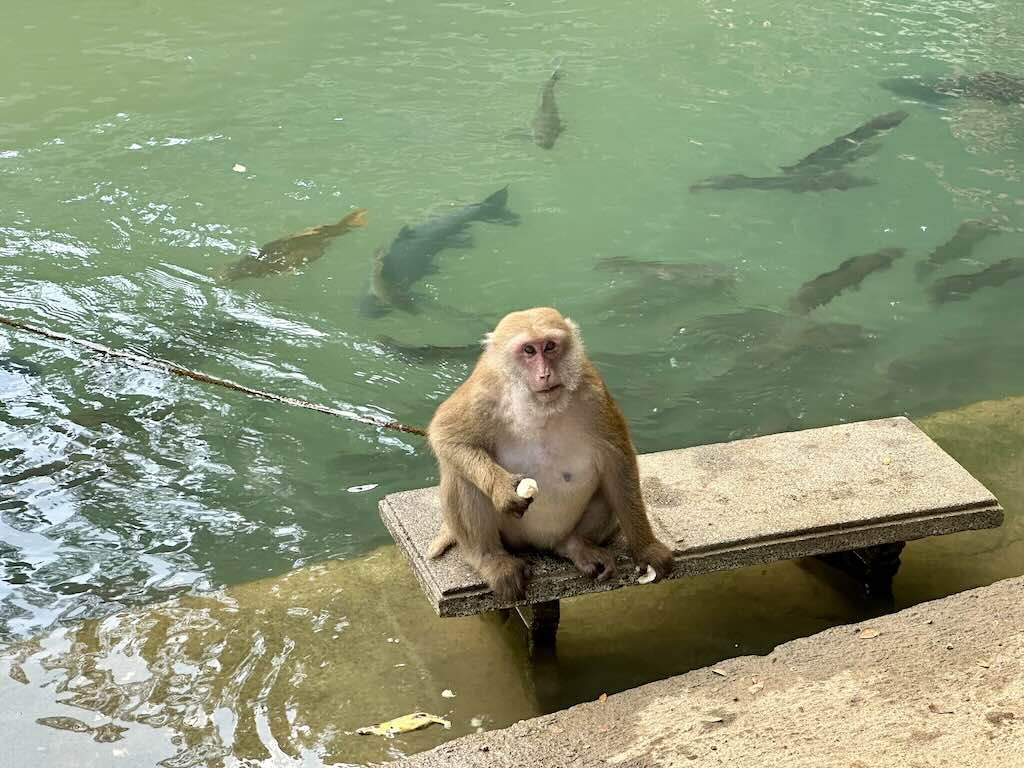
On the way back south, near Mae Sai on the Myanmar border, Wat Tham Pla is a cave temple at the foot of a limestone cliff. It is known for its macaques, who roam freely around the pond, and the big fish swimming in it. Keep food and sunglasses out of reach.
Choui Fong Tea Plantation
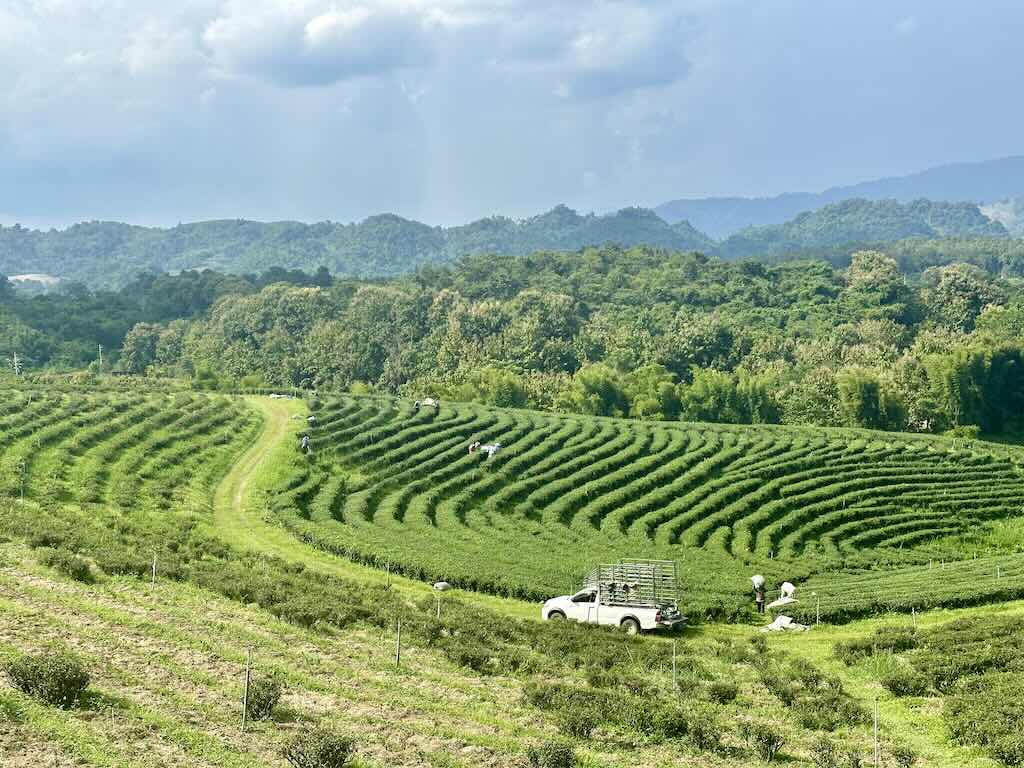
In the afternoon, the Choui Fong tea plantation, in the hills of Mae Chan, was a peaceful break: rows of tea bushes as far as the eye can see, a viewpoint and a café where you can taste green and oolong tea from the estate.
A Karen Long-Neck Village
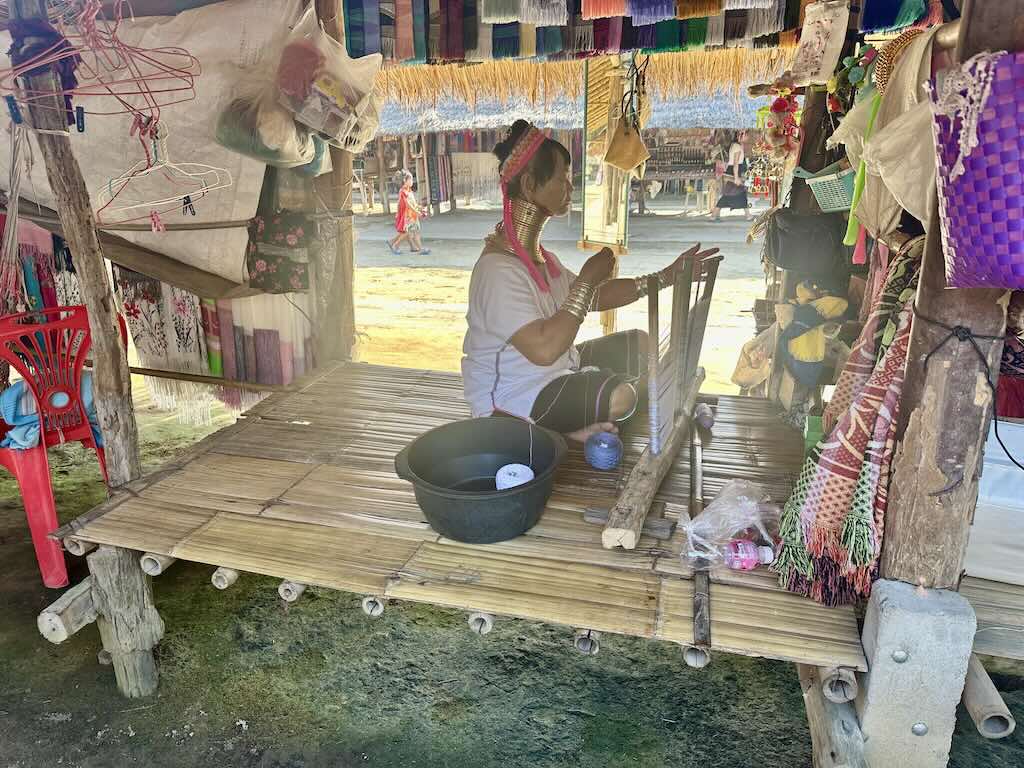
The last stop was a village of Karen women who wear brass rings around their necks. It is clearly organised for tourists, with stalls of scarves and souvenirs along the main path. If you go, buy something from the women directly, ask before taking photos, and favour villages where the community lives and keeps the entrance fees.
Day 3: The Temples of Chiang Rai
The Golden Clock Tower
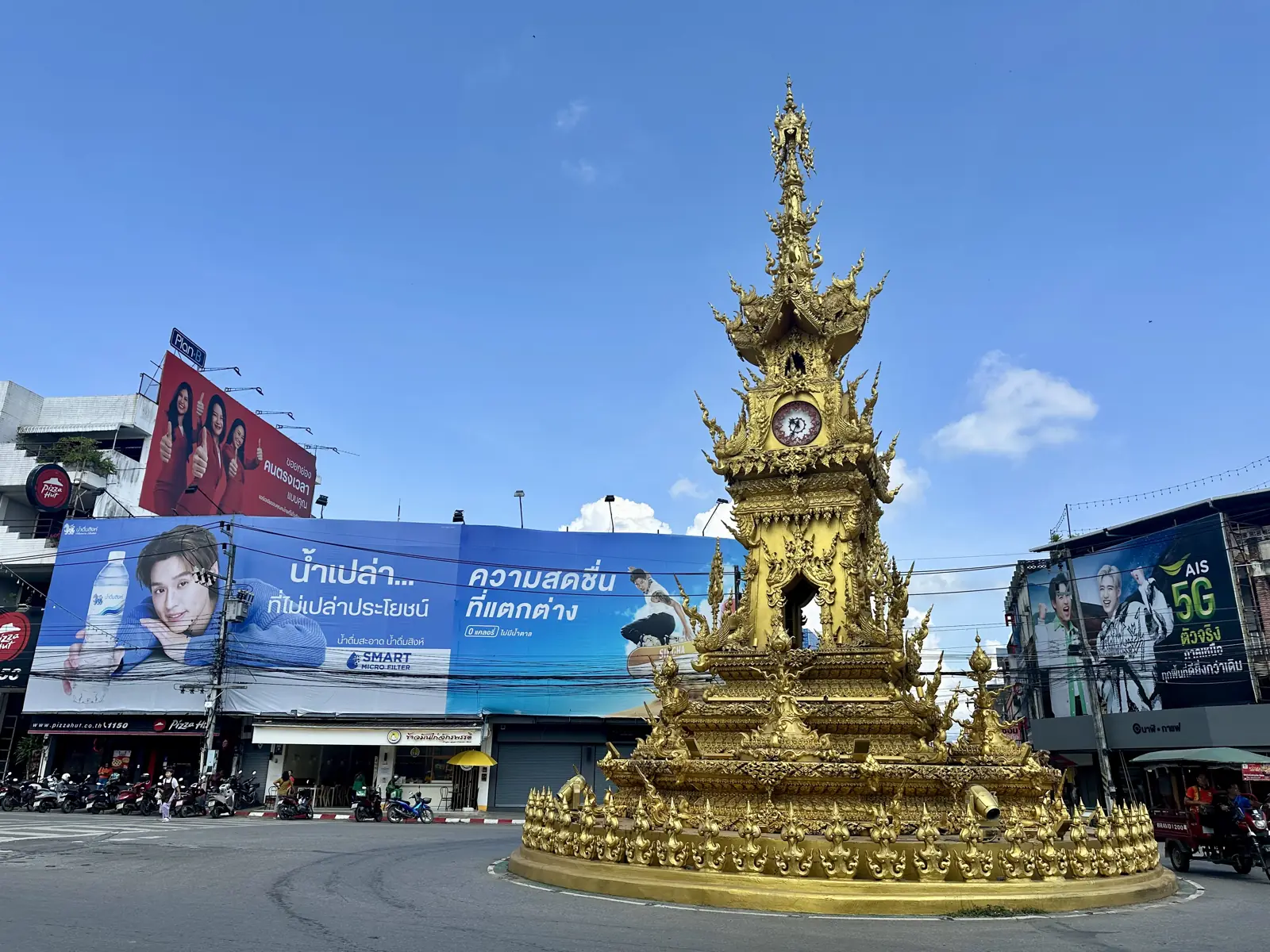
The day started in the city centre, at the golden clock tower designed by Chalermchai Kositpipat, the artist of the White Temple. It is a roundabout by day, and the stage of a light and sound show in the evening.
Wat Rong Khun, the White Temple
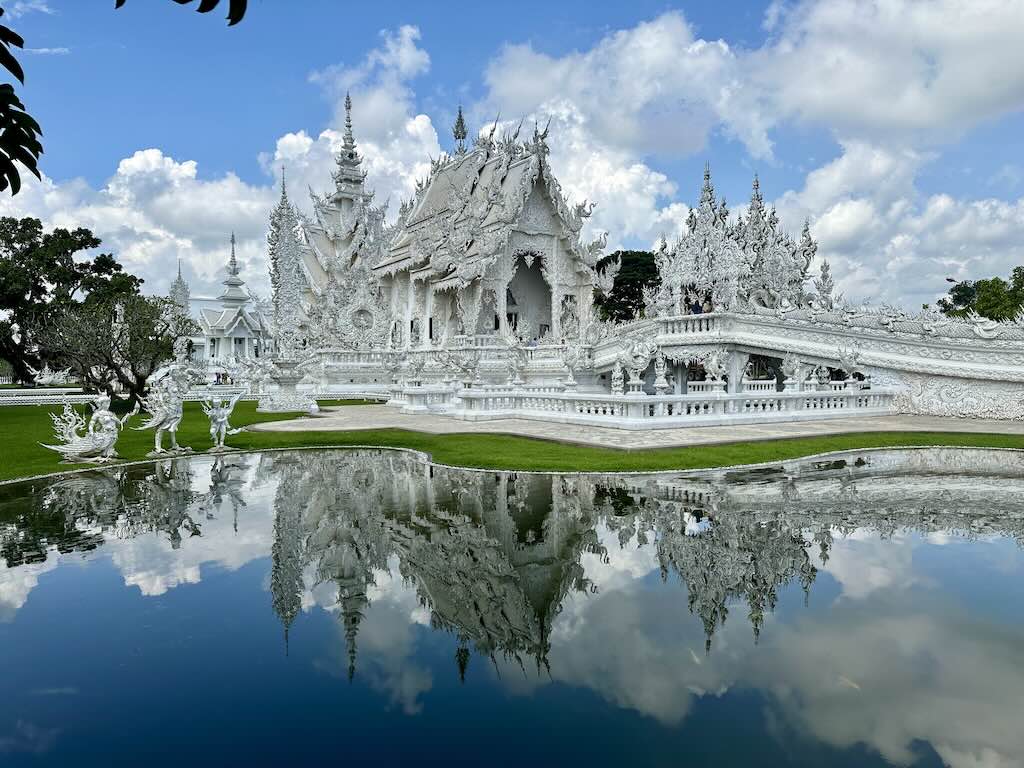
Fifteen minutes south of the city, the White Temple is the most famous sight of Chiang Rai and one of the most surprising temples in Thailand. Chalermchai Kositpipat started rebuilding it in 1997, and it is still unfinished. Everything is white and silver: you cross a bridge above hundreds of sculpted hands reaching out of hell before reaching the main hall, whose murals mix Buddhist themes with superheroes and pop culture. Go early, before the tour buses.
Wat Huay Pla Kang
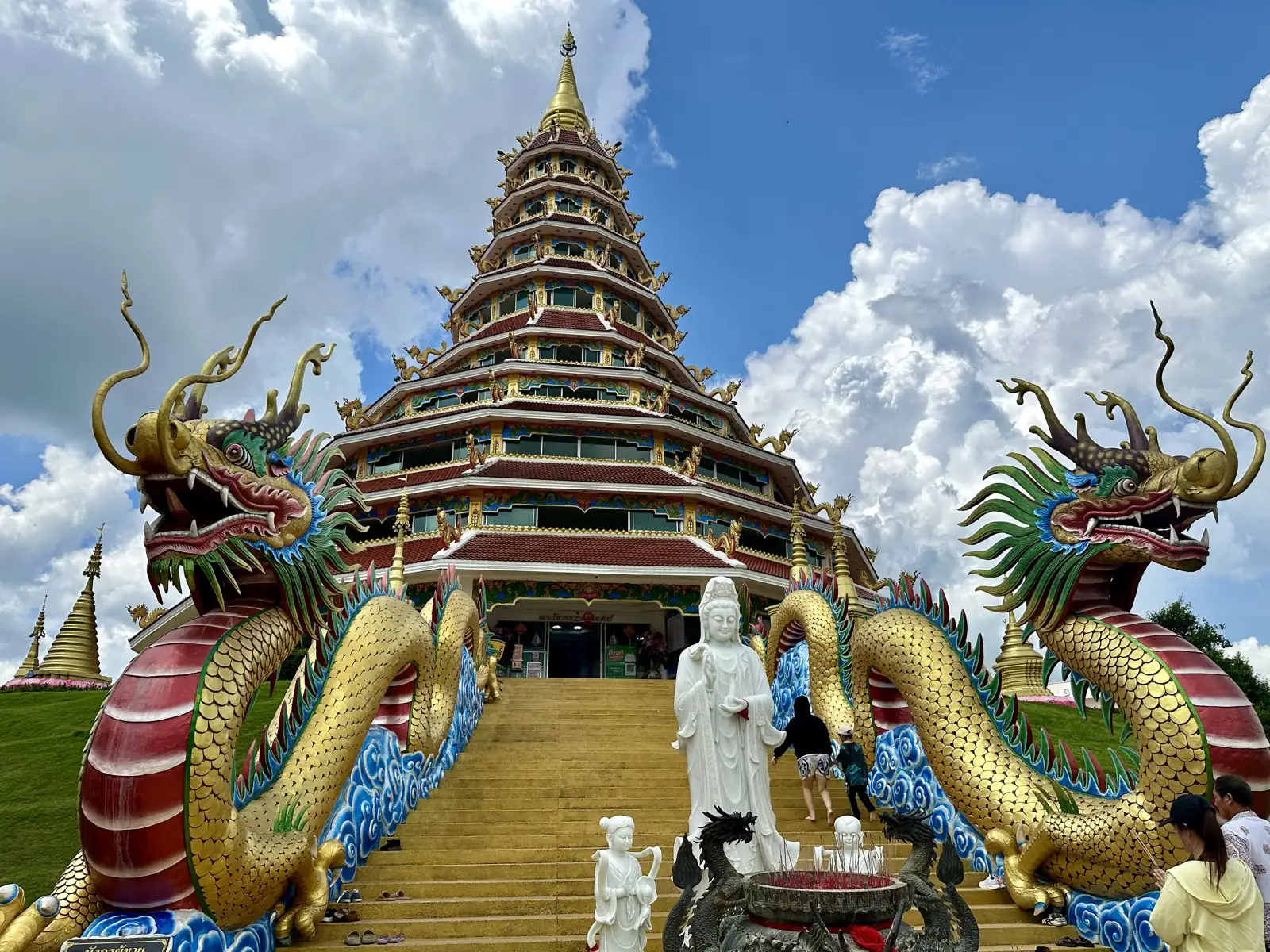
A few kilometres north of the city, Wat Huay Pla Kang is less known but just as spectacular: a nine-tiered Chinese-style pagoda guarded by dragons, and a giant white statue of Guanyin, the goddess of mercy, that you can visit from the inside, with a view over the valley from the top.
Wat Phra Kaew
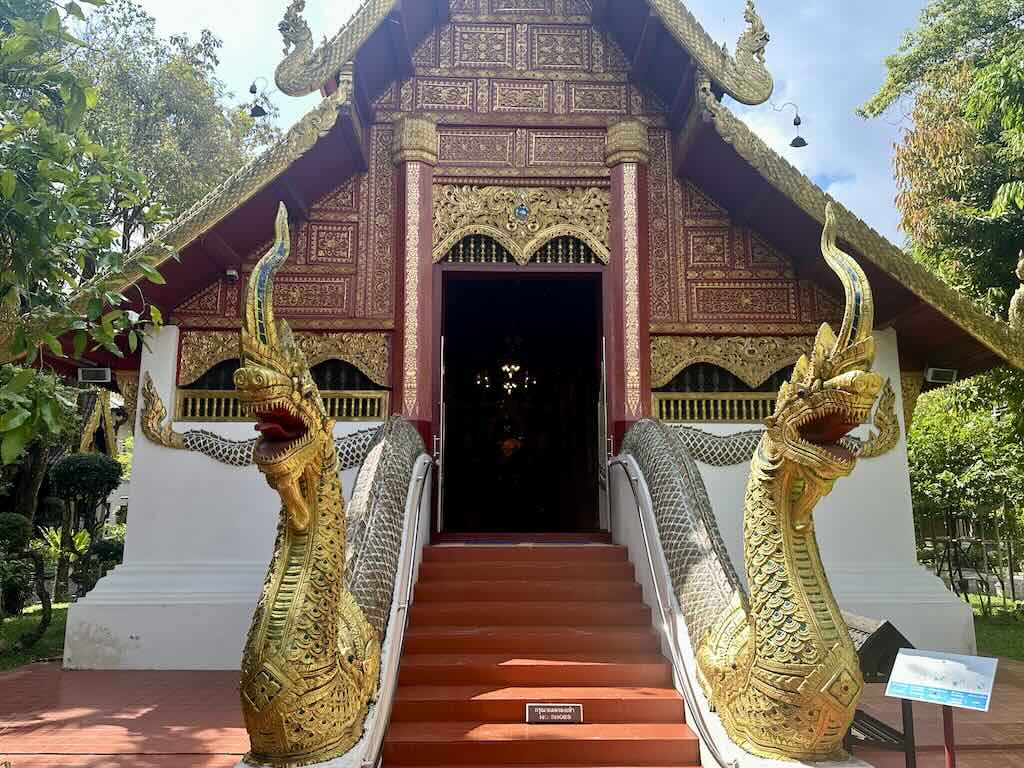
Back in the city, Wat Phra Kaew is where the Emerald Buddha, now in Bangkok, was found in the 15th century, when lightning cracked open a chedi. A replica is kept in the temple, a calm place compared with the big sights.
Wat Rong Suea Ten, the Blue Temple
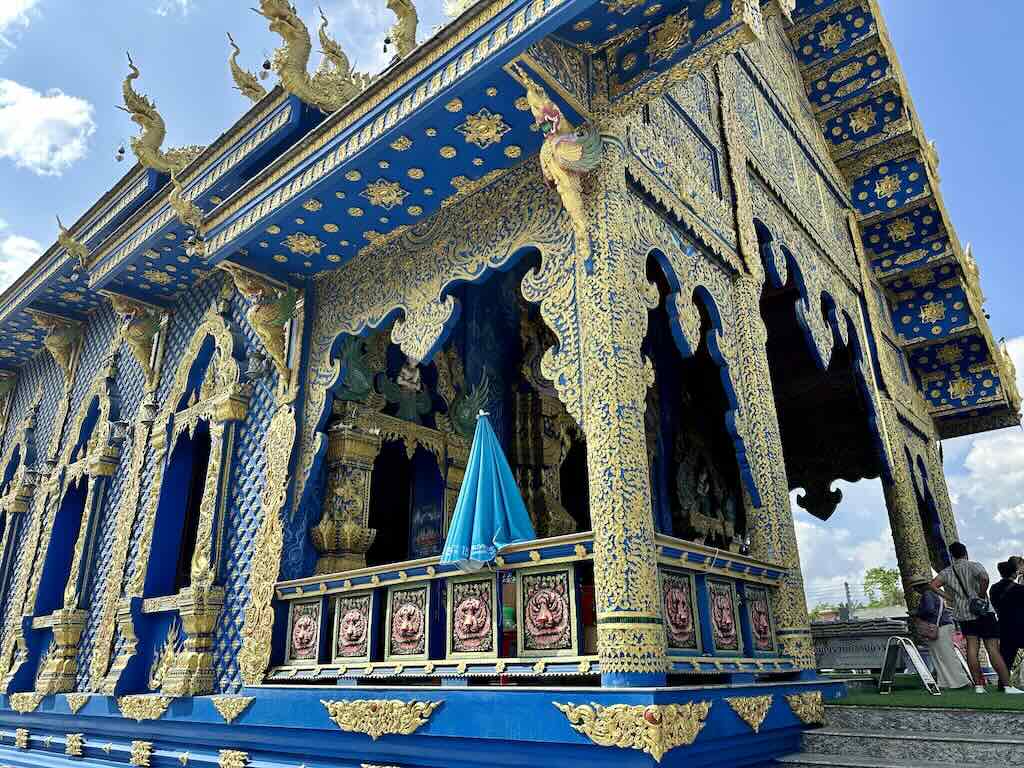
The Blue Temple, finished in 2016 by a student of Chalermchai Kositpipat, is the third star of the trio. Deep blue walls, gold ornaments and a big white Buddha inside: the effect is striking, and the visit is free and less crowded than the White Temple.
Food and the Night Market
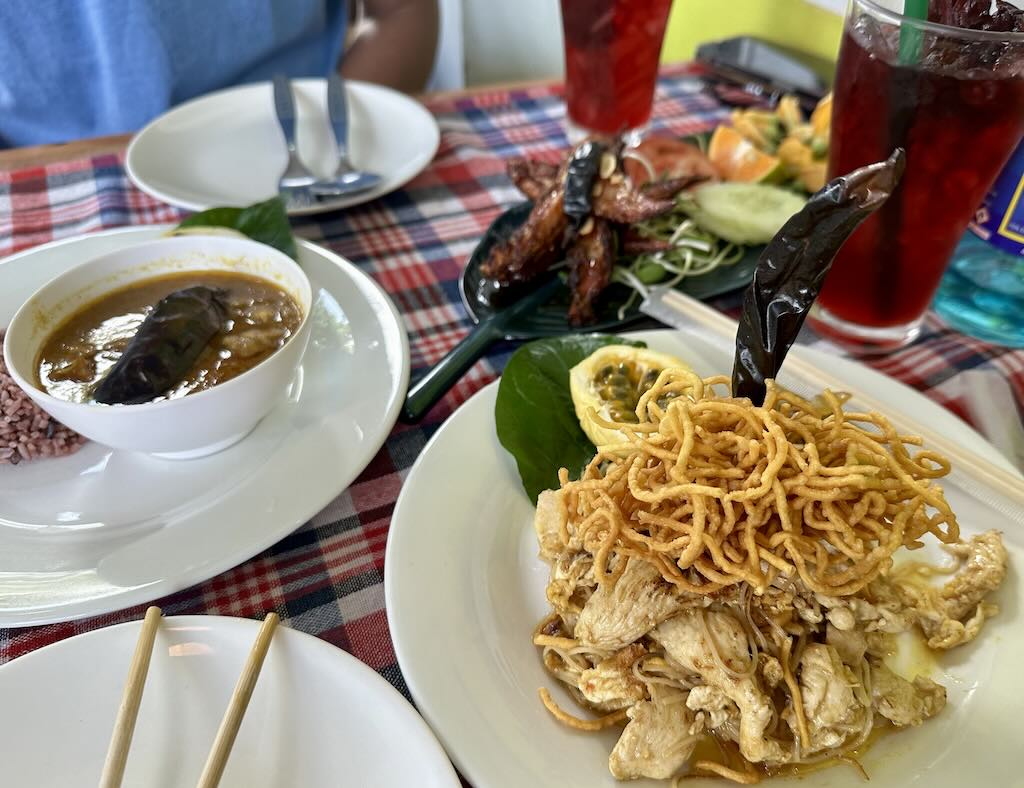
Northern Thai food is different from what you eat in Bangkok or the islands: more herbs, less coconut, and Burmese and Chinese influences. Try khao soi, a curry noodle soup with crispy noodles on top, sai ua, a spicy herb sausage, and nam prik ong, a tomato and pork dip with vegetables.
For lunch on the third day, I went to Barrab, a small restaurant where the owner explains each northern dish in good English and can serve them in small portions, or less spicy. My khao soi there was the best of the trip.
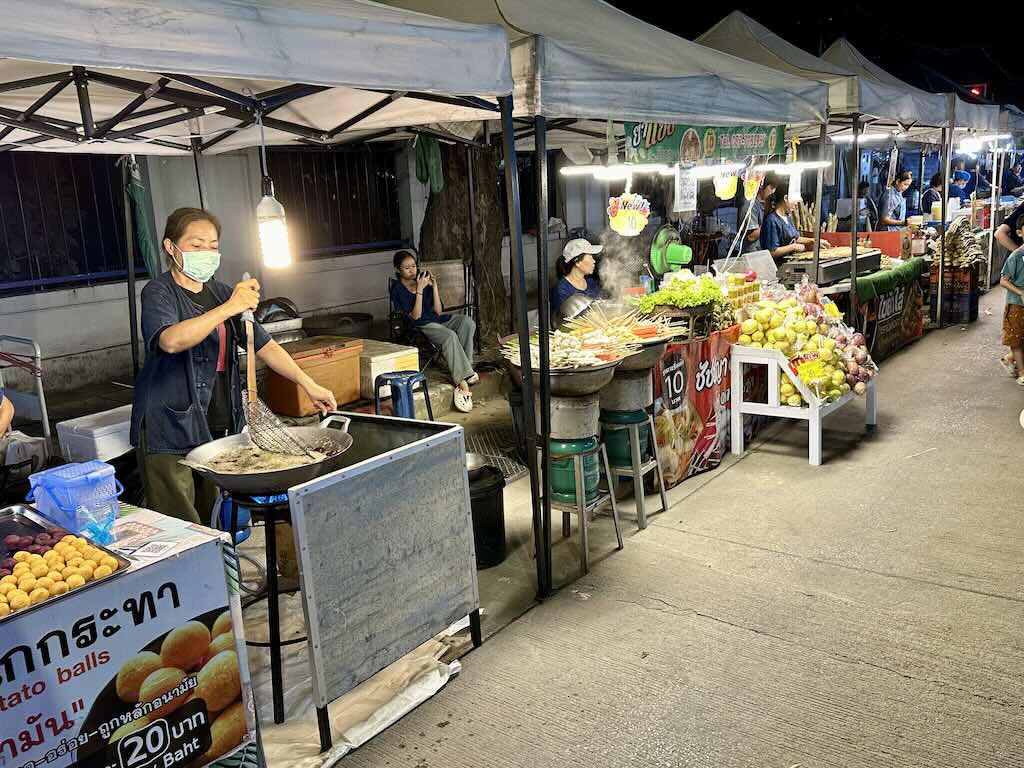
In the evening, the Saturday Night Walking Street, near the clock tower, closes the streets to traffic for a huge market of street food, crafts and live music. The Night Bazaar, open every night, is the alternative on other days.
Where to Stay in Chiang Rai
- 1000 Stars glamping: four domes on the edge of a quiet lake outside the city, with a bathtub facing the water. Perfect for one night.
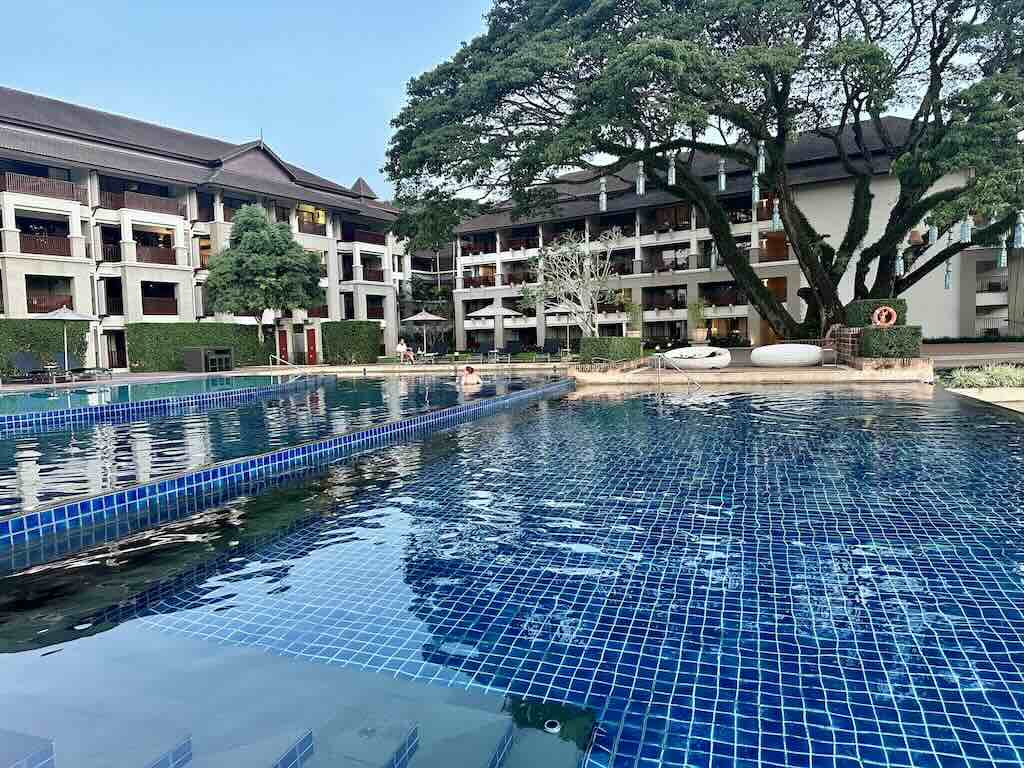
- Le Méridien Chiang Rai: one of the best hotels in the city, on the banks of the Kok River, with a pool on three levels under huge old trees, at a price far below an equivalent hotel in Bangkok.
- In the city centre: near the clock tower and the night market, the most practical if you rely on Grab and tuk-tuks.
I compare places on Booking.com.
If You Have More Time
- Doi Tung: the Mae Fah Luang garden and the former royal villa of the Princess Mother, in the mountains north of the city.
- Doi Mae Salong: a mountain village founded by Chinese Kuomintang soldiers, surrounded by oolong tea terraces.
- Phu Chi Fa: a viewpoint above a sea of clouds at sunrise, two hours east of the city, best from November to February.
- Singha Park: a huge park with tea fields, lakes and cycling paths, 15 minutes from the city.
How to Get to Chiang Rai
- By plane: several daily flights from Bangkok to Chiang Rai airport, about 1 h 20, then 15 minutes by Grab to the city.
- By bus from Chiang Mai: about 3 to 4 hours through the mountains. You can book on 12Go.
- Getting around: Grab or tuk-tuk in the city, and a car with driver or a tour for the Golden Triangle and the temples outside town.
All the options for travelling around the country are in my guide to getting around Thailand.
Best Time to Visit Chiang Rai
The best season is from November to February: dry, sunny and cool, even cold at night in the mountains. March and April are hot and often hazy because of the agricultural burning. From May to October, the rainy season makes the landscapes very green, but floods can happen: in September 2024 the Kok River flooded part of the city. I went in mid-October, at the end of the rains, with mostly sunny days.
Chiang Rai or Chiang Mai?
Chiang Mai is bigger and busier, with hundreds of temples, markets, restaurants and nightlife. Chiang Rai is smaller and quieter, and known for its modern art temples, the Golden Triangle and the surrounding mountains. They are three to four hours apart, and many travellers combine the two.
Chiang Rai FAQ
Is Chiang Rai worth visiting?
Yes. The White Temple, the Blue Temple and Wat Huay Pla Kang are unlike any other temples in Thailand, and the Golden Triangle and the tea hills are an easy day trip.
How many days do you need in Chiang Rai?
Three days is ideal, as I did: one to arrive and settle, one for the Golden Triangle and Chiang Saen, and one for the temples around the city. Two days are enough if you are short on time.
Can you visit Chiang Rai as a day trip from Chiang Mai?
It is possible with an organised tour, but it means about seven hours on the road for a quick look at the White Temple and the Blue Temple. Spending at least one night is much better.
Chiang Rai is the perfect stop in the north of Thailand, before or after the beaches of the south. For the rest of the country, start with my Thailand travel guide.