Ao Nang: Krabi’s Mainland Base and How to Use It
By Blaise Jaeger · Updated August 19, 2026
Why Visit Ao Nang?
Almost nobody dreams of Ao Nang. They dream of Railay, of Maya Bay, of limestone towers coming out of green water — and then they discover that all of it leaves from here. Ao Nang is the mainland town in Krabi Province where the boats start, and understanding that is the key to using it well.
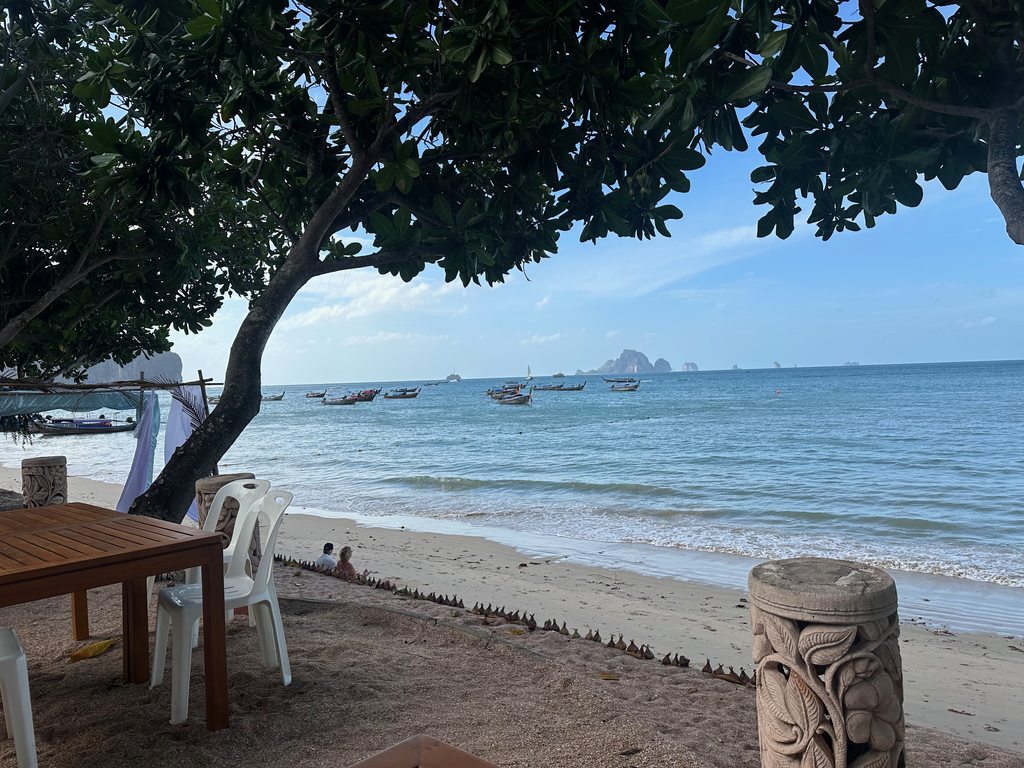
What Ao Nang gives you is choice and convenience: hundreds of hotels at every price, a strip of restaurants and bars, pharmacies, ATMs, a hospital, car hire, tour desks, and boats leaving all day for Railay, the Four Islands, Koh Phi Phi and Koh Lanta. What it does not give you is a spectacular beach. That trade-off is the whole story of the place, and this guide is honest about both halves of it.
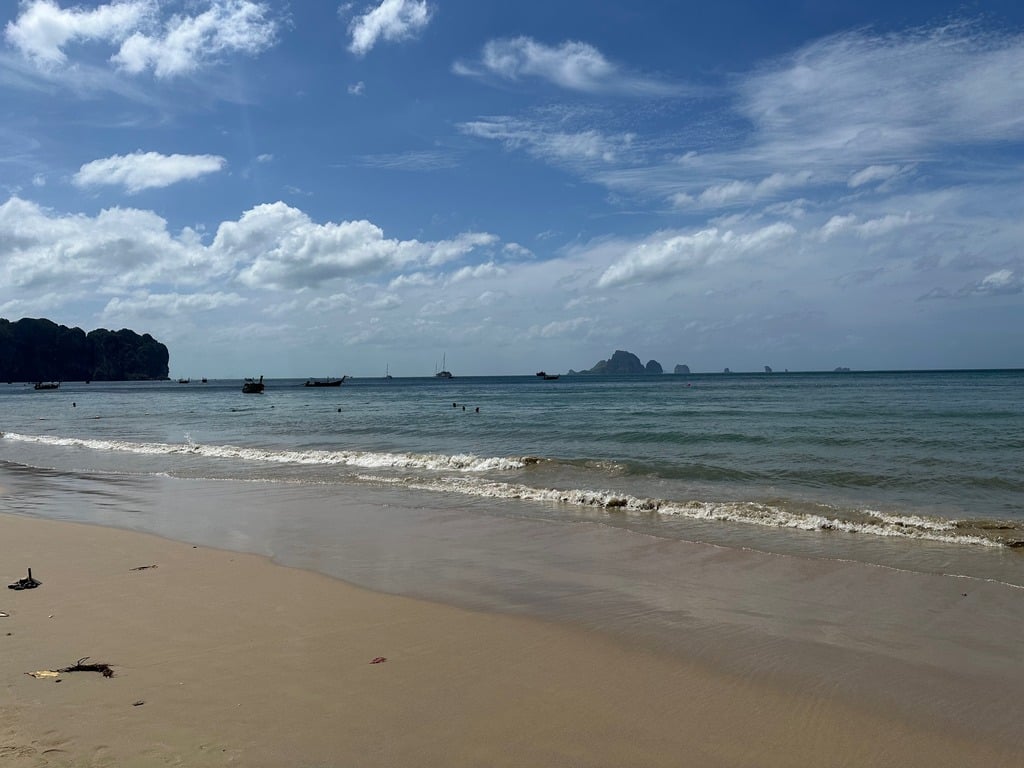
It is also a genuinely beautiful place at the right hour. The limestone chain that makes Railay famous runs along the eastern end of Ao Nang’s own bay, and when the sun goes down behind the islands the whole beach turns gold. Come at five in the afternoon rather than at noon and you will understand why people stay a week.
Ao Nang at a Glance
- Where: the mainland coast of Krabi Province, southern Thailand, about 25 km from Krabi airport
- What it is: a beach resort town, and the departure point for the whole Krabi island cluster
- Longtail to Railay: 100 THB one way, 200 THB return, 10–15 minutes, boats leave when full
- Beaches: Ao Nang Beach in town, Nopparat Thara just north — quieter and inside the national park
- National park fee (for the island tours): 400 THB adults, 200 THB children, cash
- Four Islands tour: from around 600 THB shared longtail, 800 THB shared speedboat, park fee extra
- Krabi airport: 25 km — airport bus about 150 THB, private taxi 1,200–1,500 THB
- Best time to visit: November to March
- Best hour of the day: the last one. Ao Nang’s sunsets are its finest asset
- Getting around: the town is walkable end to end; songthaews run the coast road
Two Nights in Ao Nang, and What It Is Actually For
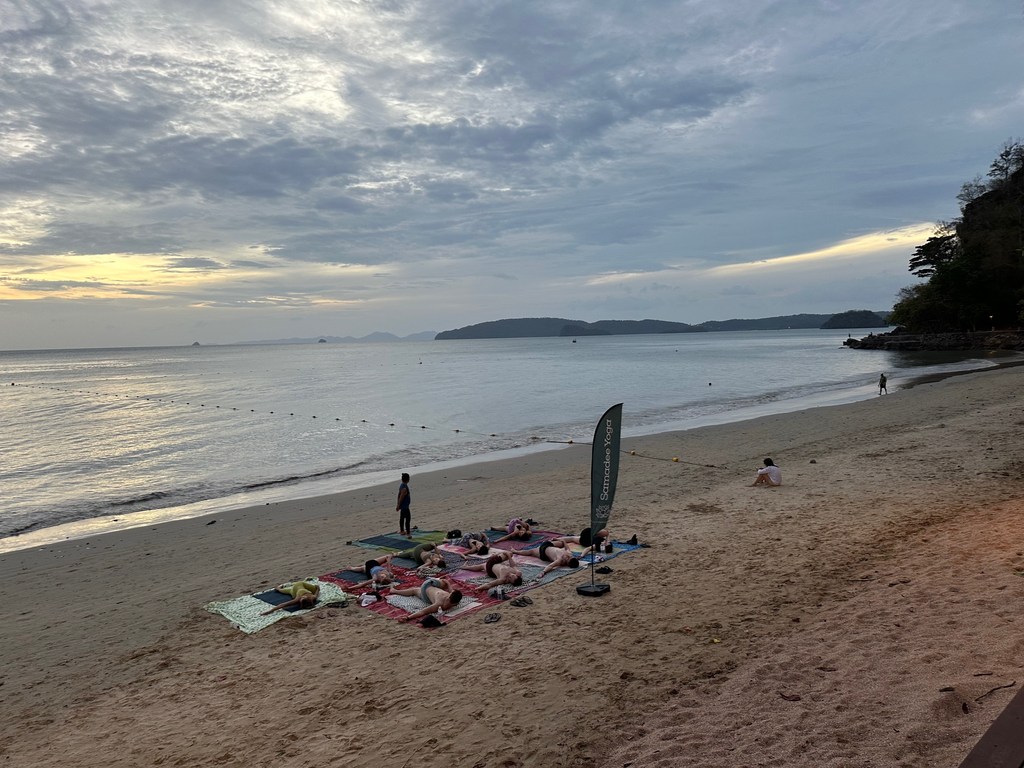
I stayed in Ao Nang on 25 and 26 February 2025, at the Krabi Resort on the beach, and used it exactly the way the town is designed to be used: as a base. On the 26th I walked down to the sand in the morning, took a longtail across to Railay for the day, and was back before dark. That is Ao Nang working properly.
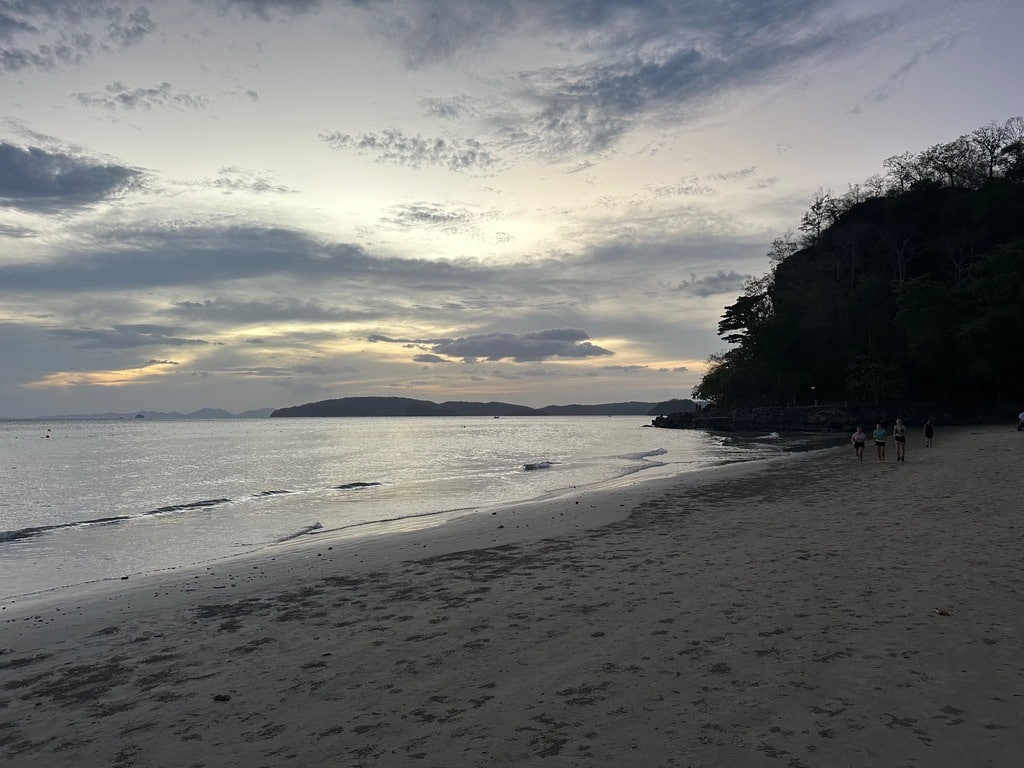
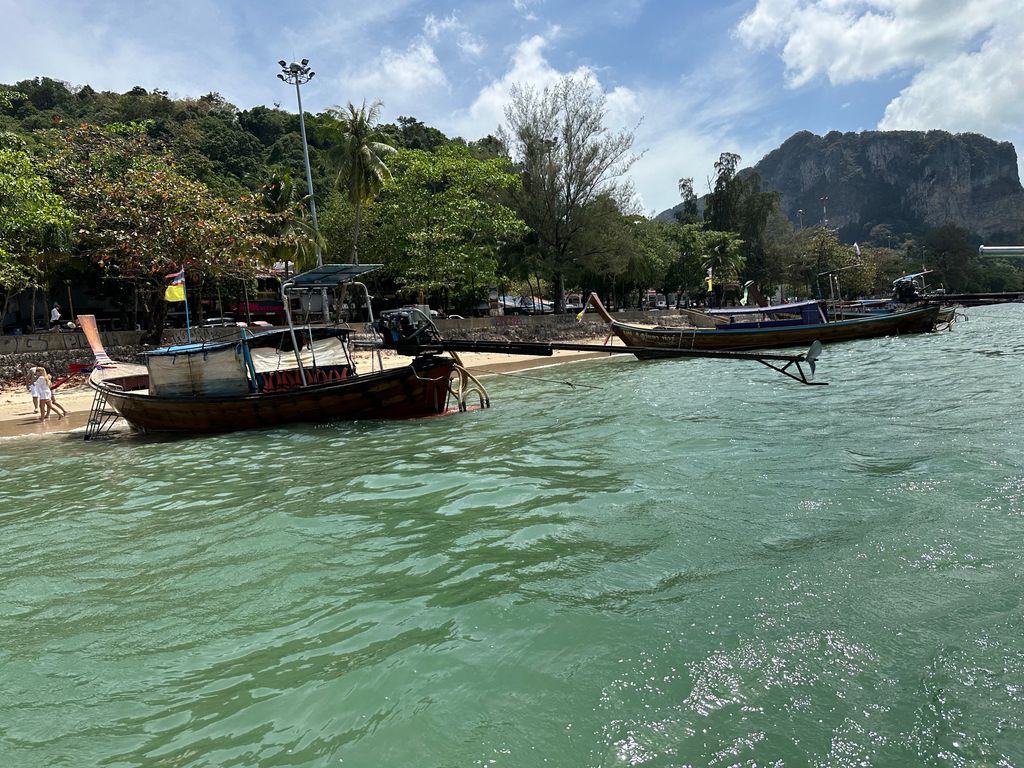
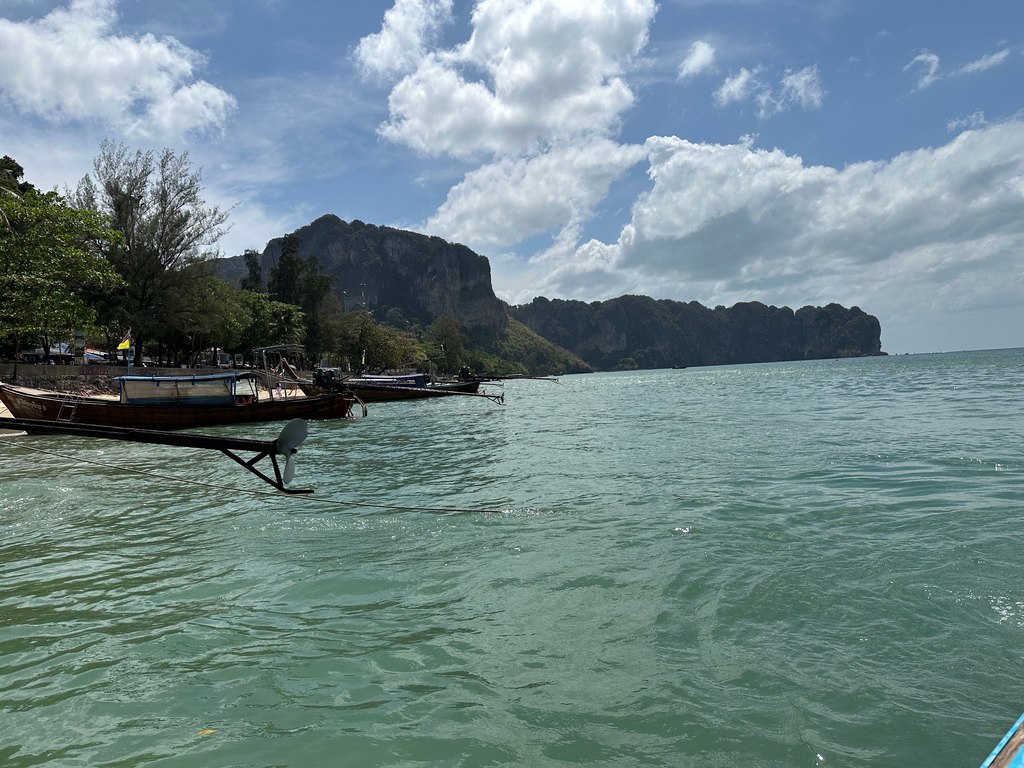
The thing that surprised me was how much better the town gets after five o’clock. During the day the beach is a working boat park — longtails drawn up on the sand, engines, people negotiating tickets — and it is not somewhere I would choose to lie down. But by six the boats are done, the light comes in low over the islands, and the whole bay changes character. I ended both evenings on the sand watching it, and that is the memory I kept.
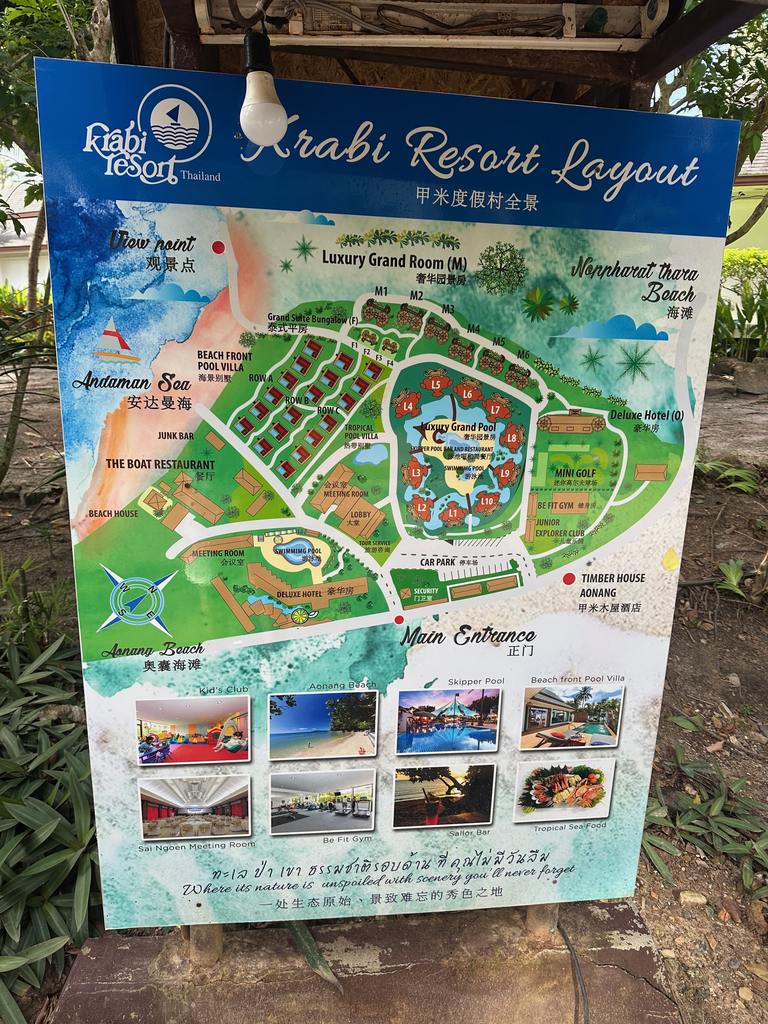
The other thing worth saying plainly, because it is the reason I picked the hotel in the first place: the Krabi Resort is not on one beach but between two. It occupies the strip where Ao Nang Beach ends and Nopparat Thara Beach begins — the town and its restaurants a ten-minute walk one way, the quiet national-park beach two minutes the other. I chose it deliberately for that, and it worked exactly as hoped. If you are deciding where to sleep in Ao Nang, that piece of geography is worth more than a star rating.
Is Ao Nang Beach Actually Any Good?
This deserves a straight answer, because a lot of guides avoid it.
As a swimming beach, it is mediocre. The sand is coarse and greyish rather than white, the water is often cloudy, and the bay doubles as the launch point for every longtail in the district — which means engines, fuel and boat traffic through the middle of the day. Reviewers are blunt about the water quality and many recommend swimming elsewhere. There is a marked swimming lane roped off with yellow buoys, and it exists precisely because boats and swimmers share this water.
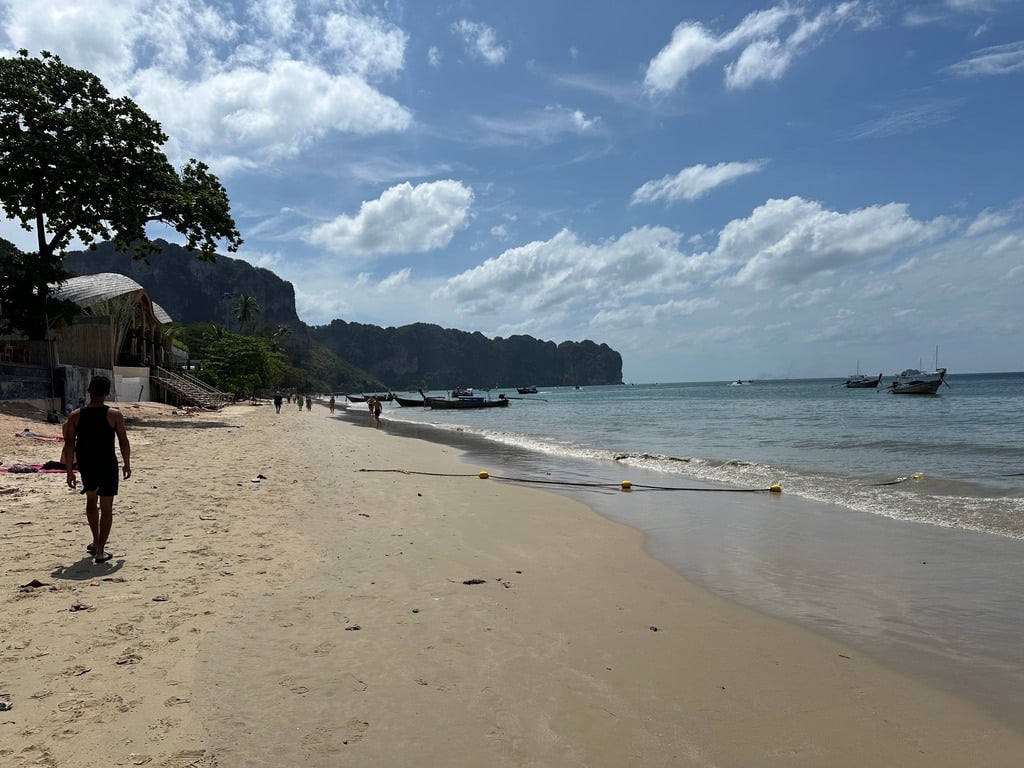
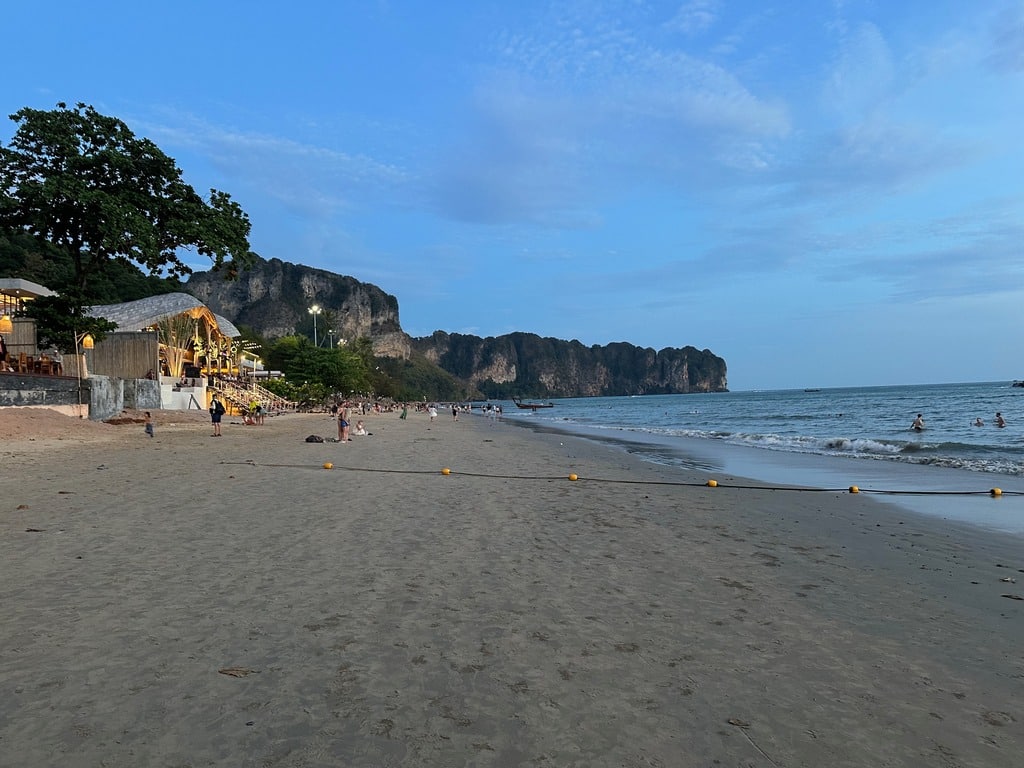
As a place to be, it is much better than its reputation. The eastern end, where the limestone headland comes down to the water, is genuinely beautiful. The beachfront bars and clubs are good. And the sunsets — with the offshore islands as silhouettes — are the best in the province.
The honest conclusion: base yourself in Ao Nang, swim somewhere else. Phra Nang at Railay is fifteen minutes away by boat and is one of the best beaches in Thailand. Nopparat Thara is a ten-minute walk north. Neither is a hardship.
Nopparat Thara Beach
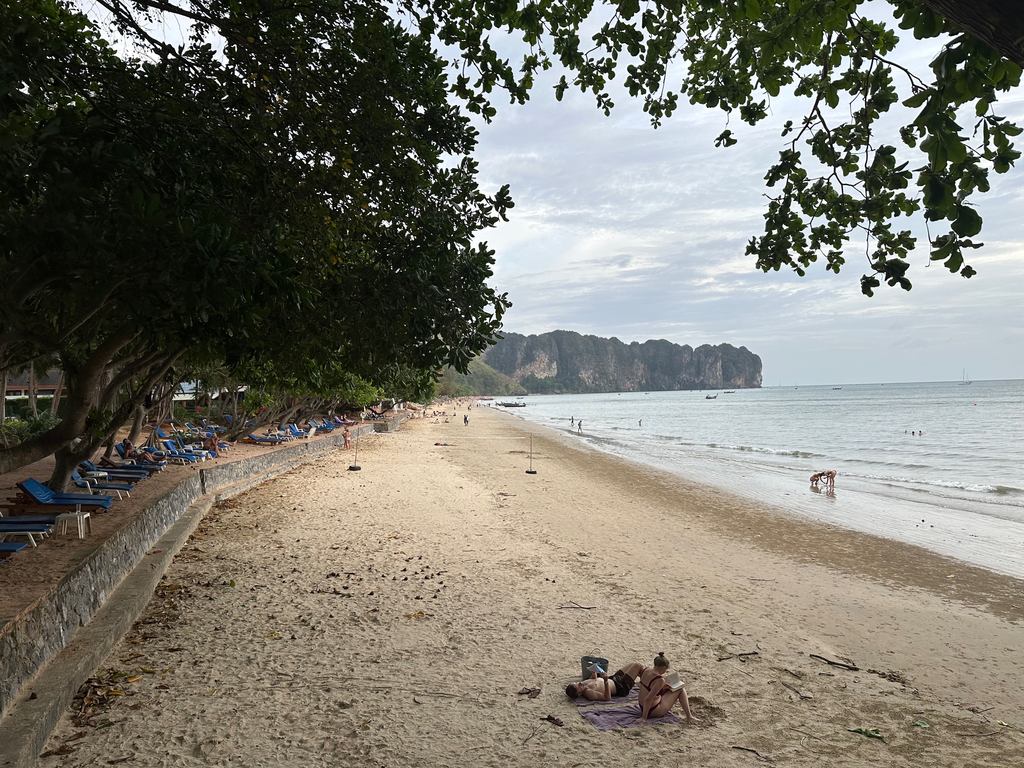
Immediately north of Ao Nang, and a completely different proposition. Nopparat Thara is part of Hat Noppharat Thara – Mu Ko Phi Phi National Park, which means no jet skis, no beach clubs and very little development: about three kilometres of sand shaded by casuarina trees, with cheap food stalls behind it and free parking.
It is where local families go, it is quieter than Ao Nang, and it is a better beach. It is also where the Nopparat Thara pier sits, which is the departure point for several of the ferry routes to Phi Phi and beyond — the Koh Phi Phi ferry guide has the times, the operators and what each crossing costs.
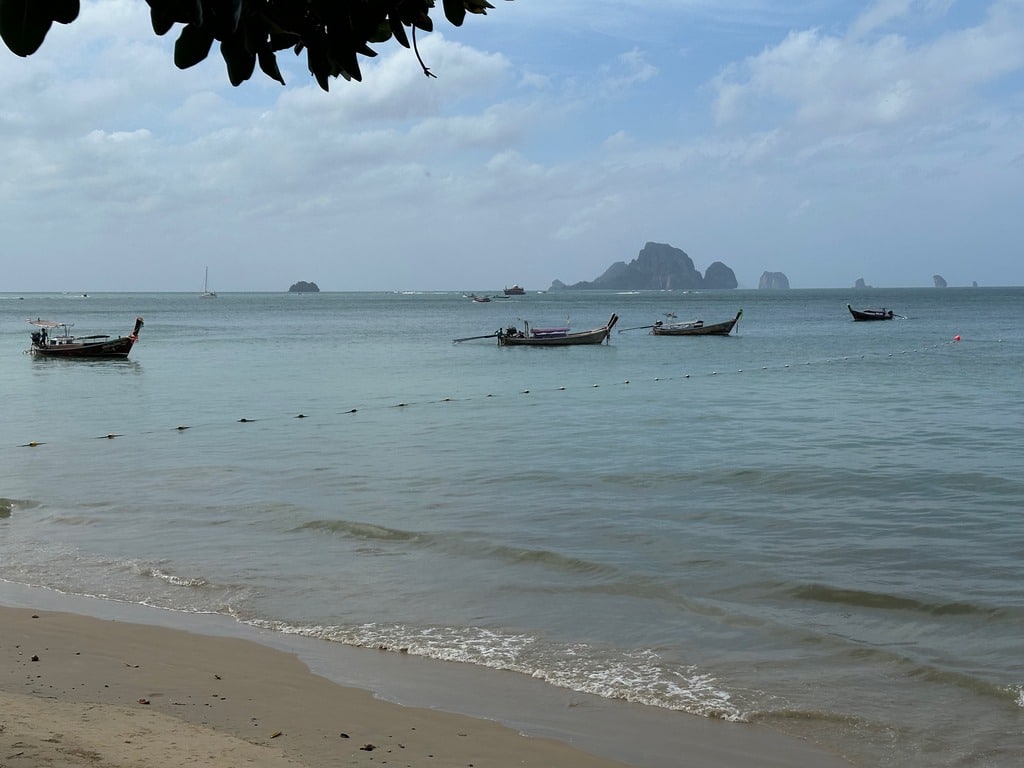
The reason to make a point of coming here is the low-tide sandbar: as the water drops, a spit of sand emerges and you can walk out to the small jungle-topped islet offshore. Check a tide table, start about an hour before dead low water, and wear something on your feet — there are shells and coral fragments. The tide comes back steadily, so do not linger.
Longtail Boats to Railay: How It Actually Works
This is the single most useful thing to know in Ao Nang, and it is simpler than people expect — there is no timetable and no advance booking.
- Where: ticket counters on the beach road — one near the middle of the beach, one at the southern end. Cash only.
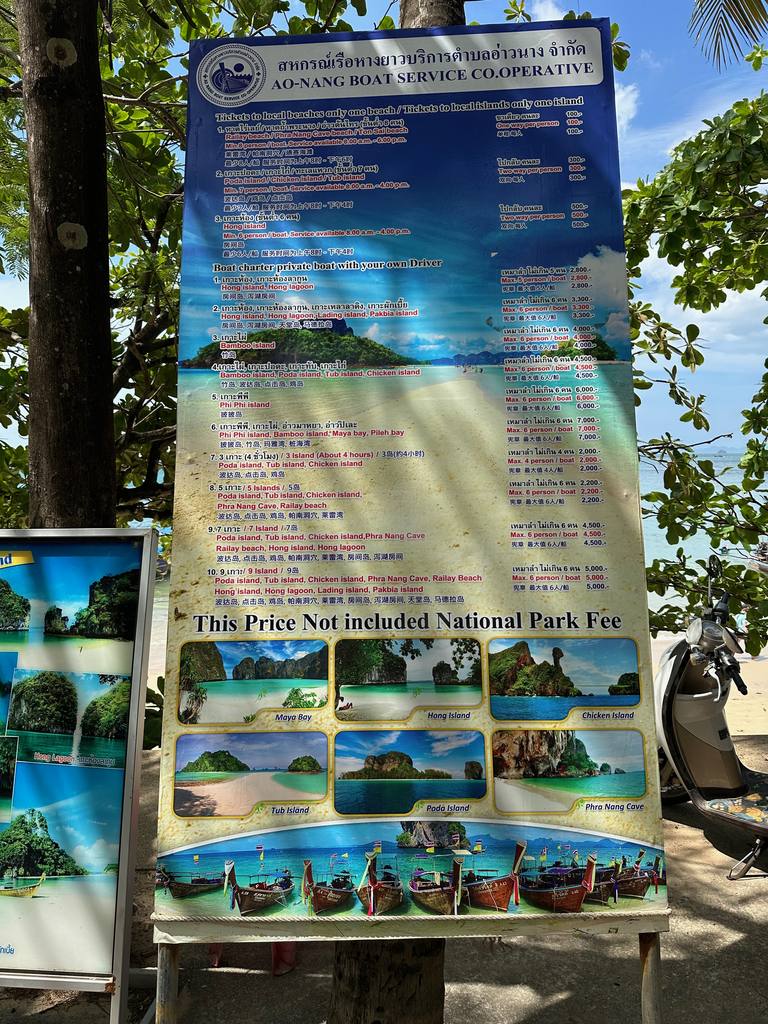
- Price: 100 THB per person each way — the rate is printed on the cooperative’s own board on the beach.
- How boats fill: you buy a ticket, wait nearby, and a boatman calls out the destination once he has a minimum of eight passengers, which is the cooperative’s stated rule.
- Crossing: 10 to 15 minutes to Railay West.
- Hours: 8:00 AM to 6:00 PM for the Railay, Phra Nang Cave and Ton Sai run. After dark it becomes a private charter with a surcharge — expect to negotiate.
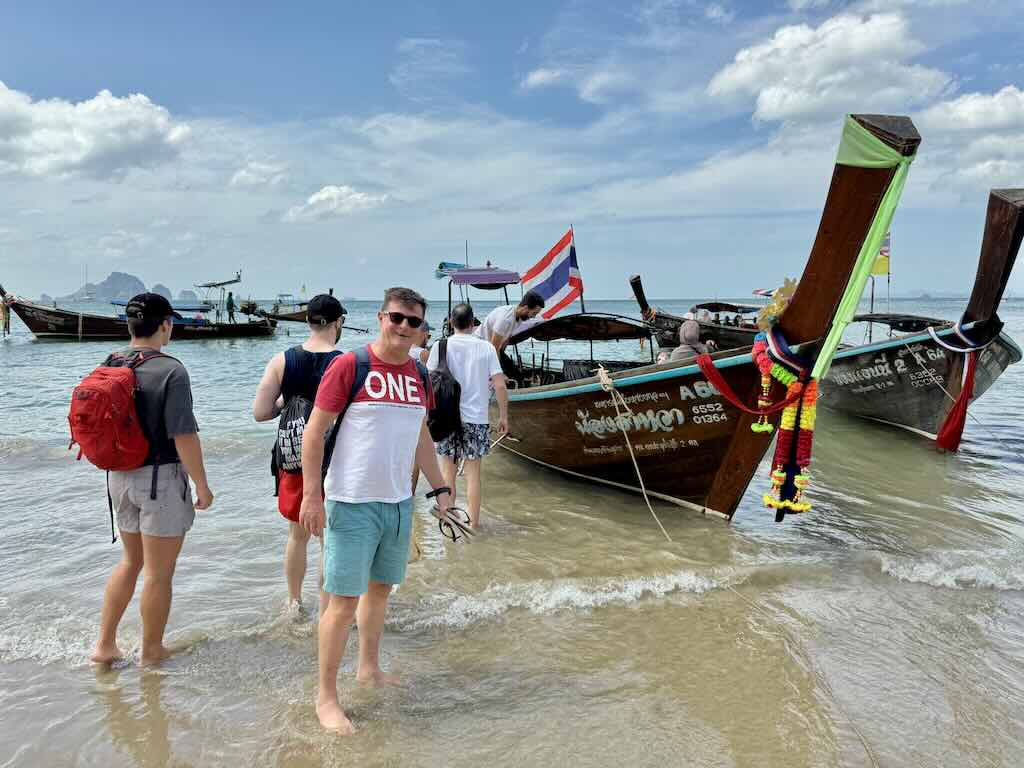
- Boarding: ⚠️ you wade. There is no pier at either end. You walk into the sea to knee depth and climb over the side.
Go before 10:00 AM if you can. You will wait less, and you will land on Railay before the day boats do — which, having done it, is the difference between a beach and a queue. The full picture of what to do once you get there is in my Railay Beach guide, including an honest comparison of whether you should be sleeping there instead.
The Four Islands Tour
The classic Krabi day trip leaves from Ao Nang beach and takes in Koh Kai (Chicken Island), Koh Poda, Koh Tup and Phra Nang, with snorkelling stops and lunch. It runs roughly 8:30 AM to 4:00 PM.
Agency tours start around 600 THB per adult on a shared longtail and 800 THB by shared speedboat, including hotel pickup within Ao Nang, a guide, snorkel gear and lunch.
🔴 But there is a cheaper way that almost nobody writes about. The Ao Nang Boat Service Co-operative posts its own official rates on a board on the beach, and you can charter a longtail directly with its driver. At the rates on that board, a five-island charter — Poda, Tub, Chicken, Phra Nang Cave and Railay — costs 2,200 THB for the whole boat, up to six people. Split four ways that is 550 THB each; split six ways it is under 400 — and you set your own timings instead of following a group.
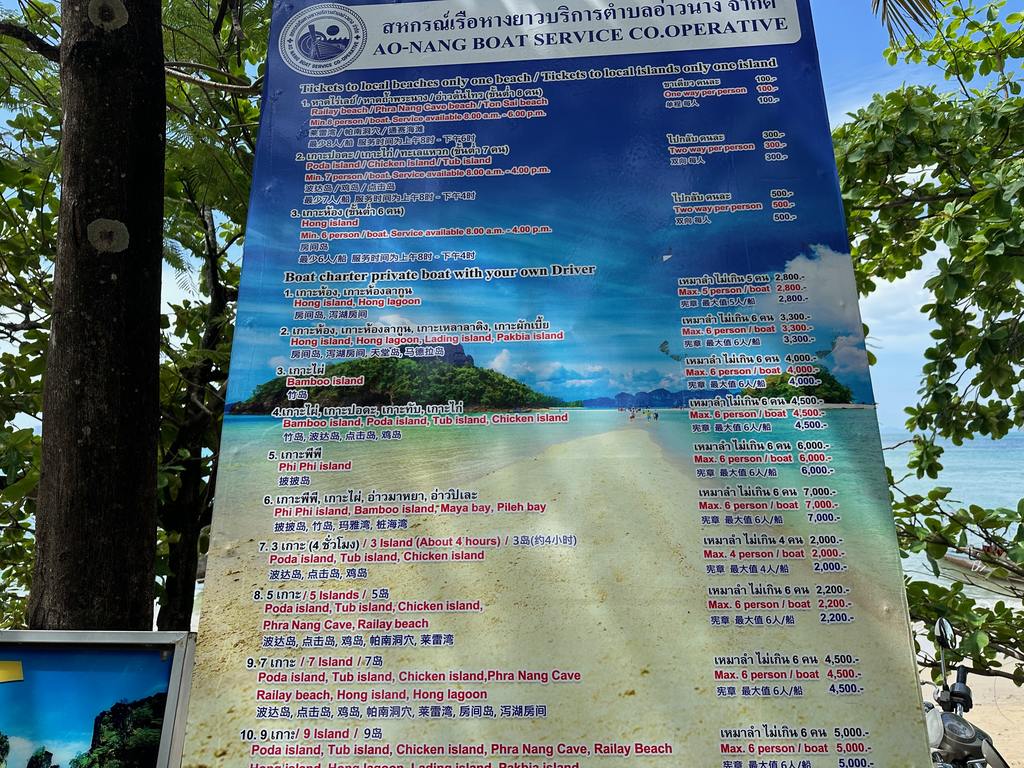
Other rates on the same board: a three-island charter (Poda, Tub, Chicken, about four hours) at 2,000 THB for up to four people, seven islands including Hong Island and the Hong Lagoon at 4,500 THB, and Koh Phi Phi with Bamboo Island, Maya Bay and Pileh Bay at 7,000 THB for up to six.
If you would rather not charter, the cooperative also sells simple return tickets: 300 THB per person return to Poda, Chicken or Tub islands (minimum seven passengers, 8:00 AM to 4:00 PM), and 500 THB return to Hong Island (minimum six). No lunch, no guide — just the boat.
🔴 The national park fee is almost never included — budget 400 THB per adult and 200 THB per child in cash on top. Some Ao Nang operators still advertise the old 200 THB rate on their listings; that figure was doubled in 2022, so bring 400.
The highlight is Talay Waek, the “separated sea” — a sand ribbon that surfaces at low tide and links Koh Tup to its neighbours, so you can walk between islands. It exists only around low water, which means the tour’s best moment depends entirely on when the tides fall that day. Ask before you book, and take water shoes.
If you would rather have it arranged before you arrive, you can compare a premium four-island longtail day with lunch, or the seven-island sunset tour with a bioluminescent plankton swim and BBQ, which leaves in the afternoon and gets you the light rather than the crowds.
Day Trips Inland: Tiger Cave Temple and the Emerald Pool
Ao Nang’s other advantage over the islands is that it has roads, so the mainland interior is reachable.
Wat Tham Sua, the Tiger Cave Temple
About 30 minutes away, and free to enter. Wat Tham Sua is its formal name. It is a working meditation temple built around a cave, and the reason people come is the staircase: 1,260 steps up a limestone outcrop to a golden Buddha and a 360-degree view over the Krabi plain. Allow 25 to 45 minutes for the climb depending on fitness — the steps are steep and uneven, and there is no shade. Go early, take water, dress respectfully (shoulders and knees covered), and watch your belongings around the monkeys.
The Emerald Pool and the hot springs
About 70 km inland, a little over an hour each way, usually combined with the nearby hot springs on a half-day tour. The Emerald Pool is a spring-fed jungle pool of startlingly clear green water, reached by an 800-metre walk from the car park. Entry is 400 THB for foreign adults and 200 THB for children. It gets busy — arrive at opening or late afternoon. You can book the hot springs, Emerald Pool and Tiger Cave as a combined day.
Other Things to Do in Ao Nang
The Monkey Trail to Pai Plong Beach
At the southern end of Ao Nang beach a wooden walkway climbs over the headland and drops onto Pai Plong, a small cove about fifteen minutes away that most visitors never see. It is quiet, swimmable and backed by cliff. As the name suggests there are macaques on the walkway: carry nothing visible, do not feed them, keep a few metres of distance.
The night market and the beach road
The Ao Nang Landmark complex, opposite Nopparat Thara, holds the largest night market in the area — food stalls, crafts, live music and Muay Thai demonstrations. The beach road itself is the other evening activity: tour desks, tailors, massage shops and restaurants, unapologetically touristic and quite fun for an hour.
Muay Thai
The Krabi International Boxing Stadium is a few minutes from the strip and runs fight nights several evenings a week. It is a tourist-facing card rather than a serious circuit, but it is a real crowd and a real sport, and worth an evening.
Where to Stay in Ao Nang
Ao Nang has more accommodation than the rest of the Krabi cluster combined, and the decision comes down to three questions: do you want to be on the sand, in the town, or away from both?
On the beach
- Krabi Resort — where I stayed. The oldest resort on this sand, low-rise Thai buildings in gardens, and unusually it sits on the strip between Ao Nang Beach and Nopparat Thara, so you get the town on one side and the quiet beach on the other.
- Aonang Villa Resort l Lifestyle Beachfront Resort — the best-rated true beachfront property in the town centre.
- Centara Ao Nang Beach Resort & Spa Krabi — big, family-oriented, several pools.
- Vacation Village Phra Nang Inn — Thai village-style bungalows right on the sand.
In town, a short walk from the beach
Where the value is. Five to ten minutes’ walk saves a great deal of money.
- Krabi Tipa Resort — 200 m from the sand and one of the most-reviewed places in town.
- Peace Laguna Resort & Spa — low-rise around a lagoon, 300 m back.
- Phu Pha Aonang Resort & Spa — pools stepping down the hillside, strong guest scores.
- Sea Seeker Krabi Resort — good value for a four-star, about 650 m from the beach.
Budget and hostels
- The Krabi Forest Homestay — 150 m from the beach and the best-scored cheap bed in Ao Nang.
- Sea Beach Hostel & Club Beachfront 18-39 years — a hostel actually on the sand, with a pool. Note the age restriction, which is enforced.
Upmarket, and the quieter beaches north
Klong Muang and Tubkaak, twenty minutes up the coast, are where Krabi’s serious resorts are. Quieter and prettier — but you are committing to taxis for every dinner.
- Dusit Thani Krabi Beach Resort — Klong Muang, and the highest-scoring luxury property in the area.
- Amari Vogue Krabi — Tubkaak beach, looking out at the Hong Islands, with a complimentary shuttle into Ao Nang at set times.
- Avani Ao Nang Cliff Krabi Resort — up on the cliff above town with the best view of the bay, five minutes’ walk down to the sand. ⚠️ Its own listing flags a lobby renovation from 22 July to 31 October 2026, with check-in handled offsite during that window.
Eating and Nightlife
Ao Nang eats well and cheaply if you step one street back from the beach. On the seafront you are paying for the view; behind it, a Thai meal runs 120–250 THB.
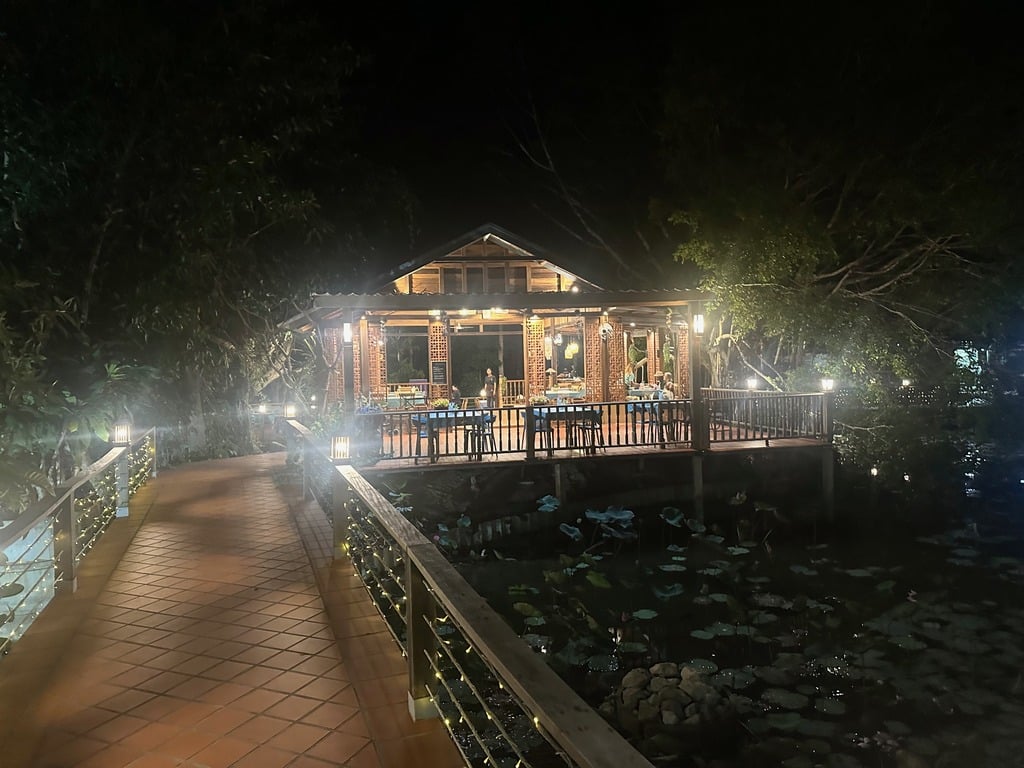
Named places worth knowing: Krua Thara near Nopparat Thara for seafood sold by weight, which locals rate as the best in the area; Govinda’s for vegetarian; Ali Baba for halal Indian-Thai; and CRU Kitchen & Bar if you want a burger and live music. The Landmark night market is the cheapest proper meal in town.
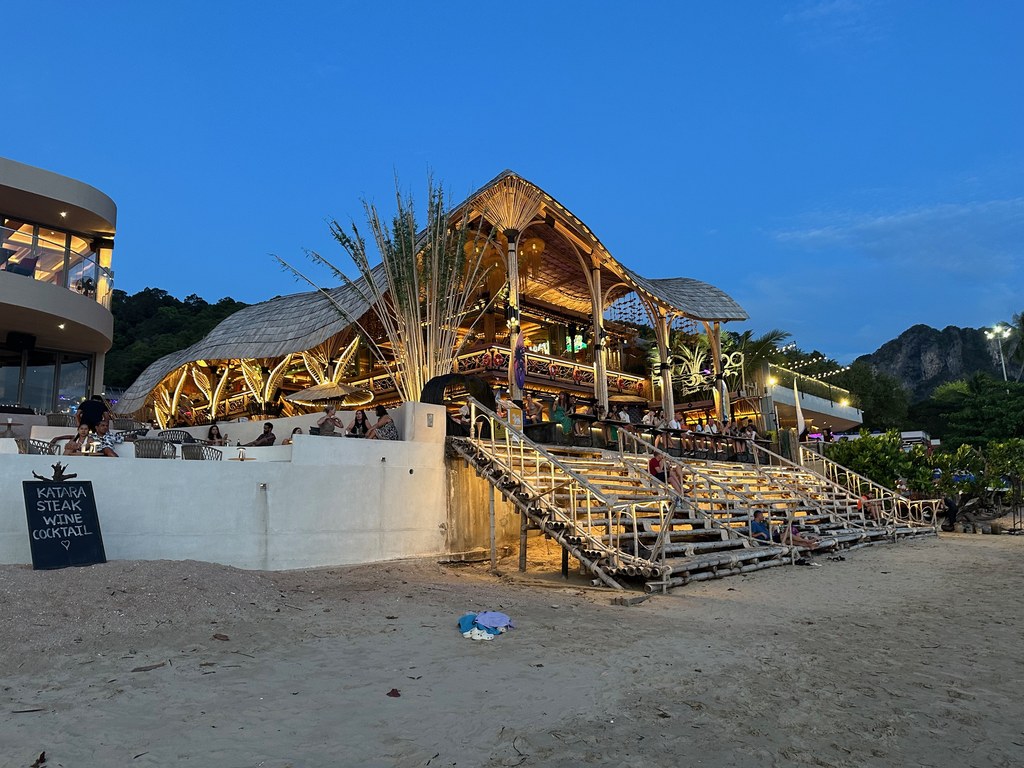
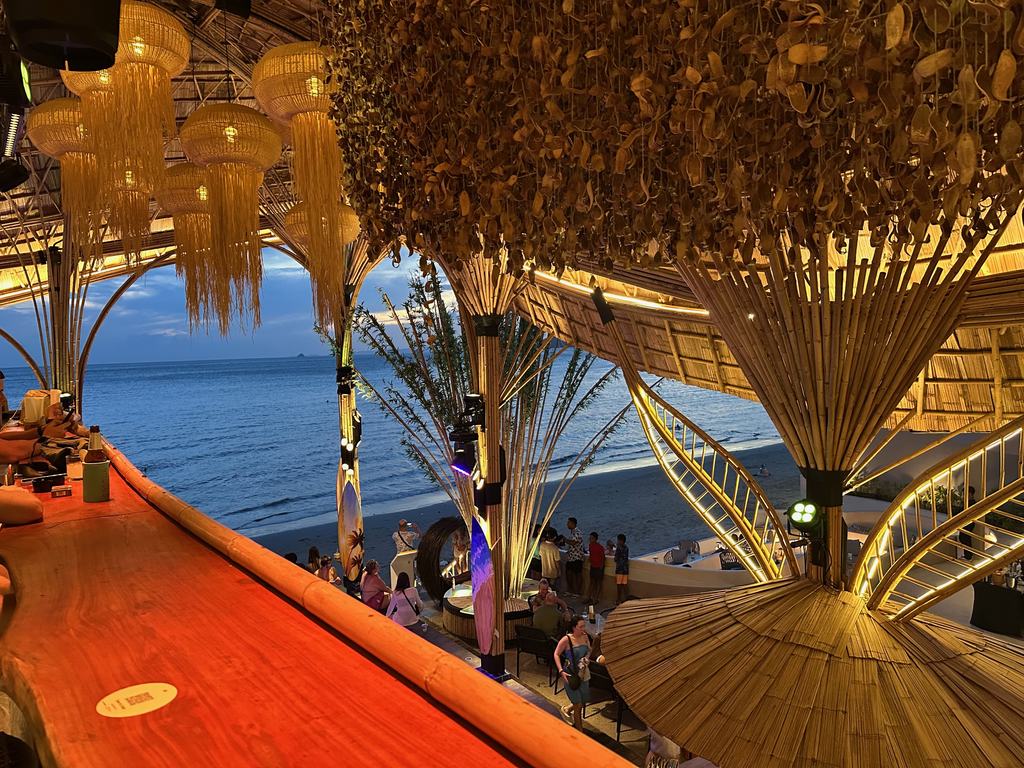
Nightlife is beachfront clubs and bars along the strip — the newer bamboo-built beach clubs at the eastern end are genuinely striking buildings and worth a drink at dusk even if you do not stay. It is livelier than Railay and Koh Lanta, tamer than Koh Phi Phi.
One thing to know rather than discover: Ao Nang has a small bar-girl scene, concentrated in a couple of alleys off the beach road and on the upper floors of one complex. It is modest by Thai resort standards and easy to avoid — but if you are travelling with family it is worth knowing which doorways to walk past.
Getting to Ao Nang
From Krabi airport
About 25 km, 25 to 45 minutes depending on how you travel. The airport bus costs around 150 THB per person and runs via Krabi Town, stopping along the Ao Nang strip. A private taxi is 1,200–1,500 THB per car and is booked at the counter in arrivals. Shared minivans sit between the two at roughly 150–200 THB per person. You can also book an airport transfer in advance on 12Go.
By boat to the islands
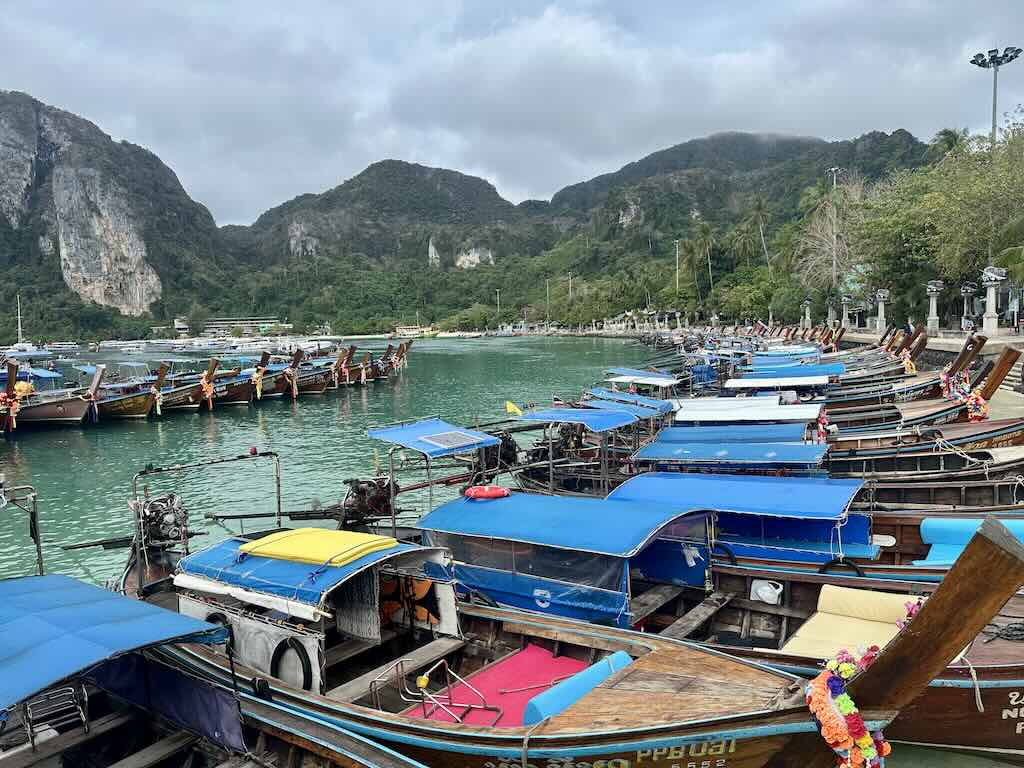
Ferries and speedboats leave from Ao Nang beach and Nopparat Thara pier for Koh Phi Phi and Koh Lanta, and there are combined boat-and-van routes onward to Phuket. Book a day or two ahead in high season.
Getting around, and hiring a car
Ao Nang itself is walkable end to end in about twenty minutes. Songthaews — converted pickups with bench seats — run the coast road to Krabi Town and Nopparat Thara for small change. Unlike the islands, this is the mainland: if you want to reach the Tiger Cave Temple, the Emerald Pool or the quieter northern beaches on your own schedule, you can compare car hire at Krabi airport on DiscoverCars.
Best Time to Visit Ao Nang
November to March is the dry season and the reason to come: calm seas, reliable boat crossings, and sunshine. February and March are the sweet spot for sea conditions. December and January are the busiest and priciest.
April to October brings the monsoon, with June and August the wettest months. Ao Nang copes with this far better than the islands do — it is a town on a road, so nothing shuts and nothing strands you — but boat trips get cancelled and the sea turns brown after heavy rain. Rooms are considerably cheaper.
Whatever the month: the beach is at its worst in the middle of the day and its best in the last hour of light. Plan around that.
Practical Tips
Money
ATMs are everywhere along the strip, but Thai machines charge a fixed foreign-card fee of around 220 THB per withdrawal — take out larger amounts less often. Boats, the national park fee and small restaurants are cash only.
Tours and touts
Every second shopfront sells the same island tours. Prices are negotiable, quality varies, and the two questions that matter are whether the 400 THB park fee is included and whether you are on a longtail or a speedboat. Booking on the street is fine and usually cheaper than your hotel desk.
Sun, sea and monkeys
Reef-safe sunscreen, and respect the roped swimming lane — boats really do use this bay. Macaques live along the Monkey Trail and around the headland: carry nothing visible, never feed them, and wash and seek treatment the same day if you are bitten or scratched.
Entry formalities
All non-Thai nationals must file the free Thailand Digital Arrival Card online within three days before arrival. Check current requirements with the Tourism Authority of Thailand and use only the official government portal — third-party sites charge for what costs nothing.
Who Ao Nang Is Right For
Come to Ao Nang if you are visiting Krabi for the first time, want to see several islands without repacking, are travelling with children or older parents who need a pharmacy and a choice of restaurants nearby, or simply want to keep your options open. It is the most practical base on this coast by a distance, and it is cheaper than everywhere it serves.
Do not come to Ao Nang if the beach itself is the point of your holiday. It is a good town on an average beach, and if you want to walk out of your room onto white sand you should be on Railay, at Klong Muang, or on Koh Lanta.
The way I would use it — and did — is as the hub of a Krabi trip rather than the destination: sleep here, leave every morning, and come back for the sunset. On that basis it is very hard to beat.
Read More
Railay Beach
Fifteen minutes from Ao Nang by longtail: Phra Nang Beach, the viewpoint hike, caves and world-class climbing. Read more
Koh Phi Phi
Maya Bay’s current rules and closure dates, Pileh Lagoon, boat tours, and where to stay on an island with no roads. Read more
Koh Lanta
The long, quiet island south of here: which beach to choose, the national park, and the best diving on the coast. Read more
Frequently Asked Questions About Ao Nang
Where is Ao Nang?
Ao Nang is a beach town on the mainland coast of Krabi Province, southern Thailand, about 25 km from Krabi airport and roughly 20 km west of Krabi Town. It is the departure point for boats to Railay, the Four Islands, Koh Phi Phi and Koh Lanta.
Is Ao Nang worth staying in?
Yes, as a base rather than a beach destination. It has the widest choice of hotels and restaurants in Krabi, plus pharmacies, ATMs and transport, and everything worth seeing in the province is a short boat or drive away. If the beach itself matters most to you, sleep on Railay or Koh Lanta instead.
Is Ao Nang beach good for swimming?
Not especially. The sand is coarse and grey, the water is often cloudy, and the bay is the launch point for hundreds of longtail boats, so there is constant traffic and a roped-off swimming lane. Nopparat Thara Beach, ten minutes north, and Phra Nang at Railay, fifteen minutes by boat, are both far better.
How do you get from Ao Nang to Railay Beach?
By longtail boat from Ao Nang beach: around 100 THB one way, 200 THB return, 10 to 15 minutes. Buy at the ticket counters on the beach road, in cash. There is no timetable — boats leave when eight or nine passengers have gathered. You board by wading into the water; there is no pier at either end.
How much is the Four Islands tour from Ao Nang?
From around 600 THB per adult on a shared longtail and 800 THB by shared speedboat, including pickup, guide, snorkel gear and lunch. The national park fee of 400 THB for adults and 200 THB for children is charged separately, in cash, and is almost never included.
How do you get from Krabi airport to Ao Nang?
It is about 25 km. The airport bus costs around 150 THB per person and takes 45 to 60 minutes via Krabi Town; a private taxi is 1,200–1,500 THB per car and takes 25 to 30 minutes; shared minivans fall between the two.
What is there to do in Ao Nang?
Most of it is day trips: Railay, the Four Islands tour, Koh Phi Phi, the Tiger Cave Temple and the Emerald Pool. In the town itself there is the beach and its sunsets, the Monkey Trail to Pai Plong Beach, the Landmark night market, Muay Thai, and Nopparat Thara Beach with its low-tide sandbar walk.
How many days do you need in Ao Nang?
Three to four nights works well, because Ao Nang is a base: one day for Railay, one for the Four Islands, one inland for the Tiger Cave Temple and the Emerald Pool. Two nights is enough if you only want Railay.
Is the Tiger Cave Temple free?
Yes, entry to Wat Tham Sua is free. It is about 30 minutes from Ao Nang, and the climb to the summit Buddha is 1,260 steep steps taking 25 to 45 minutes. Go early, bring water, and cover shoulders and knees.
When is the best time to visit Ao Nang?
November to March, with February and March the best for sea conditions. April to October is the monsoon: cheaper and quieter, but with cancelled boat trips and murky water after heavy rain. Ao Nang handles low season better than the islands because nothing closes.
Ao Nang or Railay: which should you stay in?
Ao Nang for choice, convenience and price; Railay for scenery and quiet mornings. Many people do both — a few nights in Ao Nang either side of two on Railay. I compare them properly in the Railay Beach guide.