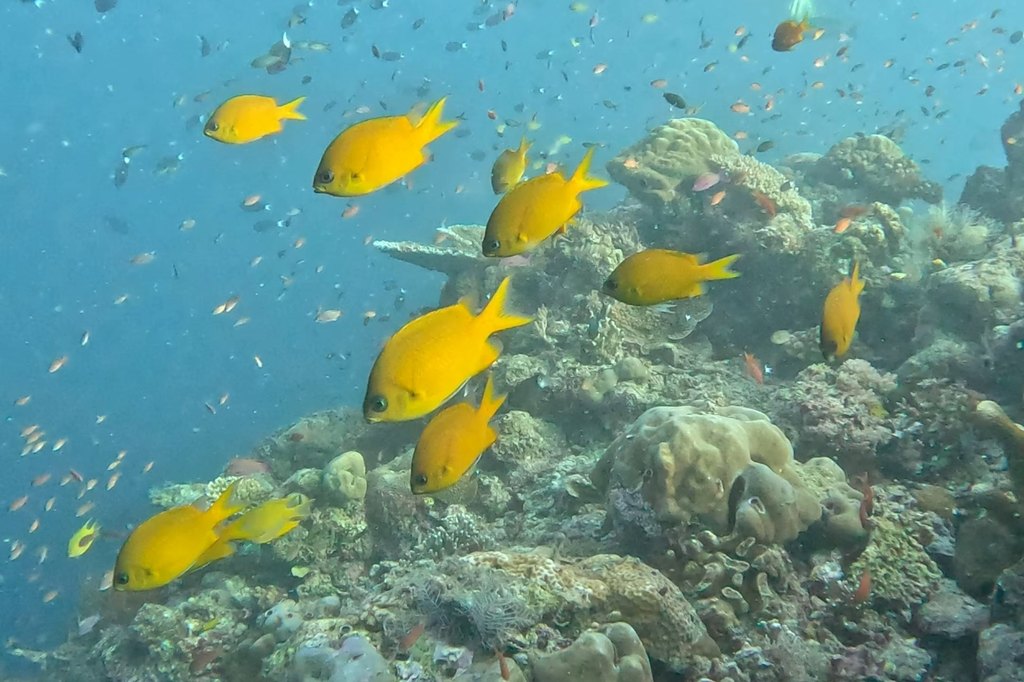
Sipadan: Diving Malaysia’s Most Famous Wall
By Blaise Jaeger · Updated August 25, 2026
Sipadan is the most famous dive site in Malaysia and one of the most talked-about in the world. It is also one of the hardest to get into: a strict daily permit quota, a hard two-dive limit, and park fees that keep climbing.
I dived Sipadan on 28 and 29 September 2024, staying at the Scuba Junkie resort on Mabul, from where the boats leave each morning. Four sites over those two days — Barracuda Point, South Point, Turtle City and Drop Off — plus the third dive of each day back on Mabul, because Sipadan itself allows only two. The evening before, on 27 September, I dived Mabul’s house reef at night.
This guide covers what you actually need to plan the trip: how the permit system works and what it costs, what each site delivers, what the marine life really looks like in the water rather than in a brochure, how to physically get there, and where to sleep. It also says plainly what I thought of it, which is not what most guides will tell you.
Sipadan at a Glance
| Where | Celebes Sea, 35 km off Sabah, Malaysian Borneo |
| Nearest airport | Tawau (TWU) — 90 min by road to Semporna, then ~1 h by boat |
| Daily quota | 252 permits, divers and snorkelers combined |
| Dives per day | 2 maximum, no exceptions |
| Park charges | RM 350 permit + RM 100 conservation fee per international diver, per day |
| Minimum certification | Advanced Open Water |
| Accommodation on the island | None since 2004 — stay on Mabul, Kapalai or in Semporna |
| Annual closure | One month — confirm current dates with your operator |
| Signature sightings | Green turtles, chevron barracuda, jackfish, bumphead parrotfish, whitetip reef sharks |
| Wall depth | Drops more than 600 m from the reef edge |
Why Dive Sipadan?
Sipadan is an oceanic island in the Celebes Sea: a coral cap sitting on top of an extinct volcanic cone that rises more than 600 metres from the seabed. That vertical wall is the whole story. Deep, nutrient-rich water pushes up against it, currents sweep along it, and the result is a concentration of fish that very few reefs in the world can match in such a small area.
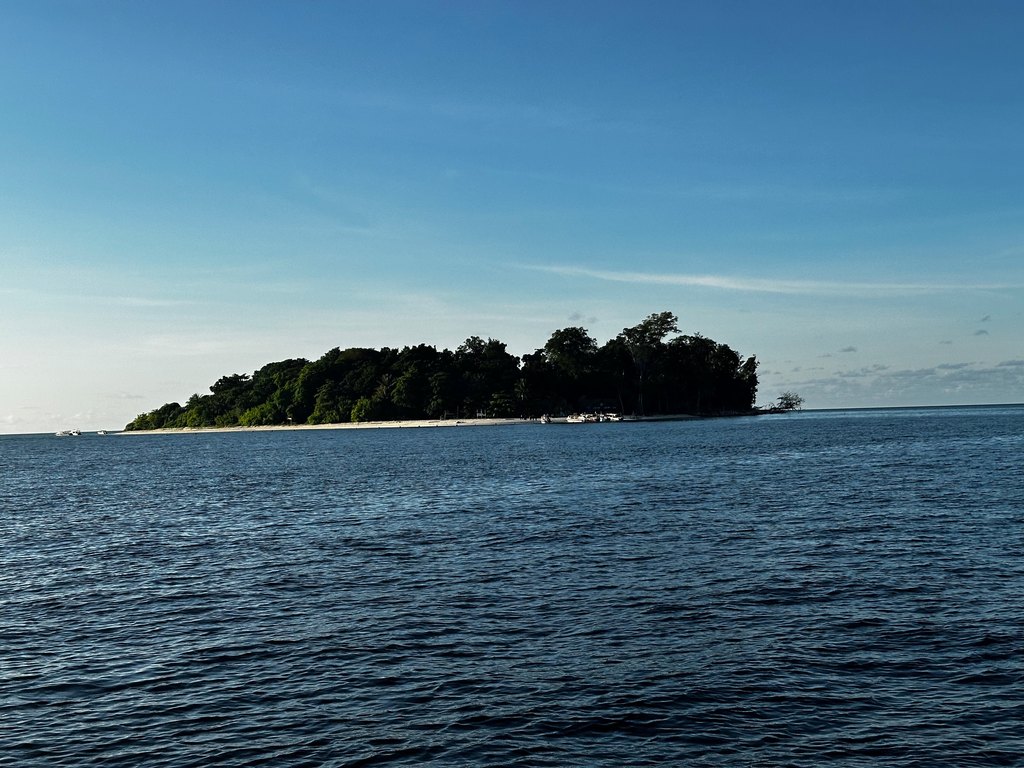
It matters that the island is oceanic rather than coastal. Most of the diving in this part of Southeast Asia happens on fringing reefs attached to a landmass, where visibility and fish density fluctuate with river run-off and season. Sipadan sits alone in deep water. There is no river, no sediment, and the same wall works year-round.
The headline attractions are consistent and genuinely reliable. Green turtles in numbers you stop counting after the first dive. A resident school of chevron barracuda that compresses into a tornado when the current runs. Jackfish doing the same thing. Whitetip reef sharks patrolling the wall. Bumphead parrotfish grazing the coral in herds you hear before you see.
It is also genuinely protected, and that is not marketing. All accommodation was removed from the island in 2004, diving is capped by a permit system run by Sabah Parks, and the island closes entirely for one month a year. Those restrictions are the reason the fish are still there — and also the reason getting a spot takes planning rather than just booking a flight.
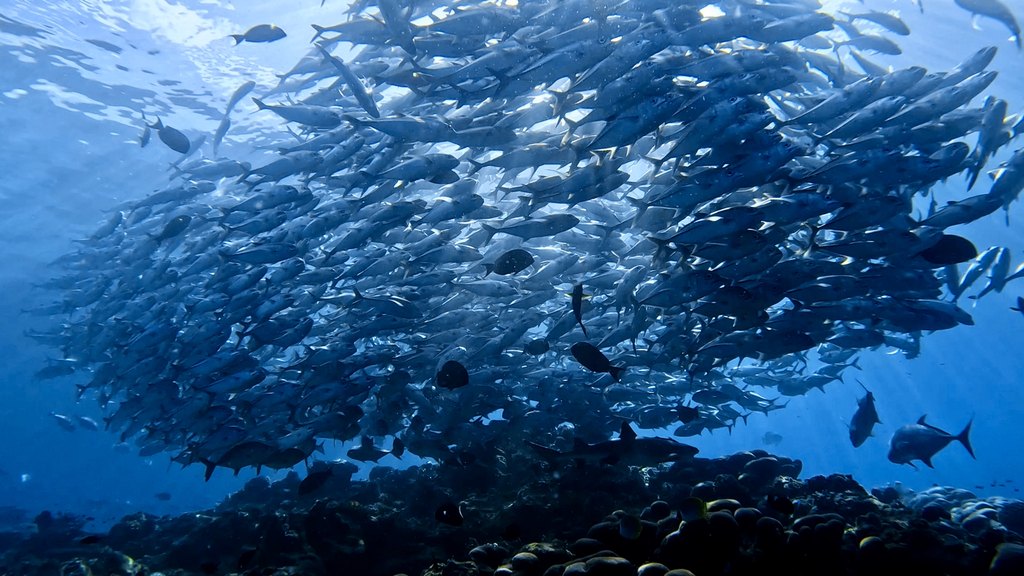
Map of Sipadan and Its Dive Sites
Sipadan is small. You can walk around it in about twenty minutes, and roughly a dozen named dive sites ring its edge. Almost all of them sit on the same wall, which means the choice between them is less about scenery than about where the current is running on a given morning — a decision your guide makes on the boat, not something you book in advance.
The island lies about 35 km off the Sabah coast. From Mabul, where most divers sleep, the crossing takes roughly 45 minutes to an hour. From Semporna on the mainland it is closer to 1 hour 15. Mabul and Kapalai, the two islands with accommodation, sit between the two.
The five sites covered below are the ones you are most likely to be assigned, and between them they cover the range of what Sipadan does: the current-driven schooling dives, the turtle-heavy shallows, the coral wall, and the easy orientation dive.
My Dives at Sipadan: What It Was Actually Like
I want to be straightforward about this, because most Sipadan write-ups read like brochures and I do not think that helps anyone plan a trip.
I stayed on Mabul at the Scuba Junkie resort, which runs its own boats to Sipadan. The rhythm is set by the permit rules: two dives at Sipadan in the morning, then the boat comes back and the third dive of the day is on Mabul. That is not the operator cutting corners — it is the law, and every resort works the same way.
Every single Sipadan dive started identically: ten minutes hanging in the blue off the wall, watching, hoping for hammerheads. We never saw one. Over the whole trip the only shark out of the ordinary was a single leopard shark. The whitetips were there, as advertised, cruising the wall and resting on the sand — but whitetips are not what you fly to Borneo for.
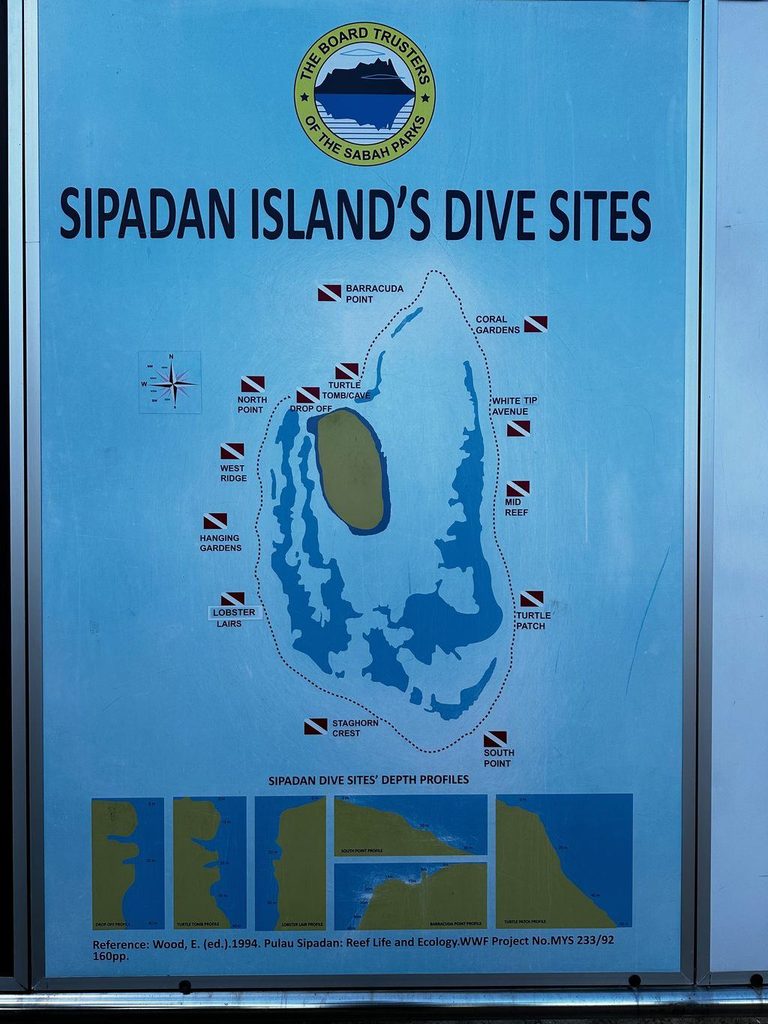
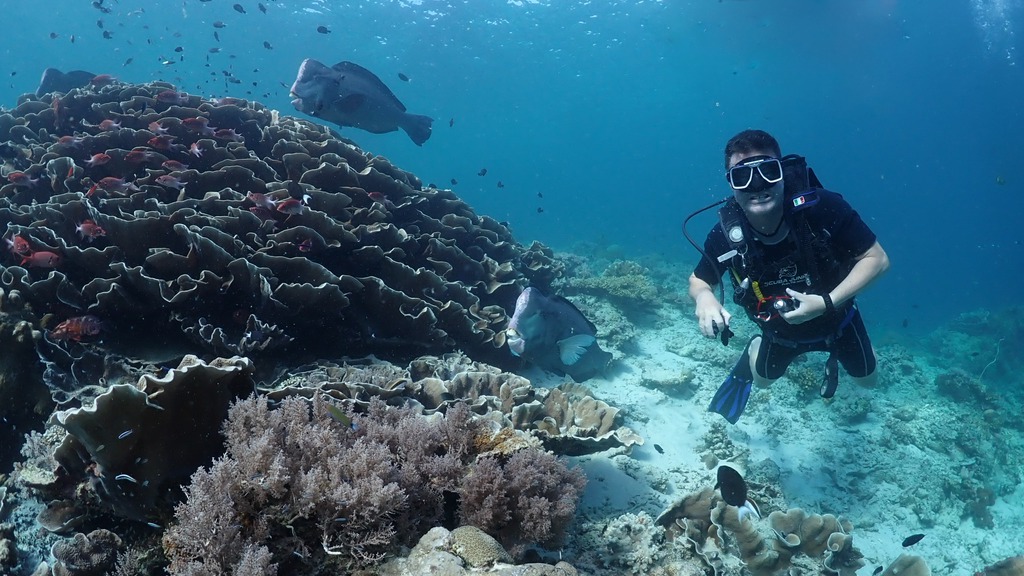
What did deliver, and I have the footage: on 28 September, the barracuda school at Barracuda Point, dense enough to blot out the surface, a whitetip settled on the sand, and turtles on every dive. On 29 September, a herd of bumphead parrotfish working the coral, more turtles than I could count, batfish and snapper schools in the shallows.
And yet I came away disappointed. That is an honest verdict and I will stand by it: I think Sipadan is overrated. The park fees are high. The site is crowded — 252 permits a day is a lot of divers on one small wall, and you feel it. And the two-dive cap means a large part of your diving day happens somewhere other than the place you paid to reach. I have had far better diving at Maratua, a little further south in Indonesian Borneo: fewer divers, no permit lottery, no daily cap, and marine life that held up better dive after dive.
None of which means don’t go. It means go with calibrated expectations, and if your trip can only take one of the two, look hard at Maratua before you commit.
Barracuda Point
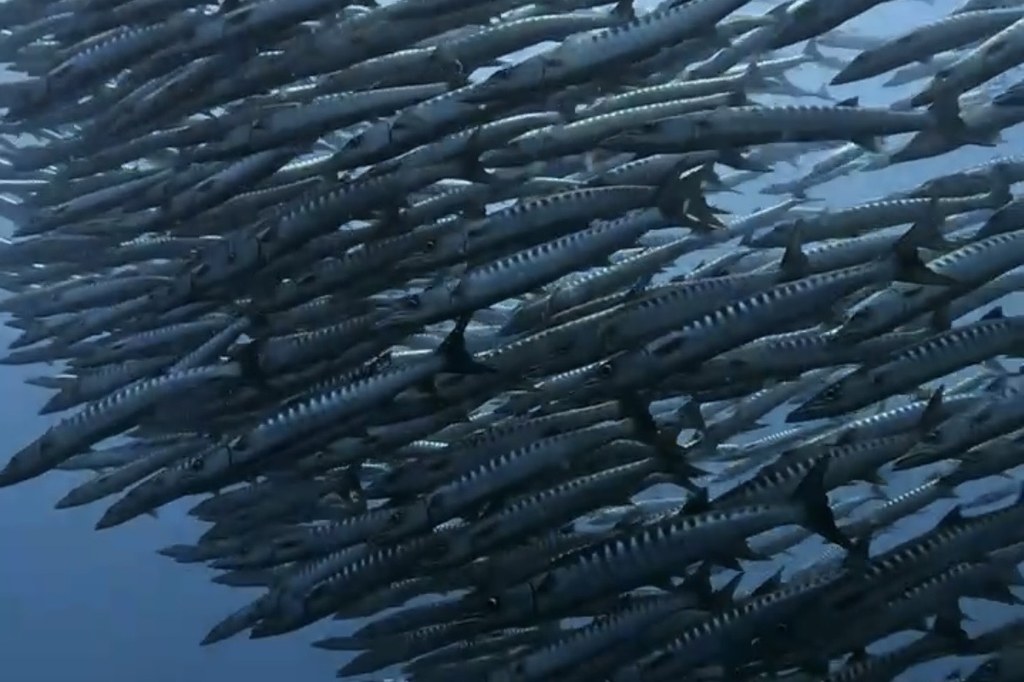
The most famous site on the island, and the one every operator tries to schedule at least once for every guest. The dive runs along the wall with the current, and the barracuda school usually holds around the corner where the topography turns — when the current is running they compress into the vertical tornado that appears on every Sipadan poster, and when it is slack they spread out and the picture falls apart.
That dependence on conditions is worth understanding before you go. Nobody, including your guide, controls whether you get the tornado. What you are buying is a good chance, not a guarantee, and the difference between the two is entirely down to water movement on the morning you happen to be assigned the site.
Beyond the barracuda, this is where you are most likely to see reef sharks stacked along the wall and where the jackfish school often sits. It is also, precisely because it is the signature dive, where you are most likely to share the water with two or three other groups — which on a wall this size is very noticeable.
On 28 September the school was there and it was genuinely impressive: a moving wall of fish, close enough to fill the frame. It is the single image I would keep from the trip.
South Point
The southern tip of the island, and the site with the strongest reputation for current. That is exactly why it can be the best dive of the trip: the same wall, but water moving hard enough to pull in the big schools and hold them tight against the reef.
It is also where a pleasant drift can turn into work if conditions are stronger than the briefing suggested. This is not a beginner dive, and it is a large part of why Sabah Parks sets Advanced Open Water as the minimum certification for Sipadan at all. If you are freshly certified and this site comes up on the schedule, say so to your guide rather than finding out at depth.
When it works, South Point is the site that most justifies Sipadan’s reputation: the pelagic action happens here more reliably than anywhere else on the island, and it is the most likely spot for something unexpected to come out of the blue. It is also, statistically, where most of the hammerhead sightings people report have happened — which is not the same as saying they are common.
Turtle City and Turtle Cavern
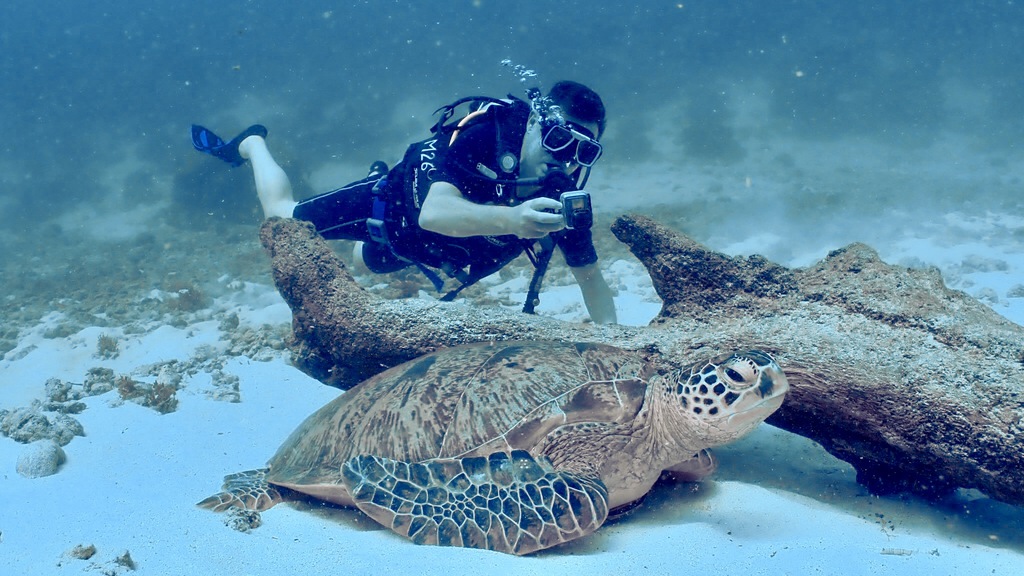
Turtle City is where the turtle density stops being remarkable and starts being ordinary. Green turtles resting on the coral, feeding, rising past you on their way to the surface — after twenty minutes you stop pointing them out to your buddy. It is the section of Sipadan that most reliably lives up to its billing, and the one I would put at the top of a first-timer’s list.
It is also a comparatively relaxed dive: shallower than the wall sites, less dependent on current, and forgiving of a group with mixed experience. If your two permits give you a choice, this is the one to pair with a current-driven site rather than with another one.
Turtle Cavern is a completely different matter. It is a limestone cave system inside the wall containing the skeletons of turtles that entered and could not find their way back out. It is not a recreational dive: penetration requires cave training and specific authorisation, and people have died in it. Most operators will show you the entrance from outside and go no further, which is the correct call and not a lack of ambition on their part.
Hanging Gardens
Named for the soft corals that grow outward and downward from the overhangs along the wall, this is the site people cite when they want to talk about Sipadan’s coral rather than its fish. It sits deep on the wall, which limits your bottom time and pushes it toward the more experienced end of the group.
It rewards good buoyancy far more than it rewards chasing pelagics. If you dive with a camera and macro is your thing, this is your site; if you came for the tornado, it will feel like the quiet dive of the trip. Both reactions are correct — it is simply a different kind of diving from Barracuda Point, on the same wall, ten minutes away by boat.
Drop Off
The site directly in front of the old jetty, and the one that explains Sipadan’s geology in a single glance: the reef flat ends and the wall goes straight down into blue. Standing on the shallows and looking over the edge is genuinely startling the first time.
It is the easiest of the named sites and the usual checkout or second dive of the morning, which makes it the one most people do without really registering it. That is a shame — the shallows here hold turtles, and the top of the wall is where the bumphead parrotfish tend to work in the early morning.
Marine Life at Sipadan: What You Will Actually See
Green Turtles
The most dependable sighting on the island, at every site and on every dive. Green turtles dominate overwhelmingly; hawksbills turn up occasionally. If turtles are what you came for, Sipadan will not disappoint you — this is the one part of its reputation that is, if anything, understated.
The Barracuda Tornado
Chevron barracuda schooling in the hundreds, most often at Barracuda Point. Whether they form the vertical tornado depends entirely on current: with slack water you will still find the school, just spread out along the reef and far less photogenic. Plan for the school, treat the tornado as the bonus.
Jackfish
Jackfish — bigeye trevally, if you want the book name — doing the same trick as the barracuda, and in my experience just as good. They get less advertising, which means most divers are less prepared for how impressive a tight jackfish school is when it closes around you.
Sharks
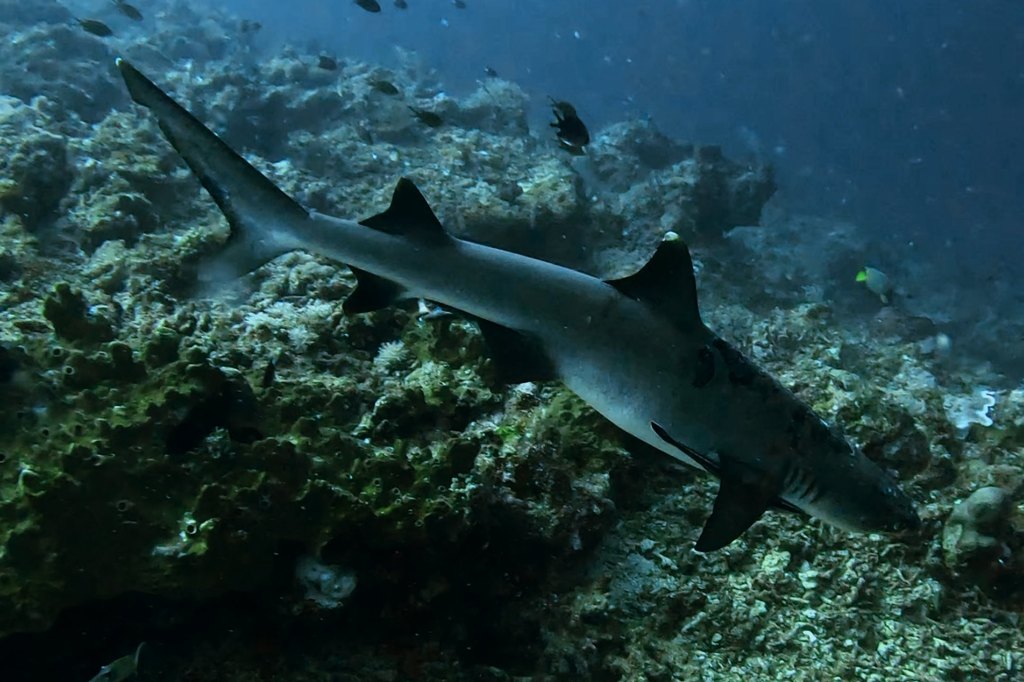
Whitetip reef sharks are constant along the wall and easy to find, often resting on the sand in the shallows. Grey reef sharks appear less often. Hammerheads are the reason many divers start each dive staring into the blue — we did, on every single dive, for ten minutes each time, and never saw one. The only unusual shark of the whole trip was a single leopard shark. Treat hammerheads as a lottery ticket, not a plan.
Bumphead Parrotfish
Herds of them, grazing the coral and audibly crunching it — you often hear them before the shapes resolve out of the blue. Along with the turtles, the most consistently entertaining animal on the island, and best in the early morning on the top of the wall.
Schooling Reef Fish
Beyond the headline species, the shallows hold dense schools of batfish, yellow-striped snapper and fusiliers, and they are much easier to photograph than the pelagics because they hold position. On a dive where the current does not cooperate, these are what save the roll of film.
How to Get a Sipadan Permit
You cannot buy a Sipadan permit yourself. Permits are issued by Sabah Parks and allocated to licensed operators, who then distribute them among their own guests. In practice that means the permit question is really a question of which resort you book and for how long — there is no independent route, no online booking portal, and no way to turn up in Semporna and buy a day pass.
- Book through a Sabah Parks–registered operator. Every legitimate resort on Mabul, Kapalai and in Semporna holds an allocation. The size of that allocation broadly tracks the size of the operation.
- Stay several nights. Operators spread their permits across guests, and almost everyone who reports missing out had booked a short stay. Three nights is the usual minimum recommendation; more is safer.
- Book early. In high season the bottleneck is permits, not rooms. A resort can have space and still have no permit left for your dates.
- Hold Advanced Open Water or above. Sabah Parks sets this as the minimum certification, and it is checked.
One consequence worth planning around: because permits are allocated per guest per day, a longer stay does not merely improve your odds, it usually means more than one Sipadan day. That is the difference between seeing the island and seeing it twice in different conditions — which, given how much the diving depends on current, matters more here than at most destinations.
Daily Quotas
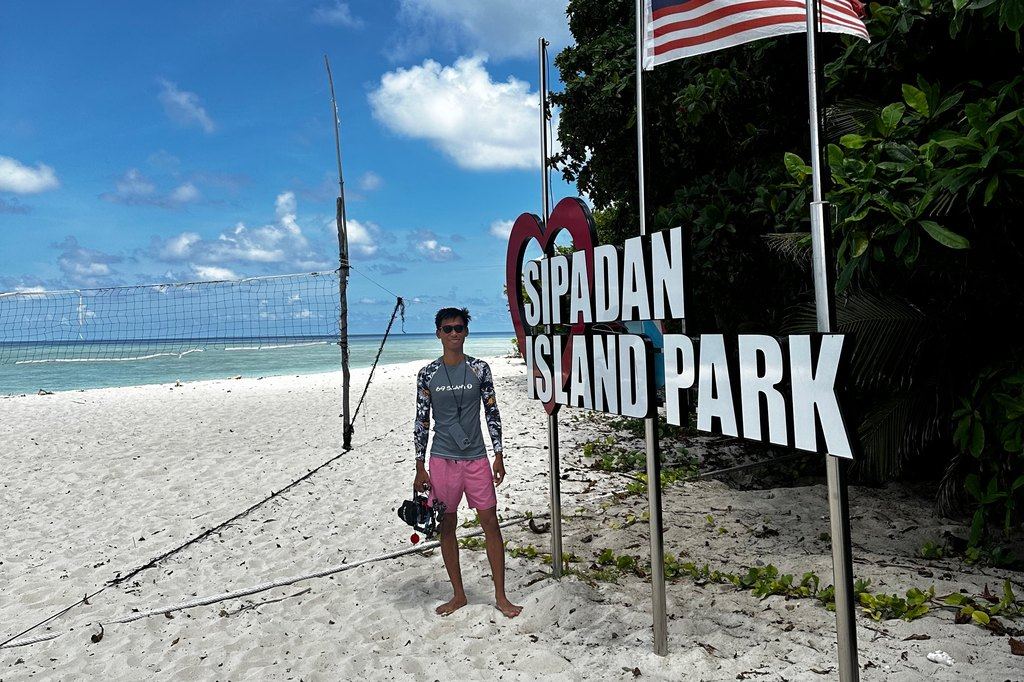
The daily quota is 252 permits, covering divers and snorkelers together. That figure is recent: it was doubled from 126 in 2025. Each permit is valid for one day and a maximum of two dives — the third dive of your day will always be somewhere else, in practice Mabul or Kapalai.
Whether doubling the quota was good news depends on your point of view. It made permits considerably easier to get. It also put twice as many divers on the same wall, and if you are wondering why I found Sipadan crowded, that number is a large part of the answer.
⚠️ Sources disagree on the annual closure. Two recent industry sources state that Sipadan closes to diving for the whole of November, with the season running 1 December to 31 October. The Sabah Tourism Board page still refers to a December closure, a rule dating from 2020. Confirm the current dates with your operator before booking flights — this is the one detail on this page worth an email, because getting it wrong costs you the trip.
Prices
Two separate charges apply, both set by Sabah Parks and both payable on top of whatever your resort charges for the diving itself:
- Sipadan diving permit: RM 350 per person per day for international divers (RM 250 for Malaysians).
- Conservation fee: RM 100 per person for international visitors (RM 50 for Malaysians).
That is RM 450 per international diver, per Sipadan day, in park charges alone — before the resort package, the boat, equipment rental or nitrox. Add those and a Sipadan day becomes one of the more expensive diving days available in Southeast Asia, for two dives.
It is worth being clear about what that money buys and what it does not. It buys access to a genuinely protected reef, and the protection is real and visible in the fish. It does not buy exclusivity, extra dives, or any guarantee about conditions. When I say the cost is part of why I found the experience overrated, this arithmetic is what I mean.
Mabul: The Diving Nobody Warns You About
Here is the part of a Sipadan trip that most guides treat as filler, and that I would now argue is the main event: Mabul’s own diving is excellent, and you will do more of it than you do of Sipadan.
The arithmetic is unavoidable. Sipadan gives you two dives on the days your permit comes through. Everything else — the third dive of those days, and every dive on the days without a permit — happens at Mabul or Kapalai. Over a typical stay that is the majority of your diving.
Mabul is a muck-diving destination in its own right, and a well-known one. The bottom around the island and under the stilt villages is silt and rubble rather than coral, which is exactly what the macro species want: frogfish, several species of seahorse, mandarinfish, ribbon eels, blue-ringed octopus, flamboyant cuttlefish, crabs and shrimps that need to be pointed out to you before you see them.
I dived it at night on 27 September: a torch, a slow pace, a guide who knows where things live, and a bottom that looks like nothing at all until it starts moving.
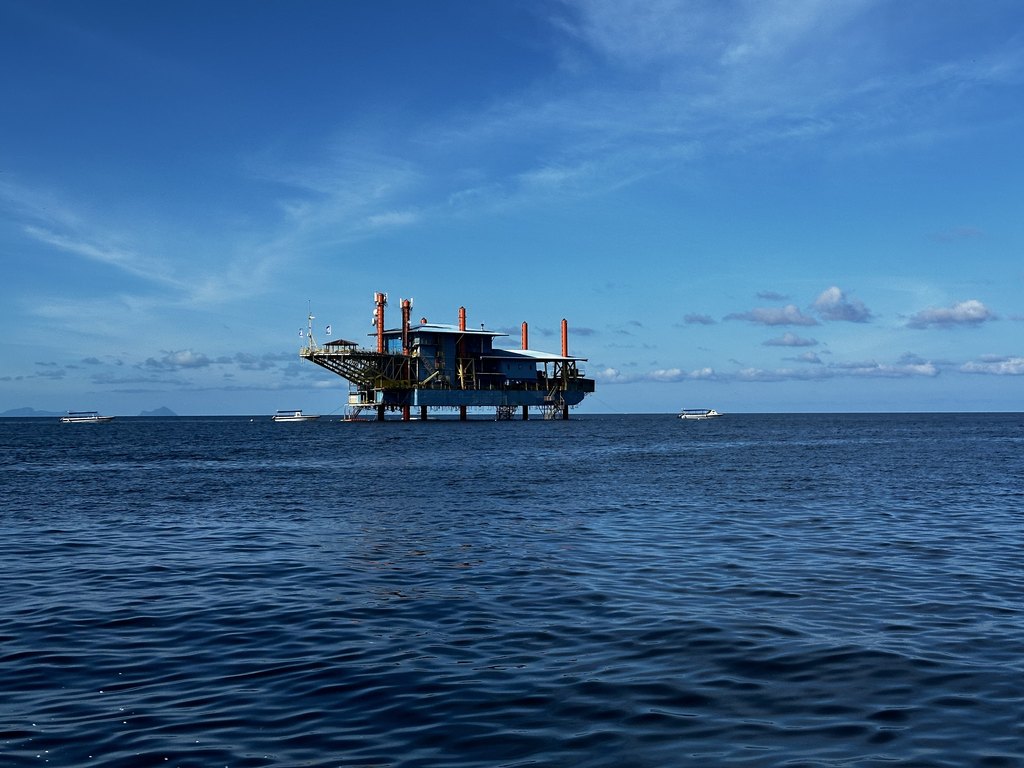
One landmark you cannot miss from the water: the Seaventures Dive Rig, a decommissioned offshore drilling platform anchored just off Mabul and converted into a dive resort — by its own account the only one of its kind in the world. Divers staying there get unlimited access to the house reef directly beneath it, which is covered in the section on where to stay below.
The practical consequence for your planning: do not treat Mabul days as wasted days, and do not book the shortest stay that gets you a Sipadan permit. If you go to Semporna and dive only Sipadan, you will have skipped the diving that most divers end up remembering.
Where to Stay: Mabul, Kapalai and Semporna
Nobody sleeps on Sipadan. Accommodation was removed from the island in 2004 and has not returned, so every diver stays either on one of the two neighbouring islands or on the mainland at Semporna. Where you choose determines your boat time, your macro diving, and to a degree your permit odds.
Mabul
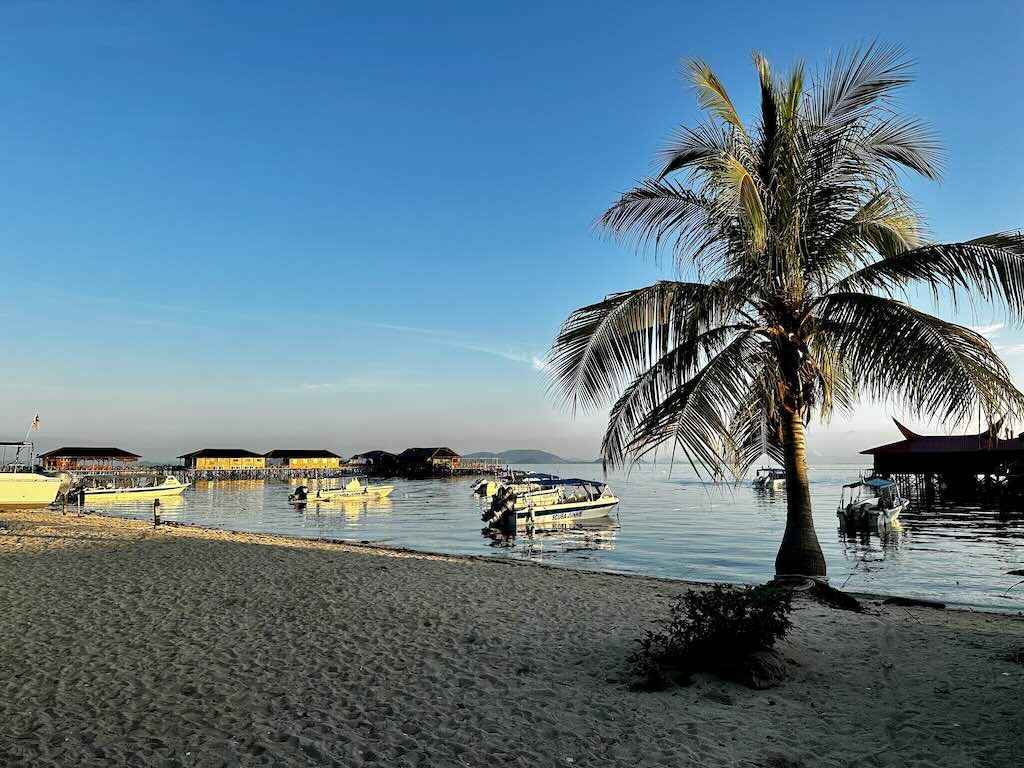
The main base, and where I stayed — at the Scuba Junkie resort, whose boats leave for Sipadan directly from the beach. Mabul is a real island with a village, a spread of resorts from backpacker dorms to high-end, and the muck diving described above right off the house reef.
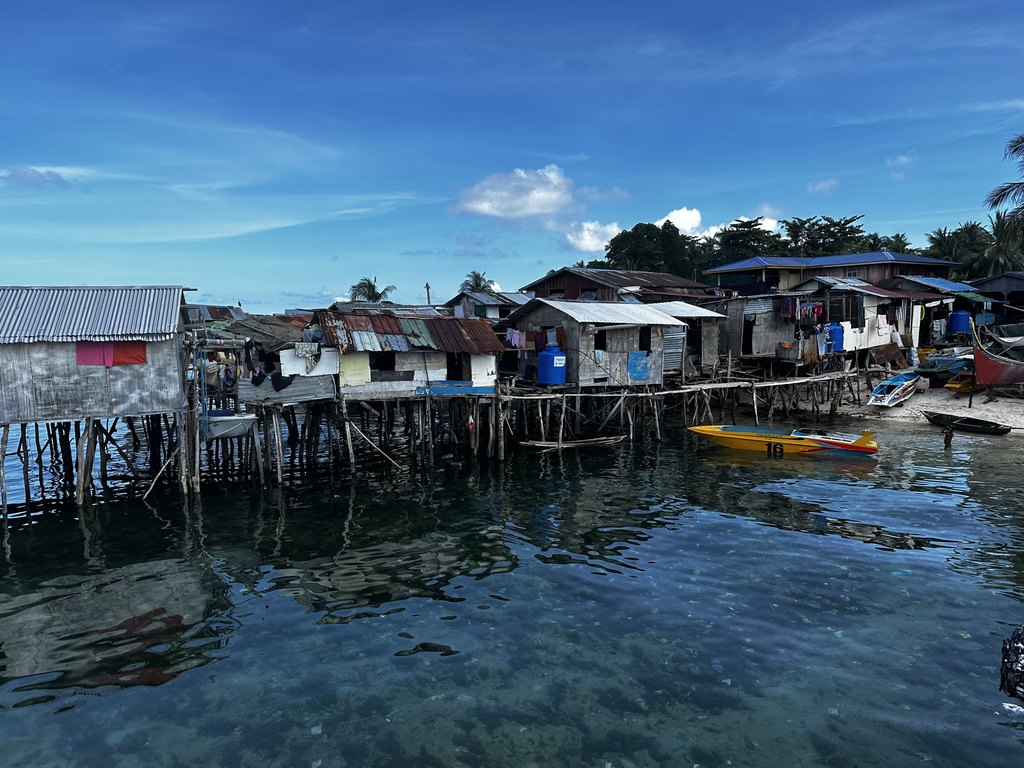
It is the pragmatic choice for most people: the widest range of prices, the largest permit allocations, and the shortest boat ride to Sipadan of the three options. It is also the least pristine — there is a working village here and it looks like one, which some visitors find jarring against the brochure imagery.
👉 Compare the resorts on Mabul, from backpacker dorms to the dive lodges with their own Sipadan boats: see where to stay on Mabul.
The Rig
The Seaventures Dive Rig deserves its own line, because it solves the exact problem this page keeps coming back to. It is a converted oil platform anchored a few hundred metres off Mabul, and it offers unlimited house reef diving straight off the structure — you take the lift down and you are in the water.
Set that against Sipadan’s two-dive cap and the arithmetic changes completely. On a Sipadan day you dive twice at Sipadan and then, instead of waiting out the afternoon, you dive the rig as often as you feel like. On a day without a permit, you are not stuck: the house reef is right there, and the rig legs are a genuine dive site rather than a consolation.
To be precise, because it matters when you compare quotes: the unlimited diving is specific to the rig, not a Mabul-wide arrangement. The other resorts on the island sell dives by the package, in the usual three-a-day rhythm. The rig’s house reef happens to be the Mabul reef — but the unlimited access comes with the address.
It is not the cheapest base and it is not for everyone — you are sleeping on an industrial structure in the middle of the sea, which some people love and some find odd. But if your priority is number of dives per day rather than beach, it is the most rational choice of the three islands.
Kapalai
Not really an island at all — a sandbank with a single resort built entirely on stilts over the water. It is the more atmospheric of the two and much the quieter, with the same access to Sipadan and its own strong macro diving directly under the walkways.
It is also more expensive and offers no choice: it is effectively one property, so you either want that particular experience at that particular price or you do not. Divers who have stayed there tend to rate it highly; it is not the budget option and does not pretend to be.
Semporna
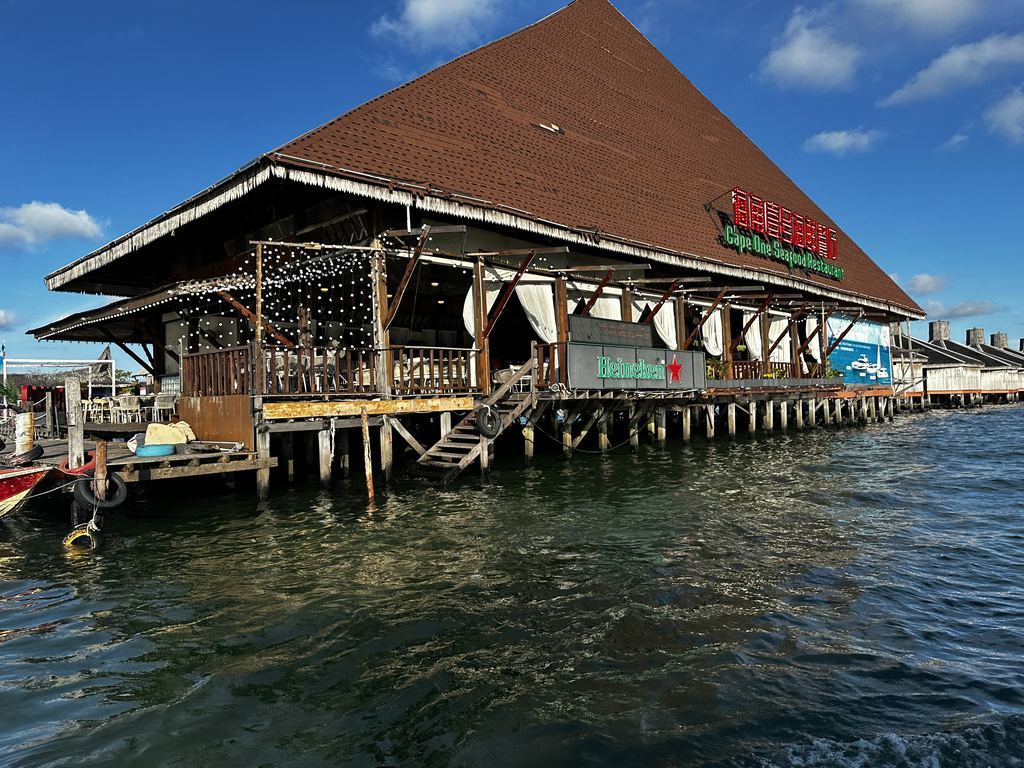
The mainland town, and the cheapest base. Several operators run day trips to Sipadan from here, which means a longer boat ride — around 1 hour 15 each way — and a much earlier start. It works if you are on a budget or combining diving with land travel in Sabah, and it is where you will end up anyway on your travel days. The seafood restaurants on the jetty by the harbour are worth an evening.
👉 Semporna is the budget base and your arrival point either way: see hotels in Semporna.
How to Get to Sipadan
The journey is straightforward but has one hard constraint on the last leg, and missing it costs you a day.
Flights
You fly to Tawau (TWU), the nearest airport. Tawau is served by multiple daily flights from Kota Kinabalu on Batik Air and AirAsia, and directly from Kuala Lumpur in just under three hours. Kota Kinabalu is the usual international entry point for Sabah, so most itineraries route KL or Singapore, then Kota Kinabalu, then Tawau.
👉 Flights and buses on this leg are worth comparing side by side — the bus is long but cheap: check Kota Kinabalu to Tawau options.
Tawau to Semporna
Roughly a 90-minute drive by taxi or resort transfer, or about two hours by public transport. Most resorts include this transfer in their packages and will meet you at arrivals, which is worth taking rather than arranging your own.
👉 If your resort does not include it, or you are arriving independently: book the Tawau to Semporna transfer.
Semporna to Mabul
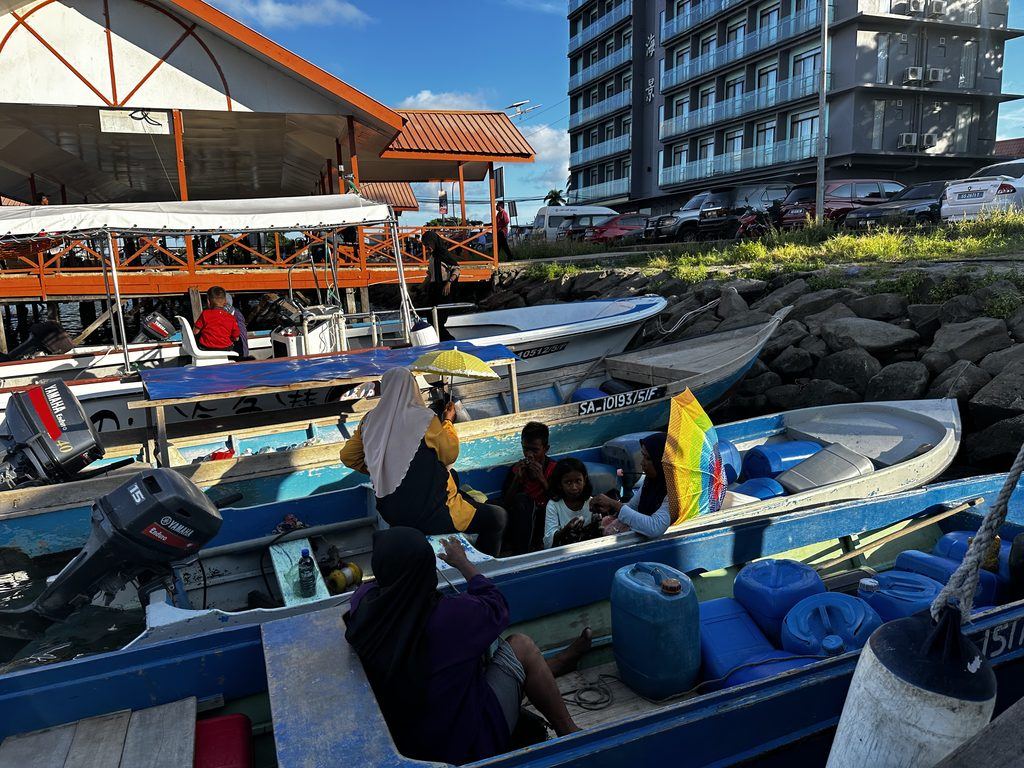
Approximately a one-hour speedboat ride. Boats run to a schedule rather than on demand: departures from Semporna are typically at 08:00 and 14:30, and returns from Mabul at 10:00 and 16:00.
⚠️ This is the constraint that catches people out. To reach Mabul on your day of arrival you need to land at Tawau no later than 12:00 to make the 14:30 boat, allowing for the 90-minute road transfer. Land later than that and you overnight in Semporna or Tawau and lose a diving day. Book your Tawau flight around this, not the other way round.
These times are from Scuba Junkie, the operator I dived with. Other resorts run broadly similar schedules, but confirm yours when booking rather than assuming.
Best Time to Dive Sipadan
Sipadan can be dived year-round. It sits outside the main monsoon tracks and there is no season that shuts the diving down, aside from the annual conservation closure discussed above.
- April to August — generally the calmest seas and the best visibility. This is high season, so the constraint is permits rather than weather.
- December to March — more rain and more surface chop on the crossing, but the diving itself is usually still good and the islands are noticeably quieter.
- September and October — the shoulder. This is when I went, and conditions were fine.
- The closure month — no diving at all. Confirm the current dates with your operator (see the permits section above).
Turtles, barracuda, jackfish and bumpheads are resident year-round. Unlike destinations built around a seasonal aggregation — manta season, whale shark season — there is no month you have to hit, which takes a lot of pressure off the planning.
Can You Snorkel at Sipadan?
Yes, and it is a genuinely good option rather than a consolation prize. The 252 daily permits cover snorkelers as well as divers, which means snorkelers face exactly the same allocation system: book through a registered operator, stay long enough to be given a permit, and expect the same two-visit-per-day structure.
What makes it work at Sipadan specifically is the shape of the place. The reef flat sits in a few metres of water and then simply ends — the wall goes down from there. That means the most spectacular topography on the island is visible from the surface, and the turtles that make Sipadan’s reputation spend a great deal of their time in exactly that shallow zone, feeding and coming up to breathe.
You will not see the barracuda tornado, which forms deeper and out along the wall, and you will not see the bumpheads working the coral at depth. But you will see turtles at close range, reef fish in numbers, and the edge of a 600-metre drop-off from directly above it, which very few snorkelling sites anywhere can offer.
Practical notes: the conservation fee applies to you as it does to divers, currents that are manageable with a tank can be harder on the surface, and you should treat a guide or a boat tender as non-negotiable rather than optional. Most resorts will happily take non-diving partners on the same boat as the divers.
What to Bring
The islands are remote and the resorts are small. Some things are easy to rent, some are not, and a few are worth carrying because failing to have them costs you dives rather than comfort.
- Your certification card and logbook. Advanced Open Water is checked, not assumed. Bring the physical card or have the digital one downloaded — mobile coverage on Mabul is unreliable.
- Dive insurance. Standard travel policies frequently exclude scuba. The nearest chamber is a long way away and operators increasingly ask for proof.
- A 3 mm wetsuit. The water is warm, but three dives a day for several days adds up, and shorties are rarely enough by the third.
- Reef-safe sunscreen. You are diving inside a marine park; conventional sunscreen is discouraged and in places prohibited.
- A torch, if you intend to do the Mabul night dives. Rentals exist but they are basic, and this is the diving you will remember.
- Cash in ringgit. Card acceptance on the islands is patchy and park fees are sometimes settled locally.
- Seasickness tablets. The Semporna crossing can be rough outside the calm months, and it is an hour each way.
- Motion-tolerant camera housing. If you shoot, the wall dives are current dives — bring something you can hold one-handed.
What you can leave behind: heavy exposure protection, dive computers if your resort rents them (most do, and they are properly maintained), and any expectation of shopping once you are on the island.
Sipadan or Maratua? An Honest Comparison
This is the section I would have wanted before booking. Maratua, in Indonesian Borneo a little further south, offers a comparable proposition on paper: an oceanic atoll, walls, big schools, turtles and barracuda.
| Sipadan | Maratua | |
|---|---|---|
| Access | Permit allocated through your resort | No permit system |
| Dives per day | Two, hard cap at Sipadan (unlimited only if you stay on the rig, off Mabul) | Unlimited |
| Park charges | RM 450 per diver per day, paid separately | A park fee applies, but it was included in my dive package |
| Divers on site | 252 permits/day on one small wall | Far quieter |
| Turtles | Exceptional | Excellent |
| Schooling pelagics | Barracuda and jackfish tornadoes | Barracuda, jackfish, plus a resident manta cleaning station |
| Macro | At Mabul, not at Sipadan | On site |
| Getting there | Tawau, then road, then boat | Longer and less frequent connections |
The honest summary: Sipadan is easier to reach and harder to get into; Maratua is harder to reach and open once you are there. If you are already in Sabah and want to see what the fuss is about, dive Sipadan — it is a good reef and the turtles alone justify a day. If you are planning a dedicated diving trip from scratch and can go either way, I would send you to Maratua.
Read the full Maratua diving guide before you decide, and if you are weighing up Indonesian options more broadly, the best diving in Indonesia guide covers the alternatives.
And if the rest of your trip stays in Malaysian Borneo, the Sabah travel guide covers Sepilok, the Kinabatangan and Kota Kinabalu — while the ranking of the best dive sites in Southeast Asia puts this wall in context against eleven others I have dived.
Frequently Asked Questions About Diving Sipadan
How many dives per day can you do at Sipadan? Two. The permit covers one day and a maximum of two dives at Sipadan itself. Your third dive of the day will be at Mabul or Kapalai — that is how every operator runs it, because the rule leaves no alternative.
How much does it cost to dive Sipadan? In park charges alone, RM 350 for the diving permit plus RM 100 conservation fee per international diver, per day — RM 450 in total. Your resort package, boat, equipment and any nitrox come on top of that.
How do I get a Sipadan permit? Only through a Sabah Parks–registered operator. Permits are allocated to resorts, not sold to individuals. Book a stay of at least three nights with a licensed resort and book it early; there is no independent route.
Do I need to be an experienced diver? Sabah Parks requires Advanced Open Water as a minimum, and it is checked. That is a sensible floor rather than a formality: several sites, South Point in particular, can run strong current along a vertical wall.
Can you stay on Sipadan island? No. All accommodation was removed from the island in 2004. Divers stay on Mabul, on Kapalai, or on the mainland at Semporna.
Will I see hammerhead sharks at Sipadan? Rarely. Many groups start each dive with ten minutes hanging in the blue hoping for them — mine did, on every single dive, and we never saw one. Treat hammerheads as a bonus, not a reason to book.
Is Sipadan worth it? It depends what you are comparing it to. The turtles, the barracuda and the jackfish are real and the reef is in good condition. But the cost, the crowding and the two-dive cap are also real, and I personally preferred Maratua in Indonesia. Go with calibrated expectations rather than brochure ones.
When is Sipadan closed? There is an annual conservation closure of one month with no diving permitted. Recent industry sources give November; the Sabah Tourism Board page still refers to December. Confirm the current dates with your operator before booking flights.
How do I get to Sipadan? Fly to Tawau, transfer by road to Semporna (about 90 minutes), then by boat to Mabul or Kapalai (about an hour). Your resort runs the Sipadan boats from there each morning.
What time do I need to land at Tawau? No later than 12:00 if you want to reach Mabul the same day, in order to make the 14:30 boat from Semporna after the road transfer. Later arrivals overnight on the mainland.
Is Mabul worth diving, or just a base? Genuinely worth diving. Mabul is one of the better muck-diving sites in Southeast Asia — frogfish, seahorses, mandarinfish, blue-ringed octopus — and you will do more dives there than at Sipadan. The night dive on the house reef is worth planning for.
What is the Seaventures Dive Rig? A decommissioned offshore drilling platform anchored just off Mabul and converted into a dive resort — by its own account the only one in the world. Its main practical advantage is unlimited house reef diving straight off the structure, which is exactly what Sipadan’s two-dive cap does not give you.
How many days should I stay? At least three nights, and four or five is better. Permits are allocated across your stay, so a longer booking improves both your chances of getting one and your chances of diving Sipadan on more than one day, in different conditions.