Diving Maratua: Barracuda Tornado & Sharks (2026 Guide)
By Blaise Jaeger · Updated June 14, 2026
Why Visit Maratua?
Some dive destinations make you work for the payoff. Maratua is one of them — and the payoff is enormous. This thin, palm-fringed atoll sits at the eastern edge of the Derawan Archipelago, off the northeast coast of Indonesian Borneo, about as far from the package-tour circuit as you can get and still find a comfortable bed. What waits underwater is the stuff divers cross oceans for: one of the densest barracuda tornadoes on the planet, grey reef sharks stacked up in the current, leopard sharks resting on the sand, eagle rays, turtles on every reef, and — if your timing is right — scalloped hammerheads cruising the blue at 36 meters.
I dive Indonesia for a living — I’m based on Nusa Penida, off Bali, where I work in the diving industry — and Maratua had been near the top of my own list for years. I finally spent a week there in June 2026, logging sixteen dives across the atoll and out to Kakaban. This guide keeps the practical information first, but it is built on that week in the water: what each site is actually like, what you’ll see, when to go, how to get there, and where to stay. Maratua is remote, it’s still gloriously uncrowded, and it rewards the effort like few places left in Southeast Asia.
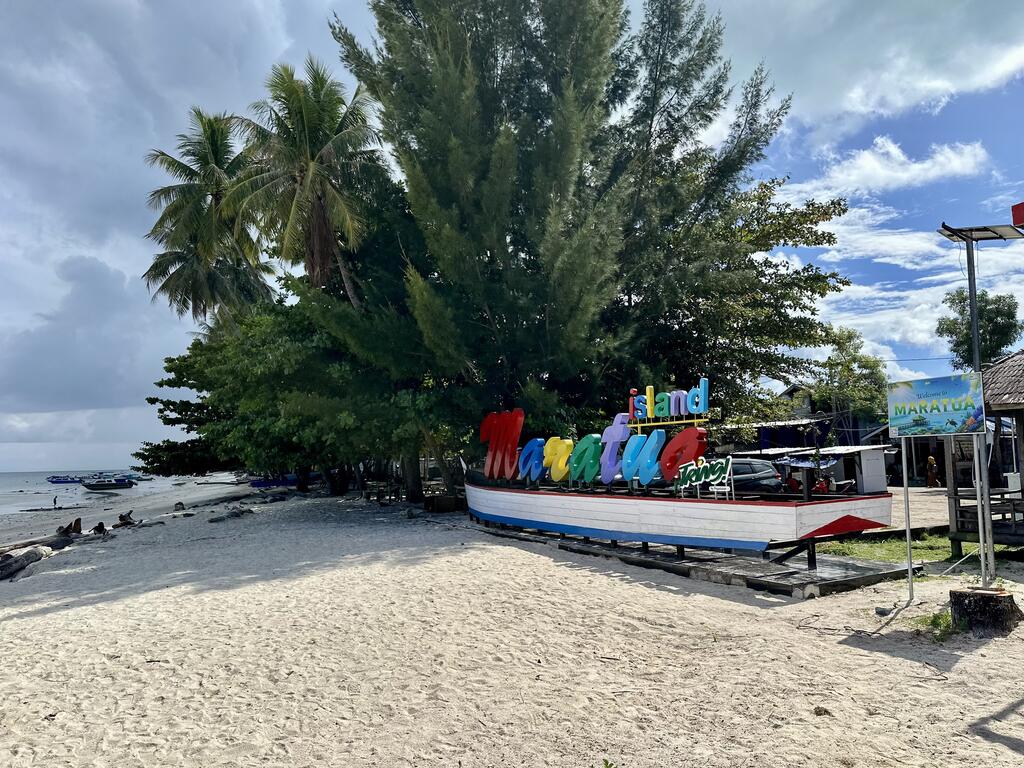
Maratua at a Glance
- What it is: a remote coral atoll at the edge of the Derawan Archipelago, ringed by 20+ dive sites, famous for big-fish action and a giant barracuda tornado
- Location: Berau Regency, East Kalimantan (Indonesian Borneo), in the Celebes Sea — off Indonesia’s northeast coast
- Famous for: “The Channel” (Big Fish Country) — barracuda tornado, grey reef sharks, eagle and manta rays, occasional hammerheads
- Water temperature: warm year-round — I measured 32°C at the surface and 29°C at depth in June
- Diver level: intermediate overall; The Channel’s currents are best for advanced and current-comfortable divers
- Best time to dive: the dry season, roughly March to October, for the calmest crossings and best visibility
- Getting there: fly to Berau (Kalimarau, BEJ) from Jakarta, Surabaya or Balikpapan, then a boat (~3 hours) — or fly direct into Maratua’s own airport (RTU) on Susi Air
- Nearby: Kakaban (stingless jellyfish lake), Sangalaki (manta rays and green-turtle nesting), Derawan (whale sharks)
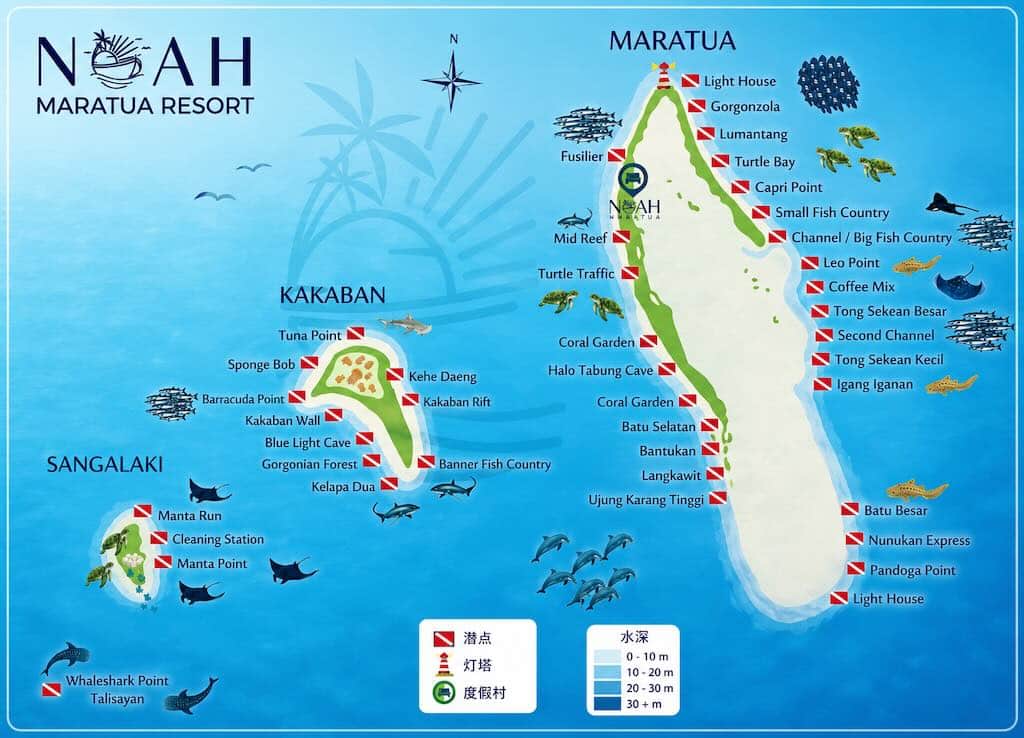
The Best Dive Sites in Maratua
The Channel (Big Fish Country) — the main event
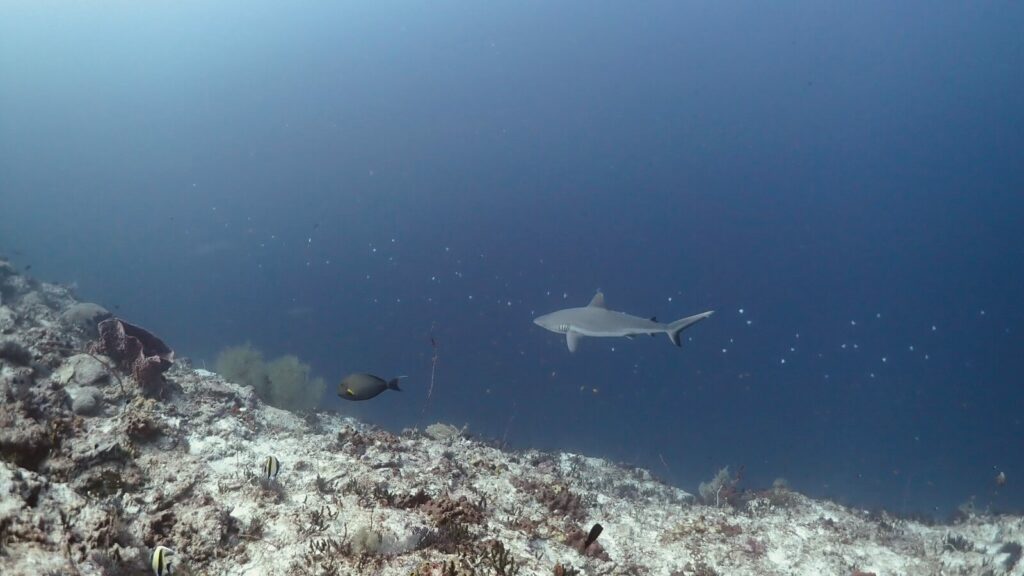
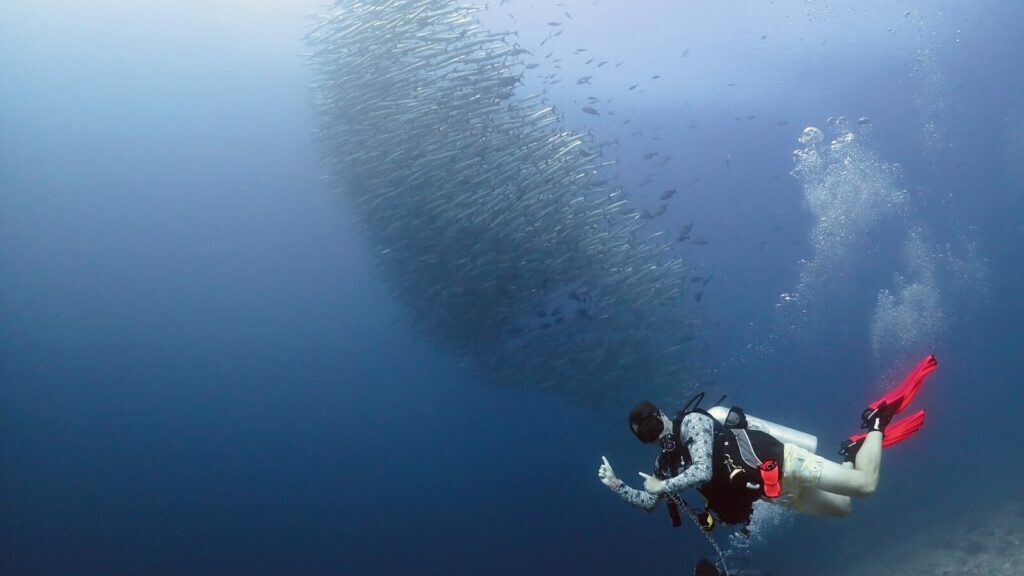
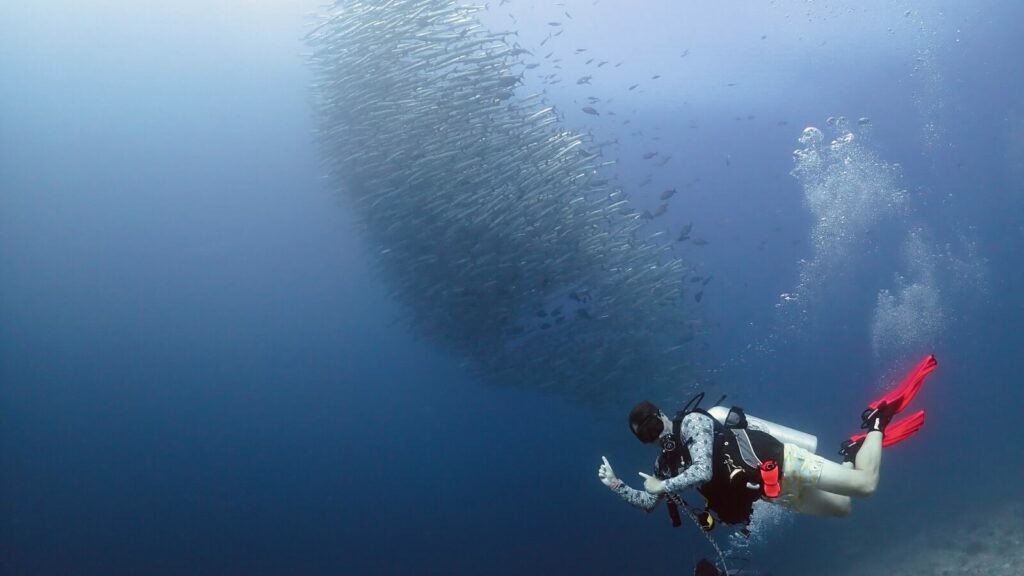
This is the site that put Maratua on the map, and it lives up to every word of the hype. The Channel — most operators also call it Big Fish Country — is a gap in the reef between Maratua and neighboring Nabucco Island, where tidal water funnels through and pulls the big animals in to feed. On the right tide you hook onto the plateau at the channel mouth and watch the show: grey reef sharks holding station against the current, eagle rays sweeping past, and the barracuda — thousands of them, wound into a slow, hypnotic tornado that you can fin right up to. It’s regularly called one of the largest barracuda schools in Southeast Asia, and standing under it is every bit as good as it sounds. On my last dive of the trip I had five grey reef sharks and a full barracuda tornado on the same dive. The currents here range from brisk to serious, so it’s a site for advanced and current-comfortable divers — bring a reef hook and listen to your guide on tides.
Turtle Traffic — turtles, arches and macro
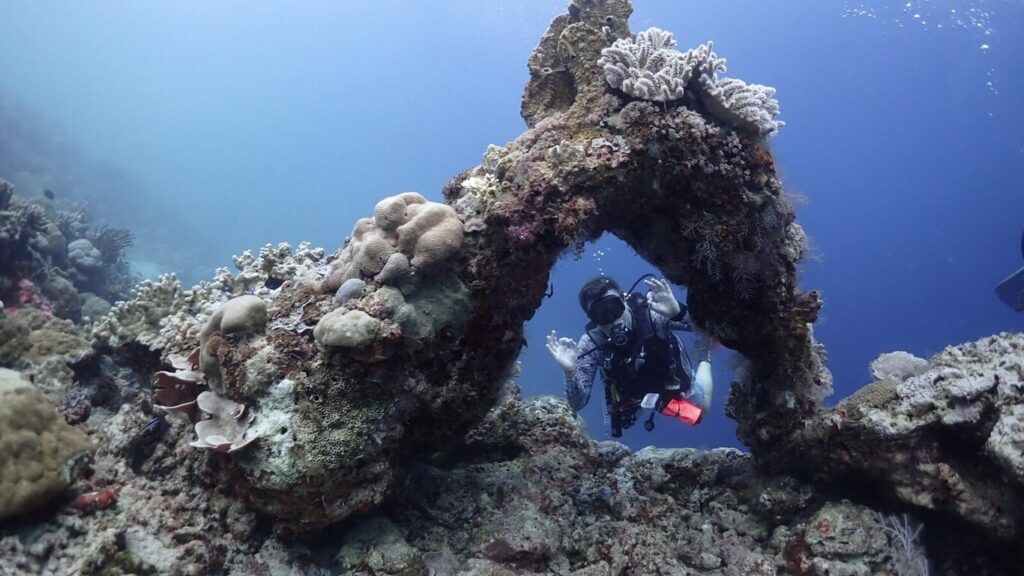
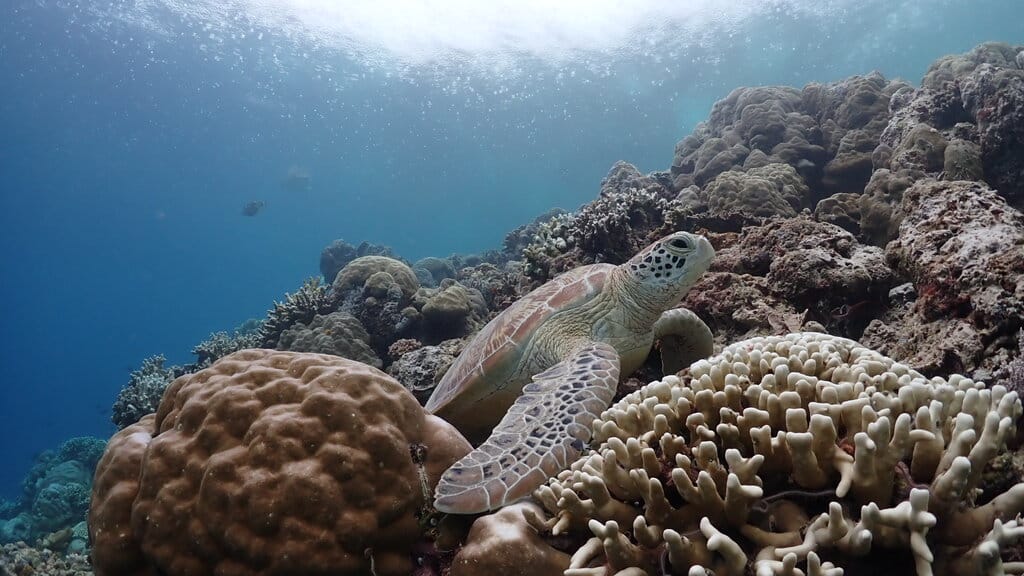
If The Channel is the adrenaline, Turtle Traffic is the joy. This shallow, light-filled site — a mix of sand channels and big coral bommies in around 10 meters — earns its name: green and hawksbill turtles are practically guaranteed, often several on a single dive, and they’re relaxed enough to let you share the reef. On my dive a huge barracuda hung at a cleaning station while turtles cruised past below. Look closer and the bommies hide moray eels, nudibranchs and mantis shrimp, and there’s a photogenic coral arch you can swim through. It’s the perfect second dive after a hard morning in the current, and a brilliant site for less experienced divers.
The walls — Coral Mountain Bay, Leo Point and beyond
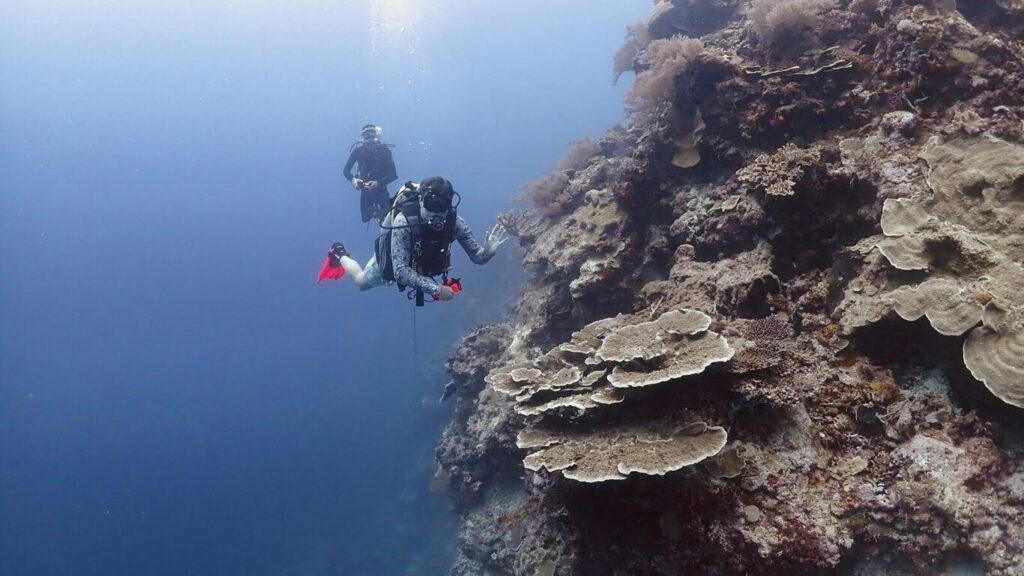
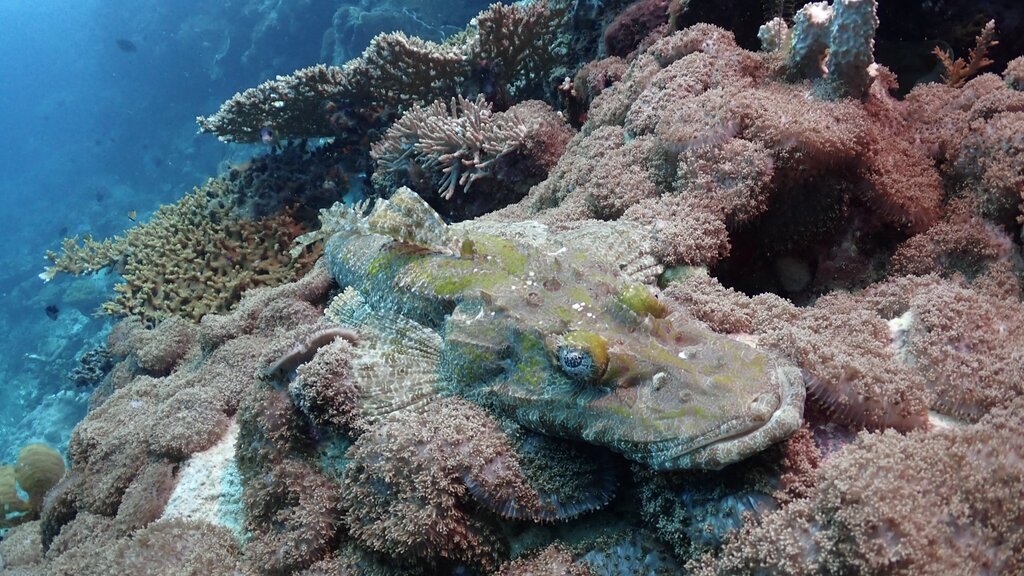
Maratua is ringed by dramatic drop-offs, and the atoll’s outer walls are where the reef really shows off. At Coral Mountain Bay I dropped to 39 meters and found a leopard shark resting on the sand, an eagle ray, and a crocodilefish camouflaged on the reef. These walls are studded with giant barrel sponges and overhangs where bigger animals rest out of the current, and the hard-coral cover on the reef tops is some of the healthiest I’ve seen anywhere in Indonesia. Sites the operators call Leo Point, Igang Igang and Tong Sekean Kecil all deliver the same formula: a vertical wall into the blue, sharks and rays passing in the current, and a shallow garden for the safety stop.
Gorgonzola and the macro sites
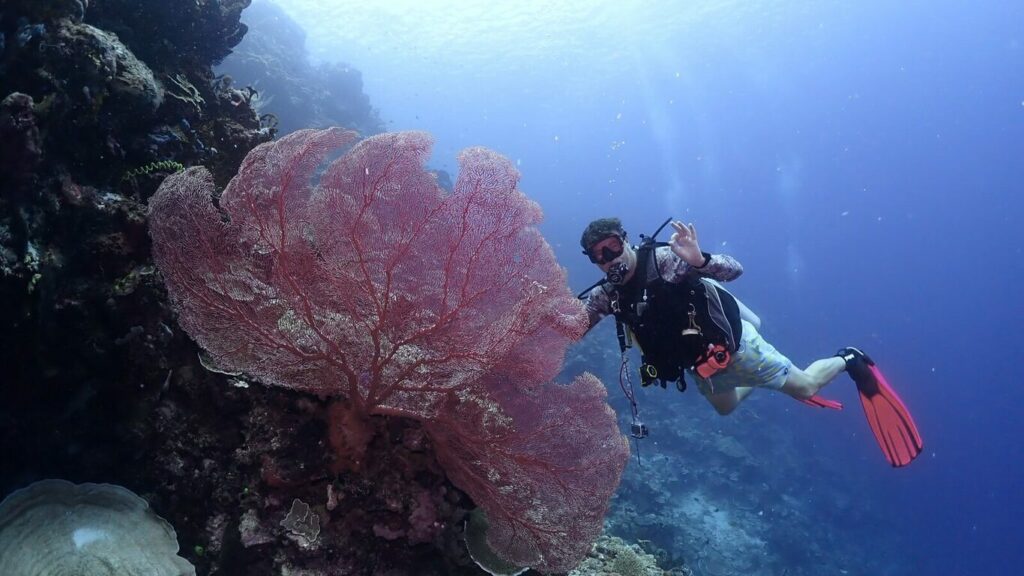
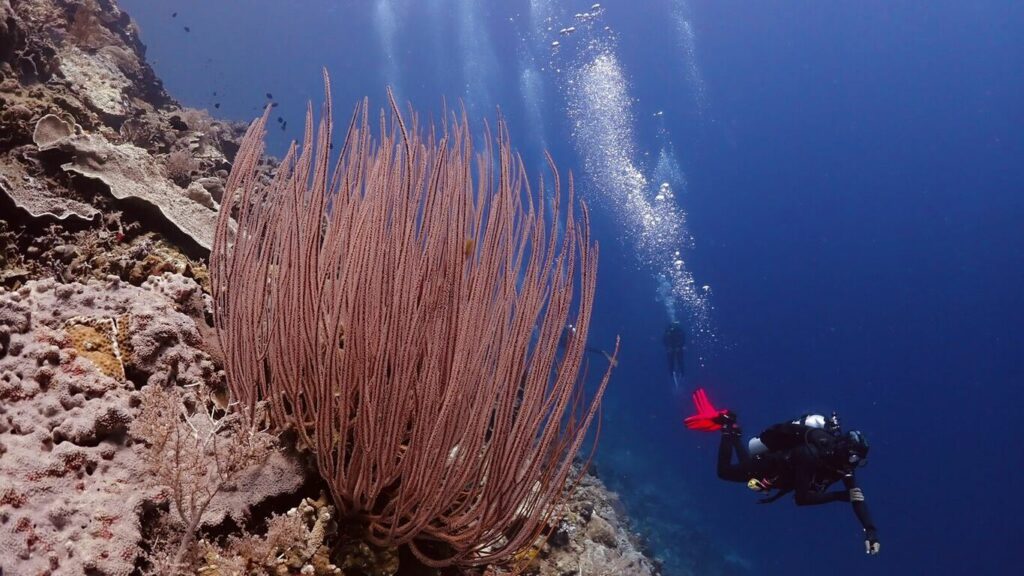
Not every Maratua dive is about big animals and ripping current. At a sheltered site the operators nickname Gorgonzola, I had no current at all — ideal conditions for macro — and a wall hung with enormous red and pink sea fans, a diver-sized gorgonian on every turn. This is the kind of site where you slow right down: nudibranchs, tiny shrimp, the small jewels of the reef. Maratua’s house reefs and jetty dives are also superb for critter hunting, with mandarinfish, crocodilefish, giant clams and night-diving oddities for anyone who likes their diving on the smaller scale.
Marine Life: What You’ll See Underwater
The barracuda tornado
The barracuda are Maratua’s signature. At The Channel, thousands of chevron and blackfin barracuda gather into a dense, rotating column that drifts over the reef — a true tornado that you can approach to within a few meters. It’s one of the great big-animal spectacles in Asian diving — a regular fixture on any list of the best dive sites in Southeast Asia — and it’s reliable enough that operators plan dives around the tide to put you under it. For underwater photographers, it’s a wide-angle dream; for everyone else, it’s simply unforgettable.
Sharks — grey reef, leopard, thresher and hammerhead
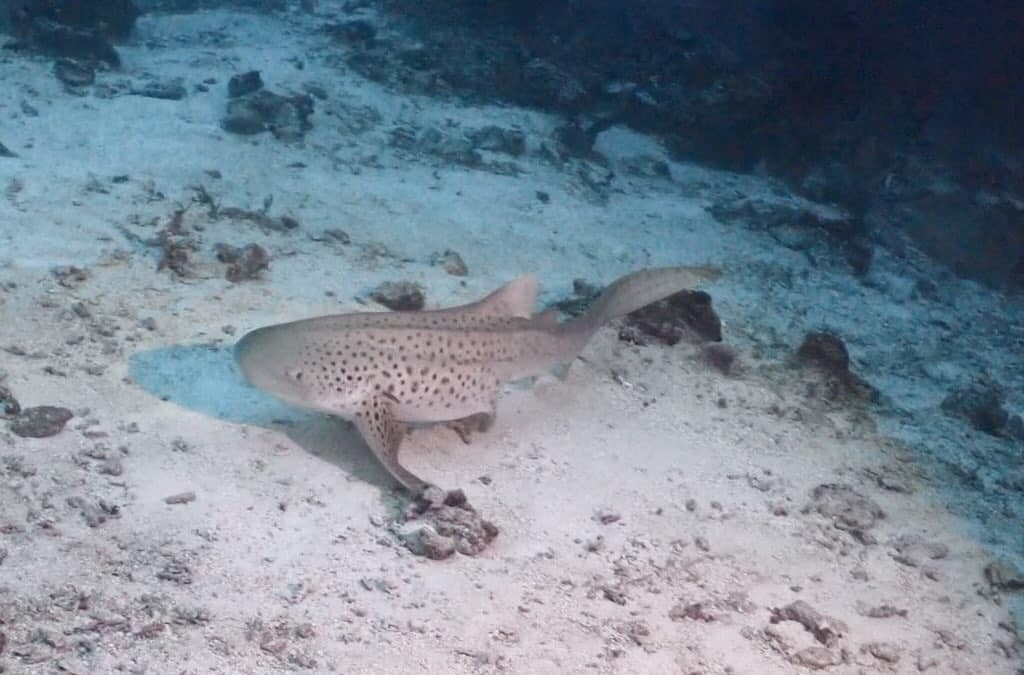
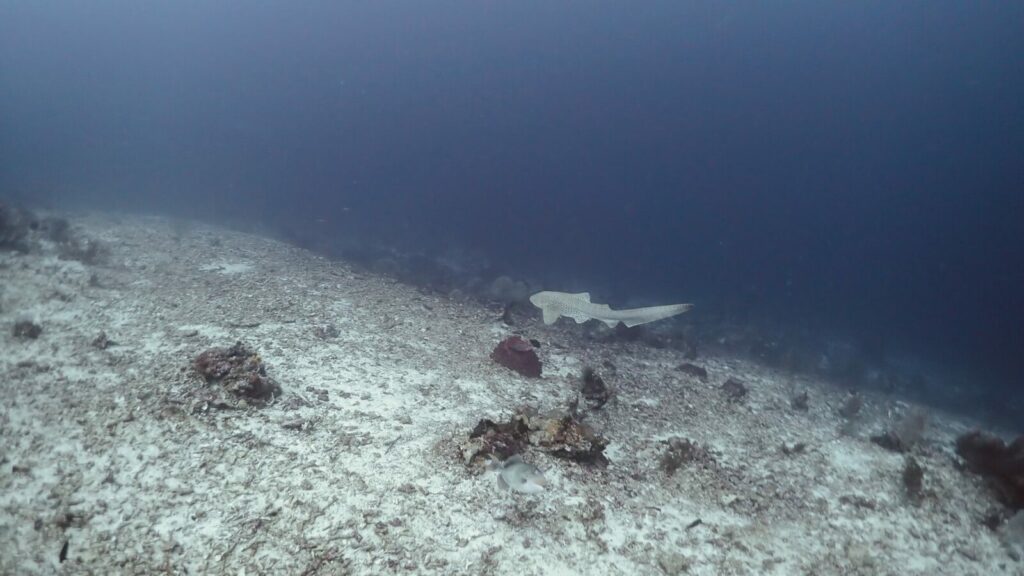
Maratua and its neighbors are quietly excellent for sharks. Grey reef sharks patrol The Channel in numbers, hanging in the current where the food flows. Leopard sharks (the Indo-Pacific zebra shark) rest on the sand on the walls and at Banner Fish Country — I photographed several over the week. Early-morning dives at the cleaning stations bring shy thresher sharks up from the depths; I finally got mine at Kelapa Dua, off Kakaban, at 36 meters. And the headline act: scalloped hammerheads, also at Kelapa Dua, where I counted twelve at 36 meters on one extraordinary dive. Blacktips work the shallows, and the whole region is a reminder of how much shark life a remote, lightly dived atoll can still hold.
Rays and other pelagics
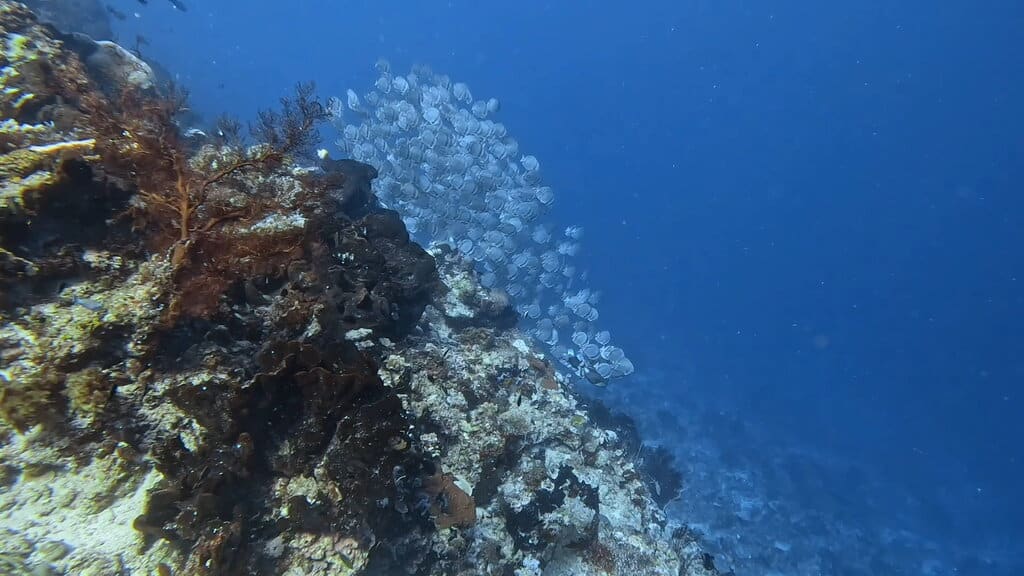
While sharks steal most of the attention, Maratua’s rays are just as memorable. Eagle rays are a near-daily sight on the atoll’s walls and around The Channel, often gliding effortlessly through the blue beyond the reef edge. Marbled rays and the occasional cow-tail stingray rest on sandy patches below the walls, while nearby Sangalaki is famous for its resident reef mantas. On a good day, mantas circle cleaning stations or sweep through plankton-rich water in graceful formation. Add passing schools of batfish, bumphead parrotfish and other large reef fish, and almost every dive offers the possibility of an unexpected pelagic encounter.
Turtles and the macro life
Green and hawksbill turtles are everywhere on Maratua’s reefs — Turtle Traffic alone will spoil you — and seeing several on a single dive is perfectly normal. Yet Maratua isn’t only about big animals. Look closely and you’ll find an impressive variety of smaller marine life: crocodilefish lying motionless on the reef, leaf fish hidden among coral, cuttlefish hovering over the sand, colorful nudibranchs, mantis shrimp, giant clams and even mating mandarinfish on selected house reefs. That’s one of Maratua’s greatest strengths: the ability to combine pelagic encounters, sharks and rays with outstanding macro life, often on the very same dive.
Beyond Maratua: Kakaban, Sangalaki and Derawan
Kakaban and the stingless jellyfish lake
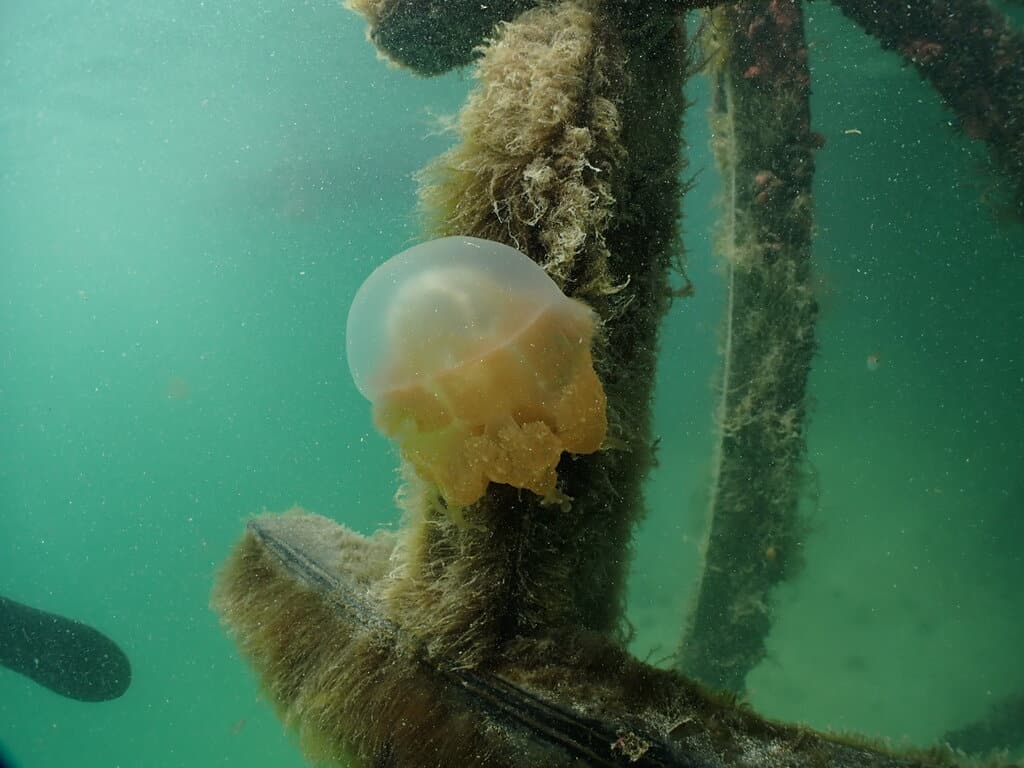
Kakaban, a raised atoll a short boat ride from Maratua, is a destination in its own right. Its walls — sites like Kelapa Dua — are where I had my hammerheads and my thresher shark, dropping into blue water off a sheer reef. But Kakaban’s real fame is above the waterline: a landlocked lake in the island’s center, home to millions of stingless jellyfish that have lost their sting over millennia of isolation. It’s one of only a handful of such lakes on Earth. I snorkeled it after diving the walls — you reach it on a jungle boardwalk across the island — a strange, weightless, otherworldly hour drifting among pulsing, harmless jellyfish. Access rules to the lake have tightened in recent years to protect the jellyfish, so check the current situation with your operator, skip the fins and sunscreen, and tread gently.
Sangalaki — manta rays and turtle nesting
Sangalaki, a low, sandy island to the southwest, is the manta capital of the Derawan Archipelago. Plankton-rich water draws reef mantas to feeding and cleaning stations — sites like Manta Point and Manta Run — where you can drift with them on a good day. Sangalaki is also one of Southeast Asia’s most important green-turtle rookeries: turtles haul out at night to nest, and hatchlings make their run to the sea. It’s a longer crossing from Maratua, but for manta lovers it’s the highlight of the region.
Derawan — whale sharks and easy reefs
The archipelago’s namesake island, Derawan, is the most developed and the easiest to reach, with shallow house reefs, resident turtles and a relaxed village feel. Its trump card is nearby Whale Shark Point, where whale sharks gather around the fishing platforms (bagans) to feed — a 20-minute boat ride and one of Kalimantan’s best-kept secrets. If you want to combine Maratua’s big-fish diving with a whale-shark encounter, the Derawan atolls make it possible in a single trip.
When to Dive Maratua
Maratua is a year-round destination, but the sweet spot is the dry season, roughly March to October, when seas are calmest, the crossings are comfortable and visibility is at its best — often well over 20 meters. The water stays warm all year — around 28–32°C, warmest at the surface — so most divers are comfortable in a 3mm wetsuit or even, as I did after the first day, just a rashguard and board shorts (bring a little more if you feel the cold on long, deep dives). March tends to bring the best manta action over at Sangalaki. Hammerheads and threshers at Kakaban are never guaranteed — they’re a depth-and-luck animal — but early-morning dives give you the best odds. The wetter months (November to February) can mean rougher boat transfers and more variable visibility, though the diving itself can still be excellent between weather systems.
How Many Days, and a Sample Plan
Because Maratua takes real effort to reach, don’t come for a long weekend — give it time. I’d budget a minimum of 5 diving days, and a week is ideal. A relaxed week might look like this: arrive and settle in with a check dive at an easy site like Leo Point; spend the next two days on the atoll’s classics, timing The Channel for the tide and pairing it with Turtle Traffic and the walls; dedicate one full day to the Kakaban crossing for the hammerhead-and-thresher walls plus the jellyfish lake; give another day to Sangalaki for mantas and, if you want it, a Derawan whale-shark run; and keep your final day for shallow reefs and macro, leaving a 24-hour no-fly buffer before your flight out. Three dives a day is the standard rhythm, with night dives on the house reef for the keen.
Where to Stay in Maratua

Maratua and the surrounding islands have a small but genuine range of places to stay, from dive resorts on their own private islands to simple village guesthouses on Maratua itself. Most resorts run their own dive operation and house reef, so you can roll out of bed and into the water. Book well ahead — there are few rooms out here, and the good ones fill up.
Dive resorts on the water
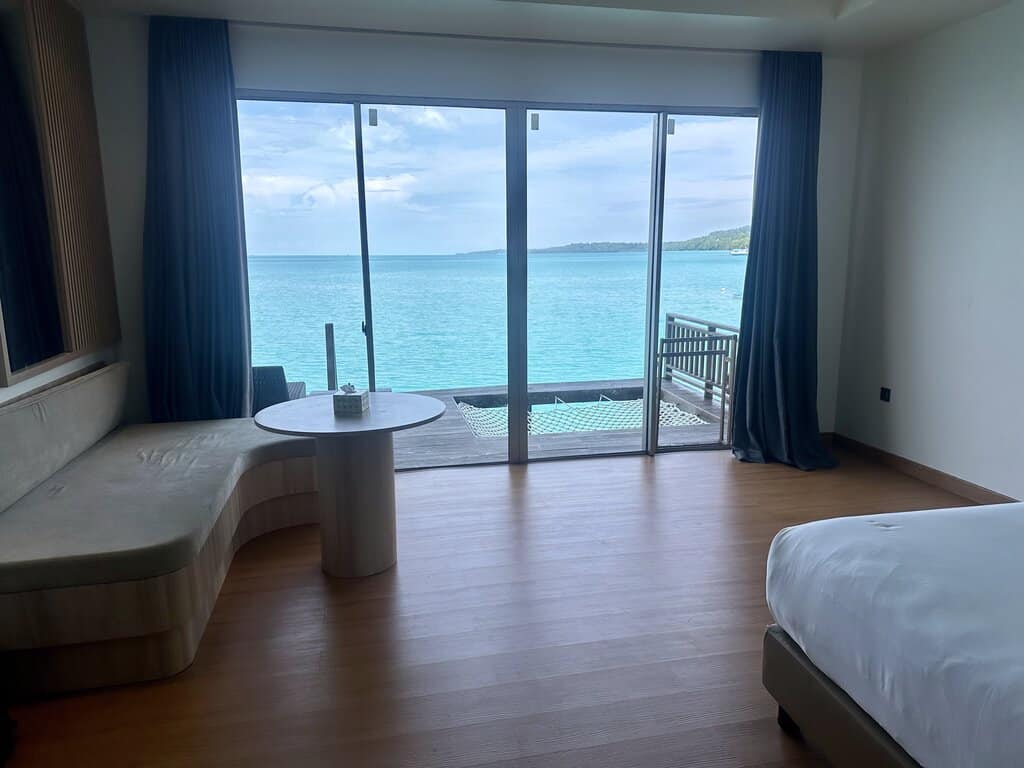
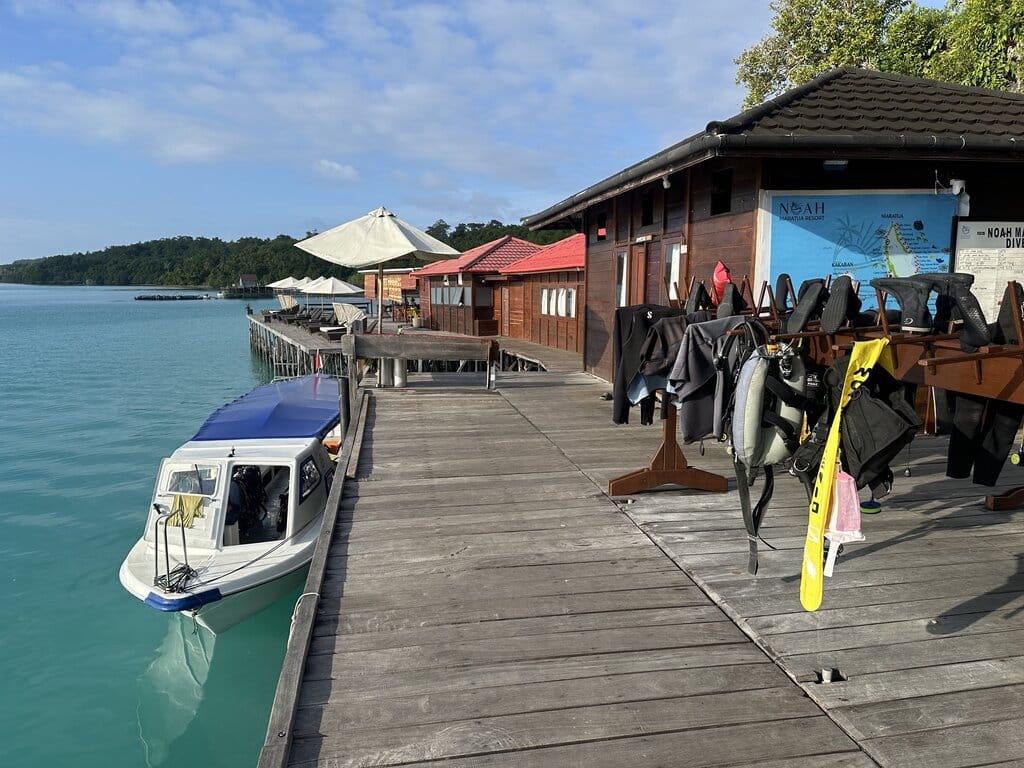
I based myself at Noah Maratua Resort, and it’s a serious dive operation — it runs up to five boats a day and sits just minutes from The Channel. The crowd is almost entirely divers, with a lot of Chinese and Malaysian guests and very few Westerners (we were two). Be clear-eyed about the rooms: the ocean-view units are essentially prefab cabins without much charm in themselves — but they’re built out on a wooden pontoon on stilts over the water, so the view is superb, and you fall asleep over the lagoon. Reckon on roughly $150–250 a night with diving included. What makes Noah work is the dive team: our guide Mandala knew every site intimately and worked hard to show us the barracuda tornado and the sharks at their best.
The other established names on and around the atoll are Nabucco Dive Resort (Extra Divers), an intimate, long-running resort on its own tiny white-sand island near the channel; Maratua Paradise Resort, one of the original over-water resorts on the atoll; and Nunukan Island Resort, on a neighboring island with classic beach bungalows. All are built around diving and all sit within easy reach of the headline sites.
Guesthouses and homestays on Maratua
For a lighter budget — or a more local feel — Maratua’s villages have a growing number of guesthouses and homestays, some with their own small dive operations, with simple rooms from around $30 a night. You trade the over-water polish for village life, white-sand beaches a few steps away, and the freedom to snorkel the house reef whenever you like. You can compare options and check live prices for the whole area on Booking.com.
How to Get to Maratua
There are two ways in, and it’s worth understanding both before you book — getting to Maratua is part of the adventure.
Option 1: Fly to Berau, then take the boat
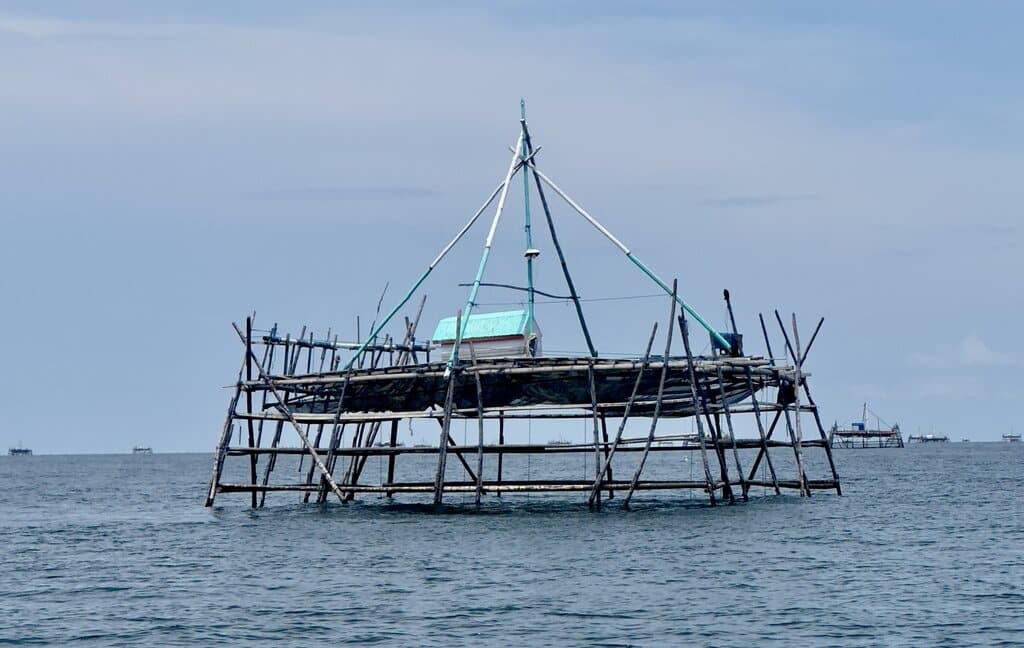
The classic route is to fly to Berau (Kalimarau Airport, BEJ), which has connections from Jakarta, Surabaya and Balikpapan. From Berau you take a boat out to Maratua: the public boat does the trip in a little under three hours when the sea isn’t too rough. It’s a journey in itself — the boat first runs down the river, past enormous cargo ships loading the coal mined all around the region, before turning out to sea toward Derawan and Maratua. Along the way you pass the fishing platforms (bagans) that attract whale sharks, exactly as they do in Saleh Bay. When you reach Maratua, your resort collects you by boat — or by car plus boat, depending on where it sits on the atoll.
Be honest with yourself about the distance: this is a long way to come. Coming from Bali, my trip out took three flights and a serious dose of bad luck — the Balikpapan–Berau leg was brought forward by three hours, and the only way to make the new connection was to re-buy a Bali–Balikpapan ticket routed via Surabaya. I overnighted at the Hotel Mercure Berau (very comfortable, a good place to break the journey) and clocked around 30 hours of travel in total — more than it takes me to fly home to Europe. The return was far smoother: I left the resort at 9:30 AM, caught the public boat at 10:00 AM, reached Berau airport by 1:00 PM, flew direct to Surabaya and on to Bali, and was home by 10:00 PM. Plan at least one overnight on the way out, and coordinate your flights with your resort’s boat schedule. You can compare flights and transfer options for the region on 12Go.
Option 2: Fly direct to Maratua Airport
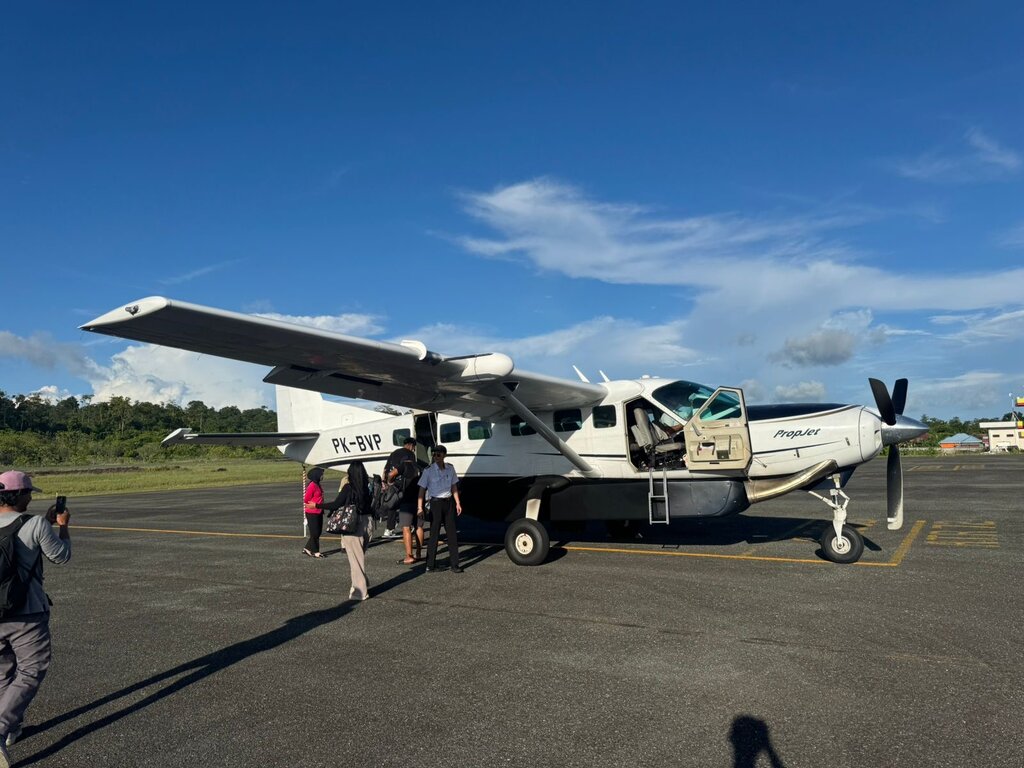
Maratua has its own small airport (RTU), which can cut out the long boat transfer entirely. Susi Air operates flights between Maratua and Berau and a handful of other regional destinations, and as of 2026 the schedule has been growing, with services on light aircraft from hubs like Samarinda and Tarakan too. It’s faster and surprisingly affordable — but there isn’t a flight to every destination every day, and the small Cessna Caravans have tight baggage limits. Treat the direct flight as a great bonus when the timing works, and keep the Berau-and-boat route as your reliable backup. Your resort will know the current state of play and can help you book.
How Difficult Is It to Reach Maratua?
Let’s be honest: getting to Maratua is not easy. Even by Indonesian standards, this is a remote destination. If you’re coming from Bali, Jakarta or overseas, expect multiple flights, at least one transfer, and often a boat journey as well. Reaching the atoll requires planning, flexibility and a little patience.
That said, the journey is often less complicated than people imagine. The biggest challenge is not the distance itself but coordinating schedules. Flights to Berau don’t always connect smoothly with boats or onward flights, and weather can occasionally affect sea transfers. Building an extra night into your itinerary — especially on the way in — removes most of the stress.
Compared with Indonesia’s other premier dive destinations, I’d place Maratua somewhere between Raja Ampat and Alor in terms of accessibility. It’s certainly more difficult to reach than Bali, Komodo or Bunaken, but easier and cheaper than many liveaboard-based expeditions. The recent development of Maratua Airport has also made access significantly easier than it was a few years ago.
Is it worth the effort? Absolutely. In fact, the relative difficulty of reaching Maratua is one of the reasons the reefs remain so healthy and uncrowded. During my week there, many dive sites felt almost private. On several dives we were the only boat in sight, something that has become increasingly rare in the world’s most famous dive destinations.
My advice is simple: don’t try to squeeze Maratua into a long weekend. Plan at least a week on the atoll, allow some flexibility around travel days, and treat the journey as part of the adventure. Once you’re hanging beneath a tornado of barracuda or watching hammerheads materialize out of the blue, the extra effort quickly becomes irrelevant.
Practical Tips for Diving Maratua
Experience and currents
Maratua suits intermediate divers and up. Plenty of sites — Turtle Traffic, the house reefs, the macro walls — are gentle and beginner-friendly, but The Channel and the Kakaban walls can carry strong currents and reward depth, so an Advanced Open Water certification and some current experience will open up the best of the atoll. Bring a reef hook for The Channel, a surface marker buoy (SMB) and a loud signaling device — boat traffic and big water mean you want to be seen on the surface.
Gear, money and health
Treat Maratua as fully remote: bring a save-a-dive kit and any spares you can’t live without, because there’s nothing to buy out here. A 3mm wetsuit or even a rashguard handles the 28–32°C water; a hood or thin layer helps on repetitive deep dives. Carry enough cash in rupiah for the whole trip — ATMs are unreliable to nonexistent on the islands, and resorts often work cash-only for extras. There’s no recompression chamber on the atoll and evacuation is slow, so dive conservatively, respect your computer, and carry dive insurance that covers remote evacuation.
Diving with a conscience
Maratua’s pristine state is exactly what makes it special — help keep it that way. Don’t touch or chase the megafauna, keep your fins off the coral, and skip reef-toxic sunscreen, especially near the Kakaban jellyfish lake. The region’s sharks and rays are also a living dataset: when I logged a previously unrecorded leopard shark on this trip, I submitted the date, time, site and depth to the Elasmo Institute, which catalogues individual leopard sharks, thresher sharks and hammerheads around Maratua through diver citizen science. If you photograph a shark or ray here, your images can genuinely contribute to its conservation — ask your operator how to share them.
Diving Maratua: My Week in the Water
My First Impressions of Maratua
I arrived on Maratua in early June 2026 and stayed a week, diving the atoll’s sites and making the crossing out to Kakaban. My check dive set the tone: a site the operators call Leo Point, an easy reef in 25 meters, the water a bathwater 32°C on top and a still-warm 29°C below — and turtles almost immediately, gliding over coral that looked untouched. If that’s the warm-up, I remember thinking, what does the main event look like?
From Leopard Sharks to Hammerheads
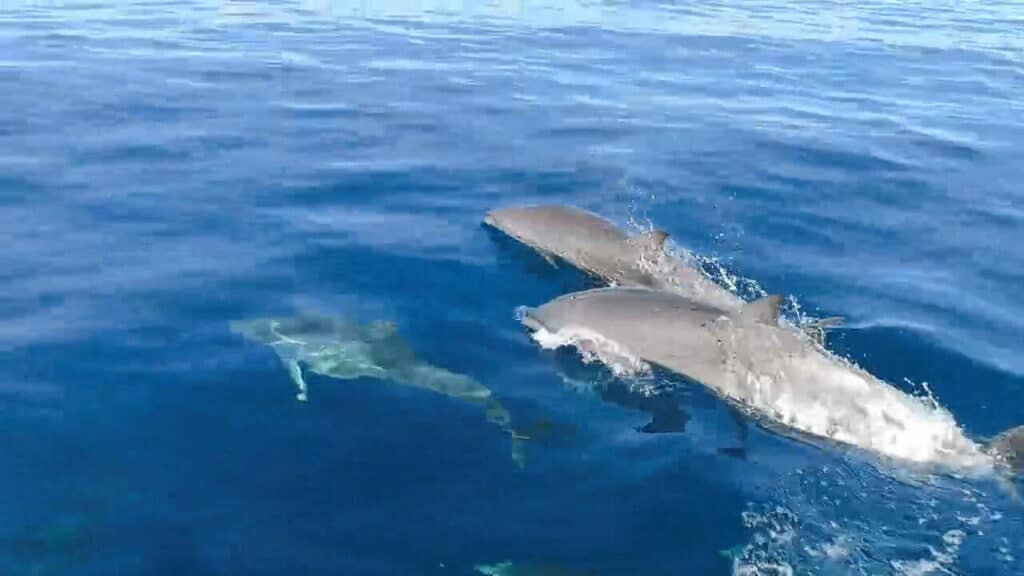
The main event is The Channel — more on that below — but what stayed with me was the sheer range of the week. One morning at Coral Mountain Bay I dropped to 39 meters and found a leopard shark on the sand, an eagle ray banking past, and a crocodilefish wedged into the reef. Another day, before a dive opposite a site they call Channel 2, a pod of dolphins surfaced around the boat. There were walls draped in red sea fans at a site nicknamed Gorgonzola — no current, perfect for macro, a nudibranch on every coral head — and a swim-through arch at Turtle Traffic where the turtles really do queue up.
The single best day took me across to Kakaban, the raised atoll on Maratua’s doorstep. At a site called Kelapa Dua I counted twelve scalloped hammerheads at 36 meters, hanging in the blue off a wall that drops into darkness — then found a tiny leaf fish tucked into the reef at the safety stop, the kind of whiplash scale-shift that only the best dive sites give you. We surfaced, snorkeled the famous stingless jellyfish lake on Kakaban itself, then dropped again at Banner Fish Country, where a blacktip cruised the sand and a cuttlefish hovered over the coral. I came up grinning. Maratua is one of those rare places that delivers the giants and the small stuff on the same tank of air.
Diving with Mandala at Noah Maratua
A lot of that week came down to the guiding. At Noah, my base, our guide Mandala knew the sites cold and worked hard to put us under the barracuda tornado and the sharks in the best possible conditions, reading the tide at The Channel to the minute. He has a brilliant eye for the blue — constantly scanning for hammerheads, thresher sharks and eagle rays — while also watching the sandy bottom at 35–40 meters for resting leopard sharks and marbled rays, which freed us to focus on the wall. He was as excited as we were when the twelve hammerheads materialized at Kelapa Dua: his own record had been five. And because the dives end on the reef in just a few meters of water, the safety stop becomes a pleasure in its own right rather than a chore.
What Surprised Me Most About Maratua
What struck me most? The sharks, above all. The hammerheads, the leopard sharks and the thresher were exactly what I came for — we rarely see them around Nusa Penida, where I’m based. The barracuda tornado is genuinely impressive, even though I’d already swum through a barracuda vortex at Tifore on a liveaboard crossing. But the real surprise was the reef itself: the walls are beautiful, and while I see turtles almost daily at home, here there were genuinely a lot of them. A passing school of batfish and a wall of bumphead parrotfish were almost as impressive as Sipadan, just north in Malaysian Sabah — and overall I found Maratua more complete and better preserved than Sipadan.
One practical note from the week: the water is wonderfully warm, around 28–30°C. I brought a shorty and wore it on the first day, then dived the rest of the trip in nothing more than a rashguard and board shorts. It’s about as comfortable as tropical diving gets.
Everything in this guide comes from that week — the sites, the marine life, the conditions, the logistics — checked against current 2026 access and prices. I’ve dived a lot of Indonesia. Maratua earned its place near the top.
Is Maratua Worth It?
Completely — if you go for the diving and you go prepared. Maratua asks more of you than a Bali day trip: flights to Borneo, a boat across open water, cash in your pocket and a tolerance for remoteness. What it gives back is the kind of diving that’s getting harder to find anywhere on Earth — a barracuda tornado you can fin into, sharks stacked in the current, turtles on every reef, hammerheads in the blue, and a stingless jellyfish lake to snorkel between dives, all on reefs you’ll often have entirely to yourself. After a week there in June 2026, sixteen dives in, I’d go back tomorrow. If you’re building a serious Indonesian dive trip, put Maratua near the top — and pair it with the rest of the country using my guide to the best diving in Indonesia.
Read More About Diving in Indonesia
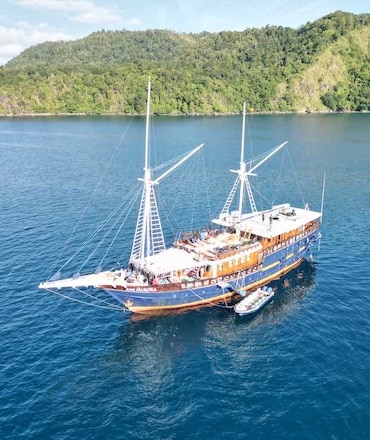
The big picture: my guide to the best diving in Indonesia — every region, season and dive site compared.
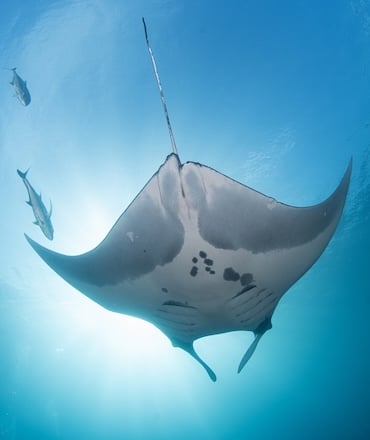
For the richest reefs on Earth: diving in Raja Ampat — the heart of the Coral Triangle.
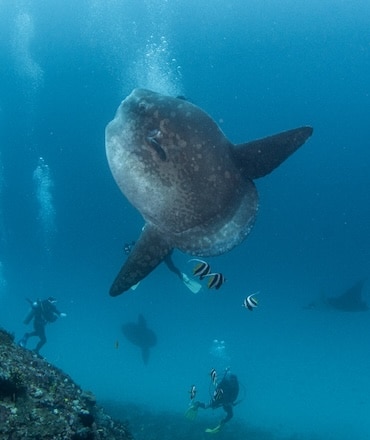
My home island: the Nusa Penida travel guide — manta rays, Mola Mola, the best beaches and viewpoints, and how to plan the trip.
Frequently Asked Questions About Diving Maratua
Where is Maratua?
Maratua is a coral atoll at the eastern edge of the Derawan Archipelago, in Berau Regency, East Kalimantan (Indonesian Borneo). It sits in the Celebes Sea off Indonesia’s northeast coast, near the islands of Kakaban, Sangalaki and Derawan.
What is Maratua famous for diving?
Its signature is “The Channel” (Big Fish Country), a reef channel that produces one of the densest barracuda tornadoes in Southeast Asia, along with grey reef sharks and eagle rays. The wider atoll adds turtles, leopard sharks, walls, macro sites and — nearby at Kakaban — hammerheads, thresher sharks and a stingless jellyfish lake.
Is Maratua good for beginner divers?
Partly. Many sites — Turtle Traffic, the house reefs and macro walls — are gentle and beginner-friendly. But the headline sites like The Channel and the Kakaban walls have strong currents and depth, so an Advanced Open Water certification and some current experience let you get the most out of Maratua.
When is the best time to dive Maratua?
The dry season, roughly March to October, offers the calmest seas and best visibility. The water is warm year-round (around 29–32°C). March is especially good for mantas at nearby Sangalaki, while early-morning dives at Kakaban give the best odds for hammerheads and thresher sharks.
How do you get to Maratua?
The usual route is to fly to Berau (Kalimarau, BEJ) via Balikpapan or Jakarta, then take a road transfer to Tanjung Batu and a speedboat to Maratua (about 1.5–2.5 hours by boat). Maratua also has its own small airport (RTU) with limited scheduled flights on light aircraft from regional hubs. Most resorts arrange transfers on fixed days.
How many days should I spend in Maratua?
Because it takes effort to reach, plan at least five diving days, and ideally a full week. That gives you time for the atoll’s classics, a day trip to Kakaban for the hammerhead walls and jellyfish lake, and a run to Sangalaki for mantas — with a 24-hour no-fly buffer before you leave.
Can you see hammerhead sharks in Maratua?
Yes, though they’re never guaranteed. Scalloped hammerheads are seen on the deep walls off Kakaban near Maratua — I counted twelve at 36 meters at a site called Kelapa Dua in June 2026. Early-morning dives and a tolerance for depth give you the best chance.
Can you swim in the Kakaban jellyfish lake?
Kakaban’s lake is home to millions of stingless jellyfish and is one of very few such lakes in the world. Access rules have tightened in recent years to protect the ecosystem, and can change, so confirm the current situation with your operator. Where snorkeling is allowed, go without fins or sunscreen and avoid stirring the sediment.
What is the water temperature in Maratua?
Warm year-round. On my June 2026 trip I measured 32°C at the surface and 29°C at depth. A 3mm wetsuit is comfortable for most divers, with a little extra protection useful on long or repetitive deep dives.
Where should I stay in Maratua?
Options range from over-water dive resorts — such as Noah Maratua Resort, Nabucco Dive Resort, Maratua Paradise Resort and Nunukan Island Resort — to simple village guesthouses and homestays on Maratua itself from around $30 a night. Most resorts include diving and a house reef; book well ahead, as rooms are limited.