Best Diving in Southeast Asia (2026): Top 12 Dive Sites
By Blaise Jaeger · Updated June 12, 2026
Why Southeast Asia Is the World’s Greatest Diving Region
Southeast Asia sits at the heart of the Coral Triangle, the most biodiverse marine region on the planet — home to more than 600 coral species and over 2,000 species of reef fish. Nowhere else can you dive with manta rays in the morning, drift past a barracuda tornado in the afternoon, and fall asleep on a liveaboard anchored beside an active volcano.
In this guide to the best diving in Southeast Asia, you’ll find my top 12 dive destinations across Indonesia, the Philippines, Malaysia, and Thailand — from world-famous names like Raja Ampat and Sipadan to lesser-known giants like Maratua Island and the Banda Sea. For each site you’ll get the highlights, the best season, how to get there, and honest advice on whether it suits your level.
This is not a list compiled from a desk. I live in Indonesia, I work in the diving industry on Nusa Penida, and I have personally dived ten of these twelve destinations — I’m actually writing this from Maratua Island, where I’ve been diving all week.
The 12 Best Dive Sites in Southeast Asia at a Glance
| # | Destination | Best For | Level | Country | Best Season |
|---|---|---|---|---|---|
| 1 | Raja Ampat | Biodiversity | Advanced | Indonesia | Oct–Apr |
| 2 | Sipadan | Wall diving & big fish | Intermediate | Malaysia | Apr–Dec |
| 3 | Komodo | Mantas & currents | Advanced | Indonesia | Apr–Nov |
| 4 | Nusa Penida | Mantas & Mola Mola | All levels | Indonesia | Jul–Oct |
| 5 | Maratua & Derawan | Barracuda tornado & sharks | Intermediate | Indonesia | Mar–Oct |
| 6 | Banda Sea | Hammerhead schools | Advanced | Indonesia | Sep–Nov |
| 7 | Richelieu Rock | Whale sharks | Intermediate | Thailand | Feb–Apr |
| 8 | Cebu & Moalboal | Sardine run | All levels | Philippines | Nov–May |
| 9 | Coron | WWII wrecks | All levels | Philippines | Oct–Jun |
| 10 | Bunaken | Wall diving | All levels | Indonesia | Mar–Oct |
| 11 | Koh Tao & Sail Rock | Learning to dive | Beginner | Thailand | Feb–May |
| 12 | Halmahera | Untouched reefs | Intermediate | Indonesia | Oct–Apr |

I’ve Dived Almost Every Site on This List — Here’s How

I’m writing this guide from Maratua Island, in the Derawan Archipelago of Indonesian Borneo, where I’ve spent the past week diving. That’s me in the photo above, at The Channel, in front of the barracuda tornado. Just this week I’ve logged a leopard shark at 39 meters at Coral Mountain Bay, twelve scalloped hammerheads at 36 meters off Kakaban — this very morning — eagle rays, a cow-tail stingray gliding through the channel, grey reef sharks, and more green turtles at Leo Point than I could count, in water that was 32°C at the surface.
I’ve lived in Indonesia for years, on Nusa Penida, where I work in the diving industry. Over the last decade I’ve dived Raja Ampat, Lembeh, and Halmahera from the Dune Aurora liveaboard and on several cruises with Uber Diving; Sipadan with Scuba Junkie out of Mabul; Komodo from Labuan Bajo; Richelieu Rock from the Mandarin Queen dive cruise; the Coron wrecks from Sangat Island; and Sail Rock with French Plongée from Koh Samui. The only two destinations on this list I haven’t fully ticked off yet are Cebu and the Banda Sea — and I’m booked on a Banda crossing this September for hammerhead season.
So this ranking isn’t based on press trips or other people’s blog posts. It reflects hundreds of dives across the region, in every season, at every budget level — and I’ll tell you plainly which sites are overhyped, which are worth every dollar, and where I’d go back tomorrow. You can read more about me and my diving background here.
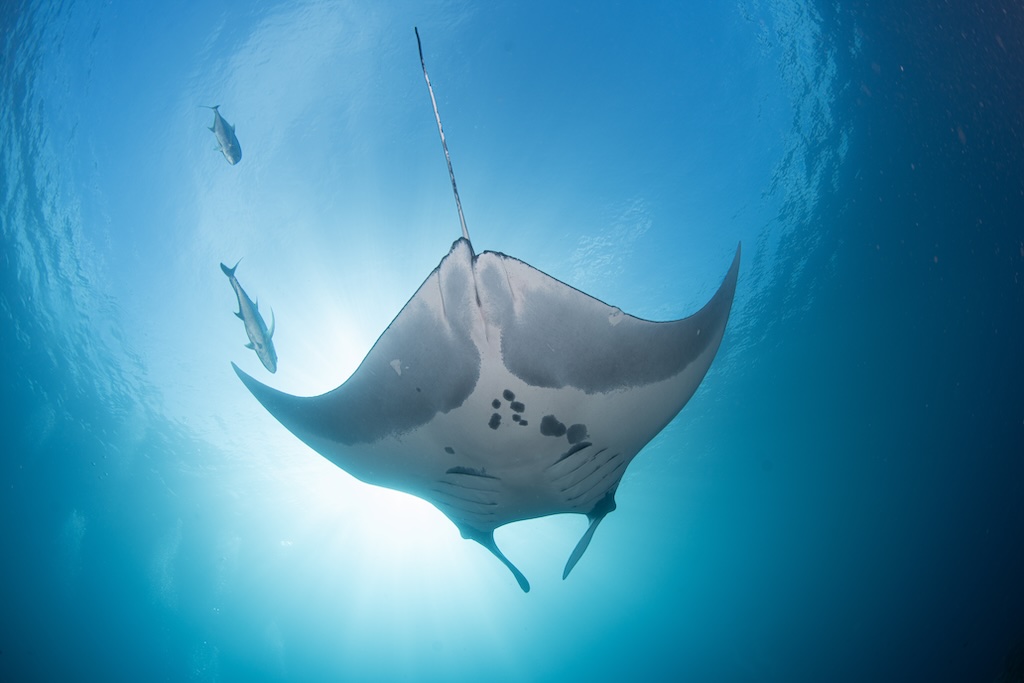
1. Raja Ampat – Indonesia: The Most Biodiverse Diving on Earth
Often considered the crown jewel of world diving, Raja Ampat holds the scientific record for reef-fish diversity on a single dive site, and it sits at the top of my complete guide to the best diving in Indonesia. Located off the western tip of New Guinea, this archipelago of more than 1,500 islands offers crystal-clear water, untouched reefs, and an almost absurd density of life: on a single dive at Cape Kri, scientists counted 374 fish species.
I’ve done several liveaboard trips here, and the sites never repeat themselves: oceanic mantas at Blue Magic, wobbegong sharks under table corals, pygmy seahorses on the fans of Misool, and the famous swim-through at Boo Window. Check my dedicated guide to the best dive sites in Raja Ampat for a site-by-site breakdown.
- Manta rays, reef sharks, wobbegongs, pygmy seahorses
- Iconic sites: Cape Kri, Blue Magic, Melissa’s Garden, Boo Window, Misool
- Best explored by liveaboard (7–11 nights)
Best time to dive: October to April. Why it’s #1: unmatched biodiversity — if you only do one dive trip in your life, do this one.
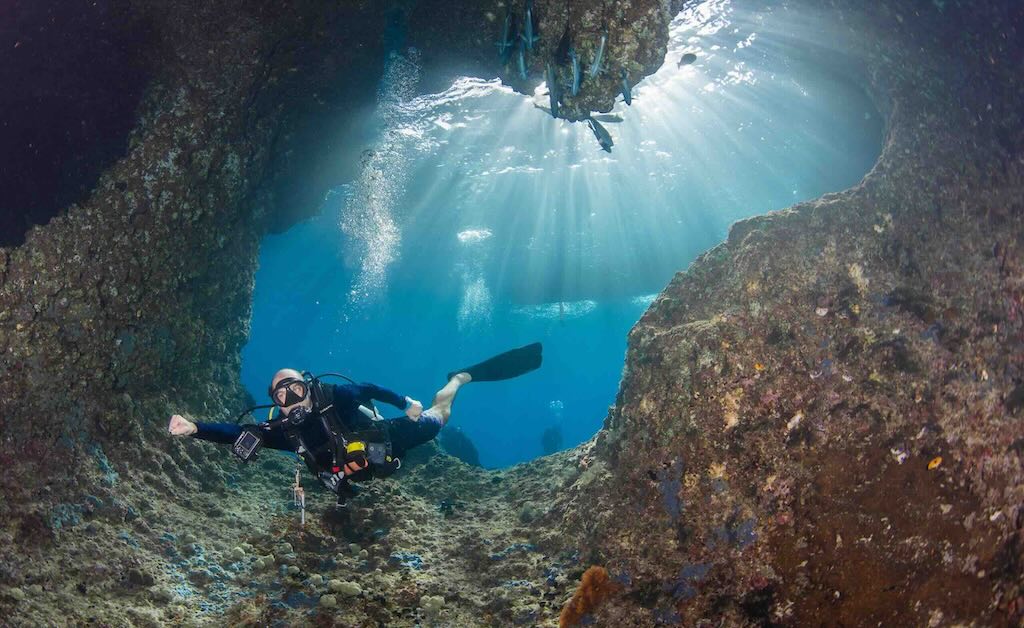
2. Sipadan – Malaysia: Legendary Wall Diving and Big Fish Encounters
A legendary name among divers, Sipadan is Malaysia’s only oceanic island, rising 600 meters straight from the floor of the Celebes Sea off the coast of Sabah, Borneo. Jacques Cousteau called it “an untouched piece of art”, and the strict permit system has kept it that way: Sabah Parks issues around 176 dive permits per day, distributed among licensed operators, and since 2026 divers are once again allowed three dives per day inside the park.
I dived Sipadan with Scuba Junkie from Mabul, and the wall at Barracuda Point delivers exactly what the name promises: a swirling school of chevron barracuda, dozens of grey reef sharks, and more green and hawksbill turtles per dive than anywhere else I know. Book your package months ahead — permits sell out fast in high season.
- Vertical walls dropping 600 m into the Celebes Sea
- Turtles on every dive, barracuda vortex, bumphead parrotfish at dawn
- Strictly limited permits — book through a licensed resort on Mabul or Kapalai
Best time to dive: April to December (peak July–October). Why it’s famous: pristine ecosystem and reliable big-fish action on every single dive.
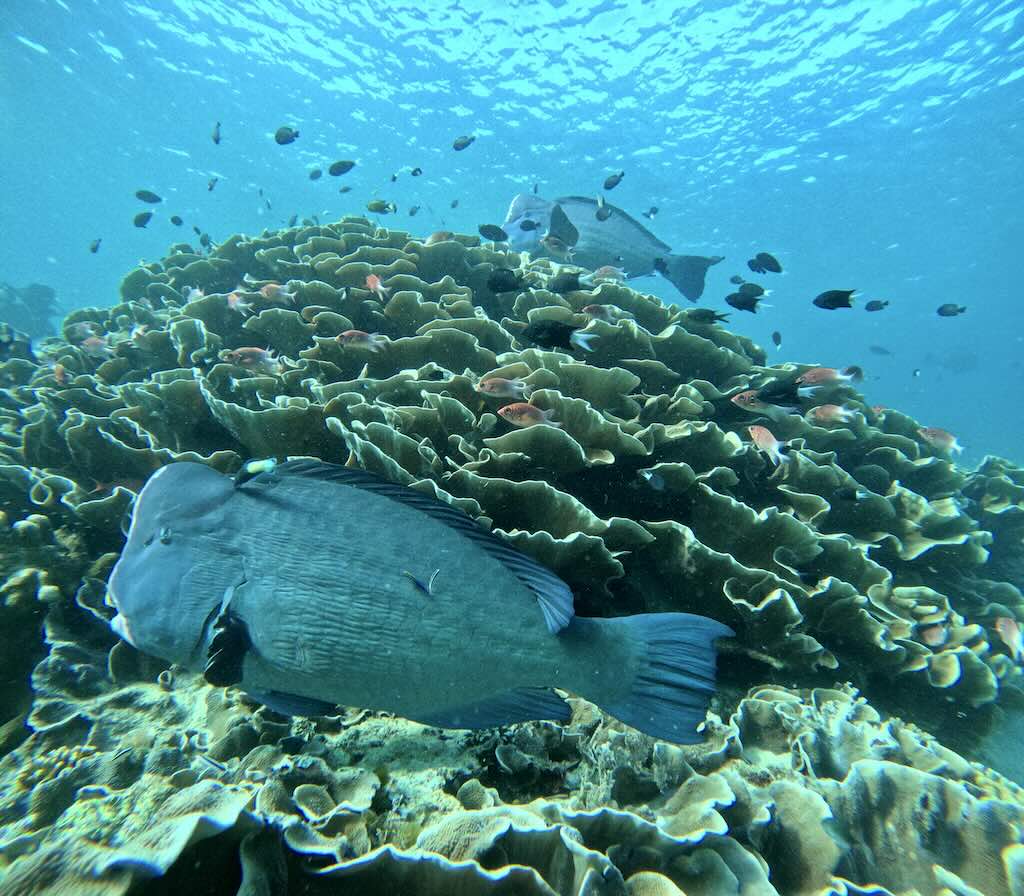
3. Komodo – Indonesia: Strong Currents, Mantas and Big Pelagics
Komodo National Park, a UNESCO World Heritage Site between Sumbawa and Flores, offers some of the most adrenaline-charged diving in Asia. The tidal flow between the Pacific and Indian Oceans squeezes through the park’s narrow straits, creating nutrient-rich currents that feed everything from manta trains at Manta Alley to the wall of trevallies and sharks at Castle Rock — and the famous “Shotgun” drift, where the current literally fires you through a channel.
I’ve dived Komodo several times from Labuan Bajo, which is also your base for seeing the Komodo dragons themselves. Day trips reach the central sites easily; the wilder south (Manta Alley, Cannibal Rock) is best done by liveaboard.
- Manta Alley, Castle Rock, Crystal Rock, Batu Bolong, Shotgun
- Strong currents that attract big pelagics — reef hooks recommended
- Combine diving with the dragons and Padar Island viewpoint
Best time to dive: April to November. Why it makes the list: the best drift diving in Southeast Asia, with mantas almost guaranteed in season.
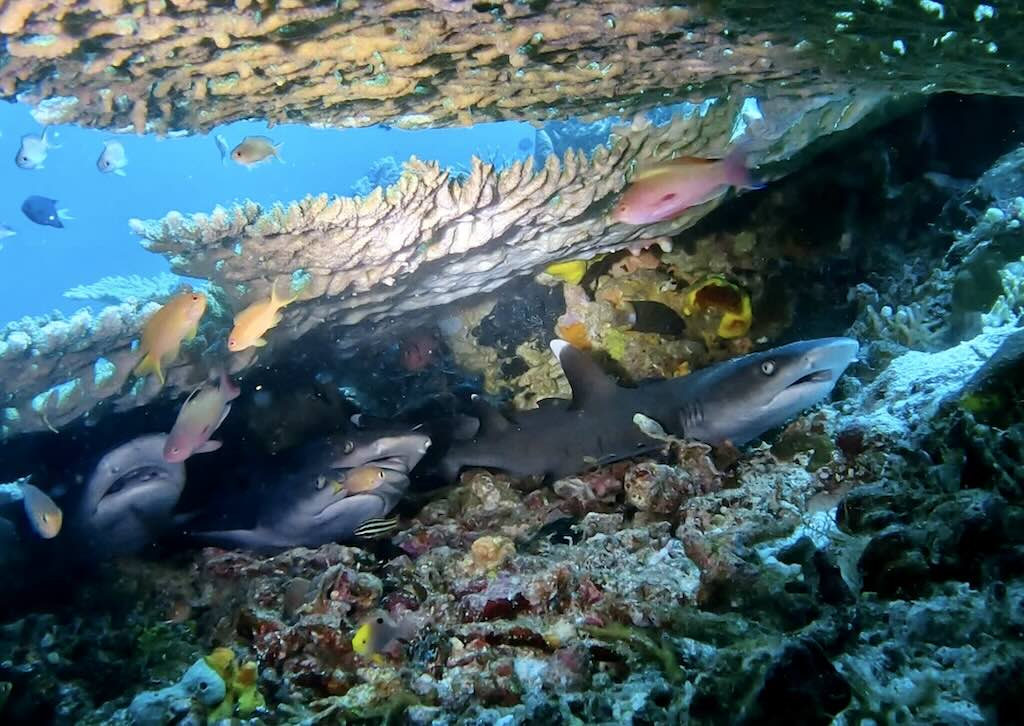
4. Nusa Penida – Indonesia: Manta Rays and Mola Mola Hotspot
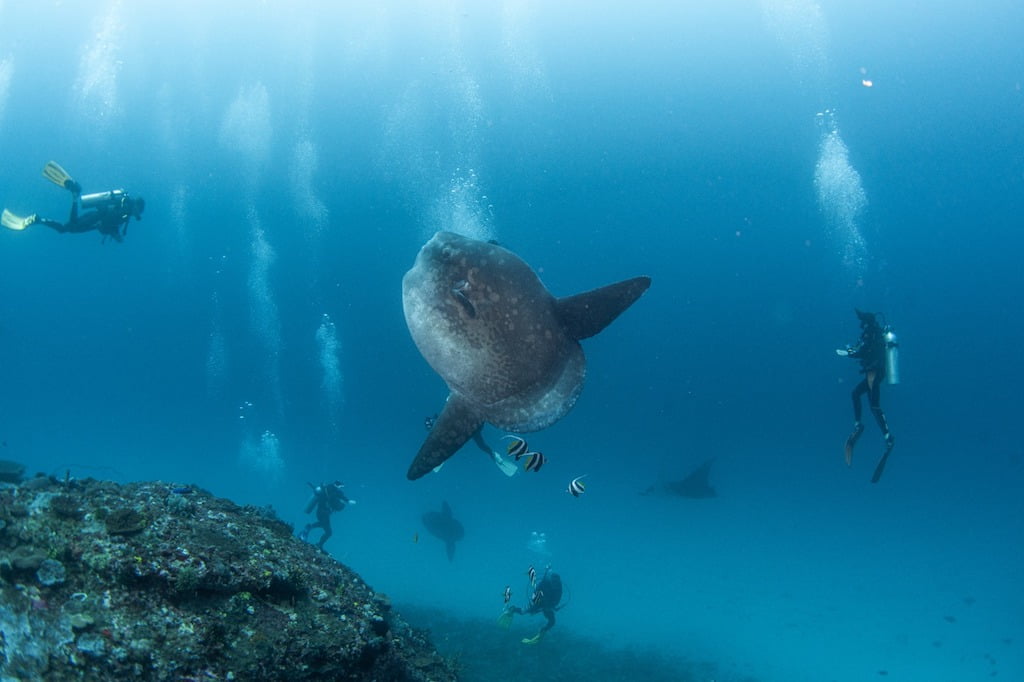
Just 45 minutes by boat from Bali, Nusa Penida is my home — I’ve lived and worked in the island’s diving industry for years, so consider this the most field-tested entry on the list. Penida delivers two encounters that are hard to find anywhere else in the world at this level of reliability: year-round reef manta rays at Manta Point, and the bizarre, prehistoric Mola Mola (ocean sunfish) that rise from the deep to cleaning stations between July and October.
Beyond the two stars, the north coast offers superb drift dives over pristine hard-coral gardens, and Crystal Bay lives up to its name on a good day. Currents can be serious here — dive with a reputable local operator and listen to the briefing. For a complete site-by-site rundown, see the 20 best dive sites of Bali and Nusa Penida.
- Manta Point, Crystal Bay, Toyapakeh, SD–Ped drift dives
- Mantas year-round, Mola Mola from July to October
- Easy logistics: 45 min from Sanur, dive resorts on the island
Best time to dive: July to October for Mola Mola; mantas all year. Why it stands out: world-class pelagic encounters 45 minutes from Bali’s airport hub.
5. Maratua Island – Indonesia: Barracuda Tornado, Sharks and a Jellyfish Lake
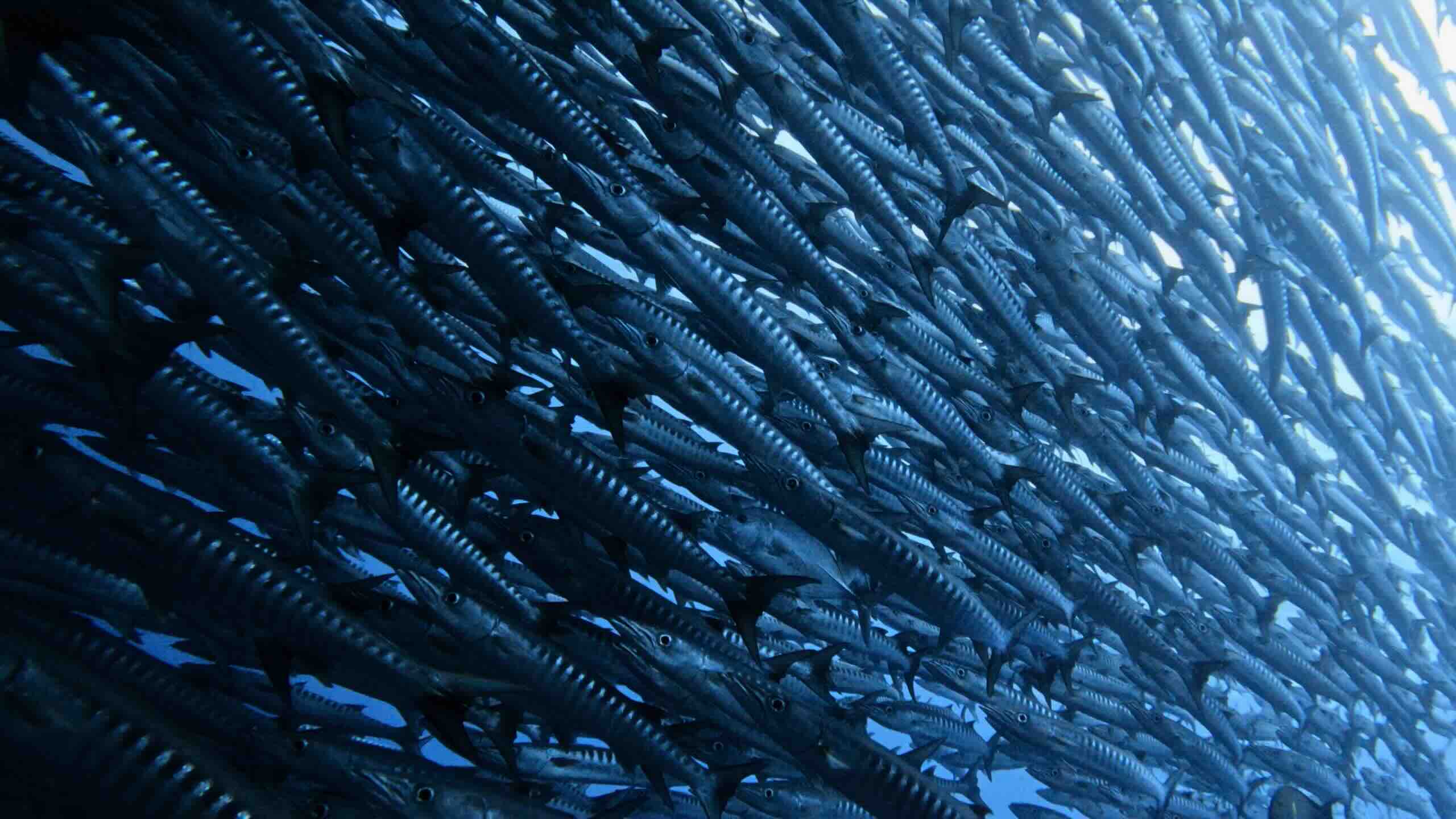
Maratua is the largest atoll of the Derawan Archipelago, off the coast of East Kalimantan (Indonesian Borneo) — and it’s where I am right now, updating this guide between dives. It deserves its place in this top 12 for one site above all: The Channel, also called Big Fish Country, at the northern tip of the atoll. When the tide pours out of the immense turquoise lagoon, sharks, eagle rays, and one of the densest barracuda tornadoes in the world gather in the pass. This week I hung at 26 meters watching the vortex form above me — the photo at the top of this article is from that dive.
The surrounding sites complete the package: at Coral Mountain Bay I logged a leopard shark at 39 meters, eagle rays, and a crocodile fish in a single dive; turtles are everywhere at Leo Point; and this very morning I counted twelve scalloped hammerheads at 36 meters at Kelapa Dua, off Kakaban Island — a dive I won’t forget. Kakaban’s deep cleaning stations are also visited by thresher sharks in the early morning, though they eluded me this trip. Kakaban itself hides one of the planet’s rare stingless jellyfish lakes — snorkeling among thousands of pulsing golden jellyfish between two dives is an experience you won’t forget. Nearby Sangalaki adds a manta feeding station and one of Indonesia’s most important green-turtle nesting beaches.
- The Channel (Big Fish Country): barracuda tornado, grey and blacktip reef sharks, eagle rays
- Kakaban: jellyfish lake, walls, early-morning thresher sharks (deep — advanced divers)
- Sangalaki: manta rays and nesting green turtles
- Getting there: fly to Berau (BEJ) via Jakarta or Balikpapan, then ~3 h by car and speedboat
Best time to dive: March to October (most resorts close in January). Water is bath-warm — 29–32°C this week. Why it’s the hidden gem of this list: world-class big-fish action with a fraction of the crowds of Komodo or Raja Ampat.
6. Banda Sea – Indonesia: Hammerhead Schools and the Ring of Fire
The Banda Sea is the wildest entry on this list — a deep, remote basin in eastern Indonesia scattered with volcanic islands, only realistically diveable by liveaboard, and only in a short window of the year. What draws divers across the world here is one animal: the scalloped hammerhead. From September to November, schools of them patrol the deep water around the volcanic seamounts of Manuk and Serua, in numbers that are rare anywhere else in Indonesia.
The route itself reads like an adventure novel: most crossings depart from Ambon and follow the “Ring of Fire” arc through the historic Banda Islands — the original Spice Islands, once the world’s only source of nutmeg. Off Banda Neira, the Lava Flow site grows some of the fastest-recovering table corals ever documented, on lava laid down by the 1988 eruption of Gunung Api; Manuk adds swarms of curious sea snakes to the hammerhead action. Full transparency: this is one of the two destinations on this list I haven’t dived yet — I’m booked on a crossing this September, and I’ll update this section with my own log right after. It earns its ranking on the unanimous verdict of diver friends and crews I trust, several of whom call it their best trip in Indonesia. For routes and boats, see my guide to liveaboard diving cruises in Indonesia.
- Schooling scalloped hammerheads (peak: October, around Manuk)
- Volcanic walls, sea snakes, untouched reefs and Spice Islands history
- Liveaboard only — crossings of 7–12 nights from Ambon (or Ambon–Saumlaki routes)
Best time to dive: September to November (a second short window in March–April on some boats). Why it makes the list: the most reliable hammerhead-school encounter in Southeast Asia, in a sea almost nobody visits.
7. Richelieu Rock – Thailand: Whale Sharks and Massive Fish Schools
Located in the Andaman Sea off Thailand’s west coast, Richelieu Rock is widely regarded as the country’s best dive site — a horseshoe-shaped pinnacle that barely breaks the surface and explodes with life below it. I dived it from the Mandarin Queen dive cruise, and the density is hard to describe: walls of glassfish parting around trevallies, seahorses and harlequin shrimp in the purple soft coral, and — in season — whale sharks cruising out of the blue.
The site sits inside Mu Ko Surin National Park, which is open roughly from mid-October to mid-May; most divers visit on liveaboards that combine it with the Similan Islands, departing from Khao Lak or Phuket.
- Whale sharks (best odds February–April), manta rays, huge fish schools
- Exceptional macro life alongside the big-animal encounters
- Park open ~Oct 15 – May 15; combine with the Similans by liveaboard
Best time to dive: February to April. Why it’s on the list: Thailand’s most biodiverse single site, with genuine whale-shark odds.
8. Cebu & Moalboal – Philippines: Sardine Run and Easy Diving for All Levels
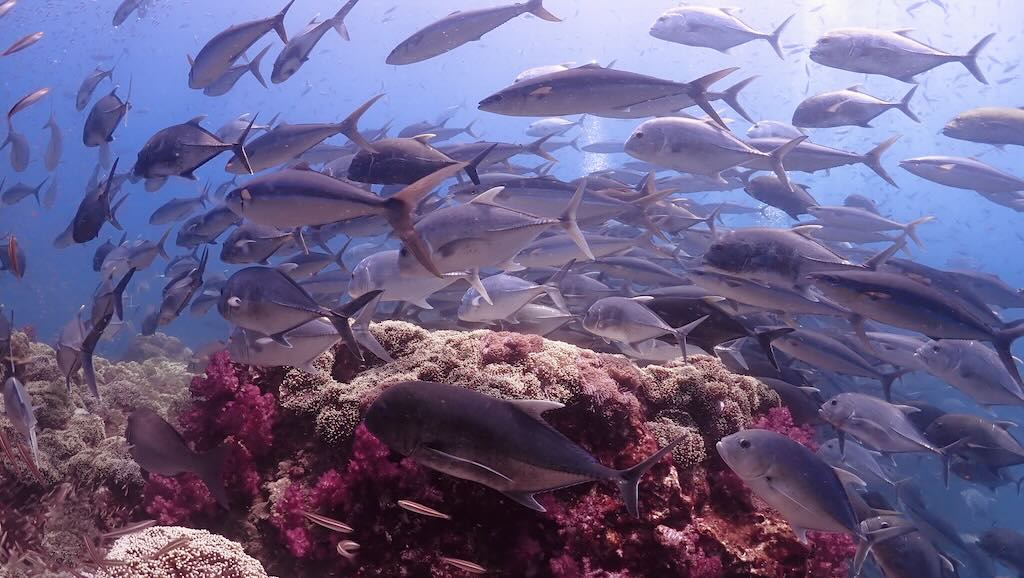
Moalboal, on the west coast of Cebu in the Philippines, hosts a phenomenon usually reserved for cold-water documentaries: a permanent, resident sardine ball — millions of fish moving as one silver organism just meters from shore, at Panagsama Beach. You don’t even need a tank: it’s right there on a freedive or snorkel, though on scuba you can sit beneath the bait ball and watch thresher-fast trevallies strike through it.
Around it, Pescador Island offers walls and caves, and the reefs are gentle enough for brand-new divers. Cebu is also the gateway to Malapascua (thresher sharks at dawn) and the whale sharks of Oslob — though I’d encourage you to research the ethics of the Oslob feeding operation before going. This is the one destination in this list still missing from my own logbook’s “done” column — it’s high on my list, and the ranking here reflects the near-universal enthusiasm of divers I trust.
- The Moalboal sardine run — meters from the beach
- Pescador Island walls, caves and turtle-rich reefs
- Easy conditions, high visibility, very affordable diving
Best time to dive: November to May. Why it’s great for all levels: accessible, cheap, and home to one of the world’s great fish spectacles.
9. Coron – Philippines: The Best Wreck Diving in Southeast Asia
A dream destination for wreck lovers, Coron Bay in Palawan shelters around a dozen Japanese WWII ships sunk in a single American air raid on September 24, 1944. Eighty years later, they lie in warm, calm, relatively shallow water — which makes Coron the rare place where recreational divers can do real wreck penetration, working up from swim-throughs on the Olympia Maru to the cathedral-like cargo holds of the 160-meter Okikawa Maru.
I stayed and dived at Sangat Island, the resort closest to the main wrecks, and surfacing from a hold into Coron’s limestone-karst scenery is a one-two punch few dive trips can match. Add Barracuda Lake — a surreal dive through a thermocline that jumps from 28°C to 38°C — and you have one of the most distinctive dive destinations in Asia.
- A dozen WWII wrecks from beginner-friendly to tech level
- Barracuda Lake’s bizarre 38°C thermocline
- Spectacular limestone lagoons for surface intervals
Best time to dive: October to June. Why it’s unique: the best wreck diving in Southeast Asia, full stop.

10. Bunaken – Indonesia: Spectacular Wall Diving and Crystal-Clear Waters
Bunaken National Marine Park, off Manado in North Sulawesi, protects some of the steepest, healthiest reef walls in Indonesia — vertical drops of several hundred meters where green turtles seem to outnumber divers. Visibility regularly exceeds 30 meters, and the shallow reef tops are perfect for long, easy multilevel dives.
The trump card is the combination: less than two hours away by car lies the Lembeh Strait, the world capital of muck diving, where I photographed flamboyant cuttlefish, frogfish and mimic octopus on black sand from the Dune Aurora. Wall diving in Bunaken plus critters in Lembeh makes North Sulawesi one of the most complete week-long dive trips in Asia.
- Walls dropping hundreds of meters, turtles everywhere
- Visibility often beyond 30 m
- Pair it with Lembeh Strait for world-class muck diving
Best time to dive: March to October. Why it’s worth visiting: the best wall-plus-macro combination in the region.
11. Koh Tao & Sail Rock – Thailand: The Best Place to Learn Scuba Diving
Ko Tao in the Gulf of Thailand certifies more new divers than almost anywhere on Earth, and for good reason: calm, warm bays, short boat rides, and Open Water courses that remain among the cheapest in the world (typically $250–350). But don’t write it off as beginners-only — Chumphon Pinnacle and Sail Rock, the granite pinnacle halfway to Koh Samui, hold serious fish life, including bull-sized groupers, chevron barracuda and seasonal whale sharks.
I dived Sail Rock from Koh Samui with French Plongée, and the natural vertical chimney you can ascend inside the rock is a genuinely fun piece of underwater architecture. If you’re starting your diving life in Southeast Asia, this is where I’d send you.
- Chumphon Pinnacle, Southwest Pinnacle, Sail Rock and its chimney
- The world’s most affordable PADI/SSI certifications
- Occasional whale sharks, especially March–May
Best time to dive: February to May. Why it’s popular: the easiest, cheapest place in Asia to become a diver — with real dive sites to grow into.
12. Halmahera – Indonesia: Remote Reefs and Untouched Diving
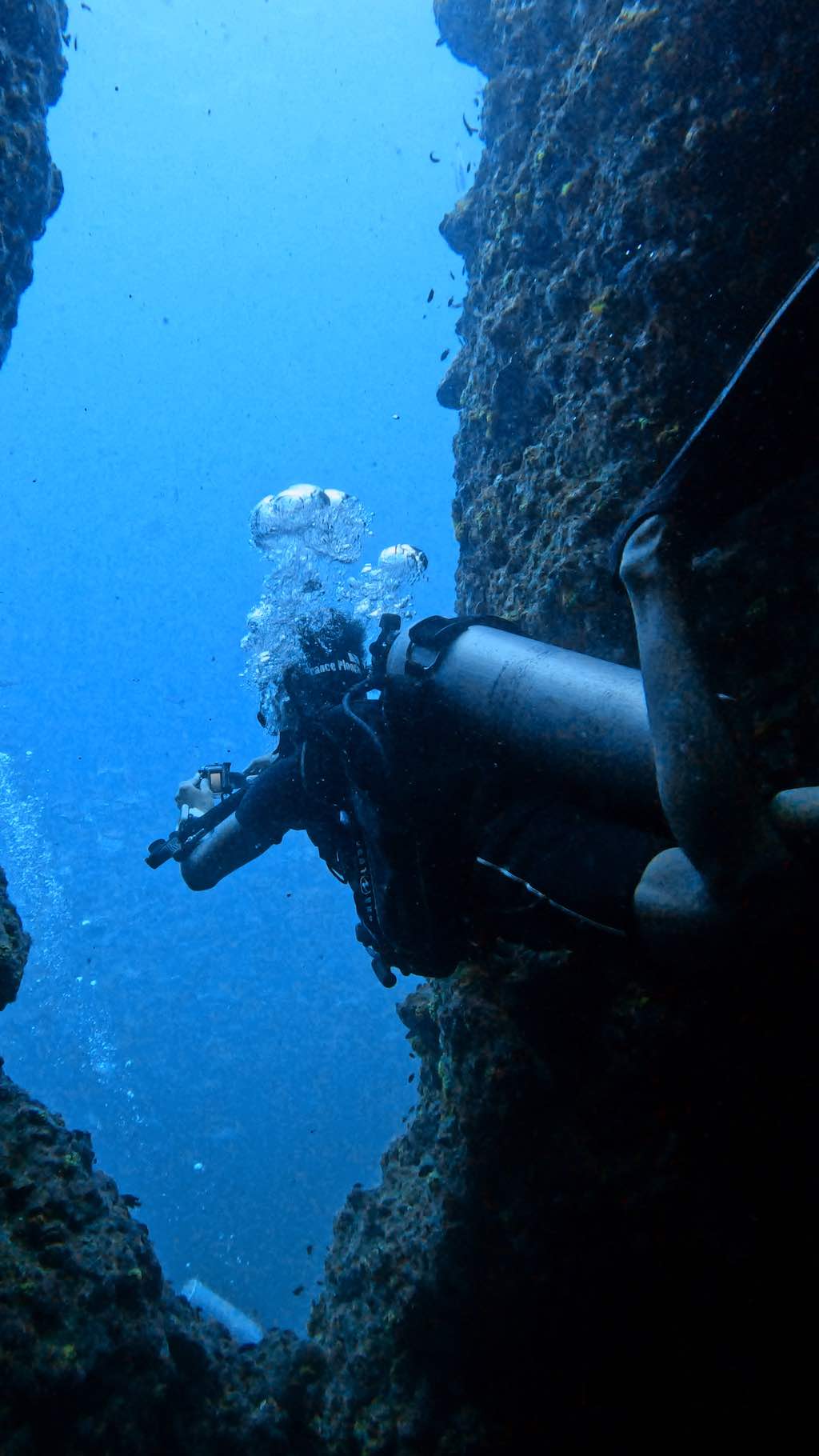
Tucked between Sulawesi and Raja Ampat, Halmahera is the frontier of this list. Few liveaboards cross these waters, the reefs are essentially unmapped, and on my Dune Aurora crossing we dived sites that may never have seen divers before. Off the tiny island of Tifore, between Sulawesi and Halmahera, I swam through a barracuda vortex with nobody else on the reef — the photo below is from that dive.
Expect pristine hard-coral gardens, schooling pelagics, and the feeling — increasingly rare in diving — of genuine exploration. Most boats visit Halmahera on repositioning crossings between North Sulawesi and Raja Ampat in October–November or April–May; check my Indonesian liveaboard guide for routes.
- Untouched coral gardens and large pelagics
- Visited mainly on liveaboard crossings — almost zero other divers
- Combine with Lembeh or Raja Ampat on a repositioning cruise
Best time to dive: October to April. Why it’s special: the closest thing to exploratory diving left in Southeast Asia.
Best Time to Dive in Southeast Asia
The best time to dive in Southeast Asia depends on regional weather patterns, particularly the balance between the dry season and the monsoon. The good news: when one side of the region is in monsoon, another is at its peak — there is always somewhere world-class to dive.
Dry Season vs Monsoon
The dry season generally brings calmer seas, better visibility and easier boat access. Monsoon months can mean rough crossings, reduced visibility and closed national parks (the Thai Andaman parks, including Richelieu Rock, close roughly mid-May to mid-October). Plan the destination around the season, not the other way round.
Best Time to Dive by Country
- Indonesia: Bali, Nusa Penida, Komodo and Alor: April–November · Raja Ampat and Halmahera: October–April · Maratua / Derawan: March–October · Banda Sea: September–November (hammerhead season)
- Philippines: November–May — dry season, ideal for Cebu, Moalboal, Coron and Palawan
- Malaysia (Sipadan): April–December, peak conditions July–October
- Thailand: Andaman Sea (Similans, Richelieu Rock): November–April · Gulf (Koh Tao, Sail Rock): February–September
In short: November to April offers the best overall conditions across the region; Indonesia alone can fill your calendar year-round if you follow its regional seasons.
Liveaboard or Dive Resort: How to Choose
When a liveaboard is worth it
Three destinations on this list — Raja Ampat, the Banda Sea and Halmahera — are either impossible or severely limited from land. A liveaboard puts you on remote sites at dawn, before any day boat, and typically includes 3–4 dives per day. Budget roughly $250–450 per night in Indonesia depending on the boat; my detailed comparison of routes and boats is in the Indonesia liveaboard guide.
When a resort makes more sense
Nusa Penida, Maratua, Sipadan (from Mabul), Moalboal, Coron and Koh Tao all dive brilliantly from shore-based resorts — usually at half the daily cost of a boat, with the freedom to take a day off, and a better option if you travel with a non-diving partner. Komodo works both ways: day trips from Labuan Bajo cover the famous central sites, while the wild south needs a boat.
Where to Stay: Dive Resorts and Liveaboards I’ve Actually Used
Every place below is somewhere I have personally slept, eaten and dived from — not a list scraped from a booking engine. Prices are indicative for a double room or per liveaboard night.
Indonesia
- Maratua — Noah Maratua Resort: where I’m staying right now: stilted water bungalows on the lagoon, a serious dive operation five minutes from The Channel, and the team behind the barracuda-tornado photo in this article (~$150–250/night with dives).
- Nusa Penida — Adiwana Warnakali: the island’s most comfortable dive resort, with a pool overlooking the Toyapakeh strait and a PADI center in-house (~$120–200/night).
- Komodo — Blue Parrot, Labuan Bajo: relaxed, diver-friendly base a short walk from the harbor for day trips into the park (~$40–80/night).
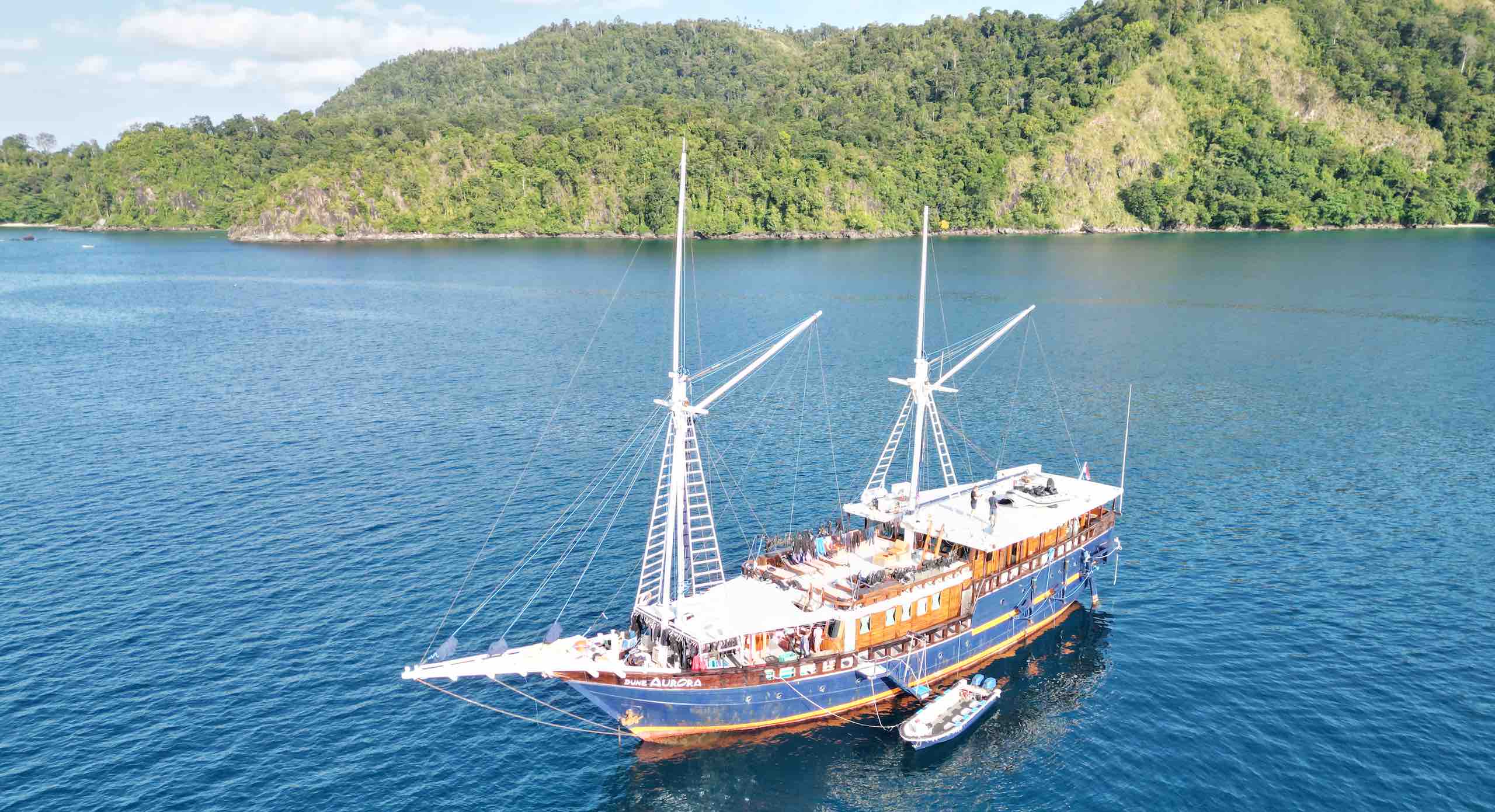
- Raja Ampat, Banda Sea, Halmahera, Lembeh — Dune Aurora liveaboard: the wooden phinisi I keep coming back to, along with repeated cruises organized by Uber Diving ($300–400/night, all dives included).
Malaysia & Philippines
- Sipadan — Scuba Junkie Mabul Beach Resort: the operator I used for my Sipadan permits; ask for their permit-inclusive packages well in advance (~$100–180/night with dives).
- Coron — Sangat Island Dive Resort: a private-island resort sitting directly above the WWII wreck fleet — you’re moored over the Olympia Maru before the Coron Town boats arrive (~$150–250/night full board).
Thailand
- Richelieu Rock — Mandarin Queen dive cruise: comfortable Similan–Surin liveaboard out of the Khao Lak area, with Richelieu timed for the quiet hours (~$200–300/night).
- Sail Rock — French Plongée, Koh Samui: small-group trips to Sail Rock with French- and English-speaking instructors; stay anywhere on Koh Samui and they collect you (~$120 for a 2-dive trip).
For everywhere else, compare dive resorts and hotels on Booking.com:

Keep Planning Your Diving Trip
Indonesia in depth: every region, season and budget in my complete guide to the best diving in Indonesia.
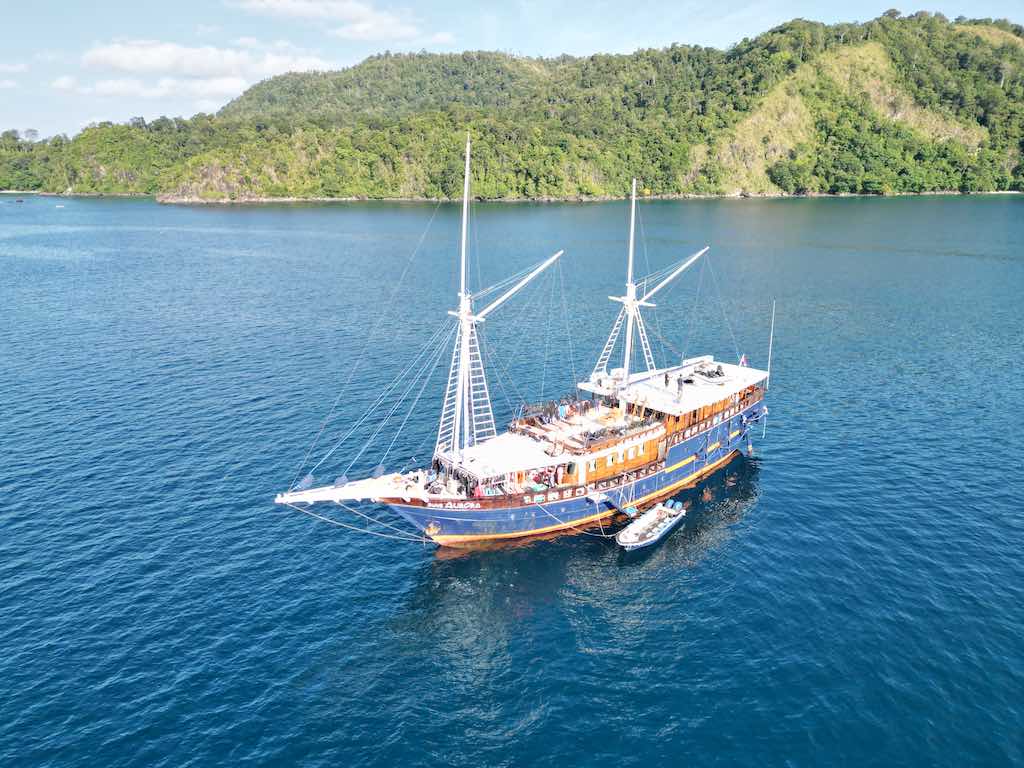
Dreaming of Raja Ampat or the Banda Sea? Compare routes and boats in my guide to liveaboard diving cruises in Indonesia.
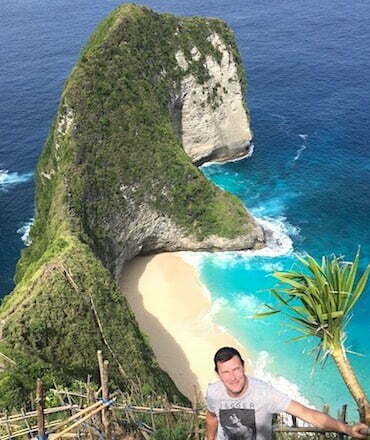
Discover where to stay in Nusa Penida, the island’s best dive sites and beaches, manta snorkeling and full itineraries in my Nusa Penida travel guide.
Frequently Asked Questions About Diving in Southeast Asia
Is Southeast Asia good for scuba diving?
Yes — Southeast Asia sits in the Coral Triangle, the most biodiverse marine region on Earth, with more than 600 coral species and 2,000+ reef fish species. It combines world-class sites, warm water (27–32°C) and some of the lowest diving prices anywhere.
What is the best country for diving in Southeast Asia?
Indonesia is widely considered the best overall. It hosts seven of the twelve sites in this ranking — including Raja Ampat, Komodo, Nusa Penida, Maratua and the Banda Sea — and offers superb diving somewhere in the country every month of the year.
When is the best time to dive in Southeast Asia?
November to April offers the best overall conditions across the region. Indonesia varies by region: April–November for Bali and Komodo, October–April for Raja Ampat, September–November for the Banda Sea, and March–October for Maratua.
Is Southeast Asia good for beginner divers?
Yes — it’s arguably the best place in the world to learn. Koh Tao in Thailand offers the cheapest certifications (Open Water from about $250–350), and Moalboal, Coron, Bunaken and Nusa Penida’s north coast all have easy, shallow sites for new divers.
Where can you see a barracuda tornado in Southeast Asia?
The most famous barracuda tornado forms at The Channel (Big Fish Country) off Maratua Island, Indonesia, on the outgoing tide. Barracuda Point at Sipadan and Tifore near Halmahera offer similar vortex encounters.
Where can you dive with hammerhead sharks in Southeast Asia?
The Banda Sea in eastern Indonesia is the most reliable place, with schooling scalloped hammerheads around the Manuk and Serua seamounts from September to November (peak in October). Hammerheads are also seen at Kakaban near Maratua — I counted a school of twelve there at 36 meters in June 2026 — and at Layang-Layang, Malaysia.
How do you get to Maratua Island?
Fly to Berau (Kalimarau airport, BEJ) in East Kalimantan via Jakarta, Surabaya or Balikpapan, then continue by car to Tanjung Batu (about 2.5 hours) and speedboat to Maratua (about 45–60 minutes). Resorts arrange the full transfer — plan a long travel day each way.
Can you dive the Banda Sea without a liveaboard?
Realistically no — the signature sites (Manuk, Serua, the Ring of Fire seamounts) are only reachable by liveaboard, mostly on 7–12 night crossings from Ambon in September–November. A few local dives are possible from Banda Neira itself, but the hammerhead sites are far offshore.
How many divers are allowed at Sipadan per day?
Sabah Parks currently issues around 176 dive permits per day, distributed among licensed operators — and since 2026, three dives per day are allowed again inside the park. You can only get a permit by booking a package with a licensed resort or dive center in the Semporna area.
How much does diving cost in Southeast Asia?
Expect roughly $30–50 per fun dive in Thailand and the Philippines, $35–60 in most of Indonesia, and $80–120 per day at remote destinations like Maratua or Sipadan including permits. Liveaboards run from about $250 to $450 per night, all dives included.
Liveaboard or dive resort — which is better?
Choose a liveaboard for Raja Ampat, the Banda Sea and Halmahera, which can’t properly be dived from land; choose a resort for Nusa Penida, Maratua, Sipadan, Moalboal, Coron and Koh Tao. Komodo works well both ways.
Where can you see whale sharks in Southeast Asia?
Richelieu Rock in Thailand (February–April) offers the best wild encounters on this list, and whale sharks also pass Koh Tao and Sail Rock in spring. Donsol in the Philippines is a respected seasonal aggregation; I’d recommend researching the ethics of the Oslob feeding site before choosing it.
Good morning, could you please tell me the diving options for 7 nights, with their costs for 2 people? My partner is an Open Water Diver, but her diving is excellent, and I’m an Advanced Open Water Diver with a completed nitrox course.
Regards and thanks, Diego
Good morning Diego,
Thank you for your message and for sharing your diving background.
I’m the owner of Dune Penida Dive Center, based in Nusa Penida. I’d be delighted to help you plan a 7-night diving safari in Bali tailored to both of your certification levels and experience.
A very popular and well-balanced option is a 7-day itinerary combining:
Nusa Penida – mantas, drift dives, rich reefs (and mola mola in season)
Padang Bai – diverse sites, turtles, macro life
Tulamben – the famous USAT Liberty wreck, easy and spectacular diving
This program works perfectly for an Open Water Diver with strong experience and an Advanced Open Water Diver with Nitrox, and dive plans are always adapted conservatively and safely to the least certified diver.
I would be happy to send you a detailed quotation for 2 people, including:
Accommodation for 7 nights
Guided diving (number of dives adapted to your preferences)
Tanks, weights, Nitrox
Transfers between dive areas
Optional extras (private guide, additional dives, non-diving activities)
If you could let me know:
– Your travel dates
– Preferred comfort level for accommodation
– Approximate number of dives you’re aiming for
I’ll prepare a personalized proposal for you right away.
You can also answer the email that I sent to you
Kind regards,
Blaise