Macau Day Trip from Hong Kong: Our Itinerary, Real Times and Costs
By Blaise Jaeger · Updated October 21, 2026
Is One Day in Macau Enough?
Yes, if you plan it. Macau is an hour from Hong Kong by fast ferry, and the parts most visitors come for sit in three compact areas: the Portuguese historic center on the peninsula, the old lanes of Taipa Village, and the casino resorts of Cotai. We did all three on Friday, October 16, 2026, leaving Hong Kong on the 9:30 AM ferry and sailing back at 4:30 PM, without ever feeling rushed.
This page is that day, hour by hour: the real times from our photos, what we paid, the one mistake that nearly cost us the morning ferry, and the order of visits that worked. It is also a return. I first came to Macau in January 1989, when it was still a Portuguese territory, and I will show you what has changed since.
Macau Day Trip at a Glance
| What we did on October 16, 2026 | |
|---|---|
| Ferry | TurboJET, Hong Kong–Macau Ferry Terminal (Sheung Wan) to Macau Outer Harbour, about 1 hour |
| Ferry price | HK$350 per person round trip, booked online in advance |
| Time on the ground | About 5 hours 30 minutes (10:45 AM to 4:15 PM) |
| Order of visits | Historic center on foot, then Taipa Village, then Cotai |
| Getting around | Three short taxi rides and a lot of walking |
| Lunch for two | MOP 469 at La Famiglia in Taipa Village, 10% service included |
| Currency | Macau pataca (MOP); Hong Kong dollars accepted everywhere we went |
| Best day to go | A weekday that is not a public holiday in Hong Kong or Macau |
Macau in 1989, and Macau Now
My first trip to Macau was in January 1989. I was between two jobs and had seven weeks to travel around Asia with two friends — Thailand, the Philippines, Hong Kong, Sri Lanka — and we took the ferry over from Hong Kong for the day. Hong Kong was British, Macau was Portuguese, and the handover to China was still ten years away.
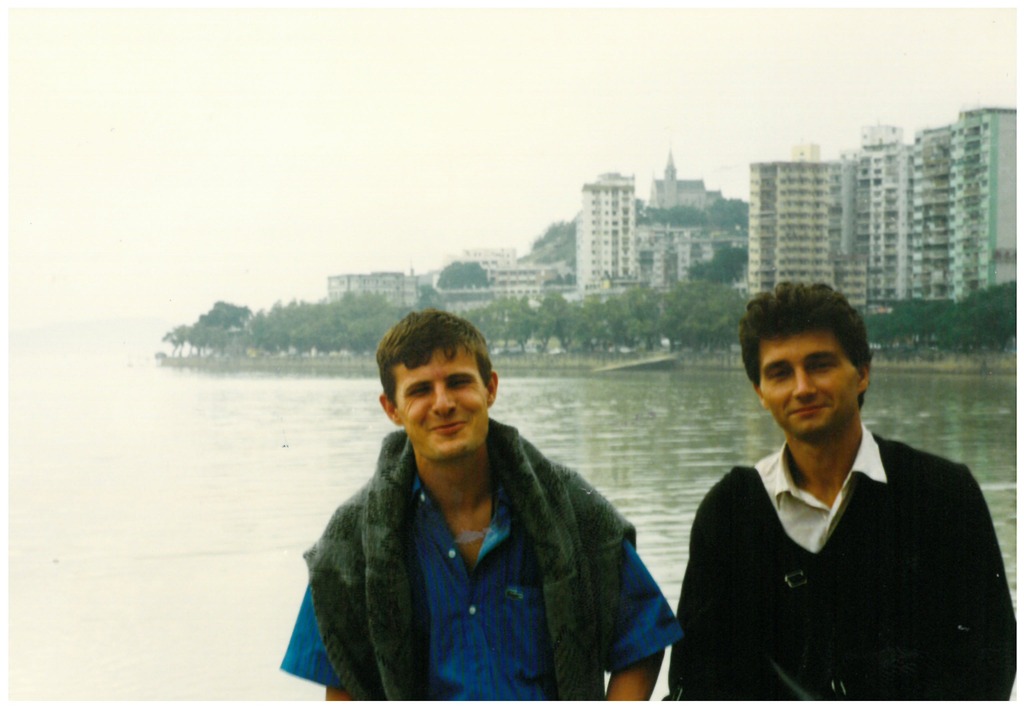
The photo above is the best measure of how much has changed. The water behind us was the old Praia Grande bay, open to the sea, with Penha Hill and its church above the apartment blocks. In the 1990s the rest of the bay was reclaimed and turned into the man-made Nam Van Lake, and the waterfront in the picture no longer exists in that form. Further south, there was no Cotai at all: just a causeway between the islands of Taipa and Coloane. Today the land reclaimed between them carries the Cotai Strip, and the Venetian Macao, which opened in 2007, stands on what was sea when I first came.
What I remember most from that first visit is the atmosphere of a small Portuguese town at the edge of China, and groups of young Chinese men sitting on the ground in parking lots, waiting, as I understood it then, to be registered by the authorities. Coming back thirty-seven years later with my friend Roy, the historic center felt remarkably intact. It is everything around it that has been rebuilt.
One more date for the record: 1989 is also the year Lord Stow’s Bakery opened in Coloane village and started selling the egg tarts that every visitor now lines up for. I did not know it existed then. I made up for it this time.
Our One-Day Macau Itinerary, Hour by Hour
These are the real times, taken from the timestamps of our photos. Use them as a pace guide rather than a timetable.
| Time | Where | Notes |
|---|---|---|
| 9:00 AM | Taxi from Admiralty to the ferry terminal in Sheung Wan | Ferry tickets already booked online |
| 9:30 AM | TurboJET leaves Hong Kong | We reached the gate just before it closed |
| 10:35 AM | Arrival at Macau Outer Harbour | Out of immigration by 10:45 AM |
| 11:00 AM | Senado Square | Taxi from the terminal, about 10 minutes |
| 11:07 AM | St. Dominic’s Church | Two minutes’ walk from the square |
| 11:12 AM | Rua de São Paulo | Pork jerky tasting and egg tarts |
| 11:22 AM | Ruins of St. Paul’s | Crowded, but fine for photos |
| 11:35 AM | Monte Fort | Escalators up from beside the ruins |
| 12:15 PM | Taxi to Taipa Village | Rua do Cunha and the lanes around it |
| 12:30 PM | Lunch at La Famiglia | Macanese and Portuguese food |
| 1:30 PM | Walk to the Venetian Macao | About 15 minutes on foot from Taipa Village |
| 2:15 PM | Venetian canals and casino | Grand Canal, gondolas, painted sky |
| 3:30 PM | Taxi to Outer Harbour Ferry Terminal | |
| 4:30 PM | TurboJET back to Hong Kong | Sheung Wan around 5:30 PM |
The logic of the order is simple. The historic center is best before the midday tour groups, Taipa Village is where you want to be at lunchtime, and Cotai is indoors and air-conditioned for the hottest part of the afternoon. It also means you start and finish near the Outer Harbour, where the Hong Kong ferries dock.
Getting to Macau: TurboJET from Sheung Wan
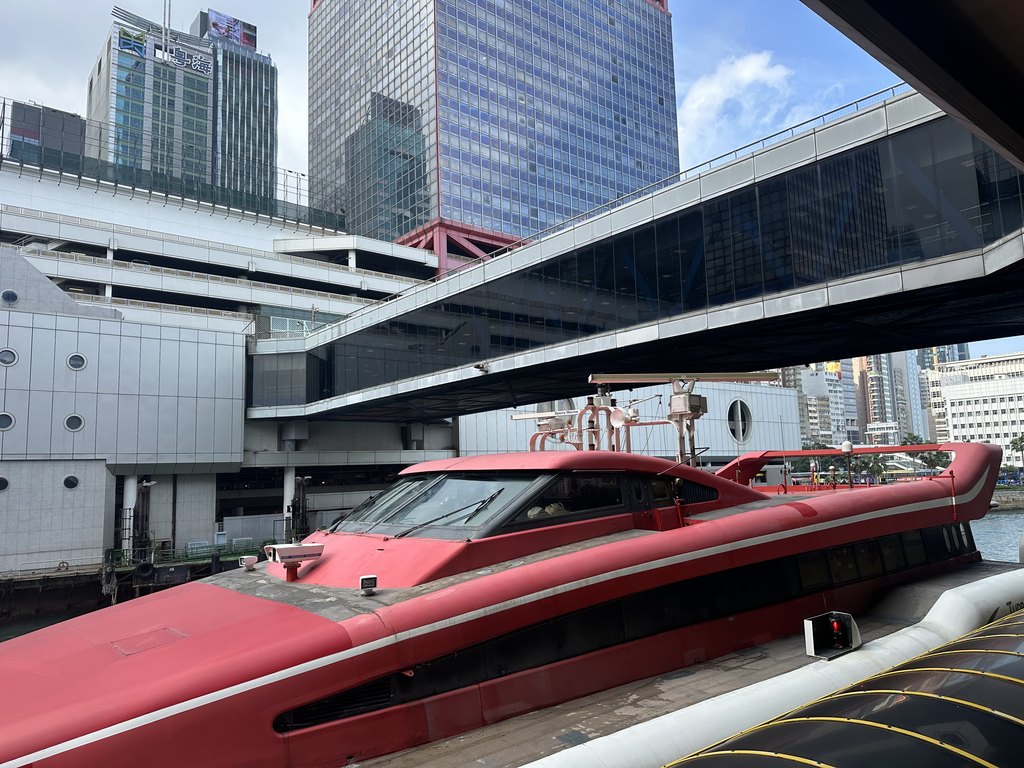
The ferry leaves from the Hong Kong–Macau Ferry Terminal in Sheung Wan, connected directly to Sheung Wan MTR station. TurboJET sails to the Macau Outer Harbour Ferry Terminal, which is the one you want for the historic center. The crossing takes about an hour, and departures run roughly every 30 minutes in the morning.
Book Online, and Watch the Gate
Book your seats online before the day: the line at the ticket desk is the last thing you want with a fixed departure. We paid HK$350 per person for the round trip. For reference, TurboJET’s official one-way Economy fares are HK$194 on weekdays and HK$212 on weekends and on holidays (fares effective April 2026), and resellers are often a little cheaper. You can book on TurboJET’s website or buy TurboJET tickets on Klook, which is how most Asian travelers book them.
The advice is to be at the terminal 30 minutes before departure, and it is worth following: there are Hong Kong exit formalities before you board. But the detail that matters is that the gates close 10 minutes before departure. Our taxi from Admiralty got us to the gate just before it shut, and the next ferry would have cost us half an hour of the day.
Immigration on Both Sides
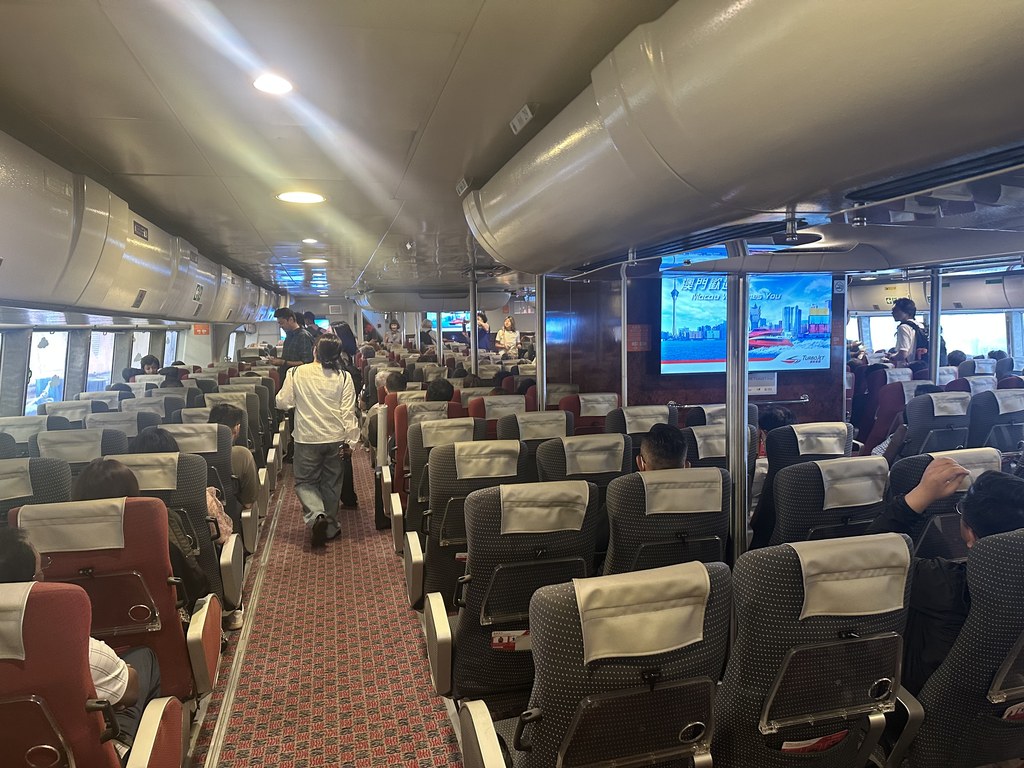
Hong Kong and Macau run separate immigration controls, so bring your passport even for a day trip. Most Western passport holders, including US, UK and EU citizens, can enter Macau without a visa, but check the rules for your nationality before you travel. On our weekday morning, we were through Macau immigration ten minutes after docking.
The Other Way: the Bridge Bus
Since 2018, the Hong Kong–Zhuhai–Macao Bridge also links the two cities by shuttle bus from near Hong Kong airport. It makes sense if you are coming from Lantau or the airport. From Central or Kowloon, the ferry from Sheung Wan is simpler and lands you closer to the old town.
Morning: Macau’s Historic Center on Foot
The historic center was inscribed on the UNESCO World Heritage list in 2005, and its best-known sights line up along one walk of about a kilometer, from Senado Square up to Monte Fort. Take a taxi from the ferry terminal to Senado Square (about 10 minutes) and do everything else on foot.
Senado Square
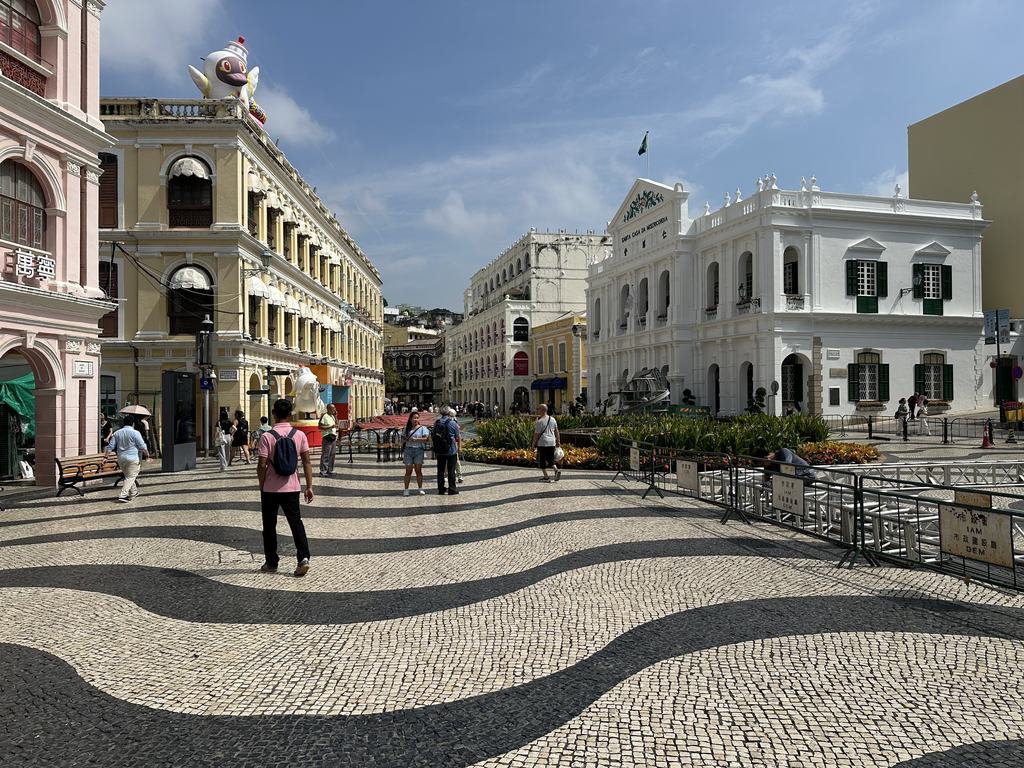
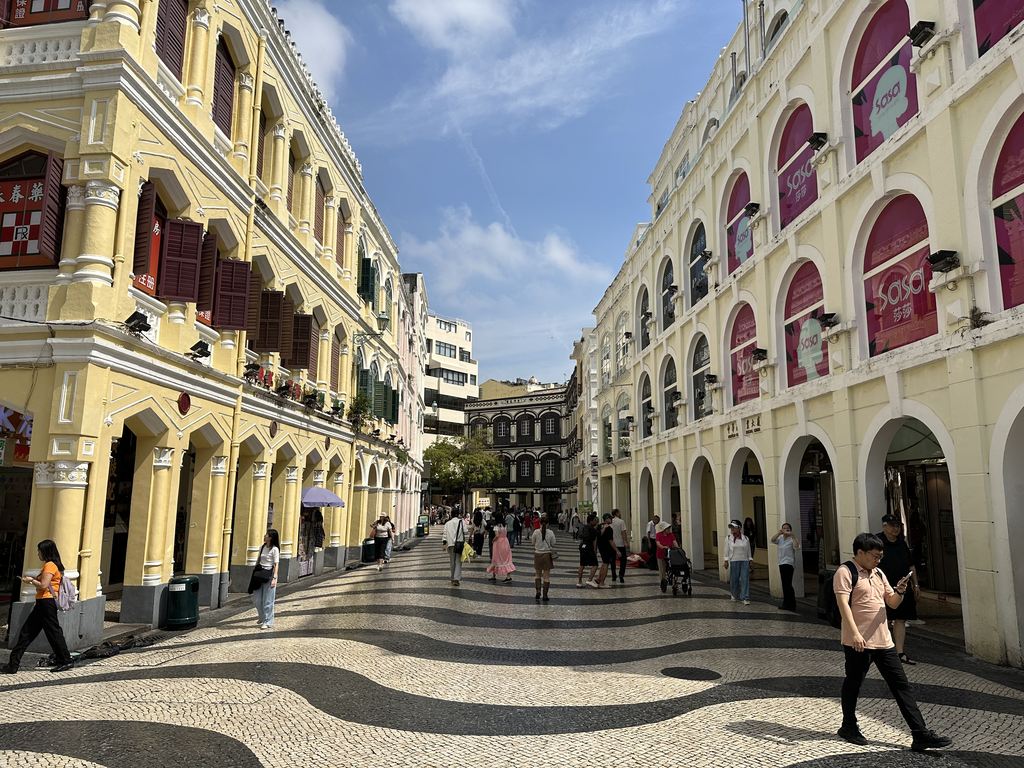
The square is paved in black and white Portuguese calçada laid in waves, and framed by pastel colonial buildings with arcades on the ground floor. At 11:00 AM on a Friday it was lively but not packed. Walk through the arcades along the sides: they are shaded, and they give you the classic perspective down the square.
St. Dominic’s Church
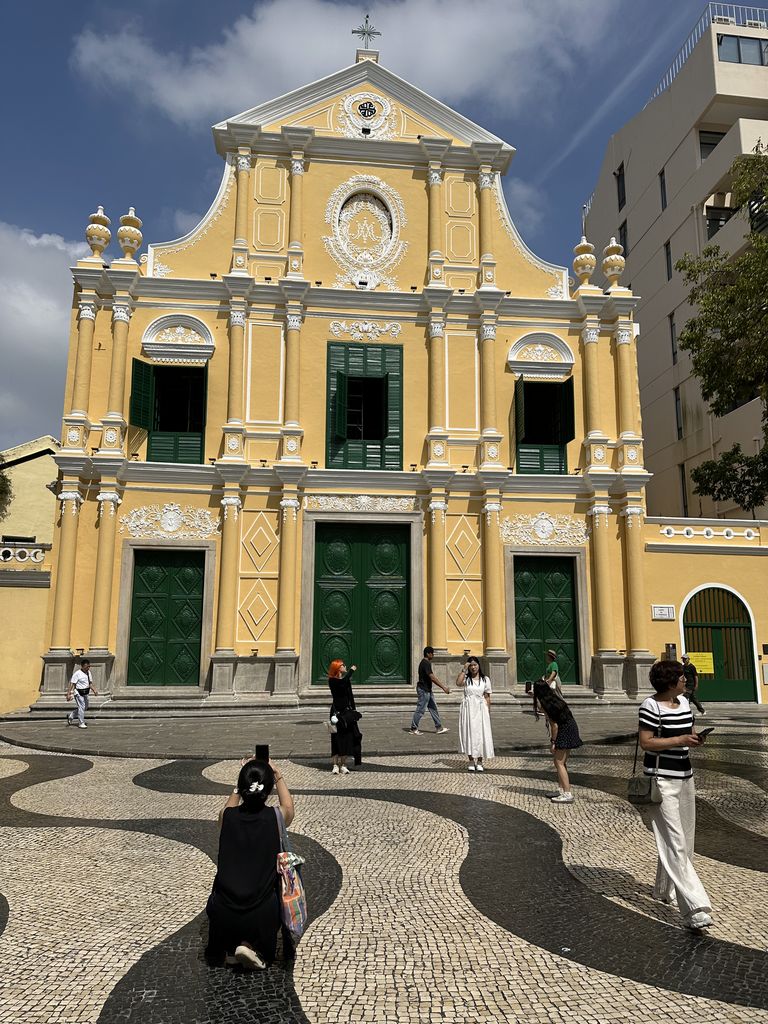
Two minutes up from the square, the yellow and white facade of St. Dominic’s Church closes off a small plaza of its own. It is one of the most photographed buildings in Macau, and the church is free to enter.
Rua de São Paulo: Pork Jerky and Egg Tarts
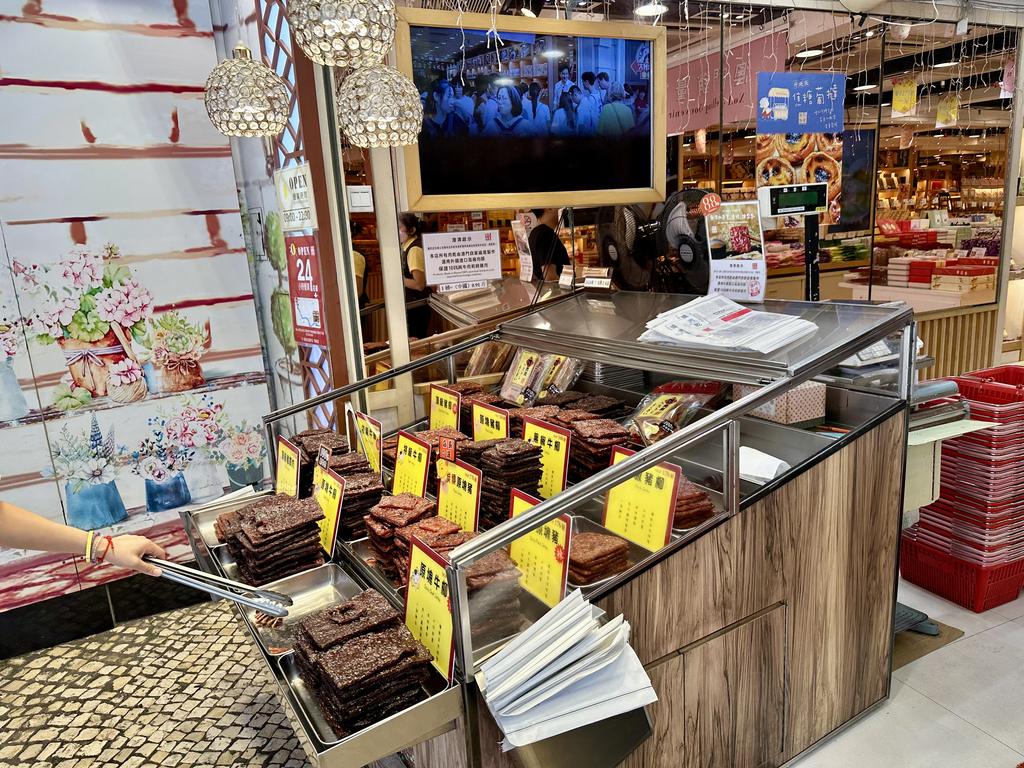
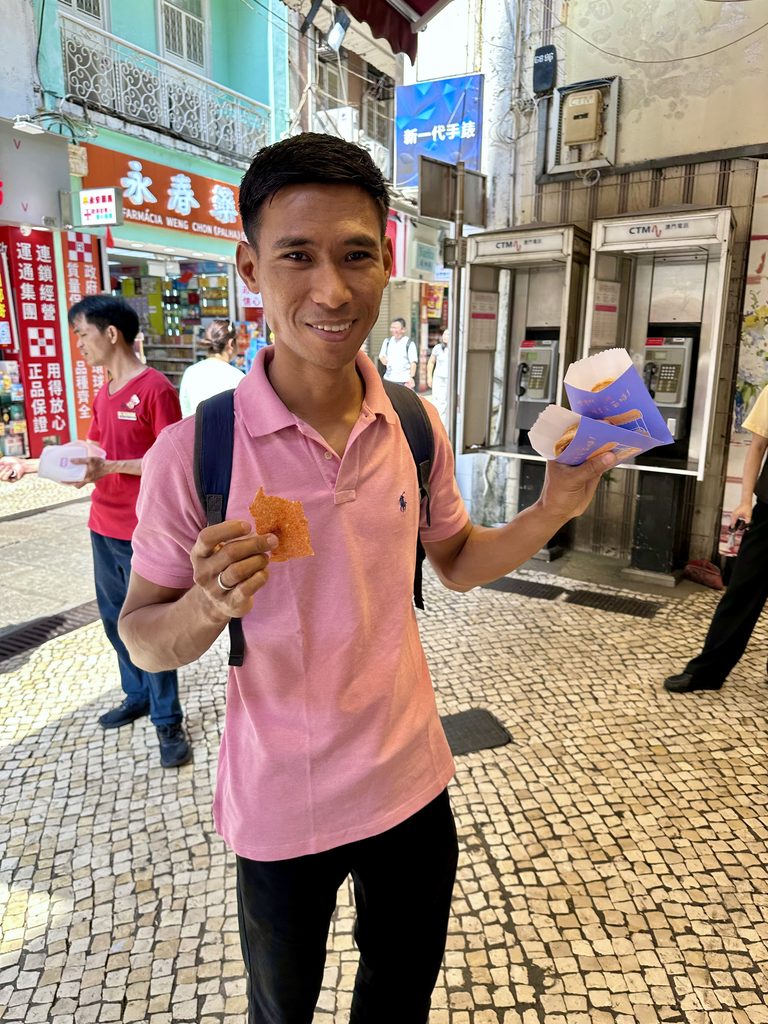
The pedestrian street that climbs toward the Ruins of St. Paul’s is lined with shops selling almond cookies and dried meat. What looks like dark red sheets in the window is bak kwa, sweet and smoky dried pork, and the staff hand out pieces on the street for you to taste, free. Roy came out with a sample of pork jerky in one hand and two egg tarts in the other: the Macau version of the Portuguese pastel de nata, which everyone here simply calls an egg tart. In this little shop they cost HK$10 each.
Ruins of St. Paul’s
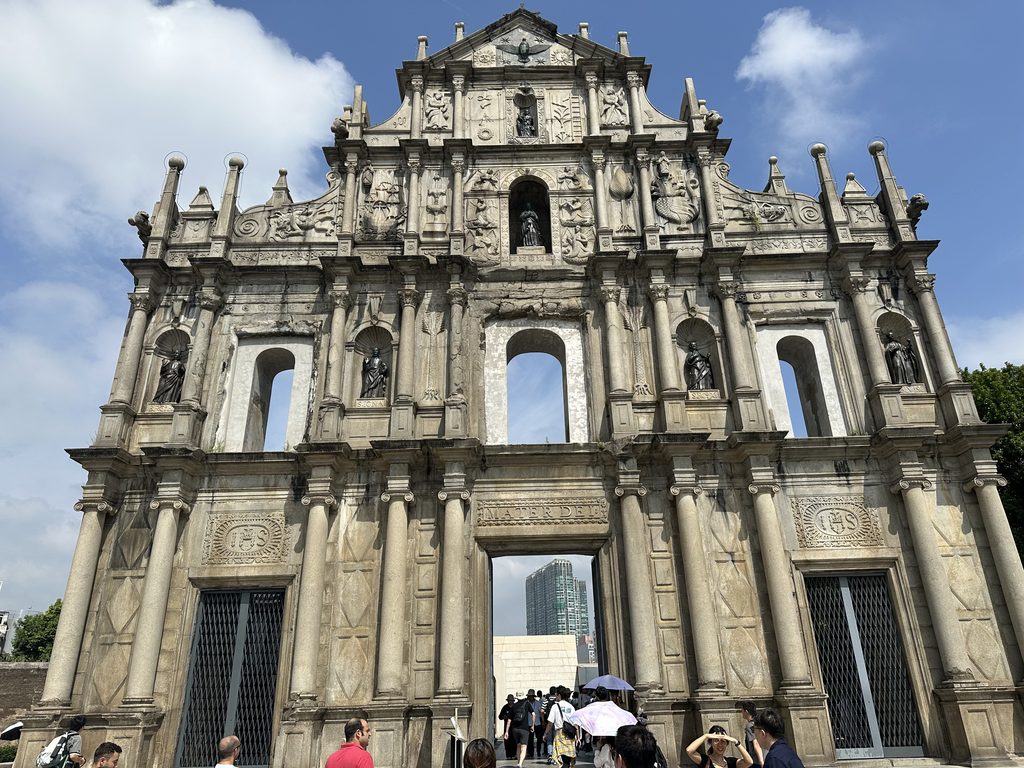
At the top of the street, a flight of 68 stone steps leads to the facade that has become the symbol of Macau. It is all that remains of the Church of Mater Dei, built by the Jesuits in the early 17th century and destroyed by fire during a typhoon in 1835. Walk up and through it: behind the facade there is a small museum and crypt.
We were there at 11:22 AM and it was crowded, but the steps are wide enough that you can still get a clean shot of the facade. Come earlier if you want it to yourself.
Monte Fort, by the Escalators
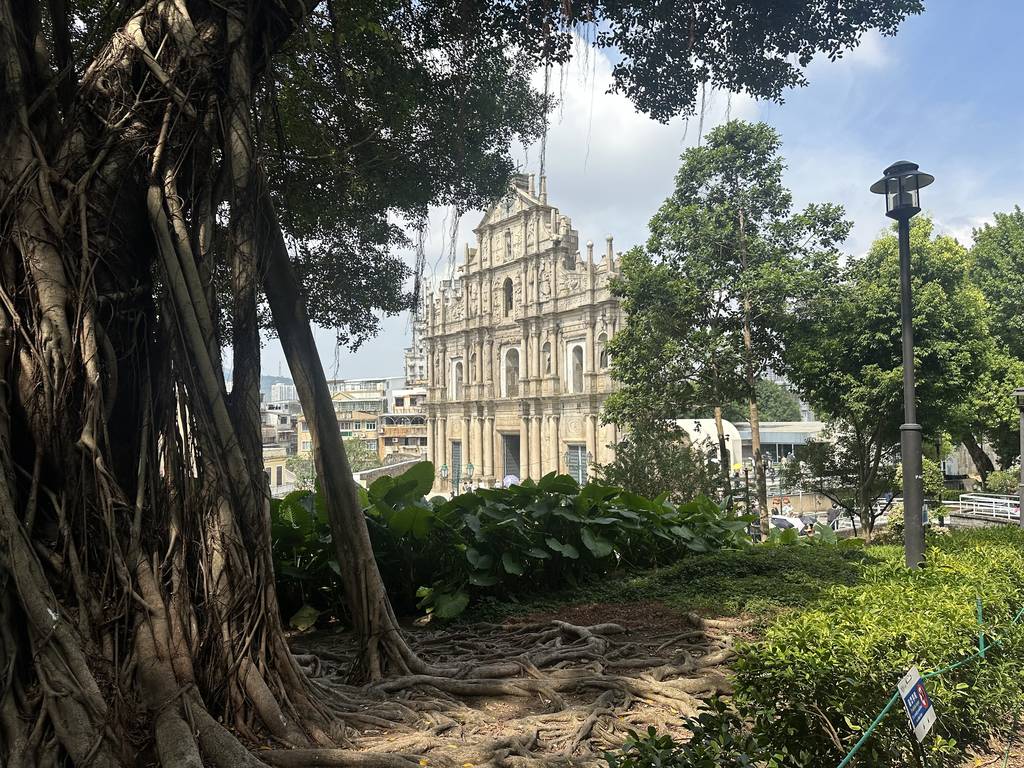
Do not walk back down. Right beside the ruins, a set of outdoor escalators takes you up to the Macao Museum and the walls of Monte Fort, built by the Jesuits between 1617 and 1626. The path up passes under huge banyan trees, with the ruins framed between their roots.
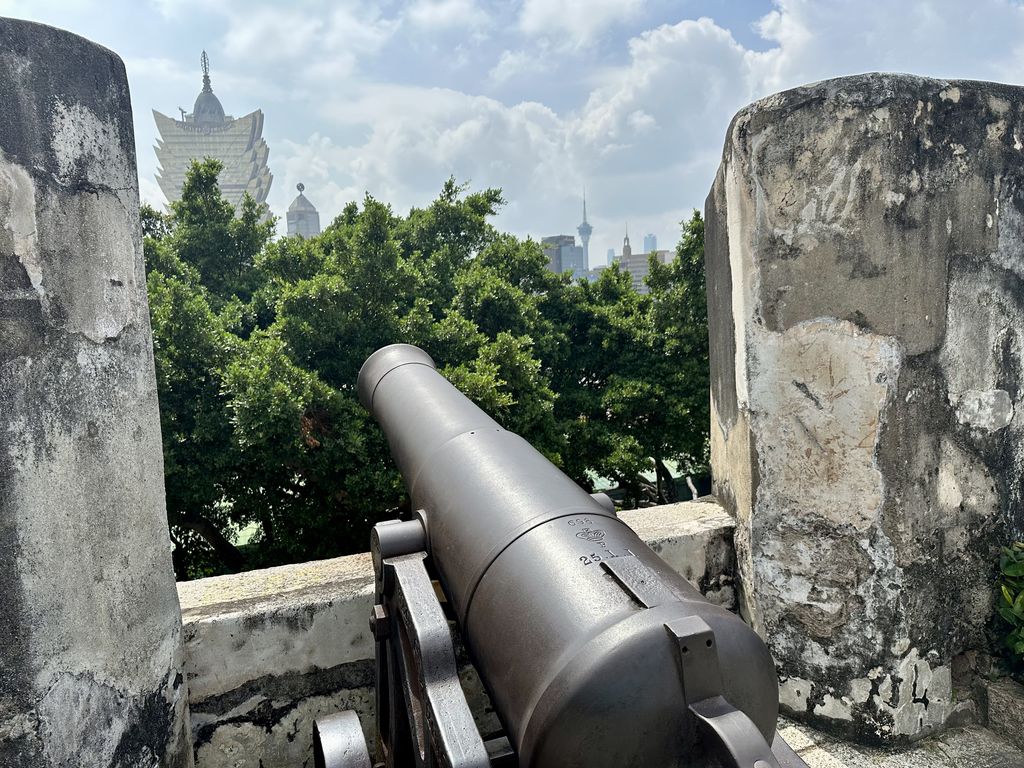
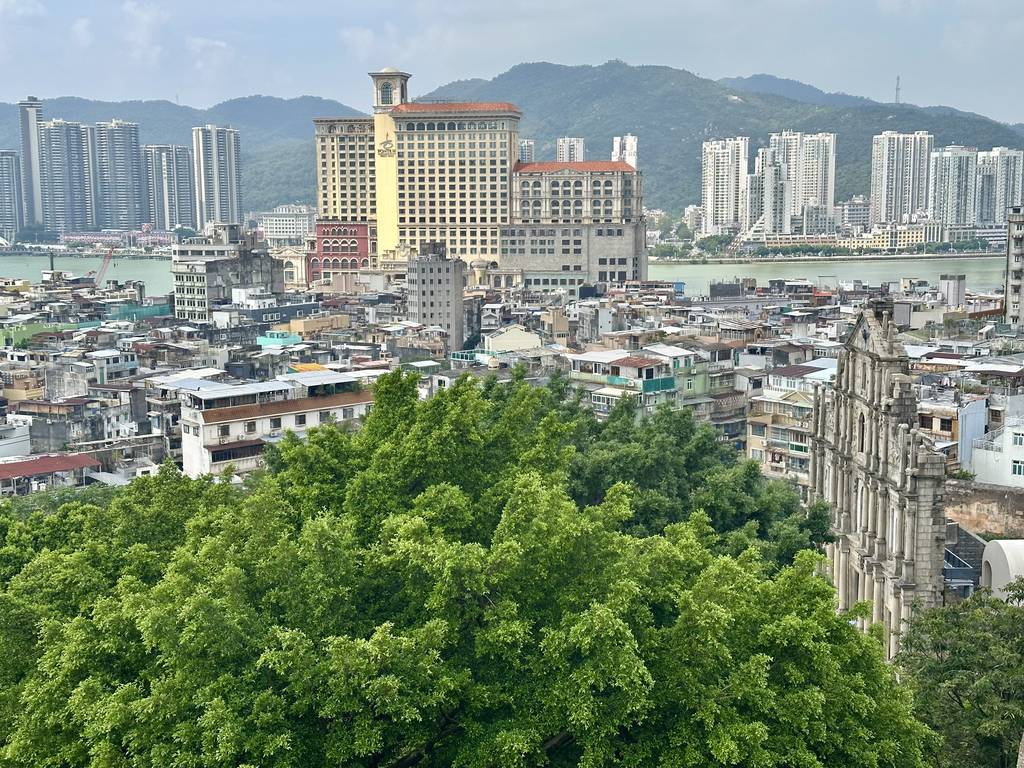
The fort is free and has the best panorama in the historic center: old cannons along the walls, the rooftops of old Macau below, and the golden tower of the Grand Lisboa above it all. The Macao Museum inside the fort costs MOP 15 and is closed on Mondays.
Lunch in Taipa Village
From the historic center, take a taxi across the bridge to Taipa Village, about 15 to 20 minutes. This was the old village of Taipa island, and its lanes of low, brightly painted houses survived the casino boom around them.
Rua do Cunha
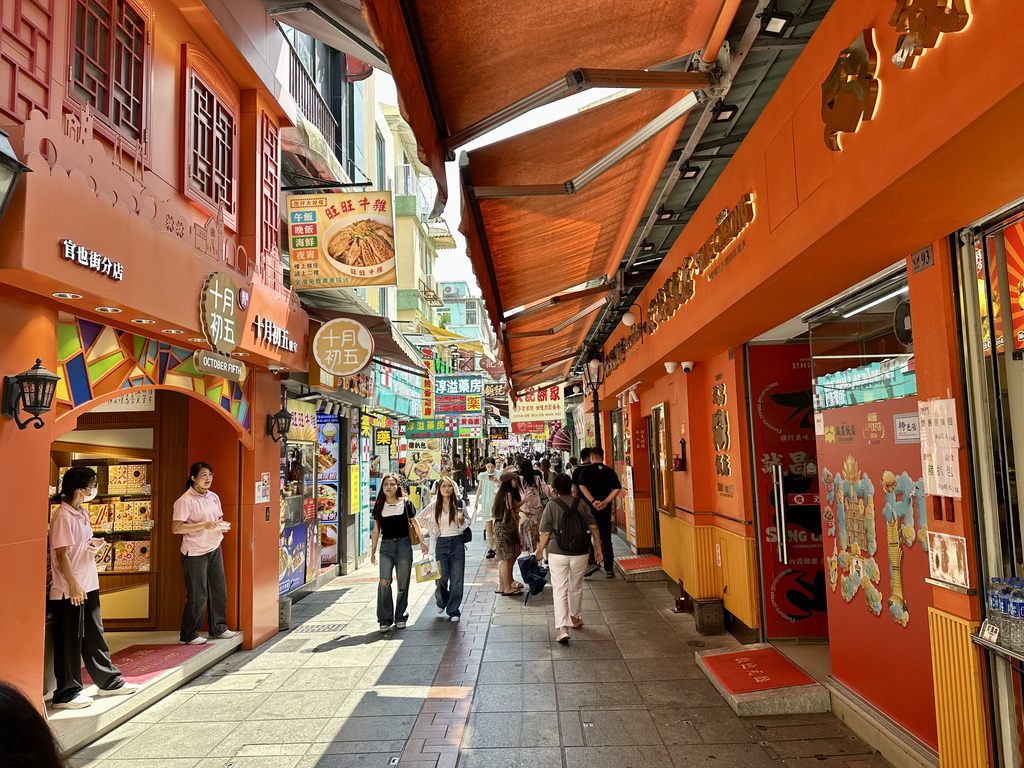
Rua do Cunha is the main pedestrian lane, all snack shops, almond cookies and more egg tarts. On our visit, it was also full of dozens of young fans buying merchandise for a boy band, with a giant poster of one of its members covered in flowers. Taipa Village is a favorite spot for that kind of event, so do not be surprised if you find the lanes busier than you expected.
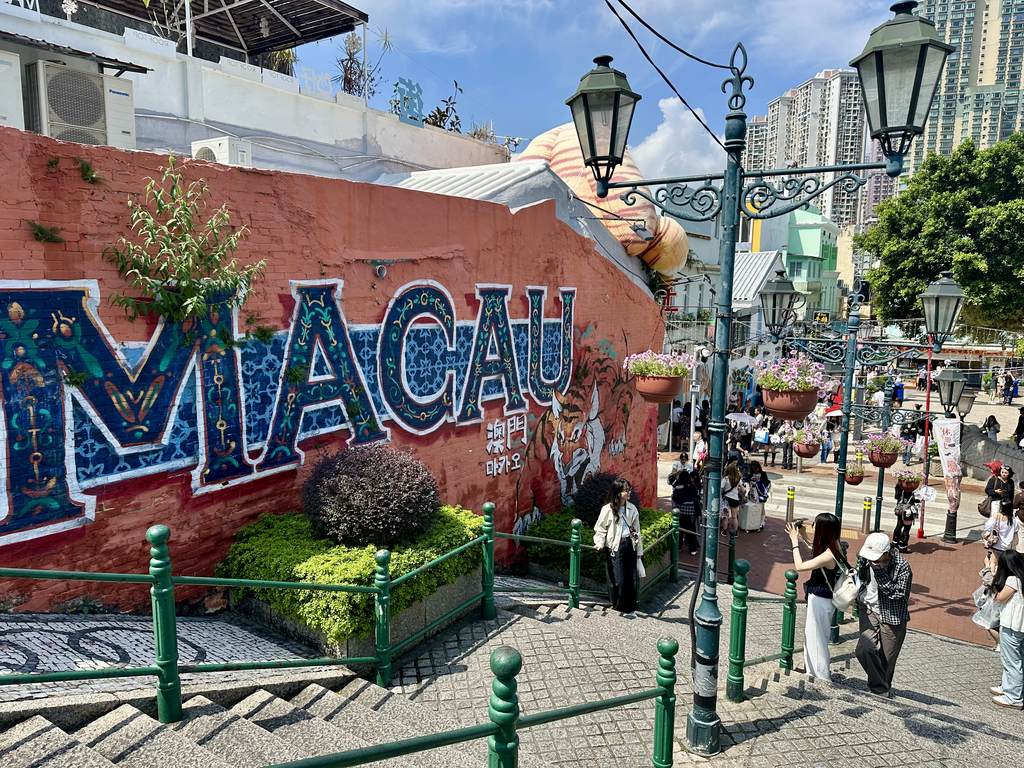
Our Lunch: La Famiglia
We ate at La Famiglia, a small Macanese and Portuguese restaurant at 28-30 Rua dos Clérigos, in the lanes behind Rua do Cunha. We both had a bitoque — called “Portuguese steak” on the menu here — the classic Portuguese thin steak with a fried egg and fries. With a 1.5-liter bottle of water and the 10% service charge added automatically, the bill came to MOP 469 for two.
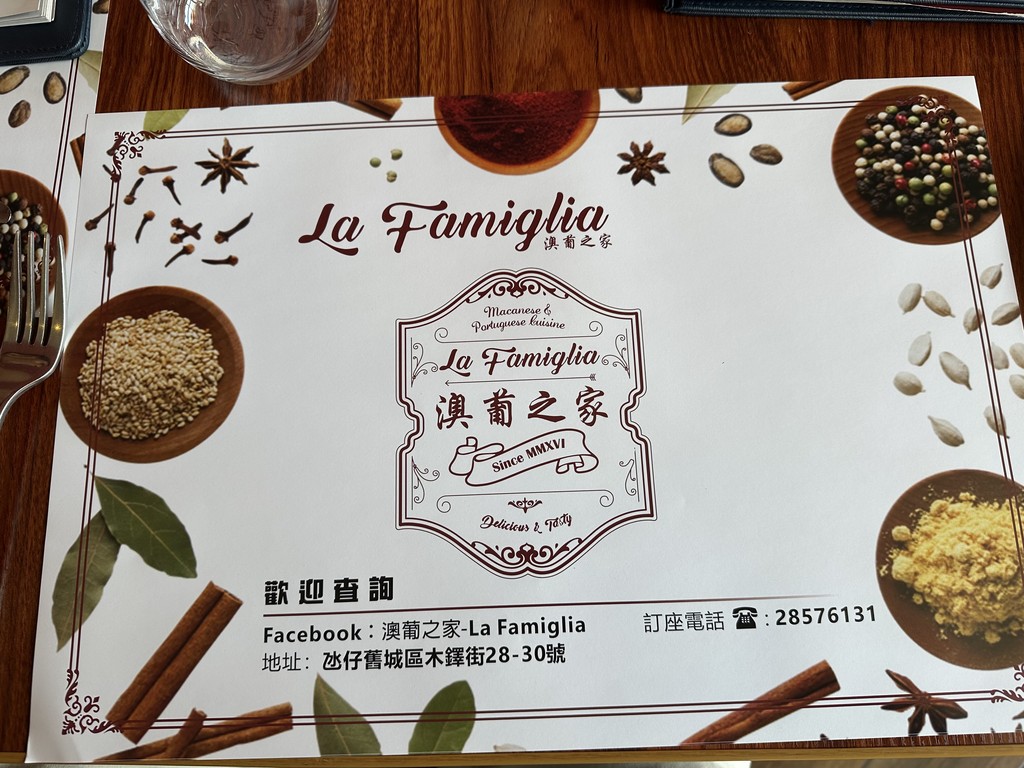
Two things to know before you sit down: the 10% service charge is added to the bill, and prices on the menu are in patacas. Paying in Hong Kong dollars is fine, but read the money section below first.
Afternoon: Cotai and the Venetian Macao
From Taipa Village, the Venetian is about a 15-minute walk. You come out of the old lanes, cross the road, and the hotel towers of Cotai rise in front of you. This entire district stands on land reclaimed between Taipa and Coloane in the 1990s and 2000s.
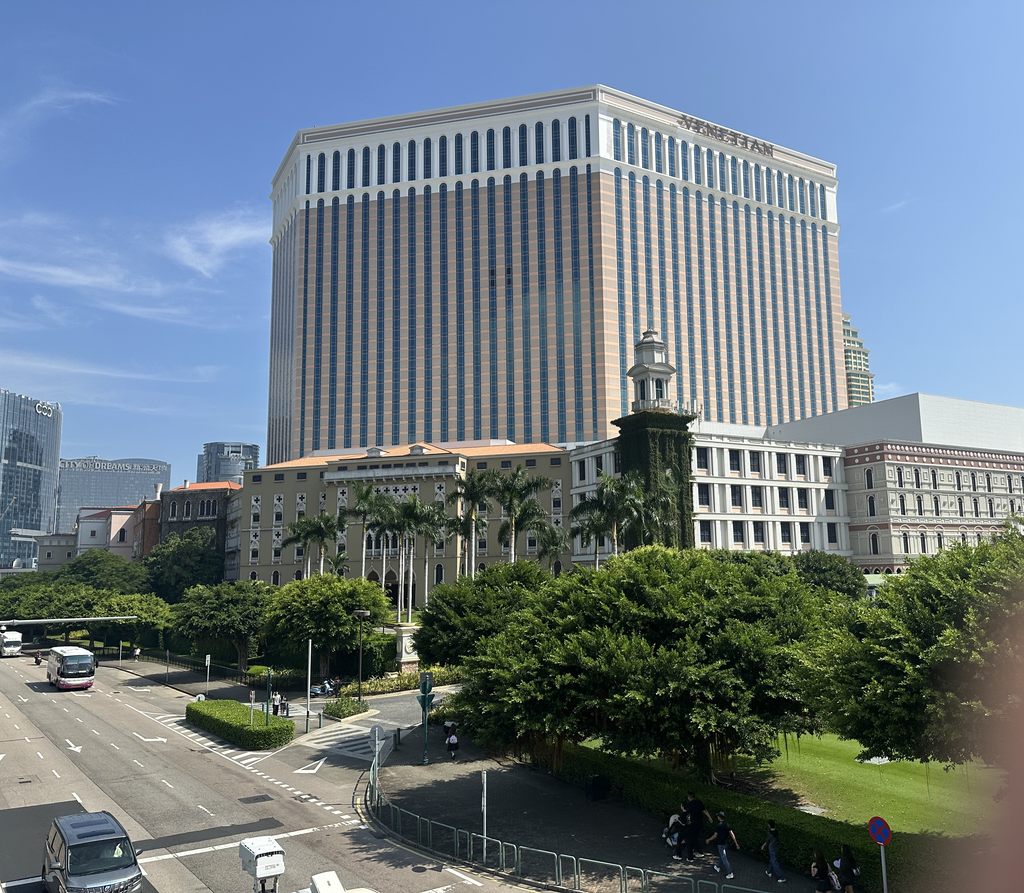
The Grand Canal and the Painted Sky
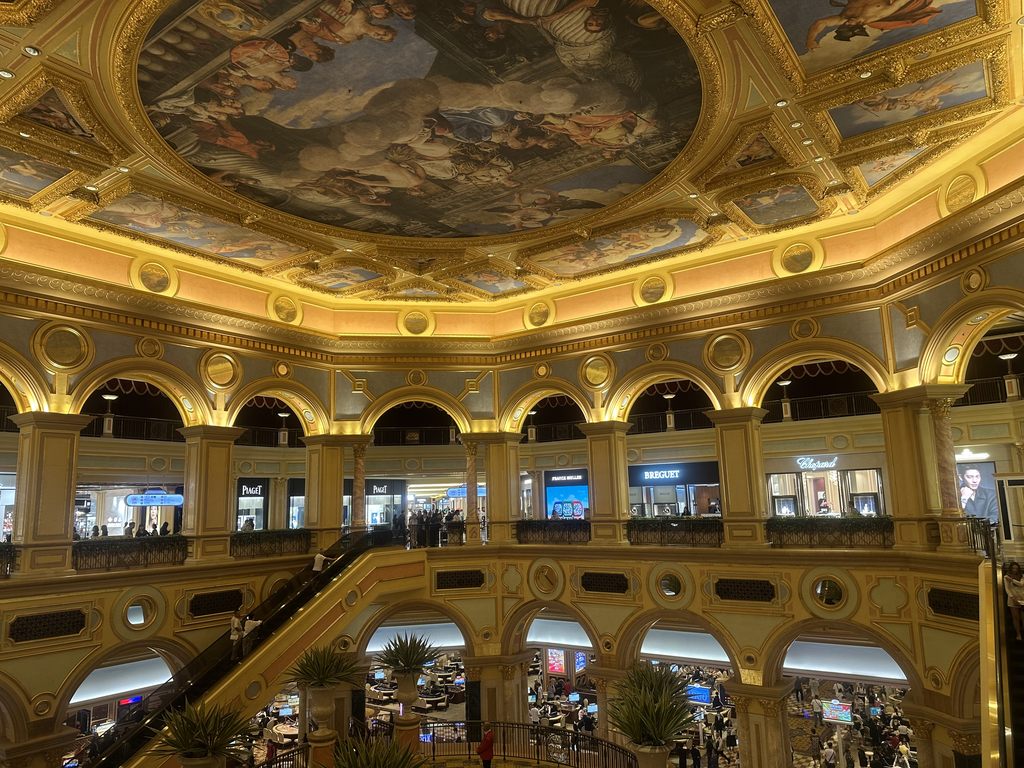
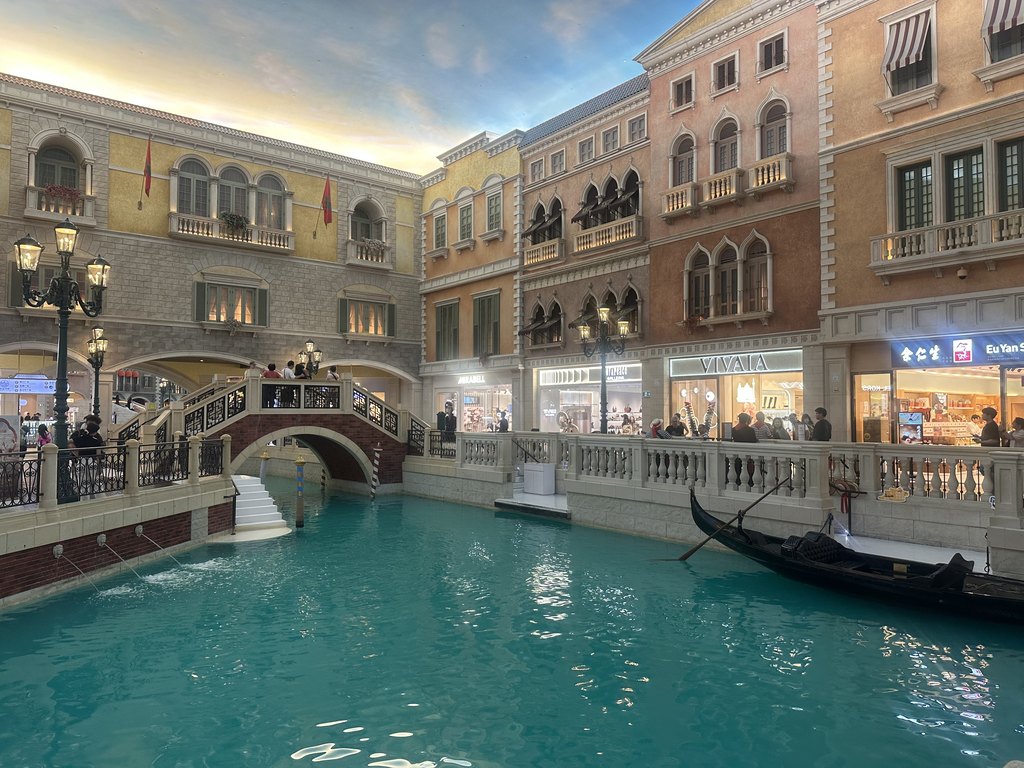
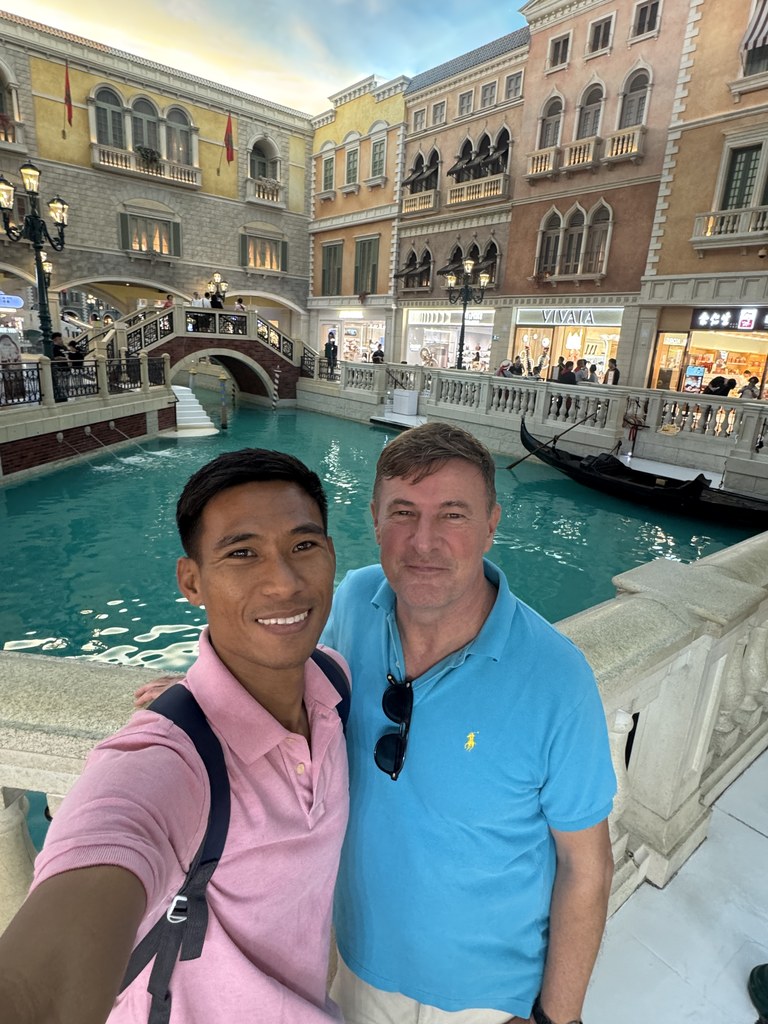
Inside, the Venetian Macao is built as a copy of Venice: a gilded entrance hall with painted ceilings, then a shopping mall arranged around canals, with gondolas, bridges, singing gondoliers and a ceiling painted as a permanent blue sky. It sounds absurd. It is also genuinely impressive, and a very pleasant place to spend the hot hours of the afternoon. Gondola rides are sold inside the mall.
Egg Tarts at Lord Stow’s, and the Casino
There is a Lord Stow’s Bakery inside the Venetian, if you missed the original in Coloane village. The tarts there were a little more expensive than the HK$10 ones we had in the historic center. Then walk through the casino floor: you do not need to play to look, and the scale of it is part of the visit.
Getting Back to Hong Kong
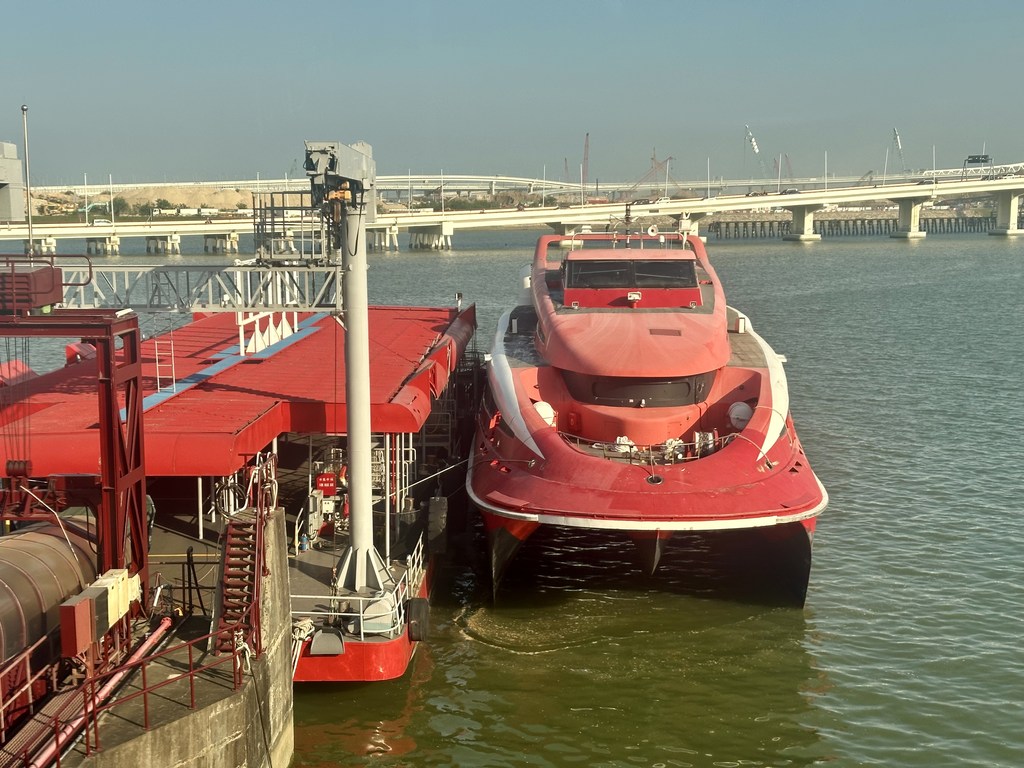
We took a taxi from the Venetian to the Outer Harbour Ferry Terminal and boarded the 4:30 PM TurboJET, which brought us back to Sheung Wan around 5:30 PM. The free hotel shuttle buses that the resorts run between Cotai and the ferry terminals are a good alternative to a taxi; routes change, so ask at the hotel which one goes to the Outer Harbour, and make sure you do not board the one for the Taipa Ferry Terminal by mistake.
If you booked a return ticket for a fixed time, plan to be at the terminal 30 minutes before departure, with the same 10-minute gate closure as in Hong Kong.
How Much Does a Day Trip to Macau Cost?
| Item | What we paid |
|---|---|
| TurboJET round trip | HK$350 per person |
| Lunch at La Famiglia | MOP 469 for two (two bitoques, water, 10% service) |
| Egg tart in the historic center | HK$10 each |
| Pork jerky tasting | Free |
| Senado Square, St. Dominic’s, St. Paul’s, Monte Fort | Free |
| Macao Museum (optional) | MOP 15 |
| Venetian Macao | Free to enter; gondola extra |
| Taxis | Three short rides inside Macau, shared between two |
Count around HK$700–800 per person for the day, ferry, sit-down lunch and taxis included — roughly $90–105 or €80–90. The taxis are the only part we did not note down, so treat that share as an estimate.
Money: Pay in Hong Kong Dollars, Ask for Change in Hong Kong Dollars
Macau’s currency is the pataca (MOP), pegged to the Hong Kong dollar. Prices are displayed in patacas, but Hong Kong dollars are accepted almost everywhere, at one for one. We paid for everything in HKD.
There is a small catch. The Hong Kong dollar is worth about 3% more than the pataca, so paying in HKD at par means paying roughly 3% more than the price on the menu. For a single day, that is far cheaper than changing money, and it saves you from going home with patacas you cannot spend in Hong Kong. Just ask for your change in Hong Kong dollars, as we did: it was never a problem.
When to Go: Avoid Weekends and Holidays
We moved our Macau day forward on purpose. Our trip fell on the Chung Yeung Festival weekend: in 2026 the festival was on Sunday, October 18, and Hong Kong took the following Monday off, giving everyone a three-day weekend. That means full ferries, busier immigration halls and crowds on the steps of St. Paul’s.
So go on a weekday, and check the public holiday calendars of both Hong Kong and Macau before you book. Weekday ferries are also cheaper. In mid-October we had blue sky and warm, humid weather, ideal for walking in the morning and staying indoors in Cotai in the afternoon.
Practical Tips for Your Day in Macau
- Bring your passport. Hong Kong and Macau have separate immigration controls.
- Be at the ferry terminal 30 minutes early. The gates close 10 minutes before departure, in both directions.
- Use the escalators to Monte Fort, next to the Ruins of St. Paul’s, instead of the stairs.
- Take taxis between the three areas. The historic center, Taipa Village and Cotai are walkable inside, not between them — except Taipa to the Venetian, which is an easy 15 minutes on foot.
- Check whether the Monday is a holiday if you plan to visit the Macao Museum: it is closed on Mondays.
- Wear comfortable shoes. The Portuguese paving is beautiful and slippery when wet.
Prefer a Guided Day Tour?
If you would rather not organize anything, guided day tours from Hong Kong cover the same highlights, usually with ferry or bridge transfers and lunch included. One example is this Macau sightseeing day tour from Hong Kong on Klook. You lose the freedom to choose your lunch and linger at Monte Fort, but you will not have to think about ferries.
Read More
Singapore
Another city-state built on reclaimed land: Marina Bay, hawker centers, and how to plan a stopover. Read more
Hoi An
An old trading port listed by UNESCO, where Chinese, Japanese and European merchants left their mark. Read more
5 Days in Hong Kong
Our five-day itinerary from Central: Dragon’s Back, Lantau and the Big Buddha, Kowloon by night and Victoria Peak at sunset. Read more
Frequently Asked Questions About a Day Trip to Macau
Is one day enough to see Macau?
Yes. One full day is enough for the historic center, Taipa Village and the Venetian in Cotai, if you take an early ferry and use taxis between the three areas. We had about five and a half hours on the ground and did all three.
How long is the ferry from Hong Kong to Macau?
About one hour. TurboJET sails from the Hong Kong–Macau Ferry Terminal in Sheung Wan to the Macau Outer Harbour Ferry Terminal; our 9:30 AM ferry docked at 10:35 AM.
How much is the ferry from Hong Kong to Macau?
We paid HK$350 per person for a round trip booked online. TurboJET’s official one-way Economy fare is HK$194 on weekdays and HK$212 on weekends and on holidays (fares effective April 2026).
How early should I arrive for the Macau ferry?
Thirty minutes before departure. The gates close 10 minutes before the ferry leaves, and there are exit formalities to clear first; we made our ferry with only minutes to spare.
Which Macau ferry terminal is best for a day trip?
The Outer Harbour Ferry Terminal, on the Macau peninsula, is the closest to the historic center. The Taipa Ferry Terminal is closer to Cotai and the airport.
Do I need a passport for a day trip to Macau?
Yes. Hong Kong and Macau have separate immigration controls. Most Western passport holders, including US, UK and EU citizens, can enter visa-free, but check the rules for your nationality.
Can I use Hong Kong dollars in Macau?
Yes, almost everywhere, at one for one with the pataca. Since the Hong Kong dollar is worth about 3% more, you pay slightly more than the displayed price; ask for your change in Hong Kong dollars.
What is the best order to visit Macau in one day?
Historic center in the morning, Taipa Village for lunch, then Cotai in the afternoon. You beat the midday crowds at St. Paul’s and spend the hottest hours indoors.
How do you get from the Ruins of St. Paul’s to Monte Fort?
Take the outdoor escalators right beside the ruins. They bring you up to the Macao Museum and the walls of the fort without climbing the stairs.
Where can I try egg tarts in Macau?
Everywhere. Small shops on the way up to St. Paul’s sell them for about HK$10, and Lord Stow’s Bakery, which opened in Coloane village in 1989, has a branch inside the Venetian.
When is the best time for a Macau day trip?
A weekday that is not a public holiday in Hong Kong or Macau. Ferries are cheaper and far less crowded than on weekends or during holiday weekends such as Chung Yeung.