3 Days in Dubrovnik: My Itinerary and the Best Things to Do
By Blaise Jaeger · Updated November 1, 2026
At the end of May 2023, I spent three days in Dubrovnik with my friend Roy, before flying on to Greece. Dubrovnik is touristy, there is no denying it, but it is worth the trip: the Old Town is remarkably well preserved and plunges you into an atmosphere very different from anywhere else. Here is our three-day itinerary, what I would do again, what you can skip, where we stayed and the prices to expect. A small detail I only learned recently, and that I like: the patron saint of Dubrovnik is St Blaise, Sveti Vlaho in Croatian, my first name. His statue stands above the city gates, and his feast every February 3 is listed by UNESCO as intangible cultural heritage.
3 Days in Dubrovnik at a Glance
- Day 1: arrival, a drink at Banje Beach facing the island of Lokrum, then the Old Port at sunset.
- Day 2: a boat trip to the Elaphiti islands, Koločep and Lopud, with a swim at the sandy beach of Šunj.
- Day 3: the Old Town, the city walls, the cable car to Mount Srđ and dinner on the Old Port.
- The must: the walk around the city walls, €40 in 2026.
- Where to stay: Ploče, just east of the Old Town, above Banje Beach.
- Best time: May, June and September, before or after the summer crowds.
Is Dubrovnik Worth Visiting?
Yes. It is one of the most visited places in Croatia, and in summer the main street can be crowded with cruise passengers, but the Old Town, listed by UNESCO since 1979, has kept its walls, its marble streets and its churches almost intact. Three days were the right length for us: enough to see the Old Town calmly, walk the walls and take a day on the islands, without getting bored.
Day 1: Banje Beach and the Old Port
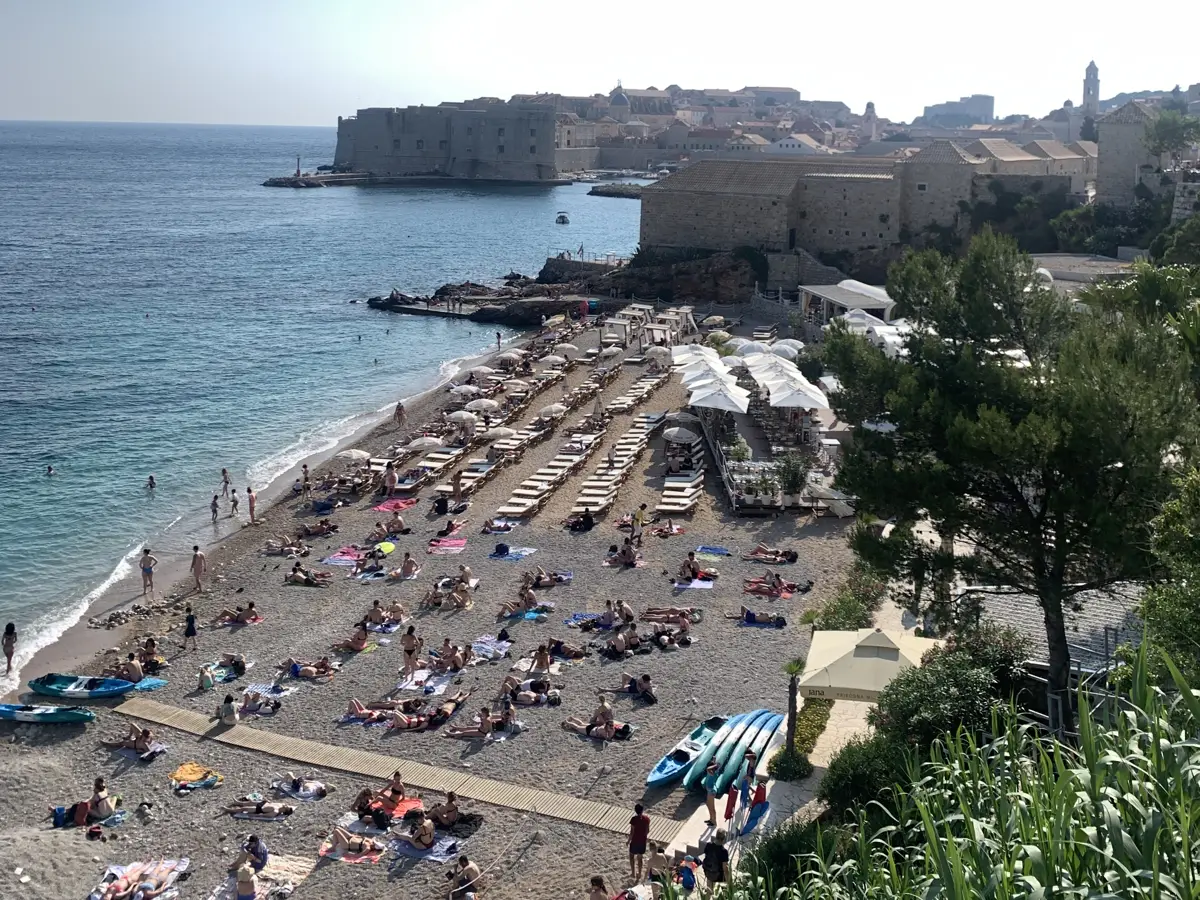
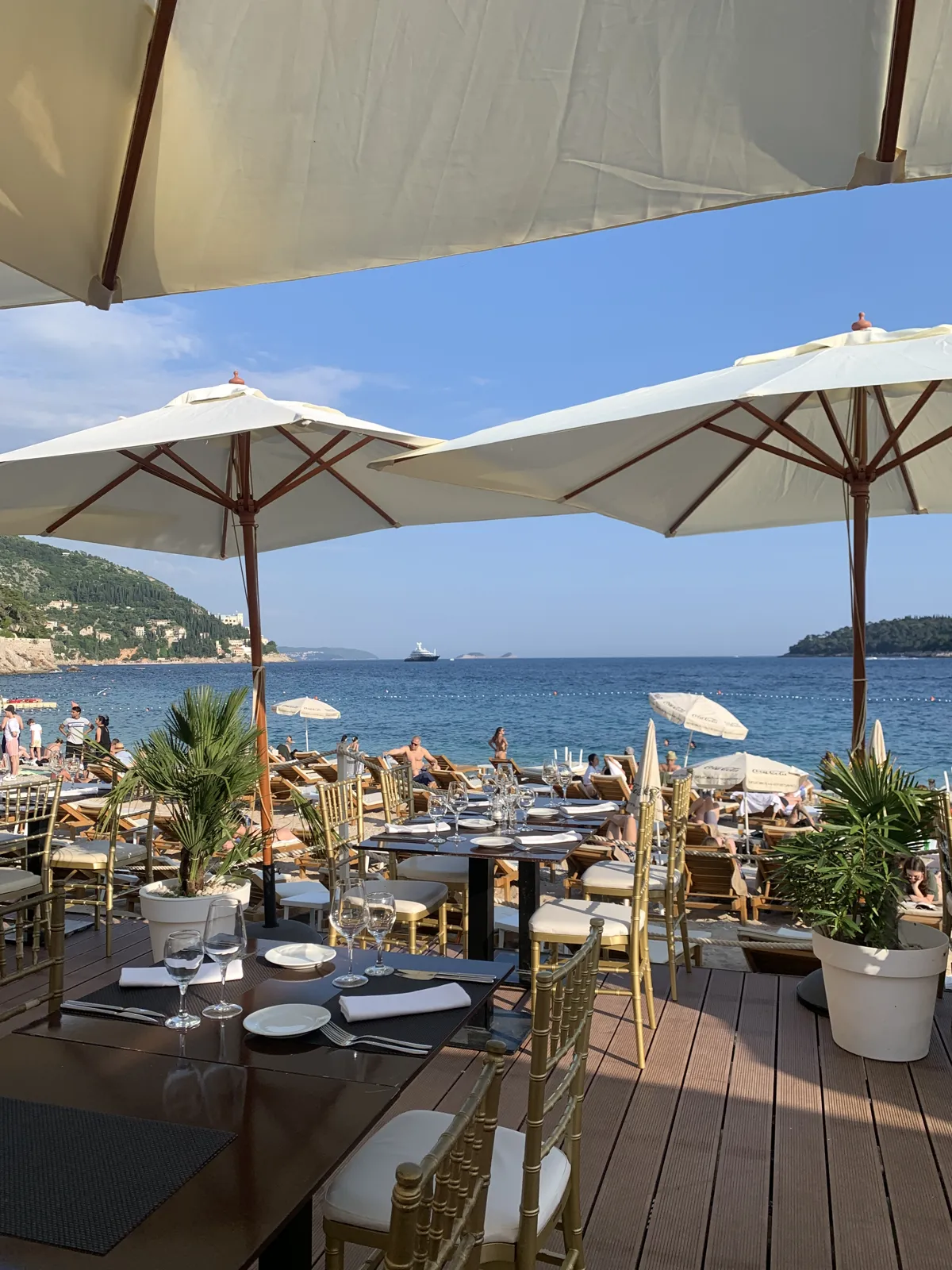
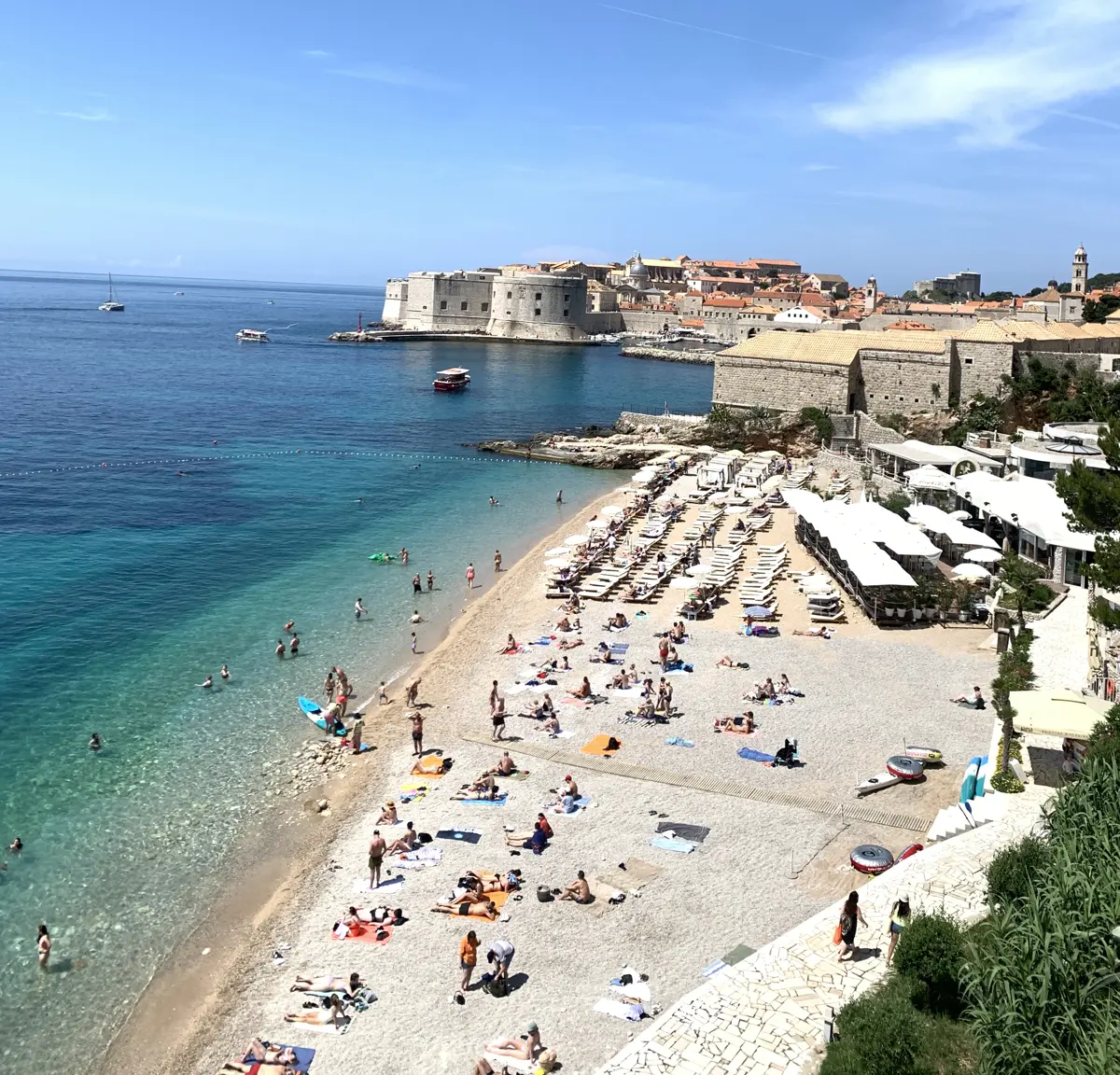
We arrived in the afternoon and dropped our bags at our apartment in Ploče, a few minutes from the Ploče Gate. The first evening was simple: a drink on the terrace of the Banje Beach club, right under the walls, facing the island of Lokrum, then a walk to the Old Port as the sun went down.
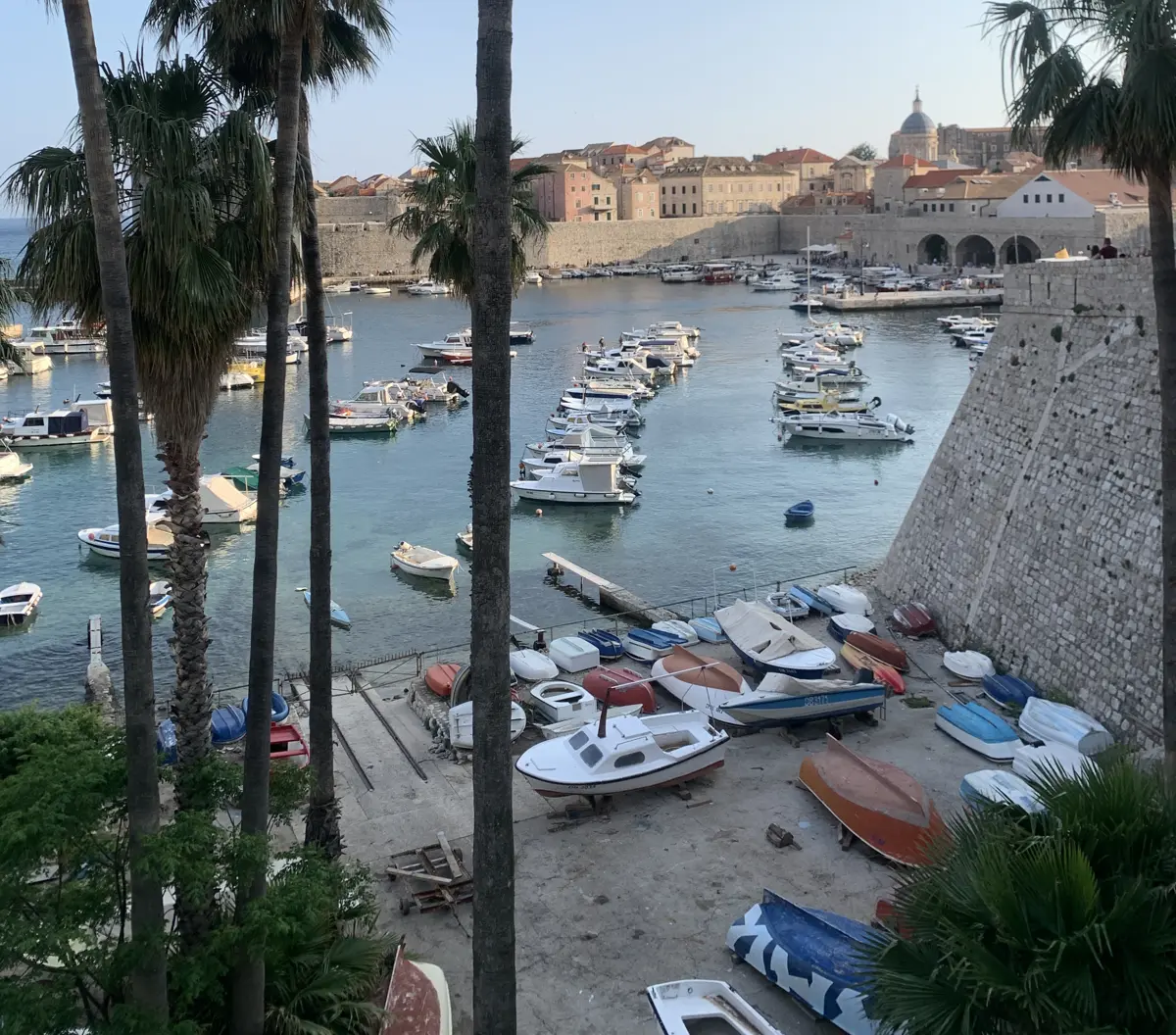
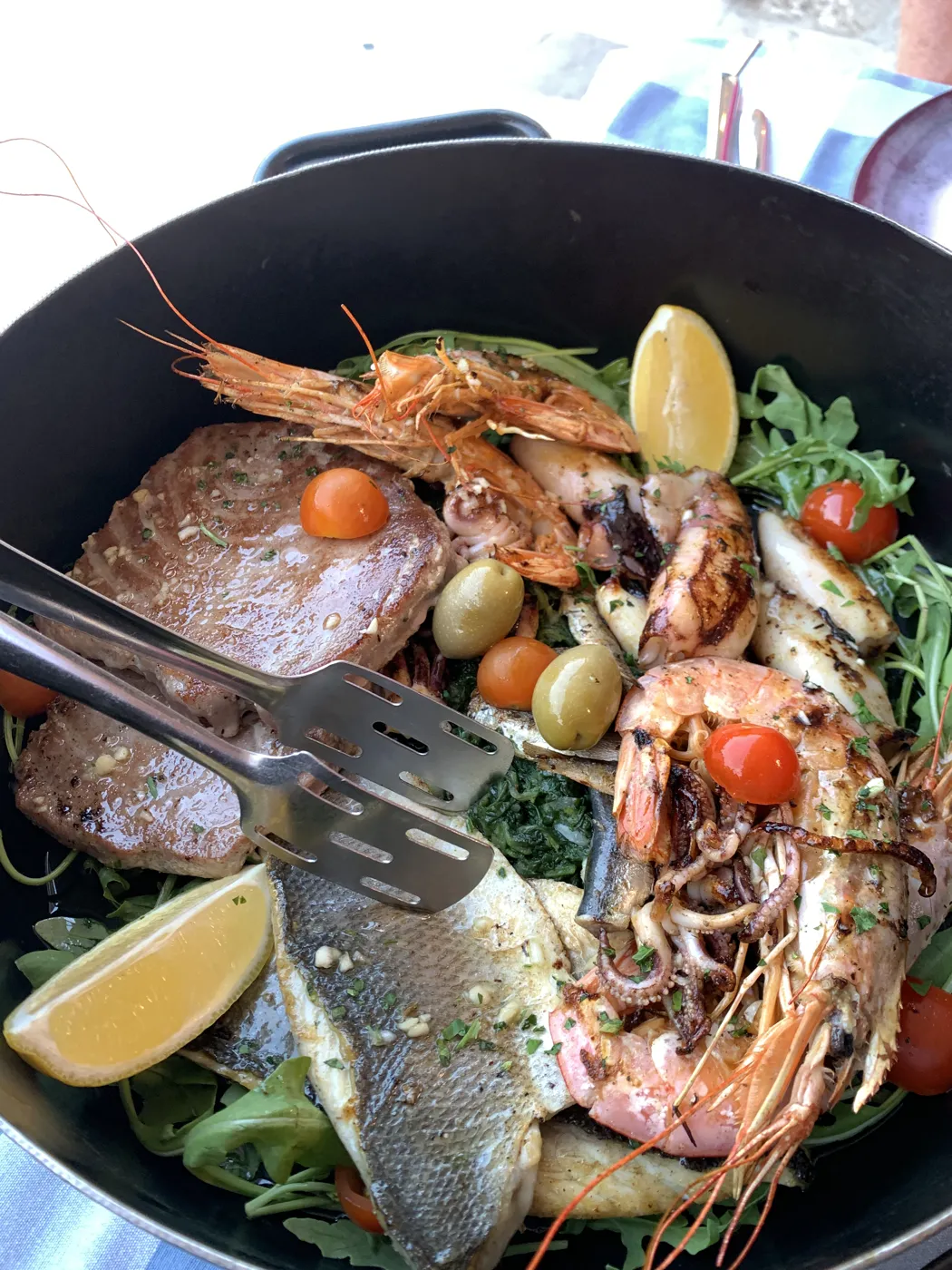
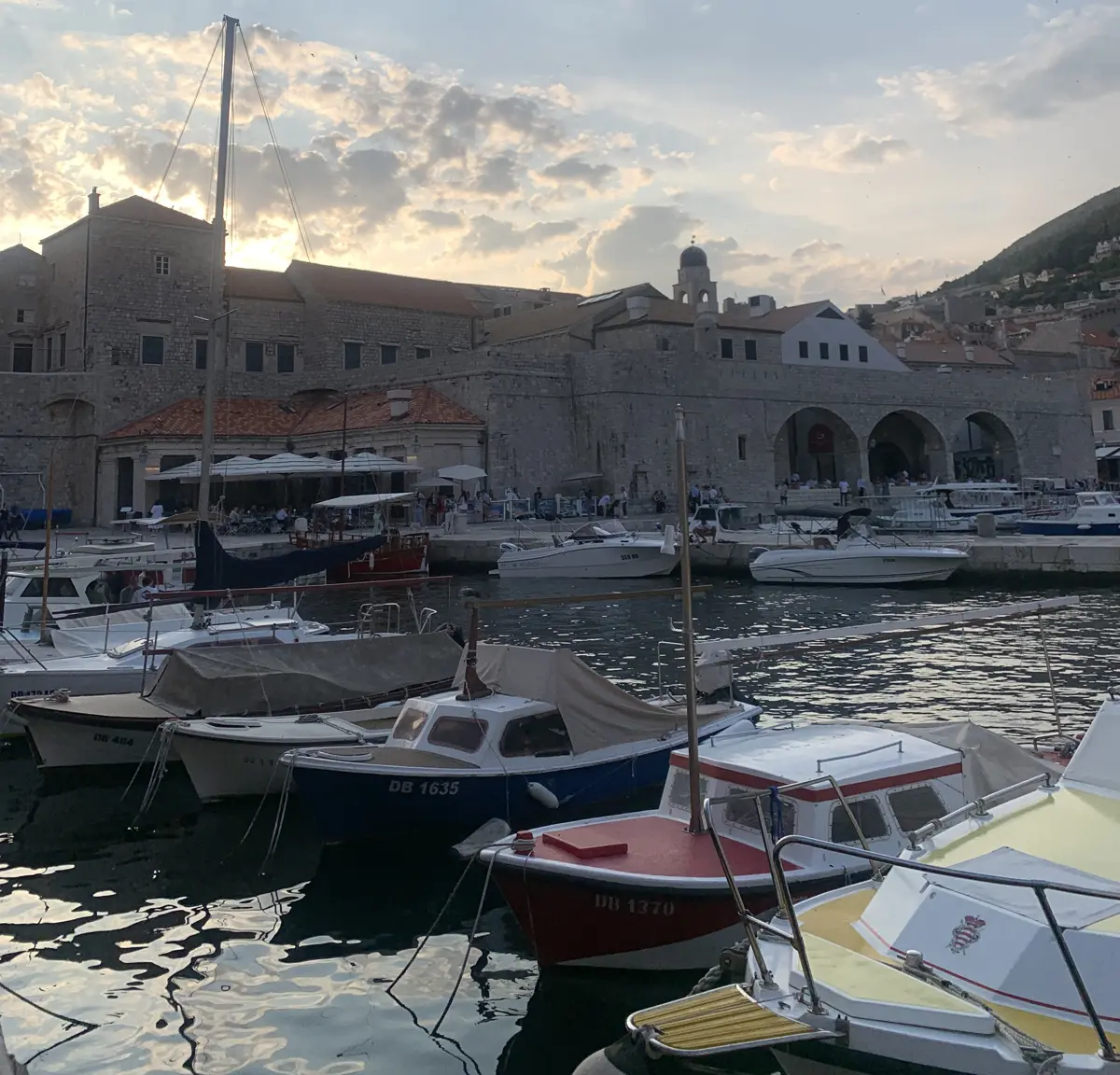
The Old Port, between the St John’s Fortress and the Ploče side, is where the boats to Lokrum, Cavtat and the islands leave from. It is also a lovely place for dinner: that first night we shared a big platter of grilled fish and seafood.
Day 2: A Boat Trip to the Elaphiti Islands
The next morning, we took a boat from the Old Port for a day trip to the Elaphiti islands, the small archipelago just northwest of Dubrovnik.

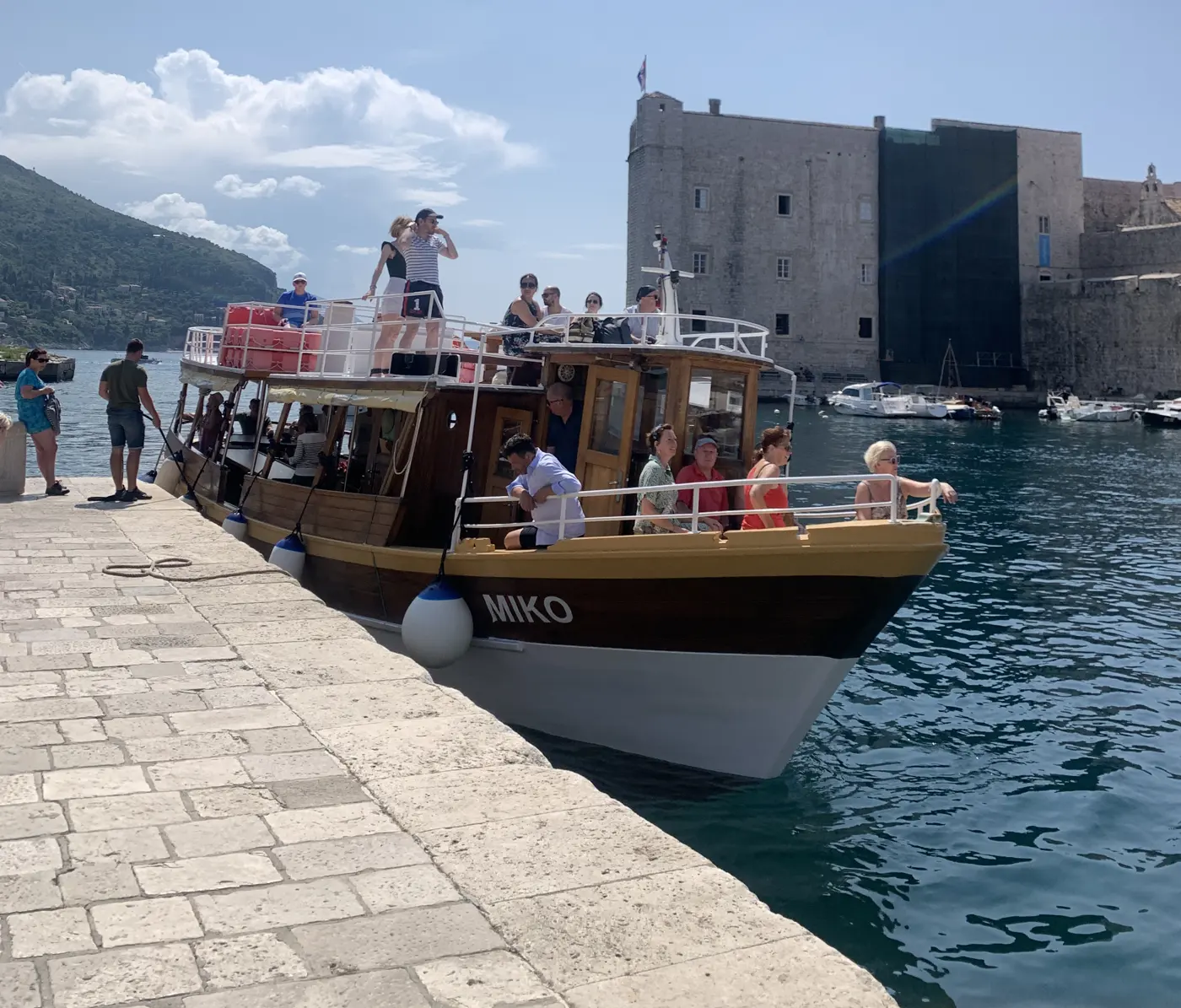
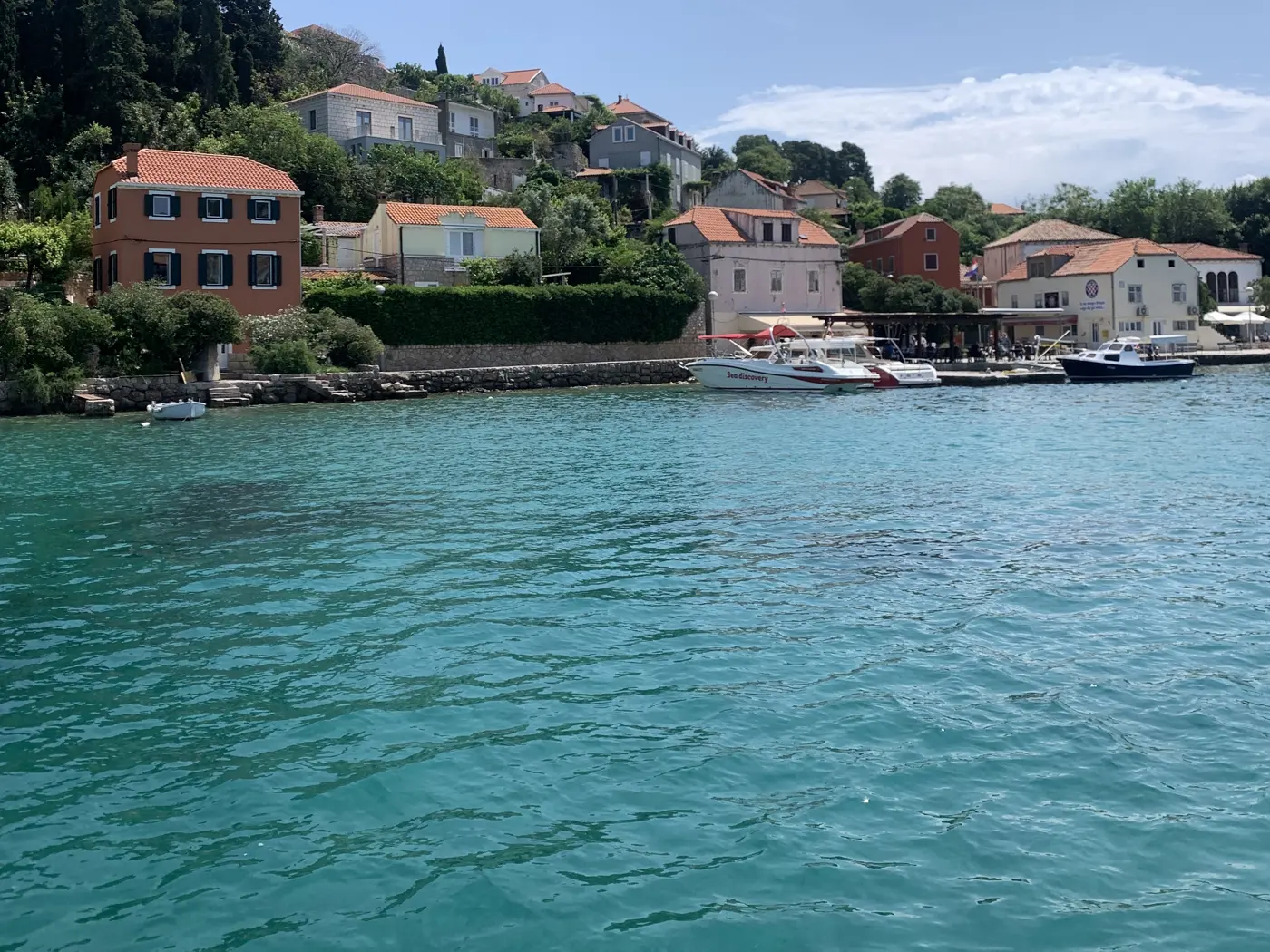
The first stop was Koločep, the closest island, with its little bay of Donje Čelo and clear turquoise water. Then Lopud, a car-free island with a harbor village, a park of tall palm trees, an old Franciscan monastery and, on the other side, Šunj, one of the rare sandy beaches of the area, perfect for a swim. In the harbor of Lopud, we saw the Karaka, a replica of an old Ragusan galleon that also takes visitors around the islands.
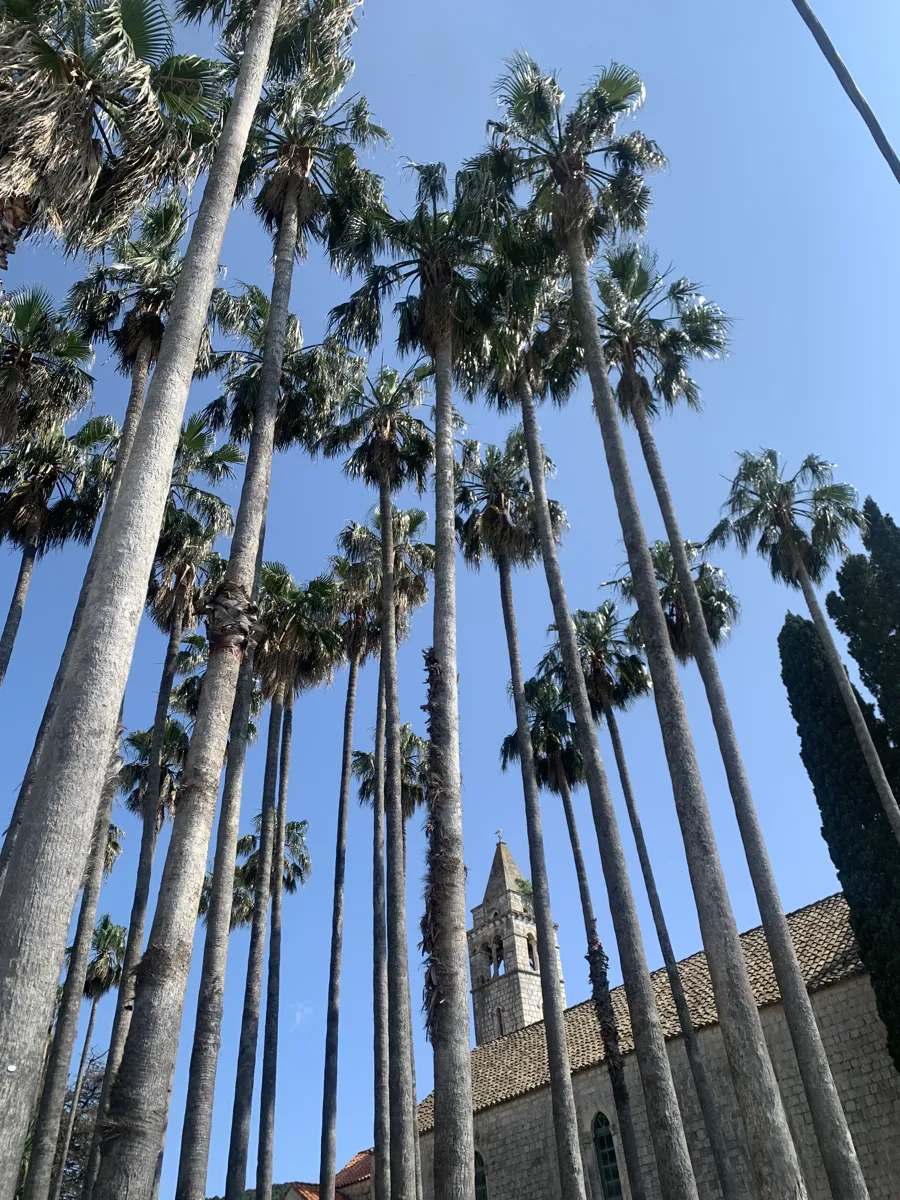
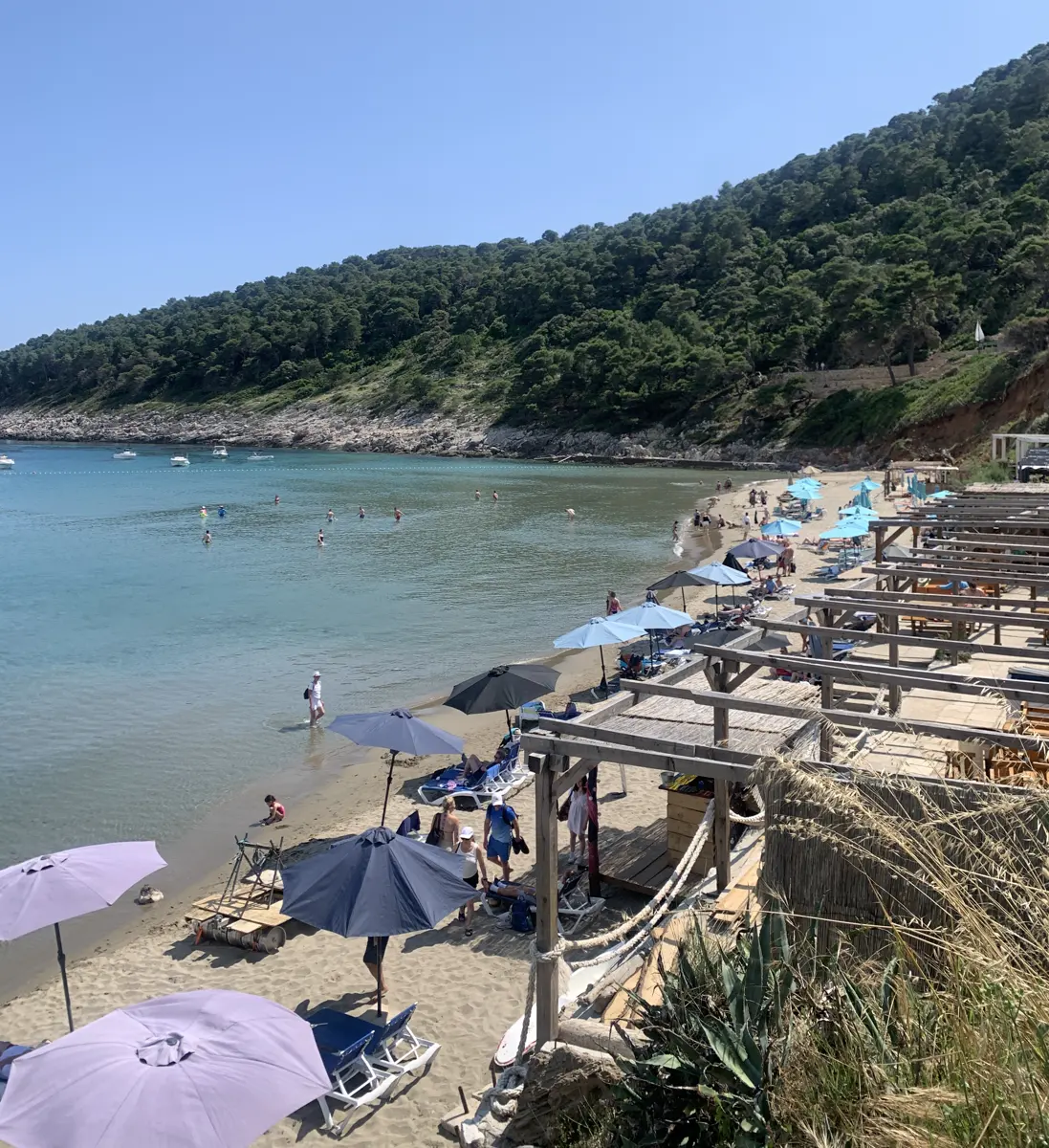
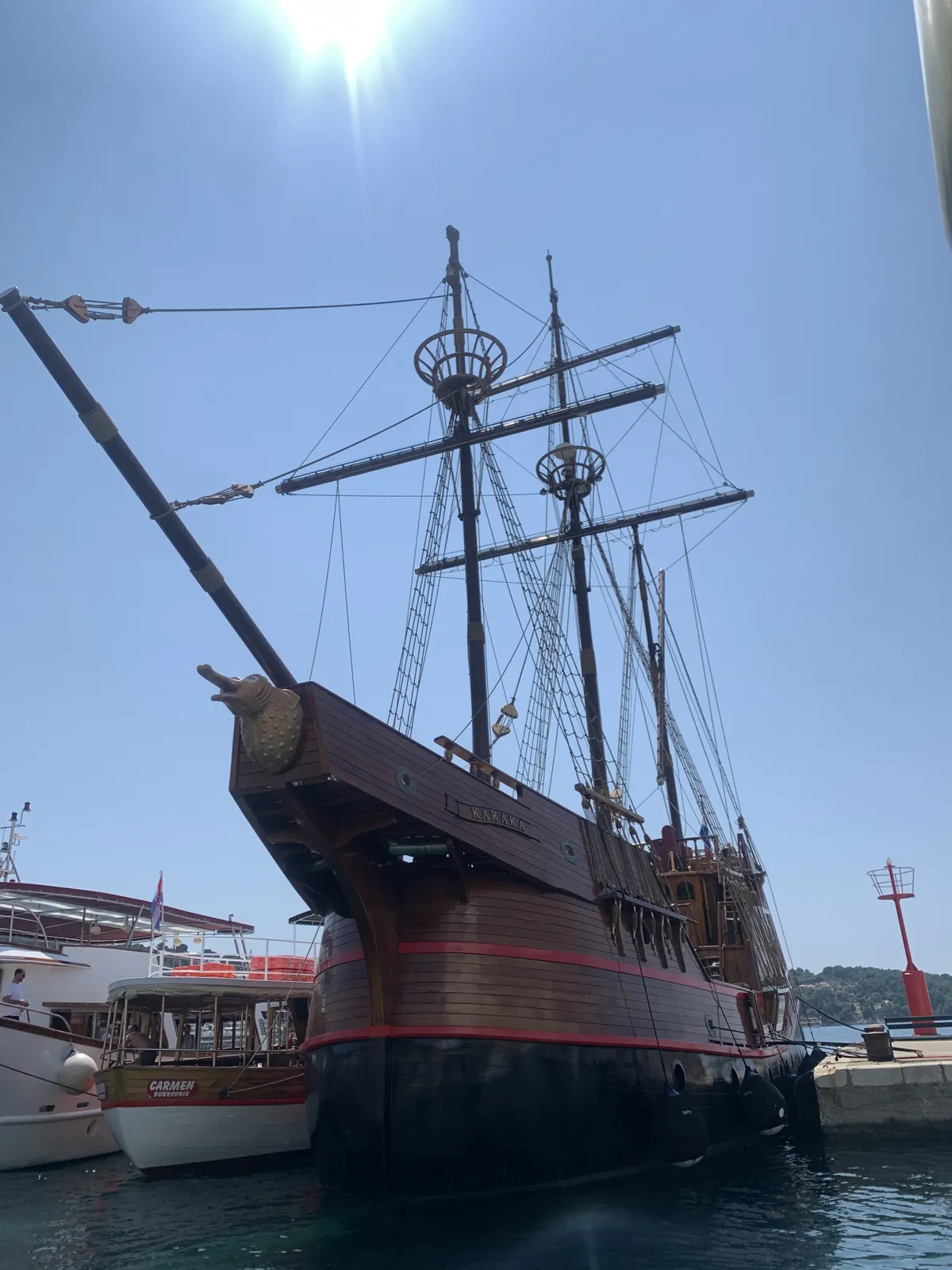
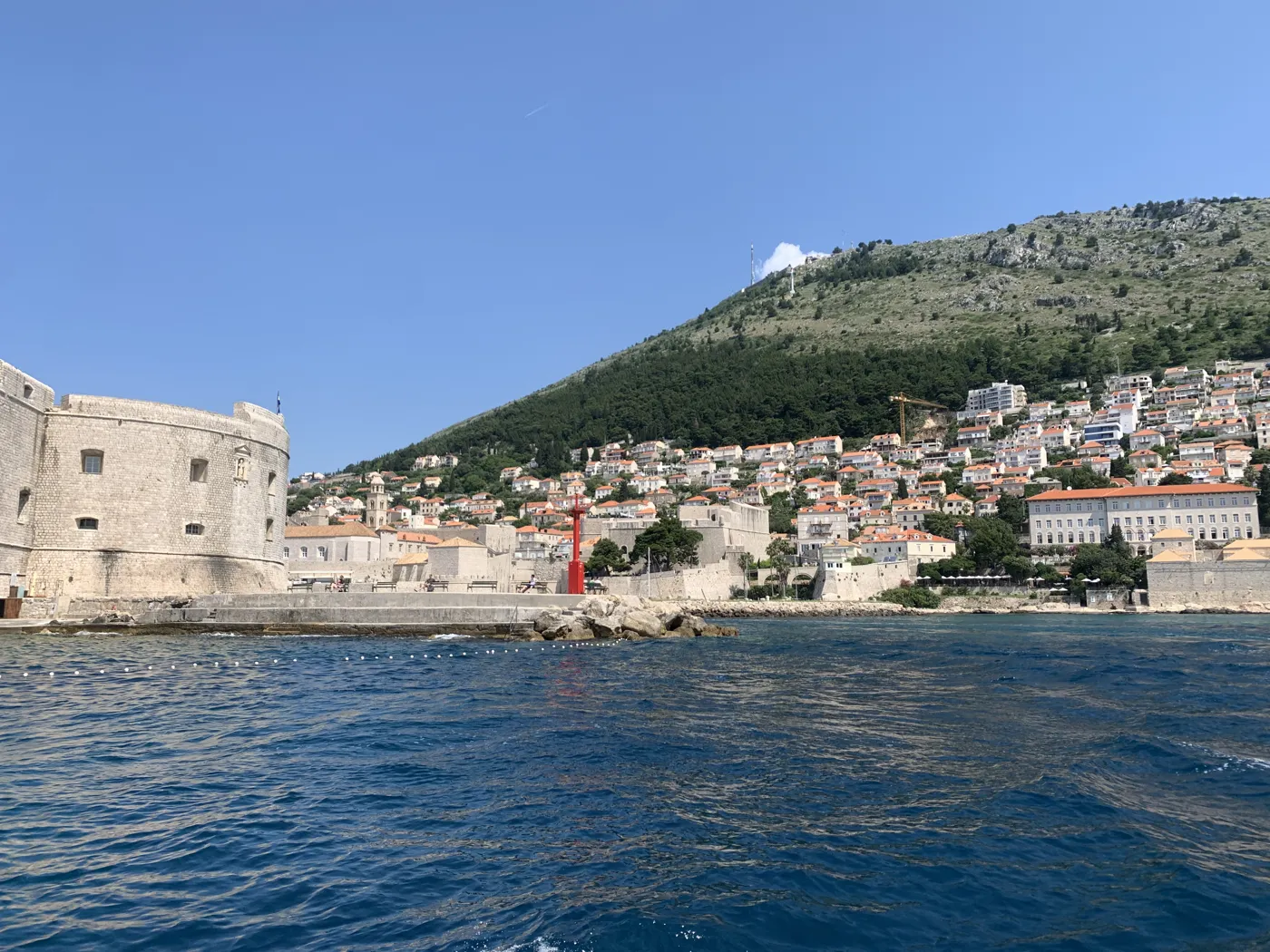
We were back in Dubrovnik at the end of the afternoon, and the return by sea gives a superb view of the walls and of Fort Lovrijenac on its rock.
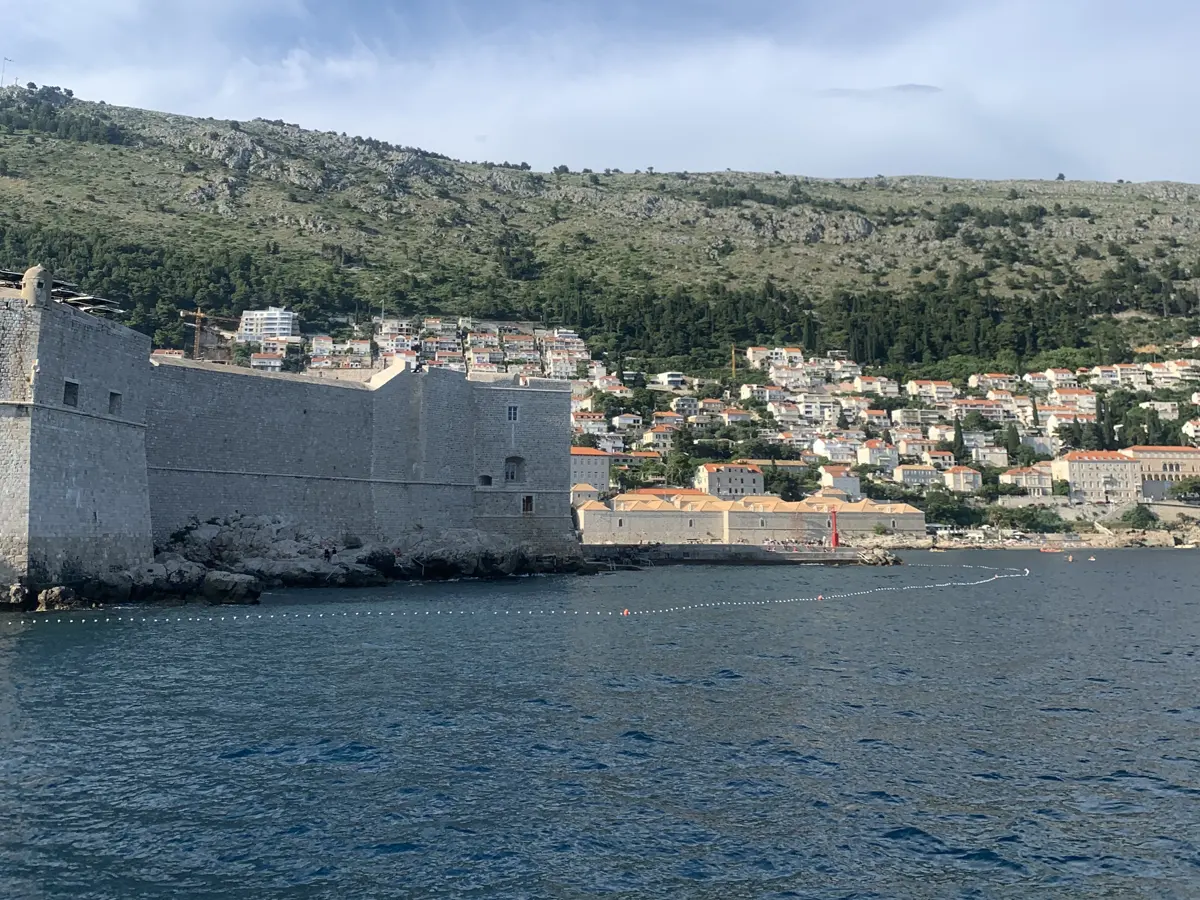
Good to know: organized tours of the three islands (Koločep, Lopud and Šipan) last six to nine hours and cost about €45 to €60. The Karaka leaves from the port of Gruž, not from the Old Port. On a budget, the regular Jadrolinija boat from Gruž serves the same islands for a few euros.
Day 3: The Old Town and the City Walls
Stradun and the Churches
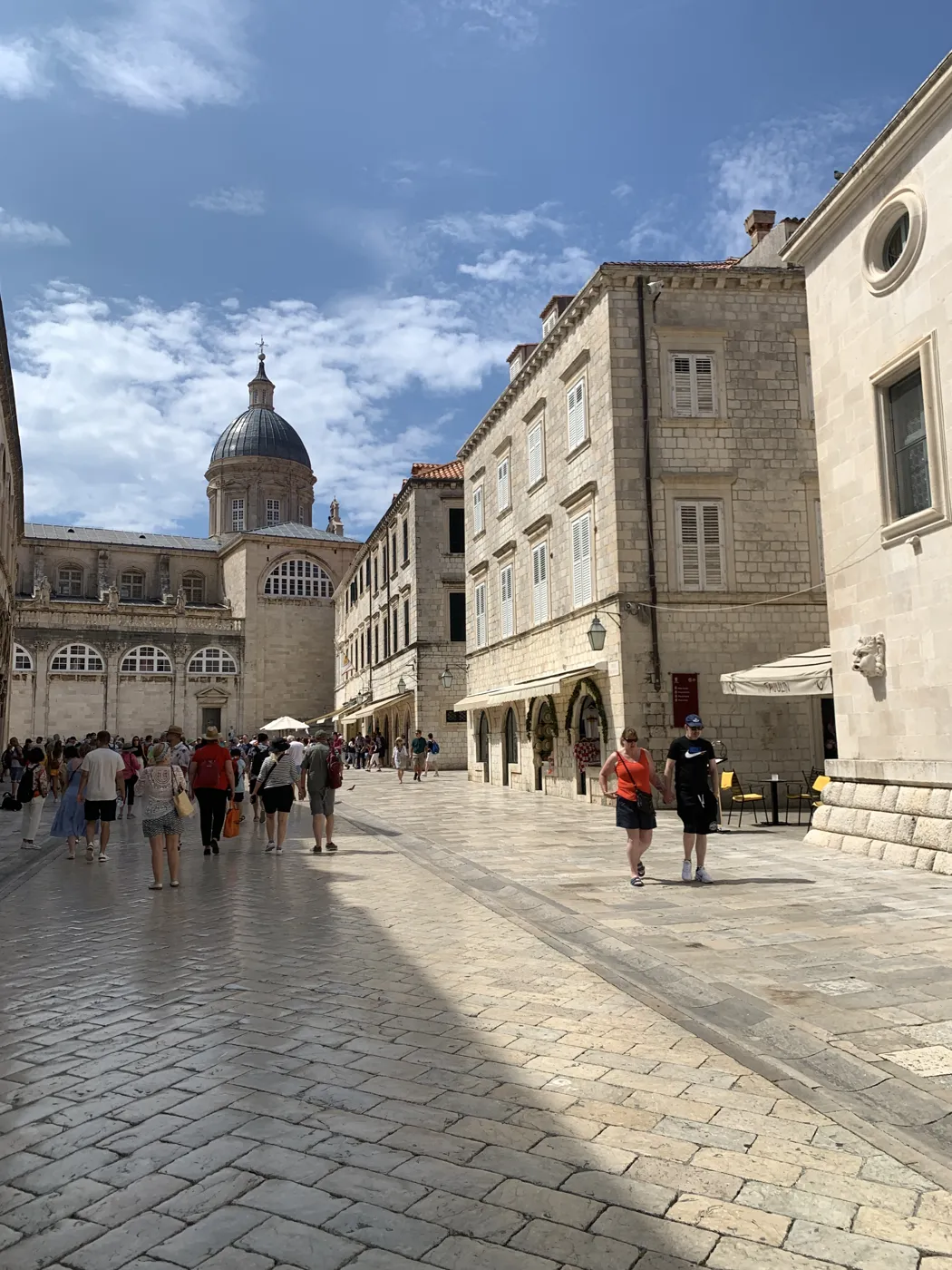
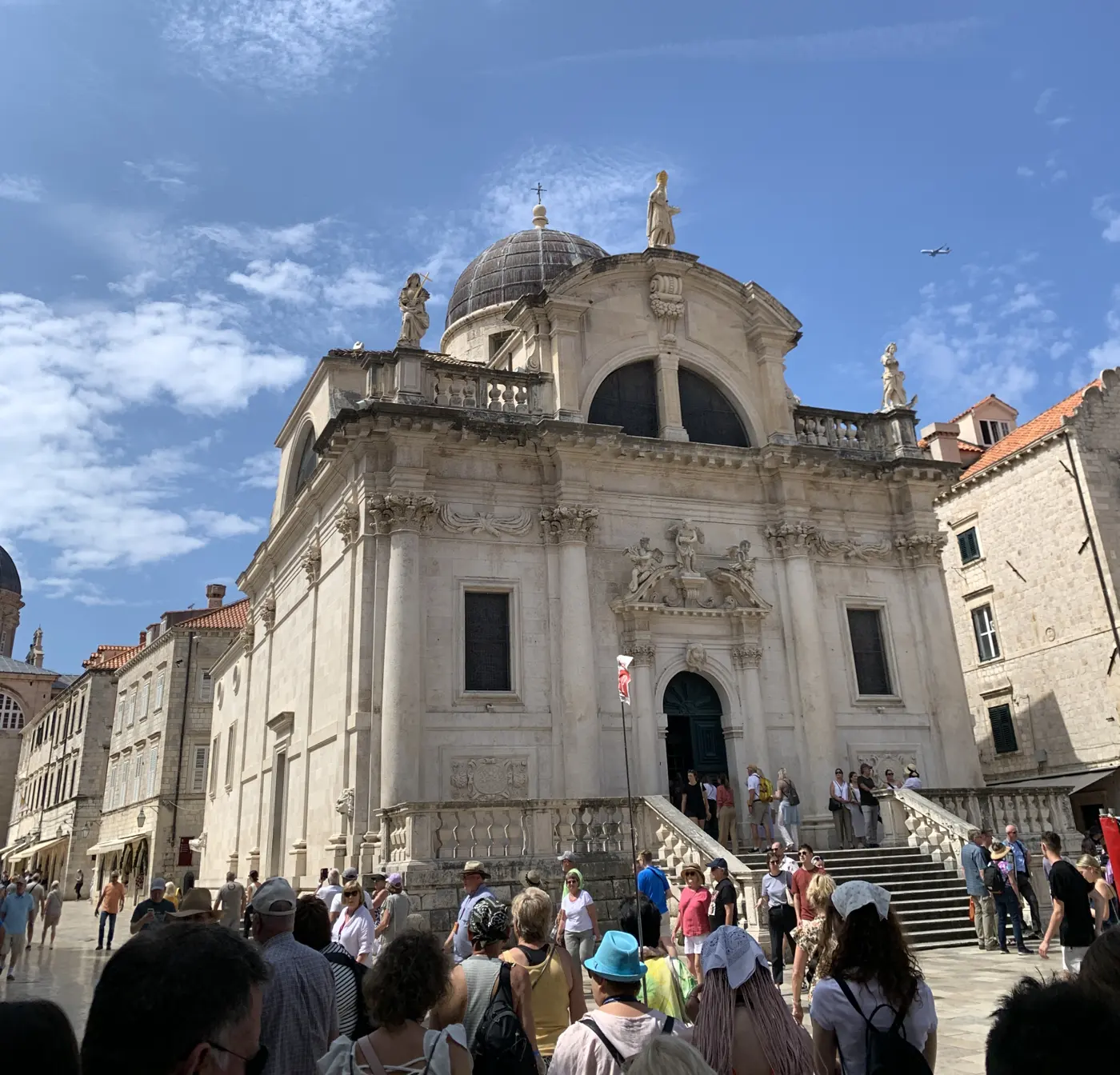
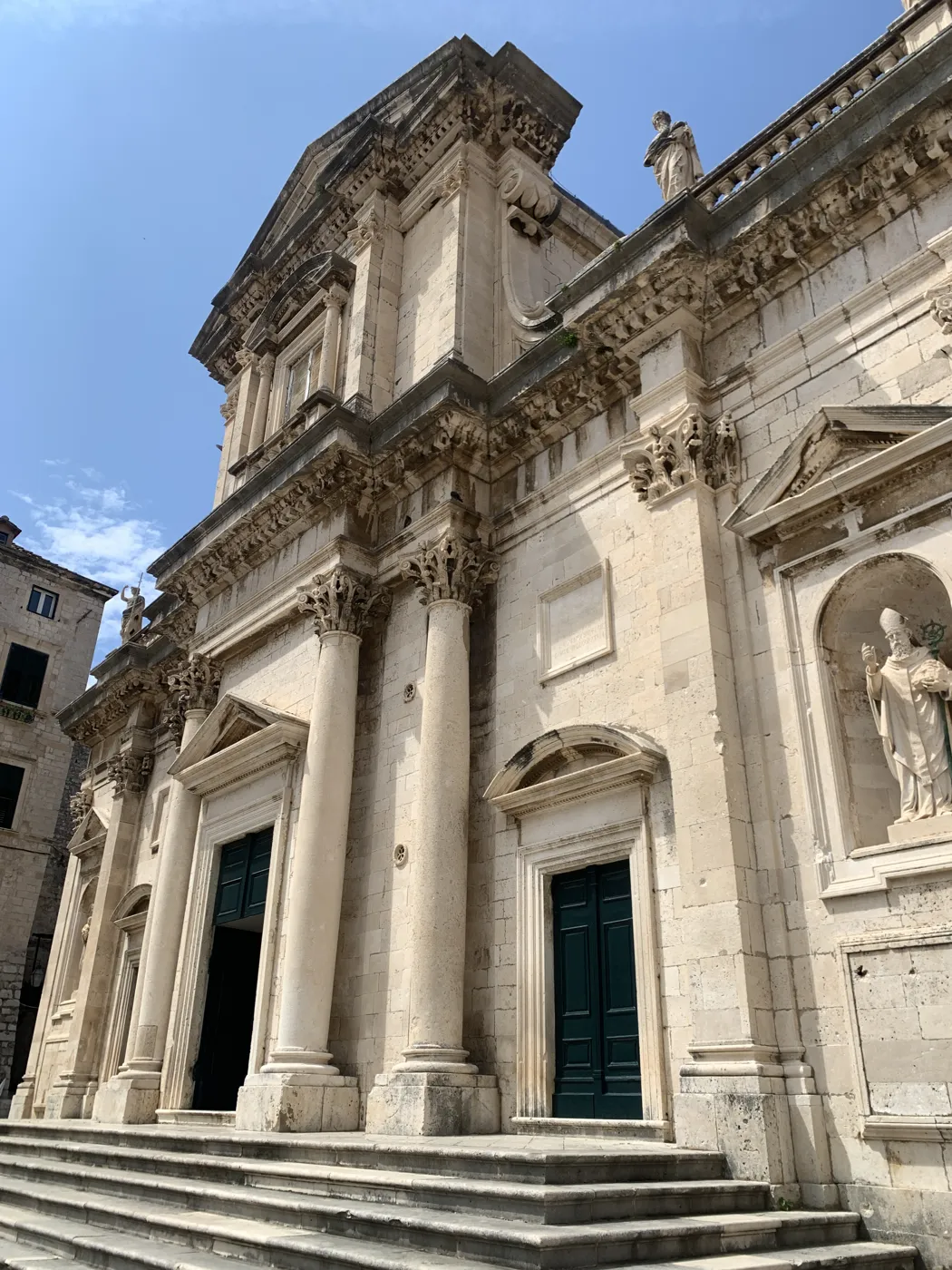
We entered the Old Town through the Pile Gate, the main entrance, with the statue of St Blaise, the patron saint of the city, above the arch. Just inside is the large Onofrio’s Fountain, and then the Stradun, the main street paved with polished limestone, runs straight to the Luža square. There, the baroque Church of St Blaise faces the Sponza Palace, and the cathedral, rebuilt after the 1667 earthquake, is a few steps away.
Walking the City Walls
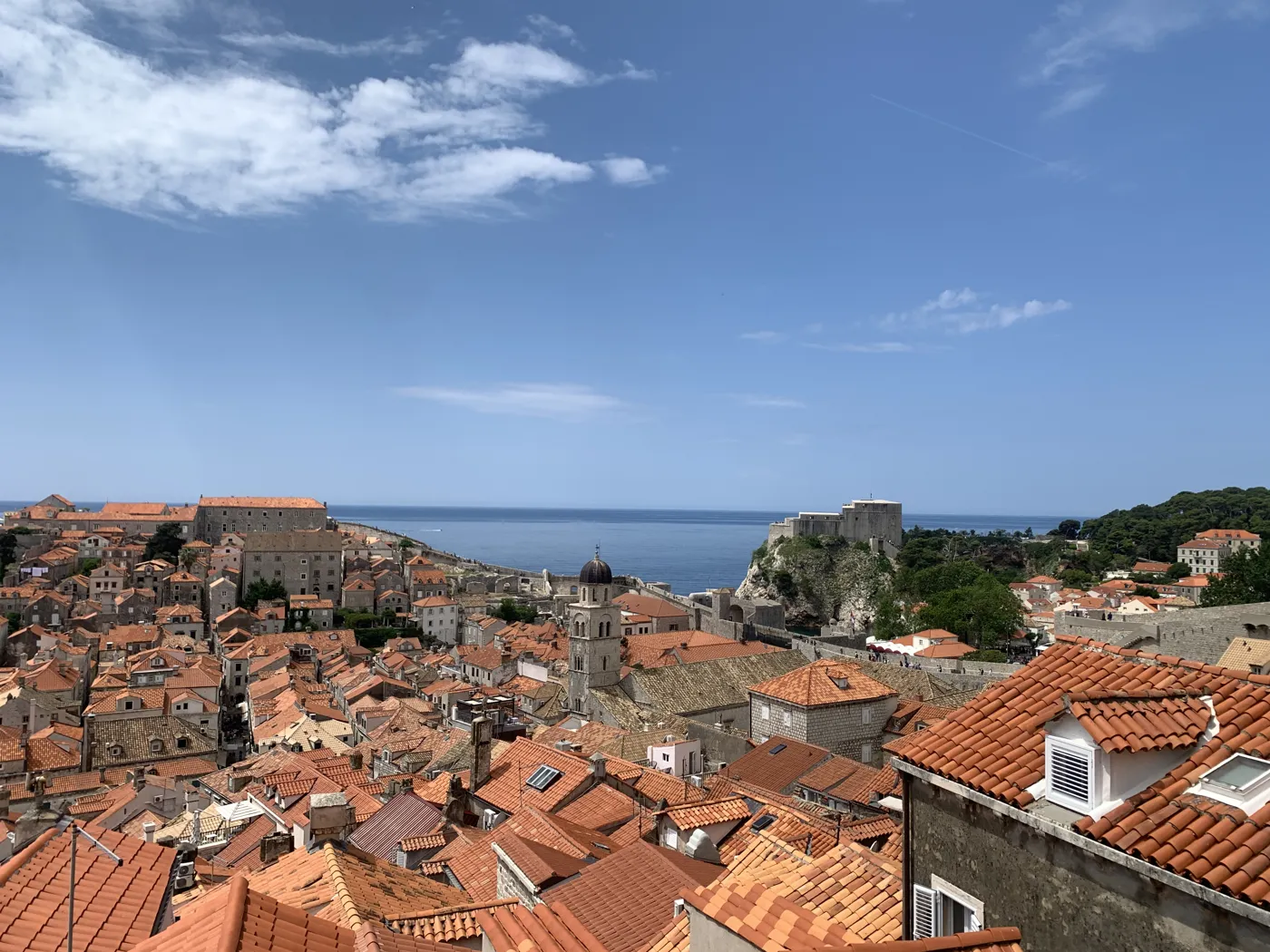
Then the highlight: the walls. The loop is about 1,940 meters long, and it is really worth doing in full, for the views of the sea on one side and of the red roofs of the Old Town on the other. We took about an hour, with many photo stops; count an hour and a half to two hours at a normal pace. The highest point is the round Minčeta Tower, and on the western side you look straight at Fort Lovrijenac.
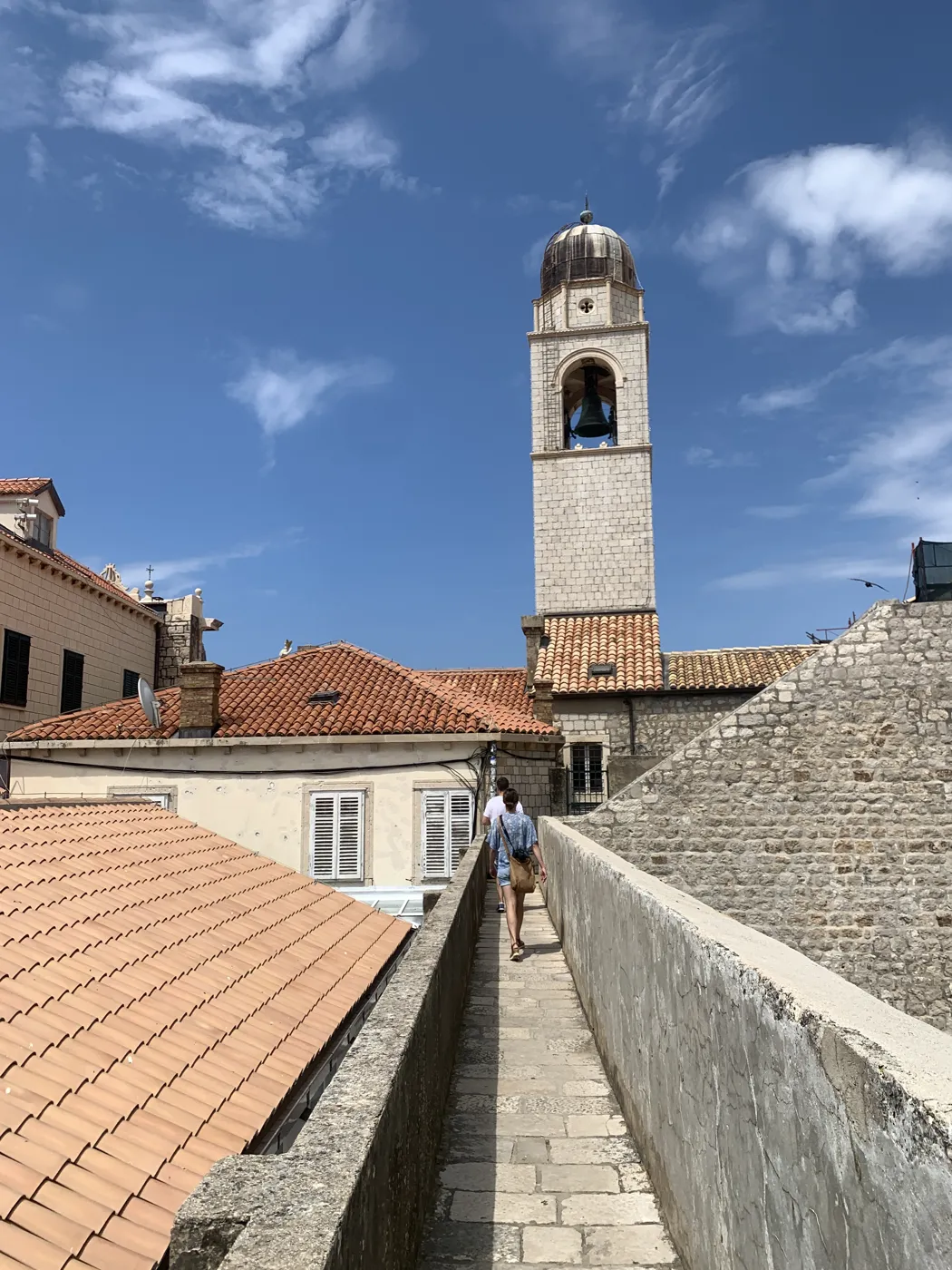
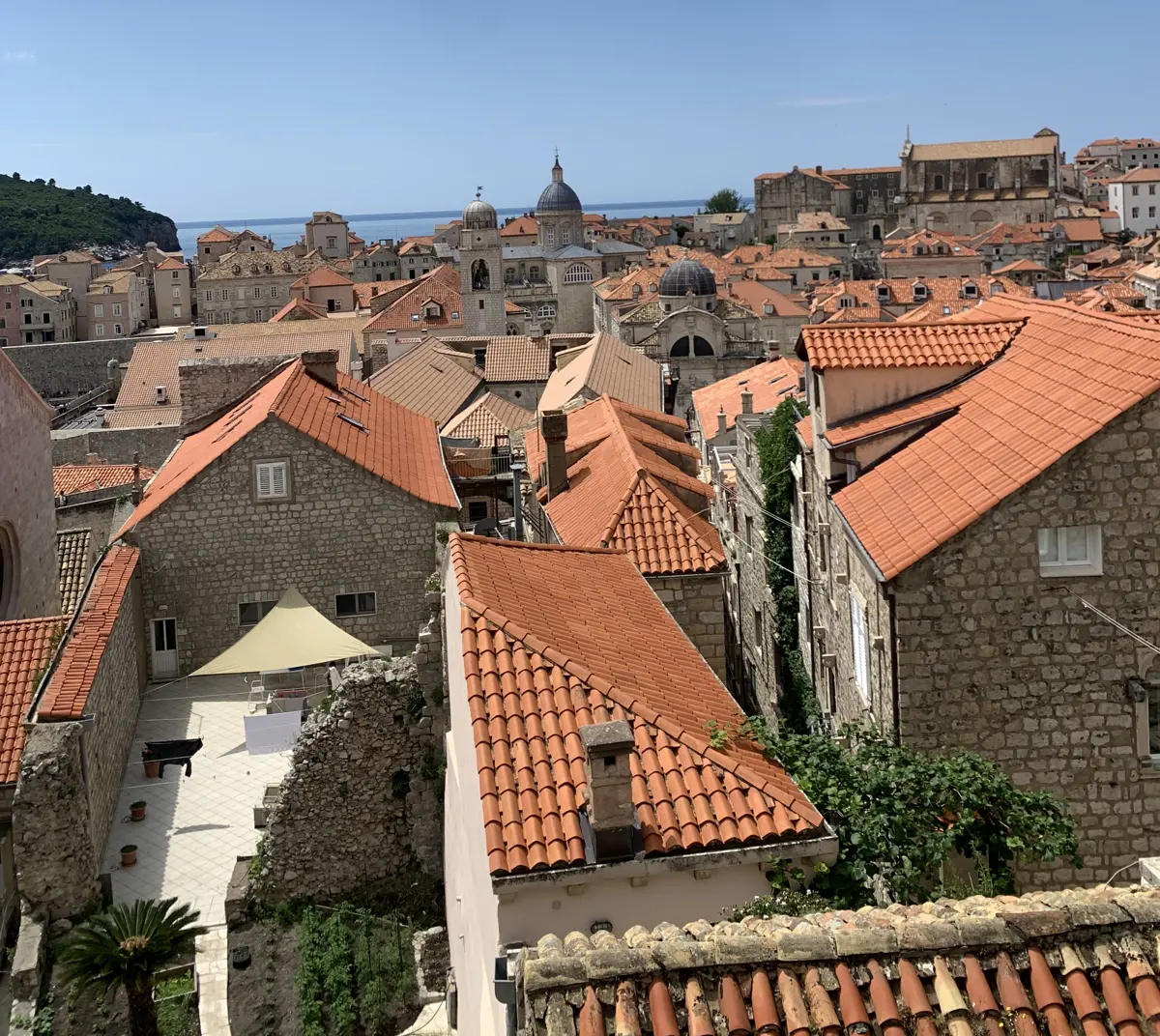
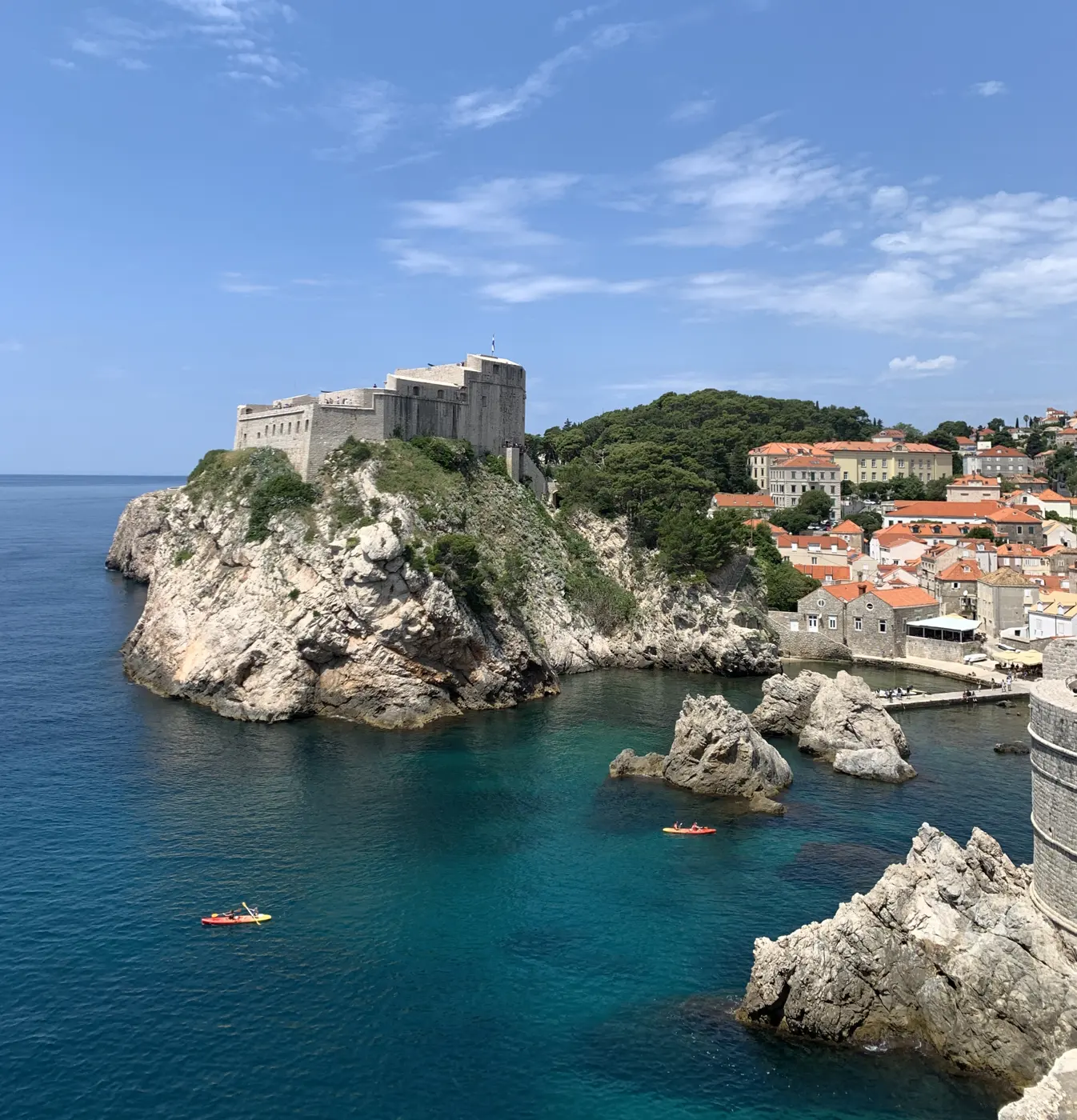
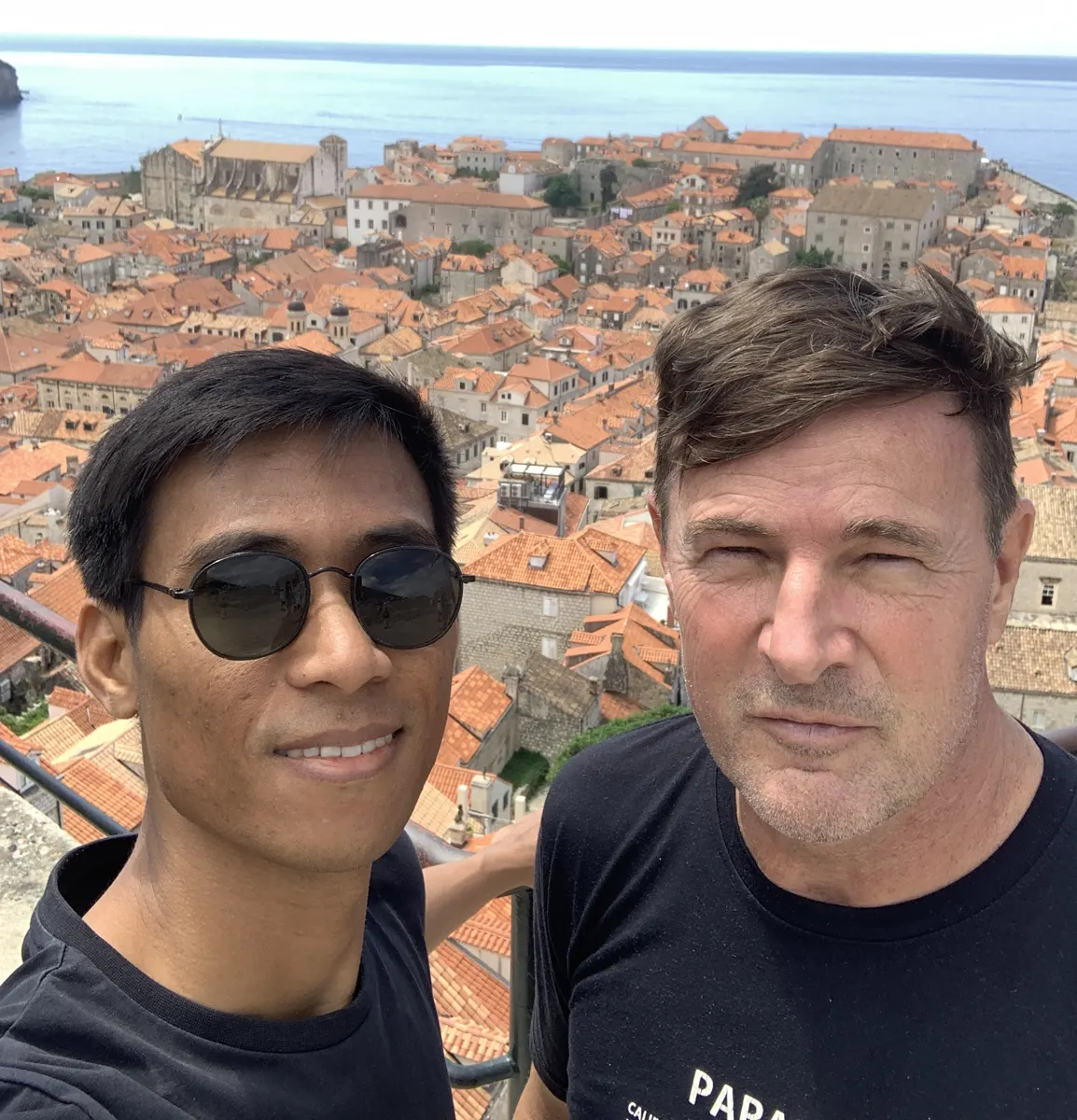
Good to know: the ticket costs €40 in 2026 (€15 for ages 7 to 17) and includes Fort Lovrijenac. There are three entrances: Pile, Ploče and the St John’s Fortress, the quietest. The walk is one-way, there is almost no shade, so go early in the morning or late in the afternoon, and bring water.
The Jesuit Stairs and Game of Thrones
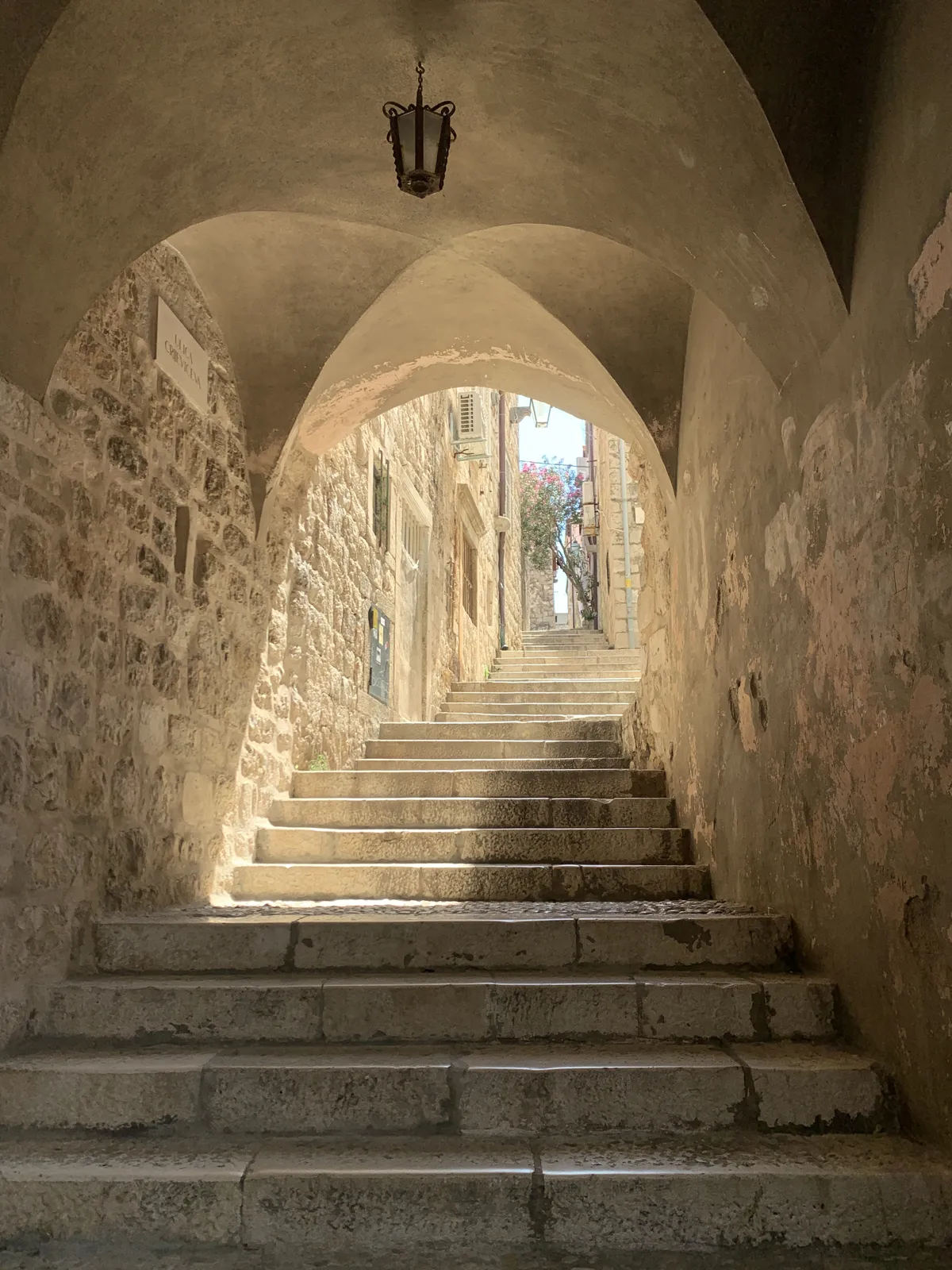
Dubrovnik was one of the main filming locations of Game of Thrones, and you will see tours, souvenirs and even a replica of the Iron Throne everywhere. For me it is anecdotal, a bit like Emily in Paris for Paris: we walked past, and that was it. The baroque Jesuit Stairs, which lead up to the Church of St Ignatius, are beautiful in their own right.

The Cable Car to Mount Srđ
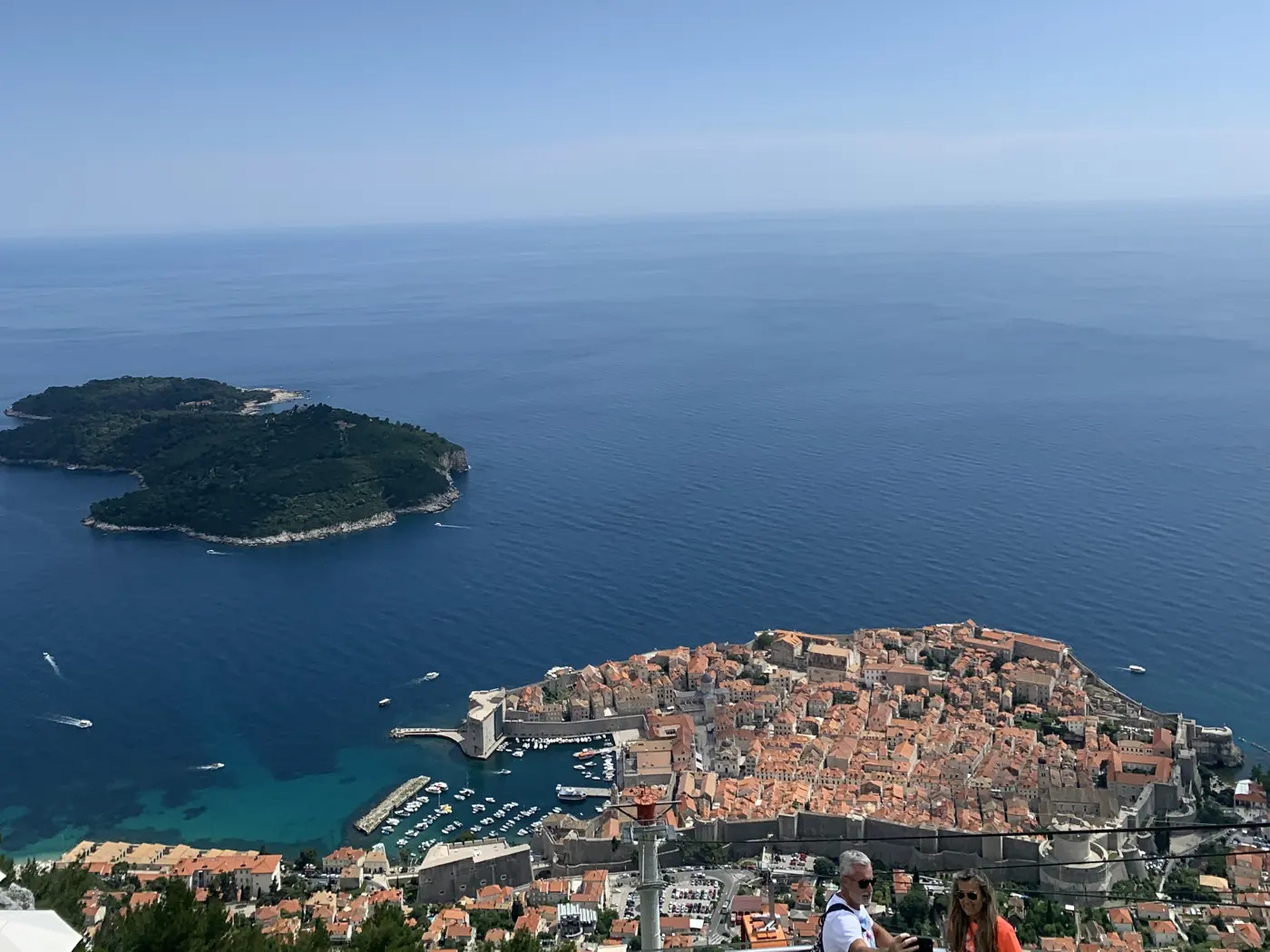
In the afternoon we took the cable car to Mount Srđ, which climbs to 405 meters in a few minutes. The view over the Old Town and Lokrum is beautiful, but honestly it was not the most memorable moment of the trip; if you are short on time, the walls give you better views. The return ticket costs €30, and the cable car is closed from December to March.
Dinner on the Old Port
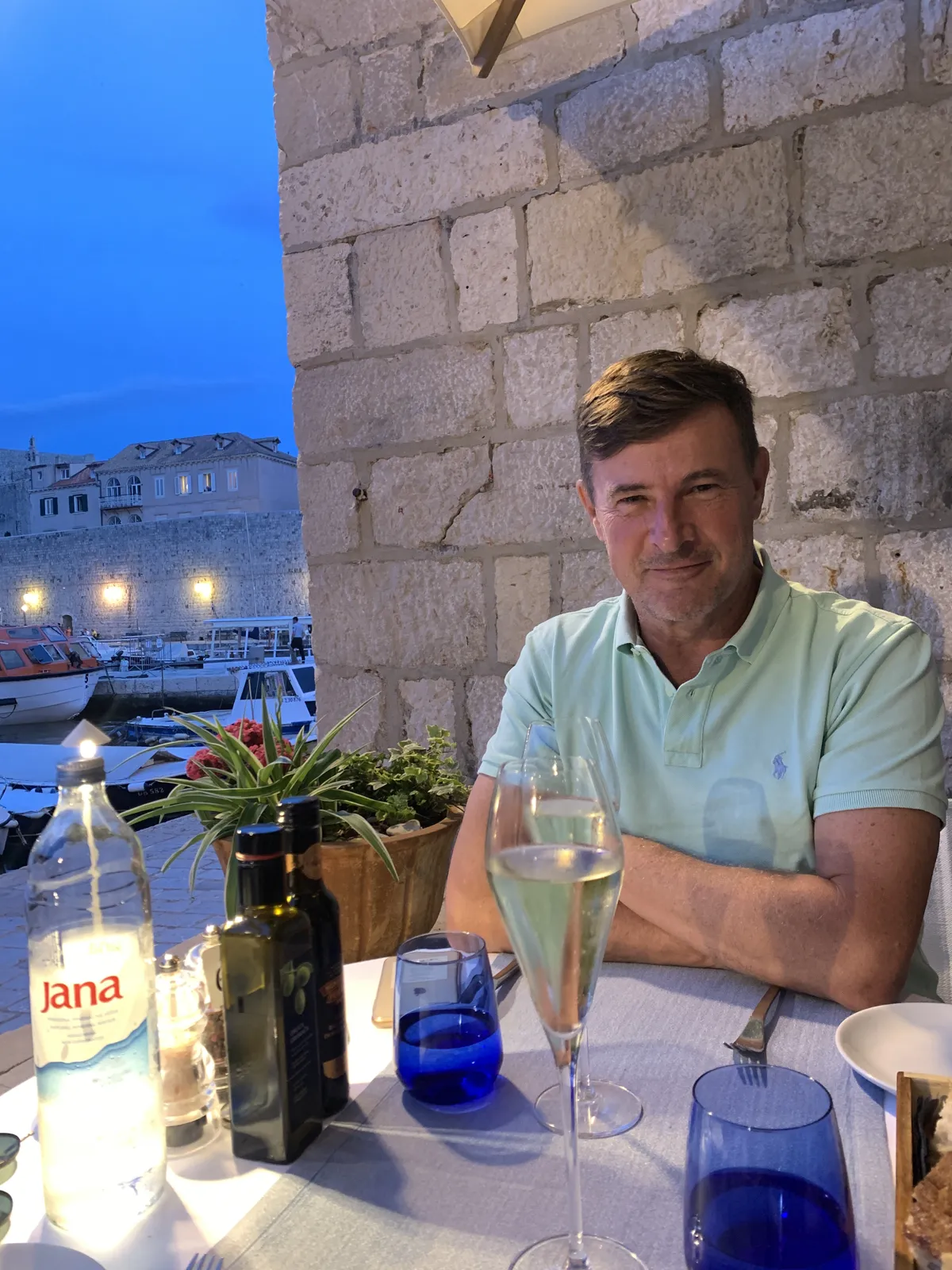
We ended the day at Banje Beach, then had dinner on the terrace of Gradska Kavana Arsenal, next to the Rector’s Palace, overlooking the Old Port. As night falls, the port and the replica galleon moored there are lit up.
The next morning, before our flight to Athens, we went back one last time to Banje Beach.
Other Things to Do in Dubrovnik
- Fort Lovrijenac: the fortress on its rock outside the western walls, included in the walls ticket.
- The Rector’s Palace: the seat of the old Republic of Ragusa, now the Cultural History Museum.
- The Franciscan Monastery: its pharmacy, founded in 1317, is one of the oldest still working in Europe.
- Lokrum: the wooded island facing the Old Town, with its peacocks and botanical garden, by boat from the Old Port (€30 including the boat and the entrance; we did not go).
- The Buža bars: two cliff bars reached through openings in the southern walls, for a drink above the sea.
- Cavtat: a small, quieter harbor town about 20 kilometers south, by boat from the Old Port or by bus.
Is the Dubrovnik Pass Worth It?
In 2026, the Dubrovnik Pass costs €40 for one day, €50 for three days and €60 for seven days. It includes the walls and Fort Lovrijenac, the Rector’s Palace, the Franciscan Monastery museum, the Maritime Museum and about ten other museums, plus unlimited city buses. Since the one-day pass costs the same as a walls ticket alone, it is worth it as soon as you visit one museum or take a bus. It does not cover the cable car, the boat to Lokrum or the Homeland War Museum.
Where We Stayed in Dubrovnik
We stayed at the Suncana Apartments, in Ploče, just above Banje Beach and a few minutes’ walk from the Ploče Gate of the Old Town. Be aware that you reach it by about a hundred steps, which is typical of Dubrovnik. Check prices for the Suncana Apartments on Booking.com.
Staying inside the walls is charming but expensive and noisy in summer; Ploče and Pile, just outside the gates, are the best compromise. Lapad and Babin Kuk, farther west, are quieter and cheaper, with beaches, but you need the bus to reach the Old Town.
Getting to Dubrovnik and Getting Around
- By plane: we flew from Paris with Transavia, which runs a summer route to Dubrovnik, and continued to Athens with Volotea.
- From the airport: the airport is about 20 kilometers south of the city. The airport shuttle costs €10 one way and stops first at the Ploče Gate, in about 30 minutes, then at the Gruž bus station. A taxi costs about €35 to €55.
- In town: the Old Town is car-free, and everything is walkable, with many stairs. City buses connect Pile and Ploče to Gruž and Lapad.
- To Split: about 230 kilometers, four to four and a half hours by bus. Since the Pelješac Bridge opened in 2022, you no longer cross Bosnia and Herzegovina by road.
- Money: Croatia uses the euro and has been in the Schengen area since January 2023.
Best Time to Visit Dubrovnik
We went at the end of May, and it was ideal: warm enough to swim, long days and fewer people than in summer. June and September are just as good. In July and August, the Old Town is very hot and crowded; the city now limits cruise ships to two a day and 4,000 passengers at the same time, but it still gets busy. In winter, it is quiet, but the cable car and some boats stop.
Read More
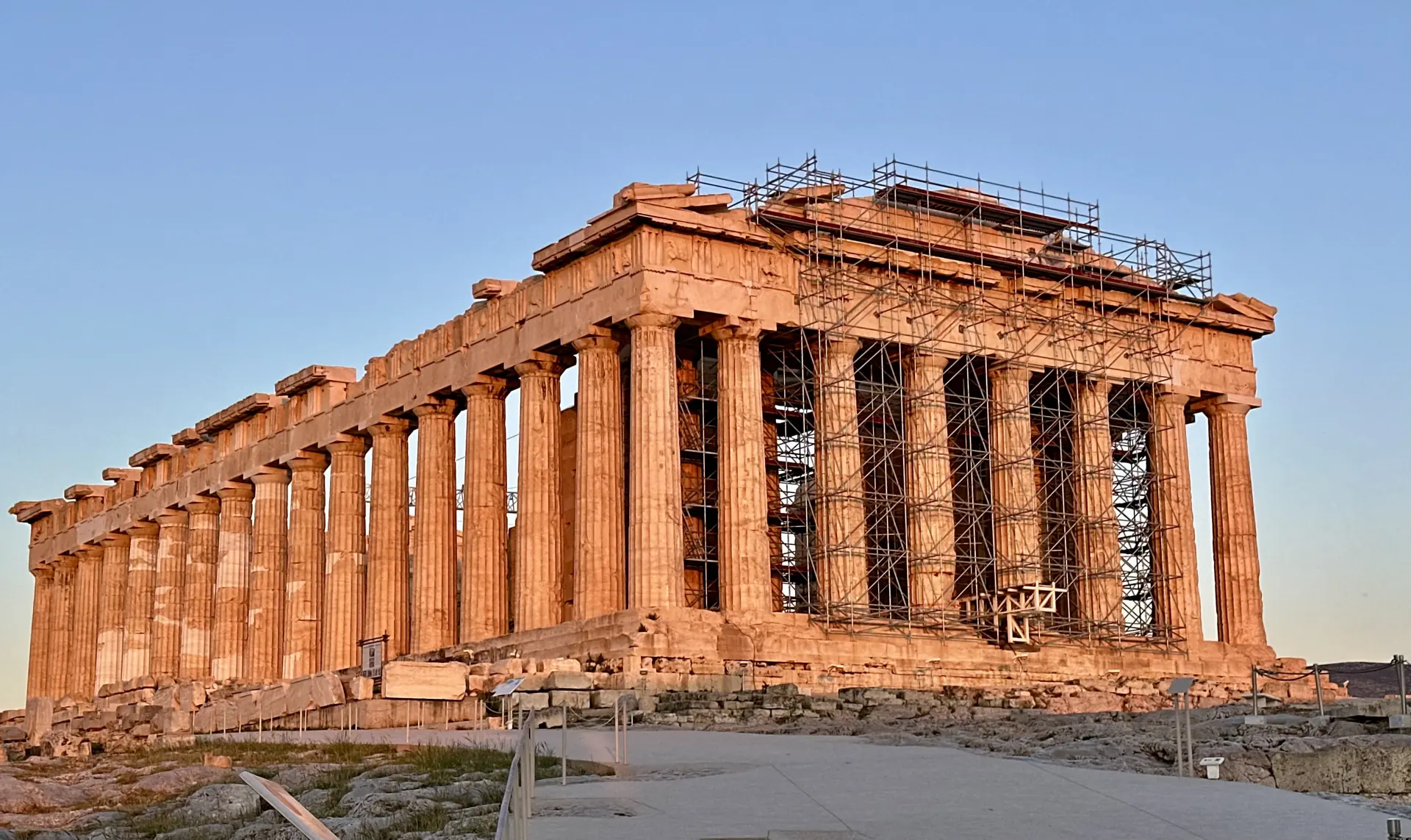
Athens Travel Guide
From Dubrovnik we flew to Athens: the Acropolis, the museums and my favorite views.
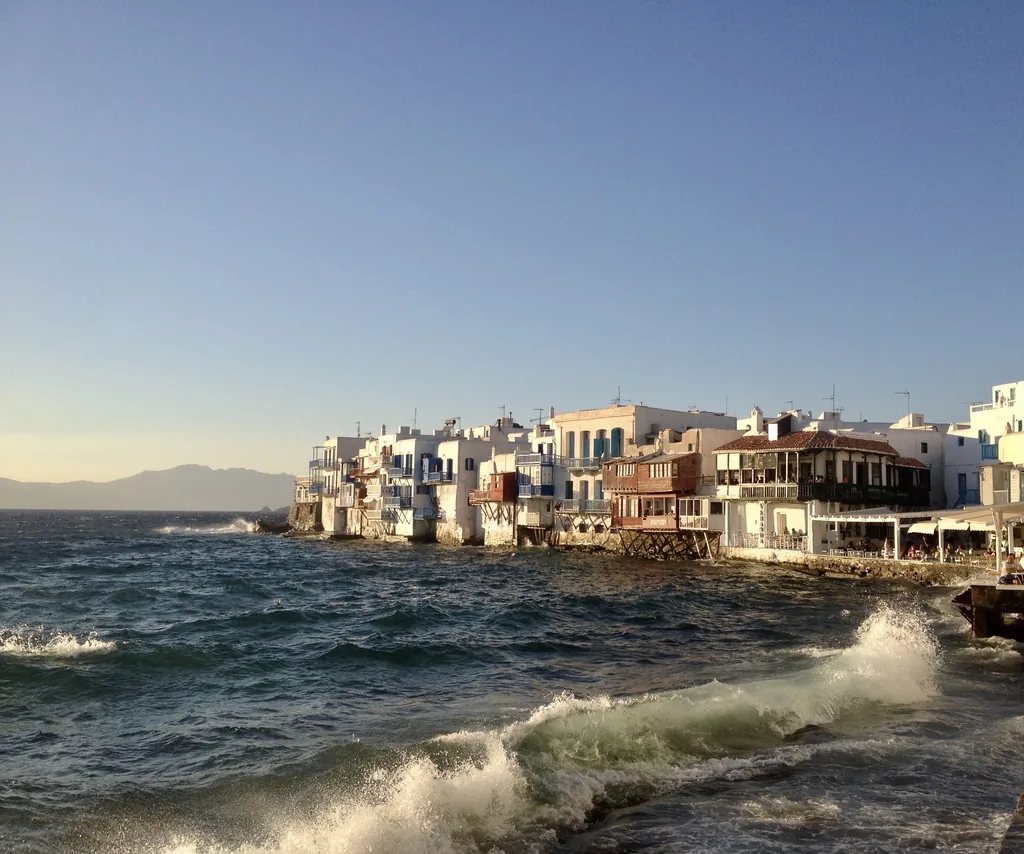
Mykonos Travel Guide
The island I have known since I was a teenager: beaches, Little Venice and where to stay.
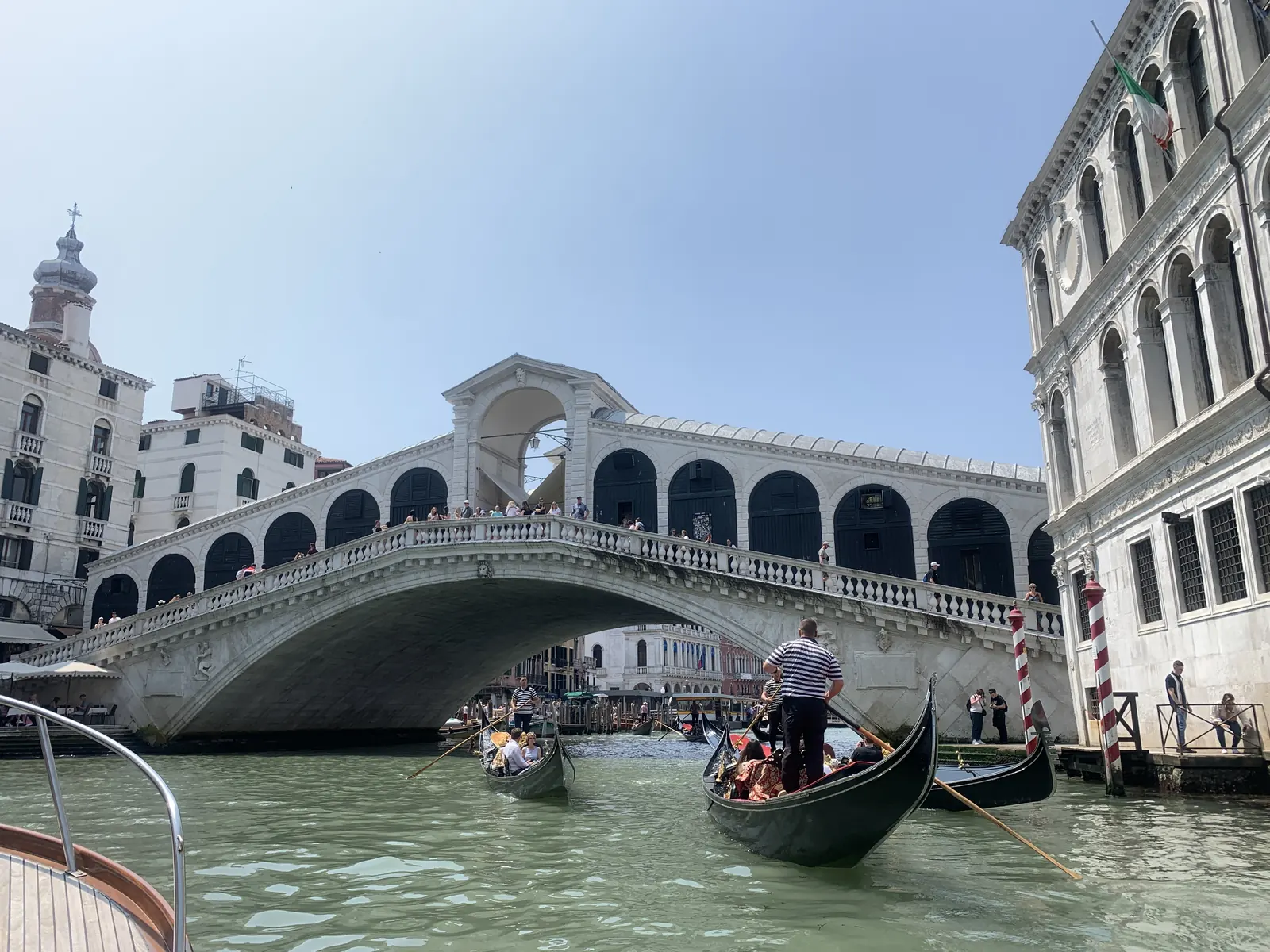
Venice Travel Guide
Three days in June and the canals by private boat with my Venetian cousins.
Frequently Asked Questions About Dubrovnik
Is 3 days in Dubrovnik too long?
No. Three days is a good length: one day for the Old Town and the walls, one for a boat trip to the islands, and one to relax at the beach or visit Lokrum or Cavtat. With only one day, focus on the walls and the Stradun.
Is Dubrovnik worth visiting?
Yes. It is touristy, but the Old Town is remarkably well preserved and the walk on the walls is unique. Avoid the hottest hours and the summer peak if you can.
How much does it cost to walk the walls of Dubrovnik?
€40 for adults in 2026 and €15 for ages 7 to 17, including Fort Lovrijenac. The one-day Dubrovnik Pass costs the same and adds museums and buses.
Which is prettier, Dubrovnik or Split?
I have only been to Dubrovnik. Its walled Old Town is unique, while Split is built around a Roman palace and is a better base for the islands of central Dalmatia.
Do you need a car in Dubrovnik?
No. The Old Town is car-free, the airport shuttle stops at the Ploče Gate, and boats and buses cover the islands and Cavtat.
Which currency is used in Dubrovnik?
The euro, since January 2023.