Sapa Travel Guide: Fansipan and the Mountains of North Vietnam
By Blaise Jaeger · Updated October 11, 2026
I did Sapa the express way, in April 2024, in the middle of my trip across Vietnam: a night bus from Hanoi on April 11, Fansipan, the highest mountain in Indochina, on the morning of the 12th, and the bus back to Hanoi that same afternoon. One day, mostly in the clouds, and one of the most spectacular of the trip.
This guide covers how to climb Fansipan by cable car, what Sapa itself looks like, the villages and treks I did not have time for, and how to get there from Hanoi.
Where Is Sapa and How High Is It?
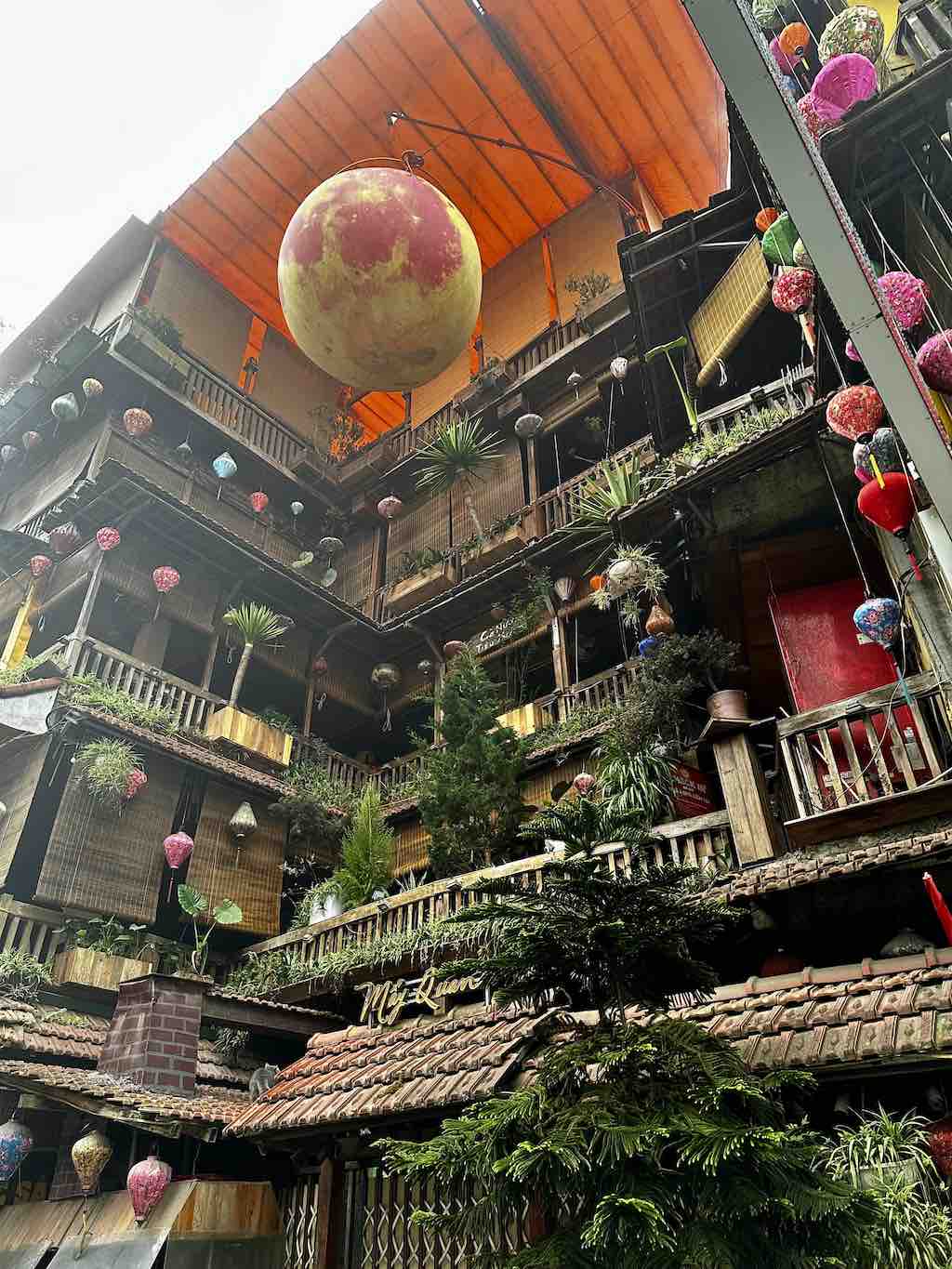
Sapa, also written Sa Pa, is a mountain town in Lao Cai province, in the far north-west of Vietnam, about 35 km from the Chinese border. It sits at around 1,500 metres above sea level, in the Hoang Lien Son range, which explains its cool, often misty climate. The town faces the Muong Hoa valley and its rice terraces, and Fansipan, 3,143 metres, rises right above it.
The area is home to several ethnic minorities, mainly Hmong, Red Dao and Giay, whose villages are scattered across the valleys and are the reason most people come to trek here.
Fansipan, the Roof of Indochina
At 3,143 metres, Fansipan is the highest peak in Vietnam, Laos and Cambodia. Climbing it used to take two or three days of trekking. Since 2016, the Sun World Fansipan Legend cable car takes you almost to the top in about 15 minutes. It is run by Sun World, the company behind Ba Na Hills near Da Nang, and holds two Guinness records: the longest non-stop three-rope cable car and the greatest elevation difference.
Step 1: Sun Plaza and the Muong Hoa Train
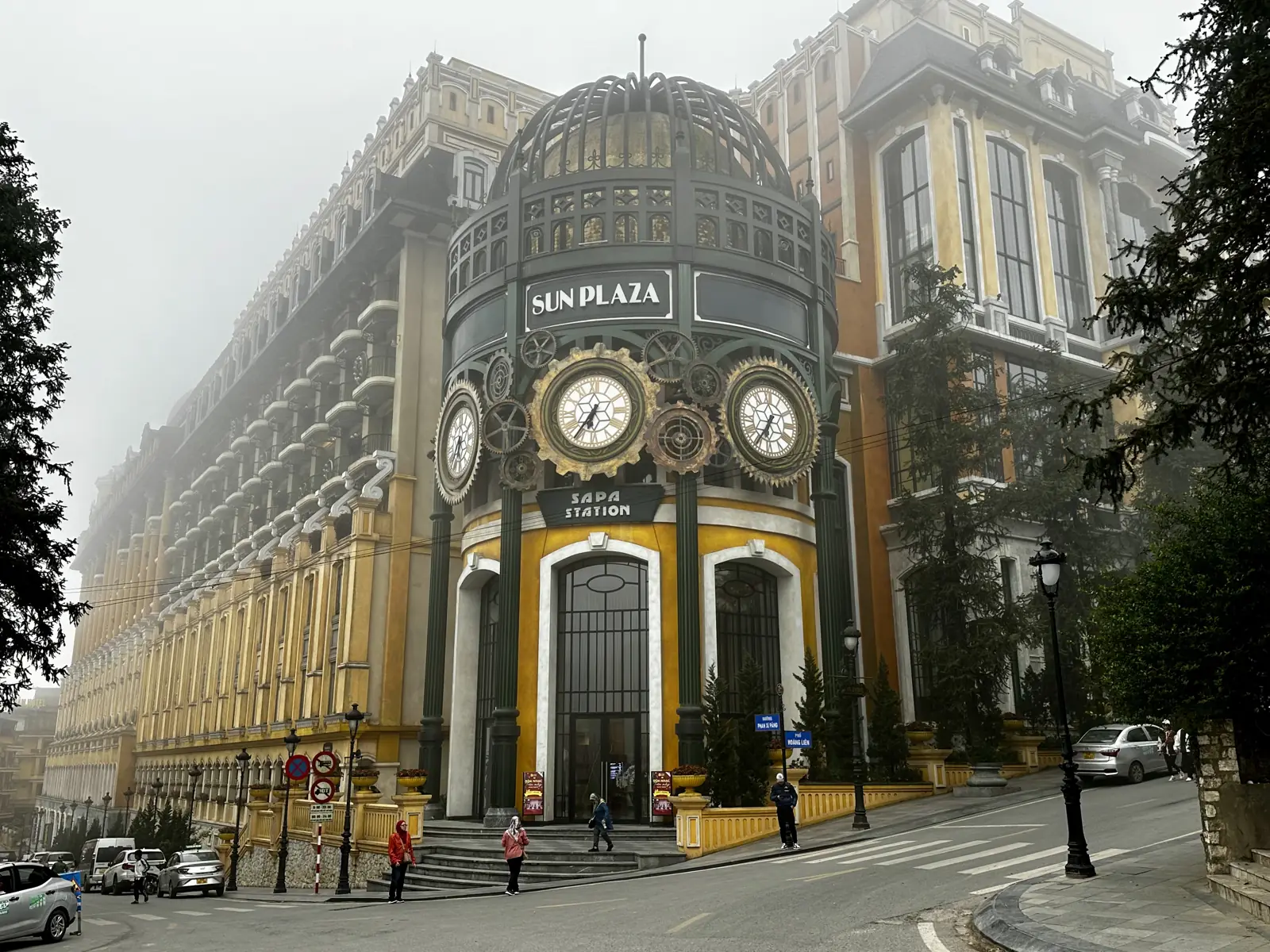
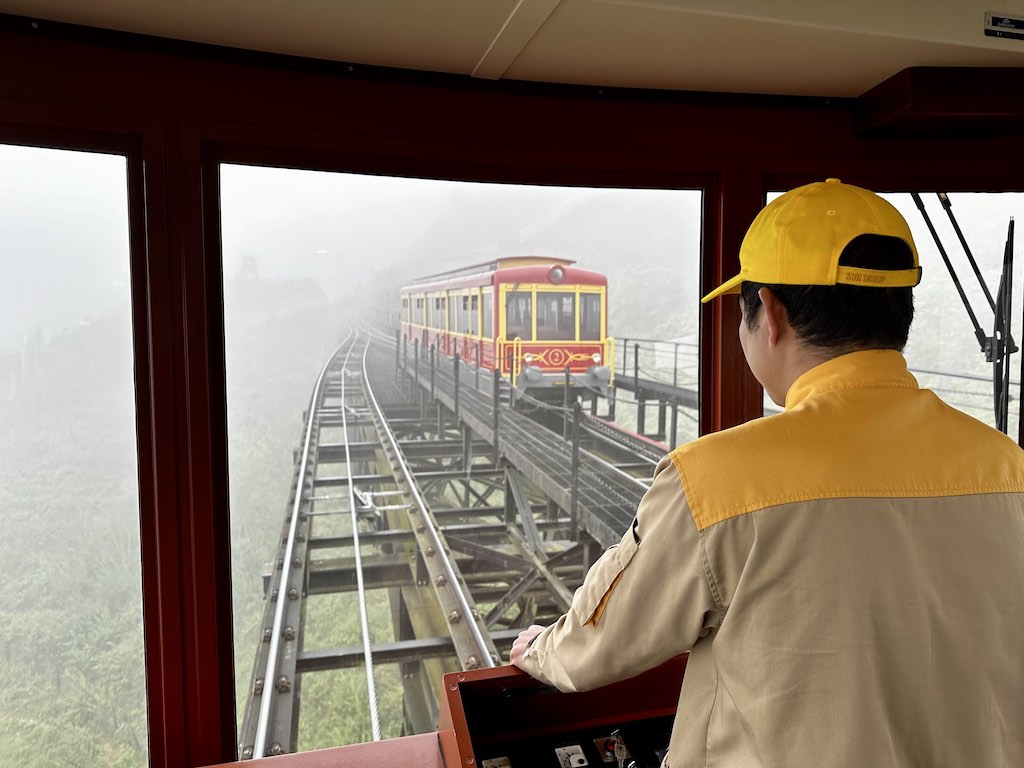
The trip starts in the centre of Sapa, at Sun Plaza, a huge yellow building with clock towers that houses the station. I was there at 6:30 am, after a few hours’ sleep on the night bus. From Sun Plaza, the red Muong Hoa mountain train runs down the valley to the cable car station, a short and very scenic ride.
Step 2: The Fansipan Cable Car
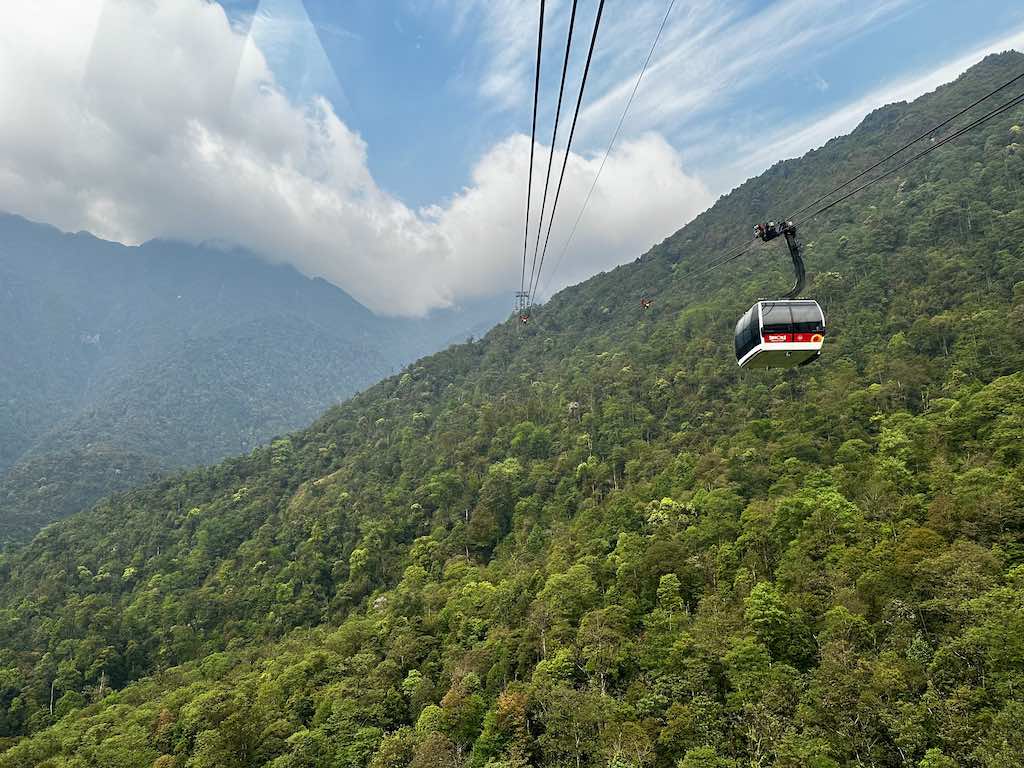
The cable car is the highlight. The first section flies over the rice terraces of the Muong Hoa valley, then the cabin climbs about 1,400 metres along steep, forested slopes, with waterfalls and tiny huts in improbable places. In April, a good part of the ride was in the clouds, which made the moments when they opened even more striking.
Step 3: The Pagodas and the Summit
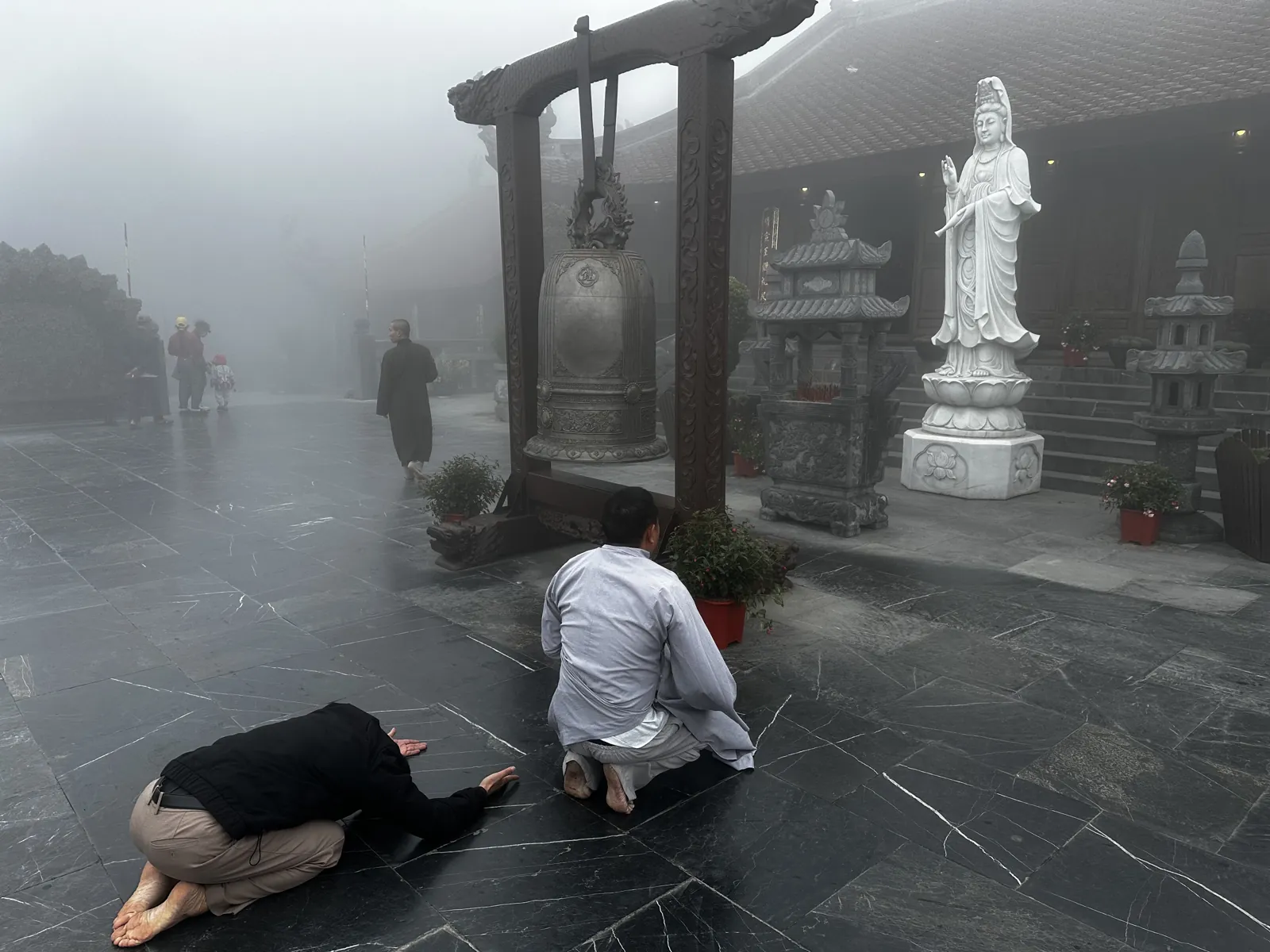
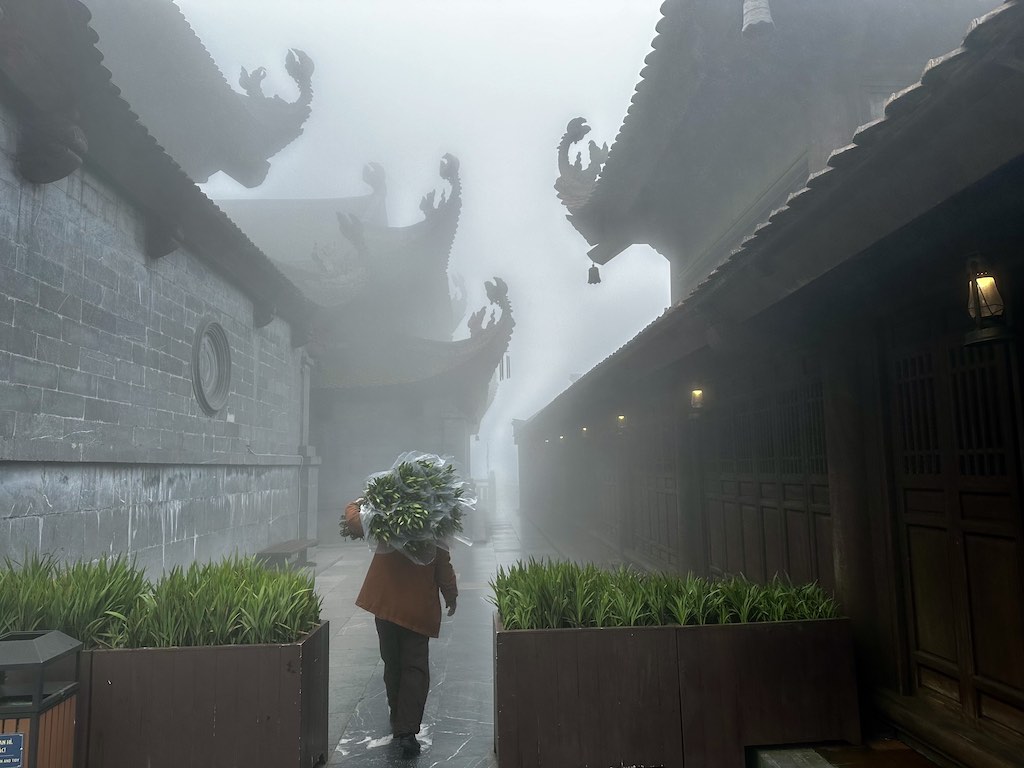
The upper station opens onto a huge Buddhist complex built over the last few years: pagodas, a bronze Great Buddha, a statue of Guanyin and a bell tower, all brand new and very colourful. Many Vietnamese visitors come here as pilgrims. From there, you either climb about 600 steps to the summit or take a second funicular.

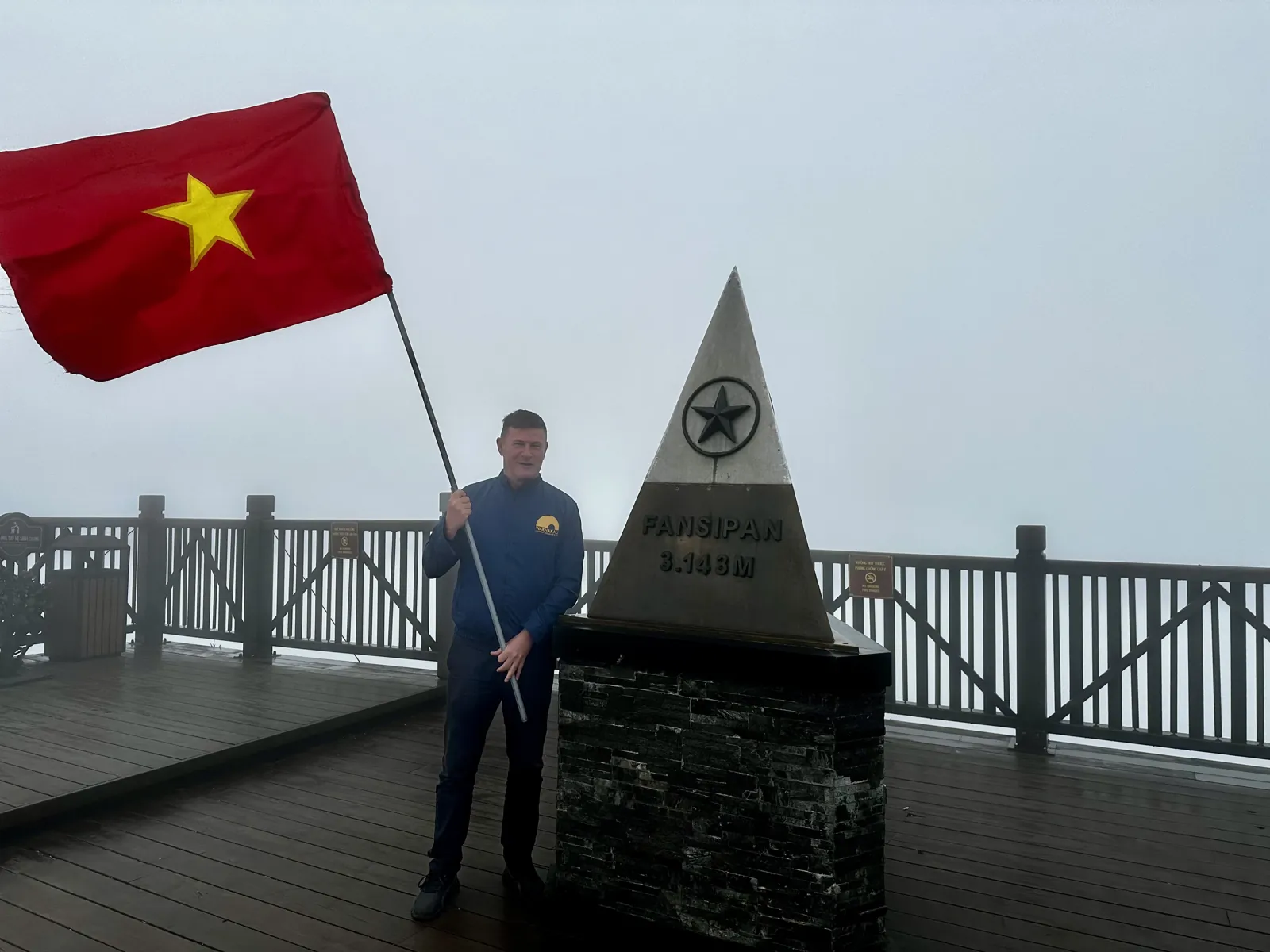
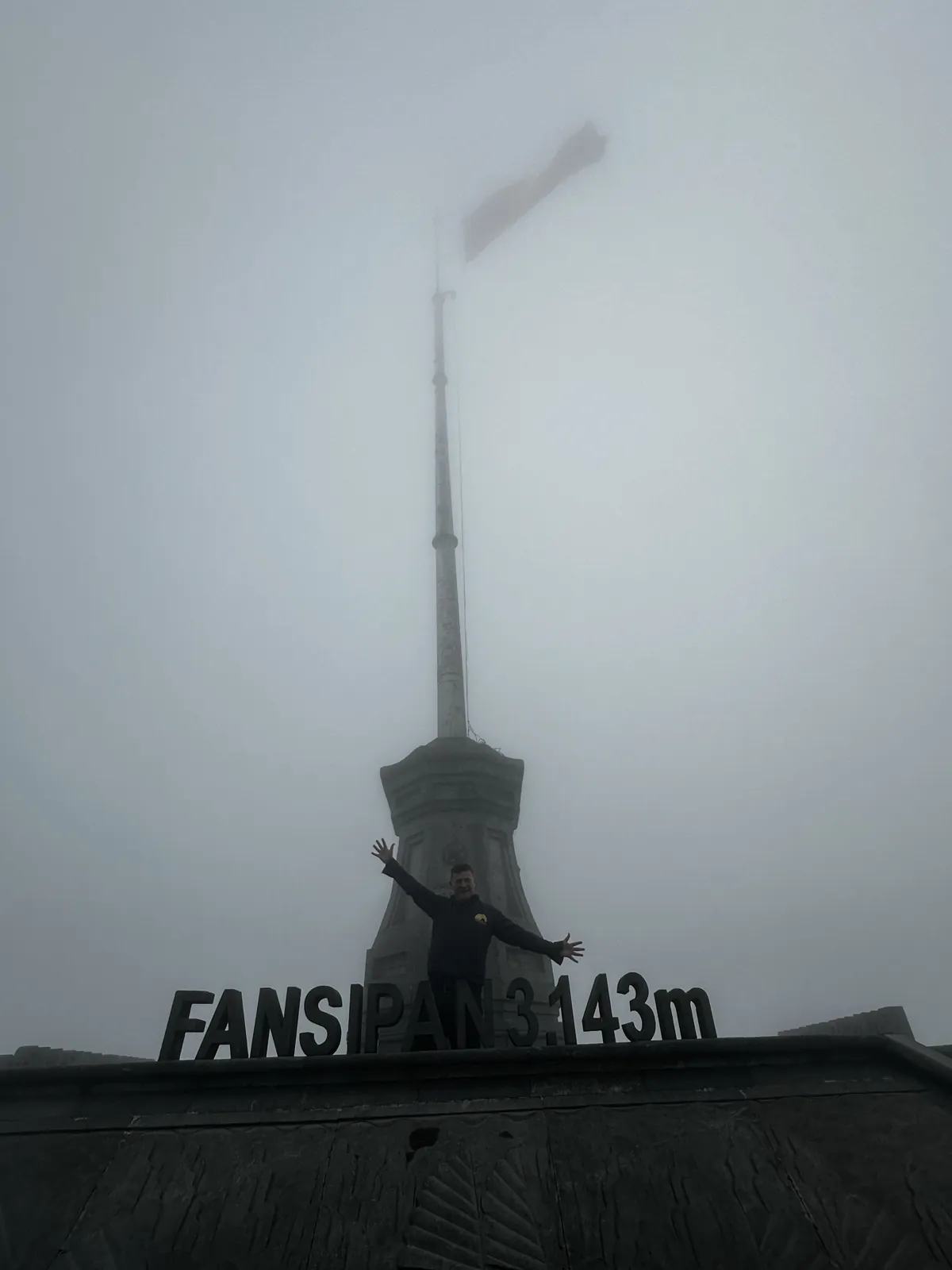
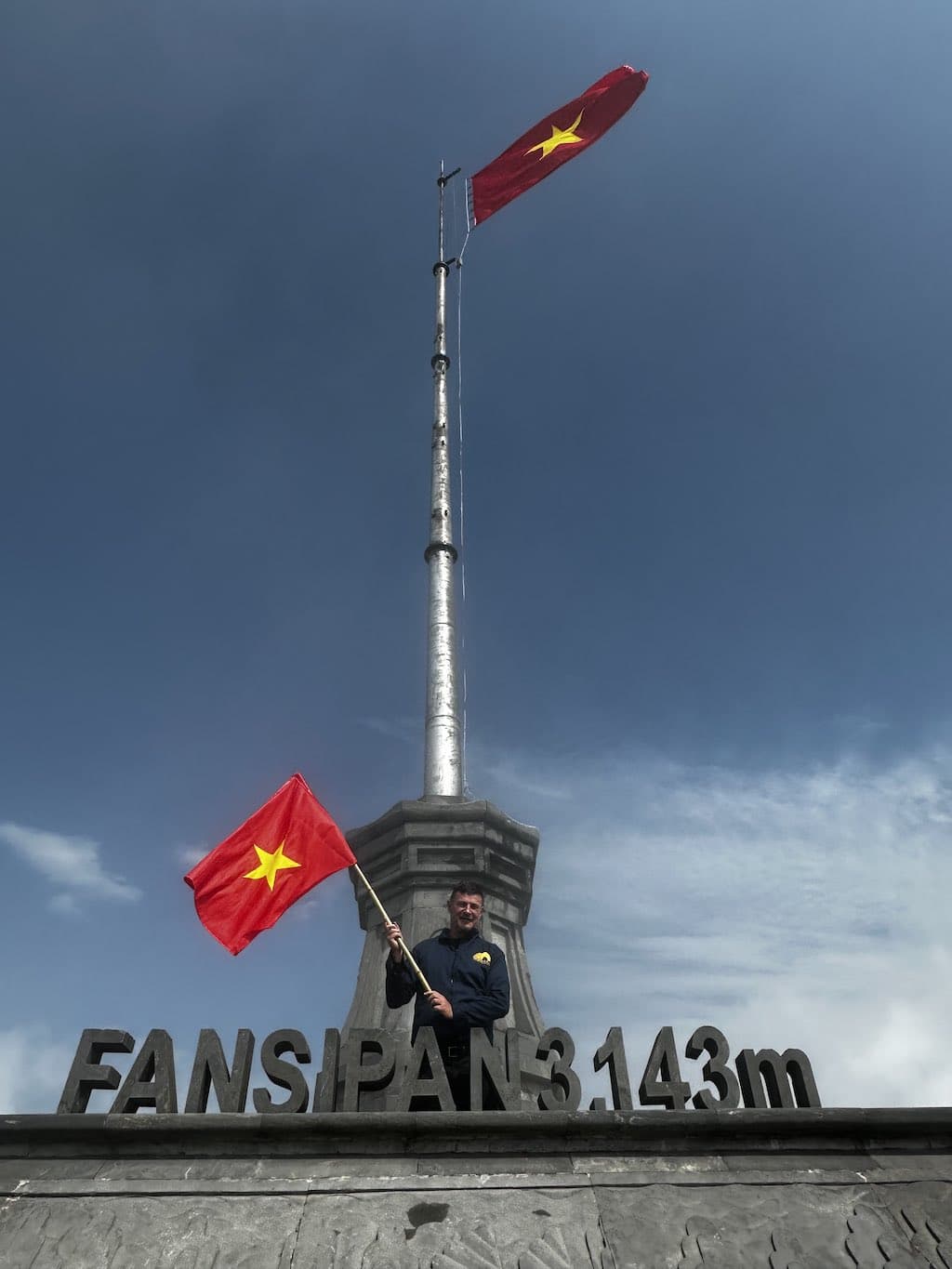
At the top, the summit marker, a stainless-steel pyramid, and a giant Vietnamese flag wait at 3,143 metres. When I arrived at 8:45 am, I could hardly see the flag above my head. Half an hour later, the clouds opened and the sky turned blue. If you reach the summit in the fog, wait a little: the weather changes fast up there.
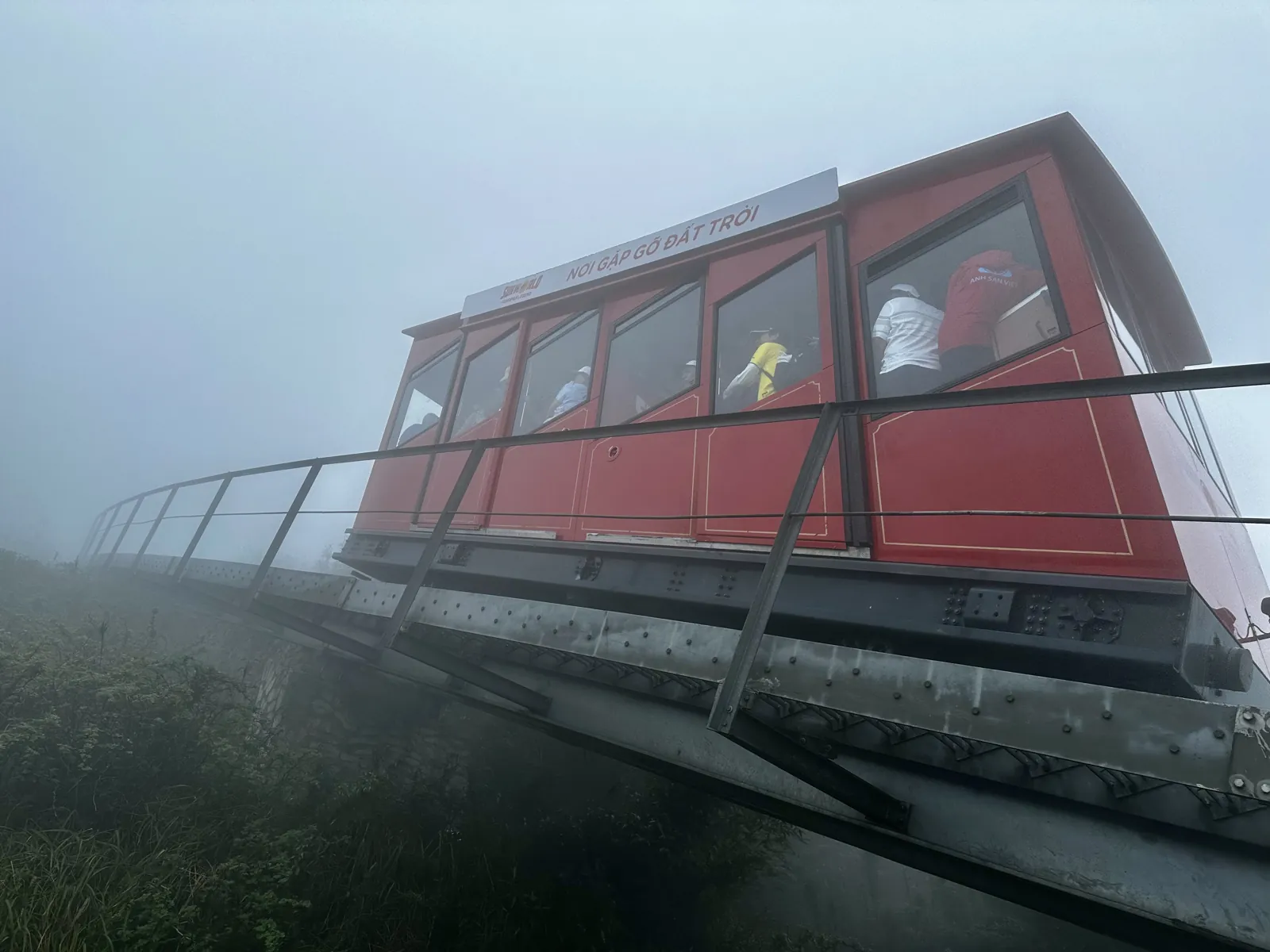
I took the funicular back down to the cable car, through the clouds again. In winter, the summit is sometimes covered in snow, to the delight of Vietnamese visitors, many of whom have never seen it.
Fansipan: Practical Tips
- Go early: the first cable cars leave around 7:30 am, before the crowds and before the afternoon clouds.
- Allow half a day for the train, the cable car, the pagodas and the summit.
- Take a warm layer: it is 10 to 15 °C colder at the top than in Sapa, and often wet.
- Tickets: buy the combined ticket for the train, the cable car and the funicular at Sun Plaza or online, and check the current prices before you go.
Sapa Town
Sapa itself has grown fast and is now full of hotels, cafés and new buildings, but it keeps a mountain-station charm: the lake in the centre, the stone church built by the French, and the market where women from the surrounding villages sell their embroidery. Early in the morning, with the mist on the lake, it is quiet and almost magical.
Villages and Treks Around Sapa
I had only one day and chose Fansipan, but most visitors come to Sapa to trek through the rice terraces and villages of the Muong Hoa valley. If I went back, this is what I would add:
- Cat Cat: a Black Hmong village 3 km from the town, easy to reach on foot, very touristy but a good introduction.
- Lao Chai and Ta Van: the classic day trek, about 12 to 15 km through the rice terraces of the Muong Hoa valley, with a night in a homestay if you want.
- Ta Phin: a Red Dao village known for its herbal baths.
For longer treks, go with a local guide, often a Hmong or Dao woman from the villages: you will be helping the community directly, and you will not get lost on the paths.
Best Time to Visit Sapa
- September to November: the best season, with clear skies and the rice terraces turning gold before the harvest in September.
- March to May: mild weather and the terraces being flooded and planted. I went in April: mild, but cloudy.
- June to August: green but rainy, with landslides possible on the trails.
- December to February: cold, sometimes below 0 °C, with frost or snow on Fansipan.
How to Get from Hanoi to Sapa
Sapa is about 320 km from Hanoi, five to six hours by road on the expressway.
- Sleeper bus: what I chose. Night buses leave Hanoi in the evening and arrive in Sapa in the middle of the night; mine arrived at 3:30 am, after five hours. Book a lower berth, away from the axles, and take a sweater against the air conditioning.
- Limousine van: more comfortable and a bit more expensive, mostly by day.
- Night train to Lao Cai: about eight hours, then a one-hour bus or taxi up to Sapa.
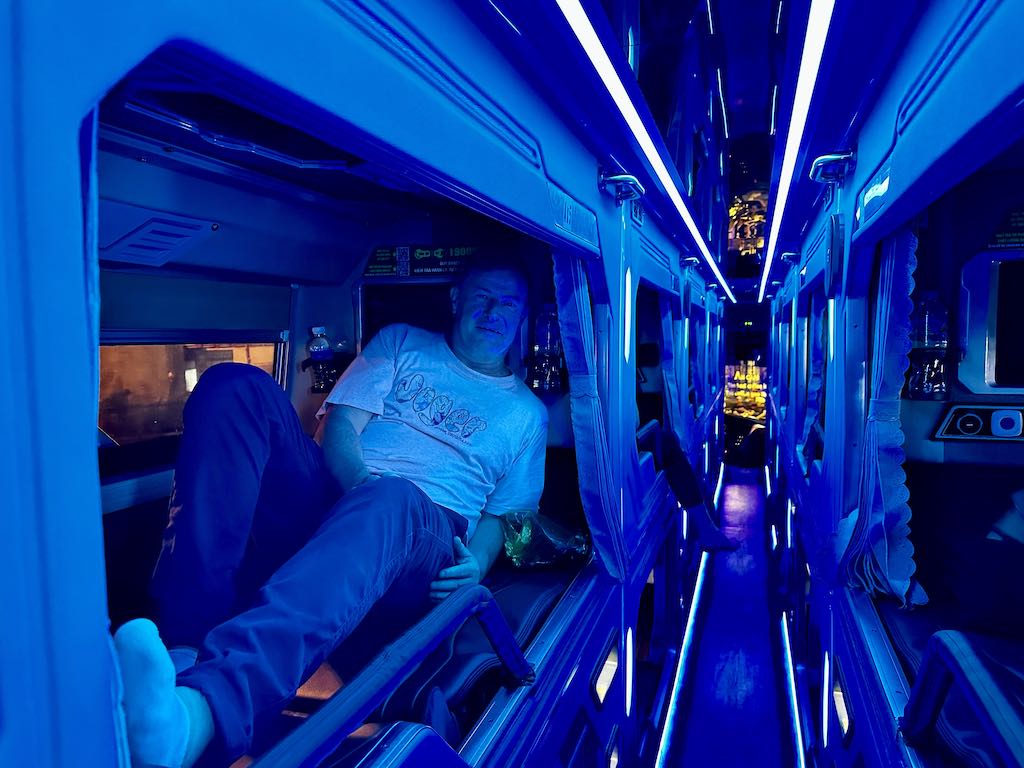
If you arrive in the middle of the night, book a cheap room for the night or ask for an early check-in. I waited for dawn at the bus station, then had a big breakfast at 6 am before heading to Sun Plaza. You can book buses and trains on 12Go, and all the options for getting around the country are in my guide to getting around Vietnam.
Where to Stay in Sapa
- In the town: the most practical, close to Sun Plaza, restaurants and the lake.
- In the Muong Hoa valley: homestays and lodges in Ta Van or Lao Chai, quieter and with views of the rice terraces.
I compare places on Booking.com. If you arrive by night bus, check whether the hotel allows an early check-in.
Sapa FAQ
What is the altitude of Sapa?
Sapa town is at around 1,500 metres. Fansipan, which overlooks it, reaches 3,143 metres, the highest point in Indochina.
Can you visit Sapa in one day from Hanoi?
Not as a day trip: it is five to six hours each way. But with a night bus there and an afternoon bus back, as I did, one day on the spot is enough for Fansipan.
Is the Fansipan cable car worth it?
Yes. Even in the clouds, the ride, the pagodas and the summit are spectacular. Go early and give the weather a chance to clear.
Sapa is the mountain side of Vietnam, and an easy addition to a few days in Hanoi. For the rest of the country, start with my Vietnam travel guide.