Diving Raja Ampat: 15 Best Dive Sites & Guide (2026)
By Blaise Jaeger · Updated July 12, 2026
Raja Ampat, off the northwest tip of West Papua, Indonesia, is often called the Holy Grail of scuba diving — and having dived it myself, I understand why. With over 600 coral species and more than 1,500 reef fish species, this remote archipelago of 1,500 islands holds the highest recorded marine biodiversity on Earth. If you’re planning the trip itself, my Raja Ampat Travel Guide (2026) covers logistics, itineraries, and where to stay in detail.
This guide focuses on the diving: the 15 best dive sites in Raja Ampat, organized by region — the famous Dampier Strait, the Fam Islands and Batanta, and the pinnacles of Misool — plus everything you need to plan the dive trip: seasons, park fees for 2026, liveaboard vs land-based advice, and how to get there. Ten of these sites I’ve dived personally from the Dune Aurora liveaboard; the Dampier Strait classics are researched from the divers and operators who know them best, and they’re at the top of my own list for my next crossing.
Raja Ampat Diving at a Glance
| Dive Site | Region | Level | Currents | Highlights |
|---|---|---|---|---|
| Cape Kri | Dampier Strait | Intermediate | Strong | World-record fish count |
| Blue Magic | Dampier Strait | Intermediate+ | Strong | Oceanic mantas |
| Sardine Reef | Dampier Strait | Intermediate | Moderate–strong | Dense fish schools |
| Manta Sandy | Dampier Strait | All levels | Mild | Manta cleaning station |
| Melissa’s Garden | Fam | All levels | Mild | Coral gardens, wobbegongs |
| Keruo Channel | Fam | Intermediate | Moderate | Drift, pygmy seahorses |
| Batu Rufas | Fam | Intermediate | Mild | Tunnels, night diving |
| Dayang & Convergence | Batanta | Intermediate | Moderate | Mantas, sharks |
| Boo Window | Misool | Advanced | Moderate | Coral windows |
| Tank Rock | Misool | Advanced | Strong | Pelagics |
| Four Kings | Misool | Advanced | Moderate | Pinnacles |
| Wedding Cake | Misool | Intermediate | Moderate | Drift, canyons |
| Barracuda Rock | Misool | Intermediate | Moderate | Night dives, barracudas |
| Kaleidoscope | Misool | Intermediate | Moderate | Soft corals, macro |
| Wakraket (Karang Bayangan) | Misool | Advanced | Moderate | Oceanic manta, topography |
My Raja Ampat Dive Trip Aboard the Dune Aurora
I dived Raja Ampat in April 2023, at the tail end of the northern season, on a 12-day liveaboard crossing aboard the Dune Aurora, a traditional wooden phinisi. We boarded in Sorong and worked our way through the archipelago — the Fam Islands around Piaynemo, Batanta, and the pinnacles of Misool — before continuing on toward the North Moluccas and the Lembeh Strait. I tell the full story of that crossing in my Indonesia diving cruise guide.
I live in Indonesia, on Nusa Penida near Bali, where I work in the diving industry — I opened the island’s first PADI dive centre in 2017 and have logged more than 700 dives across the country. Even with that baseline, Raja Ampat was something else. The density of life is unlike anywhere I’ve dived: reefs so packed with fish the water darkens, wobbegong sharks under every other ledge, and coral cover so complete you struggle to find a patch of bare rock. Every “My dives” section below comes from my own logbook on that trip.
Best Time to Dive in Raja Ampat
The best time to dive in Raja Ampat depends on which part of the archipelago you plan to explore, as conditions shift between the north and the south throughout the year.
October to April – Dampier Strait & Northern Raja Ampat
This is the prime season for central and northern Raja Ampat, including the Dampier Strait: calmer seas, excellent visibility, peak manta activity at the cleaning stations, and ideal conditions for both liveaboards and land-based resorts. Most first-time visitors choose this window.
May to September – Misool & Southern Raja Ampat
During these months conditions are often better in the south, especially around Misool: drier weather, stable diving conditions on the pinnacles, and slightly rougher seas in the north. This period is excellent for exploring Misool’s dramatic pinnacles and soft coral reefs.
Water Temperature & Visibility
Raja Ampat enjoys warm tropical water year-round: 28–30°C (82–86°F), with visibility typically 20–30 meters (65–100 ft). Plankton blooms can occasionally reduce visibility, but they also attract manta rays and increase marine life density. Raja Ampat is diveable all year — aligning your trip with the right region simply gives you the best possible conditions.
The Dampier Strait Classics: Cape Kri, Blue Magic, Sardine Reef & Manta Sandy
The Dampier Strait, between Waigeo and Batanta, is the beating heart of northern Raja Ampat and home to its most famous dive sites. Our Dune Aurora itinerary crossed the strait but focused on Fam and Misool, so I haven’t logged these four myself yet — they’re researched here from the operators and divers who know them best, and they’re exactly why I’m planning my next trip around Kri. No guide to diving Raja Ampat would be complete without them.
1. Cape Kri – Kri Island
Cape Kri holds the world record that made Raja Ampat famous: 374 fish species counted on a single dive. At the northeast point of Kri Island, currents sweep into the channel between Kri and the islet of Koh, where huge schools of big-eye trevally, barracuda, and snapper stack up over the drop-off. At the base of the reef around 38 meters, an old snagged anchor rests beside a bommie patrolled by banded sweetlips. Currents can be strong — this is a site where a reef hook and good air management pay off.
2. Blue Magic
Blue Magic is a submerged seamount in open water between Kri and Waigeo, its top sitting at about 8 meters. Strong currents feed the pinnacle and draw in the big stuff: reef sharks patrolling the drop-offs, dogtooth tuna, wobbegongs on the ledges — and above all, oceanic manta rays. Blue Magic is one of only two sites in Raja Ampat where oceanic mantas are regularly encountered (the other is Magic Mountain in Misool). Manta season runs roughly October to April.
3. Sardine Reef
Despite the name, there are no sardines here — just fish in such density that the reef sometimes disappears behind them. Sardine Reef, near Kri Island, is said to be second only to Cape Kri for sheer fish diversity: whitetip reef sharks, hunting trevally, schooling batfish, and pygmy seahorses in the gorgonians. The current does the work — you drift along the sloping reef while the show comes to you.
4. Manta Sandy
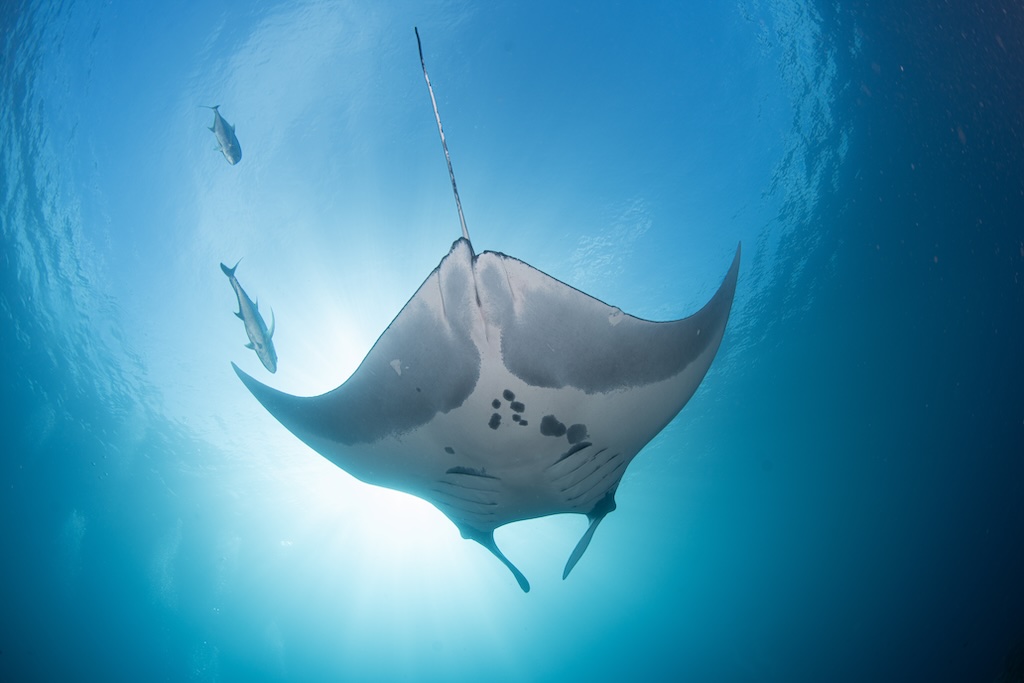
Manta Sandy is Raja Ampat’s most reliable manta cleaning station: a sandy patch between two coral heads where up to ten reef mantas queue to be cleaned by wrasses, including the striking all-black “negative” morph. Divers kneel behind a marked line to avoid disturbing the animals — a simple system that keeps this one of the most dependable manta encounters in Indonesia. Mild conditions make it accessible to all levels.
Best Dive Sites in the Fam Islands & Batanta — My Dives
5. Melissa’s Garden – Fam Islands
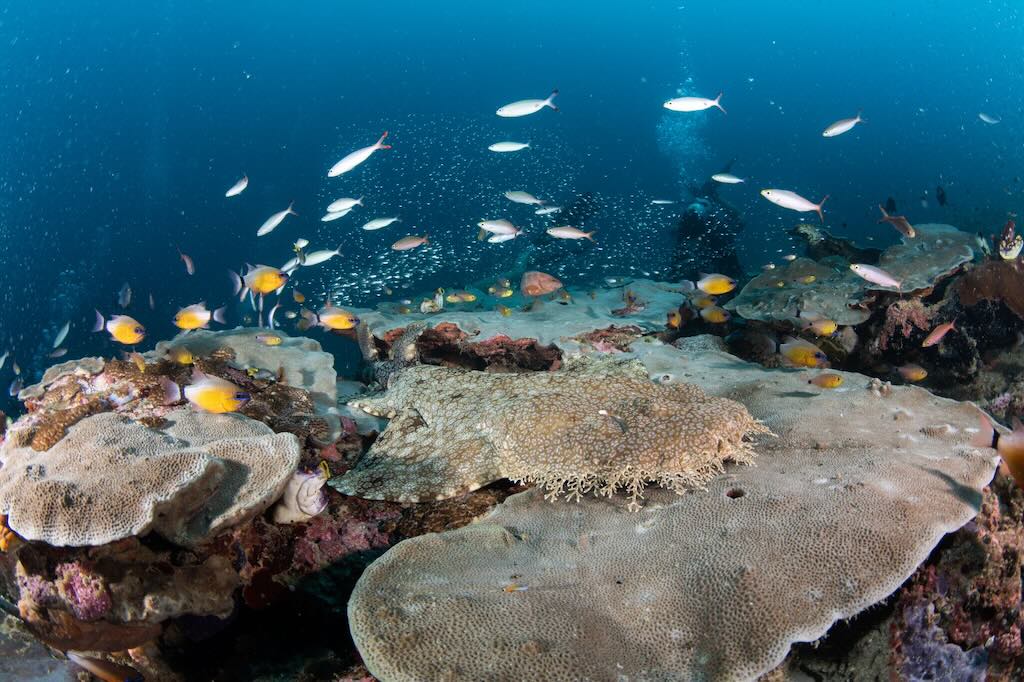
Melissa’s Garden is an iconic site in the Fam archipelago and one of the most beautiful coral gardens I’ve ever dived. You’ll find a vibrantly colored reef with an incredible diversity of hard and soft corals, and clear water ideal for watching schools of butterflyfish, clownfish, groupers, jacks, and triggerfish. The shallow depth makes it accessible to everyone — if you’re on a liveaboard, it’s a perfect refresher dive if you haven’t been in the water for a while.
My dives at Melissa’s Garden: I was struck by the marine density. Schools of anthias and damselfish hovered above the coral while a perfectly camouflaged wobbegong shark rested beneath a ledge. Blacktip reef sharks cruised nearby, a majestic Napoleon wrasse passed by, and compact groups of bigeye, giant, and bluefin trevally completed the scene.
6. Keruo Channel – Fam Islands
In the same region as Melissa’s Garden, Keruo Channel is a captivating drift dive through a narrow passage between two islands. Moderate currents carry you past coral walls where manta rays, reef sharks, and schools of parrotfish and jacks hunt. The channel is also a great place to study the site’s unique geology — the coral-covered walls that line the passage.
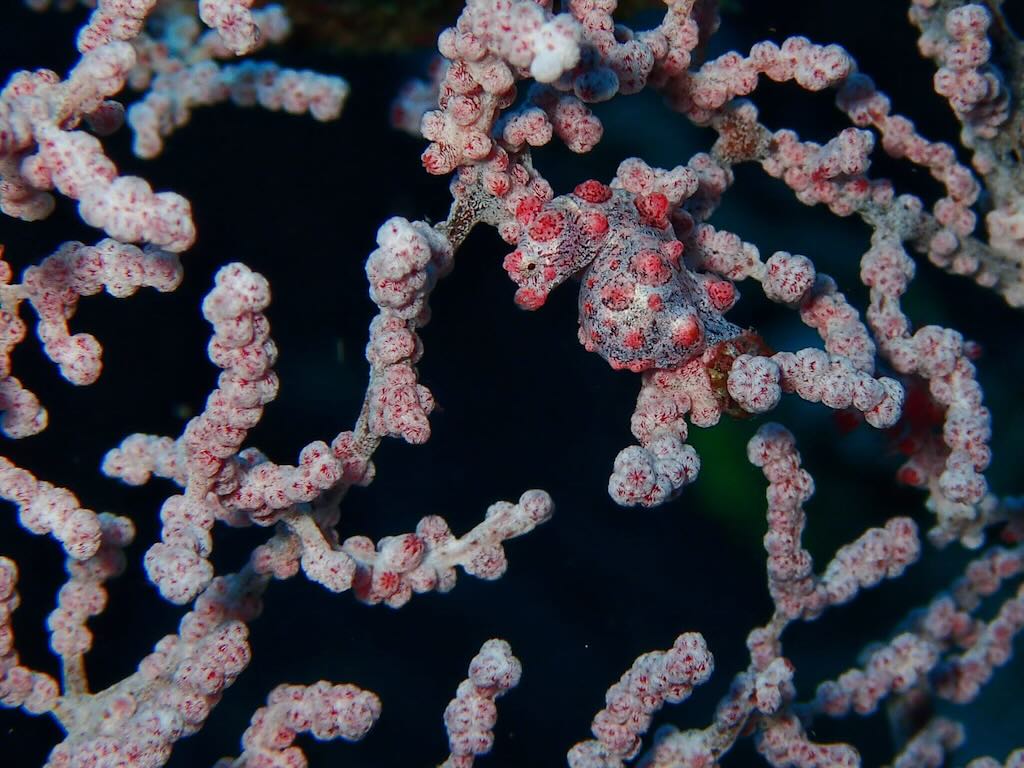
My dive in Keruo Channel: I’ve only dived it once, but it was a beautiful dive. Majestic bluefin and giant trevally swam in harmony, and exploring the reef’s nooks I found tiny Denise’s and Bargibanti pygmy seahorses hidden in their gorgonians. Schools of bumphead parrotfish added splashes of color while damselfish and fusiliers formed a true underwater ballet.
7. Batu Rufas – Fam Islands
Batu Rufas is another underwater treasure of the Fam region. The topography is remarkable — caves, tunnels, and overhangs sheltering diverse marine life. Good buoyancy control is essential to navigate these features, which makes the site better suited to divers with some experience. Expect nudibranchs, sea turtles, reef sharks, and clouds of tropical fish.
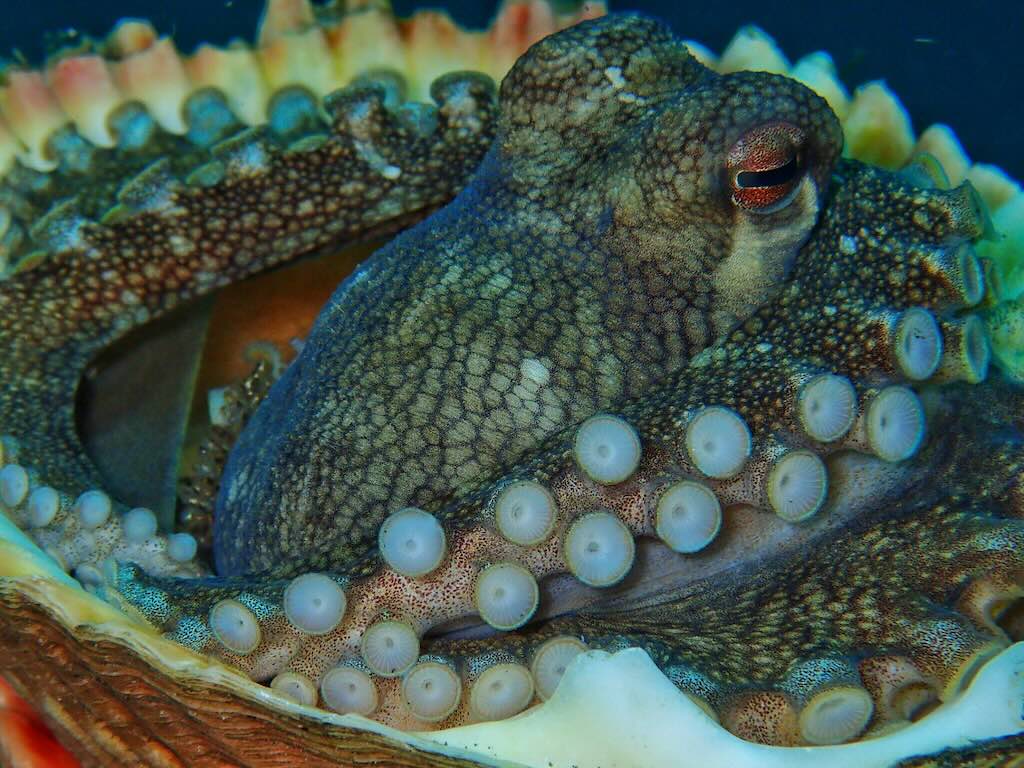
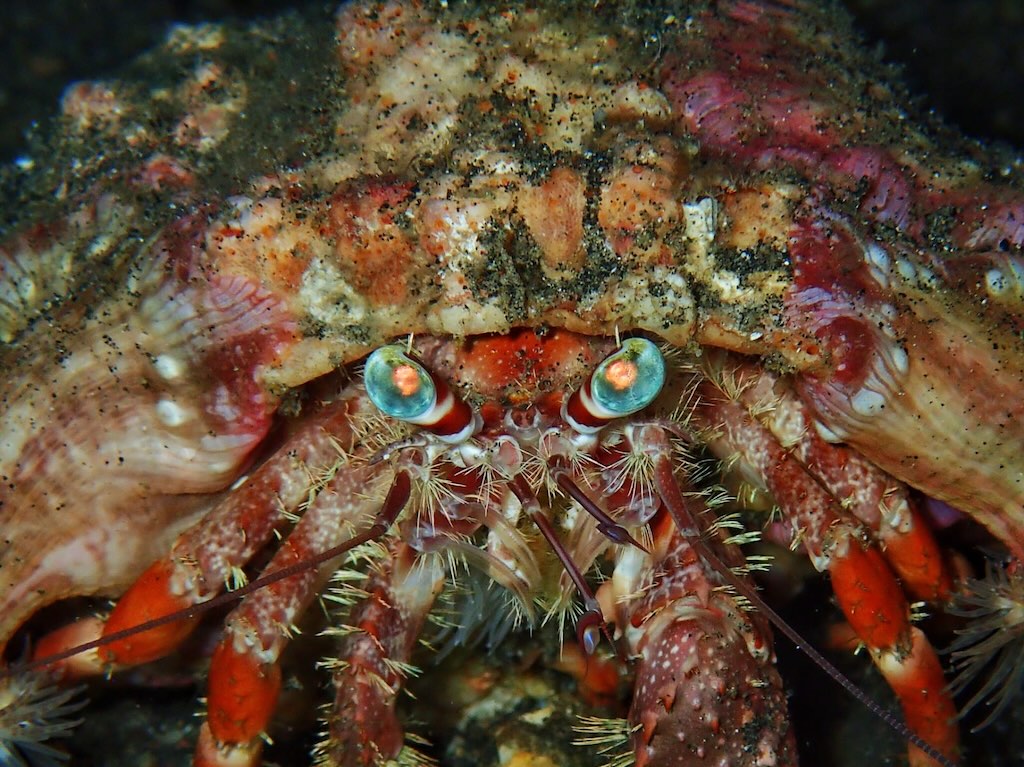
My night dive at Batu Rufas: a parade of creatures — an orangutan crab, a dwarf cuttlefish, an octopus exploring the reef and camouflaging itself with every movement. Decorator crabs blended into the landscape, adorned with pieces of coral and algae, and brightly colored nudibranchs added the final touch to an unforgettable night.
8. Dayang & Convergence – Batanta
The Dayang and Convergence sites sit near Batanta Island, on the southern edge of the Dampier Strait. Dayang offers a varied landscape of vibrant reefs and rock formations where currents funnel in fish of every size. At Convergence, currents meet — creating a dynamic ecosystem that attracts everything from tiny critters to large predators.
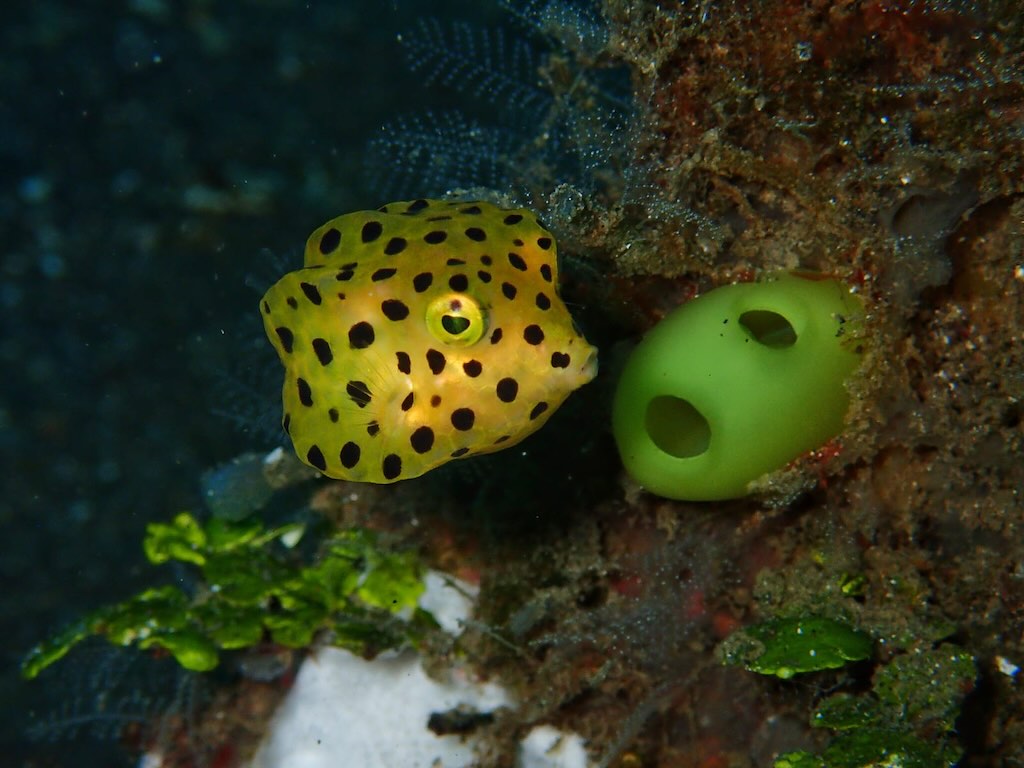
My dives at Batanta: manta rays glided effortlessly in the current while a well-camouflaged wobbegong rested on the reef. A ribbon eel and colorful nudibranchs added detail to the scene before blacktip reef sharks began hunting, joined by an imposing sandbar shark. Even a curious boxfish made a brief appearance in this intense, vibrant dive.
Best Dive Sites in Misool — My Dives
Misool, in southern Raja Ampat, is prized for its dramatic pinnacles, soft coral walls, and rich biodiversity. It’s liveaboard territory — remote, wild, and home to some of the most intense reef scenery I’ve seen anywhere.
9. Boo Window – Pulau Boo
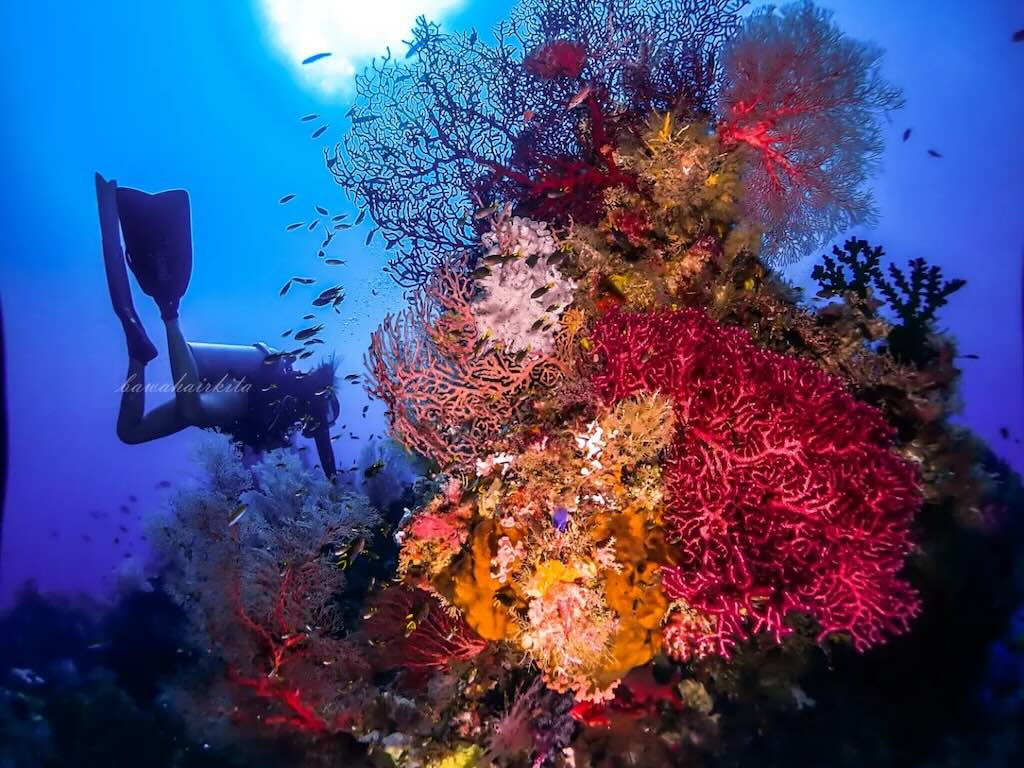
Boo Window is famous for its two natural “windows” cut through a huge underwater rock, offering a spectacular view out onto the open reef. The site teems with parrotfish, angelfish, and rays, and the caves and crevices around the windows occasionally produce sharks and humphead wrasse. The coral colors here are of a rare intensity — an almost surreal landscape.
My dives at Boo Window: grey reef sharks cruised past while blacktip reef sharks performed a rare mating display. A majestic Napoleon wrasse, batfish, and dense schools of barracuda filled the blue, hawksbill turtles glided by, and tiny Denise’s pygmy seahorses hid among the corals.
10. Wakraket – Karang Bayangan
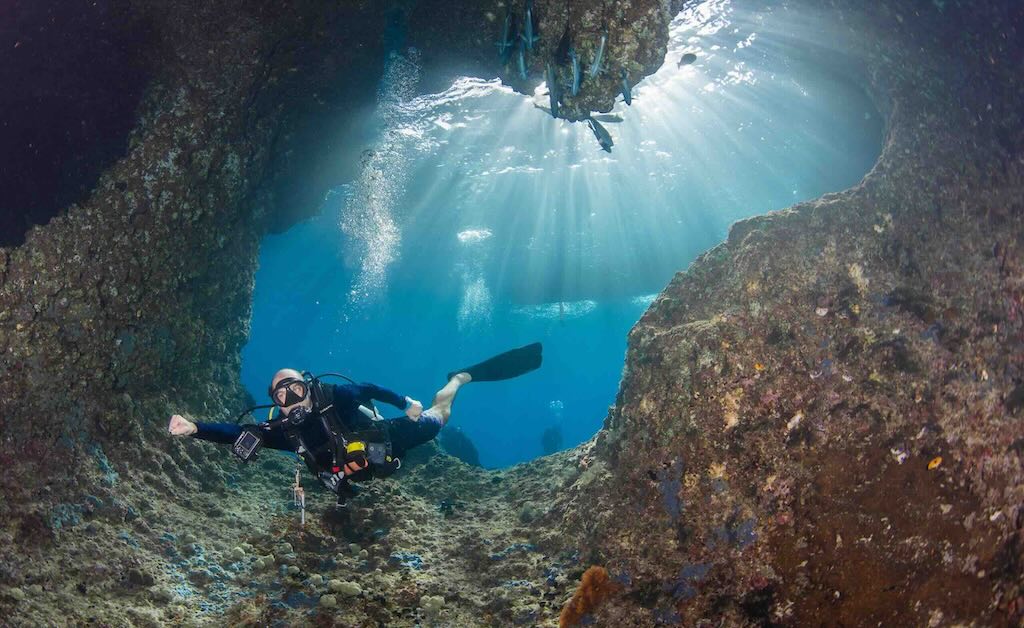
My dive at Wakraket: further south at Karang Bayangan, near Warakraket, cathedral-like underwater topography set the scene. An oceanic manta ray glided past, followed by an epaulette shark — Raja Ampat’s famous “walking shark” — resting on the reef. Sandbar and juvenile blacktip sharks cruised alongside trevally, yellow snappers, and anthias, while Napoleon wrasse and schools of yellowtail barracuda completed an unforgettable dive.
11. Tank Rock
Tank Rock, also called Pinnacle Rock, is an impressive site of pinnacles covered in soft and hard corals. Currents can be intense, attracting large pelagics such as tuna, trevally, and manta rays — which is exactly why it’s best suited to experienced divers. The pinnacles create a spectacular environment of canyons and walls where sea turtles and colorful nudibranchs round out the cast.
My dive at Tank Rock: Misool’s dramatic pinnacles and gorgonian-covered walls set the tone. A school of blacktail barracuda glided past, joined by a commanding Napoleon wrasse and patrolling bigeye trevally. Further out, bluefin trevally launched into a fast-paced hunt — the raw energy that defines Misool.
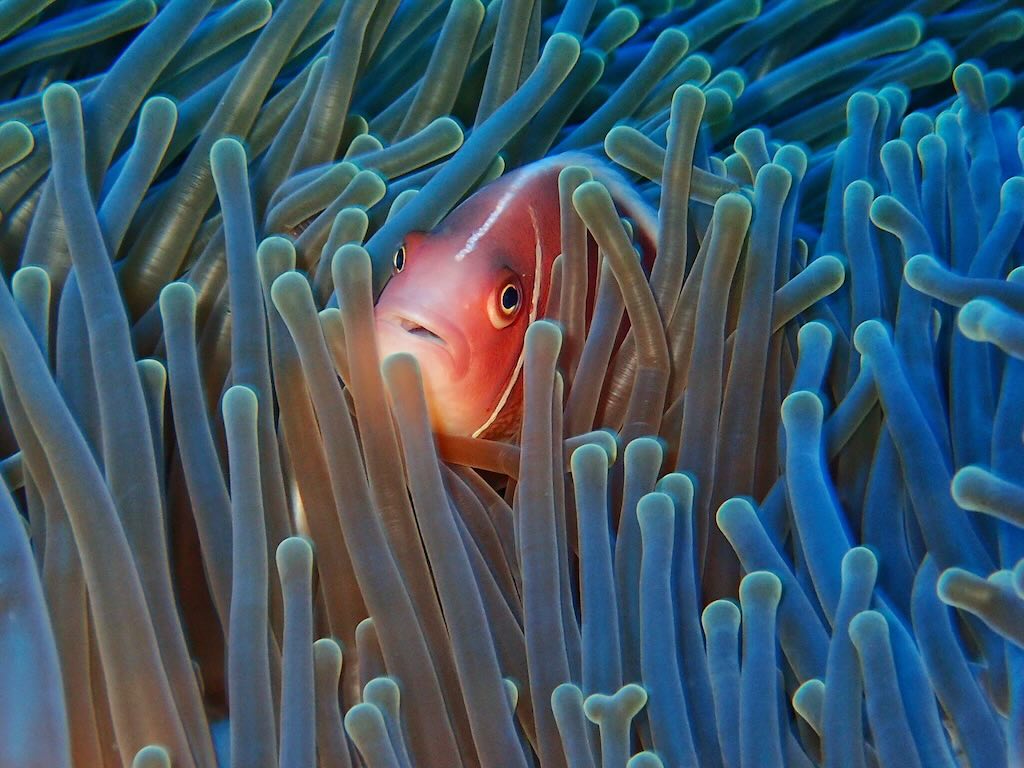
12. Four Kings – Pulau Wayilbatan
Four Kings is a group of four pinnacles rising from the depths, draped in soft corals. The site is exceptional for its abundant wildlife — manta rays, barracudas, groupers, and reef sharks — with perfect nooks for spotting clownfish and angelfish. Visibility is often excellent, and the light filtering through the water sets the corals glowing in shades of pink, purple, and yellow.
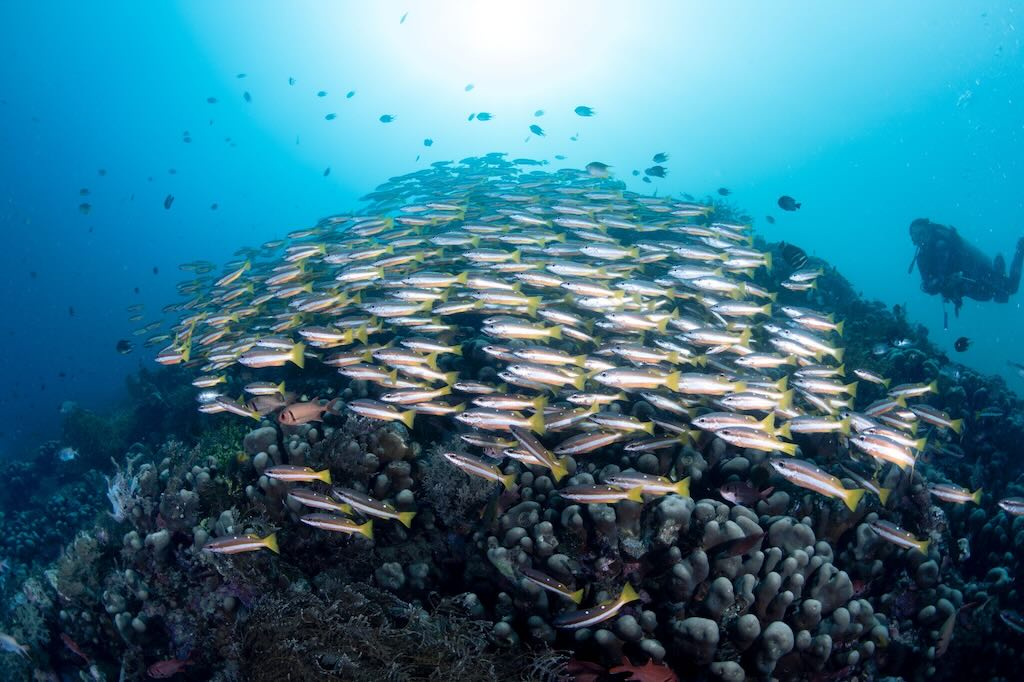
My dive at Four Kings: a fascinating experience among spectacular coral formations that create an underwater Gothic cathedral. A huge school of yellow snapper danced around the structures, enveloping the rocks in color; damselfish added flashes of blue while yellowtail barracudas cruised past, their silhouettes contrasting with the reef.
13. Wedding Cake – Pulau Wayil
Wedding Cake takes its name from its layered shape. It’s perfect for drift diving, a gentle glide through canyons and along coral walls. The fauna is diverse — schools of surgeonfish, parrotfish, and with luck, leopard sharks — while the constant current brings in pelagics like jacks and tuna as you float along the walls.
My dive at Wedding Cake: a pinnacle of unique beauty with steep walls and impressive overhangs. Sweetlips and jacks patrolled the pinnacle, and I found a very cute zebra-striped pipefish tucked into the reef.
14. Barracuda Rock – Pulau Wayil
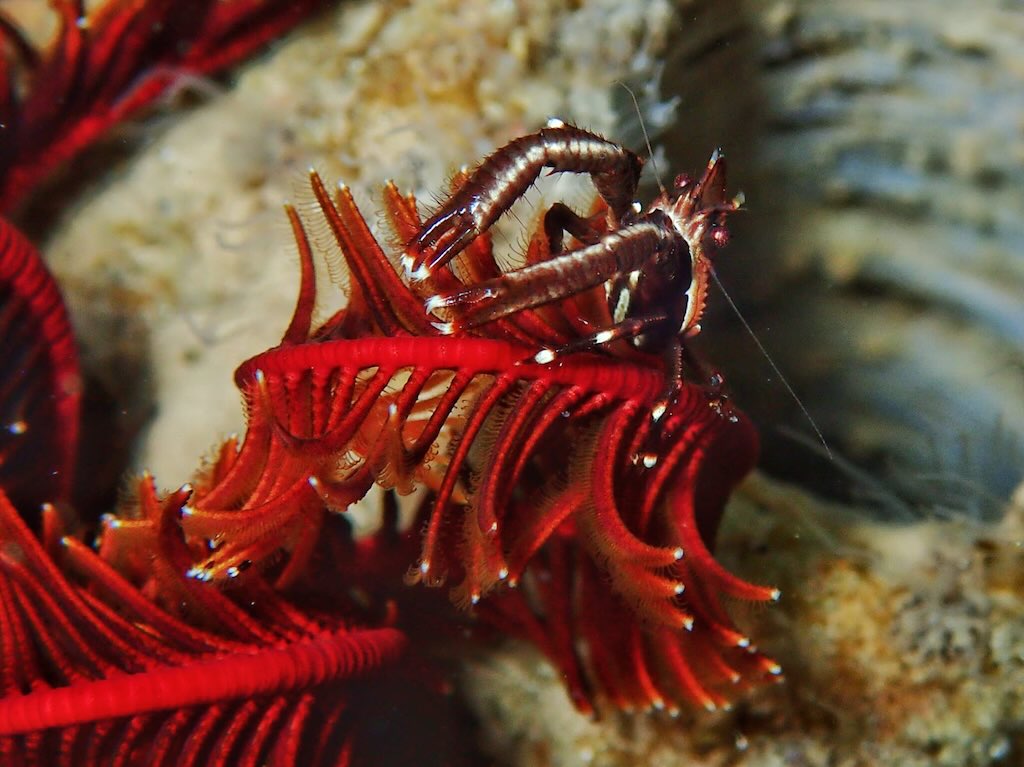
As the name suggests, Barracuda Rock is renowned for barracudas, often in large schools, along with tuna and rays. The topography is all rock formations covered in colorful corals, and the sometimes-intense currents bring in a great diversity of marine life — an ideal spot for experienced divers who enjoy big fish.
My night dive at Barracuda Rock: we first explored the wall, where crabs and brightly colored nudibranchs emerged under our lights. The highlight was an electric clam flashing hypnotic blue pulses from the reef. Drifting onto the plateau in stronger current (and briefly losing a fin!), an epaulette shark cruised along the bottom while a moray eel slipped out from the shadows.
15. Kaleidoscope – Pulau Pelee
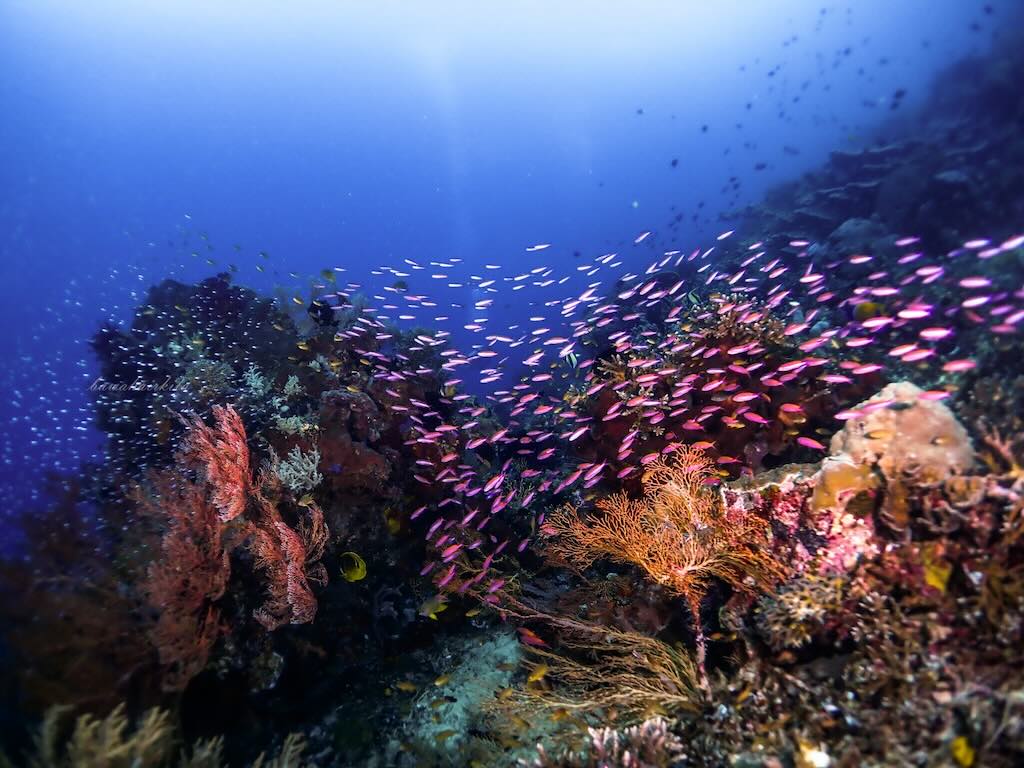
Kaleidoscope is one of the most colorful sites in Raja Ampat — hence the name. Soft and hard corals form a vibrant palette of pink, red, yellow, and purple, perfect for nudibranchs, angelfish, butterflyfish, and turtles. With excellent visibility and coral colors that pop underwater, it’s an ideal spot for underwater photography, and macro enthusiasts will find plenty of fascinating creatures.
My dive at Kaleidoscope: the dive began with hunting trevally slicing through shimmering schools of silversides, flashes of silver in every direction. Nearby, a tiny Denise’s pygmy seahorse clung to a gorgonian while blue and yellow fusiliers streamed past in vibrant waves.
Marine Life: What You’ll See Diving Raja Ampat
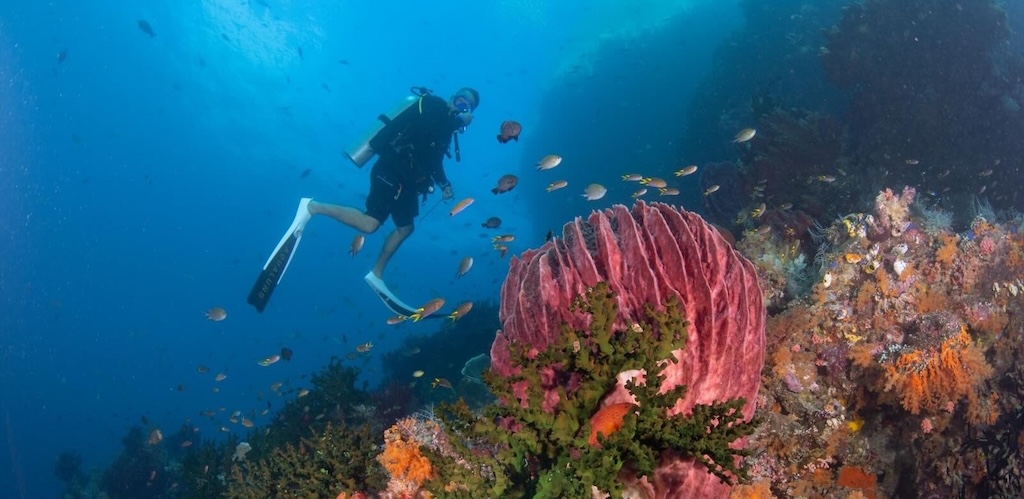
Raja Ampat sits at the epicenter of the Coral Triangle, and the numbers are staggering: over 600 coral species (about 75% of all known species) and more than 1,500 species of reef fish in a single archipelago.
Manta rays are the headline act — reef mantas at cleaning stations like Manta Sandy, and oceanic mantas at Blue Magic and Magic Mountain, mostly from October to April. Wobbegong sharks, the carpet sharks that seem to be sleeping under every other ledge, are a Raja Ampat signature; I saw them on nearly every dive. The epaulette shark — the famous “walking shark” that strolls across the reef on its fins — is a Raja Ampat endemic and a night-dive favorite. Add Denise’s and Bargibanti pygmy seahorses in the gorgonians, Napoleon wrasse, schooling barracudas and trevally, hawksbill and green turtles, and dense schools of fusiliers, snappers, and anthias that can literally darken the water.
If you photograph sharks and rays here, consider submitting your ID shots to local research programs — recreational divers’ photos help scientists track individual animals and map populations. I explain how this works in my Best Diving in Indonesia guide.
Liveaboard vs Land-Based Diving in Raja Ampat
Choosing between a liveaboard and a land-based stay depends on your diving goals, budget, and how remote you want the experience to be.
Land-Based Diving – Best for the Dampier Strait
If you stay in the Dampier Strait area (Kri, Gam, Arborek, and Waigeo), land-based diving is excellent: easy access to top sites like Cape Kri and Manta Sandy, short boat rides, comfortable eco-resorts and homestays, and the simplest logistics for first-time visitors. This is the most practical and accessible way to experience Raja Ampat.
Liveaboard Diving – Best for Misool & Remote Areas
For Misool and the remote south, a liveaboard is usually the best choice — and it’s how I dived Raja Ampat myself, aboard the Dune Aurora. You get access to remote pinnacles and untouched reefs, flexibility with tides and currents, fewer boats at the sites, and a multi-day immersion that land-based trips can’t match. See my full Indonesia diving cruise guide for what life on board is like.
Expedition-Style – Wayag & the Far North
The Wayag region and far northern Raja Ampat are true expedition territory: spectacular limestone landscapes, minimal infrastructure, and few land-based options. If you want the most remote, visually dramatic corner of the archipelago, a liveaboard is almost essential.
Which One Should You Choose?
- First time in Raja Ampat? → Land-based in the Dampier Strait
- Want pristine southern reefs? → Liveaboard to Misool
- Seeking full expedition adventure? → Liveaboard to Wayag
Both options offer world-class diving — the choice simply determines how deep into Raja Ampat’s wilderness you go.
Raja Ampat Marine Park Fees & Permits (2026)
Raja Ampat’s reefs are protected, and that protection is funded largely by visitor fees. Budget for two separate payments in 2026:
- Marine Park Entry Permit (the “PIN”): around IDR 1,000,000 (~$60) for foreign visitors, valid for the calendar year. The local authority adjusts the price annually — check the current rate before you travel.
- Visitor Entry Ticket: about IDR 300,000, valid for a single entry — if you leave Raja Ampat and come back, you’ll buy it again.
Children under 12 are exempt from the entry fee. Liveaboards usually handle permits for their guests; if you’re traveling independently, you can pay at Waisai harbour on arrival. These fees pay for the rangers and patrols that keep Raja Ampat worth diving — choosing operators that brief on no-touch reef etiquette matters just as much.
Getting to Raja Ampat
All roads lead through Sorong, the gateway city on the western tip of West Papua. Fly in from Jakarta or Makassar (several daily connections; from Bali, connect through one of the two). From Sorong:
- Liveaboards board directly in Sorong harbour — the easiest option, as the boat handles everything from there (this is how my Dune Aurora trip started).
- Ferry to Waisai (for Dampier Strait resorts and homestays): the Express Bahari fast ferry crosses in about 2 hours, from around IDR 125,000 one-way. In 2026 it runs daily at 2:00 PM, with additional 9:00 AM departures on Wednesday, Friday, and Sunday — verify the current schedule as it changes.
- Resort transfers: most dive resorts run their own speedboat pickups, either from Sorong directly or from Waisai harbour.
Build buffer time into your domestic connections and pack a save-a-dive kit — spare parts are scarce once you leave Sorong.
Where to Stay in Raja Ampat
Dive Resorts
The classic dive resorts cluster around the Dampier Strait, with house reefs and daily boats to the famous sites:
- Kri Eco Resort (Kri Island) — the pioneering resort of Raja Ampat, Papuan-style water bungalows minutes from Cape Kri and Sardine Reef. Its sister resort Sorido Bay Resort offers more comfort on the same reef (both book directly through Papua Diving; you can also browse all Kri Island stays on Booking.com).
- Papua Explorers Eco Resort (Gam Island) — overwater bungalows on the Dampier Strait, 10–15 minutes from Manta Sandy and Cape Kri (direct booking only).
- Papua Paradise Eco Resort (Birie Island, off Batanta) — overwater bungalows above a house reef, with a full dive operation and easy access to both Dampier Strait and Batanta sites.
- Meridian Adventure Marina Club & Resort (Waisai, Waigeo) — PADI 5* marina resort with easy ferry access, a good option if you want more infrastructure (also on Agoda).
Homestays
Raja Ampat has a unique network of locally owned homestays — simple beachfront bungalows (expect basic comfort: mattress on the floor, bucket showers at some) with full board, typically IDR 350,000–500,000 per person per night. They’re the budget way into paradise and put money directly into Papuan communities. Many arrange diving with local operators or are within reach of Arborek and Manta Sandy — see the guest houses of Kri on Booking.com.
Liveaboards
For Misool and the remote south, book a liveaboard — typical Raja Ampat itineraries run 7–11 nights at $300–450 per night all-inclusive. I dived from the Dune Aurora, a wooden phinisi, and can’t recommend the experience enough; the full account is in my diving cruise guide.
Compare dive resorts and hotels for your dates on Booking.com:

Diving Conditions, Experience Level & Safety
Raja Ampat is current country — that’s what feeds all this life. Sites like Cape Kri, Blue Magic, and Misool’s pinnacles reward divers who are comfortable in moving water, know how to use a reef hook, and always carry an SMB. Calmer sites (Melissa’s Garden, Manta Sandy) suit all levels, so beginners can absolutely enjoy Raja Ampat — but the archipelago truly opens up with 30–50 logged dives and some current experience.
Two safety realities to respect: this is a remote region, and the nearest decompression chambers are far away (concentrated in Bali, Jakarta, and a few hubs). Dive conservative profiles, leave generous surface intervals before flying, and carry dive insurance — DAN (Divers Alert Network) is worth every cent out here. And always dive with reputable operators who brief properly on currents and reef etiquette.
👉 Read the complete Raja Ampat Travel Guide
👉 See where Raja Ampat ranks among the best dive sites in Southeast Asia
🌴 Raja Ampat Travel Guide
Discover the best time to visit, how to get there, where to stay, and detailed itinerary ideas for exploring Indonesia’s most spectacular archipelago.
🚢 Indonesia Liveaboard Guide
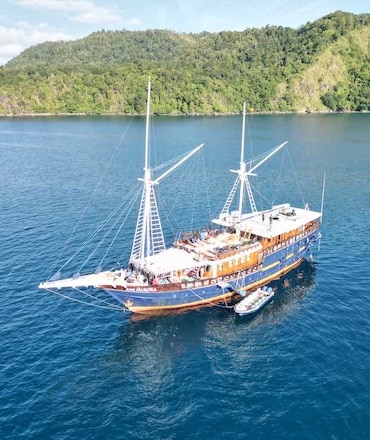
Come along on my 12-day liveaboard from Raja Ampat through the North Moluccas to the Lembeh Strait aboard the Dune Aurora — the dives, the wildlife, and life on board.
🌊 Best Diving in Indonesia
From Komodo’s powerful drift dives to the Banda Sea’s hammerheads, discover how Raja Ampat ranks among the best dive destinations in Indonesia.
Frequently Asked Questions About Diving in Raja Ampat
Is Raja Ampat the best diving in the world?
Yes, by most measures. Raja Ampat holds the highest recorded marine biodiversity on Earth — over 600 coral species and more than 1,500 reef fish species — including the world-record 374 fish species counted on a single dive at Cape Kri. For sheer density and diversity of life, no other destination matches it.
What are the best dive sites in Raja Ampat?
The most famous sites are Cape Kri, Blue Magic, Sardine Reef, and Manta Sandy in the Dampier Strait; Melissa’s Garden and Keruo Channel in the Fam Islands; and Boo Window, Four Kings, and Tank Rock in Misool. The north is best October to April, Misool May to September.
When is the best time to dive Raja Ampat?
October to April is the prime season for the Dampier Strait and northern Raja Ampat, with calm seas and peak manta activity. May to September favors Misool and the south. Water stays 28–30°C (82–86°F) year-round.
Do you need a liveaboard to dive Raja Ampat?
No. The Dampier Strait has excellent resorts and homestays with day-boat access to sites like Cape Kri and Manta Sandy. A liveaboard becomes the best option for Misool, Wayag, and the remote south — and lets you dive 3–4 times a day across more ground.
How much does diving in Raja Ampat cost?
Budget roughly $40–60 per fun dive at resorts, or $300–450 per night all-inclusive on a liveaboard (7–11 night itineraries). Add the 2026 park fees — about IDR 1,000,000 (~$60) for the annual Marine Park Permit plus IDR 300,000 for the Visitor Entry Ticket — and flights to Sorong.
Is Raja Ampat good for beginner divers?
Partly. Calm sites like Melissa’s Garden and Manta Sandy suit all levels, and resorts can pick sites to match your experience. But the signature sites — Cape Kri, Blue Magic, Misool’s pinnacles — involve strong currents, so Raja Ampat rewards divers with 30–50 logged dives and current experience.
Where can you see manta rays in Raja Ampat?
Manta Sandy is the most reliable reef manta cleaning station, while Blue Magic and Magic Mountain (Misool) are the two sites with regular oceanic manta encounters. Season runs roughly October to April in the north.
What is a wobbegong shark and will I see one?
The wobbegong is a flat, carpet-like shark that rests under ledges and table corals — a Raja Ampat signature species. Sightings are near-daily; on my Dune Aurora trip we found them on almost every dive, especially at Melissa’s Garden.
How do you get to Raja Ampat?
Fly to Sorong via Jakarta or Makassar. Liveaboards board in Sorong harbour; for resorts and homestays, take the Express Bahari fast ferry to Waisai (about 2 hours, from IDR 125,000, daily at 2:00 PM plus 9:00 AM on Wednesday, Friday, and Sunday in 2026) or arrange a resort speedboat transfer.
What fees do you pay to dive Raja Ampat in 2026?
Two fees: the Marine Park Entry Permit (around IDR 1,000,000 for foreigners, valid for the calendar year) and the Visitor Entry Ticket (about IDR 300,000, single entry). Children under 12 are exempt. Liveaboards typically arrange these for you.
Is diving in Raja Ampat safe?
Yes, with sensible precautions: dive with reputable operators, respect current briefings, carry an SMB and reef hook, and dive conservative profiles — decompression chambers are far away. Dive insurance such as DAN is strongly recommended in a region this remote.
About This Guide
This guide was written by Blaise Jaeger, a PADI Master Scuba Diver with more than 700 logged dives across Indonesia. Blaise dived Raja Ampat — the Fam Islands, Batanta, and Misool — in April 2023 aboard the Dune Aurora liveaboard, on a 12-day crossing from Sorong to the Lembeh Strait. He has lived in Indonesia for years, on Nusa Penida near Bali, where he opened the island’s first PADI dive centre in 2017 and still works in the diving industry. The dive-site descriptions in the Dampier Strait section are researched from local operators; every other site account comes from his own logbook.