Philippines Travel Guide: Manila, El Nido, Coron and Boracay
By Blaise Jaeger · Updated October 24, 2026
The Philippines is more than 7,000 islands, and most travelers only ever see three or four of them. That is fine: the hard part is not finding something beautiful, it is choosing, and then getting from one island to the next without losing a day each time.
I have been twice, thirty-four years apart. In January 1989 I came with two friends, Jacques and Laurent, on a long trip through Asia: Boracay and Baguio. In January 2023 I came back with my friend Roy for a week from Manila to Palawan: Intramuros, Tagaytay, El Nido, and the Japanese wrecks of Coron from Sangat Island. This guide is built from those two trips, with plain facts for the places I have not seen.
Why Visit the Philippines?
For the water, first. The limestone lagoons of El Nido, the WWII wrecks of Coron, the sardine run of Moalboal and the reefs of Tubbataha make the Philippines one of the great dive and snorkel destinations in Asia — and you do not need to dive to enjoy most of it, because a kayak or a mask is enough in the lagoons.
Then for the people. English is an official language, Filipinos are among the warmest hosts in Asia, and three centuries of Spanish rule followed by fifty years of American administration have left a culture unlike anywhere else in the region: baroque churches, fiestas, karaoke and jeepneys.
And because it is still easy to find a beach without a crowd. Boracay and El Nido are busy; a lot of the rest is not.
The Philippines at a Glance
- Capital: Manila, part of a metropolitan area of more than 13 million people.
- Islands: more than 7,000, in three groups — Luzon in the north, the Visayas in the middle, Mindanao in the south. Palawan sits apart to the west.
- Languages: Filipino and English are both official; English is spoken almost everywhere you will go.
- Currency: the Philippine peso (₱, PHP).
- Entry: visa-free for up to 30 days for most Western passports, with an onward ticket and the free eTravel registration.
- Climate: tropical; dry season from December to May, typhoon season from June to November.
- Time to see it properly: ten days for Manila and Palawan, two weeks to add a second region.
My Philippines: Boracay in 1989, Palawan in 2023
1989: Boracay and Baguio
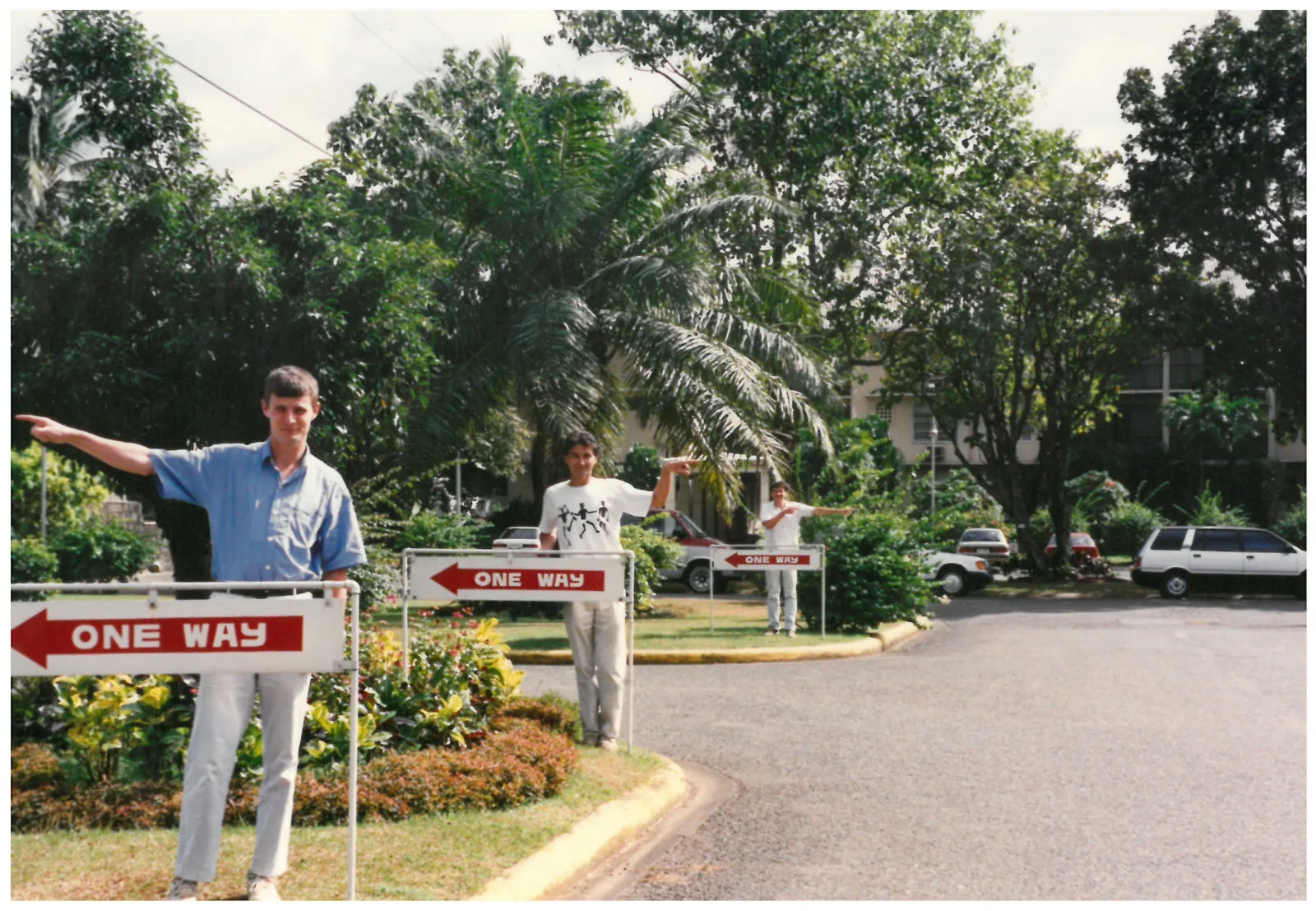
My first trip was in January 1989, during a seven-week break between two jobs, with Jacques and Laurent. The Philippines was one stop in a loop that also took in Thailand, Hong Kong and Sri Lanka. We went up to Baguio, the mountain city of northern Luzon, and down to Boracay, where the photo below was taken on the beach, with the island’s sailing bangkas pulled up on the sand behind us.
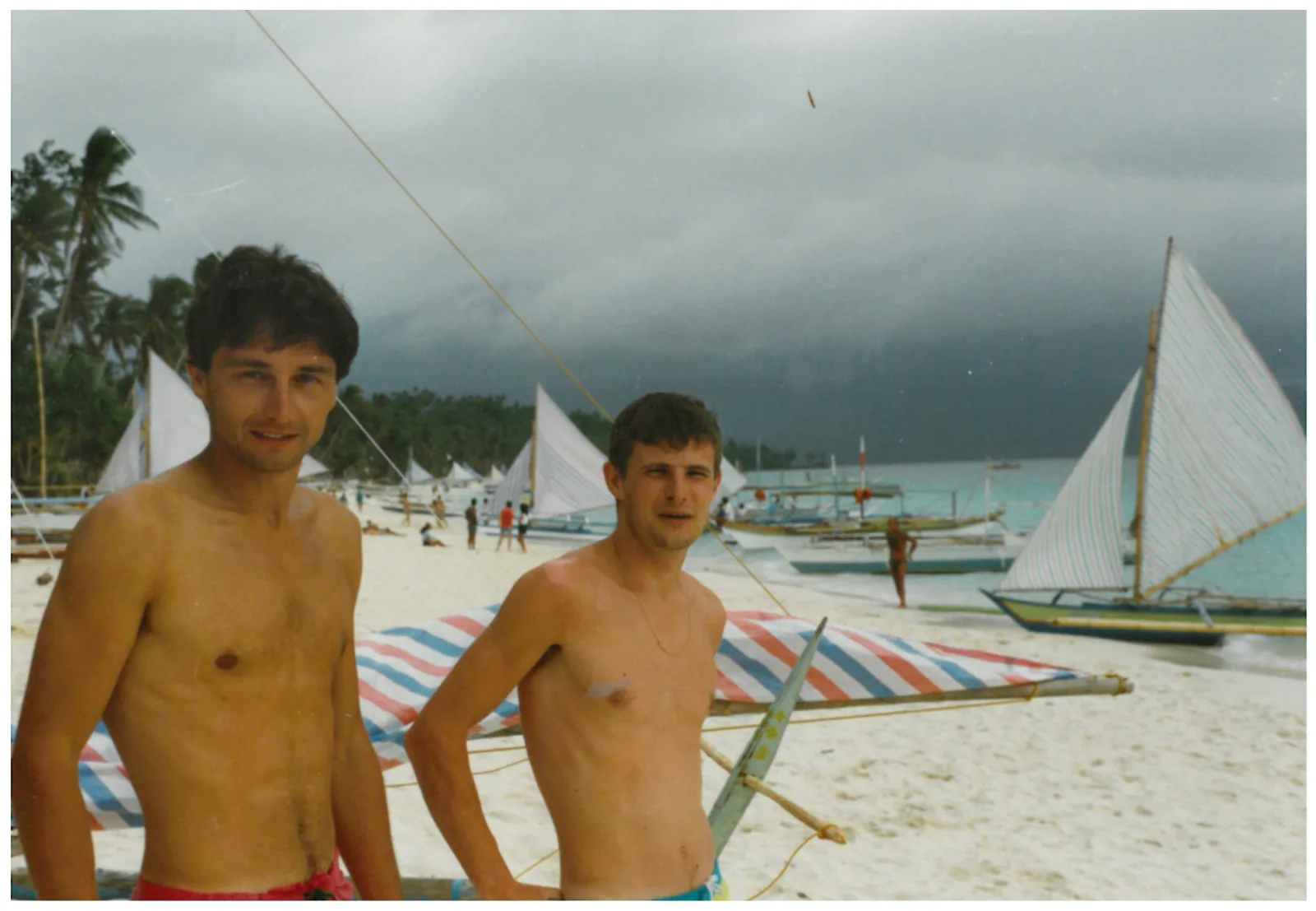
I have not been back to Boracay since, so I will not pretend to compare it in detail. What I know is that it is no longer the island of that photo: it now has resorts the length of White Beach, and it was closed to visitors for six months in 2018 for a large clean-up.
2023: from Manila to Palawan with Roy
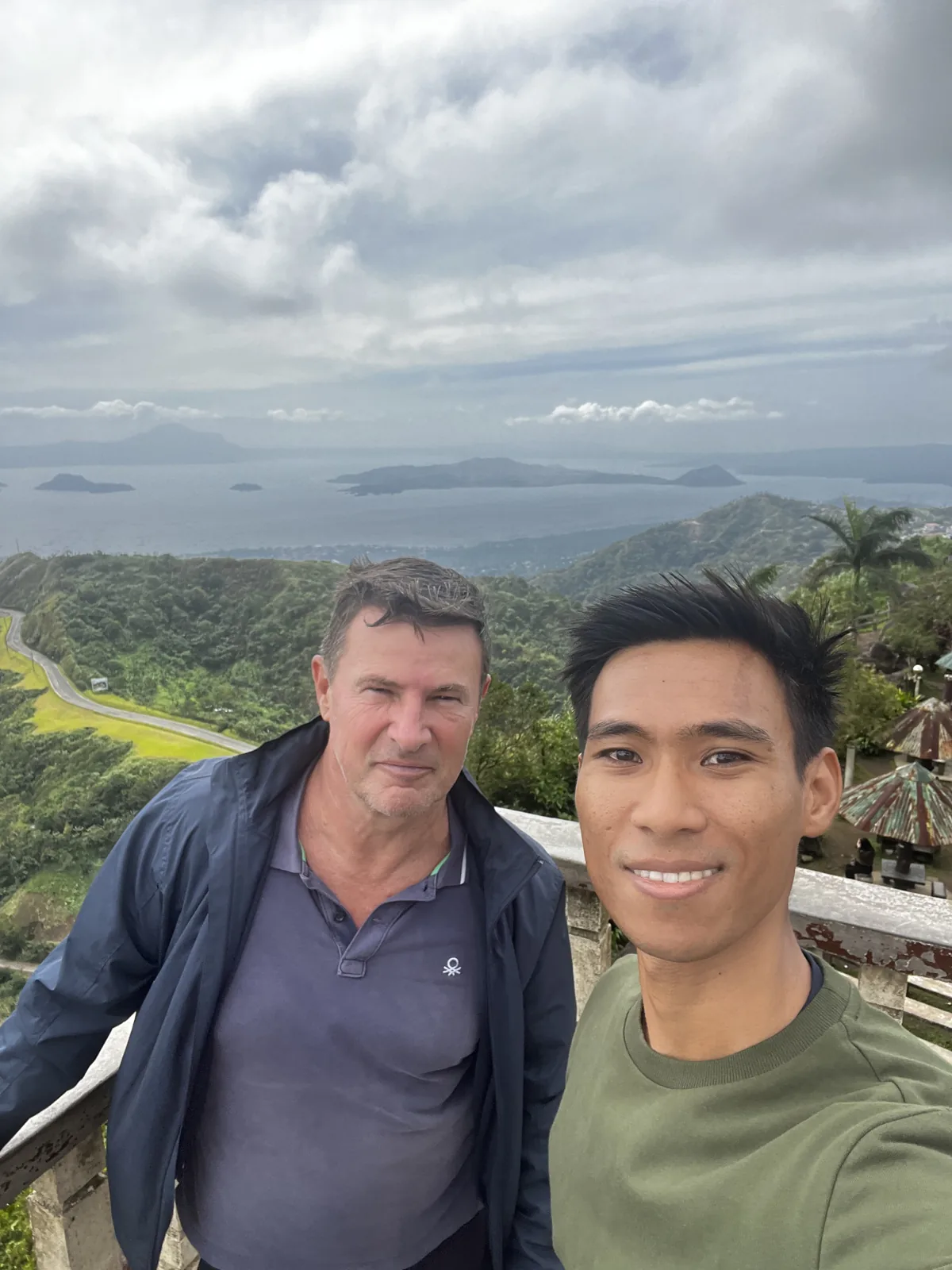
In January 2023 I came back for a week with Roy. We started south of Manila at Tagaytay, on the ridge above Taal Lake and its volcano, slept that night at the Ascott Bonifacio Global City Manila, and spent the next day in Intramuros, the old walled Spanish city.
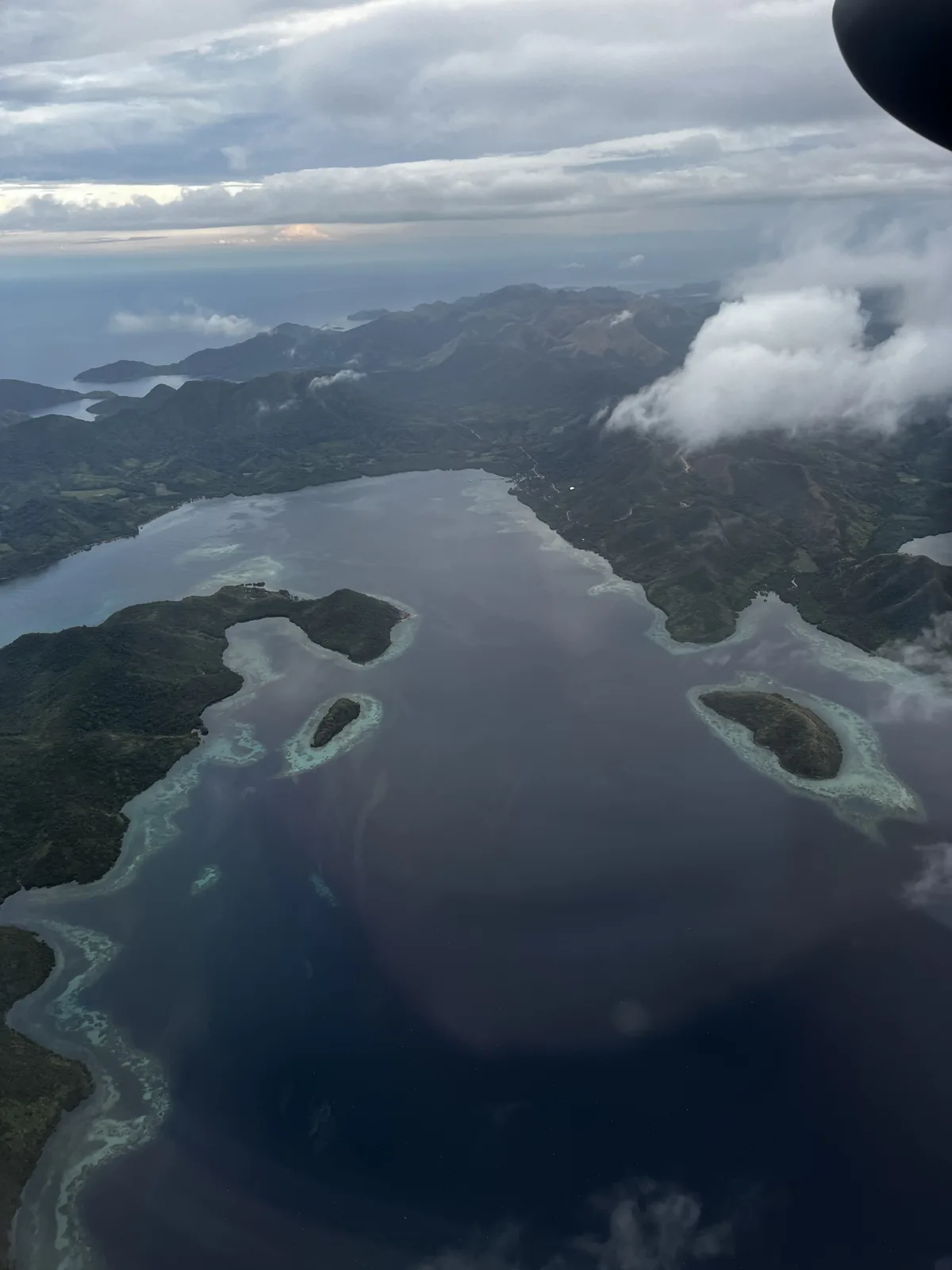
That evening we flew to Puerto Princesa, slept at the Canvas Boutique Hotel, and took the road north to El Nido the next day. Two nights at Sophias Beach Guest House, one day in the lagoons by boat and kayak, then the Atienza Interisland ferry to Coron: it leaves El Nido at 12:30 PM and is meant to arrive around 5:30 PM. The last part of the week was on Sangat Island, at the Sangat Island Dive Resort, where I dived the Japanese wrecks of Coron Bay. We flew back to Manila from Busuanga and finished at the National Museum.
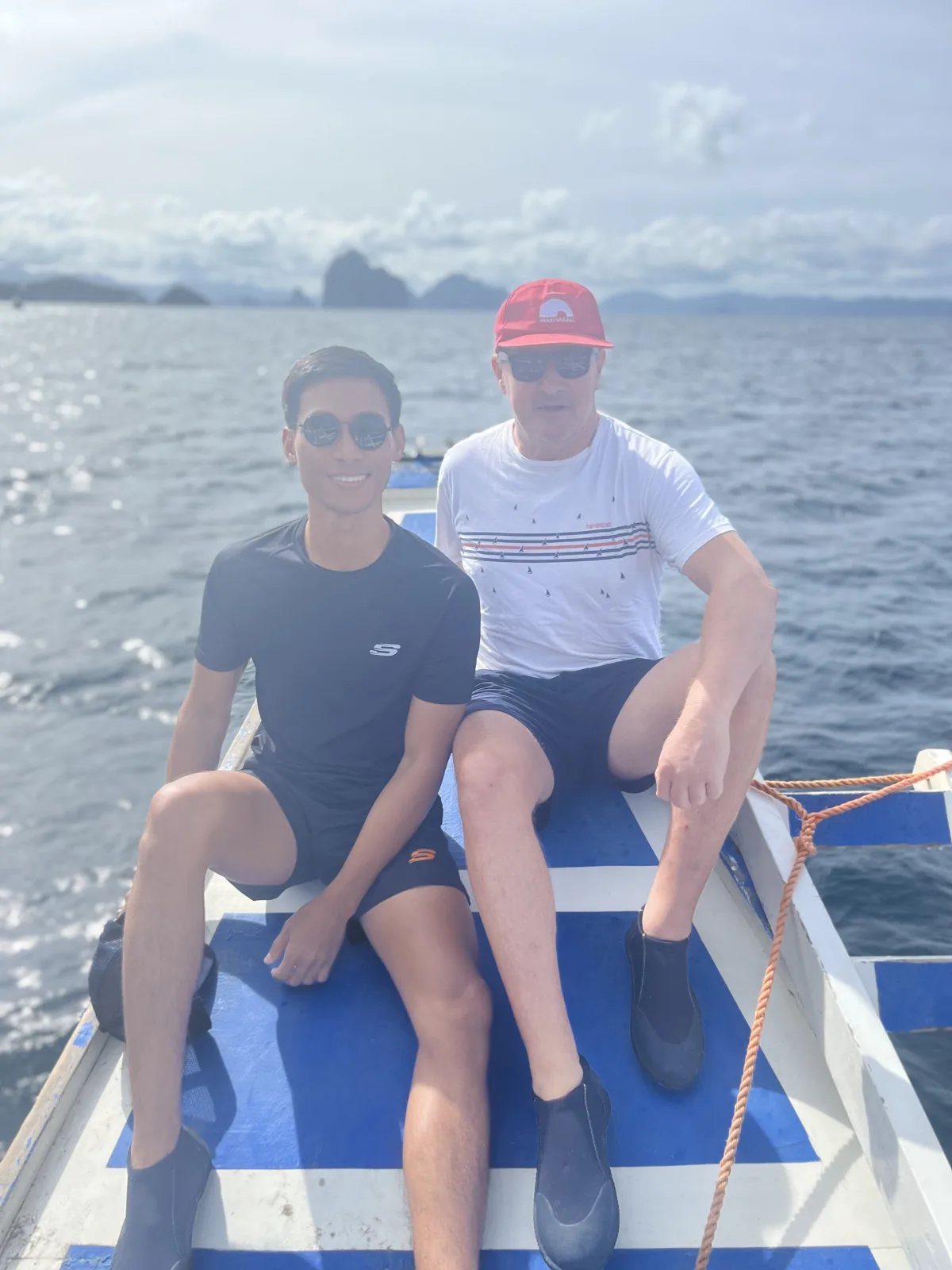
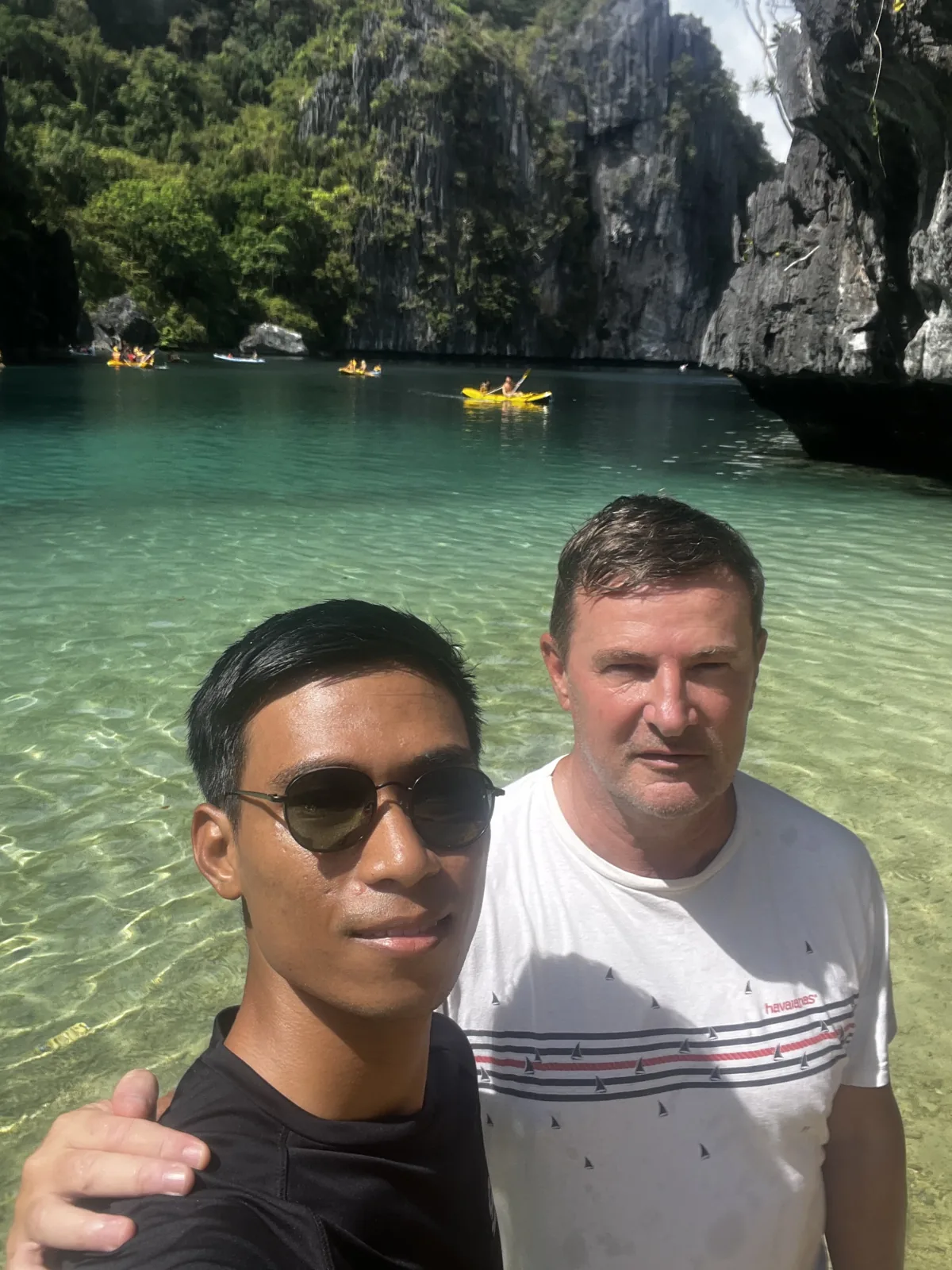
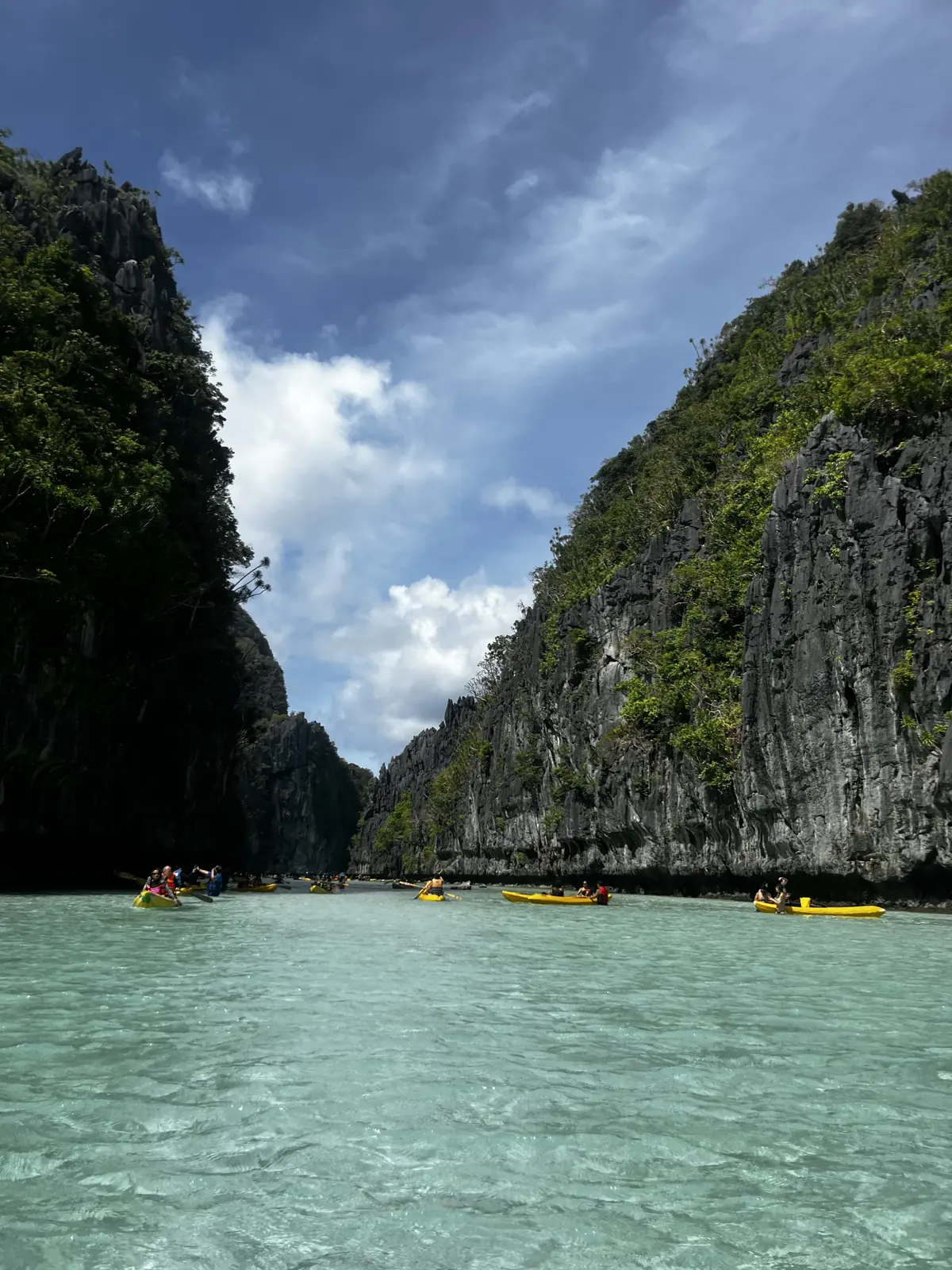
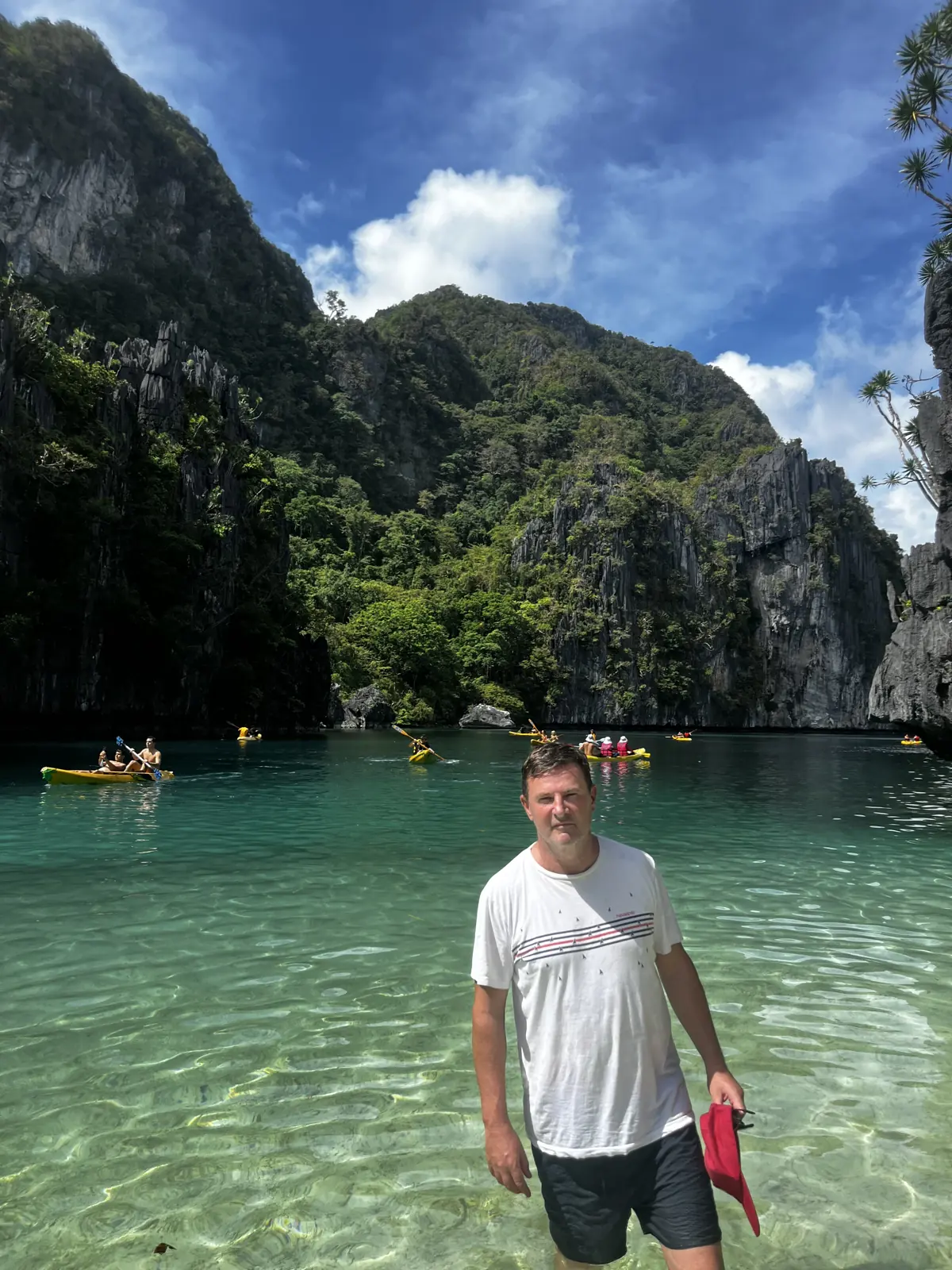
If I had to keep one image of the trip, it would be the Big Lagoon: you leave the boat at the entrance and paddle in between limestone walls, in water that is barely knee-deep and completely clear.
Where to Go in the Philippines
Pick a region, not a list. Flights between islands are short but they almost always go through Manila or Cebu, and every connection costs half a day. Here is how the main places compare.
Manila and Intramuros
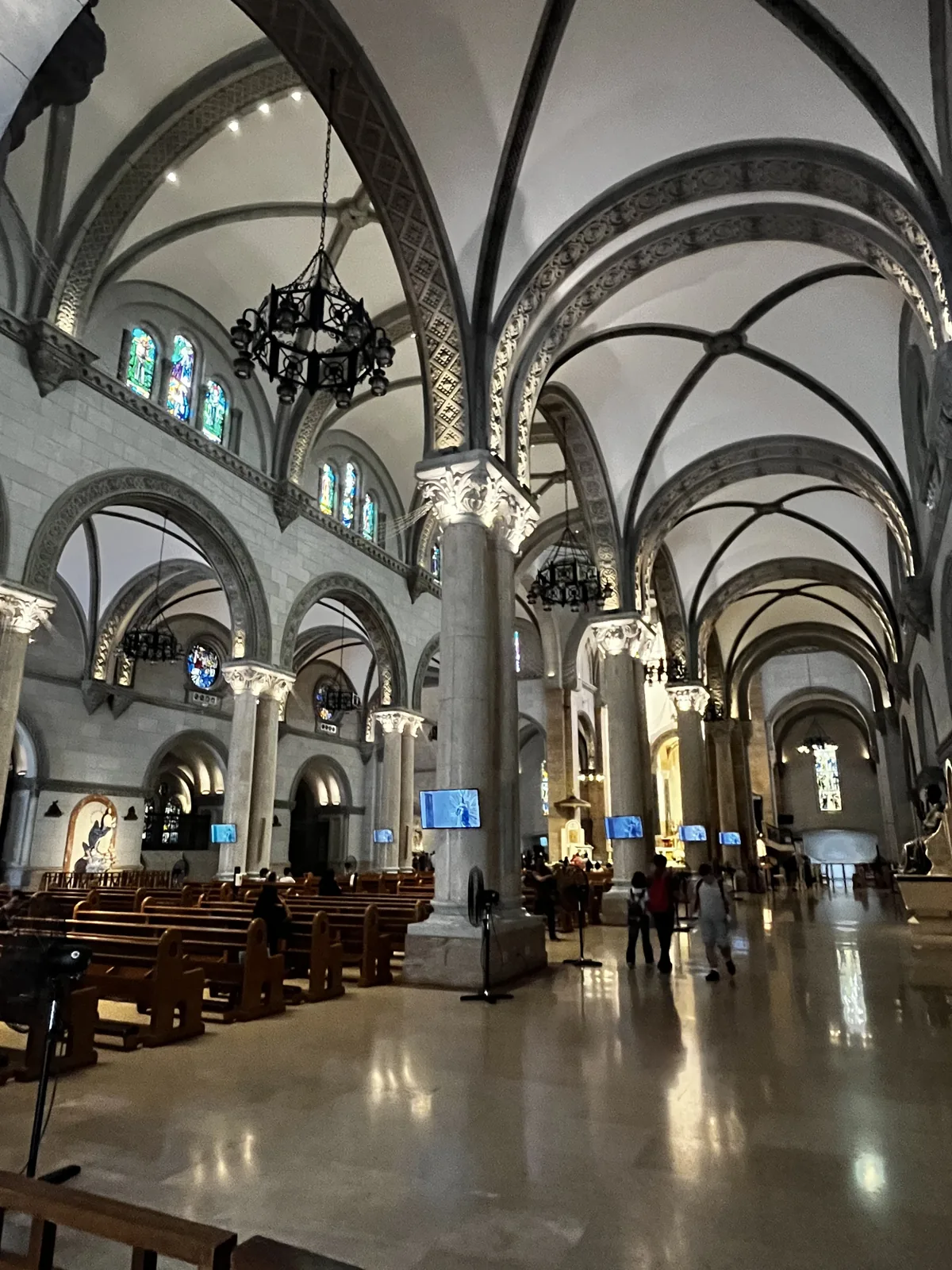
Most trips start in Manila, and most travelers leave it as fast as they can. Give it one day for Intramuros, the walled city the Spanish built from the 16th century: Fort Santiago at the mouth of the Pasig river, Manila Cathedral, San Agustin Church — a UNESCO World Heritage Site — and the cobbled streets around them. Add the National Museum, whose complex is free to enter.


Tagaytay and Taal Lake
About two hours south of Manila by road, Tagaytay sits on the rim of a huge caldera with Taal Lake in the middle and Taal Volcano, one of the most active in the country, as an island in the lake. It is cooler than Manila and makes an easy day or overnight trip. We went up to People’s Park in the Sky, at the top of the ridge.
El Nido, Palawan
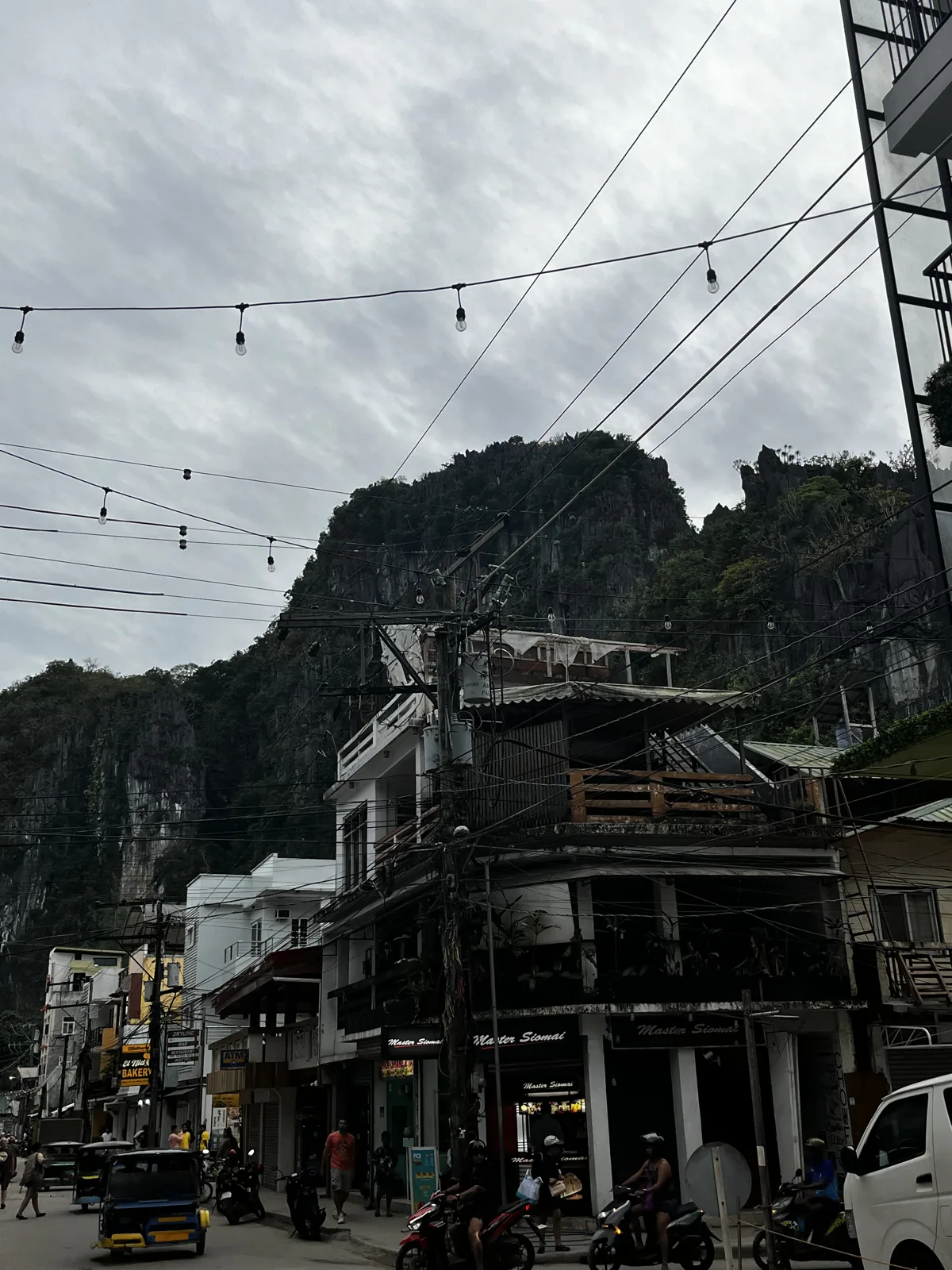
Limestone islands, lagoons and beaches in the Bacuit archipelago, explored on four standard boat tours called A, B, C and D. Tour A is the one with the Big Lagoon. The town itself is a busy strip of guesthouses and bars at the foot of a cliff. More below.
Coron, Palawan
North of El Nido, in the Calamian Islands. Underwater, it is the best wreck diving in Southeast Asia — ships of a Japanese supply fleet sunk by US carrier aircraft on 24 September 1944 — and above water, Kayangan Lake, Twin Lagoon and small islands like Sangat. It features in my top 10 dive sites in Southeast Asia.
Puerto Princesa
The capital of Palawan and its main airport, best known for the Underground River, a UNESCO site. Most people use it as a night between the plane and the road north, which is what we did.
Boracay
The famous beach: four kilometers of white sand on a small island south of Luzon, reached through Caticlan airport and a short boat ride. Beautiful and busy. My memories of it are from 1989, so I keep it short here.
Cebu, Bohol and Siargao
The Visayas are the second big region: Cebu for the sardine run at Moalboal and the diving, Bohol for the Chocolate Hills and its beaches at Panglao, and Siargao, further east, for surfing. I have not been to any of them yet.
Northern Luzon: Baguio and Banaue
Cool mountains, the summer capital of Baguio and the rice terraces of Banaue and Batad, cut into the hills by the Ifugao people. My Baguio dates from 1989; the terraces are still on my list.
El Nido and Coron: The Trip I Would Repeat
Island hopping in El Nido
The tours leave from the beach in town in the morning and come back late afternoon, with lunch on board. You pay the Eco-Tourism Development Fee once, ₱400 per person and valid ten days, plus a separate ₱200 fee for the Big Lagoon. Boats are not allowed into the lagoon: they anchor at the mouth, and you swim or paddle in. A two-seat kayak costs around ₱300 to ₱400.
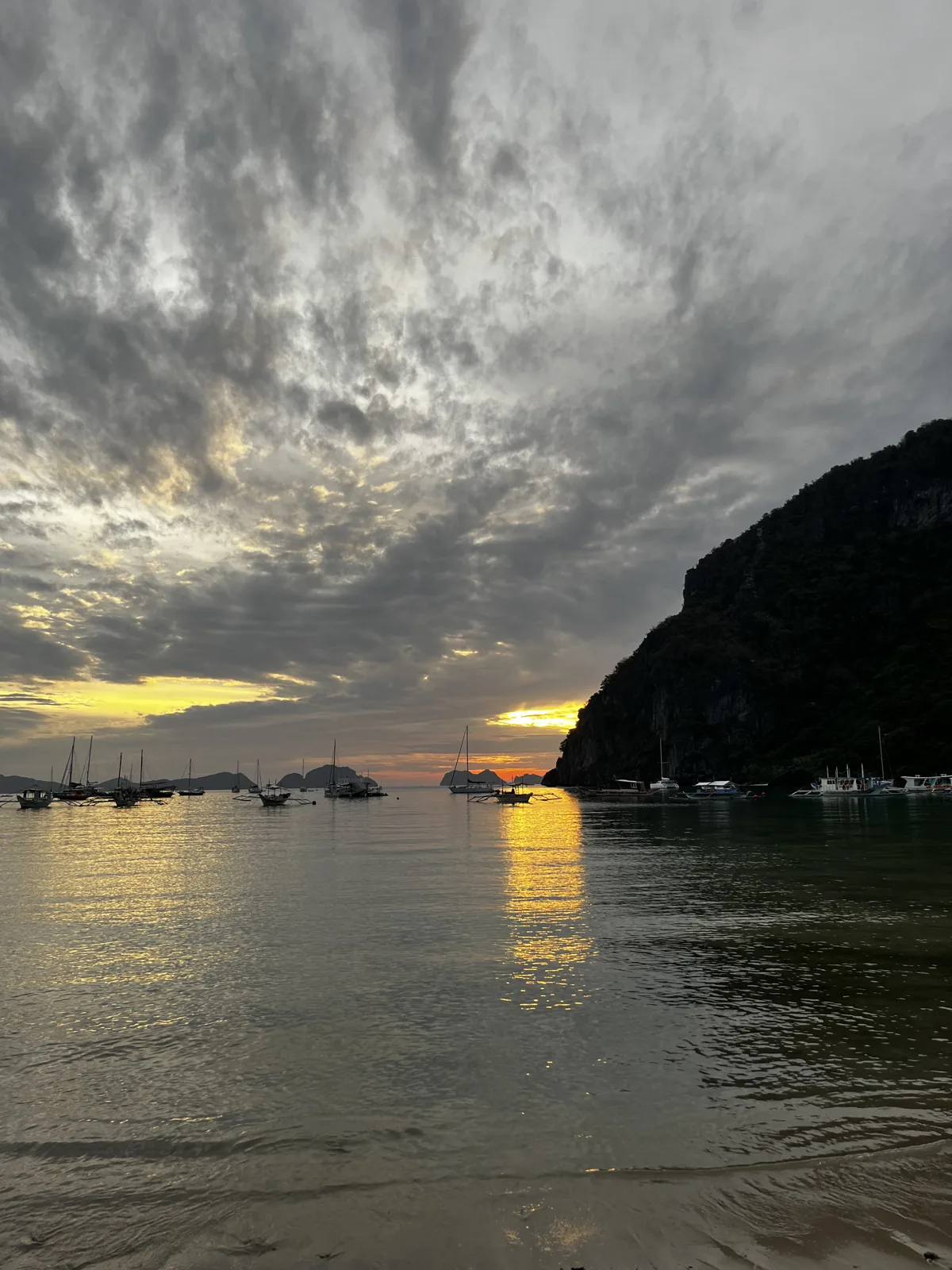
In the evening, walk to the end of the beach in town for the sunset over the bay.
From El Nido to Coron by ferry
There is no road: you go by sea or fly. We took the Atienza Interisland fast ferry, which leaves El Nido at 12:30 PM and is scheduled to reach Coron in the late afternoon — around four to five hours on the water, depending on the sea. Book a day or two ahead in high season.
Sangat Island and the Coron wrecks
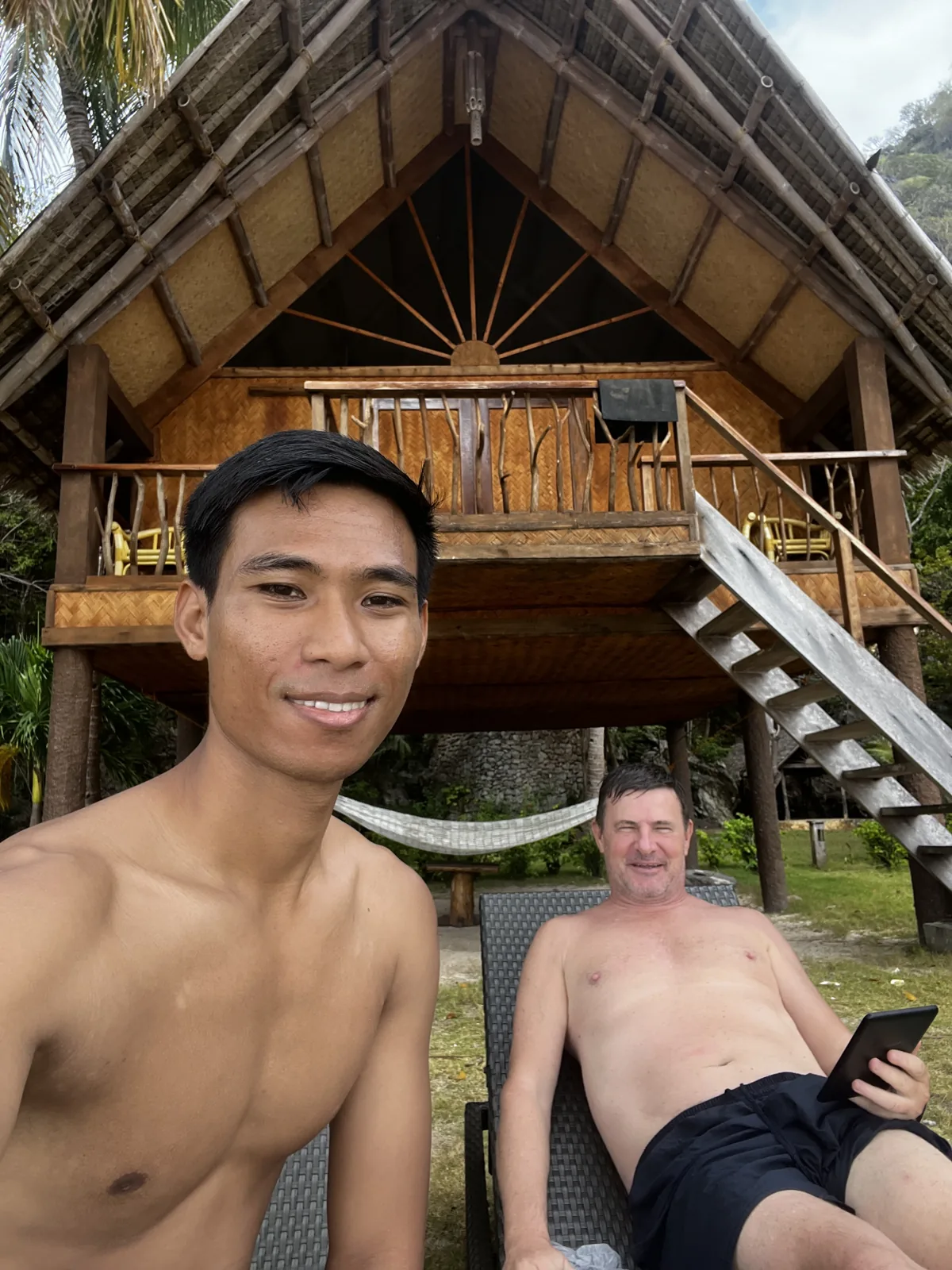
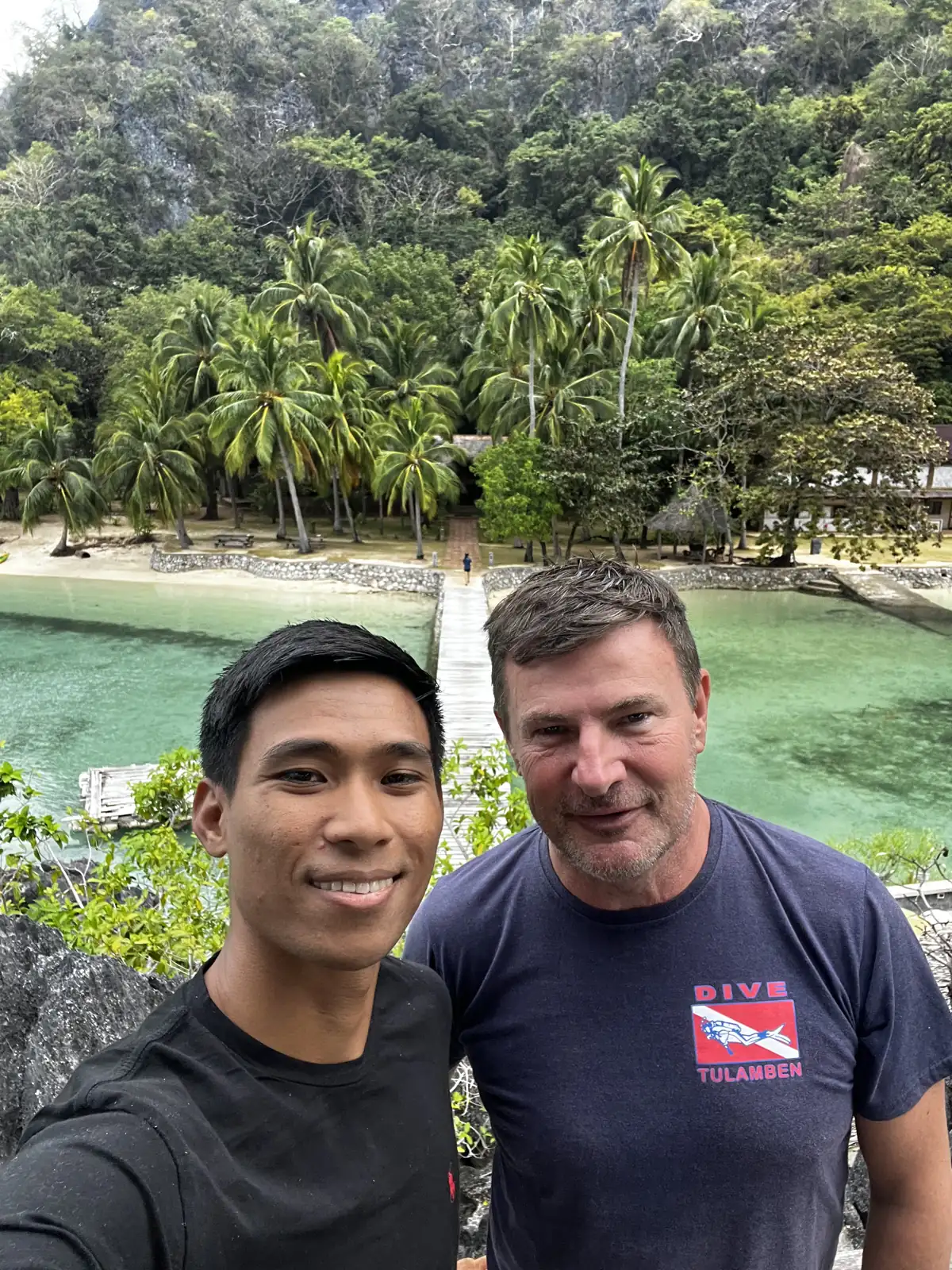
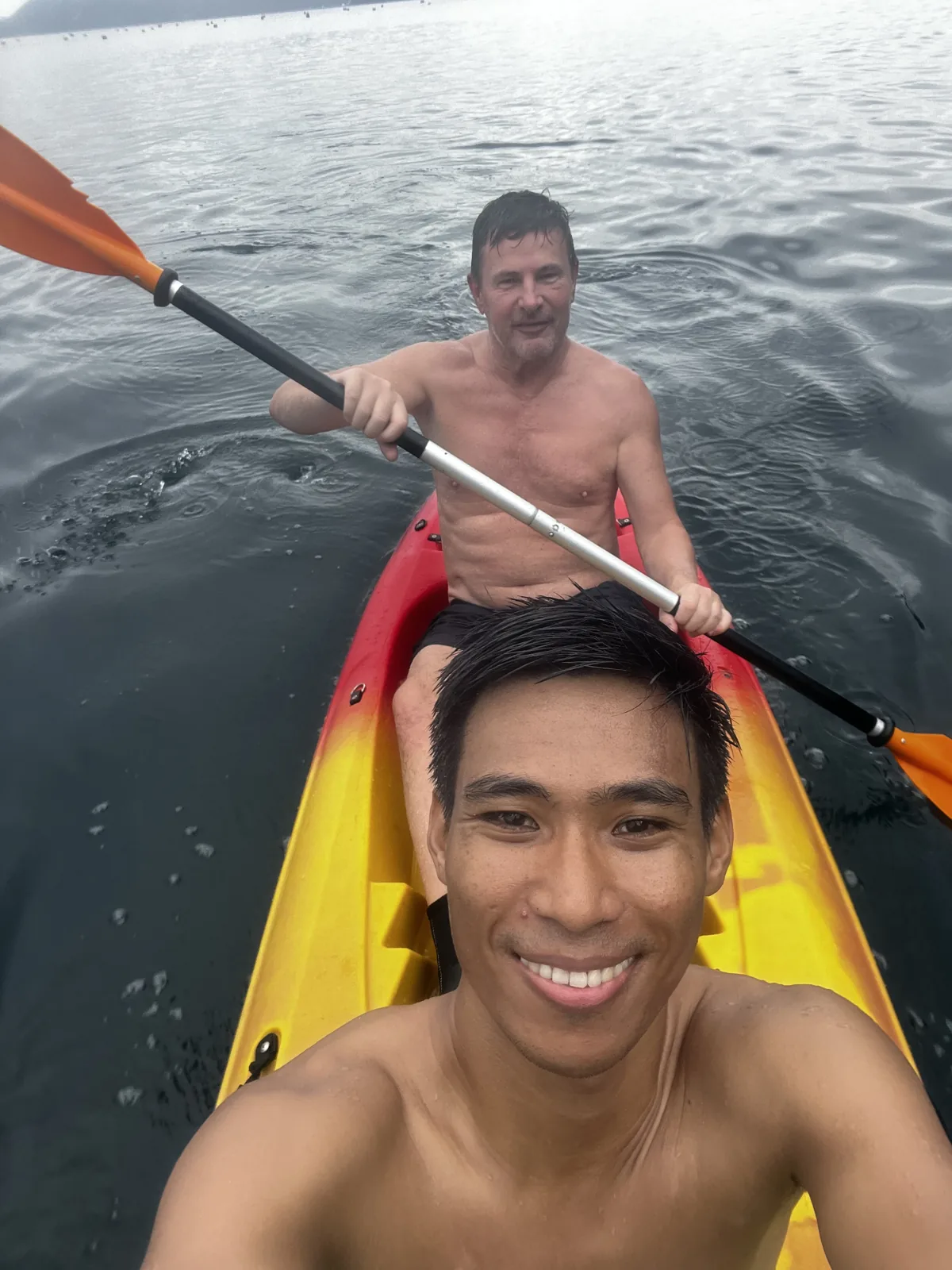
Sangat is a small island off Busuanga with one dive resort, a few bungalows on a cove and the wrecks of Coron Bay within boat range. It is where I dived the Japanese wrecks: the seaplane tender Akitsushima, the supply ship Irako and the cargo ships around them lie in clear, sheltered water, many at depths that recreational divers can reach. Between dives there is not much to do but kayak, swim and climb up to the viewpoint over the cove — which is exactly the point.
Diving in the Philippines
The Philippines sits in the Coral Triangle, and it has a dive for every taste. My own experience is Coron; the rest is where I would go next.
- Coron: the WWII Japanese wrecks of Coron Bay, from Coron town, Busuanga or Sangat Island.
- Moalboal, Cebu: a resident sardine ball a few meters from the shore, and turtles on the house reef.
- Malapascua: thresher sharks at dawn, north of Cebu.
- Anilao: muck diving and macro, a few hours from Manila.
- Tubbataha Reefs: a UNESCO-listed marine park in the Sulu Sea, reachable only by liveaboard in a short season, roughly March to June.
For how these compare with Sipadan, Komodo or Raja Ampat, see my top 10 dive sites in Southeast Asia.
Philippines Itinerary: 7, 10 or 14 Days
7 days: Manila and El Nido
- Days 1–2: Manila — Intramuros, the National Museum; Tagaytay as a day trip.
- Day 3: fly to Puerto Princesa or directly to El Nido.
- Days 4–6: El Nido — two island-hopping tours, a day on the beach.
- Day 7: fly back to Manila.
10 days: El Nido and Coron
- Days 1–2: Manila and Tagaytay.
- Days 3–6: Puerto Princesa and El Nido.
- Day 7: ferry to Coron.
- Days 8–10: Coron — wrecks, lakes and lagoons — then fly back from Busuanga. This is close to the trip Roy and I did.
14 days: Palawan and the Visayas
- Days 1–10: as above.
- Days 11–14: fly to Cebu for Moalboal and Bohol, or to Caticlan for Boracay.
What to Eat in the Philippines
Filipino food is less famous than Thai or Vietnamese, and it should not be. It is sour, salty and generous, and the best of it is home cooking.
- Adobo: chicken or pork braised in vinegar, soy sauce, garlic and bay leaf — the national dish.
- Sinigang: a sour tamarind soup with pork, prawns or fish.
- Lechon: whole roast pig, the centerpiece of every fiesta, at its best in Cebu.
- Kinilaw: raw fish cured in vinegar or calamansi, the Filipino ceviche.
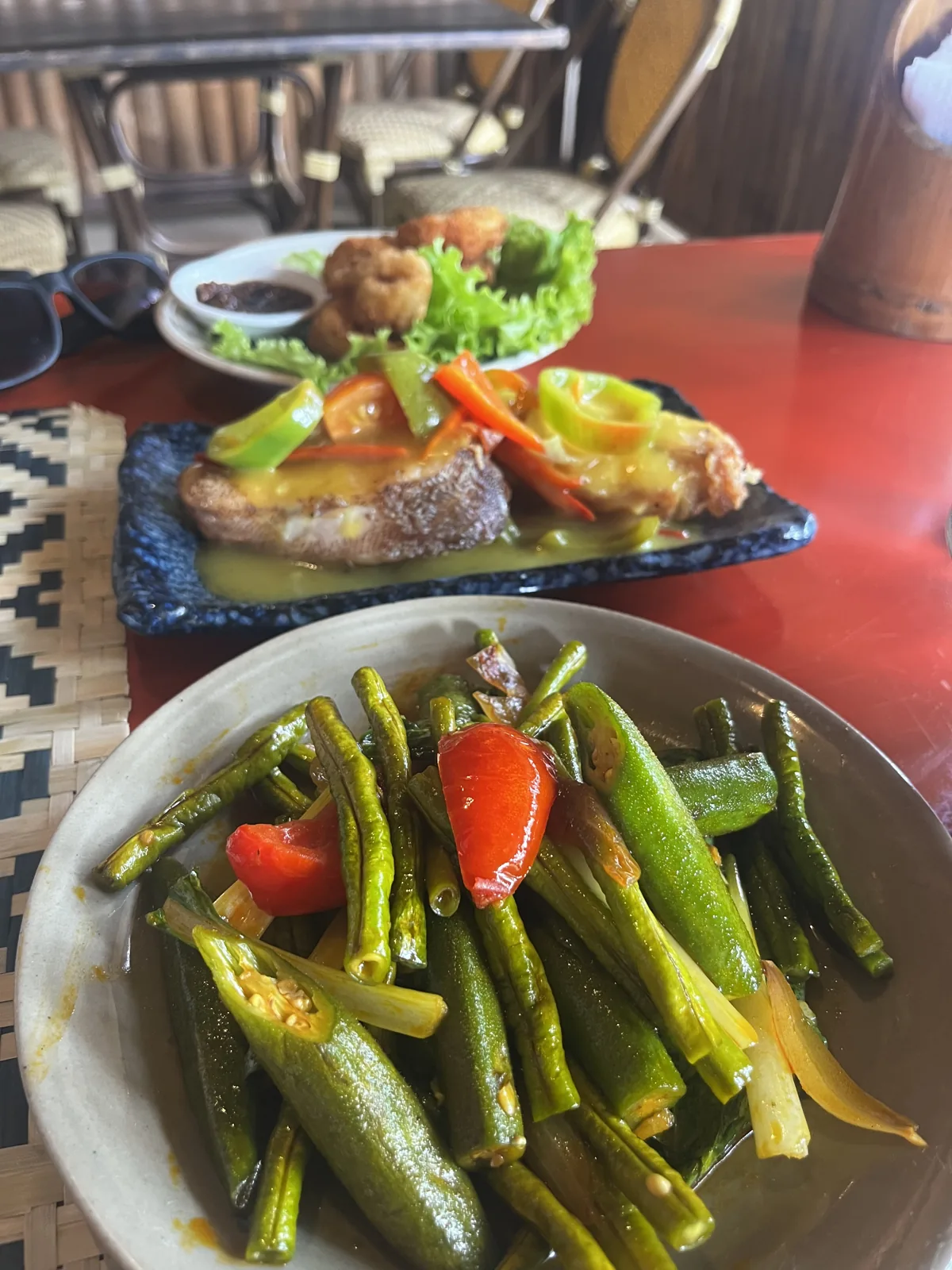
- Grilled fish: on the islands, served with rice and vegetables.
- Halo-halo: shaved ice, sweet beans, fruit, leche flan and ube ice cream, all mixed together.
Getting to the Philippines and Getting Around
Arriving
Manila (NAIA) and Cebu (Mactan) are the two main international airports. Philippine Airlines, Cebu Pacific and Philippines AirAsia fly the domestic network from both. For Palawan, fly into Puerto Princesa, El Nido (small Lio airport) or Busuanga for Coron.
Between the islands
The rule is simple: fly long distances, ferry short ones. From Puerto Princesa, shared vans reach El Nido in about five to five and a half hours. Between El Nido and Coron there is only the sea, or a short flight. To compare times and prices side by side, I use 12Go:
- Puerto Princesa to El Nido: vans and flights
- El Nido to Coron: ferries and flights
- Coron to Manila: flights and ferries
- Manila to Boracay: flights and transfers

In Manila
Use Grab for cars: traffic is heavy and a 10-kilometer trip can take an hour at rush hour. Plan Intramuros on foot once you are there.
Where to Stay in the Philippines
The four addresses of my 2023 trip, and where to look for the rest.
Puerto Princesa: Canvas Boutique Hotel
Where Roy and I spent the night between the plane and the road to El Nido, and the one I recommend in town. 👉 Check prices for the Canvas Boutique Hotel on Booking.com
El Nido: Sophias Beach Guest House
Where we stayed for our two nights in El Nido, and the address I recommend there. 👉 See Sophias Beach Guest House on Booking.com
Coron: Sangat Island Dive Resort
Bungalows on a private island cove, a dive center for the wrecks, and nothing else around — which is the whole appeal. 👉 Check prices for the Sangat Island Dive Resort on Booking.com
Manila: Ascott Bonifacio Global City Manila
Where we stayed on our first night, on 10 January 2023, in Bonifacio Global City (BGC), the modern business district with wide sidewalks, malls and restaurants. Intramuros is about 30 to 60 minutes away by Grab depending on traffic. 👉 Check prices for the Ascott Bonifacio Global City Manila on Booking.com
Elsewhere in Manila, and Boracay
Makati is the other comfortable base; Intramuros and Ermita are closer to the historic sites. 👉 Hotels in Manila · Hotels in Boracay on Booking.com

Best Time to Visit the Philippines
- December to February: dry and the coolest months — the best time overall. We went in January and had good weather in Palawan.
- March to May: hot and dry, the best sea conditions, and the short season for Tubbataha.
- June to November: the rainy and typhoon season. Typhoons can cancel flights and ferries for days, so leave a buffer day before an international flight.
Practical Tips for the Philippines
- eTravel: every traveler must register, free, on the official eTravel portal within 72 hours before arriving and before leaving. Ignore sites that charge for it.
- Visa: most Western passports get 30 days on arrival without a visa, with proof of onward travel. Check your nationality before booking.
- Cash: carry pesos for the islands; ATMs in El Nido and Coron run out or go down, and many places take cash only.
- Fees: keep small notes for the environmental and lagoon fees in Palawan.
- Ferries: sea conditions decide, not the timetable. Do not plan a ferry the day of an international flight.
- Reef-safe: take a rash guard and reef-safe sun cream for the lagoons.
Read More
Coron, Moalboal and the rest of the region ranked against each other: my top 10 dive sites in Southeast Asia.
Next door: my Malaysia travel guide, with Sabah and Sipadan just across the Sulu Sea.
The 1989 trip also went through Hong Kong, which I revisited in 2026. And for the Indonesian islands: my Indonesia guide.
Frequently Asked Questions About the Philippines
Is the Philippines worth visiting?
Yes, especially for the sea. El Nido’s lagoons, the wrecks of Coron and some of the best diving in Asia make it a unique destination, and English is spoken almost everywhere.
How many days do you need in the Philippines?
Seven days covers Manila and El Nido. Ten days lets you add Coron, which is the itinerary I recommend. Two weeks lets you add a second region such as Cebu, Bohol or Boracay.
What is the best time to visit the Philippines?
December to May is the dry season, with December to February the most comfortable. June to November is the rainy and typhoon season.
Do I need a visa for the Philippines?
Most Western passports can stay 30 days without a visa, with a ticket out of the country. Every traveler must also register on the free eTravel portal within 72 hours before arrival.
El Nido or Coron?
Do both if you can. El Nido is the lagoons and beaches by boat; Coron is the WWII wrecks underwater and quieter islands above. The Atienza ferry links them in about four to five hours.
How do you get from El Nido to Coron?
By fast ferry, about four to five hours, or by a short flight. We took the Atienza Interisland ferry that leaves El Nido at 12:30 PM.
How do you get to El Nido?
Fly to Puerto Princesa and take a shared van, about five to five and a half hours, or fly directly to El Nido’s small Lio airport.
What is the Big Lagoon in El Nido?
A lagoon enclosed by limestone cliffs on Miniloc Island, visited on Tour A. Boats stay at the entrance and you swim or kayak in. There is a ₱200 lagoon fee on top of the ₱400 Eco-Tourism Development Fee.
Is Coron good for diving?
It is the best wreck diving in Southeast Asia: a Japanese supply fleet sunk on 24 September 1944, now covered in coral, in sheltered water. I dived it from Sangat Island.
Is Boracay still worth it?
It is beautiful but much busier than when I first went in 1989. Go for White Beach and the sunsets; if you want quiet islands, Palawan is the better choice.
Is the Philippines safe for tourists?
The main tourist areas — Manila’s central districts, Palawan, Boracay, Cebu and Bohol — are generally safe. Check your government’s advice for parts of Mindanao and the Sulu archipelago.
Is the Philippines expensive?
Mid-range. Local food and guesthouses are cheap, but island-hopping tours, environmental fees, domestic flights and dive resorts add up quickly.
Good morning, could you please tell me the diving options for 7 nights, with their costs for 2 people? My partner is an Open Water Diver, but her diving is excellent, and I’m an Advanced Open Water Diver with a completed nitrox course.
Regards and thanks, Diego
Good morning Diego,
Thank you for your message and for your interest in a 7-day diving trip in the Philippines.
I’ve personally dived extensively in the Philippines and it’s an outstanding destination, with world-class sites such as Tubbataha Reefs, Apo Reef, Malapascua and Bohol.
That said, I don’t directly operate or sell dive trips in the Philippines, so I wouldn’t be able to provide an official quotation there.
However, if you are open to an alternative in Southeast Asia, I’d be very happy to help you with a 7-day diving safari in Bali, Indonesia, which offers exceptional variety and is perfectly suited to your certification levels.
I’m the owner of Dune Penida Dive Center, and we regularly organize multi-area diving safaris combining:
Nusa Penida – manta rays, drift dives, rich reefs (and mola mola in season)
Padang Bai – diverse sites, turtles, macro life
Tulamben – the iconic USAT Liberty wreck and easy, spectacular dives
This itinerary works very well for a confident Open Water Diver and an Advanced Open Water Diver with Nitrox, with dive profiles always adapted safely to the least certified diver.
If Bali could be of interest, I’d be pleased to send you a tailor-made quotation for 2 people, including:
7 nights accommodation
Guided diving across the different areas
Tanks, weights, Nitrox
All land transfers
Just let me know your dates, preferred comfort level, and the number of dives you’re aiming for.
Kind regards,
Blaise