Paleokastritsa, Corfu: Beaches, Boat Trips & Monastery
By Blaise Jaeger · Updated July 22, 2026
Why Visit Paleokastritsa?
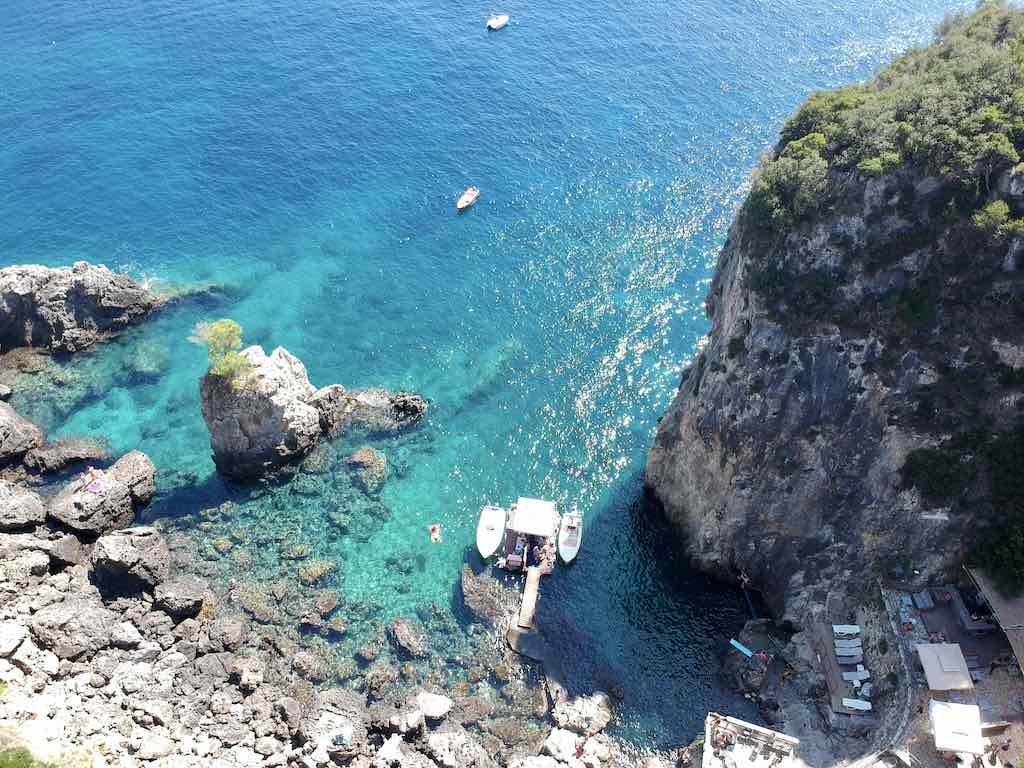
Paleokastritsa is the most spectacular stretch of coast on Corfu — six deep, turquoise bays folded into green headlands on the island’s wild west coast, about 25 km from Corfu Town. This is where you come to swim in impossibly clear water, rent a little boat to nose into sea caves and hidden coves, visit a monastery perched on a heart-shaped headland, and climb to a Byzantine castle with views that stretch to the horizon. It’s beautiful from the road, but the real magic is out on the water.
I’ve been visiting Corfu for many years and I come back to Paleokastritsa almost every summer, usually with a rented boat and a plan to be on the sea by mid-morning. This guide covers everything I’ve learned: the best beaches and how to reach them, the boat trip I do every time, the monastery and Angelokastro castle, the famous Bella Vista viewpoint, plus where to eat, where to stay and exactly how to get there.
Paleokastritsa at a Glance
- What it is: Corfu’s most famous coastal resort — six turquoise bays, sea caves and dramatic cliffs on the northwest coast
- Where: West coast of Corfu, about 25 km (35–45 minutes’ drive) from Corfu Town
- Famous for: Boat trips and sea caves, crystal-clear swimming, the Theotokos Monastery and Angelokastro castle
- Don’t miss: Renting a small boat (no licence needed), the monastery on its heart-shaped headland, and the Bella Vista viewpoint at Lakones
- Best beaches: La Grotta, Agios Spiridon (main), Ampelaki, Alipa, Rovinia, Liapades, and boat-only coves like Limni and Chomi (Paradise)
- How long to spend: A full day at least — half on the water, half for the monastery, castle and viewpoint
- Best time: May–June and September for warm sea and thinner crowds
My Paleokastritsa: The Boat Trip I Do Every Summer
If you do one thing in Paleokastritsa, rent a small boat — the kind you can drive without a licence, available at La Grotta and pretty much everywhere around the harbour. The coves and caves that make this coast famous are mostly invisible from land; the sea is the only way in. Here’s the exact route I follow almost every time.
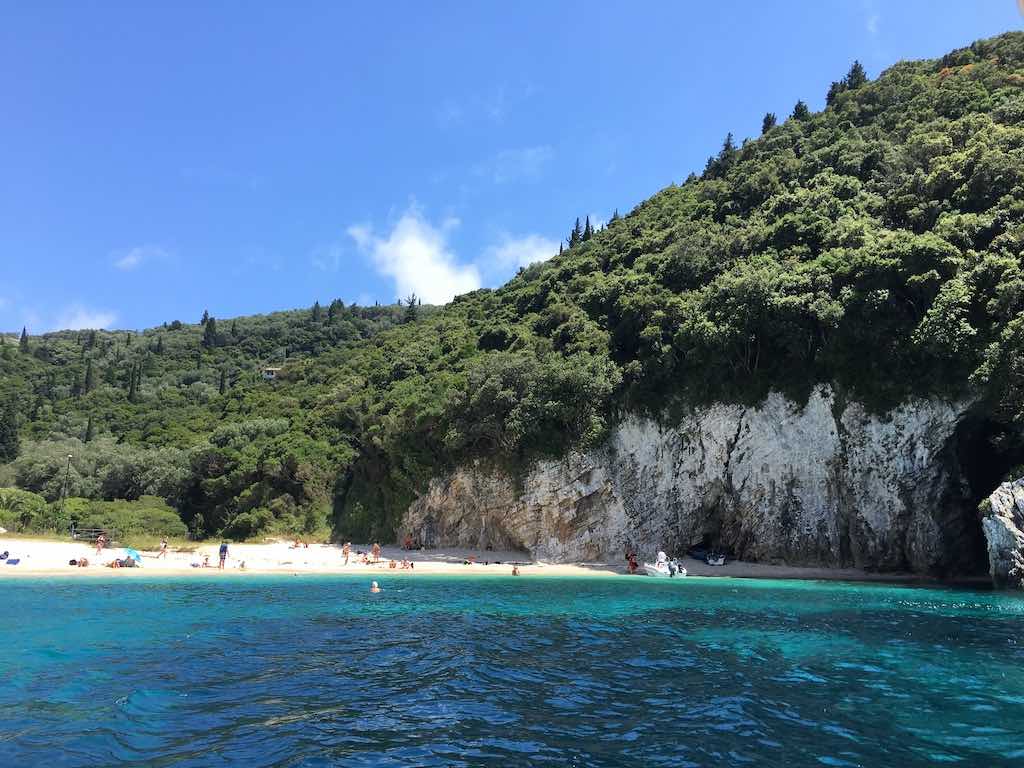
I set off heading east, crossing the bay towards Limni Beach — a kind of double beach that separates the mainland from a little peninsula. From there I follow the coast, slip past the Liniodoros cave, and carry on to Chomi Beach (often called Paradise), a spectacular strip of pebbles at the foot of a huge cliff. It’s a wonderful place to drop anchor, swim and have lunch if you’ve brought food and drinks; plenty of boats come here, but the beach is so big you’ll always find a quiet corner of your own.
After lunch I usually leave Chomi and head back toward the Paleokastritsa Monastery, taking in the Blue Eye cave along the way, before circling below the monastery headland and bringing the boat back. Go out in the morning when the sea is calmest and you’ll have the smoothest, most beautiful few hours of your whole trip. It’s the single best thing I do on this side of the island.
The Best Beaches and Bays of Paleokastritsa
Paleokastritsa is really a cluster of small bays rather than one big beach, which is exactly what makes it special. The easiest option is the beach at the main port, at the end of the road below the monastery, with a dive centre on the far side of the car park. But it would be a shame not to explore further — some beaches are reachable on foot, others only by boat.
La Grotta
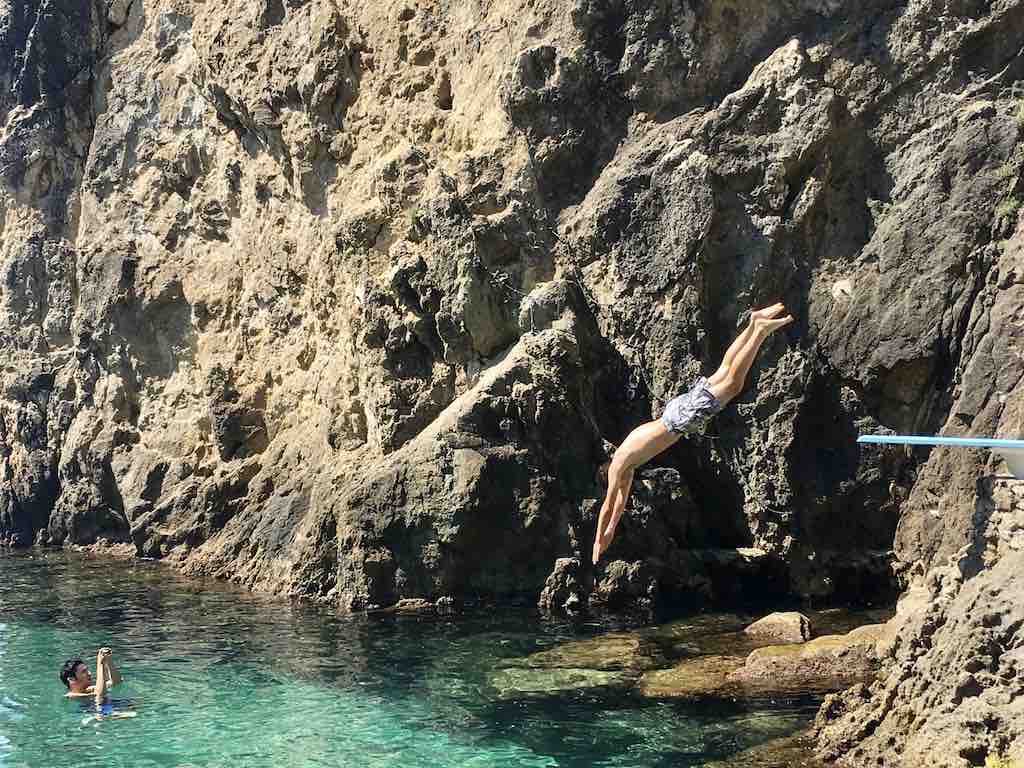
La Grotta is the most famous spot in Paleokastritsa — a tiny beach club tucked into a tiny cove. There’s no entrance fee (you pay for sunbeds, food and drinks), and it’s worth arriving early because it fills up fast on summer afternoons. The star attraction is the diving board: even if you don’t jump yourself, watching the more daring divers climb the cliff to leap from higher up is half the fun. You can also rent a boat here to explore the bay.
Beaches you can reach on foot
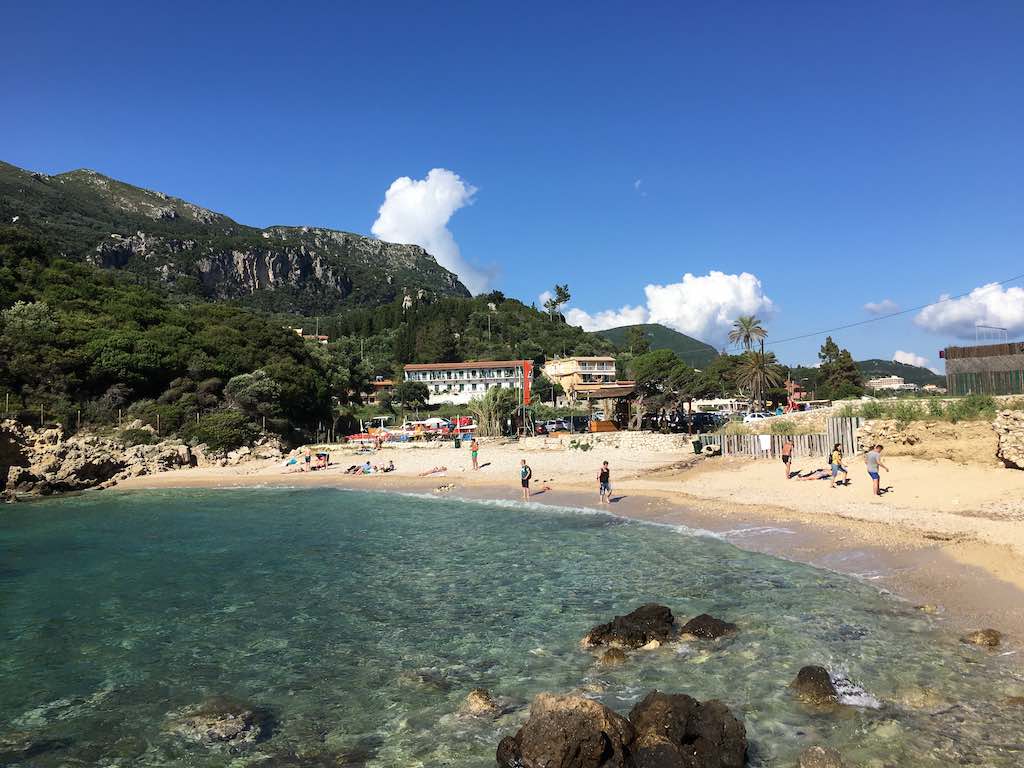
Liapades and Rovinia are reachable by land as well as by boat, which makes them popular with families. They’re a nicer choice than the beaches right beside the car park — Agios Spiridon (the main beach), Agios Petros and Ampelaki — which are easy to reach but get crowded. Just around the bays you’ll also find Alipa, Agia Triada and Platakia, each with its own character.
Boat-only coves
The real hidden gems — Limni and Chomi (Paradise) Beach — can only be reached from the sea. If you can, rent a boat and go: these are the coves where Paleokastritsa lives up to its reputation, backed by towering cliffs with barely a building in sight.
Boat Trips and Sea Caves
Boat trips are the signature experience here, and there’s an option for every style. You can rent a small self-drive motorboat (no licence required), take a water taxi, join an organised cave tour, or paddle out by kayak. Tours leave frequently from the main harbour and from Agios Spiridon beach, and last anywhere from about 30 minutes to two hours depending on the route.
The highlights are the sea caves carved into the cliffs — the Blue Eye, Nausicaa and Agios Nikolaos caves — where the water glows an unreal blue. Whether you go under your own steam or with a guide, seeing this coastline from the water is what turns a nice day at the beach into a memorable one. Head out in the morning, when the sea is calmest and the light is at its best.
Paleokastritsa Monastery
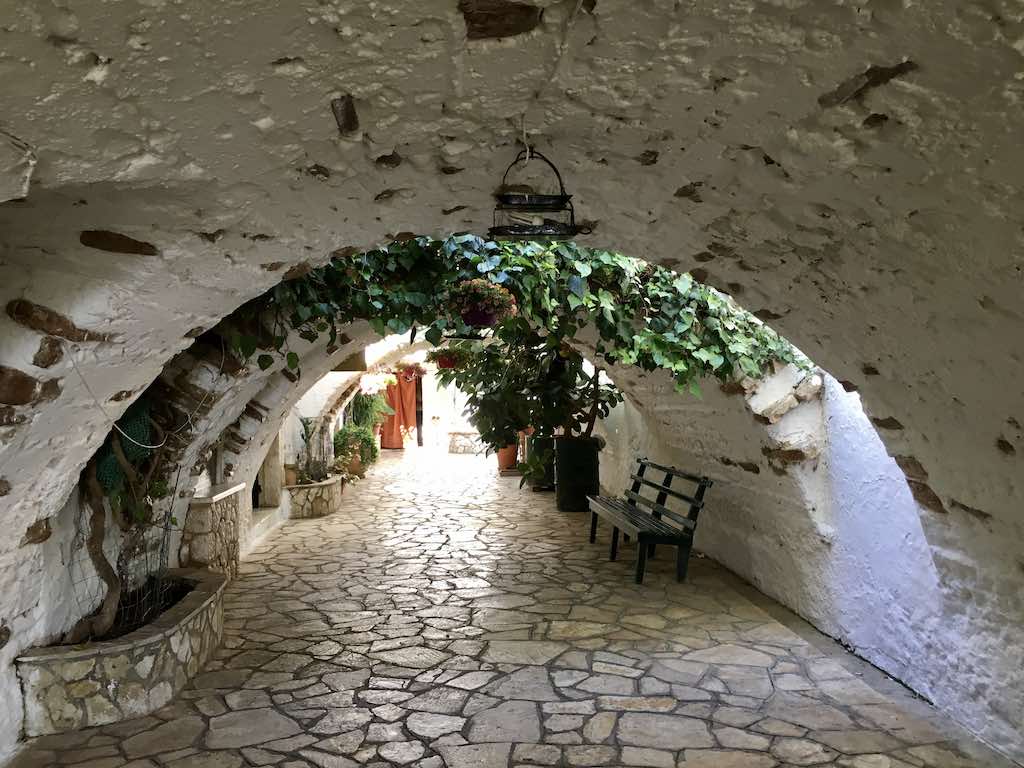
Perched on the headland above the bay, the Monastery of the Theotokos (the Mother of God) is a genuinely charming and peaceful place — and one of the most photographed spots on Corfu. It was founded in 1225, after the finding of a sacred icon of the Theotokos; the buildings you see today are largely Ottoman-era, the result of a long history of destruction and rebuilding (the monastery was ruined by Genoese forces in 1403, rebuilt in 1469, destroyed again in 1537 and rebuilt in 1572, with the northern entrance added in 1722).
Inside you’ll find a small museum of Byzantine and post-Byzantine icons, vestments and religious objects, an old olive press, and a courtyard draped in bougainvillea with a fantastic view over the bay. You can pick up homemade products such as the monks’ olive oil. Entry is free; as at all Greek monasteries, modest dress is required (shoulders and knees covered). In high season it’s best to park at the main car park and walk up; in quieter months you can sometimes drive up, though parking at the top is very limited.
Angelokastro Castle
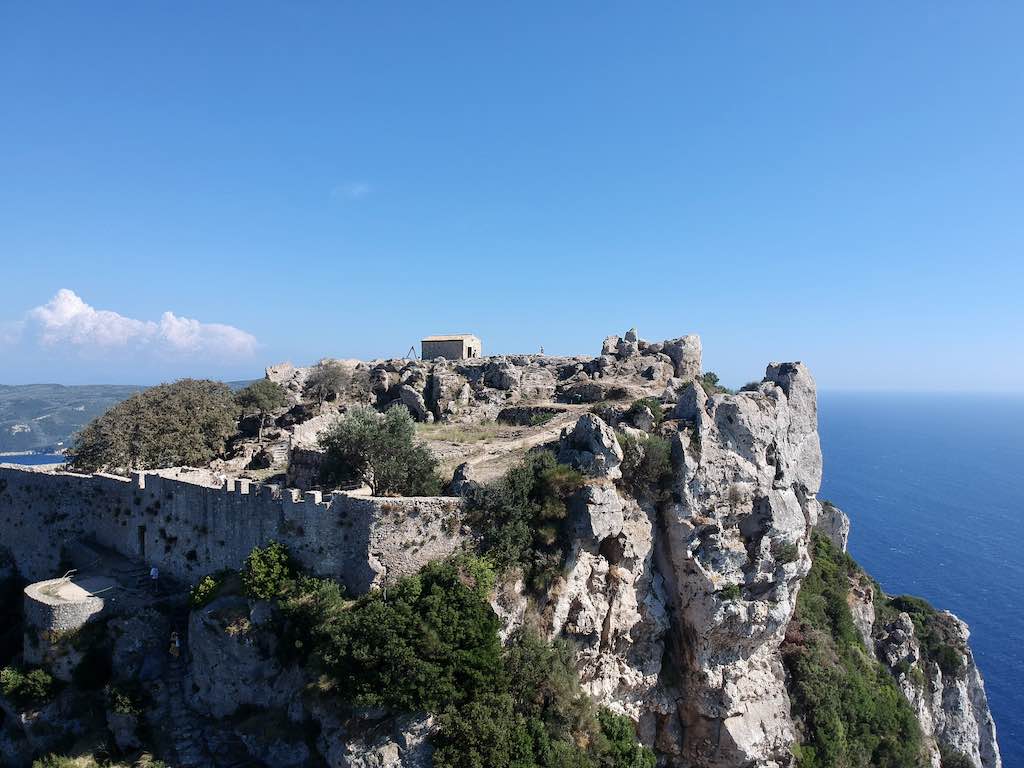
Angelokastro — Castel Sant’Angelo to the Venetians — is a Byzantine castle built in the 13th century on the highest peak of the island’s shoreline, 305 m (1,000 ft) above the sea on the northwest coast. From 1387 to the end of the 16th century it served as the official capital of Corfu and the seat of the region’s Venetian governor, and it formed a defensive triangle with the castles of Gardiki (in the south) and Kassiopi (in the northeast).
This was one of the most important strongholds on the island, and it never fell: it withstood a year-long Genoese siege in 1403 and repeated Ottoman assaults in 1537, 1571 and 1716, sheltering thousands of villagers behind its walls each time. Today it’s a romantic ruin — you’ll find the Church of the Archangel Michael and the cave-like Chapel of Saint Kyriaki with its 18th-century paintings — and the climb is rewarded with some of the most panoramic views on Corfu. Entry is a couple of euros; note that it’s usually closed on Tuesdays.
Bella Vista: Corfu’s Most Famous Viewpoint
For the postcard view of Paleokastritsa, drive up to Bella Vista at the village of Lakones, known as the “balcony of the Ionian.” From here you look down on all six bays at once, the turquoise water fanning out around the heart-shaped headland where the monastery sits — a bird’s-eye perspective you simply can’t get from below. Several cafés and tavernas line the viewpoint road, so you can take it all in over a coffee or lunch on a terrace.
The road up is narrow and steep with plenty of hairpin bends, and parking is very limited, so drive carefully and go early — by midday the tour buses arrive and it gets busy. If you’d rather not drive the bends yourself, the Green Bus from Corfu Town is a stress-free alternative.
Where to Eat in Paleokastritsa
You’ll eat well here, whether you want fresh fish by the water or a long lunch with a view. Down around the bays, On The Rocks is the place for seafood (grilled octopus, calamari, lobster spaghetti), while Nereids is a family-run taverna for traditional Greek cooking and La Pergola does wood-fired pizza and seafood with sea views. Spiros Taverna, at the entrance to the village, is a reliable, good-value spot for classic Greek dishes.
Up at Lakones, the terrace restaurants come with that unbeatable Bella Vista panorama: The Golden Fox and Belvedere are the classics, perfect for pairing a plate of Greek food with the best view on the coast.
Where to Stay in Paleokastritsa
Paleokastritsa has accommodation for every budget, from simple studios up in the hills to seafront hotels right on the bays. If you want to wake up to the water, aim for a place near Agios Spiridon or the Alipa harbour; for quiet and views, the hillside hotels are hard to beat.
The landmark address is the Akrotiri Beach Hotel, a large seafront hotel on its own headland with direct access to the bays — the classic Paleokastritsa stay. For a mid-range or budget base you’ll find plenty of family-run studios and apartments in and above the village. Because Paleokastritsa is compact and very popular in summer, it’s worth booking well ahead. For a fuller overview of the island’s areas, see our guide to where to stay in Corfu.
How to Get to Paleokastritsa
Paleokastritsa is about 24–25 km west of Corfu Town, an easy drive of 35 to 45 minutes on a scenic road that winds through olive groves and hillside villages. It’s a similar distance from the airport. Parking is available near the harbour and below the monastery, but spaces fill quickly in summer, so arrive early or later in the afternoon. If you’d rather not drive, the Green Bus connects Corfu Town to Paleokastritsa through the tourist season, and there are seasonal services up to Lakones for Bella Vista.
Practical Tips and Best Time to Visit
When to go
May and June bring lush green scenery, warm days and far fewer people — my favourite window. July and August are the warmest and busiest; come before 11 a.m. or after 3 p.m. to beat the peak crowds. September keeps a warm sea with a calmer feel, and October is quiet but can bring the odd rainy spell.
Good to know
- Go out on the water in the morning, when the sea is calmest for exploring the caves and coves.
- Arrive early for parking near the harbour, the monastery and Bella Vista — all fill up by midday in summer.
- Bring water, sunscreen and comfortable shoes — some of the best coves need a short walk or a boat.
- Dress modestly for the monastery (shoulders and knees covered) and remember Angelokastro is usually closed on Tuesdays.
- Don’t leave without the view from Bella Vista at Lakones — it’s the one that ends up on everyone’s camera roll.
Discover More of Corfu
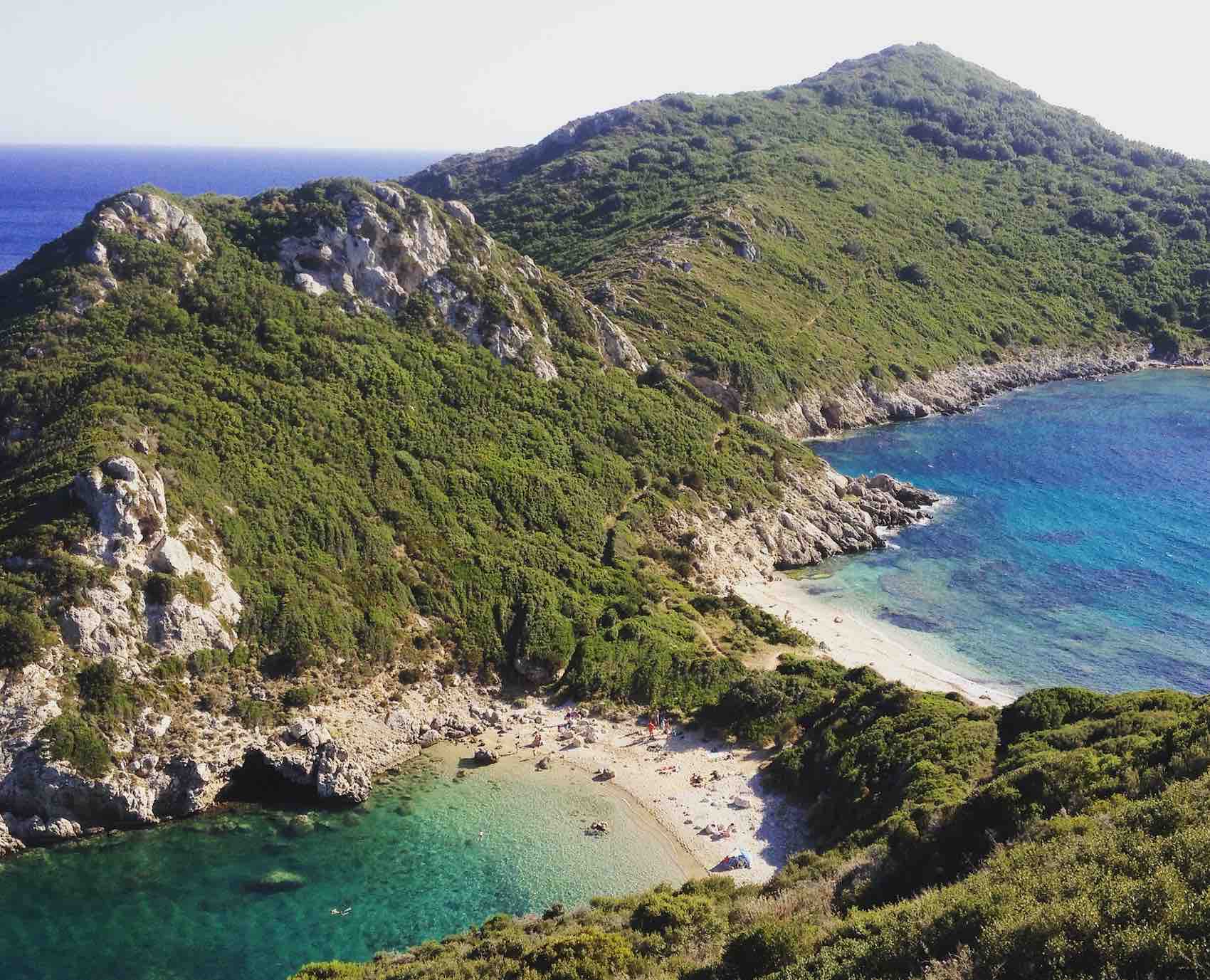
Porto Timoni
Corfu’s iconic twin beach near Afionas — turquoise water and one of the island’s most photographed views. Read more
Old Perithia
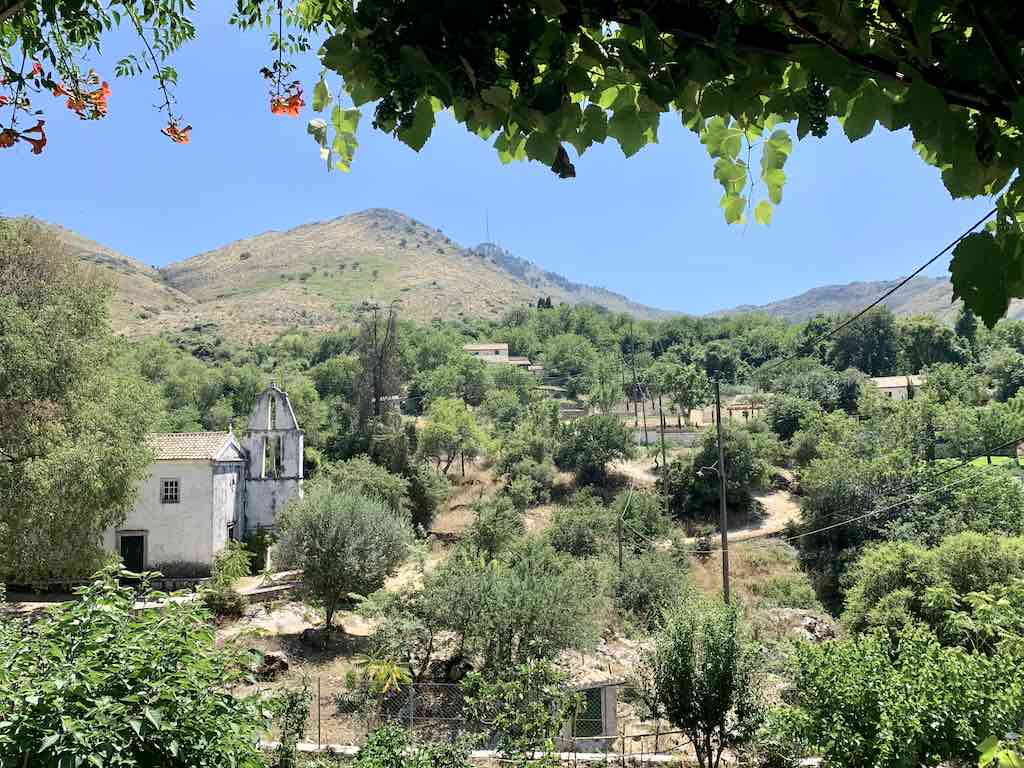
Corfu’s oldest village — a Venetian ghost town of stone houses and mountain tavernas below Mount Pantokrator. Read more
Corfu Town
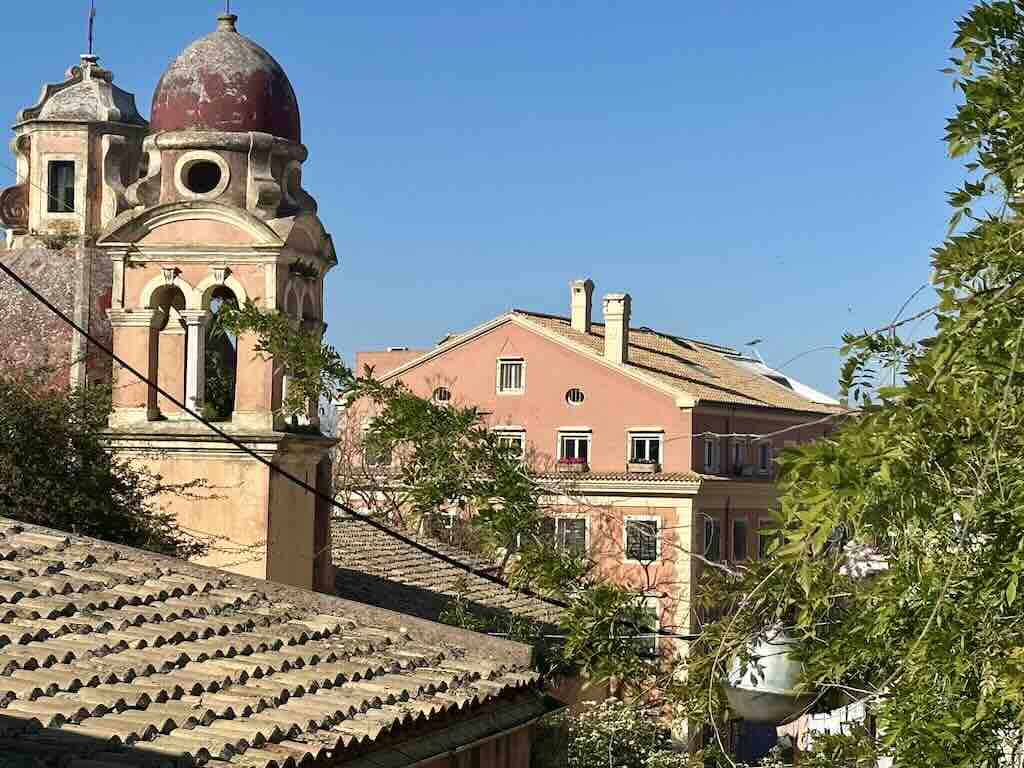
The UNESCO-listed old town, with Venetian fortresses, elegant arcades and the Spianada square. Read more
👉 Planning your whole trip? See our complete Corfu travel guide and our pick of the best beaches in Corfu.
Frequently Asked Questions About Paleokastritsa
Where is Paleokastritsa located in Corfu?
Paleokastritsa is on the northwest coast of Corfu, about 24–25 km from Corfu Town — roughly a 35–45 minute drive. It’s famous for its six turquoise bays, dramatic cliffs and scenery overlooking the Ionian Sea.
Is Paleokastritsa worth visiting?
Yes — it’s widely considered the most beautiful part of Corfu. The mix of crystal-clear coves, sea caves, the historic Theotokos Monastery and the nearby Angelokastro castle and Bella Vista viewpoint make it a must-visit.
Can you rent a boat in Paleokastritsa?
Yes, and it’s the best thing to do here. Several companies rent small motorboats you can drive without a licence, letting you reach the sea caves and boat-only coves like Limni and Chomi (Paradise). Go out in the morning when the sea is calmest.
What are the best beaches in Paleokastritsa?
The main beach at Agios Spiridon is the most accessible, and La Grotta is the most famous cove. Liapades and Rovinia are lovely and reachable by land, while the finest coves — Limni and Chomi (Paradise) — can only be reached by boat.
What is there to see near Paleokastritsa?
Beyond the beaches, visit the Theotokos Monastery on its headland, the Byzantine castle of Angelokastro (305 m above the sea), and the Bella Vista viewpoint at Lakones, which gives the famous view over all six bays.
How long should you spend in Paleokastritsa?
Plan for at least a full day: a morning on the water exploring the caves and coves, and an afternoon for the monastery, Angelokastro and the Bella Vista viewpoint. Many visitors happily spend two or three days here.
When is the best time to visit Paleokastritsa?
May–June and September are ideal — warm sea, pleasant weather and fewer crowds. July and August are busiest, so arrive before 11 a.m. or after 3 p.m. to enjoy the beaches and find parking.