Normandy Road Trip: My 3-Day Itinerary From Paris
By Blaise Jaeger · Updated October 29, 2026
I am a Parisian, and for me Normandy starts with a childhood memory: the cliffs of Étretat and the adventures of Arsène Lupin. I also lived two years in Normandy, in Vernon, on the Seine next to Giverny. In June 2023 I drove there again from Paris with my friend Roy, for a three-day road trip along the coast: Étretat, Honfleur and Deauville on the first day, Mont-Saint-Michel and Cancale on the second, Saint-Malo on the third. Here is our itinerary, where we slept, and my tips. My favorite? Mont-Saint-Michel, without hesitation.
My 3-Day Normandy Itinerary at a Glance
- Day 1: Paris to Étretat (about 2 hours 45 minutes), the cliffs, then Honfleur and the sunset in Trouville. Night in Deauville.
- Day 2: Mont-Saint-Michel (about 2 hours from Deauville), then Cancale, its oysters and dinner at Le Coquillage. Night in Saint-Malo.
- Day 3: the ramparts of Saint-Malo, then back to Paris, with a stop at Chartres Cathedral on the way.
- Getting around: by car, which is the easiest way to link the coast. By train, choose one base: Deauville, Rouen or Mont-Saint-Michel.
- Best time: from May to September for long days; June is ideal, before the summer crowds.
Day 1: Étretat, Honfleur and Deauville
Étretat and Its Cliffs
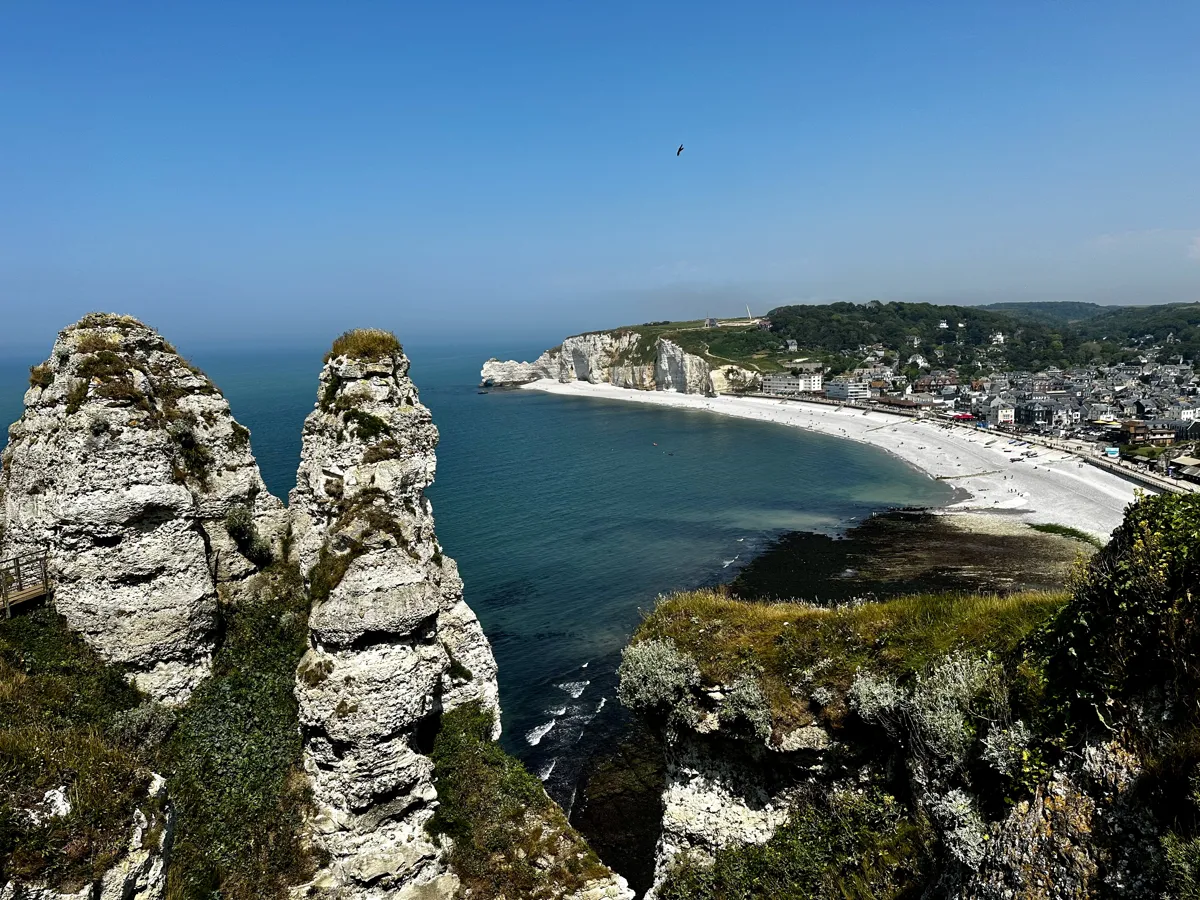
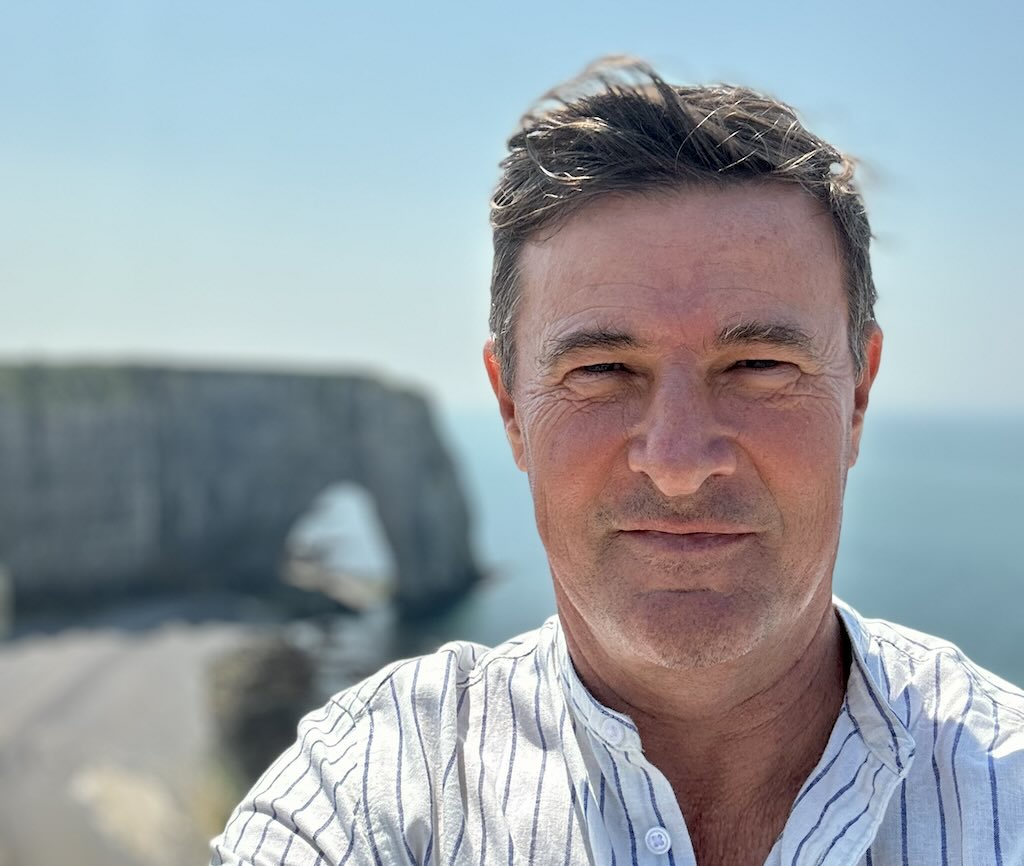
We left Paris in the morning and had lunch on the seafront in Étretat. The white chalk cliffs are really beautiful, and they remind me a little of the cliffs of Nusa Penida, the island near Bali where I spend part of my time. To the west, the Falaise d’Aval has the Porte d’Aval arch and the Aiguille, the 51-meter needle of rock where Maurice Leblanc hid the treasure of Arsène Lupin in The Hollow Needle. To the east, the Falaise d’Amont has the small Notre-Dame de la Garde chapel.
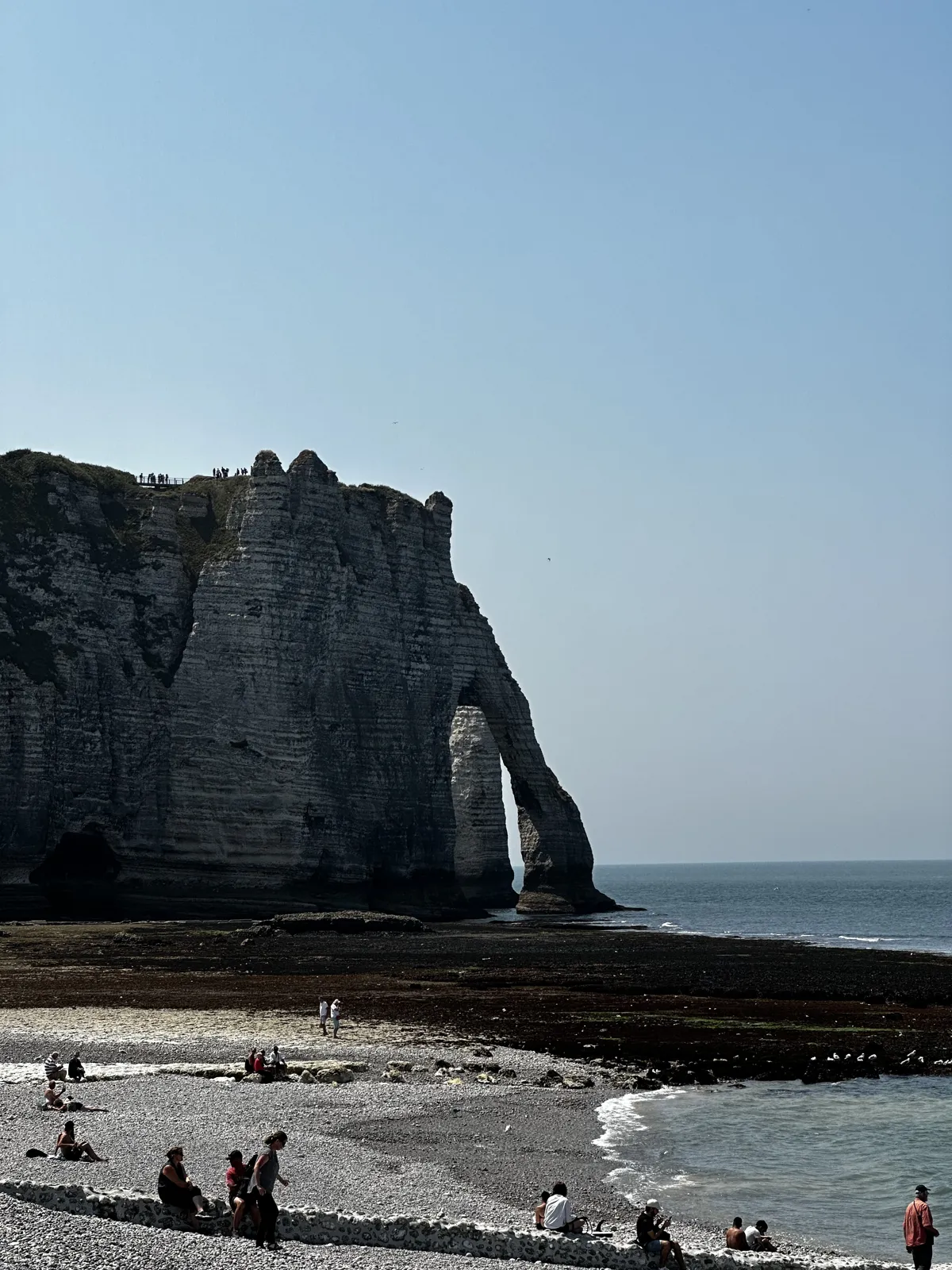
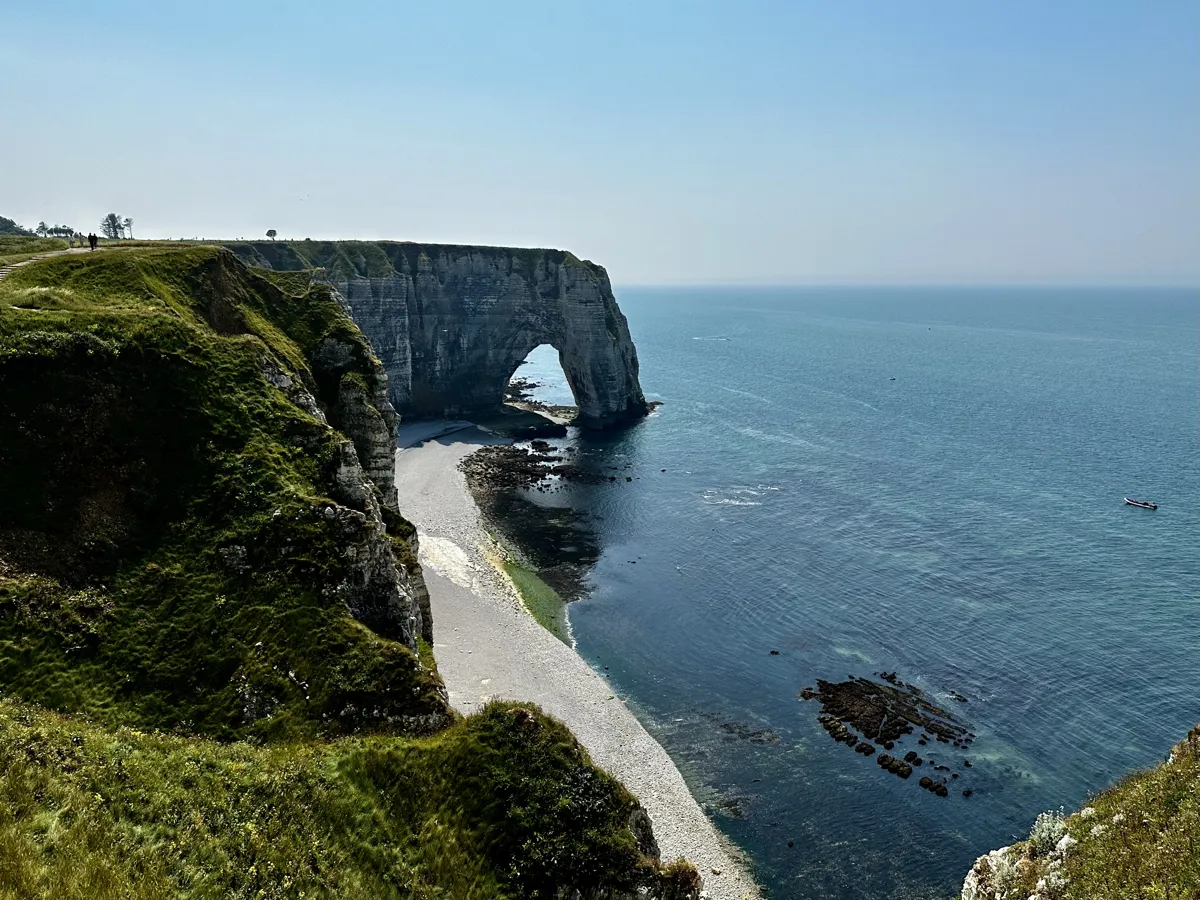
Do not miss the walk up the Falaise d’Aval: the path climbs above the arch, and a little farther on you see the Manneporte, the largest arch, which Monet painted several times. The views over the Aiguille and the town are breathtaking.
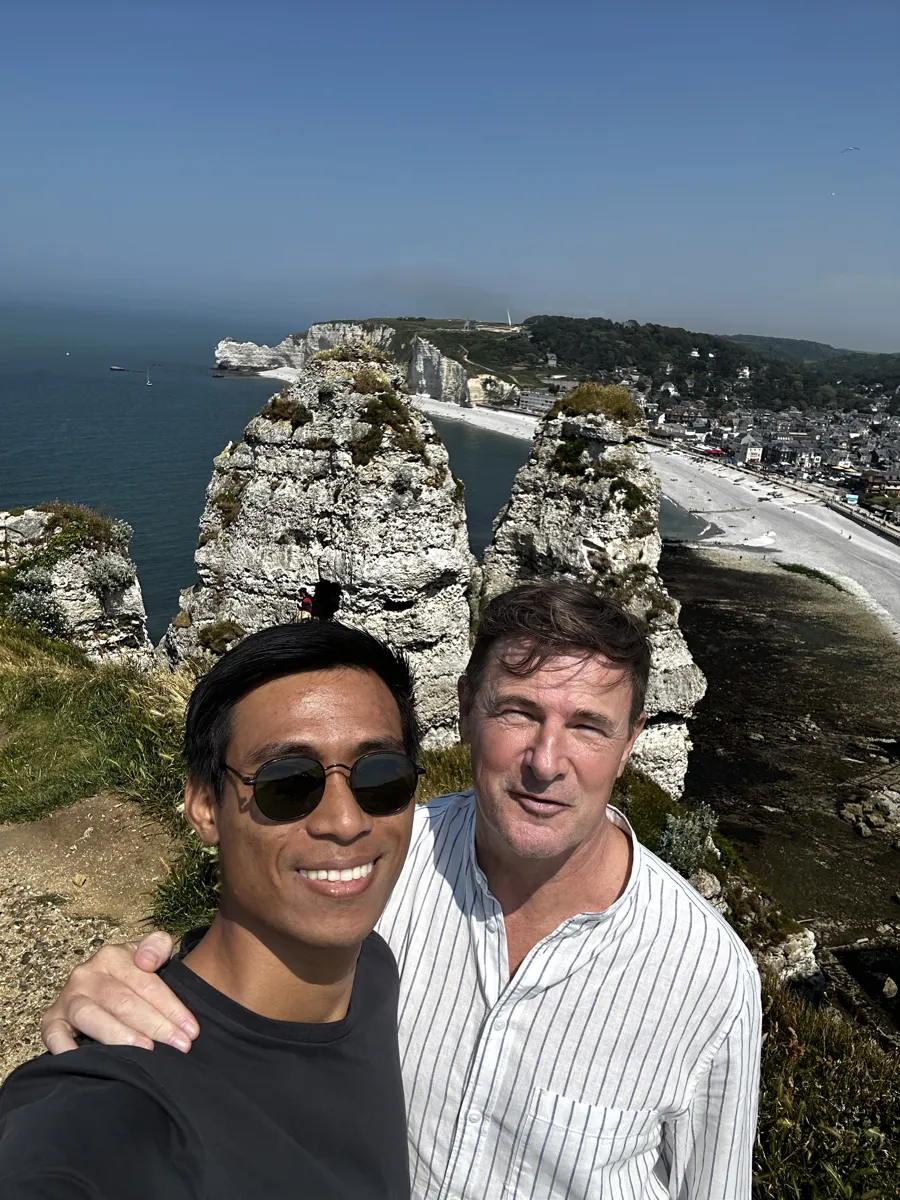
Good to know: since 2025, for safety, it is forbidden to walk at the foot of the cliffs and to go through the Trou à l’Homme tunnel, and you must stay at least 5 meters from the edge, with a €135 fine. All car parks are paid: about €15 for the day on the edge of town, €3 per hour in the center.
Honfleur
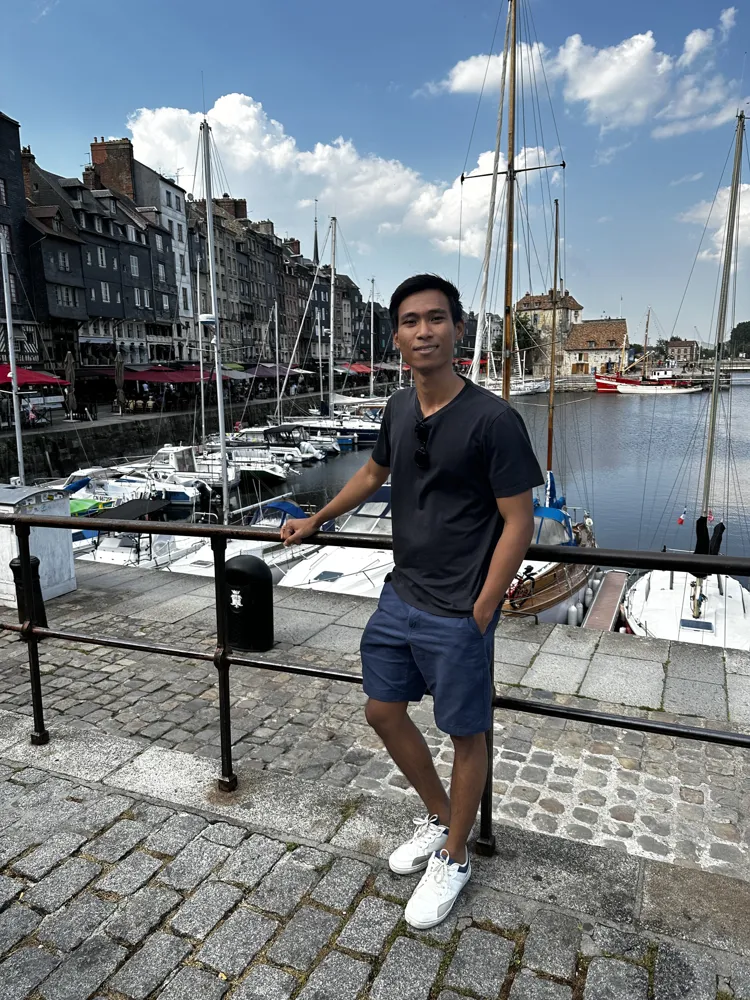
From Étretat, cross the Seine on the Pont de Normandie (€6.10 toll) to reach Honfleur, about 45 minutes away. The Vieux Bassin, the old harbor lined with tall slate-fronted houses, has inspired painters since Eugène Boudin and the Impressionists. Take time to see the Sainte-Catherine church, the largest church in France built entirely of wood, and the Eugène Boudin museum (closed on Tuesdays).
Deauville and Trouville
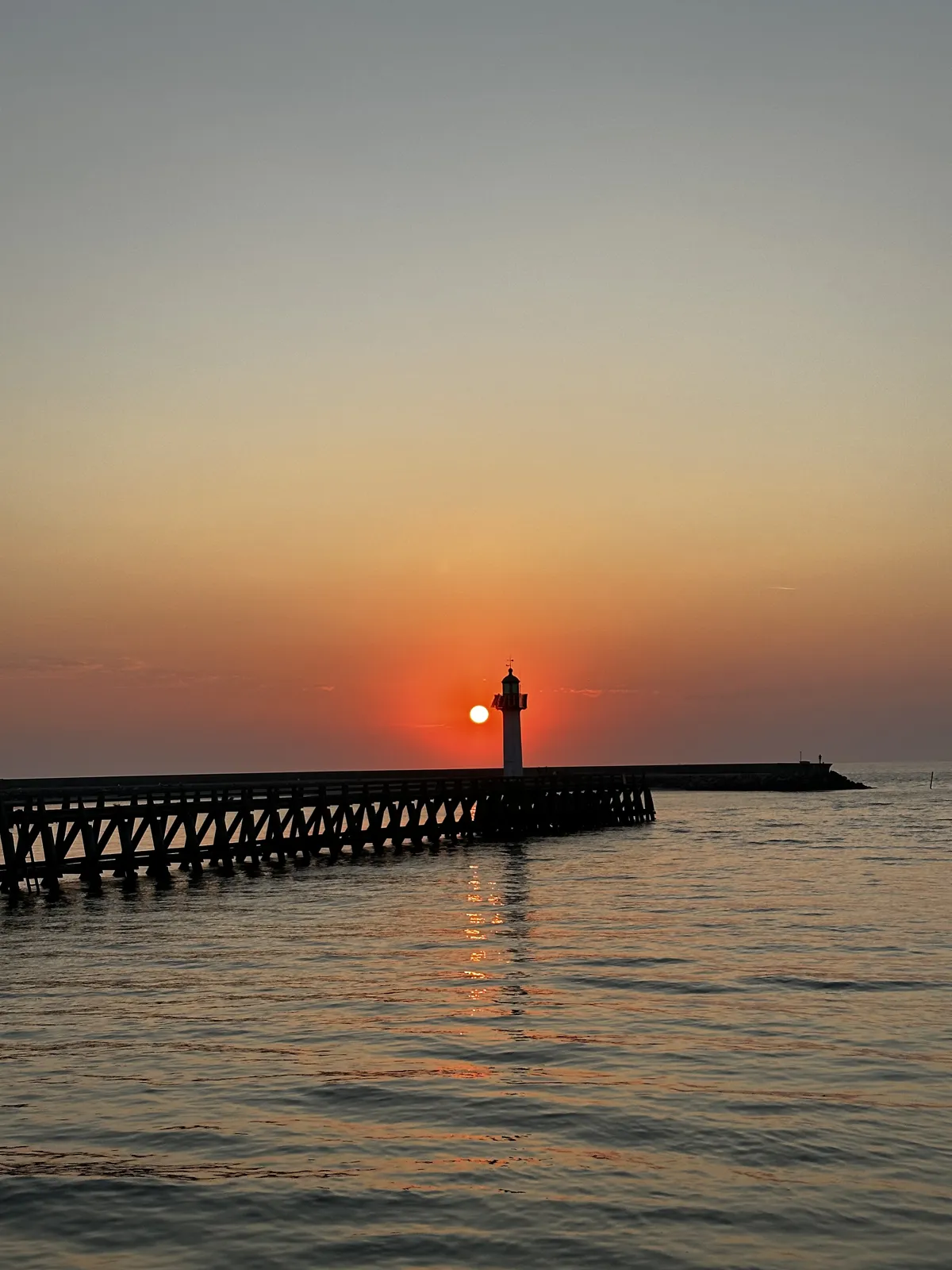
We ended the day on the jetty of Trouville, at the mouth of the Touques, for the sunset over the sea. The two towns face each other across the river: Trouville is a real fishing port, with its fish market open every day, and Deauville is the chic resort, with its Planches, the 643-meter boardwalk along the beach. I prefer Deauville.
Day 2: Mont-Saint-Michel, My Favorite
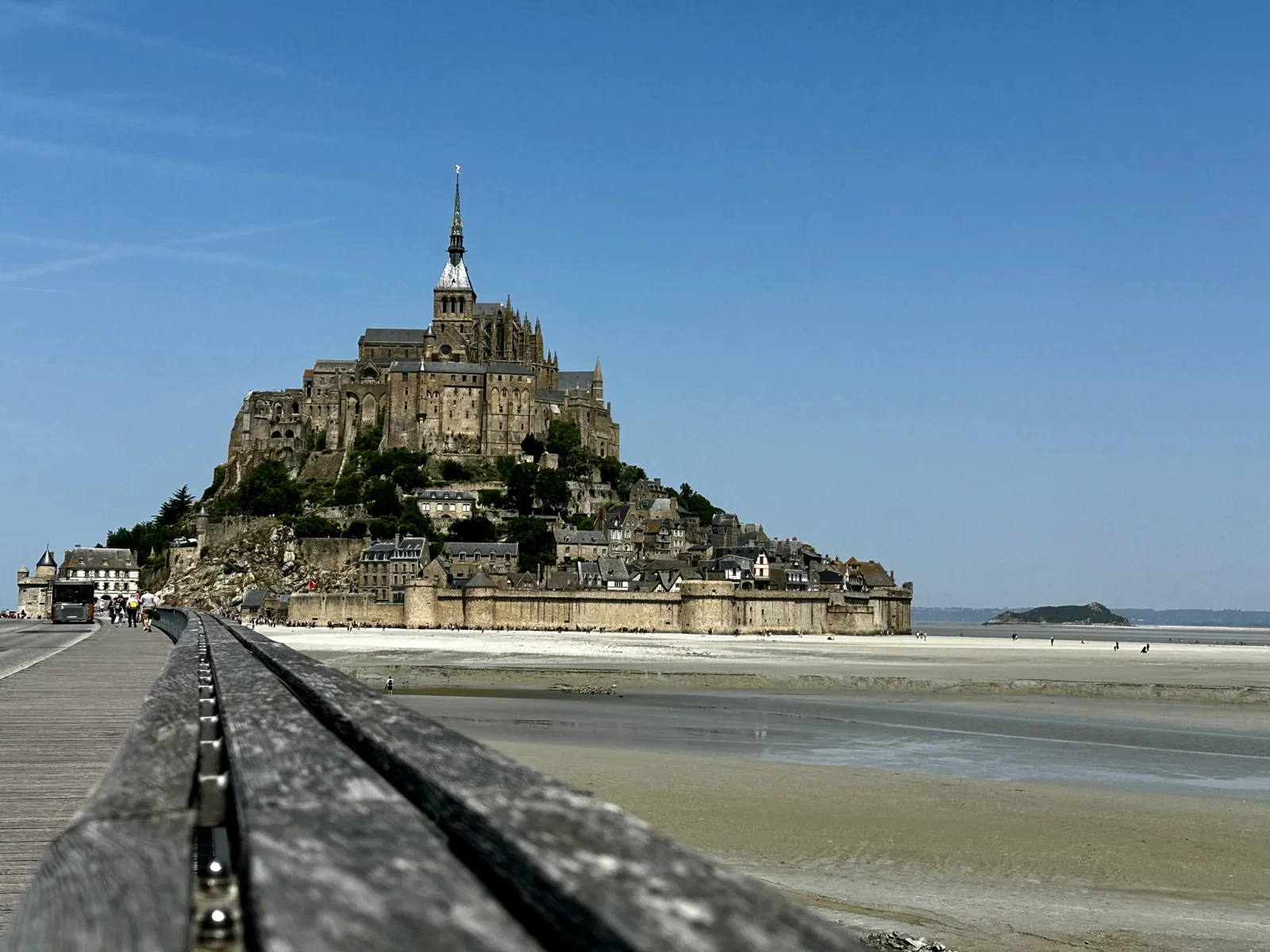
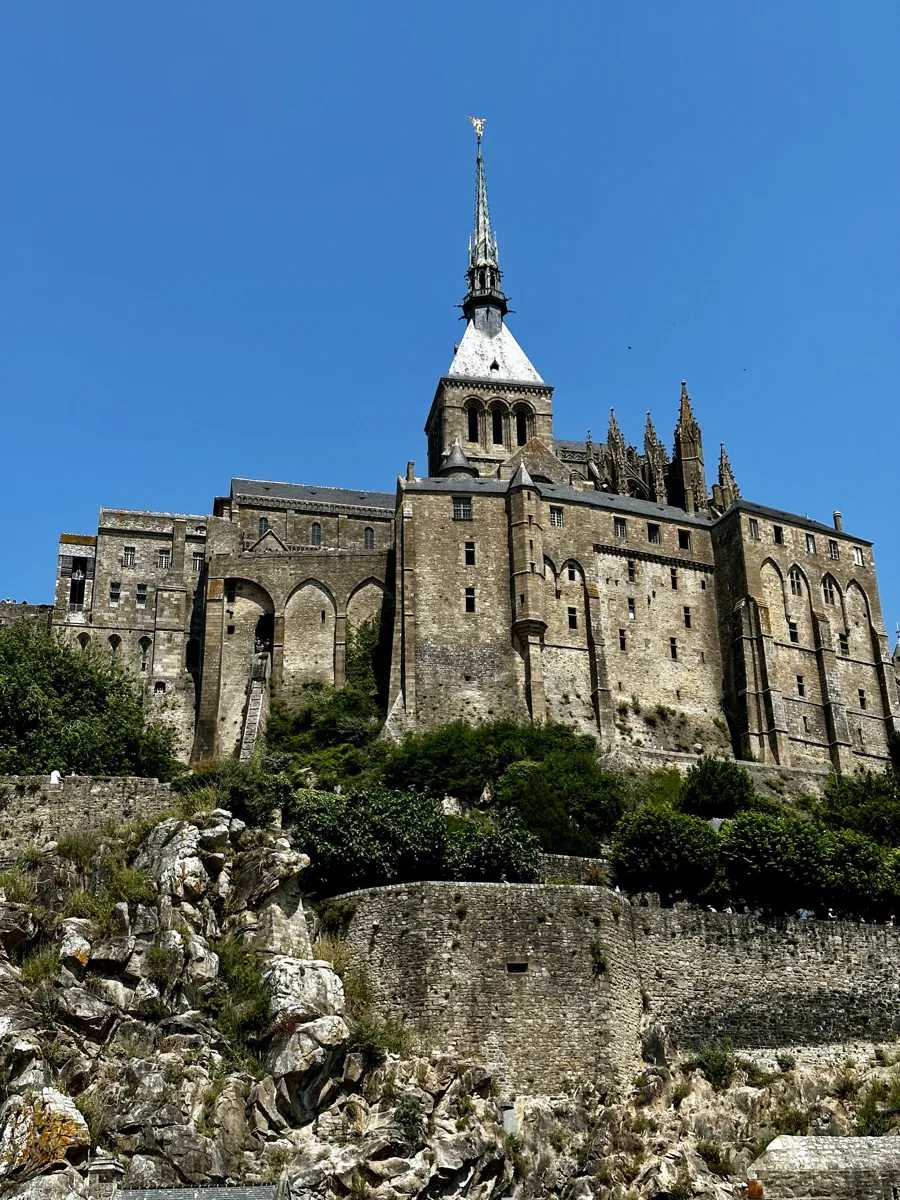
From Deauville, Mont-Saint-Michel is about two hours by car. It is my favorite place in Normandy. There are a lot of people, but it is magical: the abbey rising from the bay, the medieval village climbing up the rock, and the view over the sands from the terraces. Listed by UNESCO since 1979, it is one of the most visited sites in France.
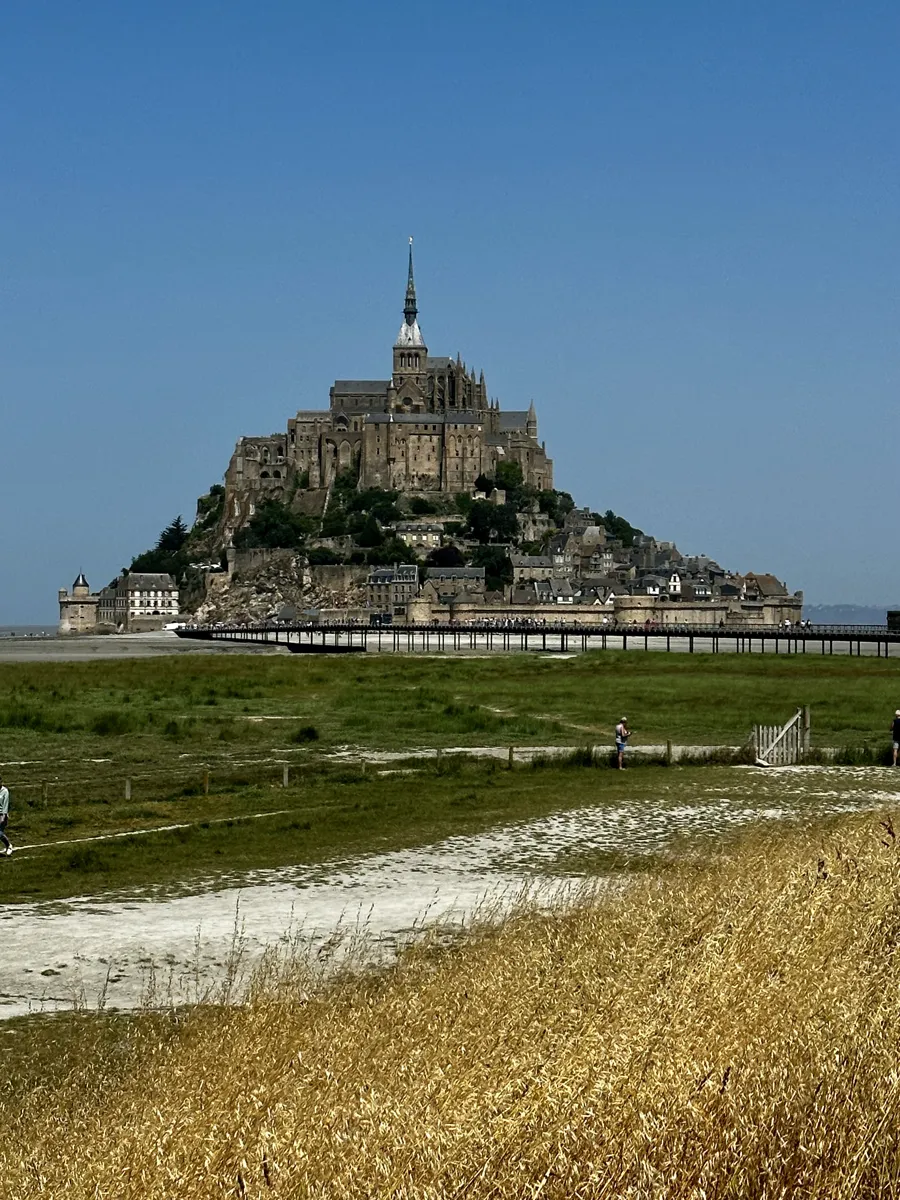
You park on the mainland, about 2.5 kilometers from the Mont. Then either you walk, which I recommend at least one way, because the Mont grows in front of you, or you take the free Le Passeur shuttle, which leaves every few minutes from near the tourist office and drops you 350 meters from the ramparts. The last part is on the pedestrian bridge, opened in 2014.
Visiting the Abbey
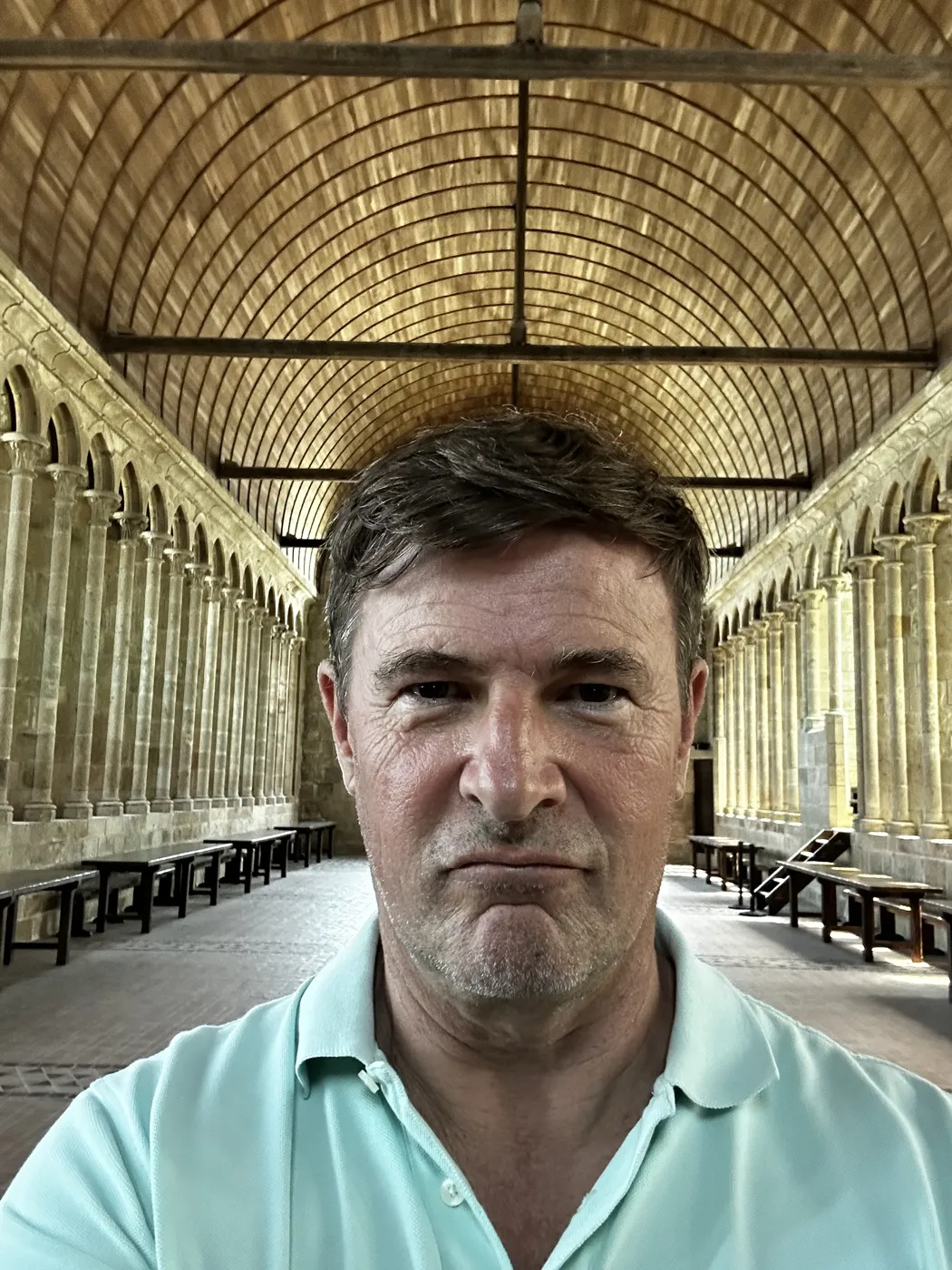
Climb the Grande Rue to the abbey: the abbey church, the cloister suspended between sky and sea, and the great halls of La Merveille, built in the 13th century, are the highlight of the visit. The ticket costs between €13 and €16 depending on the season, and it is free for visitors under 18 and for European residents under 26. The abbey opens at 9:00 or 9:30: go early, or late in the afternoon, to avoid the crowds in the Grande Rue.
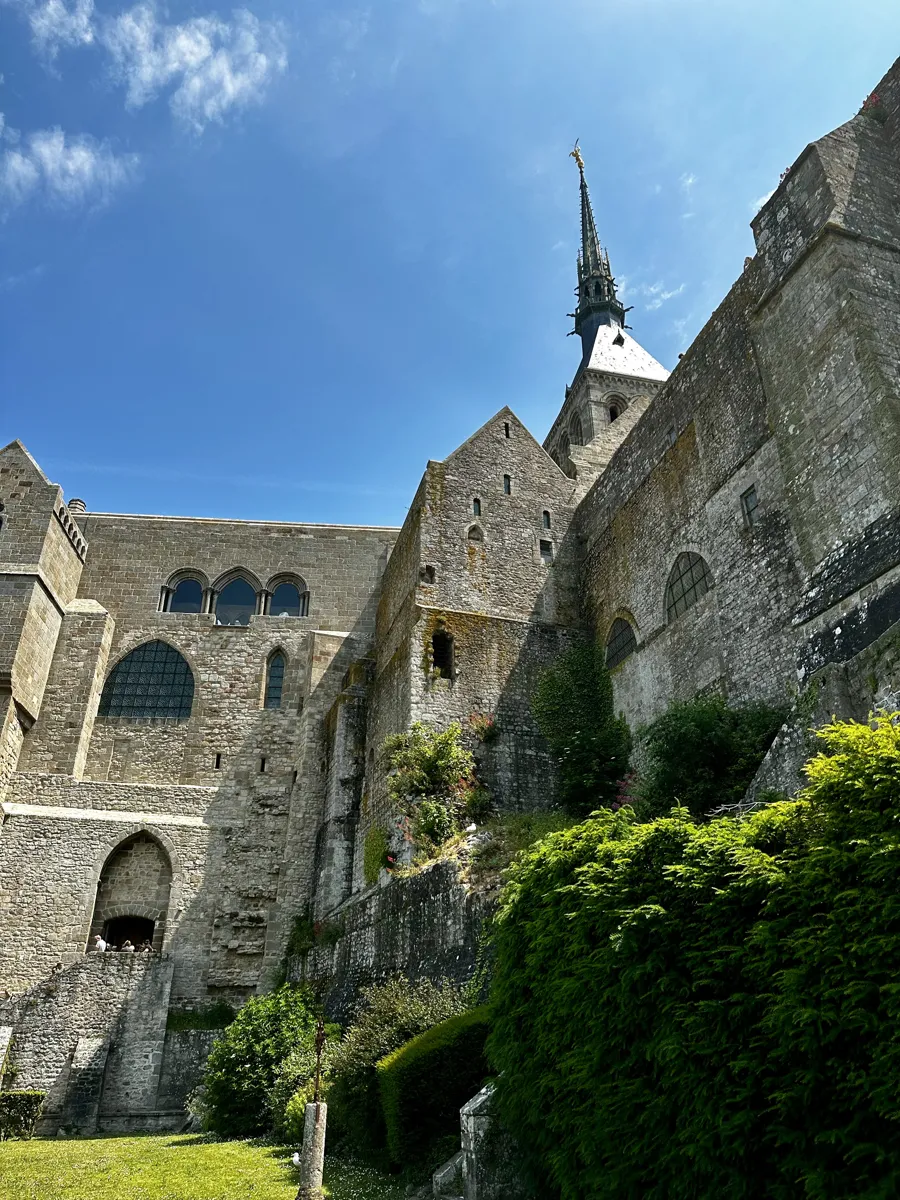
Good to know: the bay has some of the highest tides in Europe, with a range of up to 14 meters, and the sea rises very fast. Never cross the sands without a licensed guide. Parking costs €14 to €28 for the day depending on the season, and it is free in the evening outside July and August, the best time to see the Mont lit up.
Is Mont-Saint-Michel in Normandy or Brittany?
Mont-Saint-Michel is in Normandy, in the Manche department. The question comes up all the time because the Mont is right on the border with Brittany: the Couesnon river, which flows into the bay next to it, has long marked the limit between the two regions, and an old Breton saying claims that “the Couesnon, in its madness, put the Mont in Normandy.” The river has changed course over the centuries, and today the border runs a few kilometers west of the Mont. So Mont-Saint-Michel is Norman, but Cancale and Saint-Malo, 50 minutes away, are in Brittany, and it is easy to combine both regions in the same trip, as we did.
How to Get to Mont-Saint-Michel From Paris
- By car: 3 hours 30 minutes to 4 hours 30 minutes from Paris, depending on traffic. It is the best option if you also want to see the coast.
- By train and bus: TGV from Paris-Montparnasse to Rennes, then the direct bus to Mont-Saint-Michel, about 1 hour 15 minutes. Count about 3 hours 30 minutes in total.
- By train to Pontorson: a train from Paris to Pontorson with a connecting bus, 4 hours to 4 hours 30 minutes.
- As a day trip: it is possible, but tiring. I recommend sleeping nearby, to see the Mont in the evening and in the morning without the crowds.
For closer escapes, see my guide to the best day trips from Paris.
Cancale and Dinner at Le Coquillage
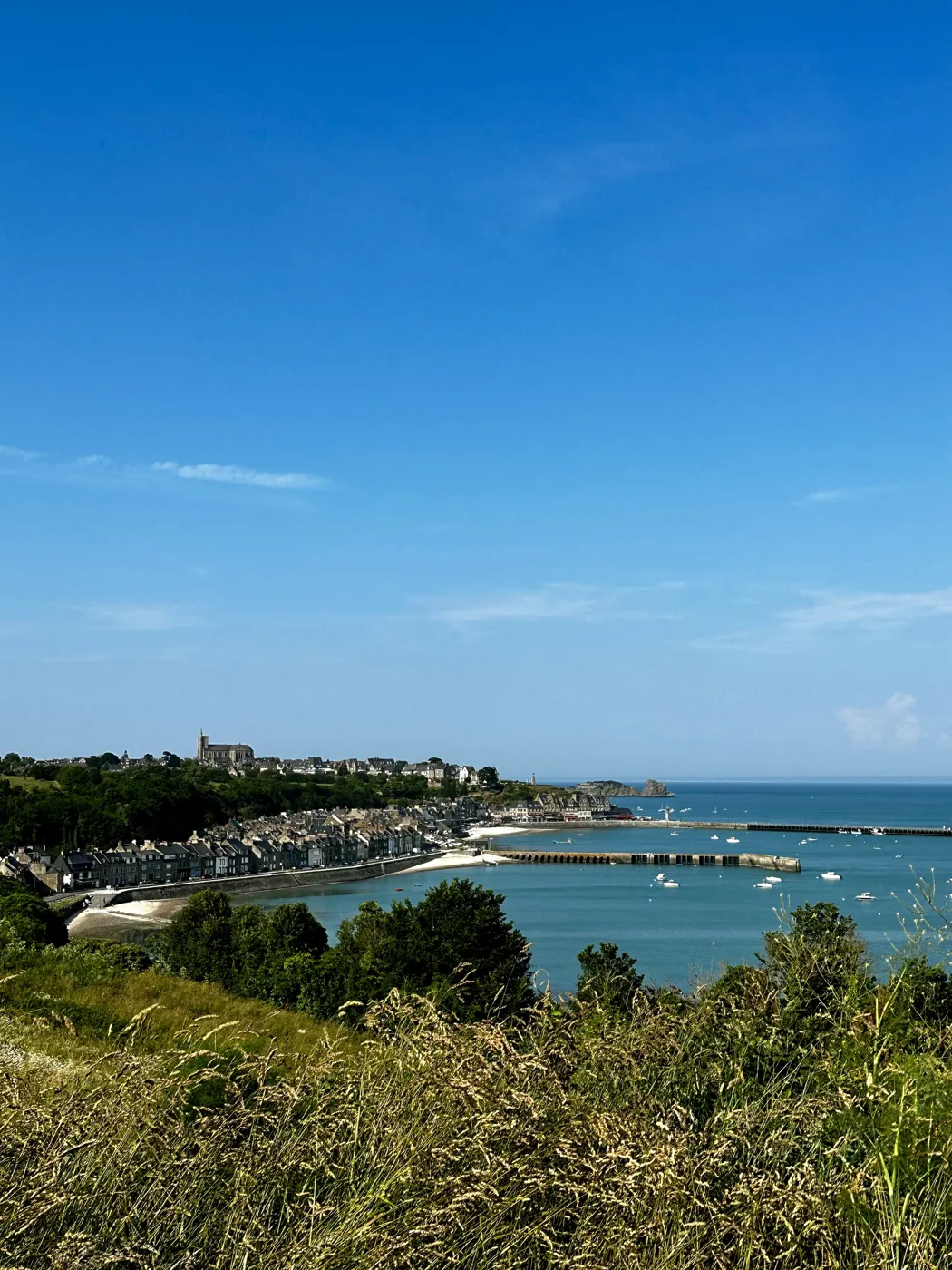
In the late afternoon we drove to Cancale, the oyster capital of Brittany, about 50 minutes from the Mont. From the viewpoint above the port, you see the oyster beds and Mont-Saint-Michel on the horizon. Down in the Port de la Houle, the oyster market is open every day: you buy a dozen from the producers and eat them on the spot, facing the bay.
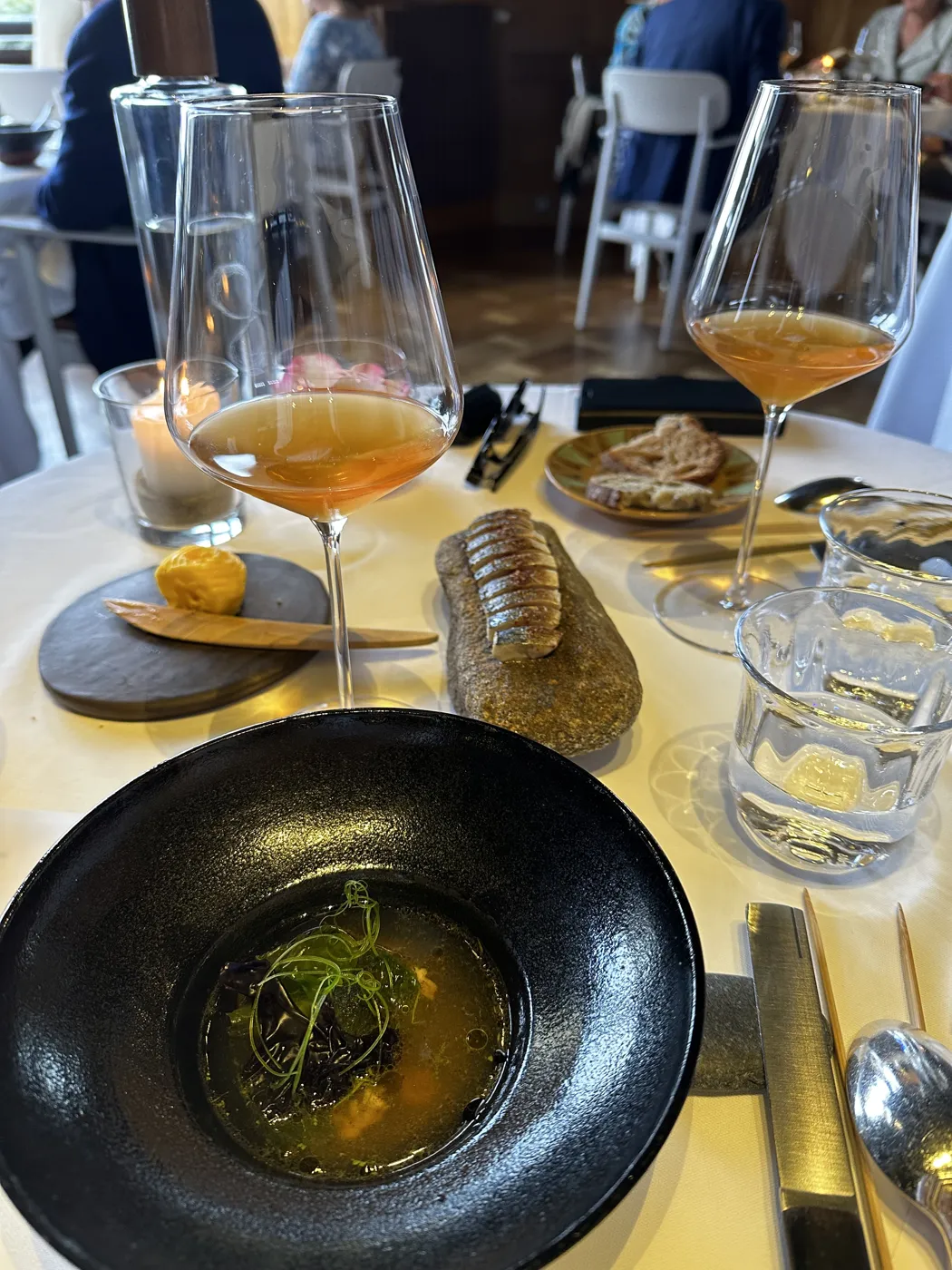
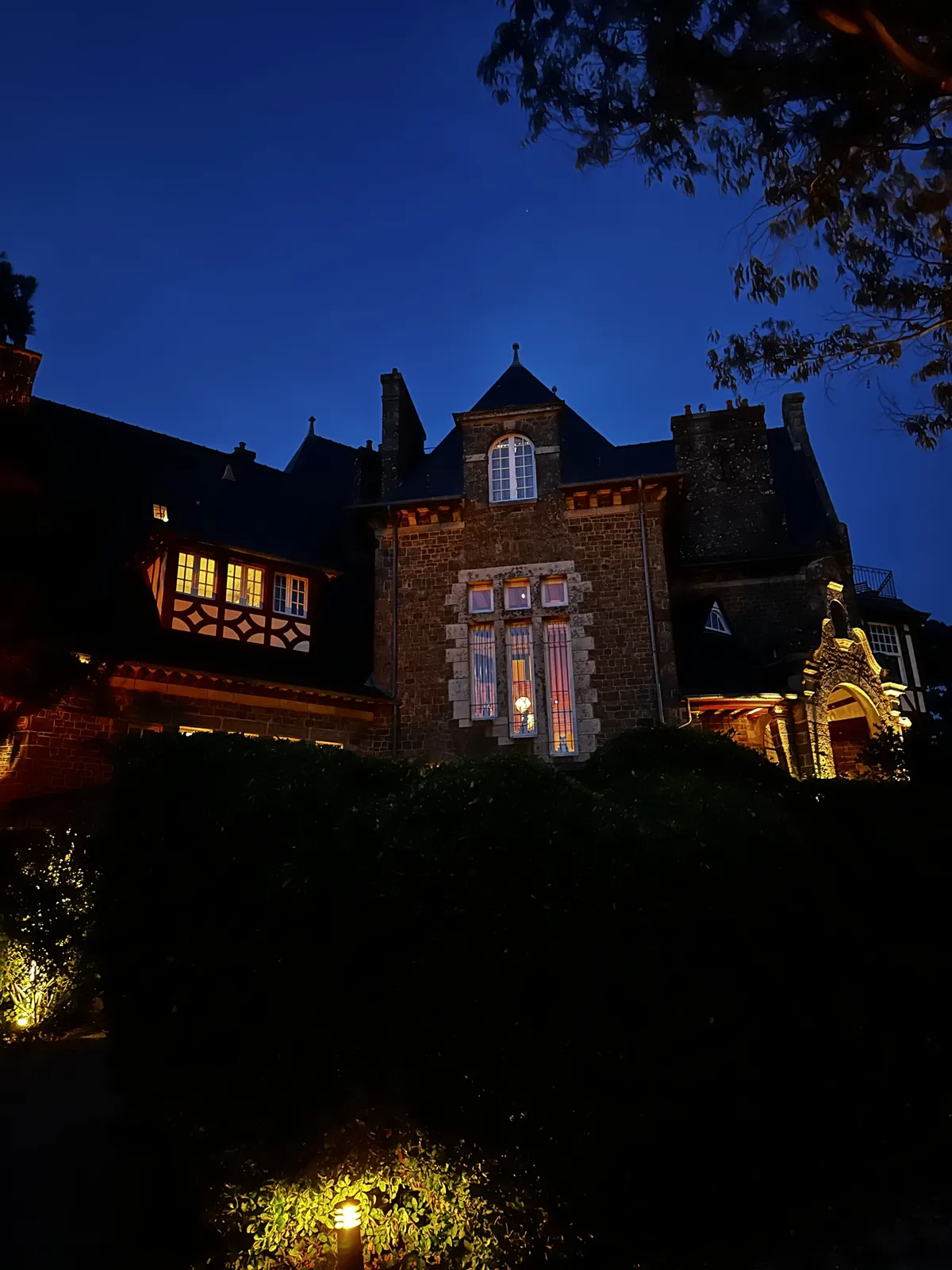
In the evening we had dinner at Le Coquillage, the restaurant of the Roellinger family at the Château Richeux, just outside Cancale, now led by chef Hugo Roellinger, with three Michelin stars. It was excellent. Book well ahead; the restaurant is open from Tuesday to Saturday.
Day 3: Saint-Malo and the Ramparts
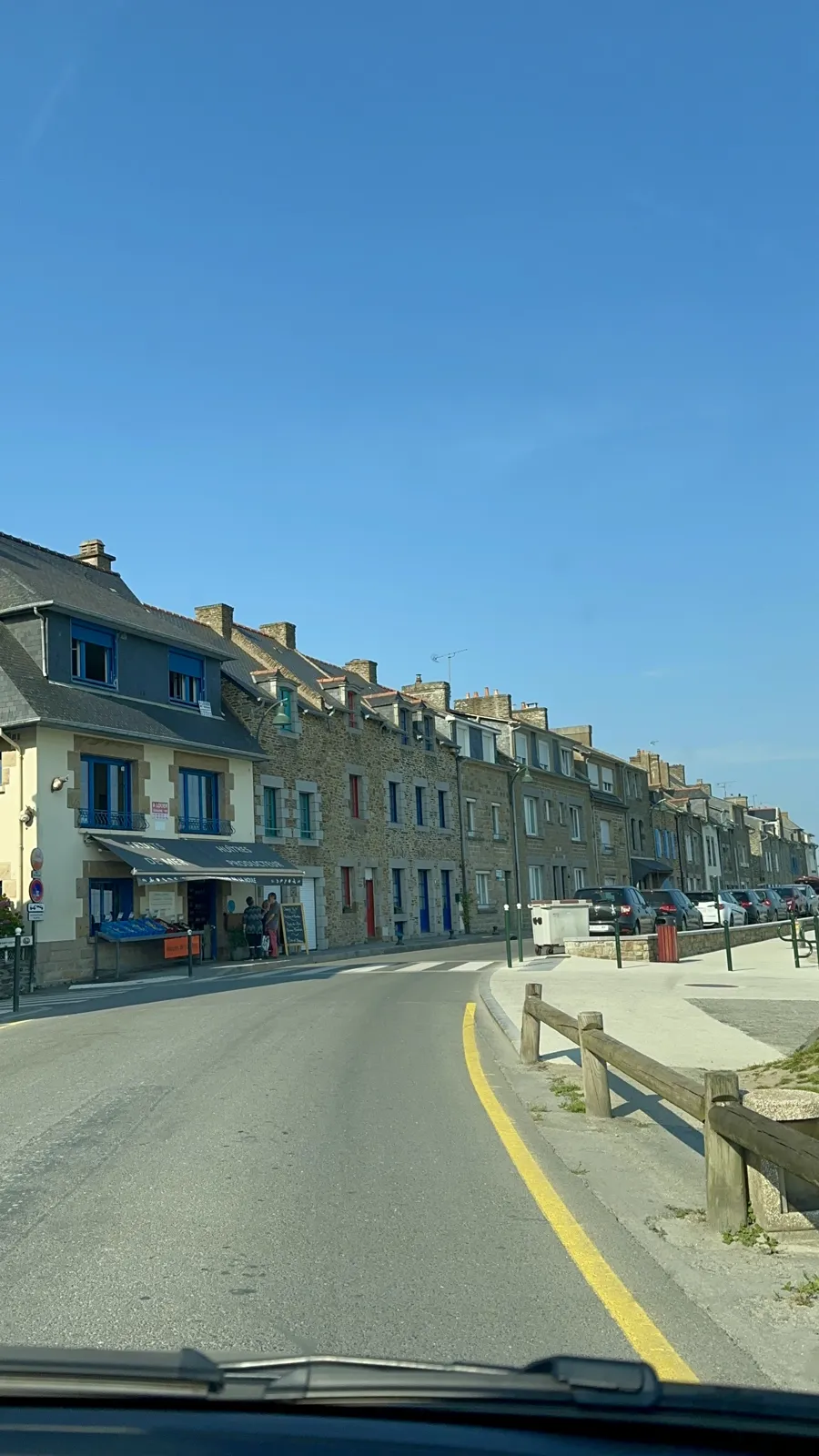
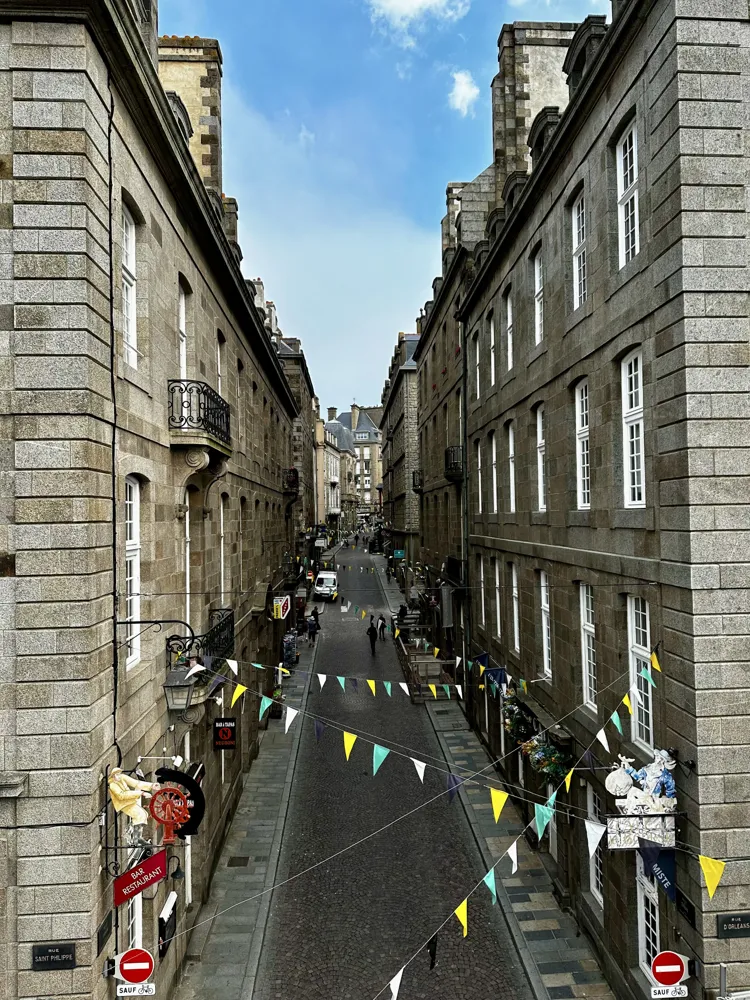
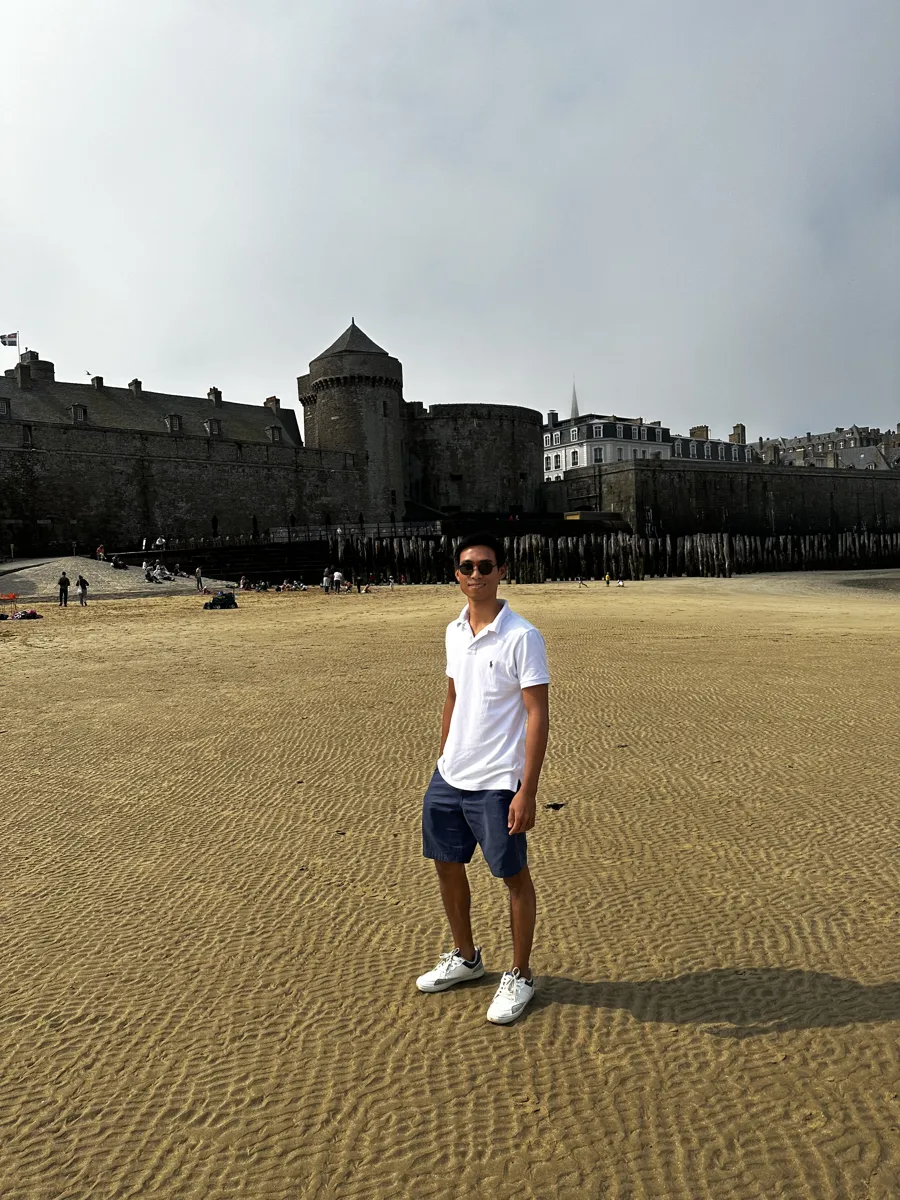
Saint-Malo, the old corsair city, is about 20 minutes from Cancale. We slept outside the walls, but the best moment is the walk on the ramparts: about two kilometers around the old town, with the sea on one side and the granite houses of intra-muros on the other. Allow 45 minutes to an hour.
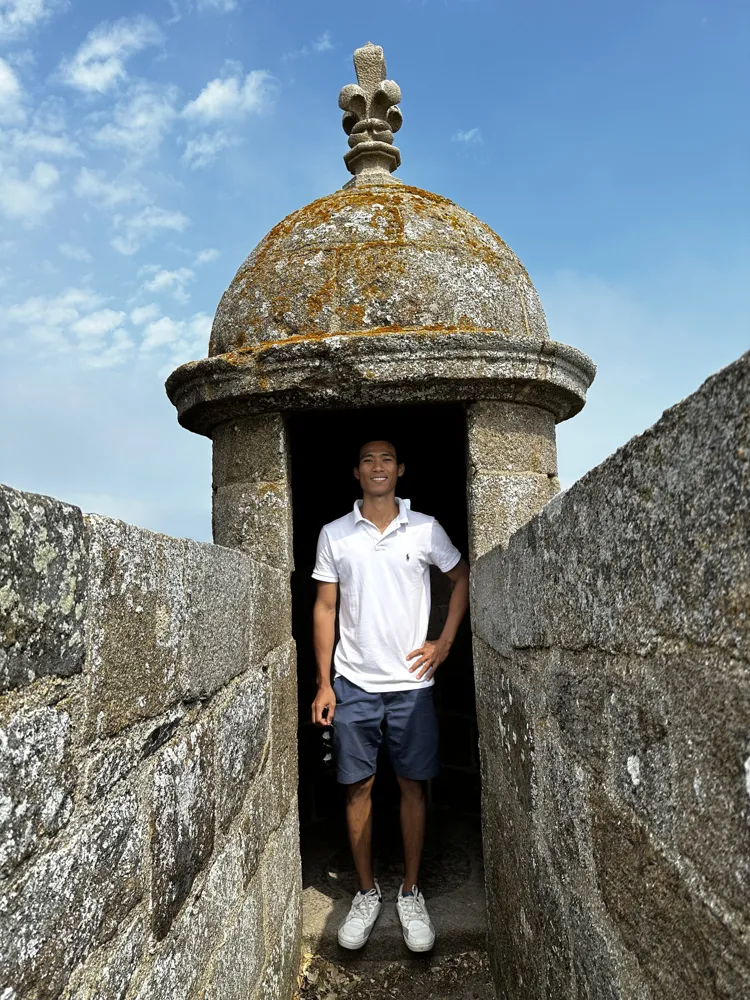
At low tide, you can walk across the sand to the Grand Bé, the small island where the writer Chateaubriand is buried, and to the Fort National. Watch the tide times carefully: the sea comes back fast and cuts off the path.
On the way back to Paris, about four hours by car, we stopped at Chartres to see its cathedral, one of the most beautiful in France. By train, Saint-Malo is about 2 hours 15 minutes from Paris-Montparnasse by direct TGV.
Where We Stayed
Near Deauville: the Manoir des Lions de Tourgéville, a guest house in Tourgéville, about 7 kilometers from Deauville, convenient if you travel by car. Check prices for the Manoir des Lions de Tourgéville on Booking.com.
In Saint-Malo: the Hôtel La Villefromoy, a 4-star hotel about 100 meters from the beach, in the Rochebonne district, about 3 kilometers from intra-muros. Check prices for the Hôtel La Villefromoy on Booking.com.
If You Have More Time
The D-Day Beaches and Bayeux
We did not have time for the D-Day beaches on this trip, but with a fourth day, they are a moving visit: Omaha Beach and the Normandy American Cemetery at Colleville-sur-Mer, free to visit, and the Mémorial de Caen. Be aware that the Bayeux Tapestry is not in Bayeux at the moment: the museum closed in 2025 for renovation, and the tapestry is on loan to the British Museum in London until July 2027.
Rouen, Giverny and Vernon
Rouen, with its Gothic cathedral painted by Monet and its Gros-Horloge, is about 1 hour 10 minutes from Paris by train, and a good first stop on the way to the coast. On the road from Paris, Vernon and Giverny are the gateway to Normandy. I lived two years in Vernon, a Norman town on the Seine right next to Giverny, and I know Monet’s garden well; I tell more about Monet’s garden in my guide to the best day trips from Paris. The garden is open from April to early November.
Practical Tips for a Normandy Road Trip
- Car or train: the car is much easier to link Étretat, Honfleur, Deauville and Mont-Saint-Michel, which are not on the same train lines.
- Tolls: the A13 motorway from Paris is a toll road, and the Pont de Normandie costs €6.10.
- Tides: check the tide times for Mont-Saint-Michel and Saint-Malo; the biggest tides are a spectacle, but they are also the most crowded days.
- Weather: even in summer, bring a sweater and a raincoat; the weather changes fast on the coast.
- Crowds: visit Mont-Saint-Michel early in the morning or in the evening, and avoid weekends in July and August.
Read More
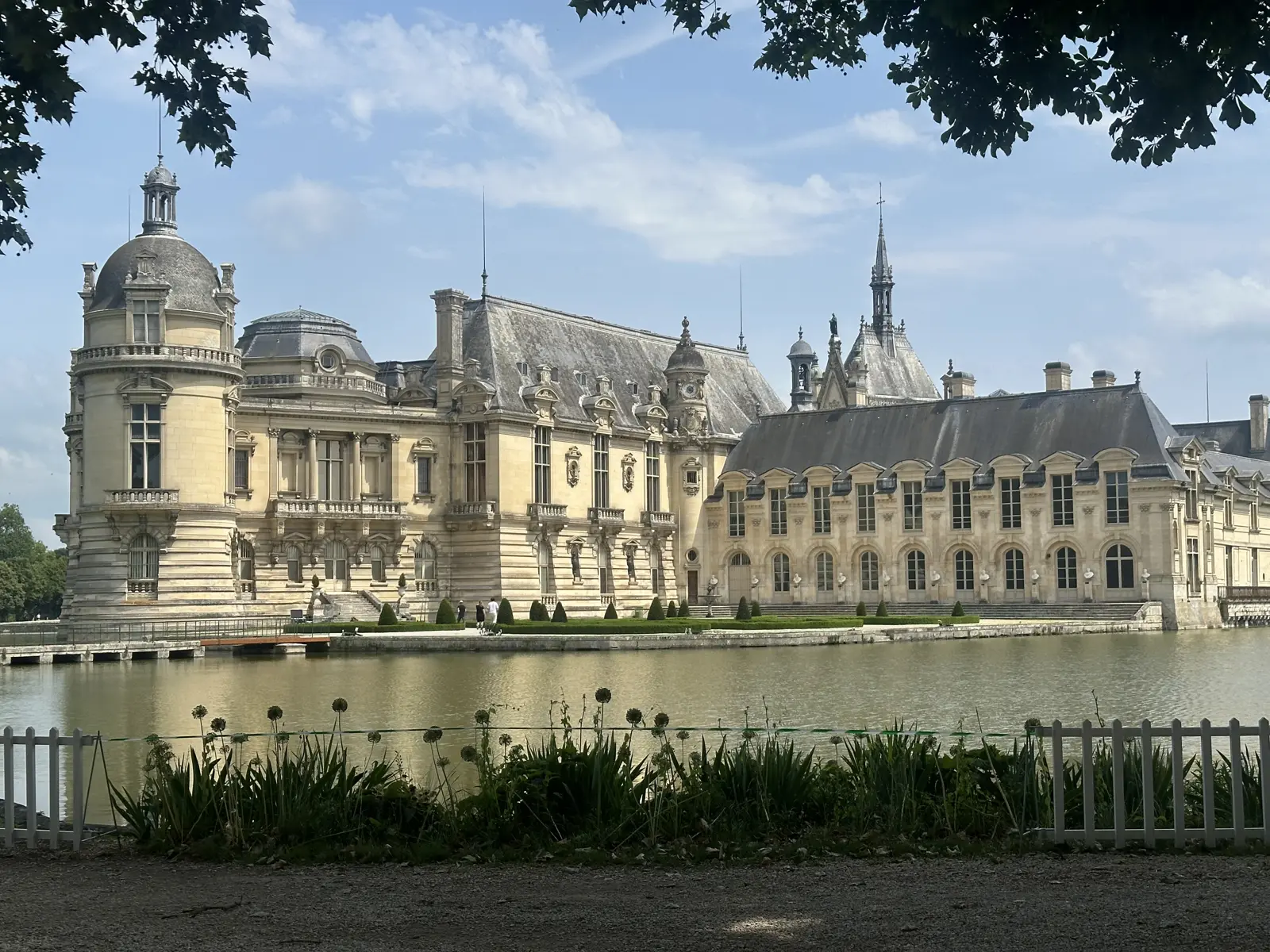
Day Trips From Paris
Versailles, Fontainebleau, Chantilly, Giverny and more, with how I get there.
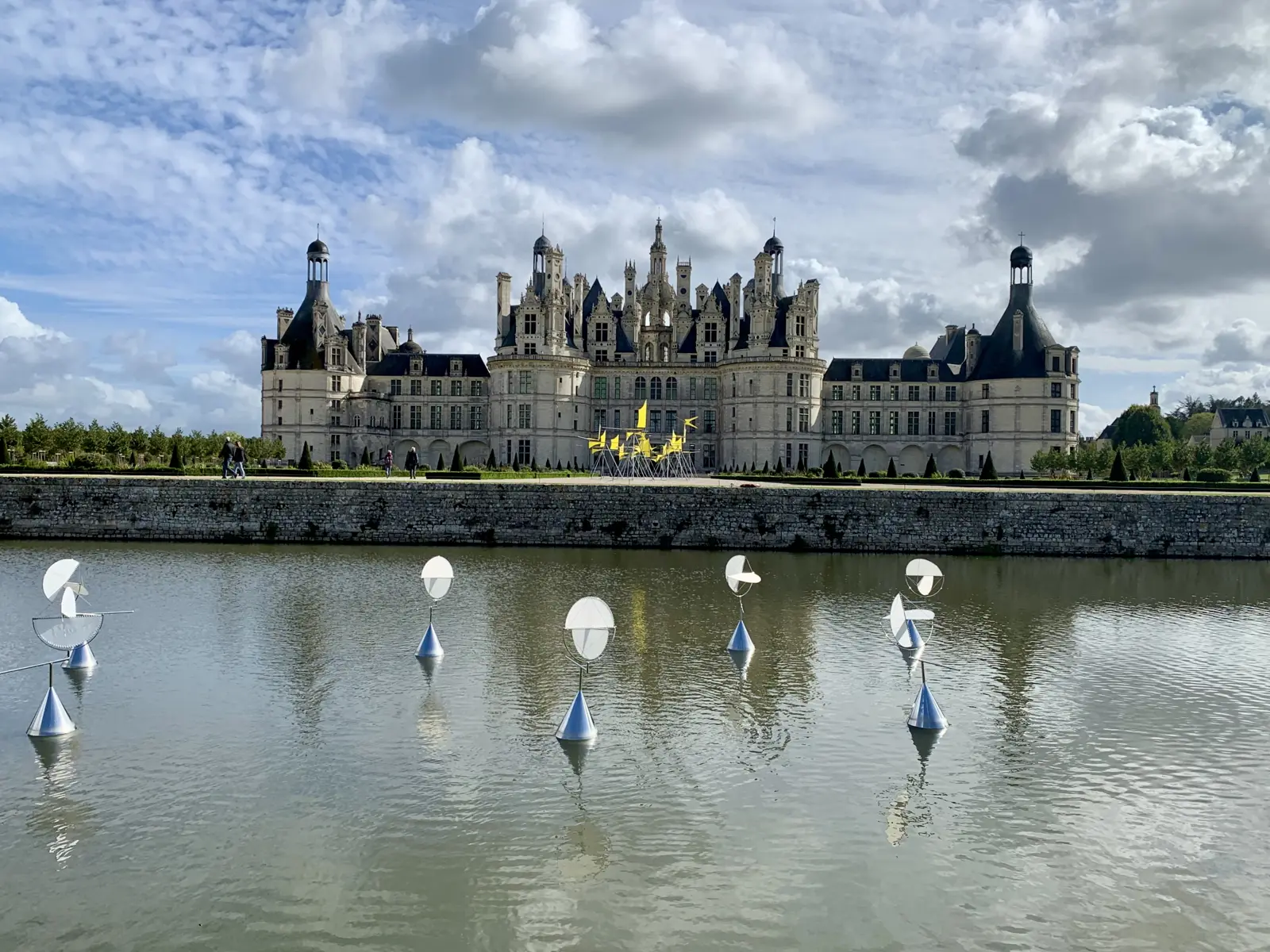
Loire Valley Castles
My four-day road trip from Paris: Chambord, Blois, Chaumont, Chenonceau and Amboise.
France Travel Guide
The regions I know best, from Paris to the Alps and the Riviera, with my tips.
Frequently Asked Questions About a Normandy Road Trip
Is Mont-Saint-Michel in Normandy or Brittany?
In Normandy, in the Manche department, right on the border with Brittany. Cancale and Saint-Malo, 50 minutes away, are in Brittany.
Are 3 days enough for Normandy?
Three days is enough to see Étretat, Honfleur, Deauville and Mont-Saint-Michel by car. Add a fourth day for the D-Day beaches.
What is the most beautiful place in Normandy?
For me, Mont-Saint-Michel. The cliffs of Étretat come a close second.
Can you visit Mont-Saint-Michel as a day trip from Paris?
Yes, but it is tiring: about 3 hours 30 minutes each way by train and bus, or more by car. It is much better with a night nearby.
Do you need a car in Normandy?
It is not essential, but it is much easier: the coastal towns are not well connected by train. Without a car, choose one base and take day tours.
Where is the Bayeux Tapestry now?
On loan to the British Museum in London until July 2027, while the Bayeux museum is renovated.