Raja Ampat Travel Guide 2026: Itinerary, Costs & Tips
By Blaise Jaeger · Updated July 12, 2026
Raja Ampat is often called the most beautiful and biodiverse marine region on Earth — and after diving and travelling here myself, I can tell you the reputation is earned. This remote archipelago in West Papua, Indonesia, scatters more than 1,500 islands across turquoise water, with dramatic limestone karsts, hidden lagoons, and the richest coral reefs on the planet. It’s also one of the trickiest places in Indonesia to organise: flights are limited, a marine park permit is required, and there are no ATMs, roads, or big resorts on most islands.
This complete Raja Ampat travel guide covers everything you need to plan a 2026 trip — when to go, how to actually get to Sorong and beyond, where to stay for every budget, sample itineraries, realistic costs, park fees, and the practical tips I wish I’d known before my first visit. If diving is your main goal, pair this with my detailed Raja Ampat dive-site guide.
Is Raja Ampat Worth Visiting?
Yes — if you’re looking for raw nature, world-class diving and snorkelling, and landscapes that still feel untouched by mass tourism. Raja Ampat is remote, expensive, and logistically demanding, but it rewards you with an experience almost nowhere else on Earth can match. It’s the kind of place where you’ll snorkel straight off the jetty into a reef busier than any aquarium, then watch the sunset over karst islands with no other boat in sight.
Raja Ampat is best for:
- World-class scuba diving and snorkelling
- Remote island scenery and iconic karst viewpoints
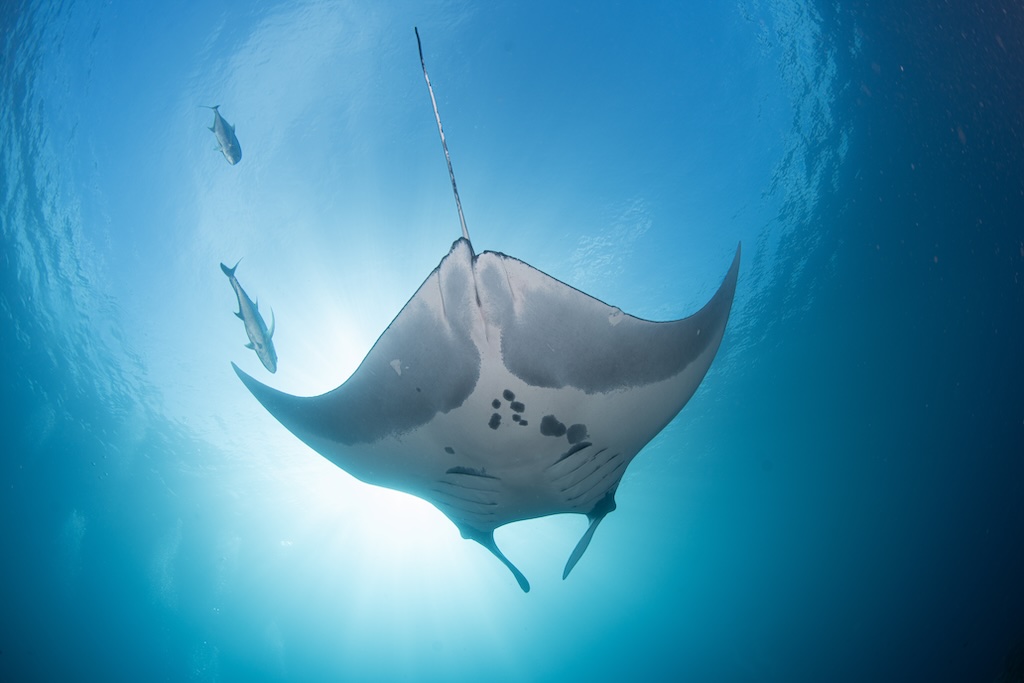
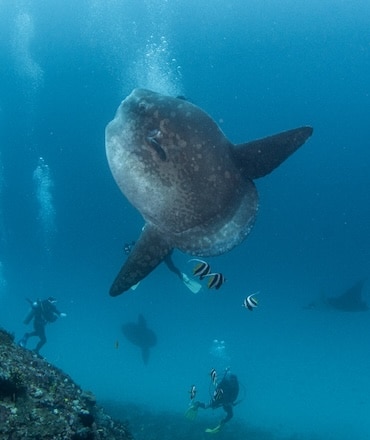
- Manta rays, reef sharks, and unmatched marine biodiversity
- Kayaking, island-hopping, and birdwatching (birds of paradise)
- Off-the-grid, sustainable eco-travel
It’s not the right choice for nightlife, luxury shopping, easy budget travel, or anyone who wants seamless logistics. There’s little phone signal, few restaurants outside resorts, and getting around means boats, not roads. Come for the nature — that’s the whole point.
Raja Ampat at a Glance
| Location | West Papua, eastern Indonesia |
| Gateway city | Sorong (airport code SOQ) |
| Main islands | Waigeo, Batanta, Salawati, Misool |
| Best time to visit | October–April (north & Dampier Strait); May–September (Misool) |
| Marine park permit | ~IDR 1,000,000 (~$60), valid for the calendar year |
| How long to stay | 5–7 days minimum; 7–10 days ideal |
| Budget level | High for Indonesia — homestays from ~IDR 350,000/night, resorts premium |
| Language | Indonesian; basic English at resorts and dive centres |
| Currency | Indonesian rupiah (IDR) — bring cash, ATMs only in Sorong/Waisai |
Why I Keep Coming Back to Raja Ampat
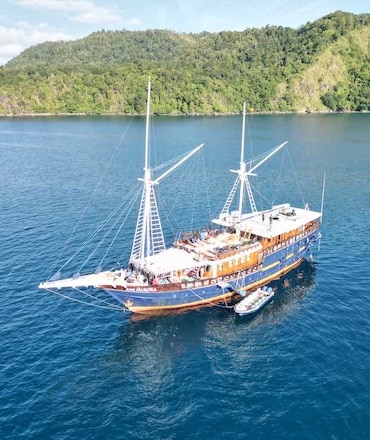
I live in Indonesia, on Nusa Penida near Bali, where I opened the island’s first PADI dive centre in 2017 and have since logged more than 700 dives across the country. I’ve explored eastern Indonesia extensively, and Raja Ampat still stands apart. In April 2023 I spent 12 days crossing the archipelago aboard the Dune Aurora, a traditional wooden phinisi liveaboard, sailing from Sorong through the Fam Islands around Piaynemo, Batanta, and the pinnacles of Misool.
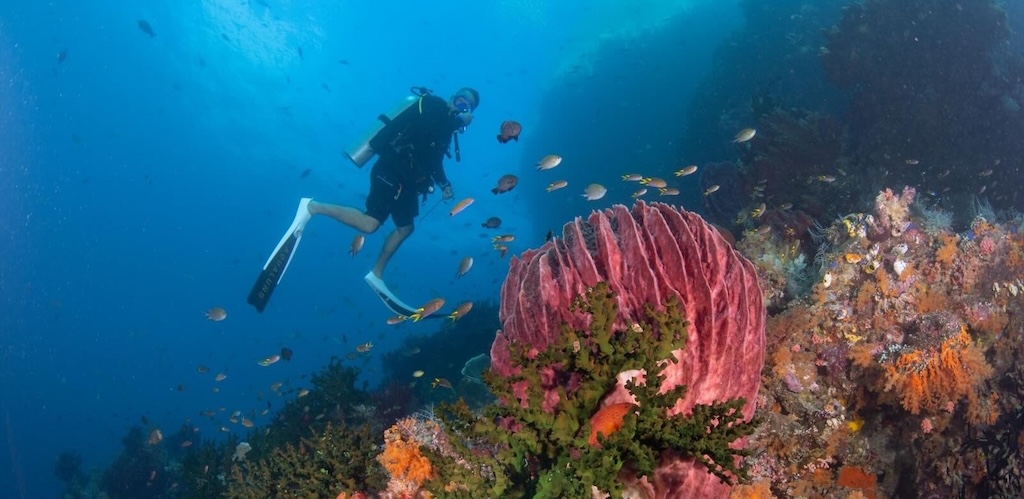
What stays with me isn’t a single dive — it’s the sheer density of life. Reefs so packed with fish the water darkens, wobbegong sharks under almost every ledge, manta rays gliding through the current, and coral cover so complete you struggle to find a patch of bare rock. Above the surface, the karst landscapes of Wayag and Piaynemo are just as unforgettable. This guide is built on that first-hand experience, combined with up-to-date logistics for planning your own trip in 2026.

Where Is Raja Ampat and How the Archipelago Is Organised
Raja Ampat lies off the northwest tip of the Bird’s Head Peninsula in West Papua, at the far eastern end of Indonesia. The name means “Four Kings,” after the four main islands that anchor the archipelago:
- Waigeo — the largest northern island; home to Waisai (the regional capital) and most Dampier Strait resorts and homestays
- Batanta — just south of Waigeo, with waterfalls, reefs, and a few eco-resorts
- Salawati — the least visited of the four, close to Sorong
- Misool — the remote southern island, famous for pinnacles, pink beaches, and rock art
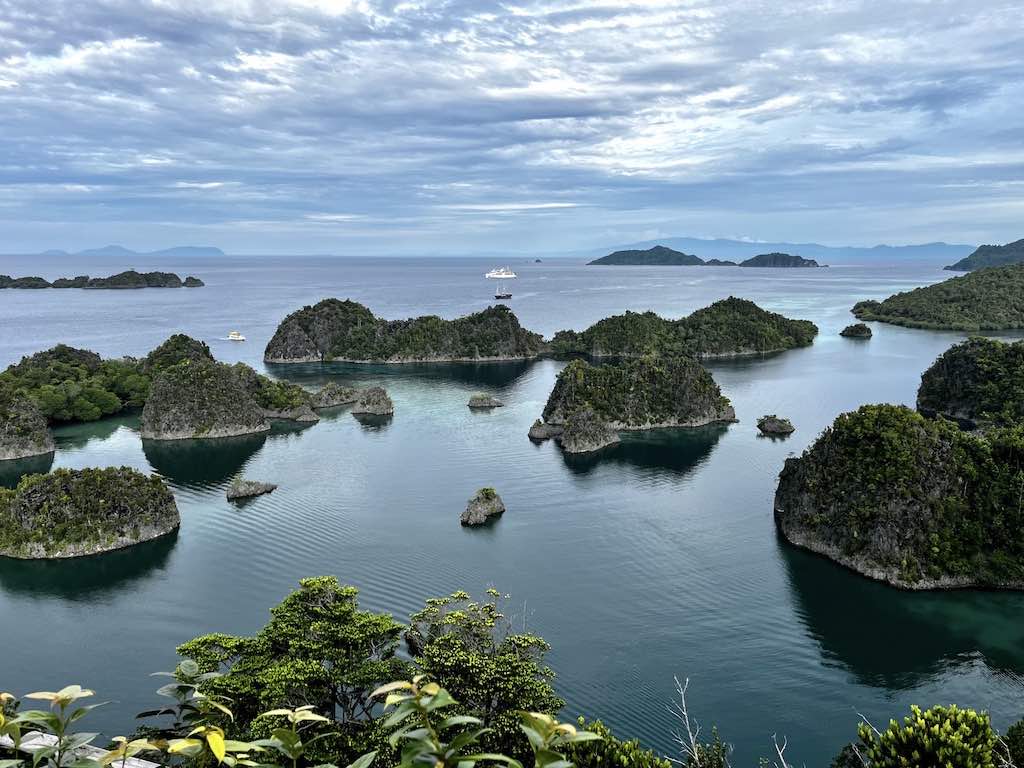
For planning, it helps to think in regions rather than islands. The Dampier Strait (between Waigeo and Batanta) is the accessible heart of Raja Ampat, where most first-timers stay. The Fam Islands hold the Piaynemo viewpoint. Wayag, in the far north, has the most iconic karst scenery. And Misool, in the south, is wild liveaboard territory. The main entry point for everyone is Sorong, a port city on the mainland.
Best Time to Visit Raja Ampat
Raja Ampat is a year-round destination, but conditions shift between the north and the south, so the “best” time depends on where you’re headed.
October to April — North & Dampier Strait season
- Calmest seas and best conditions in central and northern Raja Ampat
- Excellent visibility and peak manta ray activity at the cleaning stations
- Ideal for both liveaboards and land-based resorts
This is the overall best window for most travellers, and the busiest — book resorts and liveaboards well ahead.
May to September — Misool & the south
- Best conditions around Misool, with drier weather in the south
- Slightly rougher seas in the north
- Great for exploring Misool’s pinnacles and soft-coral walls
Water stays warm year-round at 28–30°C (82–86°F), with visibility typically 20–30 metres. There’s no true dry or wet season like the rest of Indonesia — rain can fall any month, usually in short bursts.
Best Places to Visit in Raja Ampat
Piaynemo Viewpoint
The most accessible of Raja Ampat’s iconic karst viewpoints, in the Fam Islands. A short wooden staircase leads to a platform overlooking a maze of green mushroom islands and turquoise lagoons — the postcard shot of Raja Ampat. Easily reached on a day trip from Dampier Strait resorts.
Wayag Lagoon
The most spectacular — and most remote — viewpoint in Raja Ampat, in the far north. Limestone peaks rise from electric-blue water in one of Indonesia’s most photographed landscapes. Reaching Wayag takes a long boat trip or a liveaboard itinerary, and often a separate permit, but the climb to the summit is worth every minute.

Misool
Southern Raja Ampat’s wild frontier: pink-sand beaches, hidden lagoons, ancient rock paintings, and pristine reefs. Home to one of the world’s most respected marine conservation projects. Best reached by liveaboard or a stay at a remote eco-resort.
Arborek Village
A tiny, welcoming island village in the Dampier Strait, known for jetty snorkelling (manta rays and mandarinfish), homestays, and traditional weaving. One of the easiest ways to experience local Papuan life.
Sawinggrai & the Birds of Paradise
Raja Ampat isn’t only about the ocean. Early-morning treks on Waigeo and Gam — from villages like Sawinggrai — offer the chance to see the red bird of paradise perform its courtship display, a genuine bucket-list wildlife experience for birdwatchers.
Diving and Snorkelling in Raja Ampat
Diving is the number-one reason most people come to Raja Ampat, and for good reason: it holds the highest recorded marine biodiversity on Earth, with over 600 coral species and more than 1,500 species of reef fish. Highlights include manta cleaning stations like Manta Sandy, the world-record fish counts at Cape Kri, and the soft-coral pinnacles of Misool.
Even if you don’t dive, the snorkelling is exceptional — many reefs start in knee-deep water right off the jetties, so you’ll see reef sharks, turtles, and clouds of fish with just a mask and fins. For a full breakdown of the 15 best dive sites, seasons, and liveaboard-vs-resort advice, see my dedicated guide to diving in Raja Ampat, and how it ranks among the best diving in Indonesia.

Raja Ampat Itineraries: How Many Days Do You Need?
Because of the travel time to get here, plan a minimum of 5–6 days on the ground; 7–10 days lets you see much more. Here are three sample plans.
5-Day Land-Based Trip (Dampier Strait)
Day 1 – Fly to Sorong, ferry or transfer to a Dampier Strait resort or homestay
Day 2 – House-reef snorkelling/diving and Arborek village
Day 3 – Piaynemo viewpoint and lagoon snorkelling
Day 4 – Manta Sandy and a Dampier Strait dive site
Day 5 – Morning birdwatching, transfer back to Sorong
7-Day Classic
Add two or three days to the plan above for more dive sites, a kayaking day between the karsts, and a slower pace — the way Raja Ampat is best enjoyed. Divers often stay 7–10 days.
10-Day Liveaboard (North + Misool)
The ultimate option, and how I explored the archipelago: board in Sorong and sail through the Fam Islands, Batanta, and the pinnacles of Misool, reaching remote sites no day-boat can. Typical liveaboard itineraries run 7–11 nights.

How to Get to Raja Ampat
Step 1 — Fly to Sorong (SOQ)
All routes lead through Sorong. There are direct domestic flights from Jakarta and Makassar (several daily); from Bali (Denpasar) you’ll usually connect through one of the two. Flights often arrive in the early morning, so many travellers spend one night in Sorong before heading out.
Step 2 — Buy the marine park permit
Every visitor needs the Raja Ampat Marine Park Entry Permit (the “PIN”): around IDR 1,000,000 (~$60) for foreigners, valid for the calendar year. Liveaboards and many resorts arrange it for you; independent travellers can pay at Waisai harbour on arrival. Check the current rate before you travel, as the local authority adjusts it annually.
Step 3 — Boat transfer
From Sorong, the Express Bahari fast ferry crosses to Waisai in about 2 hours, from around IDR 125,000 one-way. In 2026 it runs daily at 2:00 PM, with additional 9:00 AM departures on Wednesday, Friday, and Sunday (schedules change — verify before you go). Most resorts then meet you at Waisai with a speedboat transfer; liveaboards board directly in Sorong harbour. Travel is part of the adventure.
Where to Stay in Raja Ampat
Accommodation falls into three clear categories. Most first-timers base themselves in the Dampier Strait for the easiest access to top sites.
Homestays (budget)
Raja Ampat has a unique network of locally owned homestays — simple beachfront bungalows with full board, typically IDR 350,000–500,000 per person per night. Expect basic comfort (mattress on the floor, shared or bucket bathrooms at some) but an authentic experience, and money that goes straight to Papuan communities. Many cluster around Kri and Arborek — browse Kri guest houses on Booking.com.
Eco-Resorts (mid to premium)
- Kri Eco Resort & Sorido Bay Resort (Kri Island) — the pioneering resorts of Raja Ampat, minutes from Cape Kri (book directly via Papua Diving; you can also see all Kri Island stays on Booking.com).
- Papua Paradise Eco Resort (Birie Island, off Batanta) — overwater bungalows above a house reef, with a full dive operation.
- Meridian Adventure Marina Club & Resort (Waisai) — a PADI 5* marina resort with the most infrastructure and easy ferry access (also on Agoda).
Liveaboards (all-inclusive)
For Misool, Wayag, and the remote south, a liveaboard is the best way to dive — typical Raja Ampat itineraries run 7–11 nights at roughly $300–450 per night all-inclusive. I sailed on the wooden phinisi Dune Aurora and can’t recommend the experience enough; see my Indonesia diving cruise guide for what life on board is like.
Compare resorts and hotels across Raja Ampat for your dates on Booking.com:

How Much Does Raja Ampat Cost?
Raja Ampat is one of Indonesia’s most expensive destinations — not because of luxury, but because everything has to be shipped or flown in, and the remoteness adds up. Rough per-person guidance for 2026:
- Homestay stay: IDR 350,000–500,000/night with full board (budget)
- Eco-resort: premium — often sold as multi-night dive packages
- Liveaboard: ~$300–450/night, all-inclusive
- Marine park permit: ~IDR 1,000,000 (~$60), once per calendar year
- Fun dives: roughly $40–60 each at resorts
- Extras: domestic flights to Sorong, boat transfers, ferry tickets
Homestay travellers can keep costs reasonable; resort and liveaboard trips run into the thousands. Either way, it’s not cheap — but the experience is genuinely unique.
Practical Tips for Visiting Raja Ampat
- Bring plenty of cash. ATMs exist only in Sorong and Waisai, and most homestays and small operators are cash-only. Withdraw everything you’ll need before heading out.
- Expect limited connectivity. Phone signal is patchy and Wi-Fi is rare or slow — treat it as a digital detox.
- Respect marine conservation rules. Don’t touch coral or marine life, and choose operators that brief on no-touch etiquette; your park fee funds the rangers who protect it.
- Get travel and dive insurance. This is a remote region and the nearest decompression chambers are far away — DAN is worth it for divers.
- Plan buffer time around flights. Domestic connections to Sorong can be delayed; leave a night’s margin so you don’t miss a ferry or transfer.
- Pack a save-a-dive kit and reef-safe sunscreen. Spare parts and supplies are scarce once you leave Sorong.
Raja Ampat vs Komodo vs the Maldives
If you’re weighing Raja Ampat against Indonesia’s other marine icon, or against the Maldives, here’s the short version:
- Raja Ampat — the highest biodiversity, most remote, warm calm water, fewer crowds. Best for reef density and once-in-a-lifetime nature.
- Komodo — stronger currents, bigger pelagics, dramatic dry landscapes, and easier access. Best for adrenaline drift diving and the Komodo dragons.
- Maldives — more luxury and easier logistics, but for sheer biodiversity and reef density, many divers rate Raja Ampat above it.
If you want biodiversity and untouched scenery, choose Raja Ampat. Many divers end up visiting both Raja Ampat and Komodo on a broader Indonesia trip.

🌊 Diving in Raja Ampat
The 15 best dive sites in Dampier Strait, Misool, and Wayag, from manta cleaning stations to coral-covered pinnacles.

🌊 Best Diving in Indonesia
From Raja Ampat to Komodo and the Banda Sea, compare Indonesia’s most spectacular dive destinations.
Frequently Asked Questions About Raja Ampat
How many days do you need in Raja Ampat?
Plan a minimum of 5–6 days on the ground, and ideally 7–10. Because it takes the best part of a day to travel in from Bali or Jakarta, short trips don’t do it justice. Divers commonly stay 7–10 days or take a 7–11 night liveaboard.
Do you have to dive to enjoy Raja Ampat?
No. The snorkelling is world-class — many reefs start right off the jetties — and there’s kayaking, karst viewpoints like Piaynemo and Wayag, village visits, and birdwatching for the birds of paradise. That said, diving is the main draw for most visitors.
What is the best time to visit Raja Ampat?
October to April is best for the north and Dampier Strait, with calm seas and peak manta activity. May to September favours Misool in the south. The water stays 28–30°C year-round, and it can rain in short bursts any month.
How do you get to Raja Ampat?
Fly to Sorong (SOQ) via Jakarta or Makassar (Bali connects through one of them). From Sorong, take the Express Bahari fast ferry to Waisai (about 2 hours) or board a liveaboard directly in Sorong harbour. Resorts arrange speedboat transfers from Waisai.
How much does a Raja Ampat trip cost?
Homestays run IDR 350,000–500,000 per night with meals, while eco-resorts and liveaboards (~$300–450/night) push a trip into the thousands. Add the marine park permit (~IDR 1,000,000 / ~$60), domestic flights, and boat transfers. It’s expensive by Indonesian standards.
Do you need a permit for Raja Ampat?
Yes. Every visitor needs the Marine Park Entry Permit (“PIN”), about IDR 1,000,000 for foreigners, valid for the calendar year. Liveaboards and resorts usually arrange it; independent travellers can buy it at Waisai on arrival. Children under 12 are exempt.
Where should you stay in Raja Ampat?
Most first-timers stay in the Dampier Strait (Kri, Gam, Arborek, Waisai) for the easiest access to top sites. Choose a homestay for budget and local life, an eco-resort for comfort and diving packages, or a liveaboard to reach Misool and Wayag.
Is Raja Ampat safe?
Yes. It’s remote but very safe for travellers, with welcoming Papuan communities. The main considerations are natural rather than social: limited medical facilities, strong currents at some dive sites, and long distances — so travel insurance and sensible planning matter.
Is Raja Ampat better than the Maldives?
For marine biodiversity and reef density, many divers consider Raja Ampat superior to the Maldives. The Maldives wins on luxury and easy logistics; Raja Ampat wins on wild, untouched nature and the richest reefs on Earth.
Is Raja Ampat good for beginner divers?
Some sites are beginner-friendly, but many involve currents, so Raja Ampat is best enjoyed with some logged dives and current experience. Resorts can match sites to your level, and calm spots like Manta Sandy suit all levels.
Why Raja Ampat Is One of the Most Extraordinary Places on Earth
Few destinations combine record-breaking marine biodiversity, iconic limestone island landscapes, remote eco-tourism, manta ray encounters, and pristine coral reefs the way Raja Ampat does. It’s not just a dive trip — it’s one of the last true frontiers of tropical marine exploration.
If you’re planning a broader Indonesia itinerary, combine Raja Ampat with Komodo or Bali for a multi-region adventure. Take the time, bring the cash, accept the slow logistics — and Raja Ampat will give you a trip you’ll measure other travels against for years.