Tana Toraja Travel Guide: Funerals & Culture
One of Indonesia’s Most Fascinating Cultural Destinations
Located in the mountainous highlands of South Sulawesi, Tana Toraja is one of the most unique and culturally rich destinations in Indonesia — and arguably in the world. Isolated for centuries, this region has preserved traditions, beliefs, and architecture that are unlike anywhere else in the archipelago.
I first visited Tana Toraja to attend the funeral ceremony of an Indonesian friend’s uncle — an extraordinary experience that offered a rare insight into Torajan culture. Since then, I have returned several times, drawn back by the region’s powerful atmosphere, spectacular landscapes, and deeply rooted traditions.
The Toraja people are especially famous for their elaborate funeral rituals, distinctive Tongkonan houses with boat-shaped roofs, and dramatic cliffside burial sites. Between ancestral spirituality, living traditions, and breathtaking scenery, Tana Toraja offers one of the most authentic cultural experiences in Southeast Asia.
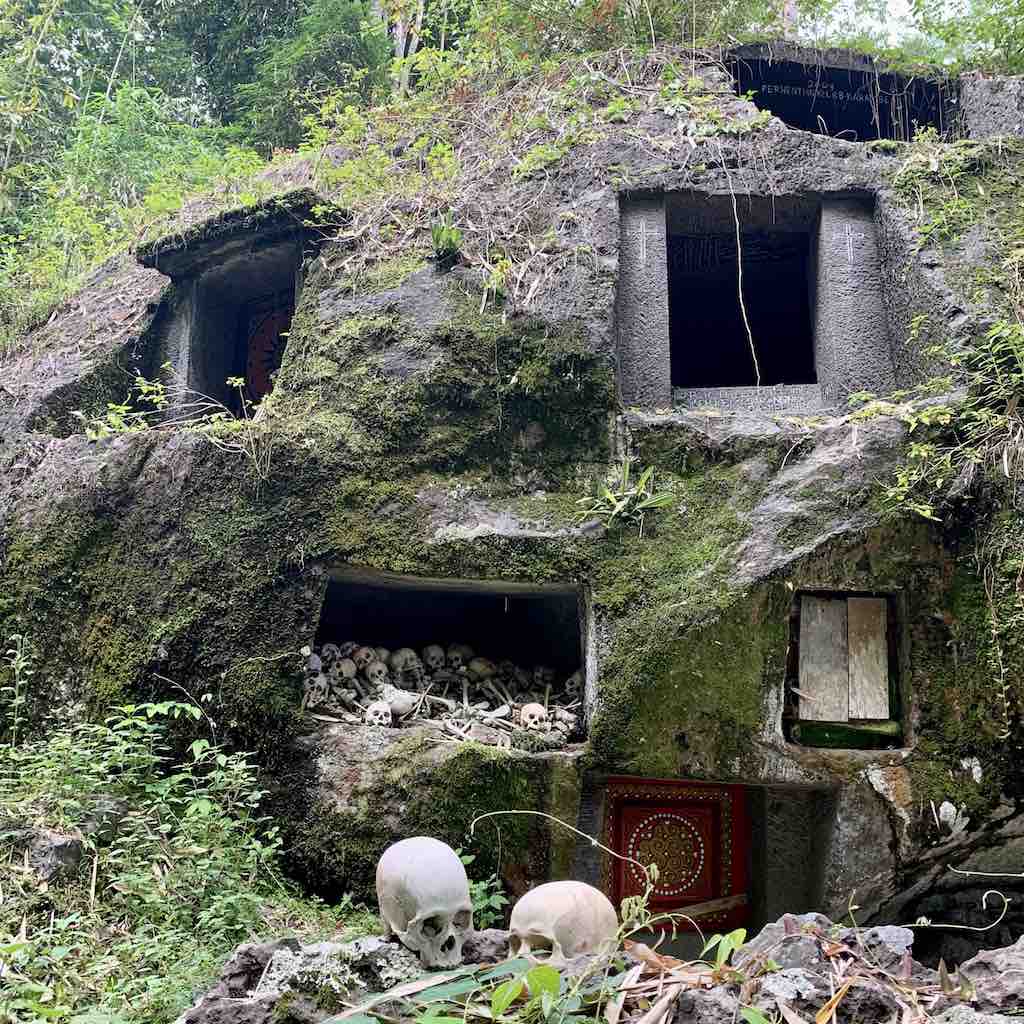
Torajan Funeral Ceremonies (Rambu Solo)
The most iconic aspect of Torajan culture is the funeral ceremony known as Rambu Solo, one of the most elaborate death rituals in the world.
Unlike Western traditions, death is not considered an immediate transition. The deceased is regarded as “sick” until the official ceremony takes place, which may occur weeks, months, or even years later while the family gathers the necessary resources.
These funerals are major social events involving:
- Hundreds or sometimes thousands of participants
- Ritual sacrifices of water buffalo and pigs
- Processions, chanting, and traditional dances
- Large communal feasts
- Complex exchanges between families
The water buffalo holds special symbolic importance. It is believed to carry the soul of the deceased to the afterlife, and rare albino buffalo can cost tens of thousands of dollars, reflecting the family’s social status.
For visitors, witnessing a Rambu Solo ceremony is an unforgettable cultural experience — both fascinating and emotionally intense.
Tongkonan Houses: Symbols of Torajan Identity
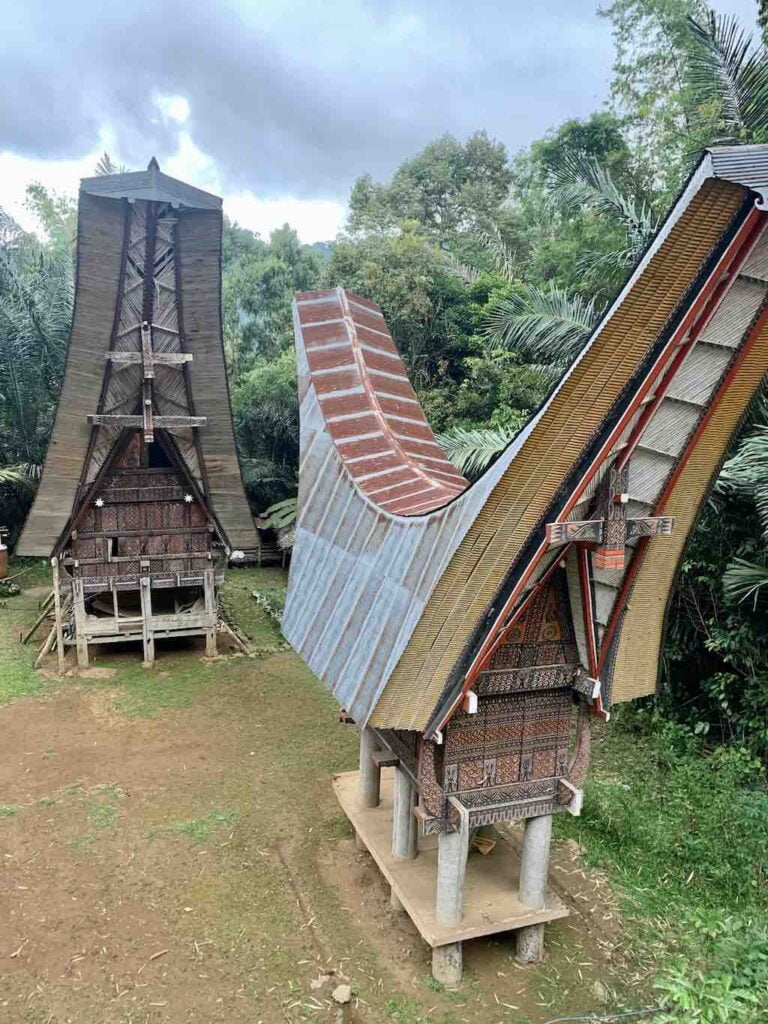
Another defining feature of Tana Toraja is the Tongkonan, traditional ancestral houses instantly recognizable by their dramatic curved roofs resembling boats or buffalo horns.
These are not ordinary homes. Tongkonan serve as:
- Symbols of family lineage and status
- Ceremonial centers for rituals
- Spiritual anchors of Torajan society
Their façades are decorated with intricate wood carvings painted in red, black, and yellow, each motif carrying symbolic meaning. In front of many houses, rows of buffalo horns are displayed, marking the number of animals sacrificed during past ceremonies.
Some of the best villages to see Tongkonan architecture include:
- Kete Kesu — one of the most beautiful traditional villages
- Pallawa — famous for its aligned houses
- Bori Kalimbuang — known for its ancient megaliths
Cliff Burials and Tau Tau Effigies
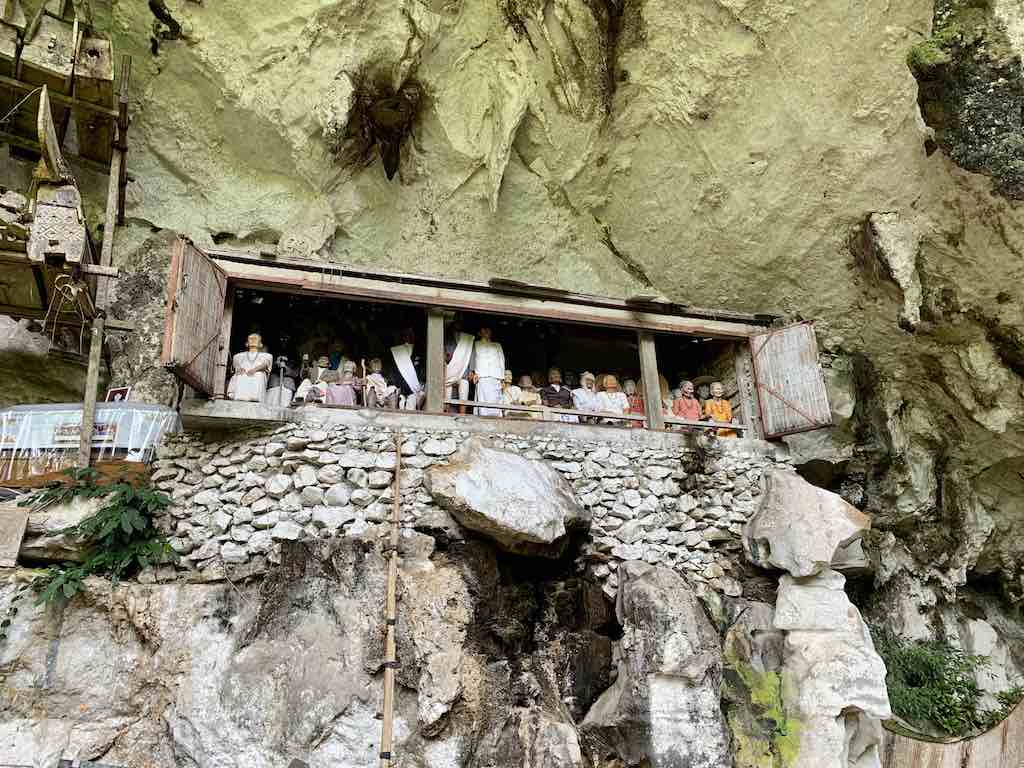
Torajan beliefs about death also manifest in extraordinary burial practices.
Instead of conventional cemeteries, the dead are often placed in:
- Rock-cut tombs carved into limestone cliffs
- Natural burial caves
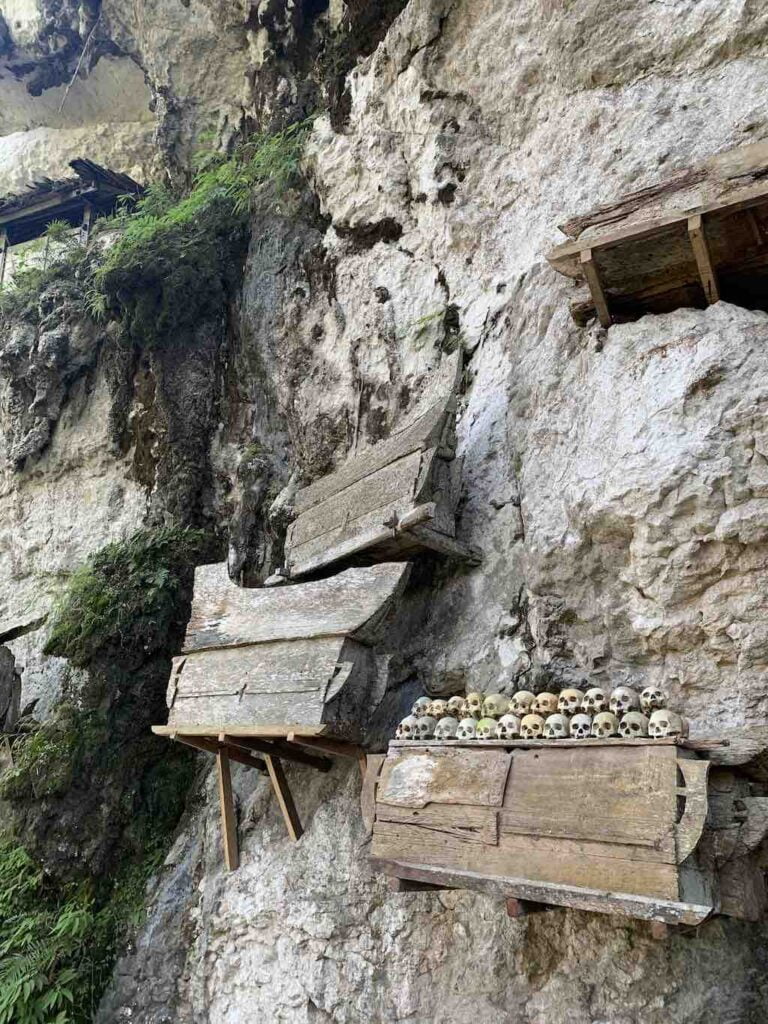
- Hanging coffins suspended on rock faces
- Monumental family tombs
Many graves are guarded by Tau Tau, wooden effigies representing the deceased. Positioned on balconies carved into the cliffs, these statues appear to watch over the valley below — a haunting yet deeply spiritual sight.
Important burial sites to visit include:
- Lemo — famous for its rows of Tau Tau statues
- Londa — cave tombs accessible with a guide
- Kambira — tree burials for infants
- Suaya — royal burial complex
Spectacular Landscapes and Nature
Beyond its culture, Tana Toraja is also renowned for its stunning mountain scenery.
The region features:
- Lush rice terraces
- Deep valleys and dense forests
- Dramatic limestone cliffs
- Traditional villages scattered across the hills
The Batutumonga viewpoint is one of the most famous spots in Tana Toraja. Located at higher elevation, it offers breathtaking panoramic views — especially at sunrise, when mist often fills the valleys below.
It also serves as an excellent base for:
- Trekking through rural landscapes
- Walking between traditional villages
- Experiencing everyday Torajan life
Best Things to Do in Tana Toraja
Top experiences include:
- Attending a Rambu Solo funeral ceremony (if possible)
- Exploring traditional villages
- Visiting cliff burials and sacred sites
- Trekking through rice terraces and mountains
- Discovering local crafts and markets
- Observing rural life in the highlands
How to Get to Tana Toraja
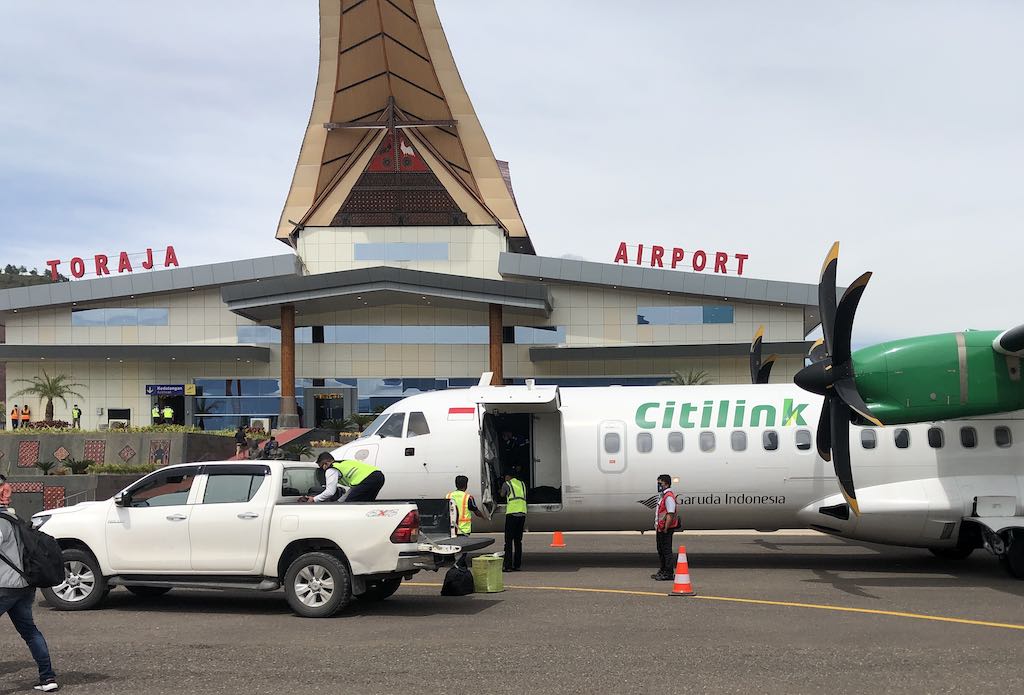
Tana Toraja does not have a major international airport. Most travelers arrive via Makassar.
Main options:
- ✈️ Fly to Makassar (UPG), then travel overland
- 🚐 Bus or private car to Rantepao (8–10 hours)
- ✈️ Domestic flight to Toraja Airport (Buntu Kunik) + transfer
The road journey is long but scenic, passing through mountains and remote villages.
Where to Stay in Tana Toraja
The main bases for exploring the region are:
- Rantepao — the main tourist hub
- Makale — quieter and more local
Accommodation options range from simple guesthouses to comfortable mountain lodges with panoramic views.
Best Time to Visit Tana Toraja
The dry season (May to October) is generally the best time to visit:
- Cooler temperatures in the highlands
- Better road conditions
- Ideal weather for trekking and sightseeing
The peak funeral season typically occurs between June and September, when many ceremonies take place.
Why Tana Toraja Is a Truly Unique Destination
Tana Toraja is unlike anywhere else in Indonesia. It is neither a beach destination nor a major city, but a place where ancient traditions, spirituality, and dramatic landscapes remain deeply intertwined.
For curious travelers seeking authentic experiences and cultural depth, Tana Toraja is one of the most fascinating places to visit in Southeast Asia — a journey into a world where the boundary between life and death is understood in a profoundly different way.
👉 To plan your trip across the region, read my Sulawesi Travel Guide, covering the best places to visit on the island.
👉 For a broader itinerary across the country, explore my Indonesia Travel Guide, featuring the top destinations, travel tips, and practical advice for visiting the archipelago.
FAQ — Visiting Tana Toraja
What is Tana Toraja famous for?
Tana Toraja is famous for its extraordinary funeral ceremonies, traditional Tongkonan houses with boat-shaped roofs, and dramatic burial sites carved into cliffs. The region is also known for its unique culture blending ancient animist beliefs with Christianity.
Is it ethical to attend a Toraja funeral ceremony?
Yes — visitors are generally welcome, as funerals are major community events. However, it is important to be respectful: dress modestly, follow local guidance, and consider bringing a small donation or gift for the host family.
When is the best time to visit Tana Toraja?
The best time to visit is during the dry season from May to October, when travel conditions are easier and many large funeral ceremonies take place, especially in July and August.
How many days do you need in Tana Toraja?
Most travelers spend 2 to 4 days exploring the region. This allows time to visit key cultural sites, traditional villages, burial cliffs, viewpoints like Batutumonga, and potentially attend a ceremony.
How do you get to Tana Toraja?
The usual route is to travel from Makassar in South Sulawesi. You can take a domestic flight to Toraja Airport (TTR) or travel overland by bus or private car, which takes about 8–10 hours through scenic mountain landscapes.
Can you visit Tana Toraja without a guide?
Yes, it is possible, but hiring a local guide is highly recommended. Guides provide cultural context, facilitate visits to villages and ceremonies, and help navigate the region’s dispersed attractions.
Is Tana Toraja safe for tourists?
Yes, Tana Toraja is generally very safe. The local communities are welcoming and tourism is well established. As anywhere, basic travel precautions are advisable.
What else can you combine with Tana Toraja?
Tana Toraja is often combined with other destinations in Sulawesi, such as Makassar, Bunaken Marine Park near Manado, or the diving sites of Lembeh Strait and Wakatobi.