Liveaboard Andamán Norte: islas Similan y Richelieu Rock
Por Blaise Jaeger · Actualizado el 14 de julio de 2026
Una crónica en primera persona de un crucero de buceo liveaboard por el Andamán Norte que explora las islas Similan, Koh Bon, Koh Tachai y Richelieu Rock — considerado el mejor buceo de Tailandia. En marzo de 2026 me uní a una expedición de buceo liveaboard por el Andamán Norte en Tailandia a bordo del Mandarin Queen 9, zarpando desde Phuket para explorar los sitios más legendarios del país en el mar de Andamán. Esta región —que abarca las islas Similan, Koh Bon, Koh Tachai, las islas Surin y Richelieu Rock— está ampliamente considerada como la mejor zona de buceo de Tailandia y uno de los principales destinos de liveaboard del Sudeste Asiático.
Sobre la superficie, el paisaje ya es espectacular: playas de arena blanquísima, enormes rocas de granito esculpidas por el tiempo y aguas en tonos surrealistas de turquesa y azul profundo. Pero es bajo el agua donde el buceo del Andamán Norte realmente brilla, con enormes bancos de peces, arrecifes de coral prístinos, frecuentes encuentros pelágicos y una excepcional vida macro.
Nuestra ruta siguió el clásico itinerario de liveaboard por las islas Similan, avanzando poco a poco hacia el norte por sitios cada vez más remotos antes de culminar en Richelieu Rock — a menudo situado entre los mejores sitios de buceo no solo de Tailandia, sino del mundo.
📍 Resumen del itinerario del liveaboard por el Andamán Norte
Un liveaboard por el Andamán Norte es la manera definitiva de explorar los sitios de buceo más remotos y espectaculares de Tailandia, mucho más allá del alcance de los barcos de día. Estos cruceros combinan paisajes submarinos de talla mundial con la comodidad de vivir a bordo de una embarcación de buceo totalmente equipada.
Duración típica
La mayoría de los itinerarios duran de 4 a 7 días, con entre 12 y 20 inmersiones, incluidas inmersiones al amanecer, al atardecer y a veces nocturnas. Los viajes más largos permiten dedicar más tiempo a sitios estrella como Richelieu Rock.
Punto de salida
Los liveaboards suelen zarpar del muelle de Thap Lamu, al norte de Phuket. Los traslados desde los hoteles de Phuket o el aeropuerto los organiza normalmente el operador el día del embarque.
Sitios de buceo cubiertos
Una ruta clásica del Andamán Norte incluye los grandes atractivos de la región:
- Islas Similan — espectaculares rocas de granito, pasadizos y arrecifes llenos de vida
- Elephant Head Rock y Christmas Point — topografía icónica y peces en banco
- Koh Bon — estación de limpieza de mantarrayas y territorio pelágico
- Koh Tachai Pinnacle — fuertes corrientes y densas agregaciones de peces
- Islas Surin y Richelieu Rock — el sitio con mayor biodiversidad de Tailandia y un punto caliente de tiburones ballena
Nivel de experiencia
La mayoría de las inmersiones son adecuadas para buceadores de nivel intermedio a avanzado. Se recomiendan la certificación Advanced Open Water y soltura con las corrientes, sobre todo en pináculos expuestos y perfiles más profundos.
Mejor temporada
La temporada de buceo del Andamán Norte va de noviembre a abril, cuando el mar está en calma y la visibilidad suele ser excelente. Las mejores condiciones se dan normalmente entre enero y marzo, con las mayores probabilidades de encuentros con mantarrayas y tiburones ballena.
Esta combinación de ubicaciones remotas, vida marina diversa y espectaculares paisajes submarinos convierte al liveaboard por el Andamán Norte en una de las mejores experiencias de buceo de Tailandia.
Día 1 — Salida desde Phuket
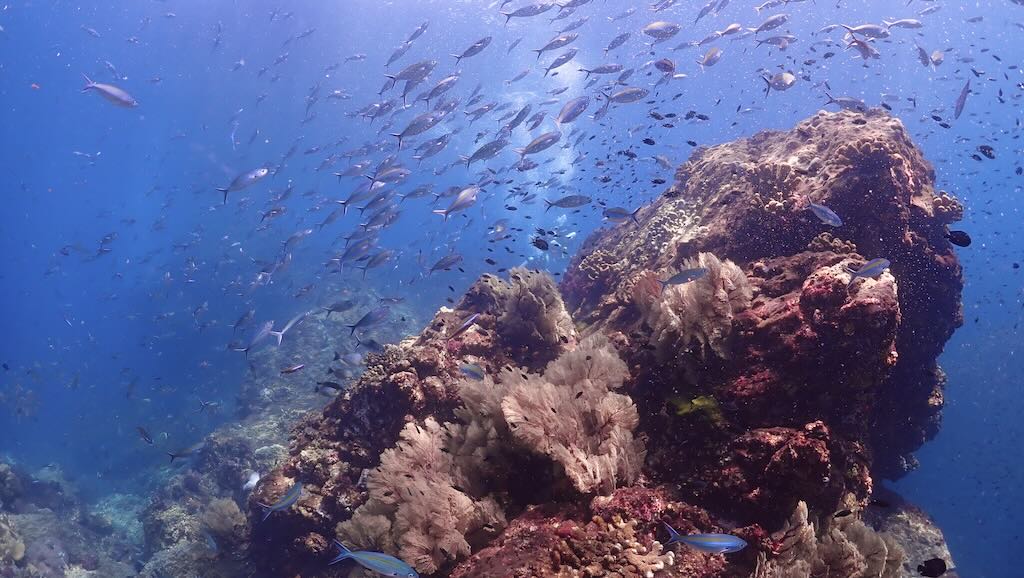
La aventura comenzó a última hora de la tarde con un traslado desde Phuket al muelle de Thap Lamu. Subir a bordo del Mandarin Queen 9 fue como entrar en un resort de buceo flotante — amplia cubierta de buceo, camarotes cómodos, cubierta solárium y una tripulación profesional.
Tras la asignación de camarotes, un briefing completo cubrió los procedimientos de seguridad, los protocolos de buceo y el itinerario por delante. Se sirvió la cena mientras el barco zarpaba silenciosamente hacia la noche de Andamán, rumbo a las islas Similan.
Quedarse dormido con el suave vaivén del mar, sabiendo que al amanecer espera un buceo de talla mundial, es uno de los placeres únicos de viajar en liveaboard.
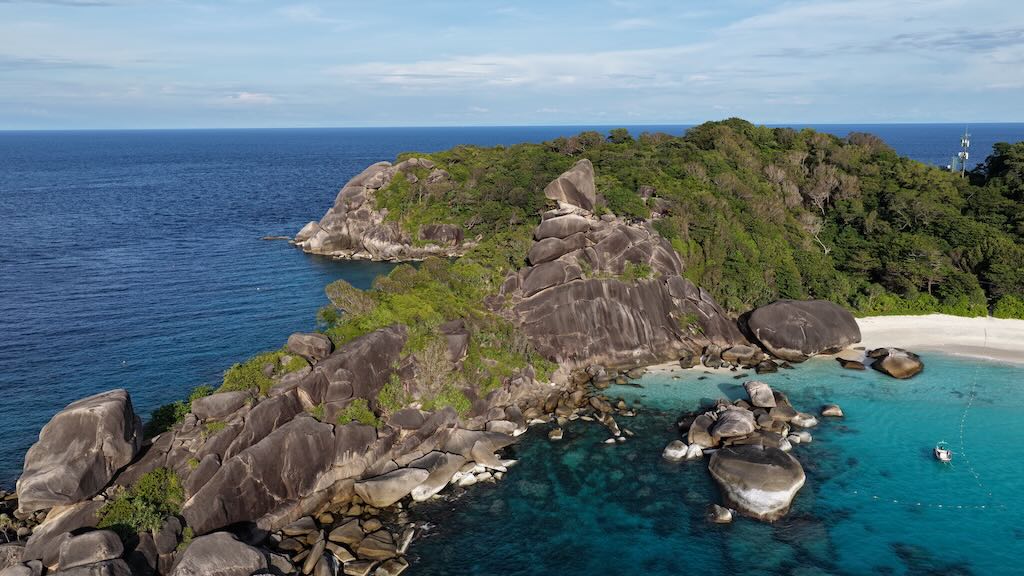
Día 2 — Islas Similan: paisajes de granito
El primer día completo trajo cuatro inmersiones en las islas Similan, cada una mostrando un terreno submarino distinto.
- Three Trees ofreció condiciones suaves, cabezos de coral y abundante vida de arrecife — una inmersión de calentamiento perfecta.
- Nam Chai es una mezcla de zonas de arena y arrecifes dispersos, ideal para detectar vida macro poco común. Tuvimos la suerte de encontrar dos peces pipa fantasma ornamentados, un momento inolvidable tan al principio del viaje.
- Christmas Point destacó por sus espectaculares pasadizos y salientes rocosos repletos de peces. En un punto, a unos 20 metros de profundidad, la ruta pasa bajo una bolsa de aire atrapada dentro de las formaciones de granito.
- North Point reveló arrecifes en pendiente y formaciones de granito dispersas.
Día 3 — Elephant Head Rock, Koh Bon y Tachai Pinnacle
El tercer día avanzó hacia el norte, a sitios cada vez más remotos y espectaculares.
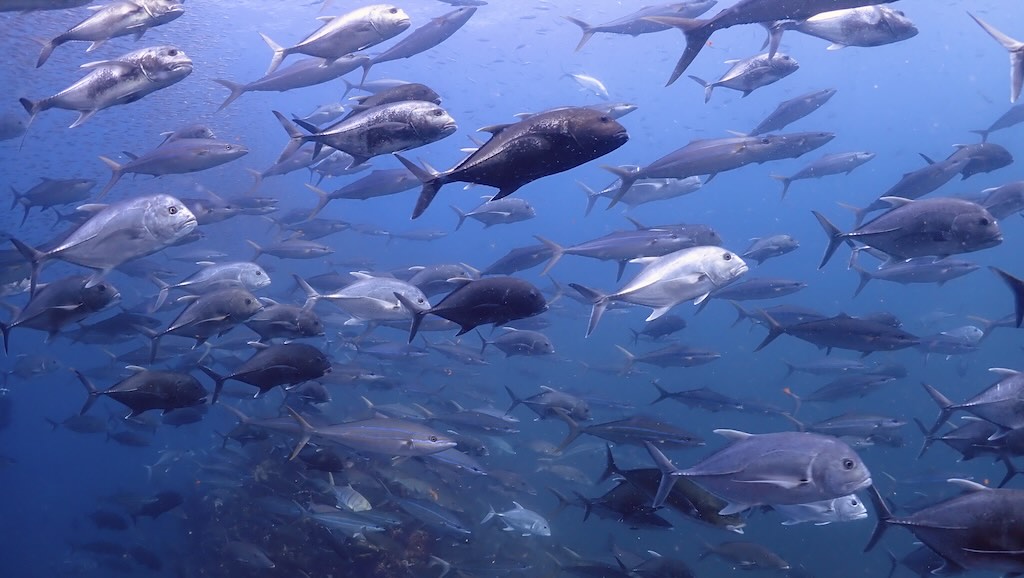
Elephant Head Rock es una de las inmersiones más icónicas de las Similan — gigantescas rocas apiladas bajo el agua que forman túneles, arcos y pasadizos. La visibilidad era excelente y grandes jureles cruzaban el azul.
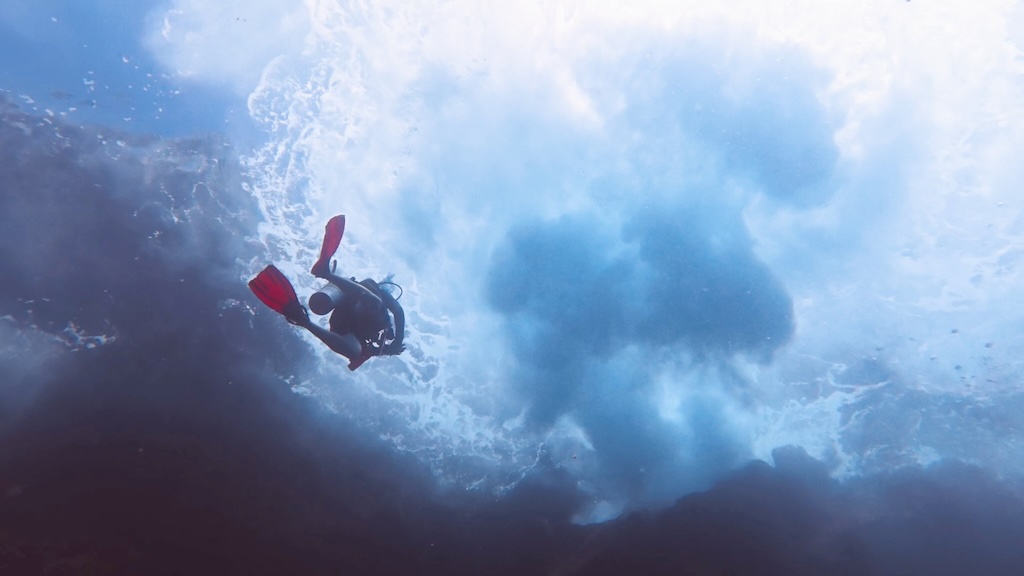
En Koh Bon, exploramos una famosa estación de limpieza de mantarrayas. No hubo mantarraya, pero la topografía del sitio —una cresta que cae al azul profundo— grita «territorio pelágico». En un momento, incluso pasamos bajo un explosivo «sploosh», una potente ola de resaca que se derrumbaba desde la superficie — un recordatorio dramático de la energía bruta del mar de Andamán 😱🤿
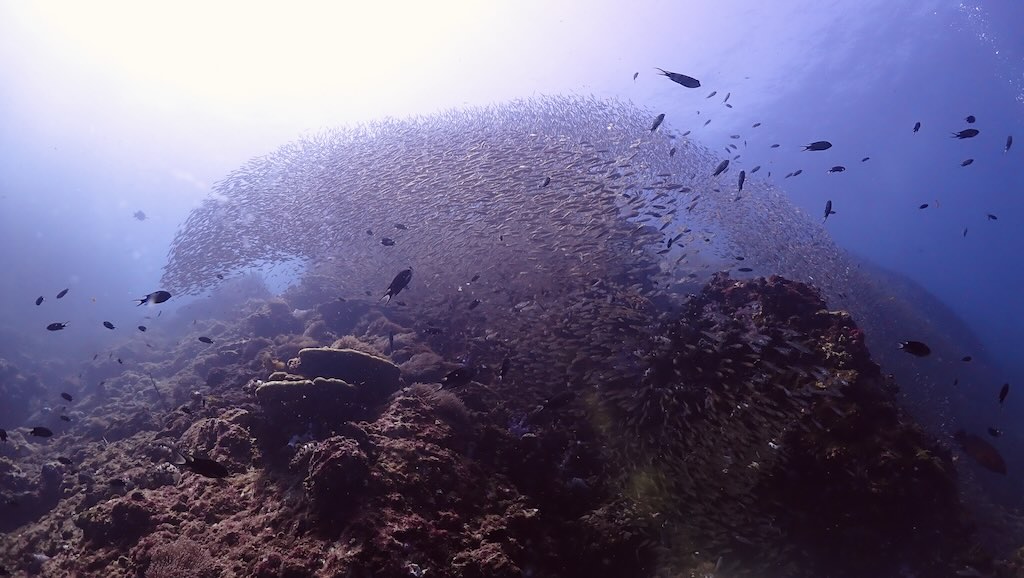
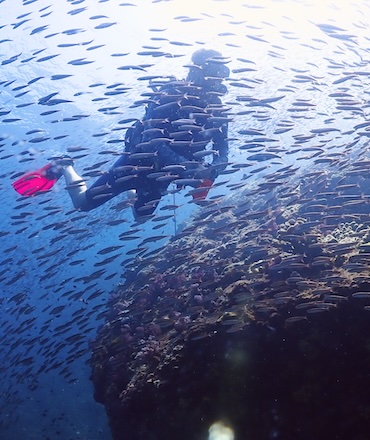
Luego llegaron dos inmersiones en Tachai Pinnacle, un monte submarino que se eleva desde las profundidades. Este sitio entregó justo aquello por lo que es conocido: densos bancos de peces, incluidos barracudas y jureles arremolinándose en fuertes corrientes. Fue como bucear dentro de un tornado vivo de peces.
Día 4 — Richelieu Rock: la joya de la corona
El cuarto día se dedicó por entero a Richelieu Rock, el indiscutible punto culminante del buceo del Andamán Norte.
Este pináculo en forma de herradura se eleva desde aguas profundas y estalla de vida. Corales blandos en tonos morados, rosas y rojos cubren la roca, mientras enormes bancos de peces ocultan el arrecife como nubes en movimiento.
A lo largo de cuatro inmersiones —incluida una al atardecer— experimentamos:
- Enormes bolas de carnada cazadas por jureles
- Densos bancos de fusileros y pargos
- Intrincada vida macro escondida entre los corales
Richelieu Rock también es famoso por los tiburones ballena. Aunque los encuentros nunca están garantizados, cada momento bajo el agua lleva esa expectación eléctrica: podría aparecer en cualquier segundo (pero no lo hizo…).
Incluso sin él, la biodiversidad aquí es abrumadora. Es de esos sitios en los que no sabes dónde mirar — acción de gran angular por todas partes y, aun así, tesoros macro en cada vistazo.
Día 5 — Últimas inmersiones y regreso
El último día incluyó tres inmersiones finales en el regreso hacia el sur:
- Una segunda exploración de Tachai Pinnacle.
- Dos inmersiones más en Koh Bon, incluida una en un pináculo más pequeño alejado del arrecife principal.
Tras salir de la última inmersión hacia las 3 de la tarde, empezó el viaje de vuelta al muelle. Se enjuagó el equipo, se completaron las bitácoras, se intercambiaron fotos y se instaló esa melancolía tan típica del liveaboard — la sensación de que algo especial está terminando.
Lo más destacado de la vida marina del Andamán Norte
Este itinerario muestra lo mejor de la biodiversidad submarina de Tailandia:
- Vibrantes arrecifes de coral duro y blando
- Tiburones de arrecife y tortugas
- Jureles gigantes y bancos de barracudas
- Territorio de mantarrayas en Koh Bon
- Extraordinaria vida macro en Richelieu Rock
- Posibilidad de encuentros con tiburones ballena
La claridad del agua fue en general excelente, y la salud del arrecife se veía fuerte en la mayoría de los sitios.
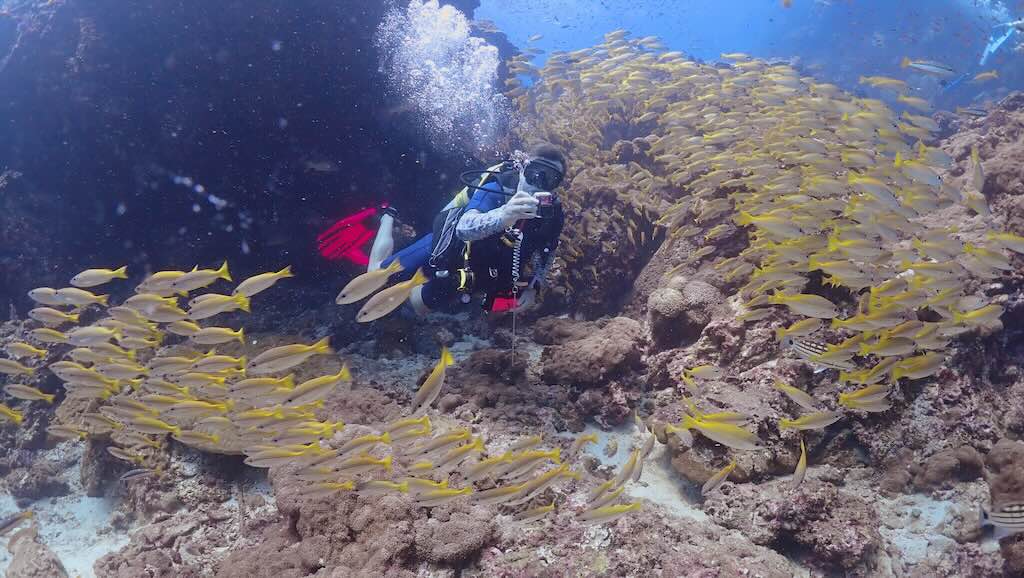
La vida a bordo del Mandarin Queen 9
El Mandarin Queen 9 funcionó como una plataforma de buceo cómoda y eficiente. Los días seguían un ritmo familiar para los buceadores de liveaboard:
Despertar — Bucear — Comer — Descansar — Bucear — Comer — Bucear — Comer — Dormir
Las comidas eran abundantes y variadas, había snacks entre inmersiones y la tripulación manejaba el equipo con una eficiencia impresionante. Entre inmersiones, la cubierta solárium era el lugar perfecto para relajarse, ver atardeceres o simplemente contemplar el infinito horizonte de Andamán.
🌊 Condiciones y dificultad
Bucear en el mar de Andamán Norte es gratificante, pero puede ser exigente, especialmente en los pináculos expuestos mar adentro. Las condiciones varían mucho, desde inmersiones de arrecife protegidas hasta sitios de alta energía en mar abierto.
Corrientes
Las corrientes van de suaves a fuertes según el sitio, la marea y la fase lunar. Las zonas protegidas de las islas Similan pueden ofrecer condiciones relajadas, mientras que sitios como Koh Bon y Tachai Pinnacle pueden tener un flujo potente que atrae a grandes peces pelágicos. Las habilidades de buceo en deriva y un buen control de la flotabilidad son muy útiles.
Rangos de profundidad
La mayoría de las inmersiones se realizan entre 10 y 30 metros (33–100 ft). Las cimas someras de arrecife suelen empezar hacia los 5–10 metros, mientras que las pendientes y pináculos más profundos se extienden más allá de los límites recreativos. Muchos atractivos —incluidos los bancos de peces y las estaciones de limpieza de mantarrayas— se encuentran normalmente en el rango de 18–25 metros.
Disponibilidad de nitrox
El nitrox (aire enriquecido) suele estar disponible en los liveaboards y se recomienda encarecidamente. Permite tiempos de fondo más largos y una menor carga de nitrógeno, especialmente útil en jornadas de varias inmersiones con perfiles profundos repetidos.
Posibilidad de termoclina
Aunque las temperaturas del agua son generalmente cálidas (27–30 °C / 81–86 °F), pueden producirse termoclinas repentinas, sobre todo en sitios más profundos y en torno a afloramientos que traen agua rica en nutrientes. La temperatura puede caer brevemente varios grados, así que conviene un traje de neopreno completo incluso en condiciones tropicales.
En conjunto, el buceo del Andamán Norte es más adecuado para buceadores seguros y cómodos con condiciones cambiantes, pero las recompensas —topografía espectacular, densa vida marina y posibles encuentros con grandes animales— son excepcionales.
Regla importante de seguridad para volar
La última inmersión terminó hacia las 15:00 del último día. Se recomienda encarecidamente a los buceadores esperar al menos 18-24 horas antes de volar para minimizar el riesgo de enfermedad descompresiva.
Es una recomendación estándar para los viajes de buceo de varios días y siempre debe tenerse en cuenta al planificar el viaje.
Reflexiones finales — El paraíso arriba y abajo
El buceo del Andamán Norte se siente de verdad como un lugar donde «el paraíso en la tierra se encuentra con el paraíso bajo el agua». Pocos destinos combinan un paisaje insular tan espectacular con vida marina de talla mundial y una topografía de buceo tan variada.
Desde las catedrales de granito de las Similan hasta el pináculo repleto de peces de Richelieu Rock, este crucero entregó una inmersión inolvidable tras otra.
Para cualquiera que busque el mejor buceo de Tailandia — y una de las mejores experiencias de liveaboard del Sudeste Asiático —, el Andamán Norte debería estar en lo más alto de la lista.
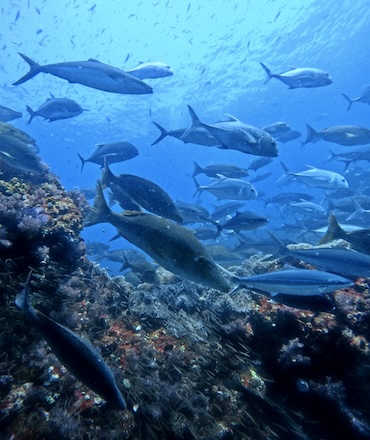
🇹🇭 Buceo en Tailandia — Arrecifes tropicales y gran vida marina
Desde vibrantes jardines de coral hasta espectaculares pináculos mar adentro, Tailandia ofrece algunos de los buceos más diversos del Sudeste Asiático.
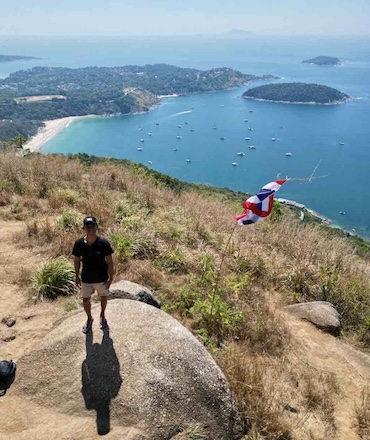
🏝️ Phuket — Puerta de entrada al mejor buceo de Tailandia
La mayoría de los viajes de buceo al mar de Andamán salen de Phuket, lo que la convierte en la base ideal para liveaboards, salidas de día y planificación del viaje.
🌏 Sudeste Asiático — Entre las mejores regiones de buceo del mundo
Los arrecifes de Tailandia se cuentan entre los mejores del Sudeste Asiático, junto a destinos legendarios de todo el Triángulo de Coral.
👉 Leer más: Los 10 mejores sitios de buceo del Sudeste Asiático
Preguntas frecuentes — Buceo liveaboard en el Andamán Norte
¿Dónde está la región de buceo del Andamán Norte?
El Andamán Norte se refiere a las zonas de buceo mar adentro al noroeste de Phuket, incluidas las islas Similan, Koh Bon, Koh Tachai y las islas Surin (Richelieu Rock).
¿Qué hace especial el buceo del Andamán Norte?
Esta región ofrece espectaculares formaciones de granito, una visibilidad excepcional, fuertes corrientes y frecuentes encuentros con grandes especies pelágicas como mantarrayas y tiburones ballena.
¿Hay que ser un buceador experimentado?
Debido a las corrientes y la profundidad, la mayoría de los sitios son adecuados para buceadores de nivel intermedio a avanzado. Suele recomendarse la certificación Advanced Open Water, además de soltura con el buceo en deriva.
¿Qué vida marina se puede ver?
Los avistamientos habituales incluyen tiburones de arrecife, barracudas, jureles gigantes, tortugas, pulpos y peces pipa fantasma, y ocasionalmente mantarrayas y tiburones ballena — sobre todo en Koh Bon y Richelieu Rock.
¿Cuál es la mejor época para bucear en el Andamán Norte?
La temporada va normalmente de noviembre a abril, con las mejores condiciones de enero a marzo. El parque marino permanece cerrado aproximadamente de mayo a octubre.
¿Por qué elegir un liveaboard en lugar de salidas de día?
Los liveaboards llegan a sitios remotos inaccesibles desde tierra firme, ofrecen más inmersiones al día y permiten inmersiones al amanecer y nocturnas, cuando la vida marina está más activa.
¿Se incluye Richelieu Rock en los viajes del Andamán Norte?
Sí, la mayoría de los itinerarios del Andamán Norte incluyen Richelieu Rock, ampliamente considerado uno de los mejores sitios de buceo de Tailandia y un punto caliente para encuentros con tiburones ballena.